Introducing pixelation with applications
Motivated by the desire for a new kind of approximation, we define a type of localization called pixelation. We present how pixelation manifests in representation theory and in the study of sites and sheaves. A path category is constructed from a set…
Authors: J. Daisie Rock
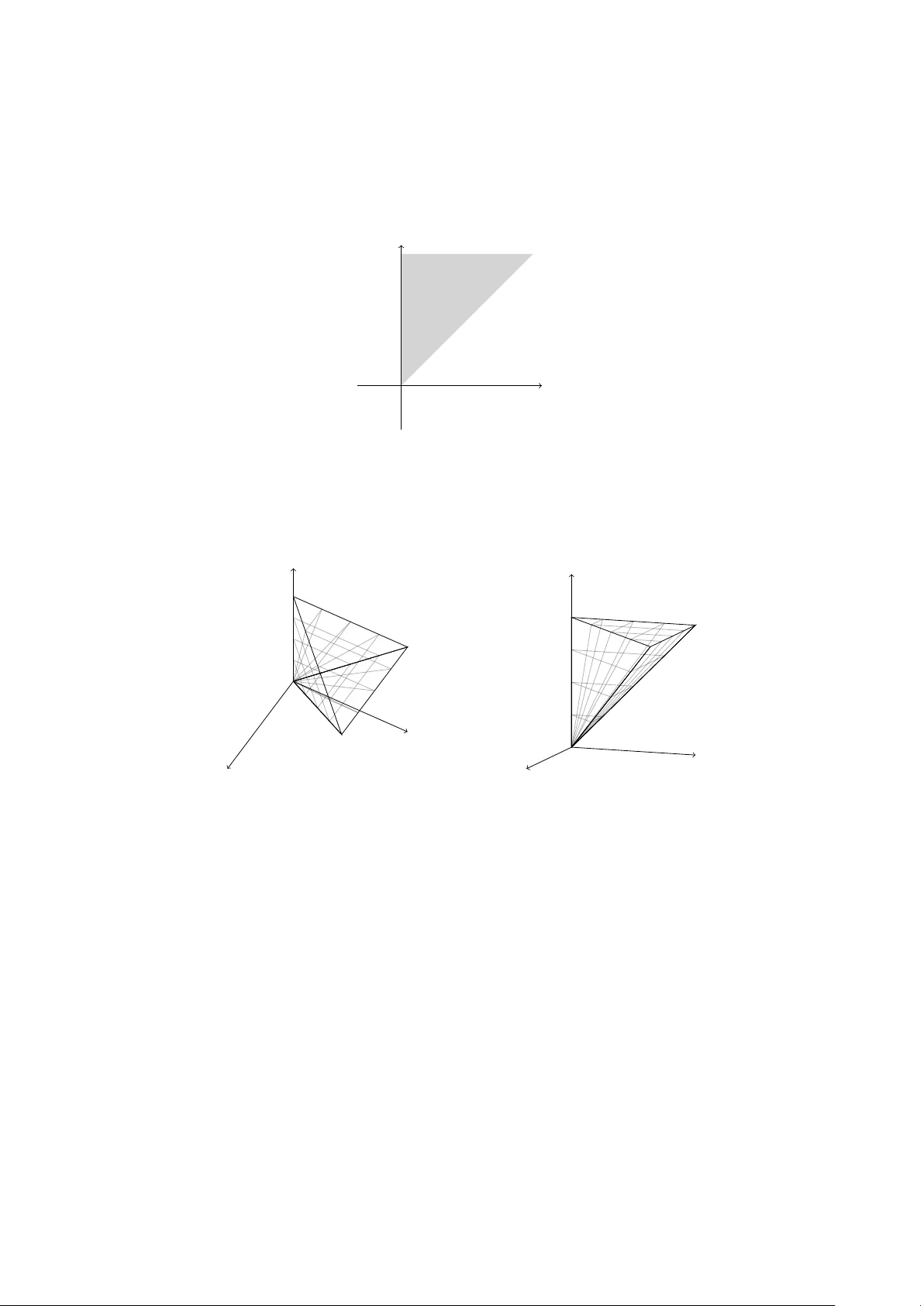
INTR ODUCING PIXELA TION WITH APPLICA TIONS J. DAISIE R OCK Abstract. Motiv ated by the desire for a new kind of approximation, we define a type of localization called pixelation . W e present how pixelation manifests in representation theory and in the study of sites and sheav es. A path category is constructed from a set, a collection of “paths” into the set, and an equiv alence relation on the paths. A screen is a partition of the set that resp ects the paths and equiv alence relation. F or a commutativ e ring, we also enrich the path category o ver its mo dules (=linearize the category with resp ect to the ring) and quotient by an ideal generated by paths (possibly 0). The pixelation is the lo calization of a path category , or the enriched quotient, with resp ect to a screen. The lo calization has useful prop erties and serves as an approximation of the original category . As applications, we use pixelations to provide a new point of view of the Zariski topology of lo calized ring sp ectra, pro vide a parallel story to a ringed space and shea ves of mo dules, and construct a categorical generalization of higher Auslander algebras of type A . Contents In tro duction 1 1. P aths and screens 5 2. P ath Categories 14 3. Represen tations 28 4. Sites and pathed sites 34 5. Higher Auslander C ategories 44 References 55 Intr oduction Con text and Motiv ation. There is an increasing interest in studying represen- tations of categories with infinitely-many ob jects. That is, studying the category of functors C → K where C is a small category with infinitely-man y ob jects and K is some well-understoo d ab elian category . W ork typically b egins by studying the case where C is either a line (t yp e A , though not necessarily totally-ordered) or a circle (type ˜ A , though not necessarily cyclicly ordered). Often, C is replaced b y some additiv e category A so that A and K are b oth enric hed ov er k -mo dules, for some commutativ e ring k , and the functors are re- placed with additive functors enriched o v er k -mo dules as w ell. In the language of represen tation theory: we sa y A , K , and the functors A → K are k -linear. In top ological data analysis, a p ersistence mo dule is usually a functor from a small category in to the category of finite-dimensional k -v ector spaces, for some Date : 26 March 2026. 2020 Mathematics Subje ct Classific ation. Primary: 18E35, 18A25, 18F20. Secondary: 18G15, 16G20, 16G99. Key wor ds and phr ases. pixelation, approximation, localization, representation theory , functor category , ring sp ectra, ringed space, sheaf of mo dules, higher Auslander algebra, higher homolog- ical algebra, quiver representations. 1 2 J. DAISIE ROCK field k . In this case the persistence mo dules decomp ose uniquely (up to isomor- phism) into indecomp osable summands, each of whic h has a lo cal endomorphism ring [ GR97 , BCB20 ]. Recent work has b egun in decomp osing infinite p ersistence mo dules of type A ov er other t yp es of rings, such as PIDs [ LHP25 ]. One may also consider m ultiparameter p ersistence mo dules, which can b e interpreted as represen- tations as R n . Here, complete decomposition/structure theorems are not possible but progress is made to understand persistence modules in other wa ys using in v ari- an ts [ ABH24 ]. A structure similar to p ersistence mo dules app ears as F o ck space represen tations of contin uum quantum groups of t yp es A and ˜ A [ SS21 ]. Finitely-indexed p ersis- tence mo dules can also be considered as representations of quiv ers. An infinite generalization of quiv er representations was in troduced in [ BvR13 ]. A further gen- eralization and partial structure theorem and classifications app ears in [ PR Y24 ]. In all of these cases, the category C of interest has a notion of paths that are not just morphisms but also in a sense top ological or geometric. One w a y to b etter understand representations in these cases is to consider ap- pro ximations. In [ PR Y24 ] a tec hnique w as used to reduce represen tations to smaller, understandable parts. The technique splits representations in to noise and noise-free pieces. One can view this as an appro ximation b y deciding what kind of noise is allo wed in the representations. The precursor to this technique was used in [ HR24 ] and this tec hnique is the precursor to pixelation in the present pap er. A homo- logical t yp e of approximation was used in [ BBH22 ] on multiparameter p ersistence mo dules. In the presen t pap er, we think about appro ximation via lo calization. While the applications are heavily tied to represen tation theory , with the exception of some results on sites and ring sp ectra in Section 4.2 , the main techniques and re- sults in the present pap er are primarily categorical in nature. In the categorical sense lo calization as approximation is philosophically straigh tforw ard: one groups ob jects together based on some parameters, including morphisms, and this is an appro ximation of the original category . W e can think of lo calizations of rings as appro ximations as well, by lo oking at ho w the corresp onding ring sp ectra are re- lated. W e lo ok at the categories of open sets and inclusions and see if one is related to the other by some kind of categorical lo calization pro cess. Our approach to approximation dra ws inspiration from a real world pro cess: digital photography . One takes a photo of what (feels lik e) infinitely-many tiny atoms and obtains a photo with a finite num ber of pixels. In its infancy , digital photos w ere very clearly (p o or) approximations of what w e see in the real w orld. In 2026, we can pro duce digital photos with more than enough pixels to accurately appro ximate what we see. How ev er, ev en at the b eginning, we only needed a few pixels to kno w if the coffee p ot was full. 1 Organization and con tributions. Here we give an ov erview of the pap er and highligh t what the author considers to be the main results: Theorems A , B , C , and D . How ever, given the extremely v aried interests of those who use representation theory , the reader may find other results to b e the “highlight”. Path c ate gories and pixelation. In Section 1 w e define triples ( X , Γ / ∼ ) , where X is a set, Γ acts lik e a set of paths in X , an ∼ is an equiv alence relation on Γ (Definitions 1.1 and 1.2 ). Throughout the pap er w e use the running examples of R and R n , starting with Example 1.5 . Inspired by our approach to appro ximation, we 1 The first digital camera had a resolution of 128x128 pixels and was used to chec k the coffee pot in a break ro om at the Universit y of Cambridge. The client softw are was written by Quentin Stafford-F raser and the server softw are was written by Paul Jardetzky . INTRODUCING PIXELA TION WITH APPLICA TIONS 3 define a sp ecial type of partition on the set X , called a scr e en , that “plays nice” with Γ and ∼ (Definition 1.12 ). The elemen ts of a screen are called pixels . W e prov e that the set P of screens on a triple ( X , Γ / ∼ ) has at least one maximal elemen t (Prop osition 1.16 ) and show that triples and screens behav e well with resp ect to pro ducts (Prop ositions 1.10 and 1.25 ). In Section 2 w e study path categories (Definition 2.1 ). A p ath c ate gory C is constructed from a triple ( X , Γ / ∼ ) . The ob jects are p oin ts in X and morphisms are equiv alence classes [ γ ] of paths in Γ using the relation ∼ . The category P C at is the sub category of C at (the category of small categories) whose ob jects are path categories and whose morphisms are functors betw een path categories. W e also define a k -linear v ersion C , for a commutativ e ring k . A p ath-b ase d ide al I in C is an ideal that behav es well with respect to paths (Definition 2.8 ). The quotient C / I is written A and is the ob ject of study in the k -linear case. W e show that, giv en a screen P of ( X , Γ / ∼ ) , there is an induced class Σ P of mor- phisms in C that admits a calculus of fractions (Prop osition 2.17 ). The lo calization C P = C [Σ − 1 P ] is called a pixelation (Definition 2.20 ). W e note that pixelation de- p ends on the choice of triple and ask when is the lo calization of a path category is a pixelation with respect to a triple and a screen (Remark 2.23 and Question 2.24 ). In C we expand I to an ideal I P compatible with P and tak e a further quotien t A P = C / I P . Notice A P is also a quotient of A . In this case w e also hav e an induced class of morphisms Σ P in A P that admits a calculus of fractions (Prop osition 2.19 ). W e also call the lo calization A P = A P [Σ − 1 P ] a pi xelation. Giv en a screen P of ( X , Γ / ∼ ) , w e construct categories Q ( C , P ) and Q ( A , P ) equiv alent to C P and A P , resp ectiv ely (Theorem 2.37 ). Eac h of Q ( C, P ) and Q ( A , P ) are its own respective skeleton and are constructed from quivers. W e essen tially prov e that pixelation yields a new path category , in the non- k - linear case. Theorem A (Theorem 2.43 ) . L et C b e the p ath c ate gory c onstructe d fr om ( X , Γ / ∼ ) and let P b e a scr e en of ( X , Γ / ∼ ) . Then Q ( C, P ) is isomorphic to a p ath c ate gory and so C P is e quivalent to a p ath c ate gory. W e introduce finitary refinements (Definition 2.44 ). If P and P ′ are screens, and P ′ refines P , then w e ha v e induced functors C P ′ → C P and A P ′ → A P , since pixelation is a lo calization. This yields induced functors Q ( C, P ′ ) → Q ( C, P ) and Q ( A , P ′ ) → Q ( A , P ) , resp ectively . If P ′ is a finitary refinement of P , then we also ha ve a functor Init : Q ( C , P ) → Q ( C , P ′ ) (Prop osition 2.45 ). R epr esentations. In Section 3 w e study representations of path categories with v al- ues in a k -linear abelian category K . A r epr esentation of A with values in K is a functor M : A → K (Definition 3.1 ). The category of such representations is denoted Rep K ( A ) . W e discuss the k -linear v ersion here but nearly all of the state- men ts hold for representations of C . A represen tation M is pixelate d if there is a compatible screen P and we say the screen P pixelates M (Definition 3.4 ). W e sho w that every pixelated representation M comes from a representation of some Q ( A , P ) , where P pixelates M (Theorem 3.7 ). Let L ⊆ P b e a set of screens of ( X , Γ / ∼ ) such that, for any finite collection { P i } n i =1 ⊂ L , there exists a P ∈ L that refines each P i . The category Rep L K ( A ) is the full sub category of Rep K ( A ) such that if M is a representaiton in Rep L K ( A ) then there is a screen P ∈ L such that P pixelates M . 4 J. DAISIE ROCK Theorem B (Theorem 3.10 and Corollary 3.14 ) . The c ate gory Rep L K ( A ) is a wide sub c ate gory of Rep K ( A ) . That is, Rep L K ( A ) is ab elian and the emb e dding Rep L K ( A ) → Rep K ( A ) is exact. Mor e over, any exact structur e E on Rep K ( A ) r estricts to an exact structur e on Rep L K ( A ) . Sites and she aves. In section 4 w e study how pixelation interacts with sites and shea ves. W e show that if a path category C is a site then so is Q ( C, P ) and the induced functor C → Q ( C , P ) is contin uous (Theorem 4.8 ). W e also show that a distributiv e lattice can b e interpreted as a path category . When C is a sublattice of a larger lattice L , w e define a screen P Y for eac h Y ∈ L (Definition 4.9 ) and prov e C P Y is isomorphic to a sublattice of C (Theorem 4.12 ). The theorem may b e con textualized as follo ws, where we write T op( X ) to b e the category whose ob jects are op en sets of X and whose morphisms are the inclusion maps of the open sets. Theorem C (Corollary 4.13 ) . In incr e asing sp e cificity: (1) L et X b e a top olo gic al sp ac e and Y a subset with the subsp ac e top olo gy. Then T op( Y ) is c anonic al ly isomorphic to Q (T op( X ) , P Y ) . (2) L et R b e a c ommutative ring and p b e a prime ide al in R . L et Y ( p ) = { q ∈ Sp ec( R ) | q ⊂ p } . Then T op(Sp ec( R p )) is c anonic al ly isomorphic to Q (T op(Sp ec( R )) , P Y ( p ) ) . That is, we may view T op(Spec( R p )) as a pixelation of T op(Sp ec( R )) . W e also present a parallel story to ringed sites ( X, O X ) and O X -mo dules. W e define p athe d sites ( E , O E ) to be a site E with a sheaf of path categories O E . As the “standard” example, w e show that if P admits a sub category P that is a site (Definition 4.15 ), then there is a sheaf O P on P where a screen P is sent to Q ( C, P ) and the m orphisms are the Init functors from Section 2 . The parallel to an O X -mo dule is an O E -r epr esentation (Definition 4.20 ). Similar requiremen ts for an O X -mo dule are axiomized in a w a y that works with represen- tations in our setting (functors) without running into trouble with foundations. W e pro vide a “classical” example of an O E -represen tation (Example 4.21 ) and an exam- ple of an O P -represen tation, where P is the set of screens of R n (Example 4.23 ). Higher Auslander c ate gories. In Section 5 we present an application of pixelation to higher homological algebra. Sp ecifically , we lo ok at higher Auslander categories, as- sume k is a field, and K = k - vec , the category of finite-dimensional k -vector spaces. W e pro vide a con tin uous version of the story in [ OT12 ], using some p ersp ectiv e from [ JKPK19 ]. W e define the higher Auslander c ate gory of typ e A , denoted A ( n ) R , for any n ≥ 1 (De finition 5.10 ). In this setting we consider finitely-presented mo dules, which coincide with a par- ticular rep A (n) ( A ( n ) R ) , as defined in Section 3.2 , with a specified A ( n ) ⊂ P . The category rep pwf ( A ( n ) R ) is the category ob jects are functors into finite-dimensional k -v ector spaces, called p ointwise finite-dimensional , and rep A (n) ( A ( n ) R ) is a sub cate- gory of rep pwf ( A ( n ) R ) . F or each n ≥ 1 w e define a sub category M ( n ) of rep A (n) ( A ( n ) R ) and show add M ( n ) is ( n − 1) -cluster tilting in rep A (n) ( A ( n ) R ) (Prop osition 5.20 ). Since we are w orking in the contin uum, w e ha ve to take a quotient of M ( n ) , denoted M ( n ) (Definition 5.21 ). Then we ha ve the follo wing result. Theorem D (Theorem 5.22 ) . L et n ≥ 1 in N . Then M ( n ) op ∼ = A ( n +1) R . Con v en tions. W e use k for an asso ciativ e, comm utative ring with unit and use k - Mo d for the category of k -mo dules. F or the category theorists: when w e sa y “ k -linear” we mean “enriched ov er k -mo dules”, for our commutativ e ring k . When INTRODUCING PIXELA TION WITH APPLICA TIONS 5 w e sa y “a k -linear functor” w e mean “an additive k -linear functor.” When k is a field, the categories k - V ec and k - v ec are the category of all k -v ector spaces and the category of finite-dimensional k -v ector spaces, resp ectively . Finally , the author is of the opinion that 0 ∈ N . F uture directions. There are a num b er of wa ys to pro ceed with pixelation. The first consideration is multi-parameter p ersistence mo dules. In [ BBH22 , BBH23 , ABH24 , BDL25 ], work is b eing done to understand inv ariants of p ersistence mo d- ules since, in full generality , there is no hop e for a complete structure theorem. The pro cess of pixelation and the results in Section 3 are directly connected to homolog- ical approximation and using these kinds appro ximations to understand in v ariants. Ho wev er, proofs and careful computations need to be done in order to prop erly establish suc h a connection. There is also the in teresting case of Möbius homology (see [ PS26 ]). It w ould be interesting to see if the results in Sections 3 and 4 can b e merged together in this particular con text and, if so, in what wa y . A dditionally , the story for pathed sites has barely b egun. Is the category of O E -represen tations ab elian? If not, why? What mo difications to the definitions can be made so that the category of O E -represen tations is abelian. Assuming the category of O E -represen tations is ab elian, what is the parallel construction to (quasi-)coheren t sheav es in the pathed site story? What requiremen ts are needed on E or the path categories in O E to tell this story? What can we learn in the w ord of algebraic geometry by taking this p erspective? Finally , the definition of path categories in the presen t pap er do es not allow for “parallel paths,” i.e. paths whose images are the same but count as separate. F or example the arro ws of the Kronic k er quiver are not p ermitted in the definition of a path category in the presen t pap er: 1 ⇒ 2 . It should b e p ossible to mo dify or augmen t the presented constructions to allow such parallel paths but the present pap er is already 55 pages long. A c kno wledgemen ts. The author would lik e to thank Karin M. Jacobsen for in- spiring discussions early on regarding higher Auslander algebras. The author w ould also like to thank Eric J. Hanson, Charles Paquette, and Emine Yıldırım whose pre- vious collab orations with the author informed some of the p erspectives taken in the presen t pap er. F unding. The author is supp orted by FW O grant 1298325N. W ork on this pro ject b egan while the author was supp orted by BOF grant 01P12621 from Universiteit Gen t. The author was also partially supported b y the FWO gran ts G0F5921N (Odysseus) and G023721N, and by the KU Leuv en grant iBOF/23/064. 1. P a ths and screens In this section we introduce the tw o main structures that we will use in the presen t paper. In Section 1.1 we introduce a coherent triple of a set X , a collection of “paths” γ : [0 , 1] → X , and an e quiv alence relation ∼ on the paths. In Section 1.2 w e introduce a sp ecial t ype of partition, called a scr e en . W e will extensively use the prop erties of these triples and screens for the rest of the pap er. 1.1. P aths. W e b egin b y defining a coheren t set of paths Γ (Definition 1.1 ) and a useful equiv alence relation ∼ on the paths (Definition 1.2 ). Let X be a nonempty set. Ev en though X need not come from a top ological space, we refer to a function [0 , 1] → X as a p ath . W e comp ose paths similar to those in a top ological setting. Giv en γ : [0 , 1] → X and γ ′ : [0 , 1] → X suc h that 6 J. DAISIE ROCK γ (1) = γ ′ (0) , we create a new path γ · γ ′ : [0 , 1] → X given b y γ · γ ′ ( t ) = ( γ (2 t ) 0 ≤ t ≤ 1 2 γ ′ (2( t − 1 2 )) 1 2 ≤ t ≤ 1 . Definition 1.1 ( Γ ) . Let X b e a nonem tpy set and let Γ b e a subset of paths in X that satisfies the following. (1) Close d under c omp osition : If γ , γ ′ ∈ Γ and γ (1) = γ ′ (0) then γ · γ ′ ∈ Γ . (2) Close d under subp aths : F or each γ ∈ Γ and eac h (weakly) order preserving map φ : [0 , 1] → [0 , 1] such that φ sends interv als to in terv als, the path γ φ is in Γ , where γ φ is the functional comp osition. (3) Close d under c onstant p aths : F or each x ∈ X , the constant path at x is in Γ . That is, for each x ∈ X there is a γ ∈ Γ such that for all t ∈ [0 , 1] we ha ve γ ( t ) = x . W e note that we explicitly do not assume anything ab out Γ b ey ond the items in the definition. In particular, we are not assuming any finiteness, discreteness, cardinalit y , partial order, cyclic order, etc. The most natural example of X and Γ is to tak e X as a top ological space and Γ as all paths in to X . Ho w ev er, this is exceedingly cumbersome. A more con v enient example is to take a manifold X with some kind of flow and tak e the paths Γ that follo w the flo w. An interesting example is to take X to b e a p oset with relation ≤ and insist that, for each γ ∈ Γ , we ha ve γ ( t ) ≤ γ ( s ) if and only if t ≤ s in [0 , 1] . One could also consider thread quivers from [ BvR13 , PR Y24 ]. Then, in most cases, the paths in the thread quivers are the images of the paths in Γ . Definition 1.2 ( ∼ ) . Giv en a nonempty set X and a Γ satisfying Definition 1.1 , we define an equiv alence relation ∼ on Γ satisfying the follo wing requirements. (1) A c onstant p ath is only e quivalent to itself : If γ ∼ γ ′ and γ is constant then so is γ ′ . (2) Equivalenc e classes ar e close d under r ep ar ameterization : If γ ∈ Γ and φ : [0 , 1] → [0 , 1] is a w eakly order-preserving map that sends interv als to interv als, 0 to 0, and 1 to 1, then γ ∼ γ φ . (3) Equivalenc e classes c omp ose : Given γ , γ ′ , ρ, ρ ′ ∈ Γ such that ρ · γ · ρ ′ and ρ · γ ′ · ρ ′ are in Γ , we ha v e γ ∼ γ ′ ∈ Γ if and only if ρ · γ · ρ ′ ∼ ρ · γ ′ · ρ ′ . Immediately we see that if γ ∼ γ ′ , ρ 1 ∼ ρ ′ 1 , ρ 2 ∼ ρ ′ 2 , ρ 1 (1) = ρ ′ 1 (1) = γ (0) = γ ′ (0) , and ρ 2 (0) = ρ ′ 2 (0) = γ (1) = γ ′ (1) , then ρ 1 · γ · ρ 2 ∼ ρ ′ 1 · γ ′ · ρ ′ 2 b y using Definition 1.2 ( 3 ) ab ov e. First changing ρ 1 to ρ ′ 1 , then ρ 2 to ρ ′ 2 , and finally γ to γ ′ . Giv en X , Γ , and ∼ , we write the triple as ( X , Γ / ∼ ) . Remark 1.3. In a top ological setting, our equiv alence relation ∼ is generally finer than homotop y equiv alence of paths. The relation ∼ cannot b e homotopy equiv a- lence of paths if Γ con tains a path γ , with γ (0) = γ (1) and some some a ∈ [0 , 1] suc h that γ ( a ) = γ (0) , where γ is homotopy equiv alent to a constan t path. Notation 1.4 ( ∼ -equiv alence classes) . Giv en γ ∈ Γ , the set of all γ ′ ∈ Γ suc h that γ ∼ γ ′ is denoted [ γ ] . I.e., [ γ ] is the ∼ -equiv alence class of γ . The following example is the start of our running example throughout the pap er. Example 1.5 (running example) . Let X = R and let Γ b e all con tin uous functions γ : [0 , 1] → R where s ≤ t implies γ ( s ) ≤ γ ( t ) . F or the purposes of the w ord “con tinuous”, we consider [0 , 1] and R to hav e the usual top ologies. Let γ ∼ γ ′ if γ (0) = γ ′ (0) . Then it is straigh tforw ard to chec k that ( X , Γ / ∼ ) satisfies Defini- tions 1.1 and 1.2 . INTRODUCING PIXELA TION WITH APPLICA TIONS 7 Notation 1.6 ( R ) . Ov erloading notation, if we write ab out R as if it is a triple ( X , Γ / ∼ ) , then w e mean the triple ( R , Γ / ∼ ) in Example 1.5 . Our triples ( X , Γ / ∼ ) form a category in a natural wa y . Definition 1.7 ( X ) . W e define the category X to b e the category whose ob jects are triples ( X , Γ / ∼ ) satisfying Definitions 1.1 and 1.2 and whose morphisms are defined as follo ws. Let ( X 1 , Γ 1 / ∼ 1 ) and ( X 2 , Γ 2 / ∼ 2 ) satisfy Definitions 1.1 and 1.2 and let f : X 1 → X 2 b e a function of sets. W e say f : ( X 1 , Γ 1 / ∼ 1 ) → ( X 2 , Γ 2 / ∼ 2 ) is a morphism in X if the following conditions are satisfied. (1) If γ ∈ Γ 1 then f ◦ γ ∈ Γ 2 . (2) If γ , γ ′ ∈ Γ 1 and γ ∼ 1 γ ′ then f ◦ γ ∼ 2 f ◦ γ ′ . Prop osition 1.8. The X in Definition 1.7 is a c ate gory. Pr o of. Suppose f : ( X 1 , Γ 1 / ∼ 1 ) → ( X 2 , Γ 2 / ∼ 2 ) and g : ( X 2 , Γ 2 / ∼ 2 ) → ( X 3 , Γ 3 / ∼ 3 ) are morphisms. W e see that if γ ∈ Γ 1 then f ◦ γ ∈ Γ 2 and so g ◦ ( f ◦ γ ) ∈ Γ 3 . Moreo ver, if γ ∼ 1 γ ′ , for γ , γ ′ ∈ Γ 1 , then we know f ◦ γ ∼ 2 f ◦ γ ′ and so g ◦ ( f ◦ γ ) ∼ 3 g ◦ ( f ◦ γ ′ ) . Th us, g ◦ f is also a morphism. T rivially , the identit y map on an y ( X , Γ / ∼ ) is a morphism. And, since func- tions b et w een sets comp ose associatively , we see that morphisms also compose asso ciativ ely . Finally , recall that each ( X , Γ / ∼ ) is a collection of sets and relations. Therefore, there is a category of triples ( X , Γ / ∼ ) satisfying Definitions 1.1 and 1.2 with the morphisms we ha v e just describ ed. □ The terminal ob jects in X are the ob jects in the the isomorphism class of ( {∗} , { γ } / ∼ ) , where γ is the constant path at ∗ . The equiv alence relation is trivial. W e no w describ e pro ducts in X . Definition 1.9 (pro duct of triples) . Let { ( X i , Γ i / ∼ i ) } i ∈ I b e a set-sized collection of triples in X . W e define a new triple ( X , Γ / ∼ ) in X as follo ws. • Define X = Q i ∈ I X i . • W e sa y a function γ : [0 , 1] → X is in Γ if π i ◦ γ ∈ Γ i , for each i ∈ I . • F or a pair γ , γ ′ ∈ Γ , w e say γ ∼ γ ′ if π i ◦ γ ∼ i π i ◦ γ ′ for each i ∈ I . W e also write ( X , Γ / ∼ ) as Q i ∈ I ( X i , Γ i / ∼ i ) . The following prop osition says that we ha v e all pro ducts in X . Prop osition 1.10. L et { ( X i , Γ i / ∼ i ) } i ∈ I b e a set-size d c ol le ction of triples in X . Then ( X , Γ / ∼ ) = Q i ∈ I ( X i , Γ i / ∼ i ) is the pr o duct in X . Pr o of. First we show Q i ∈ I ( X i , Γ i / ∼ i ) is a triple in X and then we show that it is indeed the product in X . It is straightforw ard to chec k that Γ satisfies Definition 1.1 , so we fo cus on showing that Definition 1.2 is satisfied. Definition 1.2 ( 1 ) . Supp ose γ , γ ′ ∈ Γ , γ ∼ γ ′ , and γ is constant. Then, for eac h 1 ≤ i ≤ n , we ha v e π i γ ∼ i π i γ ′ and each π i γ is constant. Then π i γ ′ is constant for eac h i ∈ I and so γ ′ is constant also. Definition 1.2 ( 2 ) . Let γ ∈ Γ and let φ : [0 , 1] → [0 , 1] b e a weakly order- preserving map that sends in terv als to interv als, 0 to 0, and 1 to 1. F or each i ∈ I , w e hav e π i γ φ ∼ i π i γ . Then we hav e γ φ ∼ γ . 8 J. DAISIE ROCK Definition 1.2 ( 3 ) . Let γ , γ ′ , ρ, ρ ′ ∈ Γ suc h that ρ · γ · ρ ′ and ρ · γ ′ · ρ ′ are also in Γ . Then w e hav e γ ∼ γ ′ ⇔ π i γ ∼ i π i γ ′ , ∀ i ∈ I ⇔ π i ρ · π i γ · π i ρ ′ ∼ i π i ρ · π i γ ′ · π i ρ ′ , ∀ i ∈ I ⇔ π i ( ρ · γ · ρ ′ ) ∼ i π i ( ρ · γ ′ · ρ ′ ) , ∀ i ∈ I ⇔ ρ · γ · ρ ′ ∼ ρ · γ ′ · ρ ′ . No w we sho w that ( X , Γ / ∼ ) = Q i ∈ I ( X i , Γ i / ∼ i ) is the pro duct in X . Notice that, b y construction, eac h π i is a morphism ( X , Γ / ∼ ) → ( X i , Γ i / ∼ i ) . Let ( Y , ∆ / ≈ ) b e a triple in X and, for eac h i ∈ I , let f i : ( Y , ∆ / ≈ ) → ( X i , Γ i / ∼ i ) b e a morphism. Define f : Y → X by y 7→ ( f 1 ( y ) , . . . , f n ( y )) . W e see immediately that, as functions of sets, π i ◦ f = f i , for each i ∈ I . It remains to show that f is a morphism in X . Let δ ∈ ∆ . Then f ( δ ) = ( f 1 ( δ ) , . . . , f n ( δ )) . W e kno w that each f i ( δ ) ∈ Γ i , for i ∈ I . Thus, by definition, f ( δ ) ∈ Γ . Supp ose δ ≈ δ ′ . Then, for each i ∈ I , f i ◦ δ ∼ i f i ◦ δ ′ . Th us, by definition, f ◦ δ ∼ f ◦ δ ′ . Therefore f is a morphism and so ( X , Γ / ∼ ) is the pro duct in X . □ Example 1.11 (running example) . Let n ∈ N > 1 and let ( X i , Γ i / ∼ i ) = R (from Example 1.5 ), for each 1 ≤ i ≤ n . W e will often denote b y simply R n the product Q n i =1 R = Q n i =1 ( X i , Γ i / ∼ i ) in X . 1.2. Screens. In this section we consider partitions of X that satisfy some condi- tions, called screens (Definition 1.12 ), and prov e some fundamental prop erties w e will need later. W e use P for partitions and X , Y , Z ... for the elemen ts of the partition. I.e., X ∈ P and X ⊆ X . Definition 1.12 (screen) . Giv en a triple ( X , Γ / ∼ ) in X , a partition P of X is a scr e en if the following are satisfied. (1) Elements of P ar e ∼ -thin : Consider γ , γ ′ ∈ Γ such that im( γ ) ⊂ X ∈ P , γ (0) = γ ′ (0) , γ (1) = γ ′ (1) . Then γ ∼ γ ′ if and only if im( γ ′ ) ⊂ X . (2) Elements of P ar e Γ -c onne cte d : F or any x, y ∈ X ∈ P there is a finite w alk γ 0 · γ − 1 1 · γ 2 · · · γ − 1 2 n − 1 · γ 2 n , with γ 0 (0) = x , γ 2 n (1) = y , ∀ i ( γ i ∈ Γ) , and ∀ i (im( γ i ) ⊂ X ) , where γ − 1 means to do the path backw ards and any γ i ma y b e the constant path. (3) P has an Or e c ondition : Consider the square of paths in X : ρ ρ ′ γ γ ′ If ρ, γ ∈ Γ , and im( ρ ) ⊂ X ∈ P , then there exists ρ ′ , γ ′ ∈ Γ suc h that im( ρ ′ ) ⊂ Y ∈ P and γ · ρ ′ ∼ ρ · γ ′ . Similarly , if ρ ′ , γ ′ ∈ Γ and im( ρ ′ ) ⊂ Y ∈ P then there exists ρ, γ ∈ Γ suc h that im( ρ ) ⊂ X ∈ P and ρ ′ · γ ∼ γ ′ · ρ . (4) P is discr ete : F or any path γ ∈ Γ , there is a finite partition { I i } n i =1 of [0 , 1] and a corresponding finite list ( X 1 , . . . , X n ) of pixels in P satisfying the follo wing conditions. Each I i is a subinterv al and if t ∈ I i then γ ( t ) ∈ X i . W e allo w the p ossibility that X i = X j only if | j − i | > 1 . INTRODUCING PIXELA TION WITH APPLICA TIONS 9 (5) P maintains e quivalenc es : Assume γ , γ ′ ∈ Γ with the same partitions { I i } n i =1 = { I ′ i } n i =1 and lists ( X 1 , . . . , X n ) = ( X ′ 1 , . . . , X ′ n ) , from ( 4 ). As- sume also that γ (0) = γ ′ (0) , γ (1) = γ ′ (1) , and if t ∈ I i = I ′ i then γ ( t ) , γ ′ ( t ) ∈ X i = X ′ i . Then γ ∼ γ ′ . If P is a screen w e call its elements pixels . Example 1.13 (running example) . Let R b e the triple from Example 1.5 and let P = { [ i, i + 1) | i ∈ Z } . Then P is a screen of R . In fact, a short consideration of Definition 1.12 reveals that, for an y screen P of R , every pixel X ∈ P is an interv al. The discreteness requiremen t means that screens of R are those partitions of R (as a set) where, for any arbitrary b ounded in terv al I ⊂ R , there are finitely-many pixels X ∈ P suc h that I ∩ X = ∅ . The “one dimensional” v ersion of a screen, like the one in Example 1.13 , comes from the study of thread quiv ers and can b e found in [ PR Y24 , Definition 2.6]. F or the rest of this section, w e fix a triple ( X , Γ / ∼ ) in X . The following lemma is a useful reduction of Definition 1.12 ( 2 ) that w e will use throughout the paper. Lemma 1.14. L et P b e a scr e en of ( X , Γ / ∼ ) and let X ∈ P . F or any x, y ∈ X , ther e is a walk of 2 p aths fr om x to y in X . Pr o of. By Definition 1.12 ( 2 ), let γ 0 · γ − 1 1 · γ 2 · · · γ − 1 2 n − 1 · γ 2 n b e finite walk where γ 0 (0) = x , γ 2 n (1) = y , and im( γ i ) ⊂ X for each 0 ≤ i ≤ 2 n . Consider γ 1 and γ 2 . W e know γ 1 (0) = γ 2 (0) and so w e can use Definition 1.12 ( 3 ) to obtain tw o new paths γ ′ 1 and γ ′ 2 , where im( γ ′ 1 ) ⊂ X . This gives us the follo wing picture in X : γ 1 γ ′ 2 γ 2 γ ′ 1 And, w e kno w γ 2 · γ ′ 1 ∼ γ 1 · γ ′ 2 . So, im( γ 2 · γ ′ 1 ) ⊂ X . By Definition 1.12 ( 1 ), w e m ust ha ve im( γ 1 · γ ′ 2 ) ⊂ X . Now w e hav e the following paths in X : . . . γ 0 γ 1 γ 2 γ 3 γ ′ 2 γ ′ 1 If w e replace γ 0 · ( γ 1 ) − 1 · γ 2 · ( γ − 3) − 1 with ( γ 0 · γ ′ 2 ) · ( γ 3 · γ ′ 1 ) − 1 , w e ha v e shortened our walk by t w o paths. W e can rep eat this pro cess to get a walk γ ′′ 0 ( γ ′′ 1 ) − 1 from x to y . Similarly , we may construct a walk γ ′′ 0 ( γ ′′ 1 ) − 1 γ ′′ 2 from x to y such that γ ′′ 0 is a constan t path, whic h is effectiv ely a w alk of tw o paths. □ Definition 1.15 ( P ) . Denote by P the p oset of all screens on ( X , Γ / ∼ ) . W e say P ≤ P ′ if P refi nes P ′ . Prop osition 1.16. If P is nonempty then it has at le ast one maximal element. Pr o of. W e will use the Kuratowski—Zorn lemma (commonly kno wn as Zorn’s lemma). Let T ⊂ P b e a chain. Define morphisms P → P ′ whenev er P ≤ P ′ in T b y X 7→ X ′ if X ⊂ X ′ . In the category of sets, let P T b e the colimit of T , where we 10 J. DAISIE ROCK iden tity the elemen ts X ∈ P T with [ X ∈ P ∈ T , X 7→ X X . Overloading notation, we set X equal to this big union. First we show that P T is a partition. Let x ∈ X . F or each P ∈ T , there exists a unique X ∈ P suc h that x ∈ X . Then, there is some X ∈ P T suc h that X ⊆ X and so x ∈ X . Supp ose x ∈ X ∩ Y , for X , Y ∈ P T . Then for an y P ∈ T there are X , Y ∈ P such that x ∈ X , x ∈ Y , X ⊆ X , and Y ⊆ Y . Then x ∈ X ∩ Y so X = Y whic h implies X = Y . Therefore, P T is a partition of X . No w we will sho w that P T is a screen. W e start with Definition 1.12 ( 4 ). Let γ ∈ Γ and let P ∈ T . W e kno w there is a finite partition { I i } n i =1 of [0 , 1] and list X 1 , . . . , X n of pixels in P (p ossibly with rep etition), such that, on each I i , im( γ | I i ) is contained in the pixel X i . F or each 1 ≤ i ≤ n , let X i b e the pixel in P T that con tains X i . Then w e see immediately that P T is also discrete. T ric k: W e will reuse the follo wing trick. W e now show that if im( γ ) ⊂ X ∈ P T , there exists P ∈ T such that im( γ ) ⊂ X ∈ P where X ⊆ X ∈ P T . Let X ∈ P T and let γ ∈ Γ b e some path such that im( γ ) ⊂ X . Let P ′′ ∈ T and notice that, since P ′′ is discrete, w e ha v e the finite list of pixels X ′ 1 , . . . , X ′ n ′′ and corresponding partition { I ′ i } n i =1 of [0 , 1] from the previous paragraph. Since X ′ i ⊆ X for each 1 ≤ i ≤ n , there is some P ∈ T suc h that S n i =1 X i ⊆ X ∈ P ′ . Then im( γ ) ⊂ X ∈ P and X ⊆ X . No w we show Definition 1.12 ( 1 ). Let γ , γ ′ ∈ Γ and X ∈ P T suc h that im( γ ) ⊂ X , γ (0) = γ ′ (0) , and γ (1) = γ ′ (1) . By our trick there is a partition P ∈ T and pixel X ∈ P such that im( γ ) ⊂ X . Then, since P is a scree n, γ ∼ γ ′ if and only if im( γ ′ ) ⊂ X . Th us, if γ ∼ γ ′ then im( γ ′ ) ⊂ X . If im( γ ′ ) ⊂ X , then by our trick there is some X ′ ∈ P ′ ∈ T such that im( γ ′ ) ⊂ X ′ . Either P ≤ P ′ or P ′ ≤ P . Let P ′′ b e the larger of the t w o and X ′′ the pixel corresp onding to X ∈ P if P is larger or X ′ ∈ P ′ if P ′ is larger. Then im( γ ) ∪ im( γ ′ ) ⊂ X ′′ and, since P ′′ is a screen, w e kno w γ ∼ γ ′ . No w we show Definition 1.12 ( 3 ). Let ρ, γ ∈ Γ such that ρ (0) = γ (0) and im( ρ ) ⊂ X ∈ P T . W e only show this version as the other is similar. Then b y our trick there is some X ∈ P ∈ T suc h that im( ρ ) ⊂ X . Then, since P is a screen, there exist paths γ ′ , ρ ′ where γ · ρ ′ ∼ ρ · γ ′ and im( ρ ′ ) ⊂ Y ∈ P . Then there is some Y ∈ P T suc h that Y ⊆ Y . No w we show Definition 1.12 ( 2 ). Let x, y ∈ X ∈ P T . Let P ′ ∈ T . Then x ∈ X ′ and y ∈ Y ′ , for X ′ , Y ′ ∈ P ′ . Since X ′ ∪ Y ′ ⊂ X , there is some P ∈ T such that X ∪ Y ′ ⊆ X ∈ P . Then x, y ∈ X so there is a finite walk in X ⊆ X from x to y . Finally , we sho w Definition 1.12 ( 5 ). Let γ , γ ′ ∈ Γ . Assume there is a partition { I i } n i =1 of [0 , 1] where eac h I i is an in terv al and if t ∈ I i then γ ( t ) , γ ′ ( t ) ∈ X i . Cho ose P ∈ T . F or each 1 ≤ i ≤ n we hav e a partition { J ij } m i j =1 of I i suc h that eac h J ij is an interv al and γ ( t ) ∈ X ij if t ∈ J ij . W e ha ve a similar partition { J ′ ij } m ′ i j =1 for γ ′ . F or each 1 ≤ i ≤ n , we hav e ( S m i j =1 X ij ) ∪ ( S m ′ i j =1 X ′ ij ) ⊂ X i . Th us, there is some P i ∈ T with X i suc h that X ij ⊂ X i and X ′ ij ′ ⊂ X i for eac h 1 ≤ j ≤ m i and 1 ≤ j ′ ≤ m ′ i . Since T is a c hain, one of the P a is maximal in { P i } n i =1 . Thus, if t ∈ I i then γ ( t ) , γ ′ ( t ) ∈ X i ⊂ X i . Since P a is a screen we know γ ∼ γ ′ , satisfying Definition 1.12 ( 5 ). This completes the pro of. W e hav e now shown that P T is a screen. □ In the present pap er, for an y triple ( X , Γ / ∼ ) in X that we consider, w e will assume P = ∅ . INTRODUCING PIXELA TION WITH APPLICA TIONS 11 X 1 X 2 X ′ ˜ ρ ˜ γ ρ 3 ρ 4 γ ′ γ ρ 1 ρ 2 Figure 1.1. Sc hematic for the pro of of Lemma 1.18 . Remark 1.17. Definition 1.12 ( 1 ) implies that if γ (0) = γ (1) and γ is not a constant path, then there exists pixels X = Y ∈ P with γ ( a ) ∈ X and γ ( b ) ∈ Y , for some a, b ∈ [0 , 1] . The following tec hnical lemma is helpful to pro ve Lemma 1.19 . Lemma 1.18. L et P and P ′ b e scr e ens of ( X , Γ / ∼ ) such that P r efines P ′ . Supp ose X 1 , X 2 ∈ P , X ′ ∈ P ′ and X 1 ∪ X 2 ⊂ X ′ . L et γ ∈ Γ such that γ (0) ∈ X 1 , γ (1) ∈ X 2 , and im( γ ) ⊂ X ′ . Then ther e is no γ ′ ∈ Γ such that γ ′ (0) ∈ X 2 , γ ′ (1) ∈ X 1 , and im( γ ′ ) ⊂ X ′ . Pr o of. F or contradiction, suppose suc h a γ ′ exists. The reader is encouraged to reference Figure 1.1 as a guide to the pro of. By Lemma 1.14 we hav e paths ρ 1 , ρ 2 with ρ 1 (0) = ρ 2 (0) , im( ρ 1 ) ∪ im( ρ 2 ) ⊂ X 2 , ρ 1 (1) = γ (1) , and ρ 2 (1) = γ ′ (0) . Since w e hav e γ (0) ∈ X 1 , γ (1) ∈ X 2 , and im( ρ 1 ) ⊂ X 2 , there is some ˜ γ and ˜ ρ with ˜ γ (0) = ˜ ρ (0) , ˜ ρ (1) = γ (0) , and ˜ γ (1) = ρ 1 (0) suc h that ˜ ρ · γ = ˜ γ · ρ 1 and im( ˜ ρ ) ⊂ X 1 (Definition 1.12 ( 3 )). Since ˜ γ · ρ 1 ∼ ˜ ρ · γ , we kno w im( ˜ γ ) ⊂ X ′ b y Definition 1.12 ( 1 ). Using Lemma 1.14 again, we ha ve paths ρ 3 , ρ 4 with ρ 3 (1) = ρ 4 (1) , ρ 3 (0) = ˜ γ (0) , ρ 4 (0) = γ ′ (0) , and im( ρ 3 ) ∪ im( ρ 4 ) ⊂ X 1 . Let γ ′′ = ˜ γ · ρ 2 · γ ′ · ρ 4 . No w w e ha ve im( γ ′′ ) ⊂ X ′ , im( ρ 3 ) ⊂ X ′ , γ ′′ (0) = ρ 3 (0) , and γ ′′ (1) = ρ 3 (1) . Therefore, by Definition 1.12 ( 1 ), w e hav e γ ′′ ∼ ρ 3 . But, since im( ρ 3 ) ⊂ X 1 , we must ha ve im( γ ′′ ) ⊂ X 1 also by Definition 1.12 ( 1 ). But γ ′ (0) ∈ X 2 , a contradiction. This compelets the pro of. □ No w, Lemma 1.19 is useful in multiple places, esp ecially in the pro of of Prop o- sition 2.45 . Lemma 1.19. Supp ose P and P ′ ar e scr e ens of ( X , Γ / ∼ ) and P r efines P ′ . L et X ′ ∈ P ′ and supp ose ther e exist only finitely-many pixels { X i } n i =1 such that e ach X i ⊂ X ′ . Then ther e is an initial X j in the sense that for any x i ∈ X i ther e is an x j ∈ X j and a p ath γ ∈ Γ with γ (0) = x j and γ (1) = x i . Pr o of. W e start with { X i } n i =1 ⊂ P and systematically remov e pixels X i if there is a pixel X j with a path γ ∈ Γ such that γ (0) ∈ X j and γ (1) ∈ X i . The last pixel remaining m ust b e the initial pixel among those that are subsets of X ′ , by Lemma 1.18 . First consider X 1 and X 2 . If there is a path γ ∈ Γ with γ (0) ∈ X i , γ (1) ∈ X 3 − i , and im( γ ) ⊂ X ′ , then we keep X i and remov e X 3 − i . By Lemma 1.18 , w e know there cannot b e a path from X 3 − i to X i . W e now ha ve a subset of P with n − 1 pixels. If instead there is no suc h γ , let x 1 ∈ X 1 and x 2 ∈ X 2 . Since P ′ is a screen, there is some x i ∈ X i ⊂ X ′ and paths ρ 1 , ρ 2 ∈ Γ with ρ 1 (0) = ρ 2 (0) = x i and 12 J. DAISIE ROCK im( ρ 1 ) ∪ im( ρ 2 ) ⊂ X ′ . Then we remov e b oth X 1 and X 2 . W e now hav e a subset of P with n − 2 pixels. In both cases we now hav e fewer pixels and rep eat the pro cess at most n − 1 times. The last remaining pixel is the initial pixel as desired. □ W e ha v e the follo wing equiv alence relation on paths, relative to a screen P . Definition 1.20 ( P -equiv alent paths) . W e say tw o paths γ , γ ′ ∈ Γ are P -e quivalent if there exists ρ 1 , ρ 2 , ρ 3 , ρ 4 ∈ Γ where im( ρ 1 ) ∪ im( ρ 2 ) ⊂ X ∈ P , im( ρ 3 ) ∪ im( ρ 4 ) ⊂ Y ∈ P , and ρ 1 · γ · ρ 3 ∼ ρ 2 · γ ′ · ρ 4 . Notice that if γ ∼ γ ′ (in particular if γ = γ ′ ) then γ is P -equiv alent to γ ′ , by taking ρ i to b e the iden tity for eac h i . Using Lemma 1.14 , it is straight forw ard to show that P -equiv alence is indeed an equiv alence relation. Sometimes we will consider a partition P of a set X to be the induced surjection X ↠ P in the category of sets. This p oint of view is useful to define the following op erations, for example. Definition 1.21. (meet and join of partitions) Let X ↠ P and X ↠ P ′ b e parti- tions of a set X . W e define the meet of the partitions to b e P ⊓ P ′ := { X ∩ X ′ | X ∈ P , X ′ ∈ P ′ } . W e define the join of the partitions to b e the pushout in the following diagram (in the category of sets): X / / / / P P ′ / / / / P ⊔ P ′ . The following prop osition follows from straigh tforward set theory . Prop osition 1.22. The op er ations ⊓ and ⊔ make the set of p artitions of a set X into a lattic e. Remark 1.23. In general, it is not true that P , P ′ ∈ P implies either P ⊓ P ′ ∈ P or P ⊔ P ′ ∈ P . This must b e done on a case-by-case basis. Ho wev er, if it is true that P , P ′ ∈ P implies P ⊓ P ′ , P ⊔ P ′ ∈ P , then P is a lattice and there is a unique maximal element in P (using Prop osition 1.16 ). Definition 1.24. (pro duct of screens) Let { ( X i , Γ i / ∼ i ) } n i =1 b e a finite collection of triples in X . F or each 1 ≤ i ≤ n , let P i b e a screen of ( X i , Γ i / ∼ i ) . The pr o duct of scr e ens , P := Q n i =1 P i is defined as ( n Y i =1 X i X i ∈ P i ) . Prop osition 1.25. L et { ( X i , Γ i / ∼ i ) } n i =1 b e a finite c ol le ction of triples in X and, for e ach 1 ≤ i ≤ n , let P i b e a scr e en of ( X i , Γ i / ∼ i ) . (1) W e have P = Q n i =1 P i is a scr e en of ( X , Γ / ∼ ) = Q n i =1 ( X i , Γ i / ∼ i ) . (2) If Q is a scr e en of ( X , Γ / ∼ ) then Q = Q n i =1 Q i wher e e ach Q i = { π i X | X ∈ Q } is a scr e en of ( X i , Γ i / ∼ i ) , for 1 ≤ i ≤ n . Pr o of. W e prov e statemen t ( 1 ) in the prop osition. F or eac h of the items in Defi- nition 1.12 , we can rev erse the arguments presen ted to show statemen t ( 2 ) in the prop osition. Thus, we suppress the pro of of statement ( 2 ). It follows immediately that P is a partition of X . W e now show that P satisfies Definition 1.12 . INTRODUCING PIXELA TION WITH APPLICA TIONS 13 Defintiion 1.12 ( 1 ) . Let γ , γ ′ ∈ Γ such that γ (0) = γ ′ (0) , γ (1) = γ ′ (1) , and im( γ ) ⊂ X ∈ P , where X = Q n i =1 X i and each X i ∈ P i . Then w e hav e γ ∼ γ ′ ⇔ π i γ ∼ i π i γ ′ , 1 ≤ i ≤ n ⇔ im( π i γ ′ ) ⊂ X i , 1 ≤ i ≤ n ⇔ π i (im γ ′ ) ⊂ X i , 1 ≤ i ≤ n ⇔ im( γ ′ ) ⊂ X . Defintiion 1.12 ( 2 ) . Let x, y ∈ X ∈ P , where x = ( x 1 , . . . , x n ) and y = ( y 1 , . . . , y n ) . Then, for each 1 ≤ i ≤ n , we hav e x i , y i ∈ X i . By Lemma 1.14 , we hav e a walk ( ρ i ) − 1 γ i where ρ i (1) = x i , γ i (1) = y i , ρ i (0) = γ i (0) , and im( ρ i ) ∪ im( γ i ) ⊂ X i . Define ρ, γ : [0 , 1] ⇒ X to the unique function such that π i ρ = ρ i and π i γ = γ i , for 1 ≤ i ≤ n . Then ρ − 1 γ is a finite walk from x to y in X . Defintiion 1.12 ( 3 ) . W e prov e the statement where w e start with ρ and γ as the pro of of the dual statemen t is similar. Let ρ, γ ∈ Γ such that ρ (0) = γ (0) and im( ρ ) ⊂ X . F or each 1 ≤ i ≤ n , we hav e π i ρ (0) = π i γ (0) and im( π i ρ ) ⊂ X i . Then, w e hav e ρ ′ i , γ ′ i ∈ Γ i suc h that π i γ · ρ ′ i ∼ i π i ρ · γ ′ i and im( ρ ′ i ) ⊂ Y i , for some Y i ∈ P i . Let ρ ′ , γ ′ : [0 , 1] ⇒ X b e the unique functions such that π i ρ ′ = ρ ′ i and π i γ ′ = γ ′ i . Then, γ · ρ ′ ∼ ρ · γ ′ and im( ρ ′ ) ⊂ Y = Q n i =1 Y i . Definition 1.12 ( 4 ) . Let γ ∈ Γ . F or each 1 ≤ i ≤ n , there is a partition I i = { I ij } m i j =1 of [0 , 1] where each I ij is an in terv al and im( π i γ ) | I ij is contained in X ij ∈ P i . Since w e hav e finitely man y partitions { I ij } m i j =1 , we ma y use Prop osition 1.22 and obtain I = V n i =1 I i . Since eac h I i is finite and w e hav e a finite collection, I is also a finite partition. Let T n i I ij b e nonempty , where 1 ≤ j ≤ m i for each 1 ≤ i ≤ n . Then im( π i γ ) ⊂ X ij for each I ij . So, im( γ ) ⊂ Q n i =1 X ij on T n i I ij . Definition 1.12 ( 5 ) . Let γ , γ ′ ∈ Γ and assume there is a partition { I j } m j =1 of [0 , 1] suc h that each I j is an interv al and if t ∈ I j then γ ( t ) , γ ′ ( t ) ∈ X j = Q n i =1 X ij . Then, for eac h 1 ≤ i ≤ n , and each 1 ≤ j ≤ m , if t ∈ I j then π i γ ( t ) , π i γ ′ ( t ) ∈ X ij . Th us, since each P i is a screen, π i γ ∼ i π i γ ′ . By definition, we ha ve γ ∼ γ ′ . □ Notice that we needed { ( X i , Γ i / ∼ i ) } n i =1 to b e a fi nite collection near the end of the ab o v e pro of. F or those interested in screens without the dicrete requirement, one ma y drop the finite-ness requirement and instead work with { ( X α , Γ α / ∼ α ) } α and { P α } for some indexing set { α } . How ever, in the present pap er, we use the finite-nes requirement. Example 1.26 (running example) . Let R n b e the triple from Example 1.11 . Then an y screen of R n is a pro duct of screens of R as in Example 1.13 . Sp ecifically , if P is a screen of R n then each pixel X ∈ P is a product of in terv als I 1 × I 2 × · · · × I n . Although we defined P ⊔ P ′ to b e a pushout in the category of sets, there is an alternate construction that is useful for computations. Definition 1.27 (join complex) . Let P and P ′ b e partitions of a set X . W e now construct a CW-complex Y . Let Y 0 = P ⨿ P ′ (where w e tak e the disjoin t union in the category of sets). F or each X ∈ P and X ∈ P ′ suc h that X ∩ X ′ = ∅ , w e add a 1-cell from X to X ′ in Y 1 . The join c omplex of P ⊔ P ′ is the CW-complex Y whose 0-cells are Y 0 and whose 1-cells are Y 1 . Remark 1.28. F or each X ∈ P there is at least one X ′ ∈ P ′ suc h that X ∩ X ′ = ∅ and vice v erse. It is p ossible to form a join complex from an y finite collection { P i } n i =1 of screens b y taking Y 0 to b e ` n i =1 P i and adding a 1-cell for each pairwise intersection of pixels X i and X j . 14 J. DAISIE ROCK Denote by π 0 ( X ) the 0th homotop y group of a top ological space X , which is equiv alently the set of connected comp onents of X . The follo wing proposition can be generalized to a finite join complex in the ob vious wa y . Prop osition 1.29. L et P and P ′ b e p artitions of a set X and let Y b e the join c omplex of P ⊔ P ′ . Then π 0 ( Y ) is in bije ction with the elements of P ⊔ P ′ . Pr o of. Let p : X ↠ P and p ′ : X ↠ P ′ b e the surjections given by x 7→ X ∋ x and x 7→ X ′ ∋ x , resp ectively . Let f : P → P ⊔ P ′ and f ′ : P ′ → P ⊔ P ′ b e the induced maps since P ⊔ P ′ is a pushout. Notice that we ha ve a surjection h : P ↠ π 0 ( Y ) where X is sen t to the connected comp onen t of Y containing the p oint X ∈ Y 0 and similarly we hav e h ′ : P ′ ↠ π 0 ( Y ) (follo ws immediately from Remark 1.28 ). Let x ∈ X , X ∈ P , and X ′ ∈ P ′ suc h that x ∈ X ∩ X ′ . Then there is a 1-cell in Y 1 from X to X ′ . Thus, hp = h ′ p ′ and so, since P ⊔ P ′ is a colimit, there exists a unique map g : P ⊔ P ′ → π 0 ( Y ) such that h = g f and h ′ = g f ′ : X p / / / / p ′ P f h P ′ f ′ / / / / h ′ - - - - P ⊔ P ′ ∃ ! g $ $ $ $ π 0 ( Y ) . The function g must be surjective since h and h ′ are surjective. Let X ⊔ X ′ and Y ⊔ Y ′ b e elemen ts of P ⊔ P ′ and supp ose g ( X ⊔ X ′ ) = g ( Y ⊔ Y ′ ) . Then, since h = g f , there is a contin uous path γ : [0 , 1] → Y suc h that γ (0) = X and γ (1) = Y . Since Y is a CW-complex, γ may only tra v erse finitely-many 1-cells. Let t 0 = 0 and let s 1 ∈ [0 , 1] suc h that γ | [ t 0 ,s 1 ] tra verses a 1-cell from X 0 = X to some X ′ 1 . Let t 1 ∈ [0 , 1] such that γ | [ s 1 ,t 1 ] tra verses a 1-cell from X ′ 1 to X 1 . Pro ceed inductiv ely until w e arrive at γ | [ s n ,t 1 =1] tra verses a 1-cell from X ′ n to X n = Y . No w we hav e f ( X i − 1 ) = f ′ ( X i ) = f ( X i ) for each 1 ≤ i ≤ n . In particular, f ( X ) = f ′ ( Y ) and so X ⊔ X ′ = Y ⊔ Y ′ . Therefore g is injectiv e and so bijective. □ Notice that if X , X ′ are 0 -cells that are in the same connected comp onen t of Y then X , X ′ are subsets of the same pixel X ′′ ∈ P ⊔ P ′ . 2. P a th Ca tegories In this section we relate a triple ( X , Γ / ∼ ) in X to a path category C and k -linear v ersion C , for a commutativ e ring k (Definition 2.1 ). F or the k -linear v ersion, we also allo w a ideal I generated by paths in ( X , Γ / ∼ ) (Definition 2.8 ) and consider A = I / C . W e use the screens from Section 1.2 to construct special lo calizations of C and of A called pixelations , the titular construction of the presen t pap er. After showing that pixelations are related to quotients of categories from quiv ers (Theorem 2.37 ), w e prov e a few more useful prop erties ab out them. Fix a comm utativ e ring k for the rest of Section 2 . 2.1. Calculus of fractions and pixelation. In this section w e will define path categories (Definition 2.1 ) and show ho w to obtain a calculus of fractions from a screen (Prop ositions 2.19 and 2.19 ). The lo calization with resp ect to this sp ecial calculus of fractions is the titular pixelation . INTRODUCING PIXELA TION WITH APPLICA TIONS 15 Definition 2.1 (path category) . The p ath c ate gory C of ( X , Γ / ∼ ) is the category whose ob jects are X and whose morphisms are giv en by Hom C ( x, y ) = { [ γ ] ∈ Γ | γ (0) = x, γ (1) = y } . The k -line ar p ath c ate gory C of ( X , Γ / ∼ ) is the category whose ob jects are X ` { 0 } and whose morphisms are giv en by Hom C ( x, y ) = ( k ⟨{ [ γ ] ∈ Γ | γ (0) = x, γ (1) = y }⟩ x, y ∈ X 0 x = 0 or y = 0 . That is, Hom C ( x, y ) is the k -linearization of C with a 0 ob ject. Example 2.2 (running example) . Let R b e as in Example 1.5 . W e consider C = R as a path category where the ob jects are the real num b ers and Hom C ( x, y ) = ( {∗} x ≤ y ∅ otherwise . This is also an example of a contin uous quiver of type A as in [ IR T23 ]. F or the k -linear v ersion C , w e hav e the same ob jects. The Hom -mo dules are giv en by: Hom C ( x, y ) = ( k x ≤ y 0 otherwise . When k is a field, C is a sp ectroid if and only if | Hom C ( x, y ) | < ∞ for all ordered pairs ( x, y ) ∈ X 2 . This leads to the following conjecture, which falls outside the scop e of the presen t pap er. Conjecture 2.3. F or every sp e ctr oid C , ther e exists a choic e of ( X , Γ / ∼ ) such that C is the k -line ar p ath c ate gory of ( X , Γ / ∼ ) . Prop osition 2.4. Given ( X , Γ / ∼ ) , the C, C in Definition 2.1 ar e inde e d c ate gories. Pr o of. W e prov e the result for C since C is the k -linearization of C with a 0 ob ject. By Definition 1.1 ( 3 ) w e know that for each x ∈ X the equiv alence class of the con- stan t path at x is the iden tity on x in C . Using Definition 1.1 ( 1 ) and Definition 1.2 ( 3 ) w e hav e that if γ · γ ′ = γ ′′ then [ γ ′ ] ◦ [ γ ] = [ γ · γ ′ ] . By Definitions 1.1 ( 2 ) and 1.2 ( 2 , 3 ) w e know that comp osition is asso ciativ e. □ W e will, of course, b e interested in the category of path categories and functors b et w een them. Definition 2.5 ( P C at ) . W e define P C at to b e the sub category of the category of small categories whose ob jects are path categories as in De finition 2.1 and whose morphisms are the functors b etw een them. One could also see P C at as a 2-category but we will not need this in the presen t pap er. Prop osition 2.6. Ther e is a functor X → P C at that takes a triple ( X , Γ / ∼ ) to its p ath c ate gory C and we have an inje ction fr om Hom X (( X 1 , Γ 1 / ∼ 1 ) , ( X 2 , Γ 2 / ∼ 2 )) into Hom P C at ( C 1 , C 2 ) . Pr o of. Definition 2.1 and Prop osition 2.4 show us that the functor is w ell-defined on ob jects. W e construct a functor F : C 1 → C 2 from a morphism f : ( X 1 , Γ 1 / ∼ 1 ) → ( X 2 , Γ 2 / ∼ 2 ) . Supp ose f : ( X 1 , Γ 1 / ∼ 1 ) → ( X 2 , Γ 2 / ∼ 2 ) is a morphism. F or an ob ject x in C 1 , define F ( x ) = f ( x ) . F or a morphism [ γ ] : x → y in C 1 , take a representativ e γ and define F ([ γ ]) = [ f ◦ γ ] . Since γ ∼ 1 γ ′ implies f ◦ γ ∼ 2 f ◦ γ ′ , w e see that our 16 J. DAISIE ROCK c hoice of represen tativ e do es not matter. Finally , since [ γ ′ ] ◦ [ γ ] = [ γ · γ ′ ] , we see that F respects composition and is therefore a functor. Supp ose f , f ′ : ( X 1 , Γ 1 / ∼ 1 ) → ( X 2 , Γ 2 / ∼ 2 ) are morphisms in X such that f = f ′ . Then there is either some x ∈ X 1 suc h that f 1 ( x ) = f 2 ( x ) or there is some γ suc h that f ◦ γ = f ′ ◦ γ . In the second case, there is some x ∈ X 1 suc h that f ◦ γ ( x ) = f ′ ◦ γ ( x ) . Then F ( x ) = F ′ ( x ) from the ab ov e construction and so we ha ve differen t functors, completing the pro of. □ The injection on morphisms is sharp. The functor in Prop osition 2.45 does not come from a morphism of triples in X . It is also p ossible to generate a path category from tw o differen t triples (see Remark 2.23 ). Remark 2.7. Notice the functor in Prop osition 2.6 takes products to pro ducts. Definition 2.8 (path based ideal) . W e say an ideal I in C is p ath b ase d if I is generated by elements of the form L m i =1 λ i [ γ i ] , where each γ i ∈ Γ and each λ i ∈ k is not a zero divisor. W e explicitly allow the 0 ideal also. Notation 2.9 ( A ) . F or a path based ideal I , we denote by A the quotient category C / I . Example 2.10 (running example) . Let R b e as in Example 1.5 . The ideal I generated by f : x → y where f = 0 and y − x ≥ 2 is a path based ideal. Fix a triple ( X , Γ / ∼ ) in X . Definition 2.11 (pre-dead) . Given a screen P of ( X , Γ / ∼ ) and path based ideal I in C , a pixel X ∈ P is called pr e-de ad if there exists a path ρ ∈ Γ with im( ρ ) ⊂ X and [ ρ ] = 0 in A . Definition 2.12 ( P -equiv alent morphisms) . Let P be a a screen of ( X , Γ / ∼ ) . W e sa y tw o morphisms [ γ ] and [ γ ′ ] in Hom C ( x, y ) are P -e quivalent if γ and γ ′ are P -equiv alent. Let I b e a path based ideal in C and P a screen of ( X , Γ / ∼ ) . W e say t wo nonzero morphisms λ [ γ ] and λ ′ [ γ ′ ] in Hom A ( x, y ) are P -e quivalent if γ and γ ′ are P -equiv alent and λ = λ ′ . W e sa y direct sums L m i =1 λ i [ γ i ] and L n j =1 λ ′ j [ γ ′ j ] are P -equiv alent if m = n and, up to p ermutation, [ γ i ] is P -equiv alen t to [ γ ′ j ] when i = j . Definition 2.13 ( P -complete ideal) . Giv en a screen P of ( X , Γ / ∼ ) , we say an ideal I in C is P -c omplete if, for every P -equiv alent pair f , g , we ha ve f ∈ I if and only if g ∈ I . The P -c ompletion of an ideal I is the ideal I P := ⟨{ f | ∃ g ∈ I that is P -equiv alent to f }⟩ . In particular, I ⊆ I P . Notice that if I = 0 then I P = 0 . Notation 2.14. Set A P := C / I P . Notice that A P is also a quotient category of A b y lo oking at the image of I P in A and then quotienting by it. Giv en a screen P of ( X , Γ / ∼ ) we wish to construct a class of morphisms Σ P in C that will induce a calculus of left and right fractions. Overloading notation, we also consider a class of morphisms Σ P in A , giv en path based ideal I in C . First we recall a calculus of fractions. INTRODUCING PIXELA TION WITH APPLICA TIONS 17 Definition 2.15 (calculus of fractions) . A class of morphisms Σ in a category D admits a c alculus of fr actions if it satisfies the following 5 conditions. (1) The class Σ contains all iden tity morphisms and is closed under comp osi- tion. (2) Giv en morphisms σ : x → x ′ and f : x → y , with σ ∈ Σ , there exists an ob ject y ′ in D with morphisms σ ′ : y → y ′ and f ′ : x ′ → y ′ , with σ ′ ∈ Σ , suc h that f ′ σ = σ ′ f . (3) Giv en a morphism σ : w → x in Σ and tw o morphisms f , g : x ⇒ y such that f σ = g σ , there exists σ ′ : y → z in Σ suc h that σ ′ f = σ ′ g . (4) Giv en morphisms σ : y ′ → y and f : x → y , with σ ∈ Σ , there exists an ob ject x ′ in D with morphisms σ ′ : x ′ → x and f ′ : x ′ → y ′ , with σ ′ ∈ Σ , suc h that σ f ′ = f σ ′ . (5) Giv en a morphism σ : y → z in Σ and t w o morphisms f , g : x ⇒ y such that σ f = σ g , there exists σ ′ : w → x in Σ such that f σ ′ = g σ ′ . T ypically , a c alculus of left fr actions requires ( 1 ), ( 2 ), and ( 3 ) while a c alculus of right fr actions requires ( 1 ), ( 4 ), and ( 5 ), although the terminology of left versus righ t is not yet standardized. Definition 2.16 ( Σ P ) . Let P be a screen of ( X , Γ / ∼ ) . W e sa y a morphism [ ρ ] in C is in Σ P if and only if im( ρ ) ⊂ X for some X ∈ P . W e say a morphism f in A P is in Σ P if and only if it satisfies one of the follo wing. • f = [ ρ ] = 0 , for some ρ ∈ Γ such that im( ρ ) ⊂ X for some X ∈ P . • f = 0 ∈ Hom C ( x, y ) where x, y ∈ X ∈ P for X pre-dead. First we sho w that the Σ P in C admits a calculus of fractions. Prop osition 2.17. The class Σ P in C admits a c alculus of fr actions. Pr o of. By the definition of Σ P , we see that eac h identit y morphism is in Σ P . Moreo ver, if [ ρ ] , [ ρ ′ ] ∈ Σ P suc h that ρ · ρ ′ ∈ Γ , we must ha ve im( ρ ) ∪ im( ρ ′ ) ⊂ X ∈ P . Th us, we ha ve Definition 2.15 ( 1 ). Since Definition 2.15 ( 2 , 3 ) are dual to Definition 2.15 ( 4 , 5 ), we only prov e the first t wo. Supp ose we ha v e [ ρ ] : x → x ′ in Σ P and [ γ ] : x → y a morphism in C . By Definition 1.12 ( 3 ), w e kno w there exists ρ ′ , γ ′ ∈ Γ suc h that ρ ′ · γ ∼ γ · ρ ′ and im( ρ ′ ) ⊂ Y ∈ P . Then we hav e [ γ ] ◦ [ ρ ′ ] = [ ρ ] ◦ [ γ ′ ] in C , with [ ρ ′ ] ∈ Σ P . This satisfies Definition 2.15 ( 2 ). No w supp ose w e ha ve [ ρ ] : x → y in Σ P and [ γ ] , [ γ ′ ] : y ⇒ z in C suc h that [ γ ] ◦ [ ρ ] = [ γ ′ ] ◦ [ ρ ] . Then ρ · γ ∼ ρ · γ ′ . By Definition 1.2 ( 3 ) we kno w γ ∼ γ ′ and so [ γ ] = [ γ ′ ] . Then, choosing [ ρ ′ ] = 1 z , w e hav e [ ρ ′ ] ◦ [ γ ] = [ ρ ′ ] ◦ [ γ ′ ] with [ ρ ′ ] ∈ Σ P . This satisfies Definition 2.15 ( 3 ). □ T o prov e that Σ P in A P induces a calculus of fractions, w e need the following lemma. Lemma 2.18. L et [ γ ] : x → y b e a morphism in A P . If X ∈ P is pr e-de ad and x ∈ X , then [ γ ] = 0 . Dual ly, if Y ∈ P is pr e-de ad and y ∈ Y , then [ γ ] = 0 . Pr o of. W e will only prov e the statement where X ∈ P is pre-dead and x ∈ X , as the other statemen t is similar. Since X is pre-dead, there is some ω ∈ Γ with im( ω ) ⊂ X and [ ω ] = 0 in A . Then [ ω ] = 0 in A P also. W e construct the diagram of paths in Figure 2.1 . First we use Lemma 1.14 and the commen t after its pro of with x and ω (1) to obtain δ 2 , δ 3 , δ 4 and δ 5 . Then, starting with ω and δ 2 , w e use Definition 1.12 ( 3 ) to obtain δ 0 and δ 1 . It is straight 18 J. DAISIE ROCK x ω γ ˜ γ ρ 1 ρ 2 γ ′ δ 0 δ 1 δ 2 δ 3 δ 4 δ 5 y Figure 2.1. In the pro of of Lemma 2.18 : showing γ is P - equiv alent to some γ ′ , where [ γ ′ ] = 0 in A P . forw ard to show that an y well-defined path comp osition of ω and/or δ ’s has its image inside X . Finally , starting with δ 5 and γ , we use Definition 1.12 ( 3 ) to obtain ˜ γ and ρ 2 (in blue). Notice im( ρ 2 ) ⊂ Y ∋ z . Define γ ′ := δ 0 · ω · δ 3 · ˜ γ (in red) and ρ 1 := δ 1 · δ 4 (in blue). By construction, γ ′ ∼ ρ 1 · γ · ρ 2 and so γ ′ is P -equiv alent to γ (Definition 1.20 ) whic h yields [ γ ′ ] is P -equiv alen t to [ γ ] (Definition 2.12 ). Moreo v er, since [ ω ] = 0 in A P , we must ha v e [ γ ′ ] = 0 in A P and so [ γ ′ ] ∈ I P . Then we m ust hav e [ γ ] ∈ I P b y Definition 2.13 . Therefore, w e must ha ve [ γ ] = 0 in A P . □ Prop osition 2.19. The class Σ P in A P admits a c alculus of fr actions. Pr o of. First w e c hec k Definition 2.15 ( 1 ). W e note that every identit y morphism in A P is in Σ P , b y Definition 2.16 . F or ρ, ρ ′ ∈ Γ , if im( ρ ) ⊂ X ∈ P , im( ρ ′ ) ⊂ Y ∈ P , and ρ · ρ ′ is defined, then X = Y . Then it is clear that Σ P is closed under comp osition. Next w e pro v e Definition 2.15 ( 2 ). This is sufficient also for Definition 2.15 ( 4 ) as the statements and their pro ofs are dual. Let σ : x → x ′ and f : x → y b e morphisms in A P with σ ∈ Σ P . Note f = L m i =1 λ i [ γ i ] . If f is 0 , then w e may pick σ ′ = 1 y and f ′ = 0 (with target y ). If X or Y is pre-dead, then, by Lemma 2.18 , [ γ i ] = 0 for each 1 ≤ i ≤ m . Thus, f = 0 and we choose σ ′ = 1 y , f ′ = 0 again. No w supp ose b oth σ and f are nonzero. In particular, X and Y are not pre-dead. By Definition 2.16 we know σ = [ ρ ] , for ρ ∈ Γ and im( ρ ) ⊂ X ∈ P . Without loss of generalit y , we assume f = λ [ γ ] for some λ ∈ k and γ ∈ Γ . (This is b ecause, for each summand f i of f , we w ould find the corresp onding f ′ i to complete the square and use the same ρ ′ for each f ′ i . The result is that we take f ′ to b e the direct sum of the f ′ i ’s and we obtain the desired commutativ e square.) Then, by Definition 1.12 ( 3 ), there are paths ρ ′ ∈ Γ from y to y ′ with im( ρ ′ ) ⊂ Y ∈ P and γ ′ ∈ Γ from x ′ to y ′ suc h that γ · ρ ′ ∼ ρ · γ ′ . Then, [ ρ ′ ] ◦ [ γ ] = [ γ ′ ] ◦ [ ρ ] (ev en if they are b oth 0 ). Thus, the axiom holds by m ultiplying by the appropriate scalars. No w we pro v e Definition 2.15 ( 3 ). Again, we do not write the proof of the dual statemen t, Definition 2.15 ( 5 ). Supp ose w e hav e σ : x → y and ¯ f , ¯ g : y ⇒ z in A P suc h that σ ∈ Σ P and ¯ f σ = ¯ g σ in A P . If X ∋ x or Y ∋ y is pre-dead, then, by Lemma 2.18 , we see that ¯ f = ¯ g = 0 . Then we may choose σ ′ = 1 z and w e are done. No w assume σ = 0 and at least one of ¯ f or ¯ g is nonzero. In particular, X and Y are not pre-dead and σ = [ ω ] with im( ω ) ⊂ X . Since Hom modules in A P are additiv e quotien ts of Hom mo dules in C , let f , g : y ⇒ z b e morphisms in C suc h that the quotien t maps f to ¯ f and g to ¯ g . Th us f − g 7→ ¯ f − ¯ g . Since ¯ f σ − ¯ g σ = 0 , w e hav e ( f σ − g σ ) ∈ I P . Since f σ − g σ = ( f − g ) σ = ( f − g )[ ω ] is P -equiv alent to f − g , we hav e f − g ∈ I P and so ¯ f = ¯ g in A P . Then take σ ′ to b e the identit y and so σ ′ ¯ f = σ ′ ¯ g . This completes the proof. □ INTRODUCING PIXELA TION WITH APPLICA TIONS 19 Definition 2.20 (pixelation) . Let P b e a screen of ( X , Γ / ∼ ) . The pixelation of C with r esp e ct to P is the lo calization C [Σ − 1 P ] , denoted C P . The pixelation of A with r esp e ct to P is the lo calization A P [Σ − 1 P ] , denoted A P . Notation 2.21 ( p, π ) . W e denote by p : C → C P the canonical lo calization functor. W e denote b y π : A → A P the canonical comp osition functor that factors as the quotient follo w ed by the lo calization A → A P → A P . Notice that A P still has the same ob jects as C and C , although some of them migh t b e isomorphic to each other or to 0 now. Example 2.22 (running example) . Let R b e as in Example 1.5 and P ∈ P as in Example 1.26 . Let C b e the path category of R as in Example 2.2 . Then, in C P , x ∼ = y if and only if i ≤ x, y < i + 1 for some i ∈ Z . Let C also b e as in Example 2.2 and let I b e as in Example 2.10 . Set A = C / I as in Notation 2.9 . As in C P , w e hav e x ∼ = y in A P if and only if i ≤ x, y < i + 1 , for some i ∈ Z . F or morphisms, f : x → y is nonzero in A P if and only if there is i ∈ Z suc h that either (i) i ≤ x, y < i + 1 or (ii) i ≤ x < i + 1 ≤ y < i + 2 . Remark 2.23. Note that it is p ossible to hav e the same path category from tw o differen t triples ( X , Γ / ∼ ) and ( X ′ , Γ ′ / ∼ ′ ) . The difference in path structure c hanges the screens and thus the pixelations. An example for R can b e see in Example 4.11 . This is partly explains why the injection on Hom -sets in Prop osition 2.6 is not a bijection. There are morphisms in one Hom -set of P C at that may come from differen t Hom -sets in X . Question 2.24. F ollowing Remark 2.23 , how do es one tell if an arbitrary localiza- tion of a path category C via a calculus of fractions is a pixelation with resp ect to some triple ( X ′ , Γ ′ / ∼ ′ ) and s creen P ′ ? Definition 2.25 (trivial morphism) . W e sa y a morphism f in C P is trivial if f = [ ρ ] − 1 [ ρ ] , where [ ρ ] , [ ρ ′ ] ∈ Σ P . W e sa y a nonzero morphism f in A P is trivial if f = σ − 1 σ ′ , where σ , σ ′ ∈ Σ P . Lemma 2.26. (1) If x, y ∈ X ∈ P then x ∼ = y in C P and ther e ar e trivial morphisms x → y and y → x in C . (2) If x, y ∈ X ∈ P , then x ∼ = y in A P . Mor e over, if X is not pr e-de ad, then ther e ar e trivial isomorphisms x → y and y → x in A P . Pr o of. W e only pro v e (2) as the proof of (1) is essentially the same as the first part of (2). Supp ose X is not pre-dead and let x, y ∈ X . Then, by Lemma 1.14 , there is a walk γ ′ · γ − 1 with γ ′ (0) = x , γ (0) = y , and im( γ ′ ) ∪ im( γ ) ⊂ X . Set σ = [ γ ] and σ ′ = [ γ ′ ] . Then σ, σ ′ ∈ Σ P and σ − 1 σ ′ : x → y is an isomorphism in A P . This is the desired isomorphism. Reverse the rolls of x and y to obtain the other isomorphism. If X ∈ P is pre-dead then x ∼ = 0 ∼ = y for all x, y ∈ X since, by Definition 2.16 , w e include the 0 morphisms b etw een ob jects in a pre-dead pixel. □ Definition 2.27 (pseudo arro w) . W e say a morphism [ ρ ] − 1 [ γ ] in C P is a pseudo arr ow if im( γ ) in tersects exactly tw o pixels X , Y of P , including multiplicit y . That is, there is a partition of [0 , 1] for γ , as in Definition 1.12 ( 4 ), with exactly t w o elemen ts. W e sa y a morphism σ − 1 f = 0 in A P is a pseudo arr ow if f = λ [ γ ] and im( γ ) in tersects exactly tw o pixels X , Y of P , including multiplicit y . In particular, σ = 0 20 J. DAISIE ROCK in A P , f = [ γ ] = 0 in A P , and there is a partition of [0 , 1] for γ , as in Defini- tion 1.12 ( 4 ), w ith exactly tw o elements. Notice, b y Lemma 2.18 , if σ − 1 f is a pseudo arrow in A P , then the pixels X , Y m ust not b e pre-dead. Lemma 2.28. (1) Each morphism in C P is either a trivial morphism or a finite c omp osition of pseudo arr ows. (2) Each non-zer o morphism in A P is a finite sum of morphisms, e ach of which is a multiple of a trivial morphism or a c omp osition of finitely-many pseudo arr ows. Pr o of. W e first prov e (2). Let f = m M i =1 σ − 1 i f i b e some non-zero morphism in A P . Eac h σ − 1 i f i can be seen as a flo or x f i → y ′ i σ i ← y . Since A P is a localization with re- sp ect to a calculus of fractions, there is a y ′′ , morphism σ : y → y ′′ , and morphisms σ ′ i : y ′ i → y ′′ suc h that f = m M i =1 σ − 1 ( σ ′ i f i ) . Cho ose some i and consider σ − 1 ( σ ′ i f ) . W e kno w f i = n i M j =1 λ ij [ γ ij ] and so σ ′ i f i is equal to n i M j =1 σ ′ i λ ij [ γ ij ] . Since our lo caliza- tion is with resp ect to a calculus of fractions, we ha v e σ − 1 ( σ i f i ) = n i M j =1 σ − 1 σ ′ i λ ij [ γ ij ] . Th us f = m M i =1 n i M j =1 σ − 1 σ ′ i λ ij [ γ ij ] . It remains to show that each σ − 1 σ ′ i λ ij [ γ ij ] is a comp osition of finitely-many pseudo arrows or is a trivial morphism. W e ma y now finish proving (2) and pro v e (1) along the wa y . W e simplify our notation and consider f = σ − 1 λ [ γ ] . If f is trivial, or a scalar m ultiple of a trivial morphism, w e are done. Suppose not. W e will show that f is a comp osition of pseudo arrows. Since we hav e assumed f is not trivial, im( γ ) m ust intersect at least tw o pixels of P . Since P is a screen, there is a partition { I i } n i =0 of [0 , 1] such that each I i is an interv al and im( γ | I i ) ⊂ X i ∈ P (Definition 1.12 ( 4 )). Without loss of generality w e assume that X i − 1 = X i for 1 ≤ i ≤ n . F or eac h 0 < i < n , choose some a i ∈ I i . Set a 0 = γ (0) and a n = γ (1) . F or 1 ≤ i ≤ n , let γ i = γ φ i where φ i : [0 , 1] → [0 , 1] is giv en by φ i ( t ) = ( a i − a i − 1 ) t + a i . Then we ha v e σ − 1 λ [ γ ] = σ − 1 λ [ γ n ] ◦ 1 i = n − 1 ( 1 γ i (1) ) − 1 [ γ i ] . All ( 1 γ i (1) ) − 1 [ γ i ] as well as σ − 1 λ [ γ n ] are pseudo arrows. This completes the proof. □ Remark 2.29. Using Lemma 2.28 , for an arbitrary nonzero morphism f : x → y in A P , we ha v e the follo wing description of f : f = m M i =0 f i , f i = λ i 1 j = n i f ij 1 ≤ i ≤ m λ 0 σ − 1 σ ′ i = 0 and x ∼ = y 0 i = 0 , x ∈ X , y ∈ Y , and X = Y , where each f ij is a pseudo arrow and σ − 1 σ ′ is trivial. T o describ e all morphisms in A P , we allo w m = 0 and/or λ 0 = 0 . Definition 2.30 (dead pixel) . Let X ∈ P . W e sa y X is de ad if there exists x ∈ X suc h that x ∼ = 0 in A P . INTRODUCING PIXELA TION WITH APPLICA TIONS 21 Remark 2.31 (pre-dead pixels are dead) . If P is a screen, every pre-dead X ∈ P is also a dead pixel. F urthermore, if y ∼ = x in A P and x ∈ X , where X is a dead pixel, then Y ∋ y is also a dead pixel. 2.2. The categories from quiv ers. W e no w sho w that pixelations are related to quotien ts of categories obtained from quivers. W e keep our fixed triple ( X , Γ / ∼ ) in X . W e also fix a screen P of X and a path based ideal I in C . Definition 2.32 (sample) . A sample of P is a pair ( S, { γ x · ρ − 1 x } x ∈ X ) where | S ∩ X | = 1 for each X ∈ P , every γ x , ρ x ∈ Γ , and im( γ x ) ∪ im( ρ x ) ⊂ X ∋ x . W e denote the unique elemen t of each S ∩ X by s X . Moreo v er, we hav e γ x (0) , γ x (1) = ρ x (1) , and ρ x (0) = s X where x ∈ X ∈ P . Each of the γ x · ρ − 1 x ’s exist b y Lemma 1.14 . • In C P , we denote by ϕ x the morphism [ ρ ] − 1 ◦ [ γ ] : x → s X . • In A P , if X is not pre-dead we denote b y ϕ x the morphism [ ρ ] − 1 ◦ [ γ ] : x → s X . Otherwise, w e denote b y ϕ x the 0 morphism x → s X . Notice that the ϕ x ’s are unique, up to equiv alence. Notice also that the full sub category of C P whose ob jects are S is a sk eleton. The full sub category of A P whose ob jects the nonzero elemen ts of S also forms a sk eleton. By Definition 1.12 ( 5 ), we see that any tw o pseudo arrows f , f ′ : X → Y in C P m ust b e equiv alen t. The similar statement is true for pseudo arrows in A P . Definition 2.33 ( Q ( C, P ) , Q ( A , P ) ) . W e no w define tw o quivers. • W e define a quiver Q ( C, P ) based on C P . Let Q 0 ( C, P ) = P and let Arr C P ( X , Y ) be the set of pseudo arrows s X → s Y , which has 1 or 0 ele- men ts. W e set Q 1 ( C, P ) = [ ( X , Y ) ∈ P 2 Arr C P ( X , Y ) . The source of an arrow α ∈ Arr C P ( X , Y ) is X and the target is Y . • W e define a quiv er Q ( A , P ) based on A P . Let Q 0 ( A , P ) = P \ dead( P ) , where dead( P ) is the set of dead pixels in P . F or each X , Y ∈ Q 0 ( A , P ) and let Arr A P ( X , Y ) b e equiv alence classes of pseudo arrows in A P from s X to s Y mo dulo nonzero scalar m ultiplication. Then Arr A P ( X , Y ) has 1 or 0 elements. I2f Hom A P ( x, y ) = 0 for an y x ∈ X and y ∈ Y then Arr( X , Y ) = ∅ . Thus, let Q 1 ( A , P ) := [ ( X , Y ) ∈ ( Q 0 ( A , P )) 2 Arr A P ( X , Y ) . F or an y α ∈ Arr A P ( X , Y ) , the source of α is X and the target of α is Y . Remark 2.34. Notice that, b y Definition 2.27 , it is not possible for Q ( C, P ) or Q ( A , P ) to ha v e lo ops. It is still p ossible to hav e 2-cycles. W e can immediately consider Q ( C, P ) as a category whose ob jects are Q 0 ( C, P ) and whose morphisms are paths in Q ( C, P ) . How ev er, for Q ( A , P ) w e w an t to consider k -linearization. Definition 2.35 ( Q ( A , P ) ) . Let Q ( A , P ) b e as in Definition 2.33 . W e define Q ( A , P ) to b e the k -linear category of Q ( A , P ) . That is, the ob jects of Q ( A , P ) 22 J. DAISIE ROCK are the vertices of Q ( A , P ) . F or morphisms, Hom Q ( A , P ) ( X , Y ) is the free k -mo dule whose basis is the paths from X to Y . That is, Hom Q ( A , P ) ( X , Y ) = k ⟨{ paths from X to Y in Q ( A , P ) }⟩ . W e also include a 0 ob ject in Q ( A , P ) . Notice that, in general, neither Q ( C, P ) nor Q ( A , P ) has the same relations as in C P or A P , resp ectively . F or example, if the composition of pseudo arrows ( σ ′ ) − 1 [ γ ′ ] ◦ σ − 1 [ γ ] = 0 in A P , the corresp onding comp osition of arrows in Q ( A , P ) do not compose to 0 . W e ma y hav e tw o morphisms [ ρ ] − 1 [ γ ] and [ ρ ′ ] − 1 [ γ ′ ] are iden tified in C P but the corresp onding comp osition of arrows may not b e same in Q ( C, P ) . A similar statemen t holds true for sums of morphisms in A P . Because of this, we define quotient categories Q ( C , P ) of Q ( C, P ) and Q ( A , P ) of Q ( A , P ) that we wish to use in the main theorem of this section. T o do this, w e define a functor Ψ : Q ( C, P ) → C P and a k -linear functor Φ : Q ( A , P ) → A P . Since the (nonzero) isomorphism classes of ob jects in C P and A P are in bi- jection with the ob jects in Q ( C , P ) and Q ( A , P ) , respectively , we need to pick out a particular ob ject in each isomorphism class in C P and A P . W e fix a sample ( S, { γ x · ρ − 1 x } x ∈ X ) of P for the rest of this section. T o define Ψ and Φ on ob jects, let Ψ( X ) := s X and Φ( X ) := s X . Let X α → Y b e an arro w in Q ( C , P ) . Then there is a corresp onding pseudo arrow [ ρ ] − 1 [ γ ] in Hom C P ( s X , s Y ) , by construction. Define Ψ( α ) = [ ρ ] − 1 [ γ ] . F or each arrow X α → Y in Q ( A , P ) there is a corresp onding k ⟨ [ ρ ] − 1 [ γ ] ⟩ in Hom A P ( s X , s Y ) , where [ ρ ] − 1 [ γ ] is a pseudo arrow. Define Φ( λα ) := λ [ ρ ] − 1 [ γ ] . W e know Ψ and Φ are well-defined on ob jects. Since every non-identit y mor- phism in Q ( C , P ) is a comp osition of arro ws, we extend Ψ to a functor on all of Q ( C, P ) by using this c omposition. Since ev ery morphism in Q ( A , P ) is direct sum of comp ositions of arro ws (and p ossibly the iden tit y), we can extend Φ to all morphisms in Q ( A , P ) k -linearly to obtain a functor. Definition 2.36 ( Q ( C, P ) , Q ( A , P ) ) . W e now define the quotien ts Q ( C , P ) and Q ( A , P ) . • Let Q ( C , P ) b e the category whose ob jects are Q 0 ( C, P ) and whose mor- phisms are giv en by Hom Q ( C, P ) ( X , Y ) = Hom Q ( C, P ) ( X , Y ) / { Ψ( f ) = Ψ( g ) } . • Let J b e the ideal in Q ( A , P ) defined simply as J := { f ∈ Mor( Q ( A , P )) | Φ( f ) = 0 } . Let Q ( A , P ) := Q ( A , P ) / J and ( / J ) : Q ( A , P ) → Q ( A , P ) b e the quo- tien t functor. Notice that ( / J ) is k -linear. Essen tially , Q ( C , P ) and Q ( A , P ) are equiv alen t to the images of Q ( C , P ) and Q ( A , P ) in C P and A P , resp ectively . The following theorem states that these images are actually equiv alent to their resp ectiv e target categories. INTRODUCING PIXELA TION WITH APPLICA TIONS 23 Theorem 2.37. Fix a triple ( X , Γ / ∼ ) , a scr e en P of X , and a p ath b ase d ide al I in C . Then the fol lowing hold. (1) The pixelation C P is e quivalent to Q ( C, P ) . (2) The pixelation A P is e quivalent to Q ( A , P ) . Before the pro ofs of the tw o parts of Theorem 2.37 , w e return to our running example to guide our intuition. Example 2.38 (running example) . Let R b e as in Examples 1.5 with C P and A P as in Example 2.22 . In the case of C , the category C P is equiv alen t to the categorification of the quiver A Z : · · · α − 3 / / − 2 α − 2 / / − 1 α − 1 / / 0 α 0 / / 1 α 1 / / 2 α 2 / / · · · . In the case of A , the category A P is equiv alen t starting the same quiver A Z , taking the k -linearization, and adding the relation that α i +1 α i = 0 for all i ∈ Z . The proofs of Theorem 2.37 ( 1 ) and Theorem 2.37 ( 2 ) are differen t and so are treated separately . Pr o of of The or em 2.37 ( 1 ). W e will define a functor H : C P → Q ( C , P ) and show that it has a quasi in verse. F or eac h x ∈ X ∈ P , set H ( x ) = X ∈ Q 0 ( C, P ) . Let f = [ ρ ] − 1 ◦ [ γ ] : x → y b e a morphism in C P . If f is trivial then x ∼ = y in C P and so define H ( f ) = 1 X , where x, y ∈ X ∈ P . If f is a pseudo arro w, there is an arrow α : X → Y in Q ( C, P ) that corresp onds to f , where x ∈ X , y ∈ Y , and X , Y ∈ P . So, define H ( f ) = α . By Lemma 2.28 (1), ev ery nontrivial morphism in C P is a fintie comp osition of arro ws. Thus, if f is neither trivial nor a psudeo arrow, f = f n ◦ · · · ◦ f 1 where eac h f i is a pseudo arrow. So, define H ( f ) = H ( f n ) ◦ · · · ◦ H ( f 1 ) . W e know that α m · · · α 1 = β n · · · β 1 in Q ( C, P ) if Ψ( α m · · · α 1 ) = Ψ( β n · · · β 1 ) . This means the corresp onding comp ositions of pseudo arro ws in C P are the same. Thus, H is a functor. No w, w e define H − 1 : Q ( C , P ) → C P . Let H − 1 ( X ) = s X . F or eac h arro w α : X → Y , define H − 1 ( α ) to b e the corresponding pseudo arrow in C P . Then, for an y path α m · · · α 1 in Q ( C, P ) , we define H − 1 ( α m · · · α 1 ) = H − 1 ( α n ) ◦ · · · ◦ H − 1 ( α 1 ) . Again, by construction of Q ( C, P ) , if α m · · · α 1 = β n · · · β 1 in Q ( C , P ) then the comp ositions of the corresp onding pseudo arrows in C P are the same. Therefore, H − 1 is also a functor. It is clear b y construction that H H − 1 is the identit y on Q ( C , P ) . W e see H − 1 H is bijective on Hom sets and H − 1 H ( x ) = s X ∼ = x , for an y x ∈ X ∈ P . □ In order to prov e ( 2 ) in Theorem 2.37 , we will define k -linear functors Q ( A , P ) → A P and A P → Q ( A , P ) that are quasi inv erses of each other. These are Defini- tions 2.39 and 2.41 , resp ectively . Definition 2.39 ( F : Q ( A , P ) → A P ) . Giv en Q ( A , P ) and A P , we define a k -linear functor F : Q ( A , P ) → A P . F or each X in Ob( Q ( A , P )) = Q 0 ( A , P ) , let F ( X ) := s X . F or each nonzero f ∈ Mor( Q ( A , P )) there is an ˜ f ∈ Mor( Q ( A , P )) suc h that ( / J ) ˜ f = f . Let F ( f ) := Φ( ˜ f ) . Lemma 2.40. The F in Definition 2.39 is a wel l-define d functor and Φ = F ( / J ) . Pr o of. First w e show F is well-defined. Let f b e a nonzero morphism in Q ( A , P ) and supp ose ( / J ) ˜ f = f , ( / J ) ˜ f ′ = f , and ˜ f ′ = ˜ f . Then ( / J )( ˜ f − ˜ f ′ ) = 0 which 24 J. DAISIE ROCK means Φ( ˜ f − ˜ f ′ ) = 0 and so Φ( ˜ f ) = Φ( ˜ f ′ ) . Thus, an y choice of ˜ f such that ( / J ) ˜ f = f yields the same F ( f ) , sho wing that F is indeed w ell-defined and thus a functor. No w w e show Φ = F ( / J ) . W e see immediately that F ( / J )( X ) = F ( X ) = s X = Φ( X ) . No w consider an arbitrary morphism f : X → Y in Q ( A , P ) . W e know f = m M i =1 λ i 1 j = n i α ij , where each α ij is an arrow in Q ( A , P ) and we may hav e an additional summand λ 0 1 X if X = Y . Since all of Φ , F , and ( / J ) are k -linear functors it suffices to show Φ( α ) = F ( / J )( α ) for any arro w α in Q ( A , P ) . Notice that Φ( α ) = 0 , for eac h arrow α , since Arr A P ( X , Y ) con tains an element precisely when there is a pseudo arrow s X → s Y in A P . Then ( / J )( α ) = 0 for any arro w α in Q ( A , P ) . By Definition 2.39 , F ( / J )( α ) is defined to b e Φ( α ) . This concludes the pro of. □ Definition 2.41 ( G : A P → Q ( A , P ) ) . Giv en Q ( A , P ) and A P , we define a functor G : A P → Q ( A , P ) . F or eac h ob ject s X ∼ = 0 in A P , let G ( s X ) := X ∈ Q 0 ( A , P ) = Ob( Q ( A , P )) . F or eac h non-dead X ∈ Q 0 ( A , P ) and ob ject x ∈ X in A P , let G ( x ) := G ( s X ) and G ( ϕ x ) := 1 X . F or all x ∈ X such that x ∼ = 0 in A P , define G ( x ) = 0 . Let f : s X → s Y b e a morphism in A P . If f = 0 then set G ( f ) := 0 . If f = λ 1 s X , for some λ ∈ k , then set G ( f ) := λ 1 X . F or other morphisms, w e may assume, using Lemma 2.28 and Remark 2.29 , and without loss of generality , that f is a pseudo arro w. I.e., f = [ ρ ] − 1 λ [ γ ] . Then there is an arro w α : X → Y in Q ( A , P ) that corresp onds to the the copy of k given by k ⟨ f ⟩ in Hom A P ( s X , s Y ) . Let G ( f ) := ( / J )( λα ) . F or an arbitrary morphism f : x → y we again assume that either f = 0 , f is trivial, or f is a pseudo arro w. In the first case, G ( f ) = 0 . In the second case, x ∼ = y ∼ = s X for some X ∈ P . By Definition 1.12 ( 1 ) and our definition of the ϕ ’s, w e ha ve that f = ϕ − 1 y λϕ x . Then let G ( f ) := λ 1 X . Supp ose f : x → y is a pseudo arrow. W e know x ∼ = s X , y ∼ = s Y , for X , Y ∈ P . Then by Definition 1.12 ( 3 ) there exists an pseudo arrow ˆ f : s X → s Y suc h that f = ϕ − 1 y ˆ f ϕ x . Let G ( f ) := G ( ˆ f ) . Then extend the definition of G by composition and k -linearity . Lemma 2.42. The G in Definition 2.41 is a wel l-define d functor. Pr o of. By Definition 2.41 directly , G is well-defined on ob jects. By Lemma 2.28 , w e kno w an y morphism f = 0 in A P is a finite direct sum of comp ositions of pseudo arro ws, with one summand p ossibly a trivial morphism. W e will show that G is well-defined on trivial morphisms and pseudo arro ws, then sho w that sums and comp ositions must b e resp ected. If f is a morphism b etw een elemen ts of the sample S , we know G is well-defined b y the definition. Thus, we consider f : x → y with t wo cases: either f is trivial or f is a pseudo arrow. In the case f is trivial there is no ambiguit y in the definition of G since pixels of P are ∼ -thin (Definition 1.12 ( 1 )). So we consider f to b e an pseudo arrow. W e use the fact that an ˆ f exists such that f = ϕ − 1 y ˆ f ϕ x (Definition 2.41 ). Suppose some ˆ f ′ exists such that f = ϕ − 1 y ˆ f ′ ϕ x is also true. Then, since ϕ − 1 y and ϕ x are isomorphisms, we ha ve ˆ f ′ = ϕ y f ϕ − 1 x = ˆ f . Th us, the ˆ f is unique and so G is indeed w ell-defined. INTRODUCING PIXELA TION WITH APPLICA TIONS 25 Let f : x → y b e a morphism in A P . Using a description of f as in Remark 2.29 , w e may iden tify f with a morphism in Q ( A , P ) given b y ˜ f = m M i =0 ˜ f i , ˜ f i = λ i 1 j = n i α ij 1 ≤ i ≤ m λ 0 1 X i = 0 and X = Y 0 i = 0 and X = Y , where each α ij is an arrow in Q ( A , P ) . If there is a differen t description of f we also hav e a morphism ˜ f ′ in Q ( A , P ) , whic h may b e different from ˜ f . Ho wev er, if b oth ˜ f and ˜ f ′ are morphisms in Q ( A , P ) defined by a description of f as in Remark 2.29 , then Φ( ˜ f ) = Φ( ˜ f ′ ) . Thus, ( / J ) ˜ f ′ = ( / J ) ˜ f = G ( f ) . The k -linearit y is then also apparent and the pro of is complete. □ W e are now ready to prov e Theorem 2.37 ( 2 ). Pr o of of The or em 2.37 ( 2 ). W e will sho w that F and G from Definitions 2.39 and 2.41 , resp ectiv ely , are quasi-in v erses of each other. It follows from the definitions that F G ( s X ) = s X and GF ( X ) = X . F or an arbitrary nonzero ob ject x in A P , there is some s X suc h that x ∼ = s X and so F G ( x ) = s X ∼ = x . It remains to sho w that F and G are b oth fully faithful. Let f be a morphism in Q ( A , P ) such that F ( f ) = 0 . Let ˜ f b e any morphism in Q ( A , P ) suc h that ( / J ) ˜ f = f . Since Φ = F ( / J ) and F ( f ) = 0 , w e know Φ( ˜ f ) = 0 . But then ˜ f ∈ J and so ( / J )( ˜ f ) = 0 = f . Th us, F is faithful. No w let f : s X → s Y b e a nonzero morphism in A P . By Lemma 2.28 , we kno w f is the direct sum of finitely-man y summands, each of whic h is finite comp osition of arro ws, except maybe one summand is trivial. If X = Y then there are no trivial summands of f . If X = Y then the trivial summand of f m ust b e scalar multiple of the identit y , i.e. λ 0 1 s X for some λ 0 ∈ k . Let ¯ f 0 ∈ End Q ( A , P ) ( X ) b e λ 0 1 X if f has a scalar m ultiple of the identit y as a summand and let ¯ f 0 = 0 in Hom Q ( A , P ) ( X , Y ) otherwise. Index the non-trivial summands of f from 1 to m . Let f i b e a non-trivial summand of f . Again b y Lemma 2.28 , f i = λ i f in i f i ( n i − 1) · · · f i 2 f i 1 , where eac h f ij is a pseudo arro w. Without loss of generality , we collect all the scalars on the left in λ i so that each f ij = [ ρ ij ] − 1 ◦ [ γ ij ] . Each f ij corresp onds to some α ij in Q ( A , P ) . So, for e ac h 1 ≤ i ≤ m , let ¯ f i = λ i ( / J ) α i,n i ◦ α i, ( n i − 1) ◦ · · · ◦ α i, 2 ◦ α i, 1 ∈ Hom Q ( A , P ) ( X , Y ) . Then we let ¯ f = L m i =0 ¯ f i . By construction, F ( ¯ f ) = f and so F is full and th us fully faithful. Let g : x → y b e a morphism in A P suc h that G ( g ) = 0 . Construct a morphism ˜ g in Q ( A , P ) as in the pro of of Lemma 2.42 . Then G ( g ) = ( / J )( ˜ g ) . If ( / J )( ˜ g ) = 0 then g = 0 , by construction. Th us, G is faithful. Let f : X → Y b e a morphism in Q ( A , P ) . Then there is ˜ f in Q ( A , P ) such that ( / J )( ˜ f ) = f . By Definition 2.41 , GF ( ˜ f ) = f . Th us, G is full. W e hav e shown that F and G are both fully faithful, GF ( X ) = X , and F G ( x ) = s X ∼ = x . Th us, F and G are quasi-in v erses of eac h other. □ Theorem 2.37 allo ws us to work directly with a sk eleton of a C P or A P . Recall Q ( C , P ) from Definition 2.36 . Theorem 2.43. The c ate gory Q ( C , P ) isomorphic to a c ate gory in P C at . Pr o of. W e will construct a triple ( X ′ , Γ ′ / ∼ ′ ) from Q ( C, P ) and show that its path category is isomorphic to Q ( C , P ) . Recall that Q ( C, P ) is a small category; in 26 J. DAISIE ROCK particular, Mor( Q ( C, P )) is a set. F rom Definition 2.33 , ev ery nonidentit y f ∈ Mor( Q ( C, P )) is a comp osition of arrows α n ◦ · · · ◦ α 1 , where α i is an arrow from X i − 1 to X i . Notice there may b e more than one suc h comp osition for f . Ho wev er, it is not p ossible to comp ose arro ws and obtain an identit y map. Let X ′ = Q 0 = P and define, for each nonidentit y f ∈ Mor( Q ( C , P )) , Γ ′ f := γ : [0 , 1] → X ′ ∃ 1 i = n α i = f ( s ≤ t ∈ [0 , 1]) ⇔ ( γ ( s ) = X i , γ ( t ) = X j , and i ≤ j ) . F or each X ∈ P , we define Γ ′ 1 X to contain only the constant path at X . No w define Γ ′ := [ f ∈ Mor( Q ( C, P )) Γ ′ f . W e now show that Γ ′ satisfies Definition 1.1 . By construction, Definition 1.1 ( 3 ) is satisfied. Let f , f ′ ∈ Mor( Q ( C , P )) , let γ ∈ Γ ′ f , and let γ ′ ∈ Γ ′ f ′ . Then γ · γ ′ ∈ Γ ′ f ′ ◦ f , b y construction. This satisfies Definition 1.1 ( 1 ). By Definition 2.33 , w e know that, for each f ∈ Mor( Q ( C, P )) , w e hav e f = α n ◦ · · · ◦ α 1 where each α i is an arrows from X i − 1 to X i . Thus, Γ ′ is immediately closed under subpaths (Definition 1.1 ( 2 )). W e say γ ∼ ′ γ ′ if and only if γ , γ ′ ∈ Γ ′ f , for some f ∈ Mor( Q ( C , P )) . Now w e c heck Definition 1.2 . If γ ∈ Γ ′ 1 X , for some X ∈ P , then γ must b e the constan t path at X and so Definition 1.2 ( 1 ) is satisfied. By our construction of each Γ ′ f , we see that equiv alence classes are indeed closed under reparameterization (Definition 1.2 ( 2 )). Next we let γ , γ ′ , ρ, ρ ′ ∈ Γ ′ suc h that ρ · γ · ρ ′ and ρ · γ ′ · ρ ′ are in Γ ′ . Let g , g ′ ∈ Mor( Q ( C, P )) such that ρ ∈ Γ ′ g and ρ ′ ∈ Γ ′ g ′ . Assume γ ∼ ′ γ ′ . Then γ , γ ′ ∈ Γ ′ f , for some f ∈ Mor( Q ( C, P )) . So, ρ · γ · ρ ′ and ρ · γ ′ · ρ ′ are b oth in Γ ′ g ′ ◦ f ◦ g . No w assume ρ · γ · ρ ′ ∼ ′ ρ · γ ′ · ρ ′ . Let f , f ′ ∈ Mor( Q ( C, P )) such that γ ∈ Γ ′ f and γ ′ ∈ Γ ′ f ′ . W e see H − 1 ( g ′ ◦ f ◦ g ) is some [ σ ] − 1 [ δ ] and H − 1 ( g ′ ◦ f ′ ◦ g ) is some [ σ ′ ] − 1 [ δ ′ ] . Without loss of generalit y , w e may assume [ σ ] = [ σ ′ ] since b oth [ δ ] and [ δ ′ ] coincide for the part asso ciated to H − 1 ( g ′ ) . By assumption [ σ ] − 1 [ δ ] = [ σ ] − 1 [ δ ′ ] so [ δ ] = [ δ ′ ] . W e kno w δ = ˜ ρ · ˜ γ · ˜ ρ ′ and δ ′ = ˜ ρ · ˜ γ ′ · ˜ ρ ′ , for ˜ ρ, ˜ ρ ′ , ˜ γ , ˜ γ ′ ∈ Γ , suc h that δ ∼ δ ′ . Sp ecifically: H p ( ˜ γ ) = f , H p ( ˜ γ ′ ) = f ′ , H p ( ˜ ρ ) = g , and H p ( ˜ ρ ′ ) = g ′ . Since ∼ of ( X , Γ / ∼ ) satisfies Definition 1.2 ( 3 ) we hav e ˜ γ = ˜ γ ′ . Th us g = g ′ , satisfying Definition 1.2 ( 3 ). Therefore, Q ( C , P ) is (isomorphic to) the path category of ( X ′ , Γ ′ / ∼ ′ ) . □ Definition 2.44 (finitary refinement) . Let P , P ′ ∈ P suc h that P refines P ′ . W e sa y P is a finitary r efinement of P ′ if, for each X ′ ∈ P ′ , there are at most finitely-man y X ∈ P such that X ⊂ X ′ . Prop osition 2.45. L et P , P ∈ P such that P is a finitary r efinement of P ′ . Ther e ther e is a functor Init : Q ( C, P ′ ) → Q ( C , P ) . Pr o of. By Lemma 1.19 , for each X ′ ∈ P ′ there is an initial X ∈ P such that X ⊂ X ′ . On ob jects, define Init( X ′ ) to b e this initial X . Let f b e a morphism in Q ( C , P ′ ) . Then there is some morphism [ ρ ] − 1 [ γ ] in C P ′ suc h that H ′ ([ ρ ] − 1 [ γ ]) = f . The reader ma y follow the next part of the proof using Figure 2.2 . Choose x ′ ∈ X . By Lemma 1.14 , there is x ∈ X and ρ 1 , ρ 2 ∈ Γ such that ρ 1 (0) = ρ 2 (0) = x , ρ 1 (1) = γ (0) , ρ 2 (0) = x ′ , and im( ρ 1 ) ∪ im( ρ 2 ) ⊂ X . Since X is initial in X ′ , we kno w x ∈ X also. Let Y ′ ∋ γ (1) and y ′ ∈ Y = Init( Y ′ ) . Again by Lemma 1.14 , there is y ∈ Y and ρ 3 , ρ 4 ∈ Γ suc h that ρ 3 (0) = ρ 4 (0) = y , ρ 3 (1) = ρ (0) , ρ 4 (1) = y ′ , and im( ρ 3 ) ∪ im( ρ 4 ) ⊂ Y . Again since Y is initial in Y ′ , we kno w y ∈ Y also. Let γ ′ = ρ 1 · γ and ρ ′ = ρ 3 · ρ . Notice that im( ρ 3 · ρ ) ⊂ Y ′ . So we hav e γ ′ (0) ∈ X ′ , γ ′ (1) ∈ Y ′ , ρ ′ (1) = γ ′ (1) , and im( ρ ′ ) ⊂ Y ′ . By Definition 1.12 ( 3 ), there are ˜ ρ, ˜ γ ∈ Γ INTRODUCING PIXELA TION WITH APPLICA TIONS 27 X Y X ′ Y ′ γ (0) γ (1) ρ (0) x x ′ y y ′ ˜ ρ (0) γ ρ ρ 1 ρ 2 ρ 3 ρ 4 ˜ ρ ˜ γ Figure 2.2. The first schematic used in the pro of of Proposi- tion 2.45 . The red b o xes represent pixels in P ′ . The blue b oxes represen t pixels in P . The lab els are the names of the pixels used in the pro of of Prop osition 2.45 . Poin ts are lab eled and paths are lab eled near the arro ws indicating their directions. X ′ Y ′ Z ′ X Y Z γ (0) γ (1) δ (0) δ (1) ρ 1 (0) ρ ′ (1) γ δ ρ ′ ρ 1 ρ 2 γ ′ Figure 2.3. The second sc hematic used in the proof of Prop osi- tion 2.45 . The red b oxes represent pixels in P ′ and the blue b o xes represen t pixels in P . The lab els are the lab els used in the pro of of Prop osition 2.45 . P oints are lab eled and paths are lab eled near the arrows indicating their directions. suc h that im( ˜ ρ ) ⊂ X ′ , ˜ ρ (0) = ˜ γ (0) , ˜ ρ (1) = x , ˜ γ (1) = y , and ˜ ρ · γ ∼ ˜ γ · ρ . Since X is initial in X ′ , we kno w ˜ ρ (0) = ˜ γ (0) ∈ X . Thus, H ′ ([ ˜ γ ]) = H ′ ([ ˜ γ · ρ ′ ]) = H ′ ([ ˜ ρ · γ ′ ]) = H ′ ([ γ ′ ]) = H ′ ([ ρ ′ ] − 1 [ γ ′ ]) = H ′ ([ ρ ] − 1 [ γ ]) . Since [ ˜ γ ] is also a morphism in C , we hav e H ′ ([ ˜ γ ]) = H ′ p ′ ([ ˜ γ ]) . No w w e ha v e a path ˜ γ in C with ˜ γ (0) ∈ X an The d ˜ γ (1) ∈ Y . Define Init( f ) to b e H p ([ ˜ γ ]) . Supp ose ˜ γ ′ ∈ Γ such that H ′ p ′ ([ ˜ γ ′ ]) = f , ˜ γ ′ (0) ∈ X , and ˜ γ ′ (1) ∈ Y . By Lemma 1.14 , we ha ve ρ 1 , ρ 2 , ρ 3 , ρ 4 ∈ Γ satisfying the following. W e hav e ρ 1 (0) = ρ 2 (0) , ρ 1 (1) = ˜ γ (0) , ρ 2 (1) = ˜ γ ′ (0) , and im( ρ 1 ) ∪ im( ρ 2 ) ⊂ X . W e also hav e ρ 3 (1) = ρ 4 (1) , ρ 3 (0) = ˜ γ (1) , ρ 4 (0) = ˜ γ ′ (1) , and im( ρ 3 ) ∪ im( ρ 4 ) ⊂ Y . Then H ′ p ′ ([ ρ 1 · ˜ γ · ρ 3 ]) = H ′ p ′ ([ ρ 2 · ˜ γ ′ · ρ 4 ]) . Up to reparameterization, by Definition 1.12 ( 5 ) w e ha v e ρ 1 · ˜ γ · ρ 3 ∼ ρ 2 · ˜ γ ′ · ρ 4 . Thus, H p [ ˜ γ ′ ] = H p [ ˜ γ ] and so Init is well-defined on morphisms. Supp ose f and g are morphisms in Q ( C , P ′ ) suc h that g ◦ f is defined. The reader ma y use Figure 2.3 to follow the next part of the pro of. Let [ γ ] and [ δ ] b e resp ective morphisms in C such that H p ([ γ ]) = Init( f ) and H p ([ δ ]) = Init( g ) . Let X ∋ γ (0) , Y ∋ γ (1) , δ (0) , and Z ∋ δ (1) , for X , Y , Z ∈ P . Then, in Q ( C , P ) , H p ([ δ ] ◦ [ γ ]) is defined. Again by Lem ma 1.14 , w e hav e ρ 1 , ρ 2 ∈ Γ suc h that ρ 1 (0) = ρ 2 (0) , ρ 1 (1) = γ (1) , ρ 2 (1) = δ (0) , and im( ρ 1 ) ∪ im( ρ 2 ) ⊂ Y . By Definition 1.12 ( 3 ), there is a ρ ′ , γ ′ ∈ Γ with ρ ′ (0) = γ ′ (0) , ρ ′ (1) = γ (0) , γ ′ (1) = ρ 1 (0) , im( ρ ′ ) ⊂ X , and ρ ′ · γ ∼ γ ′ · ρ 1 . 28 J. DAISIE ROCK Then H p ([ γ ′ · ρ 1 ]) = H p ([ ρ ′ · γ ]) = H p ([ γ ]) and so Init( f ) = H p ([ γ ′ · ρ 1 ]) . Thus, H p ([ γ ′ · ρ 1 · δ ]) = H p ([ δ ] ◦ [ γ ]) and, moreov er, H ′ p ′ ([ γ ′ · ρ 1 · δ ]) = H ′ p ′ ([ δ ] ◦ [ γ ]) . Therefore, Init( g ) ◦ Init( f ) = Init( g ◦ f ) and so Init is a functor. □ One can mak e the dual lemma to Lemma 1.19 that instead picks out a terminal pixel and define a functor T erm : Q ( C , P ′ ) → Q ( C, P ) . How ev er, in the present pap er, the initial pixel serves us b etter, esp ecially in Section 4.3 . Remark 2.46. Notice that if f = f ′ ∈ Hom Q ( C, P ′ ) ( X ′ , Y ′ ) , then, using tec hniques in the pro of of Prop osition 2.45 , we see that an y pair γ , γ ′ suc h that H ′ p ′ ( γ ) = f and H ′ p ′ ( γ ′ ) = f ′ , we must ha v e γ ∼ γ ′ and in particular H p ( γ ) = H p ( γ ′ ) . That is, Init is injective on Hom -spaces. 3. Represent a tions This section is dedicated to representations of A (Notation 2.9 ). In Section 3.1 , w e recall the definition of a representation of a category and pro v e some results ab out ho w screens and representations in teract. W e sa y a represen tation is pixelated if there is a screen that is compatible with it in a particular wa y (Definition 3.4 ). In Section 3.2 we discuss ab elian categories of pixelated representations and exact structures on these categories. F or all of Section 3 , we fix the following. • a triple ( X , Γ / ∼ ) in X (Definitions 1.1 , 1.2 , and 1.7 ) and • a path based ideal I of C . (Definitions 2.1 and 2.8 ). W e also assume that P is nonempty (that a screen P of ( X , Γ / ∼ ) exists, Defini- tion 1.12 ). Recall A (Notation 2.14 ), I P (Definition 2.13 ), A P (Notation 2.14 ), and A P (Definition 2.16 and Prop ostion 2.19 ). Recall that k is a commutiv e ring. W e fix a k -linear ab elian category K for this section. The reader may c ho ose K = k - Mo d to guide their in tuition. 3.1. Represen tations and screens. Definition 3.1 (representation) . Let D b e a category and let D b e a k -linear category . A r epr esentation M of D with values in K is a functor M : D → K . A r epr esentation M of D with values in K is a k -linear functor M : D → K . In both cases, the represen tation M is p ointwise finite-length ( pwf ) if M factors through finite-length ob jects in K . Also in b oth cases, the supp ort of M , denoted supp M , is the class of ob jects in D or D defined by x ∈ supp M if and only if M ( x ) = 0 . If k is a field and K = k - Mod , then finite-len gth k -mo dules are finite-dimensional v ector spaces. In the literature, a pwf representation in this case is called p ointwise finite-dimensional . See, for example, [ BCB20 , HR24 ]. Notation 3.2. W e denote b y Rep K ( D ) (resp ectiv ely , Rep K ( D ) ) the category of represen tations of D (respectively , of D ) with v alues in K . W e denote by rep pwf K ( D ) (resp ectiv ely , rep pwf K ( D ) ) the full sub category of Rep( D ) (resp ectiv ely , of Rep K ( D ) ) whose ob jects are functors that factor through finite-length ob jects in K . Recall the functors H : C P → Q ( C , P ) and H − 1 : Q ( C , P ) → C P (pro of of Theorem 2.37 ( 1 )). Recall also the functors F : Q ( A , P ) → A P , and G : A P → Q ( A , P ) (Definitions 2.39 and 2.41 , resp ectiv ely). INTRODUCING PIXELA TION WITH APPLICA TIONS 29 Remark 3.3. Since F and G are equiv alences of categories, the induced functors ( H − 1 ) ∗ : Rep K C P → Rep K Q ( C, P ) ( H − 1 ) ∗ ( M ) = M ◦ H − 1 H ∗ : Rep K Q ( C, P ) → Rep K C P ) H ( M ) = M ◦ H F ∗ : Rep K A P → Rep K Q ( A , P ) F ( M ) = M ◦ F G ∗ : Rep K Q ( A , P ) → Rep K A P G ( M ) = M ◦ G are also equiv alences of categories. In particular, they are exact. If the category Rep K ( A ) is idempotent complete and has enough compact ob- jects, then it has the Krull–Remak–Schmidt–Azuma y a prop erty [ Bra25 , Theorem 4.1]. Since A is small, if k is a field and K = k - V ec then rep pwf K ( A ) has the Krull–Remak–Sc hmidt–Azumay a prop ert y by [ BCB20 , Theorem 1.1]. The same statemen ts are true for Rep K ( C ) and rep pwf K ( C ) , resp ectively . Since, for eac h P ∈ P , we hav e that C P and A P are equiv alent to path categories, we wish to study representations that “pla y nice” with screens. Definition 3.4 (pixelated) . Let M b e a represen tation in Rep K ( A ) (resp ectively , Rep K ( C ) ) and P ∈ P . W e say P pixelates M if M ( σ ) is an isomorphism, for all σ ∈ Σ P (resp ectiv ely , M ([ ρ ]) is an isomorphism for all [ ρ ] ∈ Σ P ). If such a P exists w e say M is pixelate d or pixelate d by P . W e denote by P M the screens of ( X , Γ / ∼ ) that pixelate M . The set P M inherits its partial order from P (Definition 1.15 ). Remark 3.5. W e mak e t w o statemen ts regarding partitions that pixelate a repre- sen tation M . • Let M b e a represen tation in Rep K ( A ) . If x, y are in a dead pixel of P ∈ P M , then M (0 : x → y ) is an isomorphism. So, M ( x ) = 0 for all dead pixels X ∈ P and all x ∈ X . • Let M be a represen tation in either Rep K ( A ) or Rep K ( C ) . Notice that if P , P ′ ∈ P , P ′ pixelates M , and P refines P ′ , then P pixelates M . Th us, P M is closed under refinements. Prop osition 3.6. L et M b e pixelate d in Rep( A ) or in Rep K ( C ) . Then ther e exists a scr e en P M ∈ P M such that P M is maximal in P M . Pr o of. W e prov e the case with Rep( A ) as the pro ofs of b oth cases are nearly iden- tical. Again, w e use the Kurato wski–Zorn lemma as w e did in the pro of of Prop o- sition 1.16 . Let T be a c hain in P M . Compute P T as in the pro of of Proposi- tion 1.16 . W e need to show that P T pixelates M . Let σ ∈ Σ P T b e nonzero in A . Then σ = λ [ γ ] for some [ γ ] ∈ Mor( C ) . Then there is some X ∈ P T suc h that im( γ ) ⊆ X . By our tric k from the proof of Prop osition 1.16 (page 10 ), there is some X ∈ P ∈ T such that im( γ ) ⊂ X . W e see then that σ = λ [ γ ] ∈ Σ P . Thus, since P pixelates M , w e ha ve that M ( σ ) is an isomorphism. Therefore, P T ∈ P M and so, by the Kuratowski–Zorn lemma, P M has a maximal element. □ Recall the functors π : A → A P (Notation 2.21 ) and G : A P → Q ( A , P ) (Definition 2.41 ). Theorem 3.7. Given a pixelate d r epr esentation M in Rep K ( A ) or in Rep K ( C ) and P ∈ P M , ther e exists a r epr esentation M of Q ( A , P ) such that π ∗ ( G ∗ ( M )) ∼ = M . 30 J. DAISIE ROCK Pr o of. As in Prop osition 3.6 , we only pro ve the case with Rep K ( A ) as the other pro of is similar. Let M b e pixelated in Rep( A ) and let P ∈ P M . Let ( S, { γ x · ρ − 1 x } x ∈ X ) b e a sample of P (Definition 2.32 ). F or eac h x ∈ X ∈ P , write ϕ x as [ ρ x ] − 1 [ γ x ] . Recall w e hav e the equiv alence G : A P → Q ( A , P ) (Theorem 2.37 ), which induces an equiv alence G ∗ : Rep( Q ( A , P )) → Rep( A P ) . W e construct a representation M of Q ( A , P ) directly and then show that M ∼ = π ∗ ( G ∗ ( M )) . F or each v ertex X of Q ( A , P ) , set M ( X ) := M ( s X ) . Giv en s X and s Y , we ha ve the set Arr( s X , s Y ) of pseudo arrows from s X to s Y , mo dulo scalar m ultiplication, which contains 1 or 0 elemen ts. If Arr( s X , s Y ) is nonempt y , α ∈ Arr( s X , s Y ) . Cho ose a representativ e σ − 1 α [ γ α ] : s X → s Y and let y α = γ α (1) . Then, σ − 1 α [ γ α ] is equiv alen t to ϕ − 1 y α [ γ α ] , which we can write as ([ ρ y α ] − 1 [ γ y α ]) − 1 [ γ α ] . Recall that M ([ ρ y α ]) and M ([ γ y α ]) are isomorphisms since P pixelates M . Then, define M ( α ) := ( M ([ γ y α ])) − 1 ◦ M ([ ρ y α ]) ◦ M ([ γ α ]) . Since every morphism in Q ( A , P ) is a finite sum of idemp oten ts and compositions of arro ws, this defines a representation M of Q ( A , P ) . F or a pseudo arro w [ γ ] in A P , we ha v e, by Definition 2.41 , G ∗ ( M )([ γ ]) = M ([ γ y ]) − 1 ◦ M ([ ρ y ]) ◦ M ([ γ ]) ◦ M ([ ρ x ]) − 1 ◦ M ([ γ x ]) . Let c M := π ∗ ( G ∗ ( M )) . By construction, c M ( x ) ∼ = M ( x ) for all x ∈ X . W e define an isomorphism f : c M → M in the following w ay . F or eac h s X ∈ S , c M ( s X ) = M ( s X ) . So, let f ( s X ) b e the iden tity . No w, let x ∈ X ∈ P . In K w e hav e the follo wing commutativ e diagram of isomorphisms: c M ( s X ) c M ( x ′ ) c M ( x ) M ( ρ x ) − 1 ◦ M ( γ x ) M ( s X ) M ( γ x ) / / M ( x ′ ) M ( ρ x ) − 1 / / M ( x ) . So, define f ( x ) := M ( ρ x ) − 1 ◦ M ( γ x ) . T o show that f is a morphism of representations, w e need to show that, for an y morphism g : x → y in A , we hav e f ( y ) c M ( g ) = M ( g ) f ( x ) . Since every morphism in A is a sum of elemen ts of the form λ [ γ ] , where one [ γ ] ma y be the constan t path, it suffices to show that f is a morphism of representations b y restricting our atten tion to [ γ ] ’s. Let [ γ ] : x → y b e a morphism in A . If the partition of [0 , 1] from Defini- tion 1.12 ( 4 ) has one or t wo pixels, then we kno w f ( y ) ◦ c M ([ γ ]) = f ( y ) ◦ M ([ γ y ]) − 1 ◦ M ([ ρ y ]) ◦ M ([ γ ]) ◦ M ([ ρ x ]) − 1 ◦ M ([ γ x ]) = f ( y ) ◦ f ( y ) − 1 ◦ M [ γ ] ◦ f ( x ) = M [ γ ] ◦ f ( x ) . No w suppose the partition of [0 , 1] from Definition 1.12 ( 4 ) has more than 2 pixels. Then, [ γ ] = [ γ n ] ◦ · · · ◦ [ γ 1 ] , where each [ γ i ] has a partition of [0 , 1] from Definition 1.12 ( 4 ) with exactly tw o pixels. F or eac h 1 ≤ i ≤ n , let x i − 1 = γ i (0) and x i +1 = γ i (1) . Notice x 0 = x and x n = y . Then we ha v e the follo wing diagram INTRODUCING PIXELA TION WITH APPLICA TIONS 31 where each square commutes b y the argument in the previous paragraph: c M ( x = x 0 ) c M ([ γ 1 ]) / / f ( x = x 0 ) c M ( x 1 ) c M ([ γ 2 ]) / / f ( x 1 ) · · · c M ([ γ n ]) / / c M ( x n = y ) f ( x n = y ) M ( x = x 0 ) M ([ γ 1 ]) / / M ( x 1 ) M ([ γ 2 ]) / / · · · M ([ γ n ]) / / M ( x n = y ) . Then en tire diagram comm utes and so f is indeed a morphism of representations. Th us, f is an isomorphism and π ∗ ( G ∗ ( M )) ∼ = M as desired. □ Giv en Theorem 3.7 , we wan t to study all represen tations for which we can lever- age the theorem. The ab elian category of quasi-noise free representations of a thread quiver from [ PR Y24 ] is the category of all pixelated represen tations in the sense of the present pap er. How ever, it is not currently kno wn to the author whether or not the cat- egory of “all” pixelated represen tations is abelian in full generality . The author susp ects not. Nevertheless, progress can be made to understand ab elian categories of pixelated represen tations. Recall that if · · · → A − 1 → A 0 → A 1 → · · · is exact in Rep K ( A ) then · · · → A − 1 ( x ) → A 0 ( x ) → A 1 ( x ) → · · · is exact in K for every x ∈ X . This is true b ecause represen tations of A are only the k -line ar functors. The similar statement is true for Rep K ( C ) because we can consider every functor C → K as a unique k -linear functor C → K and vice versa. Lemma 3.8. L et A , B , and M b e r epr esentations in Rep K ( A ) and let P b e a scr e en that pixelates b oth A and B . If (1), (2), or (3) hold, then P pixelates M : (1) A f → B g → M → 0 is exact in Rep K ( A ) , (2) 0 → M f → A g → B is exact in Rep K ( A ) , or (3) 0 → A f → M g → B → 0 is exact in Rep K ( A ) . The same is true if al l the r epr esentations ar e in Rep K ( C ) . Pr o of. W e only prov e ( 1 ) and ( 3 ) since the pro ofs of ( 1 ) and ( 2 ) are similar. More- o ver, the pro ofs of the cases for Rep K ( A ) and Rep K ( C ) are nearly identical so w e pro ve the case with Rep K ( A ) . First w e pro v e ( 1 ). Let x, y ∈ X ∈ P with σ : x → y in Σ P . Since f and g are maps of representations and the sequence is exact w e hav e the following comm utative diagram, A ( x ) f x / / A ( σ ) B ( x ) g x / / B ( σ ) M ( x ) M ( σ ) / / 0 A ( y ) f y / / B ( y ) g y / / M ( y ) / / 0 , where the rows are exact. Since P pixelates b oth A and B , we know A ( σ ) and B ( σ ) are isomorphisms. Then A ( x ) ∼ = A ( y ) and B ( x ) ∼ = B ( y ) and th us M ( x ) ∼ = M ( y ) . Then, by the four lemma, M ( σ ) is mono. But M ( σ ) ◦ g x = g y ◦ B ( σ ) is epic and so M ( σ ) must b e epic. Since K is ab elian, this means M ( σ ) is an isomorphism. Therefore, P pixelates M . 32 J. DAISIE ROCK No w we prov e ( 3 ). Again let x, y ∈ X ∈ P with σ : x → y in Σ P . Again f and g are maps of reprsentations so we ha v e the commutativ e diagram in K : 0 / / A ( x ) f x / / A ( σ ) M ( x ) M ( σ ) g x / / B ( x ) / / B ( σ ) 0 0 / / A ( y ) f y / / M ( y ) g y / / B ( y ) / / 0 , where the rows are exact. Since P pixelates both A and B we kno w that A ( σ ) and B ( σ ) are isomorphisms. Then, by the five lemma, M ( σ ) is an isomorphism. Therefore, P pixelates M . □ Recall the functors p : C → C P and π : A → A P (Notation 2.21 ). Using Lemma 3.8 , we ha v e the follo wing statement ab out p ∗ : Rep K ( C P ) → Rep K ( C ) and π ∗ Rep K ( A P ) → Rep K ( A ) . Prop osition 3.9. F or any P ∈ P , the functors p ∗ : Rep K ( C P ) → Rep K ( C ) and π ∗ : Rep K ( A P ) → Rep K ( A ) ar e exact emb e ddings that r estrict, r esp e ctively, to exact emb e ddings rep pwf K ( C P ) → rep pwf K ( C ) and rep pwf K ( A P ) → rep pwf K ( A ) . Pr o of. As b efore, we only prov e the versions with Rep K ( A ) as the other case has similar pro ofs. Recall the functor π ∗ is defined on ob jects by taking a representation M : A P → k - Mo d and precomp osing with π to obtain M ◦ π : A → k - Mo d . Let 0 → ¯ A → ¯ B → ¯ C → 0 b e exact in Rep K ( A P ) and let A = π ∗ ¯ A , B = π ∗ ¯ B , and C = π ∗ ¯ C . W e consider the sequence 0 → A → B → C → 0 in rep pwf K ( A ) . Cho ose any x ∈ X and let X ∈ P such that x ∈ X . W e then hav e the follo wing comm utative diagram in K : 0 / / A ( s X ) / / ∼ = B ( s X ) / / ∼ = C ( s X ) / / ∼ = 0 0 / / A ( x ) / / B ( x ) / / C ( x ) / / 0 , where the top row is exact. Then, the b ottom row is also exact. Th us, since 0 → A → B → C → 0 is exact at every x ∈ X , we kno w 0 → A → B → C → 0 is exact in Rep K ( A ) . Therefore, π ∗ is exact. Notice that if ¯ A ∼ = ¯ A ′ in Rep K ( A P ) then there is some s X suc h that ¯ A ( s X ) ∼ = ¯ A ′ ( s X ) . Then π ∗ ¯ A ( s X ) ∼ = π ∗ ¯ A ′ ( s X ) . Therefore, π ∗ is an em b edding. Since the usual exact structure on Rep K ( A ) restricts to rep pwf K ( A ) , so do es the exact embedding π ∗ . □ 3.2. Ab elian sub categories and exact structures. Cho ose some representations A and B in Rep K ( A ) or in Rep K ( C ) . Notice that if P A and P B are screens that pixelate A and B , resp ectively , then any screen P that refines b oth P A and P B pixelates b oth A and B . Th us, we wan t to consider some sub category of Rep K ( A ) where, for an y finite collection of screens, eac h of which pixelates some represen tation in the sub category , there is a screen that refines all of them. Notice w e are not necessarily assuming that this set of screens is closed under ⊓ (Defnition 1.21 ). Recall w e are assuming P = ∅ . Define a subset S ⊂ 2 P where L ∈ S if and only if, for any finite collection { P i } n i =1 ⊂ L , there is a P ∈ L that refines each INTRODUCING PIXELA TION WITH APPLICA TIONS 33 P i . (Since P is nonempty , S is also nonempty .) By a routine argumen t lev eraging the Kuratowski–Zorn lemma, S has at least one maximal element. Giv en L ∈ S , we denote by Rep L K ( A ) and rep L K ( A ) the resp ectiv e full sub cat- egories of Rep K ( A ) and rep pwf K ( A ) whose ob jects are representations M suc h that P M ∩ L = ∅ . Then we ha v e the following theorem describing some ab elian categories of pixe- lated representations. Theorem 3.10. F or e ach L ∈ S , the c ate gories Rep L K ( C ) , rep L K ( C ) , Rep L K ( A ) , and rep L K ( A ) ar e ab elian. The emb e ddings into Rep K ( C ) , rep pwf ( C ) , Rep K ( A ) , and rep pwf ( A ) , r esp e ctively, ar e exact. Pr o of. As before, w e prov e the v ersion with Rep L K ( A ) and rep L K ( A ) as the version with Rep L K ( C ) and rep L K ( C ) is similar. First, let L ∈ S . Let A and B b e ob jects in Rep L ( A ) . Then there are screens P A and P B in L that pixelate A and B , resp ectively . Since L ∈ S , there is a P ∈ L that refines b oth P A and P B . Th us, P pixelates b oth A and B . W e hav e shown that for an y tw o ob jects in Rep L K ( A ) there is a screen in L that pixelates both. Thus, we may apply Lemma 3.8 . Sp ecifically , Lemma 3.8 ( 1 ) tells us Rep L K ( A ) is closed under cokernels. Lemma 3.8 ( 2 ) tells us Rep L K ( A ) is closed under kernels. Finally , Lemma 3.8 ( 3 ) tells us Rep L K ( A ) is closed under extensions. Therefore, Rep L K ( A ) is ab elian. By restricting our atten tion to represen tations in rep pwf K ( A ) , we see that rep L K ( A ) is also abelian b y combining prop erties of finite- length mo dules with Lemma 3.8 . The exactness of the embeddings follo ws the same argument presented in Prop o- sition 3.9 . □ If L = { P } , for some screen P , then Rep L K ( C ) ≃ p ∗ (Rep K ( C )) and Rep L K ( A ) ≃ π ∗ (Rep K ( A P )) . Remark 3.11. Since the embeddings in Theorem 3.10 are all exact, we ma y do the following. Consider a pixelated M in, for example, Rep K ( A ) and a P ∈ P that pixelates M . Then M comes from some M in Rep K ( Q ( A , P )) (Theorem 3.7 ). If M is isomorphic to a direct sum L α M α , then M is isomorphic to a direct sum L α M α , where each M α comes from M α . This means that if we understand the decomp osition of representations of Q ( A , P ) , then we understand the decompo- sition of representations in π ∗ (Rep K ( A P )) ⊂ Rep K ( A ) . This is p erspective and tec hnique applied in [ HR24 , PR Y24 ]. W e only hav e “the” catgory of pixelated (p wf ) represen tations if S has a unique maximal elemen t. F or example, this happ ens when P is closed under ⊔ (Defi- nition 1.21 ). Then, the maximal element of S is P . If S has multiple maximal elemen ts, then some choices m ust b e made. Recall that for D an abelian category , we ha v e the additiv e xfunctor Ext 1 : D op × D → Ab , which takes a pair ( A, B ) to group of extensions of the form 0 → B → E → A → 0 . Then w e may consider any additiv e subfunctor E ⊂ Ext 1 as an exact structure on D . Since Rep L K ( A ) is an ab elian sub category of Rep K ( A ) whose embedding is exact, for each L ∈ S , we may restrict any exact structure E ⊂ Ext 1 on Rep K ( A ) to Rep L K ( A ) . Notation 3.12 ( E | L ) . Let L ∈ S and let E b e an exact structure on Rep K ( C ) , rep pwf K ( C ) , Rep K ( A ) , or rep pwf K ( A ) . W e denote b y E | L the restriction of E to Rep L K ( C ) , rep L K ( C ) , Rep L K ( A ) , or rep L K ( A ) , resp ectively . 34 J. DAISIE ROCK Remark 3.13. Let L ∈ S and let E be an exact structure on Rep K ( A ) . • Then we hav e the exact structure E | L on Rep L K ( A ) . Cho ose P ∈ L . Then, π ∗ factors through Rep L K ( A ) as an exact embedding. One can see this by noting that P pixelates π ∗ ( M ) , for each M in Rep K ( A P ) . Similar statemen ts are true for E | L on rep pwf K ( A ) , Rep L K ( C ) , and rep pwf K ( C ) . • Moreo ver, notice that, for each P ∈ P , we ha ve { P } ∈ S . If L = { P } then E | { P } is an exact structure on Rep K ( A P ) , rep pwf K ( A P ) , Rep K ( C P ) , or rep pwf K ( C P ) . Corollary 3.14. L et L ∈ S and let P ∈ L . Then, any exact structur e E on Rep L K ( A ) , rep L K ( A ) , Rep L K ( C ) , or rep L K ( C ) r estricts to an exact structur e on Rep K ( A P ) , rep pwf K ( A P ) , Rep K ( C P ) , or rep pwf K ( C P ) , r esp e ctively. Pr o of. Com bine Prop osition 3.9 with Remark 3.13 . □ 4. Sites and p a thed sites In this section we pro ve results ab out how (small) sites and pixelation in teract. In Section 4.1 , we consider general small sites that are also path categories as in Definition 2.1 . W e show that an y collection of screens L ⊂ P with pro ducts is itself a site. W e also show that the canonical quotient functor C → Q ( C , P ) is b oth con tinuous and co contin uous when C is a site, which means shea v es of Q ( C, P ) lift to sheav es of C and sheav es of C ma y b e pushed down to sheav es of Q ( C, P ) (Theorem 4.8 ). In Section 4.2 , w e turn our atten tion to distributiv e lattices and sho w that a distributiv e lattice is b oth a site and a path category . In particular, we consider a distributiv e lattice C that is sublattice of larger distributiv e lattice L . W e provide a general t yp e of screen P Y for eac h Y ∈ L (Definition 4.9 ) and prov e that Q ( C , P Y ) is equiv alent to the lattice C Y = { U ∧ Y | U ∈ C } (Theorem 4.12 ). In Corollary 4.13 , w e put the theorem into the con text of top ological spaces and, more specifically , Sp ec( R ) for a commutativ e ring R . In Section 4.3 w e tell a parallel story to ringed spaces and their modules in the form of pathed sites ( D , O D ) (Definition 4.14 ) and O D -represen tations (Def- inition 4.20 ). In particular, w e pro vide the “standard” example of a pathed site. Let C b e a path category . W e use a particular sub category P of P , with the same ob jects, and define a sheaf of pathed sites O P that sends a screen P to a path category isomorphic to Q ( C, P ) (Definition 4.17 ). W e end the section with an example of an O P -represen tation (Example 4.23 ). 4.1. General results. W e first recall some basic definitions and kno wn facts and then recall the defnition of a (small) site (Definition 4.2 ). Recall that a pul lb ack or fibr e pr o duct of the diagram x f → z g ← y in a category D is an ob ject x × z y with morphisms f ′ : x × z y → y and g ′ : x × z y → x suc h that g f ′ = f g ′ . Moreov er, for an y w and morphisms f ′′ : w → y and g ′′ : w → x such that g f ′′ = f g ′′ there is a unique h : w ′ → x × z y such that f ′′ = f ′ h and g ′′ = g ′ h : ∀ w g ′′ # # f ′′ # # ∃ ! h # # x × z y g ′ / / f ′ y g x f / / z . INTRODUCING PIXELA TION WITH APPLICA TIONS 35 W e state the following well-kno wn lemma without pro of. Lemma 4.1. L et D b e a smal l c ate gory and Σ in D a class of morphisms that admits a c alculus of left and right fr actions. Then the c anonic al quotient functor D → D [Σ − 1 ] pr eserves finite limits and finite c olimits. W e no w put the lemma in to our context. Recall the definition of our triples ( X , Γ / ∼ ) (Definition 1.1 and 1.2 ), screens P (Definition 1.12 ), and path categories C (Definition 2.1 ). Recall also Σ P (Definition 2.16 ) and p : C → C P (Notation 2.21 ). Let ( X , Γ / ∼ ) b e suc h a triple and let C b e its path category . Let P b e a screen of ( X , Γ / ∼ ) . Since Σ P (Definition 2.16 ) admits a (left and right) calculus of fractions (Prop osition 2.17 ), the quotient map p : C → C P preserv es all finite limits and colimits. In particular, if the left diagram b elow is a pullback diagram in C , then the right diagram b elow is a pullback diagram in C P : x × z y f ′ / / g ′ y g p ( x × z y ) p ( f ′ ) / / p ( g ′ ) p ( y ) p ( g ) x f / / z p ( x ) p ( f ) / / p ( z ) . That is, given the diagram p ( x ) p ( f ) → p ( z ) p ( g ) ← p ( y ) in C P , the ob ject p ( x × z y ) is canonically isomorphic to p ( x ) × p ( z ) p ( y ) . A c overing is a set { f i : x i → x } i ∈ I of morphisms in C which all hav e the same target. The empty set with chosen target x is also considered a cov ering. A c over age Co v( C ) of a small category C is a set of cov erings. Definition 4.2 (site) . A small category C is a (smal l) site if there exists a cov erage Co v( C ) satisfying the following conditions. (1) If f : x → y is an isomorphism then { f : x → y } ∈ Cov( C ) . (2) If { f i : x i → x } i ∈ I ∈ Co v( C ) and for eac h i ∈ I we hav e { g ij : y ij → x i } j ∈ J i ∈ Cov( C ) then { f i g ij : y ij → x } i ∈ I ,j ∈ J i ∈ Cov( C ) . (3) If { f i : x i → x } i ∈ I ∈ Cov( C ) and g : y → x is a morphism in C then the pullbac k x i × x y exists for each i ∈ I and { x i × x y → y } i ∈ I ∈ Cov( C ) , where the maps x i × x y → y are the induced maps by taking the pullback. F rom no w on we omit the w ord ‘small’ as all our sites are small. Let P b e a p oset. Consider P as a category whose ob jects are P and Hom sets are given b y Hom P ( x, y ) = ( {∗} x ≤ y ∅ otherwise . If Hom P ( x, y ) is nonempt y we write the unique morphism as x → y . The cov erage Co v( P ) is given by the follo wing. • The empty co vering of eac h x ∈ P is in Cov( P ) . • Eac h collection { x i → x } i ∈ I is in Co v( P ) . If the reader is unfamiliar, w e hav e the following result. Prop osition 4.3. If a p oset P has finite pr o ducts, then P is a site with c over age Co v( P ) define d ab ove. Pr o of. Since P has finite pro ducts, for all x, y ∈ P there is a unique x × y ∈ P suc h that x × y ≤ x and x × y ≤ y and if z ≤ x and z ≤ y then z ≤ x × y . The only isomorphisms in P are the identit y morphisms. By definition, { x → x } is in Co v( P ) . Thus, Definition 4.2 ( 1 ) is satisfied. 36 J. DAISIE ROCK Supp ose { x i → x } i ∈ I is a cov ering in Co v( P ) and, for each i ∈ I , there is a co vering { y ij → x i } j ∈ J i in Cov( P ) . W e kno w y ij ≤ x for eac h i ∈ I and j ∈ J i . Th us, { y ij → x } i ∈ I ,j ∈ J i is also a cov ering in Cov( P ) and so Definition 4.2 ( 2 ) is satisfied. Finally , supp ose { x i → x } i ∈ I is a cov ering in Co v( P ) and y → x is a morphism in P . F or each i ∈ I , b y assumption, w e hav e the pro duct y × x i . Because Hom sets in P are either singletons or empty , we see that y × x i is also the pullbac k y ′ × x x i . Moreo ver, for eac h i ∈ I , we ha ve y × x i ≤ y . Thus, { y × x i → y } i ∈ I is also in Co v( P ) and so Definition 4.2 ( 3 ) is satisfied. Therefore, P with cov erage Co v( P ) is a site. □ In particular, if a subset L ⊂ P is a p oset with finite pro ducts then Prop osi- tion 4.3 applies. In Definition 4.4 and Prop osition 4.5 , we generalize the functors p and H , from Notation 2.21 and the pro of of Theorem 2.37 (1) on page 23 , resp ectiv ely . In par- ticular, we consider the comp osition H p . First, our set up. Let C a site with cov erage Co v( C ) such that the only iso- morphisms in C are the iden tit y maps. Let Σ b e a class of morphisms in C suc h that Σ induces a calculus of left and righ t fractions and let p : C → C [Σ − 1 ] b e the canonical lo calization functor. Moreov er, assume S is a skeleton of C [Σ − 1 ] and there is a quotient functor H : C [Σ − 1 ] → S such that the canonical inclusion H − 1 : S → C [Σ − 1 ] is a left quasi-inv erse and a righ t in v erse. I.e., H H − 1 is the iden tity on S and H − 1 H is an auto-equiv alence on C [Σ − 1 ] . Definition 4.4. With the setup ab o v e, w e define the cov erage Cov( S ) to b e sets { H p ( f i ) : H p ( x i ) → H p ( x ) } , for each cov ering { f i : x i → x } in Cov( C ) , including the empty co v ering. The author was unable to find a pro of of the following prop osition in the litera- ture. Prop osition 4.5. L et C with Cov( C ) , Σ , and S with Cov( S ) b e as in the setup ab ove. Then S is a site with c over age Cov( S ) . Pr o of. First w e chec k Definition 4.2 ( 1 ). Since S is a skeleton, the only isomorphisms in S are the iden tity morphisms. And, since H p (1 x ) = 1 H p ( x ) , we ha v e { 1 x : x → x } in Cov( S ) for each ob ject x in S . Th us, Definition 4.2 ( 1 ) is satisfied. Next we c hec k Definition 4.2 ( 2 ). Supp ose we hav e the cov ering { H p ( f i ) : H p ( x i ) → H p ( x ) } i ∈ I in Cov( S ) . And, for eac h i ∈ I , supp ose we hav e { H p ( g ij ) : H p ( y ij ) → H p ( x i ) } j ∈ J i in Co v( S ) . W e know there exists { f i g ij : y ij → x } i ∈ I ,j ∈ J i in Cov( C ) since C is a site. Then { H p ( f i g ij ) : H p ( y ij ) → H p ( x ) } i ∈ I ,j ∈ J i is in Co v( S ) by definition. Therefore, Definition 4.2 ( 2 ) is satisfied. Finally we chec k Definition 4.2 ( 3 ). Let { H p ( f i ) : H p ( x i ) → H p ( x ) } i ∈ I b e in Co v( S ) and let g : y → H p ( x ) b e a morphism in S . Then there is a ¯ g : y → x in C [Σ − 1 ] such that H ( ¯ g ) = g , where ¯ g = σ − 1 ˜ g for some morphism ˜ g in C . Let ˜ y b e the source of ˜ g , whic h is also an ob ject of C . Then, since σ ∈ Σ , we know that H ( σ − 1 ) = 1 H p ( x ) . So, H p ( ˜ y ) = y and H p ( ˜ g ) = g . Since C is a site, and by Lemma 4.1 , the pullback diagram in C on the left b ecomes a pullback diagram in S on the right, for each i ∈ I : x i × x ˜ y f ′ i / / g ′ i ˜ y ˜ g H p ( x i × x ˜ y ) H p ( f ′ i ) / / H p ( g ′ i ) H p ( ˜ y ) = y g = H p ( ˜ g ) x i f i / / x H p ( x i ) H p ( f i ) / / H p ( x ) , INTRODUCING PIXELA TION WITH APPLICA TIONS 37 where H p ( x i × x ˜ y ) is canonically isomorphic to H p ( x i ) × H p ( x ) y . Moreo v er, we kno w that { f ′ i : x i × x y → y } i ∈ I ∈ Cov( C ) since C is a site. Thus, in Co v( S ) we ha ve { H p ( f ′ i ) : H p ( x i ) × H p ( x ) y → y } i ∈ I . Therefore, Definition 4.2 ( 3 ) is satisfied and so S is a site with cov erage Cov( S ) . □ Definition 4.6 (contin uous functor) . Let C and D be sites and let F : C → D b e a functor. W e say F is c ontinuous if for ev ery { f i : x i → x } in Cov( C ) the follo wing hold. (1) The set { F ( f i ) : F ( x i ) → F ( x ) } is in Co v( D ) . (2) F or any morphism g : y → x , the canonical morphism F ( y × x x i ) → F ( y ) × F ( x ) F ( x i ) is an isomorphism. Prop osition 4.7. Given the setup in Pr op osition 4.5 , the quotient functor H p : C → S is c ontinuous. Pr o of. Definition 4.6 (1) follows from Definition 4.4 . Definition 4.6 (2) follo ws from Definition 4.1 . □ W e no w put Prop ositions 4.5 and 4.7 into our con text. Theorem 4.8. L et C b e a p ath c ate gory fr om ( X , Γ / ∼ ) and also a site with c over age Co v( C ) . L et P b e a scr e en of ( X , Γ / ∼ ) and give Q ( C, P ) the c over age Cov( Q ( C, P )) as in Pr op osition 4.5 . Then any she af on Q ( C, P ) lifts to a she af on C . Pr o of. In the setup from Prop ositions 4.5 and 4.7 , an y sheaf on S lifts to a sheaf on C and an y sheaf on C can b e pushed do wn to a sheaf on S . W e know that if a functor F : C → D of sites is contin uous then any sheaf on D lifts to a sheaf on C (see, for example, [ Sta26 , 00WU]). T o see the result: the class of morphisms Σ is Σ P for a screen P . The skeleton S of C [Σ − 1 P ] = C P is Q ( C , P ) . The functors p and H hav e the same name and are from Notation 2.21 and the pro of of Theorem 2.37 (1) on page 23 , resp ectively . □ 4.2. Distributiv e lattices. W e now consider C to b e a distributive lattice and a category where Hom C ( U, V ) has a unique element if U ≤ V and is empty otherwise. Since C has finite pro ducts as a category (the joins as a lattice), w e can reuse the pro of of Prop osition 4.3 to see that C is indeed a site F or example, classically , w e could consider T op( X ) , for a topological space X . Finite joins and finite pro ducts corresp ond to finite intersections; meets and co- pro ducts corresp ond to unions. W e define Γ (Definition 1.1 ) as follows. Denote by s ( f ) the source of a morphism f and by t ( f ) the target of a morphism f . F or any n ∈ N > 0 w e consider a finite partition { I 0 , . . . , I n } of [0 , 1] , where each I i is a subin terv al, such that if s ∈ I i , t ∈ I j , and i < j , then s < t . F or any such partition and a finite comp osition f n ◦ · · · ◦ f 1 of morphisms, define γ : [0 , 1] → Ob( C ) by γ ( t ) = ( s ( f 1 ) t ∈ I 0 t ( f i ) t ∈ I i , 1 ≤ i ≤ n. Let Γ b e the set of all p ossible γ constructed in this wa y . It is straightforw ard to c heck that our Γ satisfies Definition 1.1 ( 1 , 2 , 3 ). No w, w e define γ ∼ γ ′ if and only if γ (0) = γ ′ (0) and γ (1) = γ ′ (1) . Then, ∼ satisfies Definition 1.2 ( 1 ). By construction, ∼ also satisfies Definition 1.2 ( 2 , 3 ). F rom no w on, we assume C is a sublattice of L , for some distributiv e lattice L . In the T op( X ) example, C is the op en subsets of X and L = 2 X , ordered by inclusion. 38 J. DAISIE ROCK Definition 4.9 ( P Y ) . Let Y ∈ L . Define P Y := ( { A Z := { U ∈ C | U ∧ Y = Z }} Z ≤ Y ∈ L ) \ {∅} . It follows immediately that P Y partitions C . Prop osition 4.10. The p artit ion P Y is a scr e en of ( C , Γ / ∼ ) . Pr o of. W e b egin with Definition 1.12 ( 1 ). Let γ , γ ′ ∈ Γ such that γ ( i ) = γ ′ ( i ) for i ∈ { 0 , 1 } . Suppose im( γ ) ⊂ A Z for some Z ≤ Y in L . Then, γ (1) ∧ Y = γ (0) ∧ Y = Z . So, for all t ∈ [0 , 1] w e must hav e γ ( t ) ∧ Y = Z . But the same must also b e true for γ ′ . Therefore, eac h nonempty A Z is ∼ -thin. No w we show Definition 1.12 ( 2 ). Since C and L are distributive, for an y U, V ∈ A Z , we hav e b oth U ∨ V and U ∧ V in A Z . Thus the following commutativ e square exists in C : U ∧ V / / U V / / U ∨ V . Th us, each A Z is Γ -connected. Next, we sho w Definition 1.12 ( 3 ). Let γ and ρ b e paths in Γ such that γ (0) = ρ (0) and im( ρ ) ⊂ A Z for some Z ≤ Y . Let U = γ (0) = ρ (0) , U ′ = ρ (1) , V = γ (1) and W = V ∧ Y . Notice that since U ≤ V we hav e Z = U ∧ Y ≤ V ∧ Y = W and Z ∨ W = W . Set V ′ = U ′ ∨ V . Since C and L are distributiv e, we hav e ( U ′ ∨ V ) ∧ Y = ( U ′ ∧ Y ) ∨ ( V ∧ Y ) = Z ∨ W = W . Th us we hav e the desired square. Let γ and ρ b e paths in Γ such that γ (1) = ρ (1) and im( ρ ) ⊂ A Z for some Z ≤ Y . Let U = γ (1) = ρ (1) , U ′ = ρ (0 , V = γ (0) , and W = V ∧ Y . Now V ≤ U and so w e hav e W ≤ Z and W ∧ Z = W . Set V ′ = U ′ ∧ V . Then ( U ′ ∧ V ) ∧ Y = ( U ′ ∧ Y ) ∧ ( V ∧ Y ) = Z ∧ W = W . Th us, we hav e the desired square. Since, for all γ ∈ Γ we ha v e | im( γ ) | < ∞ , w e see that Definition 1.12 ( 4 ) is automatically satisfied. Finally , we know that if γ (0) = γ ′ (0) and γ (1) = γ ′ (1) , for γ , γ ′ ∈ Γ , then γ ∼ γ ′ . Th us, Definition 1.12 ( 5 ) is also satisfied. This completes the pro of. □ Example 4.11. Here we show an explicit example of Remark 2.23 . Consider R as a (somewhat trivial) lattice. Then the construction of the path category C from this persp ective pro duces a different collection of screens. Here, we are taking the opp osite order on R as a lattic e so that morphisms in the path category still mov e “up” with resp ect to the standard order of R . W e no w show an explicit example of a screen of R in the lattice p ersp ectiv e that is not a screen of R as in Example 1.5 . Set L = C = R , as lattices, and consider the element Y = 0 ∈ R . Then, for any Z ∈ R , we hav e the set A Z giv en by A Z = ∅ Z < 0 = Y ( −∞ , 0] Z = 0 = Y { Z } Z > 0 = Y , where the order in our case statements is the standard order in R . The pixels in P 0 = P Y are in bijection with the set R ≥ 0 , where 0 comes from the pixel ( ∞ , 0] . An y path 0 → 1 in the lattice interpretation of R only passes through finitely-many pixels. Ho wev er, in the structure of R from Example 1.5 , any path from 0 to 1 would pass through infinitely-man y pixels and so P 0 is not a screen in that p ersp ectiv e. If L contains an element Y such that Y ≤ U for all U ∈ Ob( C ) , then P Y has exactly one pixel. If L con tains an elemen t Y suc h that U ≤ Y for all U ∈ Ob( C ) , then the pixels of P Y are singletons con taining precisely the elements of Ob( C ) . INTRODUCING PIXELA TION WITH APPLICA TIONS 39 In the T op( X ) example, P ∅ has exactly one pixel and P X has one pixel p er op en subset of X . In general, if Y ≤ Y ′ in L then P Y ′ refines P Y . Given Y , Y ′ ∈ L , we see that P Y ∨ Y ′ is the pro duct of P Y and P Y ′ in { P ∈ P | P = P Y , Y ∈ L } ⊂ P . Thus, b y Prop osition 4.3 , we see { P ∈ P | P = P Y , Y ∈ L } is a site. Recall that if C is a sublattice of L then the meets and joins of C coincide with those in L . Theorem 4.12. L et C and L b e distributive lattic es such that C is a sublattic e of L . F or Y ∈ L , denote by C Y ⊂ L the distributive lattic e { U ∧ Y | U ∈ C } . Then Q ( C, P Y ) is c anonic al ly isomorphic to C Y as c ate gories. Pr o of. Notice that the condition A Z = ∅ is equiv alen t to Z / ∈ C Y . I.e., there do es not exist U ∈ C such that Z = U ∧ Y . Th us, we ha ve a canonical bijection of sets Q ( C, P Y ) ∼ = → C Y giv en by A U 7→ U . Let U ≤ V in C Y . Then there are U ′ , V ′ ∈ C such that, U = U ′ ∧ Y and V = V ′ ∧ Y . Moreo v er, U ′ ≤ V ′ . Then there is a morphism f : U ′ → V ′ in C and so a morphism 1 − 1 f : U ′ → V ′ in C P and th us a morphism A U → A V in Q ( C, P Y ) . Supp ose there is a morphism A U → A V in Q ( C , P Y ) . Then there is a morphism σ − 1 f : U ′ → V ′ where U ′ ∈ A U and V ′ ∈ A V . Let V ′′ b e the target of f . Then there is a morphism f : U ′ → V ′′ in C and so U ′ ≤ V ′′ in C . W e know U ′ ∧ Y = U . Since σ ∈ Σ P , we ha v e V ′′ ∈ A V and so V ′′ ∧ Y = V . Thus U ≤ V and so there is a morphism U → V in C Y . W e hav e sho wn a morphism exists U → V in C Y if and only if there is a morphism A U → A V in Q ( C, P Y ) . W e will no w show that there can b e at most one morphism A U → A V . Let σ − 1 1 f 1 , σ − 1 2 f 2 : U ⇒ V b e morphisms in C P . Let V 1 and V 2 b e the targets of f 1 and f 2 , respectively , in C and let V ′ = V ∧ Y . Then V 1 ∧ Y = V 2 ∧ Y = V ′ and so ( V 1 ∨ V 2 ) ∧ Y = V ′ . Thus, V 1 ∨ V 2 ∈ A V ′ and V ≤ V 1 ∨ V 2 . W e also hav e U ≤ V 1 ∨ V 2 . Let σ ′ : V → V 1 ∨ V 2 and f ′ : U → V 1 ∨ V 2 b e the unique maps that exist in their resp ective Hom sets. This yields a morphism ( σ ′ ) − 1 f ′ : U → V whic h is equiv alent to σ − 1 1 f 1 and σ − 1 2 f 2 . Therefore, there is at most one morphism in Q ( C , P Y ) b etw een an y pair A U and A V . W e no w hav e a bijection b et w een the sets Q ( C , P Y ) and C Y and we hav e sho wn that Hom Q ( C, P Y ) ( A U , A V ) ∼ = Hom C Y ( U, V ) for all U, V ∈ C Y . Therefore, the tw o categories are canonically isomorphic. Since the only c hoice was the canonical map of sets Q ( C , P Y ) → C Y , we see that the isomorphism is itself canonical. □ T o make the following corollary easier to write down, we write TS( R ) to mean T op(Sp ec( R )) , for a commutativ e ring R . Corollary 4.13 (to Theorem 4.12 ) . In incr e asing sp e cificity: (1) L et X b e a top olo gic al sp ac e and Y a subset of X . Then T op( Y ) , wher e Y has the subsp ac e top olo gy, is c anonic al ly isomorphic to Q (T op( X ) , P Y ) . (2) L et R b e a c ommutative ring, let S ⊂ R b e a multiplic ative set, and let Y ( S ) = { p ∈ Sp ec( R ) | S ∩ p = ∅} . Then TS( S − 1 R ) is c anonic al ly isomor- phic to Q (TS( R ) , P Y ( S ) ) . (3) L et R b e a c ommutative ring, let p b e a prime ide al in R , and let S = R \ p . L et Y ( p ) = { q ∈ Sp ec( R ) | q ⊂ p } . Then TS( R p ) is c anonic al ly isomorphic to Q (TS( R ) , P Y ( p ) ) . Pr o of. Item 1 follo ws directly from Theorem 4.12 . Item 2 follows from item 1 and the fact that the induced map Sp ec( S − 1 R ) → { p ∈ Spec( R ) | p ∩ S = ∅} is a homeomorphism. Item 3 follows directly from item 2. □ 40 J. DAISIE ROCK 4.3. P athed sites and sheaf of representations. The goal of this section is to pro vide the “standard” example of a parallel story to sheav es of rings and their mo dules. Recall P C at , the category of path categories, and recall that it is a full sub- category of C at , the category of small categories. Recall also that all our sites are small categories. Definition 4.14 (pathed site) . Let E b e a site and let O E : E op → P C at b e a sheaf of path categories. Then we sa y ( D , O E ) is a p athe d site . The standard example of a ringed space ( X , O X ) is where X is a scheme and O X is its structure sheaf. W e suggest that the standard example of a pathed site come from a path category C and its pixelations, if P is closed under finite ⊓ op erations (Definition 1.21 ). Supp ose P alwa ys has the op eration ⊓ ov er finitely-many screens. Notice that F 1 i =1 P i = P 1 for all P = P 1 ∈ P . Recall that the set of partitions of X form a distributiv e lattice. So, for any Q ∈ P , if the op eration ⊔ exists ov er some finite collection { P i } n i =1 ⊂ P , then F n i =1 ( Q ⊓ P i ) = Q ⊓ ( F n i =1 P i ) ∈ P . Definition 4.15 ( P ) . Let P b e the subcategory of P with the same ob jects and whose morphisms P → P ′ only exist for finitary refinements (Definition 2.44 ). Let Co v( P ) hav e the empty co v erings of each P i and { P i → F n i =1 P } n i =1 if each P i is a finitary refin emen t of F n i =1 P i . Prop osition 4.16. The c at e gory P with c over age Cov( P ) is a site. Pr o of. W e chec k each of the items in Definition 4.2 . Definition 4.2 ( 1 ) . The only isomorphisms in P are the identit y maps, and P is trivially a finitary refinement of itself. Definition 4.2 ( 2 ) . If P ij is a finitary refinement of P i = F n i j =1 P ij , for each 1 ≤ i ≤ n and 1 ≤ j ≤ n i , then P ij is also a finitary refinement of ⊔ n i =1 P i . Definition 4.2 ( 3 ) . If Q is a finitary refinement of F n i =1 P i , then eac h Q ⊓ P i is a finitary refinemen t of Q . Since the partitions of X form a lattice, we know F n i =1 ( Q ⊓ P i ) = Q ⊓ ( F n i =1 P i ) = Q . □ Notice that if P i and P j are both finitary refinements of P then P i ⊓ P j is a finitary refinement P , P i , and P j . Recall the Init functor (Prop osition 2.45 ) that uses Lemma 1.19 to pick out an initial subpixel of a refinement screen. F or a screen P , denote b y C P the path category constructed in Prop osition 2.43 that is isomorphic to Q ( C , P ) . Definition 4.17 ( O P ) . W e define O P : P op → P C at . F or each P ∈ P , let O P ( P ) = C P . F or eac h finitary refinement P ≤ P ′ , let O P ( P ′ → P ) b e the functor Init : C P ′ → C P that comes from Init : Q ( C, P ′ ) → Q ( C , P ) . It is straightforw ard to show that the comp osition of t wo Init functors is itself an Init fun ctor and so O P is a functor (presheaf ). Let P = F n i =1 P i suc h that eac h P i is a finitary refinemen t of P . Let Init i : C P → C P i b e the Init functor for eac h 1 ≤ i ≤ n . F or each 1 ≤ j, k , ≤ n let Init j k 0 : C P j → C P j ⊓ P k and Init j k 1 : C P k → C P j ⊓ P k b e the resp ective Init functors. Define pr 0 b e the functor Q n i =1 C P i → Q n j =1 Q n k =1 C P j ⊓ P k where, for eac h 1 ≤ i ≤ n , the functor C P i → Q n k =1 C P i ⊓ P k is Q n k =1 Init ik 0 . Define pr 1 to b e the functor where, for eac h 1 ≤ i ≤ n , the functor C P i → Q n j =1 C P j ⊓ P i is Q n j =1 Init j i 1 . Recall the join complex of F n i =1 P i (Definition 1.27 ). INTRODUCING PIXELA TION WITH APPLICA TIONS 41 Theorem 4.18. The functor O P , define d ab ove, makes ( P , O P ) a p athe d site. That is, if { P i } ⊂ P such that P = F n i =1 P i ∈ P and P i is a finitary r efinement of P , for 1 ≤ i ≤ n , then the fol lowing diagr am is an e qualizer diagr am in P C at : C P Q n i =1 Init i / / Q n i =1 C P i pr 0 / / pr 1 / / Q n j =1 Q n k =1 C P j ⊓ P k . Pr o of. If pr j ( X 1 , . . . , X n ) = pr k ( X 1 , . . . , X n ) then, for eac h 1 ≤ j, k ≤ n , we hav e Init j k 0 ( X j ) = Init j k 1 ( X k ) . That is, X j ∩ Y k = Y ′ j ∩ X k = X j ∩ X k . Considering P j ⊓ P k as a finitary refinemen t of P j and of P k , this means X j ∩ X k is initial in b oth X j and X k . Since there are only finitely-many P i , we see that T n i =1 X i = ∅ and so there is some X ∈ P such that X ⊃ S n i =1 X i . Let z ∈ X and supp ose z / ∈ T n i =1 X . Then there is 1 ≤ j ≤ n such that z / ∈ X j . How ever, z ∈ Y k ∈ P k for some 1 ≤ k ≤ n . Then there is some finite sequence ( X j = Y i 0 , 0 , Y i 1 , 1 , . . . , Y i m ,m = Y k ) , where 1 ≤ i ℓ ≤ n for each 0 ≤ ≤ m , Y i ℓ ,ℓ ∈ P i ℓ for each 0 ≤ ≤ m , and Y i ℓ − 1 ,ℓ − 1 ∩ Y i ℓ ,ℓ = ∅ for 1 ≤ ≤ m . Moreov er, w e ma y assume the sequence is minimal in the following sense: if Y i ℓ ,ℓ ∩ Y i ℓ ′ ,ℓ ′ = ∅ then = ′ ± 1 . Let x 0 ∈ T n i =1 X i . Since Y i 1 , 1 = X i 1 and X i 1 ∩ X j is initial in X j , there is some path γ ′ 1 ∈ Γ with γ ′ 1 (0) ∈ X i 1 ∩ X j and γ ′ 1 (1) ∈ Y i 1 , 1 ∩ X j . By Lemma 1.14 , we may find some x 1 and tw o paths in Γ that start at x 1 whose image is contained in X j , one of whic h ends at x 0 and the other ends at γ ′ 1 (0) . No w we ha v e a path γ 1 from x 1 to γ ′ 1 (0) = γ 1 (0) ∈ Y i 1 , 1 ∩ X j . Since x 0 ∈ T n i =1 X i , which is initial in X j , we kno w x 1 ∈ T n i =1 X i as well. Supp ose we hav e a path γ ℓ ∈ Γ with γ ℓ (0) = x ℓ ∈ T n i =1 X i and γ ℓ (1) ∈ Y i ℓ − 1 ,ℓ − 1 ∩ Y i ℓ ,ℓ . Cho ose x ∈ Y i ℓ ,ℓ ∩ Y i ℓ +1 ,ℓ +1 . By Lemma 1.14 , we ha v e ρ, ρ ′ ∈ Γ with im( ρ ) ∪ im( ρ ′ ) ⊂ Y i ℓ ,ℓ , ρ (1) = ρ ′ (1) =: x ′ , ρ (0) = x , and ρ ′ (0) = γ ℓ (1) . Then w e ha ve paths γ ℓ · ρ ′ and ρ with ρ (1) = γ ℓ · ρ ′ (1) and im( ρ ) ⊂ Y i ℓ ,ℓ . By Definition 1.12 ( 3 ) there are paths ˜ ρ, ˜ γ ∈ Γ suc h that ˜ ρ (0) = ˜ γ (0) , ˜ ρ (1) = γ ℓ (0) , ˜ γ (1) = ρ (0) , and ˜ ρ · γ ℓ · ρ ′ ∼ ˜ γ · ρ . Again, since T n i =1 X i is initial in X i ℓ , we hav e x ℓ +1 = ˜ ρ (0) ∈ T n i =1 X i . Since x ′ ∈ Y i ℓ +1 ,ℓ +1 , we hav e a path γ ℓ +1 = ˜ γ · ρ from T n i =1 X i to Y i ℓ +1 ,ℓ +1 . By induction, w e hav e a path γ n from some x n ∈ T n i =1 X 0 to Y n = Y i m ,m . No w we again us e Lemma 1.14 to create paths ρ, ρ ′ ∈ Γ with im( ρ ) ∪ im( ρ ′ ) ⊂ Y n , ρ (0) = z , ρ ′ (0) = γ n (1) , and ρ (1) = ρ ′ (1) . By Definition 1.12 ( 3 ), we ha v e paths ˜ ρ, ˜ γ ∈ Γ with ˜ ρ (0) = ˜ γ (0) , ˜ ρ (1) = γ n (1) , ˜ γ (1) = ρ (0) = z , and ˜ ρ · γ n · ρ ′ ∼ ˜ γ · ρ . F or each 1 ≤ i ≤ n , let X ′ i ∈ P i b e the pixel con taining z . W e know that X ′ j = X j . No w we hav e a path ˜ γ ∈ Γ with ˜ γ (0) ∈ T n i =1 X i and ˜ γ (1) = z ∈ T n i =1 X ′ i . Thus, by Lemma 1.18 , there are no paths γ ∈ Γ with γ (0) ∈ T n i =1 X ′ i and γ (1) ∈ T n i =1 X i . Th us, T n i =1 X i is initial in X , with resp ect to P 1 ⊓ · · · ⊓ P n , and so each X i is initial in X , with resep ct to P i . Therefore, if pr 0 ( X i ) i = pr 1 ( X i ) i then there is X ∈ P such that Q n i =1 Init i ( X ) = ( X i ) i . Since Init is injective on ob jects by construction, w e see that the X is unique. Supp ose ( f i ) i : ( X i ) i → ( Y i ) i is a morphism in Q n i =1 C P i suc h that pr 0 (( f i ) i ) = pr 1 (( f i ) i ) . So, Init j k 0 ( f j ) = Init j k 1 ( f k ) in C P j ⊓ P k , for 1 ≤ j, k ≤ n . Denote b y Init i Q the Init functor C P i → C Q , where Q = P 1 ⊓ · · · ⊓ P n . Then w e hav e ¯ f = Init j Q ( f j ) = Init k Q ( f k ) for 1 ≤ j, k ≤ n . So, there exists a path γ ∈ Γ suc h that H Q p Q ([ γ ]) = ¯ f . W e now hav e H i p i ([ γ ]) = f i and H p ([ γ ]) = Init i ( f i ) for 1 ≤ i ≤ n . Since Init is injective on Hom -sets (Remark 2.46 ), this f must b e unique. Therefore, the image of C P in Q n i =1 C P i is precisely the sub category on which pr 0 and pr 1 agree. □ Example 4.19 (running example) . Let C b e R from Example 1.5 . 42 J. DAISIE ROCK Consider P = { [ i, i + 1) | i ∈ Z } from Example 1.13 and let Q = { [ i, i + 1 / 2] , ( i + 1 / 2 , i + 2) | i ∈ Z even } . The reader is encouraged to v erify that Q is also a screen (Definition 1.12 ). Then P ⊔ Q = { [ i, i + 2) | i ∈ Z even } P ⊓ Q = { [ i, i + 1 / 2] , ( i + 1 / 2 , i + 1) , [ i + 1 , i + 2) | i ∈ Z even } . The pixel [ i, i + 1 / 2] ∈ P ⊓ Q , for an even integer i , is initial in b oth [ i, i + 1) (for P ) and itself (for Q ). It is also initial in [ i, i + 2) (for P ⊔ Q ). The pixel [ i, i + 1) is also initial in [ i, i + 2) when i is even. There are no other pixels that work this w ay . The reader is encouraged to verify this. Th us, Init PQ 0 ( X P ) = Init PQ 1 ( X Q ) precisely when X P = [ i, i + 1) and X Q = [ i, i + 2] , for an even integer i . Moreo v er, Init P ([ i, i + 2)) = [ i, i + 1) and Init Q ([ i, i + 2)) = [ i, i + 1 / 2] . This yields the equalizer diagram b elow (with the names of maps suppressed): C P ⊔ Q / / C P × C Q / / / / ( C P × C P ⊓ Q ) × ( C P ⊓ Q × C Q ) . No w that we hav e a standard example of a pathed site, we may consider repre- sen tations. Recall that all path categories are small categories and thus Ob( C ) is a set, for each path category C . Definition 4.20 ( O E -represen tation) . Let ( E , O E ) be a pathed site. An O E - r epr esentation M with values in K is a sheaf M : E op → K and a set of functors { e M : O E ( e ) → K } e ∈ Ob( E ) satisfying the follo wing. (1) F or eac h e ∈ Ob( E ) , we ha v e M ( e ) = M x ∈ Ob( O E ( e )) e M ( x ) . (2) F or each morphism f : e → e ′ in E and each x ∈ Ob( O E ( e )) , denote by f x the comp osition e M ( x ) ι x / / f x 1 1 M ( e ) M ( f ) / / M ( e ′ ) π O E ( f )( x ) / / e ′ M ( O E ( f )( x )) . Then, for eac h f : e → e ′ in E and each [ γ ] : x → y in O E ( e ) , the follo wing diagram commutes: e M ( x ) f x e M ([ γ ]) / / e M ( y ) f y e ′ M ( O E ( f )( x )) e ′ M ( O E ( f )([ γ ])) / / e ′ M ( O E ( f )( y )) . W e compare our story to that for ringed sites. In Definition 4.14 , w e hav e a sheaf from a site E into P C at , which is parallel to a sheaf into the category of rings. Given a ringed site ( X , O X ) , an O X -mo dule is a sheaf F : X op → Ab such that each F ( x ) is an O X ( x ) -mo dule. Moreo v er, for each f : x ← y in X w e hav e the following comm utativ e diagram in Ab : O X ( x ) × F ( x ) / / O X ( f ) × F ( f ) F ( x ) F ( f ) O X ( y ) × F ( y ) / / F ( y ) , INTRODUCING PIXELA TION WITH APPLICA TIONS 43 where the horizontal arro ws are the rings’ actions. Definition 4.20 ( 1 ) is parallel to requiring that F ( x ) is an O X ( x ) -mo dule. Definition 4.20 ( 2 ) is parallel to requiring that rings’ actions are compatible with the sheaf. W e first give a simple 2 example of an O E -represen tation. Example 4.21 (“classical” example) . Let E b e T op( { 1 , 2 } ) , where { 1 , 2 } has the discrete top ology . Let O E ( ∅ ) = ∗ , where ∗ is the path category with one ob ject and only the identit y morphism. Let O E ( { 1 } ) = O E ( { 2 } ) = C , for a path category C differen t from ∗ . Let O E ( { 1 , 2 } ) = C × C . Since ∗ is terminal in b oth P C at and cats , we ha v e no choice for functors C → ∗ and C × C → ∗ . Let O E ( { 1 , 2 } → { 1 } ) b e the pro jection C × C → C on the first co ordinate and similarly for O E ( { 1 , 2 } → { 2 } ) on the second co ordinate. Then O E is a sheaf of path categories. Let ∅ M b e the 0 -representation. Cho ose a representation { 1 } M = { 2 } M of C . Let { 1 , 2 } M ( x 1 , x 2 ) = { 1 } M ( x 1 ) ⊕ { 2 } M ( x 2 ) and similarly for morphisms. Let M : E → K b e a functor where M ( X ) = X M , for each X ⊂ { 1 , 2 } . F or X = ∗ , we hav e M ( Y ← X ) = 0 for all Y ⊂ { 1 , 2 } . The only p ossible nonzero morphisms are M ( { 1 , 2 } ← { 1 } ) and M ( { 1 , 2 } ← { 2 } ) . Define M ( { 1 , 2 } ← { 1 } ) = π 1 : M ( { 1 , 2 } ) → M ( { 1 } ) M ( { 1 , 2 } ← { 2 } ) = π 2 : M ( { 1 , 2 } ) → M ( { 2 } ) . Th us, M is a functor and indeed a sheaf. It is left to the reader as an exercise to v erify that M is indeed an O E -represen tation. 3 W e use the following definition for Example 4.23 . Definition 4.22. Let C b e a path category , x an ob ject in C , and K an ob ject in K . The r epr esentation at K c onc entr ate d at x is the functor M : C → K where M ( x ) = K and M ( y ) = 0 for all ob jects y = x in C . On morphisms, M ([ γ ]) = 0 , for any morphism [ γ ] = 1 x in C . As required, M ( 1 x ) = 1 K . In the literature, when K = k - V ec and K = k , for some field k , the representation at k conc en trated at x is referred to as the simple r epr esentation at x . Example 4.23 (running example) . Notice that, for R n as in Example 1.11 , the set P has unique maximal element { R n } . Let Q = { R n } and let Z = R n . The follo wing construction works for any triple ( X , Γ / ∼ ) in X for which P has a unique maximal element and P exists. Let F : P op → K b e a sheaf. F or eac h P ∈ P such that P is a finitary refinemen t of Q , let M ( P ) = F ( P ) and let P M b e the representation at F ( P ) concen trated at Init( Z ) ∈ P . If P ∈ P is not a finitary refinement of Q , the let M ( P ) = 0 and P M b e the 0 representation. If P ′ is a finitary refinemen t of P and P is a finitary refinement of Q , define M ( P ← P ′ ) = F ( P ← P ′ ) . Set all other M ( P ← P ′ ) = 0 . It is clear that M is a functor. W e now sho w M is a sheaf. Supp ose { P i → P } is in Cov( P ) (Definition 4.15 ). Then every P i , for 1 ≤ i ≤ n , is a finitary refinemen t of Q if and only if P is a finitary refinement of Q . Moreov er, this means each P i ⊓ P j is also a finitary refinemen t of Q if and only if P is a finitary refinement of Q . If P is a finitary 2 As simple as sheav es get, anywa y . 3 Hint: this is essential ly a c onstant she af of modules. 44 J. DAISIE ROCK refinemen t of Q , w e ha v e the follo wing, where the top row is an equalizer diagram: F ( P ) / / n M i =1 F ( P i ) pr 0 / / pr 1 / / n M j =1 n M k =1 F ( P j ⊓ P k ) M ( P ) / / n M i =1 M ( P i ) pr 0 / / pr 1 / / n M j =1 n M k =1 M ( P j ⊓ P k ) . Therefore, the b ottom row is an equalizer diagram as well. If P is not a finitary refinemen t of Q , then the b ottom ro w of the diagram ab ov e is all 0 ’s and is thus also an equalizer diagram. Th us, M is a sheaf. Finally , we sho w that M is an O P -represen tation. By construction, M and { P M } P ∈ P satisfy Definition 4.20 ( 1 ). Let P ′ b e a finitary refinemen t of P . If P is not a finitary refinement of Q , then Definition 4.20 ( 2 ) is satisfied since it will b e a square of 0 ’s. No w supp ose P is a finitary refinemen t of Q . All P M ([ γ ]) = 0 unless [ γ ] = 1 Init( Z ) . Similarly , P ′ M ([ γ ]) = 0 unless [ γ ] = 1 Init( Z ) . Moreov er, if X ∈ P is not Init( Z ) , then let X = Init( X ) in P ′ and notice P M ( X ) = 0 = P ′ M ( X ) . So, w e only need to chec k that M ( P ← P ′ ) = f Init( Z ) . This is also true by construction and so M is an O P -represen tation. 5. Higher A uslander Ca tegories F or this section, fix k to b e a field and K to be k - Mo d = k - V ec . Thus, w e will suppress the K in Rep K and rep pwf K to write just Rep and rep pwf . Recall our triples ( X , Γ / ∼ ) (Definitions 1.1 and 1.2 ) and that R and R n ma y be considered as triples (Examples 1.5 and 1.11 ). In the later case, we are using the pro duct of triples (Definition 1.9 ) that is indeed the product in the category of triples (Prop ostion 1.10 ). W e will also use the fact that any screen on R n is a pro duct of screens on R and vice v erse (Prop osition 1.25 ). In this section we will apply Sections 2 and 3 to construct a contin uous version of higher Auslander algebras, which we call higher Auslander categories. Let n ≥ 1 b e an integer and let R n b e as in Example 1.11 . W e construct a path based I ( n ) in C ( n ) , where C ( n ) is the k -linear path category from R n seen as pro duct of triples (Definition 1.9 and Prop osition 1.10 ). Our construction is based on those in [ OT12 , JKPK19 ]. W e emphasize that while essentially the same mo del app ear in b oth pap ers, it originated in [ OT12 ] and was mo dified in [ JKPK19 ]. A nonzero morphism f : ¯ x → ¯ y is in I ( n ) if and only if at least one of the follo wing are satisfied. (1) x 1 ≤ 0 or y 1 ≤ 0 , (2) x n ≥ 1 or y n ≥ 1 , or (3) x i ≥ x i +1 or y i ≥ y i +1 for 1 ≤ i < n . Equiv alently , w e can say that a nonzero f : ¯ x → ¯ y is not in I ( n ) if and only if 0 < x 1 ≤ y 1 < x 2 ≤ y 2 < · · · < x n ≤ y n < 1 (see Prop osition 5.3 ). Recall the definition of a path based ideal (Definition 2.8 ). The following follo ws immediately from the construction. Prop osition 5.1. The ide al I ( n ) is a p ath b ase d ide al. Notation 5.2. W e denote by A ( n ) R the quotient C ( n ) / I ( n ) . INTRODUCING PIXELA TION WITH APPLICA TIONS 45 When n = 2 , the set of nonzero ob jects in A (2) R is the shaded region b elo w, without its boundary: w 1 w 2 The morphisms in A (2) R mo ve up and/or to the righ t: the p ositive w 1 direction and/or the positive w 2 direction. When n = 3 , the set of nonzero ob jects in A (3) R is the interior of the p olygon b elo w (without its faces). W e show tw o different persp ectives as this pap er is 2D and only has static images: w 1 w 2 w 3 w 1 w 2 w 3 Here, morphisms mov e in at least one of: the p ositive w 1 direction, p ositiv e w 2 direction, and/or positive w 3 direction. Let ¯ x be an point in R n , let 1 ≤ i ≤ n b e an integer, and let δ ∈ R ≥ 0 . W e define g ¯ xiδ to b e the path in R n giv en by g ¯ xiδ ( t ) = ( x 1 , x 2 . . . , x i − 1 , x i + tδ , x i +1 , . . . , x n − 1 , x n ) . Th us, any path [ γ ] in R n is a finite comp osition of g ¯ xiδ ’s by trav eling along the first co ordinate, then the second, and so on. Prop osition 5.3. L et ¯ x, ¯ y b e obje cts in A ( n ) R . Then Hom A ( n ) R ( ¯ x, ¯ y ) = 0 if and only if 0 < x 1 ≤ y 1 < x 2 ≤ y 2 < · · · < x n ≤ y n < 1 . Pr o of. ( ⇐ ). Assume the inequality in the statement of the proposition. Then, certainly , ¯ x ∼ = 0 and ¯ y ∼ = 0 in A ( n ) R . Moreo ver, Hom C ( ¯ x, ¯ y ) ∼ = k , by construction. W e need to show that the nonzero morphism [ γ ] : ¯ x → ¯ y in C does not factor through some ¯ z ∈ R n suc h that ¯ z ∼ = 0 in A ( n ) R . Let ¯ z ∈ R n suc h that the nonzero [ γ ] : ¯ x → ¯ y in C factors through ¯ z . Then we can rewrite [ γ ] as [ γ 1 · γ 2 ] = [ γ 2 ] ◦ [ γ 1 ] . Since [ γ 1 ] = 0 , we know x k ≤ z k for each 1 ≤ k ≤ n . Since [ γ 2 ] = 0 , we kno w z k ≤ y k for each 1 ≤ k ≤ n . This forces 0 < z 1 < z 2 < . . . < z n < 1 , and so ¯ z ∼ = 0 in A ( n ) R . Therefore, [ γ ] is not 0 in A ( n ) R . 46 J. DAISIE ROCK ( ⇒ ). Now supp ose Hom A ( n ) R ( ¯ x, ¯ y ) = 0 . Then we must ha v e Hom A ( n ) R ( ¯ x, ¯ y ) ∼ = k . Let [ γ ] : ¯ x → ¯ y b e nonzero in A ( n ) R . W e immediately kno w 0 < x 1 < x 2 < . . . < x n < 1 , 0 < y 1 < y 2 < . . . < y n < 1 , and x k ≤ y k for each 1 ≤ k ≤ n . F or con tradiction, suppose there is some 1 ≤ j < n suc h that x j +1 ≤ y j . F or eac h 1 ≤ k ≤ n , let δ k = y k − x k . Then [ γ ] has a represen tative of the form g ¯ xj δ j · g ( ¯ x + δ j e j )1 δ 1 · · · g ( ¯ x + δ 1 e 1 + ··· + δ n − 1 e n − 1 ) nδ n . Ho wev er, the target of [ g ¯ xj δ j ] is ( x 1 , . . . x j − 1 , y j , x j +1 , . . . , x n ) . Since x j +1 ≤ y j , the target of [ g ¯ xj δ j ] is 0 in A ( n ) R . This is a contradiction since [ γ ] is nonzero in A ( n ) R . Therefore, the inequalit y in the statement of the prop osition holds. □ W e say a sequence of ob jects { ¯ x ( i ) } ∞ i =1 in A ( n ) R is pr oje ctive if the following are satisfied. (1) W e hav e lim i →∞ ¯ x ( i ) =: ¯ x is an ob ject in C ( n ) suc h that 0 = x 1 < x 2 < . . . < x n < 1 , where the limit is computed in R n with the usual metric. (2) W e ha v e Hom A ( n ) R ( ¯ x ( i +1) , ¯ x ( i ) ) ∼ = k for all i ≥ 1 . Definition 5.4 ( P ¯ x ) . F or each ob ject ¯ x in C ( n ) suc h that 0 ≤ x 1 < x 2 < · · · < x n < 1 , w e define a representation P ¯ x of A ( n ) R as follows. 4 First, if ¯ x = 0 in A ( n ) R then P ¯ x := Hom A ( n ) R ( ¯ x, − ) . If x 1 = 0 we define P ¯ x on ob jects as P ¯ x ( ¯ y ) = ( k ∃ pro jective { ¯ x ( i ) } ∞ i =1 suc h that lim i →∞ Hom A ( n ) R ( ¯ x ( i ) , ¯ y ) ∼ = k 0 otherwise , where the limit of Hom ’s is tak en by choosing the element in Hom A ( n ) R ( ¯ x ( i +1) , ¯ x ( i ) ) corresp onding to 1 ∈ k , for each i ≥ 1 . If Hom A ( n ) R ( ¯ y , ¯ y ′ ) ∼ = k , P ¯ x ( ¯ y ) = 0 , and P ¯ x ( ¯ y ′ ) = 0 , we define P ¯ x ([ γ ]) := 1 k . Otherwise, we sa y P ¯ x ( f ) = 0 for any f : ¯ y → ¯ y ′ in A ( n ) R . Notice that eac h P ¯ x is indecomp osable, even if x 1 = 0 . While it follows almost immediately that P ¯ x is a functor ev en if x 1 = 0 , perhaps the reader w ould b enefit from some intuitiv e reasoning as to wh y P ¯ x mak es sense to include among the Hom functors. Supp ose Hom A ( n ) R ( ¯ y , ¯ y ′ ) ∼ = k , P ¯ x ( ¯ y ) = 0 , and P ¯ x ( ¯ y ′ ) = 0 . Then there are N , N ′ ∈ N suc h that if i > max N , N ′ w e hav e Hom A ( n ) R ( ¯ x ( i ) , ¯ y ) ∼ = k and similarly for ¯ y ′ . F or the unique class [ γ ] : ¯ y → ¯ y ′ , and when i > max N , N ′ , w e hav e the diagram b elow, where each no de is isomorphic to k in k - vec and eac h arrow is an isomorphism: Hom A ( n ) R ( ¯ x ( i ) , ¯ y ) −◦ ( ¯ x ( i +1) → ¯ x ( i ) ) / / [ γ ] ◦− Hom A ( n ) R ( ¯ x ( i +1) , ¯ y ) [ γ ] ◦− Hom A ( n ) R ( ¯ x ( i ) , ¯ y ′ ) −◦ ( ¯ x ( i +1) → ¯ x ( i ) ) / / Hom A ( n ) R ( ¯ x ( i +1) , ¯ y ′ ) . Th us, the induced map lim i →∞ Hom A ( n ) R ( ¯ x ( i ) , ¯ y ) [ γ ] ◦− − → lim i →∞ Hom A ( n ) R ( ¯ x ( i ) , ¯ y ′ ) 4 Notice the difference in categories! INTRODUCING PIXELA TION WITH APPLICA TIONS 47 is an isomorphism. How ev er, when defining P ¯ x ( ¯ y ) , we can choose any sequence so long as the limit is isomorphic to k . Thus, it makes sense to simply define P ¯ x ( ¯ y ) = k and to define P ¯ x ([ γ ]) = 1 k in the abov e context. Prop osition 5.5. The P ¯ x functors in Definition 5.4 ar e pr oje ctive in rep pwf ( A ( n ) R ) . Pr o of. If ¯ x = 0 in A ( n ) R then the statement follows from the fact that Hom( ¯ x, − ) is a pro jective ob ject in rep pwf ( A ( n ) R ) . So, w e assume x 1 = 0 . Consider the diagram P ¯ x g → N f ↞ M in rep pwf ( A ( n ) R ) . W e will construct a lift h : P ¯ x → M such that g = f h . Since the result follo ws immediately if g = 0 , we assume g = 0 . Then f = 0 and so let K = ker( f ) . Cho ose some ¯ z such that g ¯ z : P ¯ x ( ¯ z ) → N ( ¯ z ) is nonzero. Then P ¯ x ( ¯ z ) = 0 and so there is a pro jecive sequence { ¯ x ( i ) } ∞ i =1 suc h that lim i →∞ Hom A ( n ) R ( ¯ x ( i ) , ¯ z ) ∼ = k . Without loss of generality , w e ma y assume that for sufficien tly large i , we ha v e x k = x ( i ) ,k for 1 < k ≤ n . Let N ∈ N such that if i > N then Hom A ( n ) R ( ¯ x ( i ) , ¯ z ) ∼ = k and x k = x ( i ) ,k for 1 < k ≤ n . Remov e the elements of { ¯ x ( i ) } where i ≤ N and reindex the remaining sequence by i 7→ i − N . Thus, Hom A ( n ) R ( ¯ x ( i ) , ¯ z ) ∼ = k and x k = x ( i ) ,k when 1 < k ≤ n , for all ind ices i . No w we ha ve a system of short exact sequences . . . . . . . . . 0 / / K ( ¯ x ( i +1) ) / / M ( ¯ x ( i +1) ) / / N ( ¯ x ( i +1) ) / / 0 0 / / K ( ¯ x ( i ) ) / / M ( ¯ x ( i ) ) / / N ( ¯ x ( i ) ) / / 0 . . . . . . . . . In k - V ec , let K ( ¯ x ) = lim ← K ( ¯ x ( i ) ) M ( ¯ x ) = lim ← M ( ¯ x ( i ) ) N ( ¯ x ) = lim ← N ( ¯ x ( i ) ) . Since K is p oin t wise finite-dimensional, the in verse system { K ( ¯ x ( i ) ) } is Mittag- Leffler and so 0 → K ( ¯ x ) → M ( ¯ x ) → N ( ¯ x ) → 0 is exact. In particular, M ( ¯ x ) surjects onto N ( ¯ x ) ; denote this epimorphism by f ¯ x . W e also hav e the inv erse system { P ¯ x ( ¯ x ( i ) ) } and w e denote its limit b y P ¯ x ( ¯ x ) . Since, for eac h i , we hav e g ¯ x ( i ) : P ¯ x ( ¯ x ( i ) ) → N ( ¯ x ( i ) ) we hav e an induced map b et w een the limits: g ¯ x : P ¯ x ( ¯ x ) → N ( ¯ x ) . Since P ¯ x ( ¯ x ( i ) ) = k for eac h i , w e know P ¯ x ( ¯ x ) = k . No w, let n = g ¯ x (1) and choose m ∈ M ( ¯ x ) such that f ¯ x ( m ) = n . F or each i , let m i ∈ M ( ¯ x ( i ) ) b e the image of m under the limit map M ( ¯ x ) → M ( ¯ x ( i ) ) . No w, for an y ¯ y in A ( n ) R suc h that g ¯ y = 0 , w e know there is some ¯ x ( i ) suc h that Hom A ( n ) R ( ¯ x ( i ) , ¯ y ) ∼ = k . Then w e know N ( ¯ x ( i ) → ¯ y ) ◦ f ¯ x ( i ) ( m i ) = f ¯ y ◦ M ( ¯ x ( i ) → ¯ y )( m i ) . So, define m ¯ y = M ( ¯ x ( i ) → ¯ y )( m i ) . In general, define m ¯ y = M ( ¯ x ( i ) → y )( m i ) , for some ¯ x ( i ) suc h that Hom A ( n ) R ( ¯ x ( i ) , ¯ y ) = 0 , whenev er suc h a ¯ x ( i ) exists, and define m ¯ y = 0 otherwise. Notice that if P ¯ x ( ¯ y ) = 0 then we must hav e m ¯ y = 0 48 J. DAISIE ROCK also. It is straightforw ard to chec k that h : P ¯ x → M determined h ¯ y = ( λ 7→ λm ¯ y P ¯ x ( ¯ y ) = 0 0 otherwise is a morphism such that g = f h , completing the pro of. □ Using Prop osition 5.5 as a justification, we ha v e the following definition. Definition 5.6. Let ¯ x b e an ob ject in C ( n ) . W e say ¯ x is a pr oje ctive sour c e if either ¯ x = 0 in A ( n ) R or 0 = x 1 < x 2 < . . . < x n < 1 . F or a suitable screen P , we wan t to relate A ( n ) R P to the category from a higher Auslander algebra of type A ( n ) m . T o do this, w e will construct a suitible P as follows. Let m ∈ N > 0 , let ¯ a = ( a 1 , . . . , a m + n − 2 ) b e a finite list of real num b ers suc h that 0 < a 1 < a 2 , . . . , < a m + n − 2 < 1 , and let P = { ( −∞ , 0] , (0 , a 1 ) , [ a 1 , a 2 ) , . . . , [ a m + n − 2 , 1) , [1 , + ∞ ) } Recall m ≥ 2 and n ≥ 1 so m + n − 2 ≥ 1 and P has at least 2 cells contained in (0 , 1) . W e define P ¯ a = Q n i =1 P , which is a screen on R n (Prop osition 1.25 ). W e set I = {− 1 , 0 , 1 , . . . , m + n − 1 , m + n } , a − 1 = −∞ , a 0 = 0 , a m + n − 1 = 1 , and a m + n = + ∞ . Let X − 1 = ( −∞ , 0] , X 0 = (0 , a 1 ) , and X i = [ a i , a i +1 ) if 0 < i ≤ m + n − 1 . F or ¯ ı = ( i 1 , i 2 , . . . , i n ) ∈ I n , we define X ¯ ı = Q n j =1 X i j . Lemma 5.7. L et ¯ ı ∈ I n . The pixel X ¯ ı ∈ P ¯ a is not a de ad pixel if and only if 0 ≤ i 1 < i 2 < · · · < i n − 1 < i n < m + n − 1 . Pr o of. ( ⇒ ). W e assume i 1 > 0 as the pro of when i 1 = 0 is nearly the same. Let ¯ x ∈ X ¯ ı and assume the inequality . Then w e hav e 0 < a i 1 ≤ x 1 < a i 1 +1 ≤ a i 2 ≤ x 2 < · · · < a i n − 1 +1 ≤ a i n ≤ x n < a i n +1 ≤ 1 . Restricting our atten tion to the x k ’s, w e hav e 0 < x 1 < x 2 < · · · < x n < 1 . By definition, this means ¯ x ∼ = 0 in A ( n ) R . Thus, every [ γ ] : ¯ x → ¯ y with ¯ x, ¯ y ∈ X ¯ ı is nonzero in A ( n ) R if and only if it is nonzero in C . Therefore, X ¯ ı is not a dead pixel. ( ⇐ ). Supp ose the inequality is false. Then either (i) there is some 1 ≤ j < k ≤ n suc h that i j ≥ i k or (ii) there is some 1 ≤ k ≤ n suc h that i k < 0 or i k ≥ m + n − 1 . Supp ose (i). So there exists some ¯ x ∈ X ¯ ı suc h that x j ≥ x k . By definition this means ¯ x ∼ = 0 in A ( n ) R and so X ¯ ı is a dead pixel since ¯ x ∼ = 0 in A ( n ) R P . Supp ose (ii). Then there is some ¯ x ∈ X ¯ ı suc h that x k = 0 or x k ≥ 1 , resp ectively . In b oth cases, by definition, ¯ x ∼ = 0 in A ( n ) R . Thus, again, X ¯ ı is dead. This concludes the pro of. □ When n = 1 , we also define P ¯ () = { ( −∞ , 0] , (0 , 1) , [1 , + ∞ ) } for the empt y sequence ¯ a = () . Cho ose a pro jective source ¯ x . • If x 1 = 0 and n = 1 , set ¯ a ¯ x = () . • If x 1 = 0 and n > 1 , set ¯ a ¯ x = ( x 2 , . . . , x n ) . • If x 1 > 0 , set ¯ a ¯ x = ( x 1 , . . . , x n ) . W e define P ¯ x to b e P ¯ a ¯ x as b efore. W e define a sp ecific pixel in P ¯ x : X ¯ x = ( X (0 , 1 ,...,n − 1) x 1 = 0 X (1 , 2 ,...,n ) x 1 > 0 . INTRODUCING PIXELA TION WITH APPLICA TIONS 49 Recall that a screen P pixelates a represen tation M when all of the morphisms in Σ P are sent to isomorphisms by M (Definition 3.4 ). Prop osition 5.8. L et ¯ x (1) , . . . , ¯ x ( m ) b e a finite c ol le ction of pr oje ctive sour c es, for 1 ≤ i ≤ m . F or e ach 1 ≤ i ≤ m , the p artition P ¯ x ( i ) pixelates P ¯ x ( i ) = Hom A ( n ) R ( ¯ x ( i ) , − ) . Mor e over, P ¯ x ( i ) ⊓ · · · ⊓ P ¯ x ( n ) pixelates e ach P ¯ x ( i ) . Pr o of. W e first consider just one ¯ x in A ( n ) R suc h that ¯ x ∼ = 0 . The following p roof may b e adjusted when x 1 = 0 by replacing ¯ x with a pro jectiv e sequence and selecting an appropriate ¯ x ( i ) . W e will sho w that Hom A ( n ) R ( ¯ x, ¯ y ) ∼ = k if and only if ¯ y ∈ X ¯ x . By Prop osition 5.3 , w e know that Hom A ( n ) R ( ¯ x, ¯ y ) ∼ = k if and only if 0 < x 1 ≤ y 1 < x 2 ≤ y 2 < · · · < x n ≤ y n < 1 . This is precisely the condition for ¯ y ∈ X ¯ x and so eac h nonzero morphism [ γ ] in A ( n ) R with source ¯ x is in Σ P ¯ x . Therefore, P ¯ x pixelates P ¯ x . No w consider our collection ¯ x (1) , . . . , ¯ x ( m ) . Since P = P ¯ x (1) ⊓ · · · ⊓ P ¯ x ( m ) is a (finitary) refinement of each P ¯ x ( i ) , we see that P pixelates each P ¯ x ( i ) . □ Definition 5.9 (finitely P -presented) . Let P = { P ¯ x } , where ¯ x runs ov er all pro- jectiv e sources. W e say M in rep pwf ( A ( n ) R ) is finitely P -pr esente d if M is finitely- presen ted in rep pwf ( A ( n ) R ) b y pro jective ob jects in P . Denote by rep P ( A ( n ) R ) the full category of rep pwf ( A ( n ) R ) whose ob jects are finitely P -presented represen tations. Higher Auslander algebras were originally defined b y Iy ama in [ Iya11 ] and a com binatorial approach was introduced in [ OT12 ] that we use here. This mo del also app ears in [ JKPK19 ]. Definition 5.10 (higher Auslander algebra/category) . Let m ∈ N > 1 and n ∈ N > 0 . The n th higher Auslander algebra of A m is the path algebra of the quiver Q ( n ) m obtained in the following wa y . The vertices of Q ( n ) are labeled in n -tuples ¯ ı = ( i 1 , . . . , i n ) where 1 ≤ i 1 ≤ i 2 ≤ . . . ≤ i n ≤ m . There is an arro w ¯ ı → ¯ when ¯ ı k = ¯ k for all but one k = , where ¯ ℓ = ¯ ı ℓ + 1 . There are t w o imp osed relations in the path algebra that generate an admissible ideal I ( n ) . (1) An y tw o comp ositions of arr ows ¯ ı → ¯ → ¯ k and ¯ ı → ¯ ′ → ¯ k are the same. (2) An y path from a constant sequence ( i, i, . . . , i ) to another ( j, j, . . . , j ) is 0 . The n th higher Auslander algebr a of typ e A m is the algebra Λ = k Q ( n ) m /I ( n ) . The immediate consequence of (1) is that e ¯ ȷ Λ e ¯ ı is either isomorphic to k or is 0. The c ate gory fr om the n th higher Auslander algebr a of typ e A m is the k -linearized category constructed from Q ( n ) m mo dulo the ideal induced by I ( n ) . W e denote it by A ( n ) m . Prop osition 5.11. The k -line ar c ate gory A ( n ) m fr om the n th higher A uslander al- gebr a of typ e A m is isomorphic to Q ( A ( n ) R , P ¯ a ) . Pr o of. Denote by Q the category Q ( A ( n ) R , P ¯ a ) . Using the mo dels in [ OT12 , JKPK19 ], w e hav e a bijection Φ from the isomorphism classes of ob jects in Q to the vertices in the quiv ers of the mo dels. The bijection is given by Φ : X ¯ ı 7→ ( i 1 + 1 , i 2 , i 3 − 1 , i 4 − 2 , . . . , i n − ( n − 2)) . It is straigh tforw ard, but tedious, to chec k that if X and Y are not dead in A ( n ) R P , then Hom Q ( X , Y ) ∼ = e Φ( Y ) Λ e Φ( X ) , where Λ is the n th Auslander algebra of type A m as in Definition 5.10 . □ 50 J. DAISIE ROCK · · · · · · . . . . . . Figure 5.1. On the left, example of a screen that pixelates a finite sum of pro jective indecomposables. Let ¯ x (1) = (0 , 1 6 ) , ¯ x (2) = ( 1 6 , 1 3 ) , ¯ x (3) = ( 1 3 , 1 2 ) , ¯ x (4) = ( 1 2 , 2 3 ) , and ¯ x (5) = ( 2 3 , 5 6 ) . In the figure, on the left, is the screen P = P ¯ x (1) ⊓ P ¯ x (2) ⊓ P ¯ x (3) ⊓ P ¯ x (4) ⊓ P ¯ x (5) . All the pixels that are not c ompletely shaded are dead pixels. Thus, only the blue pixels are not dead pixels. This means A (2) R P is equiv alent to the path algebra from the quiver on the right, with the usual mesh relations (the diagonal pseudo arro ws exit but are sup erfluous). Example 5.12 ( A (2) 5 ) . The quiv er Q (2) 5 for the 2 nd higher Auslander algebra of t yp e A 5 is given b y (1 , 5) / / (2 , 5) / / (3 , 5) / / (4 , 5) / / (5 , 5) (1 , 4) / / O O (2 , 4) / / O O (3 , 4) / / O O (4 , 4) O O (1 , 3) O O / / (2 , 3) / / O O (3 , 3) O O (1 , 2) O O / / (2 , 2) O O (1 , 1) . O O The category A (2) 5 has ob jects the vertices of Q (2) 5 and has the relations induced b y I (2) . F or some ¯ a of length ( a 1 , . . . , a 5+2 − 2 ) , w e see that A (2) R P ¯ a is equiv alent to A (2) 5 (Prop osition 5.11 ). This can b e seen graphically in Figure 5.1 . Recall that S is the subset of 2 P suc h that, for each L ∈ S , if P 1 , P 2 ∈ L then there is some P ∈ L such that P refines b oth P 1 and P 2 . W e define a sp ecific A ( n ) ⊂ S to b e { P ¯ a } , where eac h P ¯ a is defined as b efore with ¯ a = ( a 1 , . . . , a m + n − 2 ) where 0 < a 1 < . . . < a k < 1 and k ≥ n − 1 (where if n = 1 we also include P ¯ () in A ( n ) ). F or any X ¯ ı ∈ P ∈ A ( n ) , if X ¯ ı con tains INTRODUCING PIXELA TION WITH APPLICA TIONS 51 an y nonzero ob jects of A ( n ) R and i 1 > 0 , then there is some initial s X ∈ X . That is, for an y other ¯ x ∈ X there is a path γ ∈ Γ such that γ (0) = s X , γ (1) = ¯ x , and im( γ ) ⊂ X . The set P is closed under ⊓ (Definition 1.21 ). It is straightforw ard to c heck that A ( n ) is also closed under ⊓ by taking a pair of ¯ a and ¯ a ′ and combining the sequences in the correct order. Th us, by Theorem 3.10 , the sub category rep A (n) ( A ( n ) R ) of rep pwf ( A ( n ) R ) is abelian and, by Corollary 3.14 , embeds exactly into rep pwf ( A ( n ) R ) . Remark 5.13. Giv en a P ¯ a ∈ A ( n ) R , where ¯ a has length m + n − 2 , we see that ev ery indecomp osable pro jective representation of A ( n ) m em b eds into rep pwf ( A ( n ) R ) as some P ¯ x . Con versely , ev ery P ¯ x is pixelated there is some P bara that pixelates P ¯ x , where ¯ a again has length m + n − 2 . Thus, there is some indecomp osable pro jective represen tation of A ( n ) m that lifts to a representation isomorphic to P ¯ x . Prop osition 5.14. W e have the e quality rep P ( A ( n ) R ) = rep A (n) ( A ( n ) R ) . Mor e over, every r epr esentation in rep A (n) ( A ( n ) R ) c omes fr om a r epr esentation of an n th higher A uslander algebr a of typ e A m , for some m . Pr o of. Suppose M is a finitely P -presented representation and that { P ¯ x ( i ) } m i =1 are the indecomp osable pro jectives in P that app ear in the presentation. Then P ¯ x (1) ⊓ · · · ⊓ P ¯ x ( n ) = P ¯ a for some ¯ a . W e see that P ¯ a pixelates the t wo terms in the pro jective presen tation of M . Thus, by Lemma 3.8 ( 1 ), P ¯ a pixelates M and so M is in rep A (n) ( A ( n ) R ) . Let M b e a representation in rep A (n) ( A ( n ) R ) and let P ¯ a ∈ A ( n ) suc h that P ¯ a pixelates M (Definition 3.4 ) and ¯ a has length m + n − 2 ≥ n . By Prop osition 5.11 , w e know that the k -linear category A ( n ) m from the n th higher Auslander algebra of type A m is isomorphic to Q ( A ( n ) R , P ¯ a ) . Th us, by Theorem 3.7 , there is some represen tation M of A ( n ) m that lifts to a representation c M isomorphic to M . It is straigh tforw ard to c heck that eac h pro jective P ¯ x comes from a pro jective inde- comp osable in rep pwf ( A ( n ) m ) , where ¯ x takes co ordinates in ¯ a (except x 1 ma y b e 0 ). Moreo ver, ev ery pro jectiv e indecomp osable in rep pwf ( A ( n ) m ) lifts to some P ¯ x . By Prop osition 3.9 , the embedding rep pwf ( Q ( A ( n ) R , P ¯ a )) → rep pwf ( A ( n ) R ) is exact. Th us, noting Remark 5.13 , the pro jective resolution of M lifts to a pro jective resolution of M . Since M is pwf, we know M is finite-dimensional and thus finitely- presen ted. Therefore, M is finitely P -presen ted and comes from a represen tation of an A uslander algebra of t yp e A m . □ W e introduce a type of indecomp osable represen tation in rep P ( A ( n ) R ) . F or eac h pair of a pro jective source ¯ x and c ∈ R such that x n < c ≤ 1 , we ha ve the indecomp osable M ¯ x,c whose supp ort is giv en by supp M ¯ x,c = ( { ¯ w ∈ R n | 0 < w 1 < x 2 ≤ w 2 < · · · x n ≤ w n < c ≤ 1 } x 1 = 0 { ¯ w ∈ R n | 0 < x 1 ≤ w 1 < x 2 ≤ w 2 < · · · x n ≤ w n < c ≤ 1 } x 1 > 0 . F or an y nonzero morphism [ γ ] in A ( n ) R , we ha v e M ([ γ ]) = ( 1 k γ (0) , γ (1) ∈ supp M 0 otherwise . If c = 1 then M ¯ x,c = P ¯ x . Prop osition 5.15. Ever M ¯ x,c such that c < 1 is finitely pr esente d with a pr oje ctive r esolution of length exactly n . 52 J. DAISIE ROCK Pr o of. The pro jective resolution is the following: P ¯ x ( n ) / / P ¯ x ( n − 1) / / · · · / / P ¯ x (2) / / P ¯ x (1) / / P ¯ x (0) / / / / M ¯ x,c , where ¯ x 0 = { x 1 , x 2 , . . . , x n } = ¯ x, ¯ x 1 = { x 1 , x 2 , . . . , x n − 1 , c } b y replacing x n with c, ¯ x 2 = { x 1 , x 2 , . . . , x n − 2 , x n , c } b y replacing x n − 1 with x n , . . . ¯ x n − 1 = { x 1 , x 3 , x 4 , . . . , x n − 1 , x n , c } b y replacing x 2 with x 3 , and ¯ x n = { x 2 , x 3 , . . . , x n − 1 , x n , c } b y replacing x 1 with x 2 . □ So, every M ¯ x,c exists in rep P ( A ( n ) R ) . Let M ( n ) b e full sub category of rep P ( A ( n ) R ) whose ob jects are isomorphic to one in { M ¯ x,c | ¯ x is a pro jective source , x n < c ≤ 1 } as well as the 0 ob ject. Lemma 5.16. L et M ¯ x,c and M ¯ y ,d b e nonzer o obje cts in M ( n ) . Then Hom rep P ( A ( n ) R ) ( M ¯ y ,d , M ¯ x,c ) ∼ = k if and only if x 1 ≤ y 1 < x 2 ≤ y 2 < · · · < x n ≤ y n < c ≤ d. If the c ondition ab ove is not satisfie d, Hom rep P ( A ( n ) R ) ( M ¯ y ,d , M ¯ x,c ) = 0 . Pr o of. Suppose Hom rep P ( A ( n ) R ) ( M ¯ y ,d , M ¯ x,c ) ∼ = k and let f : M ¯ y ,d → M ¯ x,c b e a nonzero morphism. Then supp M ¯ x,c ∩ supp M ¯ y ,d = ∅ . Notice that if, for some nonzero ¯ w in A ( n ) R , we hav e M ¯ x,c ( ¯ w ) = 0 , then f ¯ z : M ¯ y ,d ( ¯ z ) → M ¯ x,c ( ¯ z ) is the 0 map for all ¯ z suc h that Hom A ( n ) R ( ¯ w , ¯ z ) = 0 . In particular, if ¯ y = 0 in A ( n ) R , then ¯ y ∈ supp M ¯ x,c . F or the re st of the pro of we need a sequence { ¯ w ( i ) } ∞ i =1 in R n suc h that ¯ w ( i ) ∈ supp M ¯ y ,d for each i , lim i →∞ ¯ w ( i ) = ¯ y , and Hom A ( n ) R ( ¯ w ( i +1) , ¯ w ( i ) ) ∼ = k for all i . As in the argumen t in the pro of of Proposition 5.5 , w e ma y assume that there is some W ∈ N such that, if i > W , ( w k ) ( i ) = y k for 1 < k ≤ n . Again like the proof of Prop osition 5.5 , for every ¯ w ∈ supp M ¯ y ,d there is some ¯ w ( i w ) suc h that Hom A ( n ) R ( ¯ w ( i ) , ¯ w ) ∼ = k . F or contradiction, suppose d < c . Then there is some element ¯ w = ( w 1 , . . . , w n − 1 , c ) in supp M ¯ x,c but not in supp M ¯ y ,d . This means M ¯ x,c ( ¯ w ( i w ) , ¯ w ) ◦ f ¯ w ( i w ) = 0 but f ¯ w ◦ M ¯ y ,d ( ¯ w ( i w ) , ¯ w ) = 0 . Since f is a map of representations, this is a contradiction. Therefore, the condition in the lemma holds. No w supp ose the condition in the lemma do es not hold. Then, since the condition is false, there is some N ∈ N such that, for all i ≥ N , we hav e ¯ w ( i ) / ∈ supp M ¯ x,c . Without loss of generalit y , N ≥ W . Then, the only w a y that the condition f ¯ w ◦ M ¯ y ,d ( ¯ w ( i w ) , ¯ w ) = M ¯ x,c ◦ f ¯ w ( i w ) is satisfied, for all ¯ w ∈ supp M ¯ x,c ∩ supp M ¯ y ,d , is if f = 0 . If supp M ¯ x,c ∩ M ¯ y ,d = ∅ then f m ust b e 0, anyw a y . This concludes the pro of. □ The following definition of an n -tilting cluster tilting sub categories comes from Iy ama [ Iya11 ]. INTRODUCING PIXELA TION WITH APPLICA TIONS 53 Definition 5.17 ( n -cluster tilting sub category) . Let D b e an ab elian category . A sub category T of D is an n -cluster tilting sub c ate gory if T is functorially finite and T = { M ∈ Ob( D ) | Ext i ( T , M ) = 0 , 0 < i < n } = { M ∈ Ob( D ) | Ext i ( M , T ) = 0 , 0 < i < n } . W e wan t to show that add M ( n ) is ( n − 1) -cluster tilting. This means M ( n ) m ust also contain the indecomp osable injectives. Prop osition 5.18. The inde c omp osable inje ctive obje cts in rep P ( A ( n ) R ) ar e pr e- cisely the M ¯ x,c in M ( n ) such that x 1 = 0 and every M in rep P ( A ( n ) R ) has an inje ctive c or esolution. Pr o of. First w e will show the existence of the coresolution. Then we will show the desired ob jects’ injectivity . Let M be an ob ject in rep P ( A ( n ) R ) = rep A (n) ( A ( n ) R ) and let P ¯ a b e a screen in A ( n ) that pixelates M . Without loss of generality , we assume ¯ a has length m + n − 2 ≥ n . As in the pro of of Prop osition 5.14 , we find M in rep pwf ( A m ) suc h that M comes from ¯ M (Theorem 3.7 ). In rep pwf ( A m ) we tak e the injectiv e coresolution of M . W e now show that each injective indecomposable in the coresolution of M embeds in to rep P ( A ( n ) R ) as an ob ject in M ( n ) . Eac h I ¯ ı in the coresolution has supp ort { ¯ ∈ { 1 , . . . , m } n | j 1 ≤ j 2 ≤ . . . ≤ j m , ∀ 1 ≤ k ≤ m, j k ≤ i k , and e ¯ ı Λ e ¯ ȷ = 0 } , where Λ is the n th higher Auslander algebra of type A m . Recall the bijection Φ in the pro of of Prop osition 5.11 . W e see Φ − 1 ( ¯ ı ) = ( i 1 − 1 , i 2 , i 3 + 1 , i 4 + 2 , . . . , i n + ( n − 2)) . Let ¯ y = (0 , a i 1 − 1 , a i 2 , a i 3 +1 , . . . , a i n − 1 +( n − 3) ) and d = a i n +( n − 2) . Then we see ¯ I ¯ ı em b eds into rep P ( A ( n ) R ) as M ¯ y ,d . Since the embedding rep pwf ( A ( n ) m ) → rep P ( A ( n ) R ) . is exact, w e hav e an exact sequence of the form 0 / / M / / m 1 M i M ¯ x ( i, 1) ,c i, 1 / / m 2 M i M ¯ x ( i, 2) ,c i, 2 / / · · · / / m p M i M ¯ x ( i,p ) ,c i,p , where each ( x 1 ) ( i,j ) = 0 . Notice also that if some representation I in rep P ( A ( n ) R ) that is injectiv e, it comes from a di rect sum of ¯ I ¯ ı ’s in some rep pwf ( A ( n ) m ) . Th us, I is a direct sum of M ¯ x,c ’s. It remains to sho w that each M ¯ x,c is injectiv e in rep P ( A ( n ) R ) when x 1 = 0 . Supp ose M ¯ x,c g ← M f → N is a diagram in rep A (n) ( A ( n ) R ) = rep P ( A ( n ) R ) , where x 1 = 0 . Then there is some P ¯ a that pixelates each of M ¯ x,c , M , and N . By Theorem 3.7 and our observ ations in the previous paragraph, these come from ¯ I ¯ ı , M , and N in rep pwf ( A ( n ) m ) , resp ectively , where ¯ I ¯ ı is the injectiv e at ¯ ı . In this particular case, we can “push down” the morphisms f and g to ¯ f : M → N and ¯ g : M → ¯ I ¯ ı , resp ectively , where ¯ f is still mono. Since ¯ I ¯ ı is injective, there is ¯ h : N → ¯ I ¯ ı suc h that ¯ h ¯ f = ¯ g . Then the low er com- m utative triangle, now with ¯ h , embeds into rep P ( A ( n ) R ) as a comm utative triangle with f , g , and now h . This completes the proof. □ It should b e noted that it is possible, but exceedingly tedious, to sho w M ¯ x,c , with x 1 = 0 , is also injective in rep pwf ( A ( n ) R ) . The pro of of the following proposition is a dual computation to that for Propo- sition 5.15 . 54 J. DAISIE ROCK Prop osition 5.19. Every M ¯ x,c in M ( n ) such that x 1 > 0 has an inje ctive c or eso- lution of length exactly n . Prop osition 5.20. The sub c ate gory add M ( n ) of rep P ( A ( n ) R ) is an ( n − 1) -cluster tilting sub c ate gory. Pr o of. By Prop ositions 5.14 and 5.18 , we see every ob ject in rep P ( A ( n ) R ) is finitely- presen ted and finitely-copresented b y ob jects in add M ( n ) . Thus, add M ( n ) is func- torially finite. Moreo v er, in the pro ofs of the same prop ositions we hav e seen that eac h indecomp osable pro jective and injective is in M ( n ) . Let M ¯ x,c and M ¯ y ,d b e representations in M ( n ) and N some indecomp osable represen tation not in M ( n ) . By the pro of of Prop osition 5.14 , we hav e P ¯ a 1 , P ¯ a 2 , and P ¯ a 3 that pixelate M ¯ x,c , M ¯ y ,d , and N , resp ectiv ely . Since P ¯ a 1 , P ¯ a 2 , and P ¯ a 3 are in A ( n ) , so is P ¯ a = P ¯ a 1 ⊓ P ¯ a 2 ⊓ P ¯ a 3 , where ¯ a is the com bined lists of ¯ a 1 , ¯ a 2 , and ¯ a 3 , arranged in ascending order with duplicates remo ved. F or ease of notation, let P = P ¯ a . Then there is some n th Auslander algebra Λ of type A m suc h that A ( n ) m is equiv alent to A ( n ) R P . F urthermore, there are M 1 , M 2 , and N representations of A ( n ) R P whose lifts to rep P ( A ( n ) R ) are isomorphic to M ¯ x,c , M ¯ y ,d , and N , respectively . By construction, M 1 and M 2 are in the ( n − 1) cluster tilting sub category rep pwf ( A ( n ) m (using the mo dels in [ OT12 , JKPK19 ]). W e ma y then use the fact that rep pwf ( A ( n ) m ) → rep P ( A ( n ) R ) is an exact em b edding (Remark 3.13 ) and the fact that Ext i ( M 1 , M 2 ) = 0 for 0 < i < n − 1 to see that Ext i ( M ¯ x,c , M ¯ y ,d ) = 0 for 0 < i < n − 1 . Also by construction, N is not in the ( n − 1) cluster tilting sub category of rep pwf ( A ( n ) m ) . Then there is some M 3 in the ( n − 1) cluster tilt- ing sub category of rep pwf ( A ( n ) m ) suc h that Ext i ( M 3 , N ) = 0 or Ext i ( N , M 3 ) = 0 , for some 0 < i < n − 1 . The M 3 lifts to an ob ject M z ,e in M ( n ) and either Ext i ( M z ,e , N ) = 0 or Ext i ( N , M z ,e ) = 0 . In either case, N has an extension with something in M ( n ) in degree i for 0 < i < n − 1 . Therefore, M ( n ) is an ( n − 1) cluster tilting subcategory of rep P ( A ( n ) R ) . □ Because we are w orking in the w orld of the con tin uum, we need to make a small mo dification to M ( n ) . Definition 5.21 ( M ( n ) ) . W e define M ( n ) as the subcategory of M ( n ) that omits the pro jective and injective ob jects. That is, the ob jects of M ( n ) are the the ob jects M ¯ x,c where x 1 > 0 and c < 1 . W e now presen t our analogue of a sp ecific case of [ Iy a11 , Corollary 1.16], more easily see n by comparing to [ OT12 , Theorem/Construction 3.4] and [ JKPK19 , The- orem 2.3]. Theorem 5.22. L et n ≥ 1 b e an inte ger. Then M ( n ) op ≃ A ( n +1) R . Pr o of. Let M ¯ x,c b e in M ( n ) op . Then M ¯ x,c is determined b y 0 < x 1 < x 2 < · · · < x n − 1 < x n < c < 1 . If we set x n +1 = c , there is an immediate bijection b etw een the nonzero ob jects of M ( n ) op and A ( n +1) R . Let M ¯ x,c and M ¯ y ,d b e nonzero ob jects in M ( n ) op . By Lemma 5.16 , and noting w e are in the opp osite category , we see that Hom M ( n ) op ( M ¯ x,c , M ¯ y ,d ) ∼ = k if and only if 0 < x 1 ≤ y 1 < x 2 ≤ y 2 < · · · < x n ≤ y n < c ≤ d < 1 , INTRODUCING PIXELA TION WITH APPLICA TIONS 55 and otherwise the hom space is 0 . Set ¯ x ′ = ( x 1 , . . . , x n , c ) and ¯ y ′ = ( y 1 , . . . , y n , d ) . Then the display ed condition is the same condition for Hom A ( n +1) R ( ¯ x ′ , ¯ y ′ ) to b e nonzero and isomorphic to k . Therefore, M ( n ) op ≃ A ( n +1) R . □ References [ABH24] Claire Amiot, Thomas Brüstle, and Eric J. Hanson. I n v ariants of p ersistence mo dules defined by order-embeddings. arXiv:2402.09190 [math.A T] , 2024. [BBH22] Benjamin Blanchette, Thomas Brüstle, and Eric J. Hanson. Homological appro xima- tions in persistence theory . Canadian Journal of Mathematics , 76:66–103, 2022. [BBH23] Benjamin Blanc hette, Thomas Brüstle, and Eric J. Hanson. Exact structures for p ersis- tence mo dules. R epr esentations of A lgebr as and R elate d T opics, Pr o c e edings of ICRA 2022 , pages 121–160, 2023. [BCB20] Magnus Bakke Botnan and William Crawley-Boevey . Decomposition of p ersistence modules. Pro c e edings of the Americ an Mathematic al So ciety , 148:4581–4596, 2020. [BDL25] Thomas Brüstle, Justin Desro chers, and Samuel Leblanc. Generalized rank via minimal subposet. arXiv:2510.10837 [math.R T] , 2025. [Bra25] Simion Braez. The Krull–Remak–Schmidt–Azuma ya theorem for idemp oten t complete categories. arXiv:2503.21216 [math.CT] , 2025. [BvR13] Carl F redrik Berg and Adam-Christiaan v an Ro osmalen. Representations of thread quivers. Pr o c e e dings of the L ondon Mathematic al So ciety , 108:253–290, 2013. [GR97] P . Gabriel and A. V. Ro ˘ ıter. R epr esentations of Finite-Dimensional Algebr as . Springer Berlin, Heidelberg, 1997. [HR24] Eric J. Hanson and Job Daisie Ro ck. Decomp osition of p oint wise finite-dimensional S 1 persistence mo dules. Journal of Algebr a and Its Applications , 23(03):2450054, 2024. [IR T23] Kiyoshi Igusa, Job Daisie Ro ck, and Gordana T o dorov. Contin uous quivers of t ype A (I) Foundations. Rendic onti del Cir c olo Matematic o di Palermo Series 2 , 72:833–868, 2023. [Iya11] Osamu Iy ama. Cluster tilting for higher auslander algebras. A dvanc es in Mathematics , 226(1):1–61, 2011. [JKPK19] Gustav o Jasso, Julian Külshammer, Chrysostomos Psaroudakis, and Sondre K v amme. Higher Nak a yama algebras I: Construction. A dvanc es in Mathematics , 351:1139–1200, 2019. [LHP25] Jia jie Luo and Gregory Henselman-Petrusek. Interv al decomp osition of infinite p ersis- tence modules over a principle ideal domain. arXiv:2511.07614 [math.A T] , 2025. [OT12] Steffen Opp ermann and Hugh Thomas. Higher-dimensional cluster combinatorics and representation theory . Join the Eur op e an Mathematic al So ciety , 14:1679–1737, 2012. [PR Y 24] Charles P aquette, Job Daisie Rock, and Emine Yıldırım. Categories of generalized thread quivers. arXiv:2410.14656 [math.R T] , 2024. [PS26] Amit Patel and Primoz Skraba. Möbius homology . T r ans. Amer. Math. So c. , 2026. [SS21] F rancesco Sala and Olivier Schiffmann. F o ck space represen tation of the circle quantum group. International Mathematics R ese arch Notic es , 2021:170250–17070, 2021. [Sta26] The Stac ks pro ject authors. The stacks pro ject. https://stacks.math.columbia.edu , 2026. Algebra Group, Dep ar tment of Ma thema tics, KU Leuven, Leuven, Belgium. Dep ar tment of Ma thema tics W16, UGent, Ghent, Belgium Email address : jobdaisie.rock@kuleuven.be
Original Paper
Loading high-quality paper...
Comments & Academic Discussion
Loading comments...
Leave a Comment