Discrete entropies of orthogonal polynomials
Let $p_n$ be the $n$-th orthonormal polynomial on the real line, whose zeros are $\lambda_j^{(n)}$, $j=1, ..., n$. Then for each $j=1, ..., n$, $$ \vec \Psi_j^2 = (\Psi_{1j}^2, ..., \Psi_{nj}^2) $$ with $$ \Psi_{ij}^2= p_{i-1}^2 (\lambda_j^{(n)}) (\s…
Authors: A. I. Aptekarev, J. S. Dehesa, A. Martinez-Finkelshtein
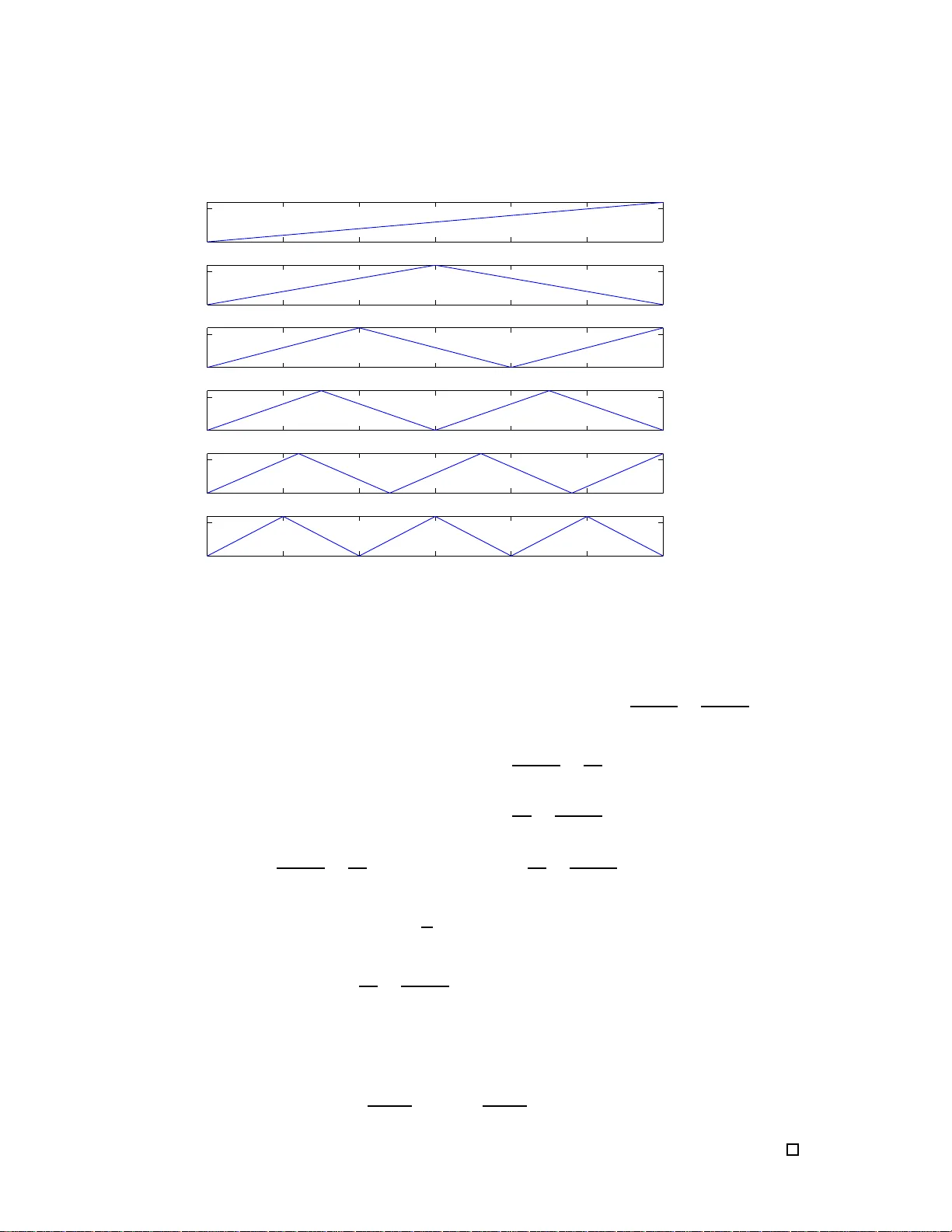
Discrete en tropies of orthogonal p olynomia ls A.I. Aptek arev J.S. Dehesa A. Mart ´ ınez-Fink elsh tein ∗ R. Y´ a ˜ nez Octob er 30, 2018 Abstract Let p n , n ∈ N , b e the n th orthonormal polynomial on R , whose zeros are λ ( n ) j , j = 1 , . . . , n . Then for each j = 1 , . . . , n , ~ Ψ 2 j def = Ψ 2 1 j , . . . , Ψ 2 nj with Ψ 2 ij = p 2 i − 1 ( λ ( n ) j ) n − 1 X k =0 p 2 k ( λ ( n ) j ) ! − 1 , i = 1 , . . . , n, defines a discrete probability distribution. The Shannon entrop y of the sequence { p n } is consequently defined as S n,j def = − n X i =1 Ψ 2 ij log Ψ 2 ij . In the ca se of Chebyshev po lynomials of the fir st and second kinds an explicit a nd clo sed formula for S n,j is obtained, revealing interesting connections with the num b er theor y . Besides, several r esults of numerical computations exemplifying the behavior of S n,j for other families a re also pre s en ted. AMS MOS Classification: 33C45, 41A58 , 42C05, 94A17 Keyw ord s: orthogonal p olynomials, Shannon en tr opy , Chebyshev p olynomials, E uler-Macla u rin form u la 1 In tro duc tion Giv en a probab ility Borel measure µ supp orted on the real line R with infi nite num b er of p oin ts of increase, we can bu ild a sequence of orthonormal p olynomials p n ( λ ) = κ n λ n + lo we r degree terms, n = 0 , 1 , 2 , . . . , uniqu ely determined if all κ n > 0, su c h that Z p n ( λ ) p m ( λ ) dµ ( λ ) = δ nm , m, n = 0 , 1 , 2 , . . . ∗ Corresponding author. 1 Beside their imp ortance in approximat ion theory and m u ltiple b ranc hes of applied and p ure mathematics, orth ogonal p olynomials constitute a notew orthy ob ject fr om the p oint of view of the information theory . This interest originated in the framew ork of the m o d er n d en- sit y functional theory [14, 15, 19], that states that the p hysical and c hemical prop erties of fermionic systems (atoms, molecules, nuclei, solids) m a y b e completely describ ed by means of the single-particle p robabilit y density . F or instance, if th e solution of the time-indep end ent Sc h r ¨ odinger equation in a D -dimensional p osition space for an sin gle particle s y s tem, H Ψ ( ~ r ) = E Ψ( ~ r ) , ~ r = ( x 1 , . . . , x D ) , is the wa ve function Ψ( ~ r ), then the p osition densit y of the s ystem is ρ ( ~ r ) = | Ψ( ~ r ) | 2 . Analo- gously , the wa v e fu nction in momen tu m sp ace b Ψ( ~ p ), which is the F ourier transform of Ψ( ~ r ), giv es the momentum d en sit y γ ( ~ p ) = | b Ψ( ~ p ) | 2 . Information measures of these densities are closely related to fundamental and exp erimen- tally measur ab le physical quanti ties, whic h m ak es them u seful in the study of the structure and dyn amics of atomic and molecular s y s tems. F or instance, the Boltzmann-Gibbs-Shanno n (p osition-space) entr opy B ( ρ ) = − Z ρ ( ~ r ) log ρ ( ~ r ) d ~ r (1) measures the uncertain ty in the lo caliz ation of the particle in space. Lo wer entrop y corre- sp onds to a more concen tr ated wa v e fun ction, with smaller uncertain ty , and hence, higher accuracy in predicting the localization of the particle. T he we ll known inequalit y [5, 8, 9] B ( ρ ) + B ( γ ) ≥ D (1 + log π ) (2) is an exp r ession of the p osition-momen tum uncertaint y principle, muc h stronger than the reno wn ed Heisen b erg relation, that pla ys a ma jor role in quan tum mechanics (see [22]). The study of the in formation measur es of orthogonal p olynomials is motiv ated by th e fact that th e densities of man y quantum mec h an ical systems with sh ap e-in v arian t p oten tials (e.g., the harmonic oscillator and the h ydrogenic systems) typical ly cont ain terms of th e form p 2 n µ ′ . Explicit form u las, numerical algorithms and asymptotic b eha vior ha v e b een studied b oth for the Boltzmann-Gibbs-Sh annon (or differen tial) en tropy B n = − Z p 2 n ( λ ) log p 2 n ( λ ) µ ′ ( λ ) dµ ( λ ) and for the the relativ e entrop y (or the Kullback-Le ibler in f ormation) K n = − Z p 2 n ( λ ) log p 2 n ( λ ) dµ ( λ ) ; see e.g.[3, 4, 7, 10, 11, 12, 13, 20] and the references therein. In particular, it has b een sho w n that f or Chebyshev orthonormal p olynomials of the first kin d the relativ e en trop y K n do es not d ep end on n , K n = log (2) − 1 , and th at this v alue is asymptotically maximal among all orthogonalit y measures on [ − 1 , 1] (see [7]), giving a form al explanation to the in tu itiv e notion that these p olynomials are the most “un iformly” distributed ones. 2 Ho we v er, ther e are seve r al discrete m easures naturally asso ciated with a sequence of orthogonal p olynomials. The an alysis of suc h measures r equires the us e of the “gen uine” en tropy stud ied by Shannon. In order to s tr ess the discrete c haracter of this entrop y , h ereafter w e r efer to it as Shannon entr opy and denote it b y the letter S . The ev aluation of S hannon en tropy for d iscrete distributions is a basic questio n of information th eory (see e.g. [17, 18]); u nlik e for B n and K n , there are n o kn o wn results for th e Shannon entrop y of the orthogonal p olynomials r elated distribu tions, du e in part to the tec hn ical difficulties of the explicit ev aluation of su ms. It is well known that the orthonormal p olynomials p n satisfy a thr ee-te r m r ecurrence relation of the f orm λ p i ( λ ) = b i +1 p i +1 ( λ ) + a i +1 p i ( λ ) + b i p i − 1 ( λ ) , i = 0 , 1 , . . . , n − 2 , p − 1 = 0 , p 0 = 1 . (3) Using its co efficien ts we can d efine the n × n Jacobi matrix ( n ∈ N ), L n = a 1 b 1 b 1 a 2 b 1 . . . . . . . . . b n − 2 a n − 1 b n − 1 b n − 1 a n , (4) whic h d etermines a self-adjoin t linear op erator (discrete Sc h r ¨ odinger op erator) L n : R n → R n b y L ~ e i = b i ~ e i +1 + a i ~ e i + b i − 1 ~ e i − 1 , i = 1 , . . . , n , where ~ e 1 , . . . ~ e n is the canonical basis in R n , and w e agree that ~ e 0 = ~ e n +1 = ~ 0. Moreo ver, u p to a constant factor, p n ( λ ) = d et( L n − λI ), whic h sho ws that the eigen v alues λ ( n ) k , k = 1 , . . . , n , are the zeros of p n , and ~ P k = p 0 , p 1 ( λ ( n ) k ) , . . . , p n − 1 ( λ ( n ) k ) T , are eigenv ectors corresp onding to d ifferent eigenv alues. Let h· , ·i denote the standard (euclidean) inner pr od uct in R n , and ℓ n ( λ ) def = n − 1 X k =0 p 2 k ( λ ) ! − 1 = 1 h ~ P k , ~ P k i (5) the n -th Ch ristoffel fu nction. If w e n ormalize ~ Ψ k = q ℓ n ( λ ( n ) k ) ~ P k , then a consequence of the w ell kn o wn Chr istoffel -Darb oux form ula is that h ~ Ψ i , ~ Ψ j i = δ ij , i, j = 1 , . . . , n . (6) In other w ord s, the n × n matrix Ψ = q ℓ n ( λ ( n ) j ) p i − 1 ( λ ( n ) j ) n i,j =1 , 3 made of column s ~ Ψ j , j = 1 , . . . , n , is orthogonal, so th at the squares of the comp onents of eac h (column ) v ector ~ Ψ j , j = 1 , . . . , n , giv e a discrete probabilit y distribu tion, and th ese distributions are m u tually orth ogo nal in the sense of (6). Recall that give n a probabilit y measure µ = ( µ 1 , µ 2 , . . . , µ n ) on a system of n p oin ts, e. g. P n j =1 µ j = 1, the standard Shannon entr opy reads S ( µ ) = − P n j =1 µ j log µ j . By Jensen’s inequalit y , 0 ≤ S ( µ ) ≤ log ( n ) , (7) and th e maximum of corresp onds to a uniform probability d istribution. In th is sense, it is quite n atural to th ink of the Sh annon entrop y as a measure of uncertain t y . Remark 1 W e can giv e the fol lo wing geometric in terp retatio n to the S hannon entrop y . Giv en in R n an orthonormal basis { ~ e i } , an y vecto r ~ v ∈ R n has a unique represen tation ~ v = n X i =1 h ~ v , ~ e i i ~ e i . Assume that ~ v ∈ S n − 1 , that is, k ~ v k = 1, where k · k means the Euclidean n orm. A natur al w ay of measuring a relativ e distance of ~ v from the basis { ~ e i } is by means of the S hannon en tropy S n def = − n X i =1 p i log( p i ) , p i def = h ~ e i , ~ v i 2 , i = 1 , . . . , n . (8) Indeed, if ~ v = ~ e k for a certain k , then p j = δ j k , and S n = 0. On the contrary , if ~ v is “equidistan t” from all v ectors ~ e j ’s, then all p j = 1 /n , and S n attains its maxim um , S n = log( n ). Motiv ated by the discussion ab o v e, we int r od uce the discr ete entr opy of orthonormal p olynomials p n , defin ed as the S hannon entrop y of the probability d istr ibution giv en by eac h column of Ψ : S n,j def = − n X i =1 Ψ 2 ij log Ψ 2 ij = − ℓ n ( λ ( n ) j ) n X i =1 p 2 i − 1 ( λ ( n ) j ) log ℓ n ( λ ( n ) j ) p 2 i − 1 ( λ ( n ) j ) = − log ℓ n ( λ ( n ) j ) − ℓ n ( λ ( n ) j ) n X i =1 p 2 i − 1 ( λ ( n ) j ) log p 2 i − 1 ( λ ( n ) j ) , j = 1 , . . . , n , (9) whic h can b e generalized as S n ( λ ) def = − lo g ( ℓ n ( λ )) − ℓ n ( λ ) n X i =1 p 2 i − 1 ( λ ) log p 2 i − 1 ( λ ) , (10) so th at S n,j = S n ( λ ( n ) j ). Unlik e the Boltzmann-Gibbs-Shannon en tropy , S n do es not dep end on the w eight fu nc- tion µ ′ , and is suitable b oth for d iscrete and contin uous orthogonalit y (cf. some numerical exp erimen ts in Section 5). 4 Remark 2 Since Ψ is an orthogonal m atrix, its r o ws q ℓ n ( λ ( n ) 1 ) p i − 1 ( λ ( n ) 1 ) , . . . , q ℓ n ( λ ( n ) n ) p i − 1 ( λ ( n ) n ) are also orthogonal v ectors of R n : δ ij = n X k =1 ℓ n ( λ ( n ) k ) p i − 1 ( λ ( n ) k ) p j − 1 ( λ ( n ) k ) = Z p i − 1 ( λ ) p j − 1 ( λ ) dµ n ( λ ) , where µ n is the normalized counting measure of zeros of p n : µ n = n X k =1 ℓ n ( λ ( n ) k ) δ λ ( n ) k . Hence, w e may d efi ne the dual discrete ent rop y , corr esp onding to rows of Ψ : S i n def = − n X j =1 ℓ n ( λ ( n ) j ) p 2 i − 1 ( λ ( n ) j ) log ℓ n ( λ ( n ) j ) p 2 i − 1 ( λ ( n ) j ) , j = 1 , . . . , n . A basic qu estion of in formation theory is the ev aluation of th e Shannon en tropy . In this pap er we compute explicitly the discrete entrop y S n,j corresp onding to Chebyshev orthonor- mal p olynomials of the fi rst and second kinds. A straigh tforward interpretation of (9) as Riemann su ms allo ws to find the fir st tw o terms of the asymp totic expansion of S n,j for fi x ed j and large n ; these terms do not dep end on j . Ho wev er, numerical exp erimen ts r ev eal the existence of certain picks, p oint ing down wa r ds, wh ose p osition wa s not clear a p riori (see Figure 2). Th e form u las presented b elo w giv e a complete explanation of this phenomenon and exhib it n ice connections with relev an t ob jects from the num b er theory . In ord er to state our r esu lts we need to introdu ce an auxiliary fu nction R ( x ) def = x (Ψ (1 − x ) + 2 γ + Ψ (1 + x )) , x ∈ [0 , 1) , (11) where γ is th e Eu ler constan t, and Ψ( x ) = Γ ′ ( x ) / Γ( x ) is th e digamma function. Alternativ ely , R can b e giv en by its T a ylor series expansion, ab s olutely con ve rgen t for | x | < 1 (cf. formula (6.3.14 ) in [1 ]), R ( x ) = − 2 ∞ X k =1 ζ (2 k + 1) x 2 k + 1 , (12) where ζ ( · ) is the Riemann zeta fun ction. Recall that Chebyshev p olynomials of the first ki nd are given by the exp licit form ula p m ( λ ) = T m ( λ ) = ( 1 , if m = 0 , √ 2 cos( mθ ) , otherwise, λ = cos θ . (13) They are orth onormal w ith resp ect to the weig ht w ( λ ) = 1 π 1 √ 1 − λ 2 on [ − 1 , 1] . 5 Theorem 1 L et n ∈ N , j ∈ { 1 , 2 , . . . , n } . F or orthonormal Chebyshev p olynomials of the first ki nd, the discr ete entr opy has the fol lowing e xpr ession: S n,j = log n + log 2 − 1 + log 2 n + R d 2 n , d = GCD (2 j − 1 , n ) . Hereafter GCD stands for the greatest common divisor. Remark 3 Observ e that co efficien ts in the series expansion (12) are all p ositiv e, so that R ( x ) < 0 and is strictly decreasing for x ∈ (0 , 1) (see Figure 1). Since 1 ≤ d ≤ n , we see that 0 0.1 0.2 0.3 0.4 0.5 −0.4 −0.35 −0.3 −0.25 −0.2 −0.15 −0.1 −0.05 0 Figure 1: F u nction R ( x ), for x ∈ [0 , 1 / 2]. max j ∈{ 1 , 2 ,.. . , n } S n,j = log n + log 2 − 1 + log 2 n − 2 ∞ X k =1 ζ (2 k + 1) 1 2 n 2 k + 1 , attained when GCD(2 j − 1 , n ) = 1. F u rthermore, if n is o dd, then S n,j attains its minim u m min j ∈{ 1 , 2 ,.. . , n } S n,j = log n − log 2 + log 2 n , at a single v alue j = ( n + 1) / 2. I t is th e only lo cal minimum of S n,j if n ≥ 3 is prime. The r eader can compare th ese observ ations with th e results of n u merical exp eriments sho wn in Figure 2. 6 0 50 100 150 4.665 4.67 4.675 4.68 4.685 4.69 4.695 4.7 4.705 4.71 n=150 0 20 40 60 80 100 120 140 160 4.25 4.3 4.35 4.4 4.45 4.5 4.55 4.6 4.65 4.7 4.75 n=151 0 20 40 60 80 100 120 140 160 4.7209 4.721 4.7211 4.7212 4.7213 4.7214 4.7215 4.7216 4.7217 n=152 Figure 2: Chebyshev p olynomials of the first kind: en tropy S n,j for n = 150, 151 and 152. The Chebyshev p olynomials of the se c ond kind are p m ( λ ) = U m ( λ ) = sin [( m + 1) arccos( λ )] √ 1 − λ 2 = sin [( m + 1) θ ] sin( θ ) , λ = cos θ , m ≥ 0 . (14) They are orth onormal w ith resp ect to the weig ht w ( λ ) = 2 π p 1 − λ 2 on [ − 1 , 1]. Theorem 2 L et n ∈ N , j ∈ { 1 , 2 , . . . , n } . F or orthonormal Chebyshev p olynomials of the se c ond kind, the discr e te entr opy has the fol lowing expr ession: S n,j = log ( n + 1) + log 2 − 1 + R d n + 1 , d = GCD ( j, n + 1) . 7 Remark 4 Since 1 ≤ d ≤ n , w e see th at max j ∈{ 1 , 2 ,.. .,n } S n,j = log ( n + 1) + log 2 − 1 + R 1 n + 1 , attained when GCD( j, n + 1) = 1. F urthermore, if n is o dd, S n,j attains its minim u m min j ∈{ 1 , 2 ,.. . , n } S n,j = log n + 1 2 , at a single v alue j = ( n + 1) / 2. I t is th e only lo cal minimum of S n,j if n ≥ 3 is prime. Remark 5 The leading term log n in b oth cases s h o ws that the v alues p 2 0 , p 2 1 ( λ ( n ) k ), . . . , p 2 n − 1 ( λ ( n ) k ), normalized by an appropriate factor, are app ro ximately equidistribu ted. Com- paring formulas f r om Theorem 1 and 2 we see th at un lik e for th e Boltzmann en tropy , the discrete en tropy of the C heb ysh ev p olynomials of the first kind is generally smaller. The rest of the article is organized as follo ws. In the next section (that might ha ve an indep end en t inte rest) we d iscuss some piece-wise lin ear endomorph isms of R and their connection with p ermutatio n s. This allo ws to r ed uce the analysis of the general discrete en tropy S n,j to some sp ecific v alues of the index j . A mo dification of the Euler-Maclaurin summation formula is th e key to the p r oof of Theorem 1 in Section 3. Th e close connection b et wee n p olynomials of the first and second kin ds allo ws us to av oid similar cumb ersome computations in the pro of of Theorem 2 in S ectio n 4. Finally , we discu s s some numerical result obtained f or the d iscrete entrop y for other imp ortant families of orthogonal p olynomials. 2 Piece-wise linear endomorphism of R and p erm utations The key role is p la y ed b y the follo wing auxiliary function: Definition 3 F or e ach p air of values n, j ∈ N , let ϕ ( n ) j ( x ) denote the line ar spline on R with no des at { mn/j } m ∈ Z interp olating the values mn j , n 1 − ( − 1) m 2 m ∈ Z . F unctions ϕ ( n ) j can b e explicitly describ ed b y x ∈ 2 k − 1 j n, 2 k + 1 j n for k ∈ Z ⇒ ϕ ( n ) j ( x ) = | j x − 2 k n | (15) (see Figure 3). In order to summarize necessary prop erties of functions ϕ ( n ) j w e n eed to in tro d u ce some notation. W e denote by a ≡ b mo d ( c ) the standard arithmetic congruence of a and b mo dulo c , GCD( a, b ) stand s f or the greatest common divisor of int eger num b ers a and b , and N 0 def = N ∪ { 0 } . W e define also the remainder fu nction D : N 0 × N → Z , by D ( p, q ) = r if and only if − q / 2 ≤ r < q / 2 and p ≡ r mo d ( q ) (note that this defin ition is sh ifted with resp ect to a standard concept of remaind er; thus, D ( p, q ) tak es also negativ e v alues). Main Lemma L et n, j ∈ N , with GCD ( j, n ) = d . 8 (i) We have ϕ ( n ) j x + n d = ( n − ϕ ( n ) j ( x ) , i f j /d is o dd, ϕ ( n ) j ( x ) , if j /d is e ven, x ∈ R , (16) and for k ∈ Z , ϕ ( n ) j ( k ) = d · ϕ ( n/d ) j /d ( k ) . (17) (ii) If d = n , then ϕ ( n ) j ( Z ) ⊂ { 0 , n } . (iii) If GCD ( j, 2 n ) = d < n , then ϕ ( n ) j ( { 1 , . . . , n − 1 } ) \ { 0 , n } = n dm : m = 1 , . . . , n d − 1 o , (18) and for any m ∈ 1 , . . . , n d − 1 , card { k ∈ { 1 , . . . , n − 1 } : ϕ ( n ) j ( k ) = dm } = d . (19) (iv) If GCD ( j, 2 n ) = 2 d and d < n , then ϕ ( n ) j ( { 1 , . . . , n − 1 } ) \ { 0 , n } = 2 dm : m = 1 , . . . , n − d 2 d , (20) and for any m ∈ 1 , . . . , n − d 2 d , card { k ∈ { 1 , . . . , n − 1 } : ϕ ( n ) j ( k ) = 2 dm } = 2 d . (21) W e prov e this lemma establishing a num b er of in termediate aux iliary r esults. Prop osition 4 L et n, j ∈ N . F unction ϕ ( n ) j : R → [0 , n ] satisfies: (i) ϕ ( n ) j is eve n: ϕ ( n ) j ( − x ) = ϕ ( n ) j ( x ) , x ∈ R . (ii) Symmetry: ϕ ( n ) j x + n j = n − ϕ ( n ) j ( x ) , x ∈ R . (22) In p articular, ϕ ( n ) j is p erio dic with p erio d 2 n/j . (iii) F or every x ∈ R , either ϕ ( n ) j ( x ) − j x 2 n ∈ Z or ϕ ( n ) j ( x ) + j x 2 n ∈ Z . (23) (iv) F or k ∈ Z , ϕ ( n ) j ( k ) = |D ( j k , 2 n ) | , k ∈ Z . (24) 9 0 1 2 3 4 5 6 0 5 0 1 2 3 4 5 6 0 5 0 1 2 3 4 5 6 0 5 0 1 2 3 4 5 6 0 5 0 1 2 3 4 5 6 0 5 0 1 2 3 4 5 6 0 5 Figure 3: F u nctions ϕ (6) j ( x ), x ∈ [0 , 6], for j = 1 , . . . , 6. Pr o of. Prop ert y (i) is ob vious from construction. By (15) , if x ∈ 2 k − 1 j n, 2 k + 1 j n for k ∈ Z , then ϕ ( n ) j ( x ) = 2 k n − j x, if x ∈ 2 k − 1 j n, 2 k j n , j x − 2 k n, if x ∈ 2 k j n, 2 k + 1 j n . In p articular, if x ∈ 2 k − 1 j n, 2 k j n , then x + n /j ∈ 2 k j n, 2 k + 1 j n . Thus, ϕ ( n ) j ( x + n/j ) = j x + n j − 2 k n , ϕ ( n ) j ( x ) = 2 k n − j x , and (22 ) follo w s . Th e case x ∈ 2 k j n, 2 k + 1 j n is analyzed analogously . Iden tit y (23) is a straigh tforward consequence of the explicit formula (15). Assume that k ∈ Z an d D ( j k , 2 n ) = r ; it means that there exists t ∈ Z suc h that r = j k − 2 nt ∈ [ − n, n ). Thus, |D ( j k , 2 n ) | = | j k − 2 nt | . F urth er m ore, from th e inequalities − n ≤ r < r it follo ws that 2 t − 1 j n ≤ k < 2 t − 1 j n . Comparing it w ith the d efinition of ϕ ( n ) j in (15), we establish (24). 10 Although function ϕ ( n ) j is w ell defin ed on whole R , w e will b e mainly int erested in its v alues on the interv al [0 , n ]. In particular, we need to study ho w ϕ ( n ) j acts on integ ers 1 , 2 , . . . n − 1: Prop osition 5 L et n, j ∈ N with GCD ( j, n ) = 1 . (i) F or any j ∈ N , ϕ (1) j ( Z ) ⊂ { 0 , 1 } . (ii) If n > 1 and j is o dd, then ϕ ( n ) j : { 1 , . . . , n − 1 } → { 1 , . . . , n − 1 } is a bije ction. In other wor ds, ϕ ( n ) j acts as a p ermutation on the set { 1 , . . . , n − 1 } . (iii) If n > 1 and j is even (and thus n is o dd), then ϕ ( n ) j : 1 , . . . , n − 1 2 → 2 m : m = 1 , . . . , n − 1 2 and ϕ ( n ) j : n + 1 2 , . . . , n − 1 → 2 m : m = 1 , . . . , n − 1 2 ar e bije ctions. Pr o of. By construction, ϕ ( n ) j ( k ) ∈ { 0 , n } if and only if k = mn/j , with m ∈ Z . S in ce GCD( j, n ) = 1, mn /j ∈ Z only if m is a m ultiple of j . Hence, ϕ ( n ) j ( k ) ∈ { 0 , n } if and only if k ∈ { mn : m ∈ Z } . With n = 1 this yields (i) . F urthermore, if n > 1, then ϕ ( n ) j ( { 1 , . . . , n − 1 } ) ⊂ { 1 , . . . , n − 1 } . Hence, in order to pro ve (ii) it is sufficien t to sho w that ϕ ( n ) j is injectiv e on { 1 , . . . , n − 1 } . Indeed, by (24), ϕ ( n ) j ( x ) = r if | D ( j x, 2 n ) | = r , that is, if there exists u ∈ Z su c h that j x ± r = 2 nu , with an appropr iate c hoice of the sign. Th us , if ϕ ( n ) j ( x ) = ϕ ( n ) j ( y ), then there exists u ∈ Z suc h th at j ( x ± y ) = 2 nu , again with an appropriate c hoice of the sign. Ho wev er, since j is o d d and GCD ( j, n ) = 1, w e conclude that GCD( j, 2 n ) = 1. Th is m eans that x ± y must b e divisible b y 2 n . But | x ± y | < 2 n , so this identit y is p ossible only if x = y . If j is ev en, then a similar an alysis sho ws that k → |D ( j k / 2 , n ) | is in j ectiv e b oth on 1 , . . . , n − 1 2 and n + 1 2 , . . . , n − 1 . It r emains to use that by (24), ϕ ( n ) j ( k ) = 2 |D ( j k / 2 , n ) | , k ∈ Z . This establishes (iii) . 11 Prop osition 6 L et m, n ∈ N , and GCD ( m, n ) = d . Then GCD ( m, 2 n ) = d ⇔ m/d is o dd, and GCD ( m, 2 n ) = 2 d ⇔ m/d is even, and n/d i s o dd. Pr o of. Assume that d = 1. It is obvio us that GCD( m, 2 n ) = 1 only if m is o dd , and vicev ersa, if m is o dd and GCD ( m, n ) = 1, then necessarily GCD ( m , 2 n ) = 1. Analogously , if GCD( m, 2 n ) = 2, it m eans that m is ev en, and sin ce m and n are coprime, n must b e o dd . The recipro cal is also tr ivially true: if m is even and GCD ( m, n ) = 1, then also GCD( m/ 2 , n ) = 1, and GCD( m, 2 n ) = 2 · GCD( m/ 2 , n ) = 2 . The general case is reduced to d = 1 by observin g that GCD( m, n ) = d ⇔ GCD m d , n d = 1 . No w we are ready to pr o v e th e m ain result of this section. Pr o of of the M ain L emma. F ormula (17) is a straigh tforw ard consequence of (24). S ince ϕ ( n ) j x + n d = ϕ ( n ) j x + n j j d , form u la (16) follo ws from (22). Since GCD( j, n ) = d ⇒ GCD j d , n d = 1 , w e can apply Prop osition 5 to f u nction ϕ ( n/d ) j /d . In f act, statemen t (ii) is a str aightforw ard consequence of (i) of Prop osition 5 and formula (17). Assume that GCD( j, n ) = GCD( j, 2 n ) = d < n ; by Prop osition 6, j /d is o dd. By (ii ) of Prop osition 5, ϕ ( n/d ) j /d : { 1 , . . . , n/d − 1 } → { 1 , . . . , n/d − 1 } is a bijection, an d b y formula (17), th is is v alid also for ϕ ( n ) j : { 1 , . . . , n/d − 1 } → { dm : m = 1 , . . . , n/d − 1 } . F urth ermore, any k ∈ { 1 , . . . , n − 1 } can b e r epresen ted as k = r + m n d , m ∈ { 0 , 1 , . . . , d − 1 } , r ∈ { 0 , 1 , . . . , n/d − 1 } . By (16), ϕ ( n ) j ( k ) = ϕ ( n ) j r + m n d = ( n − ϕ ( n ) j ( r ) , if m is o dd, ϕ ( n ) j ( r ) , if m is eve n. 12 In consequen ce, for ev ery m ∈ { 0 , 1 , . . . , d − 1 } , ϕ ( n ) j : n 1 + m n d , 2 + m n d , . . . , ( m + 1) n d − 1 o → { dm : m = 1 , . . . , n/d − 1 } is a bijection. This prov es (18)–(19). On the other hand, if GCD( j, 2 n ) = 2 d < 2 n , then by Pr op osition 6, j /d is ev en and n /d is od d, an d by (ii i ) of Pr op osition 5, ϕ ( n/d ) j /d : 1 , . . . , n/d − 1 2 → 2 m : m = 1 , . . . , n/d − 1 2 and ϕ ( n/d ) j /d : n/d + 1 2 , . . . , n/d − 1 → 2 m : m = 1 , . . . , n/d − 1 2 are b ijectio ns, so that by f orm ula (17), this is v alid also for ϕ ( n ) j : 1 , . . . , n/d − 1 2 → 2 dm : m = 1 , . . . , n/d − 1 2 and ϕ ( n ) j : n/d + 1 2 , . . . , n/d − 1 → 2 dm : m = 1 , . . . , n/d − 1 2 . Again, if k ∈ { 1 , . . . , n − 1 } , and k = r + m n d , m ∈ { 0 , 1 , . . . , d − 1 } , r ∈ { 0 , 1 , . . . , n/d − 1 } , w e hav e by (16), ϕ ( n ) j ( k ) = ϕ ( n ) j r + m n d = ϕ ( n ) j ( r ) . In consequen ce, for ev ery m ∈ { 0 , 1 , . . . , d − 1 } , ϕ ( n ) j : 1 + m n d , 2 + m n d , . . . , n/d − 1 2 + m n d → 2 dm : m = 1 , . . . , n/d − 1 2 and ϕ ( n ) j : n/d + 1 2 + m n d , . . . , n d − 1 + m n d → 2 dm : m = 1 , . . . , n/d − 1 2 are b ijectio ns. This pro ves (20 )–(21). 3 Discrete en trop y for Cheb yshev p olynomials of t he first kind F rom the explicit formulas (13) for p n is easy to compute that in this case ℓ − 1 n ( λ ) = n − 1 2 + 1 2 sin(2 n − 1) θ sin θ , 13 and for S n ( λ ) defined in (10) w e h a v e S n ( λ ) = − log ( ℓ n ( λ )) − ℓ n ( λ ) n − 1 X i =0 p 2 i ( λ ) log p 2 i ( λ ) = − log ( ℓ n ( λ )) − ℓ n ( λ ) n − 1 X i =1 p 2 i ( λ ) log 2 cos 2 ( iθ )( λ ) = − log ( ℓ n ( λ )) − ℓ n ( λ ) log(2) n − 1 X i =1 p 2 i ( λ ) − ℓ n ( λ ) n − 1 X i =1 p 2 i ( λ ) log cos 2 ( iθ ) = − log ( ℓ n ( λ )) − ℓ n ( λ ) log(2) ℓ − 1 n ( λ ) − 1 − 2 ℓ n ( λ ) n − 1 X i =1 cos 2 ( iθ ) log cos 2 ( iθ ) , so th at S n ( λ ) = − log ( ℓ n ( λ )) + log (2) ( ℓ n ( λ ) − 1) − 2 ℓ n ( λ ) n − 1 X i =1 cos 2 ( iθ ) log cos 2 ( iθ ) . (25) Since for Cheb ys hev p olynomials of the fir st kind and degree n the zeros are λ ( n ) j = cos (2 j − 1) π 2 n , j = 1 , . . . , n , w e see that ℓ n ( λ j ) = 1 /n for j = 1 , . . . , n . In p articular, by (25), in this case S n,j = S n λ ( n ) j = log n 2 + log 2 n − 2 n b S n,j , (26) where b S n,j def = n − 1 X i =1 cos 2 (2 j − 1) π 2 n i log cos 2 (2 j − 1) π 2 n i . (27) F ormulas (26)–(27) r educe the compu tatio n of S n,j to the analysis of th e mo difie d entr opy b S n,j . But fir st w e express b S n,j in terms of the au x iliary f unctions ϕ ( n ) j defined b y (15). Prop osition 7 F or j ∈ N , cos (2 j − 1) π 2 n x = cos π 2 n ϕ ( n ) 2 j − 1 ( x ) , x ∈ R . (28) In p articular, b S n,j = n − 1 X k =1 cos 2 π 2 n ϕ ( n ) 2 j − 1 ( k ) log cos 2 π 2 n ϕ ( n ) 2 j − 1 ( k ) . (29) Pr o of. By (23), giv en x ∈ R , either ϕ ( n ) 2 j − 1 ( x ) − (2 j − 1) x 2 n ∈ Z or ϕ ( n ) 2 j − 1 ( x ) + (2 j − 1) x 2 n ∈ Z . 14 Hence, there exists m ∈ Z su c h that either π 2 n ϕ ( n ) j ( x ) = (2 j − 1) π 2 n x + π m , or π 2 n ϕ ( n ) j ( x ) = − (2 j − 1) π 2 n x + π m , and (28 ) follo w s . Using the arithmetic prop erties of ϕ ( n ) j established ab o v e, w e can simplify th e expression for the m o difi ed entrop y: Prop osition 8 L et n ∈ N and j ∈ { 1 , 2 , . . . , n } . If GCD (2 j − 1 , n ) = d then b S n,j = 0 if j = n + 1 2 , d ( n/d ) − 1 X k =1 cos 2 π d 2 n k log cos 2 π d 2 n k , otherwise. (30) F u rtherm or e, b S n,j = b S n,n − j +1 . (31) Pr o of. Observe that d ≤ n , and for j ∈ { 1 , 2 , . . . , n } we h av e d = n ⇔ j = n + 1 2 . F urth ermore, an y term with ind ex k in the sum (29), for whic h ϕ ( n ) 2 j − 1 ( k ) ∈ { 0 , n } , v anishes. Since GCD (2 j − 1 , n ) = GCD(2 j − 1 , 2 n ), form u la (30) follo ws in a straigh tforw ard wa y fr om (29), (ii)–(ii i) of the Main Lemma, and the comm utativit y of the sum . Moreo v er, GCD(2 j − 1 , n ) = GCD(2( n − j + 1) − 1 , n ) . (32) Indeed, let GCD(2 j − 1 , n ) = d , so that 2 j − 1 = ds , n = dt , where s, t ∈ N and GCD ( s , t ) = 1. By a we ll kn o wn charact erization of coprime intege rs, there exists inte gers x , y suc h that xs + y t = 1. W e ha v e 2( n − j + 1) − 1 = (2 t − s ) d , and − x (2 t − s ) + (2 x + y ) t = xs + y t = 1 ⇒ GCD(2 t − s, t ) = 1 , so th at GCD(2( n − j + 1) − 1 , n ) = d , w hic h pro v es (32). In particular, b S n,j and b S n,n − j +1 share the s ame v alue d in (30), wh ic h pro v es (31) . Next w e fi nd a series representati on for b S n,j : Prop osition 9 L et n ∈ N , j ∈ { 1 , 2 , . . . , n } , and GCD (2 j − 1 , n ) = d . Then 1 n b S n,j = 1 2 (1 − 2 log 2) + ∞ X s =1 ζ (2 s + 1) d 2 n 2 s +1 , (33) wher e ζ ( · ) i s the Riemann zeta function. Remark 6 Observ e th at d/ 2 n ≤ 1 / 2, so that the series in the right hand side is conv ergen t. 15 Pr o of. In order to fi nd the v alue of b S n,j w e follo w the strategy [3] of computing for 0 < 2 − ǫ < q < 2 + ǫ the l q norms N ( q ; h ) def = n/d − 1 X j =0 cos q π d 2 n j = π / (2 h ) − 1 X j =0 cos q ( hj ) , h def = π d 2 n , (34) and consider in g th e partial d eriv ativ e of N ( q ; h ) w ith r esp ect to q at q = 2: b S n,j = 2 d π / (2 h ) − 1 X j =0 cos 2 ( hj ) log cos ( hj ) = 2 d ∂ ∂ q N ( q ; h ) q =2 . (35) Observe that N ( q ; h ) are related to the Riemann sum s of an int egral: hN ( q ; h ) ≃ Z π / 2 0 cos q ( u ) du = Z π / 2 0 cos( u ) π 2 − u q π 2 − u q du . (36) Consider cos q ( x ) and (cos( x ) / ( π / 2 − x )) q as analytic fun ctio ns at x = 0 and x = π / 2, resp ectiv ely , whose single v alued branches in the corresp onding neigh b orho o ds are fixed by cos q ( x ) x =0 = cos( x ) π 2 − x q x = π / 2 = 1 . Denote by cos q ( x ) = 1 + ∞ X s =1 α s ( q ) x s , cos( x ) π 2 − x q = 1 + ∞ X s =1 β s ( q ) π 2 − x s the T a ylor expans ions of these functions. O bserv e that α s ( q ) = β s ( q ) = 0 for o d d indices s . The Euler-Maclaurin summation formula for integral s with algebraic singularit y at the en d p oin ts (see [23]) yields hN ( q ; h ) = h π / (2 h ) − 1 X j =0 cos q ( hj ) = h + Z π / 2 0 cos q ( u ) du + + ∞ X s =0 α s ( q ) ζ ( − s ) h s +1 + ∞ X s =0 β s ( q ) ζ ( − s − q ) h s + q +1 ; (37) at this stage we unders tand this identit y in standard terms of an asymptotic exp an s ion. Since ζ (0) = − 1 / 2 and ζ ( − 2 j ) = 0 for j ∈ N , formula in (37) redu ces to N ( q ; h ) = 1 2 + 1 h Z π / 2 0 cos q ( u ) du + ∞ X s =0 β 2 s ( q ) ζ ( − 2 s − q ) h 2 s + q . (38) P ap er [23] addresses also the case of the Euler-Maclaurin sum m atio n form u la pro viding fu ll asymptotic expansion for integ rands with logarithmic singularities at the end p oin ts. I n fact, 16 these results from [23] can b e ob tained by formal d ifferen tiation of (38) with resp ect to q . T aking into accoun t (35) we obtain: b S n,j =2 d ∂ ∂ q N ( q ; h ) q =2 = 2 d h Z π / 2 0 cos 2 ( u ) log (cos( u )) du − 2 d ∞ X s =0 β 2 s (2) ζ ′ ( − 2( s + 1)) h 2( s +1) . (39) But Z π / 2 0 cos 2 ( u ) log (cos( u )) du = π 8 (1 − log 4) , and cos 2 ( z ) ( π 2 − z ) 2 = ∞ X s =0 ( − 1) s 2 2 s +1 (2 s + 2)! π 2 − z 2 s , so th at β 2 s (2) = ( − 1) s 2 2 s +1 (2 s + 2)! . Recalling the d efinition of h and gathering these formulas in (39), w e obtain b S n,j = n 2 (1 − 2 log 2) + d ∞ X s =1 ( − 1) s π 2 s ζ ′ ( − 2 s ) (2 s )! d n 2 s . Iden tit y ζ ′ ( − 2 s ) = ( − 1) s ζ (2 s + 1) (2 s )! π 2 s 1 2 2 s +1 yields no w (33). I t remains to observe that the series in the righ t hand side is con v ergent, th u s this is a b ona fide series expansion of b S n,j . Corollary 10 L et n ∈ N , j ∈ { 1 , 2 , . . . , n } , and GCD (2 j − 1 , n ) = d , then 2 n b S n,j = 1 − 2 log 2 − R d 2 n , (40) with R define d in (11) . Pr o of. It is an immediate consequence of (33) and (12). Remark 7 It is easy to c h ec k that R (1 / 2) = 1 − log (4), so that for d = n we h a v e b S n,j = 0 (cf. form u la (30)). It r emains to use (40) in (26) in order to complete the pro of of T heorem 1 . 17 4 En trop y of Cheb yshev p olynomials of the second kind F rom the explicit formulas (14) it follo ws that the zeros of the C h eb yshev p olynomials of the second kind of d egree n are λ ( n ) j = cos j π n + 1 , j = 1 , . . . , n , and ℓ − 1 n ( λ ) = n − 1 X k =0 p 2 k ( λ ) = 1 2 n sin( θ ) − cos (( n + 1) θ ) sin( nθ ) sin 3 ( θ ) , λ = cos θ . (41) By (14), with λ = cos( θ ), n X k =1 p 2 k − 1 ( λ ) log p 2 k − 1 ( λ ) = n X k =1 p 2 k − 1 ( λ ) log sin 2 ( k θ ) − log sin 2 ( θ ) n X k =1 p 2 k − 1 ( λ ) = sin − 2 ( θ ) n X k =1 sin 2 ( k θ ) log sin 2 ( k θ ) − log sin 2 ( θ ) ℓ − 1 n ( λ ) . In tro ducing the n otat ion b S n,j def = n − 1 X k =1 sin 2 k j π n log sin 2 k j π n , (42) and u sing (9) w e get S n,j = − log( ℓ n ( λ ( n ) j )) − ℓ n ( λ ( n ) j ) b S n +1 ,j sin 2 ( j π / ( n + 1)) − log sin 2 ( j π / ( n + 1)) ℓ n ( λ j ) ! = − log( ℓ n ( λ ( n ) j )) + log sin 2 ( j π / ( n + 1)) − ℓ n ( λ ( n ) j ) sin 2 ( j π / ( n + 1)) b S n +1 ,j . (43) F urth ermore, by (41), ℓ − 1 n ( λ ( n ) j ) = n + 1 2 sin 2 j π n +1 , (44) so th at S n,j = S n λ ( n ) j = log n + 1 2 − 2 n + 1 b S n +1 ,j . (45) Again, formula (45) reduces the computation of S n,j to the analysis of the mo difie d entr opy b S n,j . W e express b S n,j in terms of the auxiliary functions ϕ ( n ) j defined by (15) : Prop osition 11 F or j ∈ N , sin j π n x = sin π 2 n ϕ ( n ) 2 j ( x ) , x ∈ R . (46) In p articular, b S n,j = n − 1 X k =1 sin 2 π 2 n ϕ ( n ) 2 j ( k ) log sin 2 π 2 n ϕ ( n ) 2 j ( k ) . (47) 18 Pr o of. By (23), for every x ∈ R either ϕ ( n ) 2 j ( x ) − 2 j x 2 n ∈ Z or ϕ ( n ) 2 j ( x ) + 2 j x 2 n ∈ Z . Hence, giv en x ∈ R there exists m ∈ Z suc h th at either π 2 n ϕ ( n ) 2 j ( x ) = j π n x + π m , or π 2 n ϕ ( n ) j ( x ) = − j π n x + π m , whic h imp lies (46). Prop osition 12 L et n ∈ N and j ∈ { 1 , 2 , . . . , n − 1 } . Then b S n,j = 0 if j = n / 2 , D n D − 1 X m =1 sin 2 π d n m log sin 2 π d n m , otherwise, (48) wher e D = GCD (2 j, n ) and d = GCD ( j, n ) . F u rtherm or e, b S n,j = b S n,n − j . (49) Pr o of. Observe that D ≤ n , and for j ∈ { 1 , 2 , . . . , n − 1 } w e h a v e D = n ⇔ j = n 2 . It follo ws from (ii) of the Main Lemma (Section 2) that in this case ϕ ( n ) 2 j ( Z ) ∈ { 0 , n } , so that w e obtain formula (48) for j = n/ 2. F or j 6 = n/ 2 we consider tw o cases. First, assume that D = 2 d . Then, GCD(2 j, 2 n ) = 2 · GCD( j, n ) = 2 d = D = GCD(2 j, n ) . Since D < n , by (18) –(19), ϕ ( n ) 2 j ( { 1 , . . . , n − 1 } ) \ { 0 , n } = D m : m = 1 , . . . , n D − 1 , and for an y m ∈ 1 , . . . , n D − 1 , card { k ∈ { 1 , . . . , n − 1 } : ϕ ( n ) 2 j ( k ) = D m } = D . Hence, (47) and the commutativit y of the s u m yield b S n,j = D n D − 1 X m =1 sin 2 π D 2 n m log sin 2 π D 2 n m , whic h p ro v es (48) in this case. Assume next that D = d . Then, GCD(2 j, 2 n ) = 2 · GCD( j, n ) = 2 d = 2 D = 2 · GCD(2 j, n ) . Since D < n , b y (20 )–(2 1), ϕ ( n ) 2 j ( { 1 , . . . , n − 1 } ) \ { 0 , n } = n 2 D m : m = 1 , . . . , n/D − 1 2 o , and for an y m ∈ 1 , . . . , n − D 2 D , card { k ∈ { 1 , . . . , n − 1 } : ϕ ( n ) 2 j ( k ) = 2 D m } = 2 D . Using (47) and the commutativit y of the s u m, we conclud e that b S n,j = 2 D n/D − 1 2 X m =1 sin 2 π D n m log sin 2 π D n m . (50) 19 F urth ermore, sin 2 π D n m = sin 2 π − π D n m = sin 2 π D n n D − m , so th at b S n,j = 2 D n/D − 1 2 X m =1 sin 2 π D n n D − m log sin 2 π D n n D − m . But m = 1 , . . . , n/D − 1 2 ∪ n D − m : m = 1 , . . . , n/D − 1 2 = n 1 , . . . , n D − 1 o . Th us, b S n,j = D n D − 1 X m =1 sin 2 π D n m log sin 2 π D n m , whic h conclud es the p ro of of (48). Finally , we hav e that j = ds , n = dt , where s, t ∈ N and GCD( s, t ) = 1. Again by a c haracterization of coprime in tegers, there exists integers x, y such that xs + y t = 1. But n − j = ( t − s ) d , and − x ( t − s ) + ( x + y ) t = x s + y t = 1 ⇒ GCD( t − s, t ) = 1 , so that GCD( n − j, n ) = d . Analogously , GCD(2 j, n ) = D = GCD(2( n − j ) , n ). No w (49) is a straightforw ard consequence of (48 ). Next w e fi nd a series representati on for b S n,j : Prop osition 13 L et n ∈ N , j ∈ { 1 , 2 , . . . , n − 1 } , and GCD ( j, n ) = d . Then 2 n b S n,j = 1 − 2 log 2 − R d n , (51) wher e R ( · ) has b e en intr o duc e d in (11) . Pr o of. Observe firs t that n − 1 X m =1 sin 2 π 2 n m log sin 2 π 2 n m = n − 1 X m =1 sin 2 π 2 n ( n − m ) log sin 2 π 2 n ( n − m ) = n − 1 X m =1 cos 2 π 2 n m log cos 2 π 2 n m . (52) 20 Let GCD(2 j, n ) = D ; assume fi rst th at D = 2 d . By (48) and (52), b S n,j = D n D − 1 X m =1 sin 2 π d n m log sin 2 π d n m = D n D − 1 X m =1 sin 2 π D 2 n m log sin 2 π D 2 n m = D n D − 1 X m =1 cos 2 π D 2 n m log cos 2 π D 2 n m = n 2 1 − 2 lo g 2 − R D 2 n . where f or the last identit y we ha ve u sed (30) and (40). S ince D = 2 d , this p ro v es (51) in this case. The remaining case is analyzed in a similar fashion. Using (51) in (45) w e complete the pro of of Theorem 2. 5 F urther numeri cal exp erimen ts In th is section w e pr esen t some results of numerical ev aluation of the entrop y S n,j for sev- eral orth ogo nal p olynomials. Computation has b een carried out in F ortran 95, by complete diagonaliza tion of the corresp onding J acobi matrix L n in (4), using the routine ST EVD of the LAP ACK95 library [2, 6], w h ic h computes all the eigen v alues and eigenv ectors of a giv en matrix by means of a d ivide and conquer algorithm [21]. As a fi rst illustration we p r esen t the en trop ies S n,j , n = 150 , 151 , 152, for tw o v alues of the p arameters α , β of J acobi p olynomials P ( α,β ) n , given b y the recurr ence r elat ion (3) with b i = 2 2 i + α + β s i ( i + α )( i + β )( i + α + β ) (2 i + α + β + 1)(2 i + α + β − 1) , a i = α 2 − β 2 (2 i + α + β )(2 i + α + β − 2) . In Figure 4 we can also obs erv e the “p eaks” exp lained for the Chebyshev p olynomials, but unlik e in th e latter case, they are p oint ing b oth do wnw ards and upw ards. F ur thermore, the v alue distribu tion close the end p oin ts of the interv al clearly d iffers from the b eha vior in the bulk. The feature of th e endp oint b eha vior is eve n more visible f or the s y m metric Polla czek p olynomials p θ n ( · ; a ) (Figure 5), giv en by the recurrence relation (3) with b i = 1 2 s i ( i + 2 θ − 1) ( i + θ + a )( i + θ + a − 1) , a i = 0 . F or a = 0 these p olynomials reduce to the Jacobi (or more p recisely , Gegen bauer ) p olynomials P ( θ − 1 / 2 ,θ − 1 / 2) n . If a > 0, the orthogonalit y weig h t for the P ollaczek p olynomials d oes not satisfy the S zeg˝ o condition d ue precisely to its exp onentia lly fast deca y at the end p oints of the interv al [ − 1 , 1]. 21 0 50 100 150 4.35 4.4 4.45 4.5 4.55 4.6 4.65 4.7 4.75 4.8 4.85 Jacobi n=150 0 50 100 150 4.35 4.4 4.45 4.5 4.55 4.6 4.65 4.7 4.75 4.8 4.85 Jacobi n=150 0 50 100 150 4.35 4.4 4.45 4.5 4.55 4.6 4.65 4.7 4.75 4.8 4.85 Jacobi n=151 0 50 100 150 4.35 4.4 4.45 4.5 4.55 4.6 4.65 4.7 4.75 4.8 4.85 Jacobi n=151 0 50 100 150 4.35 4.4 4.45 4.5 4.55 4.6 4.65 4.7 4.75 4.8 4.85 Jacobi n=152 0 50 100 150 4.35 4.4 4.45 4.5 4.55 4.6 4.65 4.7 4.75 4.8 4.85 Jacobi n=152 Figure 4: Jacobi p olynomials P (1 . 2 , 8 . 9) n (left) and P (1 . 2 , 3 . 4) n (righ t): en trop y S n,j for n = 150, 151 and 152. A qualitativ ely different b eh a vior is observed for the Meixner p olynomials M ( β ,c ) n , giv en b y the recurr en ce relation (3) with b i = ( ic ( i + β − 1)) 1 / 2 1 − c , a i = ( i − 1)(1 + c ) + cβ 1 − c . Recall th at they are orthogonal with r esp ect to the discrete m easur e (see e.g. [16, Ch apter 6]) µ = (1 − c ) β ∞ X k =0 ( β ) k c k k ! δ k . F rom Figure 6 we observe that the v alue of the parameter c has greater impact on th e b eha vior of th e entrop y S n,j in comparison with the parameter β . 22 0 50 100 150 3.4 3.6 3.8 4 4.2 4.4 4.6 4.8 5 Pollaczek n=150 0 50 100 150 3.4 3.6 3.8 4 4.2 4.4 4.6 4.8 5 Pollaczek n=150 0 50 100 150 3.4 3.6 3.8 4 4.2 4.4 4.6 4.8 5 Pollaczek n=151 0 50 100 150 3.4 3.6 3.8 4 4.2 4.4 4.6 4.8 5 Pollaczek n=151 0 50 100 150 3.4 3.6 3.8 4 4.2 4.4 4.6 4.8 5 Pollaczek n=152 0 50 100 150 3.4 3.6 3.8 4 4.2 4.4 4.6 4.8 5 Pollaczek n=152 Figure 5: P ollazcek p olynomials p 1 . 2 n ( x ; 8 . 9) (left) and p 1 . 2 n ( x ; 3 . 4) (righ t): entrop y S n,j for n = 150, 151 and 152. Finally , the evid en ce provided b y all numerical exp eriment s is sufficiently strong to con- jecture that, after an appr opriate rescaling and normalization, en tr opies S n,j ha ve a “semi- classical” limit as n → ∞ . T he analysis of th is asymp totic b ehavio r is matter of a further researc h. Ac kno wledgemen ts AIA w as p artially supp orted b y Programm N1 of DMSRAS and gran t RFBR 08-01-001 79 of Russian F ederation. JSD and R Y were partially sup p orted by Ministerio de Educaci´ on y Cien- cia, grant FIS 2005-00 973, and by J un ta de Andaluc ´ ıa, grant FQM-2 07. AMF ackno w ledges supp ort from Ministerio de Edu caci´ on y Ciencia und er gran t MTM2005- 09648 -C02-01, and from J un ta de Andaluc ´ ıa, gran t F Q M-229. Add itionall y , J SD, AMF and R Y were partially 23 0 50 100 150 2 2.5 3 3.5 4 4.5 5 5.5 6 6.5 7 Meixner n=150 0 50 100 150 2 2.5 3 3.5 4 4.5 5 5.5 6 6.5 7 Meixner n=150 0 50 100 15 0 2 2.5 3 3.5 4 4.5 5 5.5 6 6.5 7 Meixner n=150 0 50 100 150 2 2.5 3 3.5 4 4.5 5 5.5 6 6.5 7 Meixner n=150 Figure 6: En tropy S 150 ,j for Meixner p olynomials M ( β ,c ) n with β = 3 . 4, c = 0 . 2 (left top), β = 8 . 9, c = 0 . 2 (righ t top), β = 3 . 4, c = 0 . 8 (left b ottom), β = 8 . 9, c = 0 . 8 (r igh t b ottom). supp orted by the excellence grants F Q M-481, and P06-F QM-01738 f rom Junta de Andaluc ´ ıa. AIA also wishes to ac kn o wledge the hospitalit y of the Un iv ersities of Almer ´ ıa and Granada, where this w ork was started. References [1] M. Abramo w itz and I. A. Stegun. H andb o ok of Mathematic al F unctions . Do v er Pu bl., New Y ork, 1972. [2] E. Anders on , Z. Bai, C. H. Bisc hof, S. Blac kford, J. Demmel, J. J. Dongarra, J. Du Croz, A. Greenbaum, S. Hammarling, A. McKenney , and D. C. Sorensen. LAP ACK Users’ Guide . SIAM, Philadelphia, P A, USA, 3 r d edition, 1999. http://w ww.netlib.o r g/lapack/lug/ . [3] A. I. Ap tek arev, V. S. Buyaro v , and J. S. Dehesa. Asymptotic b eha vior of the L p -norms and the en tropy for general orthogonal p olynomials. Russian A c ad. Sci. Sb. Math. , 82(2): 373–3 95, 1995. [4] A. I. Aptek arev, V. S. Buy aro v, J. S. Dehesa, and W. V an Assche. Asymptotics for en tropy in tegrals of orthogonal p olynomials. R ussian A c ad. Sci. Doklady M ath. , 53:47 – 49, 1996. 24 [5] K. I. Bab enk o. An inequalit y in the th eory of Fourier integral s. Izv . Akad . Nauk SSSR Ser. Mat. , 25:531– 542, 1961. En gl. T ransl. Am. Math. So c., T r ansl., I I. Ser . 44, 115–128 (1965 ). [6] V. A. Bark er, S. Blac k f ord, J . J. Dongarra, J. Du Croz, S. Hammarling, M. Marino v a, J. W a’sniewski, and P . Y alamo v. LAP ACK95 U se rs’ Guide . SIAM, Ph iladelphia, P A, USA, 2001. www.n e tlib.org/la pack95/lug95/ . [7] B. Bec kermann, A. Mart ´ ın ez-Finke lsh tein, E. A. Rakhmano v, and F. Wielonsky . Asym p - totic upp er b ounds for the en tropy of orthogonal p olynomials in the Szeg˝ o class. J. Math. Physics , 45(11): 4239– 4254, 2004. [8] I. Bialynic ki-Birula. E n tropic un certain t y relations. Phys. L ett. , 103A:253– 254, 1984. [9] I. Bialynic ki-Birula and J. Mycielsky . Uncertain t y relations f or information en trop y in w av e m ec hanics. Commun. M ath. Phys. , 44:129–1 32, 1975. [10] V. Buy arov, J. S . Dehesa, A. Mart ´ ınez-Finke lshtein, and J. S ´ anc hez-Lara. C omputation of the entrop y of p olynomials orthogonal on an interv al. SIAM J. Sci. Comp. , 26(2):4 88– 509, 2004. [11] V. S. Buyaro v, J. S. Dehesa, A. Mart ´ ınez-Fink elshte in, and E. B. Saff. Asymptotics of the inform ation en tropy for J acobi and Laguerre p olynomials with v arying w eigh ts. J. Appr ox. The ory , 99(1):1 53–166, 1999. [12] V. S. Buya r o v, P . L´ op ez-Art ´ es, A. Mart ´ ın ez-Fi nk elshtein, and W. V an Assc h e. Inform a- tion en tropy of Gegen bauer p olynomials. J. P hys. A , 33(37):65 49–65 6 0, 2000. [13] J. S . Dehesa, A. Mart ´ ınez-Finke lshtein, and J. S ´ anc hez-Ruiz. Quant um information en- tropies and orthogonal p olynomials. In Pr o c e e dings of the Fifth International Symp osium on O rtho g onal Polynomials, Sp e cial F unctions and their Applic ations (Patr as, 1999) , J . Comput. Appl. Math. 133: 23–46, 2001. [14] R.M. Dreizler and E.K.U. Gross. Density F unctional The ory: An Appr o ach to the Quan- tum Me chanics . Spr inger V erlag, Heidelb erg, 1990. [15] P . Hohen b erg and W. K ohn. Inhomogeneous electron gas. Phys. R e v. B , 136:864 –870, 1964. [16] M. E. H. Ism ail. Clas sic al and quantum ortho gonal p olynomials in one variable , v ol- ume 98 of Encyclop e dia of Mathematics and its Applic ations . Cam br id ge Un iv ersit y Press, Cam b r idge, 2005. With tw o c h apters by W alter V an Assc he, With a forew ord by Ric hard A. Ask ey . [17] P . Jacquet an d W. Szpanko w ski. En trop y computations via analytic de-Poissonization. IEEE T r ans. Inform. The ory , 45(4):1 072–1081, 1999. [18] C. K nessl. Integral representa tions and asymptotic expansions for Shann on and Ren y i en tropies. Appl. Math. L ett. , 11(2):69 –74, 1998. [19] N.H. Marc h. Ele ctr on Density The ory of Atom s and Mole cules . Academic Press, New Y ork, 1992. 25 [20] A. Mart ´ ın ez-Fi nk elshtein and J. F. S´ anc h ez-Lara. Shannon entrop y of symmetric Po l- laczek p olynomials. J. Appr ox. The ory , 145(1):5 5–80, 2007. [21] J. Rutter. A serial implemen tation of C upp en’s divide and conquer algorithm for the symmetric eigen v alue problem. T ec hn ical Rep ort CS-94-225, Departmen t of Compu ter Science, Unive rsit y of T enn essee, Kn o xville, TN, USA, Marc h 1994. LAP A CK W orking Note 69. [22] M. Ohy a and D. Petz. Quantum Entr opy and its Use . Sp ringer V erlag, New Y ork, 1993. [23] A. Sidi. Euler-Maclaurin expansions for integ rals with end p oin t singularities: a new p ersp ectiv e. Numer. Math. , 98(2):37 1–387 , 2004. A.I. Aptekarev (aptekaa@sp p.keldysh.r u) Keldysh Institute of Applied Mathematics, Miusskay a Pl. 4, 125047 Moscow, RUSSIA J.S. Dehesa (dehesa@ugr.es ) Institut e Carlos I of Theoretical a nd Computational Physics, Granada Universit y, Campus de Fuentenueva, 1 8071 Granada, SPAIN A. Mart´ ı nez-Finkels htein (andre i @ual.es) Departme nt of Statistic s and Applied Mathemati cs, U niversity of A l mer´ ıa , 04120 Almer´ ıa, SPA IN, a n d Institut e Carlos I of Theoretical a nd Computational Physics, Granada Universit y, SP AIN R. Y´ a~ nez (ryanez@ugr.es ) Institut e Carlos I of Theoretical a nd Computational Physics, Granada Universit y, Campus de Fuentenueva, 1 8071 Granada, SPAIN 26
Original Paper
Loading high-quality paper...
Comments & Academic Discussion
Loading comments...
Leave a Comment