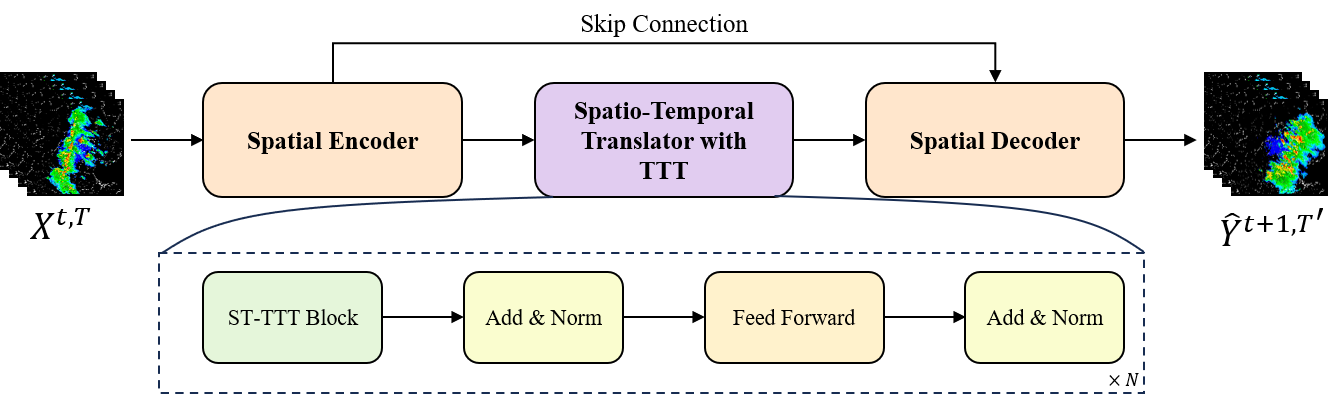
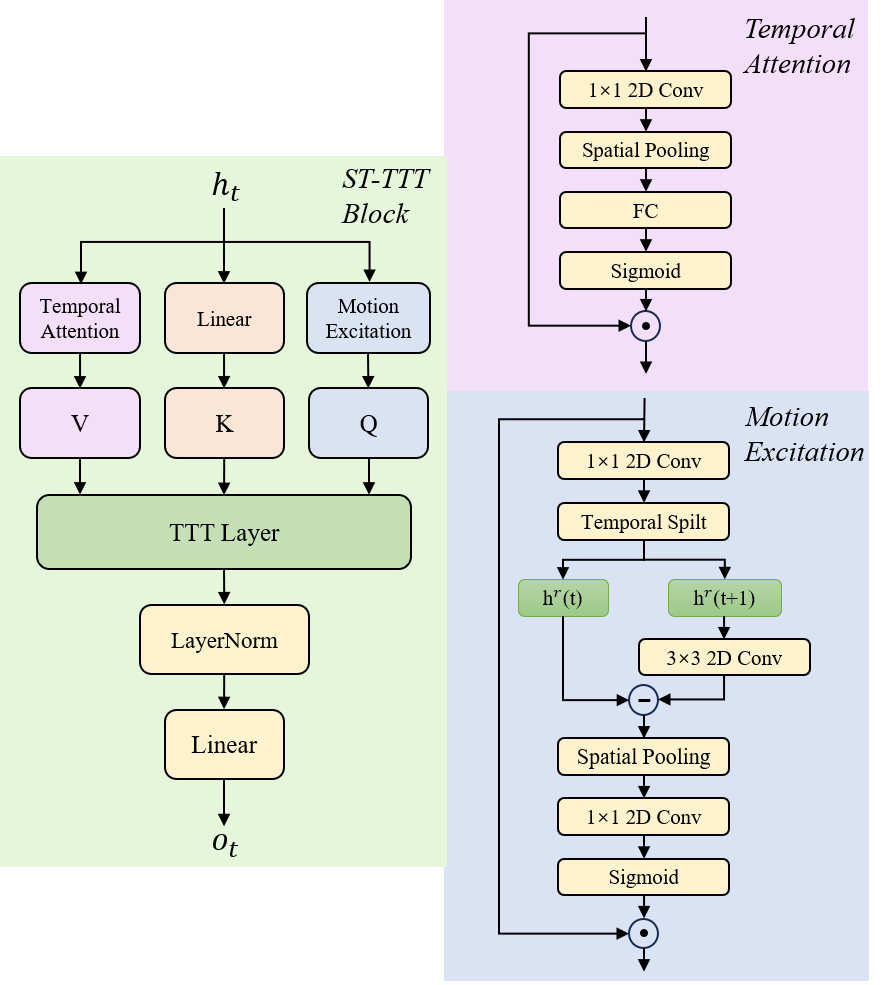
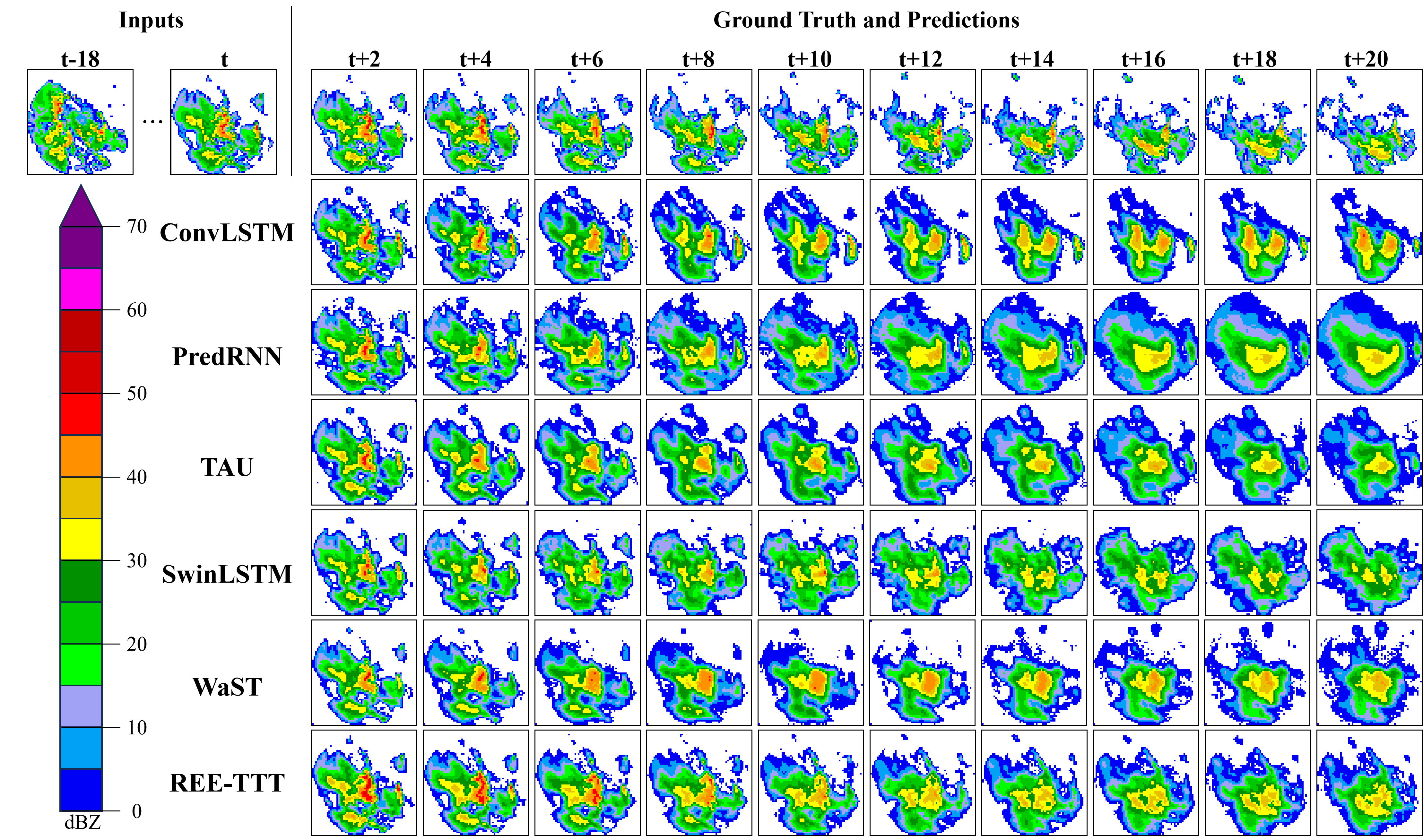
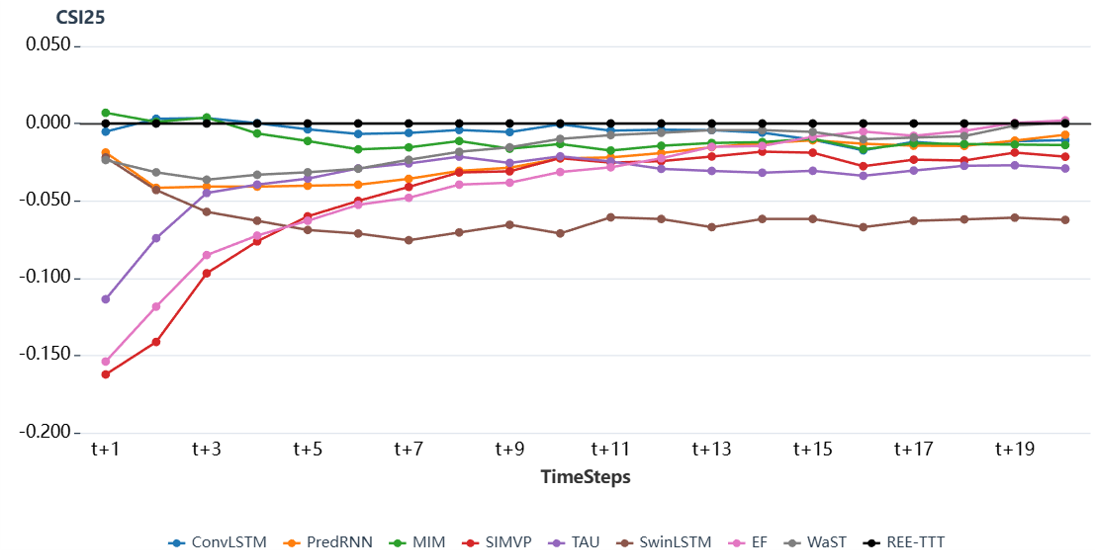
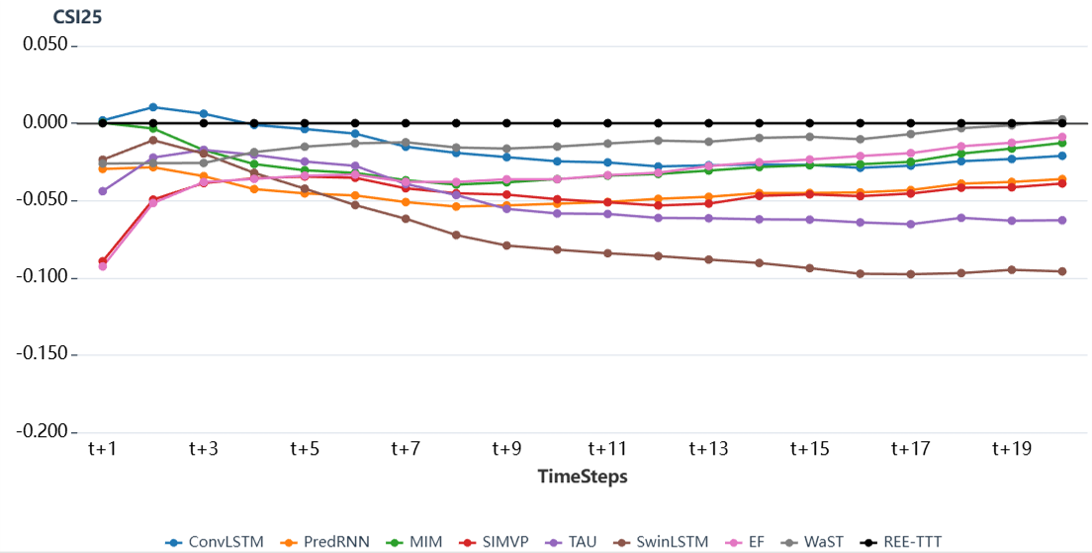
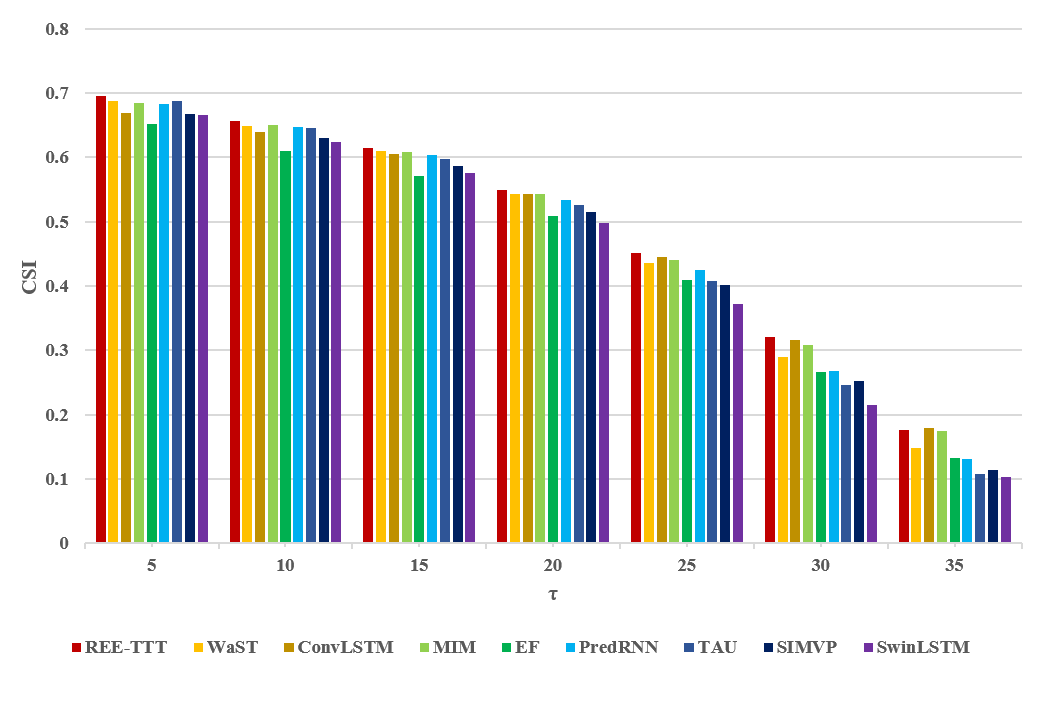
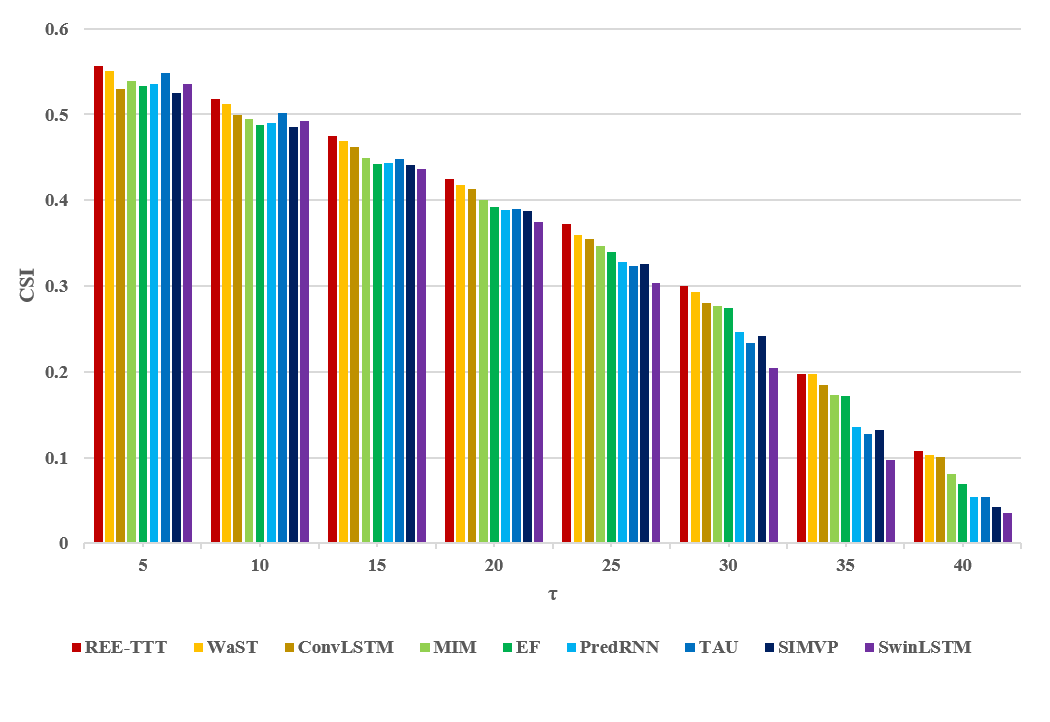
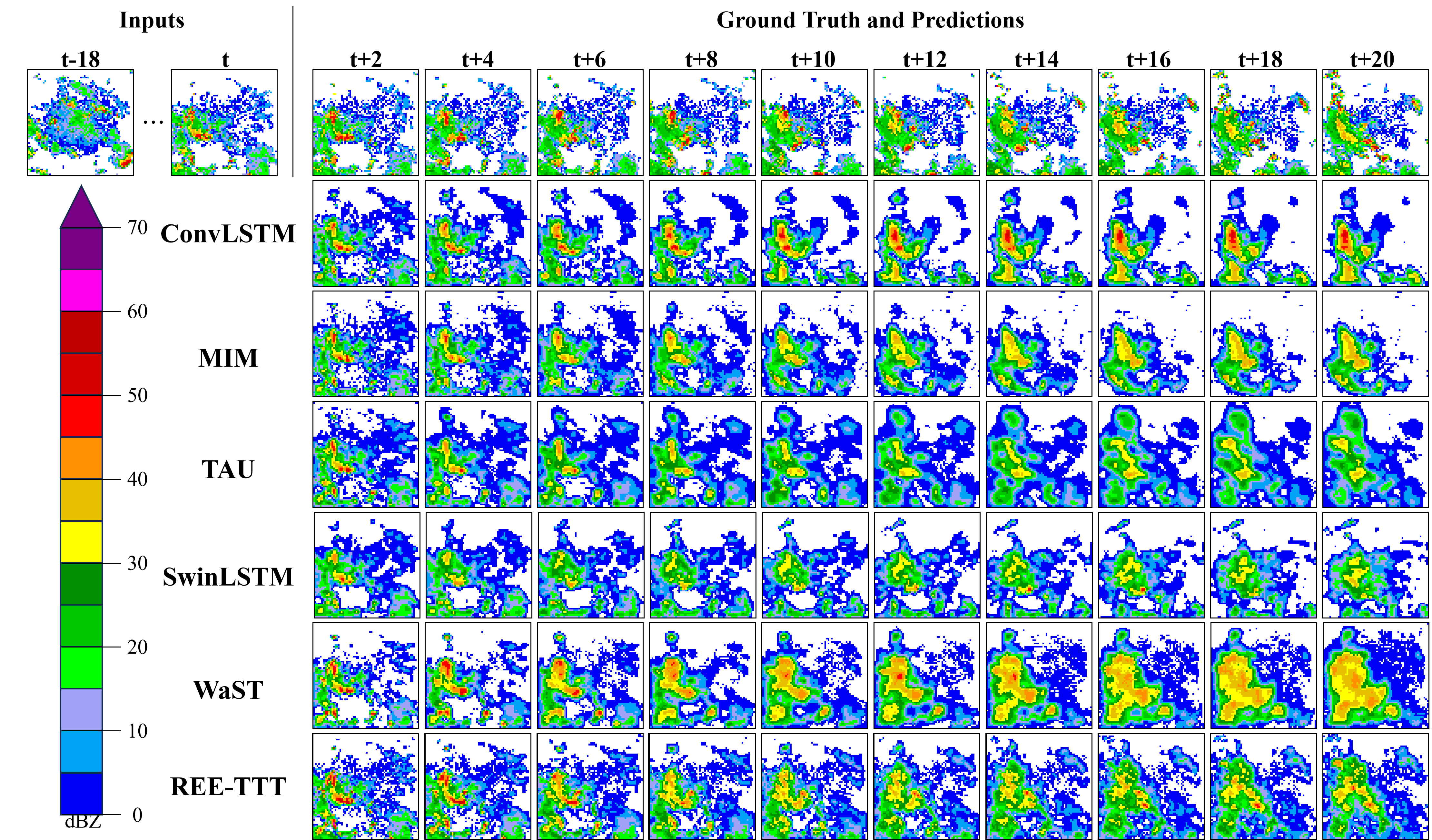
Precipitation nowcasting is critically important for meteorological forecasting. Deep learning-based Radar Echo Extrapolation (REE) has become a predominant nowcasting approach, yet it suffers from poor generalization due to its reliance on high-quality local training data and static model parameters, limiting its applicability across diverse regions and extreme events. To overcome this, we propose REE-TTT, a novel model that incorporates an adaptive Test-Time Training (TTT) mechanism. The core of our model lies in the newly designed Spatio-temporal Test-Time Training (ST-TTT) block, which replaces the standard linear projections in TTT layers with task-specific attention mechanisms, enabling robust adaptation to non-stationary meteorological distributions and thereby significantly enhancing the feature representation of precipitation. Experiments under cross-regional extreme precipitation scenarios demonstrate that REE-TTT substantially outperforms state-ofthe-art baseline models in prediction accuracy and generalization, exhibiting remarkable adaptability to data distribution shifts.
W ITH the rapid advancement of deep learning, data- driven weather prediction methods have gained significant traction, particularly in Radar Echo Extrapolation (REE) for high-resolution precipitation nowcasting. These approaches leverage historical radar sequences to model spatio-temporal patterns of precipitation systems, outperforming traditional methods in short-term forecasting. This technological progress coincides with unprecedented climate challenges: 2024 was recorded as the hottest year in history by the World Meteorological Organization. Regions with traditionally stable climatic regimes are now experiencing unprecedented weather anomalies, as exemplified by the Mediterranean storm of 2023 that induced catastrophic flooding in Libya, a region historically characterized by arid conditions. This underscores the urgent need to establish accurate and universal weather forecasting systems, particularly to develop adaptive predic-tion frameworks capable of maintaining accuracy in evolving climate scenarios.
Traditional meteorological prediction relies on Numerical Weather Prediction (NWP). This approach constructs differential equation systems based on atmospheric physics principles to model atmospheric motion, then numerically solves these equations to forecast future states [1]. Although effective for mid-to-long-term weather trend forecasting and largescale system evolution analysis [2], NWP’s heavy dependence on initial conditions and computational complexity result in considerable time lags, limiting its capability to resolve small-scale weather systems. Consequently, NWP struggles to meet the critical requirements of short-term precipitation nowcasting: minute-level update frequency and kilometer-level spatial resolution [3].
In contrast, REE methods analyze radar data to infer future precipitation fields. This approach enables high-resolution nowcasting within shorter time frames while capturing the evolutionary characteristics of meso-and micro-scale weather systems [4]. Classical REE techniques include centroid tracking [5]- [7], cross-correlation [8]- [10], and optical flow methods [11]- [13]. The centroid tracking method calculates the centroid positions of radar echo clusters to estimate their trajectories. Cross-correlation methods determine optimal displacement vectors by measuring spatial similarity between consecutive radar images. Optical flow approaches estimate pixel-level velocity fields through brightness variation analysis. However, these methods presuppose continuous and smooth motion patterns of radar echoes, whereas precipitation events often exhibit intense convection bursts, morphological mutations, and structural dissipation that challenge traditional REE paradigms.
Deep learning technologies offer new solutions to overcome these limitations. Leveraging the non-linear modeling capabilities of deep neural networks, end-to-end learning mechanisms can automatically extract spatio-temporal evolution features from historical radar echo sequences for predictive modeling. Recent years have witnessed remarkable progress in deep learning-based REE research, including models based on recurrent neural networks (RNNs) [21], [22], [24], [25], [27], attention-enhanced architectures [31]- [34] and generative approaches [36], [37].
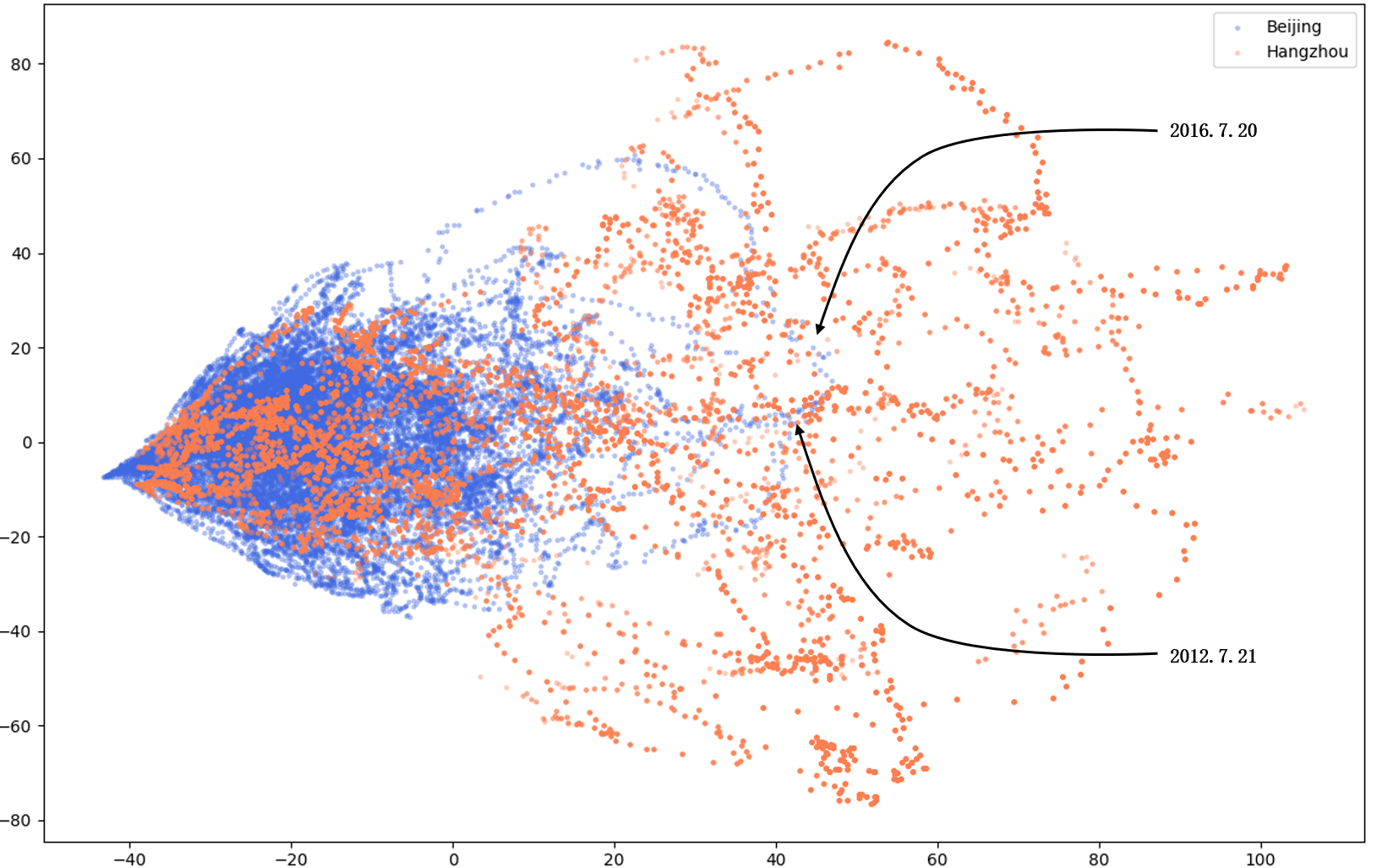
Despite their demonstrated success, these models employ static training paradigms under fixed meteorological scenarios, achieving competent performance within specific training data distributions. However, in practical applications, constrained by historical precipitation records, acquiring high-quality regional observational data remains challenging, hindering these Fig. 1. Cluster analysis results of radar composite reflectivity samples from the Beijing and Hangzhou datasets reveals distinct distributions, where each point corresponds to a radar composite reflectivity image. Most samples in both datasets reside near cluster centers, representing low-intensity precipitation patterns. However, the Hangzhou dataset contains a greater number of outlier samples corresponding to intense precipitation events. In contrast, while the Beijing dataset is dominated by low-intensity precipitation, it also includes several outlier processes that deviate from these clusters, particularly samples captured during two historic torrential rain events (marked in the figure). models’ ability to adapt to divergent meteorological conditions. As shown in Fig. 1, the cluster analysis reveals significant distributional discrepancies between various regions and different precipitation processes. This poses two critical limitations on existing models:
Inability for Cross-region Deployment: Traditional models typically require strict distribution alignment between training and testing data, thus necessitating localized retraining when deployed in new geographical domains. However, training, optimizing, and maintaining separate models for each radar station incurs high costs. Furthermo
This content is AI-processed based on open access ArXiv data.