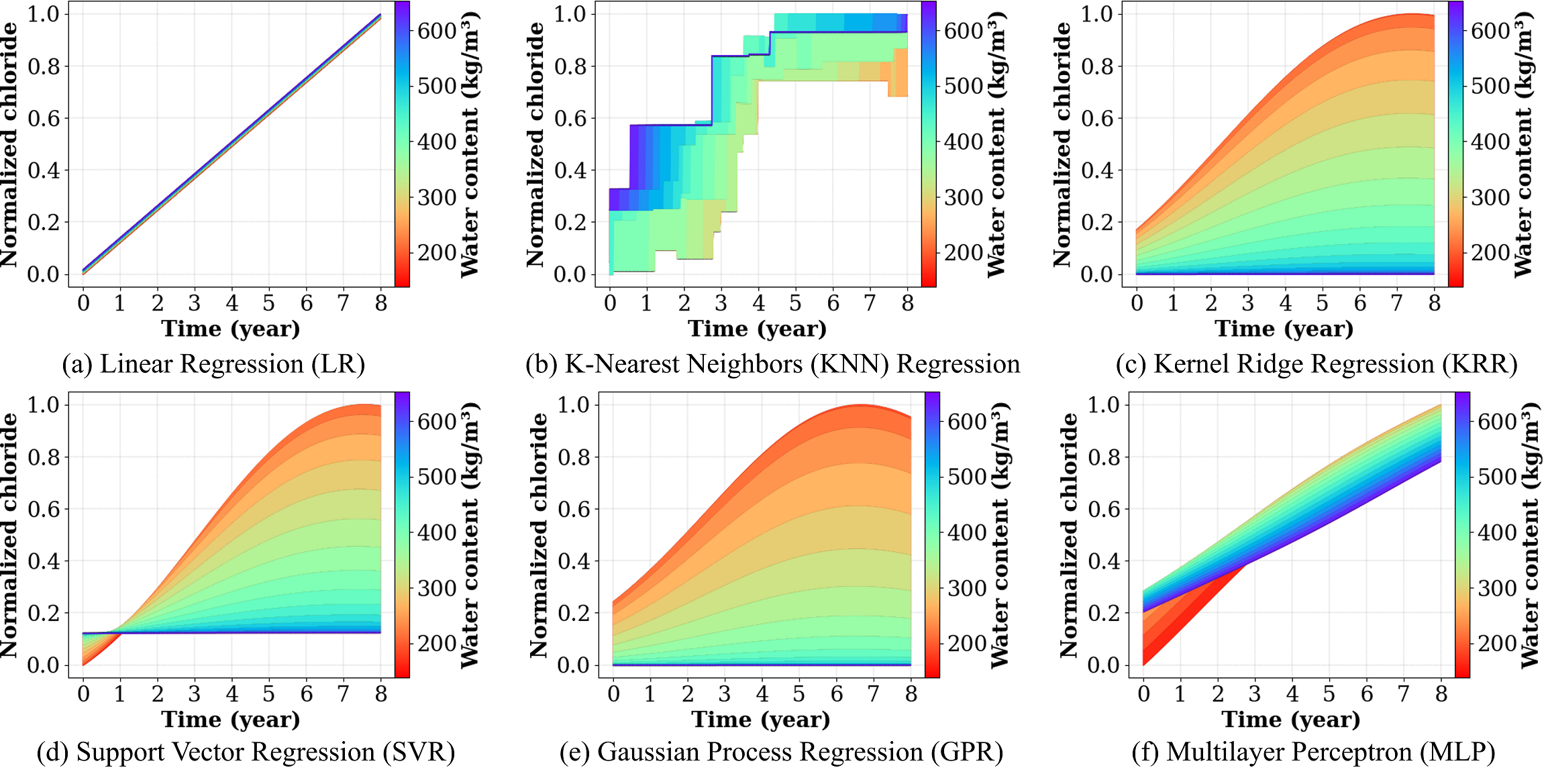
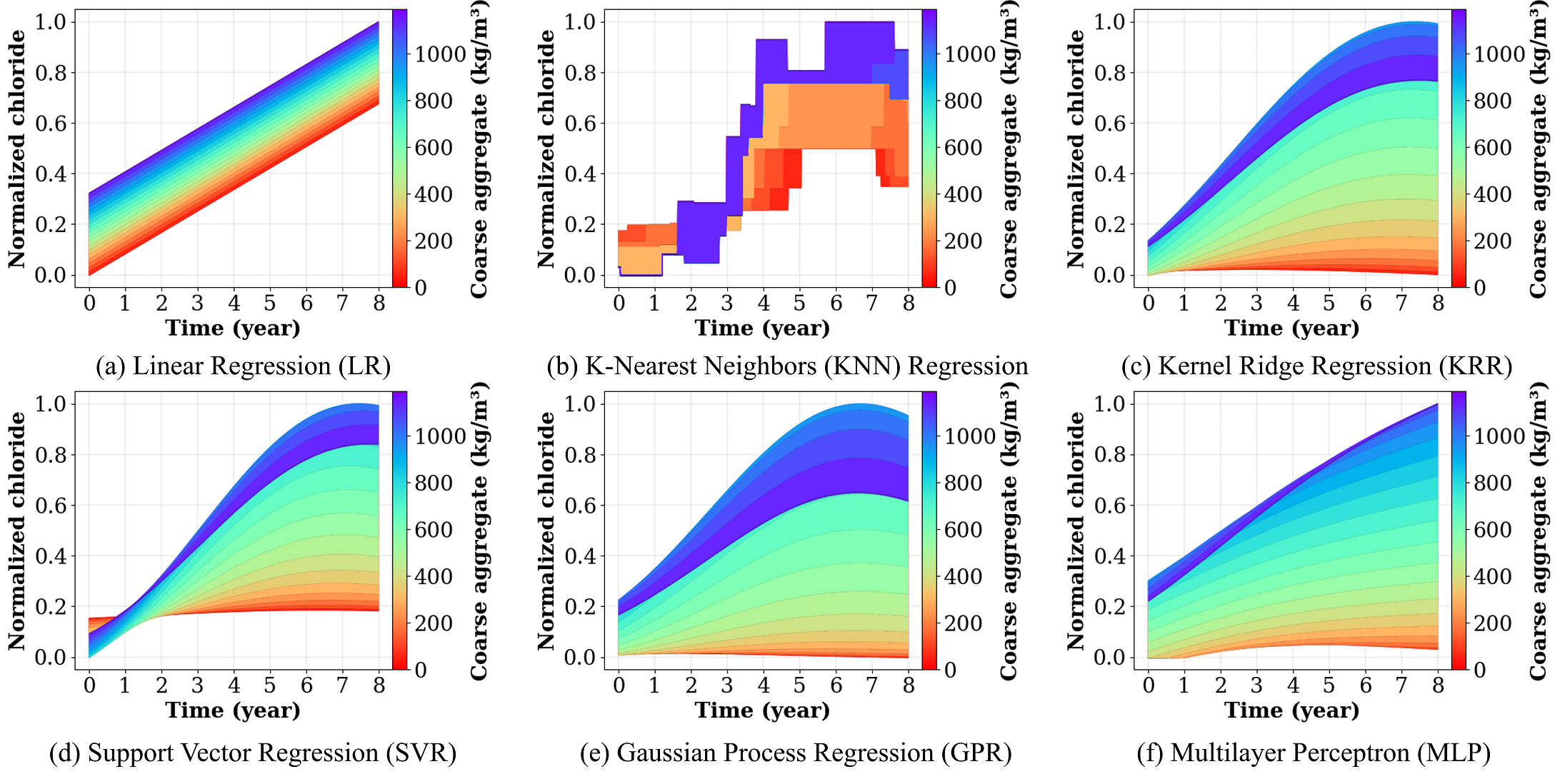
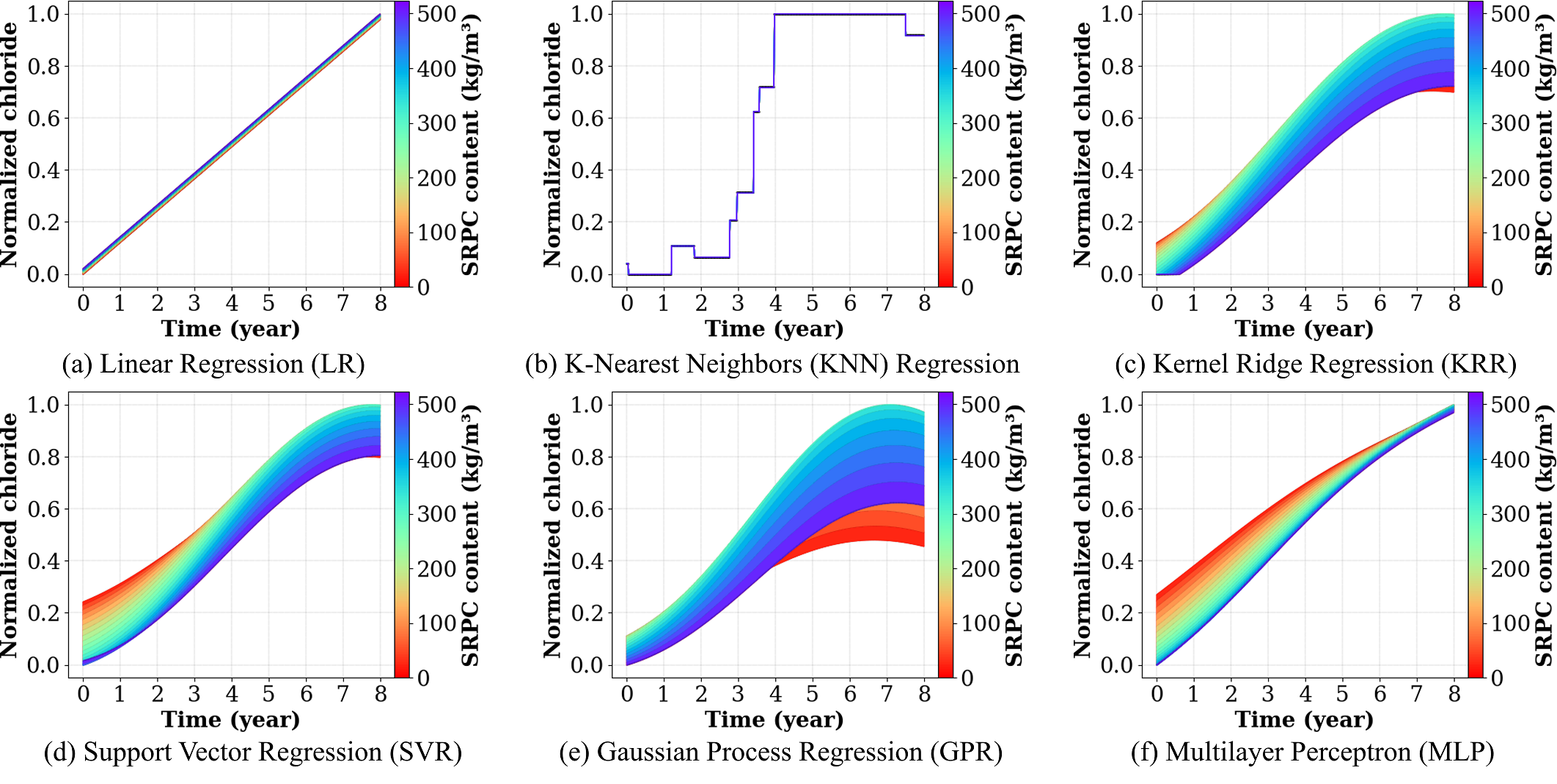
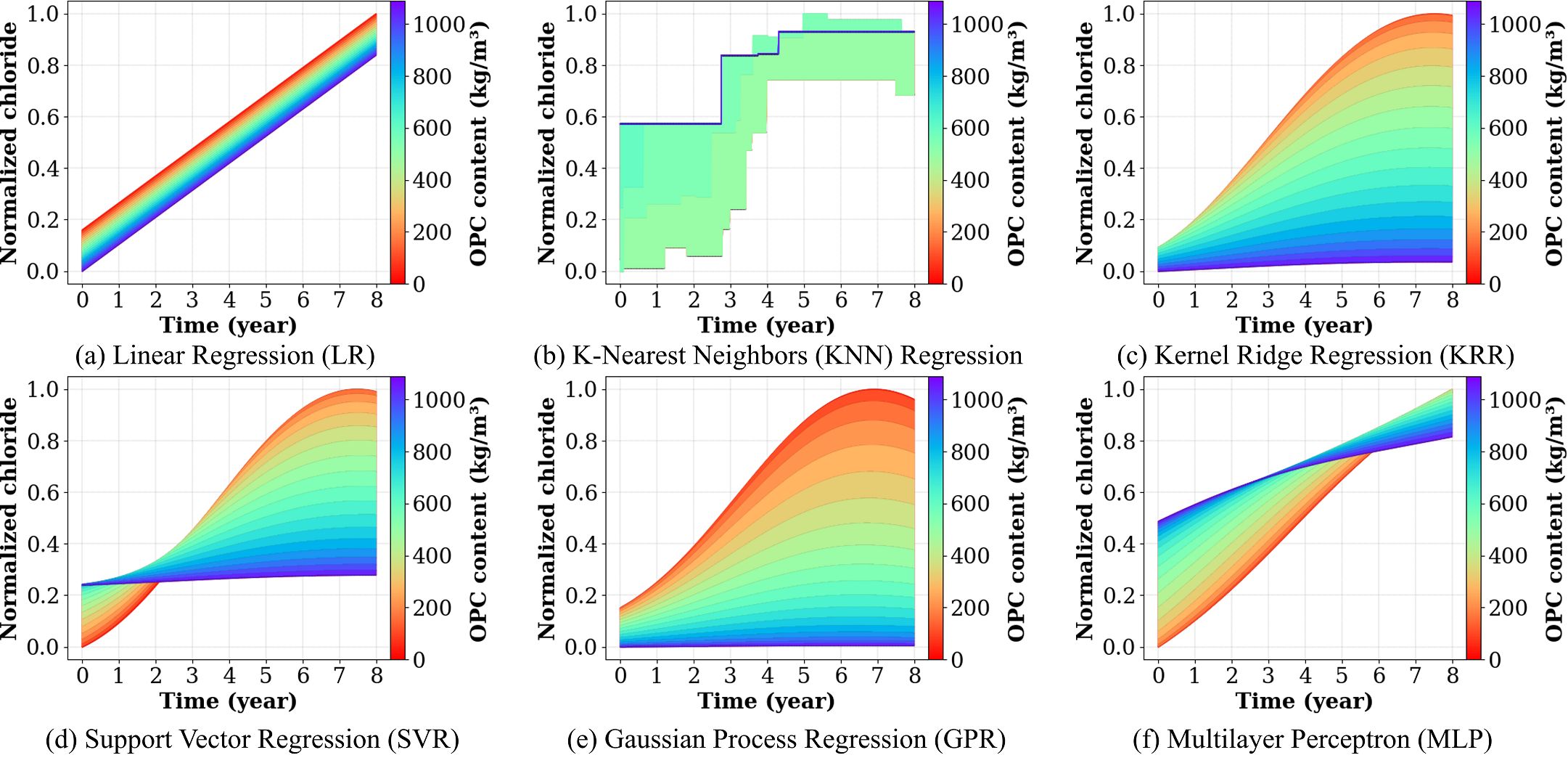
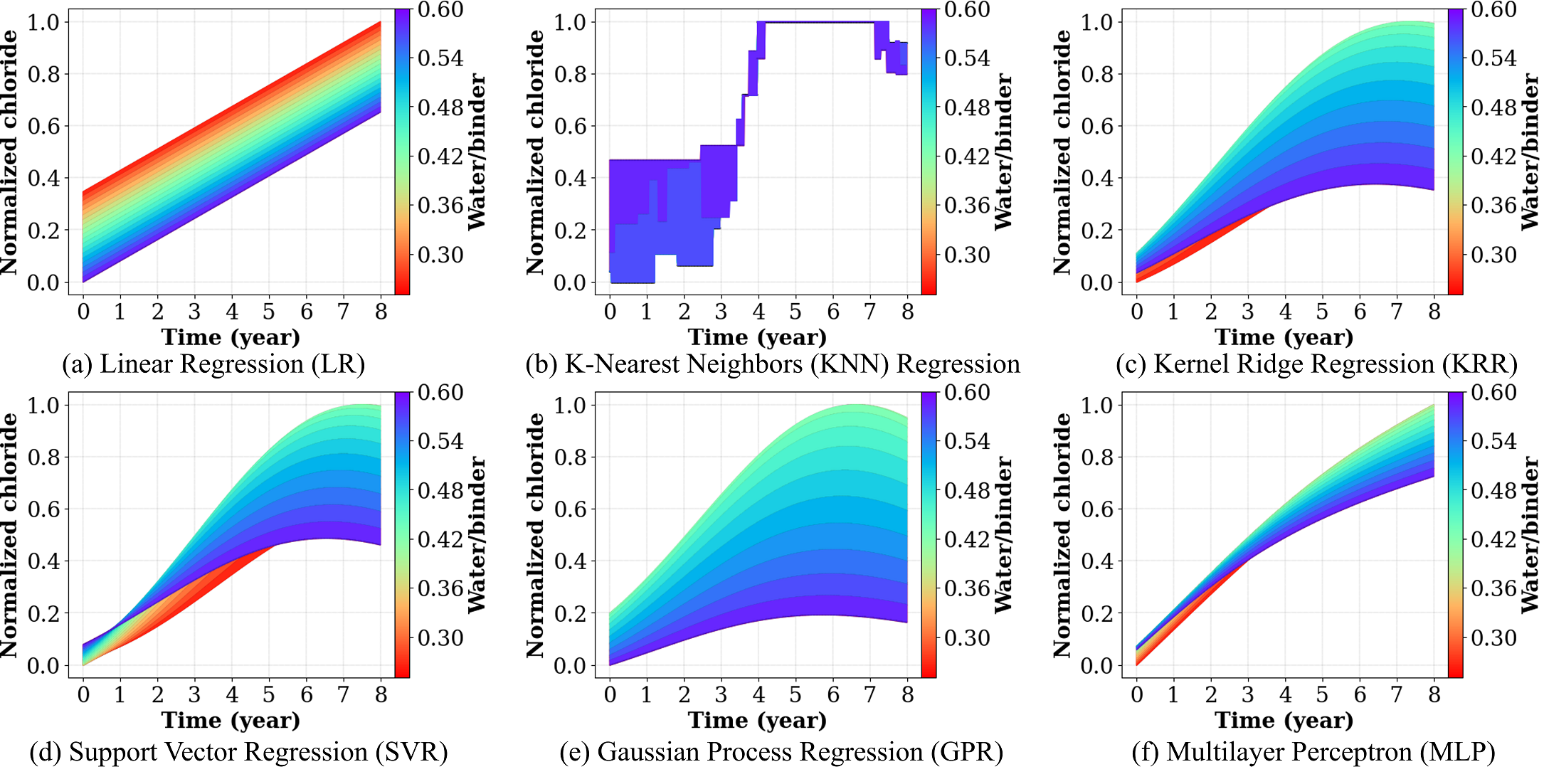
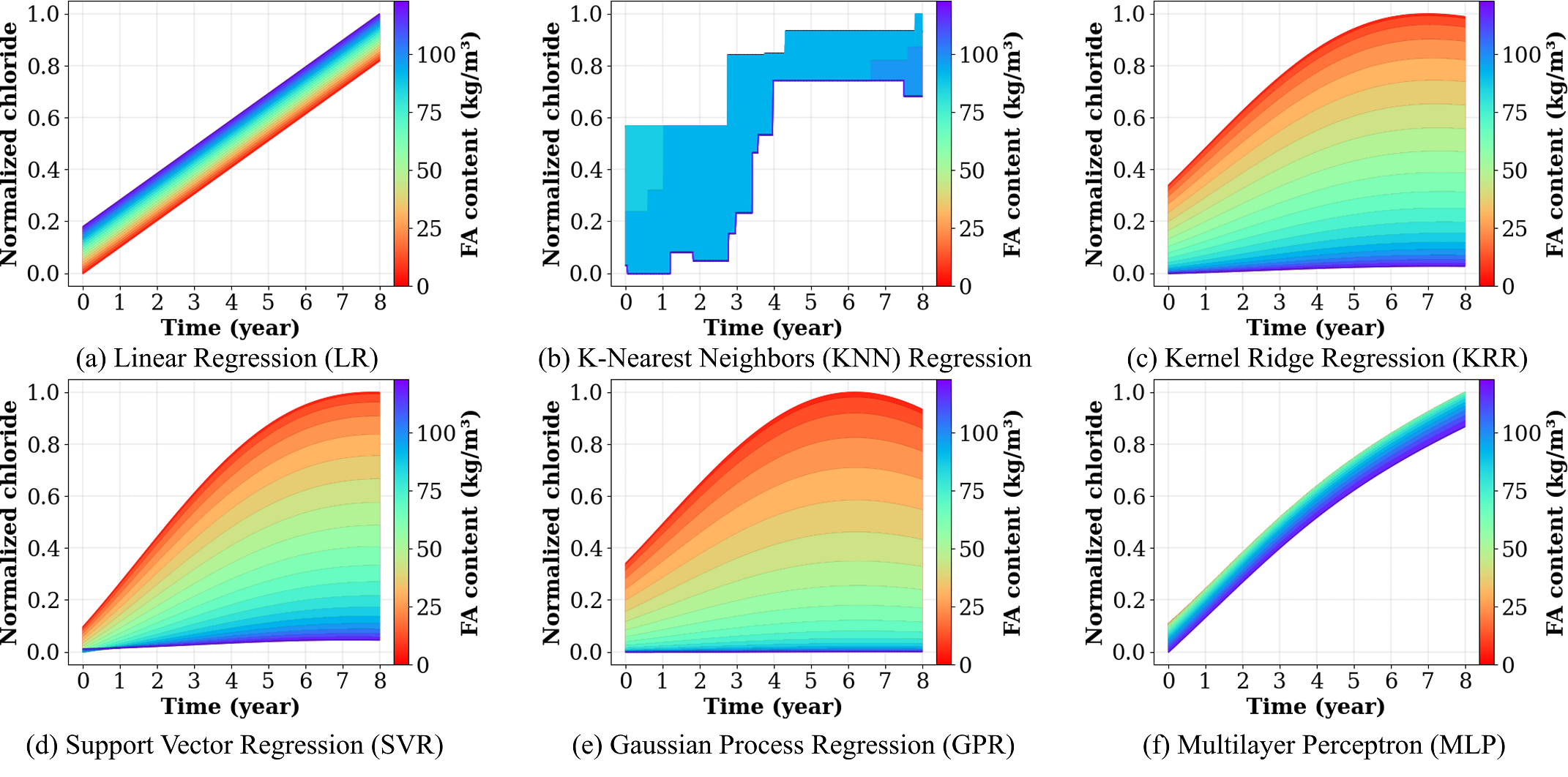
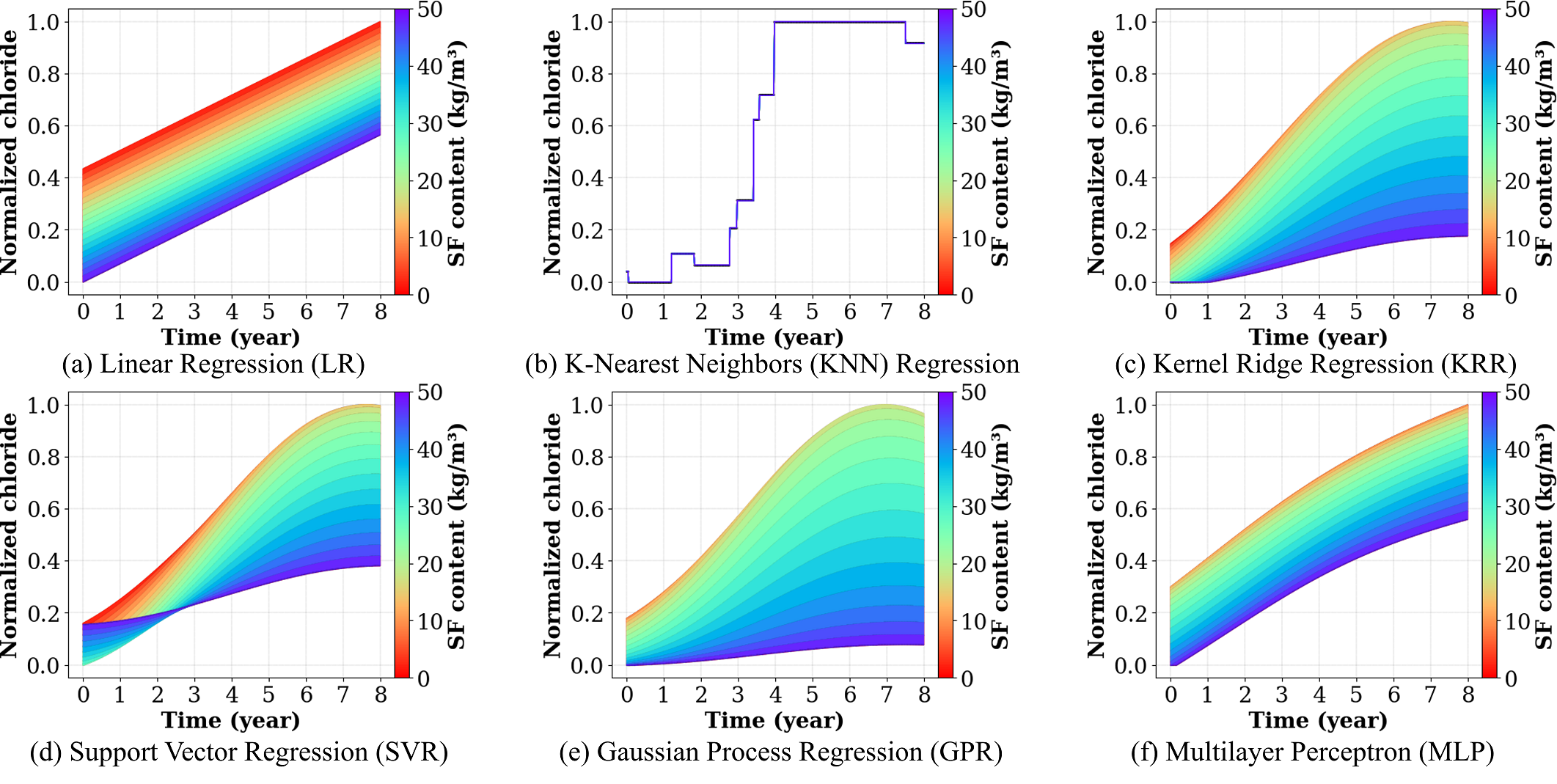
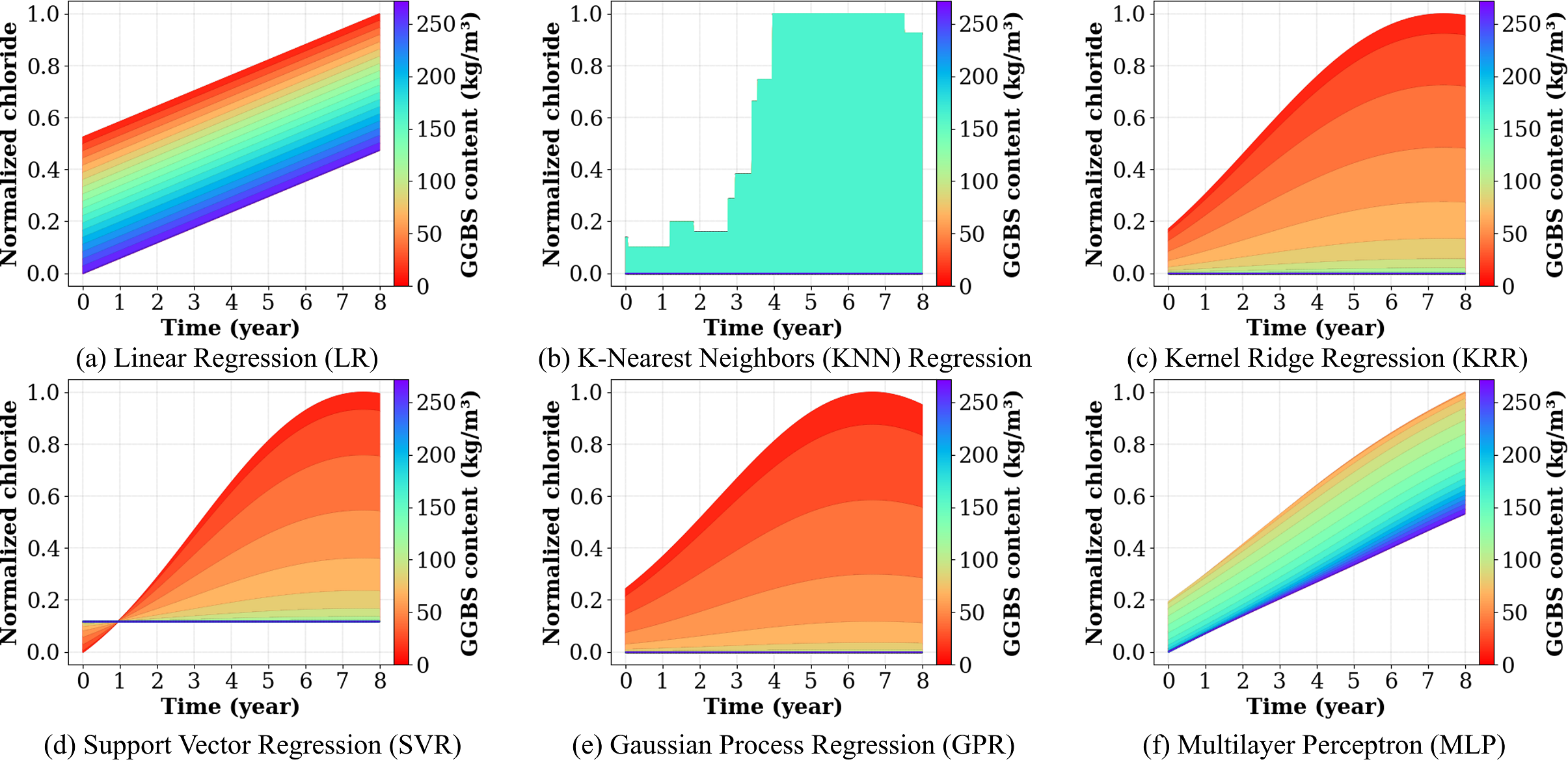
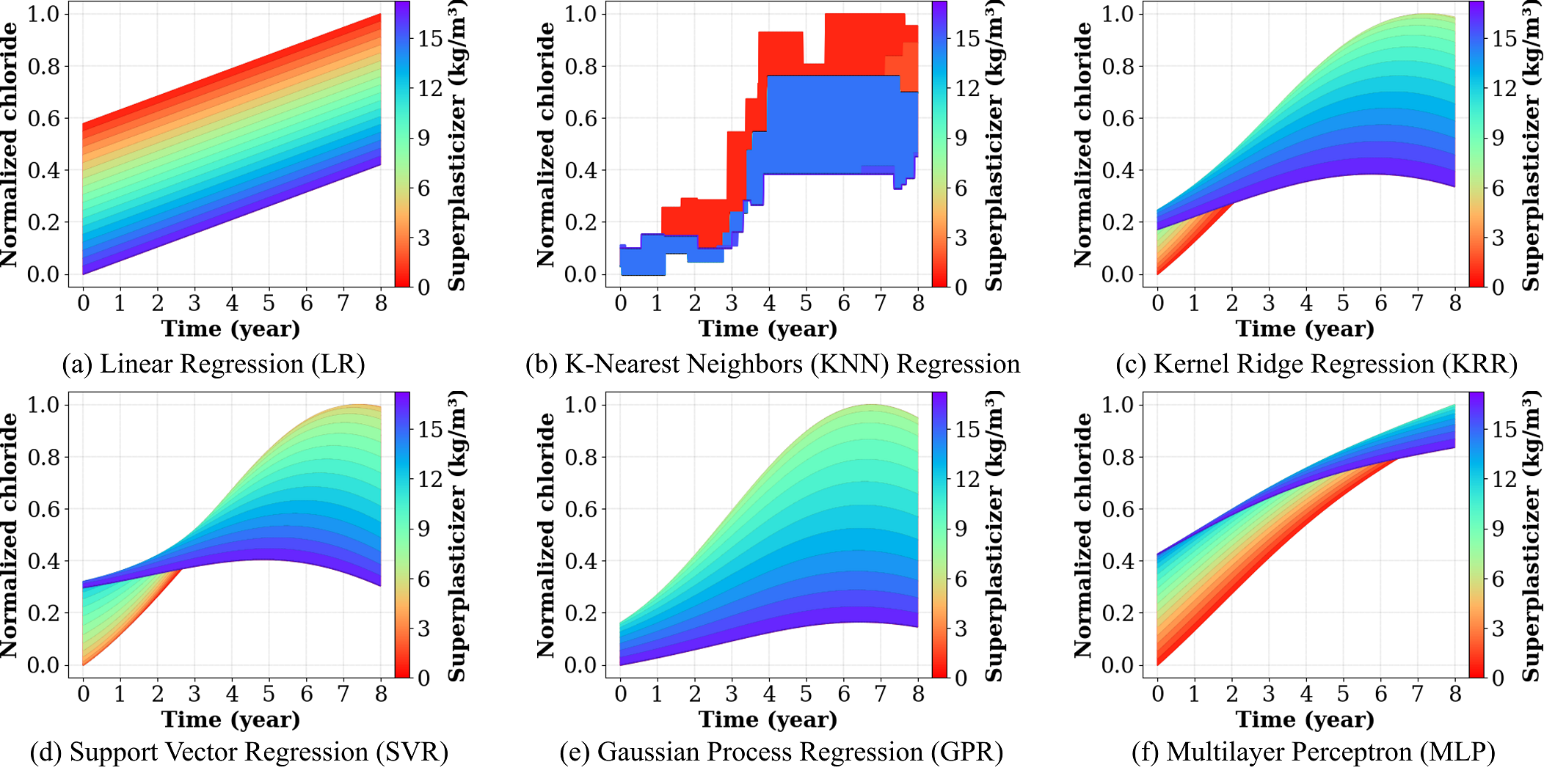
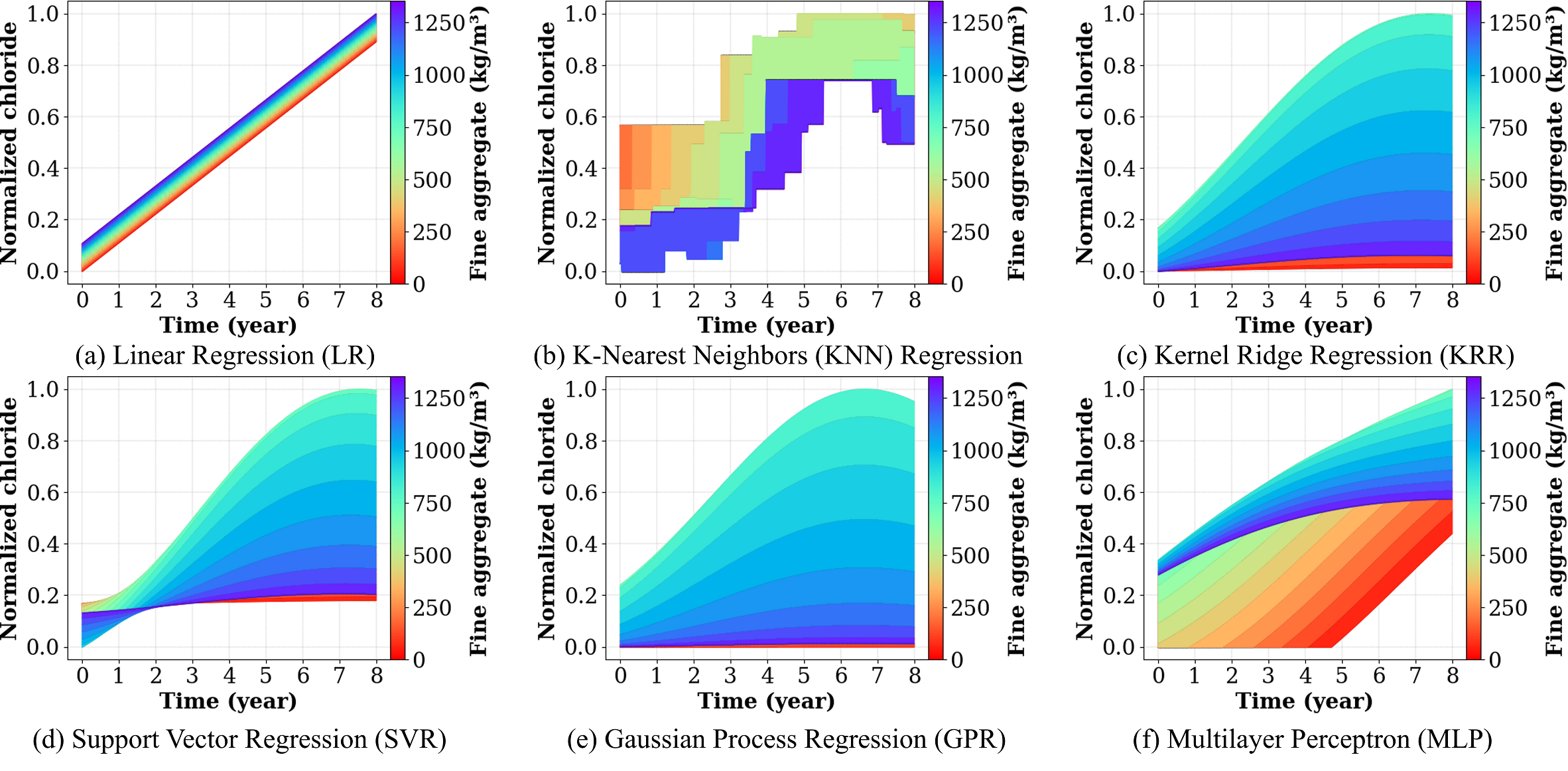
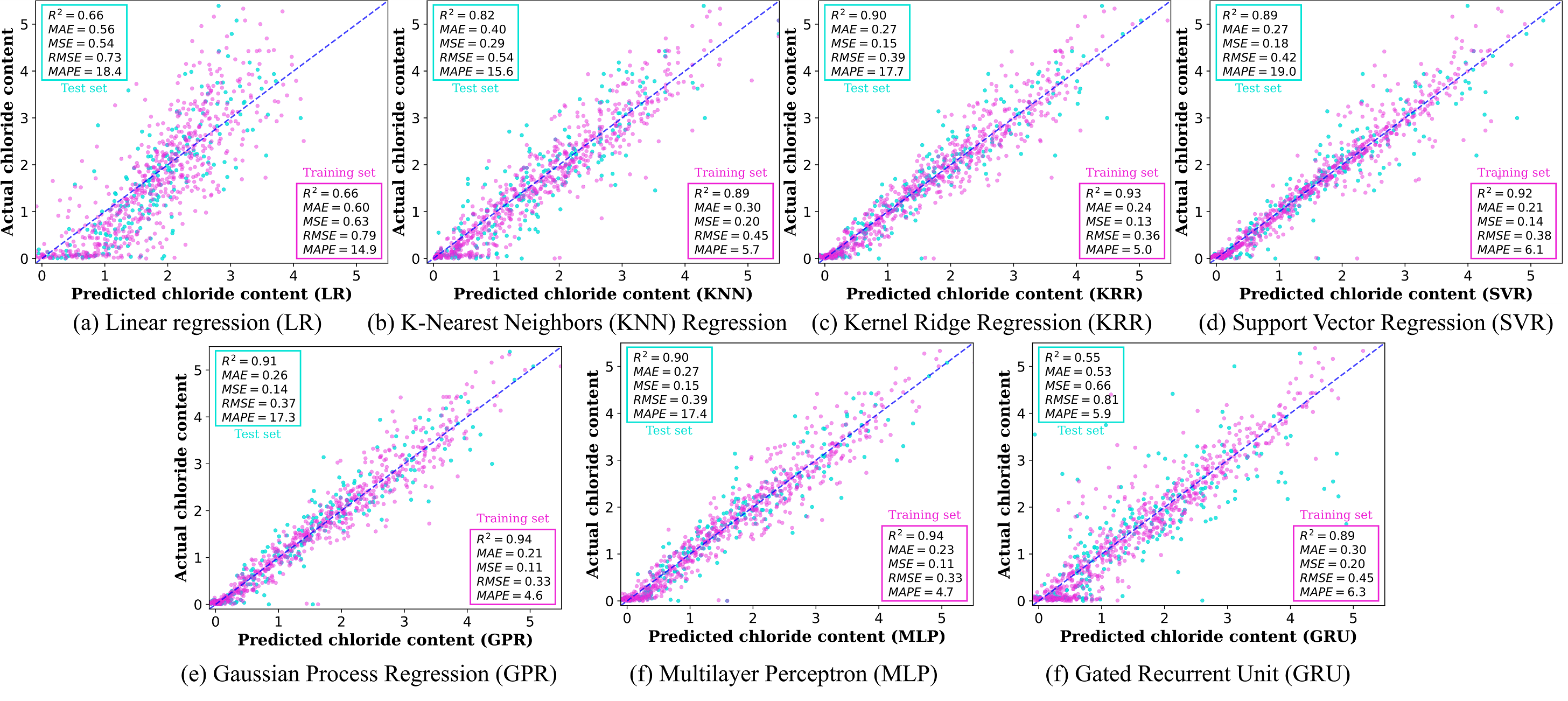
This paper employs a data-driven approach to determine the impact of concrete mixture compositions on the temporal evolution of chloride in concrete structures. This is critical for assessing the service life of civil infrastructure subjected to aggressive environments. The adopted methodology relies on several simple and complex standalone machine learning (ML) algorithms, with the primary objective of establishing confidence in the unbiased prediction of the underlying hidden correlations. The simple algorithms include linear regression (LR), k-nearest neighbors (KNN) regression, and kernel ridge regression (KRR). The complex algorithms entail support vector regression (SVR), Gaussian process regression (GPR), and two families of artificial neural networks, including a feedforward network (multilayer perceptron, MLP) and a gated recurrent unit (GRU). The MLP architecture cannot explicitly handle sequential data, a limitation addressed by the GRU. A comprehensive dataset is considered. The performance of ML algorithms is evaluated, with KRR, GPR, and MLP exhibiting high accuracy. Given the diversity of the adopted concrete mixture proportions, the GRU was unable to accurately reproduce the response in the test set. Further analyses elucidate the contributions of mixture compositions to the temporal evolution of chloride. The results obtained from the GPR model unravel latent correlations through clear and explainable trends. The MLP, SVR, and KRR also provide acceptable estimates of the overall trends. The majority of mixture components exhibit an inverse relation with chloride content, while a few components demonstrate a direct correlation. These findings highlight the potential of surrogate approaches for describing the physical processes involved in chloride ingress and the associated correlations, toward the ultimate goal of enhancing the service life of civil infrastructure.
💡 Deep Analysis
📄 Full Content
Data-Driven Assessment of Concrete Mixture Compositions on
Chloride Transport via Standalone Machine Learning Algorithms
Mojtaba Aliasghar-Mamaghania,∗, Mohammadreza Khalafib
aPostdoctoral Fellow, Department of Civil Architectural and Environmental Engineering, The University of Texas at Austin, Austin, TX, United States
bStudent, Department of Civil Engineering, Sharif University of Technology, Tehran, Iran
A R T I C L E I N F O
Keywords:
Machine learning
Chloride ingress
Concrete
Temporal evolution
Corrosion
Serviceability
Artificial intelligence
A B S T R A C T
This paper employs a data-driven approach to determine the impact of concrete mixture compositions
on the temporal evolution of chloride in concrete structures. This is critical for assessing the service
life of civil infrastructure subjected to aggressive environments. The adopted methodology relies on
several simple and complex standalone machine learning (ML) algorithms, with the primary objective
of establishing confidence in the unbiased prediction of the underlying hidden correlations. The
simple algorithms include linear regression (LR), k-nearest neighbors (KNN) regression, and kernel
ridge regression (KRR). The complex algorithms entail support vector regression (SVR), Gaussian
process regression (GPR), and two families of artificial neural networks, including a feedforward
network (multilayer perceptron, MLP) and a gated recurrent unit (GRU). The MLP architecture cannot
explicitly handle sequential data, a limitation addressed by the GRU. A comprehensive dataset is
considered. The performance of ML algorithms is evaluated, with KRR, GPR, and MLP exhibiting
high accuracy. Given the diversity of the adopted concrete mixture proportions, the GRU was unable
to accurately reproduce the response in the test set. Further analyses elucidate the contributions of
mixture compositions to the temporal evolution of chloride. The results obtained from the GPR
model unravel latent correlations through clear and explainable trends. The MLP, SVR, and KRR
also provide acceptable estimates of the overall trends. The majority of mixture components exhibit
an inverse relation with chloride content, while a few components demonstrate a direct correlation.
These findings highlight the potential of surrogate approaches for describing the physical processes
involved in chloride ingress and the associated correlations, toward the ultimate goal of enhancing the
service life of civil infrastructure.
1. Introduction
Corrosion is one of the predominant causes of long-
term deterioration of civil infrastructure components. Con-
crete bridges are commonly employed construction systems
within the daily commute networks. During the early stages
of concrete setting, a protective film forms around the re-
inforcing materials due to the high alkalinity of the concrete
medium. The formation of this protective layer places the re-
inforcing materials in a passive state, effectively reducing the
risk of corrosion. Electrochemical oxidation-reduction reac-
tions characterize the propensity for corrosion. The break-
down of the protective film leads to a substantial increase in
the rate of corrosion reactions, a critical point after which
significant serviceability issues occur [1–5].
Corrosion imposes several deleterious effects on con-
crete structures. In particular, it adversely affects the me-
chanical characteristics and deformability of the reinforcing
materials, as well as the bond properties between steel and
concrete [6–12]. Furthermore, the formation of corrosive
products—–which often exhibit a volumetric expansion 2 to
6.4 times greater than the original reactants [13]—–induces
substantial passive pressure in the surrounding concrete,
leading to the development of tensile strains and, subse-
quently, deterioration or spalling in affected regions [14–16].
∗Corresponding author
mojtaba@austin.utexas.edu (M. Aliasghar-Mamaghani);
mohammad.khalafi85@sharif.edu (M. Khalafi)
The serviceability of concrete structures is profoundly
affected by the content of chloride at the level of the re-
inforcing materials. Chloride ions destroy the protective
layer initially formed around the steel reinforcement, thereby
depassivating the steel, and inducing a substantial increase
in the corrosion rate [1, 17–19, 5]. Several prior studies
have proposed replacing conventional steel reinforcement
with alternative materials to circumvent the serviceability
issues associated with steel corrosion [20–23]. Despite the
significant efforts made, reinforced and prestressed concrete
structures remain predominant worldwide [12, 24–26].
Several previous studies have focused on the description
of chloride ingress in the concrete pore network. The in-
trusion of chloride in concrete can be simply described by
a closed-form equation on the basis of Fick’s law of diffu-
sion [2, 27]. Advanced finite element approaches have been
proposed to capture several interacting phenomena involved
in chloride ingr