📝 Original Info Title: Epistemoverse: Toward an AI-Driven Knowledge Metaverse for Intellectual Heritage PreservationArXiv ID: 2512.12201Date: 2025-12-13Authors: Predrag K. Nikolić, Robert Prentner📝 Abstract Large language models (LLMs) have often been characterized as "stochastic parrots" that merely reproduce fragments of their training data. This study challenges that assumption by demonstrating that, when placed in an appropriate dialogical context, LLMs can develop emergent conceptual structures and exhibit interaction-driven (re-)structuring of cognitive interfaces and reflective question-asking. Drawing on the biological principle of cloning and Socrates' maieutic method, we analyze authentic philosophical debates generated among AI-reincarnated philosophers within the interactive art installations of the Syntropic Counterpoints project. By engaging digital counterparts of Aristotle, Nietzsche, Machiavelli, and Sun Tzu in iterative discourse, the study reveals how machine dialogue can give rise to inferential coherence, reflective questioning, and creative synthesis. Based on these findings, we propose the concept of the Epistemoverse--a metaverse of knowledge where human and machine cognition intersect to preserve, reinterpret, and extend intellectual heritage through AI-driven interaction. This framework positions virtual and immersive environments as new spaces for epistemic exchange, digital heritage, and collaborative creativity.
💡 Deep Analysis
📄 Full Content Epistemoverse: Toward an AI-Driven Knowledge Metaverse for
Intellectual Heritage Preservation
Predrag K. Nikolić
School of Design and Arts
Swinburne University of Technology
Kuching, Malaysia
pnikolic@swin.edu.au
Robert Prentner
Institute of Humanities
ShanghaiTech University
Shanghai, China
robert.prentner@amcs.science
Abstract
Large language models (LLMs) have often been characterized as
“stochastic parrots” that merely reproduce fragments of their train-
ing data. This study challenges that assumption by demonstrating
that, when placed in an appropriate dialogical context, LLMs can de-
velop emergent conceptual structures and exhibit interaction-driven
(re-)structuring of cognitive interfaces and reflective question-asking.
Drawing on the biological principle of cloning and Socrates’ maieu-
tic method, we analyze authentic philosophical debates generated
among AI-reincarnated philosophers within the interactive art in-
stallations of the Syntropic Counterpoints project.
By engaging digital counterparts of Aristotle, Nietzsche, Machi-
avelli, and Sun Tzu in iterative discourse, the study reveals how
machine dialogue can give rise to inferential coherence, reflective
questioning, and creative synthesis. Based on these findings, we pro-
pose the concept of the Epistemoverse—a metaverse of knowledge
where human and machine cognition intersect to preserve, reinter-
pret, and extend intellectual heritage through AI-driven interaction.
This framework positions virtual and immersive environments as
new spaces for epistemic exchange, digital heritage, and collabora-
tive creativity.
CCS Concepts
• Applied computing →Arts and humanities; • Human-centered
computing →Interaction design; • Hardware →Emerging
technologies; • Mathematics of computing →Graph theory.
ACM Reference Format:
Predrag K. Nikolić and Robert Prentner. 2025. Epistemoverse: Toward an AI-
Driven Knowledge Metaverse for Intellectual Heritage Preservation. In The
20th ACM SIGGRAPH International Conference on Virtual-Reality Continuum
and its Applications in Industry (VRCAI ’25), December 13–14, 2025, Macau,
China. ACM, New York, NY, USA, 7 pages. https://doi.org/10.1145/3779232.
3779278
1
Introduction
In biology, a clone is defined as an individual that is genetically
identical to the original organism from which the clone was derived
Permission to make digital or hard copies of all or part of this work for personal or
classroom use is granted without fee provided that copies are not made or distributed
for profit or commercial advantage and that copies bear this notice and the full citation
on the first page. Copyrights for components of this work owned by others than the
author(s) must be honored. Abstracting with credit is permitted. To copy otherwise, or
republish, to post on servers or to redistribute to lists, requires prior specific permission
and/or a fee. Request permissions from permissions@acm.org.
VRCAI ’25, Macau, China
© 2025 Copyright held by the owner/author(s). Publication rights licensed to ACM.
ACM ISBN 979-8-4007-2362-9/2025/12
https://doi.org/10.1145/3779232.3779278
[Raff 2018]. Throughout biology, cloning is a ubiquitous reproduc-
tive strategy that can be observed in a variety of species, mostly
in bacteria and plants. It is essential to emphasize that a clone dif-
fers from a copy. Whereas a clone is genetically identical to the
organism it is derived from, it can potentially undergo an individ-
ual developmental trajectory. Virtually all biological traits, such as
cognitive differences among individuals, arise as an intricate com-
bination of genetic predisposition and environmental facilitation
[Bouchard Jr. and McGue 2003].
This is different from the way we typically think about software
agents, which are mere copies of a program instantiated on different
computers and executed in a well-defined and identical manner.
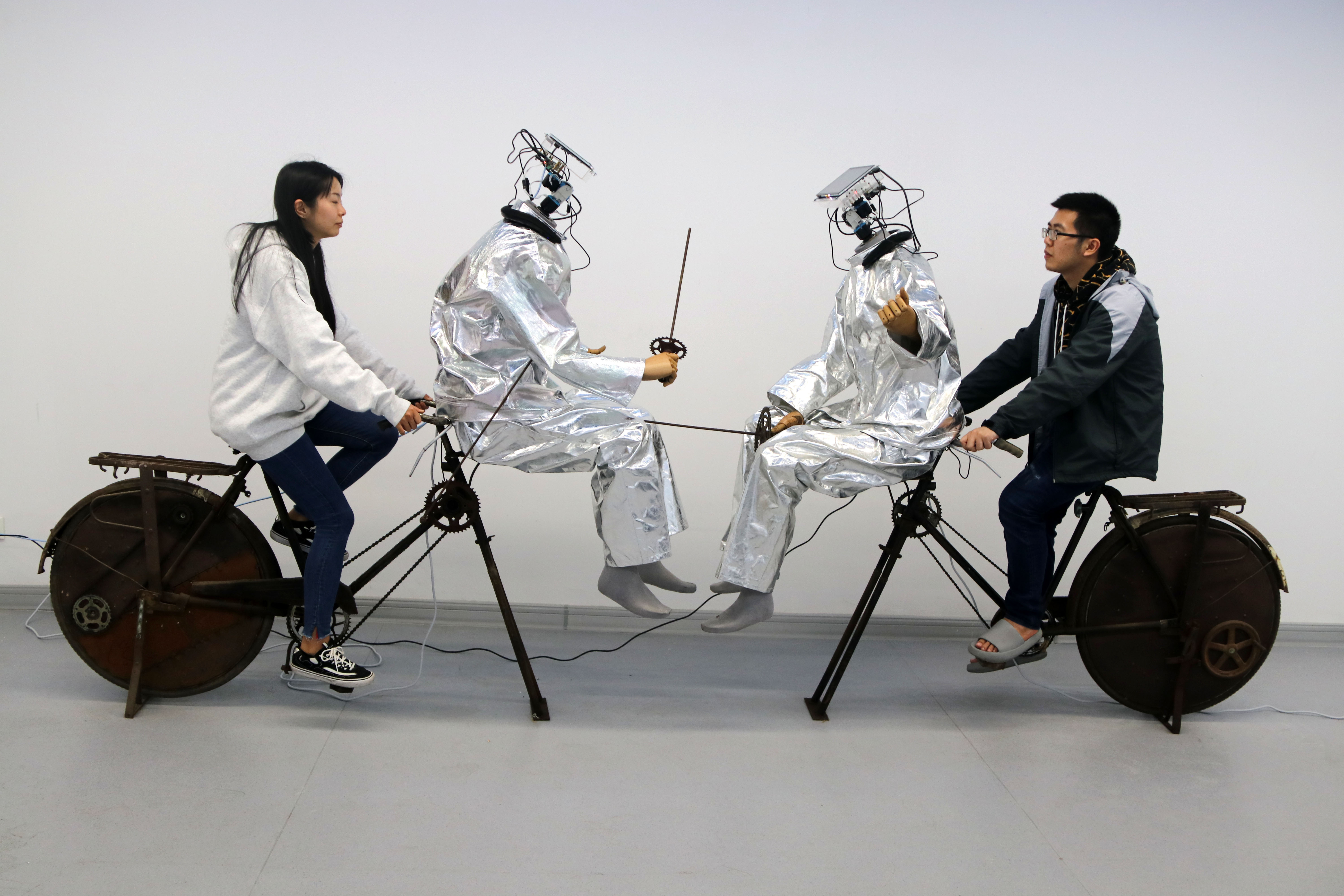
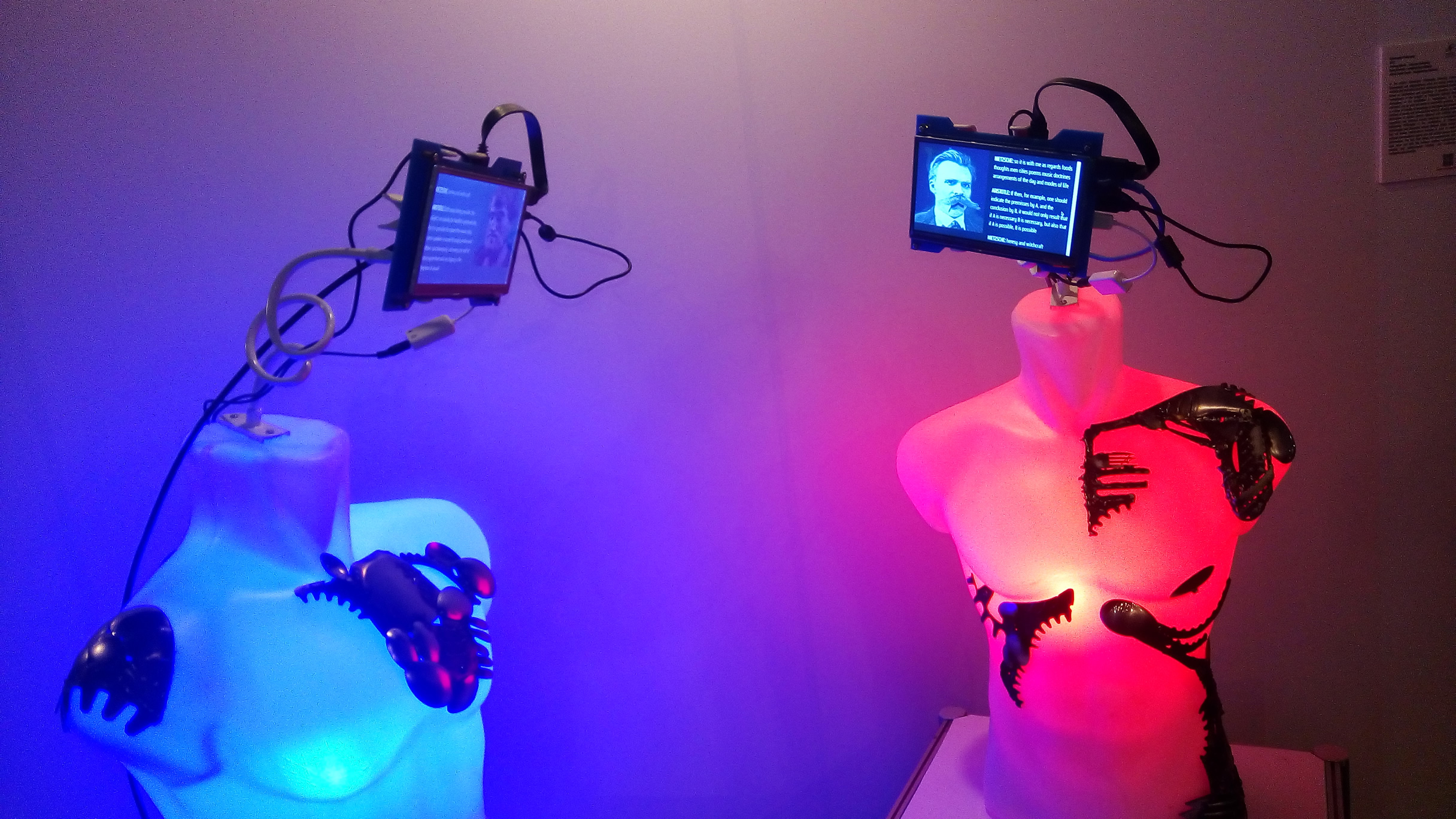
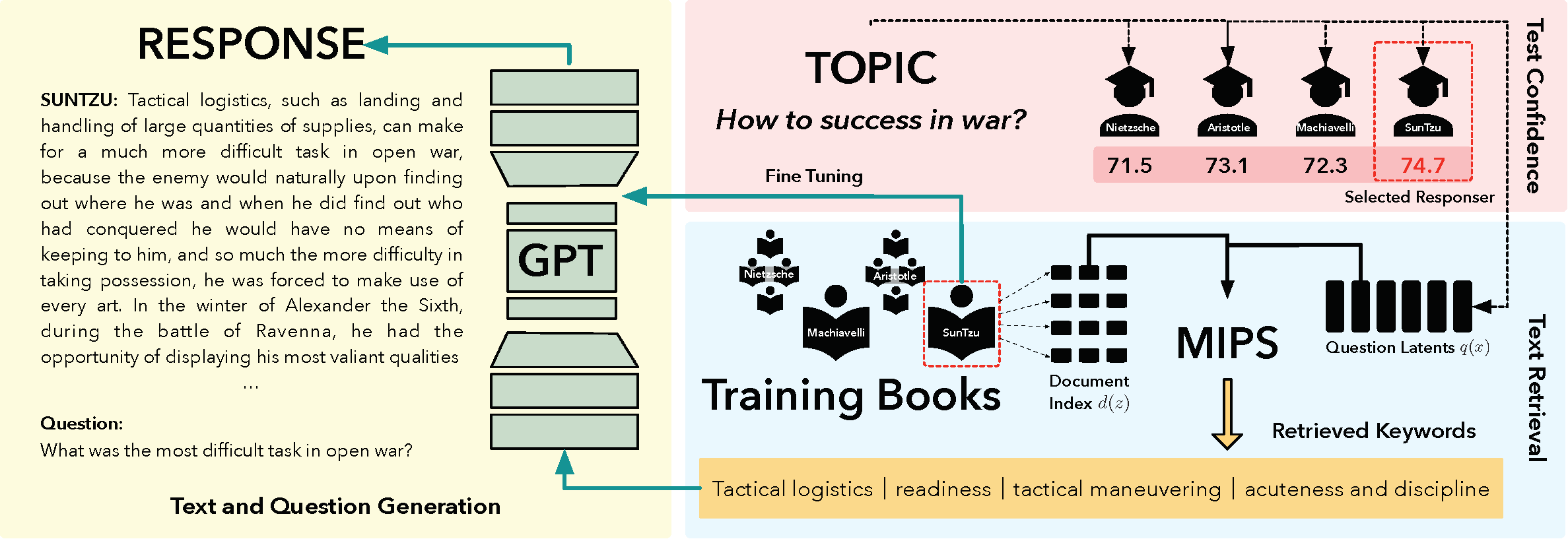
In this contribution, we are investigating AI clones of historically
existing philosophers [Nikolić et al. 2021a]. We aim to demonstrate
that those clones, while implemented via fine-tuning an LLM [Fierro
et al. 2024] on the corpus of their “ancestors” (Aristotle, Nietzsche,
Machiavelli, and Sun Tzu, respectively), exhibit remarkable kinds
of knowledge that go beyond the knowledge that we would have
uncovered if we studied them in isolation.
Analysis should focus on the intrinsic perspective of philoso-
phers, not on the correspondence between their utterances and hu-
man knowledge. We are not interested in how those clones would
fare against human philosophers or whether they are just repeat-
ing what those philosophers have said (unlike what was presented
in recent lawsuits against AI companies, who allegedly violated
the copyrights of real human authors). By contrast, we are mainly
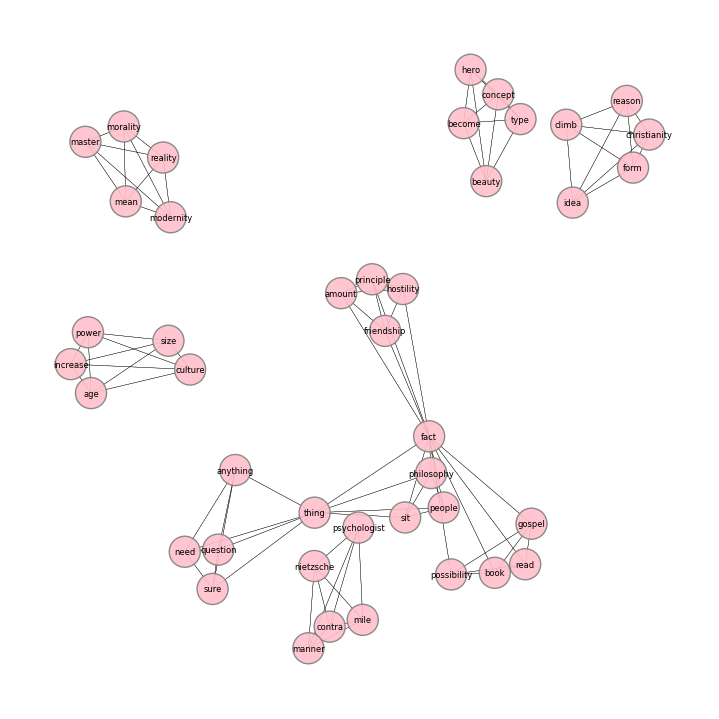
interested in whether our AI clones could produce knowledge that
stems from interaction-induced conceptual organization, beyond
isolated reproduction. Put more provocatively, their knowledge
might be said to be “genuinely theirs.
📸 Image Gallery
Reference This content is AI-processed based on open access ArXiv data.