GRC-Net: Gram Residual Co-attention Net for epilepsy prediction
Reading time: 5 minute
...
📝 Original Info
Title: GRC-Net: Gram Residual Co-attention Net for epilepsy prediction
ArXiv ID: 2512.12273
Date: 2025-12-13
Authors: Bihao You, Jiping Cui
📝 Abstract
Prediction of epilepsy based on electroencephalogram (EEG) signals is a rapidly evolving field. Previous studies have traditionally applied 1D processing to the entire EEG signal. However, we have adopted the Gram Matrix method to transform the signals into a 3D representation, enabling modeling of signal relationships across dimensions while preserving the temporal dependencies of the one-dimensional signals. Additionally, we observed an imbalance between local and global signals within the EEG data. Therefore, we introduced multi-level feature extraction, utilizing coattention for capturing global signal characteristics and an inception structure for processing local signals, achieving multi-granular feature extraction. Our experiments on the BONN dataset demonstrate that for the most challenging five-class classification task, GRC-Net achieved an accuracy of 93.66%, outperforming existing methods.
💡 Deep Analysis
📄 Full Content
CGI2018 manuscript No.
(will be inserted by the editor)
GRC-Net: Gram Residual Co-attention Net for epilepsy
prediction
Bihao You · Jiping Cui
Abstract Prediction of epilepsy based on electroen-
cephalogram (EEG) signals is a rapidly evolving field.
Previous studies have traditionally applied 1D process-
ing to the entire EEG signal. However, we have adopted
the Gram Matrix method to transform the signals into a
3D representation, enabling modeling of signal relation-
ships across dimensions while preserving the temporal
dependencies of the one-dimensional signals. Addition-
ally, we observed an imbalance between local and global
signals within the EEG data. Therefore, we introduced
multi-level feature extraction, utilizing coattention for
capturing global signal characteristics and an inception
structure for processing local signals, achieving multi-
granular feature extraction. Our experiments on the
BONN dataset demonstrate that for the most challeng-
ing five-class classification task, GRC-Net achieved an
accuracy of 93.66%, outperforming existing methods.
Keywords epilepsy prediction · Signal Process-
ing · Gramian Angular Feild · Multi-level Feature
Extraction · Cotattention · Computational Perception
1 Introduction
EEG signals are indispensable for analyzing brain ac-
tivity, understanding brain function, and exploring cog-
nitive mechanisms. Therefore, effective processing of
Bihao You
School of Advanced Technology, Xi’an Jiaotong-Liverpool
University, Suzhou, 215123, China
E-mail: Bihao.You22@student.xjtlu.edu.cn
Jiping Cui
School of Advanced Technology, Xi’an Jiaotong-Liverpool
University, Suzhou, 215123, China;
and also with the School of Electrical Engineering, Electron-
ics and Computer Science, University of Liverpool, Liverpool,
L69 3BX, United Kingdom
E-mail: Jiping.Cui24@student.xjtlu.edu.cn
EEG signals is crucial in various domains such as speech
recognition [5], emotion detection [20], and diagnosing
diseases related to brain function [3] [18] [8]. While sig-
nificant progress has been made in using one-dimensional
EEG signal processing for predicting epileptic seizures,
there is a growing interest in transforming one-dimensional
EEG signal sequences into two-dimensional images to
extract deep features from multiple channels for predic-
tion.
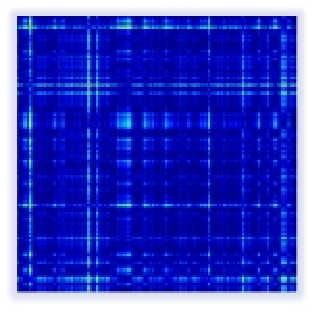
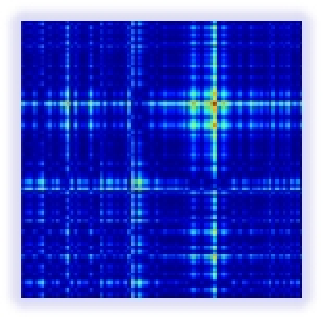
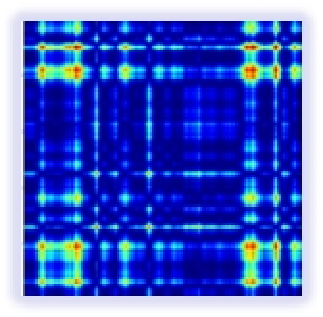
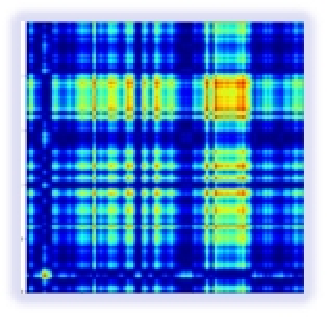
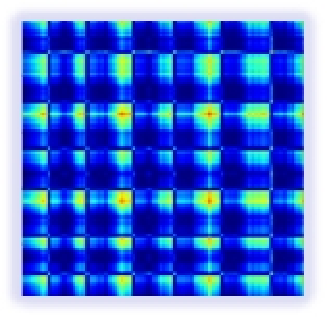
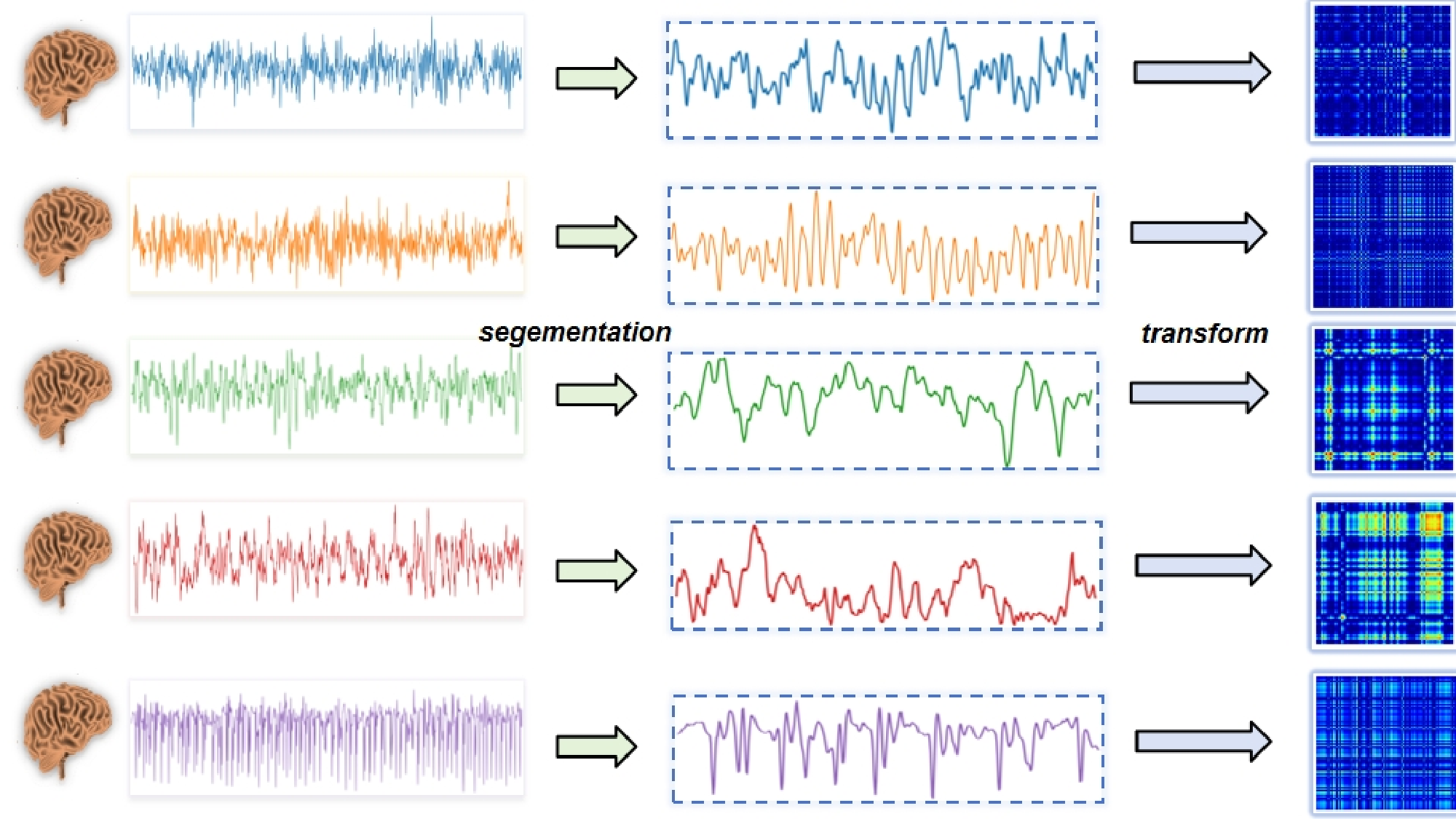
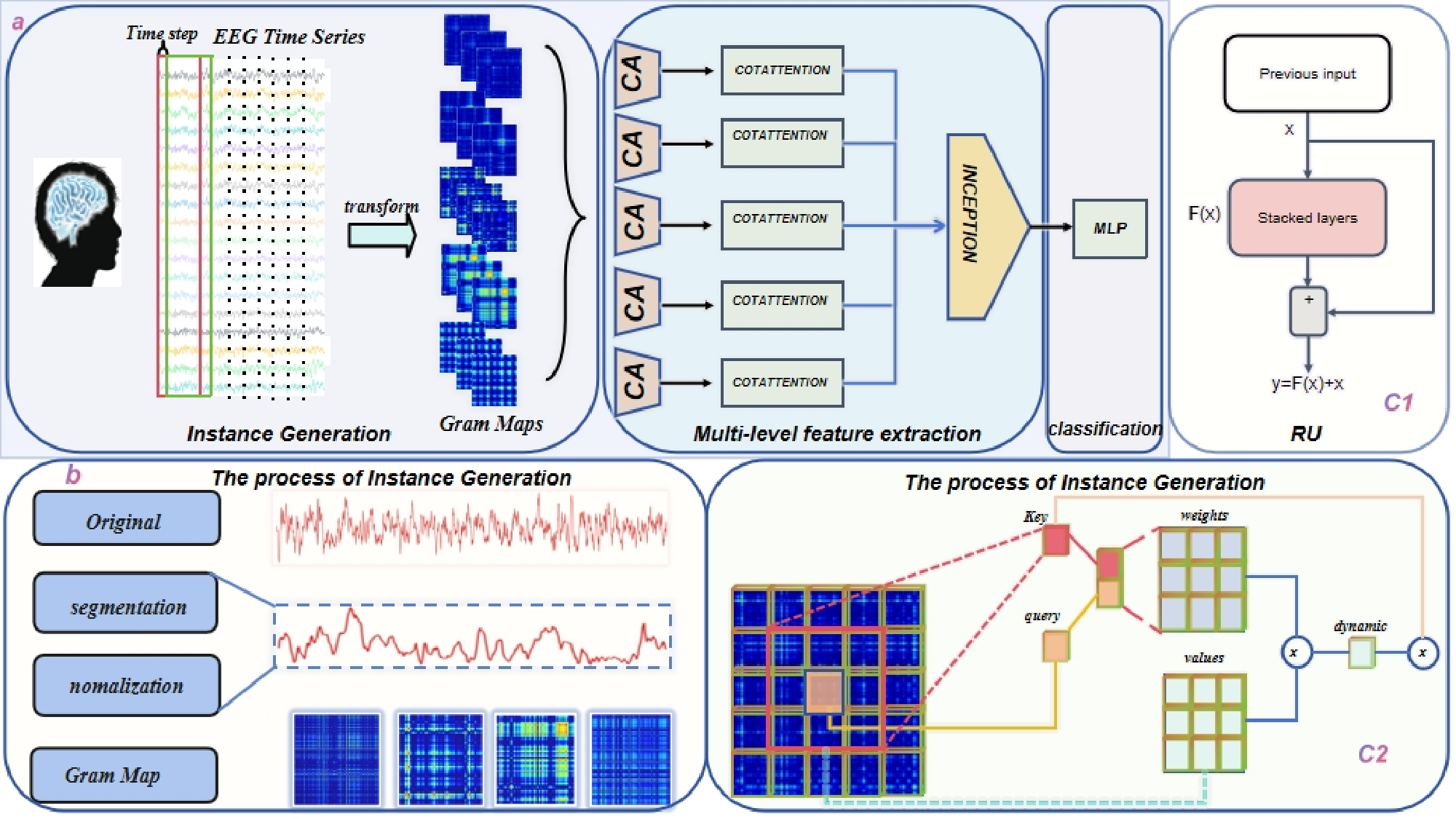
Fig. 1 In the first column of images, the original one-
dimensional EEG signals from the BoNN dataset are dis-
played. In the second column, the signals underwent resam-
pling using sliding windows with specified strides. In the third
column, the resampled signals were transformed into feature
maps using the Gram Matrix method for standardization,
while preserving temporal dependencies.
With the emergence of EEG datasets for epileptic
analysis, such as BONN, several methods have been
proposed for seizure prediction. Although these works
identified some issues in using EEG signal processing
for seizure prediction, their models addressed them in
a rudimentary manner.
Previous studies on EEG signal prediction have mostly
relied on one-dimensional time series or simply utilized
arXiv:2512.12273v1 [cs.LG] 13 Dec 2025
2
Bihao You, Jiping Cui
time series to plot corresponding curves. However, we
argue that due to the unidirectional correlation in the
horizontal and vertical directions of one-dimensional
signals, they may not fully capture the underlying rela-
tionships in the data. Moreover, the linear operations on
one-dimensional sequences fail to discriminate between
the meaningful information in the signal and Gaussian
noise. Therefore, the utilization of one-dimensional sig-
nals alone for plotting corresponding images may lead
to a loss of temporal dependencies in the data, resulting
in information loss.
Furthermore,traditional CNN-based models lack the
ability to model long-range dependencies and percep-
tions due to their focus on modeling local informa-
tion. While some researchers have recognized this is-
sue and attempted to incorporate attention mechanisms
in models for long-range global modeling, the original
Self-Attention structure in Transformers calculates at-
tention matrices based on interactions between queries
and keys, thereby overlooking the relationships between
adjacent keys. This limitation still hampers the effec-
tiveness of global modeling.
To tackle the primary concern, we propose a tech-
nique that converts the original EEG signal based on
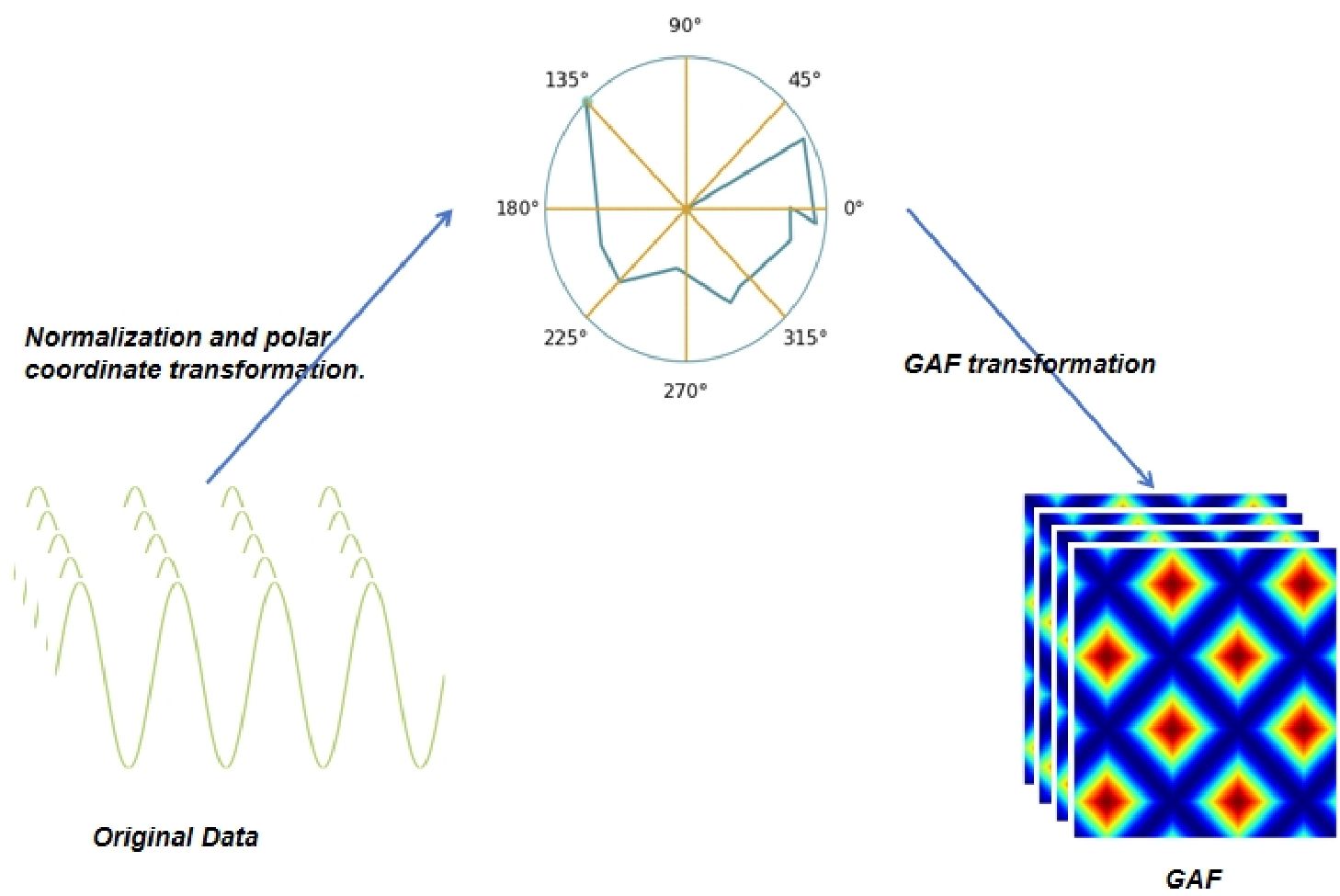
Gramian Angular Feild(GAF). The GAF method is em-
ployed to map one-dimensional EEG signal data onto
a polar coordinate system, where as the sequence pro-
gresses over time, the corresponding values are distorted
between different angular points on the circle. This trans-
formation generates a bidirectional sequence that re-
tains all information without any loss and preserves
temporal dependencies. Specifically,as shown in Fig1,we
segment the raw data using a sliding window with a
specific step size, followed by normalization and sig-
nal transformation. Furthermore, to fully leverage the