Detrended cross-correlations and their random matrix limit: an example from the cryptocurrency market

Reading time: 5 minute
...

📝 Original Info

  • Title: Detrended cross-correlations and their random matrix limit: an example from the cryptocurrency market
  • ArXiv ID: 2512.06473
  • Date: 2025-12-06
  • Authors: Stanisław Drożdż, Paweł Jarosz, Jarosław Kwapień, Maria Skupień, Marcin Wątorek

📝 Abstract

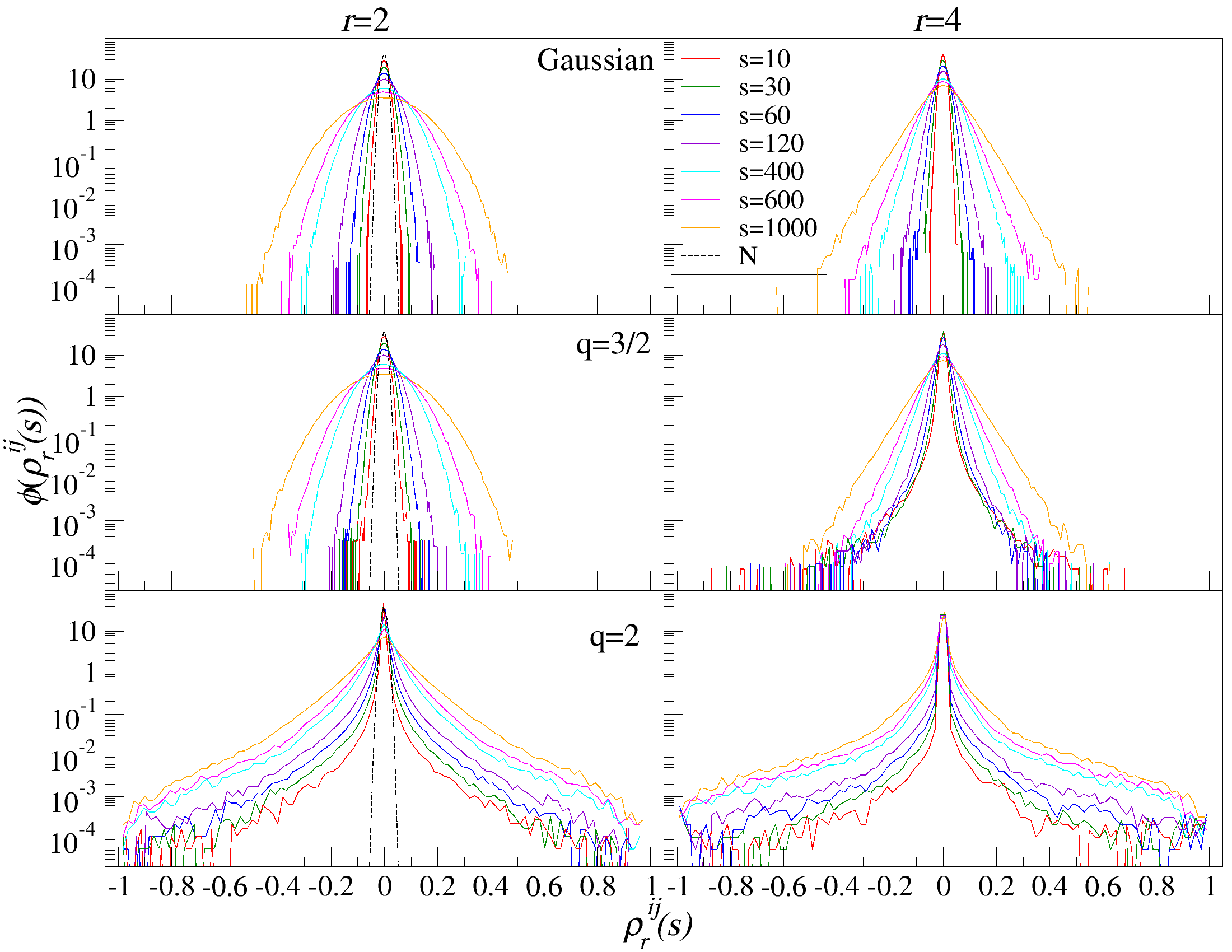
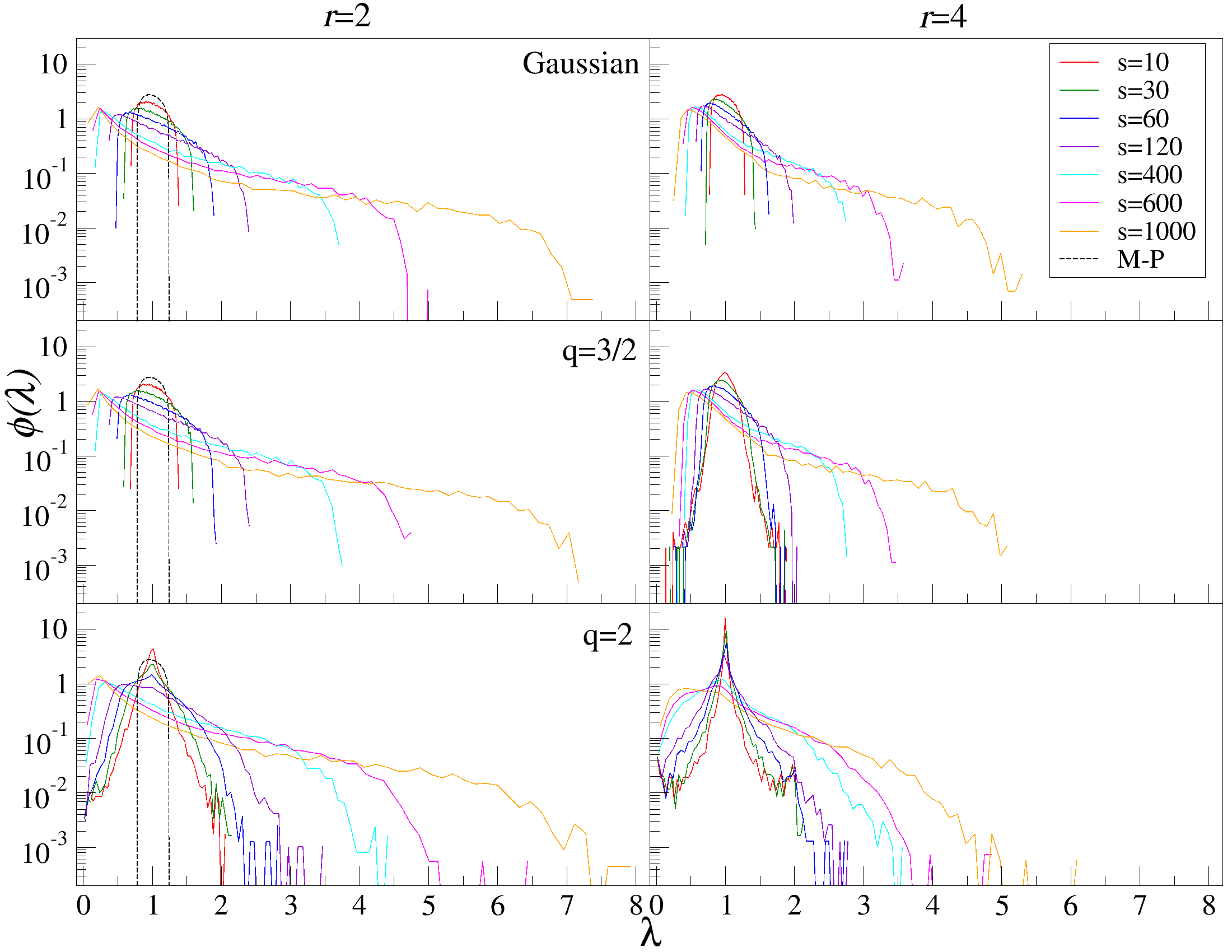
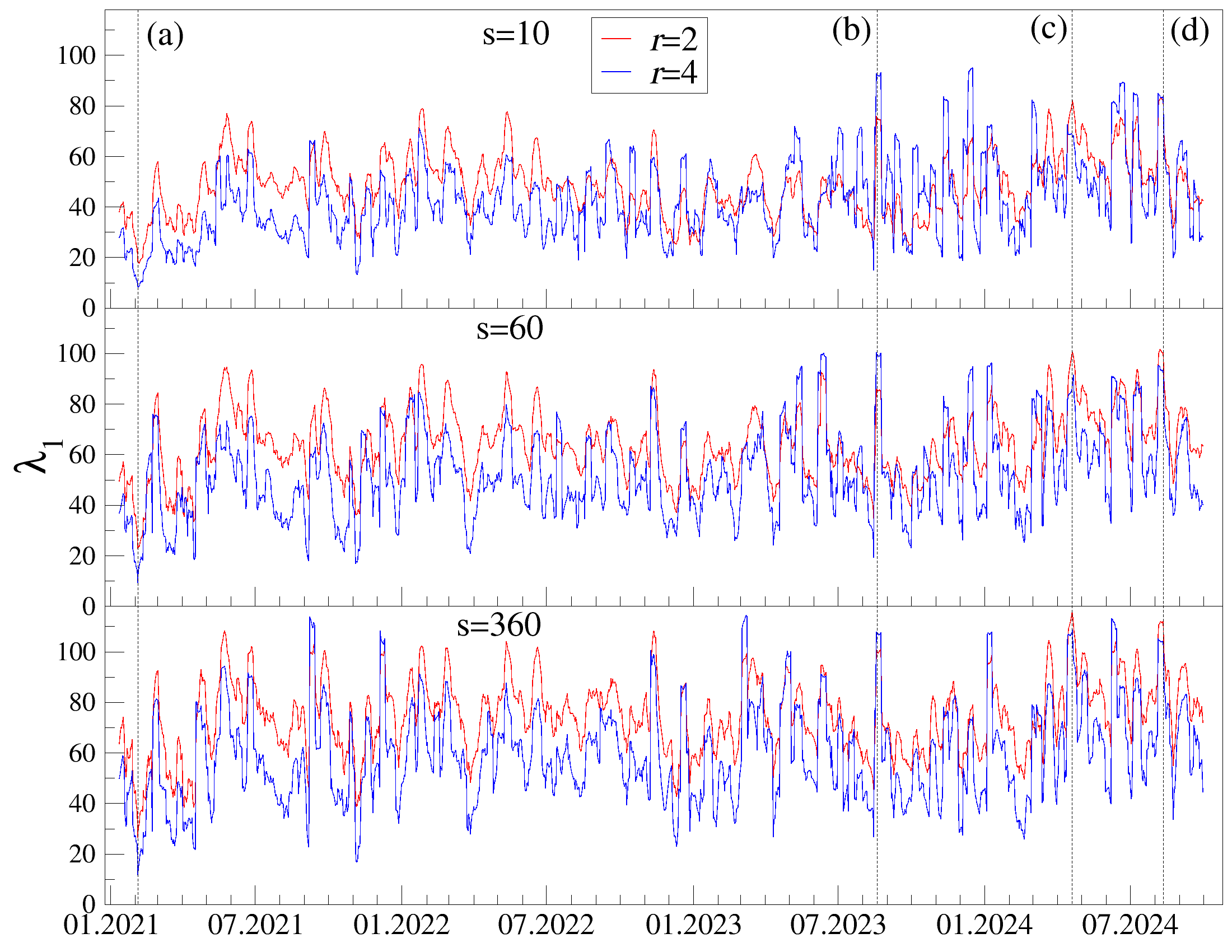
Correlations in complex systems are often obscured by nonstationarity, long-range memory, and heavy-tailed fluctuations, which limit the usefulness of traditional covariance-based analyses. To address these challenges, we construct scale and fluctuation-dependent correlation matrices using the multifractal detrended cross-correlation coefficient $ρ_r$ that selectively emphasizes fluctuations of different amplitudes. We examine the spectral properties of these detrended correlation matrices and compare them to the spectral properties of the matrices calculated in the same way from synthetic Gaussian and $q$Gaussian signals. Our results show that detrending, heavy tails, and the fluctuation-order parameter $r$ jointly produce spectra, which substantially depart from the random case even under absence of cross-correlations in time series. Applying this framework to one-minute returns of 140 major cryptocurrencies from 2021-2024 reveals robust collective modes, including a dominant market factor and several sectoral components whose strength depends on the analyzed scale and fluctuation order. After filtering out the market mode, the empirical eigenvalue bulk aligns closely with the limit of random detrended cross-correlations, enabling clear identification of structurally significant outliers. Overall, the study provides a refined spectral baseline for detrended cross-correlations and offers a promising tool for distinguishing genuine interdependencies from noise in complex, nonstationary, heavy-tailed systems.


💡 Deep Analysis

Figure 1

📄 Full Content

Received: Revised: Accepted: Published: Citation: . Detrended cross-correlations and their random matrix limit. Entropy 2025, 1, 0. https://doi.org/ Copyright: © 2025 by the authors. Licensee MDPI, Basel, Switzerland. This article is an open access article distributed under the terms and conditions of the Creative Commons Attribution (CC BY) license (https://creativecommons.org/ licenses/by/4.0/). Article Detrended cross-correlations and their random matrix limit: an example from the cryptocurrency market Stanisław Dro˙zd˙z 1,2,* , Paweł Jarosz 2 , Jarosław Kwapie´n 1 , Maria Skupie´n 3 , Marcin W ˛atorek 2 1 Complex Systems Theory Department, Institute of Nuclear Physics, Polish Academy of Sciences, ul. Radzikowskiego 152, 31-342 Kraków, Poland; 2 Faculty of Computer Science and Mathematics, Cracow University of Technology, ul. Warszawska 24, 31-155 Kraków, Poland; 3 Department of Mathematics, University of the National Education Commission, Podchor ˛a˙zych 2, 30-084, Kraków, Poland; * Correspondence: marcin.watorek@pk.edu.pl; stanislaw.drozdz@ifj.edu.pl; Abstract Correlations in complex systems are often obscured by nonstationarity, long-range memory, and heavy-tailed fluctuations, which limit the usefulness of traditional covariance-based analyses. To address these challenges, we construct scale and fluctuation-dependent correla- tion matrices using the multifractal detrended cross-correlation coefficient ρr that selectively emphasizes fluctuations of different amplitudes. We examine the spectral properties of these detrended correlation matrices and compare them to the spectral properties of the matrices calculated in the same way from synthetic Gaussian and qGaussian signals. Our results show that detrending, heavy tails, and the fluctuation-order parameter r jointly produce spectra, which substantially depart from the random case even under absence of cross-correlations in time series. Applying this framework to one-minute returns of 140 ma- jor cryptocurrencies from 2021–2024 reveals robust collective modes, including a dominant market factor and several sectoral components whose strength depends on the analyzed scale and fluctuation order. After filtering out the market mode, the empirical eigenvalue bulk aligns closely with the limit of random detrended cross-correlations, enabling clear identification of structurally significant outliers. Overall, the study provides a refined spec- tral baseline for detrended cross-correlations and offers a promising tool for distinguishing genuine interdependencies from noise in complex, nonstationary, heavy-tailed systems. Keywords: Multifractal cross-correlations; Detrended cross-correlation analysis; random matrix theory; eigenvalue spectra; cryptocurrency market 1. Introduction Correlations among complex systems’ components play a central role in understand- ing their collective dynamics [1]. In fields ranging from finance [2–4], climatology [5–8], molecular and biological systems [9,10] to neuroscience [11–13], and physics [14], correla- tion matrices serve as key tools for quantifying interdependencies between multivariate time series. However, the presence of nonstationarities and long-range dependencies in em- pirical data often leads to spurious correlations, challenging traditional covariance-based analyses [15–17]. To address these issues, detrended cross-correlation analysis (DCCA) [18] and its generalizations [19–21] have been developed as robust methods for quantifying power-law cross-correlations between nonstationary signals. Entropy 2025, 1, 0 https://doi.org/10.3390/e1010000 arXiv:2512.06473v1 [q-fin.ST] 6 Dec 2025 Entropy 2025, 1, 0 2 of 20 Correlation analysis-based methods are widely used in financial markets. They have been successfully applied to stock markets [22–29], forex [30–34], cryptocurrencies [35–44], and even NFT tokens [45]. These methods are useful in trading, risk management and portfolio optimization [40,41,46–51]. In this work, we study the spectral properties of matrices constructed from detrended cross-correlation coefficients ρr (also denoted in literature as ρq), which generalize the detrended cross-correlation coefficient ρDCCA [21], which is an equivalent of the Pearson cross-correlation for the detrended fluctuation analysis [52]. Each element of the resulting matrix captures the scale-dependent correlation between detrended fluctuations of two time series, controlled by the parameter r that governs sensitivity to fluctuation amplitudes. This approach allows us to explore interdependencies in systems characterized by heterogeneous scaling behaviors or multifractality, going beyond the scope of linear correlation measures. Our primary interest lies in the eigenvalue spectra of such detrended correlation ma- trices. In conventional correlation matrix theory, the Marˇcenko–Pastur (M-P) distribution provides the null hypothesis for the eigenvalue density when entries are independent and identically distributed random vari

📸 Image Gallery

entropy-logo-eps-converted-to.png entropy-logo.png logo-mdpi-eps-converted-to.png logo-orcid.png logo-updates-eps-converted-to.png okno_nr1194Zb.png okno_nr1194elmac.png okno_nr1194i.png okno_nr1308Zb.png okno_nr1308elmac.png okno_nr1308i.png okno_nr24Zb.png okno_nr24elmac.png okno_nr24i.png okno_nr948Zb.png okno_nr948elmac.png okno_nr948i.png rozkladRqG.png szereginseticT.png zaleznoscodq_140_10k_all.png zaleznoscodq_140_10k_elmac.png zaleznoscods_140_10k_elmacq2.png zaleznoscods_140_10kq2_all.png zmiany_wczasie_q2_q4u.png

Reference

This content is AI-processed based on open access ArXiv data.

Start searching

Enter keywords to search articles

↑↓
ESC
⌘K Shortcut