Ohmic Power of Ideal Pulsars
📝 Original Info
- Title: Ohmic Power of Ideal Pulsars
- ArXiv ID: 1101.5844
- Date: 2011-02-01
- Authors: Andrei Gruzinov
📝 Abstract
Ideal axisymmetric pulsar magnetosphere is calculated from the standard stationary force-free equation but with a new boundary condition at the equator. The new solution predicts Ohmic heating. About 50% of the Poynting power is dissipated in the equatorial current layer outside the light cylinder, with about 10% dissipated between 1 and 1.5 light cylinder radii. The Ohmic heat presumably goes into radiation, pair production, and acceleration of charges -- in an unknown proportion.💡 Deep Analysis
📄 Full Content
arXiv:1101.5844v1 [astro-ph.HE] 31 Jan 2011
Ohmic Power of Ideal Pulsars
Andrei Gruzinov
CCPP, Physics Department, New York University, 4 Washington Place, New York, NY 10003
ABSTRACT
Ideal axisymmetric pulsar magnetosphere is calculated from the standard stationary force-
free equation but with a new boundary condition at the equator. The new solution predicts
Ohmic heating. About 50% of the Poynting power is dissipated in the equatorial current layer
outside the light cylinder, with about 10% dissipated between 1 and 1.5 light cylinder radii. The
Ohmic heat presumably goes into radiation, pair production, and acceleration of charges – in an
unknown proportion.
1.
Introduction
We have shown that ideal pulsars calculated in
the force-free limit of Strong-Field Electrodynam-
ics (SFE) dissipate a large fraction of the Poynt-
ing flux in the singular current layer outside the
light cylinder (Gruzinov 2011). This result – finite
damping in an ideal system – is not really that
unusual. Burgers equation, for instance, with vis-
cosity +0, dissipates finite energy in infinitely thin
shocks.
The standard axisymmetric pulsar magneto-
sphere features a nearly head-on1 collision of
Poynting fluxes right outside the light cylinder.
It is to be expected, although merely by common
sense, that such a collision should be accompanied
by damping.
Here we show that our SFE solution also ob-
tains from the standard force-free magnetosphere
equation of Scharlemant & Wagoner (1973), if one
uses the “correct” boundary condition at the equa-
torial current layer.
We propose that the “correct” boundary condi-
tion at the singular current layer (which now exists
only outside the light cylinder) is
B2 −E2 = 0.
(1)
This condition is Lorentz invariant, comes up in
1154.6◦, Gruzinov (2005)
0
1
2
3
0
1
2
3
0
0.5
1
-2
-1
0
1
0
0.5
1
0
0.2
0.4
0.6
0.8
1
0
1
2
3
-1
-0.5
0
0.5
1
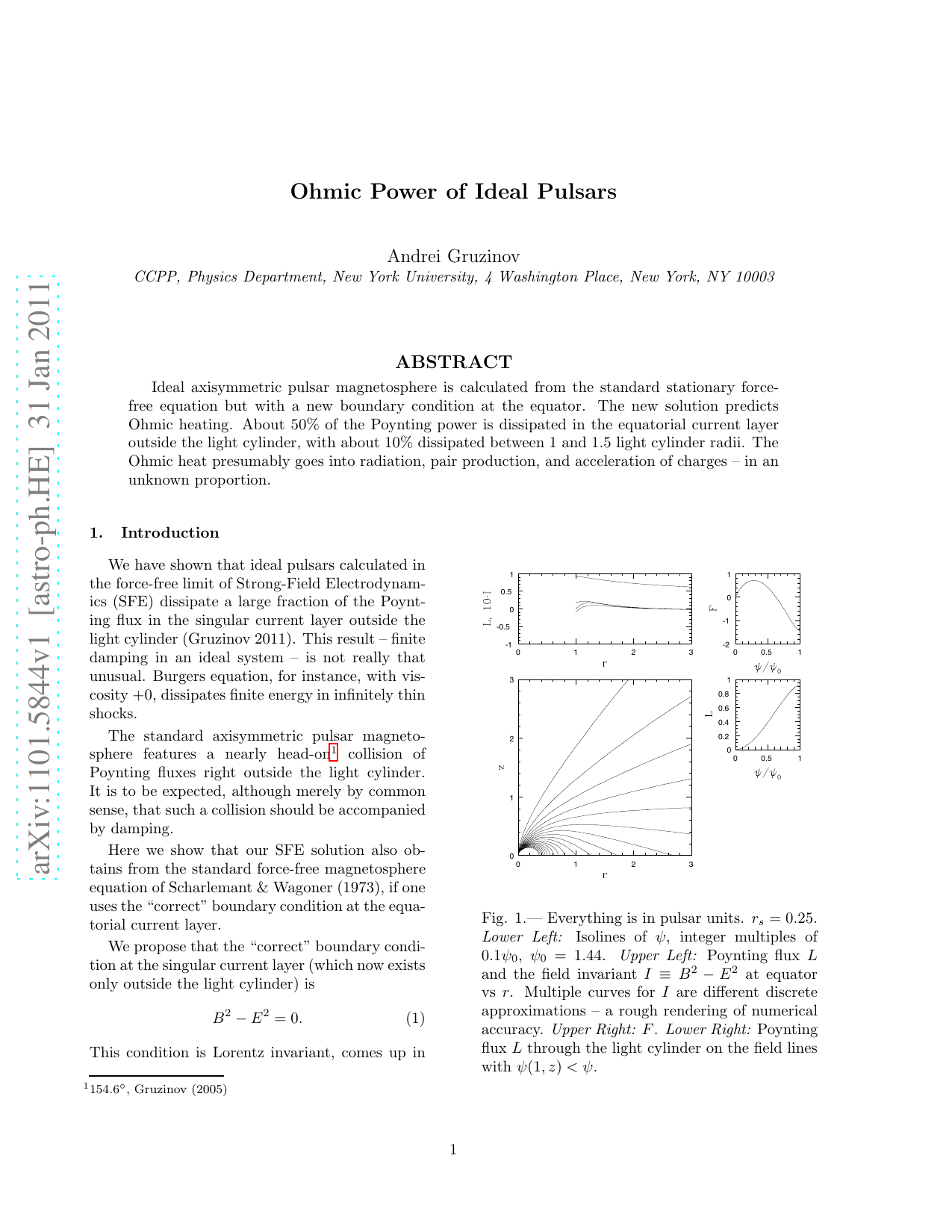
Fig. 1.— Everything is in pulsar units. rs = 0.25.
Lower Left:
Isolines of ψ, integer multiples of
0.1ψ0, ψ0 = 1.44. Upper Left: Poynting flux L
and the field invariant I ≡B2 −E2 at equator
vs r. Multiple curves for I are different discrete
approximations – a rough rendering of numerical
accuracy. Upper Right: F. Lower Right: Poynting
flux L through the light cylinder on the field lines
with ψ(1, z) < ψ.
1
the SFE simulations 2, and has a clear physical
meaning (at equator, the field becomes electric-
like in order to drive large current).
We cannot be sure that our proposal works, un-
til one justifies the full SFE, or just eq.(1), micro-
scopically. But conversion of 50% of the Poynting
flux into the Ohmic power (radiation, electron-
positron pairs) occurring close to the light cylin-
der must have consequences for the pulsar phe-
nomenology, and needs to be studied.
In §2 we derive the pulsar magnetosphere equa-
tion and explain how Contopoulos, Kazanas &
Fendt (1999) solve it. In §3 we put together all the
equations which are needed to calculate the pulsar
magnetosphere. In §4 we describe the numerical
solution and the corresponding physics results.
2.
Ideal pulsar magnetosphere
Goldreich & Julian (1969) proposed that neu-
tron star magnetospheres obey the force-free con-
dition
ρE + j × B = 0.
(2)
Surprisingly, it turns out that this simple equa-
tions allows a full calculation of the pulsar mag-
netosphere (Scharlemant & Wagoner 1973, Con-
topoulos, Kazanas & Fendt 1999, Gruzinov 2005,
Spitkovsky 2006).
For the stationary axisymmetric case, the cal-
culation is as follows.
Using axisymmetry and
stationarity, in cylindrical coordinates (r, θ, z), we
represent the fields by the three scalars φ, ψ, and
A, which depend on r and z but not on θ:
E = −∇φ,
B = 1
r (−ψz, A, ψr),
(3)
where the subscripts denote the partial deriva-
tives.
We plug (3) into (2) and use ρ = ∇· E and
j = ∇× B. We also use the boundary conditions
at the surface of the star – the continuity of the
normal component of the magnetic field and the
tangential component of the electric field. We use
the pulsar units
µ = Ω= c = 1,
(4)
where µ is the magnetic dipole moment of the star.
It is assumed that the magnetic field is a pure
2See Fig.5 of Gruzinov (2008).
dipole near the surface inside the star. The star
is assumed to be a perfect conductor.
Ωis the
angular velocity of the star.
We get
φ = ψ,
A = A(ψ),
(5)
where A is an arbitrary function of ψ, and we
also get the “Grad-Shafranov-like” pulsar magne-
tosphere equation for ψ
(1 −r2)∆ψ −2
r ψr + F(ψ) = 0.
(6)
Here ∆≡∇2, and F ≡AA′, where the prime de-
notes the ψ-derivative. The pulsar magnetosphere
equation (6) is solved outside the star
r2 + z2 > r2
s,
(7)
with the boundary condition at the surface of the
star
ψ = r2
r3s
,
r2 + z2 = r2
s.
(8)
The pulsar magnetosphere equation (6) con-
tains F – an arbitrary function of ψ, and it is
not clear how one should solve it. This was ex-
plained and done by Contopoulos, Kazanas &
Fendt (1999) (CKF).
The pulsar magnetosphere equation is elliptical
both inside and outside the light cylinder, and can
therefore be solved
📸 Image Gallery
Reference
This content is AI-processed based on open access ArXiv data.