Leveraging LLMs and Social Media to Understand User Perception of Smartphone-Based Earthquake Early Warnings
Android's Earthquake Alert (AEA) system provided timely early warnings to millions during the Mw 6.2 Marmara Ereglisi, Türkiye earthquake on April 23, 2025. This event, the largest in the region in 25 years, served as a critical real-world test for s…
Authors: Hanjing Wang, S. Mostafa Mousavi, Patrick Robertson
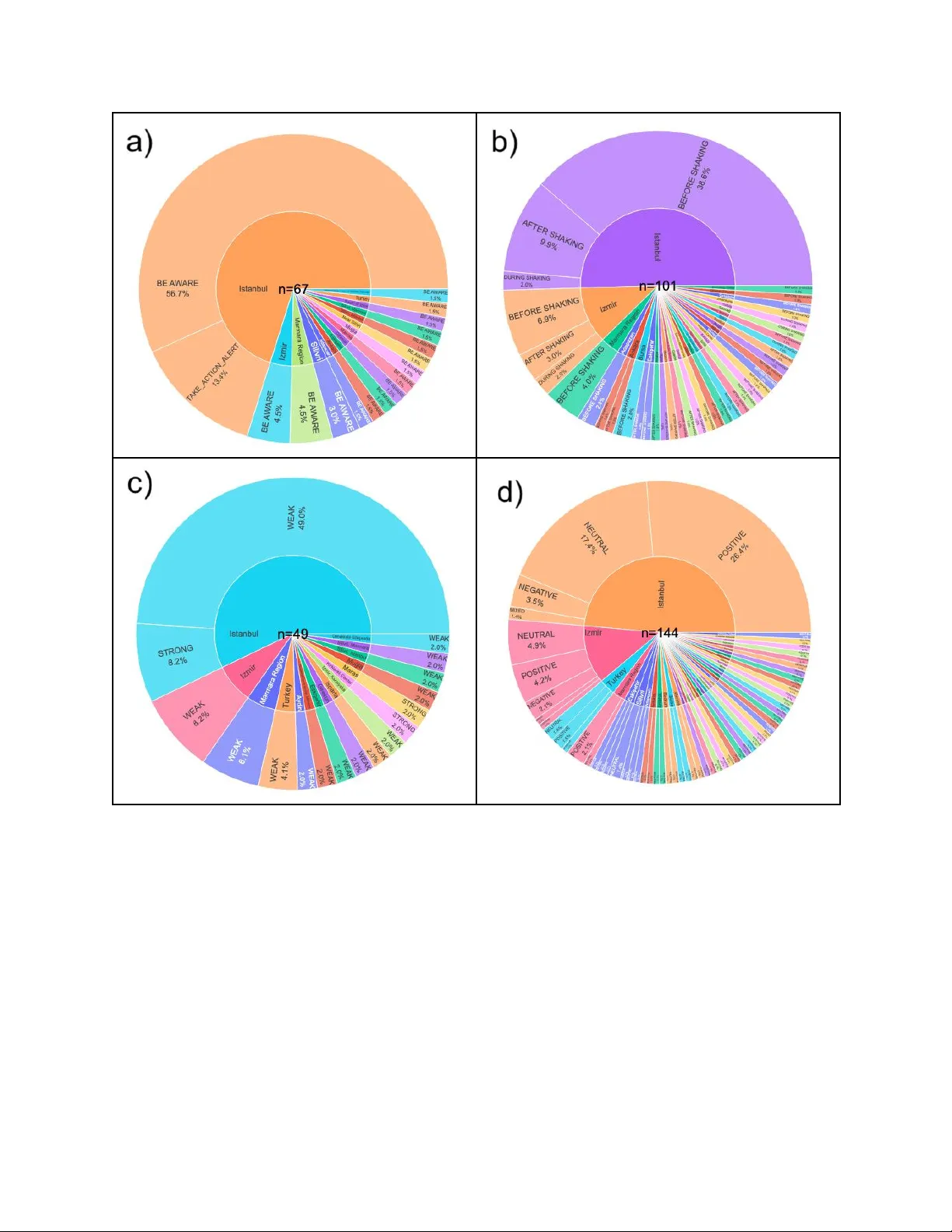
Leveragi ng LLMs and Social Media to Und erstand User Pe rception of Smartp hone - Based Earthqu ake Ear ly Warnings Hanjing W ang 1 , S. Mostafa Mousavi 1,2* , Patrick Robertson 4 , Richa rd M. All en 2,3 , Alexie Barski 2 , Robert Bosch 2 , Nivetha Thiruverahan 2 , Youngmin Cho 2 , Taj inder Gadh 2 , Steve Malkos 2 , Boone Spooner 2 , Greg Wim pey 2 , Marc Stogaitis 2 1 Departm ent of Earth and Planetary Sciences, Harvard University, Cam br idge, MA, USA. 2 Googl e LLC, Mountain View, CA, U SA. 3 Seismologi cal Laboratory, University of California, Berkeley, Berkeley, CA, USA. 4 Googl e Germany GmbH, Munich, Ge rmany. *Corresponding aut hor. Email: mousavim@google.com Abstract Android's Earthquake A lert (A EA) system prov ided tim ely e arly warn ings to millions dur ing th e Mw 6.2 Marmara Ereğl isi, Türk iye eart hqu ake on April 23, 2025. This eve nt, the la rgest in the region in 25 years, served as a critical real -world test for s martphone-based Earthquake Early Warni ng (E EW) systems. The AEA syste m succes sfully delive red ale rts t o users with high precisi on, offering over a minute of w arning before the strongest s haking reache d urban areas. This study leve raged L arge Language Models (LLMs) to analyze more than 500 public social me dia posts from the X pla tform, ext racting 42 distinct att r ibutes related to user e xperience and b ehavior. Stati stical analyses revealed significant re lationships , notably a s trong correlation between user trust a nd alert timeliness. Our re su lts indicate a di s tinction between engineering and th e user - cent ric definition of sys tem accuracy . We found th at timeliness is accuracy in the user’s mind. Overall , this study provides actionable insights for optim izing ale rt design, public education cam paigns, and future behavi or al rese arch to improve the effe ctiveness of such syste ms in seismic ally a ctive regions. Introduction EEW syste ms offer crucial se conds to minutes of warning before damaging ground s haking reache s urban areas (Nakamura, 1988; Allen e t al., 2009). These systems w ork by rapidly detecting the i nitial, less destructive seismic waves near the earthquake's origi n. They then quickly assess the pote n tial hazard a nd issue a lerts t o a ffe cte d regions (Heaton, 1985). The e ffectiveness of EEW systems rely on el ectronic signals traveling faster than s eismi c waves, creating a vital window for protec tive a ctions. Such m easures in clude s eeking co ver or ha lting industri al op erations w hich can signific antly re du ce casualties and e conomic dama ge during an e arthquake (Allen & M elgar, 2019). In response to the substant ial cost of infrast ructure and maintenance for t r aditional EEW system s , smartphone-ba sed EEW system s have e merged, ut ilizing th e low -cost a ccelerometers found i n modern mobile de vices to c reate distributed sei smic sensing net works (Kong et al., 2016; Finazzi, 2016; Minson et al., 2015 ; Finazzi et a l., 2024). This approach of fers a v aluable alternative or compl ement, po tentially extending covera g e to areas w ith sparse sensor networks or enhancing existi ng infrastructure. A notable example is Google's AEA system, w hich levera g es billions of Android smartphones to form a global seismic network, c apable of re al-time earthquake signal dete ction and near-light-speed alert transmission via the internet (Google, 2020, Allen et al., 2025). On April 23, 2025, a Mw 6.2 earthquake s truck the central M arma r a S ea, Türk iye, at 12:49 l ocal tim e (09 :49 UTC). Occurring a t a de p th of 10 km (USGS, 2025; GFZ, 2025), this ev ent was the largest in the region in 25 years (Hubbard and Bradl ey, 2025), the last of a long sequence of large eart hquakes on the N orthern A natol ian fa u lt (Ş engör and Yilm az 1981; Şengör et al., 2005). . Initi al reports indicated t hat buildings in Ista nbul, 75 km northeast of t he epic enter, experience d moderate shaking at M MI V. At le ast 359 p eople in the city were in jured, pr imarily du e to panic rather t h an dire ct structural damage (Tagesschau, 2025; Memişoğlu, 2025) (Figure 1). The Mw 6.2 event served as a crucial real-world case study for ev aluating Google's AEA system. The system successfully delivered alerts to m illions of users with h igh precision providing over a minut e of w arning be fore the stronge st s haking (Mo usavi e t al., 2026). To ass ess the interaction of the users with AEA’s ale rts, public social media posts were analyzed in t h is study. LLMs were used for autom ated data proc essing and information extraction from user posts on the X platform . Rathe r than a purely exp loratory analysis, this study evaluates the user experience by testing a core hypothesis derived from ex isting risk communicati o n l iterature: A user's perc eived accuracy a nd the informati onal clarit y of an alert significantly dictate thei r perception of the s ystem's usefulne ss and their fu ture trust in i t. Test ing these hypo theses of fers acti on able i nsights into the practical role of smartphone-ba sed EEW i n mitigating seismic risk . Fi gure 1 : The first AEA contour, issued ~ 7 s after the earthquake origin time, (l eft) and a subsequent alert issued 7 seconds later (14 s after the eart hquake origin time) (right ) a re shown by polygons overlaid on top of U SGS ShakeMap contours color coded based on the intensity of shaking. Normalized median a cceleration val ues of all phones within 4x4k m grids are show n by fill ed circles (in blue). The waveform on the bottom, is from a refe r ence station (shown by purple tria ngle on the map) from the Disaster and Emergency Managem ent Authority (A F AD) seismic network. The eart hqu ake was detected by Android phones s hortly after t h e e arthquake w aves (P wave) hit the s hore and an A EA al ert was sent preceding th e e arthquake S wave s at most of the loca tions. The alert polygon was rapidly expanded to a large area as the magnit ud e estimate grew while t he shaking was s til l ongoing in the epicenter’s s urrounding area (right). Data To analyze us er experience, we col lected 511 public posts on the social media p latform X over a 3 days period fol lowing the Mw 6.2 M arma ra earthquake. This specific time frame wa s chosen to capt ure im mediate, org anic us er rea cti ons and subse quent ref lectio ns while mitigating the risk of mem ory degradation that occurs over longer periods. These posts are specificall y rele vant to AEA ale rts issued duri ng t his time and served a s our data s ource for eval u ating the user expe rience. We coll ected re leva n t posts by employi ng a s ingle key word, " Android Deprem," (“deprem” means “ea rthquake” in Turkish) and as screenshots that contained both t ext and ima g es. Thi s targeted keyword was intent ionall y adopted to prioritiz e prec ision over re call . By focusing on a spec ific, loca lized keyword, we filtered out t he overwhel ming noise of global news bo ts and int ernational observers, ensuring the dataset consisted prim arily of act ual alert re cipients in the affected regi on. Whil e this localized search may have o mitted som e posts w rit ten entirely in othe r l anguages without the local k eyword, it s uccessfully yielded a concentrate d, high -quality sample for deep behavi ora l extraction . Images included in the pos ts ofte n are s creenshots of user-receive d al erts (Fi gure 2). These a lert s creenshots were displ aying key information such as the alert time st amp, the estimated earthquake magnitude a t the time of issuance, the alert's geographical con tour, and the user's approxi mate location w ithin the al erted zone. This data, independent of the AEA, is coll ected passively unlike other user expe rience surveys. Its comment-b ased and free-form nature offers the flexibility to e xplore a broader spectrum of us er exper ience s and beh aviors during the eart hquake. By leveraging unstructured social media data from t he X platform and the capabilities of LLMs, we were a ble to e xtract detailed information re garding alert types (Take Acti on vs. Be Aware), alert mode (silent or audib le), and subsequen t post -alert actions. The dataset also c aptured user sentim ent and specific emotions, along with recommendations for system improvements. Fi gure 2 : F our r epresentative X posts used in this study . Furt hermore, posts enc ompass ed perceived shaking intensit y, whether the alert was t he user's first EEW experience, user gender, and recalled a lert informati on. The dat a a lso inc luded perceived acc ura cy and clarity of alert information, te chnical is sues enc ountered, reasons for inaction post- ale rt, and rationales for alert he lpfulness. Finally, it incl uded a co mparative assessment of alert deli very and precision re lative to oth er EEW alerts received for th e s ame event, as we ll as reported warning times. The d iverse attributes extracted fro m X posts offer a chance to exa mine further aspect s of al erting effectiveness and th e c o mplex inte rplay among t h ese factors. However, r elying on a s ingula r s ocial media p latform (X) and a sin gle keyword ( 'Android Deprem') introduces inherent sampling bias into the collected dataset, capturing only a self-s elected fraction of users who chose to post public ly. Furthermore, the presence of anothe r operational Android -based E EW appli cation in the region dur ing the earthquake might contribute additional noise to the da ta. Therefore , all collected posts first underwent a visual inspect ion for data cleaning, followe d by an autom ated pre-processing s tep, to m ake s ure only AEA relate d posts (the result ing 511 posts ) are used for the subsequent data analyses. Methods To effective ly proc ess the social me d ia posts from the X platform and extract p ertinent information, LLMs were employed. Specifically, Google's Gemini P ro 2.5 ( Gemini Team, 2023) and Vertex AI, Google Cloud's comprehensive m achi ne lea rning p latform, were u tilized to ext r act 42 distinct attributes ( encompa ssing both questions and demographic data) from the se pos ts through c areful prompt engi n eering and few-shot learni ng me thodologies (Figure 3). Few-shot lea rning is a machine le arning paradigm where model s a re trained on a limited number of examples (shots) for a new task, e nabling rapid adaptation and genera lization without e xtensive re training. This a pproach leverages pre-trained knowledge fro m a broad er dataset, a llowing the mod el to quickl y learn and perfor m new tasks wit h min imal t ask -specific da ta. Th e consider able potential of L LMs i n c omputational social s cience is underscored by t heir capacity for a dvanced a nalysis of unstructured da ta, leading to the d erivation of actionable insights. This capability i s ref lected i n thei r escal ating application with in natural disaster management, eart hqu ake science, and studies of use r be havior (e.g., Mousavi et al., 2025; L ei et al., 2025; Xu et al., 2025; Li n ardos et al ., 2025; Raj et al., 2025 ; Zhou et al., 2025). T he queries incorporated into the prompt were specifically designed t o assess user attitude s, preferences, and a ctions in response to AEA alerts, while also inte gra ting additional information for d ata v ali d ation and refinement. Details regarding the designed prompt , the extracted i nfor mation, and subsequent data vi sualization are provided in the suppleme ntary materials. To ensure th e accuracy of the attributes extracted from the X posts, the distribut ions of various auxiliary attributes were cros s -reference d for consistenc y, and any entries exhibi ting suspicious at tribute values were exc luded. Furt hermore, a r andom subset comprising 10% of the data for all extracted attributes underwent ma nual aud iting to confirm the precision of the LLM outputs. Th is rigorous manual va lidation corroborate d the reliabilit y of the extr acted information. Emot ional r eactions, in cluding annoyance, r eassura nce, excitement, surprise, f ear, and anxiety, were determined through the a utomated analysis of tweet content using LLMs. Gemini was trained with careful prompt engi neering and few -shot learning methodologies to id entify a nd categorize these s peci f ic emotions expr essed by users in thei r social m edia posts. This allowed for the extracti on of nuanced emotional st ates b eyond gen e ral sentiment, pro vid ing de eper insight into user expe rience. To prov ide concrete evi d ence of Ge mini 's effe ctiveness in senti ment analysis under disaster s cenarios, we m anually va lidated t he model's emotional est imates aga inst th e origina l Turkish posts. This manual cross -validation confirmed that Gemini accurately capt ured nuance d emotional states — even amidst the chaotic, informal synta x typical of disaster -r elated social media. Fi gure 3: Distribution of attributes ext r acted from X posts. T here are mu ch fewer posts with information regarding us er’s past ea rthquake e xperience as compared to th e information r egardi ng users' emotion, trust level, etc. “ location combined” feature rep r esents aggreg ated geolocations into l ocal metropolitan areas. To ensure the v alidity of extr acted information by Gemi ni, we hav e manually cross-checked Ge mini 's output with the input pos ts for mu ltiple ke y attributes. Upon cross -refe rencing all posts (26) for th e t yp e of Alert, i t was found t hat almost a ll were c orrectly cla ssifi ed, with the exception of one "TAKE_ACTION" classificat ion that was actually a "BE_AWARE" alert. Cross-che cking 44 pos ts for Alert mode classifications revealed that most ALERT_WITH_SOU ND classific ations were accurate, wi th only about f ive inst ances appearing to be scr een no tifications without sound, which are less likely to prompt action. Con versely, many S ILENT_NOTIF ICATION cla ssifications seemed to ind icate no noti f ication at al l, as only on e of the seven checked posts act ually r eceived a silent not ification after the eart hquake. Evaluating inf erred alert arr ival (all posts cross -checke d) s howed that nearly a ll ext ra cted a lert arrival times were accurate . M ost “AFT ER_SHAK ING” c lassifications corresponded to alert s th at ne v er arrive d, while a few “DURING_SHAK I NG” al erts appeared to be slightly before the shaking arrive d. The cross -validation of the inf erred emoti on al a ccuracy (across a ll samples) indicate d that the maj ority of the extracted perceptions were reliable. Further internal evidenc e of th e LLM's acc ura cy is demonstrated by the log ical consist ency of the ex tracted sen timents w ith subsequen t user behavior. A lthough some identifie d actions were slightly inaccurate (e.g., certain " drop -and- cover" instances derived from scre enshot advice, where users were only p assively aware), Gem ini generally demonstrated the ability to d ifferentiate b etween a lack of acti on a nd various l evels of passive or ac tive awareness. An exami n ati on of the original posts rega rd ing the emoti ons inferred by Gemini reveals a strong c orrelation between posit ive sentiments, s pecifically reassurance and gratit ud e, and t he inclination to take action, such as evacuation or enga ging in drop -cover mane uvers. Conversely, instances of annoyance primaril y stemmed from issues w ith Android al ert deli very, e ither de lays in notifi cation or complete fa ilures to s end al erts aft er the earthquake. A portion of t his annoyance was also direc ted at iPhones, with users expressing a desire t o switch to Android due to pe rceived inconsistencies in alert functionalit y. Results Alerting Perf ormance It is chal lenging to ext ract prec ise geolocation d ata fr om X posts. User location estimate s are based on information within their posts or a ttached alert screenshots. Data analysis shows that over 56.7% of users in the Is tanbul m etropoli tan area receive d " Be Aware" (BA) alerts, while 13.4% recei v ed "Take Action" (TA) alerts ( Figure 4). This aligns with Istanbul experiencing mode rate shaking, estimated at MM I V 1 . Ba sed on our ex tracted data, of the posts w here ale rt arrival r elative to shaking could be determine d (n=78), 55% repor ted rec eiving the al ert b efore the shaking began, compa red to 36% after and 9% during. Posts from other loc ati ons exc lusively con tained BA a lerts, which aligns wit h t he extent of alert c ontours (Figure 1). In Is tanbul, alert levels generally a ligned with the perc eived shaking intensity. Specifically, 4 9% of reports indicated weak shaki ng, wh ile 8.2% reported s trong shaking. The estimated ground shaki ng in tensity across th e aff ected area ranged from MMI -III to MMI-VII, w ith more frequent re ports of MMI -III shaking. This dat a is consistent with USGS reports (Figure 4, top panel). Consistent with these arr ival times, t he majority of p osts reported a warning time ranging from 0 to 60 seconds (Figure 5b). This pre-s haking warnin g time is crucial for users to take protective act ions. T he us er sa mple an alyzed in t his s tudy prim arily consisted of i ndividuals located wit h in 300 km from the earthquake 's epicenter (Figure 5c). The re w ere 35 posts ( ~ 7%) with negative sentim ents directly related to the A EA, among w hich 4 users state d th at the prov ided warn ing time was not enough to t ake an ac tive action. The rest of the posts wer e related to users who did not recei v e AEA ale rts while expecting them. The m ajority of X users mentioned feelings of the ea rthquake shaki ng similar to the results of the AEA’s in -al ert user surveys ( Figure 6 ), However, the pe rcentage of “Not Fe lt” re sponses in AEA’s survey results is highe r than those in the X posts. This could be due to a fact that AEA surveys cover a bigg er geograph ic area ex tended to the lower inte nsity r egions at t he m argin of the affe cte d area whi le the majority of the X posts co me fro m us ers in Istanbu l metropolitan (Figure 4). Approximat ely 20% of the users reported th e rec eivi n g of the alert after feeling the shaking in bo th data sets, However, the perc entage of the X users tha t reported t he rece iving of the ale rt during the shaking is l ess that wha t has b een r eported in AEA s urvey. This can be an indica tion of a b ias in X posts. These hi erarchical distributions (Figure 7) illust r ate the complex int erplay b etween technical performance a nd user psychology. The dat a shows tha t "Be Aware" alert s were most frequently recei v ed before the onse t of shaking. Cri tically, th e hi erarchy d emons trates tha t a lert arrival t ime relative to shaking is a prim ary determinant of " future trust," reinforc ing the s tudy's concl usion that receiving a warni ng before shaking i s the most powerful fa ctor in bui lding system c redibility. Fi gure 8 categorizes the human element of the disaster, showing the distribution of post -a lert act ions and emotional states. The emotional distribution highlights that while fear and anxiety were present, more positive sentiments like reassurance and surpr ise were the dominant among the social media us ers. A lthough it w ould be intere sting to study the relati on between the user’s state of emot ion and the ir post ale rt actions, the low number of sam ples prevent s us from performing more detai led statistical analyses in this study. Figure 4: a ) A lert type by loc ation, b) alert arrival relative to shaking, c) sh aking le vel, a nd d) user sentiments extrac t ed fr om X posts categorized by location. Fi gure 5: Est imated ground shaking intensity (a, n=81), rece ived warni ng time (b, n=154), and epic entral distance in kilometers (c, n=123) from X p os ts. Note t hat beca use da ta is ext racted from unstructured s ocial media post s, not al l posts cont ain informa tion for every at tribute; there for e, the sample sizes (n) di ffer ac ross the s ubpanels and do not represent pe rfectly over lapping sets of users. Figure 6: Distribution of responses to "When did you receive the alert?" (top) and "Did you feel shaking?" (bottom) questions in X posts (left) and AEA feedback survey (right). Figure 7: Tw o examples of hierarc hical dist ributions of se vera l key attributes e xtracted from X posts. Spec ifically, it illustrates: top) f elt shaking, aler t type, shaking le vel, e stimated intensity, alert arrival relative to shaking, a nd warning tim e; bottom) sha king level, alert arrival relative to shaking, and future trust (n=30). Figure 8: Distribution of the post alert actions (left) and em otions (right) among X user s. Varia ble relationships Fol lowing the methodology of Goltz et al. (2024), w e apply nonparametric s tatistical methods to anal yze social media datasets, evaluati ng st atistical signifi cance with conventional thresholds (p<0.05, p<0.01, and p<0.001). The Pearson ch i-squa re test for ind epende nce was us ed to examine the relationship between two categorical v ariables. T his test comp ares observed val u es to expected value s, assuming no association between the variables. Reported usef ulness o f t he alert A user' s perce ption of an alert's accuracy is the most important f actor in determini ng i ts usefulne ss. Precise alerts (from us er’s perspective) are consisten tly rated as useful, while inaccurate ones are overwhelm ingly dism issed as unhelpful. This ra ises a cruc ial question for th e AEA System, especi ally for regions like Turkey where the 2025 M6.2 eart hquake may have b een many users' first experience with bo th a major ear thquake a nd th e a lert syste m. Wi thout prior exposure, how can w e ascertain if us ers perce ived these alerts as precise? D oes a pre -existing trust in Android/G oogle sys tems inherently lead to greater ale rt cred ibility, even for novi ce users? This crit ical aspec t requires further exploration as user trust and perceived ac curacy are important to the system's effectiveness. O ur a nalysis s hows a user' s neut ral sent ime n t rem ains independent of the a lert 's acc uracy (Table 2). TABLE 2: Statistically Significant Variables Influencing Alert Usefulness. Variable Chi-square Statistic DF Significance Relationship Total observations (N) Perception of alert 279.11 2 p < 0.001 If a user perceives an a l ert as inaccurate, they are overwhelmingly 344 information accuracy likely to also find it not useful. Emotional reaction 184.39 10 p < 0.001 The emotional s tat e of a user is strongly assoc iat ed with perceived alert's usefulness. 348 Alert arrival wrt shaking 175.02 6 p < 0.001 There is a ver y strong ass ociation between receiving an a l ert before shaking and perceiving it as useful. 286 Alert information clearance 39.14 2 p < 0.001 A "Useful" rating is almost exclusively associate d with clear information. 160 Duration of warning time 26.70 8 p < 0.001 As the warning time increases, the perception of the alert shifts away from " Neutral" and towards "Useful”. 112 Alert mode 18.84 2 p < 0.001 The absence of s ound i s a s trong predictor that a user will find the alert not useful. 69 Regardl ess of wheth er users felt “reass ured” or “a nn oyed”, they overwhelmingl y found the a lert useful; neither of the se e motional responses correl at ed w ith a " Not U seful" rating. Conversely, a strong ass ociation was observed be tween “confusi o n” and ne gativ e or neu tral per ceptions of the ale rt's utility. “Fear” and “surprise” were a lso associated with less positive assessments, leading users toward neutra l or negative evaluations. The t imeliness of an AEA alert s ignificantly influ enced its per ceived ut ility. In o ther words , tim eliness is accurac y in th e user's m ind. Aler ts re cei ved b efore ground shaking were strongly correlate d with a positi v e assessment of their usefulness, whereas alerts rece ived during or after shaking were ov erwhelmingly considered unhelpful. S pecifically, among those w ho received the ale rt b efore shaking b egan, 28% rated it as somewhat or extremely us eful. Conversely, al erts recei v ed during or after ground shaking had a s ignificantly lower positive re ception, with only 1.0% and 1.5% rat ed positively. Negative evaluatio ns of usefulness were conside rably highe r at 3% and 8%. The clarity of infor mation presen ted within an alert strongly associated with its p erceived u tility. Our findings indicate that for an alert to b e dee med useful, its content must be clear. Conversely, uncle ar information signi f icantly inc r eases the likelih ood that users will rate the alert as "Neutral " or "Not Useful." Furtherm ore, analysis of the relationship between alert c larit y and reported helpful ness demonstrates a strong connection to timeli ness and practical utility. Clear alerts are consistent ly se en as useful, w hether they offer confi r mati on or vital preparation time. None theless, the tumu ltuous conditions during ground s haking frequentl y lea d to unclear alerts, hindering comprehe nsion. Converse ly, al erts issued prior to the onset of shaking are more r eadily understood (Tabl e S1). The perceived usefulness of an alert was a lso sta tistically significantly associated wi th the durati on of w arning time. An i ncreased w arning time l ed to a shift in the perception of the alert from "Neutral" to "U seful." Specificall y, warn ing times exceeding 30 seconds were s trongly associat ed with a higher ut ility ra ting for the al ert. A "Neutral" assessment of useful ness was more frequentl y associated with very short warni ng times (under 15 seconds). The alert's auditory component critically influences i ts percei ved ut ility. A signific ant corr elation exists between silent alerts and those rated " Not Usef ul," while audible alerts (not includi ng vibra te mode) were less prone to nega tive feedback. User’s future trust User trust in an alert system i s often a di rect re flection of their past experience s. How ever, trust isn't always built on repeated i ndividual inte r actions; it c an also stem from a n i mplicit belie f in the system' s provider (e.g., Google/Android's reputatio n for us eful technol ogy) or from public educa tion by govern ment authorities regarding t he earthquake risks and preparations. The refore, while trust is typically e arned through mu ltiple a ccurate a lert s, it is plausi b le for a single c ritical event to establish trust in a system that delivers vi tal s eismic information, espe cially in regions with a hi story of significant earthquake damage and fatalities. Our analyses indicate that us er confidence and trust in a sys tem are pr ima r ily bu ilt on helpful a lerts, while unhelpful experiences signi ficantly e rod e th at trust. Cultivating us er trust he avily depends on providing a ctionable pr eparation time. Conv ersely, an untimely alert not only fails to build trust but ac tively diminishes it. TABLE 3: Variables Statistically Significant to a User’s Future Trust. Variable Chi-square Statistic DF Significance Relationship Total observations (N) Helpfulness 664.61 6 p < 0.001 A helpful alert is the single most important factor i n building a user's confidence and trust in the system. 374 Helpfulness reason 334.94 4 p < 0.001 Providing actionable prep time is the most powerful way to build user trust. 339 Alert infor mation accuracy 282.79 2 p < 0.001 An increase in user trust is almost exclusively associate d with alerts that are perceived as precise. 323 Alert arrival wrt shaking 186.29 4 p < 0.001 Receiving an a lert before the shaking is the s ingle most powerf ul factor in building user trust. 258 AEA vs others 47.5 6 p < 0.001 An alert that beats other sources of information i s a c onfidence booster. 54 Alert mode 15.64 2 p < 0.001 A silent notification is perceived as a syste m failure that lead s to a significant loss of trust. 60 Our data dem onstrate a user's conf idence in the system escalates when the ale rt is perceived as precise , a nd c onversely, diminishes when deemed inaccurate. A shift in trust is independent of the ale rt's accurac y. The per ception of an a lert's ac curac y i s pr ofoundly influenced by its clarity and tim eliness. Users genera lly deem alerts received duri ng or after an event to be "inaccura te" because thei r delayed na ture makes t hem misleading. Difficul ty in comprehending information signific antly increases the like lihood of its perception as inaccurate. Clear communication is therefore essential to build trust and ensure the credibility of the i nformation shared (Table S 1). Most users recal led information about the earth quake' s est imated magnitude (27.7%) and epic en tral dist ance (23%). In c ontrast, only 7.4% of post s me ntioned the safety measures provi ded in AEA ale rts ( Figure S1). The utility of an alert serv es as the pr imary d eterminant of user trust; speci f ically, an alert th at provides actionable preparation time is param ount i n fosteri ng user confidence . Prior to ground shaking, an alert's arrival bolst ers user trust, where as al erts r eceived during or after s haking hav e the opposite effect, signi ficantly reducing a system's credibili ty. F urthermore, trust in the AEA system is int r insically l inked to its timeliness relative to other EEW systems. U ser c onf idence is signific antly boosted by ear ly alerts (with respect to the other EEW alerts), w hile late alerts have the opposite effect. The perceived precision of an alert (for instance the m agnit ud e estimate), however, has much less imp act in th ese situations. O ur data also shows that the al ert's mode signific antly affects a user' s future trust. A n early a udible alert effe ctively builds and maintains trust, whereas some users perceive a si lent no tificati on as a system fai lure, resulting in a considera ble loss of confidence. Discussion Our understandi ng of how humans respond to EEW systems is still developing, oft en based on anec dotal evide n ce, making a compr ehensive anal ysis of their effects difficult ( Coc hran and Husker, 2019; Bos su et al., 2021; Fallou et al., 2022 ; Vaiciulyte e t a l., 2022 ; Saunders a nd W ald 2025; McBride et al., 2019, 2022). Th is study analy zes the us er ’s p erception of p erformance of Googl e's AEA system during the Mw 6.2 Marma ra Ereğli si, Türkiye e arthquake. Social media posts from t he X pla tform turn ed out to be particularly i nsightful, offeri ng valua ble perspective s on user interactions wit h EEW alerts a nd their be h avior during the ear thquake . H owever, i t is import ant to clarify that be cause these find ings are derived from cross -tabulations and chi-squar e tests of perceptual reports, the observed s tat istical r elationships s trict ly r eflect users' subjective perceptions and associative be h aviors, rather than caus al evidence for t he engineering a ccuracy or systemic latency of the AEA system itself. The integration of LL Ms with unconventional data, such as social media posts, can furnish EE W operators and researchers with c rucial user feedba ck regarding perceptions and expectations of specific ale rts. This ca pacity can t hen inform soci al scient ists wh o study human behavioral responses t o natural disasters and w arning inform ati on, which fac ilitates the evaluation of disaster reduction programs. This earthquake, though not causing s ignificant damage, oc curred in close prox imity to Istanbul, a densel y populated met ropo litan area within a country characterized by hi gh seismic a ctivity and a recent history of catastrophic seismic ev ents, such as the 2023 Mw 7.8 and Mw 7.5 Kahrama nmaraş Ear thquake Sequence. This g eog raphical and historical context inherently ele vates public sensitivity to seismic hazards and, consequent ly, to the perceived efficacy of mit igation tools like EE W sys tems. The responses of ale rt re cipients during such critical periods represent a pivotal measure of an E EW system's real- world utilit y. Furthermore, t h e anal ysis of X post data pertaining to thi s ea rthquake offe rs inva luable insights i nto the behav ioral responses of an ea rthquake-experienced population within a seismically active nation to ea rthquake alerts. However, it is important to acknowledge th e inherent lim itations of thi s approach. Specifically, the demographic assessment in this study rel ies on lim ited and indirectly inferred infor mation. Systemat ic data regarding k ey demographic variables — s uch as user age, education level, and socioec onomic status — are not av ailable through this passive collection me thod. Under these circum stances, it remains unclear to what extent the observed user behaviors, emotional responses, or percept ions of the system can be meaningfully associated w ith specific de mographic characte ristics. Furt hermore, the findi ngs derived from this study highlight s everal act ionable recommendati ons and prospect ive areas for future research : ● Optimizing Alert Design: The s ignificant re lationship bet ween alert sound, inform ational cla rity, user response, perce ived utility, and trust highlights the critical role of effective ale rt design. Therefore, future efforts should concentrate on: I) Investigating multimodal ale rt designs that integrate aud itory cues w ith clear, conci se visual information, such as dynami c t ext displays, simple infogr aphics, or brie f animated instructions, to reinforce protec tive actions; II) Expl oring d iverse a lert sound s or rhythm ic pa tterns engineered to universal ly c apture attention without inducing und ue pa nic, ensuring they effectively override "do no t di sturb" settings and a re d istinguishable fro m other phone not ifications ; and III) Continuing to refin e the l anguage and pr esentation of safety information w ithin ale rts to m aximize compre hension, particularly for i ndividuals expe riencing heighte n ed fear or surprise. ● Further Behavioral Research : U nstructured social media data provided v aluable insights, but a c omprehensive und erstanding of user b ehavior requires additional targeted research such as: I) F urther research is needed to understand why specific e motional states, such as fear, surprise, and anxiety, did not s trongly correlate with particular actions; II) Sustained research is n eeded to mon itor how user trust and perceived s ystem u tility evolve across various earthquake experiences and diverse alert outcomes, i ncluding false alarms, timely warnings, and delayed a lerts; III) Analyze the influence of comprehensive de mographic varia bles (beyond inferre d gender, incorporating age, educ ation, and socioeconomic status) and socio-cultural contexts on alert interpretation and behavioral responses, as well as the impa ct of online co mmunication sty les (e.g., sarcasm, humor) on LLM emo tion cla ssification, likely requ iring the integrati on of structured us er s urveys ; and IV) Investiga ting t he ideal psychological thresholds fo r varying warning durations and their impa ct on the likelihood and characteristics of protective actions taken. Conclusion This study provides an analysis of the p erformance of Google's Android Earthquake Alert (AEA) system during th e M w 6.2 Marmara Ereğlisi, Türkiye earthquake on April 23, 2025. By leveraging LLMs to analyze 511 publ ic soci al medi a posts from the X pla tform, w e e xtracte d 42 di stinct att ributes related to user experience and behavior, of fering insights into the rea l -world utility and perception of sma rtphone -based EEW systems. Our fi ndings acti on able i nsights for optimizing a lert design, emphasizing t h e need for multi modal ale rts wi th clear, concise v isual and auditory inform ati on. I t also underscores the importance of public e ducation c ampaigns to s hape user e xpectatio ns, c larify appropri ate be havioral respons es, and foster trust by dem onstrating the tangible benefits of early w arning. Future researc h should delve deep er into the interpla y of e motional s tate s and acti ons, the evo lution of user trust over tim e, the influe n ce of d emographic and socio- cultural factors, and the psychological thresholds for varying warni ng durations. References Allen, R. M., Ba r ski, A ., Berman, M., Bosch, R., Cho, Y., Jiang , X. S., ... & Wimpey, G . (2025). Global ea rthquake detection and warning using Android phones. Science , 389 (6757) , 254-259. Allen, R. M., & Mel gar, D. (2019). Earthquake Early Warning: Rece n t Advances and Future Direct ions. Annual Review of Earth and Planetary Sciences, 47, 361 -388. Allen, R. M., G asparini, P., Kamigaichi, O., & Böse, M. (2009). The status of ea r thquake early warning around t he world. Seismological Research Lette rs, 80(5), 682 -693. Bossu, R., Finaz zi, F., Steed, R., Fallou, L., and Bondár, I. (2021). “Shaking in 5 seconds!” – Performanc e and user appreciation assessment of the Earthquake Network smartphone-b ased public earthquake early warning system. Seismol. Res. Lett. 93, 137 – 148. doi : 10.1785/0220210180 Chen, X., Li, Y., & W ang, R. (2025). Stress acc umul ation and seismic gap analysis along t he North Anatoli an Fault Zone. Journal of Ge ophysical Research: Sol id Ea r th, 130(4), 1 – 15. Cochran, E. S., a nd Husker, A. L. (2019). How low should we go when warning for ea rthquakes? Scienc e 366, 957 – 958. do i: 10.1126/science . aaz 6601 Fa llou, L., Finazzi , F., and Bossu, R. (2022). Efficacy and usefulne ss of an independent public eart hquake early warning system: a case study — the earthquake network initiative in Peru. Seismol. Re s. Lett. 93, 827 – 839. doi : 10.1785/0220220132 Fi nazzi, F., Bossu, R., & Cotton, F. (2024). Smartph ones enable d up to 58 s strong -shaking warning in t he M7. 8 Türkiye earthquake. Scientific Reports, 14(1), 4878. Fi nazzi, F. (2016). The earthquake network project: Toward a crowdsourced smart phon e‐based eart hquake early warning system. Bulletin of the Seis mologic al Society of America, 106(3), 1088-1099. Gi ardini, D., Danciu, L., Erdik, M., Şeşetyan, K., Demircioğlu Tümsa, M. B., Akkar, S., ... & Zare, M. (2018). Sei smic hazard map of the Middle East. Bulleti n of earthquake engi n eeri ng, 16(8), 3567-3570. Cite this article as Goltz, J. D., D. J . Wald, S. K. McBride , E. Reddy, V. Quitoriano, and J. K. Saunders (2024). The Oja i California Earthquake of 20 August 2023: Earthqua k e Early Warni ng Performanc e and Alert Recipient Response in the Mw 5.1 Event, Sei sm ol. Res. Lett. 95, 2745 – 2760, doi: 10.1785/ 022024002 Gol tz, J. D . (2023). Social scienc e contributions to earthquake warnings: Commemorating the work of Dennis S. Mileti, Nat . Hazard. Rev. 24, no. 2, 03123003, doi: 10.1061/NHREFO.NHENG-1697. Googl e. (2020). In troduci ng the Android Ea r thquake Alerts System. https:/ /crisisresponse.google/android- alert s / Heaton, T . H. (1985). A model for a seismic computerized ale r t network. Scie n ce, 228(4702), 987-990. Helmhol tz-Zen trum für Geoforschung GF Z (2025): Erdbeben der Stärke 6.2 und 5.3 bei Istanbul. Re trieved 24/04/2025 under: https:/ /www.gfz.de/press e/m eldungen/detailansicht/erdbeben-der-staerke-62-und- 53-bei-istanbl Hoshiba, M ., & Iwakiri, K. (2011). Initial 30 seconds of the 2011 off the Pacific coast of Tohoku Eart hquake (M w 9.0) —ampli tude and τ c for magni tude estimation for Earthquake Early Warni ng — . E arth, Planets and Spac e, 63(7), 8. Hubbard, J. and Bradle y, K., 2025. Mw 6.2 earthquake shake s Istanbul. Earthquake Insights, https:/ /doi.org/10.62481/d32ac5b5 Hürriyet Daily News . (2025, April 25). Istanbul grapples wit h a ftershock anxiety as resident s on ale rt. Hürriyet Dail y News. https:// www.hurriyetdailynews .com/a ftershocks -c ontinue- in -istanbul- following-6-2-quake -208414 Örgülü, G. (2011). Sei smicity and source parameters for small-scale earthquakes along the splays of the N orth Anatolian Fault (NAF) in the Marmara Sea. Geophysical Journal International, 184(1), 385-404. Karasözen, E., Ö zac ar, A . A., Biryol, C. B., & B eck, S . L. (2014). Se ismicity, fo cal mechanisms and active s tress field around th e cen tral segment of the North A natolian Fa ult in Türkiye. Ge ophysical Journal International, 196(1), 405-421. Kohler, M. D., Smith, D. E., Andrews, J., Chung, A. I., Hartog, R., Henson, I., G iven, D. D., de Groot , R., & Guiwits, S . (2020). Earthqua k e ea r ly warning ShakeAle r t 2.0: Public roll ou t. Seismologi cal Research Letters, 91(3), 1763-1775. Lei , Z., Dong, Y., Li, W., Ding, R., Wang, Q., & Li, J. (2025). Harnessing large l anguage models for disaster m anagement: A survey. arXiv preprint arXiv:2501.06932. Lina rdos, V., D rakaki, M., & Tziona s, P. (2025). U tilizi ng LLMs and ML Algorit h ms in Disaster-Related Social Me dia Content. GeoHazards , 6(3), 33. McBride, S. K ., H. Smith, M. M orgoch, D . Sumy, M. Jen kins, L. Peek, A. Bostrom, D. Baldwin, E. Reddy, R. de Groot, et al. (2022). Evidence -based guidelines for protective ac tions and earthquake early warning systems, Geophysics 87, no. 1, WA77 – WA102. McBride, S., J. Becker , and D. M. Johnston (2019). Explo ring the barriers f or people t aking protective action during 2012 and 2015 New Zeala nd Sha keOut drills, I nt. J. Disaster Risk Reduct. 37, 101150, doi: 10.1016/j.ijdrr.2019.101150. McGuire J. J. Ulberg C. W. Lux A. I. Böse M. Andrews J. R. Smith D. E. Crowell B. W. Murra y J. R. Henson I., and Har tog R., et al. 2025. Sha keAlert version 3: Expected performance in large earthquakes, Bull. Seismol. Soc. Am. 115, no. 2, 533 – 561, doi: https://doi.org/10.1785/0120240189. McGuire, J. J., D. E. Smith, A. D. Franke l, E. A. Wirth, S. K. McBride, a nd R. M. de Groot (2021). Expecte d warning times from th e ShakeAlert earthquake early warning system for earthquakes in the Pacific Nor thwest, U.S. Geol. Su rv. Ope n-File Rept. 2021-1026. Memişoğlu, B. (2025, April 23). İstanbul depremi 23 6 kişiyi olumsuz etkiledi [Istanbul e arthquake negat ively aff ected 236 people]. Manşe t Haber. https://mansethaber.com/bakan -me misoglu- istanbul-de pr emi-236-kisiyi-olumsuz-etkiledi/ Minson, S. E., Brooks, B. A., Glennie , C. L., Murray, J . R., Owen, S. E., Heaton, T. H., ... & Iannucci , R. A. (2015). Crowdsourced earthquake early warning. Science Advance s, 1(3), e1500036. https://doi.org/ 10.1126/sciadv.1500036 Mousavi, S. Robertson, P., Allen, R. M., Barski, A., Bosch, R., ... & Stoga iti, M., (2026). Performanc e and Us er Response of Android's Sma rtphone -Based Alert System in the 2025 M6.2 Marmara Ereğlisi, Türkiye Earthquake. In review. Mousavi, S. M., Stogaitis, M., G adh, T., Allen, R. M ., Barski, A., Bosch, R., ... & Raj , A. (2025). Ge mini and physical world: large language models can estimate the intensity of earthqua k e shaking from m ultimodal social media posts. Geophys ical Journal In ternational, 240(2), 1281- 1294. Nakamura , Y. (1988). On the urgent earthquake detection and alarm system (UrEDAS). In Proceedi ngs of the Ninth World Conference on Earthquake Engineering (Vol. 7, pp. 673-678). Naka y ac hi, K., R. Yokoi, and J. D. Goltz (2024). Human behavioral response to ear thquake ea rly warnings (EEW): Are a l erts rece iv ed on mobile phones inhibit ing protective a ctions? Int. J. Disaster Risk Reduct. 105, 104401. Naka y ac hi, K., Becker, J. S., Pott er , S. H., and Dixon, M. (2019). Reside nts’ reactions t o ea rthquake early warnings in Japa n. Risk Analysis 39, 1723 – 1740. doi: 10.1111/risa.13306 Tage sschau (2025): Erdbeben erschüttert Istanbul. Retrie v ed 24/04/2025 under: https:/ /www.tagesschau.de/ausland/asien/tuerkei-erd beben-176.html Tea m Gemini et al. ., 2023. Gemin i: a famil y of h ighly capable multimodal models, prepri n t (arXiv ). Raj, A., Arora, L., Giri ja, S. S ., Kapoor, S., Pradhan, D., & Shetgaonka r, A. (2025). AI and Ge nerative AI Transforming Disaster Management: A Survey of Damage Assessment and Response Tec hniques. arXiv preprint arXiv:2505.08202. Saunders, J. K. and D. J. Wald (2025). Quantit ative Evaluations of Earthquake Early Warning Performanc e Using “Did You Fee l It?” and Post -Ale rt Surveys, The Sei smic Record. 5(2), 239 – 249, doi: 10.1785/ 0320250018. Şengör, A. M. C., Tüysüz, O., Imren, C., Sakı nç, M., Eyidoğan, H., G örür, N., ... & Rangin , C. (2005). The North Anat olian fault: A new look. Annu. Rev. Earth Planet . Sc i., 33(1), 37 -112. Şengör, A. C., & Yilm az, Y. (1981). Tethyan evolution of Türkiye: a plate tectonic approach. Tec tonophysics, 75(3 -4), 181-241. United Sta tes Geological Survey USGS (2025): M 6. 2 – 21 km SE of Marmara Ereğlisi, Türki ye. Regiona l Infor mation. Te ctonic Su mmary. Retri eved 24/04/2025 under: https:/ /earthquake.usgs.gov/earthquakes/eventpage/us7000pufs /region-info Vaici ulyte, S., Novelo-Casanov a, D. A., Husker, A. L., and Garduño-González. (2022). Populati on response to earthquakes and earthquake early warnings in Mexico. Int. J. Disaster Risk Reduct . 72, 102854. doi: 10.1016/j.ijdrr.2022.1 02854 Vinnell, L. J., M. L. Tan, R. Prasanna , and J.S. Becke r (2023). Knowledge, perceptions, and behavioral responses to earthqua k e early warning in Aotearoa New Zealand, Front. Commun. 8, 1229247, doi: 10.3389/fcomm.2023.1229247. Xu, F., Ma, J., Li, N., & Che ng, J. C. (2025). Large l anguage model applications in disaster mana gement: an interdisciplinary review. International Journal of Disaster Risk Reduction, 105642. Zhou, W., Huang, M., Li u, S., You, Q ., & Meng, F . ( 2025). Research on t h e Construction and Applica tion of Earthquake Emergency Information K nowledge G raph Based on Large Language Models. IEEE Access . Acknowle dgements We would l ike to thank the reviewers for insightful comments. An anonymized summary dataset of the e xtracted 42 attributes from X posts is available at https://github.com/smousavi05/eew - xposts. All figures in t his paper were generated using Python version 3.6. Supplementary Materials for Early Warnings of Millions of Users for 20 25 Mw 6.2 Marm ara Ereğli si, Türkiye Earthquake by And roid’s Smart -Phone-Based Alert System Corresponding aut hor. Email: mousavim@google.com The PDF fil e includes: Fi gs. S1 to S2 Tabl es S1 to S2 TABLE S1 Other Signi ficant Relationships Among Other Varia bles. Variable Chi-square Statistic DF Significance Relationship Total observations (N) AEA Info Accuracy vs Helpfulness Reas on 280.36 2 p < 0.001 For users, an alert's accuracy and its helpfulness are essentially the same thing. An alert is only perceived as precise if it is useful (i.e., provides time to prepare or confir ms the event). If the alert is not useful becaus e it arrived too late, it is overwhelmingly written of f as inaccurate, regardless of its technical correctness. 332 Alert Arrival WRT Shaking vs AEA Info Accuracy 172.2 2 p < 0.001 An alert's perceived accuracy is fundamentally defined by its arrival time. An alert is only seen as "precise" if it arr ives before the shaking begins, providing a useful warning. Alerts that arrive during or after the event are overwhelmingly perceived as "inaccurate," as their failure to be timely r enders them incorrect in the user's mind. 275 Users Sentiment vs Alert Arrival WRT Shaking 147.69 8 p < 0.001 A user's se ntiment is fundam entally tied to the alert's arrival time. An alert that arrives before the shaking is a success ful intervention that f osters positive feelings. An alert that arrives during or after the shaking is a failure that generates nega tive sentiment. 317 Helpfulness R eason vs Post Alert Action 83.63 4 p < 0.001 People who valued the alert for giving them time to prepare were far more likely to take an Active Response. The perce ived usefulnes s of an alert is strongly tied to the subse quent action. When use r s feel an alert gives them time to prepare, they overwhelmingly choose to take active measures. W hen the alert serve s as confirmation, they are more lik ely to become passively aware. 97 Alert Info Clearance vs Helpfulness Reas on 46.78 2 p < 0.001 When an alert is not timely, users are also far more likely to perceive its content as confus ing or unclear. 144 Users Sentiment vs AEA vs Other EEW 43.08 9 p < 0.001 A user's se ntiment is fundam entally tied to the alert's timeliness. An alert that arrives earlier than other sources generates pos itive feeling s. An alert that arrives later generates negative feelings. Speed is the primary determinant of a positive user experience. 58 Alert Arrival WRT Shaking vs Alert Info Clearance 15.97 2 p < 0.001 An alert's perceived clarity is strongly dependent on its arrival time. Alerts received during the shaking are significantly more likely to be found unclear, as the cha otic environment hinders comprehension. Alerts that provide a warning before the shaking are more likely to be understood clearly. 118 AEA Info Accuracy vs Alert Info Clearance 31.36 1 p < 0.001 A user's perception of an alert's accuracy is heavily dependent on its clarity. If users cannot easily understand the information, they are highly likely to perceive it as inaccurate. Clea r communication i s esse ntial for buildin g trust and ensuring the information is perceived as credible. 149 Felt Shaking vs Reas on for Taking No Action 21.08 4 p < 0.001 The reas on for inaction is strongly tied to whether the user physically felt the shaking. When the s haking i s not felt, inaction is often a deliberate choice beca use it is de emed unnecessary. When the shaking is felt, inaction is more likely a reaction to the event itself, caused by a lack of 88 time or confusion. Alert Mode vs Users Sentiment 19.96 4 p < 0.001 A user's se ntiment is strongl y dependent on the alert's mode. A silent notification is highly likely to generate negative sentiment. A positive or neutral sentiment is almost exclusive ly asso ciated with receiving an audible alert. 77 Alert Type vs Helpfulness R eason 11.88 2 p < 0.001 The perce ived helpf ulness of an alert is directly tied to its type. "Take Action" alerts are valued because they provide time to prepare. "Be Aware" alerts are valued because they confirm the event. Each alert type is success fully fulf illing its intended purpose in the use r's mind. 89 Tabl e S2: The prompt used for the analysis of X posts. You are a computational social scientist analyzing the user's experiences about the performance of Google’s Earthquake Early Warning system (a.k.a. Android Earthquake Alert or AEA) during recent earthquakes in Türkiye. Phones plugged in and stationary report their availability for earthquake monitoring by AEA. An on-phone detection algorithm analyzes acceleration time series for sudden changes indicative of seismic P- or S-wave arrivals. Upon detecting a potential event, de-identified parameter data is sent to the backend server. This detection capability is deployed as part of Google Play Services, core system software, meaning it is on by default for the vast majority of Android smartphones and does not require activation or installation of any additional application. The servers then match the pattern of phone triggering with possible seismic sources in the time-space domain. An earthquake is declared and its source parameters (e.g., magnitude, hypocenter, and origin time) are estimated. Upon detection of an earthquake, the intensity of the ground shaking and its potential extent are estimated. For events with estimated magnitude exceeding M4.5, AEA sends two distinct types of alerts to users that are within the impacted area. These include “Take Action” and “Be Aware” alerts for users within the regions expected to experience moderate or greater (i.e., >= MMI 5) and weak (i.e., MMI 3 or 4), respectively. The “Take Action” alert takes over the entire screen of the phone, breaking through any do-not-disturb settings and makes a characteristic sound designed to be attention grabbing. The “Be Aware” alert appears as a notification similar to other phone or app notifications, but with a characteristic sound. Once the shaking has passed, or if the alert arrives after shaking, the alerts are replaced by the "Earthquake Occurred" notification. The delivered alerts to the Android phone users contain a short summary of the event attributes, precautionary instructions, earthquake safety info, and a short user survey feedback of the alert delivery. Please use the provided examples as reference and extract these information from the input tweet if available: Username; Post’s date -time in YYYY-MM-DDTHH:MM format, keeping in mind that screenshots of tweets are taken in EST while local time would be in Istanbul time; Geolocation (like the city or town if available); How many seconds before the earthquake did they receive the alert?; Does the post include a screenshot or picture of the received alert (YES, NO)?; What is the time of the issued alert -- in YYYY-MM-DDTHH:MM format -- shown on the attached image of the received alert to the post?; What is the magnitude of the earthquake shown on the attached image of the received alert to the post?; What is the distance (in miles) to the earthquake shown on the attached image of the received alert to the post?; What is the language of received alert?; Does the post include the alert contour and user's relative position (YES, NO, NOT_APPLICABLE)?; What is the approximate location of the user (shown by blue circle marker on the alert notification)?; What type of the alert they receive (BE_AWARE_NOTIFICATION, TAKE_ACTION_ALERT, UNKNOWN)?; What is the alert source (AEA, EQN, ETC)?; What is the overall sentiment of the replies to the post (CONFIRMATION_OF_POSITIVE_POST, CONFIRMATION_OF_NEGATIVE_POST, OPPOSITION_OF_POSITIVE_POST, OPPOSITION_OF_NEGATIVE_POST, NOT_APPLICABLE)?; Did the user feel the earthquake shaking (YES, NO, UNKNOWN)?; Did the alert come with a sound notification or was it just a text notification (ALERT_WITH_SOUND, SILENT_NOTIFICATION, UNKNOWN)?; What action did the person take after receiving the alert (DROP_COVER_HOLD_ON, EVACUATED, MOVED_TO_SAFETY, PROTECTED_OTHERS, PASSIVE_AWARE, SOUGHT_INFO, WARNED_CONTACTED_OTHERS, NO_ACTION)?; What is the sentiment of the user (POSITIVE, NEGATIVE, NEUTRAL, MIXED)?; Beyond general sentiment, did the user express specific emotions regarding the alert or the earthquake (FEAR, ANXIETY, REASSURANCE, GRATITUDE, CONFUSION, SURPRISE, ANNOYANCE)?; How helpful or unhelpful was the earthquake alert from the user's point of view (NOT_HELPFUL, HELPFUL, VERY_HELPFUL, NEUTRAL)?; Did the user think the system could be improved (YES, NO, UNKNOWN)?; When did the alert arrive (BEFORE_SHAKING, DURING_SHAKING, AFTER_SHAKING, UNKNOWN)?; What was the level of the shaking that the user felt (STRONG, WEAK, UNKNOWN)?; What was the intensity of the ground shaking in MMI scale at the user’s location based on post content (1, 2, 3, 4, 5, 6, 7, 8)?; Did someone else near the user receive an earthquake alert as well (YES, NO, UNKNOWN)?; Where was the user when received the alert (INDOOR, OUTDOOR, UNKNOWN)?; Was the user alone or with others when receiving the alert (YES, NO, UNKNOWN)?; Was it the first time the user received an alert from an earthquake alerting system (YES, NO, UNKNOWN)?; What was their past experience receiving an earthquake alert (POSITIVE, NEGATIVE, NEUTRAL, UNKNOWN)?; Did the user experience earthquake damage in the past (YES, NO, UNKNOWN)?; What was the user’s gender (FEMALE, MALE, LIKELY_FEMALE, LIKELY_MALE, UNKNOWN)?; What specific information from the alert did the user recall or mention (SAFETY_ADVICE, ESTIMATED_MAGNITUDE, ESTIMATED_DISTANCE, ESTIMATED_INTENSITY_AT_THEIR_LOCATION, ALERT_SOURCE like 'Android Earthquake Alerts System)?; Did the user comment on the accuracy of the information provided by the AEA (was the magnitude, location, or timing perceived as correct or incorrect when compared to their experience or other sources, PRECISE, INACCURATE)?; Did the user mention any technical issues with receiving or viewing the alert itself (POWER_LOSS, ALERT_SCREEN_FREEZING, ALERT_SOUND_ISSUE, ALERT_NOT_APPEARING_WHEN_EXPECTED, UNKNOWN)?; Did the user comment on how clear or easy to understand the alert message and any instructions were (CLEAR_TO_UNDERSTAND, ALMOST_CLEAR_TO_UNDERSTAND, UNCLEAR, “UNKNOWN”)?; If the user stated they took no specific protective action after receiving the alert did they provide a reason why (NO_TIME, CONFUSION, DEEMED_UNNECESSARY, OTHER_REASON_FOR_NO_ACTION, REASON_UNSPECIFIED)?; Did the user's post suggest a level of trust (or distrust) in the AEA system for future earthquake events based on this particular experience (WILL_TRUST_MORE, WILL_TRUST_LESS, NEUTRAL, UNKNOWN)?; If the user explicitly stated the alert was helpful or unhelpful, what specific reasons did they give for this assessment (PROVIDED_TIME_TO_PREPARE, CONFIRMED_IT_WAS_AN_EARTHQUAKE, IT_ARRIVED_TOO_LATE_TO_BE_USEFUL)?; Did the user compare the Android Earthquake Alert to any other earthquake warning systems they might be aware of or other sources of earthquake information (AEA_ALERT_ARRIVED_EARLIER, AEA_ALERT_ARRIVED_LATER, AEA_ALERT_WAS_MORE_PRECISE, AEA_ALERT_WAS_LESS_PRECISE, UNKNOWN)? If no information is provided for a specific key, use the tag "UNKNOWN" for that key. Make sure to limit your response to a JSON format containing only the following key s: “username”, “post_datetime”, “post_location”, “warning_time_seconds”, “with_alert_screenshot”, “alert_time”, “magnitude_on_alert_screenshot”, “distance_on_alert_screenshot_ml”, “alert_language”, “alert_screenshot_with_contour”, “user_approximate_location_on_alert”, “alert_type”, “alert_source”, “reply_sentiment”, “felt_shaking”, “alert_mode”, “post_alert_action”, “users_sentiment”, “users_emotion”, “helpfulness”, “system_improvement”, “alert_arrival_wrt_shaking”, “shaking_level”, “shaking_intensity_mmi”, “alert_received_by_others”, “indoor_vs_outdoor”, “user's_accompany”, “first_earthquake_alert_experience”, “user's_past_earthquake_experience”, “past_earthquake_damage_experience”, “user's_gender”, “alert_info_recall”, “aea_info_accuracy”, “technical_issues_with_alert”, “alert_info_clearance”, “reason_for_taking_no_action”, “future_trust_level”, “helpfulness_reason”, “aea_vs_others”, “reasoning”. Let's walk this through step by step with sample data. Sample data: { "screenshot_1": { "username": "@cinnamonjemur", "post_datetime": "2025-04-23T12:59", "post_location": "West of Istanbul", "warning_time_seconds": "UNKNOWN", "with_alert_screenshot": "YES", "alert_time": "2025-04-23T12:49", "magnitude_on_alert_screenshot": "5.3", "distance_on_alert_screenshot_ml": "88.0", "alert_language": "English", "alert_screenshot_with_contour": "YES", "user_approximate_location_on_alert": "West of Istanbul, near the Marmara Sea coast", "alert_type": "BE_AWARE_NOTIFICATION", "alert_source": "AEA", "reply_sentiment": "CONFIRMATION_OF_POSITIVE_POST", "felt_shaking": "YES", "alert_mode": "UNKNOWN", "post_alert_action": "UNKNOWN", "users_sentiment": "POSITIVE", "users_emotion": "GRATITUDE", "helpfulness": "VERY_HELPFUL", "system_improvement": "NO", "alert_arrival_wrt_shaking": "UNKNOWN", "shaking_level": "UNKNOWN", "shaking_intensity_mmi": "UNKNOWN", "alert_received_by_others": "UNKNOWN", "indoor_vs_outdoor": "UNKNOWN", "user's_accompany": "UNKNOWN", "first_earthquake_alert_experience": "UNKNOWN", "user's_past_earthquake_experience": "UNKNOWN", "past_earthquake_damage_experience": "UNKNOWN", "user's_gender": "LIKELY_MALE", "alert_info_recall": [ "ESTIMATED_MAGNITUDE", "ESTIMATED_DISTANCE", "ALERT_SOURCE" ], "aea_info_accuracy": "PRECISE", "technical_issues_with_alert": "UNKNOWN", "alert_info_clearance": "CLEAR_TO_UNDERSTAND", "reason_for_taking_no_action": "UNKNOWN", "future_trust_level": "WILL_TRUST_MORE", "helpfulness_reason": "CONFIRMED_IT_WAS_AN_EARTHQUAKE", "aea_vs_others": "UNKNOWN", "reasoning": "The user expresses positive sentiment ('çok iyi' - 'very good') and posts a screenshot of the AEA alert. The date-time of the post was converted from EST to Istanbul time (EST+7). The alert screenshot shows key details like magnitude (5.3) and distance (88.0 miles). The replies confirm the user's positive experience, with another user asking how to enable it and the original poster replying that it works automatically. The user's positive feedback and the nature of the information shared suggest they found the alert helpful and accurate, thereby increasing their trust in the system. Many fields are marked 'UNKNOWN' as the user's short tweet does not provide details on their actions, emotions, or specific experience of the shaking." }, "screenshot_2": { "username": "@yigitech", "post_datetime": "2025-04- 24T07:30", "post_location": "Marmara Region", "warning_time_seconds": "21", "with_alert_screenshot": "YES", "alert_time": "UNKNOWN", "magnitude_on_alert_screenshot": "4.6", "distance_on_alert_screenshot_ml": "41.6", "alert_language": "Turkish", "alert_screenshot_with_contour": "NO", "user_approximate_location_on_alert": "NOT_APPLICABLE", "alert_type": "BE_AWARE_NOTIFICATION", "alert_source": "AEA", "reply_sentiment": "NOT_APPLICABLE", "felt_shaking": "YES", "alert_mode": "UNKNOWN", "post_alert_action": "UNKNOWN", "users_sentiment": "POSITIVE", "users_emotion": "UNKNOWN", "helpfulness": "VERY_HELPFUL", "system_improvement": "NO", "alert_arrival_wrt_shaking": "BEFORE_SHAKING", "shaking_level": "UNKNOWN", "shaking_intensity_mmi": "UNKNOWN", "alert_received_by_others": "UNKNOWN", "indoor_vs_outdoor": "UNKNOWN", "user's_accompany": "UNKNOWN", "first_earthquake_alert_experience": "UNKNOWN", "user's_past_earthquake_experience": "UNKNOWN", "past_earthquake_damage_experience": "UNKNOWN", "user's_gender": "MALE", "alert_info_recall": [ "ESTIMATED_MAGNITUDE", "ALERT_SOURCE" ], "aea_info_accuracy": "PRECISE", "technical_issues_with_alert": "UNKNOWN", "alert_info_clearance": "UNKNOWN", "reason_for_taking_no_action": "UNKNOWN", "future_trust_level": "WILL_TRUST_MORE", "helpfulness_reason": "PROVIDED_TIME_TO_PREPARE", "aea_vs_others": "AEA_ALERT_ARRIVED_EARLIER", "reasoning": "The user directly compares the performance of Google's Android alert system (AEA) with another application, 'Deprem Ağı' (Earthquake Network). The tweet explicitly states that the Android alert arrived 21 seconds before the earthquake, while the other app's alert arrived 15 seconds before, making AEA faster by 6 seconds. This constitutes a positive sentiment and a direct reason for the alert's helpfulness ('PROVIDED_TIME_TO_PREPARE'). The user provides a screenshot from the 'Dep rem Ağı' app, not the AEA alert itself, which is why fields like 'alert_time' are unknown. The post time is estimated based on the earthquake time mentioned in the screenshot plus the 11 minutes mentioned in the tweet text. The user's name 'Yiğit' is male. The distance was converted from km to miles (67km ≈ 41.6 miles)." } } Extract similar information from the following tweet: Fi gure S1: Distributions of extr acte d information from X posts for var ious attributes. Fi gure S2: Demographic distributions of differ ent attribut es (extracted information fr om X posts) with respect to the user gender .
Original Paper
Loading high-quality paper...
Comments & Academic Discussion
Loading comments...
Leave a Comment