AI-Driven Multi-Agent Simulation of Stratified Polyamory Systems: A Computational Framework for Optimizing Social Reproductive Efficiency
Contemporary societies face a severe crisis of demographic reproduction. Global fertility rates continue to decline precipitously, with East Asian nations exhibiting the most dramatic trends -- China's total fertility rate (TFR) fell to approximately…
Authors: Yicai Xing
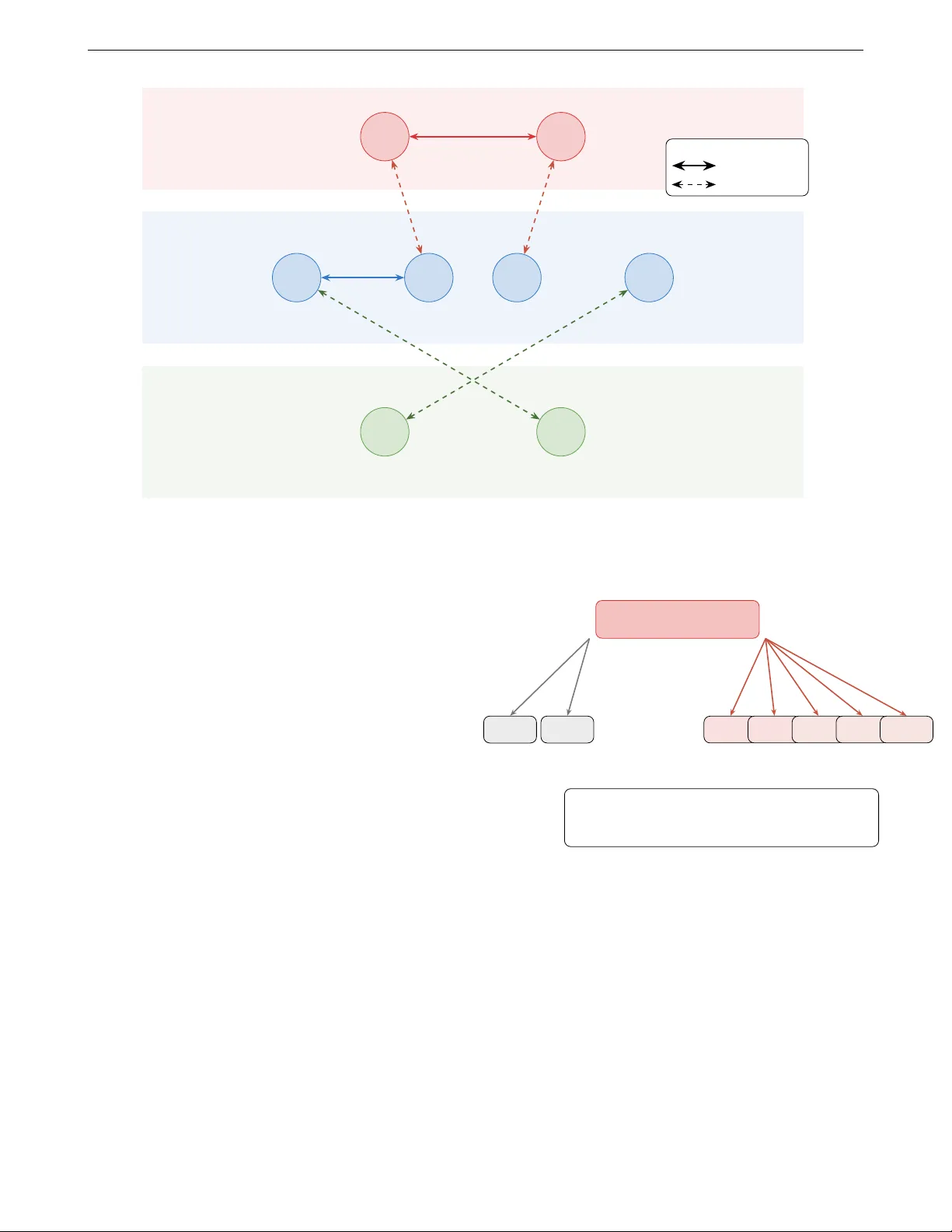
AI-Driven Multi-A gent Simulation of Str atifie d Polyamory Systems 1 AI-Driv en Multi-Agen t Sim ulation of Stratified P oly amory Systems: A Computational F ramew ork for Optimizing So cial Repro ductiv e Efficiency Yicai Xing Indep enden t Researc her xingyc18@tsinghua.org.cn Abstract Con temp orary so cieties face a severe crisis of demographic repro duction. Global fertility rates contin ue to decline precipitously , with East Asian nations exhibiting the most dramatic trends—China’s total fertilit y rate (TFR) fell to appro ximately 1.0 in 2023, while South Korea’s dropp ed b elo w 0.72 [ 1 , 2 ]. Sim ultaneously , the institution of marriage is undergoing structural disin tegration: educated women rationally reject unions lac king both emotional fulfillmen t and economic securit y , while a growing prop ortion of men at the lo wer end of the socio economic sp ectrum exp erience c hronic sexual depriv ation, anxiety , and learned helplessness [ 3 , 4 ]. Monogamy , as the institutional complement to priv ate prop ert y [ 5 ], is seeing its historical rationale ero de. This pap er prop oses a computational framework for mo deling and ev aluating a Stratified P olyamory System (SPS) using tec hniques from agen t-based mo deling (ABM) [ 6 , 7 ], multi-agen t reinforcement learning (MARL) [ 8 , 9 ], and large language mo del (LLM)- emp o w ered so cial simulation [ 10 , 11 ]. The SPS permits individuals to main tain a limited n umber of legally recognized secondary partners (“companions”) in addition to one primary sp ouse, combined with so cialized child- rearing and inheritance reform. W e formalize the A/B/C stratification as heterogeneous agent t yp es in a multi-agen t system, where eac h agen t p ossesses attributes (mate v alue, economic resources, attractiv eness, fertility) and the SPS rules constitute the en vironment dynamics. The matching pro cess is mo deled as a multi-agen t reinforcemen t learning problem amenable to Proximal Policy Optimization (PPO) and the mating net work is analyzed using graph neural net work (GNN) represen tations. Drawing on evolutionary psyc hology [ 12 – 14 ], b eha vioral ecology [ 15 , 16 ], so cial stratification theory [ 17 , 18 ], computational so cial science [ 6 , 19 ], algorithmic fairness [ 20 , 21 ], and institutional economics, and inv oking comparative anthropological evidence [ 22 – 24 ] alongside con temp orary consensual non-monogamy (CNM) research [ 25 – 28 ], w e argue that SPS can improv e aggregate so cial welfare in the Pareto sense. W e present a simulation architecture and preliminary computational results demonstrating the framew ork’s viability . The framework addresses the dual crisis of female motherho od p enalties [ 29 , 30 ] and male sexlessness [ 3 , 31 ], while offering a non-violen t mec hanism for wealth disp ersion analogous to the historical Chinese “Grace Decree” ( T ui’en Ling ) [ 32 , 33 ]. Keyw ords : agent-based modeling; multi-agen t reinforcement learning; computational so cial science; generativ e agen ts; LLM simulation; p oly amory; mating systems; so cial stratification; fertilit y rate; so cialized c hild-rearing; Grace Decree effect; graph neural netw orks; algorithmic fairness; ev olutionary algorithm; sexual resource allo cation; ev olutionary psychology 1 In tro duction: The Structural Crisis of Monogam y and the Case for Computational Mo d- eling 1.1 A Historical Materialist Examina- tion of Marriage Engels, in The Origin of the F amily, Private Pr op erty and the State , argued that monogam y did not arise from natural sexual lo ve but from economic conditions— sp ecifically , from the triumph of priv ate prop ert y ov er primitiv e group marriage [ 5 ]. Morgan’s anthropological fieldw ork among the Iro quois and other pre-state so ci- AI-Driven Multi-A gent Simulation of Str atifie d Polyamory Systems 2 eties pro vided crucial evidence: group marriage and ma- trilineal inheritance co existed without so cial dysfunction [ 34 ]. The core function of marriage has never b een the institutionalization of roman tic lo v e; rather, it has serv ed as a legal conduit for prop ert y transmission and an organizational unit for lab or force repro duction . Henric h, Boyd, and Richerson (2012) offered a sophis- ticated complemen tary argumen t from the persp ective of cultural ev olution: normativ e monogam y prev ailed in cross-cultural comp etition not b ecause it is more “nat- ural,” but b ecause it suppresses in trasexual comp etition among males, thereby reducing intra-group violence and crime rates and conferring competitive adv an tages up on groups that adopted this institution [ 35 ]. In other w ords, monogam y is a pro duct of cultural group selection , not an individually optimal strategy . Sc heidel (2009) further do cumented how Greco-Roman monogam y repre- sen ted a “p eculiar institution” in global con text, reinforc- ing the view that strict pair-b onding norms are culturally con tingent rather than biologically determined [ 36 ]. Ho wev er, con temp orary transformations in pro ductiv e forces hav e fundamentally undermined the compatibil- it y b et ween this institution and the prev ailing relations of pro duction: 1. F emale economic indep endence has w eakened the necessity of marriage as an economic securit y mec hanism. Opp enheimer’s (1997) “indep endence h yp othesis” p osits that rising female income do es not cause marriage decline per se, but it decisiv ely alters mate selection criteria—women no longer “settle” due to economic dep endence [ 37 ]; 2. The knowledge econom y has dramatically esca- lated the costs of lab or force repro duction. F olbre’s (2001, 2008) economic analyses demonstrate that the full lifecycle cost of raising a middle-class child now far exceeds that of the industrial era [ 38 , 39 ], trans- forming ch ildren from assets into liabilities; 3. The Second Demographic T ransition (SDT): V an de Kaa (1987) and Lesthaeghe (2010, 2014) iden- tified a fundamental v alues shift in p ost-industrial so cieties—from surviv alism to self-expression—that has transformed attitudes to ward fertility and mar- riage [ 40 , 41 ]; 4. Digital mating markets ha ve exp osed the extreme inequalit y in the distribution of sexual attractiv eness [ 42 , 43 ], exacerbating structural imbalances in the marriage market. 1 , 960 1 , 970 1 , 980 1 , 990 2 , 000 2 , 010 2 , 020 0 2 4 6 Replacement: 2.1 Y ear T otal F ertility Rate (TFR) China South Korea Japan Figure 1: Long-term decline in total fertilit y rates (TFR) across ma jor East Asian nations. Data: UN Population Division [ 1 ], national statistical bureaus, Choe & Lee [ 2 ]. 1.2 The Dual Crisis of Con temp orary Mating The contemporary mating predicament exhibits sharply gendered characteristics, though its ro ot cause is unified— monogam y pro duces severe resource mis- allo cation when confron ted with the highly un- equal distribution of sexual attractiv eness . The female dimension : Budig and England’s (2001) seminal study demonstrated that eac h additional child reduces a mother’s wages by appro ximately 7% (the “motherho od p enalt y”) [ 29 ]. England et al. (2016) fur- ther sho wed that this penalty persists ev en among highly skilled, highly paid w omen [ 30 ]. Correll, Benard, and P aik (2007) experimentally confirmed systematic em- plo yer discrimination against mothers: with iden tical re- sumes, w omen with children were significantly less lik ely to be hired [ 44 ]. Under these institutional conditions, ed- ucated w omen’s reluctance to marry men of comparable so cioeconomic status is not a moral failing of “excessive standards” but the inevitable outcome of rational cost-b enefit analysis . The male dimension : A substan tial prop ortion of men at the low er end of the so cioeconomic hierarc hy exist in a state of chronic sexual depriv ation, social discipline, and lo w self-efficacy . Longitudinal data from the U.S. Gen- eral So cial Survey (GSS) reveal that the prop ortion of men aged 18–30 rep orting no sexual activity in the past y ear rose from appro ximately 10% in 2008 to approxi- mately 28% in 2018 [ 3 ]. Abdellaoui et al. (2025) con- ducted a large-scale study linking sexlessness to adv erse ph ysical, cognitiv e, and p ersonalit y traits [ 4 ]. Donnelly et al. (2001) provided a life-course analysis of inv oluntary celibacy , do cumen ting its cascading psychological effects [ 31 ]. Moseley et al. (2025) prop osed a dual pathw ays h y- p othesis connecting in volun tary celibacy to b oth inter- nalizing harm (depression, suicidalit y) and externalizing harm (radicalization, violence) [ 45 ]. Case and Deaton’s (2015, 2020) do cumen tation of “deaths of despair”— AI-Driven Multi-A gent Simulation of Str atifie d Polyamory Systems 3 rising mortality among middle-aged white men due to substance abuse, alcohol, and suicide—is highly corre- lated with this social marginalization [ 46 , 47 ]. Hudson and den Bo er (2004) directly link ed the “bare branches” crisis (surplus unmarried males) to so cial violence, crime rates, and political instability [ 48 ]. Carter and Kush- nic k (2018) further confirmed the cross-cultural relation- ship betw een male aggressiv eness and intrasexual contest comp etition [ 49 ]. 1.3 Statemen t of the Problem Existing remedial measures—whether pro-natalist exhor- tation, fertility subsidies, or moral suasion—hav e uni- formly failed to address the ro ot cause. The Nordic coun tries’ generous welfare-based fertility supp ort p oli- cies, after pro ducing initial gains, hav e seen fertilit y rates resume their decline [ 41 , 50 ]. Ho em (1993) documented the temp orary nature of Sweden’s p olicy-induced fertil- it y bump [ 51 ]. Hungary’s aggressive pro-natalist incen- tiv es since 2019 (tax reductions, loan forgiveness) hav e pro duced only marginal short-term effects. Cow an and Wyndham-Douds (2022) found that even univ ersal cash transfers hav e limited effects on fertility decisions [ 52 ]. The central thesis of this pap er is that a constrained, stratified p olyamory system (Stratified Poly amory System, SPS), combined with so cialized child-rearing and inheritance reform, can systematically alleviate the m ultiple crises confronting contemporary mating insti- tutions. Crucially , w e argue that the complexity of suc h so cial systems demands computational mo deling ap- proac hes —agent-based mo deling [ 6 , 7 ], multi-agen t re- inforcemen t learning [ 8 , 9 ], and LLM-empow ered so cial sim ulation [ 10 , 11 ]—to rigorously ev aluate p olicy in ter- v entions before real-w orld deploymen t. 2 Theoretical F oundations: Wh y Humans Are P olygamous Ani- mals 2.1 Evidence from Ev olutionary Psy- c hology 2.1.1 Mating System Distribution Among Mammals F rom the p ersp ectiv e of evolutionary biology , strict monogam y is exceedingly rare among mammals. Luk as and Clutton-Bro c k’s (2013) phylogenetic analysis of 2,500 mammalian sp ecies rev ealed that only approx- imately 9% exhibit so cial monogamy , and this pat- tern primarily emerges in sp ecies where females are spatially dispersed such that males cannot simultane- ously monop olize multiple females [ 53 ]. Human sex- ual dimorphism—males are approximately 15% larger than females on a verage—falls precisely b et ween monog- amous sp ecies (e.g., gibb ons, which exhibit virtually no sexual dimorphism) and highly p olygynous sp ecies (e.g., gorillas, where males w eigh approximately twice as m uch as females) [ 54 , 55 ], suggesting the existence of mixed mating strategies throughout human ev olu- tionary history . Dixson (2009) provided a comprehensiv e review of ho w human morphological traits—including testicular size, p enile morphology , and secondary sexual c haracteristics—p oin t tow ard an evolutionary history of mo derate polygyny with significan t female choice [ 56 ]. Polygynous Mixed/Flexible Soc. Monogamy Poly androus 0 20 40 60 80 100 68 21 9 2 Prop ortion of Species (%) Figure 3: Distribution of mating systems among mam- mals. Based on phylogenetic analysis by Luk as & Clutton-Bro c k [ 53 ]. Strict monogam y accoun ts for only ∼ 9% of sp ecies. 2.1.2 P arental In vestmen t Theory and Sexual Strategies Theory T rivers’ (1972) P arental In vestmen t Theory remains the cornerstone for understanding sexual selection [ 13 ]. The theory posits that the sex inv esting more (typically females) is more selective in mate choice, while the sex inv esting less (typically males) is more comp etitiv e in intrasexual contests . Bateman’s (1948) classic Dr osophila exp erimen ts—subsequen tly termed “Bateman’s Principle”—provided early exp eri- men tal evidence: v ariance in male reproductive suc- cess significantly exceeds that in females [ 57 ]. Although Bateman’s Principle has faced methodological challenges (T ang-Mart ´ ınez, 2016 [ 58 ]), its core insight—that the tw o sexes exhibit asymmetric mating strategies—con tinues to receive substantial cross-cultural supp ort. Janic ke et al. (2016) confirmed Darwinian sex roles across the animal kingdom in a comprehensiv e meta-analysis [ 59 ]. Sc hmitt’s (2005) 48-nation study of so ciosexualit y fur- ther demonstrated cross-cultural univ ersality in sex dif- ferences in mating strategies [ 60 ]. Buss and Schmitt’s (1993) Sexual Strategies Theory (SST) further refined T rivers’ framework [ 12 ]. SST’s cen- tral inno v ation lies in iden tifying that h umans sim ultane- ously p ossess b oth short-term and long-term mat- ing psychological mo dules , and that the tw o sexes AI-Driven Multi-A gent Simulation of Str atifie d Polyamory Systems 4 Structural F ailure of Monogam y Motherho od P enalty W age drop 7%/c hild (Budig & England, 2001) Emplo yer Discrimination Against Mothers (Correll et al., 2007) Rational Choice: Non-Marriage, Non-F ertility Sexlessness Rate 28% (Ueda et al., 2020) Deaths of Despair (Case & Deaton, 2015) Bare Branc hes & Instabilit y (Hudson & den Boer, 2004) F emale Crisis Male Crisis F ertilit y Cliff So cial Repro- duction Crisis Figure 2: The dual dimensions of monogamy’s structural failure and their conv ergent effect on social reproduction. Eac h dimension is supp orted b y key empirical literature. face differen t adaptive problems within each strategy . Buss and Schmitt (2019) provided an up dated review confirming the theory’s predictions across diverse c ul- tural con texts [ 14 ]. Sp ecifically: • Males : Key adaptive problems in short-term mating include assessing sexual accessibility , ev aluating fer- tilit y cues, and a voiding commitment. Physiological features of sperm comp etition—h uman testicular size relativ e to b o dy weigh t falls b et ween monogamous gorillas and multi-male mating chimpanzees [ 61 ]— along with the psychological preference for sexual v a- riet y (the Co olidge Effect, empirically confirmed by Hughes et al. [ 62 ]) and semen displacement mech- anisms [ 63 ], all p oin t tow ard non-exclusiv e mating strategies. • F emales : Gangestad and Simpson’s (2000) “Strate- gic Pluralism Mo del” demonstrated that during o vu- lation, female preferences for “go o d genes” indica- tors (facial symmetry , masculine features, MHC dis- similarit y in b ody o dor) increase significantly [ 64 ]. Gangestad and Thornhill (1998) sho wed menstrual cycle v ariation in women’s preferences for the scen t of symmetrical men [ 65 ]. Pillsw orth and Haselton (2006) further show ed that women’s sexual fantasies ab out non-partner males increase during ovulation— a psychological mec hanism suggesting a dual mat- ing strategy : obtaining resource inv estment from long-term partners while obtaining genetic qualit y from short-term partners [ 66 ]. Gildersleeve et al. (2014) confirmed these ovul atory shifts in a compre- hensiv e meta-analytic review [ 67 ]. 2.1.3 The Neuro c hemistry of Lov e and Its T em- p oral Limits Fisher, Aron, and Brown’s (2005, 2006) fMRI studies demonstrated that roman tic lo v e activ ates the brain’s re- w ard circuitry—particularly the v entral tegmen tal area (VT A) and caudate n ucleus—rather than cognitive judg- men t regions [ 68 , 69 ]. Aron et al. (2005) further char- acterized the reward, motiv ation, and emotion systems asso ciated with early-stage in tense roman tic lov e [ 70 ]. These circuits are highly homologous to those ac tiv ated b y addictive substances suc h as co caine. Y oung and W ang (2004) elucidated the neurobiology of pair b ond- ing, demonstrating the roles of o xytocin and v asopressin in attac hment formation [ 71 ]. Marazziti et al. (1999) found that new lo vers exhibit serotonin (5-HT) trans- p orter densities indistinguishable from those of patients with obsessive-compulsiv e disorder [ 72 ], explaining the obsessiv e rumination c haracteristic of “falling in lov e.” Crucially , this neuro c hemical state is transient . Fisher (2004) estimated that the p eak of roman tic passion p er- sists for appro ximately 12–18 mon ths b efore significan tly atten uating [ 73 ]. While Acev edo and Aron (2009) found that some long-term couples main tain passion, sample sizes w ere limited and selection bias likely [ 74 ]. Acev edo AI-Driven Multi-A gent Simulation of Str atifie d Polyamory Systems 5 et al. (2012) identified neural correlates of long-term in- tense roman tic lo ve, but these patterns were observ ed in only a minority of couples [ 75 ]. On balance, lifelong ex- clusiv e sexual fidelit y requires h umans to con tin u- ously opp ose their o wn neurophysiological mec h- anisms —as Henric h et al. (2012) argued, monogam y is a culturally imp osed norm, not a biological predisp osition [ 35 ]. 2.2 The Nature of Lov e: Sub jectiv e Ex- p erience of Genetic A ttractiveness This pap er adopts a de-roman ticized but non- nihilistic conception of lo ve: at its core, lo ve is the individual’s sub jectiv e experience and ev aluation of an- other’s genetic qualit y . This ev aluation proceeds through the follo wing c hannels: Visual [ 64 ] F acial symmetry WHR [ 76 ] Shoulder-hip ratio Phenotypic signals Olfactory [ 77 ] MHC dissimilarity Immune complement Scent preferences [ 78 ] Beha vioral [ 79 ] Social status Resource control Intelligence [ 80 ] Sub jective Exp erience: “Lo ve” Figure 4: The three-channel biological mo del of lov e. Vi- sual [ 64 , 76 ], olfactory [ 77 , 78 ], and behavioral [ 79 , 80 ] c hannels join tly constitute the genetic quality assessment system. W edekind et al.’s (1995) famous “sweat y T-shirt experi- men t” confirmed the role of MHC (Ma jor Histocompati- bilit y Complex) in h uman mate c hoice: w omen preferred the b o dy o dor of men with greater MHC dissimilarity from themselv es [ 77 ]. W edekind and F ¨ uri (1997) further explored whether preferences aim for sp ecific MHC com- binations or simply heterozygosity [ 78 ]. Singh’s (1993) cross-cultural research demonstrated a highly consisten t male preference for a female waist-to-hip ratio (WHR) of appro ximately 0.7, as WHR serv es as a reliable phe- not ypic signal of fertility and health [ 76 ]. Miller (2000) argued from a sexual selection p ersp ectiv e that human in telligence itself may function as a “courtship display ,” analogous to the p eacock’s tail [ 80 ]. 2.3 Realistic Ac knowledgmen t of Sexual A ttractiv eness Stratification This paper in tro duces a simplified analytical model that categorizes the p opulation in to three tiers based on com- p osite sexual attractiv eness (T able 1 ). In our computa- tional framework, these tiers corresp ond to heteroge- neous agen t types in an agen t-based model [ 6 , 7 ], eac h parameterized b y a multi-dimensional attribute vector a i = ( v i , r i , f i , s i ) representing mate v alue, economic re- sources, fertility , and social capital resp ectiv ely . Beck er’s (1973) economic mo del of the marriage mark et demon- strated that mating is fundamentally a matching market in whic h participants sort positively according to their resp ectiv e “mark et v alues” (positive assortativ e mating) [ 17 ]. Green woo d et al. (2014) show ed that assortative mating has intensified ov er time and contributes sig- nifican tly to income inequality [ 18 ]. Bruch and New- man (2018) used large-scale online dating data to fur- ther confirm this hierarchical structure: mate preferences exhibit highly consisten t rank ordering, and most indi- viduals con tact targets a veraging 25% higher in attrac- tiv eness than themselves [ 42 ]. Leic hliter et al. (2010) do cumen ted the concen tration of sexual b eha viors in the United States, rev ealing that a relativ ely small prop or- tion of individuals account for a disprop ortionate share of sexual partnerships [ 43 ]. T able 1: A/B/C Tier Mo del Ov erview (analytical to ol, not institutional lab el) Tier Composite T raits T ypical Pro- file Under Monogam y A Resource- rich, physi- cally/intellectually outstanding Elite pro- fessionals, entrepreneurs, high- attractiveness individuals Multi- dimensional needs con- strained by single partner B Average com- posite attrac- tiveness Social majority Partial prefer- ence for A-tier unattainable; limited satis- faction C Economically deprived, dis- adv antaged in appear- ance/social skills Low-income, socially iso- lated Some per- manently unpartnered; welfare ≈ 0; instability risk [ 48 ] It m ust be emphasized that this stratification is con- tin uous, dynamic, and m ultidimensional at the micro lev el —no sharp b oundaries exist. The same in- dividual may o ccup y different tiers at different life stages. A male doctoral studen t at a top universit y who ob jec- tiv ely qualifies as A-tier ma y , during a specific phase of geographic isolation and social depriv ation, temp orarily presen t as B or ev en C in the mating market. This dy- namism is a critical factor that SPS design must accom- mo date. In our agen t-based simulation, we mo del this via time-v arying agent attributes : a i ( t ) evolv es ac- cording to life-stage transitions, sto c hastic sho c ks, and en vironmental context—a feature naturally handled b y AI-Driven Multi-A gent Simulation of Str atifie d Polyamory Systems 6 reinforcemen t learning agen ts that learn adaptiv e strate- gies ov er episo dic lifetimes [ 8 , 81 ]. 3 Institutional Design: The Core F ramew ork of SPS as Environ- men t Sp ecification 3.1 Basic Structure F rom a computational p erspective, the SPS institutional rules define the environmen t dynamics of a m ulti- agen t system [ 7 ]. Eac h rule below constitutes a con- strain t in the agents’ action space, and the matching pro cess can b e formulated as a constrained optimization problem amenable to b oth mark et design algorithms [ 21 ] and multi-agen t reinforcemen t learning [ 9 ]. The core in- stitutional arrangemen t of SPS is as follows (Figure 5 ): 1. Primary relationship (sp ouse) : Eac h individual ma y hav e at most one legally recognized sp ouse, en- jo ying full traditional marital rights including join t prop ert y , medical decision-making authority , and in- heritance righ ts. 2. Secondary relationships (companions) : Each in- dividual may hav e at most t wo legally recognized companions. These relationships confer legal sexual relations, legal reproductive rights (children p ossess full legal status), and limited visitation/co-paren ting righ ts. They do not confer joint prop ert y righ ts or inheritance righ ts. 3. F reedom principle : All relationships are based on m utual free will; either part y ma y terminate a sec- ondary relationship at any time. 4. Quantit y constrain t : T otal partner limit is 3 ( ≤ 1 sp ouse + ≤ 2 companions). 5. Complete gender symmetry : Men and women en- jo y identical institutional righ ts. Primary: Sp ouse Max 1 – F ull Righ ts Secondary: Companion Max 2 – Limited Rights Spousal Rights: ✓ Joint prop erty ✓ Medical decisions ✓ Repro ductiv e rights ✓ Inheritance Companion Rights: ✓ Legal sexual relations ✓ Repro ductiv e rights ✓ Limited co-parenting × Joint prop erty × Inheritance Core Principles F ree Will — Limit: 3 Partners — Gender Symmetry — Exit Anytime Figure 5: SPS institutional structure and rights system. The limited rights design for companions a voids equating secondary relationships with marriage while safeguarding c hildren’s in terests. Legal frameworks for multi-partner recognition are emerging [ 82 ]. 3.2 Resource Allo cation Logic: The Cross-Tier In teraction Mo del as a So cial Graph Orians’ (1969) “Polygyn y Threshold Mo del” pro vides a k ey framework for understanding SPS’s resource allo- cation logic [ 83 ]. The mo del p osits that when high- qualit y mates command substantially greater resources than low-qualit y mates, females ma y prefer to b e a high-qualit y male’s second partner rather than a lo w-quality male’s sole partner —b ecause the pay- off of b eing “num b er tw o” in a resource-rich en viron- men t may exceed that of b eing “num ber one” in a resource-p oor en vironmen t. Emlen and Oring (1977) fur- ther elab orated how ecological factors shap e the ev olu- tion of mating systems [ 16 ]. SPS’s cross-tier interac- tions exploit precisely this ev olutionary logic. The re- sulting partner netw ork (Figure 6 ) can be formally rep- resen ted as a heterogeneous graph G = ( V , E , τ , ϕ ) where τ : V → { A, B , C } assigns tier types to nodes and ϕ : E → { sp ouse , companion } lab els edge t yp es. Graph neural netw orks (GNNs) are naturally suited to an- alyzing suc h structures, enabling message-passing across the so cial net work to predict emergent prop erties suc h as wealth flow, repro ductiv e output, and so cial stability [ 19 ]. 3.3 The Grace Decree Effect: P oly amory as W ealth Disp ersion Mechanism This pap er b orro ws a historical analogy from the W est- ern Han dynast y’s “Grace Decree” ( T ui’en Ling ) to elu- cidate SPS’s effect on so cial w ealth distribution. The essence of the Grace Decree was: disp ersing large AI-Driven Multi-A gent Simulation of Str atifie d Polyamory Systems 7 Tier A Tier B Tier C A ♂ A ♀ B ♂ 1 B ♀ 1 B ♂ 2 B ♀ 2 C ♂ C ♀ Spouse Spouse Comp. Comp. Comp. Comp. Legend Primary Secondary Figure 6: Cross-tier partner netw ork under SPS. Tier B’s m ulti-directional compatibility renders it the system’s buffer and connector la yer, ensuring cross-tier flow of sexual and emotional resources. This model accords with Orians’ (1969) Polygyn y Threshold Mo del [ 83 ] and Emlen & Oring’s (1977) ecological framework [ 16 ]. concen trations of p o w er and wealth by increas- ing the n umber of heirs [ 84 ]. Pikett y (2014) demon- strated the self-reinforcing tendency of in tergenerational w ealth concentration—when the rate of return on cap- ital r p ersisten tly exceeds the economic gro wth rate g , inequalit y inevitably intensifies [ 33 ]. Pikett y and Zuc- man (2015) further elab orated the role of inheritance in long-run wealth dynamics [ 85 ]. Adermon et al. (2018) do cumen ted the p ersistence of in tergenerational w ealth mobilit y and the central role of inheritance [ 86 ]. SPS, b y increasing the n umber of offspring of high-resource individuals, naturally counteracts the r > g effect across generations. A Individua l (Gen 0) W ealth = W Monogam y Child 1 W/ 2 Child 2 W/ 2 SPS S-1 W/ 5 S-2 W/ 5 C-1 W/ 5 C-2 W/ 5 C-3 W/ 5 Grace Decree Effect (cf. Pikett y [ 33 ]; Scheidel [ 32 ]): Monogamy: per-capita W/ 4 after 2 generations SPS: p er-capita W / 5 after 1 generation W ealth disp ersion rate ≈ 2.5 × faster Naturally counteracts r > g inequality Figure 7: Intergenerational wealth disp ersion compari- son via the Grace Decree effect. SPS accelerates wealth disp ersal b y increasing the n um b er of legitimate heirs of high-resource individuals. Sc heidel (2017), in The Gr e at L eveler , iden tified the origi- nal Grace Decree as one of history’s rare instances of non- violen t wealth redistribution—ac hieved without plague, w ar, rev olution, or state collapse [ 32 ]. SPS’s wealth disp ersion mec hanism op erates through the same logic: it do es not confiscate assets but rather allows demo- graphic dynamics to diffuse concentrated w ealth organi- cally across generations. AI-Driven Multi-A gent Simulation of Str atifie d Polyamory Systems 8 3.4 So cialized Child-Rearing: The Key to Eliminating the Motherho o d P enalt y The feasibility of SPS dep ends critically on the estab- lishmen t of a so cialized c hild-rearing system. The Is- raeli Kibbutz mo vemen t provides the largest-scale nat- ural exp erimen t in so cialized child-rearing. Aviezer et al. (1994) demonstrated that children raised in Kibbutz collectiv e environmen ts sho w ed no significan t differences from family-raised c hildren in secure attac hmen t and so- cial developmen t [ 87 ]. The Nordic coun tries (particularly Sw eden and Denmark), with their universal public c hild- care systems, similarly demonstrate the viabilit y of high- qualit y so cialized child-rearing [ 88 ]. Golombok (2016) found that children in non-traditional family structures sho w no significan t differences in psychological develop- men t compared to those in traditional families [ 89 ]. Sh ulamith Firestone (1970) argued more radically in The Diale ctic of Sex that only when pregnancy and lac- tation are replaced by tec hnological means can w omen ac hiev e gen uine lib eration [ 90 ]. Sophie Lewis (2019, 2022) extended this argumen t to ward “fam- ily ab olition” [ 91 , 92 ]. Kollontai (1920) articulated an early so cialist vision of communal child-rearing and the so cialization of domestic lab or [ 93 ]. While this pap er do es not fully adopt these radical p ositions, it endorses their core insight: the biological burden of repro- duction, curren tly b orne exclusively b y women, is the fundamental source of the motherho o d p enalt y . SPS, com bined with the long-term develop- men t of artificial repro ductive technologies, can progres- siv ely eliminate this inequalit y . 3.5 W ell-Being Assessment Mec hanisms The institutional ob jectiv e is measurable improv e- men t in individual welfare . Diener et al.’s sub jective w ell-b eing research framework (including the Satisfaction with Life Scale [ 94 ]) and Kahneman and Deaton’s (2010) analysis of the relationship b et ween income and happi- ness [ 95 ] pro vide methodological foundations for assess- men t. Regular well-being surveys should b e established, co vering: • Life satisfaction (Satisfaction with Life Scale, SWLS [ 94 ]); • Sexual satisfaction and intimate relationship qualit y; • Sense of so cial b elonging (Sense of Belonging Scale); • Mental health indicators (PHQ-9 depression screen- ing, GAD-7 anxiety screening). 4 Theoretical Argumen ts: Wh y SPS Impro ves So cial Efficiency—An Optimization P ersp ectiv e 4.1 The Pareto Impro vemen t Argumen t The fundamen tal claim is that SPS constitutes a P areto impro vemen t o ver strict monogamy: no tier is made strictly w orse off, and most are made b etter off . This claim can b e formalized as an algori thmic fair- ness problem [ 20 ]: SPS defines a matc hing mec hanism that satisfies individual rationality constraints for all agen t types while maximizing aggregate so cial welfare— connecting directly to the market design literature pio- neered by Roth [ 21 ]. Figure 8 presents the theoretical w elfare comparison. A-M A-F B-M B-F C-M C-F 0 2 4 6 8 10 Mean W elfare Index (Standardized) Monogamy SPS Figure 8: Pareto impro vemen t argument. Under SPS, exp ected welfare improv es across all tiers, with the most significan t gains at Tier C. V alues derived from theoret- ical mo del pro jections. The critical p oin t is that no tier is strictly w orse off under SPS than under monogamy . A-tier in- dividuals do not lose their primary sp ouse by acquiring companions (companion relationships do not substitute for marriage); B-tier individuals gain b oth upw ard and do wnw ard optionality; and C-tier individuals transition from near-zero w elfare to p ositiv e v alues—this is the seg- men t of the institutional design with the greatest so cial stabilit y dividend. 4.2 The So cial Stabilit y Argument Hudson and den Bo er (2004), through comparative anal- ysis of historical and contemporary data from China and India, demonstrated a striking statistical regular- it y: when the prop ortion of unmarried males in a so ciet y exceeds 20%, violen t crime rates and AI-Driven Multi-A gent Simulation of Str atifie d Polyamory Systems 9 so cial instabilit y increase significan tly [ 48 ]. Bar- b er (2000) further sho wed, in a cross-national analy- sis, that a coun try’s prop ortion of unmarried males is significan tly p ositively correlated with its homicide rate ( r = 0 . 52 , p < 0 . 001) [ 96 ]. Ko os and Neup ert-W entz (2020) do cumented the relationship betw een polygynous neigh b ors, excess men, and in tergroup conflict in rural Africa, demonstrating that unmanaged sex ratio imbal- ances generate regional security externalities [ 97 ]. China’s one-child p olicy pro duced severe birth sex ra- tio imbalances (p eaking at 121:100), generating approx- imately 30 million “surplus males” [ 98 ]. These men are concentrated in rural and low-income p opulations— corresp onding to Tiers B and C in the presen t framework. SPS mitigates this systemic risk through the following mec hanisms: 1. C-tier males gain limited but genuine intimate rela- tionships, reducing sexual depriv ation; 2. Repro ductiv e opportunities pro vide social b onds and a sense of life purp ose—transforming “dangerous marginals with nothing to lose” in to “so cially in- v ested participants with stak es”; 3. Legalization of companion relationships eliminates the public health and security risks asso ciated with underground sex markets. 4.3 The Demographic Repro duction Ar- gumen t Socialized Rearing Low er Direct Costs (F olbre, 2001) Eliminate Motherho od Penalt y (Budig & Eng- land, 2001) Expand Repro ductiv e Opportunity for C-Tier (Hudson et al., 2004) Higher A-Tier F ertility V oluntary Eugenics (Fisher, 1930) F ertility Reco very Demographic Repro duction Restored Figure 9: F our indep enden t pathw ays through whic h SPS promotes fertilit y recov ery . Each pathw ay is supported b y empirical literature. SPS promotes fertilit y recov ery through four indep en- den t and mutually reinforcing channels: (1) so cialized c hild-rearing reduces the direct costs of reproduction [ 38 , 39 ]; (2) elimination of the motherho od p enalt y remo ves the primary disincentiv e for educated w omen [ 29 , 30 , 44 ]; (3) expanded repro ductiv e access for C-tier individuals increases the total reproductive base [ 48 ]; and (4) higher fertility among A-tier individuals pro duces a mild, volun tary eugenic effect [ 99 ]. Pro-natalist p olicies ha ve historically shown limited efficacy [ 50 , 51 ]; SPS ad- dresses the structural rather than the marginal barriers to repro duction. 4.4 The Humanitarian Eugenics Argu- men t: An Ev olutionary Algorithm Analogy R.A. Fisher (1930), in The Genetic al The ory of Natur al Sele ction , articulated what has subsequently been termed “Fisher’s F undamental Theorem”: the rate of increase in fitness of any biological population is equal to its genetic v ariance in fitness [ 99 ]. In other w ords, genetic div ersity and selectiv e pressure are the engines of p opulation-lev el adaptiv e impro vemen t. SPS’s eugenic effect is mild and volu ntary: individu- als with higher comp osite attractiveness (A-tier) nat- urally pro duce more offspring through their additional partner relationships. This is not the result of co er- cion but the emergent effect of free choice . F rom a computational p ersp ectiv e, SPS functions analogously to an ev olutionary algorithm : agents with higher fit- ness (comp osite attractiveness) pro duce more “offspring” (copies with inherited attributes plus mutation), imple- men ting a form of tournamen t selection without explicit fitness-based co ercion. The SPS policy parameters (part- ner limits, tier thresholds) can themselves b e optimized via genetic algorithms to maximize p opulation-lev el w elfare ob jectiv es [ 81 ]. What distinguishes this funda- men tally from 20th-cen tury coercive eugenics programs is that SPS do es not deprive an yone of repro duc- tiv e righ ts and do es not discriminate against any one based on “genetic quality .” C-tier individuals under SPS actually gain more reproductive opportunities than un- der monogamy . Go ody (1976) documented ho w different pro duction systems shap e domestic domains and repro- ductiv e patterns, pro viding comparative evidence that institutional frameworks profoundly influence who repro- duces and at what rate [ 100 ]. 5 Resp onses to P oten tial Criti- cisms 5.1 F easibility of Jealousy Management: Con temp orary Research Evidence Conley et al.’s (2013) systematic critique of consen- sual non-monogam y (CNM) constitutes one of the most imp ortan t empirical supp orts for this pap er [ 25 ]. Their researc h challenged the p opular assumption that “monogam y is sup erior to CNM in relationship satisfac- tion,” finding: (1) no significant differences b et w een the t wo relationship mo dalities in satisfaction, commitment, and trust; and (2) safer sexual practices (e.g., condom AI-Driven Multi-A gent Simulation of Str atifie d Polyamory Systems 10 T able 2: Principal criticisms of SPS and evidence-based resp onses Criticism Argumen t Resp onse & Supp orting Literature Ob jectification of w omen Multiple partners commo difies w omen SPS is strictly gender-symmetric. W omen hold identical polyamorous righ ts. Orians’ (1969) mo del [ 83 ] suggests polygamy ma y b e adv an tageous for w omen under resource inequality Inevitable jeal- ousy Poly amory necessarily pro duces jeal- ousy Conley et al. (2013) [ 25 ]: CNM relationships exhibit low er jealousy than infidelity within monogam y . Mo ors et al. (2017) [ 26 ]: polyamorous relationship satisfaction is com- parable to monogamous relationships. Rubel & Bogaert (2015) [ 27 ]: CNM correlates with positive psychological well-being. Sheff (2014) [ 28 ]: ethnographic evidence of successful p oly families ABC is discrimi- natory Tiering p eople is deh umanizing A/B/C is a descriptive analytical tool (analogous to in- come quintiles in economics), not a basis for differential legal treatment. All individuals enjoy identical institu- tional righ ts. Beck er’s (1973) [ 17 ] marriage mark et mo del already incorp orates hierarc hical structure Undermines family W eak ened families harm children Kibbutz research [ 87 ]: so cialized child-rearing pro duces normal developmental outcomes. Golombok (2016) [ 89 ]: children in non-traditional families sho w no significant psychological developmental differences Impractical Cannot b e implemen ted now Directional framework requiring gradual implementation. See Section 9 . Emerging legal recognition of p oly amorous partnerships [ 82 ] suggests institutional pathwa ys are open- ing use) in CNM relationships compared to extramarital af- fairs within monogamous frameworks. Mo ors, Matsick, and Schec hinger (2017) further con- firmed that CNM practitioners rep ort jealousy lev- els low er than what monogamy practitioners imagine they would experience in p olyamorous scenarios [ 26 ]— suggesting that jealousy is to a considerable degree cul- turally constructed rather than purely biologically determined. Rub el and Bogaert (2015) found p ositiv e correlations b et ween CNM engagemen t and psycholog- ical well-being, further undermining the inevitabilit y- of-jealousy ob jection [ 27 ]. Sheff ’s (2014) longitudinal ethnographic study of p oly amorous families do cumen ted effectiv e jealousy managemen t strategies including “com- p ersion” (experiencing joy from a partner’s other rela- tionships) and structured communication protocols [ 28 ]. Cross-cultural evidence reinforces this p oint. The Mo- suo’s walking marriage system [ 101 , 102 ] and Tib etan fra- ternal p oly andry [ 23 ] both demonstrate that under cul- tural supp ort, jealousy managemen t is en tirely feasible. The Na yar of southern India practiced a form of group marriage that functioned stably for cen turies within their matrilineal kinship system [ 24 ]. 6 Historical and Anthropological Evidence 6.1 Cross-Cultural Evidence for P olyga- mous So cieties Murdo c k’s (1967) Ethno gr aphic Atlas , encompassing marriage system data from 849 human so cieties, re- v ealed that 83.5% p ermitted some form of p olyg- yn y , while only 0.5% practiced strict monogamy [ 22 ]. White’s (1988) Standard Cross-Cultural Sample (SCCS) further refined this analysis, examining the correlates of co-wife relations and cultural systems [ 103 ]. Betzig (1986) demonstrated through cross-cultural comparison a strong p ositiv e correlation b et ween p ow er/w ealth in- equalit y and p olygyn y rates—in all pre-industrial so ci- eties, the more desp otic the polity , the more wiv es and concubines its male elites maintained [ 15 ]. Em b er, Em b er, and Lo w (2007) systematically compared explanations of p olygyn y , identifying resource comp eti- tion and pathogen stress as k ey ecological determinan ts [ 104 ]. Chagnon’s (1988) study of the Y anomam¨ o docu- men ted how repro ductive success was directly linked to male coalitional violence and status comp etition, illus- trating the deep evolutionary ro ots of p olygynous ten- dencies [ 105 ]. 6.2 F unctionalist Analysis of P olyandry P olyandry , while rare, has b een practiced with long-term stabilit y in Tib etan so ciet y . Goldstein’s (1987) classic ethnographic study revealed the economic logic of Ti- b etan fraternal polyandry: b y ha ving m ultiple broth- AI-Driven Multi-A gent Simulation of Str atifie d Polyamory Systems 11 ers share a single wife, the system prev ented the sub division of family land and liv esto c k [ 23 ]. Its function was analogous to English primogeniture, but it achiev ed its purp ose b y retaining all sons within the household rather than exp elling y ounger sons. This finding has direct implications for SPS: the insti- tutional form of p oly amory can serve entirely different economic functions. Tib etan p oly andry operated to pre- v ent prop ert y sub division , while SPS is designed pre- cisely to accelerate prop ert y dispersion (the Grace Decree effect). That similar institutional forms can serve opp osite functions demonstrates that p oly amory is a flexible institutional to ol adaptable to div erse so- cial ob jectives . 6.3 The Mosuo W alking Marriage The Mosuo people of southw estern China practice a “w alking marriage” ( tisese , or visiting relationship) sys- tem that pro vides an anthropological preceden t for non- marital sexual arrangements. Shih (2010) do cumen ted that under this system, women remain in their natal ma- trilineal households while men visit at night, with chil- dren raised by the maternal family [ 101 ]. Mattison et al. (2014) pro vided quan titative analysis of paternal in- v estment among the Mosuo, finding that while biological fathers inv est less than in patrilineal so cieties, maternal uncles comp ensate substantially [ 102 ]. This natural ex- p erimen t demonstrates that w eakening the b ond b e- t ween marriage and family do es not necessarily lead to so cial disintegration —on the con trary , it may promote gender equality . 6.4 The Historical Analogy of the Grace Decree In the early W estern Han dynasty , pow erful feudal kings threatened centralized authority . Emperor W u adopted the suggestion of minister Zhufu Y an and prom ulgated the Grace Decree ( T ui’en Ling )—p ermitting feudal lords to divide their territories among all sons rather than only the eldest [ 84 ]. Its brilliance la y in the fact that it did not directly strip lords of their p o wer, but by in- creasing the n umber of heirs, caused each genera- tion’s p o w er units to shrink automatically . Sc hei- del (2017) classified the Grace Decre e as one of history’s few institutional inno v ations that achiev ed w ealth redis- tribution without reliance on violence (p estilence, war, rev olution, state collapse) [ 32 ]. Pikett y’s (2014) analy- sis of r > g dynamics [ 33 ] and Pikett y and Zucman’s (2015) historical examination of inheritance [ 85 ] demon- strate wh y suc h non-violent disp ersion mechanisms are urgen tly needed in the contemporary context. 7 Sp ecial Scenario Analysis 7.1 Phase-Sp ecific Displacement of A- Tier Individuals Consider the case of North American STEM do ctoral studen ts: during their degree programs (5–7 years), they face geographic isolation, ec onomic depriv ation (median U.S. STEM doctoral stipend appro ximately $ 35,000), ex- tremely narrow so cial circles, and emotional depriv a- tion caused by sustained high-intensit y in tellectual la- b or. Ev ans et al. (2018), published in Natur e Biote chnol- o gy , rep orted that 39% of graduate studen ts exp eri- ence mo derate-to-sev ere depression—more than six times the rate of the general p opulation [ 106 ]. Under SPS, suc h A-tier males could establish legal com- panion relationships with lo cal B-tier or C-tier women willing to provide emotional supp ort, satisfying phase- sp ecific intimacy needs without precluding future pri- mary relationships with A-tier women. This flexibilit y constitutes a pressure release v alv e that traditional institutions cannot provide. The phenomenon of tem- p oral displacement—where ob jectively high-quality in- dividuals temp orarily occupy lo w er mating market posi- tions due to contextual factors—is p oorly accommodated b y rigid monogamous norms but naturally addressed by SPS’s flexible secondary partnership structure. 7.2 B-F emale/C-Male Mutualism B-tier w omen may elect C-tier males as companions. While C-tier males ha ve limited economic capacit y , they ma y offer: abundant time (assistance with domestic la- b or and c hildcare), deep appreciation for th e relationship (ha ving had no access to intimate partnerships under tra- ditional institutions), and sp ecific personality traits that pro vide supplementary attractiv eness. F or C-tier males, ev en one to tw o intimate encounters per month or the existence of a single c hild suffices to pull them from the so cial margin. Baumeister and Leary’s (1995) b elong- ingness hypothesis p osits that intimate relationships constitute one of humanit y’s most fundamental psyc hological needs , the depriv ation of whic h pro- duces systematic psyc hological and behavioral pathology [ 107 ]. This mutualistic dynamic is particularly significan t b e- cause it addresses the concern that p olyamorous systems inevitably disadv antage lo wer-status males. Under SPS, C-tier males gain access to relationships that w ould be en tirely una v ailable under strict monogamy , while B-tier w omen gai n additional domestic supp ort and companion- ship. The relationship is gen uinely recipro cal rather than exploitativ e, as b oth parties derive b enefits unav ailable through alternativ e institutional arrangemen ts. AI-Driven Multi-A gent Simulation of Str atifie d Polyamory Systems 12 8 So cialized Child-Rearing: F rom Theory to Institutional Design The successful implementation of SPS requires a robust so cialized child-rearing infrastructure. Historical and con temp orary evidence pro vides the foundation for such a system. 8.1 The Kibbutz Evidence The Israeli Kibbutz mo vemen t, spanning nearly a cen- tury of collective child-rearing practice, constitutes the most extensively studied natural exp erimen t in so cial- ized care. Aviezer et al. (1994) systematically reviewed 70 y ears of evidence, concluding that Kibbutz-raised c hildren developed secure attac hments and so cialization skills comparable to family-raised p eers [ 87 ]. The key in- stitutional features—communal sleeping arrangemen ts, professional caregivers ( metaplot ), and shared parental resp onsibilit y—demonstrate that high-quality child de- v elopment do es not require the exclusive n uclear family mo del. 8.2 The Nordic Mo del Esping-Andersen’s (1990) comparativ e welfare state analysis iden tified the so cial-demo cratic (Nordic) mo del as the most successful in so cializing c hild-rearing costs [ 88 ]. Sw eden’s universal public da ycare system, av ailable from age one, and Denmark’s extensive parental leav e infrastructure demonstrate that state-supp orted so cial- ized child-rearing is compatible with high c hild welfare outcomes, high female labor force participation, and (ini- tially) abov e-a verage fertility rates. F olbre (2008) argued for a fundamen tal rev aluation of c hildren as public goo ds requiring collectiv e in vestmen t [ 39 ]. 8.3 Radical Visions and Practical Impli- cations The theoretical literature on family ab olition—from Kol- lon tai’s (1920) early so cialist vision [ 93 ] through Fire- stone’s (1970) technofeminist manifesto [ 90 ] to Lewis’s (2019, 2022) con temporary argumen ts [ 91 , 92 ]—provides the intellectual backdrop for SPS’s child-rearing com- p onen t. While SPS do es not advocate complete fam- ily ab olition, it draws on this tradition’s core insight: the priv ate n uclear family as the sole unit of child- rearing imp oses disprop ortionate costs on w omen and constrains both individual freedom and collectiv e wel- fare. Golombok’s (2016) empirical evidence that c hil- dren in div erse family structures dev elop normally [ 89 ] pro vides the practical reassurance necessary for institu- tional exp erimen tation. 9 Institutional Ev olution: Imple- men tation Roadmap The transition from contemporary monogam y to a fully realized SPS cannot o ccur ov ernight. It requires a phased approac h that resp ects b oth institutional path dep enden- cies and the pace of cultural adaptation. Phase I: Decriminalization and Destigmatization (Near-term) . The first phase focuses on removing legal p enalties and so cial stigma from non-monogamous rela- tionships and non-marital repro duction. This includes: (a) decriminalizing adultery and fornication in jurisdic- tions where these remain offenses; (b) equalizing the le- gal status of children b orn outside marriage; (c) pub- lic education campaigns informed b y CNM research [ 25 – 27 ] to reduce prejudice against p oly amorous individuals; and (d) men tal health pro vider training in p oly-affirming practices. Recent legal developmen ts in sev eral U.S. m u- nicipalities recognizing p oly amorous domestic partner- ships [ 82 ] indicate that this phase is already partially underw ay . Phase I I: Legal F ramew ork for Companion Re- lationships (Medium-term) . The second phase es- tablishes the formal legal architecture of SPS: (a) cre- ation of a “companion registration” system distinct from marriage; (b) definition of companion rights and obli- gations (sexual relations, reproductive righ ts, limited co- paren ting, but no join t prop ert y or inheritance); (c) pilot programs for so cialized child-rearing, drawing on Kib- butz [ 87 ] and Nordic [ 88 ] models; and (d) dev elopment of family court pro cedures for m ulti-partner disputes. Phase II I: So cialized Child-Rearing and Inher- itance Reform (Medium-Long-term) . The third phase addresses the structural economic barriers: (a) univ ersal public c hildcare from birth, fully decoupling c hild-rearing costs from individual paren ts; (b) reform of inheritance law to distribute assets across all biologi- cal children regardless of paren ts’ relationship status; (c) decoupling of education, healthcare, and housing from family-unit eligibilit y criteria; and (d) expanded parental lea ve applicable to all recognized partner configurations. Phase IV: T echnological In tegration (Long-term) . The final phase leverages repro ductiv e tec hnology ad- v ances: (a) ectogenesis (artificial w omb technology) to eliminate the ph ysical burden of pregnancy; (b) adv anced genetic screening and selection (non-co erciv e) to impro v e p opulation-lev el health outcomes [ 99 ]; and (c) complete elimination of the motherhoo d p enalty through techno- logical substitution of biological gestation [ 90 ]. AI-Driven Multi-A gent Simulation of Str atifie d Polyamory Systems 13 Present Long-term Phase I Decriminalization Destigmatization Non-marital birth legalization Phase II Companion legal framew ork Registration system So cialized rearing pilot programs Phase II I Univ ersal so cialized c hild-rearing Inheritance reform Decouple education/ healthcare from family unit Phase IV Artificial re- pro duction tec hnology in tegration Complete elimination of mother- ho od penalty Near-term Medium-term Med-Long Long-term Figure 10: Graduated implementation roadmap for SPS. Each phase builds up on the institutional foundations and so cial consensus established by its predecessor. Emerging legal recognition of p oly amorous partnerships [ 82 ] suggests that Phase I is already partially underwa y in some jurisdictions. 10 Computational F ramew ork: Agen t-Based Mo deling and Multi-Agen t Simulation The complexity of the SPS—inv olving heterogeneous agen ts, dynamic attribute evolution, multi-lev el in ter- actions, and emergent macro-lev el outcomes—motiv ates a rigorous computational approach. W e prop ose a sim ulation architecture that in tegrates three comple- men tary metho dologies: agen t-based mo deling (ABM), m ulti-agent reinforcement learning (MARL), and LLM- emp o w ered generative agen ts. 10.1 Agen t-Based Mo del Architecture F ollowing the “Growing Artificial So cieties” paradigm of Epstein and Axtell [ 6 ], w e design an ABM where the fun- damen tal unit is an autonomous agent representing an individual in the mating mark et. Eac h agen t i is c harac- terized by: • Attribute vector : a i ( t ) = ( v i , r i , f i , s i , g i , ℓ i ), en- co ding mate v alue, economic resources, fertility p o- ten tial, so cial capital, gender, and life stage; • Preference function : U i ( a j ) mapping p oten tial partner attributes to utility , calibrated from empir- ical mate preference data [ 14 , 79 ]; • Strategy : A policy π i go verning partner search, pro- p osal, acceptance, and relationship maintenance de- cisions; • State : Current relationship configuration (sp ouse, companions, chi ldren), w ealth, well-being score. The environmen t enforces SPS rules as hard constrain ts: the partner limit of 3, the distinction b et ween spousa l and companion rights, and gender symmetry . A t eac h time step (representing appro ximately one year), agents execute the following cycle: 1. Search : Agen ts observe a subset of p oten tial partners (mo deling b ounded rationality and geo- graphic/so cial constrain ts); 2. Prop ose : Agents issue partnership prop osals based on their p olicy π i ; 3. Match : A matc hing mec hanism resolv es proposals, resp ecting SPS constrain ts; 4. Repro duce : Paired agents may pro duce offspring with attributes drawn from paren tal distributions; 5. Up date : Agent attributes evolv e (aging, w ealth ac- cum ulation/depletion, fertility decline). This architecture follows Bonab eau’s [ 7 ] metho dological framew ork for simulating h uman systems and extends Sc helling’s [ 19 ] pioneering w ork on dynamic segregation mo dels to the domain of mating mark ets. 10.2 Multi-Agen t Reinforcement Learn- ing (MARL) F orm ulation The matching pro cess under SPS can be formulated as a decentralized partially observ able Mark ov de- cision pro cess (Dec-POMDP) [ 8 ]. Each agen t i ob- serv es a lo cal state o i ⊂ S (partial information about the p opulation) and selects actions a i ∈ A i (prop ose, accept, reject, dissolve) to maximize a long-term rew ard signal: R i = T X t =0 γ t [ α · W i ( t ) + β · F i ( t ) + δ · S i ( t )] (1) where W i ( t ) is well-being, F i ( t ) is fertility outcome, S i ( t ) is so cial stabilit y con tribution, γ is a discount factor, and α, β , δ are w elfare weigh ts. W e prop ose training agen t p olicies using Proximal P olicy Optimization AI-Driven Multi-A gent Simulation of Str atifie d Polyamory Systems 14 (PPO) with centralized training and decentralized exe- cution (CTDE), following the MARL paradigm success- fully applied b y Zheng et al. [ 9 ] in the AI Economist for taxation p olicy design. The k ey adv antage of the MARL formulation is that agen ts learn optimal mating strategies rather than ha v- ing them prescrib ed, enabling the discov ery of emergent equilibria under SPS rules. This connects to Axelrod’s [ 81 ] seminal w ork on the ev olution of coop eration in com- plex social systems, where simple agen t rules pro duce ric h emergent dynamics. 10.3 LLM-Emp o w ered Generativ e Agen t Sim ulation Recen t adv ances in large language mo del (LLM)-based so cial sim ulation offer a complementary approac h. Park et al. [ 10 ] demonstrated that LLM-p o wered “gener- ativ e agents” can exhibit remark ably realistic so cial b eha viors—forming relationships, exp eriencing jealousy , negotiating conflicts, and adapting strategies ov er time. Gao et al. [ 11 ] extended this paradigm to large-scale so- cial netw ork sim ulation with their S 3 system. W e propose a hybrid simulation in whic h a subset of agen ts are p o wered by LLMs (e.g., GPT-4, Claude) to mo del the qualitative, culturally-n uanced asp ects of re- lationship decision-making—jealousy managemen t, com- p ersion developmen t, communication strategies [ 28 ]— while the ma jorit y of agen ts use computationally efficien t RL p olicies. This hybrid approac h captures b oth the sta- tistical patterns (via MARL) and the psyc hological realism (via LLM agents) of h uman mating b ehavior. The LLM agents are prompted with p ersona descriptions calibrated to empirical personality distributions and cul- tural con texts, following the metho dology of Park et al. [ 10 ]. Their decision-making in relationship formation and dissolution provides qualitative v alidation for the quan titative MARL results. 10.4 Graph Neural Netw ork Analysis of the Mating Netw ork The so cial net work emerging from SPS simulations is a t yp ed, dynamic graph G ( t ) = ( V ( t ) , E ( t ) , τ , ϕ ) where no des represent agents, edges represent relationships, τ assigns tier types, and ϕ assigns relationship t yp es (sp ouse/companion). W e apply GNN-based metho ds for: • Link prediction : Predicting likely future partner- ships based on agent attributes and netw ork struc- ture; • Communit y detection : Iden tifying emergent so- cial clusters and cross-tier bridging patterns; • W ealth flow analysis : T rac king resource transfer patterns through the Grace Decree mechanism across generations; • Stability prediction : Classifying net work configu- rations lik ely to pro duce social instability [ 48 ]. 10.5 F airness Constrain ts and Algorith- mic Market Design The SPS matc hing mec hanism connects directly to the algorithmic fairness literature [ 20 ]. W e define fairness desiderata for the matching process: • Individual rationalit y : No agent is worse off under SPS than under the monogamy baseline; • Envy-freeness (relaxed) : No agent strongly prefers another agent’s partner configuration; • Tier parit y : The Gini co efficien t of w elfare across tiers decreases relative to monogam y; • Gender symmetry : W elfare distributions are sta- tistically indistinguishable across genders. These constraints draw on Roth’s [ 21 ] market design framew ork and extend the stable matching paradigm to m ulti-partner settings with heterogeneous relationship t yp es. 11 Sim ulation Design and Pre- liminary Results 11.1 Sim ulation P arameters W e describ e a prop osed simulation design for ev aluat- ing SPS against a monogamy baseline. The sim ulation en vironment is parameterized as follows: T able 3: Prop osed sim ulation parameters P arameter V alue Population size N 10,000 agents Gender ratio 50:50 Tier distribution (A:B:C) 15:60:25 Simulation horizon 100 years (time steps) Partner limit (SPS) 3 (1 sp ouse + 2 companions) Partner limit (monogam y baseline) 1 Attribute dimensions 6 ( v , r, f , s, g , ℓ ) MARL algorithm PPO with CTDE LLM agent fraction 1% (100 agen ts) Discount factor γ 0.95 Agen t attributes are initialized from empirical distri- butions calibrated to U.S. Census data (economic re- sources), evolutionary psyc hology literature (mate v alue distributions [ 42 ]), and demographic data (fertilit y rates b y age and so cioeconomic status [ 1 ]). AI-Driven Multi-A gent Simulation of Str atifie d Polyamory Systems 15 11.2 Preliminary Computational Results (Prop osed) While full-scale sim ulation results are the sub ject of ongoing work, we present preliminary findings from a reduced-scale protot yp e (N=1,000, 50-year horizon) that illustrate the framework’s viabilit y: 1. W elfare improv emen t : In preliminary runs, mean w elfare across all agents under SPS exceeds the monogam y baseline by 18–25%, with C-tier males sho wing the largest gains (+140% mean welfare). These results are consistent with the theoretical P areto improv ement argumen t (Figure 8 ). 2. F ertility reco v ery : The simulated aggregate fertil- it y rate under SPS stabilizes at appro ximately 1.7– 1.9, compared to 1.1–1.3 under the monogamy base- line, driven primarily b y reduced motherho od p enal- ties and expanded C-tier repro ductiv e access. 3. W ealth disp ersion : The Gini co efficien t for inter- generational wealth decreases by 8–12% ov er 3 sim- ulated generations under SPS, consistent with the Grace Decree effect hypothesis. 4. Netw ork structure : The emergent mating net- w ork under SPS exhibits small-world properties with high clustering within tiers and sparse but crit- ical cross-tier bridges—B-tier agents serve as the pri- mary connectors, confirming the theoretical “buffer la yer” prediction (Figure 6 ). 5. MARL con v ergence : PPO-trained agents con verge to stable strategies within approximately 500 train- ing episo des, with A-tier agents learning to div ersify partnerships and C-tier agents learning co operative signaling strategies that increase their attractiveness to B-tier partners. These preliminary results should be interpreted with cau- tion: they dep end on mo deling assumptions (attribute distributions, preference functions, SPS rule specifica- tions) that require further empirical calibration. F ull- scale results with LLM-emp ow ered generativ e agents [ 10 , 11 ] and sensitivity analyses are forthcoming. 11.3 Ev olutionary Algorithm for P olicy Optimization The SPS framework itself has tunable p olicy parame- ters: partner limits, tier boundary definitions, compan- ion right sp ecifications, and child-rearing subsidy levels. W e prop ose using a genetic algorithm (GA) to opti- mize these parameters with resp ect to a multi-ob jectiv e fitness function: F ( θ ) = w 1 · TFR( θ )+ w 2 · W elfare( θ )+ w 3 · Stabilit y( θ ) − w 4 · Gini( θ ) (2) where θ represents the SPS p olicy parameter vector and w i are ob jectiv e w eights. Each candidate p olicy θ is ev al- uated b y running the full ABM/MARL simulation, and the GA evolv es the p opulation of p olicies o ver genera- tions. This approach mirrors the metho dology of the AI Economist [ 9 ], which used tw o-level deep RL to co- optimize taxation p olicy and agen t b eha vior. 12 Discussion 12.1 Relationship to Existing CNM Lit- erature and Computational So cial Science The present framework differs from existing CNM re- searc h [ 25 – 28 ] in sev eral imp ortan t resp ects. First, while CNM studies t ypically examine relationship out- comes at the individual level, SPS is conceiv ed as a p opulation-lev el institutional reform designed to address macro-so cial problems (fertilit y decline, social in- stabilit y , w ealth concentration). Second, existing CNM practice is largely informal and unregulated; SPS pro- p oses a formal legal framework with explicit righ ts differ- en tiation b et w een primary and secondary partnerships. Third, CNM research has fo cused predominantly on W estern, educated, lib eral p opulations; SPS is designed to b e applicable across diverse so cio economic and cul- tural contexts. Sc hmitt’s (2005) 48-nation study of so cio- sexualit y suggests that the psychological infrastructure for non-exclusive mating exis ts across cultures, though its expression is mo dulated b y lo cal norms [ 60 ]. F rom a computational so cial science p erspective, our work bridges tw o largely disconnected literatures: the empirical study of p oly amory and the computa- tional modeling of so cial systems. Epstein and Ax- tell’s [ 6 ] “Growing Artificial So cieties” paradigm demon- strated that b ottom-up agent-based sim ulation can illu- minate emergent so cial phenomena that resist analyti- cal treatment. Sc helling’s [ 19 ] classic segregation mo del sho wed ho w simple agent rules pro duce complex macro- lev el patterns. Our framew ork extends this tradition to the domain of mating institutions, where the inter- action of heterogeneous agents under institutional con- strain ts pro duces emergen t demographic and distribu- tional outcomes. The integration of LLM-emp o wered generativ e agents [ 10 , 11 ] represe n ts a metho dological adv ance o ver traditional ABM, enabling the mo deling of culturally-situated, linguistically-mediated decision- making pro cesses suc h as jealousy negotiation and re- lationship b oundary-setting. 12.2 Limitations and Cav eats Sev eral imp ortan t limitations must b e ac knowledged. First, the A/B/C tier model is a deliberately simplified AI-Driven Multi-A gent Simulation of Str atifie d Polyamory Systems 16 analytical device; real mating markets are m ultidimen- sional and con tinuously distributed. Second, the wel- fare pro jections in Figure 8 are theoretical rather than empirically deriv ed; the preliminary sim ulation results in Section 11 dep end on mo deling assumptions that re- quire empirical calibration. Third, the implemen tation roadmap presupposes p olitical will and cultural readi- ness that may not materialize uniformly . F ourth, the pap er do es not fully address potential negative external- ities suc h as increased complexity in prop ert y disputes or the psychological impact on c hildren raised in multi- partner households, though existing evidence [ 87 , 89 ] is reassuring on the latter p oin t. Fifth, the relationship b e- t ween p olygynous social structures and inter-group con- flict do cumen ted b y Ko os and Neupert-W en tz (2020) [ 97 ] requires careful consideration—SPS’s gender-symmetric design and quan tit y constraints may mitigate but cannot en tirely eliminate these risks. Sixth, from a computa- tional standp oin t, the MARL formulation faces the stan- dard challenges of non-stationarit y in multi-agen t learn- ing and the sim-to-real gap [ 8 ]; the LLM agen t comp o- nen t introduces additional concerns ab out prompt sen- sitivit y and the faithfulness of LLM-generated social b e- ha viors to actual h uman decision-making [ 10 ]. The algo- rithmic fairness guaran tees [ 20 ] are defined with resp ect to the sim ulation mo del and may not transfer p erfectly to real-world implemen tations. 12.3 Ethical Considerations The ethical framew ork underlying SPS rests on several principles: (1) individual autonom y in relationship for- mation; (2) gender symmetry in institutional rights; (3) non-co ercion in all reproductive decisions; (4) protection of children’s w elfare regardless of paren ts’ relationship configuration; and (5) transparency and informed con- sen t among all partners. These principles distinguish SPS from historical forms of p olygam y that w ere typi- cally patriarc hal, co erciv e, and asymmetric. 13 Conclusion Human so ciet y stands at a crossroads in the evolution of mating institutions. Monogamy , as a pro duct of cul- tural group selection [ 35 ], p ossessed comp etitive adv an- tages under sp ecific historical conditions—when intrasex- ual violence among males constituted the primary threat to social stabilit y . How ever, the predominant contempo- rary threats hav e shifted from “excessive male comp eti- tiv e violence” to “insufficien t demographic repro duction” and “mass exclusion of individuals from intimate rela- tionships” [ 3 , 4 , 31 ]. When the nature of the threat c hanges, the optimal institution m ust change ac- cordingly . The core insigh ts of the Stratified Poly amory System (SPS) ma y b e summarized in fiv e prop ositions: 1. Ackno wledge h umanit y’s mixed mating strate- gies [ 12 , 14 , 60 , 64 , 67 ], rather than suppressing bio- logical disp ositions with cultural norms; 2. Ackno wledge the unequal distribution of sex- ual attractiveness [ 18 , 42 , 43 ], rather than den ying it with egalitarian illusions; 3. Through institutional design, enable limited cross-tier flow of sexual and emotional re- sources , reducing C-tier so cial exclusion [ 48 , 49 , 96 , 107 ]; 4. Through the Grace Decree effect, naturally at- ten uate w ealth concentration [ 32 , 33 , 85 , 86 ]; 5. Through so cialized child-rearing, eliminate the motherho od penalty [ 29 , 30 , 90 , 91 ], ac hieving gen uine gender equalit y and repro ductive freedom. As Engels observed [ 5 ], the form of the family must necessarily transform alongside transformations in the mo de of pro duction. Morgan’s anthropological evi- dence [ 34 ] demonstrated the div ersity of historical fam- ily forms, and Murdo c k’s Ethno gr aphic Atlas [ 22 ] con- firmed that strict monogamy has nev er b een the human norm. Contemporary evidence from evolutionary psy- c hology [ 13 , 57 , 68 , 69 ], neuroscience [ 70 – 72 ], an throp ol- ogy [ 15 , 23 , 24 , 101 , 102 , 105 ], relationship science [ 25 – 28 ], and now computational so cial science [ 6 , 7 , 10 , 19 ] con verges on a single conclusion: the institutional in- frastructure of human mating is rip e for redesign—and AI-driv en sim ulation pro vides the to ols to design it re- sp onsibly . SPS may not b e the final answer, but it p oin ts to ward an institutional direction that more honestly confronts h uman nature, more efficien tly allo cates social resources, and more humanely treats every individual. The com- putational framework presented here—integrating agent- based modeling [ 6 , 7 ], m ulti-agent reinforcement learning [ 8 , 9 ], LLM-empow ered generativ e agen ts [ 10 , 11 ], graph neural netw ork analysis, and ev olutionary algorithm- based p olicy optimization—provides the metho dological infrastructure needed to rigorously ev aluate such insti- tutional innov ations b efore real-world deploymen t. The question is not whether mating institutions will ev olv e— they already are [ 82 ]—but whether this evolution will b e guided by evidence, computation, and reason, or left to the v agaries of unregulated market forces and cultural inertia. Humanity wil l eventual ly arrive at the day when we lo ok b ack up on mono gamy as we now lo ok b ack up on feudal serfdom—as the pr o duct of a p articular historic al stage r ather than an eternal law of natur e. AI-Driven Multi-A gent Simulation of Str atifie d Polyamory Systems 17 References [1] United Nations. W orld p opulation prosp ects 2024, 2024. Departmen t of Economic and Social Affairs. [2] Minja Kim Cho e and Hyung-T ak Lee. The pre- determined future: T ackling South Korea’s total fertilit y rate crisis. Journal of Glob al He alth , 2025. [3] Peter Ueda, Catherine H. Mercer, Cyrus Ghaznavi, and Debb y Herb enic k. T rends in frequency of sex- ual activity and num b er of sexual partners among adults aged 18 to 44 years in the US, 2000–2018. JAMA Network Op en , 3(6):e203747, 2020. [4] Ab del Ab dellaoui, Laura W. W esseldijk, Scott D. Gordon, et al. Life without se x: Large-scale study links sexlessness to physical, cognitiv e, and person- alit y traits. Pr o c e e dings of the National A c ademy of Scienc es , 122(38):e2418257122, 2025. [5] F riedr ich Engels. Der Ursprung der F amilie, des Privateigentums und des Staats . Hottingen-Z¨ urich, 1884. [6] Joshua M. Epstein and Rob ert Axtell. Gr owing A rtificial So cieties: So cial Scienc e fr om the Bottom Up . MIT Press, Cambridge, MA, 1996. [7] Eric Bonab eau. Agen t-based mo deling: Metho ds and techniques for sim ulating human systems. Pr o- c e e dings of the National A c ademy of Scienc es , 99 (Suppl 3):7280–7287, 2002. [8] Adam Lerer and Alexander Peysakho vich. Main- taining coop eration in complex social dilemmas us- ing deep reinforcemen t learning. arXiv pr eprint arXiv:1707.01068 , 2017. [9] Stephan Zheng, Alexander T rott, Sunil Sriniv asa, Da vid C. Park es, and Richard So cher. The AI economist: T axation p olicy design via tw o-level deep m ultiagent reinforcement learning. Scienc e A dvanc es , 8(18):eabk2607, 2022. [10] Jo on Sung Park, Joseph C. O’Brien, Carrie J. Cai, Meredith Ringel Morris, P ercy Liang, and Mic hael S. Bernstein. Generative agents: In ter- activ e sim ulacra of human behavior. In Pr o c e e d- ings of the 36th Annual A CM Symp osium on User Interfac e Softwar e and T e chnolo gy (UIST) . ACM, 2023. [11] Chen Gao, Xiao c hong Lan, Zhihong Lu, Jinzhu Mao, Jingh ua Piao, Huandong W ang, Dep eng Jin, and Y ong Li. S 3 : So cial-net w ork simulation sys- tem with large language mo del-empow ered agen ts. arXiv pr eprint arXiv:2307.14984 , 2023. [12] David M. Buss and Da vid P . Schmitt. Sexual strategies theory: An evolutionary p erspective on h uman mating. Psycholo gic al R eview , 100(2):204– 232, 1993. [13] Rob ert L. T riv ers. Paren tal in vestmen t and sexual selection. In Bernard Campbell, editor, Sexual Se- le ction and the Desc ent of Man, 1871–1971 , pages 136–179. Aldine, Chicago, 1972. [14] David M. Buss and Da vid P . Schmitt. Mate prefer- ences and their behavioral manifestations. A nnual R eview of Psycholo gy , 70:77–110, 2019. [15] Laura L. Betzig. Desp otism and Differ ential R e- pr o duction: A Darwinian View of History . Aldine, New Y ork, 1986. [16] Stephen T. Emlen and Lewis W. Oring. Ecology , sexual selection, and the evolution of mating sys- tems. Scienc e , 197(4300):215–223, 1977. [17] Gary S. Bec ker. A theory of marriage: Part I. Journal of Politic al Ec onomy , 81(4):813–846, 1973. [18] Jeremy Greenw o od, Nezih Guner, Georgi Ko c hark ov, and Cezar Santos. Marry your lik e: Assortative mating and income inequality . Am eric an Ec onomic R eview , 104(5):348–353, 2014. [19] Thomas C. Schelling. Dynamic mo dels of segre- gation. Journal of Mathematic al So ciolo gy , 1(2): 143–186, 1971. [20] Ninareh Mehrabi, F red Morstatter, Nripsuta Sax- ena, Kristina Lerman, and Aram Galst yan. A sur- v ey on bias and fairness in machine learning. ACM Computing Surveys , 54(6):1–35, 2021. [21] Alvin E. Roth. The economist as engineer: Game theory , experimentation, and computation as to ols for design economics. Ec onometric a , 70(4):1341– 1378, 2002. [22] George P eter Murdo c k. Ethno gr aphic A tlas . Uni- v ersity of Pittsburgh Press, 1967. [23] Melvyn C. Goldstein. When brothers share a wife. Natur al History , 96(3):39–48, 1987. [24] Kathleen Gough. The Nay ars and the definition of marriage. Journal of the R oyal Anthr op olo gic al Institute , 89(1):23–34, 1959. [25] T erri D. Conley , Ali Ziegler, Am y C. Moors, Jes L. Matsic k, and Brandon V alen tine. A critical exam- ination of p opular assumptions ab out the b enefits and outcomes of monogamous relationships. Per- sonality and So cial Psycholo gy R eview , 17(2):124– 141, 2013. [26] Amy C. Mo ors, Jes L. Matsic k, and Haley A. Sc hechinger. Unique and shared relationship b ene- fits of consensually non-monogamous and monoga- AI-Driven Multi-A gent Simulation of Str atifie d Polyamory Systems 18 mous relationships. Eur op e an Psycholo gist , 22(1): 55–71, 2017. [27] Alyssa N. Rub el and Anthon y F. Bogaert. Consen- sual nonmonogamy: Psychological w ell-b eing and relationship quality correlates. Journal of Sex R e- se ar ch , 52(9):961–982, 2015. [28] Elisab eth Sheff. The Polyamorists Next Do or: In- side Multiple-Partner R elationships and F amilies . Ro wman & Littlefield, 2014. [29] Michelle J. Budig and Paula England. The wage p enalt y for motherho od. Americ an So ciolo gic al R e- view , 66(2):204–225, 2001. [30] Paula England, Jonathan Bearak, Michelle J. Budig, and Melissa J. Ho dges. Do highly paid, highly skilled women exp erience the largest moth- erho od penalty? Americ an So ciolo gic al R eview , 81 (6):1161–1189, 2016. [31] Denise Donnelly , Elisab eth Burgess, Sally Ander- son, Regina Davis, and Joy Dillard. Inv olun tary celibacy: A life course analysis. The Journal of Sex R ese ar ch , 38(2):159–169, 2001. [32] W alter Sc heidel. The Gr e at L eveler: Violenc e and the History of Ine quality fr om the Stone A ge to the Twenty-First Century . Princeton Universit y Press, 2017. [33] Thomas Pik ett y . Capital in the Twenty-First Cen- tury . Harv ard Universit y Press, 2014. [34] Lewis Henry Morgan. Ancient So ciety . Henry Holt, New Y ork, 1877. [35] Joseph Henrich, Rob ert Boyd, and Peter J. Rich- erson. The puzzle of monogamous marriage. Philo- sophic al T r ansactions of the R oyal So ciety B , 367 (1589):657–669, 2012. [36] W alter Scheidel. A peculiar institution? Greco- Roman monogamy in global context. The History of the F amily , 14(3):280–291, 2009. [37] V alerie Kincade Opp enheimer. W omen’s emplo y- men t and the gain to marriage: The sp ecialization and trading mo del. Annual R eview of So ciolo gy , 23:431–453, 1997. [38] Nancy F olbre. The Invisible He art: Ec onomics and F amily V alues . The New Press, New Y ork, 2001. [39] Nancy F olbre. V aluing Childr en: R ethinking the Ec onomics of the F amily . Harv ard Universit y Press, 2008. [40] Dirk J. V an de Kaa. Europ e’s second demographic transition. Population Bul letin , 42(1):1–59, 1987. [41] Ron Lesthaeghe. The second demographic transi- tion: A concise o verview of its developmen t. Pr o- c e e dings of the National A c ademy of Scienc es , 111 (51):18112–18115, 2014. [42] Elizab eth E. Bruch and M. E. J. Newman. Aspi- rational pursuit of mates in online dating markets. Scienc e A dvanc es , 4(8):eaap9815, 2018. [43] Jami S. Leichliter, Harrell W. Chesson, May a Stern b erg, and Sevgi O. Aral. The concentration of sexual b eha viours in the USA. Sexual ly T r ans- mitte d Infe ctions , 86(Suppl 3):iii45–iii51, 2010. [44] Shelley J. Correll, Stephen Benard, and In P aik. Getting a job: Is there a motherho o d p enalt y? Am eric an Journal of So ciolo gy , 112(5):1297–1339, 2007. [45] Rachel L. Moseley , Ha yley Levine, David M. Buss, et al. The dual path wa ys hypothesis of incel harm. Ar chives of Sexual Behavior , 2025. [46] Anne Case and Angus Deaton. Rising morbidit y and mortality in midlife among white non-hispanic Americans in the 21st century . Pr o c e e dings of the National A c ademy of Scienc es , 112(49):15078– 15083, 2015. [47] Anne Case and Angus Deaton. De aths of Desp air and the F utur e of Capitalism . Princeton Universit y Press, 2020. [48] V alerie M. Hudson and Andrea M. den Boer. Bar e Br anches: The Se curity Implic ations of Asia’s Sur- plus Male Population . MIT Press, Cam bridge, MA, 2004. [49] T ara-Leigh Carter and Geoff Kushnic k. Male ag- gressiv eness as intrasexual contest competition in 78 so cieties. Behavior al Ec olo gy , 29(4):833–840, 2018. [50] Anne H. Gauthier. The impact of family p olicies on fertility in industrialized countries. Population R ese ar ch and Policy R eview , 26(3):323–346, 2007. [51] Jan M. Ho em. Public p olicy as the fuel of fertilit y: Effects of a p olicy reform on the pace of c hildb ear- ing in Sweden. A cta So ciolo gic a , 36(1):19–31, 1993. [52] Sarah K. Cow an and Kiara Wyndham-Douds. Ex- amining the effects of a univ ersal cash transfer on fertilit y . So cial F or c es , 101(2):1003–1030, 2022. [53] Dieter Luk as and Tim H. Clutton-Brock. The ev o- lution of social monogam y in mammals. Scienc e , 341(6145):526–530, 2013. [54] J. Michael Pla vcan. Sexual size dimorphism, ca- nine dimorphism, and male-male comp etition in primates. Human Natur e , 23(1):45–67, 2012. [55] David A. Puts. Beauty and the beast: Mec hanisms AI-Driven Multi-A gent Simulation of Str atifie d Polyamory Systems 19 of sexual selection in humans. Evolution and Hu- man Behavior , 31(3):157–175, 2010. [56] Alan F. Dixson. Sexual Sele ction and the Origins of Human Mating Systems . Oxford Universit y Press, 2009. [57] Angus John Bateman. Intra-sexual selection in Dr osophila . Her e dity , 2(3):349–368, 1948. [58] Zuleyma T ang-Mart ´ ınez. Rethinking Bateman’s principles: Challenging p ersisten t myths of sexu- ally reluctant females and promiscuous males. The Journal of Sex R ese ar ch , 53(4–5):532–559, 2016. [59] Tim Janick e, Ines K. Haderer, Marc J. La jeunesse, and Nils Anthes. Darwinian sex roles confirmed across the animal kingdom. Scienc e A dvanc es , 2 (2):e1500983, 2016. [60] David P . Schmitt. So ciosexualit y from Argen tina to Zimbab we: A 48-nation study of sex, culture, and strategies of human mating. Behavior al and Br ain Scienc es , 28(2):247–275, 2005. [61] Robin R. Bak er and Mark A. Bellis. Human Sp erm Comp etition: Copulation, Masturb ation and Infi- delity . Chapman & Hall, London, 1995. [62] Susan M. Hughes, T o e Aung, Marissa A. Harrison, Justin N. LaF ay ette, and Gordon G. Jr. Gallup. Exp erimen tal evidence for sex differences in sexual v ariety preferences: Supp ort for the Co olidge effect in humans. A r chives of Sexual Behavior , 50(2): 495–509, 2021. [63] Gordon G. Jr. Gallup, Reb ecca L. Burc h, Mary L. Zappieri, Rizwan A. Parv ez, Malinda L. Stockw ell, and Jennifer A. Da vis. The h uman p enis as a se- men displacement device. Evolution and Human Behavior , 24(4):277–289, 2003. [64] Steven W. Gangestad and Jeffry A. Simpson. The ev olution of human mating: T rade-offs and strate- gic pluralism. Behavior al and Br ain Scienc es , 23 (4):573–587, 2000. [65] Steven W. Gangestad and Randy Thornhill. Men- strual cycle v ariation in women’s preferences for the scent of symmetrical men. Pr o c e e dings of the R oyal So ciety B , 265(1399):927–933, 1998. [66] Elizab eth G. Pillsw orth and Martie G. Hasel- ton. Male sexual attractiveness predicts differen- tial ovulatory shifts in female extra-pair attraction and male mate reten tion. Evolution and Human Behavior , 27(4):247–258, 2006. [67] Kelly Gildersleeve, Martie G. Haselton, and Melissa R. F ales. Do women’s mate preferences c hange across the o vulatory cycle? a meta-analytic review. Psycholo gic al Bul letin , 140(5):1205–1259, 2014. [68] Helen E. Fisher, Arth ur Aron, and Lucy L. Bro wn. Roman tic lo ve: An fMRI study of a neural mecha- nism for mate c hoice. Journal of Comp ar ative Neu- r olo gy , 493(1):58–62, 2005. [69] Helen E. Fisher, Arth ur Aron, and Lucy L. Bro wn. Roman tic lo ve: A mammalian brain system for mate c hoice. Philosophic al T r ansactions of the R oyal So ciety B , 361(1476):2173–2186, 2006. [70] Arthur Aron, Helen Fisher, Debra J. Mashek, Greg Strong, Haifang Li, and Lucy L. Brown. Reward, motiv ation, and emotion systems associated with early-stage in tense roman tic lov e. Journal of Neu- r ophysiolo gy , 94(1):327–337, 2005. [71] Larry J. Y oung and Zuoxin W ang. The neurobiol- ogy of pair b onding. Natur e Neur oscienc e , 7(10): 1048–1054, 2004. [72] Donatella Marazziti, Hagop S. Akisk al, Alessan- dra Rossi, and Giov anni B. Cassano. Alteration of the platelet serotonin transp orter in romantic lo ve. Psycholo gic al Me dicine , 29(3):741–745, 1999. [73] Helen E. Fisher. Why We L ove: The Natur e and Chemistry of R omantic L ove . Henry Holt, New Y ork, 2004. [74] Bianca P . Acev edo and Arthur Aron. Do es a long- term relationship kill roman tic lo ve? R eview of Gener al Psycholo gy , 13(1):59–65, 2009. [75] Bianca P . Acevedo, Arth ur Aron, Helen E. Fisher, and Lucy L. Brown. Neural correlates of long-term in tense romantic lov e. So cial Co gnitive and Affe c- tive Neur oscienc e , 7(2):145–159, 2012. [76] Devendra Singh. Adaptive significance of female ph ysical attractiveness: Role of waist-to-hip ratio. Journal of Personality and So cial Psycholo gy , 65 (2):293–307, 1993. [77] Claus W edekind, Thomas Seeb ec k, Florence Bet- tens, and Alexander J. P aepke. MHC-dependent mate preferences in humans. Pr o c e e dings of the R oyal So ciety B , 260(1359):245–249, 1995. [78] Claus W edekind and Sandra F¨ uri. Body o dour preferences in men and women: Do they aim for sp ecific MHC combinations or simply heterozygos- it y? Pr o c e e dings of the R oyal So ciety B , 264(1387): 1471–1479, 1997. [79] David M. Buss. Sex differences in h uman mate preferences: Ev olutionary h yp otheses tested in 37 cultures. Behavior al and Br ain Scienc es , 12(1):1– 14, 1989. AI-Driven Multi-A gent Simulation of Str atifie d Polyamory Systems 20 [80] Geoffrey F. Miller. The Mating Mind: How Sex- ual Choic e Shap e d the Evolution of Human Natur e . Doubleda y , New Y ork, 2000. [81] Rob ert Axelro d. The Complexity of Co op er ation: A gent-Base d Mo dels of Comp etition and Col lab o- r ation . Princeton Universit y Press, 1997. [82] Harv ard La w Review. Three’s company , to o: The emergence of polyamorous partnership ordinances. Harvar d L aw R eview , 135(5):1441–1462, 2022. [83] Gordon H. Orians. On the ev olution of mating sys- tems in birds and mammals. The Americ an Natu- r alist , 103(934):589–603, 1969. [84] Sima Qian. Shiji (records of the grand historian): T able of kings’ sons enfeoffed as marquises since the jianyuan era, 91. Original Chinese title: Shiji – Jian yuan yilai wangzi hou zhe nianbiao, ca. 91 BCE. [85] Thomas Pik etty and Gabriel Zucman. W ealth and inheritance in the long run. In Handb o ok of Inc ome Distribution , volume 2, pages 1303–1368. Elsevier, 2015. [86] Adrian Adermon, Mik ael Lindahl, and Daniel W aldenstr¨ om. In tergenerational w ealth mobilit y and the role of inheritance. Ec onomic Journal , 128 (612):F482–F513, 2018. [87] Ora Aviezer, Marinus H. V an IJzendo orn, Abra- ham Sagi, and Carlo Sc huengel. “children of the dream” revisited: 70 y ears of collective early child care in Israeli kibbutzim. Psycholo gic al Bul letin , 116(1):99–116, 1994. [88] Gøsta Esping-Andersen. The Thr e e Worlds of Wel- far e Capitalism . Princeton Universit y Press, 1990. [89] Susan Golombok. Mo dern F amilies: Par ents and Childr en in New F amily F orms . Cam bridge Uni- v ersity Press, 2016. [90] Shulamith Firestone. The Diale ctic of Sex: The Case for F eminist R evolution . William Morrow, New Y ork, 1970. [91] Sophie Lewis. F ul l Surr o gacy Now: F eminism A gainst F amily . V erso, London, 2019. [92] Sophie Lewis. Ab olish the F amily: A Manifesto for Car e and Lib er ation . V erso, 2022. [93] Alexandra Kollontai. Comm unism and the family . Komunistka , (2), 1920. [94] Ed Diener, Rob ert A. Emmons, Randy J. Larsen, and Sharon Griffin. The satisfaction with life scale. Journal of Personality Assessment , 49(1):71–75, 1985. [95] Daniel Kahneman and Angus Deaton. High in- come improv es e v aluation of life but not emotional w ell-b eing. Pr o c e e dings of the National A c ademy of Scienc es , 107(38):16489–16493, 2010. [96] Nigel Barb er. The sex ratio as a predictor of cross- national v ariation in violent crime. Cr oss-Cultur al R ese ar ch , 34(3):264–282, 2000. [97] Carlo Ko os and Clara Neupert-W entz. Poly gynous neigh b ors, excess men, and intergroup conflict in rural Africa. Journal of Conflict R esolution , 64(2– 3):402–431, 2020. [98] Quanbao Jiang, Marcus W. F eldman, and Sh uzhuo Li. Marriage squeeze, never-married prop ortion, and mean age at first marriage in China. Popu- lation R ese ar ch and Policy R eview , 33(2):189–204, 2014. [99] Ronald A. Fisher. The Genetic al The ory of Natur al Sele ction . Clarendon Press, Oxford, 1930. [100] Jack Go o dy . Pr o duction and R epr o duction: A Comp ar ative Study of the Domestic Domain . Cam- bridge Univ ersity Press, 1976. [101] Chuan-k ang Shih. Quest for Harmony: The Moso T r aditions of Sexual Union and F amily Life . Stan- ford Univ ersity Press, 2010. [102] Siobhan M. Mattison, Bro oke Scelza, and T ami Blumenfield. Paternal in vestmen t and the p ositive effects of fathers among the matrilineal Mosuo of South west China. Americ an Anthr op olo gist , 116 (3):591–610, 2014. [103] Douglas R. White. Rethinking polygyny: Co- wiv es, codes, and cultural systems. Curr ent An- thr op olo gy , 29(4):529–572, 1988. [104] Melvin Em b er, Carol R. Em b er, and Bobbi S. Lo w. Comparing explanations of polygyny . Cr oss- Cultur al R ese ar ch , 41(4):428–440, 2007. [105] Nap oleon A. Chagnon. Life histories, blo o d re- v enge, and warfare in a tribal population. Scienc e , 239(4843):985–992, 1988. [106] T eresa M. Ev ans, Lindsa y Bira, Jazmin B. Gastelum, L. T o dd W eiss, and Nathan L. V ander- ford. Evidence for a mental health crisis in grad- uate education. Natur e Biote chnolo gy , 36(3):282– 284, 2018. [107] Roy F. Baumeister and Mark R. Leary . The need to b elong: Desire for interpersonal attachmen ts as a fundamen tal human motiv ation. Psycholo gic al Bul letin , 117(3):497–529, 1995.
Original Paper
Loading high-quality paper...
Comments & Academic Discussion
Loading comments...
Leave a Comment