Graph2TS: Structure-Controlled Time Series Generation via Quantile-Graph VAEs
Although recent generative models can produce time series with close marginal distributions, they often face a fundamental tension between preserving global temporal structure and modeling stochastic local variations, particularly for highly volatile…
Authors: Shaoshuai Du, Joze M. Rozanec, Andy Pimentel
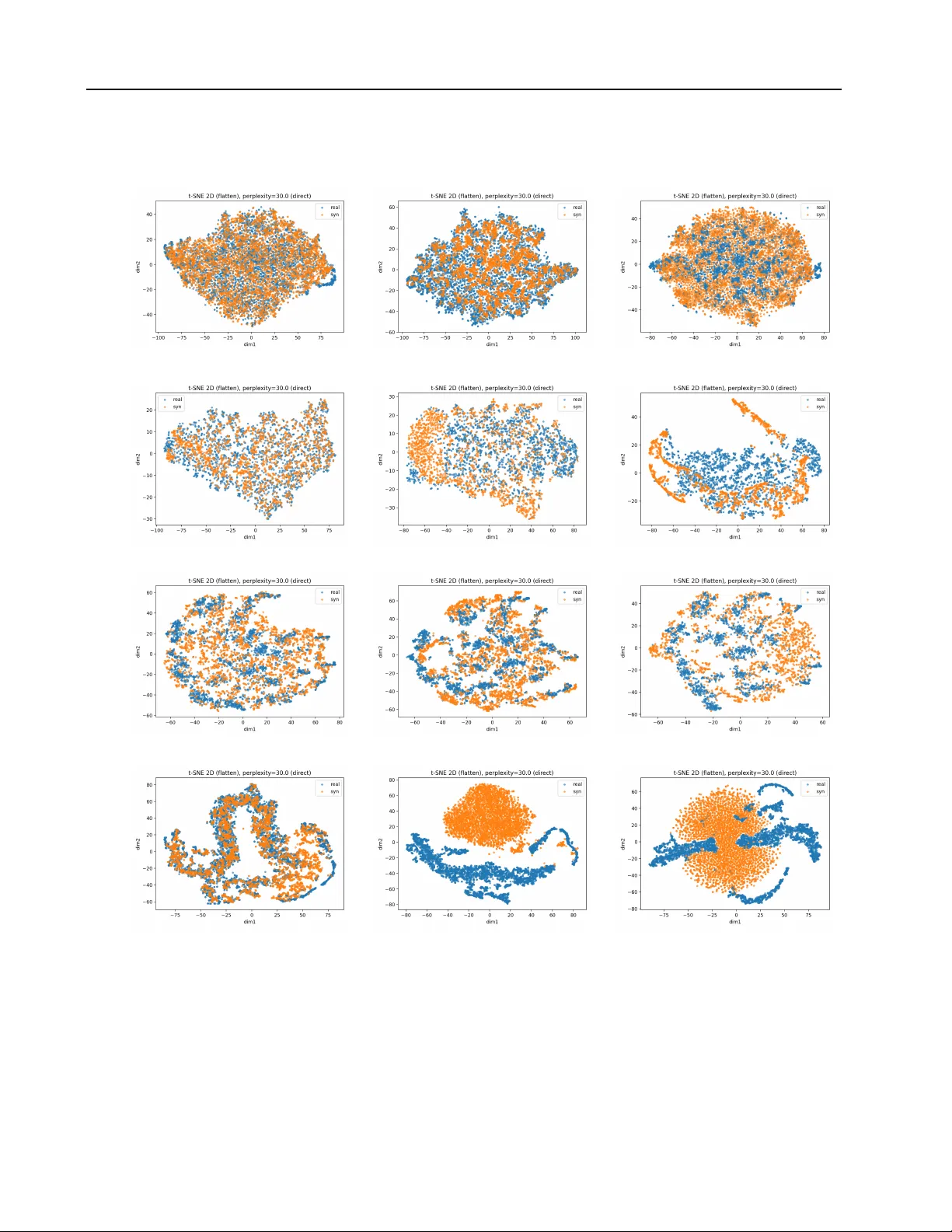
Graph2TS: Structur e-Contr olled T ime Series Generation via Quantile-Graph V AEs Shaoshuai Du * 1 Joze M. Rozanec * 2 3 Andy Pimentel 1 Ana-Lucia V arbanescu 1 2 Abstract Although recent generativ e models can produce time series with close marginal distrib utions, they often face a fundamental tension between pre- serving global temporal structure and modeling stochastic local variations, particularly for highly volatile signals with weak or irregular periodic- ity . Direct distrib ution matching in such settings can amplify noise or suppress meaningful tem- poral patterns. In this work, we propose a struc- ture–residual perspectiv e on time-series genera- tion, viewing temporal data as the combination of a structural backbone and stochastic residual dynamics, thereby motiv ating the separation of global organization from sample-le vel variability . Based on this insight, we represent time-series structure using a quantile-based transition graph that compactly captures global distributional and temporal dependencies. Building on this rep- resentation, we propose Graph2TS , a quantile- graph conditioned variational autoencoder that performs cross-modal generation from structural graphs to time series. By conditioning genera- tion on structure rather than labels or metadata, the model preserves global temporal organization while enabling controlled stochastic v ariation. Ex- periments on di verse datasets, including sunspot, electricity load, ECG, and EEG signals, demon- strate improv ed distributional fidelity , temporal alignment, and representativeness compared to dif fusion- and GAN-based baselines, highlighting structure-controlled and cross-modal generation as a promising direction for time-series modeling. 1 Informatics Institute, Uni versity of Amsterdam, Amsterdam, The Netherlands 2 Computer Architecture for Embedded Systems, Univ ersity of T wente, Enschede, The Netherlands 3 Laboratory of Artificial Intelligence, Institute Jozef Stedan, Ljubljana, Slo venia. Correspondence to: Shaoshuai Du < s.du@uva.nl > . Pr eprint. Mar c h 23, 2026. 1. Introduction T ime series generation is a fundamental problem in many domains, including healthcare, finance, and scientific mod- eling ( Lin et al. , 2024 ; Brophy et al. , 2021 ). Unlike images or text, time series exhibit strong temporal dependencies, structured oscillatory patterns, and stochastic fluctuations, making realistic generation particularly challenging ( Brophy et al. , 2021 ; Gonen et al. , 2025 ; Y ang et al. , 2025 ). A key dif ficulty lies in the trade-off between preserving structural fidelity - such as global wa ve patterns and fre- quency content - and modeling local variability , including short-term fluctuations and noise ( Brophy et al. , 2021 ; Lin et al. , 2024 ; Y ang & W ang , 2022 ). Existing generati ve models often fail to balance these objecti ves. GAN-based approaches tend to reproduce high-frequency fluctuations at the cost of structural distortion, while diffusion-based models frequently oversmooth the signal, suppressing mean- ingful variability and reducing di versity ( Y oon et al. , 2019 ; Y uan & Qiao , 2024 ). This trade-off is especially problematic for noisy time series, which are common in real-w orld settings such as biomedical recordings and financial signals ( Brophy et al. , 2021 ; Meijer & Chen , 2024 ). In such cases, directly matching the full data distribution can either amplify noise or erase critical temporal patterns, limiting both their interpretability and downstream utility ( Y oon et al. , 2019 ). W e take a structure-oriented perspectiv e on time-series gen- eration, motiv ated by a structure–residual decomposition of temporal data. Rather than attempting to reproduce all sample-lev el variability , we observe that many real-world applications primarily require samples that preserve global temporal org anization, while allo wing stochastic v ariation at the residual le vel. This distinction is particularly impor- tant for volatile and irregular signals, where direct distri- bution matching often leads to noise amplification or ov er- smoothing of meaningful temporal patterns. T o operationalize this insight, we represent temporal struc- ture using a quantile-based transition graph, which com- pactly captures global distributional and relational statis- tics while suppressing sample-specific fluctuations. This structural representation defines a complementary modality 1 Graph2TS: Structure-Contr olled Time Series Generation via Quantile-Graph V AEs to raw time-series signals, enabling a graph-to-time-series generation paradigm. According to this formulation, we propose a graph-to-time series model ( Graph2TS ) based on a quantile-graph-conditioned variational autoencoder that learns a conditional generativ e model of time series given structural graphs. Unlike prior conditional V AEs that rely on labels or metadata, our model conditions generation directly on structural information, enabling cross-modal generation that preserves global temporal structure while supporting controlled stochastic div ersity . Our main contributions are: • W e propose a structur e–r esidual perspective for time- series generation, modeling temporal data as a deter- ministic structural backbone with stochastic residual variation, which clarifies the trade-off between struc- tural fidelity and generativ e diversity . • W e sho w that a quantile-based transition graph pro- vides a compact structural representation of time series. Under a first-order Marko v assumption, this represen- tation captures essential global temporal and distrib u- tional dependencies, enabling a principled cr oss-modal formulation from graphs to sequences. • Based on this formulation, we propose Graph2TS , a quantile-graph conditioned v ariational autoencoder that models p ( x | g , z ) . Extensi ve experiments and ablation studies demonstrate that both structural condi- tioning and stochastic residual modeling are essential for achieving faithful, div erse, and stable time-series generation, sho wing an adv antage ov er dif fusion- and GAN-based baselines across div erse datasets. 2. Related W ork 2.1. Time Series Generation Generativ e modeling of time series has attracted significant attention in recent years. GAN-based approaches extend adversarial learning to sequential data, often by combin- ing recurrent, temporal con volutional architectures or atten- tion mechanisms with discriminator-based training objec- tiv es ( Goodfellow et al. , 2020 ; Ahmed & Schmidt-Thieme , 2023 ). Representativ e examples include T imeGAN and its v ariants, which integrate supervised losses to encour- age temporal coherence ( Y oon et al. , 2019 ). Despite their success, GAN-based models are known to suffer from train- ing instability , mode collapse, and sensiti vity to noise, par - ticularly when applied to short or highly volatile time se- ries ( Arjovsk y et al. , 2017 ). In practice, such models often reproduce local fluctuations at the cost of distorting global temporal structure ( Esteban et al. , 2017 ). More recently , diffusion-based models ha ve been adapted to time series generation ( Y ang et al. , 2024 ; Rasul et al. , 2021 ). By progressi vely denoising samples from a learned noise process, these methods achie v e strong likelihood- based modeling and impro ved training stability ( Lin et al. , 2024 ; Y uan & Qiao , 2024 ). Ho wever , diffusion models typically exhibit a strong smoothing bias, which can sup- press meaningful variability and lead to over -regularized outputs ( Liu et al. , 2024 ). In addition, the iterativ e sampling procedure is computationally expensiv e, and the learned dy- namics may drift away from the dominant structural patterns of the data ( Lin et al. , 2024 ). These approaches aim to model the full data distribution , and while they achiev e a certain degree of success, their design makes them sensitiv e to noise and sample-specific artifacts, especially in short or noisy time series. 2.2. Structure-A war e and Conditional Generation T o improve controllability , several works explore condi- tional generation for time series ( Coletta et al. , 2023 ; Li et al. , 2023 ). Conditional GANs and related architectures incorporate auxiliary information such as labels, context vari ables, or handcrafted features to guide generation ( Smith & Smith , 2020 ; Lu et al. , 2024 ; Ni et al. , 2020 ; Narasimhan et al. , 2024 ). Other approaches focus on learning compact representations through autoencoders or self-supervised ob- jectiv es, which are then used for downstream generation or reconstruction tasks ( Zhang et al. , 2024 ; Y ue et al. , 2022 ). While conditioning improv es flexibility , most existing meth- ods rely on raw featur es or latent embeddings that entangle structural statistics with stochastic variations ( Oublal et al. , 2024 ). As a result, these models lack an explicit mecha- nism to separate global temporal structure from local noise, limiting their ability to control fidelity and diversity inde- pendently ( Oublal et al. , 2024 ). 2.3. Graph-Based Representations f or Time Series Graph-based representations provide an alternati ve view of time series by encoding temporal relationships as structured graphs ( Rozanec et al. , 2025 ; Luque et al. , 2009 ). Prior work includes statistical or topology-inspired constructions as well as deep-learning graph time-series modeling. These representations capture certain structural properties of time series, such as periodicity , state recurrence, or distributional characteristics ( Silv a et al. , 2023 ; Zou et al. , 2019 ) and ha ve been used for a wide range of tasks, b ut, to the best of our knowledge, no machine learning model was dev eloped to use them for generativ e purposes ( Lacasa et al. , 2008 ; Silva et al. , 2021 ; Chen & Eldardiry , 2024 ). In this work, we adopt a quantile-based graph as a struc- tured representation of time series ( Campanharo et al. , 2011 ; Lopes de Oli veira Campanharo & Ramos , 2015 ). Unlike prior uses of graph representations that primarily serv e de- 2 Graph2TS: Structure-Contr olled Time Series Generation via Quantile-Graph V AEs scriptiv e or analytical purposes, we leverage the quantile graph as a conditioning signal within a generati ve model. By encoding distributional transitions across time rather than raw sample trajectories, this representation preserves global structural statistics while filtering out sample-specific noise, enabling structure-controlled synthesis of time series. 3. Problem Statement 3.1. Setting W e consider a dataset of univ ariate time series { x i } N i =1 , where x i ∈ R T . Our goal is to generate synthetic samples ˜ x ∈ R T that preserve the global temporal structure of the data while maintaining non-degenerate v ariability . Formally , a desirable generator should satisfy ˜ x ∼ q ( x ) s.t. S ( ˜ x ) ≈ S ( x ) , V ar( ˜ x ) > 0 , (1) where S ( · ) denotes a structural descriptor that captures in- variant temporal patterns (e.g., wav e shape or transition dynamics), rather than pointwise signal values. 3.2. Why Full Distrib ution Modeling Is Ill-Conditioned Most existing time-series generators aim to learn the full data distribution p ( x ) directly . Ho we ver , for highly volatile sequences, this objectiv e is ill-conditioned. A time series can be conceptually decomposed as x = x struct + ε, (2) where x struct captures global temporal org anization and ε represents stochastic fluctuations or noise. Learning p ( x ) entangles structural v ariation with sample- specific noise. In practice, this leads to a fundamental trade- off: models either ov erfit ε and amplify noise, or ov er - smooth the signal and distort x struct . Such behavior has been widely observed in both GAN-based and diff usion- based time-series generators, particularly in the v olatile sequence regime. 3.3. Structure-Conditioned Ref ormulation T o decouple structural information from stochastic varia- tion, we reformulate time-series generation as modeling a conditional distribution p ( x | s ) , s = S ( x ) , (3) where s is a deterministic structural summary of the time series. Under this formulation, stochastic variability is re- stricted to directions that are consistent with the structural constraint s , allowing generated samples to preserv e global temporal patterns while retaining controlled, non-de generate div ersity . t x t b 0 b 1 b 2 b 3 1 2 3 Sequence { s t } = [1 , 2 , 3 , 3 , 2 , 1 , 1 , 2 , 3] 1 2 3 0.33 0.67 0.33 0.67 0.50 0.50 Discretization Quantile Graph F igure 1. Example of time-series to Quantile Graph mapping. Left: The time series is discretized into states based on quantile boundaries. Right: The resulting Markov transition dynamics represented as a graph. 3.4. Quantile Graph as Structural Representation T o instantiate the structural summary operator S ( · ) , we seek a representation that (i) is in v ariant to local amplitude noise, (ii) preserves global temporal org anization, and (iii) admits a fixed-size, sample-aligned form for conditional modeling. W e therefore adopt a quantile graph , which provides a compact representation of temporal dynamics by encoding transition statistics between globally shared quantile states. Giv en a uni v ariate time series { x t } T t =1 , we first esti- mate a set of globally shared quantile boundaries B = { b 0 , . . . , b Q } from the training data. Each observation is mapped to a discrete state s t = q ( x t ) , q ( x ) = k if x ∈ [ b k − 1 , b k ) , (4) yielding a discrete stochastic process { s t } ov er Q states. This discretization mar ginalizes fine-grained amplitude v ari- ations while preserving the relati ve ordering of signal v alues. From the resulting state sequence, we estimate empirical transition probabilities P ij = P ( s t +1 = j | s t = i ) ≈ P T − 1 t =1 1 [ s t = i, s t +1 = j ] P T − 1 t =1 1 [ s t = i ] , (5) which define a first-order Markov chain ov er quantile states. The transition matrix P ∈ R Q × Q is treated as a weighted directed graph, referred to as the quantile graph . This construction induces the abstraction { x t } − → { s t } − → P ( s t +1 | s t ) , which marginalizes pointwise noise while preserving in v ari- ant transition statistics of the underlying dynamics. Globally shared quantile bins ensure semantic alignment across sam- ples, yielding a fixed-size and well-conditioned structural representation for conditional generation. Figure 1 illustrates the process of quantile graph construc- tion. 3 Graph2TS: Structure-Contr olled Time Series Generation via Quantile-Graph V AEs TS Input [ B , 32] Graph Input [ B , 100] TS Encoder (MLP) Graph Encoder (MLP) t raw [ B , 128] g raw [ B , 128] Norm Norm Align P osterior q ( z | ts, gr ) µ, log σ 2 KL Div + ϵ ∼ N (0 , I ) σ µ z Latent Decoder p ( ts | gr, z ) ˆ T S Output Recon & Dist F igure 2. The Architecture of Our Proposed Graph2TS 4. Graph2TS: Structure-Conditioned T ime Series Generation Building on the structure-conditioned formulation intro- duced in the pre vious section, we dev eloped Graph2TS, a conditional generativ e deep learning architecture. Graph2TS conditions a variational autoencoder on a quantile-based graph representation, which encodes global transition dynamics, while a latent variable captures residual stochastic variability . 4.1. Graph2TS Architectur e W e illustrate the proposed Graph2TS architecture in Fig- ure 2 . Each input time series x ∈ R T is first mapped to a quantile graph g = ϕ ( x ) , which serves as a fixed-size structural condition. The graph is encoded into a continuous representation and combined with a latent variable to gen- erate time-series samples. This design e xplicitly separates global structural information, captured by the graph, from stochastic residual variation, modeled by the latent variable. The implications of this structure-conditioned design are analyzed in the following sections. 4.2. Generative Pr ocess Let X ∈ R T denote a time-series random variable drawn from p data ( x ) . W e define a deterministic structural encoder G = ϕ ( X ) , (6) where ϕ ( · ) maps a time series to its quantile graph. Giv en G , we introduce a latent variable Z ∈ R d to model variability not captured by the structural representation: Z ∼ p ( z ) = N (0 , I ) , (7) X ∼ p θ ( x | G, Z ) . (8) The resulting conditional distribution is p θ ( x | g ) = Z p θ ( x | g , z ) p ( z ) dz , (9) which allo ws multiple distinct samples to be generated from the same structural graph. 4.3. Learning Objectiv e For our Graph2TS , we adopt a conditional v ariational au- toencoder formulation, where generation is conditioned on a structural representation g . Let q ϕ ( z | x, g ) denote the variational posterior . The core learning objectiv e is the conditional evidence lo wer bound (ELBO): L ELBO = E q ϕ ( z | x,g ) log p θ ( x | g , z ) − KL q ϕ ( z | x, g ) ∥ p ( z ) . (10) In practice, the conditional likelihood term is instantiated as a mean-squared reconstruction loss, and the KL term is weighted by a coeffi cient β to control the strength of stochastic regularization. The resulting training objecti ve is augmented with additional structure-preserving regulariz- ers: min θ,ϕ L = λ rec L rec + β KL q ϕ ( z | x, g ) ∥ p ( z ) + λ align L align + λ dist L dist . (11) The alignment loss L align is implemented as a bidirectional InfoNCE objectiv e that enforces consistency between graph and time-series embeddings in a shared latent space. This term improv es structural correspondence but does not intro- duce additional stochasticity into the generativ e process. The distribution regularization term L dist matches the order statistics of generated and real sequences, encouraging con- sistency in marginal amplitude distrib utions. This stabilizes generation and mitigates distrib utional drift, while preserv- ing the conditional div ersity provided by the latent v ariable z . 4.4. Interpr etation of Structur e-Conditioned Generation While the problem formulation moti vates conditioning on structure, this section explains ho w such conditioning affects 4 Graph2TS: Structure-Contr olled Time Series Generation via Quantile-Graph V AEs the learned generativ e behavior . W e briefly interpret ho w conditioning on a structural representation G shapes the behavior of Graph2TS. This behavior can be decomposed as follo ws. Proposition 4.1 (Structure–residual decomposition) . Given a time-series random variable X ∈ R T and its deterministic structural r epresentation G = ϕ ( X ) , define f ( G ) ≜ E [ X | G ] , R ≜ X − f ( G ) . (12) Then X admits the decomposition X = f ( G ) + R, (13) wher e the r esidual satisfies E [ R | G ] = 0 . (14) The function f ( G ) represents a structural backbone : The underlying trajectory is consistent with the structural sum- mary G . The residual term R captures admissible v ariations around this backbone, including stochastic fluctuations that are not determined by G . Unconditional generati ve models must simultaneously learn both f ( G ) and the residual distribution of R from data, which is difficult for noisy time series. In contrast, condition- ing on G fixes the backbone f ( G ) and restricts stochastic generation to the residual component. This yields the following v ariance decomposition: V ar( X ) = V ar( E [ X | G ]) + E [V ar( X | G )] , (15) where the first term corresponds to structural variability and the second to conditional stochastic variation. By e xplicitly conditioning on G , the proposed model controls these tw o sources of variability separately . A detailed deri v ation of this decomposition is provided in Appendix B.1 . In the proposed Graph2TS , the decoder parameterizes a conditional distrib ution p θ ( x | g , z ) . This can be interpreted as x = f θ ( g ) + r θ ( g , z ) , (16) where f θ ( g ) approximates E [ X | G = g ] and r θ ( g , z ) mod- els the residual variation with E z [ r θ ( g , z ) | g ] ≈ 0 . As a result, structural conditioning suppresses noise-induced distortion while preserving global temporal patterns, and the latent variable z reintroduces controlled div ersity without violating structural consistency . 5. Experiments 5.1. Setup Baselines. W e compare against TimeGAN ( Y oon et al. , 2019 ) and Dif fusionTS ( Y uan & Qiao , 2024 ), which are the dominant paradigms for time-series generation. These baselines provide a rigorous benchmark for e v aluating both distributional fidelity and temporal coherence. Datasets. W e ev aluate the proposed method on four benchmark time-series datasets: (i) the CHB–MIT Scalp EEG Database ( CHB-MIT ) ( Guttag , 2010 ), (ii) the Daily Sunspot Number dataset ( Sunspot ) ( W orld Data Center SILSO , 2019 ), (iii) the Electricity Load dataset ( Electricity ) ( Trindade , 2015 ), and (iv) the MIT -BIH Ar- rhythmia ECG dataset ( ECG ) ( Moody & Mark , 2001 ). Ad- ditional dataset details are provided in Appendix B.5 . Metrics. W e assess generativ e performance using a com- pact set of metrics that capture distributional fidelity , tempo- ral structur e , and manifold covera ge . Distributional align- ment is e v aluated using the W asserstein distance and the K olmogorov–Smirno v (KS) statistic. T emporal consistency is measured via discrepancies in autocorrelation functions (A CF) and power spectral densities (PSD). T o assess repre- sentativ eness, we report prototype-based metrics including nearest-neighbor prototype error and cov erage at fix ed dis- tance thresholds. Unlike discriminati ve or do wnstream-task metrics, which are task- and classifier -dependent, our met- rics directly assess whether the generator matches the target distribution and dynamics. Formal metric definitions are deferred to Appendix B.6 . 5.2. Overall Generation Quality T able 1 provides a unified ev aluation of generation qual- ity under equal sample size, covering distrib utional fi- delity , temporal structure, representativ eness, and mani- fold coverage across all datasets. Overall, the proposed structure-conditioned Graph2TS demonstrates strong and well-balanced performance across all criteria and metrics. In terms of distributional fidelity , our method achie ves the lowest W asserstein distance and KS statistic on CHB-MIT , ECG, and Sunspot, and remains competiti ve on Electric- ity . These results indicate accurate alignment with the real marginal distributions, despite the absence of adversarial training. For temporal structure , the proposed model at- tains lo w A CF MAE and PSD discrepancy across datasets, demonstrating faithful preserv ation of temporal dependen- cies and dominant spectral characteristics. Compared to diffusion-based models, which tend to oversmooth sharp dynamics, and GAN-based models, which often distort fre- quency content, our approach achiev es a more balanced temporal representation. Beyond distrib utional and temporal metrics, the proposed method consistently exhibits strong r epr esentativeness and manifold covera ge . Prototype-based errors are among the lowest across CHB-MIT , Electricity , and ECG, indicating that real samples are well approximated by nearby synthetic 5 Graph2TS: Structure-Contr olled Time Series Generation via Quantile-Graph V AEs T able 1. Comparison of distributional fidelity , temporal structure, and representati veness across datasets. Metrics: W ass : W asserstein distance, KS : KS statistic, A CF : ACF MAE, PSD : PSD L2 distance, P-Err : Prototype Error , MDR : Medoid Distance Ratio, Cov : Manifold Cov erage. ( ↓ : Lower is better , ↑ : Higher is better). Dataset Model Distribution ( ↓ ) T emporal ( ↓ ) Representati veness ( ↓ ) Coverage ( ↑ ) W ass KS A CF PSD P-Err (avg) P-Err (med) MDR Cov@0.5 Cov@0.9 CHB-MIT Graph2TS (Ours) 5.07e-6 0.024 0.039 9.36e-10 2.329 2.098 0.561 0.987 0.993 DiffusionTS 1.10e-5 0.153 0.085 4.12e-9 2.647 2.231 0.637 0.972 0.988 T imeGAN 1.29e-5 0.134 0.085 3.81e-9 3.404 3.058 0.780 0.977 0.989 Sunspot Graph2TS (Ours) 2.329 0.113 0.077 8.02e2 4.546 3.744 0.513 0.828 0.965 DiffusionTS 35.49 0.320 0.021 3.74e3 3.765 3.307 0.366 0.929 0.995 T imeGAN 14.74 0.190 0.098 1.05e3 5.108 4.613 0.755 0.806 0.965 Electricity Graph2TS (Ours) 7.710 0.073 0.043 6.13e2 4.369 3.540 0.427 0.946 0.998 DiffusionTS 4.030 0.059 0.027 3.55e3 3.793 3.963 0.542 0.889 0.990 T imeGAN 21.11 0.235 0.064 2.16e3 4.951 4.523 0.730 0.860 0.960 ECG Graph2TS (Ours) 0.014 0.033 0.051 5.92e-3 4.268 3.760 0.498 0.895 0.961 DiffusionTS 0.114 0.201 0.147 0.198 596.0 596.3 549.9 0.000 0.000 T imeGAN 0.101 0.282 0.172 0.108 249.6 250.0 135.6 0.000 0.000 instances. At the same time, high cov erage scores sho w that the generated samples broadly span the support of the real data manifold, a voiding both mode collapse and excessi ve dispersion. Notably , on challenging biomedical signals such as ECG, the proposed method maintains non-zero cov erage and stable prototype distances, whereas competing methods fail to adequately cov er the real data distribution. T aken together , these results demonstrate that conditioning generation on quantile-based structural representations en- ables a fav orable trade-off between fidelity , diversity , and stability . The proposed Graph2TS consistently produces time series that are distributionally accurate, temporally co- herent, and representati ve of the underlying data manifold across div erse domains. These quantitativ e findings are further supported by qual- itativ e visualizations of temporal and distrib utional struc- ture. As shown in Appendix A.3 , mean ACF and PSD curves demonstrate close alignment between real and gen- erated signals across datasets, while t-SNE embeddings indicate strong ov erlap of real and synthetic manifolds with- out collapse or excessi ve dispersion. Additional tables and visualizations supporting these results are deferred to Ap- pendix A.2 , Limitations of Baseline Models on Heavy T ailed Signals W e observe markedly different behavior of dif fusion- and GAN-based models on Sunspot and ECG. Sunspot signals are dominated by smooth, lo w-frequency , and weakly heavy- tailed dynamics, which align well with the Gaussian pertur- bation and distrib ution-matching assumptions underlying DifussionTS and T imeGAN. In this regime, directly model- ing the full data distrib ution is relati vely well-conditioned, explaining their competitiv e or superior performance on Sunspot. As empirically demonstrated in Appendix A.1 and Figure 4 , ECG signals exhibit extremely heavy tails in their incre- ments, which fundamentally violates the Gaussian assump- tion of dif fusion models, leading to over -smoothing, spectral distortion, or mode collapse. By conditioning generation on a quantile-based transition graph, Graph2TS emphasizes global structural relations rather than raw amplitude density , making it more robust to heavy-tailed and highly v ariable dy- namics. In contrast, Graph2TS achie v es performance com- parable to DifussionTS and T imeGAN models on smooth signals such as Sunspot, while substantially outperforming them on challenging biomedical signals such as ECG. 6. Ablation Study 6.1. Effect of Structural Conditioning and Stochasticity Residual T able 2 and Fig. 3 provide empirical support for the pro- posed structure–residual decomposition. By ablating ei- ther the structural component (graph conditioning) or the stochastic residual component (latent variables), we observe consistent performance degradation, confirming that both components are essential for faithful and di verse time-series generation. Effect of structural conditioning. Replacing the graph with an identity matrix removes explicit structural infor- mation while keeping the model architecture unchanged. Although the model does not collapse, it exhibits consistent degradation in distributional fidelity , temporal alignment, and manifold cov erage. As shown in Fig. 3e , without a graph, the lo w-frequency component of the generated time series degrades, indicating that the global structure is de- stroyed. This indicates that the graph provides a strong inductiv e bias that stabilizes the learned conditional mean 6 Graph2TS: Structure-Contr olled Time Series Generation via Quantile-Graph V AEs T able 2. Ablation study on ECG dataset. W e compare the full model with (i) identity graph conditioning (w/o graph) and (ii) a deterministic Graph2TS model without stochastic latent variables. Lower is better ( ↓ ), higher is better ( ↑ ). Model W ass. ↓ KS ↓ A CF MAE ↓ PSD L2 ↓ Pr otoErr ↓ Co verage@ τ 0 . 5 ↑ Full (Graph + Graph2TS) 0.014 0.033 0.051 0.0059 4.27 0.895 w/o graph 0.049 0.125 0.088 0.0179 4.41 0.875 w/o stochasticity 0.078 0.228 0.084 0.0310 5.26 0.752 A CF (a) (b) (c) PSD (d) (e) (f) t-SNE (g) (h) (i) (a) Full Model (b) w/o Graph (c) w/o Stochasticity F igure 3. Ablation study visualizing the impact of structural conditioning and stochastic residual modeling. Rows (top to bottom): Autocorrelation Function (ACF), Power Spectral Density (PSD), and t-SNE visualization. Columns (left to right): The proposed Full Model, the model without the graph module (w/o Graph), and the model without the stochastic component (w/o Stochasticity). Removing stochasticity leads to pronounced spectral energy collapse and mode contraction, while removing the graph weakens and destroy lo w-frequency temporal structure. f ( G ) = E [ X | G ] . When G carries little information, f ( G ) degenerates into a weak, av eraged backbone, increasing the burden on stochastic modeling and leading to systematic performance degradation. Effect of stochastic residual modeling and its interaction with structure. Removing stochastic latent v ariables yields a deterministic Graph2TS v ariant (see Appendix B.3 ), lead- ing to sev ere mode contraction, increased prototype error, and reduced cov erage. As shown in Fig. 3 , deterministic generation strongly attenuates lo w- and mid-frequenc y en- ergy , producing a flattened power spectrum. Although graph conditioning enforces structural consistency , the absence of stochasticity forces the decoder to collapse all admissible realizations into a single conditional average x ≈ f θ ( g ) , suppressing spectral energy and resulting in ov er-smoothed signals. In contrast, the full model combines structural conditioning with stochastic residual modeling: the graph anchors a stable 7 Graph2TS: Structure-Contr olled Time Series Generation via Quantile-Graph V AEs T able 3. Ablation study on CHB-MIT and Sunspot datasets. Each row remov es or modifies a single loss component. Metrics: W ass : W asserstein distance, KS : KS statistic, A CF : A CF MAE, PSD : PSD L2 distance, P-Err : ProtoErr, Co v : Coverage@ τ 0 . 5 . ( ↓ : Lower is better , ↑ : Higher is better). Dataset Ablation Distribution ( ↓ ) T emporal ( ↓ ) Representati veness ( ↓ ) Co verage ( ↑ ) W ass KS A CF PSD P-Err(avg) Cov@0.5 CHB-MIT Full model 5.07e-6 0.024 0.039 9.36e-10 2.329 0.987 L recon = 0 2.73e-6 0.013 0.203 1.00e-9 4.478 0.711 L align = 0 3.91e-6 0.024 0.044 7.08e-10 2.310 0.990 L dist = 0 4.22e-6 0.021 0.051 9.50e-10 2.302 0.990 β KL = 0 5.64e-5 0.265 0.115 2.18e-8 6.288 0.382 Sunspot Full model 2.329 0.113 0.077 8.02e2 4.546 0.828 L recon = 0 1.709 0.082 0.179 3.69e3 8.300 0.282 L align = 0 2.605 0.112 0.066 9.21e2 4.482 0.831 L dist = 0 2.510 0.107 0.074 4.88e2 4.594 0.825 β KL = 0 29.78 0.219 0.117 1.09e4 7.297 0.398 structural backbone f ( G ) , while the latent variable models the residual variability R with E [ R | G ] ≈ 0 . T ogether , they enable accurate distrib utional matching, temporal con- sistency , and faithful manifold coverage, particularly for high-variability biomedical signals such as ECG. 6.2. Loss Components T able 3 reports ablation results on the CHB-MIT and Sunspot datasets, respecti vely , where each row removes or modifies a single loss component while keeping all other settings fixed. These experiments aim to clarify the func- tional role of each term in the proposed objectiv e. Effect of reconstruction and KL r egularization. Remov- ing the reconstruction loss ( L recon = 0 ) leads to decep- ti vely impro v ed mar ginal distrib ution metrics, such as lower W asserstein distance and KS statistic, while causing severe degradation in temporal alignment, prototype error, and cov erage on both datasets. This indicates that distribution matching alone is insuf ficient to ensure structurally coher - ent and representativ e time-series generation. In contrast, removing KL re gularization ( β KL = 0 ) results in a system- atic collapse across all metrics, highlighting its essential role in stabilizing the latent space and enabling meaningful conditional sampling. Effect of auxiliary alignment and distance losses. Re- moving either the alignment loss ( L alig n = 0 ) or the dis- tance loss ( L dist = 0 ) results in only marginal performance changes. While certain temporal or spectral metrics may slightly improve or degrade, overall distributional fidelity and manifold coverage remain largely stable. These re- sults suggest that L alig n and L dist act as auxiliary regulariz- ers that refine structural details rather than determining the model’ s core generativ e capability . Summary . Overall, these results indicate that the primary performance gains of Graph2TS originate from structure- conditioned generation via the quantile graph. Auxiliary losses provide incremental refinements but do not account for the core improv ements ov er dif fusion- and GAN-based baselines. 7. Conclusion This work presents a no vel perspecti ve for time-series gen- eration, successfully addressing the challenge of preserving global temporal org anization and modeling stochastic lo- cal variations. W e argue that many real-world signals are more naturally described by a structural backbone with ad- missible residual v ariability , and reformulate time-series generation as a cross-modal problem that maps compact structural representations to sequences via quantile-based transition graphs. Based on this formulation, we propose Graph2TS , a quantile-graph conditioned variational autoencoder that de- couples structural conditioning from stochastic generation. Graph conditioning stabilizes the learned conditional mean and mitigates noise amplification and over -smoothing, while latent variables model controlled residual variability . Ex- tensiv e experiments across di verse datasets demonstrate improv ed distributional fidelity , temporal alignment, and manifold cov erage, particularly on highly variable signals where dif fusion- and GAN-based methods struggle. These results highlight structure-controlled and cross-modal gen- eration as a promising direction for time-series modeling. T o the best of our knowledge, Graph2TS is the first ma- chine learning approach to generate synthetic time series from graphs. Future work will e xplore e xtensions to multi- variate time series, richer structural graph representations, and broader cross-modal generativ e settings. 8 Graph2TS: Structure-Contr olled Time Series Generation via Quantile-Graph V AEs Impact Statement This work contributes to the de velopment of control- lable time-series generation by introducing a graph-based, structure-conditioned framew ork. A primary benefit of this approach is its applicability in settings where realistic syn- thetic time series are required but access to real data is limited, such as biomedical signal analysis, energy systems, and priv acy-sensiti ve domains. Furthermore, while the cur- rent state of the art has focused on generating time series with certain constraints, to the best of our kno wledge, no method has focused on generating time series data from graphs. By enabling the generation of data that preserves global temporal structure while allo wing controlled variabil- ity , the proposed method may facilitate model development, benchmarking, and data sharing without exposing sensitiv e raw measurements. At the same time, as with most generativ e models, the abil- ity to synthesize realistic time series may carry potential risks if misused, for example, in decepti ve or fraudulent scenarios in volving financial or sensor data. These risks are not unique to the proposed method and reflect broader challenges in generativ e modeling. W e believ e that the benefits of structure-controlled synthetic data generation, particularly for pri vac y-preserving research and data accessi- bility , outweigh these concerns, and that responsible use and domain-specific safeguards are essential when deploying such models in practice. References Ahmed, N. and Schmidt-Thieme, L. Sparse self-attention guided generativ e adversarial networks for time-series generation. International Journal of Data Science and Analytics , 16(4):421–434, 2023. Arjovsk y , M., Chintala, S., and Bottou, L. W asserstein GAN. CoRR , abs/1701.07875, 2017. URL http:// arxiv.org/abs/1701.07875 . Bal, H. E., Epema, D. H. J., de Laat, C., van Nieuw- poort, R., Romein, J. W ., Seinstra, F . J., Snoek, C., and W ijshoff, H. A. G. A medium-scale distributed system for computer science research: Infrastructure for the long term. Computer , 49(5):54–63, 2016. doi: 10.1109/MC.2016.127. URL https://doi.org/10. 1109/MC.2016.127 . Brophy , E., W ang, Z., She, Q., and W ard, T . Generativ e adversarial networks in time series: A surve y and tax- onomy . CoRR , abs/2107.11098, 2021. URL https: //arxiv.org/abs/2107.11098 . Campanharo, A. S. L. O., Campanharo, A. S. L. O., Sirer , M. I., Malmgren, R. D., Ramos, F . M., Amaral, L. A. N., and Amaral, L. A. N. Duality between time series and networks. PLoS ONE , 6, 2011. URL https://api. semanticscholar.org/CorpusID:7728672 . Chen, H. and Eldardiry , H. Graph time-series modeling in deep learning: a survey . A CM T ransactions on Knowledge Discovery fr om Data , 18(5):1–35, 2024. Coletta, A., Gopalakrishnan, S., Borrajo, D., and Vyetrenko, S. On the constrained time-series generation problem. Advances in Neural Information Pr ocessing Systems , 36: 61048–61059, 2023. Esteban, C., Hyland, S. L., and R ¨ atsch, G. Real-v alued (medical) time series generation with recurrent condi- tional gans. CoRR , abs/1706.02633, 2017. URL http: //arxiv.org/abs/1706.02633 . Gonen, T ., Pemper , I., Naiman, I., Berman, N., and Azencot, O. Time series generation under data scarcity: A unified generativ e modeling approach. CoRR , abs/2505.20446, 2025. doi: 10.48550/ARXIV .2505.20446. URL https: //doi.org/10.48550/arXiv.2505.20446 . Goodfellow , I. J., Pouget-Abadie, J., Mirza, M., Xu, B., W arde-Farley , D., Ozair, S., Courville, A. C., and Bengio, Y . Generativ e adversarial networks. Commun. ACM , 63(11):139–144, 2020. doi: 10.1145/3422622. URL https://doi.org/10.1145/3422622 . Guttag, J. CHB-MIT Scalp EEG Database. PhysioNet , June 2010. doi: 10.13026/C2K01R. URL https://doi. org/10.13026/C2K01R . V ersion 1.0.0. Lacasa, L., Luque, B., Ballesteros, F ., Luque, J., and Nu ˜ no, J. C. From time series to complex networks: The vis- ibility graph. Pr oceedings of the National Academy of Sciences , 105(13):4972–4975, 2008. doi: 10.1073/pnas. 0709247105. URL https://www.pnas.org/doi/ abs/10.1073/pnas.0709247105 . Li, H., Y u, S., and Principe, J. Causal recurrent variational autoencoder for medical time series generation. In Pr o- ceedings of the AAAI confer ence on artificial intelligence , volume 37, pp. 8562–8570, 2023. Lin, L., Li, Z., Li, R., Li, X., and Gao, J. Diffusion models for time-series applications: a survey . F r ontiers Inf. T echnol. Electr on. Eng. , 25(1):19–41, 2024. doi: 10.1631/FITEE.2300310. URL https://doi.org/ 10.1631/FITEE.2300310 . Liu, J., Y ang, L., Li, H., and Hong, S. Retriev al-augmented diffusion models for time series forecasting. In Globersons, A., Mackey , L., Belgrave, D., Fan, A., Paquet, U., T omczak, J. M., and Zhang, C. (eds.), Advances in Neural Information Pr ocessing Systems 38: Annual Conference on Neural Information Pr ocessing Systems 2024, NeurIPS 2024, V ancouver , BC, Canada, 9 Graph2TS: Structure-Contr olled Time Series Generation via Quantile-Graph V AEs December 10 - 15, 2024 , 2024. URL http://papers. nips.cc/paper_files/paper/2024/hash/ 053ee34c0971568bfa5c773015c10502- Abstract- Conference. html . Lopes de Olivei ra Campanharo, A. S. and Ramos, F . M. Quantile graphs for the characterization of chaotic dy- namics in time series. In 2015 Thir d W orld Confer- ence on Complex Systems (WCCS) , pp. 1–4, 2015. doi: 10.1109/ICoCS.2015.7483302. Lu, C., Reddy , C. K., W ang, P ., Nie, D., and Ning, Y . Multi- label clinical time-series generation via conditional GAN. IEEE T rans. Knowl. Data Eng . , 36(4):1728–1740, 2024. doi: 10.1109/TKDE.2023.3310909. URL https:// doi.org/10.1109/TKDE.2023.3310909 . Luque, B., Lacasa, L., Ballesteros, F ., and Luque, J. Hor - izontal visibility graphs: Exact results for random time series. Phys. Rev . E , 80:046103, Oct 2009. doi: 10.1103/ PhysRe vE.80.046103. URL https://link.aps. org/doi/10.1103/PhysRevE.80.046103 . Meijer , C. and Chen, L. Y . The rise of diffusion models in time-series forecasting. CoRR , abs/2401.03006, 2024. doi: 10.48550/ARXIV .2401.03006. URL https:// doi.org/10.48550/arXiv.2401.03006 . Moody , G. and Mark, R. The impact of the mit-bih arrhyth- mia database. IEEE Engineering in Medicine and Biolo gy Magazine , 20(3):45–50, 2001. doi: 10.1109/51.932724. Narasimhan, S. S., Agarwal, S., Akcin, O., Sanghavi, S., and Chinchali, S. P . Time wea ver: A conditional time series generation model. In F orty-first International Confer ence on Machine Learning, ICML 2024, V ienna, Austria, J uly 21-27, 2024 . OpenRevie w .net, 2024. URL https:// openreview.net/forum?id=WpKDeixmFr . Ni, H., Szpruch, L., W iese, M., Liao, S., and Xiao, B. Conditional sig-wasserstein gans for time series gen- eration. CoRR , abs/2006.05421, 2020. URL https: //arxiv.org/abs/2006.05421 . Oublal, K., Ladjal, S., Benhaiem, D., Le-borgne, E., and Roueff, F . Disentangling time series representations via contrastiv e independence-of-support on l-variational in- ference. In The T welfth International Conference on Learning Representations, ICLR 2024, V ienna, Austria, May 7-11, 2024 . OpenRevie w .net, 2024. URL https: //openreview.net/forum?id=iI7hZSczxE . Rasul, K., Seward, C., Schuster , I., and V ollgraf, R. Au- toregressi ve denoising diffusion models for multi variate probabilistic time series forecasting. In International confer ence on machine learning , pp. 8857–8868. PMLR, 2021. Rozanec, J. M., Zezlin, T ., V asiliu, L., Mladenic, D., Pro- dan, R., and Roman, D. Fiaingen: A financial time se- ries generativ e method matching real-world data quality . CoRR , abs/2510.01169, 2025. doi: 10.48550/ARXIV . 2510.01169. URL https://doi.org/10.48550/ arXiv.2510.01169 . Silva, V . F ., Silv a, M. E., Ribeiro, P ., and Silva, F . Time series analysis via network science: Concepts and al- gorithms. WIREs Data Mining and Knowledge Dis- covery , 11(3), March 2021. ISSN 1942-4795. doi: 10.1002/widm.1404. URL http://dx.doi.org/ 10.1002/widm.1404 . Silva, V . F ., Silva, M. E., Ribeiro, P ., and Silva, F . Multi- layer quantile graph for multi va riate time series analy- sis and dimensionality reduction, 2023. URL https: //arxiv.org/abs/2311.11849 . Smith, K. E. and Smith, A. O. Conditional GAN for time- series generation. CoRR , abs/2006.16477, 2020. URL https://arxiv.org/abs/2006.16477 . T rindade, A. ElectricityLoadDiagrams20112014. UCI Machine Learning Repository , 2015. DOI: https://doi.org/10.24432/C58C86. W orld Data Center SILSO. Daily sunspot number , 1818– 2019. https://www.sidc.be/silso/ , 2019. Royal Observ atory of Belgium. Y ang, C., Chen, Y ., Li, Z., W ang, X., Shi, K., Y ao, L., Xu, G., and Guo, Z. Deep multimodal learning for time series analysis in social computing: a sur - ve y . Int. J. Multim. Inf. Retr . , 14(2):15, 2025. doi: 10.1007/S13735- 025- 00363- X. URL https://doi. org/10.1007/s13735- 025- 00363- x . Y ang, M. and W ang, J. Adaptability of financial time series prediction based on bilstm. Pr ocedia Computer Science , 199:18–25, 2022. Y ang, Y ., Jin, M., W en, H., Zhang, C., Liang, Y ., Ma, L., W ang, Y ., Liu, C., Y ang, B., Xu, Z., et al. A survey on dif fusion models for time series and spatio-temporal data. A CM Computing Surve ys , 2024. Y oon, J., Jarrett, D., and v an der Schaar , M. Time-series generativ e adversarial networks. In W allach, H. M., Larochelle, H., Beygelzimer , A., d’Alch ´ e-Buc, F ., Fox, E. B., and Garnett, R. (eds.), Advances in Neural Infor- mation Processing Systems 32: Annual Confer ence on Neural Information Pr ocessing Systems 2019, NeurIPS 2019, December 8-14, 2019, V ancouver , BC, Canada , pp. 5509–5519, 2019. URL https://proceedings. neurips.cc/paper/2019/hash/ c9efe5f26cd17ba6216bbe2a7d26d490- Abstract. html . 10 Graph2TS: Structure-Contr olled Time Series Generation via Quantile-Graph V AEs Y uan, X. and Qiao, Y . Diffusion-ts: Interpretable dif fusion for general time series generation. In The T welfth Inter- national Confer ence on Learning Repr esentations, ICLR 2024, V ienna, Austria, May 7-11, 2024 . OpenRevie w .net, 2024. URL https://openreview.net/forum? id=4h1apFjO99 . Y ue, Z., W ang, Y ., Duan, J., Y ang, T ., Huang, C., T ong, Y ., and Xu, B. Ts2vec: T ow ards uni versal representation of time series. In Thirty-Sixth AAAI Confer ence on Artificial Intelligence, AAAI 2022, Thirty-F ourth Conference on Innovative Applications of Artificial Intelligence, IAAI 2022, The T welveth Symposium on Educational Advances in Artificial Intellig ence, EAAI 2022 V irtual Event, F ebru- ary 22 - Marc h 1, 2022 , pp. 8980–8987. AAAI Press, 2022. doi: 10.1609/AAAI.V36I8.20881. URL https: //doi.org/10.1609/aaai.v36i8.20881 . Zhang, K., W en, Q., Zhang, C., Cai, R., Jin, M., Liu, Y ., Zhang, J. Y ., Liang, Y ., Pang, G., Song, D., and Pan, S. Self-supervised learning for time series analysis: T axonomy , progress, and prospects. IEEE T rans. P at- tern Anal. Mach. Intell. , 46(10):6775–6794, 2024. doi: 10.1109/TP AMI.2024.3387317. URL https://doi. org/10.1109/TPAMI.2024.3387317 . Zou, Y ., Donner , R. V ., Marwan, N., Donges, J. F ., and Kurths, J. Complex network approaches to nonlinear time series analysis. Physics Reports , 787:1–97, January 2019. ISSN 0370-1573. doi: 10.1016/j.physrep.2018. 10.005. URL http://dx.doi.org/10.1016/j. physrep.2018.10.005 . 11 Graph2TS: Structure-Contr olled Time Series Generation via Quantile-Graph V AEs A. Additional Experimental Results and Analysis A.1. Additional Results on Limitations of Baseline Models on Heavy T ailed Signals T able 4. Distribution statistics in z-score space for Sunspot vs ECG windows (length T = 32 ). W e report summary statistics for raw values x and first-order differences ∆ x . Excess kurtosis indicates tail-heaviness (larger ⇒ heavier tails). Dataset B x statistics ∆ x statistics mean std excess kurt. quantile range (0.1% → 99.9%) mean std excess kurt. Sunspot 1758 -0.0360 0.9668 0.5321 [-1.0741, 3.5320] -7.5e-05 0.1994 2.2466 ECG 20312 0.2148 0.8283 7.3562 [-1.6078, 5.1106] 4.4e-05 0.1819 41.5587 (a) V alue distrib ution p ( x ) (clipped for visualization). (b) First-order difference distrib ution p (∆ x ) (clipped). F igure 4. Sunspot vs ECG in z-score space . ECG exhibits substantially hea vier tails, especially in ∆ x , indicating more frequent abrupt transitions compared to the smoother Sunspot dynamics. T able 4 and Fig. 4 summarize the empirical distributions in the same input space used by models (z-score normalized windows). Sunspot is close to a light-tailed process: x has lo w excess kurtosis ( 0 . 53 ) and its increment distrib ution ∆ x is only mildly heavy-tailed (excess kurtosis 2 . 25 ). In contrast, ECG is strongly non-Gaussian: x exhibits hea vy tails (e xcess kurtosis 7 . 36 ) and, more importantly , its increment distribution is e xtremely heavy-tailed (e xcess kurtosis 41 . 56 ), rev ealing frequent abrupt changes. Implication for generati ve modeling. Diffusion-based time-series generators implicitly assume that the target distrib ution in the normalized space is reasonably smooth and well-approximated by iterati ve Gaussian perturbations. This assumption aligns well with the smooth, low-frequenc y dynamics of Sunspot, but is violated by ECG where sharp transitions dominate ∆ x . Consequently , DiffusionTS/T imeGAN may over -smooth sharp events or introduce spurious high-frequenc y artifacts, leading to noticeable mismatches in A CF/PSD. Why Graph2TS can be advantageous on ECG. Our Graph2TS conditions generation on a quantile-transition graph, which emphasizes structural and relational patterns rather than raw amplitude density . This inducti v e bias is rob ust to heavy tails and non-stationary increments, making it not only good at smooth series but also substantially ef fecti ve for high-variability biomedical signals such as ECG. A.2. Qualitative Comparison of Real and Generated Samples Figure 5 visualizes real and generated time series across three distinct structural conditions. Each row corresponds to a single, specific quantile graph deriv ed from the ”Real” time series shown in that row . Alongside the real sample, we display 10 samples synthesized by our model conditioned on that extracted graph structure. 12 Graph2TS: Structure-Contr olled Time Series Generation via Quantile-Graph V AEs (a) Example 1. (b) Example 2. (c) Example 3. F igure 5. V isualization of real time series and corresponding generated time series. Each row (a, b, c) displays 10 samples generated from a single, distinct graph topology , illustrating the model’ s ability to synthesize data corresponding to different graphs. 13 Graph2TS: Structure-Contr olled Time Series Generation via Quantile-Graph V AEs (a) Sample 1: Comparison of real (left) and generated (right) time series and graphs. (b) Sample 2: Comparison of real (left) and generated (right) time series and graphs. (c) Sample 3: Comparison of real (left) and generated (right) time series and graphs. F igure 6. Qualitativ e comparison between real and generated data across three distinct samples. Each row visualizes the Real Time Series and Real Quantile Graph (left panels) alongside the Generated Time Series and Generated Quantile Graph (right panels), demonstrating the model’ s capability to capture both temporal dynamics and structural dependencies. Fig. 6 provides a qualitati ve comparison between real and generated data across three distinct samples. The visual alignment between the ground truth (left) and the generated outputs (right) demonstrates the model’ s ability to capture both temporal dynamics and underlying graph structures. Concerns may arise re garding the sparsity of graphs deri ved from short windows ( T = 32 ). Ho we ver , as sho wn in Fig. 5 and Fig. 6 , the resulting quantile graphs are not randomly sparse; instead, they exhibit consistent topological structures (e.g., localized transitions and loops) that correlate with specific temporal behaviors. This confirms that ev en short windows contain sufficient signal to construct meaningful structural priors, rather than mere noise. Furthermore, it is worth noting that the graph deri ved from the generated time series (“Generated Quantile Graph” in Fig. 6 ) is topologically consistent with, yet not identical to, the conditioning “Real Quantile Graph. ” These minor structural deviations are expected and desirable: they arise from the stochastic residual z introduced by the latent variable. Since the quantile mapping is sensiti ve to local amplitude v ariations, the injected stochasticity naturally induces slight shifts in exact transition probabilities. Crucially , the global structural backbone (e.g., dominant cycles and connectivity) is preserved, demonstrating that Graph2TS learns a robust conditional distrib ution p ( x | G ) that supports div erse realizations, rather than simply memorizing the input transition matrix. A.3. Qualitative Analysis of T emporal and Distributional Structure Figures 7 , 8 , and 9 provides a qualitativ e comparison of temporal and distributional properties across mode ls, complementing the quantitativ e results in T able 1 . W e visualize mean autocorrelation functions (A CF), po wer spectral densities (PSD), and t-SNE embeddings to examine temporal dynamics, frequenc y content, and manifold geometry , respectively . Across all datasets, the proposed Graph2TS consistently preserv es the global shape of the real A CF , indicating accurate 14 Graph2TS: Structure-Contr olled Time Series Generation via Quantile-Graph V AEs CHB-MIT Sunspot Electricity ECG (a) Graph2TS (ours) (b) DiffusionTS (c) TimeGAN F igure 7. Mean autocorrelation functions (ACF) of generated time series on four datasets. Rows (top to bottom): CHB-MIT , Sunspot, Electricity , and ECG. Columns: Models. The proposed Graph2TS consistently preserves temporal dependency patterns of the real data across all datasets, while DiffusionTS e xhibits ov er -smoothing and T imeGAN sho ws increased structural de viation. modeling of conditional mean temporal dependencies. In contrast, DiffusionTS often exhibits inflated short-lag correlations and attenuated mid-range dynamics, while T imeGAN sho ws less stable and dataset-dependent correlation patterns. These behaviors reflect the tendenc y of dif fusion models to ov er -smooth and GAN-based models to distort temporal structure. The PSD visualizations further rev eal that Graph2TS closely matches the dominant low-frequency components of the real signals across datasets. DiffusionTS e xhibits pronounced low-frequenc y energy suppression on high-v ariability signals such as ECG, whereas T imeGAN produces distorted spectral profiles with misplaced ener gy . This highlights the importance of explicitly modeling stochastic residuals to a v oid spectral collapse or spurious high-frequency artif acts. Finally , t-SNE embeddings sho w that Graph2TS achie ves strong ov erlap between real and synthetic samples, indicating faithful cov erage of the data manifold. DiffusionTS tends to contract the manifold under strict structural constraints, while T imeGAN exhibits mode drifting and o ver -dispersion. T ogether , these qualitati ve results illustrate that combining structural 15 Graph2TS: Structure-Contr olled Time Series Generation via Quantile-Graph V AEs CHB-MIT Sunspot Electricity ECG (a) Graph2TS (ours) (b) DiffusionTS (c) TimeGAN F igure 8. Mean power spectral density (PSD) of generated time series on four datasets. Rows (top to bottom): CHB-MIT , Sunspot, Electricity , and ECG. The proposed model Graph2TS closely matches the spectral profile of real data across all datasets, whereas DiffusionTS tends to attenuate high-frequenc y components and T imeGAN exhibits spectral distortion. conditioning with stochastic residual modeling yields stable temporal dynamics, balanced frequency characteristics, and well-aligned manifold geometry . 16 Graph2TS: Structure-Contr olled Time Series Generation via Quantile-Graph V AEs CHB-MIT Sunspot Electricity ECG (a) Graph2TS (ours) (b) DiffusionTS (c) TimeGAN F igure 9. t-SNE visualization of generated time series on four datasets. Rows (top to bottom): CHB-MIT , Sunspot, Electricity , and ECG. Red points represent real data and blue points represent generated data. Our Graph2TS model demonstrates superior ov erlap with the real data distribution, indicating it captures the global structural properties more ef fectively than baselines. 17 Graph2TS: Structure-Contr olled Time Series Generation via Quantile-Graph V AEs B. A ppendix: Theoretical and Implementation Details B.1. Formula Derivation of the law of total v ariance. Let µ ( G ) ≜ E [ X | G ] . By definition, V ar( X ) = E ∥ X − E [ X ] ∥ 2 . (17) Insert and subtract µ ( G ) : X − E [ X ] = X − µ ( G ) + µ ( G ) − E [ X ] . (18) Therefore, V ar( X ) = E h ( X − µ ( G )) + ( µ ( G ) − E [ X ]) 2 i (19) = E ∥ X − µ ( G ) ∥ 2 + E ∥ µ ( G ) − E [ X ] ∥ 2 + 2 E ( X − µ ( G )) ⊤ ( µ ( G ) − E [ X ]) . (20) The cross term is zero: E ( X − µ ( G )) ⊤ ( µ ( G ) − E [ X ]) = E E ( X − µ ( G )) ⊤ ( µ ( G ) − E [ X ]) | G (21) = E ( µ ( G ) − E [ X ]) ⊤ E [ X − µ ( G ) | G ] (22) = E ( µ ( G ) − E [ X ]) ⊤ · 0 = 0 , (23) because E [ X − µ ( G ) | G ] = E [ X | G ] − µ ( G ) = 0 . Hence, V ar( X ) = E ∥ X − µ ( G ) ∥ 2 + E ∥ µ ( G ) − E [ X ] ∥ 2 . (24) Finally , observe that E ∥ X − µ ( G ) ∥ 2 = E [V ar( X | G )] , E ∥ µ ( G ) − E [ X ] ∥ 2 = V ar( E [ X | G ]) , (25) which yields the law of total v ariance: V ar( X ) = V ar( E [ X | G ]) + E [V ar( X | G )] . (26) B.2. Why not graph neural networks? Although the quantile graph admits a graph interpretation, it is fundamentally a fix ed-size transition matrix with globally aligned semantics across samples. Each node corresponds to a shared quantile state, and each edge weight represents a normalized transition probability . In this setting, the primary modeling objectiv e is to encode global transition statistics rather than local neighborhood structure. W e therefore adopt a simple MLP encoder to embed the quantile graph, which is sufficient to capture these statistics while av oiding the additional complexity and inductiv e assumptions introduced by graph neural networks. B.3. Deterministic Graph to Time Series Model Fig. B.3 shows the architecture of the deterministic v ersion of the Graph2TS . B.4. Detailed Setup Hardwar e and platf orm W e run the all the experiments on D AS6 ( Bal et al. , 2016 ). All experiments were conducted on a single NVIDIA A40 GPU. Baselines. W e compare against representativ e time-series generators: TimeGAN (GAN-based) and DiffusionTS (dif fusion- based). All baselines are trained on the same training split and generate sequences of the same length T . W e use of ficial implementations. 18 Graph2TS: Structure-Contr olled Time Series Generation via Quantile-Graph V AEs TS Input [ B , 32] Graph Input [ B , 100] TS Encoder (MLP) Graph Encoder (MLP) t raw [ B , 128] g raw [ B , 128] Norm Norm t norm [ B , 128] g norm [ B , 128] Align Decoder p ( ts | g r ) ˆ T S Output Recon & Dist F igure 10. Deterministic graph to time series model (Graph2TS without stochasticity). T raining protocol and fairness. When computing metrics, we generate the same number of synthetic samples as the number of real samples in the ev aluation split (4000 sequences) and apply balanced subsampling if needed. Note that while the sorting permutation itself is non-dif ferentiable, standard auto-differentiation frame works propagate gradients through the sorted values. This allows the order-statistics loss to effecti vely guide the generator tow ards matching the mar ginal amplitude distribution Sampling protocol. For our model, we sample n sequences per graph by drawing independent z values. Unless otherwise stated, we set n = 1 for one-to-one comparison with unconditional generators. Other experimental settings. W e use fixed-length univ ariate windows of length T = 32 and condition generation on quantile-transition graphs with Q = 10 global bins, represented as a flattened first-order transition matrix in R Q 2 . The model (G R A P H 2 T S ) emplo ys two-layer MLP encoders for the time series and the graph, each producing a 128-dimensional r aw embedding; ℓ 2 -normalized embeddings are used only for contrastive alignment. The posterior q ϕ ( z | x, g ) is parameterized by an MLP that maps the concatenated raw embeddings to ( µ, log σ 2 ) ∈ R 2 d z with d z = 32 , and the decoder p θ ( x | g , z ) is an MLP conditioned on the concatenation of the raw graph embedding and z . T raining minimizes a weighted sum of (i) a symmetric InfoNCE alignment loss between time-series and graph embeddings with a learnable temperature initialized to 0 . 07 , (ii) an ℓ 2 reconstruction loss ∥ x − ˆ x ∥ 2 2 , (iii) an order-statistics matching loss ∥ sort( ˆ x ) − sort( x ) ∥ 2 2 , (iv) a KL regularizer KL( q ϕ ( z | x, g ) ∥ N (0 , I )) with linear KL annealing. Unless otherwise stated, we set w align = 1 , w recon = 5 , w dist = 1 , and β max = 0 . 05 with a warmup of 50 epochs. Optimization is performed using Adam with learning rate 3 × 10 − 4 and batch size 4096, training for 300 epochs; we select the checkpoint with the lowest a v erage training objectiv e and report the corresponding parameters. Source code. W e will make our source code publicly av ailable upon acceptance. B.5. Datasets All datasets are segmented into fix ed-length windo ws of T = 32 and normalized using z-score normalization within each dataset split. CHB–MIT Scalp EEG (CHB-MIT). The CHB–MIT Scalp EEG Database ( Guttag , 2010 ) consists of long-term scalp EEG recordings from 22 pediatric subjects with intractable epilepsy . The recordings span multiple days per subject and include expert annotations of seizure onset and offset. F ollo wing standard practice, we segment the continuous EEG signals into fixed-length windows of T = 32 and apply z-score normalization within each dataset split. This dataset is used to ev aluate the ability of generativ e models to capture noisy biomedical signals and to support downstream seizure-related tasks under class imbalance. Daily Sunspot Number (Sunspot). The Daily Sunspot Number dataset ( W orld Data Center SILSO , 2019 ) records historical measurements of solar activity from 1818 to 2019. The data exhibit strong long-term periodicity and non- 19 Graph2TS: Structure-Contr olled Time Series Generation via Quantile-Graph V AEs stationary temporal dynamics. W e extract overlapping windows of length T = 32 from the normalized daily series to ev aluate the model’ s ability to preserve global oscillatory structure while maintaining realistic variability . Electricity Load (Elec). The Electricity Load dataset ( T rindade , 2015 ) contains electricity consumption measurements from multiple clients ov er time. The data are characterized by seasonal patterns, abrupt changes, and heterogeneous dynamics across users. W e follo w common preprocessing procedures and se gment each uni v ariate series into windo ws of length T = 32 , which are normalized using z-score normalization per split. MIT -BIH Arrhythmia ECG (ECG). The MIT -BIH Arrhythmia Database ( Moody & Mark , 2001 ) provides ECG recordings annotated with cardiac arrhythmia e vents. The signals contain structured low-frequenc y morphology combined with high-frequency noise and beat-le vel v ariability . W e extract fix ed-length ECG segments of T = 32 and apply z-score normalization, using this dataset to assess structural fidelity and temporal alignment in physiological signal generation. B.6. Metrics Definition Let X = { x i } N i =1 denote a set of real time series samples and ˆ X = { ˆ x j } N j =1 denote an equally sized set of synthetic samples, where each x ∈ R T . Distribution fidelity . The W asserstein distance measures the discrepancy between the marginal distrib utions of real and synthetic samples: W ( X , ˆ X ) = inf γ ∈ Π( X , ˆ X ) E ( x, ˆ x ) ∼ γ ∥ x − ˆ x ∥ 2 , (27) where Π( X , ˆ X ) denotes the set of all couplings between the empirical distributions of X and ˆ X . Lower values indicate closer distributional alignment. The Kolmogor ov–Smirnov (KS) statistic is defined as KS = sup v ∈ R F X ( v ) − F ˆ X ( v ) , (28) where F X and F ˆ X are the empirical cumulativ e distribution functions of real and synthetic samples, respectiv ely . T emporal structure alignment. Let A CF( x, ℓ ) denote the autocorrelation of time series x at lag ℓ . The A CF MAE is defined as A CF - MAE = 1 L L X ℓ =1 E x ∼X [A CF( x, ℓ )] − E ˆ x ∼ ˆ X [A CF( ˆ x, ℓ )] , (29) where L is the maximum lag considered. Let PSD( x ) denote the po wer spectral density of x estimated using W elch’ s method. The PSD ℓ 2 distance is defined as PSD - ℓ 2 = E x ∼X [PSD( x )] − E ˆ x ∼ ˆ X [PSD( ˆ x )] 2 . (30) Representati veness and pr ototype quality . For each real sample x i ∈ X , define its nearest synthetic neighbor as d i = min ˆ x j ∈ ˆ X ∥ x i − ˆ x j ∥ 2 . (31) The Prototype Err or (Pr otoErr) is reported as both the mean and median of { d i } N i =1 . Let m X and m ˆ X denote the medoids of the real and synthetic sets, respectiv ely . The Medoid Distance Ratio is defined as MDR = ∥ m X − m ˆ X ∥ 2 E x ∼X ∥ x − m X ∥ 2 . (32) 20 Graph2TS: Structure-Contr olled Time Series Generation via Quantile-Graph V AEs Coverage of the real data manif old. Let τ q denote the q -quantile of the real-to-real nearest-neighbor distance distribution. The Coverage@ τ q metric is defined as Co v erage@ τ q = 1 N N X i =1 1 min ˆ x j ∈ ˆ X ∥ x i − ˆ x j ∥ 2 ≤ τ q , (33) where 1 ( · ) is the indicator function. Higher cov erage indicates better support o verlap between synthetic and real data manifolds. B.7. Acknowledgement of Use of Generativ e AI Generativ e AI tools were used to assist in the writing and preparation of this manuscript. The authors hav e re vie wed and verified the content and take full responsibility for all materials presented. 21
Original Paper
Loading high-quality paper...
Comments & Academic Discussion
Loading comments...
Leave a Comment