How Concise are Chains of co-Büchi Automata?
Chains of co-Büchi automata (COCOA) have recently been introduced as a new canonical model for representing arbitrary omega-regular languages. They can be minimized in polynomial time and are hence an attractive language representation for applicatio…
Authors: Rüdiger Ehlers
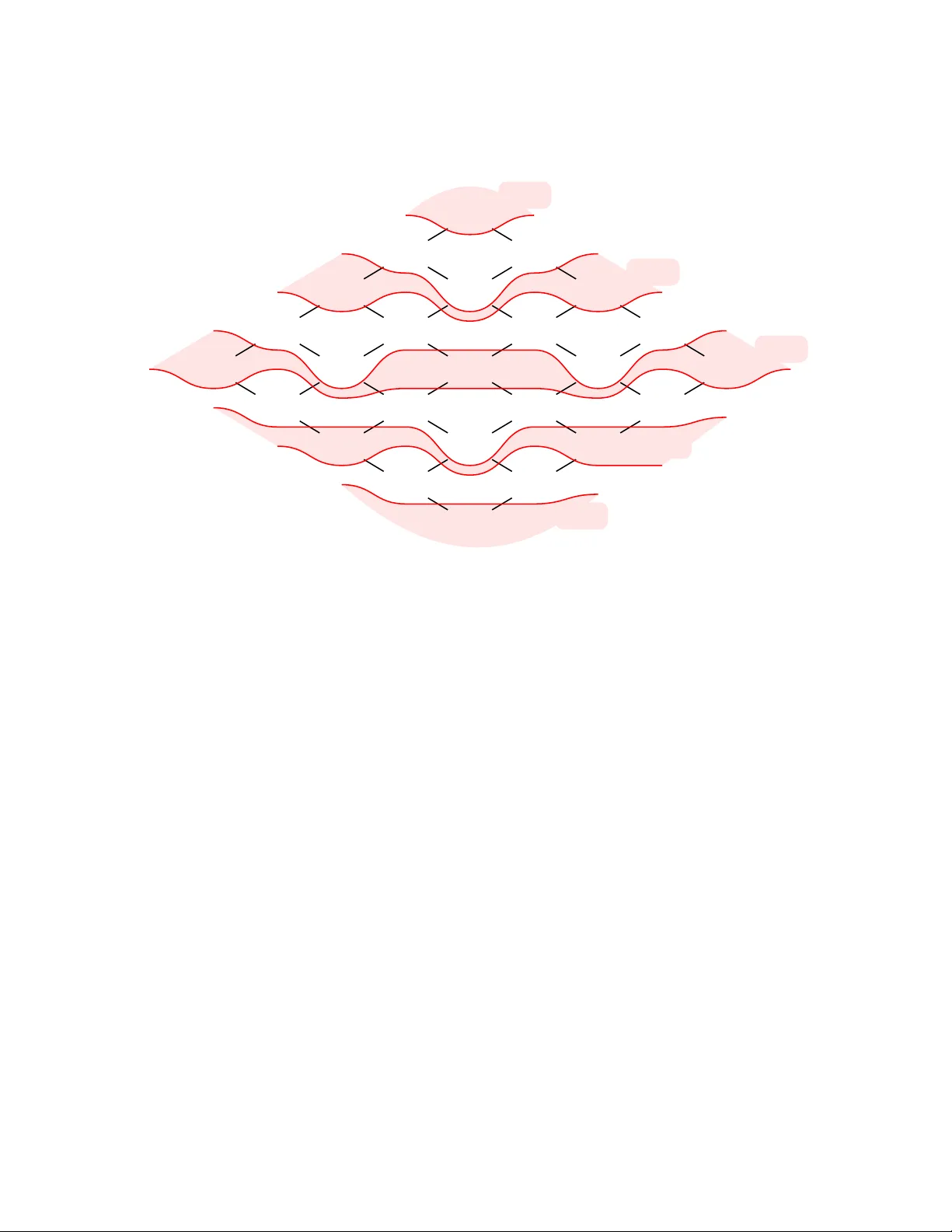
HO W CONCISE ARE CHAINS OF CO-B ¨ UCHI A UTOMA T A? R ¨ UDIGER EHLERS Clausthal Univ ersity of T echnology , Institute for Soft ware and Systems Engineering, Arnold- Sommerfeld-Straße 1, 38678 Clausthal-Zellerfeld, Germany Abstract. Chains of co-B¨ uc hi automata (COCO A) hav e recen tly been introduced as a new canonical model for representing arbitrary ω -regular languages. They can be minimized in p olynomial time and are hence an attractive language represen tation for applications in whic h normally , deterministic ω -automata are used. While it is kno wn ho w to build COCO A from deterministic parity automata, little is currently known ab out their relationship to automaton mo dels introduced earlier than COCOA. In this pap er, we analyze the conciseness of chains of co-B ¨ uc hi automata. W e provide three main results and give an ov erview of the implications of these results. First of all, we sho w that even in the case that all automata in the chain are deterministic, chains of co- B ¨ uc hi automata can b e exp onentially more concise than deterministic parity automata. W e then presen t t w o main results that together negativ ely answ er the question if this concisene ss is retained when p erforming Bo olean op erations (such as disjunction, conjunction, and complemen tation) o ver COCOA. F or the binary op erations, we show that there exist families of languages for whic h their application leads to an exp onential growth of the sizes of the automata. The families hav e the prop ert y that when representing them using deterministic parity automata, taking the disjunction or conjunction of the family elements only requires a p olynomial blow-up. W e finally show that an exp onential blow-up is also una voidable when complementing a COCOA, as this op eration can require redistributing with whic h colors words need to b e recognized. 1. Introduction Automata o ver infinite words are a classical mo del for representing the sp ecification of a reactiv e system. They augmen t temporal logics suc h as linear temp oral logic (L TL, [ Pn u77 ]) and linear dynamic logic (LDL, [ GV13 , FZ17 ]) b y pro viding an in termediate represen tation for a sp ecification that is structured in a wa y so that it can b e used directly in verification and syn thesis algorithms. While for classical model chec king of finite-state systems, non- deterministic automata with a B ¨ uc hi acceptance condition suffice, for some applications, suc h as reactiv e synthesis and probabilistic mo del chec king, richer automaton types are emplo y ed. In this con text, deterministic automata with parit y acceptance are particularly in teresting as when a sp ecification is giv en as such, the reactive synthesis problem o v er the sp ecification can b e reduced to solving a parity game based on the state space structure of the automaton [BCJ18]. ∗ This pap er is the extended version of a pap er with the same title published at GandALF 2025 [ Ehl25a ]. F unded by V olkswagen F oundation within its Momentum framework under pro ject no. 9C283. Preprint submitted to Logical Methods in Computer Science © R. Ehlers CC Creativ e Commons 2 R. EHLERS Unfortunately , translation pro cedures from temp oral logic to deterministic parit y au- tomata cannot av oid a substantial blow-up in the w orst case, whic h complicates employing them in reactiv e syn thesis. F or instance, for a specification in L TL, a doubly-exp onential w orst-case blo w-up is kno wn [ KR10 ]. How ev er, ev en for languages that do not require suc h h uge automata, curren t translation pro cedures for obtaining deterministic parit y automata can compute unnecessarily large automata, caused by them only applying heuristics for size minimization, as deterministic parity automaton minimization is NP-hard [ Sc h10 , ARE25 ], T o counter this problem, c hains of co-B ¨ uchi automata (COCOA) ha v e recen tly b een prop osed as a new mo del for ω -regular languages [ ES22a ]. In a COCO A, the language to b e represen ted is split in to a falling chain of co-B ¨ uc hi languages, where each of the co-B ¨ uchi languages is represented as a history-deterministic co-B¨ uchi automaton with tr ansition- b ase d ac c eptanc e (HD-tCBW). In this context, transition-based acceptance refers to the transitions being accepting or rejecting rather than the states. This particular type of co-B ¨ uc hi automata is minimizable in p olynomial time [ ARK22 ], so that eac h automaton in the chain can be minimized separately . T o employ these automata in a canonical and p olynomial-time minimizable mo del for arbitrary ω -regular languages, a canonical split of an ω -regular language to co-B ¨ uc hi automata was defined [ ES22a ]. COCOA can b e though t of as assigning a c olor to each word, just as deterministic parity automata do. A word then has a color of i (for some i ∈ N ) if the i th automaton in the chain accepts the word, but no automaton later in the c hain accepts the w ord. The core contribution of the COCOA definition is a concretization of which color should be assigned to each w ord, and this concretization is not based on some automaton represen tation of the language, but only on the language itself, called the natur al c olor of the resp ectiv e w ord. COCO A hav e already found first use in reactive syn thesis [ EK24a ], based on a pro cedure for translating deterministic parit y automata to COCOA [ ES22a ]. Given that p olynomial- time minimization is an attractiv e prop erty for future applications as well, it mak es sense to ha v e a closer lo ok at the prop erties of COCOA and their relationship to earlier automata t yp es, in particular in relation to deterministic parit y automata, whic h they hav e the p oten tial of replacing in some applications. In particular, w e need to understand their conciseness in relation to previous automaton mo dels, as doing so pro vides an indication of in which cases COCO A are a useful replacement in verification and syn thesis pro cedures that curren tly base on other automaton t ypes. F urthermore, with p olynomial-time minimization of COCOA av ailable, future applications of this representation for ω -regular languages may build sp ecification mo dels in a comp ositional w a y while minimizing the in termediate automata after eac h step. T o understand whether suc h an approac h can b e feasible, w e need to understand the complexit y of p erforming the usual Bo olean op erations on automata, most imp ortantly conjunction (language in tersection) and complemen tation. In this paper, we pro vide a study of the conciseness of COCO A. W e compare them against deterministic parity automata and analyze ho w p erforming Bo olean op erations on languages represen ted by COCOA affects their conciseness. Apart from summarizing ho w some existing results on deterministic co-B¨ uc hi automata transfer to the COCO A case, we pro vide three new COCOA-specific tec hnical results: (1) W e show that COCO A can be exp onentially more concise than deterministic parit y automata (DPW) even when the co-B ¨ uc hi languages in the COCOA are representable as small deterministic co-B ¨ uc hi automata and when the o verall language only has one residual language. While it w as previously kno wn that COCOA can be exp onentially HOW CONCISE ARE CHAINS OF CO-B ¨ UCHI A UTOMA T A? 3 more concise than deterministic parit y automata, this was due to the automata in the COCO A b eing history-deterministic, and HD-tCBW are known to be exp onentially more concise than deterministic automata (for some languages). The new result in this pap er sho ws that COCOA can b e exp onentially more concise than DPW even when not making use of history-determinism for the chain elements. Our results also imply that these sources of conciseness to not stack. (2) W e show that exp onential conciseness of COCOA o v er deterministic parity automata can b e lost when p erforming binary Bo olean op erations (suc h as conjunction or disjunction) on COCO A. In particular, such Bo olean op erations can require an exp onen tial gro wth in the n um b er of states ev en in cases in which for deterministic parity automata, such a gro wth is not necessary . (3) Finally , we prov e that p erforming complementation of COCOA, as a Bo olean op eration with only a single operand, also leads to an exponential blow-up in the w orst case. This is caused b y w ords with the same natural color in the uncomplemen ted COCO A p oten tially ha ving differen t natural colors in the complemen ted COCO A. Distinguishing b et w een suc h w ords can require distinguishing b etw een exp onentially many residual languages of the original COCO A in a single c hain elemen t of the complemen t COCO A, whic h shatters conciseness. All three results shed light on the fundamen tal properties of COCO A. In the first case, the example family of languages defined for the result sho ws that even with small automata in a c hain, complex liveness languages can b e comp osed. This even holds when the automata do not make use of the additional concisenes s of history-deterministic co-B¨ uchi automata. The second technical result shows that the prop ert y of a COCO A to hav e a n umber of residual languages that is exp onential in their size can b e lost when applying binary Boolean op erations. It hence demonstrates that future pro cedures for p erforming Bo olean operations on COCO A will need to ha v e an exp onential lo wer b ound on the sizes of the resulting COCO A. Finally , the third technical result demonstrates that for some op erations on COCO A, the residual languages of co-B ¨ uc hi automata that app ear late in a chain can hav e an effect on on the first co-B ¨ uc hi automaton of an output COCO A. This pap er is structured as follows: After stating some preliminaries, we give a summary of the ideas b ehind COCO A in Section 3. Section 4 summarizes the implications of known results on the conciseness of COCO A and provides the first new tec hnical result. Section 5 then con tains the low er bound on the blo w-up incurred b y binary Bo olean op erations on COCO A. The third technical result concerning the complement ation of COCO A is giv en in Section 6. The pap er closes with a discussion of the obtained results in Section 7. This paper is the extended version of a pap er with the same name published at the GandALF 2025 conference held in September 2025 in V alletta, Malta. It extends the confer- ence v ersion by the results in Section 6 (on the exp onential blo w-up when complementing COCO A) as w ell as by pro ofs for Lemma 5.4, Theorem 5.7, and Lemma 5.11. The pro of of Theorem 5.7 includes the newly app earing observ ations 5.8 to 5.10. Finally , some details w ere added to the pro of of Prop osition 5.13. 2. Preliminaries Languages: F or a finite set Σ as alphab et , let Σ ∗ denote the set of finite words o v er Σ, and Σ ω b e the set of infinite w ords ov er Σ. A subset L ⊆ Σ ω is also called a language . Given a language L and some finite w ord w ∈ Σ ∗ , we sa y that L | w = { w ′ ∈ Σ ω | w w ′ ∈ L } is the 4 R. EHLERS r esidual language of L o v er w . Given a w ord w = w 0 w 1 . . . ∈ Σ ω and some language L , we sa y that an infinite word w ′ = w 0 w 1 . . . w i ˜ w w i +1 w i +2 . . . results from a r esidual language invariant inje ction of ˜ w at p osition i ∈ N if L | w 0 ...w i = L | w 0 ...w i ˜ w . Automata: Some languages, in particular the ω -r e gular languages , can b e represen ted b y p arity automata . W e only consider automata with tr ansition-b ase d ac c eptanc e in this pap er. These are tuples of the form A = ( Q, Σ , δ, q 0 ) in whic h Q is a finite set of states, Σ is the alphab et, q 0 ∈ Q is the initial state of the automaton, and δ ⊆ Q × Σ × Q × N is its tr ansition r elation . Giv en a w ord w = w 0 w 1 . . . ∈ Σ ω , w e say that w induces an infinite run π = π 0 π 1 . . . ∈ Q ω together with a sequence of c olors ρ = ρ 0 ρ 1 . . . ∈ N ω if we ha v e π 0 = q 0 and for all i ∈ N , we ha v e ( π i , w i , π i +1 , ρ i ) ∈ δ . In this pap er, we only consider automata that are input-c omplete , i.e., for whic h for each state/letter combination ( q , x ), there exists at least one pair ( q ′ , c ) with ( q , x, q ′ , c ) ∈ δ . W e furthermore only consider automata for which the color c do es not depend on the transition taken, so that for each ( q , x ), there is only one v alue c with ( q , x, q ′ , c ) ∈ δ for some q ′ . A run is accepting if for the corresp onding color sequence ρ (whic h is unique), we ha v e that the lo w est color o ccurring infinitely often in it is ev en. This color is also called the dominating c olor of the run. A w ord is accepted by A if there exists an accepting run for it. The language of A , written as L ( A ), is the set of w ords with accepting runs. An automaton is said to b e deterministic if for ev ery ( q , x ) ∈ Q × Σ, there exists exactly one combination ( q ′ , c ) ∈ Q × N with ( q , x, q ′ , c ) ∈ δ . In such a case, w e also refer to the dominating color of the unique run as the color with whic h the automaton r e c o gnizes the w ord. W e sa y that A is a c o-B¨ uchi automaton if the only colors occurring along transitions in A are 1 and 2. A c o-B ¨ uchi language is a language of some co-B ¨ uc hi automaton. W e sa y that an automaton A represen ts the disjunction of some automata A 1 and A 2 if L ( A ) = L ( A 1 ) ∪ L ( A 2 ). It represen ts the c onjunction of A 1 and A 2 if L ( A ) = L ( A 1 ) ∩ L ( A 2 ). The size of an automaton is defined to b e the num ber of its states. History-deterministic automata: Parit y automata, as defined ab ov e, are not neces- sarily deterministic. W e consider history-deterministic co-B ¨ uc hi automata (HD-tCBW) in particular. F or them, there exists some advic e function f : Σ ∗ → Q suc h that for eac h w ord, if and only if w = w 0 w 1 . . . ∈ L ( A ), the sequence q 0 f ( w 0 ) f ( w 1 w 2 . . . ) . . . is a v alid accepting run of the automaton. Abu Radi and Kupferman [ ARK22 ] show ed how to minimize such automata, and in minimized automata, for ev ery state/letter com bination, all transitions ha v e the same color (so that the assumption from abov e is justified). History-deterministic co-B ¨ uchi automata are also called go o d-for-games co-B ¨ uchi automata in the literature. The sets of languages representable by HD-tCBW and deterministic co-B ¨ uc hi automata are the same. Deterministic parity automata (DPW) are ho w ever strictly more expressiv e. W e also sometimes represen t automata in a graphical notation, where states are circles, transitions are arrows b etw een circles, and the initial state is mark ed by an arro w from a dot. In co-B ¨ uchi automata, dashed arro ws represent r eje cting tr ansitions (with color 1), while the solid arro ws represent ac c epting tr ansitions (with color 2). F or parit y automata, the edges are labeled by the color n um b ers in addition to their alphabet letters. SCCs: Given an automaton A = ( Q, Σ , δ, q 0 ), we sa y that some tuple ( Q ′ , δ ′ ) with Q ′ ⊆ Q and δ ′ ⊆ δ is a str ongly c onne cte d c omp onent (SCC) of A if for eac h q , q ′ ∈ Q ′ , there exists a sequence of transitions within δ ′ for reac hing q ′ from q . Similarly , ev ery transition within δ ′ is used in some suc h sequence. HOW CONCISE ARE CHAINS OF CO-B ¨ UCHI A UTOMA T A? 5 T emp oral logic and ω -regular expressions: Line ar temp or al lo gic (L TL, [ Pn u77 ]) is a formalism for expressing (some) languages ov er Σ = 2 AP for a set AP . It is known that L TL can b e translated to deterministic parity automata of size doubly-exp onential in the sizes of the L TL properties, and this blo w-up b ound is tigh t (see, e.g., [ EKRS17 ]). W e also use ω -r e gular expr essions for stating some languages. These extend classical regular expressions b y a symbol for infinite rep etition, namely ω . 3. A shor t introduction to chains of co-B ¨ uchi a utoma t a Chains of co-B ¨ uc hi automata (COCOA, used as b oth the singular and plural form) provide a canonical represen tation for arbitrary ω -regular languages. Let a language L o v er an alphabet Σ b e given. The starting p oin t for a COCO A representation of L is the decomp osition of Σ ω in to a chain of languages L 1 ⊃ L 2 ⊃ . . . ⊃ L n . A word w is in the language represen ted b y the c hain, also denoted as L ( L 1 , . . . , L n ) henceforth, if the highest index i suc h that w ∈ L i is ev en or w / ∈ L 1 . Eac h language L i (for some 1 ≤ i ≤ n ) represen ts the set of w ords whose natur al c olor (with respect to L ) is at least i . The natural color of a w ord is the minimal color in which a word is at home , whic h in turn is defined as follo ws: Definition 3.1 ([ ES22a ], Def. 1) . Let L b e a language and i ∈ N . W e say that a word w is at home in a color of i if there exists a sequence of injection p oints J ⊂ N suc h that for all w ords w ′ that result from injecting residual language inv ariant words at word p ositions in J in to w , we either ha ve that • w ′ is at home in a color strictly smaller than i , or • both w and w ′ are in L and i is even, or b oth w and w ′ are not in L and i is o dd. Note that in the case of i = 0, only the sec ond case can apply . The concept of the natural color of a w ord generalizes the idea of colors in a parit y automaton in a w a y that is agnostic to the concrete c hoice of automaton for representing the language. The inductive definition ab ov e starts from color 0, so that the languages at eac h lev el are uniquely defined. With this definition, not only is a c hain L 1 , . . . , L n of languages uniquely defined for eac h ω -regular language L , but we also hav e that for each 1 ≤ i ≤ n , the language L i is a co-B ¨ uc hi language [ ES22a ], i.e., it can b e enco ded in to a co-B ¨ uchi automaton. Hence, w e can represen t the c hain of languages L 1 , . . . , L n b y a c hain of history-deterministic co-B ¨ uchi automata A 1 , . . . , A n . Each of these automata can b e minimized and made canonical in p olynomial time [ ARK22 ]. Since the representation of L as a chain of co-B ¨ uchi languages L 1 , . . . , L n is also canonical, we obtain a canonical representation of L . Details on the COCOA language represen tation can be found in the pap er introducing COCO A [ ES22a ] and in a video recording of a presen tation of the pap er’s concepts with additional examples [ES22b]. 3.1. An example COCOA. Figure 1 sho ws an example COCO A consisting of three automata, all ov er the alphab et Σ = { a, b, c } , together representing some language L . The c hain’s language con tains the words with an infinite num ber of a letters (with a natural color of 0) as w ell as words that satisfy three conditions: • the word ultimately only consists of b s and c s, • ev en tually , ev ery b is immediately follo w ed b y a c , and 6 R. EHLERS q 0 a b, c q 1 q 2 a a, b a, b c b c q 3 q 4 b b, c c a a A 1 A 2 A 3 Figure 1: An example COCO A • if there is a finite even num b er of a letters in the w ord, there are infinitely many b s. W ords satisfying these three conditions but only having finitely man y a s ha v e a natural color of 2. W ords that are not in L ha v e natural colors of 1 or 3. The COCOA hence recognizes w ords with four differen t natural colors, and it follo ws from the existing translation pro cedure from deterministic parity automata to COCO A [ ES22a ] that every deterministic parit y automaton for this language also needs at least four colors. The colors represen t ho w often by injecting residual language inv ariant finite words an infinite n um b er of times, words can alternate betw een b eing in L or not. In this example, the w ord c ω has color 3 and is hence not in L . By injecting b s such that the resulting word nev er has tw o b letters in a ro w, the word b ecomes con tained in L . By subsequen tly injecting bb infinitely often, the w ord lea v es L again. Finally , b y then injecting a infinitely often, the final w ord is rejected b y A 1 and hence in L . The ov erall language L represen ted b y the COCO A has t w o residual languages, but only A 3 trac ks them and not A 2 or A 1 . The relev ance of the injection p oin t set J in Definition 3.1 is not exemplified in the COCO A in Figure 1, as for all concretely giv en COCO A discussed in the follo wing sections, this set can b e freely chosen and is hence not of relev ance. 3.2. Some additional definitions and notes in the context of COCOA. F or con v e- nience, whenev er we are dealing with a COCO A A 1 , . . . , A n in the following, we will assume that A 0 = Σ ω and A n +1 = ∅ , as this a v oids dealing with special cases in some constructions while not affecting the definition of the COCOA’s language. T o a v oid cluttering the exposi- tion in the follo wing, the w ord inje ction alw a ys refers to a residual language inv ariant word injection. When a word w ′ is the result of a residual language in v ariant word injection into some word w , we say that w ′ extends w . W e define the sum of the automaton sizes in a COCO A to b e the size of the COCOA. The condition for a chain of co-B ¨ uc hi automata A 1 , . . . , A n to represent a language L can b e equiv alen tly stated as requiring A 1 to reject the w ords with a natural color of 0 (with resp ect to L ) and that for each 1 ≤ i ≤ n , the w ords accepted b y A i but rejected b y A i +1 (if i < n ) are the ones with a natural color of i (with resp ect to L ). The definitions ab ov e also imply that the natural language of a w ord w can only decrease b y injecting letters into w (if the set J of positions to inject at is c hosen according to the requiremen ts of Definition 3.1). 4. On the conciseness of COCOA In this section, we will relate the sizes of deterministic parity automata to the sizes of COCO A (for the same languages). W e summarize the implications of existing results on the conciseness of COCOA and augment them b y new insights. HOW CONCISE ARE CHAINS OF CO-B ¨ UCHI A UTOMA T A? 7 DPW conciseness o v er COCOA. F or starters, the translation by Ehlers and Schew e [ ES22a ] for obtaining a COCO A from a deterministic parity automaton with n states and c colors yields COCO A with at most c history-deterministic co-B ¨ uchi automata, each having at most n man y states. Even more, since the construction b y Ehlers and Schew e minimizes the num b ers of colors on-the-fly , this fact also holds for c b eing the minimal num ber of colors that any DPW for the language has. Hence, a COCO A can only be polynomially larger than a deterministic parity automaton for the same language, and the factor b y whic h it can be larger is bounded by the n umber of colors. This b ound is also tigh t: Prop osition 4.1 (App ears to not hav e been stated previously elsewhere) . L et inf b e the function mapping a se quenc e to the set of elements o c curring infinitely often in the se quenc e. F or every k ∈ N , the language L k = { w ∈ { 1 , . . . , k } ω | min ( inf ( w )) is even } c an b e r epr esente d by a deterministic p arity automaton with a single state and k c olors, but every COCO A for the same language ne e ds at le ast k levels (with one state on e ach level). Pr o of. A deterministic parit y automaton with a single state can b e built with self-lo ops for all letters that use the letter as the respective color. The existing pro cedure for translating a DPW to a COCO A [ ES22a ] then builds a COCOA A 1 , . . . , A k for this language in which on eac h lev el i , the words ending with ( { i, . . . , k } ) ω are accepted. Ov erall, w e ha v e a blow-up b y a factor of k , while k is the num b er of colors in the deterministic parit y automaton that w e start with. L TL → COCO A. Before discussing that COCOA can also be more concise than DPW, w e lo ok at an area in which they ha v e the same conciseness. In particular, a translation from L TL to automata has the same worst-case blow-up lo wer b ound for DPW and COCO A, namely doubly-exponential. This follows from an existing pro of of the doubly-exp onen tial low er bound for translating from L TL to deterministic B ¨ uchi automata (whenev er p ossible). Kupferman and Rosenberg ga v e m ultiple v ersions of such pro ofs for the cases of fixed and non-fixed alphab ets [ KR10 ]. All pro ofs ha v e in common that a family of languages is built that has a doubly-exp onential n um b er of residual languages (in the sizes of the L TL form ula). This can b e seen from the fact that their languages only contain words that end with # ω for some c haracter # in the alphab et, and hence only a doubly-exp onential blow-up in the num ber of residual languages can cause the automata to be so big. The complemen ts of these languages are represen table by co-B ¨ uc hi automata. F urther- more, minimal HD-tCBW are semantic al ly deterministic , meaning that for each state q in the automaton A = ( Q, Σ , δ, q 0 ) reac hable under a prefix w ord ˜ w , w e hav e L (( Q, Σ , δ, q )) = { w ∈ Σ ω | ˜ w w ∈ L ( A ) } . If there is a doubly-exp onen tial n um b er of residual languages in A , w e ha v e that A then needs at least a doubly-exp onen tial n um b er of states. As a consequence, COCO A for these languages also need to b e of doubly-exp onen tial size, as a COCO A for a co-B ¨ uchi language consists of only a single HD-tCBW for the language. COCO A conciseness o v er DPW. Let us no w iden tify if and how COCOA can b e more concise than DPWs. F or starters, it was shown that HD-tCBW can be exponentially more concise than deterministic co-B¨ uchi automata [ KS15 ]. Since parity automata are co-B ¨ uchi type [ KMM06 ], deterministic co-B ¨ uc hi word automata cannot b e less concise than deterministic parit y automata. Since furthermore COCOA for co-B ¨ uchi languages consist of 8 R. EHLERS q j,k 0 q j,k 1 x j +1 , . . . , x k +1 y 1 , . . . , y k +1 x 1 , . . . , x k +1 y j +1 , . . . , y k +1 x 1 , . . . , x j y 1 , . . . , y j Figure 2: A deterministic co-B ¨ uchi automaton (parametrized for some k ∈ N and 1 ≤ j ≤ n ) for the co-B ¨ uc hi languages used in the pro of of Theorem 4.3 a single history-deterministic co-B ¨ uchi automaton, w e o v erall obtain that COCOA can be exp onen tially more concise than DPW. W e can also employ some existing results for showing that COCOA cannot b e doubly- exp onen tially more concise than deterministic parit y automata: Prop osition 4.2 (Already appearing in abbreviated form in [ EK24b ] based on remarks in [ EK24a ]) . L et ( A 1 , . . . , A k ) b e a COCO A. Ther e exists a deterministic p arity automaton for the same language that has a numb er of states that is exp onential in | A 1 | + . . . + | A k | . Pr o of. T ranslating a non-deterministic co-B ¨ uchi automaton to a deterministic co-B¨ uchi automaton can b e performed with an exp onen tial blow-up [ BKR10 ] using the Miy ano- Ha yashi construction [ MH84 ]. Doing so for each automaton in the COCOA yields a sequence of deterministic co-B¨ uc hi automata D 1 , . . . , D k , where for eac h 1 ≤ j ≤ k , w e ha v e |D j | ≤ 3 | A j | . Let for each 1 ≤ j ≤ k b e D j = ( Q j , Σ , δ j , q j 0 ). W e can construct a deterministic parit y automaton P = ( Q P , Σ , δ P , q P 0 ) for the language of the COCOA as follo ws (using a construction from [EK24b]): Q P = Q 1 × . . . × Q k δ P (( q 1 , . . . , q k ) , x ) = (( q ′ 1 , . . . , q ′ k ) , c ) s.t. ∃ c 1 , . . . , c k ∈ N . ( q ′ 1 , c 1 ) ∈ δ 1 ( q 1 , x ) , . . . , ( q ′ k , c k ) ∈ δ k ( q k , x ) , c = min( { k } ∪ { j ∈ { 0 , . . . , k − 1 } | c j +1 = 2 } ) q P 0 = ( q 1 0 , . . . , q k 0 ) T o see that P has the right language, assume that for some w ord w , its natural color is j for some 0 ≤ j ≤ k . Then, all automata D 1 , . . . , D j accept the w ord while the automata D j +1 , . . . , D k reject the word. Since P sim ulates all these automata in parallel, infinitely often the color c along transitions in the run for w will b e j , but only finitely often the color will b e in { 0 , . . . , j − 1 } . This means that P accepts w if and only if j is ev en, whic h pro v es that P has the righ t language. W e hav e that |P | ≤ |D 1 | · . . . · |D k | ≤ 3 | A 1 | · . . . · 3 | A k | = 3 | A 1 | + ... + | A k | . Overall, the blow-up of the translation is hence exponential. So at a first glance, the conciseness of COCOA ov er DPW has b een c haracterized to precisely singly-exponential. What cannot b e easily deriv ed from existing results, ho w ever, is why exactly a COCOA can b e exponentially more concise than a deterministic parity automaton. In particular, it ma y b e p ossible that there are also factors other than the conciseness of history-deterministic co-B¨ uc hi automata that con tribute to the conciseness of COCO A, but they do not stack . HOW CONCISE ARE CHAINS OF CO-B ¨ UCHI A UTOMA T A? 9 (for q 1 , 2 0 ) (for q 1 , 2 1 ) (for q 2 , 2 0 ) (for q 2 , 2 1 ) (for q 2 , 2 0 ) (for q 2 , 2 1 ) q 0 q 1 q 2 q 3 x 2 , x 3 , y 3 : 2 x 1 , x 2 , x 3 , y 3 : 2 x 3 , y 1 , y 2 , y 3 : 2 x 3 , y 2 , y 3 : 2 x 1 : 0 x 1 : 0 y 1 : 0 y 1 : 0 x 2 : 1 y 1 , y 2 : 1 x 1 , x 2 : 1 y 2 : 1 Figure 3: A minimal DPW for L ( C 2 ) with a marking of ho w the states map to combinations of states in a COCOA for the same language. T ransitions with a color of 1 are dra wn as dotted. It turns out that this is the case, as w e show next. Ev en in the case that the co-B ¨ uc hi languages on each level of a COCO A are representable as tw o-state deterministic co-B ¨ uc hi automata, a parity automaton for the represen ted language may need exp onentially more states. Theorem 4.3. Ther e exists a family of COCOA C 1 , C 2 , . . . for which for e ach COCO A C k = ( A k 1 , . . . , A k k ) , we have that for al l 1 ≤ j ≤ k , the history-deterministic c o-B¨ uchi automaton A k j only has two states, the language of C k only has a single r esidual language, and every deterministic p arity automaton P k for the language of C k ne e ds at le ast 2 k states. F or the proof of this theorem, we first define a suitable family of languages. Definition 4.4. F or ev ery k ∈ N , w e define C k = ( A k 1 , . . . , A k k ) so that the co-B ¨ uc hi automata in the COCOA hav e the joint alphab et Σ k = { x 1 , . . . , x k +1 , y 1 , . . . , y k +1 } and suc h that for eac h 1 ≤ j ≤ k , a deterministic co-B ¨ uc hi automaton for A k j can be given as in Figure 2. In tuitiv ely , every automaton A k i in a COCOA C k accepts those words in which either the letters x 1 . . . x i app ear only finitely often or the letters y 1 . . . y i app ear only finitely often. Figure 3 depicts a minimally sized DPW P 2 for L ( C 2 ) and pro vides some in tuition on why a DPW for suc h a COCOA m a y need to b e large: in order to ensure that w ords are accepted b y the DPW that are rejected by A 2 1 , the DPW’s state set needs to b e split in to those states corresp onding to state q 1 , 2 0 (on the left) and those corresp onding to q 1 , 2 1 (on the right), so that a run switc hing b et w een these infinitely often is accepting. This is implemented by the transitions b etw een the left and right parts of the the DPW having a color of 0, whic h is then the dominating color of the run. Within e ach of these separate state sets, how ev er, w e also need a split b et w een states corresp onding to q 2 , 2 0 (the bottom tw o states in the DPW) and those corresp onding to q 2 , 2 1 (the top tw o states in the DPW) to detect when a w ord should b e rejected b y the DPW due to it not b eing accepted b y A 2 2 . T ransitions b etw een b ottom and top states ha v e a color of 1 to implement that the word is rejected by P 2 if the w ord is rejected b y A 2 2 (but accepted by A 2 1 ). Such a nesting of states from different co-B ¨ uchi automata in C k is indeed unav oidable, as we show next in order to prov e Theorem 4.3. W e employ ideas from the study of r er ailing automata [ Ehl25b ], which generalize deterministic parit y automata. In particular, w e study ho w strongly connected comp onents 10 R. EHLERS in a parity automaton for L ( C k ) need to b e neste d . The main observ ation used for pro ving Theorem 4.3 that can b e obtained in this w a y is captured in the follo wing lemma: Lemma 4.5. L et ( Q ′ , δ ′ ) b e a str ongly c onne cte d c omp onent in P k c onsisting only of r e achable states and for some 1 ≤ i < k and 1 ≤ j < k , we have that for any wor d w in which only letters fr om x i , . . . , x k +1 and y j , . . . , y k +1 o c cur, a run for w starting in any state in Q ′ stays in ( Q ′ , δ ′ ) . Then, we have that ther e ar e disjoint r e achable SCCs ( Q ′ x , δ ′ x ) and ( Q ′ y , δ ′ y ) within ( Q ′ , δ ′ ) s.t. • for any wor d w ′ with only letters fr om x max( i,j )+1 . . . x k +1 and y j , . . . , y k +1 , any run fr om a state q ∈ Q ′ x for w ′ stays in ( Q ′ x , δ ′ x ) , and • for any wor d w ′ with only letters fr om x i . . . x k +1 and y max( i,j )+1 , . . . , y k +1 , any run fr om a state q ∈ Q ′ y for w ′ stays in ( Q ′ y , δ ′ y ) . Pr o of. W e can find the SCC ( Q ′ x , δ ′ x ) as follows: Consider the set of transitions T x in ( Q ′ , δ ′ ) for letters from x max( i,j )+1 . . . x k +1 , y j , . . . , y k +1 . W e use a subset of T x that forms a transition set of an SCC as δ ′ x . Such a subset has to exist as all transitions from states in Q ′ for letters in the considered letter set stay in Q ′ , and Q ′ together with T x decomp oses in to SCCs. W e find the SCC ( Q ′ y , δ ′ y ) in the same w a y but for the letters x i . . . x k +1 , y max( i,j )+1 , . . . , y k +1 . The SCCs ( Q ′ x , δ ′ x ) and ( Q ′ y , δ ′ y ) hav e the needed prop ert y: all outgoing transitions for letters in the considered character sets are within δ ′ x / δ ′ y , resp ectiv ely , as they consist of all transitions for the respective c haracters within the SCCs, and due to how they were chosen, there are no outgoing transitions in P k for the resp ective letter set. T o see that ( Q ′ x , δ ′ x ) and ( Q ′ y , δ ′ y ) are disjoint, consider first a w ord w x con taining all letters from x max( i,j )+1 . . . x k +1 , y j , . . . , y k +1 infinitely often and for whic h from some q ′ x ∈ Q ′ x , a run for w x tak es all transitions in δ ′ x infinitely often. Since ( Q ′ x , δ ′ x ) is an SCC and contains transitions for all these letters, such a w ord has to exist. Note that b y the definition of C k , we hav e that w x is in the language of C k if and only if max ( i, j ) is even. W e can build a similar word w y for x i . . . x k +1 , y max( i,j )+1 , . . . , y k +1 . It is also in the language of C k if and only if max( i, j ) is ev en. If ( Q ′ x , δ ′ x ) and ( Q ′ y , δ ′ y ) would ov erlap, w e could build a word/run com bination w mix / π mix from w x and w y b y taking the prefix run/w ord of w x un til reaching the join t state q mix ∈ Q ′ x ∩ Q ′ y , removing the stem of w y (i.e., the c haracters until when the resp ectiv e run reac hes q mix ), and then switching b et w een the w ords whenever q mix is reached along the run for w mix . The resulting w ord w mix con tains all letters from x i . . . x k +1 , y j , . . . , y k +1 infinitely often and the run for the w ord takes all transitions in δ ′ x ∪ δ ′ y infinitely often. This means that the dominating color of the run of w mix is the least dominating color of runs induced b y w x and w y , respectively . By the definition of C k , whether w mix is in the language of C k needs to differ, how ev er, from whether w x and w y are in the language of C k , as w mix is in C k if and only if max ( i, j ) is o dd. Hence, to a v oid either w mix , w x , or w y to b e recognized with a color that has the wrong ev enness, we hav e that Q ′ x and Q ′ y need to b e disjoint. This lemma can b e used in an induction argumen t o v er the size of P k : Lemma 4.6. L et ( Q ′ , δ ′ ) b e a str ongly c onne cte d c omp onent in P such that fr om any state q ∈ Q ′ , for any wor d w in which only letters fr om x i , . . . , x k +1 , y j , . . . , y k +1 o c cur, a run for w starting in q stays in ( Q ′ , δ ′ ) (for some 1 ≤ i ≤ k and 1 ≤ j ≤ k ). We have that Q ′ is of size at le ast 2 k − max( i,j ) . HOW CONCISE ARE CHAINS OF CO-B ¨ UCHI A UTOMA T A? 11 Pr o of. W e prov e the claim by induction ov er max ( i, j ), starting from the case max ( i, j ) = k and progressing backw ards. F or the induction basis ( max ( i, j ) = k ), this claim is trivially true, as at least one state is needed in ( Q ′ , δ ′ ). F or the induction step, consider a concrete com bination of ( i, j ) with i < k and j < k (so that the induction basis do es not apply). Lemma 4.5 states that there are distinct sub-SCCs ( Q ′ x , δ ′ x ) and ( Q ′ y , δ ′ y ) within ( Q ′ , δ ′ ) for letters from x max( i,j )+1 . . . x k +1 , y j , . . . , y k +1 and x i . . . x k +1 , y max( i,j )+1 , . . . , y k +1 , respectively . By the induction hypothesis, these eac h ha v e sizes of 2 k − max( i,j ) − 1 . As ( Q ′ , δ ′ ) has b oth of these as distinct sub-SCCs, Q ′ needs to hav e at least 2 k − max( i,j ) states. W e are no w ready to prov e Theorem 4.3. Note that it has not b een pro v en y et that C k is actually a canonical COCO A of the language it represen ts, which requires that ev ery w ord is accepted with its natural color w.r.t. the language of C k . Hence, the follo wing pro of starts with establishing this fact. Pr o of of The or em 4.3. W e first prov e that C k is the COCO A of some language (for every k ∈ N ). T o see this, consider first some word w that is rejected b y A k 1 . Then, b oth x 1 and y 1 app ear in the word infinitely often. Injecting additional letters does not change that the w ord is rejected, and hence w ords rejected by A k 1 ha v e a natural color of 0. F or the other automata, w e sho w b y induction that if an automaton A k i is the one with smallest index accepting some w ord w , then the word has a natural color of i w.r.t. the language of C k . So let us assume that w is accepted by A k i but rejected by A k i +1 (if i < k ). Then the w ord either con tains x i +1 infinitely often and all characters x 1 , . . . , x i only finitely often, or y i +1 infinitely often and all c haracters y 1 , . . . , y i only finitely often. An y injection either main tain this prop erty (hence keeping whether the w ord is in the language of C k ) or injects characters from x 1 , . . . , x i or y 1 , . . . , y i infinitely often, and then the resulting w ord has a natural color that is strictly smaller. F or pro ving the size b ound, applying Lemma 4.6 on x 1 , . . . , x k +1 , y 1 , . . . , y k +1 and an y SCC of ( Q, δ ) without outgoing edges yields that at least 2 k man y states are needed for P k . Note that such an SCC alw a ys exists. W e note that for the family of languages defined in this section, the size b ound of Theorem 4.3 is actually tigh t, as by generalizing the construction depicted in Figure 3, we can obtain parity automata P k of size exactly 2 k . 5. COCO A disjunction/conjunction can ca use an exponential blow-up W e ha ve seen in the previous section that COCOA can b e exp onen tially more concise than deterministic parit y automata. But how brittle is this conciseness? In particular, can it b e that a language can b e represented concisely with COCO A (when compared to a DPW represen tation), but when pro cessing the language, conciseness is shattered by the op eration p erformed on the language? In turns out that this is indeed the case when considering conjunction and disjunction op erations on COCOA, as w e sho w in this section. W e define t wo families of languages that can b e concisely represented and prov e that when taking their conjunction or disjunction, an exp onential blow-up is una v oidable for this family . In con trast, conjunction or disjunction can be p erformed with p olynomial blow-up when using a DPW representation for this family of languages. 12 R. EHLERS q 0 q 1 X i X i X 1 , . . . , X i − 1 , X i +1 , . . . , X k , Y 1 , . . . , Y k , a 4 k − 2 i +2 , . . . , a 4 k − 1 a 0 . . . a 4 k − 2 i +1 X 1 , . . . , X i − 1 , X i +1 , . . . , X k , Y 1 , . . . , Y k , a 4 k − 2 i +1 , . . . , a 4 k − 1 a 0 . . . a 4 k − 2 i Figure 4: A deterministic co-B ¨ uc hi automaton for the language L k i . Rejecting transitions are dashed. W e note that the blow-up is unrelated to any automaton size increase p otentially caused b y disjunction or conjunction op erations on HD-tCBW, of whic h the COCO A are comp osed. Rather, the change in conciseness is caused b y a restructuring of ho w the language to represen t is mapp ed to the COCO A levels. W e also note that in the general case, taking the conjunction or disjunction of DPWs has an unav oidable exp onential blow-up [Bok18]. W e start by introducing the first family of languages { L k } k ∈ N that hav e COCOA of size p olynomial in k , but for whic h the num ber of residual languages is exp onential in k . Definition 5.1. Let k ∈ N b e giv en. W e set Σ = { X 1 , . . . , X k , Y 1 , . . . , Y k , a 0 , . . . , a 4 k − 1 } and define L k = L ( L k 1 , . . . , L k n ) for the following sequence of language L k 1 , . . . , L k k , where 1 ≤ i ≤ k : L k i = ((Σ \ { X i } ) + X i (Σ \ { X i } ) ∗ X i ) ∗ ( a 0 + . . . + a 4 k − 2 i +1 ) ω + Σ ∗ ( a 0 + . . . + a 4 k − 2 i ) ω Eac h language L k i only includes words that even tually only con tain lo w er-case letters. Whic h such words are in the language dep ends on which low er-case letters are infinitely often con tained, and their order do es not matter. If the num ber of X i letters at the b eginning of the word is ev en, then the set of c haracters that can app ear infinitely often in the w ord is slightly larger by also including a 4 k − 2 i +1 . F or all L k i , the set of letters that ma y o ccur infinitely often is strictly larger than for L k i +1 . Whether the num ber of X i letters in a word is ev en or o dd is only relev an t for L k i , but not for L k j for i = j . W e will next show that • eac h language L k i is a co-B¨ uchi language, and there exists a deterministic co-B ¨ uc hi automaton for L k i with 2 states, and • Σ ω has words with natural colors of 0 . . . k and L k i accepts exactly the words with a natural color of i or more (w.r.t. L k ) – hence, the co-B ¨ uc hi automata for L k 1 , . . . , L k k together form a v alid COCO A. Lemma 5.2. L et L k i b e a language as define d in Def. 5.1. Ther e exists a deterministic c o-B ¨ uchi automaton with tr ansition-b ase d ac c eptanc e for L k i with two states. Pr o of. The automaton sho wn in Figure 4 accepts the desired language. W e note that there does not exist a smaller history-deterministic (or deterministic) automaton for the same language as there are t wo residual languages in the automaton: the language of state q 0 includes ( a 4 k − 2 i +1 ) ω , whereas the language of state q 1 do es not. As Abu Radi and Kupferman hav e sho wn that ev ery co-B¨ uc hi language has a smallest HD-tCBW in whic h every state is lab eled by its residual language [ ARK22 ], we hence kno w that there do es not exist a one-state HD-tCBW for this language. HOW CONCISE ARE CHAINS OF CO-B ¨ UCHI A UTOMA T A? 13 An in teresting property of the definition is that the o v erall ω -regular language induced b y the c hain of languages has a n umber of residual languages that is exp onential in the n um b er of automaton states in the c hain. Lemma 5.3. The numb er of r esidual languages of L k is 2 k . In p articular, ther e is one r esidual language for e ach c ombination of whether letter X i has b e en se en an even or o dd numb er of times so far (for 1 ≤ i ≤ k ). Pr o of. T o prov e the claim, we need to show that for each t w o prefix words w ′ 1 ∈ Σ ∗ and w ′ 2 ∈ Σ ∗ , if w ′ 1 and w ′ 2 differ on the evenness of the n um b er of X i c haracters (for some 1 ≤ i ≤ k ), there exists an infinite w ord w ∈ Σ ω suc h that whether w ′ 1 w ∈ L k differs from whether w ′ 2 w ∈ L k . Let 1 ≤ i ≤ n b e such that, without loss of generalit y , the n um b er of X i c haracters in w ′ 1 is ev en while the num ber of X i c haracters in w ′ 2 is odd. Then, w = ( a 4 k − 2 i +1 ) ω is suc h a word. By the definition of L k i and L k i +1 , we hav e that w ′ 1 w ∈ L k if and only if i is even. By the definition of L k i and L k i − 1 , w e hav e that w ′ 2 w ∈ L k if and only if i is o dd. Before defining the COCO A to combine the one for L k with, w e need to pro ve that a sequence of co-B¨ uchi automata for L k 1 , . . . , L k k is indeed a COCO A for L k , i.e., that it recognizes eac h word with its natural color. Lemma 5.4. L et k ∈ N and L k 1 , . . . , L k k b e languages define d for k ∈ N ac c or ding to Def. 5.1. We have that every language L k i c ontains exactly the wor ds that have a natur al c olor of i r e gar ding L k . Pr o of. First of all, note that for every i ∈ N , w e hav e that L k i ⊃ L k i +1 (if i < k ). This is b ecause L k i con tains all w ords ending with ( a 0 + . . . + a 4 k − 2 i ) ω whereas all w ords con tained in L k i +1 need to end with ( a 0 + . . . + a 4 k − 2( i − 1)+1 ) ω . Thus, we hav e L k 1 ⊃ . . . ⊃ L k k . W e no w prov e by induction that for eac h 1 ≤ i ≤ k , the language L k i con tains exactly the w ords whose natural color regarding L k is at least i . Induction b asis: Let w b e a word. W e need to sho w that exactly the words w ∈ L k for whic h every sequence of injections leading to a w ord w ′ that has w ′ ∈ L k as well are the ones not in L k 1 . As all concerned languages only care ab out the letters o ccurring along a w ord, but not wher e they o ccur in a w ord, we do not ha ve to reason o v er the set of indices at whic h residual language in v arian t words are injected in to w . ⇒ : So let w b e a w ord not in L k 1 . W e need to sho w that then for a word w ′ that extends w , w e hav e w ′ ∈ L k as w ell. W e split on the p ossible reasons for why we can ha v e w / ∈ L k 1 . • If there are infinitely many letters from X 1 , . . . , X k , Y 1 , . . . , Y k in w , then injecting addi- tional letters do es not c hange this, and hence w ′ is not in L k 1 as w ell, which implies that w ′ ∈ L k . • If there are infinitely man y letters a 4 k − 1 in w and the previous case does not hold, then there is an o dd n um b er of A 1 letters in w . In w ′ , either infinitely man y letters from X 1 , . . . , X k , Y 1 , . . . , Y k are injected, and then w ′ is in L k b y the reasoning ab ov e, or finitely man y suc h letters are injected, but an even num ber of A 1 letters (as otherwise some injection is not residual language in v ariant). In this case, because then a 4 k − 1 is still infinitely often in w ′ , and an o dd n um b er of X i letters is in w ′ , w e also hav e that w ′ / ∈ L k . As all other words are in L k 1 , this direction of the induction basis is finished. ⇐ : Let w b e a word in L k suc h that for ev ery ev ery w ord w ′ that extends w , w e hav e w ′ ∈ L k as w ell. W e ha v e to show that then, w / ∈ L k 1 holds. 14 R. EHLERS Let w b e such a word. If w con tains infinitely man y X i or Y i letters (for some 1 ≤ i ≤ k ), then w and w ′ are not in L k 1 . In all other cases, w e can assume that there is an o dd num ber of X 1 letters in the word and there are infinitely many a 4 k − 1 letters in the word as otherwise b y injecting infinitely many a 4 k − 2 letters in to w , we can ensure that w ′ ∈ L k 1 but not w ′ ∈ L k 2 , whic h con tradicts the premise. Such words w are also rejected by L k 1 , whic h completes this part of the induction basis. Induction step: In the induction step, w e hav e to pro v e for i ≥ 2 that under the assumption that L i − 1 accepts exactly the w ords with a natural color of at least i − 1 (w.r.t L k ), L k i do es not con tain the w ords w with a natural color of less than i . This is equiv alent to stating that L k i rejects exactly the words w for which for every extension, either (a) the resulting w ord w ′ is in L k if and only if w is, or (b) the resulting word has a natural color of less than i . ⇒ : Let w / ∈ L k i . W e need to show that for every extension of w , either (a) the res ulting w ord w ′ is in L k if and only if w is, or (b) the resulting w ord has a natural color of less than i . Let suc h a word w be giv en, and consider a word w ′ . W e p erform a case split: • If w ′ con tains infinitely man y letters of the form X i or Y i (for some 1 ≤ i ≤ k ), then it is not accepted by L k i nor b y L k 1 . By the inductiv e h yp othesis, the claim holds in this case as then the word has a natural color of 0. • If w ′ do es not contain infinitely man y letters of the form X i or Y i (for some 1 ≤ i ≤ k ), then so do es w . Let a h b e the letter with the highest index h o ccurring infinitely often in w and a h ′ b e the letter with highest index h ′ o ccurring infinitely often in w ′ . Every capital letter X i can only be injected an ev en n umber of times as otherwise w ′ w ould not extend w (see Lemma 5.3). In this case, as injecting additional a l letters for some 0 ≤ l ≤ 4 k − 1 cannot mak e a w ord not in L k i con tained in L k i , w e ha v e b y the inductiv e h yp othesis that w ′ either has a natural color that is lo w er than i , or w e ha v e that w ′ ∈ L k i − 1 , and then w e ha v e that w ∈ L k if and only if w ′ ∈ L k . ⇐ : Let w b e a w ord such that for every word w ′ resulting from residual language in v ariant word injections, w e hav e that either w ′ is in L k if and only if w ∈ L k , or (b) the resulting word has a natural color of strictly less than i . W e need to sho w that then, w / ∈ L k i . Let w b e suc h a w ord. If w con tains infinitely man y X i or Y i letters for some 1 ≤ i ≤ k , then it is in L k , and so is w ′ . F or all other w ords, w e do a case split on the highest index h suc h that w con tains infinitely many letters a h . • If h ≥ 4 k − 2 i + 2, then L k i neither con tains w nor w ′ . • If h = 4 k − 2 i + 1 and the num ber of X i letters in w is odd, then L k i do es not contain w or w ′ either. • Assume that h = 4 k − 2 i + 1 and the n umber of X i letters in w is ev en, then w e can extend w to w ′ b y infinitely many a h +1 letters. This makes w ∈ L k i and w ′ / ∈ L k i . Since { w , w ′ } ⊆ L k i − 1 , w e ha ve that ( w ∈ L k ) = ( w ′ ∈ L k ). How ev er, as w ′ ∈ L k i − 1 , b y the inductiv e h yp othesis, we cannot hav e that the natural color of w ′ is strictly less than i . Hence, the assumption that h = 4 k − 2 + 1 and the num ber num b er of X i letters in w is ev en has to b e incorrect. • Assume that h ≤ 4 k − 2 i . Then w e can inject infinitely many letters a h +1 in to w if h is o dd, and a h +2 if h is ev en. By the definition of the languages L k 1 , . . . , L k k and L k , these injections c hange whether the word is in L k . Ho w ev er, b oth w and its extension are in HOW CONCISE ARE CHAINS OF CO-B ¨ UCHI A UTOMA T A? 15 L k i − 1 in this case, whic h contradicts the premise that ev ery extension of w that differs from w w.r.t. its con tainmen t in L k has a natural color that is less than i . Let us now define the family of languages to com bine the COCOA for L k with. Definition 5.5. Let k ∈ N b e giv en. W e set Σ = { X 1 , . . . , X k , Y 1 , . . . , Y k , a 0 , . . . , a 4 k − 1 } and define ˆ L k = L ( ˆ L k 1 , . . . , ˆ L k n ) for the following sequence of languages, where 1 ≤ i ≤ k : ˆ L k i = ((Σ \ { Y i } ) + Y i (Σ \ { Y i } ) ∗ Y i ) ∗ ( a 2 i − 2 + . . . + a 4 k − 1 ) ω + Σ ∗ ( a 2 i − 1 + . . . + a 4 k − 1 ) ω Note that the prop erties of L k established in Lemma 5.2 and Lemma 5.4 carry o v er to ˆ L k as w ell, as the languages only differ by swapping the roles of the letters { X i } 1 ≤ 1 ≤ k and { Y i } 1 ≤ 1 ≤ k as w ell as swapping the letters a i and a 4 k − i − 1 for eac h 0 ≤ i < 2 k . Let in the follo wing L ′ k = L k ∩ ˆ L k . W e will next analyze how big a COCOA for L ′ k needs to b e and in this wa y shed ligh t on ho w big the conjunction of COCO A for L k and ˆ L k need to b e. T o p erform this analysis, w e consider the language in tersections L k i ∩ ˆ L k j (for 1 ≤ i ≤ k and 1 ≤ j ≤ k ) and sho w ho w a COCO A for L ′ k can b e built from disjunctions of some co-B¨ uchi automata for L k i ∩ ˆ L k j . Lemma 5.6. L et w ∈ Σ ω b e a wor d. Ther e exists a unique gr e atest index p air ( i, j ) ∈ { 0 , . . . , k } 2 such that w ∈ L k i ∩ ˆ L k j , i.e., we have w ∈ L k i ∩ ˆ L k j and for al l ( i ′ , j ′ ) ∈ { 0 , . . . , k } 2 such that w ∈ L k i ′ ∩ ˆ L k j ′ , we have that i ′ ≤ i and j ′ ≤ j . F urthermor e, for every p air ( i ′ , j ′ ) with i ′ ≤ i and j ′ ≤ j , ther e exists an extension w ′ of w such that ( i ′ , j ′ ) is the unique gr e atest index p air such that w ′ ∈ L k i ′ ∩ ˆ L k j ′ . Pr o of. F or the first half, first of all note that w ∈ L k 0 ∩ ˆ L k 0 b y definition as b oth L k 0 and ˆ L k 0 con tain all infinite w ords ov er Σ. Then, let K b e the set of elements ( i, j ) such that w e hav e w ∈ L k i ∩ ˆ L k j . If w e ha v e ( i, j ) ∈ K and ( i ′ , j ′ ) ∈ K for some suc h pairs, this means that w ∈ L k i , w ∈ ˆ L k j , w ∈ L k i ′ , and w ∈ ˆ L k j ′ , so w e then also hav e ( max ( i, i ′ ) , max ( j, j ′ )) ∈ K . So w e cannot hav e that b oth ( i, j ) and ( i ′ , j ′ ) are incomparable (with resp ect to element-wise comparison) maximal elemen ts in K , as otherwise ( max ( i, i ′ ) , max ( j, j ′ )) is another element in K , contradicting the assumption that b oth ( i, j ) and ( i ′ , j ′ ) are incomparable maximal elemen ts of K . F or the second half of the claim, let w b e giv en, let ( i, j ) b e the (unique) maximal level in K , and ( i ′ , j ′ ) be such that i ′ ≤ i and j ′ ≤ j . By injecting infinitely often a 4 k − 2 i ′ in to w , the resulting word is in L k i ′ (but not in L k i ′ +1 ), and by injecting infinitely often a 2 j ′ − 1 , the resulting w ord is in ˆ L k j ′ (but not in ˆ L k j ′ +1 ). Definitions 5.1 and 5.5 are suc h that the former letter injections do not affect where in the chain ˆ L k 1 , . . . , ˆ L k k the resulting word is lo cated, while the latter letter injections do not affect where in the chain L k 1 , . . . , L k k the resulting w ord is lo cated. Hence, the extended word has ( i ′ , j ′ ) as the unique greatest index pair. Theorem 5.7. A COCOA for L ′ k = L k ∩ ˆ L k c an b e given as C k = ( C k 1 , . . . , C k 2 k ) wher e for e ach u ∈ { 0 , . . . , 2 k } , the language of C k u is L ( C k u ) = [ ( i,j ) ∈ Γ u L k i ∩ ˆ L k j 16 R. EHLERS L 4 0 ∩ ˆ L 4 0 L 4 0 ∩ ˆ L 4 1 L 4 1 ∩ ˆ L 4 0 L 4 0 ∩ ˆ L 4 2 L 4 1 ∩ ˆ L 4 1 L 4 2 ∩ ˆ L 4 0 L 4 0 ∩ ˆ L 4 3 L 4 1 ∩ ˆ L 4 2 L 4 2 ∩ ˆ L 4 1 L 4 3 ∩ ˆ L 4 0 L 4 0 ∩ ˆ L 4 4 L 4 1 ∩ ˆ L 4 3 L 4 2 ∩ ˆ L 4 2 L 4 3 ∩ ˆ L 4 1 L 4 4 ∩ ˆ L 4 0 L 4 1 ∩ ˆ L 4 4 L 4 2 ∩ ˆ L 4 3 L 4 3 ∩ ˆ L 4 2 L 4 4 ∩ ˆ L 4 1 L 4 2 ∩ ˆ L 4 4 L 4 3 ∩ ˆ L 4 3 L 4 4 ∩ ˆ L 4 2 L 4 3 ∩ ˆ L 4 4 L 4 4 ∩ ˆ L 4 3 L 4 4 ∩ ˆ L 4 4 L ( C 4 0 ) L ( C 4 1 ) L ( C 4 2 ) L ( C 4 3 ) L ( C 4 4 ) L ( C 4 5 ) L ( C 4 6 ) L ( C 4 7 ) L ( C 4 8 ) Figure 5: Ov erview of how the sets { L k i ∩ ˆ L k j } 0 ≤ i ≤ k, 0 ≤ j ≤ k (for k = 4) comp ose C k 0 , . . . , C k 2 k in Theorem 5.7 for Γ k u = ( { ( i, j ) ∈ { 0 , . . . , k } 2 | i + j = u, i is even , j is even } if u ∈ { 0 , 2 , . . . , 2 k } { ( i, j ) ∈ { 0 , . . . , k } 2 | u ≤ i + j ≤ u + 1 , i or j ar e o dd } if u ∈ { 1 , 3 , . . . , 2 k − 1 } . Figure 5 shows how the languages { L k i ∩ ˆ L k j } 0 ≤ i ≤ k, 0 ≤ j ≤ k are group ed (by p erforming language disjunctions) to form a COCO A for L ′ k . Languages L k i ∩ ˆ L k j in whic h b oth i and j are ev en form the accepting lev els of the COCOA, and the languages in b etw een are group ed in to rejecting levels of the COCO A for L ′ k . The correctness pro of of Theorem 5.7 employs a couple of observ ations: Observ ation 5.8. Let w b e some word for whic h the unique greatest pair ( i, j ) suc h that w ∈ L k i ∩ ˆ L k j holds (with ( i, j ) ∈ Γ k u for some 0 ≤ u ≤ 2 k ). W e hav e that w / ∈ L ( C k u +1 ). Pr o of. If ( i, j ) is the unique greatest pair ( i, j ) suc h that w ∈ L k i ∩ ˆ L k j , then w e ha v e that w / ∈ L k i +1 and w / ∈ ˆ L k j +1 . W e consider t w o cases, namely that u is even and that u is o dd. In the first case, w e ha v e that i + j = u , both i and j are ev en, and we are searching for some other ( i ′ , j ′ ) in Γ k u +1 suc h that i ′ ≤ i (so that w is accepted by ˆ L k i ′ ) and such that j ′ ≤ j (so that w is accepted by L k j ′ ). If u is ev en, then u + 1 is odd, and b y the definition of { Γ k m } 0 ≤ m ≤ 2 k in Theorem 5.7, we ha v e u + 1 ≤ i ′ + j ′ ≤ u + 2 for ( i ′ , j ′ ) to be con tained in Γ k u +1 . Since i ′ ≤ i , j ′ ≤ j , and i ′ + j ′ ≥ i + j + 1, w e hav e that w is not accepted by C k u +1 as not all three requirements on i ′ and j ′ can be fulfilled at the same time. HOW CONCISE ARE CHAINS OF CO-B ¨ UCHI A UTOMA T A? 17 F or the case that u is o dd, w e ha v e u ≤ i + j ≤ u + 1 and either i or j are o dd. Here, w e are searching for i ′ ≤ i , j ′ ≤ j with u + 1 = i ′ + j ′ and i ′ and j ′ are ev en. This lea ves only i = i ′ and j = j ′ as solution, which how ev er con tradicts thats either i or j are odd, as i ′ and j ′ are ev en. Hence, w e ha v e that w is not accepted by C k u +1 . Observ ation 5.9. Whenev er for some 0 < i ≤ k , 0 ≤ j ≤ k , and 0 ≤ u ≤ 2 k for ev en i and j , w e ha v e that ( i − 1 , j ) ∈ Γ k u − 1 , then ( i, j ) ∈ Γ k u . Similarly , whenever for some 0 ≤ i ≤ k , 0 ≤ j ≤ k , and 0 ≤ u ≤ 2 k for ev en i and j , w e ha v e that ( i, j − 1) ∈ Γ k u − 1 , then ( i, j ) ∈ Γ k u . Pr o of. Let ( i − 1 , j ) ∈ Γ k u − 1 for ev en i and j . Then, i − 1 is o dd, j is ev en, and u − 1 is o dd. So u − 1 ≤ i − 1 + j ≤ u . This means that u = i + j , and then, b y the definition of { Γ k m } 0 ≤ m ≤ 2 k in Theorem 5.7, we hav e that ( i, j ) is in Γ k u . The other case can b e pro v en in an analogous w a y . Observ ation 5.10. Let ( i, j ) ∈ Γ k u and ( i ′ , j ′ ) be some pair suc h that 0 ≤ i ′ ≤ i , 0 ≤ j ′ ≤ j , ( i, j ) = ( i ′ , j ′ ), and b oth i ′ and j ′ are ev en. Then w e ha v e that ( i ′ , j ′ ) ∈ Γ k 0 ∪ . . . ∪ Γ k u − 1 . Pr o of. Let u ′ b e the element such that ( i ′ , j ′ ) ∈ Γ k u ′ . If u is ev en, b oth i and j are both even, and u = i + j < i ′ + j ′ = u ′ , so that ( i ′ , j ′ ) ∈ Γ k 0 ∪ . . . ∪ Γ k u − 1 . If u is o dd, then u ≤ i + j ≤ u + 1. W e distinguish t wo cases, namely that i + j = u and that i + j = u + 1. In the first case, since u ′ = i ′ + j ′ (as u ′ is even), i ′ ≤ i , j ′ ≤ j , and ( i, j ) = ( i ′ , j ′ ), we ha v e that u ′ < u , which is sufficien t. In the second case, w e ha v e i + j = u + 1. Since either i or j are odd and u is odd, we ha v e that b oth i and j ha v e to b e o dd for u + 1 to b e even. Since i ′ ≤ i , j ′ ≤ j , and b oth i ′ and j ′ are ev en, w e hav e that i ′ < i and j ′ < j . So we hav e u ′ = i ′ + j ′ ≤ i + j − 2 = u − 1. Th us, w e ha v e ( i ′ , j ′ ) ∈ Γ k 0 ∪ . . . ∪ Γ k u − 1 again. Pr o of of The or em 5.7. W e prov e the claim by induction ov er u . In particular, we show that exactly the words with a natural color of u are rejected by C k u +1 but accepted by C k u . Note that this is equiv alent to showing that for each w ord w with a natural color of u , for the unique maximal pair ( i, j ) with 0 ≤ i ≤ k and 0 ≤ j ≤ k suc h that w ∈ L k i ∩ ˆ L k j , w e hav e that ( i, j ) ∈ Γ k u . W e split proving the claim into four cases, and these are the p ossible combinations of ev en u /o dd u and the t w o directions of the pro of. Ev en u , ⇐ : Consider first an even u ≥ 0 and let w b e a word accepted by C k u but rejected by C k u +1 . W e hav e that the unique greatest pair ( i, j ) with w ∈ L k i ∩ ˆ L k j is such that i + j = u with even i and j (as C k u is built as a disjunction of automata for L k i ∩ ˆ L k j from suc h pairs). Since i and j are both ev en, we hav e that w is both in L k as w ell as ˆ L k , and hence should b e in the language of C k . Since u is even and w is accepted by C k u and rejected by C k u +1 , this is indeed the case. Let us now show that the conditions for w to ha v e a natural color of u are fulfilled. In particular, let no w w ′ b e an extension of w and ( i ′ , j ′ ) b e the unique greatest pair suc h that w ′ ∈ L k i ′ ∩ ˆ L k j ′ . By Lemma 5.6, w e ha ve that i ′ ≥ i and j ′ ≥ j . If i = i ′ and j = j ′ , then the resulting word is still in L k , ˆ L k , and the language of C k , which satisfies the conditions for 18 R. EHLERS the natural color of w to b e u . If ho w ev er i ′ < i or j ′ < j , then the resulting w ord is rejected b y C k u , and b y the inductiv e hypothesis has a smaller natural color, which is also fine for the w ord w to hav e a natural color of u . Ev en u , ⇒ : Let w b e a word with a natural color of u and u b e ev en. Since u is ev en, the w ord is in L ′ k and hence there exists some unique greatest pair ( i, j ) with even i and j suc h that w ∈ L k i ∩ L k j . W e sho w that ( i, j ) ∈ Γ k u . W e first distinguish betw een u b eing 0 or not. If u = 0, then there do es not exist some lev el ( i ′ , j ′ ) with odd i ′ or odd j ′ and suc h that i ′ ≤ i and j ′ ≤ j , as b y Lemma 5.6, we could then compute a w ord w ′ not in L ′ k that is an extension of w , whic h contradicts that w has a natural color of 0. This means that i = 0 and j = 0, as otherwise an extension to a w ord w ′ for whic h (0 , 1) or (1 , 0) are the unique greatest pairs for w ′ w ould b e p ossible (by Lemma 5.6). Hence, w has (0 , 0) as unique greatest pair, and this pair is contained in Γ k 0 . F or the case of u ≥ 2, we either hav e i > 0 or j > 0. Let us consider the case that i > 0. Then there exists an extension w ′ of w whose greatest pair is ( i − 1 , j ). Since the natural color of w is u , by assumption and b ecause w ′ / ∈ L k , the natural color of w ′ is at most u − 1. Then b y the inductive h yp othesis, w e hav e ( i − 1 , j ) ∈ Γ k 0 ∪ . . . ∪ Γ k u − 1 . If ( i − 1 , j ) ∈ Γ k 0 ∪ . . . Γ k u − 3 , then by Observ ation 5.9 and the inductive h yp othesis, w e would ha v e that w has a natural color of u − 2, which contradicts the as sumption that w has a natural color of u . W e also cannot ha ve that ( i − 1 , j ) ∈ Γ k u − 2 as then w ′ w ould also b e in L ′ k b y the inductive hypothesis, which contradicts the assumption that i and j are ev en. Hence, w e ha v e ( i − 1 , j ) ∈ Γ k u − 1 . By applying Observ ation 5.9 again, w e then hav e ( i, j ) ∈ Γ k u . The case of j > 0 is analogous. Odd u , ⇐ : Consider now an o dd u ≥ 0 and let w b e a w ord accepted b y C k u but rejected by C k u +1 . W e hav e that the unique greatest lev el ( i, j ) with w ∈ L k i ∩ ˆ L k j is such that u ≤ i + j ≤ u + 1 with either o dd i or o dd j (or both). W e sho w that that the natural color of w is u . T o see this, consider a word w ′ that extends w and let ( i ′ , j ′ ) be a unique greatest pair suc h that w ′ ∈ L k i ′ ∩ L k j ′ . By Lemma 5.6, w e hav e that i ′ ≤ i and j ′ ≤ j . If either i ′ or j ′ sta y o dd, then w ′ / ∈ L ′ k and the condition for the w ord w to ha v e a natural color of u is fulfilled. Alternativ ely , b y Observ ation 5.10, w ′ is rejected by C k u , which b y the inductive h ypothesis suffices to sho w that w ′ has a natural color of at most u − 1. Since th us for all extensions w ′ of w , the resulting word is still not in L ′ k or its resulting natural color is at most u − 1, the claim follows. Odd u , ⇒ : Let now w b e a word with a natural color of u and u b e odd. The w ord is hence not in L ′ k and for the unique greatest ( i, j ) suc h that w ∈ L k i ∩ ˆ L k j w e hav e that either i is odd or j is odd, as one of the COCOA whose language intersection is tak en needs to reject w for the word not to be in L ′ k . W e need to pro v e that ( i, j ) is in Γ k u and the w ord is hence in L ( C k u ). Since then ( i, j ) is in Γ k u and b y Observ ation 5.8, we then ha ve that w is not in L ( C k u +1 ). Consider the set of w ords w ′ that result from w b y residual language in v ariant w ord injections. Ignore those w ords w ′ in L ′ k , as there is nothing to be prov en for them. By assumption, all such w ords ha ve a natural color of at most u − 1. W e build the sets of all index pairs Y that can o ccur for an y such word w ′ ∈ L ′ k . Note that all such pairs are in Γ 0 ∪ Γ 2 ∪ . . . Γ u − 1 (b y the assumption that the natural color of w is at most u ). Let i max = max { i ′ ∈ N | ∃ j ′ . ( i ′ , j ′ ) ∈ Y } and j max = max { j ′ ∈ N | ∃ i ′ . ( i ′ , j ′ ) ∈ Y } . W e distinguish three cases: HOW CONCISE ARE CHAINS OF CO-B ¨ UCHI A UTOMA T A? 19 • i is o dd and j is even: Then, j = j max as ( i − 1 , j max ) ∈ Y , and i = 1 + i max , as any v alue i > 1 + i max w ould allo w w to b e extended to a word contained in L k i max +2 ∩ ˆ L k j . This w ould con tradict that u is the natural color of w , as a w ord whose unique greatest pair is ( i max + 2 , j ) can be extended to a word in ( i max + 1 , j ) with a differen t con tainmen t in L ′ k , and since that w ord, b y the inductiv e hypothesis, cannot hav e color u − 1, this means that w cannot ha ve a natural color of u . Since ( i max , j ) is in Γ k u − 1 (as for u to ha ve a natural color of u , all extensions with differen t con tainmen t in L ′ k can ha v e a color of at most u − 1 and a low er natural color is not p ossible b y ( i max , j ) otherwise also ha ving a natural color of less that u − 1, whic h con tradicts that w has a natural color of u ), b y the definition of the sets { Γ k m } 0 ≤ m ≤ 2 k , w e ha v e ( i max + 1 , j ) ∈ Γ k u . • i is ev en and j is o dd: This case is analogous to the previous case. • i is o dd and j is o dd. Then, ( i max + 1 , j max + 1) is the unique greatest tuple such that w ′ can b e lo cated at this lev el when the acceptance of w ′ differs from the acceptance of w (b y Lemma 5.6). It cannot b e lo cated at a greater tuple by the same reasoning as in the first case. By the assumption that w has a natural color of u and hence all extensions of w with differen t con tainmen t in L ′ k need to hav e a natural color of at most u − 1, w e kno w that ( i max , j max ) ∈ Γ k u − 1 ∪ . . . ∪ Γ k 1 . At the same time, ( i max + 1 , j max + 1) / ∈ Γ k u − 1 ∪ . . . ∪ Γ k 1 as otherwise by the inductiv e h ypothesis, w w ould ha v e a natural color of less than u . By the definition of the { Γ k m } 0 ≤ m ≤ 2 k sets, we then ha v e ( i, j ) = ( i max + 1 , j max + 1) ∈ Γ k u . Theorem 5.7 pro vides a blueprin t for building C k from the COCO A for L k and ˆ L k . In particular, w e can obtain C k b y a sequence of disjunction and conjunction operations. This c haracterization allows us to deduce that C k m ust b e of size exp onential in k , as prop osition 5.12 b elo w sho ws. T o simplify the construction an pro of, w e will p erform the disjunction and conjunction op erations on deterministic rather than history-deterministic co-B ¨ uchi automata and then only show that the resulting automata need to b e exp onentially big even when allowing history-determinism. The following lemma adapts folk results for taking the conjunction or disjunction of deterministic B ¨ uc hi automata to the case of transition-based acceptance (and a co-B ¨ uchi acceptance condition). Lemma 5.11. L et A 1 , . . . , A n b e deterministic c o-B¨ uchi automata over the same alphab et. We c an c onstruct a deterministic c o-B¨ uchi automaton A ∧ for the c onjunction of these languages of size |A 1 | · . . . · |A n | , and a deterministic c o-B¨ uchi automaton A ∨ for the disjunction of theses languages of size |A 1 | · . . . · |A n | · n . Pr o of. The claim can b e shown b y adapting existing (folk) approac hes to the case of transition-based acceptance. The resulting construction is, to the b est of the author’s kno wledge, not found explicitly an ywhere in the av ailable literature. Ho wev er, the spot framew ork for constructing and manipulating automata [ DR C + 22 ] has an implemen tation for pairs of automata. Let for each 1 ≤ i ≤ n the automaton A i b e giv en as a tuple ( Q i , Σ , δ i , q i 0 ). W e define A ∧ = ( Q ∧ , Σ , δ ∧ , q ∧ 0 ) with Q ∧ = Q 1 × . . . × Q n , q ∧ 0 = ( q 1 0 , . . . , q n 0 ), and for eac h ( q 1 , . . . , q n ) , ( q ′ 1 , . . . , q ′ n ) ∈ Q ∧ , x ∈ Σ, and c ∈ { 1 , 2 } , we ha ve (( q 1 , . . . , q n ) , x, (( q ′ 1 , . . . , q ′ n ) , c ′ )) ∈ δ ∧ if there exists some c 1 , . . . , c n , c ′ suc h that for ev ery 1 ≤ i ≤ n , w e ha ve ( q i , x, q ′ i , c i ) ∈ δ i , and c ′ = max( c 1 , . . . , c n ). Note that this automaton is deterministic and accepts a w ord if and only if it is accepted b y ev ery input co-B ¨ uc hi automaton. This is b ecause A ∧ sim ulates all automata in parallel 20 R. EHLERS and has an accepting transition if and only if all transitions in the comp onen t automata are accepting. Hence, if and only if for some w ord w , ev en tually only accepting transitions are tak en along a run for w in A ∧ , then all automata accept. W e also define A ∨ = ( Q ∨ , Σ , δ ∨ , q ∨ 0 ) with Q ∨ = Q 1 × . . . × Q n × { 1 , . . . , n } , q ∨ = ( q 1 0 , . . . , q n 0 , 1), and for eac h ( q 1 , . . . , q n , j ) , ( q ′ 1 , . . . , q ′ n , j ′ ) ∈ Q ∨ , x ∈ Σ, and c ∈ { 1 , 2 } , w e ha v e (( q 1 , . . . , q n , j ) , x, (( q ′ 1 , . . . , q ′ n , j ′ ) , c ′ )) ∈ δ ∧ if there exists some c 1 , . . . , c n , c ′ suc h that for ev ery 1 ≤ i ≤ n , we ha ve ( q i , x, q ′ i , x i ) ∈ δ i , c ′ = 1 if j = n and j ′ = 1 and c ′ = 2 otherwise, and we hav e j ′ = ( j mo d n ) + 1 if c j = 1 and j ′ = j otherwise. This automaton is also deterministic. T o see that it accepts the union of languages of A 1 , . . . , A n , consider the case that a word w is accepted by some automaton A i . Then, w e ha v e that along the run of w for A ∨ , ev en tually the coun ter (i.e., the last element of the state set) gets stuc k at v alue i , and no more rejecting transitions are taken afterwards. On the other hand, if all automata A 1 , . . . , A n reject the word w , then the coun ter mov es through all p ossible v alues infinitely often along the run for w , and then b ecause when the coun ter switc hes from n to 1, a rejecting transition is taken, the automaton A ∨ rejects the w ord. W e use this lemma in the proof of the follo wing proposition: Prop osition 5.12. L et C k = ( C k 1 , . . . , C k 2 k ) b e a COCO A for L k ∩ ˆ L k . A minimal deterministic c o-B ¨ uchi automaton for L ( C k i ) for some 1 ≤ i ≤ 2 k has at most 2 2 k · k many states. F or even k , we have that the HD-tCBW C k k has at le ast 2 k many states. F or o dd k , we have that C k k − 1 has at le ast 2 k − 2 many states. Pr o of. Let for all languages L k i and ˆ L k j b e the resp ective tw o-state deterministic automata b e denoted by A k i and ˆ A k j , whic h by Lemma 5.2 ha ve t wo states eac h. F or the first part, note that for all 0 ≤ i ≤ 2 k , the set Γ k u has at most k man y non- dominate d elements , i.e., pairs ( i, j ) that do not hav e another differen t pair ( i ′ , j ′ ) in the set suc h that i ′ ≥ i and j ′ ≥ j . When building C k u = S ( i,j ) ∈ Γ k u A k i ∩ ˆ A k j , only the non-dominated pairs ha v e to b e considered, as all words accepted b y A k i ′ ∩ ˆ A k j ′ for a dominated pair ( i ′ , j ′ ) are also accepted by A k i ∩ ˆ A k j for some non-dominated pair ( i, j ). A deterministic co-B ¨ uc hi automaton A k i ∩ ˆ A k j for some pair ( i, j ) only needs 4 states b y Lemma 5.11. T aking the union of k man y suc h automata yields an automaton with at most 2 2 k · k man y states by the same lemma. F or the second part, consider the case of C k k = S ( i,j ) ∈ Γ k k A k i ∩ ˆ A k j for even k . Here, w e tak e the disjunction of k 2 man y 4 state automata, yielding an automaton with at most 2 k man y states. This is at the same time also the lo w er b ound, because the num ber of residual languages of L ( C k k ) is 2 k . This is b ecause every language L k i ∩ ˆ L k j for ( i, j ) ∈ Γ k u has the w ord suffix ˜ w = ( a 4 k − 2 i +1 a 2 j − 2 ) ω that is not accepted b y an y L k i ′ ∩ ˆ L k j ′ with ( i ′ , j ′ ) ∈ Γ k u as w ell for ( i, j ) = ( i ′ , j ′ ) and that is only in L k i ∩ ˆ L k j for prefixes for whic h the letters X i and Y j eac h o ccur an even num b er of times in the prefix. This implies that a HD-tCBW for C k k has differen t residual languages for w ords that differ in their num bers of X i or Y j letters for ( i, j ) ∈ Γ k k . The num ber of residual languages is hence 2 k . As minimal canonical HD-tCBW are semantic al ly deterministic [ ARK22 ], ha ving 2 k man y residual languages implies a low er b ound of 2 k for the size of C k k . The case for k b eing o dd is analogous. HOW CONCISE ARE CHAINS OF CO-B ¨ UCHI A UTOMA T A? 21 Let us finally discuss that a similar blo w-up do es not occur when represen ting L k and ˆ L k as deterministic parity automata. Prop osition 5.13. Each of the languages L k (fr om Def. 5.1) and ˆ L k (fr om Def. 5.5) c an b e r epr esente d as deterministic p arity automata with 2 k states (and not less). Ther e exists a deterministic p arity automaton for L k ∩ ˆ L k with no mor e than 2 4 k 2 · k 2 k many states. Pr o of. W e can build a DPW P k = ( Q, Σ , δ, q 0 ) for L k with Q = B k , q 0 = (0 , . . . , 0), and for all ( b 1 , . . . , b k ) ∈ Q and x ∈ Σ, w e hav e δ (( b 1 , . . . , b k ) , x ) = (( b ′ 1 , . . . , b ′ k ) , c ) for b ′ i = ¬ b i if x = X i and b ′ i = b i (for all 1 ≤ i ≤ k ) otherwise. The v alue of c in this transition is defined as follo ws:: c = 0 if x ∈ { X 1 , . . . , X k , Y 1 , . . . , Y k } i if x = a 4 k − 2 i for some 1 ≤ i ≤ k i if x = a 4 k − 2 i +1 and b i = 0 for some 1 ≤ i ≤ k i − 1 if x = a 4 k − 2 i +1 and b i = 1 for some 1 ≤ i ≤ k k otherwise . W e sho w that the automaton recognizes eac h word with its natural color (w.r.t. L k ). F or doing so, we compare the color induced by a run of P k for some word w against in which languages of L k 1 , . . . , L k k the w ord is. • If there are infinitely man y o ccurrences of letters in { X 1 , . . . , X k , Y 1 , . . . , Y k } , then the w ord is not in L k 1 . This word is recognized by P k with color 0, which is the natural color of the word (w.r.t. L k ). • If there are infinitely man y letters a 4 k − 2 i for some 1 ≤ i ≤ k but only finitely many letters a j for an index j < 4 k − 2 i , then the word is in L k i but not in L k i +1 . The w ord is recognized b y P k with color i in this case. • If there are infinitely many letters a 4 k − 2 i +1 for some 1 ≤ i ≤ k but only finitely man y letters a j for an index j < 4 k − 2 i + 1 and the num ber of X i letters is ev en, then the word is in L k i but not in L k i +1 . The word is recognized b y P k with color i in this case. • If there are infinitely many letters a 4 k − 2 i +1 for some 1 ≤ i ≤ k but only finitely man y letters a j for an index j < 4 k − 2 i + 1 and the n um b er of X i letters is o dd, then the w ord is in L k i − 1 but not in L k i . The word is recognized with color i − 1 b y P k . • Otherwise, the w ord ultimately consists of letters a j with j < 4 k − 2 k . Then, ev en L k k accepts the w ord, and the natural color of the word is k . W e hav e that P k recognizes the w ord with color k . Note that P k is the smallest deterministic parity automaton for L k as it has 2 k man y states and the num ber of residual languages of L k is 2 k , so it cannot b e smaller. A similar DPW can b e built from ˆ L k b y replacing X i c haracters with Y i and ren um b ering the indices for the a j letters. F or the DPW for L k ∩ ˆ L k , w e emplo y Prop osition 5.12 to obtain deterministic co-B ¨ uc hi automata of size at most 2 2 k · k for eac h of the levels of a COCO A for L k and then build a pro duct parit y automaton of the deterministic automata as in Prop osition 4.2, which yields a deterministic parity automaton for L ′ k of size at most (2 2 k · k ) 2 k = 2 4 k 2 · k 2 k . Prop osition 5.13, Proposition 5.12, and Lemma 5.2 together show that while L k and ˆ L k can b e represented with a COCO A that is exp onentially more concise than an y deterministic 22 R. EHLERS parit y automaton for these languages, exp onential conciseness is lost when computing a COCO A for L k ∩ ˆ L k . Remark 5.14. Exp onen tial conciseness can also be lost when taking the disjunction of t wo COCO A (instead of taking their conjunction). Pr o of. COCO A for the complements of the languages of L k and ˆ L k can b e obtained by adding a HD-tCBW accepting the univ ersal language as new first automaton in the chains, mo ving all c hain elemen ts one e lemen t bac k. After taking the conjunction of the resulting COCOA for the complement language, w e obtain a result COCO A in whic h the first automaton accepts the universal language (by the construction in Theorem 5.7). Remo ving it yields a COCO A for L k ∪ ˆ L k . Applying Prop osition 5.12 for the conjunction automaton yields the exp onen tial low er size b ound on the COCO A for L k ∪ ˆ L k . F or the parit y automata that w e compare with, complemen tation can b e p erformed without blow-up by adding 1 to eac h transition color. 6. Complementing COCO A In this section and as the final con tribution of this pap er, w e consider the problem of complemen ting chains of co-B ¨ uchi automata. W e show that such a complemen tation requires restructuring with which natural colors the words are recognized. It can happ en that t w o w ords w and w ′ are b oth recognized b y a COCO A with some color i , but a COCOA for the complemen t recognizes w with some color i − 1 while w ′ is recognized with color i + 1. As a consequence, complemen ting a COCOA is, unlik e for deterministic parit y automata, where complemen ting its language can b e p erformed by adding one to eac h transition color, a non-trivial op eration. Ev en more, complemen tation can lead to an exp onen tial gro wth of the COCO A, as we show in this section of the pap er. W e define a family of COCOA C 1 , C 2 , . . . for whic h each COCOA C k has (4 + 3 · k ) man y states o v erall, but the first automaton in a COCO A for the complement of C k needs at least 2 k man y states. Figure 6 depicts the co-B ¨ uc hi automata of a COCO A C k . There are three sets of letters in the alphabet Σ of a language L k represen ted b y the COCO A C k , namely { a 1 , . . . , a 2 k +1 } , { X 1 , . . . , X k } , and { Y 1 , . . . , Y k } . Ev ery automaton A k i for i ≥ 2 accepts those w ords for which letters from X 1 , . . . , X k app ear only finitely often, letters from { a 2 k − i +5 , . . . , a 2 k +1 } app ear only finitely often, and either a 2 k − i +4 app ears only finitely often or after the first Y i − 1 letter, the letter X i − 1 do es not app ear. Hence, if Y i − 1 and X i − 1 app ear in a w ord (in that relativ e order), the set of letters from a 1 , . . . , a 2 k +1 that ma y app ear infinitely often along an accepted word changes. The automaton A 1 accepts all w ords in which letters from X 1 , . . . , X k app ear only finitely often. As in the previous section, we need to pro v e that for every k ∈ N , C k is a v alid COCO A, i.e., that it recognizes each w ord with its natural color w.r.t the language represented by the c hain of automata. Lemma 6.1. L et C k = ( A k 1 , . . . , A k k +1 ) b e a se quenc e of automata as given in Figur e 6 (for some k ∈ N ), and L k = L ( A k 1 , . . . , A k k +1 ) . We have that C k is a valid COCOA, i.e., e ach automaton A k i for 1 ≤ i ≤ k + 1 ac c epts exactly the wor ds with a natur al c olor of at le ast i w.r.t. L k . HOW CONCISE ARE CHAINS OF CO-B ¨ UCHI A UTOMA T A? 23 q k i, 0 a 1 , . . . , a 2 k +1 Y 1 , . . . , Y k X 1 , . . . , X k q k i, 0 q k i, 1 q k i, 2 a 1 , . . . , a 2 k − 2 i +4 Y 1 , . . . , Y i − 2 , Y i , . . . , Y n a 1 , . . . , a 2 k − 2 i +4 Y 1 , . . . , Y k a 2 k − 2 i +5 , . . . , a 2 k +1 X 1 , . . . , X n a 2 k − 2 i +5 , . . . , a 2 k +1 X 1 , . . . , X i − 2 , X i , . . . , X n a 1 , . . . , a 2 k − 2 i +3 Y 1 , . . . , Y k a 2 k − 2 i +4 , . . . , a 2 k +1 X 1 , . . . , X n Y i − 1 X i − 1 A k 1 A k i Figure 6: Co-B ¨ uc hi automata A k 1 and A k i (for 2 ≤ i ≤ k + 1) for the COCOA C k = ( A k 1 , . . . , A k k +1 ) (for some k ∈ N ) used for showing that complementation can cause an exponential blow-up in Section 6 Pr o of. First of all note that all automata in the c hain are history-deterministic as they are also deterministic. Also note that for every 1 ≤ i ≤ k , we hav e L ( A k i ) ⊃ L ( A k i +1 ) as all automata in the chain only accept words that ultimately end in letters from { Y 1 , . . . , Y k , a 1 , . . . , a 2 k +1 } , but the letters from a 1 , . . . , a 2 k +1 that may app ear infinitely often strictly shrinks from level to lev el. W e no w prov e by induction that for eac h 1 ≤ i ≤ k , the language L k i con tains exactly those w ords whose natural color regarding L k is at least i . Induction b asis: Let w b e a word. W e need to sho w that exactly the words w ∈ L k for whic h ev ery sequence of residual-language in v ariant word injections leading to a word w ′ that has w ′ ∈ L k as w ell are the ones not in the language of A k 1 . ⇒ : So let w b e a w ord that is not in the language of A k 1 . This means that some letter in X 1 , . . . , X k app ears infinitely often in the word. Injecting additional letters do es not c hange this, so for the resulting w ord, we ha v e that it is in L k and not in the language of A k 1 as well. ⇐ : Let w ∈ L k b e a word for whic h for some J , every sequence of residual-language in v ariant w ord injections leads to a w ord that is also in L k . Then this includes the word resulting from injecting a 2 k +1 infinitely often, whic h does not c hange whether the w ord is accepted by A k 1 but ensures that it is rejected b y A k 2 , . . . , A k k +1 . Also, this injection is residual-language in v ariant w.r.t. L k as all co-B ¨ uc hi automata in C k alw a ys self-lo op under this letter. Hence, if w was in L k b efore the injections, it w as already rejected by A k 1 . Induction step: ⇒ : Let w b e a w ord not in L ( A k i ). W e need to show that w has a natural color of at most i − 1. If the w ord is not in L ( A k i − 1 ), then this holds b y the inductiv e h yp othesis. So it remains to consider the case that A k i − 1 accepts the word. Then, w e hav e that either the word contains the a 2 k − 2 i +5 letter infinitely often or it con tains the X i − 1 letter after the first Y i − 1 letter and a 2 k − 2 i +4 infinitely often. Injecting an y residual-language inv arian t words cannot c hange that. In this context, note that if the word contains a Y i − 1 letter and not a X i − 1 letter afterwards, then any injection of X i − 1 letters after the first Y i − 1 letter is not suffix-language in v arian t as it c hanges whether ( a 2 k − 2 i +4 ) ω is in the res idual language. If we no w inject a word con taining letters from a 2 k − 2 i +6 , . . . , a 2 k +1 infinitely often, then the w ord b ecomes rejected b y A k i − 1 , pro ving by the 24 R. EHLERS inductiv e h yp othesis that the resulting word has a natural color of at most i − 2. Otherwise, the word sta ys accepted b y A k i − 1 and rejected b y A k i , retaining whether the w ord is in L . As for all residual-language inv arian t injections, w e no w kno w that either the resulting w ord is in L if and only if it is in L b efore the injection or the resulting word has a natural color of at most i − 2, this direction of the induction step is complete. ⇐ : Let w b e a w ord with a natural color of at most i − 1. W e need to pro v e that we ha v e that w is not in L ( A k i ). If the w ord has a color of at most i − 2, then we know that it is not in L ( A k i − 1 ) b y the inductiv e h ypothesis, so by the strict language inclusion betw een the c hain elemen ts, the claim already holds. So assume that the natural color of w is exactly i − 1. Ev ery suffix-language in v ariant word injection changing whether the word is in L k hence needs to lead to a word with a color of at most i − 2. Assume for a pro of b y con tradiction that w is accepted b y A k i . No w inject a 2 k − 2 i +3 infinitely often in to w . The word is still in L ( A k i ) but is rejected by L ( A k i +1 ), so it is in L if and only if i is even. Since it do es not hav e a natural color of at most i − 2 but the resulting w ord can also not hav e a natural color of i − 1 b ecause the evenness of i − 1 do es not fit to whether the word is contained in L , this prov es that the resulting w ord has a natural color of at least i , whic h cannot happ en if w has a natural color of exactly i − 1. Let us no w consider the problem of complemen ting a COCO A C k . The follo wing theorem captures that the first element of a COCOA for the complemen t of C k needs a num b er of states that is exp onential in k . Theorem 6.2. L et, for some k ∈ N , C k = ( A k 1 , . . . , A k k +1 ) b e a chain of c o-B¨ uchi automata with the structur e given in Figur e 6, and L k = L ( A k 1 , . . . , A k k +1 ) . Every first chain element of a COCO A enc o ding Σ ω \ L k ne e ds at le ast 2 k many states. Pr o of. W e p erform the pro of by characterizing the w ords with a natural color of exactly 0. W e denote the language formed b y these w ords as ˆ L k 0 henceforth and pro v e that it has at least 2 k man y residual languages. As the first elemen t of a COCO A for Σ ω \ L k accepts exactly the complemen t of ˆ L k 0 , and minimized co-B¨ uchi automata are, w.l.o.g., language-deterministic (as the minimization algorithm b y Abu Radi and Kupferman [ ARK22 ] pro duces such automata), this pro v es that the first elemen t of a COCOA for Σ ω \ L k needs at least 2 k man y states. W e can c haracterize ˆ L k 0 as follo ws: ˆ L k 0 = { w 0 w 1 . . . ∈ Σ ω | ∀ 1 ≤ i ≤ k . ∃ j ∈ N .Y i / ∈ { w 0 , . . . , w j − 1 } ∧ w j = Y i ∧ X i / ∈ { w j +1 , w j +2 , . . . } , ∃ ∞ j ∈ N .w j ∈ { a 2 k , a 2 k +1 }} In this equation, the expression ∃ ∞ j ∈ N denotes that there exist infinitely man y elements j ∈ N with the stated properties. T o prov e that L k 0 con tains exactly the w ords of Σ ω \ L k with a natural color of 0, consider a word in ˆ L k 0 . It contains all letters in Y 1 , . . . , Y k but no letter in X 0 , . . . , X n after the corresp onding Y i letter. Hence, A k 1 accepts the word, but A k 2 rejects it, making the w ord con tained in Σ ω \ L k . No w consider a sequence of injection p oin ts J that are all placed after eac h letter from { Y 1 , . . . , Y n } has o ccurred at least once. An y run for an y of the automata A k i for 2 ≤ i ≤ k + 1 will be in the state q k i, 1 after all Y i letters ha v e b een seen. An y successiv e letter X i (for 1 ≤ i ≤ k ) will c hange the residual language of the COCOA (as it c hanges whether the residual w ord ( a 2 k +2 i +4 ) ω is accepted), so residual-language in v ariant word injections at p ositions in J cannot con tain X i letters. Without injecting an y X i letter, the resulting HOW CONCISE ARE CHAINS OF CO-B ¨ UCHI A UTOMA T A? 25 w ord will still be accepted by A k 1 and still be rejected by A k 2 , making the w ord con tained in Σ ω \ L k again. F or the con v erse direction, consider a word w in Σ ω \ L k for whic h a sequence J exists all of whose residual-language inv arian t w ord injections are also in Σ ω \ L k . W e distinguish three cases: • Some letter Y i − 1 ma y not b e contained in w . Then q i, 1 is not reac hed along the run of A k i for w , and since injecting X i − 1 mak es all automaton runs for the automata in the COCO A self-lo op, we ha v e that this injection is residual-language inv ariant. Injecting X i − 1 infinitely often how ev er leads to the resulting word having a natural color of 0 w.r.t. L k , making it not contained in Σ ω \ L k , whic h is a con tradiction. • Alternativ ely , some letter X i − 1 app ears after the first o ccurrence of Y i − 1 in w . But then, the (only) run of A k i for w w ould mov e to state q k i, 2 after the o ccurrence of letter X i − 1 , making injections of X i − 1 after that p oin t residual-language in v ariant. By the same reasoning as in the last case, we get a con tradiction. • Finally , w e ma y ha v e that for all 1 ≤ i ≤ k , the letter X i do es not o ccur after the last Y i letter in w , and these Y i letters can be found somewhere in the w ord for all 1 ≤ i ≤ k . In this case, ev ery resulting word has a natural color of at least 1 in C k (as A k 1 accepts it). If no such injection changes that the word has an even natural color w.r.t. L k , then we ha v e that A k 2 accepts it and A k 3 rejects it as otherwise by injecting a 2 k − 2 infinitely often w e could mak e the resulting word not b e con tained in L k or the word is actually in L k (and hence not in Σ ω \ L k ). Hence, either a 2 k or a 2 k +1 already o ccur infinitely often in w (as the word is rejected b y A k 3 ), making it contained in ˆ L k 0 . W e now hav e that ˆ L k 0 has at least 2 k man y residual languages: all w ords using only let- ters from { Y 1 , . . . , Y k , a 1 , . . . , a 2 k +1 } that differ b y whic h letters from { Y 1 , . . . , Y k } ha ve app eared so far differ by their residual language, in particular by whic h elements of ( { Y 1 , . . . , Y k } ) ∗ { a 1 , . . . , a 2 k +1 } ω are in their residual languages. As a minimal co-B¨ uc hi automata for Σ ω \ ˆ L k 0 , which is the first co-B ¨ uchi automaton in a minimized COCO A for Σ ω \ L k , can w.l.o.g. b e assumed to trac k the residual language, we ha v e that the first COCOA automaton for Σ ω \ L k needs to hav e at least 2 k man y states. W e note that just like for the conjunction and disjunction op erations, the proof of the theorem stating an exponential blow-up for COCO A complementation employs the property of COCO A that they can hav e a n um b er of residual languages that is exp onential in the o v erall n um b er of their states. 7. Conclusion In this paper, w e to ok a close lo ok at the conciseness of chains of history-deterministic co-B ¨ uc hi automata with transition-based acceptance (COCO A) b y aggregating previous results on them, deriving corollaries from these previous r esults, and augmen ting the resulting o v erview of kno wn conciseness prop erties of COCOA with three new tec hnical results that are not corollaries of existing w ork. In particular, w e show ed that by splitting a language to be represented into levels, COCO A can be exp onentially more concise than deterministic parity automata even when the automata on the individual levels are not. Secondly , we show ed that exp onen tial conciseness can b e shattered by p erforming language disjunction or conjunction op erations. Finally , w e sho w ed that even complementing a single COCO A may require an exponential 26 R. EHLERS blo w-up. While the first of these results even holds for a language that only has a single residual language, the loss of conciseness in the second and third results was caused b y some co-B ¨ uchi automaton in the resulting COCOA needing to represen t an exp onential num ber of residual languages. None of the latter t w o tec hnical results dep end on the conciseness of history-deterministic co-B¨ uchi automata o v er deterministic co-B ¨ uchi automata. Apart from pro viding some insigh t into the capabilities and limits of COCOA as a represen tation for ω -regular languages, our results inform future work on algorithms for p erforming op erations on COCO A as w ell as future work on using COCOA for practical applications. In particular, the lo w er b ounds on conjunction/disjunction/complementation op erations provides a baseline that future algorithms for computing Bo olean com binations of COCO A can b e compared against. F urthermore, since in all results on Bo olean com binations of COCO A the exp onential size increase was caused by the fact that COCO A can hav e an exp onential num ber of residual languages, our results motiv ate lo oking into alternativ e represen tations for ω -regular languages that inherit the go o d prop erties of COCO A (such as p olynomial-time minimization) but cannot represen t a language with a n um b er of residual languages that is exponential in the n um b er of states. Such a mo del may then support Bo olean op erations with only a p olynomial represen tation blo w-up and potentially also p ermits simpler algorithms for p erforming suc h op erations. References [ARE25] Bader Abu Radi and R ¨ udiger Ehlers. Characterizing the p olynomial-time minimizable ω -automata. CoRR , abs/2504.20553, 2025. doi:10.48550/ARXIV.2504.20553 . [ARK22] Bader Abu Radi and Orna Kupferman. Minimization and canonization of GFG transition-based automata. L o g. Metho ds Comput. Sci. , 18(3), 2022. doi:10.46298/LMCS- 18(3:16)2022 . [BCJ18] Ro deric k Bloem, Krishnendu Chatterjee, and Barbara Jobstmann. Graph games and reactiv e syn thesis. In Edmund M. Clarke, Thomas A. Henzinger, Helm ut V eith, and Ro derick Blo em, editors, Handb o ok of Mo del Che cking , pages 921–962. Springer, 2018. doi:10.1007/978- 3- 319- 10575- 8_ 27 . [BKR10] Udi Boker, Orna Kupferman, and Adin Rosenberg. Alternation remov al in b ¨ uc hi automata. In Samson Abramsky , Cyril Gav oille, Claude Kirchner, F riedhelm Meyer auf der Heide, and Paul G. Spirakis, editors, 37th International Col lo quium on A utomata, L anguages and Pr o gr amming (ICALP) , volume 6199 of L e ctur e Notes in Computer Scienc e , pages 76–87. Springer, 2010. doi:10.1007/978- 3- 642- 14162- 1_7 . [Bok18] Udi Boker. Why these automata types? In 22nd International Confer enc e on L o gic for Pr o gr am- ming, Artificial Intel ligenc e and R e asoning (LP AR-22.) , pages 143–163, 2018. doi:10.29007/C3BJ . [DR C + 22] Alexandre Duret-Lutz, Etienne Renault, Maximilien Colange, Florian Renkin, Alexandre Gbaguidi Aisse, Philipp Schleh ub er-Caissier, Thomas Medioni, Antoine Martin, J´ erˆ ome Dub ois, Cl´ ement Gillard, and Henrich Lauko. F rom spot 2.0 to spot 2.10: What’s new? In 34th International Confer enc e on Computer Aide d V erific ation (CA V), Part II , pages 174–187, 2022. doi:10.1007/ 978- 3- 031- 13188- 2_9 . [Ehl25a] R ¨ udiger Ehlers. How concise are chains of co-b¨ uc hi automata? In Sixte enth International Symp o- sium on Games, Automata, L o gics, and F ormal V erific ation (GandALF 2025) , pages 111–126, Septem b er 2025. doi:10.4204/EPTCS.428.9 . [Ehl25b] R ¨ udiger Ehlers. Rerailing automata. CoRR , abs/2503.08438, 2025. doi:10.48550/ARXIV.2503. 08438 . [EK24a] R ¨ udiger Ehlers and Ayrat Khalimo v. F ully generalized reactivity(1) syn thesis. In Bernd Finkbeiner and Laura Kov´ acs, editors, 30th International Conferenc e on T o ols and A lgorithms for the Construction and Analysis of Systems (T ACAS) , volume 14570 of Le ctur e Notes in Computer Scienc e , pages 83–102. Springer, 2024. doi:10.1007/978- 3- 031- 57246- 3_6 . [EK24b] R ¨ udiger Ehlers and Ayrat Khalimov. A naturally-colored translation from L TL to parity and COCO A. CoRR , abs/2410.01021, 2024. doi:10.48550/ARXIV.2410.01021 . HOW CONCISE ARE CHAINS OF CO-B ¨ UCHI A UTOMA T A? 27 [EKRS17] Ja vier Esparza, Jan Kret ´ ınsk´ y, Jean-F ran¸ cois Raskin, and Salomon Sic k ert. F rom L TL and limit-deterministic b ¨ uchi automata to deterministic parity automata. In Axel Legay and Tiziana Margaria, editors, T o ols and Algorithms for the Construction and A nalysis of Systems - 23rd International Confer enc e (T A CAS) , volume 10205 of L e ctur e Notes in Computer Science , pages 635–659, 2017. doi:10.1007/978- 3- 662- 54577- 5_25 . [ES22a] R ¨ udiger Ehlers and Sv en Schew e. Natural colors of infinite words. In 42nd IARCS Annual Confer enc e on F oundations of Softwar e T e chnolo gy and The or etic al Computer Scienc e (FSTTCS) , v olume 250 of LIPIcs , pages 36:1–36:17. Schloss Dagstuhl - Leibniz-Zentrum f ¨ ur Informatik, 2022. doi:10.4230/LIPICS.FSTTCS.2022.36 . [ES22b] R ¨ udiger Ehlers and Sven Schew e. Natural colors of infinite words - full presentation, Decem b er 2022. doi:10.5281/zenodo.15585670 . [FZ17] P eter F aymon ville and Martin Zimmermann. P arametric linear dynamic logic. Inf. Comput. , 253:237–256, 2017. doi:10.1016/J.IC.2016.07.009 . [GV13] Giusepp e De Giacomo and Moshe Y. V ardi. Linear temporal logic and linear dynamic logic on finite traces. In F rancesca Rossi, editor, 23r d International Joint Confer enc e on A rtificial Intel ligenc e (IJCAI) , pages 854–860. IJCAI/AAAI, 2013. URL: http://www.aaai.org/ocs/index. php/IJCAI/IJCAI13/paper/view/6997 . [KMM06] Orna Kupferman, Gila Morgenstern, and Aniello Murano. Typeness for omega-regular automata. Int. J. F ound. Comput. Sci. , 17(4):869–884, 2006. doi:10.1142/S0129054106004157 . [KR10] Orna Kupferman and Adin Rosenberg. The blowup in translating L TL to deterministic automata. In Ron v an der Meyden and Jan-Georg Smaus, editors, 6th International Workshop on Mo del Che cking and Artificial Intel ligence (MoChArt) , v olume 6572 of L e ctur e Notes in Computer Scienc e , pages 85–94. Springer, 2010. doi:10.1007/978- 3- 642- 20674- 0_6 . [KS15] Denis Kuperb erg and Mic hal Skrzyp czak. On determinisation of go o d-for-games automata. In Magn ´ us M. Halld´ orsson, Kazuo Iw ama, Naoki Kobay ashi, and Bettina Sp eckmann, edi- tors, 42nd International Col lo quium on A utomata, L anguages, and Pr o gr amming (ICALP) , v olume 9135 of L e ctur e Notes in Computer Scienc e , pages 299–310. Springer, 2015. doi: 10.1007/978- 3- 662- 47666- 6_24 . [MH84] Satoru Miyano and T akeshi Hay ashi. Alternating finite automata on ω -w ords. Theor etic al Computer Scienc e , 32(3):321–330, 1984. doi:10.1016/0304- 3975(84)90049- 5 . [Pn u77] Amir Pnueli. The temporal logic of programs. In 18th Annual Symp osium on F oundations of Computer Science , pages 46–57. IEEE Computer So ciet y , 1977. doi:10.1109/SFCS.1977.32 . [Sc h10] Sv en Sc hew e. Bey ond h yper-minimisation—minimising DBAs and DP As is NP-complete. In IARCS Annual Confer enc e on F oundations of Softwar e T e chnolo gy and The or etic al Computer Scienc e (FSTTCS) , volume 8 of LIPIcs , pages 400–411. Schloss Dagstuhl - Leibniz-Zentrum f ¨ ur Informatik, 2010. doi:10.4230/LIPICS.FSTTCS.2010.400 . This work is licensed under the Creative Commons Attribution License. T o view a copy of this license, visit https://creativecommons.org/licenses/by/4.0/ or send a letter to Creative Commons, 171 Second St, Suite 300, San Francisco , CA 94105, USA, or Eisenacher Strasse 2, 10777 Ber lin, Ger many
Original Paper
Loading high-quality paper...
Comments & Academic Discussion
Loading comments...
Leave a Comment