Mitigating Renewable-Induced Risks for Green and Conventional Ammonia Producers through Coordinated Production and Futures Trading
Renewable power-to-ammonia (ReP2A), which uses hydrogen produced from renewable electricity as feedstock, is a promising pathway for decarbonizing the energy, transportation, and chemical sectors. However, variability in renewable generation causes f…
Authors: Huayan Geng, Yangjun Zeng, Yiwei Qiu
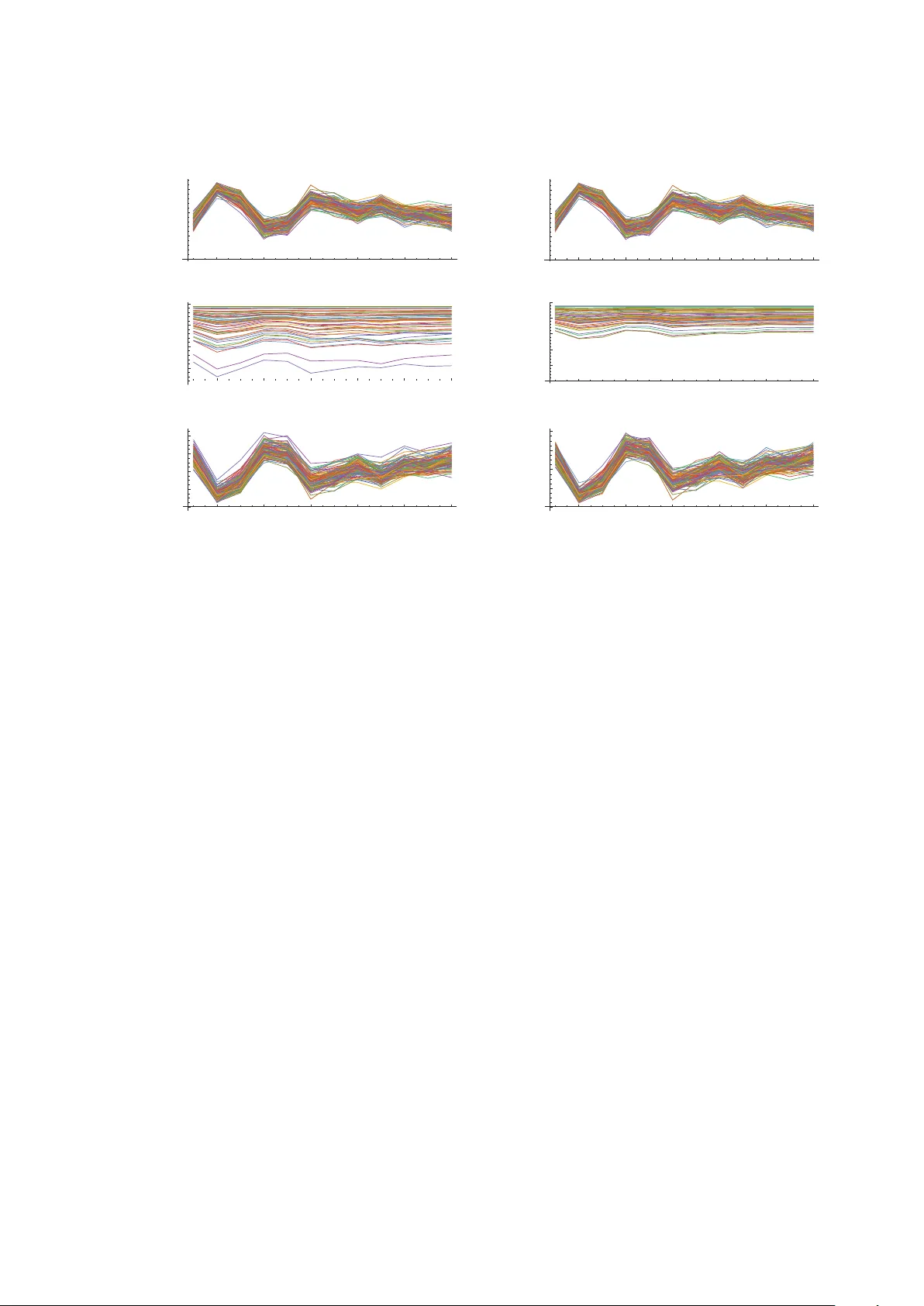
Mitigating Renew able-Induced Risks for Green and Con v en tional Ammonia Pro ducers through Co ordinated Pro duction and F utures T rading Hua yan Geng a , Y ang jun Zeng b, ∗ , Yiwei Qiu b, ∗∗ a Scho ol of Statistics and Data Scienc e, Southwestern University of Financ e and Ec onomics, Chengdu 611130, China b Col le ge of Ele ctric al Engineering, Sichuan University, Chengdu, 610065, China Abstract Renew able p o w er-to-ammonia (ReP2A), whic h uses h ydrogen pro duced from renew able electricity as feed- sto c k, is a promising path wa y for decarb onizing the energy , transp ortation, and chemical sectors. How ever, v ariability in renew able generation causes fluctuations in h ydrogen supply and ammonia pro duction, leading to rev enue instabilit y for b oth ReP2A pro ducers and con ven tional fossil-based gray ammonia (GA) producers in the market. Existing studies mainly rely on engineering measures, suc h as production scheduling, to man- age this risk, but their effectiveness is constrained by physical system limits. T o address this c hallenge, this pap er prop oses a financial instrument termed r enewable ammonia futur es and integrates it with pro duction decisions to hedge ammonia output risk. Pro duction and trading mo dels are developed for both ReP2A and GA producers, with conditional v alue-at-risk (CV aR) used to represen t risk preferences under uncertaint y . A game-theoretic framework is established in whic h the tw o pro ducers interact in coupled ammonia sp ot and futures mark ets, and a Nash bargaining mec hanism co ordinates their pro duction and trading strategies. Case studies based on a real-w orld system show that in tro ducing renew able ammonia futures increases the CV aR utilities of ReP2A and GA producers b y 5.103% and 10.14%, resp ectively , impro ving profit stability under renew able uncertaint y . Sensitivity analysis further confirms the effectiveness of the mechanism under differen t lev els of renewable v ariability and capacity configurations. Keywor ds: renew able pow er-to-ammonia, ammonia futures market, renewable generation uncertaint y, financial instrument, risk hedging, conditional v alue-at-risk, Nash bargaining 1. In tro duction 1.1. Motivation Amid the global energy transition, renewable p o wer-to-h ydrogen (ReP2H) has b een widely recognized as a key path w ay for integrating renewable electricit y [1] and decarb onizing hard-to-abate sectors such as ∗ Corresponding author ∗∗ Corresponding author Email addresses: zengyangjun@stu.scu.edu.cn (Y angjun Zeng), ywqiu@scu.edu.cn (Yiwei Qiu) transp ort and chemicals [2–4]. As the largest downstream pro duct of h ydrogen, ammonia is increasingly considered an energy carrier and industrial feedsto c k for low-carbon systems [5, 6]. Consequently , renew able p o w er-to-ammonia (ReP2A) pro jects are expanding w orldwide. In China alone, more than 90 green hydrogen and renewable ammonia (RA) pro jects hav e b een planned, with a combined capacit y of approximately 15 million tons per y ear [7–10]. Large-scale pro jects are also emerging in Europe and other regions [11]. In ReP2A systems, renewable electricit y drives w ater electrolysis to pro duce h ydrogen, which is subse- quen tly conv erted to ammonia through an improv ed Hab er-Bosch pro cess [6]. Ho wev er, the v ariability of renew ables leads to fluctuations in h ydrogen supply and ammonia output. Historical data sho w that annual wind and solar generation can v ary b y 30%-40% betw een high- and lo w-generation y ears, with ev en larger v ariations at mon thly timescales [12, 13]. Suc h v ariability in tro duces economic risks in ammonia markets. F or ReP2A pro ducers, uncertain pro- duction results in unstable sales and reven ue. F or conv entional fossil-based gray ammonia (GA) producers, renew able v ariability do es not directly affect pro duction but increases mark et price v olatilit y through fluctu- ations in RA supply [14, 15]. Main taining stable profitabilit y under uncertain RA output therefore b ecomes a key challenge for b oth pro ducers. Existing researc h mainly addresses this problem through engineering solutions. T ypical approac hes include: 1) installing electricity , h ydrogen, or ammonia storage to smo oth supply and output ov er time [16–18]; and 2) optimizing scheduling and op erational control under renewable v ariability [19–21]. How ev er, these measures are constrained by physical and engineering limits. Electro c hemical energy and hydrogen storage typically pro vide balancing only at short timescales because of cost and safet y considerations [16, 17]. Although ammonia can b e stored in liquid form, storage tanks are classified as hazardous facilities and are sub ject to strict safety regulations, whic h limits their capacity . Therefore, shifting pro duction across mon thly or seasonal timescales remains difficult. T o complement engineering measures, this study in tro duces a financial instrumen t termed r enewable ammonia futur es , inspired by hedging mechanisms in renewable electricit y markets. Electricity futures hav e long b een used to manage price and production risks [22, 23]. In coun tries such as Germany , renewable futures con tracts allow wind p ow er pro ducers and conv entional generators to agree on deliv ery quantities and prices for a future p erio d. Suc h contracts help renew able pro ducers hedge uncertaint y while enabling con ven tional generators to manage demand fluctuations caused by volatile renewable output [24–26]. These practices motiv ate the exploration of similar instruments for ammonia markets. Ho wev er, ammonia pro duc- tion inv olves differen t physical pro cesses and market structures from electricity systems, and the effectiveness of futures-based risk management remains unclear. Building on these observ ations, this study prop oses a renewable ammonia futures mechanism inspired b y renew able electricit y futures [24–26] and our previous w ork [15]. Considering b oth the physical pro duction c haracteristics of ReP2A and its interactions with the GA producer, a coupled spot-futures market frame- 2 w ork is developed. Through equilibrium analysis and bargaining mechanisms, this study inv estigates how engineering measures and financial instruments can join tly mitigate pro duction risks. 1.2. Liter atur e r eview Extensiv e researc h has examined how ReP2A systems can accommo date renewable v ariability . Exist- ing studies mainly focus on three areas: improving pro cess flexibility , optimizing storage capacities, and dev eloping operational scheduling strategies. 1.2.1. Enhancing flexibility of hydr o gen and ammonia pr o duction pr o c esses Man y studies aim to impro ve the op erational flexibilit y of h ydrogen and ammonia production while main taining safe op eration. F or hydrogen pro duction, Xia et al. [27] improv ed the efficiency and load range of alk aline electrolyzers (AELs) by developing pulse rectifiers and coordinated temp erature-pressure con troller. Sha et al. [28] prop osed a cascaded process integrating m ultiple stacks with ly e-gas separators to improv e curren t efficiency . Hu et al. [29] analyzed electro c hemical c haracteristics and impurity accum ulation under v arying op erating conditions and iden tified safe op erating boundaries for AELs. F or ammonia synthesis, F ahr et al. [30] developed dynamic mo dels of the Hab er-Bosc h pro cess and optimized reactor configurations to expand the load range. Subsequent work [31, 32] further improv ed reactor thermo dynamic design to enable lo w-load operation. Ji et al. [33] and Zhang et al. [34] proposed m ulti-steady-state ammonia syn thesis pro cesses suitable for flexible ReP2A operation. While these studies improv es op erational flexibility , they mainly enable systems to follo w renew able fluctuations rather than reduce the economic risks associated with production v ariabilit y . 1.2.2. Sizing of ele ctric al ener gy, hydr o gen, and ammonia stor age Energy and pro duct storage are widely used to buffer renew able v ariability . Battery energy storage systems (BESSs) provide fast regulation from seconds to hours, while hydrogen storage supp orts longer- term balancing. Many studies therefore optimize storage configurations to address v ariability across multiple timescales [12, 13, 18, 35–37]. In principle, sufficiently large storage capacities could stabilize hydrogen supply and ammonia pro duc- tion. In practice, ho w ever, storage capacity is limited by c ost and safety considerations [16, 17]. F or example, installing a BESS equiv alent to ten minutes of electrolyzer rated pow er can increase the levelized cost of am- monia (LCOA) by ab out 200 CNY/t [38]. Hydrogen storage also introduces additional infrastructure costs and safety requirements. When hydrogen storage capacity reac hes 100,000 Nm 3 , safet y risks increase signif- ican tly [39]. According to the Chinese national standard GB/T 29729-2022 Safety T e chnic al Sp e cific ation for Pr essur e Gase ous Hydr o gen Stor age Systems , such facilities must satisfy strict requirements regarding siting and safet y distance. Even for a plan t pro ducing 200,000 t of ammonia ann ually , a h ydrogen storage capacit y of 500,000 Nm 3 can sustain full-load synthesis for only sev eral hours. 3 Liquid ammonia storage pro vides longer-term buffering but is also constrained by safet y regulations b ecause ammonia tanks are classified as hazardous facilities. Th us, storage alone cannot mitigate risks arising from in ter-month renewable v ariability [12–14, 40]. 1.2.3. Optimal sche duling and c ontr ol Another research direction fo cuses on co ordinated scheduling of renew able generation, hydrogen produc- tion, ammonia syn thesis, and storage. Qiu et al. [41] and Zeng et al. [42–44] co ordinated electrolyzers and rectifiers while considering electro chemical safet y and grid constraints. Rosb o et al. [18] dev elop ed dynamic mo dels of ammonia pro duction systems and in tegrated stability analysis with scheduling. Kong et al. [45] prop osed a mo del predic tiv e controller for the Hab er-Bosc h pro cess. At the system level, Shi et al. [21] dev elop ed a chance-constrained sc heduling mo del for ReP2A systems. W u et al. [19] prop osed a capacit y planning and sc heduling framework with annual profit maximization. W ang [20] formulated a sto chastic t wo-stage mixed-in teger programming mo del for p o w er-to-ammonia scheduling. W u et al. [14, 40] further examined multi-timescale scheduling strategies spanning ann ual to intra-da y horizons. Although these approaches improv e op erational adaptability , they remain constrained b y ph ysical limits and cannot fully eliminate reven ue risks caused by renew able v ariabilit y . In electricity mark ets, financial instruments suc h as renew able futures con tracts hav e b een introduced to hedge risks asso ciated with v ariable generation [24–26]. F or example, Ben th et al. [25] analyzed the impact of seasonal wind output on wind futures pricing. Gersema et al. [24] and Liu et al. [26] further examined pricing and hedging effects using equilibrium mo dels. Inspired by these mec hanisms, our previous w ork [15] explored their p otential application to ammonia mark ets. Ho wev er, [15] did not incorp orate engineering constrain ts or the pro duction decisions of ReP2A and GA pro ducers. T o address these limitations, this study develops an in tegrated framework that combines engineering measures with renewable ammonia futures mechanisms to mitigate production risks. The contributions are briefed in Section 1.3. 1.3. Contributions of this work This study develops an integrated framework com bining engineering measures and financial instruments to mitigate risks caused by renewable v ariability in ammonia production. The main con tributions are: 1. A financial instrument termed r enewable ammonia futur es is proposed, inspired by renewable electricit y futures mark ets. The mechanism complemen ts engineering measures b y enabling producers to hedge risks asso ciated with RA output fluctuations. 2. A game-theoretic framew ork incorp orating conditional v alue-at-risk (CV aR) is dev elop ed to model the in teractions b etw een ReP2A and fossil-based GA pro ducers in coupled sp ot and futures markets. A 4 H 2 H 2 Pipeline N 2 + HST BES + P2H Renewable Energy ASY Ammonia storage CO Fossil fuel Gasification/ Reforming N 2 + Ammonia Demand (Spot Market) Pricing Quantity Q uantity Price Ammonia Futures Market Position Off-grid Renewable Power-to-Ammonia (ReP2A) Fossil-based Ammonia Production (GA) WT PV Purification Haber-Bosch Ammonia Power Green H! Spot renewable NH" Spot gray NH" Feedstock Renewable NH" futures Storage Figure 1: Illustration of ReP2A and GA systems and their interactions with ammonia futures and sp ot markets. Nash bargaining strategy co ordinates pro duction and trading decisions while improving the utilities of b oth participan ts. 3. Case studies based on a real-world system show that integrating futures trading increases the utilities of ReP2A and GA producers by 5.103% and 10.14%, respectively . Sensitivity analyses further examine ho w renew able uncertain ty and capacit y configurations affect the performance of the mechanism. The remainder of this pap er is organized as follows. Section 2 in tro duces the system and market struc- tures. Section 3 presents the renew able ammonia futures mechanism. Section 4 develops the pro duction and trading decision mo dels. Section 5 describ es the sp ot-futures interaction model and solution metho d. Section 6 presen ts the case studies, and Section 7 concludes the paper. 2. Problem description 2.1. Overview of R eP2A and GA systems The structures of the ReP2A and GA systems are illustrated in Fig. 1. A t ypical ReP2A system includes renewable generation, BESS, water ele ctrolysis for h ydrogen pro duction, air separation for nitrogen pro duction, hydrogen compression, ammonia syn thesis, and liquid ammonia storage [11]. In practice, these units are usually inv ested in and op erated b y a single entit y as an integrated facilit y . In the ReP2A pro cess, renewable electricity drives electrolytic hydrogen pro duction. The h ydrogen is then combined with nitrogen from air separation and fed to the ammonia synthesis unit, where ammonia is pro duced through an improv ed Haber-Bosch pro cess [33, 34]. BESS, hydrogen storage, and ammonia storage pro vide buffering at different time scales. Due to p olicy and regulatory constraints, ReP2A systems are typically op erated off-grid and cannot trade electricit y with the p o wer grid [12, 37, 46]. The GA system follo ws the conv en tional Haber-Bosch pro cess. It includes syngas production from coal or natural gas, air separation, ammonia synthesis, and liquid ammonia storage. Because fossil fuels can 5 b e stored reliably , GA pro duction is largely independent of renewable p o wer v ariabilit y and can operate steadily . Output lev els ma y also b e adjusted in resp onse to mark et conditions. 2.2. A mmonia market structur e and assumptions RA is curren tly traded in tw o main markets, i.e., the traditional chemical market (e.g., feedstock for urea and ammonium salts) and the emerging maritime fuel mark et [6]. In the shipping sector, RA can av oid carb on taxes and obtain a green premium, allowing it to be sold at prices higher than fossil-based GA. In con trast, the chemical market do es not yet differentiate b et ween RA and GA. They are therefore treated as homogeneous pro ducts and traded at the same price. This study fo cuses on the chemical mark et. Without loss of generalit y , the follo wing assumptions are made. Assumption 1. RA and GA ar e homo gene ous pr o ducts and ar e sold at the same pric e. Assumption 2. Be c ause ammonia is a hazar dous chemic al with limite d tr ansp ortation r ange, a lo c al market with one R eP2A pr o duc er and one GA pr o duc er is c onsider e d. Assumption 3. Ammonia tr ading o c curs monthly. The study horizon is one ye ar with 12 tr ading p erio ds. Assumption 4. Due to strict r e gulatory limits on hazar dous chemic al stor age [14], ammonia pr o duc e d in e ach month is assume d to b e sold within the same month. Assumption 5. Ammonia demand fol lows a c ommonly use d pric e elasticity mo del [37]: ρ am t = ρ max − ( M ga , sell t + M ra , sell t ) /k am , (1) wher e t = 1 , . . . , 12 denotes the tr ading p erio d; ρ am t is the ammonia pric e; M ga , sell t and M ra , sell t ar e the quantities supplie d by the GA and R eP2A pr o duc ers; ρ max is the inter c ept pric e when supply is zer o; and k am is the pric e elasticity c o efficient. 2.3. R isk metrics for pr o duction and tr ading de cisions V ariabilit y in renewable generation introduces uncertain ty in ReP2A pro duction and creates economic risks for both pro ducers. F or ReP2A, output fluctuations lead to unstable reven ue. F or the GA producer, renew able v ariabilit y do es not directly affect pro duction but alters RA supply and thus increases ammonia price volatilit y . Pro duction decisions m ust therefore account for b oth expected profit and downside risk. T o quantify risk, this study adopts the conditional v alue-at-risk (CV aR), whic h measures exp ected losses in the tail of the profit distribution b y presen ting the expected loss exceeding the v alue-at-risk (V aR) at a giv en confidence level α , and can be incorp orated in to the ob jective function to obtain risk-aw are pro duction strategies. 6 Let L denote the loss function under uncertain ty (defined as negative profit; its construction is given in Sections 4.1–4.2). F or confidence level α ∈ [0 , 1) , V aR and CV aR are defined as V aR α ( L ) = inf { l ∈ : Prob ( L ≤ l ) ≥ α } , (2) CV aR α ( L ) = E [ L | L ≥ V aR α ( L ) ] , (3) F ollo wing [47, 48], (3) can b e reformulated to facilitate con vex optimization: CV aR α ( L ) = min θ ∈ R θ + 1 1 − α h ( L − θ ) + i , (4) where ( · ) + ≜ max( · , 0) ; θ approximates V aR α ( L ) . When renewable uncertaint y is represented b y a scenario set Ω = 1 , . . . , N s , (4) can b e linearized as CV aR α ( L ) = min θ,ξ ω θ + 1 1 − α X ω ∈ Ω p ω ξ ω , (5) s.t. ξ ω ≥ L ω − θ , ξ ω ≥ 0 , (6) where p ω , L ω , and ξ ω denote the probabilit y , loss v alue, and excess loss under scenario ω . 3. Renew able ammonia futures trading mec hanism When physical buffering options suc h as energy and ammonia storage are limited, in tertemp oral trading can help redistribute pro duction risk at the market lev el. Inspired by the German wind p o wer futures mec hanism [24], this study introduces an ammonia futures con tract betw een ReP2A and the GA pro ducer. Under this arrangemen t, ReP2A transfers the o wnership of part of its RA output to the GA pro ducer in adv ance for a fixed paymen t, allo wing b oth parties to hedge risks asso ciated with RA pro duction v ariability . The mechanism op erates as follo ws. Step 1: A t the b eginning of eac h trading p erio d t , ReP2A negotiates with the GA producer to sell ammonia futures with p osition Q f t at price ρ f t . Step 2: At the end of perio d t , the con tract is settled. ReP2A transfers o wnership of part of RA pro duction to the GA pro ducer, who then sells the delivered ammonia in the sp ot mark et. The delivery quan tity can b e defined in tw o w a ys: a) Mo de 1 (wind-futures-type mec hanism). The position Q f t represen ts the share of RA pro duction transferred to the GA pro ducer. It is a dimensionless v ariable b etw een 0 and 1. The delivery quan tity is therefore prop ortional to realized pro duction: M f t = Q f t · M ra , pro t , (7) 0 ≤ Q f t ≤ 1 , (8) 7 where M f t denotes the ammonia quantit y transferred for contract settlemen t, measured in tons; and M ra , pro t is the RA pro duction in perio d t . This mechanism provides a natural hedging effect. By selling a share of future production, ReP2A secures part of its reven ue and reduces exp osure to renewable uncertain ty . By acquiring a share of RA output, the GA pro ducer can hedge risks arising from fluctuations in RA supply . F or example, when renewable generation is high, RA output increases and market prices may fall due to demand elasticit y . Because the GA pro ducer has already acquired part of the RA output through the futures con tract, it can sell more ammonia and partly offset the price decline. Con v ersely , when renewable generation is lo w, the delivered RA decreases, but reduced market supply raises prices and comp ensates for lo wer sales volume. b) Mo de 2 (conv entional commo dity-futures mechanism). In this mo de, the futures position is defined as a fixed delivery quantit y , i.e., Q f t = M f t measured in tons. The contract sp ecifies a predetermined amoun t of RA to be transferred at settlemen t, indep enden t of renewable generation. The delivered ammonia, together with GA pro duction and an y remaining RA, is sold in the spot mark et. Remark 1. Under the pr op ose d fr amework, ammonia futur es ar e tr ade d only b etwe en R eP2A and GA pr o duc ers. Consumers p articip ate only in the sp ot market. Remark 2. Mo de 2 is intr o duc e d for c omp arison. Be c ause the delivery quantity is indep endent of r enewable pr o duction, it do es not cr e ate a ne gative c orr elation b etwe en pr ofit and pr o duction risk. Conse quently, no c ombination of futur es pric e and tr ading volume c an simultane ously impr ove the utilities of b oth pr o duc ers, and the b ar gaining pr o c ess fails, as shown in Se ction 6.2.2. F or con venience, futures decisions ov er the entire horizon t = 1 , . . . , T are represented as v ectors Q f ≜ Q f t t =1 ,...,T and ρ f ≜ ρ f t t =1 ,...,T . 4. Decision mo dels of ReP2A and GA in the ammonia market under risk Both ReP2A and GA producers are assumed to b e rational and seek to maximize their utilities under risk through pro duction scheduling and futures-sp ot trading. Their decisions are formulated as mathematical programs using the CV aR metric introduced in Section 2.3. 4.1. Op er ational de cision of R eP2A The profit of the ReP2A producer, denoted by C ra , is defined as C ra = X T t =1 h M ra , sell t − M f t ρ am t + Q f t ρ f t − c ra i , (9) where the summation terms represent spot market reven ue, futures reven ue, and pro duction cost; M ra , sell t denotes total RA supplied to the spot mark et; the quantit y M ra , sell t − M f t is sold directly b y ReP2A, while 8 M f t is transferred to the GA pro ducer through futures settlement; Q f t ρ f t represen ts futures income; c ra is the pro duction cost. Because renew able electric it y is generated within the in tegrated system, v ariable costs suc h as electricit y pro curement costs are not considered. ReP2A production must satisfy system-lev el operational constraints. As discussed in Section 1.2, coor- dinated scheduling of energy storage, electrolysis, and ammonia synthesis allows a stable share of renewable generation to be con verted into ammonia [12–14, 40]. A t the monthly time scale adopted here, device-lev el dynamics are not mo deled explicitly . Instead, the energy con version and pro duction limits are describ ed as M ra , pro t ≤ η p2a E res t , (10) M ra , pro ≤ M ra , pro t ≤ M ra , pro , (11) M ra , sell t ≤ M ra , pro t , (12) where E res t denotes renew able electricit y av ailable for ammonia pro duction in p eriod t ; M ra , pro t is RA pro- duction; η p2a is the p ow er-to-ammonia con version factor; and M ra , pro and M ra , pro are technical production limits. More detailed ReP2A sc heduling mo del can be found in our previous studies [14, 37, 40]. F or compact notation, the op erational decision v ariables of ReP2A are defined as u ra ∆ = h M ra , pro t , M ra , sell t i t =1 ,...,T . (13) Because these v ariables dep end on renewable generation realizations, scenario-dep enden t decisions are de- noted by [ u ra ω ] ω ∈ Ω . F utures v ariables are determined through negotiation and are therefore written sepa- rately: v ∆ = Q f t , ρ f t t =1 ,...,T . (14) T o account for risk, the ob jectiv e is to minimize the CV aR of − C ra while satisfying constrain ts (10)–(12) for all scenarios. The ReP2A op erational decision problem can therefore be form ulated: min [ u ra ω ] ω ∈ Ω f ra [ u ra ω ] ω ∈ Ω , v ∆ = CV aR α ( − C ra ) , (15) s.t. h ra ( u ra ω , v , ϕ ω ) = 0 , ∀ ω ∈ Ω : λ ra , (16) g ra ( u ra ω , v , ϕ ω ) ≤ 0 , ∀ ω ∈ Ω : µ ra , (17) where f ra ( · ) is referred to as the utility function ; h ra ( · ) and g ra ( · ) represen t all equality and inequality constrain ts; and ϕ ω = [ E ω 1 , . . . , E ω T ] denotes the renewable generation vector in scenario ω ; λ ra and µ ra are dual v ariables. After applying the CV aR linearization in (5)–(6), the resulting problem b ecomes a linear program (LP). 9 4.2. Op er ational de cision of GA Similar to ReP2A, the profit function of the GA pro ducer, denoted b y C ga , is defined as C ga = X T t =1 h M ga , sell t + M f t ρ am t − Q f t ρ f t − ( c ga 0 + c ga 1 M ga , pro t ) i , (18) where the summation terms represent sp ot reven ue, paymen t for futures contracts, and pro duction cost; M ga , sell t denotes ammonia sales from GA production, while M f t is the RA obtained through futures settle- men t. Thus the total sp ot-mark et supply b ecomes M ga , sell t + M f t . The parameters c ga 0 and c ga 1 represen t fixed and v ariable pro duction costs. GA pro duction and sales are sub ject to M ga , pro ≤ M ga , pro t ≤ M ga , pro , (19) M ga , sell t ≤ M ga , pro t , (20) where M ra , pro t , M ga , pro , and M ga , pro denote the GA pro duction and tec hnical limits. The decision v ariables are written compactly as u ga ∆ = h M ga , pro t , M ga , sell t i t =1 ,...,T , (21) with scenario-dep endent decision v ariables [ u ga ω ] ω ∈ Ω . Because GA is also risk-av erse, the CV aR of − C ga is minimized: min [ u ga ω ] ω ∈ Ω f ga [ u ga ω ] ω ∈ Ω , v ∆ = CV aR α ( − C ga ) , (22) s.t. h ga ( u ga ω , v ) = 0 , ∀ ω ∈ Ω : λ ga , (23) g ga ( u ga ω , v ) ≤ 0 , ∀ ω ∈ Ω : µ ga , (24) where f ga ( · ) denotes the utilit y function; h ga ( · ) and g ga ( · ) represen t equality and inequality constraints. Because GA pro duction do es not dep end directly on renewable generation (although it is indirectly affected through mark et supply-demand and futures trading), the scenario v ector ϕ ω do es not app ear explicitly . After applying the conv ex linear transformation of CV aR via (5)–(6), the problem also reduces to an LP . 5. F utures-sp ot dual-mark et game and equilibrium analysis Based on the operational models of the ReP2A and GA producers in Sections 4.1–4.2, this section dev elops an interaction model for the ammonia spot and futures markets. W e first analyze the benchmark case without ammonia futures trading. Section 5.1 form ulates a Nash-Cournot game for the sp ot market, as illustrated in Fig. 2(a). The resulting equilibrium provides the disagreemen t p oin t for later bargaining. Section 5.2 then in tro duces bilateral ammonia futures trading betw een ReP2A and GA producers and 10 ra,sell M ga,sell M am r Cournot game Ammonia spot market (1) min (15) s.t. (16) - (17) Renewable ammonia (ReP2A) min (22) s.t. (23) - (24) Gray ammonia (GA) Renewable ammonia Futures quantity Gray ammonia Nash bargaining min (15) s.t. (16) - (17) Renewable ammonia (ReP2A) min (22) s.t. (23) - (24) Gray ammonia (GA) ra,sell M f - M f r f Q ga,sell M f M Futures market am r Ammonia spot market (1) am r (a) (b) Figure 2: Structure of the interaction mo dels for ReP2A and GA in (a) the ammonia sp ot market only (Section 5.1) and (b) the futures-spot dual market (Section 5.2). dev elops a Nash bargaining strategy , as sho wn in Fig. 2(b). The mechanism co ordinates pro duction and trading decisions to mitigate risks caused b y renewable generation uncertaint y and improv e the utilities of b oth pro ducers. 5.1. Nash-Cournot game mo del of the ammonia sp ot market In the b enchmark case, ReP2A and GA sell ammonia simultaneously in the sp ot mark et without futures trading. The equilibrium satisfies t w o conditions: 1) Under e ach r enewable sc enario ω ∈ Ω , the ammonia pric e and total supply satisfy the elasticity r elationship (1); 2) The op er ational de cision mo dels of R eP2A and GA, i.e., (15)–(17) and (22)–(24), b oth r e ach optimum. One approac h to compute the equilibrium is to derive the KKT conditions of the op erational optimization problems of ReP2A and GA, conv ert the complementary slackness conditions into a mixed-integer linear program (MILP), and solv e the resulting model [37]. How ever, the CV aR formulation requires constrain ts for all scenarios ω ∈ Ω , which in tro duces a large num b er of binary v ariables and leads to excessively high computational complexity . T o av oid this issue, w e introduce a Gauss-Seidel iterative pro cedure to compute the equilibrium fixed p oin t. The pro cedure also reflects the sequential adjustment of market participants. Step 1: Initialize iteration index k = 1 ; assign initial spot prices ρ am , (0) ω ,t for all ω ∈ Ω and t = 1 , . . . , T ; sp ecify the step size 0 < γ ≤ 1 and conv ergence threshold ϵ ; Step 2: T reat the curren t spot price ρ am , ( k − 1) ω ,t as a parameter and solve the ReP2A and GA op era- tional models (15)–(17) and (22)–(24); obtain optimal decisions and extract ammonia sales M ra , sell , ( k ) ω ,t and M ga , sell , ( k ) ω ,t for each scenario ω and p eriod t ; Step 3: Substitute M ra , sell , ( k ) ω ,t and M ga , sell , ( k ) ω ,t in to the elasticity (1) to compute a sp ot price ρ am ω ,t ; up date the price as ρ am , ( k ) ω ,t ← (1 − γ ) ρ am , ( k − 1) ω ,t + γ ρ am ω ,t ; Step 4: Chec k conv ergence. If the changes in M ra , sell ω ,t , M ga , sell ω ,t , and ρ am ω ,t are b elow ϵ , terminate and output the equilibrium; otherwise set k ← k + 1 and return to Step 2 . 11 Remark 3. The e quilibrium obtaine d her e r epr esents the b enchmark utilities of the R eP2A and GA without futur es tr ading and serves as the disagr e ement p oint for Nash b ar gaining. 5.2. Nash b ar gaining str ate gy in the ammonia futur es-sp ot dual market T o ensure that ammonia futures trading b enefits b oth pro ducers, a Nash bargaining framew ork is adopted. Under Pareto efficiency , the additional utility created by futures trading is allo cated b et w een ReP2A and GA through bargaining. The disagreemen t p oin t is giv en b y the equilibrium obtained in Section 5.1. Let the utilities of the ReP2A and GA pro ducers at this p oin t b e f ra ∗ , d and f ga ∗ , d . Under a bargaining agreement, the utilities b ecome f ra ∗ , a and f ga ∗ , a . The surplus utilities are therefore f ra ∗ , a − f ra ∗ , d and f ga ∗ , a − f ga ∗ , d . The Nash bargaining solution satisfies four conditions: 1) Under al l r enewable sc enarios ω ∈ Ω , the ammonia pric e and total supply satisfy the elasticity (1); 2) The op er ational de cision mo dels of R eP2A and GA, i.e., (15)–(17) and (22)–(24), r e ach optimum; 3) The Nash obje ctive is maximize d, i.e., max F ≜ f ra ∗ , a − f ra ∗ , d f ga ∗ , a − f ga ∗ , d ; 4) Individual r ationality holds, me aning utilities c annot fal l b elow the disagr e ement, as f ra / ga ∗ , a ≥ f ra / ga ∗ , d . T o obtain the bargaining outcome, we construct an iterative strategy in which both pro ducers up date futures trading and op erational decisions. T o maximize F , the gradients of the Nash ob jective with resp ect to futures trading p osition Q f and price ρ f are derived: ∆ F ∆ Q f = f ra − f ra ∗ , d ∆ f ra ∗ ∆ Q f + f ga − f ga ∗ , d ∆ f ga ∗ ∆ Q f , (25) ∆ F ∆ ρ f = f ra − f ra ∗ , d ∆ f ra ∗ ∆ ρ f + f ga − f ga ∗ , d ∆ f ga ∗ ∆ ρ f , (26) where sensitivities of the optimal utilities f ra / ga ∗ w.r.t. Q f and ρ f are obtained from the Lagrange multipliers of the operational models (15)–(17) and (22)–(24), as ∆ f ra / ga ∗ ∆ Q f = ∂ h ra / ga ∂ Q f λ ra / ga T + ∂ g ra / ga ∂ Q f µ ra / ga T . (27) The bargaining pro cedure com bines the Gauss-Seidel up dates used in Section 5.1 with gradient descent, as follows: Step 1: Solve the Nash-Cournot equilibrium in Section 5.1 to obtain the disagreement utilities f ra ∗ , d and f ga ∗ , d ; use the resulting sp ot price as the initial v alue ρ am , (0) ω ,t ; specify step sizes γ , β ρ , β Q and con vergence threshold ϵ ; Step 2: Initialize iteration index k = 1 and futures trading v ariables Q f , (0) and ρ f , (0) for eac h scenario ω ∈ Ω and eac h perio d t = 1 , . . . , T ; Step 3: Given ρ am , ( k − 1) ω ,t , Q f , (k − 1) , and ρ f , (k − 1) , solv e the ReP2A and GA operational mo dels (15)–(17) and (22)–(24) to obtain M ra , sell , ( k ) ω ,t and M ga , sell , ( k ) ω ,t for all perio ds and scenarios; 12 Mean value over 100 scenarios 2 4 10 6 8 12 Month index W ind output (MW) 300 250 200 150 100 50 Figure 3: Scenario set of monthly a verage wind p ow er output used in the base case. Step 4: Up date the sp ot price using the elasticit y (1) and the step-size rule ρ am , ( k ) ω ,t ← (1 − γ ) ρ am , ( k − 1) ω ,t + γ ρ am ω ,t ; Step 5: Up date the futures price and quan tity using gradient descent, as ρ f , ( k ) ← ρ f , ( k − 1) − β ρ ∆ F ∆ ρ f , Q f , ( k ) ← Q f , ( k − 1) − β Q ∆ F ∆ Q f ; Step 6: Check conv ergence. If the c hanges in M ra , sell ω ,t , M ga , sell ω ,t , ρ am ω ,t , Q f , and ρ f are below ϵ , terminate; otherwise set k ← k + 1 and return to Step 3 ; Step 7: V erify the solution. If the utilities of both pro ducers exceed the disagreemen t p oin t, the result is accepted as the Nash bargaining agreement; otherwise the bargaining fails. Remark 4. An alternative formulation is a non-c o op er ative gener alize d Nash e quilibrium pr oblem (GNEP), as in [37]. However, numeric al exp eriments indic ate that such e quilibria may not exist or may pr o duc e utilities b elow the disagr e ement level. This study ther efor e adopts the Nash b ar gaining fr amework, which ensur es mutual ly b eneficial outc omes. 6. Case studies 6.1. Case settings The case study is based on a ReP2A demonstration pro ject in northern China [38, 43]. The system includes a 450 MW wind farm that supplies electricity to an ammonia plant with an annual capacity of 200,000 t (22.83 t/h). Each MWh of renewable electricity pro duces η p2a = 0 . 1030 t/MWh of ammonia. The fixed op erating cost of the ReP2A system, including op eration and maintenance of the wind farm, transmission facilities, h ydrogen pro duction, and the ammonia plant, is 42,000 CNY/h. A conv entional GA plan t is assumed to ha ve the same annual capacit y of 200,000 t. Its fixed op erating cost is 41,200 CNY/h and its v ariable pro duction cost is 1,320 CNY/t. The ammonia demand is defined suc h that the market price reac hes ρ max = 4 , 850 CNY/t when supply is zero. The elasticity co efficient is k am = 16 . 44 t 2 /CNY. Under this sp ecification, when monthly supply reac hes 100,000 t the price decreases by 506.9 CNY/t. The parameters are summarized in T able 1. Mon thly a verage wind generation follows measured data from the pro ject site [38, 43], as sho wn in Fig. 3. Uncertain ty is mo deled by adding a uniformly distributed disturbance within ± 10% of the rated wind 13 5 10 25 15 20 Iteration Change in ammonia price (CNY) 1,000 10 0.1 0.001 5 10 25 15 20 Iteration 30 Change in product of residual utility 10 1 0.1 0.001 0.01 (a) (b) Figure 4: (a) Conv ergence of ammonia price solving Nash-Cournot equilibrium under the sp ot-only market. (b) Conv ergence process of the futures-sp ot joint market equilibrium. capacit y , i.e., [ − 45 , 45] MW, follow ed b y a moving-a verage filter with windo w width 2. A total of N s = 100 scenarios are generated to represen t renew able v ariability . Risk preferences are represented using CV aR with confidence level α = 0 . 5 , corresp onding to mo derate risk av ersion. The influence of the confidence lev el is analyzed later in Section 6.3. All mo dels are implemented in W olfr am Mathematic a 13.0 , and the pro duction optimization problems are solved using Mosek 11.1 . 6.2. Base c ase analysis 6.2.1. Sp ot market e quilibrium without futur es tr ading W e first consider the benchmark case without futures trading, in which the ReP2A and GA producers comp ete only in the ammonia sp ot market. The resulting equilibrium serves as the disagreement point in the Nash bargaining analysis and pro vides a baseline for ev aluating the proposed futures mechanism. Using the algorithm describ ed in Section 5.1, the Nash-Cournot equilibrium is obtained. The conv ergence of the ammonia price during iterations is shown in Fig. 4(a). The Gauss-Seidel algorithm reduces the price c hange to b elo w 0 . 001 CNY/t within approximately 20 iterations. At equilibrium, the utilities of ReP2A and GA are 2 . 963 × 10 7 CNY and 1 . 495 × 10 7 CNY. These v alues serv e as the disagreemen t utilities in the bargaining analysis in Section 6.2.2. The resulting pro duction and sp ot prices are sho wn in Fig. 5(a)– 5(c). Due to renewable uncertain ty , ReP2A output v aries b etw een 5,000 t and 16,000 t across months and scenarios. This v ariability propagates T able 1: Base-case parameters of the case study Parameter Meaning V alue M ra , pro , M ra , pro ReP2A hourly pro duction upp er/low er b ounds 22.83 t/h, 0 M ga , pro , M ga , pro GA hourly pro duction upp er/low er b ounds 22.83 t/h, 0 η p2a ReP2A energy conv ersion coefficient 0.1030 t/M Wh c ra ReP2A hourly pro duction cost 42,000 CNY c ga 0 GA hourly fixed cost 41,000 CNY c ga 1 GA v ariable cost p er ton of ammonia 1,320 CNY/t ρ max , k am Ammonia mark et price co efficien ts 4,850 CNY/t, 16.44 t 2 /CNY α CV aR confidence level 0.5 14 2 4 10 6 8 12 Month index Renwable ammonia output (t) 15,000 10,000 5,000 (a) 2 4 10 6 8 12 Month index Gray ammonia output (t) 16,500 16,000 15,500 15,000 (b) 2 4 10 6 8 12 Month index Ammonia spot price (CNY/t) 3,600 3,400 3,200 3,000 (c) 2 4 10 6 8 12 Month index Renwable ammonia output (t) 15,000 10,000 5,000 (d) 2 4 10 6 8 12 Month index Gray ammonia output (t) 16,450 16,400 16,350 16,300 (e) 2 4 10 6 8 12 Month index Ammonia spot price (CNY/t) 3,600 3,400 3,200 3,000 (f) 16,250 Figure 5: Operational results of under sp ot market only (a) ReP2A production; (b) GA pro duction; (c) ammonia sp ot mark et price; and after in tro ducing the futures mechanism (d) ReP2A pro duction; (e) GA pro duction; (f ) ammonia sp ot market price, across 100 scenarios. to total market supply and causes the ammonia price to fluctuate betw een 2,800 CNY/t and 3,600 CNY/t. Suc h price volatilit y affects the GA’s decisions. When the market price approaches pro duction cost, the GA pro ducer reduces output to av oid losses, lo wering pro duction b y up to 1,500 t from its tec hnical maximum. Consequen tly , GA production ranges betw een 14,800 t and 16,400 t. 6.2.2. Effe ct of intr o ducing r enewable ammonia futur es The renew able ammonia futures mec hanism described in Section 3 is then in tro duced. The equilibrium of the coupled spot-futures mark et is solved using the hybrid algorithm prop osed in Section 5.2. F or Mo de 2 (c onventional c ommo dity-futur es typ e) , Nash bargaining fails b ecause no futures transaction allows both pro ducers to achiev e utilities abov e the disagreement p oint. This confirms the theoretical analysis in Section 3 and indicates that this mo de cannot effectively hedge renewable-induced risks. The follo wing analysis therefore fo cuses on Mo de 1 (wind-futur es typ e) . F or Mo de 1, the conv ergence of the Nash ob jective (pro duct of surplus utilities of ReP2A and GA) is sho wn in Fig. 4(b). The algorithm con verges within ab out 20 iterations. T able 2 compares the outcomes with and without futures trading. After in tro ducing renewable ammonia futures, the utility of ReP2A increases to 3 . 114 × 10 7 CNY, while the GA’s utility rises to 1 . 647 × 10 7 CNY, with improv ements of 5.075% and 10.14%, respectively . The combined utility increases by 7.063%, indicating impro ved o verall w elfare. Pro duction outcomes and sp ot prices with futures trading are shown in Fig. 5(d)–5(f ), while futures 15 2 4 10 6 8 12 Month index 0.54 0.50 0.46 (a) 2 4 10 6 8 12 Month index 3.348 3.340 (b) Futures trading quantitiy Futures Price (10 CNY) 7 3.342 Figure 6: Monthly renew able ammonia futures trading in the base case. (a) F utures position. (b) F utures price. T able 2: Comparison of utilities b efore and after in tro ducing renew able ammonia futures. Market mo del ReP2A utility (CNY) GA utility (CNY) T otal utilities (CNY) w/o futures trading 2 . 963 × 10 7 1 . 495 × 10 7 4 . 446 × 10 7 w/ futures trading 3 . 113 × 10 7 ( +5.075% ) 1 . 647 × 10 7 ( +10.14% ) 4 . 760 × 10 7 ( +7.063% ) trading positions and prices are presen ted in Fig. 6. ReP2A output remains unchanged b ecause it is constrained by renewable generation. In con trast, GA pro duction increases and b ecomes more stable, with fluctuations shrinking from [14 , 800 , 16 , 400] t to [16 , 300 , 16 , 400] t. The increase in GA output sligh tly raises total supply and reduces market prices, benefiting consumers. Fig. 6 shows that b oth the futures p osition and price v ary only slightly during the y ear. The trading quan tity remains b et ween 0.47 and 0.53, while the price stays around 3 . 340 × 10 7 CNY with fluctuations within ± 0 . 15% . These patterns follow the se asonal v ariation of renewable generation sho wn in Fig. 3. The trading p ositions close to 50% reflect the symmetric pro duction capacities of the tw o producers in the base case. Under the Nash bargaining solution, the pro duction risk associated with renew able uncertaint y is shared approximately equally betw een them. T o further illustrate the risk-hedging effect, Fig. 7 presents the probability density functions (PDF s) of utilities b efore and after introducing futures trading. F or ReP2A, futures contracts con v ert part of the uncertain spot reven ue in to stable futures income, narrowing the utility distribution and reducing do wnside 3.823 3.1 13 2.963 4.124 1.542 1.806 1.647 1.495 PDF (10 CNY ) - 7 - 1 0.5 2.0 1.5 1.0 Utility of ReP2A (10 CNY) 7 1 4 2 3 0 PDF (10 CNY ) - 7 - 1 2 8 6 4 Utility of GA (10 CNY) 7 1.5 2.0 2.5 1.0 w/o futures trading w/ futures trading (a) (b) w/o futures trading w/ futures trading Figure 7: Probabilit y density functions of utilities for ReP2A and GA (a) before, and (b) after introducing the futures mechanism. 16 20 40 60 80 Renewable uncertainty bound (MW) (a) 20 15 10 5 ReP2A relative utility increment (%) GA relative utility increment (%) 20 15 10 5 20 40 60 80 Renewable uncertainty bound (MW) (b) Base case Base case Figure 8: Relative utility improvemen t from the futures mec hanism under differen t levels of renewable generation uncertaint y . (a) ReP2A. (b) GA. (a) (b) 20 40 60 80 Renewable uncertainty bound (MW) 20 40 60 80 Renewable uncertainty bound (MW) Futures trading quantitiy Futures Price (10 CNY) 7 0.505 0.549 0.500 3.40 3.35 3.30 3.25 Base case Base case Figure 9: A verage futures trading under different lev els of renewable generation uncertaint y . (a) F utures position. (b) F utures price. risk. The probabilit y of outcomes b elow 2 × 10 7 CNY declines significan tly . Although the V aR at α = 0 . 5 decreases from 4 . 124 × 10 7 CNY to 3 . 823 × 10 7 CNY, the CV aR increases from 2 . 963 × 10 7 CNY to 3 . 113 × 10 7 CNY. F or GA, futures trading allows part of the RA output to be purchased at a stable price. This shifts the utility distribution to the right. As a result, the V aR at α = 0 . 5 increases from 1 . 542 × 10 7 CNY to 1 . 806 × 10 7 CNY, and the CV aR increases from 1 . 495 × 10 7 CNY to 1 . 647 × 10 7 CNY. 6.3. Sensitivity analysis and discussion A dditional sensitivity analyses examine how renew able uncertaint y , CV aR confidence lev els, and pro duc- tion capacities influence the effectiveness of the prop osed futures mec hanism. 6.3.1. R enewable gener ation unc ertainty The disturbance applied to renewable output is expanded from [0 , 0] to [ − 90 , 90] MW to represen t increasing uncertaint y . Other parameters remain the same as in Section 6.1. Fig. 8 shows the resulting utilit y impro vemen ts from futures trading. When no uncertaint y exists, futures trading pro vides no b enefit. As uncertain t y increases, utilit y gains b ecome more significant for b oth sides. The improv ement grows faster for ReP2A, indicating that futures trading mitigates production risk more than mark et price risk. Fig. 9 sho ws the corresp onding futures trading outcomes. The trading p osition remains close to 0.5 and the price sta ys near 3 . 350 × 10 7 CNY. As uncertain ty increases, the futures p osition rises slightly while the price declines marginally , reflecting the higher risk of ReP2A pro duction. Ov erall, how ever, the trading outcomes remain close to the base case in Section 6.2.2. 17 (a) Confidence level α ReP2A utility (10 CNY) 7 GA utility (10 CNY) 7 3.5 0.5 1.5 2.5 0.5 0.6 0.9 0.7 0.8 1.8 2.2 2.6 Confidence level α 0.5 0.6 0.9 0.7 0.8 20 5 10 15 5 10 15 ReP2A relative utility increment (%) GA relative utility increment (%) (b) (c) (d) Confidence level α 0.5 0.6 0.9 0.7 0.8 Confidence level α 0.5 0.6 0.9 0.7 0.8 w/o futures trading w/ futures trading w/o futures trading w/ futures trading Figure 10: Impact of CV aR confidence levels on the utilities of ReP2A and GA. (a) ReP2A utilit y . (b) GA utility . (c) Relative utility improv ement for ReP2A from the futures mechanism. (d) Relativ e utilit y improv ement for GA from the futures mechanism. (a) (b) Confidence level α 0.5 0.6 0.9 0.7 0.8 Confidence level α 0.5 0.6 0.9 0.7 0.8 A verage futures trading quantitiy A verage futures Price (10 CNY) 7 0.504 0.500 0.496 3.35 3.30 3.25 3.20 Figure 11: F utures trading under different CV aR confidence levels. (a) F utures position. (b) F utures price. 6.3.2. CV aR c onfidenc e level The CV aR confidence level α determines how strongly extreme downside outcomes influence decision making. T o analyze its influence, α is v aried from 0.4 to 0.95. Fig. 10 sho ws that higher confidence lev els increase the b enefit of futures trading for ReP2A. The improv ement b ecomes particularly strong when α > 0 . 8 b ecause futures trading substantially reduces the left tail of the utility distribution as shown in Fig. 7. F or the GA pro ducer, the b enefit mainly arises from the right ward shift of its utilit y distribution. Ho wev er, this shift slightly widens the distribution, leading to minor deterioration in extreme outcomes. Consequen tly , the relativ e impro vemen t decreases sligh tly as α increases. Fig. 11 shows that the futures position remains close to 0.5 across all confidence lev els, indicating balanced risk sharing. The futures price decreases sligh tly (approx. 5%) as α increases b ecause stronger a version to extreme losses reduces the willingness to bear risk. When α = 0 , b oth pro ducers b ecome risk-neutral and maximize exp ected utility . In this case, the trading equilibrium dep ends on the initial futures p ositions in the algorithm, but the utilities remain identical to those without futures trading. This confirms that the prop osed mechanism primarily functions as a risk- hedging instrument. 18 30 25 20 15 10 5 30 5 25 20 15 10 ReP2A Capacity (10 t/yr) 4 GA Capacity (10 t/yr) 4 2.4 4.8 7.2 9.6 12.0 14.4 ReP2A utility increment (10 CNY) 5 (c) 30 25 20 15 10 5 30 5 25 20 15 10 ReP2A Capacity (10 t/yr) 4 GA Capacity (10 t/yr) 4 GA utility increment (10 CNY) 5 2.4 4.8 7.2 9.6 12.0 14.4 (d) 30 25 20 15 10 5 30 5 25 20 15 10 ReP2A Capacity (10 t/yr) 4 GA Capacity (10 t/yr) 4 GA utility (10 CNY) 7 (b) 10.9 9.10 7.28 5.46 3.64 1.82 (a) 30 25 20 15 10 5 30 5 25 20 15 10 ReP2A Capacity (10 t/yr) 4 GA Capacity (10 t/yr) 4 ReP2A utility (10 CNY) 7 1 1.6 9.69 8.01 6.23 4.45 2.67 Profitable region Figure 12: The effects of ReP2A-GA capacity combination. (a) ReP2A utilit y without futures trading. (b) GA utility without futures trading. (c) ReP2A utilit y improv ement after in tro ducing futures trading. (d) GA utility improv ement after in tro ducing futures trading. 6.3.3. Cap acity sc ales of R eP2A and GA The impact of pro duction capacity is examined b y v arying the capacities of both pro ducers from 50,000 to 300,000 t/y ear. Fixed costs are scaled proportionally with capacity while other parameters remain unc hanged. Figs. 12(a) and 12(b) sho w the utilities without futures trading. The feasible region where b oth utilities are positive is highlighted by a red box. F or both pro ducers, utilit y initially increases with capacit y because higher output raises sales. Beyond a certain level, how ever, mark et saturation reduces prices through the elasticity relation (1), which lo wers profits. Increasing the comp etitor’s capacit y further intensifies comp etition and reduces utilities. Figs. 12(c) and 12(d) sho w the utilit y impro vemen ts after introducing futures trading. Benefits appear throughout the feasible region, with the largest gains o ccurring when b oth capacities lie b etw een 150,000 and 200,000 t/year. In this range, mark et comp etition and pro duction risk are b oth significant, making risk sharing particularly v aluable. When the capacit y difference becomes large, the effectiv eness of futures trading declines because the risk exp osures of the tw o producers become less balanced. Fig. 13 shows the corresponding futures trading outcomes. T rading v olume is highest when ReP2A 19 30 25 20 15 10 5 30 5 25 20 15 10 ReP2A Capacity (10 t/yr) 4 GA Capacity (10 t/yr) 4 30 25 20 15 10 5 30 5 25 20 15 10 ReP2A Capacity (10 t/yr) 4 GA Capacity (10 t/yr) 4 0.132 0.198 0.264 0.330 0.396 0.462 Futures price (10 CNY) 7 Futures trading quantitiy 1.8 2.4 3.0 3.6 4.2 4.8 (a) (b) Profitable region Figure 13: F utures trading under different ReP2A-GA capacity com binations. (a) F utures p osition. (b) F utures price. capacit y lies b etw een 150,000 and 200,000 t/year. When capacity is smaller, price risk declines and trading v olume falls. When capacity b ecomes v ery large, mark et saturation reduces the v alue of transferring pro duc- tion through futures con tracts. Another in teresting thing is that reducing GA capacity does not remark ably reduce trading v olume. Even when GA capacit y is only 50,000 t/y ear, futures trading remains substantial. This suggests that institutions could p otentially participate in the market through futures trading alone. This p ossibility is examined in detail in Section 6.3.4. 6.3.4. Discussion on non-pr o ducing tr ading p articip ants (NPTP) The previous results indicate that a participant without ammonia production could p otentially engage in renewable ammonia futures trading. T o examine this possibility , a non-pro ducing trading participan t (NPTP) is in tro duced. The GA mo del from Section 4.2 is used, but pro duction capacit y and costs are set to zero, lea ving only the trading function. Because financial institutions t ypically exhibit lo wer risk av ersion, the CV aR confidence lev el for the NPTP is set to α = 0 . 2 , while the ReP2A pro ducer retains α = 0 . 5 . Fig. 14 shows the resulting utilit y distributions. Without futures trading, the ReP2A utilit y is 1 . 490 × 10 8 CNY. After introducing futures trading, it increases to 1 . 518 × 10 8 CNY, corresp onding to a 1.915% impro vemen t. The NPTP obtains zero utility without trading but earns 2 . 846 × 10 6 CNY by participating in the futures market. This outcome o ccurs b ecause the less risk-av erse NPTP is willing to assume part of the renew able pro duction risk in exc hange for higher exp ected returns. The av erage futures p osition increases to 0.69, indicating that the NPTP absorbs a larger share of the risk. Ho wev er, if the NPTP b ecomes more risk-a verse than the ReP2A pro ducer (i.e., its α exceeds that of ReP2A), Nash bargaining fails and no futures trading occurs. This confirms that the mechanism relies on differences in risk preferences to enable effectiv e risk sharing. These results suggest an important policy implication. In mark ets dominated by ReP2A pro ducers, regulators could allo w financial institutions to participate as NPTPs. Such participants could help hedge renew able production risk and supp ort inv estmen t in green ammonia industries. 20 PDF (10 CNY ) - 7 - 1 0.5 2.0 1.5 1.0 Utility of ReP2A (10 CNY) 8 1.2 1.8 1.4 1.6 0.8 Utility of NPTP (10 CNY) 7 -4 -2 -6 (a) (b) w/o futures trading w/ futures trading 2 4 0.5 2.0 1.5 1.0 PDF (10 CNY ) - 7 - 1 0.285 1.355 1.518 1.583 1.490 1.694 Figure 14: Probability density functions of utilities for ReP2A and NPTP (a) before and (b) after introducing the futures mechanism. 7. Conclusions V ariabilit y in renewables leads to fluctuations in ammonia output in ReP2A systems, whic h propagate to market supply and prices, creating reven ue risks for b oth ReP2A and conv entional GA pro ducers. T o address this c hallenge, this paper proposes a r enewable ammonia futur es mec hanism. A coupled sp ot-futures mark et game model with a Nash bargaining framew ork is developed to coordinate pro duction and trading decisions. Case studies based on a real-life pro ject demonstrate the effectiveness of the proposed approac h. The main findings include: 1. Renew able generation uncertaint y affects ammonia prices through fluctuations in pro duction, reducing rev enue stabilit y for b oth ReP2A and GA pro ducers. Renew able ammonia futures allow part of the uncertain pro duction capacit y to b e conv erted into predetermined rev enue, thereb y reducing downside risk. In the base case, the CV aR utilities of ReP2A and GA increase by approximately 5.103% and 10.14%, resp ectively . 2. The effectiveness of the futures mechanism dep ends on renewable uncertain ty and risk preferences. As renewable output v ariability increases, the b enefits of futures trading b ecome more pronounced for b oth producers, particularly for ReP2A. Higher CV aR confidence levels further reduce downside risk for ReP2A, while the relative b enefit for GA decreases sligh tly . 3. The impact of the mec hanism also dep ends on the capacit y configuration of the t wo pro ducers. The largest utilit y impro vemen ts o ccur when ReP2A and GA hav e comparable capacities and mark et comp etition is in tense. When the capacity difference b ecomes large, the effectiv eness of futures trading declines b ecause risk sharing b ecomes less balanced. 4. Ev en in markets without GA pro ducers, non-pro ducing trading participants can profit by assuming part of the renew able pro duction risk while impro ving the rev enue stability of ReP2A pro ducers. This finding highlights the p oten tial role of financial institutions in supp orting risk management in renew able ammonia mark ets. 21 F uture researc h could further consider tec hnological dev elopments in ReP2A systems, h ydrogen and ammonia storage options, evolving market structures, demand uncertain t y , and long-term in vestmen t to b etter assess the role of integrated financial-engineering mechanisms in supp orting the green transition of the energy and chemical industries. A c knowledgemen t The authors gratefully ackno wledge the financial support from the National Key Researc h and De- v elopment Program of China (2021YFB4000503) and the National Natural Science F oundation of China (52377116). Declaration of Interest None. Data A v ailabilit y The data related to this w ork are a v ailable up on request. References [1] A. Lima, J. T orrubia, C. T orres, A. V alero, A. V alero, Dynamic small-scale green ammonia non- renew able and renew able exergy costs up to 2050: Short and long-term pro jections under IEA energy transition scenarios, Renew. Energy 256 (2026) 123891. [2] A. Ajanovic, M. Say er, R. Haas, On the future relev ance of green hydrogen in Europ e, Appl. Energy 358 (2024) 122586. [3] D. J. Jov an, G. Dolanc, B. Pregelj, Utilization of excess water accumulation for green hydrogen pro- duction in a run-of-river h ydrop o wer plan t, Renew. Energy 195 (2022) 780–794. [4] J. Li, J. Lin, P . M. Heuser, et al., Co-planning of regional wind resources-based ammonia industry and the electric net work: A case study of Inner Mongolia, IEEE T rans. P ow er Syst. 37 (1) (2022) 65–80. [5] C. Li, Q. Hao, W. Zhang, S. W ang, J. Y ang, Developmen t strategies for green hydrogen, green ammonia, and green methanol in transp ortation, Renew. Energy 246 (2025) 122904. [6] J. Li, J. Lin, J. W ang, et al., Redesigning electrification of China’s ammonia and methanol industry to balance decarb onization with pow er system securit y , Nat. Energy 10 (2025) 762–773. 22 [7] J. Lin, X. Cheng, Y. Qiu, et al., A review of structure configuration, integration, op eration and key tec hnologies of renew able energy pow er to h ydrogen system, High V olt. Eng. 51 (5) (2025) 2078–2095. [8] The People’s Gov ernment of Da’an City, Green energy sets sail! the w orld’s largest single green ammonia pro ject commences op eration, [Online] (2025). URL http://www . daan . gov . cn/daxw/ztbd/202507/t20250728_1018229 . html [9] The P eople’s Gov ernment of Etog Banner, The Shenneng Etog Banner wind-solar-hydrogen integrated green ammonia pro ject, [Online] (2025). URL http://www . eq . gov . cn/zwgk/zdxxgk/xzsf/202507/t20250725_3819737 . html [10] The People’s Go vernmen t of Jilin Province, Bridging new energy and chemical industries: An on-site rep ort on the CEEC Songyuan h ydrogen park pro ject, [Online] (2025). URL https://www . jl . gov . cn/szfzt/tzcj/tzdt/202506/t20250609_3462654 . html [11] D. A. C. Narciso, J. M. Pires, J. F ortunato, et al., Design and op eration of p o wer-to-ammonia systems: A review, Energy Conv ers. Manage. 327 (2025) 119494. [12] Z. Y u, J. Lin, F. Liu, et al., Optimal sizing and pricing of grid-connected renewable p o wer to ammonia systems considering the limited flexibilit y of ammonia syn thesis, IEEE T rans. Po wer Syst. 39 (2) (2023) 3631–3648. [13] Z. Y u, J. Lin, F. Liu, et al., Optimal sizing of isolated renewable p o w er systems with ammonia synthesis: Mo del and solution approac h, IEEE T rans. P o wer Syst. 39 (5) (2024) 6372–6385. [14] S. W u, J. Lin, J. Li, et al., Multi-timescale trading strategy for renewable pow er to ammonia virtual p o w er plan t, IEEE T rans. Energy Mark. P olicy Regul. 1 (4) (2023) 322–335. [15] Y. Cai, Y. Qiu, B. Zhou, et al., Green ammonia futures: Design and analysis based on general equilib- rium theory , in: IEEE Sustain. P o wer Energy Conf., 2023, pp. 1–6. [16] D. W en, M. Aziz, T ec hno-economic analyses of p ow er-to-ammonia-to-p ow er and biomass-to-ammonia- to-p o w er path wa ys for carbon neutralit y scenario, Appl. Energy 319 (2022) 119272. [17] H. Du, Q. Du, C. Li, et al., A comprehensive review on renew able p ow er-to-green hydrogen-to-pow er systems, Appl. Energy 390 (2025) 125821. [18] J. W. Rosbo, T. K. S. Ritschel, S. Hørsholt, et al., Flexible op eration, optimisation and stabilising con trol of a quench co oled ammonia reactor for p o wer-to-ammonia, Comput. Chem. Eng. 176 (2023) 108316. 23 [19] Y. W u, T. Zhao, S. T ang, et al., Research on design and multi-frequency sc heduling optimization metho d for flexible green ammonia system, Energy Conv ers. Manage. 300 (2024) 117976. [20] S. W ang, Optimal sizing of pow er-to-ammonia plan ts: A stochastic t wo-stage mixed-integer program- ming approach, Energy 318 (2025) 134838. [21] X. Shi, H. Xing, H. W ang, et al., Optimal sc heduling of electricity-h ydrogen-ammonia coupled in tegrated energy system based on uncertain renewable generations, J. Renew. Sustain. Energy 17 (2025) 035501. [22] H. Bessembinder, M. L. Lemmon, Equilibrium pricing and optimal hedging in electricit y forw ard mar- k ets, J. Finance 57 (3) (2002) 1347–1382. [23] A. Botterud, T. Kristiansen, M. Ilic, The relationship b etw een sp ot and futures prices in the Nord P o ol electricit y mark et, Energy Econ. 32 (5) (2010) 967–978. [24] G. Gersema, D. W ozabal, An equilibrium pricing mo del for wind pow er futures, Energy Econ. 65 (2017) 64–74. [25] F. E. Ben th, J. S. Ben th, Dynamic pricing of wind futures, Energy Econ. 31 (1) (2009) 16–24. [26] R. Liu, Y. Y u, Z. Jing, et al., Pricing and analysis of wind p ow er futures based on general equilibrium theory , in: Pro c. Po wer Market Professional Committee, Chinese So ciety for Electrical Engineering, 2019, pp. 47–55. [27] Y. Xia, H. Cheng, et al., Efficiency enhancemen t for alk aline w ater electrolyzers directly driven b y fluctuating pv p o wer, IEEE T rans. Ind. Electron. 71 (6) (2024) 5755–5765. [28] L. Sha, J. Lin, Y. Chi, Q. Li, R. Qi, A cascaded gas-liquid separator for m ulti-stack series configuration to improv e the curren t efficiency of an alk aline water electrolysis system, Appl. Energy 407 (2026) 127279. [29] S. Hu, H. Chen, X. Mao, Z. Tian, H. F u, D. Chen, X. Xu, Analysis of the safe op erating b oundaries and approaches to expansion in alk aline w ater electrolysis systems, Int. J. Hydrogen Energy . [30] S. F ahr, R. Kender, J. P . Bohn, et al., Dynamic sim ulation of a highly load-flexible Hab er–Bosc h plant, In t. J. Hydrogen Energy 102 (2025) 1231–1242. [31] S. F ahr, M. Sc hiedec k, J. Sch warzh ub er, et al., Design and thermo dynamic analysis of a large-scale ammonia reactor for increased load flexibilit y , Chem. Eng. J. 471 (2023) 144612. [32] K. V erleysen, A. P arente, F. Con tino, Ho w do es a resilient, flexible ammonia pro cess lo ok? Robust design optimization of a Hab er–Bosch process with optimal dynamic control p o wered b y wind, Pro c. Com bust. Inst. 39 (4) (2023) 5511–5520. 24 [33] X. Ji, J. Lin, L. Nie, Multistable-flexible ammonia pro cess adapted to renewable energy , Clean Coal T ec hnol. 30 (2) (2024) 23–35. [34] X. Zhang, G. Li, Z. Zhou, L. Nie, Y. Dai, X. Ji, G. He, How to achiev e flexible green ammonia pro duction: Insigh ts via three-dimensional computational fluid dynamics sim ulation, Ind. Eng. Chem. Res. 63 (28) (2024) 12547–12560. [35] J. Zhou, B. T ong, H. W ang, et al., Flexible design and op eration of off-grid green ammonia systems with gravit y energy storage under long-term renewable p ow er uncertain t y , Appl. Energy 388 (2025) 125629. [36] P . Lan, S. Chen, Q. Li, et al., Intelligen t hydrogen-ammonia com bined energy storage system with deep reinforcemen t learning, Renew. Energy 237 (2024) 121725. [37] Y. Zeng, Y. Qiu, J. Zhu, et al., Planning of off-grid renewable p ow er to ammonia system s with hetero- geneous flexibility: A m ultistakeholder equilibrium p erspective, IEEE T rans. Po w er Syst. 40 (6) (2025) 4984–4999. [38] J. Zhu, Y. Qiu, Y. Zeng, Y. Zhou, S. Chen, T. Zang, B. Zhou, Z. Y u, J. Lin, Exploring the optimal size of grid-forming energy storage in an off-grid renew able P2H system under m ulti-timescale energy managemen t, Appl. Energy 407 (2026) 127295. [39] S. T. Le, T. N. Nguyen, S. Linforth, et al., Safet y inv estigation of hydrogen energy storage systems using quantitativ e risk assessmen t, In t. J. Hydrogen Energy 48 (7) (2023) 2861–2875. [40] S. W u, J. Li, J. Lin, et al., A dispatc hable region-guided adaptiv e mo de-switching regulation for renew- able p ow er to ammonia virtual pow er plants, IEEE T rans. Sustain. Energy 16 (1) (2024) 32–44. [41] Y. Qiu, B. Zhou, T. Zang, et al., Extended load flexibility of utility-scale P2H plants: Optimal pro- duction sc heduling considering dynamic thermal and HTO impurity effects, Renew. Energy 217 (2023) 119198. [42] Y. Zeng, Y. Qiu, J. Zhu, S. Chen, B. Zhou, J. Li, B. Y ang, J. Lin, Sc heduling m ultiple industrial electrolyzers in renew able P2H systems: A co ordinated activ e-reactive pow er management metho d, IEEE T rans. Sustain. Energy 16 (1) (2025) 201–215. [43] Y. Zeng, Y. Qiu, L. Xu, et al., Optimal in v estment p ortfolio of th yristor- and IGBT-based electrolysis rectifiers in utilit y-scale renew able P2H systems, IEEE T rans. Sustain. Energy, Early A ccess. [44] Y. Zeng, Y. Qiu, L. Jiang, J. Zh u, Y. Zhou, J. Li, S. Chen, B. Zhou, Harmonic cancellation in m ulti- electrolyzer P2H plants via phasor-mo dulated pro duction scheduling, IEEE T rans. Po wer Deliv., Early A ccess. 25 [45] B. K ong, Q. Zhang, P . Daoutidis, Nonlinear model predictive con trol of flexible ammonia production, Con trol Eng. Pract. 148 (2024) 105946. [46] N. Campion, R. Gutiérrez-Alv arez, J. T. F. Bruce, M. M enster, The p oten tial role of concen trated solar p ow er for off-grid green h ydrogen and ammonia pro duction, Renew. Energy 236 (2024) 121410. [47] R. T. Rock afellar, S. Ury asev, Optimization of cond itional v alue-at-risk, J. Risk 2 (2000) 21–42. [48] R. T. Ro ck afellar, S. Uryasev, Conditional v alue-at-risk for general loss distributions, J. Bank. Finance 26 (7) (2002) 1443–1471. 26
Original Paper
Loading high-quality paper...
Comments & Academic Discussion
Loading comments...
Leave a Comment