Life cycle assessment for all organic chemicals
Chemicals are embedded in nearly every aspect of modern society, yet their production poses substantial sustainability concerns. Achieving a sustainable chemical industry requires detailed Life Cycle Assessment (LCA); however, current assessments fac…
Authors: Shaohan Chen, Tim Langhorst, Julian Nöhl
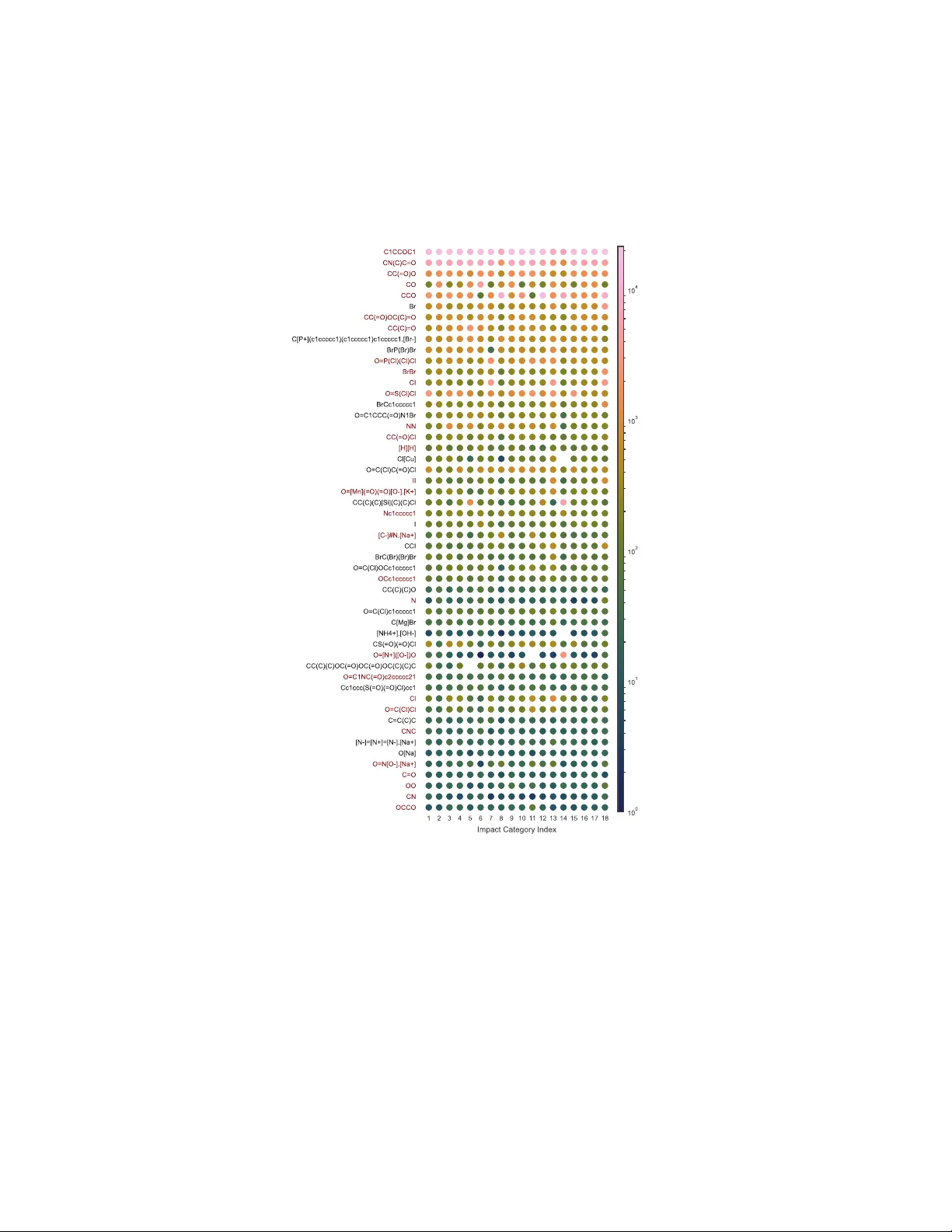
Life cycle assessmen t for all organic c hemicals Shaohan Chen 1,2 , Tim Langhorst 1 , Julian Nöhl 1 , Christopher Ob ersc help 2,3 , Martin Pillic h 1 , Johannes Sc hilling 1,* , and André Bardo w 1,2,* 1 Lab oratory of Energy and Pro cess Systems Engineering (EPSE), ETH Zuric h, 8092 Zurich, Switzerland 2 NCCR Catalysis, Switzerland 3 Chair of Ecological Systems Design (ESD), ETH Zuric h, 8092 Zurich, Switzerland * T o whom corresp ondence should b e addressed. E-mail: abardow@ethz.ch and jschilling@ethz.ch Marc h 18, 2026 Abstract Chemicals are embedded in nearly every asp ect of modern society , yet their pro duction p oses substantial sus- tainabilit y concerns. Ac hieving a sustainable c hemical industry requires detailed Life Cycle Assessmen t (LCA); ho wev er, current assessments face man y unkno wns due to limited, partly inconsistent, and untransparen t data co verage since existing Life Cycle Inv entory (LCI) databases account for only a tiny fraction of traded chemi- cals. Here, we introduce the Chemical RetrosY nthesiS for T ransparen t Assessment of Life-cycles (CR YST AL) framew ork, whic h automatically generates consistent and transparen t LCI data for organic chemicals based on their molecular structure using retrosyn thesis and machine-learned gate-to-gate in v entories. Using the predictiv e p o wer of CR YST AL, we create a consistent database for more than 70 000 organic chemicals, comprising ov er 110 000 transparen t LCI datasets that quan tify b oth feedstock and energy demands, together with asso ciated auxiliary materials, biosphere ows, and waste o ws. F rom this comprehensive database, we iden tify 50 key en vironmental hotsp ots driving high impacts of organic c hemical pro duction across multiple environmen tal cat- egories and pivotal hub chemicals that are most critical for downstream chemical pro duction. In pro viding this comprehensiv e data foundation, the CR YST AL framework oers systematic guidance for targeted engineering and policy interv entions. Its transparent, modular nature is designed to shift chemical LCA from a reliance on “unkno wn unkno wns” to a collab oratively impro v able mapping of “kno wn unkno wns” . 1 1 In tro duction Chemicals and their deriv atives are contained in 95 % of manufactured go o ds in our so ciety [ 1 ]. Their pro duction is the largest industrial consumer of fossil resources, the third largest global emitter of CO 2 [ 2 ], and a ma jor con tributor to air and water p ollution with serious risks to human health [ 2 , 3 ]. Ac hieving global climate targets, therefore, requires a rapid and robust transition of the c hemical industry to wards sustainability . The progress of this transition dep ends on prioritizing environmen tal hotsp ots – pro cesses and pro ducts with the highest p oten tial for impact reduction – and replacing chemicals of concern, as promoted by the Europ ean Commission’s Safe and Sustainable by Design initiative [ 4 , 5 ]. How ev er, these environmen tal hotsp ots remain largely unknown. The c hallenge is scale and complexit y: 40 000 to 60 000 chemicals are traded globally [ 6 ], linked through in tricate v alue c hains. Reducing the resulting impacts eectiv ely requires in tegrated system analysis connecting the potential impro vemen ts of upstream v alue chains with downstream production impacts. Such an integrated system analysis demands comprehensive, transparent, and consistent quantication of en vironmental impacts [ 7 ] based on detailed Life Cycle In ven tory (LCI) data (i.e., the corresp onding mass and energy ows) for all c hemical pro duction pro cesses. Y et, such LCI data is unkno wn for most of the c hemicals traded to da y and exists only for fewer than 2,000 c hemicals in established LCA databases [ 8 , 9 ] (see Figure 1 a). Expanding the databases requires time-consuming, manual data collection for each missing c hemical, making integrated system analysis infeasible at scale. This b ottleneck hampers the ability to fo cus research and developmen t on the chemical production pro cesses that reduce environmen tal impacts, slowing the transition to a sustainable chemical industry . Expanding LCA cov erage to the full breadth of the c hemical sector has inspired the use of machine learning to predict the environmen tal impacts of chemical pro duction [ 10 , 11 , 12 , 13 ]. These approaches promise scale but are constrained b y the scarcit y of LCA training data and often op erate as black b oxes, oering limited interpretabilit y of the underlying reaction path wa y or LCI data. Eorts such as SemaNet [ 14 ] address data gaps b y inferring missing LCI ows from textual process descriptions, yet they do not explicitly capture the underlying reaction path wa y for c hemical production. First-principles approaches, such as stoichiometry-based methods [ 15 ], provide a more transparen t alternativ e but require detailed kno wledge of the underlying reaction pathw a ys – kno wledge that remains lab or-intensiv e and time-consuming to extract from the literature. Here, w e presen t Chemical RetrosY n thesiS for T ransparen t Assessmen t of Life-cycles (CR YST AL), a fully predic- tiv e, pathw ay-resolv ed LCA framework for organic chemical pro duction that requires only the molecular structure of the target chemical as input. CR YST AL automatically generates transparent and consisten t LCI data and pinp oints the en vironmentally optimal production pathw ays, enabling large-scale en vironmental impact assessments for or- ganic c hemicals. Using CR YST AL, w e map a global chemical reaction net work, iden tify k ey environmen tal hotsp ots 2 across multiple impact categories relative to climate c hange, and highligh t crucial pro cesses whose improv ement could deliver the greatest sustainability gains. 2 The CR YST AL framew ork: A utomatic life cycle in ven tory genera- tion for organic c hemicals hydrogen O O 2[5H]-furanone O THF O O 4-butyrolactone H H hydrogen HO OH 1,4-butanediol Al H Li Lithal H H Retrosynthetic pathwa y prediction L CI estimations for each reaction • Balan c ed r eac tion: • Balan c ed r eac tion: H H h y dr ogen O O 2[5H]-fur anone O THF O O 4-but yr olac t one H H h y dr ogen HO OH 1,4-butanediol + 1 2 1 O O HO OH Balanced reaction: Solvent/Catalyst: Yield: 87% Electricity demand: 0.38 MJ Cooling water: 0.16 m Steam demand: 1.55 MJ Direct emissions: 0.0 CO-eq O Al H Li H H HO OH H H HO OH 12.01 kg CO-eq 3.57 kg CO-eq 5. 0 1 kg C O - e q Min Climate change O H OH OH 5 .0 5.0 1 k 1 k 1 k g C g C g C g C g C O O O 5 .0 1 k - e -e q q q Chemical reaction network construction for all reactions Path way optimization and environmental impacts calculation ... ~ 1500 Chemicals with L CA Data ~ 40,000 Chemicals T raded Globally Challenges: Lack of L CI data Time Consuming Labor Intensive ? Time Eciency Fully A utomated T ransparent A+ B C A+ C C Large Quantity Structure as input ~70,000 Number of Chemicals with L CA Data CRYST AL framework 1) 2) 3) 4) a b c Figure 1: The CR YST AL framew ork automatically and transparently predicts cradle-to-gate LCI data for organic c hemical pro duction and identies en vironmen tally optimal pro duction pathw ays. CR YST AL balances ecien t LCI data generation with the need to assess the environmen tal impacts of a v ast n umber of traded c hemicals, closing critical data gaps in life cycle assessments. Based on the molecular structure of the target chemical, we 1) predict retrosyn thesis pathw ays, 2) estimate the LCI data, i.e., material demands, energy demands, waste streams, and direct emissions for eac h reaction step, 3) construct a Chemical Reaction Netw ork (CRN) to transfer information across reactions, and 4) optimize the CRN based on the Life Cycle Impact Assessment (LCIA) scores calculated from the predicted LCI data to identify en vironmentally optimal pro duction path wa ys using user-sp ecied environmen tal objectives. The framework exibly adapts to v arious LCIA metho ds and background databases. The CR YST AL framework (Figure 1 b) in tegrates domain knowledge from chemistry , engineering, and opti- mization to systematically and consisten tly quan tify optimized cradle-to-gate environmen tal impacts of organic c hemicals (details describ ed in the Supplementary T ext). F or each new target chemical, CR YST AL commences by generating feasible synthesis routes through retrosyn thesis p ow ered by machine learning [ 16 ], which pro vides the reactan ts and auxiliaries for a chemical reaction. These syn thesis routes are recursiv ely generated back-propagating through the v alue chain until all precursors are a v ailable in the underlying LCA database (e.g., ecoin ven t [ 17 , 18 , 8 ] 3 or cm.c hemicals [ 9 , 19 ]). Since inorganic comp ounds are o ccasionally required as reactants or auxiliary materials to pro duce organic chemicals, we incorp orate literature-rep orted inorganic reaction pathw ays for critical inorganic precursors not presen t in the underlying LCA database to complemen t the retrosynthesis to ol. Subsequen tly , the iden tied reaction equations are balanced and byproducts are iden tied via an optimization algorithm to estimate feedsto c k demands and amounts of b ypro ducts as well as w aste streams. Next, the reaction yields, energy demands, and auxiliary material demands are predicted using decision trees trained on industrial process data [ 20 ]. The treatmen t of w aste and byproducts is guided b y a hierarchical rule-based mo del that integrates b est practices from industry (details described in the Supplementary T ext) and w aste incineration models [ 21 , 22 , 23 ]. Thereby , all required LCI data are obtained and the corresponding Life Cycle Impact Assessmen t (LCIA) scores of the target c hemical can b e calculated. The mo dular structure of CR YST AL enables an ecient exc hange of each module (e.g., the underlying LCA database or approach for energy demand estimation). Since the retrosyn thesis to ol was not designed to predict environmen tally optimal reaction pathw ays, and im- pro ved routes may arise via shared intermediates, we com bined all identied reactions into a unied Chemical Reaction Netw ork (CRN). The CRN is optimized using a graph-theory-based algorithm to propagate the LCI in- formation and identify environmen tally preferable pathw ays. This CRN can b e exibly extended b y the inclusion of industrially relev ant reactions if required. F ollowing this comprehensiv e approach, CR YST AL automatically identies optimal, transparen t production path wa ys join tly with their LCI data and quan ties the corresp onding environmen tal impacts consistently . W e apply CR YST AL in a high-throughput screening of market-relev ant chemicals identied from multiple regulatory and industrial sources, including the REACH database [ 24 ], the DIPPR database [ 25 ], the OECD database [ 26 ], the U.S. En vironmental Protection Agency CDR databases [ 27 ], the Scandina vian Norden SPIN database [ 28 ] and the Japanese METI database [ 29 ] (details describ ed in the Supplementary T ext). This screening generates consistent LCI data and environmen tally optimized pro duction path wa ys for approximately 70 000 target chemicals and their in termediates in a matter of hours. The resulting LCA database is 40 times larger than the largest existing LCA databases [ 8 , 9 ] (Figure 1 c), and can b e con tinuously expanded using CR YST AL to address critical LCA data gaps and supp ort future research. 3 V alidation of CR YST AL based on state-of-the-art LCA databases Unlik e existing mac hine-learning approaches that predict only aggregated en vironmental impacts of chemicals, CR YST AL predicts the underlying LCI data in a transparent manner, which then serv es as the basis for calculating the corresp onding en vironmen tal impacts. As such LCA data barely exists, a particular c hallenge arises in v alidating a metho d lik e CR YST AL. W e v alidate the p erformance of CR YST AL by comparing its predicted environmen tal 4 79% Correlation: 0.91 Chemicals with similar routes All considered chemicals ecoinv ent Dataset cm.chemicals Dataset Literature Da taset Reference C omparison Correlation: 0.81 74% 76% Correlation: 0.87 73% Correlation: 0.89 MARE: 19% MARE: 19% MARE 13% MARE: 37% Figure 2: Performance of CR YST AL on three state-of-the-art LCA databases for climate c hange impact. The rst three columns present the v alidation results of the CR YST AL framew ork on the ecoinv ent [ 17 , 18 , 8 ] ( 257 organic c hemicals (version 3.10, cut-o ) assessed with ReCiPe 2016 v1.03, midp oint (H)), cm.c hemicals [ 9 , 19 ] ( 746 organic c hemicals based on IPCC 2021 global warming p otential (GWP100)), and a literature database [ 15 ] ( 143 organic chemicals assessed with ecoinv ent, version 3.5, cut-o) based on ReCiPe v1.13, midp oint (H)), using the corresp onding database as the basis and a Leav e-One-Out approac h. The “Reference Comparison” column compares the ecoinv ent and cm.chemicals databases for 232 chemicals iden tied as the complete intersection of the t wo databases with av ailable SMILES represen tations, serving as a b enchmark for ev aluating CR YST AL’s p erformance. The violin plots of the rst three columns summarize CR YST AL’s o verall p erformance on each database, indicating the p ercentage of climate change (unit: kg CO 2 -eq p er kg of the target c hemical) predictions falling within an acceptable accuracy range, based on predicted-to-reference v alue ratios. Dashed lines indicate the acceptable range dened by the Asso ciation for the Adv ancement of Cost Engineering (AACE) accuracy bounds ( 50 % to 200 % of the en vironmental impact dened in the corresp onding state-of-the-art database). Violin plots display the distribution b et ween the 5th and 95th percentiles to highligh t this range. The parity plots of the rst three columns illustrate CR YST AL’s Pearson correlation and Mean Absolute Relative Error (MARE) when the last reaction step of the predicted routes is the same as the one of the reference databases. 5 impacts with reference v alues from three state-of-the-art LCA databases [ 8 , 9 , 15 ], illustrated here for climate c hange impacts (Figure 2 ). T o ensure consisten t comparison, w e use each state-of-the-art database as the underlying reference for CR YST AL and applied a Lea ve-One-Out (LOO) approach (details described in the Supplementary T ext), harmonizing the background processes and mo del assumptions across the datasets. More than 73 % of CR YST AL’s predictions fall within a factor of 2 of the state-of-the-art reference impacts, a range dened as acceptable in cost engineering standards b y the Asso ciation for the A dv ancement of Cost Engineer- ing In ternational (Class 5: 50 % to 200 % ) [ 30 ]. Our results demonstrate that CR YST AL’s deviations are on par with the v ariability observ ed b et ween the existing state-of-the-art LCA databases themselv es (column en titled “Ref- erence Comparison” in Figure 2 ). Suc h discrepancies b etw een databases largely stem from dierences in upstream bac kground pro cesses and mo del assumptions (e.g., mark et mixes of global chemical pro duction) [ 31 ]. Notably , the considered cm.chemicals database version [ 9 , 19 ] adopts ecoinv ent as its background database. Comparisons b et ween fully indep enden t LCA databases are thus expected to exhibit even larger discrepancies. One source for the remaining deviations b etw een CR YST AL and the reference database is a dieren t pathw ay to synthesize the same chemical. Because dierent production pathw ays are employ ed in practice, such dierences cannot a priori b e regarded as errors. When the last predicted reaction step aligns with the reference path wa y , CR YST AL demonstrates high predictive accuracy , achieving a P earson correlation coecient of 0 . 9 and Mean Absolute Relativ e Error of 19 % , with 96 % and 100 % of the predictions falling within the acceptable range for ecoin ven t [ 8 , 17 , 18 ] and cm.c hemicals [ 9 , 19 ], resp ectiv ely (Figure 2 ). CR YST AL predictions are closest to ecoinv ent [ 8 , 17 , 18 ] and cm.c hemicals [ 9 ] databases when a single reaction step is predicted, with 81 % and 79 % of predictions within the acceptable range, resp ectiv ely (Figures S37 and S38). Deviations b etw een CR YST AL’s predictions and reference v alues increase with the num b er of predicted reaction steps, due to accum ulating discrepancies b etw een the predicted and reference path wa ys. In the LOO approach, the need to predict more than one reaction step t ypically indicates a discrepancy b et ween the predicted and reference pathw ays, since all precursors should, in principle, b e a v ailable in the underlying LCA database. CR YST AL generalizes beyond climate change impact, as demonstrated b y the v alidation across all en vironmental impact categories (Figures S28-S36). In particular, 87 % of CR YST AL’s predictions for Ener gy r esour c es: non- r enewable, fossil fall within the dened acceptable range, ac hieving a Pearson correlation coecient of 0 . 89 when the last reaction step of the predicted pathw ay matc hes the reference pathw ay . T o further v alidate the p erformance on more structurally and functionally complex chemicals, suc h as pharma- ceuticals, w e benchmark CR YST AL against tw o published databases [ 32 , 33 ] and an industrial dataset pro vided b y an industrial partner (Figures S39, S41, and S43). CR YST AL successfully repro duces b oth the ov erall trends and relativ e magnitude of the environmen tal impacts in the reference data when predicting the same last reaction step, ac hieving P earson’s correlation co ecien ts of 0 . 95 and 0 . 98 (logarithmic v alues used to account for scale dierences 6 across chemicals) on t wo published databases [ 32 , 33 ]. F or the industrial dataset, CR YST AL attains a Pearson cor- relation co ecient of 0 . 81 in ov erall p erformance, despite the absence of detailed information on reaction path wa ys due to condentialit y . While LCA lac ks a denitive ground truth for v alidation [ 34 ], our results demonstrate strong alignment be- t ween CR YST AL and established benchmarks. W e ac knowledge that CR YST AL pro vides an optimistic estimate of environmen tal impacts, as the framew ork systematically identies the most fav orable chemical routes currently mo deled. Nevertheless, by extending the reac h of LCA to tens of thousands of c hemicals, CR YST AL serv es as a transparent starting p oin t to close critical data gaps, incen tivize the sharing of primary industrial data, and strengthen LCA studies across the chemical industry . 4 En vironmen tal hotsp ots in organic c hemical pro duction b ey ond cli- mate change CR YST AL enables the systematic identication of en vironmental hotsp ots (details describ ed in the Supplementary T ext) along the c hemical production v alue c hain, including raw feedsto cks, auxiliary materials, w aste treatmen t, and energy demand. Because current assessmen t practice is largely fo cused on climate change [ 35 ], we iden tify relative en vironmental hotsp ots that disprop ortionately contribute to other en vironmen tal impacts. Of the approximately 70 000 chemicals in the CR YST AL database, 1616 exhibit disprop ortionately high human toxicit y (carcinogenic) in their climate-change-optimized path wa ys (Figure 3 top row). T racing the full pro duction v alue chain of these chem- icals reveals tw o upstream reactan ts as the dominant contributors (details describ ed in the Supplemen tary T ext): c hromium trioxide (CAS RN 1333-82-0, LCIA data from ecoinv ent – 1451 downstream pro ducts), anthraquinone (CAS RN 84-65-1, LCIA data from ecoin ven t – 62 downstream products). The remaining chemicals with high h uman toxicit y (carcinogenic) primarily arise from chromium-con taining waste treatmen t. The elev ated human toxicit y (carcinogenic) asso ciated with the hotspots chromium trio xide and an thraquinone originates from b oth their production and the treatment of (chromium-con taining) w aste in upstream pro cesses, as rep orted in ecoinv ent [ 36 ]. The waste treatmen t mo del implemented in CR YST AL (details describ ed in the Supplemen tary T ext) assumes that non-v aluable byproducts (including chromium-con taining waste) are incinerated [ 37 , 38 , 39 , 40 ] following the Doka mo del [ 21 , 22 ], resulting in further emissions of Chromium(VI) to groundwater, riv ers, and the atmosphere [ 21 ]. Ho w ever, increasing regulatory pressure [ 41 , 42 ] is driving the c hemical industry to reduce emissions of Chromium(VI). An eectiv e mitigation strategy is to con vert Chromium(VI) in to the less to xic and more stable Chromium(I I I) [ 43 ]. In our simulation, conv erting Chromium(VI) to Chromium(II I) within the pro duction v alue chains of chromium trio xide and anthraquinone (details describ ed in the Supplementary T ext), 7 Figure 3: Pinp oin ting environmen tal hotsp ots across impact categories relative to climate change to supp ort c hemical manufacturers, regulatory authorities, and LCA data providers. T op row: Climate change versus human toxicity: c ar cino genic for pathw ays optimized for climate change impact. Chromium trio xide and anthraquinone, together with chromium-con taining waste incineration, are highligh ted as relative environmen tal hotsp ots in human toxicity: c arcino genic , along with their downstream chemicals (left). Regulating chromium(VI) emissions for these tw o hotspot reactan ts and for the chromium-con taining waste treatment eectively reduces human toxicity: c arcino genic of all do wnstream c hemicals (middle). Num b er of downstream chemicals (D/S) asso ciated with these hotsp ots (right). Bottom row: Climate change versus ozone depletion for path wa ys optimized for (left) climate change and (middle) ozone depletion impact. Relativ e en vironmental hotsp ots in climate-c hange-optimized path wa ys are highlighted together with their do wnstream chemicals (i.e., v e upstream reactants (R-hotsp ots) and tw o solv ents, chloroform and dic hloromethane). T o emphasize c hanges in p oint densit y , only downstream chemicals with disprop ortionately high ozone depletion impacts are highlighted (middle). Number of downstream c hemicals asso ciated with these hotsp ots (right). ecoin ven t v ersion 3.10 (cut-o) [ 17 , 18 , 8 ] and LCIA metho d ReCiP e 2016 v1.03, midp oint (H) are used as the underlying LCA database. 8 as well as during the treatment of c hromium-containing wastes, eectively eliminates the disprop ortionately high h uman carcinogenic toxicit y observed for these hotsp ots and their downstream chemicals (Figure 3 , top row, middle). Our results highligh t the imp ortance of establishing Chromium(VI) reduction measures as an industrial standard in waste incineration and landlling and underscore the urgent need to ensure that current regulatory practices are incorp orated into LCI databases and waste treatmen t mo dels [ 21 , 22 ]. These results reveal that targeted regulation and pro cess improv ements at upstream stages of c hemical pro duc- tion iden tied as relativ e en vironmental hotsp ots can substan tially reduce h uman toxicit y impacts. The results for other environmen tal impact categories are reported in Figures S46-S53. More broadly , our ndings emphasize the need to integrate up-to-date industrial practices and regulatory adv ances into LCA inv entories and mo dels, including the curren t CR YST AL framework, to ensure accurate environmen tal impact assessments and to provide robust guidance for sustainable chemical design and p olicy . F or the trade-o b et ween ozone depletion and climate change, w e identify ve clusters of chemicals along their climate-c hange-optimized pathw ays (Figure 3 – b ottom row, left) using a Gaussian mixture clustering algorithm (see Extended Data Figure 1 a and details describ ed in the Supplemen tary T ext). Among c hemicals with dispro- p ortionately high ozone-depletion impacts, w e iden tify seven upstream con tributors as the primary drivers of ozone depletion (Figure 3 – b ottom, left; metho ds in the Supplementary T ext): t wo solven ts, chloroform (CAS RN 67-66- 3, data from ecoinv ent – 525 do wnstream pro ducts) and dic hloromethane (CAS RN 75-09-2, data from ecoinv ent – 181 downstream pro ducts); and v e reactants (all data from ecoinv ent – in total 368 downstream pro ducts). The high ozone-depletion impacts of these contributors stem from direct emissions of halogenated alkanes or nitrous o xide during pro duction, or from the use of chloroform as a precursor. By shifting the objective from minimizing climate c hange impact to ozone depletion, 27 600 chemicals adopt alternativ e pro duction pathw ays, mitigating the ozone-depletion impacts asso ciated with climate-change-optimized path wa ys. F or these chemicals, ozone-depletion impacts can b e substan tially reduced by 50 % with only a 19 % increase in climate change impacts (Figure 3 – bottom, middle). Ozone-depletion impacts decrease across all v e clustering cen troids, with the largest reduction observ ed for the cluster exhibiting the highest initial impact (see Extended Data Figure 1 b). Nevertheless, for some c hemicals, mitigation of ozone-depletion impacts remains constrained by the reactions av ailable within the CRN. Our analysis reinforces the ob jectives of the Mon treal Proto col [ 44 ] by demonstrating the p otential environmen- tal b enets of reducing or substituting c hloroform and dichloromethane as solv ents to mitigate ozone depletion. Stringen t con trol of direct emissions of halogenated alkanes and nitrous oxide remains essential, as indicated by the ve identied upstream hotsp ot reactants. As the retrosynthesis to ol [ 16 ] contin ues to evolv e through up dated training data reecting ongoing adv ances in the chemical industry , and the generated LCI data is expanded ac- 9 cordingly , the CR YST AL framework will supp ort this activity by pinp ointing actionable interv entions in chemical pro duction. 5 Whic h c hemicals matter most for impro ving sustainabilit y? Based on its underlying chemical reaction net work, CR YST AL uncov ers hub chemicals – key intermediates whose en vironmental impacts inuence large p ortions of the CRN. Because of their central role in connectivit y and material o w (see Figure 4 a), impro ving the sustainability of these hub chemicals can propagate b enets across the entire c hemical industry [ 45 ]. Here, w e dene h ub chemicals as those that (i) app ear in at least 216 en vironmentally optimized downstream path wa ys (determined b y the elbow metho d, see Extended Data Figure 2 ) and (ii) cause measurable propagation eects; i.e., a 10 % decrease in their environmen tal impact translates into more than 2 % lo wer impacts for more than 10 do wnstream chemicals. W e refer to these downstream chemicals as str ongly ae cte d no des. W e iden tify 52 hub chemicals that exert broad, system-wide inuence across the climate-c hange-optimized c hem- ical reaction netw ork (Figure 4 b; detailed information in T able S9). Among these hub chemicals, tetrahydrofuran (THF; CAS RN 109-99-9) is particularly impactful, strongly impacting ov er 17 500 downstream chemicals ( 68 % of its total do wnstream c hemicals) with an av erage 4 . 5 % decrease in climate change impacts. This inuence propa- gates hierarc hically through up to 18 do wnstream reaction steps (Extended Data Figure 3 a), reecting THF’s dual role as b oth feedsto ck and solven t. The widespread use of THF as a reaction medium [ 46 ] further underscores its strategic imp ortance for targeted pro cess improv ement to achiev e system-wide climate b enets. A similar pattern is observed for dimethylformamide (DMF; CAS RN 68-12-2), which strongly impacts 7000 do wnstream chemicals and an a verage of 4 . 0 % decrease in climate change impacts, again reecting its dual function as feedsto ck and solven t (Extended Data Figure 3 b). Although methanol and ethanol app ear in ov er 25 000 and 19 900 do wnstream pathw ays, respectively , only 5 % and 6 % of downstream c hemicals are strongly aected in terms of climate change (Extended Data Figure 3 b, c). This limited propagation reects the relatively low climate c hange impact of their own pro duction path wa ys: biomass fermen tation for ethanol and natural gas reforming for methanol. Within our CRN, bio-based ethanol reduces the climate change impacts for 2047 strongly aected downstream c hemicals by an a verage of 6 kg CO 2 -eq compared to its fossil-based production, highlighting the substantial climate benets ac hiev able b y transitioning h ub c hemicals to bio-based pro duction (Figure 4 c). Ho wev er, this shift also en tails en vironmental trade-os, notably increased land and water use impacts (Figures S49 and S51). Hub chemicals that rank highly for climate change often exert substan tial inuence across other environmen tal impact categories (Extended Data Figure 4 ; details described in the Supplementary T ext). Ho wev er, this pattern is 10 L Water Phenol Hydrogen Phosgene 1-butanol Methanol a b c (kg CO-eq/kg) 75th 50th 25th 25th 50th 75th Figure 4: Hub c hemicals iden tied to guide prioritization of process optimization strategies for enhancing the sustainability of the c hemical industry . a ) A representativ e example illustrating the structurally imp ortant role of a hub c hemical within an illustrativ e chemical reaction netw ork. The green part indicates the joint-optimal reactions across all en vironmental impact categories. b ) Ranking of 52 hub chemicals b y the num b er of strongly aected downstream c hemicals, measured as those whose climate change impacts decrease by more than 2 % in response to a 10 % reduction in the impact of eac h hub chemical (details described in the Supplementary T ext). Chemicals av ailable in the underlying ecoinv ent database are highlighted in red. c ) Switching from fossil- to bio-based ethanol pathw ays substantially reduces the climate c hange impacts for ov er 2000 strongly aected downstream products. 11 not guaranteed: for instance, nitric acid strongly impacts more than 2800 do wnstream chemicals in ozone depletion due to nitrous oxide emissions, but it has only a limited inuence on other impact categories. These ndings highlight the importance of considering multiple en vironmen tal dimensions b eyond climate change, as some h ub c hemicals exhibit category-sp ecic impacts that would b e o v erlo oked in climate-change-focused assessmen ts. Comparing optimized CRNs across en vironmental impact categories rev eals that ozone depletion and marine eutrophication correlate least strongly with climate c hange (see Extended Data Figure 5 ; and analysis in Supplementary T ext) and should therefore b e prioritized when analyzing environmen tal trade-os in chemical pro duction. While the identied hub chemicals ma y not reect all real-w orld impacts due to model limitations, the results demonstrate ho w fo cusing on hub chemicals with cascading do wnstream eects can inform system-wide sustainability impro vemen ts, particularly as industrial data a v ailabilit y increases and our mo del assumptions con tinue to b e rened. 6 Enabling a sustainable c hemical industry CR YST AL represen ts a step c hange in assessing the en vironmen tal impacts of c hemical pro duction b y transparently and consistently predicting LCI data from retrosynthetic pathw ays. By automatically providing LCIs for organic c hemicals with consistent assumptions, transparent reaction path wa ys, and uniform details, CR YST AL closes a critical data gap in LCA. Thus, we believe that the provided database will be v ery useful to LCA practitioners. Still, ac knowledging G.E.P . Bo x’s famous statement that “all mo dels are wrong, but some are useful”, we regard transparency as the crucial feature of the CR YST AL mo del and database: if an exp ert kno ws that a reaction path, solven t or yield are dieren t in practice, these comp onents of the LCIs can be replaced. T o maximize con tinuous renemen t, CR YST AL is designed as an op en, communit y-oriented platform (op en-source co de and v ersioned datasets) that invites contributions from researchers, industry , and data pro viders. Communit y curation and structured feedback loops will iteratively impro ve prediction qualit y . While the iden tied en vironmentally optimized pathw ays ma y not reect real-w orld economically optimized industrial practice, preven ting their direct use in en vironmental rep orting, CR YST AL allows identifying opp ortu- nities to improv e organic c hemical sustainabilit y: By pinp oin ting hub chemicals and hotsp ot pro cesses for targeted optimization, CR YST AL oers actionable guidance for industry , regulators, and LCA data providers. Since the retrosyn thetic pathw ay prediction is based on av ailable patent literature, CR YST AL could b e further enhanced by incorp orating pathw ays based on bio-based reactions [ 47 , 48 ] and plastic waste recycling [ 49 ], enabling substitution of fossil feedsto c ks in critical chemicals and cascading system-wide environmen tal b enets (Section 4 and Section 5 ). Incorp oration of production volumes will enable sector-wide optimization to identify synergies in 12 join t chemical pro duction. Coupling CR YST AL with retrosynthesis planning could guide chemical syn thesis [ 50 ] to ward inheren tly greener routes, establishing a self-reinforcing cycle of sustainable chemical innov ation. As the pace of nov el chemical discov ery accelerates, CR YST AL can provide rapid, automated, and transparent sustainabilit y assessments from the earliest stages. This capability empow ers chemists and engineers to ev aluate emerging path wa ys rapidly , ensuring that inno v ation adv ances without unintended environmen tal trade-os and fostering a chemical industry that is b oth pro ductiv e and sustainable. Crucially , b y incorp orating communit y feedbac k in to mo del and data up dates, CR YST AL is positioned not only as a to ol but also as a collab orative ecosystem to contin uously improv e LCI predictions and their real-world relev ance. Data and materials a v ailability All data supporting the ndings of this study are av ailable in the main text or in the supplementary materials, except for data deriv ed from commercial databases and the commercial databases themselves, which cannot b e redistributed. The entire CR YST AL framew ork and corresp onding CR YST AL database will be made av ailable as so on as p ossible. Corresp ondence and requests for materials should b e addressed to A.B. Supplemen tary materials The Supplementary T ext, including the mentioned Figures S28-S39, Figure S41, Figure S43, Figures S46-S53, and T able S9, is not included in this arXiv preprin t and will b e made a v ailable in a later version. References [1] In ternational Council of Chemical Asso ciations (ICCA) & Oxford Economics. The global c hemi- cal industry: Catalyzing gro wth and addressing our world’s sustainabilit y challenges. T ech. Rep., ICCA / Oxford Economics (2019). URL https://icca- chem.org/wp- content/uploads/2020/10/ Catalyzing- Growth- and- Addressing- Our- Worlds- Sustainability- Challenges- Report.pdf . [2] P ales, A. F. & Levi, P . The future of petro chemicals: T o wards more sustainable plastics and fertilisers. T ech. Rep., International Energy Agency (IEA), P aris, F rance (2018). URL https://www.iea.org/reports/ the- future- of- petrochemicals . [3] W oo dru, T. J. Health eects of fossil fuel–deriv ed endo crine disruptors. The New England Journal of Me dicine 390 , 922–933 (2024). URL https://doi.org/10.1056/NEJMra2300476 . 13 [4] European Commission, Join t Researc h Centre. Safe and sustainable b y design. https: //research- and- innovation.ec.europa.eu/research- area/industrial- research- and- innovation/ chemicals- and- advanced- materials/safe- and- sustainable- design_en (2023). Accessed: 2025-10-17. [5] v an der W aals, J. et al. Safe-by-design for materials and c hemicals: T o wards an innov ation programme in horizon europe. Report, Ministry of Infrastructure and W ater Managemen t, the Netherlands (2019). URL https://doi.org/10.5281/zenodo.3254382 . Accessed: 2025-10-17. [6] UN En vironment & In ternational Council of Chemical Asso ciations (ICCA). Kno wledge management and information sharing for the sound management of industrial chemicals. T ec h. Rep., United Nations Envi- ronmen t Programme (UNEP) / ICCA (2015). URL https://www.saicm.org/Portals/12/Documents/EPI/ Knowledge_Information_Sharing_Study_UNEP_ICCA.pdf . Accessed: 2025-10-17. [7] In ternational Organization for Standardization (ISO). Environmen tal managemen t: Life cycle assessment – principles and framework. In ternational Standard ISO 14040:2006, ISO, Genev a, Switzerland (2006). [8] ecoin ven t Asso ciation. ecoin ven t database v ersion 3. https://ecoinvent.org/database/ (2025). Accessed: 2025-10-17. [9] Carbon Minds Gm bH. cm.chemicals database: Life cycle inv entory data for chemicals and plastics. https: //www.carbon- minds.com/products/data/carbon- footprint- and- lca- data/ (2025). Accessed: 2025-10- 17. [10] Zhang, D., W ang, Z., Oberschelp, C., Bradford, E. & Hellweg, S. Enhanced deep-learning mo del for carb on fo otprin ts of c hemicals. A CS Sustainable Chemistry & Engine ering 12 , 2700–2708 (2024). URL https: //doi.org/10.1021/acssuschemeng.3c07038 . [11] Kleinek orte, J. et al. APPROPRIA TE Life Cycle Assessment: A PR Ocess-Sp ecic, PRedictiv e Impact Assess- menT Method for Emerging Chemical Pro cesses. A CS Sustainable Chemistry & Engine ering 11 , 9303–9319 (2023). URL https://doi.org/10.1021/acssuschemeng.2c07682 . [12] Baxev anidis, P ., P apadokonstan takis, S., Kok ossis, A. & Marcoulaki, E. Group con tribution-based LCA mo dels to enable screening for en vironmentally b enign no vel c hemicals in CAMD applications. AIChE Journal 68 , e17544 (2022). URL https://doi.org/10.1002/aic.17544 . [13] Gao, Q. et al. Environmen tal impacts prediction using graph neural netw orks on molecular graphs. Computers & Chemic al Engine ering 204 , 109362 (2026). URL https://doi.org/10.1016/j.compchemeng.2025.109362 . 14 [14] Chen, B. et al. SemaNet: Bridging W ords and Num b ers for Predicting Missing Environmen tal Data in Life Cycle Assessment. Envir onmental Scienc e & T e chnolo gy 59 , 21131–21146 (2025). URL https://doi.org/10. 1021/acs.est.5c07557 . [15] Langhorst, T., Win ter, B., Roskosc h, D. & Bardow, A. Stoic hiometry-based estimation of climate impacts of emerging chemical processes: Metho d b enchmarking and recommendations. A CS Sustainable Chemistry & Engine ering 11 , 6600–6609 (2023). URL https://doi.org/10.1021/acssuschemeng.2c07624 . [16] Sc hw aller, P . et al. Predicting retrosyn thetic pathw ays using transformer-based models and a hyper-graph exploration strategy . Chemic al Scienc e 11 , 3316–3325 (2020). URL https://doi.org/10.1039/C9SC05704H . [17] W ernet, G. et al. The ecoin ven t database version 3 (Part I): Overview and metho dology . The International Jour- nal of Life Cycle A ssessment 21 , 1218–1230 (2016). URL https://doi.org/10.1007/s11367- 016- 1087- 8 . [18] F risc hknech t, R. et al. The ecoinv ent database: Ov erview and methodological framew ork. The International Journal of Life Cycle A ssessment 10 , 3–9 (2005). URL https://doi.org/10.1065/lca2004.10.181.1 . [19] Stellner, L. et al. Methodology cm.c hemicals. T ec h. Rep., Carb on Minds GmbH, Cologne, German y (2023). URL https://www.carbon- minds.com/wp- content/uploads/2024/01/cmchemicals- methodology. pdf . V ersion 2.00, July 2023. [20] Langhorst, T., Win ter, B., T uchsc hmid, M., Roskosc h, D. & Bardo w, A. F rom reaction stoic hiometry to life cycle assessment: Decision tree-based estimation to ol. A CS Envir onmental A u (2025). URL https: //doi.org/10.1021/acsenvironau.4c00065 . [21] Doka, G. Life cycle inv en tories of waste treatment services. T ec hnical Rep ort, Ecoinv ent, Zuric h, Switzerland (2003). URL https://www.doka.ch/13_I_WasteTreatmentGeneral.pdf . Accessed: 2025-10-17. [22] Doka, G. Updates to life cycle in ven tories of waste treatment services – P art II: W aste incineration. T echnical Rep ort, Doka Life Cycle Assessmen ts, Zurich, Zuric h, Switzerland (2013). URL http://www.lcaforum.ch/ inventories/Hintergrund/Doka_2013- ecoinvent_MSWI_updateLCI.pdf . Accessed: 2025-10-17. [23] Meys, R. et al. Ac hieving net-zero greenhouse gas emission plastics by a circular carbon econom y . Scienc e 374 , 71–76 (2021). URL https://doi.org/10.1126/science.abg9853 . [24] European Chemicals Agency (ECHA). REA CH – Registration, Ev aluation, A uthorisation and Re- striction of Chemicals Regulation: Information on Registered Substances. https://echa.europa.eu/ information- on- chemicals/registered- substances (2025). Accessed: 12 A ugust 2025. 15 [25] Wilding, W. V., Ro wley , R. L. & Oscarson, J. L. Dippr® project 801 ev aluated pro cess design data. Fluid Phase Equilibria 150 , 413–420 (1998). URL https://doi.org/10.1016/S0378- 3812(98)00341- 0 . [26] Organisation for Economic Co-operation and Developmen t (OECD). OECD existing c hemicals database. https://hpvchemicals.oecd.org/ui/AllChemicals.aspx (2025). Accessed: 17 October 2025. [27] U.S. En vironmental Protection Agency . 2020 chemical data rep orting (cdr) data (2020). URL https://www. epa.gov/chemical- data- reporting/access- chemical- data- reporting- data . Accessed: 2025-12-22. [28] Nordic Council of Ministers. SPIN: Substances in Preparations in Nordic Coun tries (2025). URL http: //spin2000.net/ . Accessed: 2025-12-22. [29] Ministry of Econom y , T rade and Industry (METI), Japan. Annual manufacture and imp ort quantities of general chemical substances in japan (2025). URL https://www.meti.go.jp/policy/chemical_management/ kasinhou/information/volume_general.html . Accessed: 2025-12-22. [30] Dysert, L. R. & Christesen, P . AACE International Recommended Practice No. 18R-97: Cost Estimate Classication System – As Applied in Engineering, Pro curement, and Construction for the Process Indus- tries. Recommended Practice, AACE International Inc., New Y ork, USA (2016). URL https://services. austintexas.gov/edims/document.cfm?id=280770 . Accessed: 17 October 2025. [31] Cullen, L., Meng, F., Lupton, R. & Cullen, J. M. Reducing uncertainties in greenhouse gas emissions from c hemical production. Natur e Chemic al Engine ering 1 , 311–322 (2024). URL https://www.nature.com/ articles/s44286- 024- 00047- z . [32] P arv atker, A. G. et al. Cradle-to-gate greenhouse gas emissions for tw ent y anesthetic active pharmaceutical in- gredien ts based on pro cess scale-up and process design calculations. A CS Sustainable Chemistry & Engine ering 7 , 6580–6591 (2019). URL https://doi.org/10.1021/acssuschemeng.8b05473 . [33] Huber, E., Bach, V., Holzapfel, P ., Blizniuk ov a, D. & Finkb einer, M. An approach to determine missing life cycle in ven tory data for chemicals (RREM). Sustainability 14 , 3161 (2022). URL https://doi.org/10.3390/ su14063161 . [34] Heijungs, R. Pr ob ability, Statistics and Life Cycle A ssessment: Guidanc e for De aling with Unc ertainty and Sensitivity (Springer Nature, Cham, Switzerland, 2024), 1st edn. URL https://doi.org/10.1007/ 978- 3- 031- 49317- 1 . [35] San tos, A., Barb osa-P óv oa, A. & Carv alho, A. Life cycle assessment in chemical industry – a review. Curr ent Opinion in Chemic al Engine ering 26 , 139–147 (2019). URL https://doi.org/10.1016/j.coche.2019.09. 009 . 16 [36] Althaus, H.-J. et al. Life cycle inv en tories of chemicals. Final Rep ort, ecoinv ent data v2.0, No. 8, Swiss Centre for Life Cycle Inv entories, Dübendorf, Switzerland (2007). Accessed: 17 Octob er 2025. [37] Rada, E. C., Sc hiav on, M. & T orretta, V. A regulatory strategy for the emission con trol of hexav alent chromium from w aste-to-energy plants. Journal of Cle aner Pr o duction 278 , 123415 (2021). URL https://doi.org/10. 1016/j.jclepro.2020.123415 . [38] Euro En vironmental Ltd. Case Study: Managing Chromium VI Exp osure in W aste Re- cycling Incinerators (2024). URL https://www.euroenvironmental.co.uk/news/item/ managing- chromium- vi- exposure- in- waste- recycling- incinerators . A ccessed: 2025-10-31. [39] Astrup, T., Rosen blad, C., T rapp, S. & Christensen, T. H. Chromium release from waste incineration air- p ollution-con trol residues. Envir onmental Scienc e & T e chnolo gy 39 , 3321–3329 (2005). URL https://doi. org/10.1021/es049346q . [40] Secretariat of the Basel Conv ention on the Control of T ransb oundary Mo vemen ts of Hazardous W astes and Their Disposal. T e chnic al Guidelines on Inciner ation on L and (RSM Press, Genev a, Switzerland, 1997). URL http://www.basel.int/Portals/4/download.aspx?d=UNEP- CHW- WAST- GUID- IncinerationLand.English. pdf . Accessed: 2025-10-24. [41] Basel Con ven tion Secretariat, United Nations En vironmen t Programme. Basel conv ention on the control of transb oundary mov ements of hazardous wastes and their disp osal: T ext and annexes (revised 2025). United Nations En vironment Programme, Secretariat of the Basel Conv ention (2025). URL https://www.basel.int/ Portals/4/download.aspx?e=UNEP- CHW- IMPL- CONVTEXT- 2025.English.pdf . [42] Blasen bauer, D. et al. Legal situation and curren t practice of w aste incineration b ottom ash utilisation in europ e. W aste Management 102 , 868–883 (2020). URL https://doi.org/10.1016/j.wasman.2019.11.031 . [43] Wilbur, S. B. et al. T oxic olo gic al Pr ole for Chr omium (U.S. Department of Health and Human Services, Public Health Service, Atlan ta, GA, 2012). URL https://www.ncbi.nlm.nih.gov/books/NBK158858/ . Accessed: 2025-11-11. [44] Union of In ternational Asso ciations. Montreal protocol on substances that deplete the ozone lay er. T ech. Rep., Union of International Asso ciations (1987). URL https://uia.org/s/or/en/1100031640 . Accessed: 2025-10-24. [45] Jacob, P .-M. & Lapkin, A. Statistics of the netw ork of organic c hemistry . R e action Chemistry & Engine ering 3 , 102–118 (2018). URL https://doi.org/10.1039/C7RE00129K . 17 [46] Greed, S. T urning solven ts in to something. Natur e R eviews Chemistry 6 , 519 (2022). URL https://www. nature.com/articles/s41570- 022- 00414- 5 . [47] Zuiderv een, E. A. R. et al. The p otential of emerging bio-based pro ducts to reduce environmen tal impacts. Natur e Communications 14 , 8521 (2023). URL https://doi.org/10.1038/s41467- 023- 43797- 9 . [48] Lee, S. Y. et al. A comprehensive metab olic map for production of bio-based chemicals. Natur e Catalysis 2 , 18–33 (2019). URL https://doi.org/10.1038/s41929- 018- 0212- 4 . [49] Rahimi, A. & García, J. M. Chemical recycling of w aste plastics for new materials production. Natur e R eviews Chemistry 1 (2017). URL https://doi.org/10.1038/s41570- 017- 0046 . [50] Bustillo, L., Laino, T. & Ro drigues, T. The rise of automated curiosity-driv en disco veries in chemistry . Chemic al Scienc e 14 , 10378–10384 (2023). URL https://doi.org/10.1039/D3SC03367H . [51] Satopaa, V., Albrech t, J., Irwin, D. & Raghav an, B. Finding a “kneedle” in a ha ystack: Detecting knee points in system behavior. In 2011 31st International Confer enc e on Distribute d Computing Systems W orkshops (ICD- CSW) , 166–171 (IEEE, 2011). URL https://ieeexplore.ieee.org/document/5961514 . A ccessed: 2025-10- 17. A ckno wledgmen ts This publication w as developed as part of NCCR Catalysis (gran t n umbers 180544 and 225147), a National Cen tre of Comp etence in Researc h funded by the Swiss National Science F oundation. S.C. also ackno wledges funding from the USorb-D AC Pro ject, supp orted by a gran t from The Grantham F oundation for the Protection of the Environmen t to RMI’s climate tec h accelerator program, Third Deriv ative. W e ackno wledge the supp ort from Dr. T eo doro Laino and his team from IBM, who work on the RXN to ol. W e ackno wledge the helpful comments and suggestions pro vided by Arne Kätelhön of Carb on Minds during the review of the manuscript. M.P . ackno wledges funding by the Europ ean Union’s Horizon 2020 research and inno v ation programme as part of the pro ject CIR CULAR F OAM under grant agreemen t No. 101036854. This w ork reects only the authors’ views. It does not represent the view of the Europ ean Commission and the Commission is not resp onsible for an y use that ma y be made of the information it contains. A uthor con tributions S.C. contributed to study conceptualization, metho dology dev elopment, data curation, and v alidation, and wrote the original draft of the manuscript. T.L. assisted in dev eloping the metho dology . J.N. assisted with the data 18 analysis and reviewed the manuscript. C.O. contributed to v alidation as well as data curation and assisted in dev eloping the methodology . M.P . assisted with methodology developmen t, con tributed to user-interface develop- men t, and review ed the man uscript. J.S. con tributed to study conceptualization and data publication, assisted with metho dology dev elopment and in writing the man uscript, and supervised the pro ject. A.B. con tributed to study conceptualization, metho dology developmen t, assisted in writing the manuscript, sup ervised the pro ject, and acquired funding. All authors contributed to discussions and nalizing the manuscript. Conicts of in terest The authors declare the follo wing nancial in terests and personal relationships that could be considered as potential comp eting in terests: A.B. has serv ed on review committees for research and dev elopment at ExxonMobil and T otalEnergies, companies activ e in both oil and gas and c hemical pro duction. A.B. holds o wnership in terests in rms that provide services to industry , some of whic h may op erate in the c hemical industry . In particular, A.B. has o wnership interests in Carb on Minds, a compan y that supplies LCA databases used, among others, in this w ork to v alidate the CR YST AL mo del. T.L. joined Carb on Minds as an employ ee after his con tributions to this work were completed. The remaining authors declare no known competing nancial interests or p ersonal relationships that could hav e inuenced the work rep orted in this pap er. 19 Extended Data Figure 1: a ) Clustering cen troids of ve clusters of c hemicals along their climate-change-optimized path wa ys using a Gaussian mixture clustering algorithm. b ) Clustering centroids of ve clusters of chemicals along their ozone-depletion-optimized pathw ays – details describ ed in the Supplementary T ext. 20 56th reactant 216 Elbow point Extended Data Figure 2: Chemicals most frequently used as reactants ( n = 56 ), iden tied using the Elb o w metho d [ 51 ]. 21 Extended Data Figure 3: Climate-c hange inuence of hub chemicals on downstream pro ducts. Relativ e reduction in downstream climate change impact resulting from a 10 % reduction in the impact of each h ub chemical: a) tetrah ydrofuran (THF), b) dimethylformamide (DMF), c) ethanol, and d) methanol. 22 Number of downstream chemicals strongly aff ected Extended Data Figure 4: Heat map showing the sensitivity of hub c hemicals across m ultiple environmen tal impact categories. Number of strongly aected downstream chemicals sho wing more than 2 % impact decrease in resp onse to a 10 % decrease in each h ub chemical, across environmen tal impact categories. The full names of the environmen tal impact categories are as follows: 1. Acidication: terrestrial, 2. Climate c hange, 3. Ecotoxicit y: fresh water, 4. Ecotoxicit y: marine, 5. Ecotoxicit y: terrestrial, 6. Energy resources: non-renewable, fossil, 7. Eutrophication: fresh water, 8. Eutrophication: marine, 9. Human toxicit y: carcinogenic, 10. Human toxicit y: non-carcinogenic, 11. Ionising radiation, 12. Land use, 13. Material resources: metals/minerals, 14. Ozone depletion, 15. Particulate matter formation, 16. Photo chemical oxidan t formation: human health, 17. Photo chemical oxidan t formation: terrestrial ecosystems, 18. W ater use. 23 a b Overlap ratio between optimal chemical reaction networks Extended Data Figure 5: En vironmental impact categories inuencing optimal path wa y selection in the c hemical reaction netw ork. a ) Ov erlap ratios betw een c hemical reaction net works optimized for 18 en vironmental impact categories. b ) Decline in the num b er of common reactions among optimal net works as the num b er of environmen tal impact categories considered increases. F or more than 11 000 c hemicals, the CRN optimization identies a nal reaction step that sim ultaneously minimizes all environmen tal impacts, whereas trade-os across impact categories remain for the remaining c hemicals. The full names of the environmen tal impact categories are as follows: 1. Ozone depletion, 2. Eutrophication: marine, 3. W ater use, 4. Material resources: metals/minerals, 5. Ecotoxicit y: terrestrial, 6. Land use, 7. Ionising radiation, 8.Energy resources: non-renew able, fossil, 9. A cidication: terrestrial, 10. Eutrophication: freshw ater, 11. P articulate matter formation, 12. Photo chemical oxidan t formation: human health, 13. Photochemical oxidan t formation: terrestrial ecosystems, 14. Climate c hange, 15. Ecotoxicit y: fresh water, 16. Ecotoxicit y: marine, 17. Human to xicity: non-carcinogenic, 18. Human toxicit y: carcinogenic. Only c hemicals with at least tw o reaction pathw ays in the netw ork are included for rigorous ev aluation. 24
Original Paper
Loading high-quality paper...
Comments & Academic Discussion
Loading comments...
Leave a Comment