The coordination between TSO and DSO in the context of energy transition - A review
Nowadays, energy transition is ongoing in many countries, aiming to reduce dependence on fossil fuels and CO2 emissions. Besides the positive impacts on the environment, this transition brings technical challenges to the system operators, such as the…
Authors: Hang Nguyen, Koen Kok, Trung Thai Tran
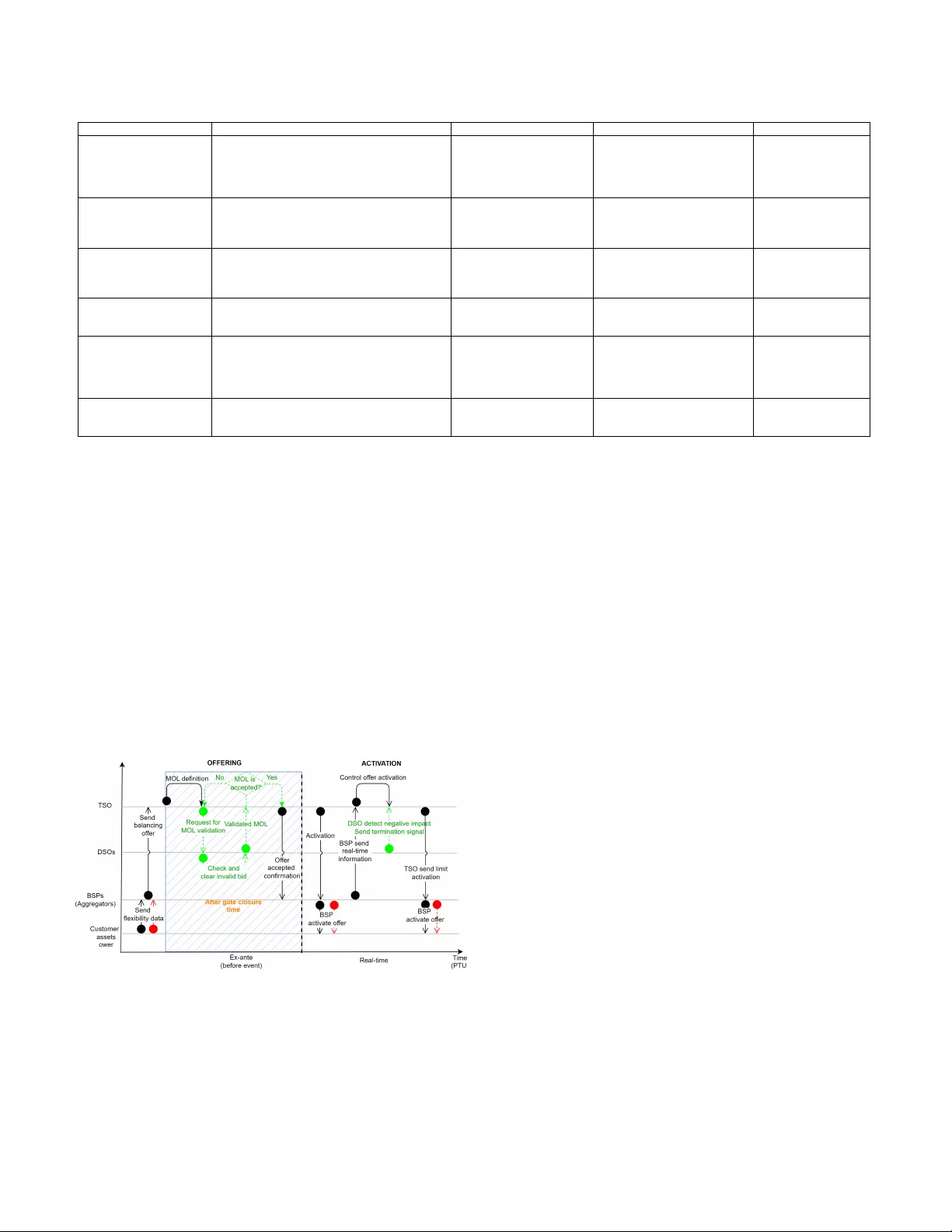
The coordination between TSO and DSO in the conte xt of ener gy transition - A re vie w Hang Nguyen, K oen K ok, T rung Thai Tran, Phuong H. Nguyen Department of Electrical Engineering, Electrical Ener gy Systems Group Eindhoven University of T echnology Eindhov en, The Netherlands { t.h.nguyen, j.k.kok, t.t.tran, P .Nguyen.Hong } @tue.nl Abstract —Nowadays, energy transition is ongoing in many countries, aiming to reduce dependence on fossil fuels and CO2 emissions. Besides the positive impacts on the en vironment, this transition brings technical challenges to the system operators, such as the intricacies of energy system integration, dimin- ishing uncertainty , and incentivizing customers with advanced transaction models. The coordination between the T ransmission system operator (TSO) and the Distribution system operator (DSO) is one of the most important aspects of encountering these obstacles. This coordination enhances the utilization of flexibility from Distributed energy resources (DERs) by incentivizing the market parties with better willingness to pay schemes. This paper provides an overview of the coordination schemes (CS), their classification, assessment of the current situation and the challenges associated with applying these schemes in practical context. The main purpose is to inv estigate the most effective way for TSO/DSOs to use the flexibility resour ce to maintain the balancing of the entire system while ensuring no congestion occurs in the network. A broad range of possible coordination schemes along with exploiting flexibility services is presented and the pros and cons are analyzed. Additionally , the study presents a general scenario that describes the interaction between the op- erators and the third party in providing service to the balancing market, considering cases with and without coordination. Index T erms —TSO-DSO coordination, DERs, flexibility . I . I N T RO D U C T I O N Physically , the transmission network (TN) and distribution network (DN) are connected through transformers. Howe ver , they are operated separately by the transmission system oper- ator (TSO) and the distribution system operator (DSO) due to differences in configuration and other technical characteristics [1]. Based on the IREN A report [2], Fig.1 describes the interaction between TSO, DSO, service pro viders and the system through the flow of po wer and service. The flow of services is exchanged between TSO, DSOs, with or without the participation of third parties. In the current situation, TSO and DSO are responsible for planning, managing and expanding the TN and DN, respectively . Therefore, the rapid increase in Distributed energy resources (DERs) penetration to the DN has brought both opportunities and challenges to the systems. Using flexibility services provided by DERs helps to The authors would like to acknowledge the financial support for this work from NWO funded DEMOSES project (No. RS103940) Fig. 1. Interaction model between system operators and DERs. improv e the ov erall efficienc y and reliability of the electricity system [2], [3]. In return, this requires additional responsibility from the system operators to manage these flexible resources and ensure the system operates securely . According to Helena et al. [4], the coordination between TSO and DSO presents the interaction, roles and responsibil- ities of each system operator in procuring and using distribu- tion grid-connected services. Enhancing coordination between TSO and DSOs helps better use of the flexible resources from the distribution network, optimizes the overall operating costs and defers future in vestment in the network. Moreover , enhancing the coordination and data exchange between TSO and DSO is necessary for both long-term and operational planning, contributing to shared balancing responsibilities and grid monitoring capabilities of the system operators. This means increasing DSOs participation in the balancing process like the pre-qualification of the customer assets. On the TSO side, TSO can access the required data from DSO-connected grid users through DSO or indirectly from a neutral party to ensure the data integrity and without transferring the DSO metering responsibility [5]. This coordination contributes to improving the system’ s efficiency and ensuring effecti ve op- eration [2]. Therefore, DSOs should have a more activ e role and responsibility in managing their local network [6]–[9]. TSO-DSO coordination has been getting more attention from organizations and research groups in many countries. V arious pilot projects in Europe have been initiated, such as SmartNet (Denmark, Italy and Spain) [10], CoordiNet (Greece, Spain and Sweden) [11], INTERRF A CE (Italy , Bulgari, the 979-8-3503-7973-0/24/$31.00 ©2024 European Union Baltic and Nordic region countries) [11], [12], InteGrid (Eu- ropean Commission) [13]. Besides, there are se veral related projects like GOP A CS (the Dutch TSO and its DSOs) [14], Enera (Germany), NODES (Norway and Germany), Piclo Flex (UK) [15], Soteria (Belgium), etc. [6], [16]. CoordiNet and INTERRF A CE [17] look for a cost-efficient coordination scheme that can be scaled up and will be replicable across the EU energy system. Their goals include maximizing re venue streams, minimizing operational costs and increasing the share of renewable energy while ensuring the grid constraints. Additionally , the project SmarNet conducts comparisons across a wide range of coordination schemes (CS) to acquire ancillary services from the DN. In GOP ACS project, a trading platform that is able to resolve congestion issues in both TN and DN, was initiated by the Dutch grid operators. This platform connects not only the grid operators, but also the market parties and major consumers, ensuring the congestion issue in a certain part of the grid will not cause problems in other parts [14]. In Belgium, Soteria project focuses on optimizing the coordination to unlock unused distributed flexibility and considers demand response as a key enabler of energy transition. These aforementioned projects share both common and distinct goals, statistic in [18] rev eal that there are five ma- jor coordination purposes, as voltage regulation [19], [20], reactiv e power management [21], operational cost optimiza- tion [11], [17], longterm operation planning [22], congestion management [4]. While TSO-DSO coordination is necessary and offers various benefits, it also faces certain obstacles. One significant barrier is the inadequate information and commu- nication technology infrastructure. Additionally , the majority of flexibility options reside with small-scale customers who cannot engage in the market, limiting the operators’ ability to tap into this resource. Another limitation is the inability of DSO to access flexibility resources within their local networks across most European nations. Consequently , DSOs should be granted the capability to procure services that address issues within the distribution grid [7]. Similarly , the authors in [11] emphasize the importance of empowering current and potential market actors, enhancing their role, and building trust by ensuring transparency . This CS is achieved via seamless information exchange and clear delineation of responsibilities. Based on the previous systematic literature revie w from [18], [23], the new international journals from ScienceDirect, IEEE Xplore database and international organization reports like ENTSO-E, IREN A, MIT CEEPR, and TENET’ document. The ke ywords used for the searches are TSO-DSO coordi- nation, TSO-DSO, TSO/DSO, TSO-DSO integration, TSO- DSO interaction, coordination of transmission system operator and distribution system operator , and distributed flexibility . A revie w of TSO-DSO coordination is demonstrated in this paper to answer the following questions: • What are the pros and cons of the coordination schemes? • What information should be exchanged between TSO and DSOs interface? • Which CS should be applied to suit the actual situation and effecti vely exploit the distributed resources? The abov e questions will be discussed in the following parts. Section II presents the literature revie w on TSO-DSO coor- dination. Section III discusses the pros and cons of the CSs. Next section presents the current situation and proposes a co- ordination scheme for the balancing mark et in the Netherlands. Finally , the conclusions are presented in section V . I I . L I T E R A T U R E R E V I E W A. The necessity of coor dination and data exc hange This section provides an ov erview of CSs, their necessity , different classifications and the physical pilots. The authors in [9] emphasize the importance of enhancing the interaction and coordination between TSO and DSO in both short-term action and long-term planning. The data exchange between TSO and DSOs should not only include power flow , forecasting data, and emergency situations as traditionally done, but also pricing, scheduling, and activ ation of their services. Moreover , to prevent harmful interferences between the use of flexibility for balancing and congestion management, DSOs should receiv e relev ant data to assess the impact of balancing services activ ation and determine the limits before activ ation [5], [24]. T o underscore the necessity for coordination, Alejandro et al. [3] show the potential cross impacts of uncoordinated activ ations. This shortage causes congestion or imbalance in the grid due to services activ ated in opposite directions and can jeopardize the benefits of using flexibility with the joined dispatch of the retailer . In [16], the authors demonstrate a TSO-DSO coordination in the case of UK, considering the high DER growth for future scenarios. The case studies giv e priority to DSO in using DERs to manage congestion in the distribution network, the remaining is sent to TSO by the traffic light mechanism. Results indicate that significant flexibility remains for the TSO ev en during periods of peak demand and maximum export. Furthermore, the objectives of TSO and DSOs are aligned in most cases. This mechanism is one solution to provide DERs flexibility to TSO while considering the distribution grid constraint. T alai Alazemi et al. [18] conducted a systematic literature revie w based on the CSs, modeling or simulation tools, the corresponding optimization problem and their main objective. The findings underline the important role of DSO and TSO- DSO coordination. While research on this topic has received increased attention in recent years, there are still some gaps that need to be filled notably the absence of standardized communication solutions and the need for practical implemen- tations to test and demonstrate feasible results. Moreo ver , there is a deficiency in a uni versal approach to solve all network management issues. B. Classification of coor dination schemes V arious framew orks hav e been introduced to facilitate the TSO-DSO coordination, each falling into distinct categories. Primarily , these frameworks can be dif ferentiated based on market design, operational procedures, and the organization and exchange of data, categorizing them into centralized and decentralized models. The diagram in Fig. 2 explains the centralized approach in the left side and the decentralized approach in the right side. The black line sho ws the physical connection in the network, in which the flexible resource in high voltage (HV) lev el is connected to the transmission network, and the distributed energy resources (DERs) is con- nected to the medium and low voltage network (distribution network). In the centralized approach, TSO uses resources from both the transmission and distribution network (DERs) as illustrated by the green line. The red line represents the flow of control signal, TSO is responsible for managing the balancing, and congestion for the entire system. These huge tasks make this scheme less feasible to apply in reality . According to statistics presented in [13], a significant por- tion of scholarly research leans tow ards the decentralized model, accounting for more than 90% of the research. Con- versely , centralized models ha ve attracted less attention. This disparity is attributed to the high computational demands placed on the TSO and the necessity for intricate commu- nication infrastructure in centralized systems. Fig. 2. Centralized and decentralized approach. On the contrary , the decentralized approach equalizes the responsibility for both of them. TSO and DSOs use the RESs connected to their grid to manage congestion and maintain balance in their network. The authors in [25] the author compare the full smart grid (the aggregator and operators have full information about each other’ s operation) with the decen- tralized control (information about the grid is only partially av ailable) and the scenario has no communication. Results show that decentralized control can enable around 90% of the economic improvement of the fully controllable grid scenario thanks to the reduction of cost-intensiv e for upgrading the grid towards a smart grid. Similarly , in [26] two decentralized schemes are compared with a benchmark centralized scheme. Their result shows that the first schemes bring the highest social welfare, while the decentralized way is more profitable for TSO when sharing the operational cost and reducing the burden of computational tasks. Arthur et al. [27] categorize coordination models into three distinct schemes based on the validation process of DER bids and the entities responsible for this process. The first scheme is unique in av oiding any conflict of interest among DSOs. Howe ver , this model faces challenges as the volume of DERs increases, presenting a significant scalability issue for TSO. In contrast, the other two schemes empower DSOs with a more proactiv e role and increased responsibilities. Decision- makers are thus tasked with selecting the most suitable model, considering the current and future objectives of the system. Like wise, the SmartNet report [4], [28] conducts its analysis by examining the relationships and roles between system oper- ators, resulting in the classification of coordination models into fiv e schemes. Among these, the common TSO-DSO ancillary market model aims to minimize total system costs. Meanwhile, the inte grated fle xibility market model prioritizes the allocation of flexibility to those with the highest willingness to pay with the in volv ement of an independent market operator . C. Physical pilots The majority of publications on TSO-DSO coordination are predominantly based on simulations. These simulations, while valuable, do not fully capture the complexities and realities of actual TSO-DSO coordination processes. Experiments con- ducted in hardware settings offer a more accurate reflection of the coordination dynamics and challenges. The case study from Portugal [29] highlights the imple- mentation of an Inter Control Centre Protocol link between TSO and DSO. This system facilitates the exchange of critical real-time data, including po wer , reactive power , and the status of ke y equipment such as circuit breakers and switches. The improv ed coordination resulting from this setup enables the TSO to more accurately predict load changes. Simultaneously , it provides DSOs with the necessary insights to assess whether reconfiguration actions are required in response to significant failures within the transmission network Currently , 4 of the 5 proposed schemes in the SmartNet project have been piloted in Italy , Denmark, and Spain scenar- ios [28]. The result shows that the common marketplace should be implemented in the decentralized schemes. From the Danish scenario, the centralized schemes are the most effecti ve and optimal ones if there is not a significant congestion issue in the DN. Besides, the cost of monitoring and controlling the DN could be higher than the over -inv estment cost at the beginning period while the ICT costs stay one order of magnitude lower than operational costs. Additionally , the reaction to commands from the operators in real-time seems to be too slow and further testing is needed to ensure responsiv eness. In the CoordiNet project [16], the researchers dev eloped their coordination scheme drawing on insights from the Smart- Net framew ork while introducing modifications through ad- ditional models: the multi-level, fragmented, and distributed market model. These models are designed to serve both TSO and DSO. Notably , in the fragmented market model, while services are av ailable to both operators, TSO is restricted from utilizing DER flexibility . From the Greek demo, both multi- lev el and fragmented CSs encouraged the formation of a local market that would consider in detail the components in the distribution grid and ensure secure and reliable operation of the distribution network. The Sweden demo with the multi- lev el and distributed market model emphasizes the importance of putting DSO-TSO markets in the timeframes of the current spot market (day-ahead (D A), intraday market (ID)) without interference. The 2 CSs were selected based on the integration with the current market and regulation. The result demon- strated that better coordination between DSO and TSO can giv e rise to more ef ficient grid use. All the mentioned CSs in this project were sho wn to be suitable. Howe ver , there is no single approach adapted to the div erse TSO-DSO landscape. The selection depends on na- tional characteristics, network topology , and the characteristics of the flexibility resources. I I I . A N A L Y T I C A L C O M PA R I S O N Multiple CSs hav e been proposed. Although these schemes are known by v arious names, they often share similar char- acteristics. Coordination between TSO and DSOs not only benefits the system operators in addressing network issues but also incentivizes the flexibility providers to engage in the market. Flexibility has multiple dimensions like capacity , duration, ramp rate, direction, response time and location. Each type of flexibility should be used effecti vely in dif ferent dimensions. Therefore, the solution is to aggregate these resources together in a common flexibility market. In this common market, each participant uses service for dif ferent purposes, TSO use flexibility to ensure system balance, DSOs use fle xibility to resolve local congestion, and third parties use flexibility to optimize their profit by correcting unbalanced positions in their portfolios. Each CS ha ve a dif ferent impact on the system security base on ho w much, how fast and the characteristics of the service they can provide. Howe ver , in general, the more DERs resources av ailable, the better the ability to ensure operation security . In turn, that requires more data e xchange, making the system more vulnerable to external threats [5], [11], [28]. The detail lev el of different kinds of data exchanges depends not only on the type of service but also on market rules. Even though the SCAD A system could support the SOs in the acquisition of relev ant data from third parties, each SO should be responsible for its own IT system and dev elop the TSO-DSO interface to support data exchange in real time. Furthermore, it is essential to have an international data security standard and common communication framew ork for increasing harmonization of communication protocols and data exchange messages. In general, there are 6 main CSs. More detail about the characteristics, advantages, disadv antages, and DSO role of each coordination scheme is presented in T able I. Although each model has advantages and disadv antages, the presence of a common flexibility market, where all DERs from DN and large generators from the TN are provided to all the market parties like TSO, DSOs with or without third- party seems to be a promising approach to minimize the total operation cost and increase the social welfare. I V . P R O P O S E D C O O R D I N A T I O N S C H E M E S A. Sequence diagram Based on current situation of the electricity market in the Netherlands and the preceding discussion, a hybrid TSO- Fig. 3. Sequence diagram of the prequalification process. DSO coordination scheme is proposed and described in this section. The sequence diagram in Fig. 3 presents an ov erview of the interaction between TSO, DSOs, and BSPs in the prequalification, offering and acti vation process, applied for the balancing market in the Netherlands based on the current situation and the scenario with the coordination. The black line presents the current situation, the green line presents the coordination between TSO and DSOs, the red line presents the flow of service from DERs. Besides, the dashed line sho ws that this interaction does not e xist in reality . This diagram describes the aFRR and mFRR services. In which, BSPs take on the role of the aggregator who aggregates the DERs fle xibility . Therefore, BSPs can provide balancing services from both large generators and DERs. Before an asset belonging to a BSP can supply a balancing service (FRR) for TSO, the BSP needs to request the prequalification of the technical data to prov e that the assets can deliv er FRR under the specified technical minimum requirements [30]. In this process, TSO can collaborate with DSOs by submitting the assets connected to the distribution grid under the operation of this DSO for prequalification. Once the DSOs finish the test and v alidate the technical data, they transmit the validated data to TSO. Subsequently , TSO performs tests and validates the assets connected to the transmission network. Finally , TSO sends the validated data to BSPs. BSP is required to retain this information with a minimum resolution of 4 seconds for 5 years or until re-qualification. The of fering and activ ation process is presented in Fig.4. At the start of each imbalance settlement period (ISP), TSO aggregates the ener gy bids from BSPs to create the new merit order list (list of energy bids ordered by price). In this process, to alle viate the impact on the distribution network, TSO should coordinate with DSO by sending the MOL to DSO for v alidation, then DSOs perform power flow to check if any component in their network violates the constraint and clear the in valid bid or update the ne w value of the upper and lower boundary of the energy bid, then send the validated MOL to TSO. After that, TSO continues to verify until the MOL is accepted and sends the offer accepted confirmation to BSPs. Howe ver , there is no coordination between TSO and DSO in the offering process in reality . The aFRR is activ ated automatically by the load frequency control (LFC) T ABLE I P RO S A N D C O N S O F T HE C OO R D I NA T I ON S C HE M E S Coordination schemes Description Advantages Disadvantages DSO role TSO-managed model/ Centralize AS market model TSO contracts service directly with DERs provider , TSO is the single buyer and performs economic dispatch of DERs Simplify the coordination process. Minimize opera- tional cost. No conflict of interest for DSOs. TSO does not consider con- straints in the DN due to lack of information. TSO faces huge computational and model- ing challenges. DSO role is unchanged. DSO managed model/ Lo- cal AS market model DSOs aggregate and use DERs service for local congestion management, then send the rest to the central market DSO has a more important role and consider local net- work constraints. Conflict of interest among DSOs, DSOs take huge computational and modeling challenges. DSO has priority to use DER services. Manage congestion in the local network. Shared balancing responsibility model/ Fragmented market model TSO and DSO manage their market. The respon- sibilities of the TSO and DSO are divided equally according to a predetermined schedule. Respecting the DN con- straints TSO can not access the DERs resource. Manage congestion and keep balancing the local system. TSO-DSO hybrid- managed model/ Multi- lev el market model TSO and DSO manage their market. TSO has access to DER service once DSOs validate service made by DERs to the central market. Respecting the DN con- straints. DSOs take huge computational and modeling challenges. Manage congestion and keep balancing the local system. Common TSO-DSO AS market model TSO and DSOs jointly manage to maintain bal- ance and manage congestion for the entire system. TSO performs economic dispatch once DSOs val- idate DERs bids Minimize total cost Heavy mathematical for opti- mization and complex coordina- tion processes. Conflict of inter- est among DSOs. Local congestion management, cooperation with TSO when validating DERs bids. Integrated flexibility mar- ket model TSO, DSO and commercial parties contract with the independent market operators Highest willingness to pay while respecting the DN constraints Difficult to consider both TN and DN and the operational cost will not be optimized. Manage congestion the local system. following the delta setpoint provided by TSO. The offer accepted confirmation is the activ ation of the accepted bid for aFRR and 15 minutes before for mFRR. Based on the system’ s frequency deviation, TSO determines the volume that needs to be adjusted and requests BSPs to regulate upward or downward their offer following the delta setpoint. T ennet monitors the difference between the requested v olumes and the total of BSP allocated every 5 minutes. TSO pays for BSP based on the balancing energy price and the total activ ation per ISP . In this process, BSPs have the right to activ ate the av ailable assets that are most economically efficient for them. The utilization of flexibility for congestion management is not presented in this sequence diagram and is conducted in the D A and ID markets. Fig. 4. Sequence diagram of the offering and activ ation process. B. Example Let’ s assume a BSP which have a stable production of 200MW can provide aFRR energy bid of upward and do wn- ward 20 MW . In which, 10 MW is aggregated from the DER flexibility . Besides, they have the lowest price compared with other BSPs and will be ordered in the first place on the merit order list. This BSP has a contract with TSO and submitted their bids to TSO before 2:45 pm the day prior and their assets were prequalified by TSO. At 10:00, the system is short, TSO decides to activ ate the 10MW ener gy bid from the above BSP (In this case, the disturbance is not significant, if not, TSO has to activ ate all energy bids in parallel with the maximum ramping rate). The volume 200MW is considered as the reference value. TSO sends the delta setpoint to BSP with a maximum value of 1 MW and minimum time resolution of 4 seconds. The change of delta setpoint is larger than the ramp rate of the energy bids to make sure BSP assets ha ve enough time to adjust their supply follo wing this instruction. Therefore, from 10:01 to 10:06, ev ery 30 seconds, TSO increases the delta setpoint to 1 MW until reaches 10 MW , and the setpoint will kept unchanged. Howe ver , the system is still short, this BSP can continue to increase till its maximum of 20MW to help the system balance as long as the av erage energy supply during this stable period is at least equal to the requested energy . The FVC will continuously monitor the volume of balancing energy that has been activ ated. BSP can tolerate their supply in the range [-10%,20%] of the setpoint. In case the BSP assets can not follow the setpoint, TSO has the right to withdraw the BSP qualification. In the next ISP , this bid is deactiv ated due to its price or the activ ated bid is no longer available. TSO provides the setpoint to regulate back to the reference value of 200 MW . Howe ver , activ ating this bid with a total volume of 20 MW causes congestion at the line behind the transformer at the coupling point to the distribution network because the DSO also activ ates the re-dispatch bid to resolve the congestion in another region in their network. In case TSO and DSOs hav e coordination in the offering process, DSO will perform po wer flow , update the limit and send the new boundary of 15MW to TSO. At the deli very time, the BSP can not supply over this limit and DSO will monitor and update the information to TSO. Therefore, with this interaction, the congestion will not occur anymore. Therefore, with coordination, TSO can send their flexibility bid profile to DSOs, to make sure no flexibility bid from TSO will violate the constraint in the distribution network or be acti vated in the opposite direction with DSOs to alleviate the neg ativ e impact and reduce the total operational cost. The system operators work together to manage the common market and resolve the network issue. V . C O N C L U S I O N T o attain the zero-carbon target, the shift from fossil fuels to renew able energy is unavoidable and is being promoted by numerous nations and organizations. Nev ertheless, there exists a trade-off between the environmental advantages and the challenges in energy system management. System operators must transform these challenges into opportunities by enhanc- ing coordination among themselves in both short-term action and long-term planning. This paper presents a revie w of the av ailable TSO-DSO coordinations and pro vides insight into the CSs, type of data exchange, and the role of market partic- ipants for each scheme. Moreover , different schemes will have different orders of priority to use flexibility , the adv antages and disadvantages. It is important to highlight the necessity of the construction of a local flexibility market, where TSO, DSOs and other parties have access to the resources and DSOs hav e a more activ e role in using their resource. A sequence diagram describes the interaction between TSO, DSO and BSP for the balancing market in the Netherlands based on the hybrid TSO- DSO managed model. There is coordination between TSO and DSO in the prequalification process. Howe ver , the shortage of real-time and near real-time coordination has the potential to impact the network. Future work will be based on the abov e assessment to quantify the issue in the transmission and distribution network considering the TSO-DSO coordination for both the current situation and projected scenarios. R E F E R E N C E S [1] Gayathri Krishnamoorthy and Anamika Dubey . T ransmission- distribution co-simulation: Analytical methods for iterative coupling, 12 2019. [2] IRENA(2020). Innovation landscape brief: Co-operation between trans- mission and distribution system operators. International Renewable Ener gy Agency , 2020. [3] Alejandro V icente-Pastor , Jesus Nieto-Martin, Derek W . Bunn, and Arnaud Laur . Evaluation of flexibility markets for retailer–dso–tso coordination. IEEE T ransactions on P ower Systems , 34(3):2003–2012, 2019. [4] Helena Gerard, Enrique Israel Rivero Puente, and Daan Six. Coordi- nation between transmission and distribution system operators in the electricity sector: A conceptual framew ork. Utilities P olicy , 50:40–48, 2018. [5] ENTSO-E; CEDEC; GEODE; EURELECTRIC; EDSO. Tso-dso data management report. 2015. [6] Ilyes Mezghani. Coordination of transmission and distribution system operations in electricity markets. PhD Thesis , pages 4–5, 2021. [7] Simone Minniti, Niyam Haque, Phuong Nguyen, and Guus Pemen. Local markets for flexibility trading: Key stages and enablers. Ener gies , 11(11), 2018. [8] Marco Rossi, Gianluigi Migliavacca, Giacomo V igan ` o, Dario Siface, Carlos Madina, In ´ es Gomez, Ivana Kockar , and Andrei Morch. Tso-dso coordination to acquire services from distribution grids: Simulations, cost-benefit analysis and regulatory conclusions from the smartnet project. Electric P ower Systems Resear ch , 189:106700, 2020. [9] Michael Birk, Jos ´ e Pablo Cha ves ´ Avila, T om ´ as G ´ omez San Rom ´ an, and Richard D. T abors. Tso/dso coordination in a context of distributed energy resource penetration. 2016. [10] Gianluigi Migliavacca, Marco Rossi, Daan Six, Mario D ˇ zamarija, Seppo Horsmanheimo, Carlos Madina, I. K ockar, and Juan Morales. Smartnet: H2020 project analysing tso–dso interaction to enable ancillary services provision from distrib ution networks. CIRED - Open Access Pr oceedings Journal , 2017:1998–2002, 10 2017. [11] CoordiNet. Recommendations to wards harmonized european flexibilities markets. ht tps://w ww .e dsofors martgr ids.eu/ edso- pu blicati ons/co ordine t- inter rface- recomm endations- towards- ha rmonized- eur opean- flexib iliti es- markets. Accessed: 2023-12-17. [12] Interrface. http://www .interrface.eu/. Accessed: 2023-12-17. [13] Intergrid. h tt ps : // ci ne a. ec .e u ro pa .e u/ fe a tu re d- p ro je ct s /i nt eg ri d \ e n. Accessed: 2023-12-17. [14] GOP A CS. https://www .gopacs.eu/hoe-werkt-gopacs/. Accessed: 2023- 12-17. [15] Piclo Flex. https://www .piclo.energy/. Accessed: 2023-12-17. [16] Calum Edmunds, Stuart Galloway , Ian Elders, W aqquas Bukhsh, and Rory T elford. Design of a dso-tso balancing market coordination scheme for decentralised energy . IET Generation T ransmission & Distribution , 14, 01 2020. [17] Florin Capitanescu. Computing cost curves of activ e distribution grids aggregated flexibility for tso-dso coordination. IEEE T ransactions on P ower Systems , pages 1–4, 2023. [18] T alal Alazemi, Mohamed Darwish, and Mohammed Radi. Tso/dso coordination for res integration: A systematic literature re view . Energies , 15(19), 2022. [19] Zhengshuo Li, Qinglai Guo, Hongbin Sun, and Jianhui W ang. Co- ordinated transmission and distribution ac optimal power flow . IEEE T ransactions on Smart Grid , 9(2):1228–1240, 2018. [20] Tiago Soares, Leonel Carvalho, Hugo Morais, Ricardo J. Bessa, T iago Abreu, and Eric Lambert. Reactive power provision by the dso to the tso considering renewable energy sources uncertainty . Sustainable Energy , Grids and Networks , 22:100333, 2020. [21] Jo ˜ ao Silva, Jean Sumaili, Ricardo J. Bessa, Lu ´ ıs Seca, Manuel A. Matos, Vladimiro Miranda, Mathieu Caujolle, Bel ´ en Goncer , and Maria Sebastian-V iana. Estimating the active and reactiv e po wer flexibility area at the tso-dso interface. IEEE T ransactions on P ower Systems , 33(5):4741–4750, 2018. [22] G. Graditi, R. Ciav arella, M. Di Somma, and M. V alenti. A control strategy for participation of dso fle xible resources in tso ancillary services provision. In 2019 International Confer ence on Clean Electrical P ower (ICCEP) , pages 586–592, 2019. [23] Arthur Gonc ¸ alves Givisiez, Kyriacos Petrou, and Luis F . Ochoa. A revie w on tso-dso coordination models and solution techniques. Electric P ower Systems Researc h , 189:106659, 2020. [24] entsoe. Distributed fle xibility and the v alue of tso/dso cooperation. https://eepublicdownloads.entsoe.eu/clean- documents/Publications/Position Accessed: 2024-03-08. [25] Jacob Tran. Economic optimization of electricity supply security in light of the interplay between tso and dso. SSRN Electr onic Journal , 01 2016. [26] H ´ el ` ene Le Cadre, Ily ` es Mezghani, and Anthony Papa vasiliou. A game- theoretic analysis of transmission-distribution system operator coordi- nation. Eur opean Journal of Operational Resear ch , 274(1):317–339, 2019. [27] Arthur Gonc ¸ alves Givisiez, Kyriacos Petrou, and Luis F . Ochoa. A revie w on tso-dso coordination models and solution techniques. Electric P ower Systems Researc h , 189:106659, 2020. [28] SMAR TNET . Tso-dso coordination for acquiring ancillary services from distribution grids. 2019. [29] Nuno Silv a, Carlos Mota Pinto, Alberto Maia Bernardo, Ant ´ onio Carra- patoso, Rui Pestana, and Susana Dias. The interaction between dso and tso to increase dg penetration — the portuguese example. In CIRED 2012 W orkshop: Integr ation of Renewables into the Distribution Grid , pages 1–4, 2012. [30] TENNET . Manual afrr for bsps. https://tennet-drupal.s3.eu-central- 1.amazonaws.com/default/2023-08/aFRR Accessed: 2024-03-08.
Original Paper
Loading high-quality paper...
Comments & Academic Discussion
Loading comments...
Leave a Comment