Fractal dimension of singular times for SPDEs: Energy bounds, criticality, and weak-strong uniqueness
For several physically relevant SPDEs, it is known that global weak solutions coexist with local strong ones. Typically, weak-strong uniqueness results are known, and ensure that the global and strong solutions coincide as long as the latter exist. T…
Authors: Antonio Agresti
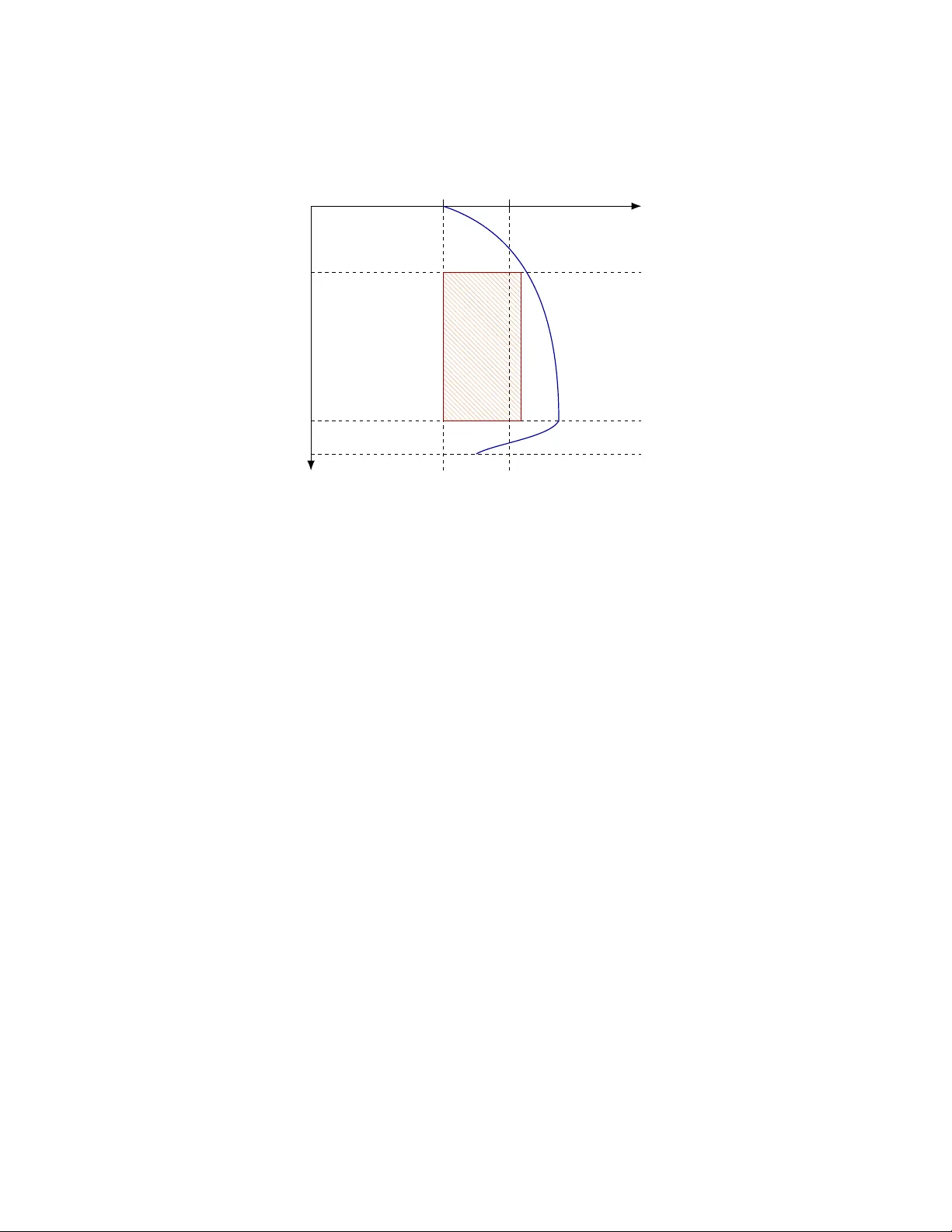
FRA CT AL DIMENSION OF SINGULAR TIMES F OR SPDEs: ENER GY BOUNDS, CRITICALITY, AND WEAK-STR ONG UNIQUENESS ANTONIO AGRESTI Abstract. F or several physically relev an t SPDEs, it is known that global weak solutions coexist with lo cal strong ones. Typically , w eak-strong unique- ness results are known, and ensure that the global and strong solutions coincide as long as the latter exist. Times at which a weak solution do es not coincide with a strong one are called singular times . Determining their fractal dimen- sion is fundamental to capturing the regularity of weak solutions. W e define singular times for a wide class of semilinear SPDEs. W e sho w that sets of singular times hav e fractal dimension (i.e., Hausdorff and/or Minko wski) at most 1 ´ ℓ Exc , where ℓ and Exc are the time inte gr ability and the exc ess of sp atial re gularity compared to the critical regularity of the ener gy b ound associated with weak solutions, resp ectively . Moreov er, their corresponding p 1 ´ ℓ Exc q -dimensional measure is zero. W e form ulate and apply our theory to quenched strong Leray-Hopf solutions of 3D Navier-Stokes equations (NSEs) with ph ysically relev an t noises, including rough Kraic hnan and Lie transport. In particular, w e extend the fundamental 1 { 2-dimensional b ound of Lera y and Scheffer on singular times for 3D NSEs to the sto c hastic setting, and we prov e new conditional results under sup ercritical Serrin’s conditions, irresp ective of the roughness of the noise. Our framew ork is new even in the deterministic case, and provides the first partial regularity results for weak solutions to SPDEs with multiplicativ e noise. Contents 1. In tro duction 2 1.1. Singular times for sto c hastic 3D Navier-Stok es equations 3 1.2. The abstract formulation and the role of criticality 7 1.3. Space-time singular sets and related literature 9 1.4. F urther applications 11 1.5. Notation 11 2. Preliminaries 12 2.1. F ractal measures and dimensions 12 2.2. Leb esgue p oints and progressiv e measurability 13 2.3. Sto c hastic maximal L p -regularit y and SPDEs in critical spaces 14 3. Singular times for SPDEs and their fractal dimensions 17 3.1. Regular and singular times 17 Date : F ebruary 26, 2026. 2020 Mathematics Subject Classific ation. Primary 60H15; Secondary 28A80, 35B65, 35Q30. Key wor ds and phr ases. Partial regularit y , singular times, stochastic Navier-Stok es equations, fractal dimension, Hausdorff dimension, critical spaces, weak-strong uniqueness, multiplicativ e noise, quenched energy inequality , weak solutions, Leray-Hopf solutions. The author is a member of GNAMP A (INdAM). 1 2 ANTONIO A GRESTI 3.2. Bounds on the fractal dimension of singular times for SPDEs 20 3.3. F urther prop erties and results on singular times 22 4. Quan tifying lo cal well-posedness and singular times for SPDEs 24 4.1. Pro of of Theorems 3.8 and 3.10, and Prop osition 3.13 25 4.2. Lo wer bounds of lifetime of solutions – Pro of of Proposition 4.1 29 5. Singular times of sto c hastic 3D Navier-Stok es equations 33 5.1. Preliminaries 34 5.2. Bounds on singular times of quenched strong Leray-Hopf solutions 36 5.3. W eak-strong uniqueness and pro ofs of Theorems 5.5 and 5.6 40 5.4. Sto c hastic strong Leray-Hopf solutions – Pro of of Prop osition 5.3 47 References 50 1. Introduction W eak solutions to sto chastic PDEs (SPDEs) appear in a v ariet y of contexts in applied sciences, including fluid mechanics, biology , and chemistry (e.g., reaction- diffusion equations and phase-separation pro cesses). Understanding the regularity of weak solutions to SPDEs is often a challenging task, and the global smoothness of suc h solutions cannot b e expected in general. In this scenario, it is of k ey in terest to quantify the size of the set where p ossible singularities migh t arise. The protot ypical example is the 3D Navier-Stok es equations (NSEs), whic h mo del the motion of an incompressible fluid. Their physically motiv ated sto chastic v ariants will b e the guiding examples of our inv estigation. The set of singularities of a weak solution to an (S)PDE can presen t a rather complicated structure. Th us, it is cen tral to obtain sharp b ounds on the fractal dimension (e.g., Hausdorff ) of the singular set. In the absence of noise, suc h results are w ell-known for many PDEs, and they are usually referred to as p artial r e gularity . The current manuscript app ears to b e the first work in the largely unexplored field of partial regularit y for SPDEs with m ultiplicative noise, whic h is t ypically of primary ph ysical in terest, as discussed for the NSEs in Subsection 1.1 b elow. There are v arious wa ys to define the set of singularities. One of these, whose extension to the sto chastic setting is one of the main contributions of this work, is via the so-called singular times . The key idea b ehind this concept is as follo ws. A time t 0 ą 0 is called r e gular for a solution u to a giv en PDE on a domain O if there exists an op en in terv al I 0 con taining t 0 suc h that (1.1) u | I 0 ˆ O P C 8 p I 0 ˆ O q . Singular times are those times that are not regular. In this manuscript, we intr o duc e and develop a robust framew ork for studying the fractal dimensions of singular times for SPDEs with multiplic ative noise . Our setting offers a new viewp oint on singular times, relying on the recent theory of SPDEs in critical spaces (see e.g., [ 16 ]), which is not limited to sto chastic 3D NSEs, and is new ev en in the deterministic setting. W e illustrate the main results of this man uscript as follows: ‚ Section 1.1 – Bounds on the fractal dimension of singular times of quenche d strong Leray-Hopf solutions to 3D NSEs with multiplicativ e noise of trans- p ort and Lie type (see Theorem 1.1 ). In particular, we extend the classical FRACT AL DIMENSION OF SINGULAR TIMES FOR SPDEs 3 results by Leray [ 70 ] and Sc heffer [ 90 ] on singular times to the sto c hastic setting. ‚ Section 1.2 – Bounds on the fractal dimension of singular times for abstract SPDEs, see Theorem 1.2 . The latter encompasses all situations b etw een global irregularit y and global regularity , i.e., the p artial regularity regime (see Figure 2 ). The results on the NSEs are a consequence of the ones for abstract SPDEs, see Figure 1 . Comments on space-time singular sets in the spiri t of the celebrated w ork of Caffarelli, Kohn, and Niren berg [ 26 ] and related literature are giv en in Subsection 1.3 . F urther applications of our results to, e.g., reaction-diffusion equations and other mo dels from fluid dynamics are discussed in Subsection 1.4 . 1.1. Singular times for sto chastic 3D Na vier-Stok es equations. The NSEs with multiplicativ e noise of transport and Lie t yp e on T 3 “ R 3 { Z 3 read as follo ws: B t u “ ∆ u ´ ∇ p ´ p u ¨ ∇ q u ` ÿ n ě 1 “ ´ ∇ r p n ` p σ n ¨ ∇ q u ` µ n ¨ u ‰ ˝ 9 W n , (1.2) together with the incompressibilit y condition ∇ ¨ u “ 0, and initial condition u p 0 q “ u 0 . In the ab ov e, u : r 0 , 8q ˆ Ω ˆ T 3 Ñ R 3 denotes the unknown velocity field, p, r p n : r 0 , 8qˆ Ω ˆ T 3 Ñ R the unkno wn pressures, p W n q n a sequence of independent standard Bro wnian motions and ˝ the Stratono vic h in tegration. Moreov er, σ n is a div ergence-free v ector field for all n , and for some γ ą 0, (1.3) p σ n q n P C γ p T 3 ; ℓ 2 p N ; R 3 qq and p µ n q n P C γ p T 3 ; ℓ 2 p N ; R 3 ˆ 3 qq . 1.1.1. Physic al motivations and r elate d liter atur e. The stochastic NSEs ( 1.2 ) cov er the following tw o cases of physical interest: ‚ (R ough) tr ansp ort noise: µ n “ 0 and p σ n q n P C γ p T 3 ; ℓ 2 p N ; R 3 qq ; ‚ Sto chastic Lie tr ansp ort: µ n “ ∇ σ n and p σ n q n P C γ p T 3 ; ℓ 2 p N ; R 3 qq ; for arbitrary γ ą 0. Ph ysical deriv ations and comments on sto chastic 3D NSEs ( 1.2 ) with the ab ov e noises can b e found in e.g., [ 22 , 36 , 44 , 77 , 79 , 21 , 76 ] and [ 43 , 55 , 35 ], resp ectively . Notably , transp ort noise of Kraichnan t yp e can repro duce the Kolmo gor ov sp e ctrum of turbulence for γ “ 2 3 , see [ 75 , pp. 426-427 and 436] (and also [ 48 , Remark 5.3] or [ 1 , eq. (1.4)-(1.5)]). Recalling the deriv ation of ( 1.2 ) with µ n ” 0 in [ 79 ] via the sto chastic Lagrangian approac h, i.e., the tra jectory p x t q t of a fluid particle lo cated at x at the initial time satisfies 9 x t “ u p t, x t q ` ř n ě 1 σ n p x t q ˝ 9 W n , x 0 “ x P T 3 , the case of r ough Kraichnan noise γ P p 0 , 1 q can be though t of as an in termediate turbulen t situation in which the small-scale part of the v elo cit y ř n ě 1 σ n ˝ 9 W n is fully turbulent, while the large-scale part u is not. Now ada ys, there is an extensive and still growing literature on sto chastic NSEs, see e.g., [ 15 , 22 , 23 , 34 , 42 , 43 , 51 , 52 , 79 , 78 , 54 , 68 ], and it is not possible to giv e a complete accoun t here. In the deterministic setting, the first result on singular times of w eak solutions to the NSEs go es back to the fundamen tal w ork of Leray [ 70 ], where the existence of global weak solutions for 3D NSEs satisfying an energy inequality (usually referred to as Lera y-Hopf solutions, see [ 56 ] and ( 1.7 )) was pro v en, with a set of singular times of Hausdorff dimension less than 1 { 2 (see the commen ts on [ 90 , p. 535]). The reader is referred to Subsection 2.1 and [ 38 ] for basic notions on fractal dimensions 4 ANTONIO A GRESTI and measures. In [ 90 ], Scheffer additionally prov ed that suc h a set has zero 1 { 2- dimensional Hausdorff measure. More recently , these results hav e b een refined b y Robinson and Sadowski [ 88 , Corollary 3.1] and Kuk avica [ 66 , Theorem 2.10] using the Minko wski (or box-coun ting) conten t and dimensions. It is worth noting that singular times ha ve also b een considered in the recen t w ork [ 25 ] b y Buckmaster, Colom b o, and Vicol, where they prov ed the existence of very weak solutions to the 3D NSEs whose singular times hav e b ox-coun ting dimension less than 1. 1.1.2. Bounds on singular times for sto chastic 3D NSEs. T o extend ( 1.1 ) to the sto c hastic setting, let us recall that, under the regularity assumption ( 1.3 ), it follows from [ 15 , Theorem 2.4] that strong solutions of ( 1.2 ) hav e a.s. paths in (1.4) C 1 { 2 ´ , p 1 ` γ q´ loc pp 0 , T q ˆ T 3 q , see Subsection 1.5 for the notation. The thresholds 1 { 2 and 1 ` γ are optimal for regularit y of solutions to ( 1.2 ) even for strong ones, making the latter space the natural replacement for the smo othness condition in ( 1.1 ). Let u : r 0 , 8q ˆ Ω Ñ H 1 p T 3 ; R 3 q b e a weak solution to ( 1.2 ), that is, the latter b eing satisfied in the w eak PDE sense in space, and in the natural integral form in time (see Definition 5.2 ( 1 )-( 2 ) for the precise form ulation). F or ε P p 0 , 1 q , a time t 0 ą 0 is said to b e an ε -regular time for u (or, briefly , t 0 P T ε Reg ), if there exists a sto chastic interval p t, τ q where t ă t 0 and τ : Ω Ñ r t, 8s is a stopping time suc h that (1.5) P p τ ą t q ą 1 ´ ε and u | p t,τ q P C 1 { 2 ´ , p 1 ` γ q´ loc pp t, τ q ˆ T 3 ; R 3 q a.s. F or eac h ε P p 0 , 1 q , the sets of ε -singular and singular times of u are giv en by (1.6) T ε Sin “ r 0 , 8qz T ε Reg and T Sin “ Ť ε Pp 0 , 1 q T ε Sin , resp ectiv ely (see Definition 5.4 ). As in the deterministic case, the notion of w eak solutions as given ab o ve is too w eak to allow for estimating the size of singular times (see e.g., [ 69 , Theorem 13.5]). Here, we consider quenche d str ong L er ay-Hopf solutions to the 3D NSEs ( 1.2 ) (see Definition 5.2 ( 3 )), i.e., in addition to being w eak solutions in the PDE-sense, u also satisfies the quenche d str ong ener gy ine quality : F or a.a. t P R ` and all stopping times τ : Ω Ñ r t, 8q , it holds that E } u p τ q} 2 L 2 ` 2 E ˆ τ t ˆ T 3 | ∇ u | 2 d x d r (1.7) ď E } u p t q} 2 L 2 ` E ˆ τ t ˆ T 3 “ pp σ n ¨ ∇ q ` µ n q u ‰ ¨ P “ p µ n ` µ J n q u ‰ d x d r , where P denotes the Helmholtz pro jection, see Subsection 5.1.1 . In the abov e, str ong refers to the fact that the initial time in the ab ov e inequality can b e chosen in a set of full measure, cf. [ 69 , Prop osition 12.1]. The definition of quenched strong Leray- Hopf solutions appears to b e new , and their existence is pro v en in Prop osition 5.3 (see also [ 46 , 47 ] and the commen ts b elow the prop osition for further comments). The quenc hed strong energy inequality ( 1.7 ) seems to b e the w eakest condition under whic h the follo wing partial regularity results for the sto c hastic 3D NSEs ( 1.2 ) hold. In particular, a path wise energy inequalit y , whic h is exp ected in the case of pure transp ort µ n ” 0, is not needed. W e refer to Subsection 2.1 for the Hausdorff and Minko wski dimension, and measure/con ten t H and M . FRACT AL DIMENSION OF SINGULAR TIMES FOR SPDEs 5 Theorem 1.1 (Bounds on singular times for 3D stochastic NSEs – Informal v ersion of Theorems 5.5 and 5.6 ) . L et u b e a quenche d str ong L er ay-Hopf solution to the sto chastic 3D NSEs ( 1.2 ) . L et T ε Sin and T Sin b e the ε -singular and singular times of u with ε P p 0 , 1 q , r esp e ctively. Then, the fol lowing assertions hold. (1) (1 { 2-b ounds) F or al l ε P p 0 , 1 q , it holds that dim M p T ε Sin q ď 1 { 2 , M 1 { 2 p T ε Sin q “ 0 , (Mink owski/Bo x-counting) dim H p T Sin q ď 1 { 2 , H 1 { 2 p T Sin q “ 0 . (Hausdorff ) (2) (Conditional b ounds – Sup ercritical Serrin conditions) Assume further that ther e exist p 0 P p 2 , 8q and q 0 P p 3 , 8q such that 2 p 0 ` 3 q 0 ą 1 , and E ˆ T 0 } u } p 0 L q 0 p T 3 ; R 3 q d t ă 8 for al l T ă 8 . Set δ 0 “ p 0 2 p 2 p 0 ` 3 q 0 ´ 1 q . Then, for al l ε P p 0 , 1 q , it holds that dim M p T ε Sin q ď δ 0 , M δ 0 p T ε Sin q “ 0 , (Mink owski/Bo x-counting) dim H p T Sin q ď δ 0 , H δ 0 p T Sin q “ 0 . (Hausdorff ) The ab ov e provides an extension of the results b y Leray and Scheffer [ 70 , 90 ], and Kuk a vica and Robinson-Sadowski [ 66 , 88 ] to the stochastic setting. Moreo v er, the obtained b ound is indep endent of the noise regularit y γ ą 0 in ( 1.3 ). T ogether with the foundational works [ 41 , 78 ], Theorem 1.1 partially closes the gap b et ween the deterministic and sto c hastic theories of Lera y-Hopf solutions to 3D NSEs. It is w orth mentioning that, in ligh t of the recent breakthrough results [ 17 , 57 ] on non-uniqueness of Lera y-Hopf solutions in the deterministic setting, one ma y exp ect the b ounds in ( 1 ) and ( 2 ) to be generically optimal. Theorem 1.1 is actually a sp ecial case of a general result on abstract SPDEs presen ted in Theorem 1.2 b elow. F or a schematic application of the latter leading to Theorem 1.1 , see Figure 1 . F or the whole-space case, see Remark 5.7 . It remains an op en problem to determine whether the b ounds on the singular times T Sin in Theorem 1.1 can be obtained in terms of the Mink o wski/b o x-counting con tent or dimension. This is due to the lack of σ -subadditivity of the Minko wski con tent (see Remark 2.2 ) and the definition of the set of singular times in ( 1.6 ). The assertion ( 2 ) seems new ev en in the deterministic case (see [ 74 ] for a result in the case of p ositive smo othness). In Theorem 5.6 , we also consider L q 0 replaced b y a Besov space of ne gative smo othness . Unfortunately , it is unclear whether the assumed bound in ( 2 ) is satisfied b y a quenched Leray-Hopf solution. It is w orth noticing that the dimensional b ound δ 0 on the singular times in ( 2 ) v anishes in case the Serrin condition 2 p 0 ` 3 q 0 “ 1 holds, in whic h case global smoothness is expected. F urther commen ts are also given in Subsection 1.3 below. 1.1.3. T owar ds an abstr act the ory for singular times of SPDEs . One of the key ideas b ehind the proof of Theorem 1.1 ( 1 )-( 2 ) exploit the strong quenc hed energy inequalit y ( 1.7 ) to ‘connect’ at a.a. times t ą 0 the quenched Leray-Hopf solution u to ( 1.2 ) to a strong solution v (if it exists) to the same SPDE which has a.s. paths in ( 1.4 ) (see [ 15 ]). This allows us to conclude that times t 0 ą t “sufficiently close” to t are r e gular . Here, sufficiently close should b e understo o d in terms of lifetime of the strong solution v with initial data u p t q . In this wa y , we essen tially ‘transfer’ the 6 ANTONIO A GRESTI regularit y of strong solutions to the weak ones. These types of uniqueness results are referred to as ‚ We ak-str ong uniqueness – Prop osition 5.9 ; for the deterministic case, see e.g., [ 69 , Theorem 13.5]. W e point out that Prop o- sition 5.9 seems to b e the first w eak-strong uniqueness result for sto chastic NSEs ( 1.2 ) whic h inv olv es strong solutions with critic al r e gularity (see the comments b elo w Prop osition 5.9 for related literature on this). Before discussing the connection of quenc hed sto c hastic Leray-Hopf solutions to strong solutions, we briefly commen t on the existence of the latter. T o this end, w e discuss the scaling inv ariance of the 3D sto chastic NSEs, from which, as is w ell- kno wn in the context of PDEs, one can deduce the critical regularit y threshold for w ell-p osedness of the corresponding SPDE. As discussed in [ 15 , Subsection 1.1] (see e.g., [ 27 , 69 , 86 ] for the deterministic case), for all λ ą 0, the mapping u ÞÑ u λ p t, x q “ u p λt, λ 1 { 2 x q for p t, x q P R ` ˆ T 3 , lea ves lo cally in v ariant the set of solutions to ( 1.2 ). In particular, by setting t “ 0 in the ab ov e, it induces the following mapping on the initial data (1.8) u 0 ÞÑ u 0 ,λ def “ u 0 p λ 1 { 2 ¨q . Critic al sp ac es are those spaces that are (lo cally) in v ariant under the mapping u 0 ÞÑ u 0 ,λ . Typical examples are L 3 p T 3 q , H 1 { 2 p T 3 q , or more generally , B 3 { q ´ 1 q ,p p T 3 q for all q , p P p 1 , 8q . Note that the Sob olev index 1 of all the previously mentioned spaces is ´ 1, and the latter is the critical regularit y threshold for NSEs. F rom the energy balance ( 1.7 ), it follows that (1.9) E } u p¨ , t q} 2 H 1 p T 3 ; R 3 q ă 8 for a.a. t ą 0 . Th us, the discussion b elo w ( 1.8 ) shows that the space H 1 p T 3 ; R 3 q is sub critic al , and therefore ( 1.9 ) implies the existence of a strong solution to the sto chastic 3D NSEs ( 1.2 ), say v with lifetime τ and initial data u p t q at time t , and by the abov e- men tioned weak-strong uniqueness, we ha v e u “ v a.e. on r t, τ q ˆ Ω. No w, [ 15 , Theorem 2.4] ensures that the stopping time τ is such that the second condition in ( 1.5 ) holds, while to chec k the first in ( 1.5 ), w e prov e quantitative lo w er b ounds on the lifetime τ dep ending only on (see Section 4 for the abstract result) ‚ Exc ess of Sobolev regularity/index of H 1 p T 3 q o v er the critical threshold ´ 1, that is 1 4 , see Figure 1 . This and a co v ering argument pro ve Theorem 1.1 ( 1 ). F or Theorem 1.1 ( 2 ), a similar argumen t applies, where instead of H 1 p T 3 q , one considers L q 0 p T 3 q with a corre- sp onding change of the excess from criticalit y , see Figure 1 . Next, w e discuss the abstract theory b ehind Theorem 1.1 . In doing so, w e generalize the argument sk etched abov e for the sto chastic NSEs ( 1.2 ) to encompass a muc h larger class of SPDEs. 1 The Sob olev index of H σ,q p T d q or B σ q,p p T d q is σ ´ d { q and rules the lo cal scaling of the space: } f p λ ¨q} 9 H σ,q p R d q ≂ λ σ ´ d { q } f } 9 H σ,q p R d q for λ ą 0, and similar for Beso v spaces. FRACT AL DIMENSION OF SINGULAR TIMES FOR SPDEs 7 1.2. The abstract form ulation and the role of criticality . Consider the fol- lo wing abstract SPDE: (1.10) d u ` Au d t “ F p¨ , u q d t ` B u d W, u p 0 q “ u 0 , on a Banac h space X 0 . Here, A and B are jointly parabolic linear op erators defined on X 1 Ď X 0 , F is a giv en nonlinearity , and W is a cylindrical Gaussian noise (see Subsection 2.3 for details). SPDEs of the form ( 1.10 ) hav e b een widely studied in the literature. Here, the viewp oint of critical spaces of [ 9 , 10 , 16 ] (see also [ 85 , 84 ] for the deterministic setting) plays a central role. The 3D NSEs ( 1.2 ) fit into the setting, see either [ 15 , Section 4] or Section 5 . As explained at the b eginning of [ 16 , Section 4], in the critical space approach to abstract SPDEs ( 1.10 ), paths of solutions to ( 1.10 ) t ypically b elong to (1.11) u P L p loc pr 0 , τ q , t κ d t ; X 1 q X C pr 0 , τ q ; X T r κ,p q where p P p 2 , 8q denotes the time integrabilit y , κ P r 0 , p 2 ´ 1 q the time weigh ts, and X T r κ,p is the space of the initial data u 0 (so called tr ac e sp ac es ) and is giv en by (1.12) X T r κ,p def “ p X 0 , X 1 q 1 ´ 1 ` κ p . (Real interpolation) Although it might not b e clear at the moment, the L p -w eighted theory is crucial in the pro of of Theorem 1.1 , see Remarks 5.10 and 5.11 . In the context of SPDEs of the form ( 1.10 ), criticalit y is understo od in an abstract sense, as an optimal ‘balance’ b et w een the regularit y of the space X T r κ,p in whic h lo cal well-posedness holds, and the roughness of the nonlinearity F . The latter is enco ded in the follo wing lo cal Lipsc hitz assumption: There exist ρ ą 0 and β P p 0 , 1 q suc h that, for all v , v 1 P X 1 , (1.13) } F p v q ´ F p v 1 q} X 0 À p 1 ` } v } ρ X β ` } v 1 } ρ X β q} v ´ v 1 } X β , where X β “ r X 0 , X 1 s β (complex interpolation). Note that ρ and β determine the gro wth and space roughness of F , resp ectively . The balance b etw een the regularity of initial data and the roughness of F is expressed as (see e.g., [ 16 , Section 4]) (1.14) 1 ` κ p ď ρ ` 1 ρ p 1 ´ β q . This condition imp oses a low er b ound on the smo othness of the trace space ( 1.12 ) in terms of regularit y of the nonlinearity ( 1.13 ), i.e., 1 ´ 1 ` κ p ě ρ ` 1 ρ p 1 ´ β q . In particular, the balance (or critic ality ) is attained when the equalit y holds in ( 1.14 ): (1.15) 1 ´ ρ ` 1 ρ p 1 ´ β q . (Critical regularity) It is by no w w ell-established that, if the condition ( 1.14 ) holds for a concrete SPDE suc h as ( 1.2 ), then the corresp onding trace space is critic al from a PDE p oin t of view. The reader is referred to [ 15 ] for the NSEs case, where the ab ov e condition captures the scaling ( 1.8 ), and [ 86 ] for the deterministic setting. F urther examples can b e found in [ 1 , 4 , 5 , 9 , 11 , 12 , 16 , 84 ]. Coming back to the study of singular times for ( 1.10 ), let Z b e a Banach space, and let u : r 0 , 8q ˆ Ω Ñ Z be a progressiv ely measurable pro cess, for which there exists ℓ ě 1 suc h that the follo wing holds: (1.16) E ˆ T 0 } u } ℓ Z d t ă 8 for all T ă 8 . (Energy b ound) 8 ANTONIO A GRESTI The definition of singular times for the pro cess u is similar to the one giv en b elo w ( 1.5 ) in which one replaces the space ( 1.4 ) with the natural path space for ( 1.10 ), i.e., ( 1.11 ); see Definition 3.2 . At first sigh t, this choice migh t lo ok inconv enient, as singular times for ( 1.10 ) naturally depend on the choice of the ‘setting’ X def “ p X 0 , X 1 , p, κ q . Ho wev er, in applications to SPDE such as ( 1.2 ), by parab olic regularization (see Subsection 3.3.1 ), one can chec k that the corresp onding notion of singular times is indep enden t of the sp ecific choice of the setting X , see Susb ections 5.3.1 and 5.3.1 for the case of sto chastic NSEs ( 1.2 ). T o in v estigate singular times for u satisfying the energy b ound ( 1.16 ), w e provide a con v enien t abstraction of the argumen t in Subsection 1.1.3 . Assume the existence of p P p 2 , 8q and κ P r 0 , p 2 ´ 1 q such that (1.17) Z ã Ñ X T r κ,p and ( 1.10 ) is lo c al ly wel l-p ose d on X T r κ,p . An example of the abov e is giv en b y the 3D NSEs ( 1.2 ), where ( 1.16 ) holds with ℓ “ 2 and Z “ H 1 p T 3 ; R 3 q , which is smo other than the critical one for the corresp onding SPDE, see the commen ts b elow ( 1.8 ). Therefore, from ( 1.15 ) and ( 1.17 ), it is natural to define the exc ess fr om the critic ality of Z in the setting X as (1.18) Exc X def “ ´ 1 ´ 1 ` κ p ¯ looooo omoooooon Regularity of Z ´ ´ 1 ´ ρ ` 1 ρ p 1 ´ β q ¯ looooooooooomooooooooooon Critical regularit y “ ρ ` 1 ρ p 1 ´ β q ´ 1 ` κ p . In applications to concrete SPDEs, the excess Exc X is indep endent of the c hoice of X , see Susb ections 5.3.1 and 5.3.1 and Figure 1 for its computation in the case of the sto chastic 3D NSEs ( 1.2 ). The following illustrates our main result on ( 1.10 ). F or the Hausdorff and Mink owski dimension, and measure/conten t H and M , see Subsection 2.1 . Theorem 1.2 (Bounds on singular times: Abstract formulation – Informal v er- sion of Theorem 3.8 ) . L et u b e a sto chastic pr o c ess satisfying ( 1.16 ) , and assume that ( 1.17 ) holds. Mor e over, assume that u has the strong weak-strong uniqueness pr op erty with r esp e ct to str ong solutions of ( 1.10 ) in the X -setting (se e Assumption 3.6 ). Supp ose that the exc ess of Z fr om critic ality Exc X as define d in ( 1.18 ) satisfies Exc X ą 0 , (Spatial Sub criticalit y) (1.19) Exc X ă 1 ℓ . (Space-time Sup ercriticalit y) (1.20) Then, for al l ε P p 0 , 1 q , dim M p T ε Sin q ď 1 ´ ℓ Exc X , M 1 ´ ℓ Exc X p T ε Sin q “ 0 , (Mink owski/Bo x-counting) dim H p T Sin q ď 1 ´ ℓ Exc X , H 1 ´ ℓ Exc X p T Sin q “ 0 . (Hausdorff ) The ab o v e yields the b ounds on the set of s ingular times of solutions to the sto c hastic 3D NSEs ( 1.2 ) in Theorem 1.2 (see Figure 1 ) and is new ev en in the deterministic setting. Let us p oint out that the process u is connected to the abstract SPDE ( 3.1 ) only via the strong weak-strong uniqueness prop ert y . As men tioned ab ov e, ( 1.19 ) roughly ensures that Z has mor e regularit y than the critical regularity , see ( 1.18 ). Mean while, the condition ( 1.20 ), that is equiv alen t to 1 ´ ℓ Exc X ą 0, precisely iden tifies the regime in which the energy space L ℓ p Z q in FRACT AL DIMENSION OF SINGULAR TIMES FOR SPDEs 9 Thm 1.1 Energy In tegrability in time ℓ Spatial regularit y Excess from criticalit y Exc Singular time dim. ď 1 ´ ℓ Exc ( 1 ) L 2 t p H 1 p T 3 qq 2 1 ´ 3 2 1 2 ´ ´ 1 2 ` 1 ¯ 1 2 ( 2 ) L p 0 t p L q 0 p T 3 qq p 0 ´ 3 q 0 1 2 ´ ´ 3 q 0 ` 1 ¯ p 0 2 ´ 2 p 0 ` 3 q 0 ´ 1 ¯ Figure 1. Deriv ation of Theorem 1.1 from Theorem 1.2 . W e used that the critical Sob olev threshold for 3D NSEs is equal to ´ 1 (see b elo w ( 1.8 )), and the factor 1 2 in the excess form ula Exc is b ecause in ( 1.2 ) the leading op erators are of second-order (or in other words, parab olic scaling with time counted as the unit). ( 1.16 )-( 1.17 ) has less regularity than the critical one (again, in terms of space-time Sob olev index 2 , or space-time scaling): (1.21) 1 ℓ ´ Exc X “ ´ 1 ´ ρ ` 1 ρ p 1 ´ β q ¯ looooooooooomooooooooooon Critical regularit y ´ ” ´ 1 ℓ ` ´ 1 ´ 1 ` κ p ¯ lo ooooooooo omo ooooooooo on Regularity of L ℓ p Z q ı ą 0 . The requirement is natural in our con text, as if 1 ℓ ď Exc X , then L ℓ p Z q has larger or equal regularity than the critical one for ( 1.10 ), and in this situation, it is exp ected that the pro cess u is a glob al str ong solution to ( 1.10 ) in the X -setting by Serrin- t yp e blow-up criteria, see e.g., [ 10 , Theorem 4.11]. F or the sake of comparison, coming bac k to the NSEs ( 1.2 ) once more, the condition 1 ℓ ď Exc X turns out to corresp ond to 2 p 0 ` 3 q 0 ď 1 (see Section 5 ), that is the well-kno wn Serrin’s criteria for global regularit y of Leray-Hopf solutions to 3D NSEs, see [ 69 , Theorem 12.4] and [ 15 , Theorem 2.9] for the deterministic and sto c hastic case, resp ectively . Recalling that the Hausdorff measures H 0 and H 1 coincide with the counting and the one-dimensional Leb esgue measures, resp ectively; Theorem 1.2 cov ers all the intermediate situations b etw een the following tw o extreme cases (see Figure 2 ): ‚ Global irregularity – Energy b ound ( 1.16 ) with Exc X ď 0. ‚ Global regularity – Energy b ound ( 1.16 ) with Exc X ě 1 ℓ . T o conclude, w e p oin t out that Theorem 3.10 ensures that if Exc X “ 0 (i.e., Z is critical), then the one-dimensional Hausdorff (Leb esgue) measure of T Sin is zero, while no information seems av ailable for the Mink owski con tent of T ε Sin . 1.3. Space-time singular sets and related literature. F rom the definitions ( 1.1 ), ( 1.5 )-( 1.6 ) (or more generally , Definition 3.2 ), it is clear that b eing a regu- lar/singular time in volv es a condition that is lo cal in time, but glob al in space. T o some exten t, this conflicts with the parabolic scaling, as the spatial direc- tion becomes the fa vorite one when measuring smo othness. This is also visi- ble in Theorem 1.1 ( 2 ) where, by taking p 0 Ñ 8 and q 0 “ 3 p 0 p 0 ´ 1 , then one has δ 0 “ p 0 2 p 2 p 0 ` 3 q 0 ´ 1 q ” 1 2 as well as 2 p 0 ` 3 q 0 Ñ 1. In particular, it is possible to go arbitrarily close to the Serrin condition for global smo othness of Lera y-Hopf solutions, while keeping the bound on the singular uniformly b ounded from below. 2 The space-time Sobolev index of L p p 0 , T ; p X 0 , X 1 q σ,r q is given by σ ´ 1 { p . 10 ANTONIO A GRESTI Global irregula rity Exc X ď 0 Global regula rity Exc X ě 1 ℓ P a rtial regularit y (this pap er) 1 ´ ℓ Exc X increases Exc X 1 { ℓ 1 0 Figure 2. The strip ed region is the area of applicability of Theo- rem 1.2 . Here, ℓ is as in ( 1.16 ), and Exc X is the excess of (spatial) regularit y of the latter b ound ov er the critical threshold, see ( 1.18 ). Space-time sets of (p ossible) singularities for deterministic PDEs are also well- studied in the literature, see e.g., [ 50 ]. In the context of 3D NSEs, space-time v ariants of singular sets w ere first studied b y Sc heffer in [ 91 ], and afterw ards refined in the celebrated work by Caffarelli, Kohn, and Nirenberg [ 26 ], where the authors pro ved that the parabolic Hausdorff dimension of the space-time singular set of so-called suitable solutions (see e.g., [ 69 , Definition 13.5]) to the 3D NSEs has dimension ď 1 with a null corresp onding measure (see also [ 71 ]). This result refines the one by Lera y and Scheffer on singular times, but it concerns the more restrictive class of suitable solutions rather than the strong Leray-Hopf solutions to 3D NSEs, see ab ov e ( 1.7 ) or [ 69 , Prop osition 12.1]. The result of Caffarelli-Kohn-Niren b erg was later extended in many directions (e.g., b y replacing the Hausdorff b y the Mink o wski/b o x-counting dimension), and it is still an active line of research, see e.g., [ 30 , 31 , 62 , 67 , 66 , 89 , 93 ]. In the stochastic setting, to the best of our kno wledge, the only partial regularit y for an SPDE was obtained by Flandoli and Romito in [ 45 ], where, exploiting an extension of the Caffarelli-Kohn-Nirenberg to the sto c hastic setting, they prov ed that for stationary solutions to the sto chastic 3D NSEs with additiv e noise, the set of space-times singularity is a.s. empty . This, in a certain sense, can b e seen as an impro vemen t of the deterministic theory . Unfortunately , the approach in [ 45 ] cannot b e generalized to SPDE with mul- tiplic ative noise , as their approach relies on the fact that, in the case of additive noise, the corresp onding SPDE can b e reduced to a random PDE by subtracting the solution to the linear problem with the same additiv e noise (often referred to as ‘Da Prato-Debussc he tric k’). Moreov er, this reduction allows for a pathwise analysis, which is not p ossible for ( 1.2 ). In the case of multiplicativ e noise, there are sev eral difficulties in extending the Caffarelli-Kohn-Nirenberg theory to the case of stochastic NSEs ( 1.2 ) in the FRACT AL DIMENSION OF SINGULAR TIMES FOR SPDEs 11 presence of a tr ansp ort -t yp e noise. Indeed, in this case, already the existence of suitable weak solutions (see e.g., [ 69 , Definition 13.5]) is not kno wn in the stochastic setting, partial results can b e found in the recent works [ 18 , 29 ]. F rom an analytic p oin t of view, the main difficulty lies in proving certain iteration lemmas o ver families of shrinking balls (see e.g., [ 69 , Subsection 13.9]), which are central to understanding the energy decay . There are serious obstructions in extending this to the case of multiplicativ e noise of transport t ype, and therefore it seems out of reac h of the current techniques (related issues app ear in the con text of De Giorgi-Nash- Moser estimates in whic h analogous arguments are needed, see e.g., [ 8 , 32 , 58 ]). 1.4. F urther applications. Theorem 1.2 pro vides a flexible to ol for obtaining b ounds on singular times for weak solutions of SPDEs. It will b e clear from the pro of of Theorem 1.1 that the core arguments can b e extended to further models from fluid dynamics and reaction-diffusion equations. P ossible examples include the 3D Boussinesq systems, h yper- and hypoviscous NSEs, magnetohydrodynamics, reaction-diffusion equations with sup ercritical L ζ -co ercivit y (i.e., in the setting of [ 13 , Theorem 3.2] but with the coercivity parameter ζ in the sup ercritical range). In the follow-up work [ 3 ], we com bine Theorem 1.2 with [ 11 ] and a stochastic extension of [ 39 , 40 ] to obtain b ounds on the fractal dimension of singular times for r enormalize d solutions to reaction-diffusion systems. Crucially , our abstract framew ork does not require the pro cess u to b e a weak solution in the PDE sense; it suffices that u satisfies the strong weak-strong uniqueness prop erty . While this mak es the theory applicable to renormalized solutions in principle, the regularity assumptions on strong solutions in existing results on weak-strong uniqueness (e.g., [ 40 ]) are too restrictiv e for applying Theorem 1.2 . Consequently , a deep er inv estiga- tion is needed to establish uniqueness in the rougher spaces, and p ossibly compare renormalized solutions with strong solutions p ossessing critical regularity . 1.5. Notation. Here, w e collect the basic notation used in the man uscript. F or t wo quan tities x and y , w e write x À y , if there exists a constan t C suc h that x ď C y . If such a C depends on the parameters p 1 , . . . , p n w e either mention it explicitly or indicate this b y writing C p 1 ,...,p n and corresp ondingly x À p 1 ,...,p n y whenever x ď C p 1 ,...,p n y . W e write x ≂ p 1 ,...,p n y whenever x À p 1 ,...,p n y and y À p 1 ,...,p n x . Pr ob abilistic setting. Below, p Ω , A , p F t q t ě 0 , P q denotes a filtered probability space carrying a sequence of indep enden t standard Brownian motions whic h changes dep ending on the SPDE under consideration, and E r¨s “ ´ Ω ¨ d P for the asso ciated exp ected v alue. A pro cess ϕ : r 0 , 8q ˆ Ω Ñ X is progressiv ely measurable if ϕ | r 0 ,t sˆ Ω is B pr 0 , t sq b F t -measurable for all t ě 0, where B is the Borel σ -algebra on r 0 , t s and X a Banac h space. Moreov er, a stopping time τ is a measurable map τ : Ω Ñ r 0 , 8s such that t τ ď t u P F t for all t ě 0. Finally , a sto chastic process ϕ : r 0 , τ q ˆ Ω Ñ X is progressively measurable if 1 r 0 ,τ qˆ Ω ϕ is progressively mea- surable where r 0 , τ q ˆ Ω def “ tp t, ω q P r 0 , 8q ˆ Ω : 0 ď t ă τ p ω qu and 1 r 0 ,τ qˆ Ω (or simply 1 r 0 ,τ q ) stands for the extension b y zero outside r 0 , τ q ˆ Ω. The definitions of the sto chastic in terv als p 0 , τ q ˆ Ω and r 0 , τ s ˆ Ω are similar. Interp olation. F or ϑ P p 0 , 1 q and p P p 1 , 8q , p¨ , ¨q ϑ,p and r¨ , ¨s ϑ are the real and complex in terp olation functors, resp ectiv ely , see e.g., [ 19 , 73 ] and [ 61 , App endix C]. F unction sp ac es. Let X b e a Banach space. W e write L p p S, µ ; X q for the Bo c hner space of strongly measurable, p -integrable X -v alued functions for a measure space 12 ANTONIO A GRESTI p S, µ q and p P p 1 , 8q , see e.g., [ 61 , Section 1.2b]. As usual, 1 A denotes the indicator function of A Ď S . Fix κ P R and t 0 P R . W e denote by w t 0 the asso ciated shifted pow er weigh t: w t 0 κ p t q def “ | t ´ t 0 | κ and w κ p t q def “ w 0 κ p t q “ | t | κ , for t P R . If S “ p t 0 , t q for some ´8 ď t 0 ă t ď 8 and µ “ w t 0 κ d x , we simply write either L p pp t 0 , t q , w t 0 κ ; X q or L p p t 0 , t, w t 0 κ ; X q instead of L p pp t 0 , t q , w t 0 κ d t ; X q . F or T P p 0 , 8s and p P p 1 , 8q , we denoted by W 1 ,p p 0 , T , w κ ; X q the set of all f P L p p t 0 , t, w κ ; X q such that f 1 P L p p 0 , T , w κ ; X q endow ed with the natural norm, see [ 61 , Section 2.5] for distributional deriv ativ e of X -v alued maps. Moreo v er, for ϑ P p 0 , 1 q , we define the Bessel-p oten tial space H ϑ,p p 0 , T , w κ ; X q as H ϑ,p p 0 , T , w κ ; X q def “ r L p p 0 , T , w κ ; X q , W 1 ,p p 0 , T , w κ ; X qs ϑ , As usual, for I Ď r 0 , 8q , we say f P H ϑ,p loc p I ; X q if f P H ϑ,p p J ; X q for all compact sets J Ď I (a similar notation is employ ed if H ϑ,p is replaced by either W 1 ,p or L p ). Finally , for all ϑ 0 , ϑ 1 ą 0 and t ą 0, we let C ϑ 0 ,ϑ 1 pp 0 , t q ˆ T d q def “ C ϑ 0 p 0 , t ; C p T d qq X C pr 0 , t s ; C ϑ 1 p T d qq and C ϑ 0 ,ϑ 1 loc pp 0 , t q ˆ T d q def “ X ε ą 0 C ϑ 0 ,ϑ 1 pp ε, t ´ ε q ˆ T d q . 2. Preliminaries 2.1. F ractal measures and dimensions. Here we collect basic facts on Haus- dorff measures and Mink o wski conten ts, which will be needed in the following. W e emphasize that we restrict ourselves to the one-dimensional case, as it is the one needed here. F or a more detailed treatment, the reader is referred to, e.g., [ 37 , 38 ] and [ 49 , Chapter 1]. F or A Ď R , η ą 0 and s P r 0 , 1 s , we define the s -dimensional η -pre-measure as: (2.1) H s η p A q def “ inf ! ř j P J ` diam p I j q ˘ s : with A Ă Ť j P J I j and diam p I j q ă η ) where the inf is taken ov er all p ossible cov erings of A b y arbitrary subsets I j of R , and diam p I j q def “ sup x,y P I j | x ´ y | its diameter. The (outer) s -dimensional Hausdorff me asur e on R is defined as: (2.2) H s p A q “ lim η Ó 0 H s η p A q . Note that the limit exists for all subsets A of R as the assignmen t η ÞÑ H s η p A q is increasing. As noticed in [ 37 , p. 82], the limit η Ó 0 forces the co v erings in the definition of H s δ p A q to follow the geometry of A . It is routine to sho w that the measure H 0 agrees with the counting measure [ 49 , p. 14]. While a deep result from real analysis yields that H 1 coincides with the one-dimensional (outer) Leb esgue measure | ¨ | , see e.g., [ 37 , Theorem 2.5]. The following result is a straigh tforw ard consequence of the definition of the Hausdorff outer measure H s , see e.g., [ 37 , Lemma 2.2] or [ 49 , p. 14], and is the key to introducing fractional dimensions. Lemma 2.1. L et A Ď R b e a set, and 0 ď s ă t ď 1 . ‚ If H s p A q ă `8 , then H t p A q “ 0 . ‚ If H t p A q ą 0 , then H s p A q “ `8 . FRACT AL DIMENSION OF SINGULAR TIMES FOR SPDEs 13 Giv en the ab ov e result, the Hausdorff dimension of a set A Ď R is denoted by dim H p A q and defined b y the infimum ov er all s ą 0 for whic h H s p A q : (2.3) dim H p A q def “ inf t s ą 0 : H s p A q “ 0 u . In particular, if dim H p A q ą 0, then the mapping s ÞÑ H s p A q transitions from the v alue 0 to `8 at the v alue dim H p A q . Note that H dim H p A q p A q P r 0 , 8s , where the extreme v alues cannot b e excluded. Next, w e discuss the uppe r Minko wski con ten ts and related dimensions, also kno wn as the b ox-coun ting dimension. F or a b ounde d set A Ď R and η P p 0 , 1 q , let N p A, η q denote the infimum n umber of balls of radius η needed to cov er A . The upp er s -dimensional Minko wski conten t of the b ounded set A is defined as: (2.4) M s p A q def “ lim sup η Ó 0 η s N p A, η q . In this man uscript, we often deal with p ossibly un b ounded sets. Therefore, a nat- ural extension of the Minko wski con tent is as follo ws. W e define the upp er s - dimensional Minko wski conten t of any A Ď R as (2.5) M s p A q def “ sup 0 ă t ă8 M s p A X p´ t, t qq , where the terms in the supremum are defined as in ( 2.5 ). Clearly , the abov e form ula is consistent with ( 2.4 ) in the case of b ounded sets. F rom ( 2.1 ), it follows that for any b ounded set A Ď R and s P r 0 , 1 s , it holds that H s η p A q ď η s N p A, η q and therefore (2.6) H s p A q ď M s p A q . The reverse inequality is, in general, false . Moreov er, one can c hec k that a v ariant of Lemma 2.1 also holds for H s replaced by M s . Th us, for a b ounded set A Ď R , w e can define the upp er Minkowski dimension as (2.7) dim M p A q def “ inf t s ą 0 : M s p A q “ 0 u . One can c hec k that the abov e form ula coincides with the b ox-c ounting dimension usually defined via the more standard form ula lim sup η Ó 0 log N p A, η q{ log p 1 { η q , see [ 38 , Chapter 3] for further discussion. It follows from ( 2.6 ) that dim H p A q ď dim M p A q for all b ounded sets A Ď R . In terestingly , there are many examples of b ounded sets where the upp er Minko wski dimension is larger than the Hausdorff one [ 38 , Chapter 3]. R emark 2.2 (Lac k of σ -subadditivity of the Minko wski con tent) . A w ell-known limitation of the upper Minko wski con ten t is that it is not coun tably subadditiv e (e.g., M s p Q X r 0 , 1 sq ą 0, while M s pt q uq “ 0 for all q P R and s P p 0 , 1 s ). This is the primary reason wh y our main results (cf. Theorems 1.1 and 1.2 ) are formulated in terms of b oth Hausdorff and Minko wski dimensions and measures. 2.2. Leb esgue p oin ts and progressiv e measurabilit y. The follo wing result will b e frequently used b elow. 14 ANTONIO A GRESTI Lemma 2.3. L et Z b e a Banach sp ac e, and let u : r 0 , 8q ˆ Ω Ñ Z b e a str ongly pr o gr essively me asur able pr o c ess such that (2.8) E ˆ T 0 } u t } ℓ Z d s ă 8 for al l T ă 8 . Then u p t q P L ℓ F t p Ω; Z q for a.a. t ą 0 . Mor e pr e cisely, for a.a. t ą 0 , ther e exists a version of the r andom variable ω ÞÑ u p ω , t q with values in Z that is str ongly F t -me asur able as an Z -value d r andom variable and E } u p t q} ℓ Z ă 8 . The ab o ve might b e known to exp erts. F or the reader’s conv enience, w e include here a short pro of. Pr o of. Fix T ă 8 . F rom F ubini’s theorem [ 61 , Prop osition 1.2.24] and ( 2.8 ), it follows that there exists a strongly measurable w : p 0 , T q Ñ L ℓ p Ω; Z q and a set of full measure I Ď p 0 , T q such that w p t q “ v p¨ , t q a.s. for all t P I , and w P L ℓ p 0 , T ; L ℓ p Ω; Z qq . F rom a v ariant of the Leb esgue differentiation theorem (adapted to the one-sided maximal function M ´ f p t q “ sup r ą 0 1 r ´ t p t ´ r q_ 0 f p t 1 q d t 1 ), it follo ws that there exists a set of full Leb esgue measure J Ď p 0 , T q such that, for all t P J , w p t q “ lim r Ó 0 1 r ˆ t p t ´ r q_ 0 w p s q d s con v erges in L ℓ p Ω; Z q . Elemen ts of J are usually referred to as L eb esgue p oints . Note that ´ t p t ´ r q_ 0 w p s q d s “ ´ t p t ´ r q_ 0 w | p 0 ,t q p s q d s and w | p 0 ,t q P L ℓ p 0 , t ; L ℓ F t p Ω; Z qq , where w | p 0 ,t q denotes the restriction of w to the interv al p 0 , t q . Hence, the abov e limit holds in the subspace L ℓ F t p Ω; Z q . In particular, w p t q admits a version that is strongly F t -measurable (still denoted b y w p t q ) with v alues in Z , satisfying the b ound E } w p t q} ℓ Z ă 8 . Note that, for all t P I X J , v p t, ¨q “ w p t q a.s. and that the interv al I X J hav e full Lebesgue measure. The conclusion follows from the arbitrariness of T ă 8 . □ 2.3. Sto c hastic maximal L p -regularit y and SPDEs in critical spaces. The aim of this subsection is to give a brief introduction to sto chastic maximal L p - regularit y and the theory of sto chastic evolution equations in critical spaces as in ( 1.10 ). Here, w e mainly follow the exp osition in [ 16 , Sections 3 and 4]. F or a more comprehensiv e treatmen t, the reader is referred to [ 9 , 10 ] (see also [ 84 , 85 ] for the deterministic case). Throughout this man uscript, we enforce the following condition. F or UMD and type 2 spaces, the reader is referred to, e.g., [ 61 , Chapter 5] and [ 60 , Chapter 7]. Assumption 2.4 (Setting) . The setting is denote d by X “ p X 0 , X 1 , p, κ q wher e ‚ X 0 and X 1 ar e UMD Banach sp ac es with typ e 2 . ‚ p P r 2 , 8q and κ P r 0 , p 2 ´ 1 q Y t 0 u . ‚ W is a cylindric al Br ownian motion on a sep ar able Hilb ert sp ac e H w.r.t. the filter e d pr ob ability sp ac e p Ω , p F t q t , F , P q (se e e.g., [ 9 , Definition 2.11] ). Recall that the UMD and type 2 assumptions on the Banach spaces are needed to ha v e suitable sto chastic integration, see e.g., [ 80 ] and [ 82 , Theorem 4.7]. With the notation of Assumption 2.4 , we let (2.9) X θ def “ r X 0 , X 1 s θ and X T r κ,p def “ p X 0 , X 1 q 1 ´ 1 ` κ p ,p , FRACT AL DIMENSION OF SINGULAR TIMES FOR SPDEs 15 b e complex and real in terp olation spaces, resp ectiv ely; see Subsection 1.5 . The last ingredien t needed b elo w is the γ -radonifying op erators denoted b y γ p H , X q for a Banac h space X . In recen t y ears, they pla y ed a cen tral role in sto c hastic in tegration [ 80 , 82 ] and [ 16 , Subsection 2.5], and they can b e defined as follows. Let p h n q n and p r γ n q n b e a basis of H and a sequence of standard indep endent Gaussian random v ariables on a probabilit y space p r Ω , r A , r P q , resp ectively . A b ounded linear operator T : H Ñ X b elongs to γ p H , X q if ř n r γ n T h n con verges in L 2 p r Ω; X q and we let } T } γ p H,X q “ ` r E } ř n r γ n T h n } 2 X ˘ 1 { 2 . A detailed treatmen t of γ p H , X q can be found in [ 60 , Chapter 9]. Descriptions in case L q -spaces are given in [ 60 , Theorem 9.4.8] (see also [ 7 , Prop osition A.2]). 2.3.1. Sto chastic maximal L p -r e gularity. Here, w e briefly comment on stochastic maximal L p -regularit y , which is an essential to ol in the theory of sto chastic evolu- tion equations in critical spaces and serves as a linearization of ( 1.10 ), cf. the text b elo w [ 16 , Theorem 1.1]. Brief ov erview on this can be found in [ 9 , Section 3] and [ 16 , Section 3]. Supp ose that Assumption 2.4 holds, and consider the linear abstract SPDE: (2.10) d v ` Av d t “ f d t ` p B v ` g q d W, v p t 0 q “ 0 . where t 0 ě 0 and, for p P r 2 , 8q and κ P r 0 , p 2 ´ 1 q Y t 0 u as ab o v e, (2.11) f P L p pp t 0 , τ q ˆ Ω , w t 0 κ ; X 0 q and g P L p pp t 0 , τ q ˆ Ω , w t 0 κ ; γ p H , X 1 { 2 qq are progressively measurable, τ : Ω Ñ r t 0 , 8s is a giv en stopping time. Finally , the couple p A, B q satifies the following Assumption 2.5 (Measurabilit y and b oundedness of p A, B q ) . The mapping ar e P -str ongly me asur able (in the op er ator sense, se e [ 61 , Definition 1.1.27] ) A : R ` ˆ Ω Ñ L p X 1 , X 0 q and B : R ` ˆ Ω Ñ L 2 p X 1 , γ p H , X 1 { 2 qq . Mor e over, } A } L p X 1 ,X 0 q ` } B } L p X 1 ,γ p H,X 1 { 2 qq ď M a.e. on R ` ˆ Ω for some M ą 0 . The SPDE ( 2.10 ) is understo o d in the in tegral form (cf. Definition 2.7 b elow). Assumptions 2.4 , 2.5 and ( 2.11 ), all the corresp onding in tegrals are w ell-defined in case v P L p loc pr 0 , 8q , w κ ; X 1 q a.s. by e.g., [ 82 , Theorem 4.7]. W e sa y that the couple p A, B q has sto chastic maximal L p -r e gularity in the setting X “ p X 0 , X 1 , p, κ q if the following condition holds. F or all T P p 0 , 8q , there exists a constant C 0 ą 0 such that, for all t 0 ě 0, all stopping times τ : Ω Ñ r t 0 , T s , and all progressively measurable pro cess as in ( 2.11 ), one has v P C pr t 0 , T s ; X T r κ,p q X L p p t 0 , T , w t 0 κ ; X 1 q a.s., and E sup t Pr t 0 ,T s } v p t q} p X T r κ,p ` E ˆ T t 0 } v p t q} p X 1 w t 0 κ d t (2.12) ď C 0 E ˆ T t 0 } f p t q} p X 0 w t 0 κ d t ` C 0 E ˆ T t 0 } g p t q} p γ p H,X 1 { 2 q w t 0 κ d t ; see ( 2.9 ) for X T r κ,p . Let us p oin t out that the ab o v e is slightly weak er than the sto c hastic maximal L p -regularit y as claimed in [ 16 , Definition 3.8], where addi- tional optimal fractional time-regularity is assumed (see also [ 16 , Prop osition 2.1]). Ho wev er, the abov e is enough for our purp oses. 16 ANTONIO A GRESTI There are several examples of a couple satisfying sto chastic maximal L p -regularit y . In particular, it is worth mentioning the seminal works b y Krylov [ 63 , 64 , 65 ] and the semigroup approach by V an Neerven, V eraar, and W eis [ 81 ]. F urther references can b e found in [ 9 , Subsection 3.2] and [ 16 , Sections 3.4–3.6]. Finally , we mention that sto chastic maximal L p -regularit y for the so-called ‘turbulent Stokes’ couple app earing in the stochastic 3D NSEs ( 1.2 ) is pro ven in [ 15 , Section 3]. 2.3.2. Sto chastic evolution e quations in critic al sp ac es. Here, w e briefly comment on the lo cal w ell-p osedness for the SEE: (2.13) d u ` Au “ F p¨ , u q d t ` p B u ` G p¨ , u qq d W , u p 0 q “ u 0 , in the so-called critic al setting [ 9 , 10 ]. The following condition rules the relation b et w een the nonlinearities F and G in ( 1.10 ) and the order of the op erators p A, B q enco ded in the spaces X 0 and X 1 . Assumption 2.6 (Criticality) . L et p P r 2 , 8q and κ P r 0 , p 2 ´ 1 q Yt 0 u . The fol lowing mappings ar e str ongly pr o gr essively me asur able F : R ` ˆ Ω ˆ X 1 Ñ X 0 and G : R ` ˆ Ω ˆ X 1 Ñ γ p H , X 1 { 2 q and } F p 0 q} X 0 , } G p 0 q} γ p H,X 1 { 2 q P L p loc pr 0 , 8qq a.s. Mor e over, ther e exist m ě 1 , p ositive numb ers p ρ j q j “ 1 , and p β j q m j “ 1 P p 1 ´ 1 ` κ p , p q such that (2.14) 1 ` κ p ď ρ j ` 1 ρ j p 1 ´ β j q . and for al l v , v 1 P X 1 , } F p v q ´ F p v 1 q} X 0 ` } G p v q ´ G p v 1 q} γ p H,X 1 { 2 q À ř m j “ 1 p 1 ` } v } ρ j X β j ` } v 1 } ρ j X β j q} v ´ v 1 } X β j . In case the condition ( 2.14 ) is satisfied with the equalit y , we say that the setting X is critic al for ( 2.13 ). In applications to concrete SPDEs, the condition ( 2.14 ) has prov ed to capture the sc aling of the underlying SPDEs, see [ 11 , 12 , 15 , 16 ]. In particular, the space for initial data in the corresp onding lo cal well-posedness results (see Theorem 2.8 b elow) enjoys the scaling of the corresp onding SPDE. Next, we define solutions to ( 2.13 ) as in [ 16 , Definitions 4.5 and 4.6]. Definition 2.7 (Lo cal, unique and maximal in the X -setting) . Supp ose Assump- tions 2.4 , 2.5 and 2.6 hold. L et σ and u : r 0 , σ q ˆ Ω Ñ X 1 b e a stopping time and a pr o gr essively me asur able pr o c ess, r esp e ctively. ‚ The p air p u, σ q is c al le d a str ong solution to ( 2.13 ) in the X -setting if u P L p p 0 , σ n , w κ ; X 1 q X C pr 0 , σ n s ; X T r κ,p q a.s., and the fol lowing identity holds a.s. for al l t P r 0 , σ s : u p t q ´ u 0 ` ´ t 0 Au p s q d s “ ´ t 0 F p u p s qq d s ` ´ t 0 1 r 0 ,σ s p s qr B u p s q ` G p u p s qqs d W p s q . ‚ The p air p u, σ q is c al le d a lo c al solution to ( 2.13 ) in the X -setting if ther e ex- ists a se quenc e of stopping times p σ n q n such that σ n Ò σ a.s. and p u | r 0 ,σ n sˆ Ω , σ n q is a str ong solution to ( 2.13 ) in the X -setting. ‚ A lo c al solution p u, σ q to ( 2.13 ) in the X -setting is c al le d maximal if for any other lo c al solution p v , τ q to ( 2.13 ) in the X -setting, it holds that a.s. τ ď σ and u “ v on r 0 , τ q . FRACT AL DIMENSION OF SINGULAR TIMES FOR SPDEs 17 As commen ted b elow [ 16 , Definitions 4.5], all the integrals a ppearing in the definition of lo cal solutions are well-defined due to pathwise regularity of solutions. Theorem 2.8 (Lo cal w ell-p osedness in the X -setting) . Under the Assumptions 2.5 , 2.6 , and that p A, B q has sto chastic maximal L p -r e gularity in the X -setting, then for e ach u 0 P L 0 F 0 p Ω; X T r κ,p q the abstr act SPDE ( 2.13 ) has a unique maximal solution p u, τ q in the X -setting with τ ą 0 a.s. The previous is pro ven in [ 9 , Theorem 4.8] (for further commen ts, see [ 16 , Section 4]). In Section 4 , w e will sharp en some of the argumen ts in [ 9 ]. In particular, we partially obtain a self-con tained pro of of the [ 9 , Theorem 4.8]. Finally , throughout this work, w e say that lo c al wel l-p ose dness of ( 3.1 ) in the X -setting holds if the assumptions of Theorem 2.8 hold. 3. Singular times f or SPDEs and their fract al dimensions In this section, w e introduce sets of singular times for sto c hastic pro cesses, and w e establish b ounds on their Hausdorff and Minko wski dimensions. As in Theorem 1.2 , the key assumptions are that such stochastic processes satisfy an energy b ound and a w eak-strong uniqueness property at a.a. t ą 0 with respect to strong solutions of the abstract SPDE (3.1) d u ` Au d t “ F p¨ , u q d t ` p B u ` G p¨ , u qq d W , u p t q “ u t , in the X “ p X 0 , X 1 , p, κ q -setting. The precise form ulation of the main results in the ab o v e abstract con text is giv en in Subsection 3.2 . Some extension and further commen ts are pro vided in Subsection 3.3 . Before doing so, w e first rigorously define singular times for a sto chastic pro cess satisfying appropriate measurability conditions. Some basic prop erties are also discussed. 3.1. Regular and singular times. Here, we provide the definition of regular and singular times. W e start with a basic assumption concerning the measurabilit y of the pro cess u under consideration. Assumption 3.1 (Standing assumptions) . We assume that: ‚ The abstr act SPDE ( 3.1 ) is lo c al ly wel l-p ose d in the setting X “ p X 0 , X 1 , p, κ q , i.e., Assumptions 2.4 , 2.5 and 2.6 hold, and p A, B q has sto chastic maximal L p -r e gularity in the X -setting (se e also the text b elow Definition 2.7 ). ‚ The pr o c ess u : Ω ˆ r 0 , 8q Ñ Z is pr o gr essively me asur able, wher e Z is a Banach sp ac e such that (3.2) Z ã Ñ X T r κ,p . As recalled in ( 1.11 ), X T r κ,p “ p X 0 , X 1 q 1 ´ 1 ` κ p ,p is natural in the theory of critical spaces for SPDEs ( 3.1 ), and is the optimal one for the initial data u t in ( 3.1 ) for the L p -approac h to SPDEs, see e.g., [ 6 ] or [ 16 , Sections 3 and 4]. As will b ecome clear later on, the w eak er assumption that Z and X 0 are compatible (or form an in terp olation couple, see e.g., [ 61 , Definition C.1.1]) is sufficient for defining the singular and regular times of the sto chastic pro cess. How ever, for simplicity , w e adopt here the stronger condition ( 3.2 ). This simplifies the presen tation, as this assumption is later required to estimate the size of the set of singular times. F ollowing the heuristic idea outlined around ( 1.1 ), we define regular times as those times t 0 for which there exists a sto chastic interv al I 0 con taining the time t 0 18 ANTONIO A GRESTI suc h that u | I 0 ˆ Ω is str ong (and hence, in an abstract sense smooth) in the X -setting with high probability , see Definition 2.7 . Definition 3.2 (Regular and singular times) . L et Assumption 3.1 b e satisfie d. ‚ A time t 0 ą 0 is said to b e regular (for u in the X -setting) if for al l ε P p 0 , 1 q ther e exist a time t ă t 0 and a stopping time τ : Ω Ñ r t, 8s such that P p τ ą t 0 q ą 1 ´ ε and the P b d t -e quivalent class of u | p t,τ qˆ Ω satisfies u | p t,τ qˆ Ω P L p loc pp t, τ q ; X 1 q X C pp t, τ q ; X T r κ,p q a.s. ‚ A time t 0 ě 0 is said to b e singular (for u in the X -setting) if it is not r e gular. The sets of r e gular and singular times ar e denote d by T X Reg and T X Sin , r esp e ctively. A visualization of Definition 3.2 is given in Figure 3 with a connection to the notion of regular times in the deterministic setting ( 1.1 ), see Remark 3.5 for further commen ts. Note that T X Reg Ď R ` , T X Sin Ď r 0 , 8q , T X Sin “ r 0 , 8qz T X Reg , and t “ 0 is alwa ys singular. While the latter is to some extent arbitrary , it is natural in applications to SPDEs where the initial data are typically more irregular compared to one needed for lo cal well-posedness (for instance, in the case of Leray- Hopf solutions of 3D NSEs, one assumes u 0 P L 2 p T 3 q , while local well-posedness only also for initial data in L 3 p T 3 q , see Subsection 1.1 and Section 5 ). In particular, to accommodate the roughness of the initial data, w eak solutions are exp ected to b e irregular near t “ 0. When the setting X “ p X 0 , X 1 , p, κ q is clear from the context, w e will simply write T Reg (or T Sin ) instead of T X Reg (or T X Sin ). T o connect our definition of regular times with the more familiar ones in the con text of 3D NSEs (see e.g., [ 69 , Subsection 13.6]), let us note that in all relev ant con texts (i.e., when u solv es an SPDE in an appropriate sense), further regularity around singular times can b e a p osteriori bo otstrapp ed. Let us emphasize that b ootstrap of regularit y is t ypically only p ossible when solutions to ( 3.1 ) are con- sidered in a setting for which lo cal well-posedness holds (this motiv ates the first requiremen t in Assumption 3.1 ). This is explored in Subsection 3.3.1 , where w e sho w that the space L p t p X 1 q X C t p X T r κ,p q can b e, for instance, replaced with the maximal L p -regularit y space in the X -setting (see Lemma 3.11 ): Ş θ Pr 0 , 1 { 2 q H θ,p loc pp t, τ q ; X 1 ´ θ q . As we will see in the context of the sto c hastic 3D NSEs, b o otstrapping arguments sho w that singular times are indep endent of X , and near a regular time a quenched Lera y-Hopf solution u to ( 1.2 ) is as smo oth as the noise co efficients ( 1.3 ) allow, i.e., ( 1.4 ). Thus, the ab ov e coincide with the one given in Subsection 1 . As a byproduct of the b ootstrapping, one also obtains the indep endenc e of the singular and regular times from the setting X initially c hosen. F rom Definition 3.2 , the set of regular and singular times can naturally b e ap- pro ximated by a family of sets describing the time regularit y or irregularity with ε ą 0 fixed. FRACT AL DIMENSION OF SINGULAR TIMES FOR SPDEs 19 t Ω t t 0 I ε 0 τ Ω ε 0 P p Ω ε 0 q ą 1 ´ ε Figure 3. Visualization of the b ehaviour of u around the regular time t 0 , where ε P p 0 , 1 q . The red b o x I ε 0 represen ts the region in the time-sample space where u is regular for the X -setting. Definition 3.3 ( ε -regular and ε -singular times) . L et ε P p 0 , 1 q , and supp ose that Assumption 3.1 holds. ‚ We say that a time t 0 ą 0 is ε -regular (for u in the X -setting) if ther e exist a time t ă t 0 and a stopping time τ : Ω Ñ r t, 8s such that P p τ ą t 0 q ą 1 ´ ε and the P b d t -e quivalent class of u | p t,τ qˆ Ω satisfies u | p t,τ qˆ Ω P L p loc pp t, τ q ; X 1 q X C pp t, τ q ; X T r κ,p q a.s. ‚ We say that a time t ě 0 is a ε -singular (for u in the X -setting) if it is not ε -r e gular. The sets of r e gular and singular times ar e denote d by T X ,ε Reg and T X ,ε Sin , r esp e ctively. As abov e, w e do not display the dependence on the setting X if clear from the con text. F rom the ab ov e definitions, it readily follows that (3.3) T X Reg “ Ş ε Pp 0 , 1 q T X ,ε Reg and T X Sin “ Ť ε Pp 0 , 1 q T X ,ε Sin . Moreo ver, the sets T X ,ε Reg (resp. T X ,ε Sin ) are decreasing (resp. increasing) as ε Ó 0. In particular, the in tersection and union in ( 3.3 ) ov er ε P p 0 , 1 q can b e replaced b y corresp onding operations ov er an y sequence p ε k q k P N satisfying ε k Ó 0. In particu- lar, top ological and measurable properties of the singular and regular sets can b e deduced from their ε -appro ximations. As common practice, w e denote by G δ (resp. F σ ) the Borel sets that can b e obtained via an in tersection (resp. union) of countable op en (resp. closed) sets. Lemma 3.4 (T op ological and measurabilit y properties of singular and regular times) . In the setting of Definition 3.2 and 3.3 , the sets of ε -r e gular and ε -singular 20 ANTONIO A GRESTI times T X ,ε Reg and T X ,ε Sin of the pr o c ess u ar e op en and close d, r esp e ctively. In p articu- lar, the sets of r e gular and singular times T X Reg and T X Sin of the pr o c ess u ar e Bor el me asur able in the class G δ and F σ , r esp e ctively. Pr o of. F rom ( 3.3 ) and the commen ts b elow it, it suffices to sho w that T ε Reg is op en for each fixed ε P p 0 , 1 q . T o see this, let t 0 P T ε Reg and let t and τ b e as in Definition 3.2 . First, note that the set T ε Reg is op en on the left as an y t 1 P p t, t 0 q also satisfies t 1 P T ε Reg , cf. Figure 3 . Second, from the fact that P p τ ą t q ą 1 ´ ε it follows that there exists δ ą 0 suc h that P p τ ą t ` δ q ą 1 ´ ε . Thus, w e also hav e t 1 P T ε Reg pro vided t 0 ă t 1 ă t 0 ` δ . Hence, T ε Reg is op en, and the pro of is complete. □ W e conclude this subsection b y comparing singular times introduced in Defini- tions 3.2 and 3.3 to the one usually employ ed in the deterministic setting. R emark 3.5 (Comparison with the deterministic) . Note that in absence of noise in ( 3.1 ), it holds that T ε Reg (and so T ε Sin ) is indep endent of ε P p 0 , 1 q , and therefore the latter coincide with the heuristic idea giv en in ( 1.1 ) in the deterministic setting. In particular, without noise, singular times are alwa ys close d , while this do es not hold in general in the sto chastic case, see Lemma 3.4 . 3.2. Bounds on the fractal dimension of singular times for SPDEs. In this subsection, we state our main result on singular times for the abstract SPDE ( 3.1 ). W e b egin by listing the main assumptions. The following connects the pro cess u in Assumption 3.1 to the abstract SPDE ( 3.1 ). Assumption 3.6 (Strong weak-strong uniqueness prop ert y in the X -setting) . L et X and u b e as in Assumption 3.1 . We say that u satisfies the strong w eak-strong uniqueness prop erty in the X -setting if ther e exists a set N u Ď R ` of zer o L eb esgue me asur e such that, for al l t P p 0 , 8qz N u , ther e exists a version of the r andom variable ω ÞÑ u p t, ω q P X T r κ,p that is F t -me asur able (stil l denote d by u p t, ¨q ) and (3.4) u “ v a.e. on r t, τ q ˆ Ω , wher e p v , τ q is the maximal solution to ( 3.1 ) in the X -setting with initial data u p t, ¨q at time t in the X -setting (se e Definition 2.7 and The or em 2.8 ). In the ab o ve, the k ey is the w eak-strong uniqueness part ( 3.4 ), as the existence of a version of u p t, ¨q for a.a. t P R ` is ensured by Lemma 2.3 . The terminology str ong w eak-strong uniqueness is b orrow ed from the fluid dynamics literature related to Lera y-Hopf solutions, where strong is related to the prop erties that hold for almost all times, see e.g., [ 69 , Prop osition 12.1], Subsection 1.1 or 5.2 . The final ingredient in the main results of this section is as follo ws. Assumption 3.7 (Energy b ound) . L et X and u b e as in Assumption 3.1 . Supp ose ther e exists ℓ P r 1 , 8q and p Ω n q n Ď F 0 satisfying Ω n Ò Ω such that, for al l T ă 8 , E ” 1 Ω n ˆ T 0 } u p t q} ℓ Z d t ı ă 8 for al l n ě 1 , T ă 8 . The sets p Ω n q n can b e used to deal with non-Ω-integrable initial data u 0 . Similar to Subsection 1.2 , motiv ated by ( 2.14 ) in Assumption 2.6 , w e define the exc ess of Z from critical regularity for ( 3.1 ) in the X -setting as: Exc X def “ ´ min j Pt 1 ,...,m u exc X ,j ¯´ 1 ` 1 max j Pt 1 ,...,m u ρ j ¯ , (3.5) FRACT AL DIMENSION OF SINGULAR TIMES FOR SPDEs 21 exc X ,j def “ 1 ´ β j ´ ρ j ρ j ` 1 1 ` κ p for j P t 1 , . . . , m u . (3.6) F rom the w ell-p osedness of ( 3.1 ) in the X -setting in Assumption 3.6 , it follows that exc X ,j ě 0 for all j . Moreov er, if j “ 1, then the ab ov e coincides with ( 1.18 ). Under additional assumptions, a closer version to ( 1.18 ) of the excess of Z from the criticality can b e found in Remark 3.9 . Next, w e formulate the main result of the current manuscript for the abstract SPDE ( 3.1 ). Below, H s (resp. M s ) and dim H (resp. dim M ) are the Hausdorff measure (resp. Minko wski/box-coun ting conten t) and corresp onding dimension, re- sp ectiv ely . The reader is referred to Subsection 2.1 for the notation. Theorem 3.8 (Bounds on fractal dimension of singular times for SPDEs) . L et u b e a sto chastic pr o c ess satisfying Assumptions 3.1 , 3.7 and 3.6 . Supp ose that Exc X ą 0 , (Sp atial sub critic ality) (3.7) Exc X ă 1 ℓ . (Sp ac e-time sup er critic ality) (3.8) F or ε P p 0 , 1 q , let T X Sin and T X ,ε Sin b e the set of singular and ε -singular times of u with r esp e ct to the setting X , r esp e ctively; se e Definition 3.2 and 3.3 . Then dim M p T ε Sin q ď 1 ´ ℓ Exc X , and M 1 ´ ℓ Exc X p T ε Sin q “ 0 , (3.9) dim H p T Sin q ď 1 ´ ℓ Exc X , and H 1 ´ ℓ Exc X p T Sin q “ 0 . (3.10) The pro of of the ab ov e is p ostponed to Subsection 4.1.1 . The comments on ( 3.7 ) and ( 3.8 ) giv en b elo w Theorem 1.2 partially extend to the current situation, see also Remark 3.9 b elo w. F or brevity , w e do not rep eat them here. It seems a c hallenging problem to determine whether 3.10 can b e obtained with H and dim H replaced b y M and dim M , resp ectiv ely . This is due to the structure of the set of singular times T X Sin , see ( 3.3 ), and the lack of σ -additivit y of the upp er Mink owski con ten t M s . In the following, we formulate a v arian t of Theorem 3.8 where the definition of excess of Z from the criticalit y in ( 3.5 ) can b e impro v ed under additional conditions. R emark 3.9 . F rom the pro of of Theorem 3.8 , it follows that if F “ ř m F j “ 1 F j and G “ ř m k “ m F ` 1 G k for some m ď m F , and F j , G k satisfy } F j p¨ , u q ´ F j p¨ , u 1 q} X 0 À p 1 ` } u } ρ j X β j ` } u 1 } ρ j X β j q} u ´ u 1 } X β j , } G k p¨ , u q ´ G k p¨ , u 1 q} X 0 À p 1 ` } u } ρ k X β k ` } u 1 } ρ k X β k q} u ´ u 1 } X β k , where p ρ j , β j q m j “ 1 , then the results of Theorem 3.8 hold with Exc X replaced by min j Pt 1 ,...,m u ´ ρ j ` 1 ρ j p 1 ´ β j q ´ 1 ` κ p ¯ . Next, we address the case of spatially critical energy b ounds, i.e., Exc X “ 0. Belo w, | ¨ | denotes the d -dimensional Leb esgue measure. Theorem 3.10 (Bounds on fractal dimension of singular times for SPDEs – Spa- tially critical case) . L et u b e a sto chastic pr o c ess satisfying Assumptions 3.1 and 3.6 . Assume that the setting X “ p X 0 , X 1 , p, κ q is sp atial critic ality, i.e., Exc X “ 0 . 22 ANTONIO A GRESTI L et T X Sin b e the set of singular times of u with r esp e ct to the setting X , se e Definition 3.2 . Then (3.11) | T X Sin | “ 0 . The pro of of the ab o v e is giv en in Subsection 4.1.2 . W e emphasize that, in the spatially critical case, Assumption 3.7 is not needed. As the one-dimensional Hausdorff measure H 1 on R coincides with the Leb esgue measure (see e.g., [ 37 , Theorem 2.5]), the ab o v e result is the endp oin t version of ( 3.10 ) in Theorem 3.10 in the critical case Exc X “ 0. It seems not possible to extend the Minko wski conten t result in ( 3.9 ) in the case Exc X “ 0 due to the delicate dep endence of the lifetime of strong solutions. F or more details, the reader is referred to the comments b elow Prop osition 4.1 . 3.3. F urther properties and results on singular times. In this subsection, we discuss some further prop erties of singular and regular times. 3.3.1. Instantane ous r e gularization and X -indep endenc e of singular times. F rom Definitions 3.2 and 3.3 , it follo ws that T X Sin dep end on the setting X . In applications to SPDEs, there might b e no preferred setting X , as is the case, for instance, with the 3D NSEs analysed in Subsection 1.1 . In man y situations, it is kno wn that the regularit y on p t 0 , 8q of solutions to the abstract SPDEs ( 3.1 ) is indep endent of the c hosen setting X . This is a consequence of the so-called instantane ous r e gularization phenomena, which are typical in parab olic PDEs, although challenging to obtain for critical problems. F or the abstract setting, the reader is referred to [ 10 , Section 6] and [ 16 , Subsection 5.3], while consequences for concrete SPDEs can b e found in [ 1 , 7 , 11 ] and [ 16 , Section 8]. F or instance, in the 3D sto chastic NSEs, w e will emplo y the results in [ 15 , Subsection 2.3], see particularly Theorem 2.7 there. The following result yields indep endence of the singular times T X Sin from the setting X , when instantaneous regularization is known for the abstract SPDE ( 3.1 ). Lemma 3.11 (Instan taneous regularization and regular times) . L et Assumption 3.1 and 3.6 b e satisfie d. L et p X p s,t q q s ă t b e a family of function sp ac es such that (3.12) X p s,t q Ď L p loc p s, t ; X 1 q X C pp s, t q ; X T r κ,p q for al l 0 ď s ă t ă 8 . Supp ose that, for any t ě 0 , and any initial data u t P L 0 F t p Ω; Y T r α,r q , the maximal solution p v , τ q to ( 3.1 ) in the X -setting satisfies (3.13) v P X p t,τ q a.s. p Instantane ous r e gularization q Then, for e ach ε P p 0 , 1 q and t 0 P T X ,ε Reg , ther e exists t ă t 0 and a stopping time τ : Ω Ñ r t, 8s such that P p τ ą t 0 q ą 1 ´ ε and u P X p t,τ q a.s. Lemma 3.11 is prov en at the end of this subsection. In case the couple of p A, B q in ( 3.1 ) is suc h that the linearized problem ( 2.10 ) has optimal space-time L p -regularit y estimates (see e.g., [ 16 , Definition 3.8 and Proposition 3.18], and the comments b elo w ( 2.12 )), the ab ov e result is alwa ys applicable with X p s,t q “ Ş θ Pr 0 , 1 { 2 q H θ,p loc pp s, t q ; X 1 ´ θ q . Com bining Lemma 3.11 and [ 15 , Theorem 2.7], one obtains that the singular and regular times for the sto c hastic 3D NSEs ( 1.2 ) in any setting X in which the well- p osedness holds coincide with the one in ( 1.5 )-( 1.6 ), see Section 5 . FRACT AL DIMENSION OF SINGULAR TIMES FOR SPDEs 23 An abstract version of this argument reads as follows. Lemma 3.12 (Setting indep endence of singular times via instan taneous regular- ization) . L et Assumption 3.1 and 3.6 b e satisfie d. L et Y “ p Y 0 , Y 1 , r , α q b e another setting for which lo c al wel l-p ose dness for ( 3.1 ) holds in the setting Y such that (3.14) X 1 X Y 1 d ã Ñ Y 1 and X 1 X Y 1 d ã Ñ X 1 . L et p X p s,t q q s ă t b e a family of function sp ac es such that ( 3.12 ) holds. Supp ose that any maximal lo c al solution p v , τ q to ( 3.1 ) in the X -setting with initial data u t P L 0 F t p Ω; X T r κ,p q at a time t ě 0 satisfies ( 3.13 ) , and (3.15) X p s,t q Ď L p loc p s, t ; Y 1 q X C pp s, t q ; Y T r α,r q for al l 0 ď s ă t ă 8 , wher e Y T r α,r “ p Y 0 , Y 1 q 1 ´ 1 ` α r ,r is the natur al sp ac e for initial data in the Y -setting. Then, for al l ε P p 0 , 1 q , (3.16) T Y ,ε Sin Ď T X ,ε Sin and T Y Sin Ď T X Sin . Note that the assumption ( 3.14 ) is used to ensur e that the op erators A, B and the nonlinearities F , G in ( 3.1 ) are uniquely determined from their v alues on X 1 X Y 1 . Moreo ver, ( 3.15 ) connecting the X p 0 ,t q to the (maximal) regularity in the Y -setting is essential. Clearly , ( 3.15 ) and Lemma 3.11 ensure T X ,ε Reg Ď T Y ,ε Reg for all ε P p 0 , 1 q . In particular, ( 3.16 ) follows from the abov e and Definitions 3.2 and 3.3 . W e conclude this subsection by proving Lemma 3.11 . Pr o of of L emma 3.11 . Let t 0 b e a regular time and fix ε P p 0 , 1 q . F rom Definition 3.2 , there exists t ă t 0 and a stopping time τ : Ω Ñ r t, 8s such that, a.s., u P L p loc pp t, τ q ; X 1 q X C pp t, τ q ; X T r κ,p q and P p τ ą t 0 q ą 1 ´ ε. Let N u b e as in Assumption 3.6 . Since N u has Leb esgue measure zero, then N c u “ R ` z N u is dense in R ` . Therefore p t, t 0 q X N c u is not empty . Fix t 1 P p t, t 0 q X N c u . It follows from the previously display ed formula that (3.17) u P L p loc pr t 1 , τ 1 q ; X 1 q X C pr t 1 , τ 1 q ; X T r κ,p q , where τ 1 def “ τ _ t 1 . Moreo ver, from t 0 ą t 1 , we get (3.18) P p τ 1 ą t 0 q ą 1 ´ ε. As t 1 P N c u , from the strong weak-strong uniqueness of u in the X -setting (see Assumption 3.6 ), we hav e (3.19) u “ v a.e. on r t 1 , τ q ˆ Ω , where p v , τ q is the maximal solution to ( 3.1 ) in the X -setting starting with ini- tial data u t 1 def “ 1 t τ ą t 1 u u p t 1 q at time t “ t 1 . Note that, due to ( 3.17 ), u t 1 P L 0 F t 1 p Ω; X T r κ,p q . F rom ( 3.19 ) and the instan taneous regularization assumption ( 3.13 ), w e infer u P X p t 1 ,τ 1 q a.s. This and ( 3.18 ) conclude the proof. □ 24 ANTONIO A GRESTI 3.3.2. We akening we ak-str ong uniqueness via setting c omp atibility. In certain sit- uations, it is easier to prov e w eak-strong uniqueness in a certain setting Y , while the energy b ound of Assumption 3.7 can only b e connected via ( 3.2 ) to another setting X . This situation app ears, for instance, in the case of sto c hastic 3D NSEs as Theorem 1.1 ( 2 ) (see also Theorem 5.6 ). In the former case, Z “ L q 0 for which ( 3.2 ) forces the choice X “ p H ´ 1 ´ s,q 0 , H 1 ´ s 0 ,q 0 , r 0 , κ 0 q for some s 0 ą 0 and suit- able r 0 , κ 0 (see Subsection 5.3.2 and [ 15 , Theorem 2.4 and Remark 2.5(4)]). In particular, solutions in the Z -setting hav e infinite energy (i.e., they do not b elong to H 1 , see ( 1.7 )). In the context of infinite energy solutions of 3D NSEs, w eak- strong uniqueness seems a difficult task. Ho w ever, strong w eak-strong uniqueness Y “ p H ´ 1 ,q , H 1 ,q , p, κ q for suitable p, κ hold (see Prop osition 5.9 ). W e resolve this b y requiring that the settings X and Y are in some sense ‘compati- ble’, whic h in applications can b e c heck ed b y means of instan taneous regularization. Let X “ p X 0 , X 1 , p, κ q and Y “ p Y 0 , Y 1 , r , α q b e such that well-posedness of ( 3.1 ) holds in b oth settings (see b elow Theorem 2.8 ) and ( 3.14 ) holds. W e sa y that X and Y are c omp atible if for all t ě 0 and u t P L 0 F t p Ω; X T r κ,p q X L 0 F t p Ω; Y T r α,r q , it holds that (3.20) τ Y ě τ X a.s. and v Y “ v X a.e. on r 0 , τ X q ˆ Ω , where p v X , τ X q and p v Y , τ Y q are the maximal solutions to ( 3.1 ) in the X -setting and Y -setting, resp ectively . Prop osition 3.13 (Bounds on fractal dimension of singular times for SPDEs – Compatible settings) . L et u b e a sto chastic pr o c ess satisfying Assumptions 3.1 and 3.7 . Supp ose that the str ong we ak-str ong uniqueness of Assumption 3.6 is satisfie d with X r eplac e d by another setting Y that is c omp atible with X . The fol lowing assertions hold. ‚ If ℓ Exc X ă 1 , then the b ounds ( 3.9 ) and ( 3.10 ) on dimension and me asur es of the sets of singular times of u in the X -setting hold. ‚ If Exc X “ 0 , then the singular times of u in the X -setting has L eb esgue me asur e zer o, i.e., ( 3.11 ) hold. The ab ov e follo ws from the pro ofs of Theorems 3.8 and 3.10 with minor mo difi- cation, and its pro of is giv en in Subsection 4.1.3 . 4. Quantifying local well-posedness and singular times for SPDEs In this section, we prov e Theorems 3.8 and 3.10 , and Prop osition 3.13 . The key ingredien t is the following result, which giv es quantitativ e estimates on the lifetime of solutions to the SEEs ( 3.1 ) under the assumptions in Subsection 2.3 . Prop osition 4.1 (Lo wer bounds of lifetime of solutions for SEEs) . L et the as- sumptions of The or em 2.8 b e satisfie d. L et Exc X ě 0 denote the exc ess fr om the critic ality, se e ( 3.5 ) . Then ther e exists a c onstant C 0 ą 0 for which the fol lowing assertion holds. F or al l t ě 0 and u t P L 0 F t p Ω; X T r κ,p q , ther e is a lo c al str ong solution p v , τ q to ( 3.1 ) in the X -setting with initial data u t at time t sat isfying τ ą t a.s. and (4.1) P p τ ´ t ď T q ď C 0 T p Exc X p 1 ` N p q ` P p} u t } X T r κ,p ą N q for al l T ą 0 and N ě 0 . FRACT AL DIMENSION OF SINGULAR TIMES FOR SPDEs 25 Note that the maximal unique solution p u, σ q to ( 3.1 ) in the X -setting provided in Subsection 2.3 satisfies σ ą τ a.s. Hence, ( 4.1 ) also holds with τ replaced b y σ . Clearly , ( 4.1 ) is useful only if Exc X ą 0. Ho w ever, this fact is natural as, even in the deterministic case, in the critical setting Exc X “ 0, the dep endence of the lifetime of lo cal solutions is v ery subtle. In general, if Exc X “ 0, then even in the deterministic setting, it is not p ossible to obtain a uniform lo wer bound on the time of solutions to the SEE ( 3.1 ), see e.g., [ 87 , Chapter 10] for commen ts on the 3D NSEs. In particular, in the case Exc X “ 0, then Prop osition 4.1 is a consequence of the well-posedness results in [ 9 , Theorem 4.8] (see also [ 16 , Section 4]). If Exc X ą 0, then letting N Ò 8 and T Ó 0, the estimate ( 4.1 ) pro vides a low er b ound with explicit r ate for the probability of τ ą t ` T in terms of the size of the initial data, and on the excess from criticality of the X -setting. In the proof of Prop osition 4.1 we obtain the following v ariant of ( 4.1 ): P p τ ´ t ď T q ď C 0 T p Exc X p 1 ` E } u t } p X T r κ,p q for all T ą 0 . In the pro of of Prop osition 4.1 , w e will sho w that the estimate ( 4.1 ) is lo calized in the Ω version of the ab ov e inequality . W e emphasize that the tail probability form ulation in ( 4.1 ) is essential to handle the case ℓ ! p in Theorem 3.8 (see Assumption 3.7 ), which is typical in applications to SPDEs. This section is organized as follows. Firstly , assuming the v alidit y of Prop osition 4.1 , we pro ve Theorems 3.8 and 3.10 , and Prop osition 3.13 in Subsections 4.1.1 , 4.1.2 and 4.1.3 , resp ectiv ely . Secondly , in Subsection 4.2 , w e show Prop osition 4.1 . 4.1. Pro of of Theorems 3.8 and 3.10 , and Prop osition 3.13 . 4.1.1. Pr o of of The or em 3.8 . Before going into the proofs, we collect some useful facts. Firstly , from ( 3.3 ) and the comments b elo w, it follows that T X Sin “ Ť k P N T X , 2 ´ k Sin . Th us, ( 3.10 ) follo ws from ( 3.9 ), the σ -subadditivity of the Hausdorff measures and H 1 ´ ℓ Exc p T X , 2 ´ k Sin q ( 2.6 ) ď M 1 ´ ℓ Exc p T X , 2 ´ k Sin q “ 0 . Hence, to conclude the proof of Theorem 3.8 , it remains to show that ( 3.9 ). F rom ( 2.5 ), it suffices to prov e that (4.2) M 1 ´ ℓ Exc X p T ε,T Sin q “ 0 for all ε P p 0 , 1 q , T P p 0 , 8q . with (4.3) T ε,T Sin def “ T X ,ε Sin X r 0 , T s for T ă 8 . In the previous and in the pro of b elow, for notational con venience, w e do not display the dep endence on the setting X “ p X 0 , X 1 , p, κ q . Pr o of of The or em 3.8 . As commented ab ov e, it suffices to pro v e ( 4.2 ). Hence, throughout this proof we fix ε P p 0 , 1 q and T P p 0 , 8q . Recall that Z ã Ñ X T r κ,p b y Assumption 3.1 , and therefore Assumption 3.7 holds with Z replaced by X T r κ,p . W e split the pro of in to three steps. F or conv enience of exp osition, in the first t wo steps, w e prov e the claim ( 4.2 ) under the additional assumption Ω n ” Ω in Assumption 3.7 (i.e., when an L ℓ p Ω; X T r κ,p q -b ound for u holds), and in Step 3 w e commen t on the (minor) mo difications needed to obtain ( 4.2 ) in the general case. 26 ANTONIO A GRESTI Step 1: Supp ose that Assumption 3.7 holds with Ω n ” Ω . Then ther e exist c onstants R, r ą 0 such that, for al l η P p 0 , r q and t P T ε,T Sin , it ho lds that E ˆ t t ´ η } u p t 0 q} ℓ X T r κ,p d t 0 ě R η 1 ´ ℓ Exc , wher e Exc “ Exc X . Set I 0 “ p 0 , T qz N u , where N u is as in Assumption 3.6 . Then, for all t 0 P I 0 X p t ´ η , t q , it follows from Prop osition 4.1 that there exists a maximal solution p v , τ q to ( 3.1 ) with initial data u p t 0 q at time t 0 , where τ ą t 0 is a stopping time satisfying (4.4) P p τ ď t 0 ` γ q ď C 0 γ p Exc p 1 ` N p q ` N ´ ℓ E } u p t 0 q} ℓ X T r κ,p for all γ ą 0 . In the ab o ve, C 0 and T 0 are as in Prop osition 4.1 , and therefore indep endent of t 0 . F rom the weak-strong uniqueness prop erty of Assumption 3.6 in the X -setting, w e also hav e (4.5) u “ v a.e. on r t 0 , τ q ˆ Ω . Since, p v , τ q is a maximal solution to ( 3.1 ), from the ab ov e, it follo ws that (4.6) u “ v P L p loc pp t 0 , τ q ; X 1 q X C pp t 0 , τ q ; X T r κ,p q a.s. The abov e and the definition of T ε,T Sin sho w that, if γ and N satisfy the conditions (4.7) C 0 γ p Exc p 1 ` N p q ď ε 2 and N ´ ℓ E } u p t 0 q} ℓ X T r κ,p ď ε 2 , then (4.8) t ´ t 0 ě γ . Indeed, by con tradiction, assume that t ă t 0 ` γ and the conditions in ( 4.7 ) are satisfied at the same time. Then ( 4.4 ) implies P p τ ą t 0 ` γ q ą 1 ´ ε . Since t ă t 0 ` γ , there exists a time t 0 ă t and a stopping time τ such that τ ą t 0 a.s., P p τ ą t q ą 1 ´ ε and u is regular in the X -setting, see ( 4.6 ). This contradicts the fact that t P T ε,T Sin , see Definition 3.3 . Th us, the implication ( 4.7 ) ñ ( 4.8 ) holds. Note that the second condition in ( 4.7 ) is satisfied if N “ p 2 ε q 1 { ℓ ` E } u p t 0 q} ℓ X T r κ,p ˘ 1 { ℓ . Using this choice in the first of ( 4.7 ), the latter condition holds provided γ ≂ p ` ε 2 C 0 ˘ 1 {p p Exc q p 1 ` N q ´ 1 { Exc ≂ ε,p ` E } u p t 0 q} ℓ X T r κ,p ` 1 ˘ ´ 1 {p ℓ Exc q . No w, the implication ( 4.7 ) ñ ( 4.8 ) and the ab ov e yield 1 ` E } u p t 0 q} ℓ X T r κ,p Á ε p t ´ t 0 q ´ ℓ Exc , where the implicit constant in the ab ov e is indep endent of t and t 0 . Integrating o ver t 0 P p t ´ η , t q X I 0 (recall that I 0 ha ve full Leb esgue measure), we obtain η ` ˆ t t ´ η E } u p t 0 q} ℓ X T r κ,p d t 0 Á ε η 1 ´ ℓ Exc . The claim of Step 1 now follo ws from F ubini’s theorem, and taking r sufficiently small dep ending only on the implicit constant in the ab ov e low er b ound, ℓ and Exc to absorb the term η P p 0 , r q on the right-hand s ide of the previous low er b ound. Step 2: If Assumption 3.7 is satisfie d with Ω n ” Ω , then ( 4.2 ) holds. In light of Step 1, the conclusion no w follo ws b y a cov ering argument similar to the one used FRACT AL DIMENSION OF SINGULAR TIMES FOR SPDEs 27 in the deterministic case, cf. [ 69 , Theorem 13.5] and [ 66 , Theorem 2.10]. F or the reader’s con venience, w e include some details. F or each η P p 0 , r q (here r is as in Step 1), we can write T ε,T Sin Ď Ť t P T ε,T Sin I η p t q , where I η p t q “ p t ´ η , t ` η q denotes the in terv al with center t and radius η . F rom Vitali’s lemma (see e.g., [ 37 , Theorem 1.24]), there exists a subset p t k q K k “ 1 Ď T ε,T Sin suc h that | t k ´ t h | ě 2 η for each h ‰ k (in other words, the interv als I η p t h q and I η p t k q are disjoint) and (4.9) T ε,T Sin Ď Ť K k “ 1 I 5 η p t k q . Since T ε,T Sin Ď p 0 , T q has finite length, the cov ering set p I η p t k qq K k “ 1 consists of finite in terv als. Recall that N p T ε,T Sin , η q denotes the infim um n um b er of balls needed to co ver T ε,T Sin of radius η P p 0 , 1 q , and thus N p T ε,T Sin , η q ď K by ( 4.9 ). Th us, from the disjoin tness of p I η p t k qq K k “ 1 , it follows that η 1 ´ ℓ Exc N p T ε,T Sin , η q p i q À K ÿ k “ 1 E ˆ t k t k ´ η } u p t 0 q} ℓ X T r κ,p d t 0 (4.10) p ii q ď E ˆ dist p T ε,T Sin ,t 0 qď η } u p t 0 q} ℓ X T r κ,p d t 0 , where in p i q and p ii q we used Step 1 and Ť K k “ 1 I η p t k q Ď t t 0 : dist p T ε,T Sin , t 0 q ď η u , resp ectiv ely . In the previous, dist p T ε,T Sin , t 0 q “ sup t P T ε,T Sin | t ´ t 0 | denotes the distance b et w een t 0 and set T ε,T Sin . By monotonicity , to take the limit as η Ó 0 in ( 4.10 ), it is enough to take a subsequence η k Ó 0. F rom the compactness of T ε,T Sin (Lemma 3.4 and ( 4.3 )), we can infer lim k Ñ8 1 dist p T ε,T Sin ,t 0 qď η k p τ q “ 1 T ε,T Sin p τ q for all τ P r 0 , T s ; where the existence of the p oin t wise limit follows from the non-increasingness of ` 1 t dist p T ε,T Sin ,t 0 qď η k u p τ q ˘ k P N . By taking η “ η k in ( 4.10 ) and letting k Ñ 8 , we obtain (4.11) M 1 ´ ℓ Exc p T ε,T Sin q À E ˆ T ε,T Sin } u p t 0 q} ℓ X T r κ,p d t 0 . F rom Assumption 3.7 and ( 2.6 ), it follows that H 1 ´ ℓ Exc p T ε,T Sin q ď M 1 ´ ℓ Exc p T ε,T Sin q ă 8 . Hence, H s p T ε,T Sin q “ 0 for all s ą 1 ´ ℓ Exc by Lemma 2.1 . In particular, as Exc X ‰ 0, w e hav e | T ε,T Sin | ď H 1 p T ε,T Sin q “ 0 (see e.g., [ 37 , Theorem 2.5]). F rom the previous and Assumption 3.7 , w e deduce that ˆ T ε,T Sin E } u p t 0 q} ℓ X T r κ,p d t 0 “ 0 . Th us, from the abov e and ( 4.11 ) yield ( 4.2 ). The bound on the corresp onding dimension follows from the definition ( 2.7 ). This concludes the pro of of Step 2. Step 3: The gener al c ase – ( 4.2 ) holds. Supp ose that Assumption 3.7 holds with Ω n ı Ω. Recall that ε P p 0 , 1 q and T P p 0 , 8q are fixed. By assumption, there exists n ě 1 suc h that (4.12) P p Ω z Ω n q ă ε { 2 . 28 ANTONIO A GRESTI Arguing as in Step 2, it suffices to prov e the existence of a constant R ą 0 suc h that, for all η P p 0 , 1 q and t P T ε,T Sin , it holds that E ˆ t t ´ η 1 Ω n } u p t 0 q} ℓ X T r κ,p d t 0 ě R η 1 ´ ℓ Exc . Due to ( 4.12 ), to prov e the ab ov e, it suffices to rep eat the argument of Step 1 with ε and u p t 0 q replaced b y ε { 2 and 1 Ω n u p t 0 q , resp ectiv ely . This completes the pro of of ( 4.2 ), and hence of Theorem 3.8 . □ 4.1.2. Pr o of of The or em 3.10 . As commented b elow Prop osition 4.1 , in the critical case Exc X “ 0, no explicit quan tification of the lifetime of solutions to ( 3.1 ) is p ossible. This is the reason why Theorem 3.10 is only limited to the Leb esgue measure T X Sin , and a v ersion of ( 3.9 ) in case Exc X “ 0 seems difficult to obtain. Pr o of of The or em 3.10 . Fix ε P p 0 , 1 q and T ă 8 . Similar to the pro of of Theorem 3.8 , to show ( 3.11 ), it is enough to show that (4.13) | T ε,T Reg | “ T where T ε,T Reg “ T X ,ε Reg X r 0 , T s . Let N u b e as in Assumption 3.6 , and set I 0 def “ p 0 , T qz N u . By Prop osition 4.1 and strong weak-strong uniqueness, it follows that for eac h t P I 0 there exists δ t ą 0 suc h that p t, t ` δ t q Ď T ε,T Reg (see ( 4.5 )-( 4.6 ) for a similar situation). Hence, (4.14) T ε,T Reg Ě Ť t P I T p t, t ` δ t q . F rom the Lebesgue differen tiation theorem (adapted to the one-sided maximal func- tion M ` f p t q “ sup r ą 0 1 r ´ t ` r t f p t 1 q d t 1 ), it follows that there exists a set of full Leb esgue measure I 1 0 Ď I 0 suc h that, for all t 0 P I 1 0 , 1 T ε,T Reg p t 0 q “ lim r Ó 0 1 r ˆ t 0 ` r t 0 1 T ε,T Reg p t 1 q d t 1 ( 4.14 ) ě lim sup r Ó 0 1 r ˆ t 0 ` r t 0 1 p t 0 ,t 0 ` δ t 0 q p t 1 q d t 1 “ lim sup r Ó 0 1 r |p t 0 , t 0 ` p δ t 0 ^ r qq| “ 1 . Th us, 1 T ε,T Reg ” 1 a.e. on p 0 , T q and ( 4.13 ) follows. □ 4.1.3. Pr o of of Pr op osition 3.13 . The proof of Proposition 3.13 no w follows from a minor mo dification of the just pro ven results. Pr o of of Pr op osition 3.13 . W e con ten t ourselves to commen t on the mo difications needed in Theorem 3.8 to obtain the statements ( 3.9 ) and ( 3.10 ) under the w eak er w eak-strong uniqueness assumption of Prop osition 3.13 . The case of Theorem 3.10 is completely analogous. T o prov e ( 3.9 ) and ( 3.10 ) in the curren t situation, it is enough to mo dify Step 1 in Theorem 3.8 . More precisely , we hav e to justify the v alidit y of ( 4.5 ) for all t 0 P p t ´ η , t q X I 0 , where I 0 Ď p 0 , T q is a set of full Leb esgue measure (here T ă 8 is fixed, cf. the beginning of Theorem 3.8 ). Note that, b y Assumption 3.7 and Assumption 3.6 with X replaced by Y , there exists a set of full measure I 0 Ď p 0 , T q suc h that, for all t 0 P I 0 , u p t 0 q P L 0 F t 0 p Ω; X T r κ,p q X L 0 F t 0 p Ω; Y T r α,r q . Let p v X , τ X q and p v Y , τ Y q the maximal solution to ( 3.1 ) with initial data u p t 0 q at time t “ t 0 in the setting X and Y , resp ectively . F rom Assumption 3.6 with X FRACT AL DIMENSION OF SINGULAR TIMES FOR SPDEs 29 replaced by Y , we ha ve u “ v Y a.e. on r t 0 , τ Y q ˆ Ω . F rom the compatibility of X and Y (see ( 3.20 )) and the previous, it follows that u “ v X a.e. on r t 0 , τ X q ˆ Ω . That is exactly ( 4.5 ), as desired. The rest of the pro of stays unchanged. □ 4.2. Lo w er bounds of lifetime of solutions – Pro of of Prop osition 4.1 . T o pro ve Prop osition 4.1 , we partially retrace the pro of of the lo cal existence of [ 9 , Theorem 4.5] (see also [ 16 , Section 4]). In particular, we sharp en the arguments in Steps 1-3 of [ 9 , Theorem 4.5] to obtain information ab out the lifetime of lo cal solutions built via con traction. Before going into the details, let us discuss the motiv ations for the spaces appearing b elo w. First, note that, if Assumption 2.6 holds, then for all t ą 0 } F p¨ , v q} L p p 0 ,t,w κ ; X 0 q ` } G p¨ , v q} L p p 0 ,t,w κ ; γ p H,X 1 { 2 qq À m ÿ j “ 1 › › p 1 ` } v } ρ j X β j q} v } X β j › › L p p 0 ,t,w κ q À m ÿ j “ 1 p 1 ` } v } 1 ` ρ j L p p ρ j ` 1 q p 0 ,t,w κ ; X β j q q . (4.15) Hence, the weak est space that allows us to control the nonlinearities F and G in an L p p w κ q is given by Y t def “ Ş m j “ 1 L p p ρ j ` 1 q p 0 , t, w κ ; X β j q , endo wed with the natural norm. Recall that if p A, B q has sto chastic maximal L p -regularit y in the X -setting (see the text abov e ( 2.12 ) for the definition) the solution to the linearization of ( 3.1 ) has a.s. paths in the space C pr 0 , t s ; X T r κ,p q X L p p 0 , t, w κ ; X 1 q . In particular, b y standard in terp olation inequalities, the sharp em- b edding of the latter into a space of spatial regularit y X β reads as follows: (4.16) C pr 0 , t s ; X T r κ,p q X L p p 0 , t, w κ ; X 1 q ã Ñ L p { θ j p 0 , t, w κ ; X β j q where the constant in the ab ov e embedding is indep endent of t ą 0 and θ j def “ p 1 ` κ ´ β j ´ 1 ` 1 ` κ p ¯ . Note that the space on the RHS of ( 4.16 ) has space time Sob olev index ´ θ j p ´ β j “ 1 ´ 1 ` κ p (see ( 1.21 )), which is that of C pr 0 , t s ; X T r κ,p q and L p p 0 , t, w κ ; X 1 q . The follo wing sho ws that the maximal L p -regularit y in the X -setting em b eds in to Y t . Moreov er, we obtain explicit b ounds in terms of the excess of smo othness of X T r κ,p compared to the critical threshold exc X ,j , see ( 3.6 ). Lemma 4.2. L et ρ and β P p 1 ´ 1 ` κ p , 1 q b e such that β ď 1 ´ ρ ρ ` 1 1 ` κ p . L et exc X b e the exc ess fr om the critic ality, i.e., exc X “ 1 ´ β j ´ ρ j ρ j ` 1 1 ` κ p . Then, ther e exists a c onstant C 0 ą 0 such that, for al l u P L p { θ p 0 , T , w κ ; X β q , } u } L p p ρ ` 1 q p 0 ,T ,w κ ; X β q ď C 0 T exc X } u } L p { θ p 0 ,T ,w κ ; X β q . 30 ANTONIO A GRESTI Pr o of. Letting 1 r ` θ p “ 1 p p ρ ` 1 q , the H¨ older inequality yields } u } L p p ρ ` 1 q p 0 ,T ,w κ ; X β q À T p 1 ` κ q{ r } u } L p { θ p 0 ,T ,w κ ; X β q . Since 1 r “ 1 p p ρ ` 1 q ´ 1 1 ` κ ´ β ´ 1 ` 1 ` κ p ¯ “ 1 1 ` κ ´ 1 ´ β ´ ρ ρ ` 1 1 ` κ p ¯ , the claim Lemma 4.2 follows. □ F rom ( 4.15 ), ( 4.16 ) and Lemma 4.2 , it follo ws that the space X t : “ Ş m j “ 1 L p { θ j p 0 , t, w κ ; X β j q con trols the nonlinearities F and G , and moreov er C pr 0 , t s ; X T r κ,p q X L p p 0 , t, w κ ; X 1 q ã Ñ X t , with an embedding constan t indep endent of t ą 0. W e are now in the p osition of pro ving Prop osition 4.1 . Pr o of of Pr op osition 4.1 . As commented b elow the statement of Proposition 4.1 , from [ 9 , Theorem 4.8], it is enough to consider the case Exc X ą 0 . F or notational conv enience, w e pro v e the claim only for t “ 0. The general case follo ws similarly . F ollo wing the proof of [ 9 , Theorem 4.5], we b egin by considering the following cutoff version of ( 3.1 ): (4.17) $ ’ & ’ % d u λ ` A p¨q u d t “ r ϕ λ p¨ , u qp F p¨ , u q ´ F p¨ , 0 qq ` f s d t ` r B p¨q u ` ϕ λ p¨ , u qp G p¨ , u q ´ G p¨ , 0 qq ` g s d W, u p 0 q “ u 0 , where, f “ F p¨ , 0 q , g “ G p¨ , 0 q and ϕ λ p t, u q “ ϕ p} u } Y t { λ q for λ ą 0 , t ą 0 . and ϕ is a cutoff function on r 0 , 8q such that ϕ “ 1 on r 0 , 1 s and ϕ “ 0 on r 2 , 8q . Strong solutions to ( 4.17 ) in the X -setting are defined as in Definition 2.7 . W e no w divide the pro of in to several steps. Step 1: (L o c al ly Lipschitz estimate for the trunc ate d nonline arities). L et F λ p¨ , v q def “ ϕ λ p¨ , v qp F p¨ , v q ´ F p¨ , 0 qq and G λ p¨ , v q def “ ϕ λ p¨ , v qp G p¨ , v q ´ G p¨ , 0 qq . Ther e exist c onstants C T ą 0 and C 1 ą 0 such that, for al l λ P r 1 , 8q , T P p 0 , 1 s and v , v 1 P X T , it h olds that } F λ p¨ , v q ´ F λ p¨ , v 1 q} L p p 0 ,T ,w κ ; X 0 q ` } G λ p¨ , v q ´ G λ p¨ , v 1 q} L p p 0 ,T ,w κ ; γ p H,X 1 { 2 qq ď ` C T ` C 1 λ max j ρ j T min j exc X ,j ˘ } v ´ v 1 } X T , Mor e over, C T Ó 0 as T Ó 0 . The pro of is similar to the one given in [ 9 , Lemma 4.13]. How ev er, given its cen tral imp ortance in our pro ofs, w e provide some details. Belo w, we only consider F λ , as the lo cally Lipsc hitz estimate for G λ is analogous. Fix v , v 1 P X T . F or w P t v , v 1 u , τ w def “ inf t s P r 0 , t s : } w } Y s ě 2 λ u , FRACT AL DIMENSION OF SINGULAR TIMES FOR SPDEs 31 where inf H def “ t . Without loss of generality , w e assume τ v ď τ v 1 . W e no w decom- p ose the truncated nonlinearit y F λ p¨ , v q as follows F λ p¨ , v q ´ F λ p¨ , v 1 q “ ϕ λ p¨ , v q ` F p¨ , v q ´ F p¨ , v 1 q ˘ (4.18) ` ` ϕ λ p¨ , v q ´ ϕ λ p¨ , v 1 q ˘ p F p¨ , v 1 q ´ F p¨ , 0 qq . No w, w e estimate each term separately . Firstly , as ϕ λ p t, v q “ 0 for t ě τ v , w e obtain } ϕ λ p¨ , v q ` F p¨ , v q ´ F p¨ , v 1 q ˘ } L p p 0 ,T ,w κ ; X 0 q “ } ϕ λ p¨ , v q ` F p¨ , v q ´ F p¨ , v 1 q ˘ } L p p 0 ,τ v ,w κ ; X 0 q À ř m j “ 1 p C T ` } v } ρ j L p p ρ j ` 1 q p 0 ,τ v ,w κ ; X β j q ` } v 1 } ρ j L p p ρ j ` 1 q p 0 ,τ v ,w κ ; X β j q q } v ´ v 1 } L p p ρ j ` 1 q p 0 ,τ v ,w κ ; X β j q p i q ď ř m j “ 1 p C T ` 2 p 2 λ q ρ j q} v ´ v 1 } L p p ρ j ` 1 q p 0 ,t,w κ ; X β j q p i q ď ř m j “ 1 p C T ` 2 p 2 λ q ρ j q T exc X ,j } v ´ v 1 } L p { θ j p 0 ,t,w κ ; X β j q p ii q À p C T ` λ max j ρ j q T inf j exc X ,j } v ´ v 1 } X t , where in p i q w e used τ v ě τ v 1 also implies } v 1 } L p p ρ j ` 1 q p 0 ,τ v ,w κ ; X β j q ď 2 λ , and in p ii q that λ ě 1 and T ď 1. Secondly , recalling that τ v ď τ v 1 and thus ϕ λ p t, v q “ ϕ λ p t, v 1 q “ 0 if t ě τ v , we hav e }p ϕ λ p¨ , v q ´ ϕ λ p¨ , v 1 q ˘ p F p¨ , v 1 q ´ F p¨ , 0 qq} L p p 0 ,t,w κ ; X 0 q “ }p ϕ λ p¨ , v q ´ ϕ λ p¨ , v 1 qqp F p¨ , v 1 q ´ F p¨ , 0 qq} L p p 0 ,τ v 1 ,w κ ; X 0 q “ ` sup r 0 ,T s ˇ ˇ ϕ λ p¨ , v q ´ ϕ λ p¨ , v 1 q ˇ ˇ ˘ }p F p¨ , v 1 q ´ F p¨ , 0 qq} L p p 0 ,τ v 1 ,w κ ; X 0 q ď λ ´ 1 } v ´ v 1 } Y t ` ř m j “ 1 p 1 ` } v 1 } ρ j L p p 0 ,τ v 1 ,w κ ; X β j q q} v 1 } L p p 0 ,τ v 1 ,w κ ; X β j q ˘ ď } v ´ v 1 } X t ` max j T exc X ,j ˘` ř m j “ 1 p 1 ` λ ρ j q ˘ ď } v ´ v 1 } X t T min j exc X ,j p 1 ` λ max j ρ j q , where again w e used T ď 1 and λ ą 1. Hence, the estimate in Step 1 follo ws by com bining the previous findings. Step 2: Supp ose that u 0 P L p F 0 p Ω; X T r κ,p q . Ther e exist c onstants R 0 , C 0 ě 1 and T 0 P p 0 , 1 s for which the fol lowing assertions hold. F or al l (4.19) λ “ R 0 T ´p min j exc X ,j q{p max j ρ j q and T P p 0 , T 0 s , then ( 4.17 ) has a glob al unique solution u λ on r 0 , T s in the X -setting satisfying (4.20) E ” sup r 0 ,T s } u λ } p X T r κ,p ı ` E ˆ T 0 } u λ } p X 1 w κ d t ď C 0 p 1 ` E } u 0 } p X T r κ,p q . T o pro ve the c laim of Step 2, we apply the contraction principle similar to Steps 1 and 2 in the proof of [ 9 , Theorem 4.5]. F or notational con venience, we use the following shorthand notation for the space on whic h we apply the contraction principle: M X p T q def “ L p p Ω; C pr 0 , T s ; X T r κ,p qq X L p p Ω ˆ p 0 , T q , w κ ; X 1 q , 32 ANTONIO A GRESTI where X “ p X 0 , X 1 , p, κ q is the setting. F or λ ě 1 and T ď 1, consider the mapping Π : M X p T q Ñ M X p T q , v ÞÑ w, where w is the strong solution to (4.21) # d w ` A p¨q w d t “ r F λ p¨ , v q ` f s d t ` r B p¨q w ` G λ p¨ , v q ` g s d W . u p 0 q “ u 0 , T o conclude the proof of this step, it suffices to sho w that Π maps M X p T q into itself, and (4.22) } Π v ´ Π v 1 } M X p T q ď C 2 p C T ` C 1 λ max j ρ j T min j exc X ,j q} v ´ v 1 } M X p T q , where C 1 and C T are as in Step 1, and C 2 ą 0 dep ends only on m, p, κ and the constan t in the sto c hastic maximal L p -regularit y c onstan t for the couple p A, B q . Before pro ving ( 4.22 ), let us first show how this implies the claim of this step. Since lim T Ó 0 C T “ 0, then there exists T 0 P p 0 , 1 s such that C 2 C T ď 1 { 4 for all T P p 0 , T s . Moreov er, letting R 0 “ 1 _ pp 4 C 2 C 1 q ´ 1 {p max j ρ j q q , one can chec k that if λ and T satisfy ( 4.19 ) with the previous choice then (4.23) C 2 p C T ` C 1 λ max j ρ j T min j exc X ,j q ď 1 { 2 , and therefore Π is a contraction on M X p T q . Let u λ b e the unique fixed p oint of Π. Thus, u λ is the unique global solution to ( 4.17 ) on r 0 , T s . By writing u λ “ Π 0 ` p Π u λ ´ Π 0 q and using ( 4.22 )–( 4.23 ), one obtains } u λ } M X p T q ď } Π 0 } M X p T q ` } Π u λ ´ Π 0 } M X p T q ď } Π 0 } M X p T q ` p 1 { 2 q} u λ } M X p T q , whic h yields the estimate ( 4.20 ). In the remaining part of the step, w e show ( 4.22 ). Analogously , one obtains that Π maps M X p T q into itself. Note that V def “ Π v ´ Π v 1 P M X p T q solves # d V ` A p¨q V d t “ r F λ p¨ , v q ´ F λ p¨ , v 1 qs d t ` r B p¨q V ` G λ p¨ , v q ` G λ p¨ , v 1 qs d W . u p 0 q “ u 0 , Hence, the estimate Step 2 is a direct consequence of the stochastic maximal L p κ - regularit y of p A, B q and the estimate prov en in Step 1. Step 3: Supp ose that u 0 P L p F 0 p Ω; X T r κ,p q . L et T 0 ą 0 b e as in Step 2. Then ther e exists a c onstant C 3 indep endent of u 0 and a str ong solution p u, τ q to ( 3.1 ) in the X -setting such that P p τ ď T q ď C 3 T p Exc X p 1 ` E } u 0 } p X T r κ,p q for all T ď T 0 . Fix λ “ R 0 T ´p min j exc X ,j q{p max j ρ j q , where R 0 is as in Step 2. Let u λ b e the corre- sp onding solution to ( 4.17 ) on r 0 , T 0 s in the X -setting. Define τ def “ inf t t P r 0 , T 0 s : } u λ } X t ě λ u and inf H def “ T 0 . Clearly , τ is a stopping time. Moreov er, ϕ λ p¨ , u λ q| r 0 ,τ s “ 1 a.s. FRACT AL DIMENSION OF SINGULAR TIMES FOR SPDEs 33 Hence, it follows that p u λ , τ q is a local strong solution to the original problem ( 3.1 ) in the X -setting (see also Steps 3 and 4 in the pro of of [ 9 , Theorem 4.5]). Moreov er, from Lemma 4.2 and λ “ R 0 T ´p min j exc X ,j q{p max j ρ j q , we infer P p τ ď T q “ P p} u λ } Y T ě λ q ď max j P p} u λ } L p p ρ j ` 1 q p 0 ,T ,w κ ; X β j q ě λ q ď P p T max j exc X ,j } u λ } L p { θ j p 0 ,T ,w κ ; X β j q ě C 0 λ q À T ´ p max j exc X ,j λ ´ p E } u λ } p X t À T p Exc X p 1 ` E } u 0 } p X T r κ,p q , The claim of Step 3 now follo ws as Exc X “ p min j exc X ,j qp 1 ` inf j p 1 { ρ j qq , see ( 3.5 ). Step 4: Conclusion – Pr o of of ( 4.1 ) in the c ase t “ 0 . Giv en the result of Step 3, it remains to apply a standard lo calization argument. Let u 0 P L p F 0 p Ω; X T r κ,p q , and for N ě 0, set Ω N def “ ␣ } u 0 } X T r κ,p ď N ( P F 0 . Clearly , 1 Ω N u 0 P L p F 0 p Ω; X T r κ,p q with norm bounded b y N . Steps 1-3 yield the existence of a strong solution p u N , τ N q to ( 3.1 ) in the X -setting with initial data 1 Ω N u 0 satisfying (4.24) P p τ N ď T q À T p Exc X p 1 ` N p q . Let τ def “ 1 Ω N τ N and u def “ 1 Ω N u N . One can easily see that p u, τ q is a strong solution to ( 3.1 ) in the X -setting (see Definition 2.7 ). Moreo ver, for the latter strong solution, we hav e P p τ ď T q ď P pt τ ď T u X Ω N q ` P p Ω z Ω N q ď P p τ N ď T q ` P p} u 0 } X T r κ,p ą N q À T Exc X p 1 ` N p q ` P p} u 0 } X T r κ,p ą N q , where the last step follo ws from ( 4.24 ). This prov es ( 4.1 ) in the case t “ 0 and T P p 0 , T 0 s . The remaining cases T ě T 0 follo w by enlarging the implicit constant in the ab ov e estimate, if necessary . □ 5. Singular times of stochastic 3D Na vier-Stokes equa tions Here, we apply the results of Section 3 to inv estigate the fractal dimension of singular times of Leray-Hopf-t yp e solutions to the follo wing sto chastic 3D NSEs: (5.1) $ ’ ’ ’ ’ ’ ’ & ’ ’ ’ ’ ’ ’ % B t u “ ∆ u ´ ∇ p ´ p u ¨ ∇ q u ` ÿ n ě 1 “ ´ ∇ r p n ` p σ n ¨ ∇ q u ` µ n ¨ u ‰ ˝ 9 W n on T 3 , ∇ ¨ u “ 0 on T 3 , u p 0 q “ u 0 on T 3 , where u : r 0 , 8q ˆ Ω ˆ T 3 Ñ R 3 denotes the unknown v elo cit y field, p : r 0 , 8q ˆ Ω ˆ T 3 Ñ R and r p n : r 0 , 8q ˆ Ω ˆ T 3 Ñ R denote the unknown deterministic and turbulent pressures, p W n q n ě 1 is a sequence of standard indep endent Bro wnian motions on a filtered probabilit y space p Ω , F , p F t q t ě 0 , P q , and ˝ stands for the Stratono vich in tegration. Moreo ver, on the co efficients σ n and µ n , we enforce the follo wing conditions. 34 ANTONIO A GRESTI Assumption 5.1 (Noise regularity) . The fol lowing ar e satisfie d. (1) F or al l n ě 1 , the fol lowing ve ctor fields ar e P b B p T 3 q -me asur able σ n : r 0 , 8q ˆ Ω ˆ T 3 Ñ R 3 and µ n : r 0 , 8q ˆ Ω ˆ T 3 Ñ R 3 ˆ 3 . (2) Ther e exist c onstants M ě 1 and γ ą 0 such that, a.s. for al l t P R ` , }p σ n p t qq n } C γ p T 3 ; ℓ 2 p R 3 qq ď M and }p µ n p t qq n } C γ p T 3 ; ℓ 2 p R 3 ˆ 3 qq ď M . (3) F or al l n ě 1 , and a.s. for al l t P R ` , ∇ ¨ σ n p t q “ 0 in distributions on T 3 . W e p oin t out that Assumption 5.1 ( 3 ) can be weak ened to the requiremen t sup Ω ˆ R ` }p ∇ ¨ σ n q n ě 1 } ℓ 2 p T 3 ; ℓ 2 q ă 8 . W e leav e the details to the interested reader. Ph ysical motiv ations for the model ( 5.1 ) are giv en in Subsection 1.1 . Let us recall that the ab ov e setting co v ers the following tw o situations of physical interests: ‚ R ough Kr aichnan noise: p σ n q n P C γ p T 3 ; ℓ 2 q and µ n ” 0. ‚ A dve ction by Lie tr ansp ort: p σ n q n P C 1 ` γ p T 3 ; ℓ 2 q and µ n “ ∇ σ n . Moreo ver, in the case γ “ 2 3 and µ n ” 0, the abov e assumptions allo w for Kraichnan noise reproducing the Kolmogoro v sp ectrum of turbulence, see [ 75 , pp. 426-427 and 436], [ 48 , Remark 5.3] or [ 1 , eq. (1.4)-(1.5)]. This section is organized as follows. In Subsection 5.1 , we collect some prelim- inary facts, including function spaces and energy inequalities. The main results on quenched sto c hastic Leray-Hopf solutions are stated in Subsection 5.2 . The corresp onding proofs and a weak-strong uniqueness for such solutions are given in Subsection 5.3 . Finally , in Subsection 5.4 , w e give a short pro of of the existence of quenc hed stochastic Leray-Hopf solutions to the 3D NSEs ( 5.1 ). 5.1. Preliminaries. In this subsection, w e discuss some preliminary facts needed to formulate our main results on sto c hastic 3D NSEs ( 5.1 ) in Subsection 5.2 . More precisely , in Subsections 5.1.1 and 5.1.2 , we discuss the relev ant function spaces to study the NSEs and the (formal) Stratonovic h-to-Itˆ o transformation of ( 5.1 ) and the asso ciated energy balance. 5.1.1. F unction sp ac es of diver genc e-fr e e ve ctor fields. W e b egin by in troducing the relev ant function spaces on T d , which will b e used throughout this section. As usual, Bessel-p oten tial spaces are indicated b y H s,q p T d q where s P R and q P p 1 , 8q . W e also use the standard short-hand notation H s, 2 p T d q for H s p T d q . W e sometimes also emplo y Besov spaces B s q ,p p T d q which can be defined as the real in terpolation space p H ´ k,q p T d q , H k,q p T d qq p s ` k q{ 2 k ,p for s P R , N Q k ą | s | and 1 ă q , p ă 8 . F or explicit c haracterization via Littlew o o d-Paley decomp osition, see e.g., [ 92 , Section 3.5.4] for details on function spaces ov er T d . Moreov er, we set A p T d ; R k q def “ p A p T d qq k and A p¨q def “ A p T d ; ¨q where A P t L q , H s,q , B s q ,p u and k P N . Similar definitions hold in the case of Hilb ert space-v alued functions, see [ 59 , Chapter 14]. Next, we define the Helmholtz pro jection P and the complemen t pro jection Q def “ Id ´ P . F or an R d -v alued distribution f “ p f i q d i “ 1 P D 1 p T d ; R d q on T d , let x f i p k q “ x e k , f i y be k -th F ourier co efficients, where i P t 1 , . . . , d u , k “ p k i q d i “ 1 P Z d and e k p x q “ e 2 π ı k ¨ x . The Helmholtz pro jection P f for f P D 1 p T d ; R d q is given by p x P f q i p k q def “ x f i p k q ´ ÿ 1 ď j ď d k i k j | k | 2 x f j p k q , p x P f q i p 0 q def “ x f i p 0 q . FRACT AL DIMENSION OF SINGULAR TIMES FOR SPDEs 35 F ormally , P f can b e written as f ´ ∇ ∆ ´ 1 p ∇ ¨ f q . F rom standard F ourier analysis, it follows that Q and P restrict to b ounded linear op erators on H s,q p T d ; R d q and B s q ,p p T d ; R d q for s P R and q P p 1 , 8q . Finally , we can introduce function spaces of div ergence-free v ector fields: H s,q p T d q def “ P p H s,q p T d ; R d qq “ t f P H s,q p T d ; R d q : ∇ ¨ f “ 0 u , endo wed with the natural norm. F or s, q as ab ov e and p P p 1 , 8q , similar defini- tions hold for L q p T d q , B s q ,p p T d q and ℓ 2 -v alues function spaces. Finally , as common practice, we write H s p T d q instead of H s, 2 p T d q . 5.1.2. Itˆ o formulation of the sto chastic 3D NSEs and ener gy b alanc e. W e begin b y formally applying the Helmholtz pro jection P to the system ( 5.1 ) and obtain (5.2) B t u “ ∆ u ´ P “ ∇ ¨ p u b u qs ` ÿ n ě 1 P “ p σ n ¨ ∇ q u ` µ n ¨ u ‰ ˝ 9 W n on T 3 , together with the initial condition u p 0 q “ u 0 . In the abov e, we hav e also rewritten the transp ort term p u ¨ ∇ q u in the conserv ativ e form ∇ ¨ p u b u q , which formally follo ws as ∇ ¨ u “ 0 and b etter accommo dates the weak PDE setting. Note that the SPDE ( 5.2 ) (formally) preserv es the divergence-free prop erty of the initial data. Therefore, the condition ∇ ¨ u “ 0 is redundant for ( 5.2 ) in case ∇ ¨ u 0 “ 0 in D 1 p T d q , as we will alwa ys assume in this section. Next, we discuss the Stratonovic h-to-Itˆ o transformation of ( 5.2 ). Set T n u def “ P rp σ n ¨ ∇ q u ` µ n ¨ u s . Then, using Assumption 5.1 ( 3 ), formally , the solution u to the SPDE ( 5.2 ) verifies: (5.3) ÿ n ě 1 P “ p σ n ¨ ∇ q u ` µ n ¨ u ‰ ˝ 9 W n “ A u ` ÿ n ě 1 P “ p σ n ¨ ∇ q u ` µ n ¨ u ‰ 9 W n where (5.4) A u “ 1 2 ÿ n ě 1 T 2 n u “ 1 2 ÿ n ě 1 ` P r ∇ ¨ p T n u b σ n qs ` P r µ n T n u s ˘ . Again, here w e reform ulate transp ort terms in the conserv ativ e form to accommo- date the weak PDE setting. Thus, the Itˆ o formulation of ( 5.2 ) is given by (5.5) $ & % B t u “ ∆ u ` A u ´ P “ ∇ ¨ p u b u qs ` ÿ n ě 1 P “ p σ n ¨ ∇ q u ` µ n ¨ u ‰ 9 W n on T 3 , u p 0 q “ u 0 on T 3 . Clearly , the condition ∇ ¨ u 0 “ 0 is preserved along the flo w induced by ( 5.5 ). Therefore, in the rest of this section, we also understand the SPDE ( 5.1 ) as the Itˆ o SPDE ( 5.5 ) with divergence-free initial data. A rigorous definition of (w eak) solution to ( 5.5 ) is given in Definition 5.2 ( 1 )-( 2 ) b elow. As w e hav e seen in Subsection 3.2 , to apply our main results, w e need strong w eak-strong uniqueness. In the context of sto chastic 3D NSEs, it is kno wn that (a suitable) strong w eak-strong uniqueness holds for weak solutions satisfying the strong energy inequality , see e.g., [ 69 , Prop osition 12.1] and Definition 5.2 ( 1 )-( 3 ) b elo w. T o this end, we discuss the formal energy balance for the SPDE ( 5.5 ). Let T J n b e the formal adjoin t of T n on L 2 p T 3 q , i.e., T J n u def “ ´ P rpp σ n ¨ ∇ q ´ µ J n q u s . 36 ANTONIO A GRESTI By a formal integration b y parts argument and using Assumption 5.1 ( 3 ), the fol- lo wing energy balance holds for sufficiently smo oth solutions u to ( 5.5 ): 1 2 } u p t q} 2 L 2 ` ˆ t t 0 ˆ T 3 | ∇ u | 2 d x d r (5.6) “ 1 2 } u p t 0 q} 2 L 2 ` ÿ n ě 1 ˆ t t 0 ˆ T 3 p µ n ¨ u q ¨ u d x d W n ` ˆ t t 0 ˆ T 3 T n u ¨ S n u d x d r where S n “ p µ n ` µ J n q{ 2 and we used that, at least for smo oth u , ˆ T 3 A u ¨ u d x ` 1 2 }p T n u q n } 2 L 2 p ℓ 2 , L 2 q “ 1 2 ÿ n ě 1 ´ ˆ T 3 ` T n u ¨ T J n u ` | T n u | 2 ˘ d x ¯ “ ˆ T 3 T n u ¨ S n u d x. Note that the right-hand side of ( 5.6 ) contains only low er-order terms compared to the one on the left-hand side. Therefore, as in the deterministic case, this can b e exploited to construct solutions satisfying the (strong) energy ine quality via a compactnes s argument, see Proposition 5.3 and the commen ts b elow it for the relev ant literature. The corresp onding strong weak-strong uniqueness property is in vestigated in Prop osition 5.9 . 5.2. Bounds on singular times of quenched strong Lera y-Hopf solutions. In this subsection, we state our main results on the singular times of solutions to the sto c hastic 3D NSEs ( 5.1 ). T o this end, similar to the deterministic setting (see e.g., [ 69 , Theorem 13.5]), w e introduce a class of solutions to ( 5.1 ) whic h ensures energy dissipation at any tw o given instances of times 0 ď t 0 ă t 1 ă 8 . In the deterministic setting, those are usually referred to as str ong L er ay-Hopf solutions . Next, w e form ulate one p ossible sto c hastic counterpart of suc h solutions, which seems to b e new in the literature. Belo w, C w p I ; H q denotes the set of all weakly measurable maps from I Ď R to a Hilb ert space H . Definition 5.2 (Quenched strong sto chastic Leray-Hopf solutions) . Fix u 0 P L 0 F 0 p Ω; L 2 p T 3 qq , and let u : r 0 , 8q ˆ Ω Ñ H 1 p T 3 q b e a pr o gr essively me asur able pr o c ess. We say that u is a quenc hed strong sto c hastic Lera y-Hopf solution if ther e exists a se quenc e p Ω n q n Ď F 0 such that Ω n Ò Ω for which the fol lowing hold: (1) (Regularit y) a.s. u P C w pr 0 , 8q ; L 2 p T 3 qq , and for al l n ě 1 and T ă 8 , E ” 1 Ω n sup t ă T } u p t q} 2 L 2 ı ` E ” 1 Ω n ˆ T 0 } ∇ u p t q} 2 L 2 d t ı ă 8 . (2) (W eak form ulation) a.s. for al l φ P H 1 p T 3 q and t ą 0 , ˆ T 3 u p t q ¨ φ d x ` ˆ t 0 ˆ T 3 ∇ u : ∇ φ d x d s “ ˆ T 3 u 0 ¨ φ d x ` ˆ t 0 ˆ T 3 p u b u q : ∇ φ d x d s ` 1 2 ˆ t 0 ˆ T 3 T n u ¨ T J n φ d x d s ` ÿ n ě 1 ˆ t 0 ˆ T 3 T n u ¨ φ d x d W n . FRACT AL DIMENSION OF SINGULAR TIMES FOR SPDEs 37 (3) (Quenc hed strong energy inequality) F or a.a. t 0 ě 0 and al l b ounded stopping times τ 0 : Ω Ñ r t 0 , 8q and n ě 1 , it holds that 1 2 E “ 1 Ω n } u p τ 0 q} 2 L 2 s ` E ” 1 Ω n ˆ τ 0 t 0 ˆ T 3 | ∇ u | 2 d x d r ı ď 1 2 E “ 1 Ω n } u p t 0 q} 2 L 2 ‰ ` E ” 1 Ω n ˆ τ 0 t 0 ˆ T 3 T n u ¨ S n u d x d r ı . Due to ( 1 ) and Assumption 5.1 , all the terms in ( 2 ) and ( 3 ) are w ell-defined. The presence of the lo calizing sequence p Ω n q n ě 1 is to accommo date initial data u 0 with no Ω-integrabilit y . Clearly , if u 0 P L 2 p Ω; L 2 p T 3 qq , then from F atou’s lemma, the quenched energy inequality in ( 3 ) holds with Ω n replaced by Ω. The adjective ‘strong’ applied to the energy inequalit y in ( 3 ) is tak en from the deterministic setting (see e.g., [ 69 , Prop osition 12.1]) as the corresp onding bound holds for a.a. t 0 ě 0. In case a process u satisfies ( 1 )-( 2 ) and satisfies the energy inequality in ( 3 ) for t 0 “ 0, we say that u is a sto chastic quenche d L er ay-Hopf solution to the sto chastic 3D NSEs ( 5.1 ) (therefore, omitting the adjectiv e strong). The formulation of the strong quenched energy inequalit y in Definition 5.2 ( 3 ) app ears to be the weak est condition that ensures the str ong we ak-str ong uniqueness prop ert y for the sto chastic 3D NSEs ( 5.1 ), see Prop osition 5.9 b elo w. In particular, w e do not know if the latter strong weak-strong uniqueness prop erty can b e prov en with only deterministic times in Definition 5.2 ( 3 ). A path wise version of the strong energy inequality in ( 3 ) can b e form ulated as follo ws. A progressiv ely measurable pro cess u satisfying ( 1 ) satisfies the p athwise str ong ener gy ine quality if for a.a. t 0 ě 0, then a.s. for all t ě t 0 , 1 2 } u p t q} 2 L 2 ` ˆ t t 0 ˆ T 3 | ∇ u | 2 d x d r ď 1 2 } u p t 0 q} 2 L 2 (5.7) ` ÿ n ě 1 ˆ t t 0 ˆ T 3 p µ n ¨ u q ¨ u d x d W n ` ˆ t t 0 ˆ T 3 T n u ¨ S n u d x d r. Note that the exceptional set on which the equalit y ( 5.7 ) holds for all t ě t 0 migh t dep end on t 0 . Clearly , the path wise strong energy inequality ( 5.7 ) and the b ound in Definition 5.2 ( 1 ) imply the quenched one in Definition 5.2 ( 3 ). The following result ensures the existence of quenc hed strong Leray-Hopf solu- tions satisfying the path wise energy inequality ( 5.7 ). Prop osition 5.3 (Existence of strong sto chastic Lera y-Hopf solutions) . L et Λ b e a pr ob ability me asur e on L 2 p T 3 q . Then ther e exist a pr ob ability sp ac e p Ω , F , P q with a filtr ation p F t q t ě 0 satisfying the usual c onditions, a cylindric al Br ownian motion W in ℓ 2 , an F 0 -me asur able r andom variable u 0 : Ω Ñ L 2 p T 3 q with law Λ , and a quenche d str ong L er ay-Hopf solution u with initial data u 0 . Mor e over, u also satisfies the p athwise str ong ener gy ine quality ( 5.7 ) . The ab ov e result might b e known to exp erts, and except for the strong energy inequalit y , it is w ell-kno wn, see e.g., [ 41 , 43 , 78 ]. Recent results including the energy inequalit y ( 5.7 ) with t 0 “ 0 are provided in [ 46 , Prop osition 5.1] and [ 47 , Theorem 3.7]. In Subsection 5.4 , we pro vide some details on ho w to deduce also the str ong energy inequality ( 5.7 ) following the original approach by Leray [ 70 ]. 38 ANTONIO A GRESTI Next, we define the set of singular times for the sto chastic 3D NSEs ( 5.1 ) follow- ing Definitions 3.2 and 3.3 . T o motiv ate the regularity class chosen in the follo wing, let us recall that, under Assumption 5.1 , [ 15 , Theorem 2.7] ensures that strong so- lutions b elong to the space (lo cally in time) to the space C 1 { 2 ´ , p 1 ` γ q´ loc pp 0 , T q ˆ T 3 ; R 3 q , where γ is as in Assumption 5.1 (see Subsection 1.5 for the notation). Due to Lemma 3.12 and the pro ofs in Subsection 5.3 , other (equiv alent) c hoices are p ossible (see Subsection 3.3.1 and the pro ofs of Theorem 5.5 and 5.6 b elow). Definition 5.4 (Regular and singular times – Sto chastic 3D NSEs) . L et γ ą 0 b e as in Assumption 5.1 , and fix ε P p 0 , 1 q . L et u : r 0 , 8q ˆ Ω Ñ H 1 p T 3 ; R 3 q b e a pr o gr essively me asur able pr o c ess. ‚ ( ε -Regular times) We say that t 0 P p 0 , 8q b elongs to the set of ε -r e gular times T ε Reg of u if ther e exist t ă t 0 and a stopping time τ : Ω Ñ r t, 8s such that P p τ ą t 0 q ą 1 ´ ε and u P C 1 { 2 ´ , p 1 ` γ q´ loc pp t, τ q ˆ T 3 ; R 3 q a.s. ‚ ( ε -Singular times) We say that t 0 P r 0 , 8q b elongs to the set of ε -singular times T ε Reg if it is not ε -r e gular, i.e., T ε Sin “ r 0 , 8qz T ε Reg . ‚ (Regular and singular times) The set of r e gular and singular times T Reg and T Sin ar e define d as T Reg “ Ş ε Pp 0 , 1 q T ε Reg and T Sin “ r 0 , 8qz T Reg . W e are now in a position to state the main results of this section concerning singular times of quenched strong sto c hastic Leray-Hopf solutions. The reader is referred to Subsection 2.1 for the notions of fractal dimensions and measures of Hausdorff and Minko wski type. Theorem 5.5 (1 { 2-b ound on singular times – 3D stochastic NSEs) . Supp ose that Assumption 5.1 holds. L et u b e a quenche d str ong L er ay-Hopf solution to the sto- chastic 3D NSEs ( 5.1 ) in the sense of Definition 5.2 . Then, for al l ε P p 0 , 1 q , dim M p T ε Sin q ď 1 { 2 , and M 1 { 2 p T ε Sin q “ 0 , (5.8) dim H p T Sin q ď 1 { 2 , and H 1 { 2 p T Sin q “ 0 . (5.9) The ab ov e is an extension of the classical deterministic b ounds of Leray [ 70 ] and Sc heffer [ 90 ], as w ell as the subsequent refinemen ts by Robinson and Sadowski [ 88 ] and Kuk avica [ 66 ], on the Hausdorff and Minko wski (or b ox-coun ting) dimension and measure of singular times. It is worth noticing that ( 5.8 ) implies ( 5.9 ). Indeed, b y ( 2.6 ) it holds that H 1 { 2 p T ε Sin q ď M 1 { 2 p T ε Sin q “ 0 . Hence, H 1 { 2 p T Sin q “ 0 b y σ -subadditivity of H 1 { 2 . As commented in Subsection 2.1 , the latter do es not hold for the Mink owski con ten t M s for all s P p 0 , 1 q . It is an op en problem whether ( 5.8 ) holds with T ε Sin replaced b y T Sin in the setting of Theorem 5.5 (i.e., non-trivial m ultiplicative noise including transp ort terms). This is due to the more complicated structure of the singular times in the FRACT AL DIMENSION OF SINGULAR TIMES FOR SPDEs 39 sto c hastic setting as defined in Definition 5.4 (indeed, note that, in the deterministic case, T ε Sin coincide with T Sin for each ε P p 0 , 1 q ). F or similar reasons, by in v oking global existence for small data (see e.g., [ 2 , Theorem 4.3] or [ 15 , Theorem 2.11]), w e exp ect that the set T ε Sin is compact for all ε P p 0 , 1 q , while this is not in general the case for T Sin “ Ť ε Pp 0 , 1 q T ε Sin . F or brevit y , w e do not pursue this here. In the following result, we quantify the impro vemen t of fractal dimensions of the sets of singular times in the presence of additional bounds. Theorem 5.6 (Sup ercritical Serrin conditions and singular times – 3D stochastic NSEs) . L et u b e a quenche d str ong L er ay-Hopf solution to the sto chastic 3D NSEs ( 5.1 ) in the sense of Definition 5.2 . Supp ose that ther e exist p ar ameters p 0 , r 0 P r 2 , 8q , q 0 P p 3 , 8q and ν 0 P r 0 , 3 { q 0 q satisfying (5.10) γ 0 ` 3 q 0 ă 1 and 2 p 0 ` γ 0 ` 3 q 0 ą 1 , and a se quenc e p Ω n q n Ď F 0 such that Ω n Ò Ω , for which the fol lowing b ound holds (5.11) E ” 1 Ω n ˆ T 0 } u } p 0 B ´ γ 0 q 0 ,r 0 p T 3 ; R 3 q d t ı ă 8 for al l n ě 1 , T ă 8 . Final ly, supp ose that Assumption 5.1 holds for γ ą γ 0 . Then, letting δ 0 “ p 0 2 p 2 p 0 ` γ 0 ` 3 q 0 ´ 1 q , it holds that dim M p T ε Sin q ď δ 0 , and M δ 0 p T ε Sin q “ 0 , (5.12) dim H p T Sin q ď δ 0 , and H δ 0 p T Sin q “ 0 . (5.13) In p articular, if ther e exist p 1 P r 2 , 8q and q 1 P p 3 , 8q satisfying the fol lowing sup ercritical Serrin condition : (5.14) 2 p 1 ` 3 q 1 ą 1 and E ” 1 Ω n ˆ T 0 } u } p 1 L q 1 p T 3 ; R 3 q d t ı ă 8 for al l n ě 1 and T ă 8 , and with p Ω n q n Ď F 0 such that Ω n Ò Ω , then the estimates ( 5.12 ) and ( 5.13 ) hold with γ 0 “ 0 , p 0 “ p 1 and q 0 “ q 1 . The conditions ( 5.10 ) imply that B ´ γ q 0 ,r 0 is subcritical (or in other words, the Sob olev index ą ´ 1) and a sup ercritical Serrin-type condition (i.e., the space-time Sob olev index of L p 0 t p B ´ γ 0 q 0 ,r 0 q is less than ă ´ 1), resp ectively . Note that, in the case 2 p 0 ` γ 0 ` 3 q 0 ď 1, then one exp ects glob al regularit y of the solutions due to Serrin-t yp e regularity criteria, see e.g., [ 69 , Theorem 11.2] and [ 15 , Theorem 2.9] for the sto chastic setting. Finally , from the em b edding, (5.15) L q 1 p T 3 q Ď B 0 q 1 ,q 1 p T 3 q , as p 1 ě 2. Hence, the last assertion of Theorem 5.6 is a consequence of ( 5.12 )-( 5.13 ). As below Theorem 1.1 , letting S 0 “ ´ 2 p 0 ´ γ 0 ´ d q 0 the space-time parab olic Sob olev index of the space L p 0 t p B ´ γ 0 q 0 ,r 0 q in which the b ound ( 5.11 ) holds, then di- mensional b ound δ 0 in ( 5.12 )-( 5.13 ) has the following interpretations: δ 0 “ 1 ´ p 0 2 ´ ´ γ 0 ´ d q 0 lo oo omo oo on Scaling of Z 0 ´ p´ 1 q lo omo on Criticality ¯ “ 2 p 0 ´ ´ 1 lo omo on Criticality ´ p´ p 0 2 ´ γ 0 ´ d q 0 q looooooooomooooooooon Scaling of L p 0 p Z 0 q ¯ . 40 ANTONIO A GRESTI where Z 0 “ B ´ γ 0 q 0 ,r 0 p T 3 ; R 3 q . In particular, as in Subsection 1.1 at a fixed Sob olev index, the b ound on fractal dimensions improv es if p 0 decreases. In terestingly , ne gative smoothness is allow ed in the condition ( 5.11 ). In particu- lar, the ab o ve result seems new even in the deterministic case, see [ 74 ] for a related result in the case of positive smo othness. Unfortunately , it is far from b eing ob vious ho w to chec k the condition ( 5.11 ) in the relev an t case δ 0 ă 1 2 , i.e., 1 p 0 ` γ 0 ` d q 0 ă 1 , where the claims ( 5.12 ) and ( 5.13 ) impro v e the one in Theorem 5.5 . W e conclude this subsection with some comments on the case of NSEs on R 3 . R emark 5.7 (The whole space case) . One can c hec k that using [ 16 , Subsection 8.4] and the arguments of Theorem 5.5 , the b ounds ( 5.8 )-( 5.9 ) extend to the case where T 3 is replaced by R 3 , sub ject to p ossible conditions on p σ n q n for | x | Ñ 8 , see [ 16 , Remark 8.25]. Note that in the R 3 -case, regular times as in Definition 5.4 are mo delled ov er the space C 1 { 2 ´ , p 1 ` γ q´ loc pp 0 , T q ˆ R 3 ; R 3 q , with no conditions at infinit y . F or this reason, extending Theorem 5.6 seems more challenging as Prop osition 3.13 (used in the p eriodic setting) cannot b e applied to the R 3 -case. Finally , it is worth me n tioning that in the absence of noise, the extension of Theorem 5.6 to R 3 is p ossible, as a wider class of time weigh ts κ can b e used (see [ 86 ]). Moreo v er, Prop osition 3.13 is not needed in the deterministic case. 5.3. W eak-strong uniqueness and pro ofs of Theorems 5.5 and 5.6 . In this subsection, we prov e Theorems 5.5 and 5.6 b y applying the abstract theory de- v elop ed in Section 3 . In b oth cases, w e need to v erify the strong w eak-strong condition of Assumption 3.6 in appropriate settings. T o this end, w e introduce the relev ant class of strong solutions to the sto chastic 3D NSEs ( 5.1 ) that w e emplo y for weak-strong uniqueness. Belo w, W ℓ 2 denotes the ℓ 2 -cylindrical Brownian motion associated to the se- quence p W n q n of standard indep endent Bro wnian motion via the formula (5.16) W ℓ 2 p f q def “ ř n ě 1 ´ R ` f n p t q d W n t for f “ p f n q n P L 2 p R ` ; ℓ 2 q . Definition 5.8 ( L 3 -solutions to the stochastic 3D NSEs) . L et τ : Ω Ñ r 0 , 8s and v : r 0 , 8q ˆ Ω Ñ H 1 p T 3 q b e a stopping time and a pr o gr essively me asur able pr o c ess, r esp e ctively. Assume that u 0 P L 0 F 0 p Ω; L 3 p T 3 qq and (5.17) v P C pr 0 , τ q ; L 3 p T 3 qq X L 2 loc pr 0 , τ q ; H 1 p T 3 qq a.s. We say that p v , τ q is an L 3 -solution to the sto c hastic 3D NSEs ( 5.1 ) if a.s. for al l t P r 0 , τ q the fol lowing identity holds: v p t q “ u 0 ` ˆ t 0 ` ∆ v p s q ´ P r ∇ ¨ p v p s q b v p s qqs ` A v p s q ˘ d s (5.18) ` ˆ t 0 1 r 0 ,τ q ` P “ p σ n ¨ ∇ q v p s q ` µ n ¨ v p s q ‰˘ n d W ℓ 2 in H ´ 1 p T 3 q , wher e A is as in ( 5.4 ) . Since H 1 p T 3 q ã Ñ L 6 p T 3 q by Sob olev em b eddings, it holds that (5.19) } v 1 b v 1 } L 2 À } v 1 } H 1 } v 1 } L 3 for all v 1 P H 1 p T 3 ; R 3 q . In particular, ( 5.17 ) implies that ∇ ¨ p v b v q P L 2 loc pr 0 , τ q ; H ´ 1 p T 3 qq a.s., and there- fore the deterministic integral in ( 5.18 ) is well-defined as H ´ 1 p T 3 q -v alued Bo chner FRACT AL DIMENSION OF SINGULAR TIMES FOR SPDEs 41 in tegral. Similarly , from Assumption 5.1 and ( 5.17 ), the sto chastic integral in ( 5.18 ) is well-defined as an L 2 p T 3 q -v alued Itˆ o’s integral. Moreov er, from ( 5.19 ) and the Itˆ o’s formula (see e.g., [ 72 , Theorem 4.2.5]), one can chec k that the energy e quality ( 5.6 ) holds for t 0 “ 0 and t ď τ . The following weak-strong uniqueness result is the key ingredient that allo ws us to apply the result in Subsections 3.2 and 3.3 and is of indep endent in terest. Recall that quenched sto chastic Leray-Hopf solutions to the sto c hastic 3D NSEs ( 5.1 ) are defined in the text b elow Definition 5.2 . Prop osition 5.9 (W eak-strong uniqueness prop ert y for quenc hed Leray-Hopf so- lutions) . Assume that u 0 P L 0 F 0 p Ω; L 3 p T 3 qq . L et u and v b e a quenche d L er ay-Hopf solution and an L 3 -solution to ( 5.1 ) , r esp e ctively. Then u “ v a.e. on r 0 , τ q ˆ Ω . The abo ve is an extension of the endpoint Serrin’s w eak-strong uniqueness result, see e.g., [ 69 , Theorem 12.4 and Prop osition 12.2]. W eak-strong uniqueness under the general Serrin’s condition v P L p 0 loc pr 0 , τ q ; L q 0 p T 3 ; R 3 qq for q 0 P p 3 , 8q and 2 p 0 ` 3 q 0 “ 1 seems more complicated. How ev er, Prop osition 5.9 suffices for our purp oses. W eak-strong uniqueness for sto c hastic NSEs has recently attracted some atten- tion, see e.g., [ 28 , 46 ] and [ 47 , Theorem 4.9]. How ev er, Proposition 5.9 seems the first result on weak-strong uniqueness for stochastic Leray-Hopf solutions and strong solutions with critical regularity (see also [ 53 , Theorem 2.2 and Remark 2.4] for a uniqueness result where b oth solutions may b elong to a sup ercritical space). In the remaining part of this section, emplo ying Prop osition 5.9 , we sho w that Theorems 5.5 and 5.6 are consequences of the results in Subsections 3.2 and 3.3 . The pro of of Proposition 5.9 is p ostp oned to Subsection 5.3.3 . 5.3.1. Pr o of of The or em 5.5 . Here, we apply Theorem 3.8 in the weak PDE setting, i.e., X “ p X 0 , X 1 , p, κ q where (5.20) X 0 “ H ´ 1 ,q p T 3 q , X 1 “ H 1 ,q p T 3 q , q P r 2 , 8q , p P p 2 , 8q , κ P r 0 , p 2 ´ 1 q , and for v P X 1 , (5.21) Av “ ´ ∆ v ´ A v , B v “ ` P rp σ n ¨ ∇ q v ` µ n ¨ v s ˘ , F p v q “ ´ P r ∇ ¨ p v b v qs , and G p v q “ 0. In the ab ov e, w e used the notation introduced in Subsection 5.1.1 and ( 5.4 ). F rom Assumption 5.1 , all the op erators in ( 5.21 ) are w ell-defined. F urther assumptions on the parameters p q , p, κ q are given b elow when needed. Of course, the standard case q “ p “ 2 is excluded as w ell-p osedness do es not hold in this setting for the 3D NSEs. The reason for this c hoice is that the w eak setting allows for the least regularity for the noise co efficien ts p σ n q n and p µ n q n , cf. [ 15 , Section 3]. This is of central imp ortance to accommo date rough Kraic hnan and Lie transp ort noises (see also Remark 5.10 ). Moreov er, it will turn out that differen t c hoices of the parameters p q , p, κ q lead to the same bound on the fractal dimensions of singular times for the sto c hastic 3D NSEs ( 5.1 ). In particular, the 1 { 2-b ound is, to some exten t, universal . W e are now in a p osition to pro v e Theorem 5.5 . Pr o of of The or em 5.5 . W e b egin by recalling that, b y standard in terp olation results (see e.g., [ 19 , Chapter 6]), for all θ P p 0 , 1 q and p P p 1 , 8q , (5.22) r X 0 , X 1 s θ “ H ´ 1 ` 2 θ,q p T 3 q and p X 0 , X 1 q θ,p “ B ´ 1 ` 2 θ q ,p p T 3 q . 42 ANTONIO A GRESTI W e no w divide this pro of into several steps. Step 1: (Maximal L p -r e gularity). The c ouple p A, B q in ( 5.21 ) has the sto chastic maximal L p -r e gularity in the X -setting. Let p A 0 , B 0 q b e the op erators in ( 5.21 ) with µ n “ 0. No w, it follows from [ 15 , Theorem 3.2] that p A 0 , B 0 q has the sto chastic maximal L p κ -regularit y prop erty . T o conclude, we no w apply a p erturbation argu- men t b y using the results in [ 14 , Section 3]. Note that p A, B q “ p A 0 , B 0 q ` p A ´ A 0 , B ´ B 0 q and p A ´ A 0 , B ´ B 0 q contains only low er-order differential op erators due to Assumption 5.1 . F or instance, the op erator v ÞÑ ř n ě 1 P “ µ n ¨ P rp σ n ¨ ∇ v qs ‰ is contained in A ´ A 0 , and for all δ P p 0 , γ q and v P X 1 satisfies, } ř n ě 1 P “ µ n ¨ P rp σ n ¨ ∇ q v s ‰ } H ´ 1 ,q À } ř n ě 1 µ n ¨ P rp σ n ¨ ∇ q v s} H ´ δ,q À } v } H 1 ´ δ,q , where the last inequality follo ws from p oin t wise multiplication results in Sob olev spaces of negative smoothness [ 14 , Prop osition 4.1(4)]. Since } v } H 1 ´ δ,q À } v } δ { 2 X 0 } v } 1 ´ δ { 2 X 1 for δ P p 0 , 1 q , the claim of Step 1 is a consequence of [ 14 , Theorem 3.2]. Step 2: (Nonline ar estimates). F or al l v , v 1 P H µ,q p T 3 ; R 3 q , it holds that (5.23) } ∇ ¨ p v b v 1 q} H ´ 1 ,q p T 3 ; R 3 q À q } v } H µ,q p T 3 ; R 3 q } v 1 } H µ,q p T 3 ; R 3 q . wher e µ “ 3 {p 2 q q . In p articular, lo c al wel l-p ose dness for the sto chastic 3D NSEs holds in the setting X “ p X 0 , X 1 , p, κ q in ( 5.20 ) pr ovide d 1 ` κ p ` 3 2 q ď 1 . This is a sp ecial case of [ 15 , Lemma 4.2]. F or the reader’s conv enience, we include some details. W e first prov e ( 5.23 ). Note that, by H µ,q p T 3 q ã Ñ L 2 q p T 3 q , } ∇ ¨ p v b v 1 q} H ´ 1 ,q À } v } L 2 q } v 1 } L 2 q À } v } H µ,q } v 1 } H µ,q . Letting β “ 1 2 ` 3 2 q , the last claim follows by the results in Subsection 2.3 , see Theorem 2.8 there. Step 3: (Conclusion). Here, we apply Theorem 3.8 . Note that the singular times for the X -setting considered here are giv en as in Definition 3.2 with the c hoice ( 5.20 ). F rom [ 15 , Theorem 2.7] and Lemma 3.11 applied with X p s,t q “ C 1 { 2 ´ , p 1 ` γ q´ loc pp s, t q ˆ T 3 q , it follo ws that the latter coincide with the one giv en in Definition 5.4 . First, recall that, by definition of quenc hed sto c hastic Lera y-Hopf solutions, there exists p Ω n q n Ď F 0 suc h that Ω n Ò Ω and (5.24) E ” 1 Ω n ˆ T 0 } u } 2 H 1 p T 3 q d t ı ă 8 for all n ě 1 and T ă 8 . By Sob olev embeddings, it follows that (5.25) H 1 p T 3 q ã Ñ X T r κ,p “ B 1 ´ 2 p 1 ` κ q{ p q ,p p T 3 q , if, for instance, the parameters p q , p, κ q satisfy (5.26) 1 ´ 2 1 ` κ p ´ 3 q “ 1 ´ 3 2 ù ñ 1 ` κ p “ 3 2 ´ 1 2 ´ 1 q ¯ . Note that the equalit y in the ab ov e ensures that the embedding in ( 5.25 ) is sharp (from a scaling viewp oint). Note that, if q ą 2, then 3 4 ´ 3 2 q ą 0 and therefore the ab o v e equality can b e verified for p large and κ ě 0. Moreov er, note that κ ă p 2 ´ 1 pro vided 3 4 ´ 3 2 q ă 1 2 , which implies q ă 6. FRACT AL DIMENSION OF SINGULAR TIMES FOR SPDEs 43 The ab ov e observ ations and the second assertion in Step 1 show that Assump- tions 3.1 and 3.7 hold. Moreov er, note that solutions p v , τ q in the X -setting satisfies v P C pr s, τ q ; B 1 ´ 2 p 1 ` κ q{ p q ,p p T 3 qq Ď C pr s, τ q ; L 3 p T 3 qq a.s., where the last em b edding follo ws from the c hoice of the parameters in ( 5.26 ). In particular, Lemma 2.3 and Prop osition 5.9 show that Assumption 3.6 also holds in the current situation. Thus, it remains to compute the excess of X T r κ,p in ( 5.25 ) from the criticality , Exc X . F rom Step 1, we kno w that ρ “ 1 and β “ µ ` 1 2 “ 1 2 ` 3 4 q . Th us, from ( 5.26 ), w e obtain Exc X “ ρ ` 1 ρ p 1 ´ β q ´ 1 ` κ p “ 1 4 . In particular, the excess from criticality is indep endent of p q , p, κ q . Theorem 5.5 now follows from Theorem 3.8 by recalling ℓ “ 2 due to ( 5.24 ). □ R emark 5.10 (Noise regularity & L p -setting) . In the usual approach to singular times to 3D NSEs (see e.g., [ 69 , Theorem 13.5]), the typical choice is X 0 “ L 2 p T 3 q , X 1 “ H 2 p T 3 q , p “ 2 and κ “ 0, i.e., the str ong L 2 -setting . The same choice in our situation is also p ossible at the expense of assuming γ ą 1 in Assumption 5.1 . In particular, this excludes the case of rough Kraichnan noise, including the one repro ducing the Kolmogoro v sp ectrum of turbulence (see the comments b elow Assumption 5.1 ). The necessity of γ ą 1 in the case of the strong L 2 -setting is needed for the sto c hastic maximal L 2 -regularit y in the strong setting (see [ 15 , Theorem 3.2]). F urther comments on this point for a similar situation can be found in the comments b elo w [ 1 , eq. (1.12)]. 5.3.2. Pr o of of The or em 5.6 . In this subsection, w e again apply the results of Sec- tion 3 , in the form of Proposition 3.13 . T o this end, let p r 0 , q 0 , γ 0 q be as in Theorem 5.6 , and let r 1 ě r 0 b e decided later. Recall that γ ą 0 is given in Assumption 5.1 Let X 0 “ p X 0 , X 1 , ν 0 , κ 0 q where (5.27) X j “ H ´ 1 ` 2 j ` ν 0 ,q 0 p T 3 q , ν 0 P p´ γ ^ 1 , 0 q , r 1 P r 2 _ r 0 , 8q , κ 0 P r 0 , r 1 2 ´ 1 q , for j P t 0 , 1 u , and p A, B , F, G q b e as in ( 5.21 ). The assumption ν 0 ą γ ensures that the operators in ( 5.21 ) are well-defined in the X 0 -setting due to p oin twise multiplier results [ 14 , Prop osition 4.1], see [ 15 , eq. (3.4)-(3.5)]. As men tioned in Subsection 3.3.2 , on the one hand, solutions to ( 3.1 ) in the X 0 -setting giv en in ( 5.27 ) do not b elong L 2 t p H 1 x q but only to L r 1 t p H 1 ´ ν 0 ,q 0 x q . In particular, the w eak-strong uniqueness result of Prop osition 5.9 is not directly applicable. On the other hand, [ 15 , Theorems 2.4 and 4.1] ensures that paths of solutions to ( 3.1 ) in the X 0 -setting with p A, B , F , G q as in ( 5.21 ) instantaneously regularize to C t p H 1 ,r x q for all r ă 8 . This ensures the c omp atibility of the setting X 0 and the one in ( 5.20 ) (see ( 3.20 ) for the definition), hence allowing to ov ercome the difficulties in applying the weak-strong uniqueness b y means of Prop osition 3.13 . Pr o of of The or em 5.6 . W e begin by recalling that, similar to ( 5.22 ), by interpola- tion, it holds that, for all θ P p 0 , 1 q and r P p 1 , 8q , r X 0 , X 1 s θ “ H ´ 1 ` ν 0 ` 2 θ,q 0 p T 3 q and p X 0 , X 1 q θ,r “ B ´ 1 ` ν 0 ` 2 θ q 0 ,r p T 3 q . Arguing as in Step 1 in the proof of Theorem 5.6 , from [ 15 , Theorem 3.1], [ 14 , Theorem 3.1 and Prop osition 4.1] and ν 0 P p´ γ , 0 q , it follows that p A, B q in ( 5.21 ) 44 ANTONIO A GRESTI has sto c hastic maximal L r -regularit y on p X 0 , X 1 , r , α q for all r P p 2 , 8q and α P r 0 , r 2 ´ 1 q . Similar to Step 2 of Theorem 5.6 , [ 15 , Lemma 4.2] ensures that (5.28) } F p v q ´ F p v 1 q} X 0 À p} v } X β ` } v 1 } X β q} v ´ v 1 } X β for all v , v 1 P X 1 . where β 0 “ 1 2 p 1 ´ ν 0 2 ` 3 2 q 0 q pro vided 3 2 ` ν 0 ă q 0 ă 3 ´ ν 0 . Note that the lo wer bound in the latter condition is automatically satisfied as q 0 ą 3 and ν 0 ą ´ 1 b y assumption. Pic k ν 0 P p´p 3 q 0 ^ γ q , ´ γ 0 q (this choice is p ossible as γ 0 ă 3 { q 0 and γ ą γ 0 ). Clearly , q 0 ă 3 ´ ν 0 , and 1 ` δ 0 ` γ 0 P p 0 , 1 q as ν 0 ą ´ 1 and γ 0 ě 0. Fix r 1 P r 2 _ r 0 , 8q suc h that 1 ` ν 0 ` γ 0 ą 2 r 0 . In particular, there exists κ 1 P r 0 , r 1 2 ´ 1 q such that (5.29) 1 ` κ 1 r 1 “ 1 2 p 1 ` ν 0 ` γ 0 q . Noticing that Z 0 “ B ´ γ 0 q 0 ,r 0 p T 3 q ã Ñ B 1 ` ν 0 ´ 2 1 ` κ 1 r 1 q 0 ,r 1 p T 3 q , b y ( 5.28 ) and the commen ts b elow it, the excess from criticality in the X 0 -setting is given by (where, clearly ρ 0 “ 1) Exc X 0 “ ρ 0 ` 1 ρ 0 p 1 ´ β 0 q ´ 1 ` κ 1 r 1 “ 1 2 ´ 1 ´ 3 q 0 ´ γ 0 ¯ . As expected, Exc X 0 is giv en b y the difference of the Sobolev indices of Beso v B ´ γ 0 q 0 ,r 1 p T 3 q and B 3 q 0 ´ 1 q 0 ,r 1 p T 3 q , rescaled b y the 1 { 2 due to the parabolic scaling (or due to the order of the op erator). Finally , due to the assumed energy b ound in Theorem 5.6 , letting ℓ 0 “ p 0 , we hav e 1 ´ ℓ 0 Exc X 0 “ p 0 2 ´ 2 p 0 ` 3 q 0 ` γ 0 ´ 1 ¯ . No w, ( 5.12 ) and ( 5.13 ) follow from Prop osition 3.13 applied with X 0 “ X and Y as in ( 5.20 ), as strong weak-strong uniqueness holds in the Y -setting due to Lemma 2.3 and Prop osition 5.9 . Let us p oin t out that, as in Theorem 5.6 , we used that [ 15 , Theorem 2.7] and Lemma 3.11 applied with X p s,t q “ C 1 { 2 ´ , p 1 ` γ q´ loc p s, t q ˆ T 3 q imply that the singular times in the X 0 -setting (see Definition 3.2 ) in ( 5.27 ) coincide with the one given in Definition 5.4 . □ R emark 5.11 (Necessity of time w eights) . W eights in times are essential in the proof of Theorem 5.6 to allow: ‚ for arbitrary large exp onen t r 0 in ( 5.11 ); ‚ for optimal results under L q 1 -b ounds as in ( 5.14 ). T o see the latter, note that due to ( 5.15 ), forcing κ 1 “ 0 in the condition ( 5.29 ) leads to unnatural restrictions on q 1 when γ is small (and consequently , for ν 0 and γ 0 as well). This will also play an imp ortant role in reaction-diffusion equations [ 3 ]. 5.3.3. Pr o of of Pr op osition 5.9 . Before diving in to the pro of of Proposition 5.9 , w e collect some facts on the regularit y of the v arious solutions to the sto c hastic NSEs ( 5.1 ) introduced ab ov e. Let u b e a quenched sto c hastic Lera y-Hopf solution to ( 5.1 ). Then, it solves the identit y in Definition 5.2 ( 2 ). F rom the regularity in Definition 5.2 ( 1 ) and in terp olation, it follows that u P L 4 loc pr 0 , τ q ; H 1 { 2 p T 3 qq Ď L 4 loc pr 0 , τ q ; L 3 p T 3 qq a.s. FRACT AL DIMENSION OF SINGULAR TIMES FOR SPDEs 45 In particular, the conv ective term satisfies ∇ ¨ p u b u q P L 2 loc pr 0 , τ q ; L 3 { 2 p T 3 qq a.s. Moreo ver, from the assumed regularity in Definition 5.2 ( 1 ) and Assumption 5.1 ( 2 ), it follows that p T n u q n P L 2 loc pr 0 , τ q ; L 2 p T 3 ; ℓ 2 qq . Hence, from Definition 5.2 ( 1 ) and then Hahn-Banach theorem, u solves, a.s. for all t P r 0 , τ q , (5.30) u p t q “ u 0 ` ˆ t 0 ` ∆ u ´ P r ∇ ¨ p u b u qs ` A u q d s ` ˆ t 0 p T n u q n d W ℓ 2 , in H ´ 1 , 3 { 2 p T 3 q , and where W ℓ 2 is as in ( 5.16 ). Next, let v b e an L q -solution to ( 5.1 ) for some q ě 3, see Definition 5.8 . F or all k ě 1, let τ k b e the stopping time (5.31) τ k def “ inf t t P r 0 , τ q : } v p t q} L q ě k u ^ k , with inf H def “ τ ^ k . In particular, for all k ě 1, it holds that } v p t q} L q p T 3 q ď k a.s. for t ă τ k . Hence, from ( 5.17 ) and the estimate ( 5.19 ), (5.32) ∇ ¨ p v b v q P L 2 p Ω ˆ r 0 , τ k s ; H ´ 1 p T 3 ; R 3 qq . F rom the sto chastic maximal L 2 -regularit y (see e.g., [ 12 , Lemma 4.1], it follows that v has an extension on r 0 , τ k s ˆ Ω with v alues in L 2 p T 3 q , which we still denote b y v . Hence, the ev aluation v p τ k q is well-defined for all k ě 1. With the ab ov e observ ations at our disp osal, w e no w prov e Prop osition 5.9 . Pr o of of Pr op osition 5.9 . In this pro of, w e extend the argumen t in the deterministic case (see e.g., [ 69 , Theorem 12.4]), whic h w e adapt to accommodate the quenched v ersion of the energy inequality as in Definition 5.2 ( 3 ). Clearly , to prov e Prop osition 5.9 , it suffices to show that, for all k ě 1, (5.33) v “ u a.e. on r 0 , τ k s ˆ Ω . Therefore, in the following, we argue with k ě 1 fixed. F or notational conv enience, w e set µ def “ τ k and w def “ u ´ v . F or simplicity , we only consider the case u 0 P L 2 p Ω; L 2 p T 3 qq . The general case fol- lo ws similarly by using the lo calizing sequence p Ω n q n asso ciated with the quenched energy inequality for u , see Definition 5.2 ( 3 ). F or notational conv enience, for ϕ, ψ P H 1 p T 3 ; R 3 q , we denote by E the bilinear form associated to the quenched energy dissipation of the linear op erators in ( 5.5 ): E p ϕ, ψ q def “ ˆ T 3 ` ´ ∇ ϕ : ∇ ψ ` ÿ n ě 1 T n ϕ ¨ S n ψ ˘ d x. Fix φ P C 8 p T 3 q with ´ T 3 φ d x “ 1, and let φ ε “ ε ´ d φ p¨{ ε q b e the corresp onding smo oth approximation of the identit y . F or brevit y , let us set w µ p t q def “ w p t ^ µ q , and similar for u µ and v µ . Th us, we can write, a.s. for all t ą 0, E } w µ p t q} 2 L 2 “ E } u µ p t q} 2 L 2 ´ E } v µ p t q} 2 L 2 ´ 2 E ´ T 3 v µ p t q ¨ w µ p t q d x “ E } u µ p t q} 2 L 2 ´ E } v µ p t q} 2 L 2 ´ 2 lim ε Ó 0 E ´ T 3 p φ ε ˚ v µ qp t q ¨ w µ p t q d x, where ˚ denotes the conv olution on T 3 . Next, we estimate each term on the pre- vious iden tit y separately . Firstly , from the quenched energy inequality for u (i.e., 46 ANTONIO A GRESTI Definition 5.2 ( 3 ) with t 0 “ 0, Ω n ” Ω and τ 0 “ µ ^ t ), we obtain, for all t ą 0, 1 2 E } u µ p t q} 2 L 2 ď 1 2 E } u 0 } 2 L 2 ` E ˆ t ^ µ 0 E p u p r q , u p r qq d r. Moreo ver, from ( 5.32 ) and the discussion below it, it is possible to apply Itˆ o’s form ula in [ 72 , Theorem 4.2.5], and th us, for all t ą 0, we obtain the following energy equality for v µ : 1 2 E } v µ p t q} 2 L 2 “ 1 2 E } u 0 } 2 L 2 ` E ˆ t ^ µ 0 E p v p r q , v p r qq d r . Putting together the previous observ ations, we hav e prov ed that, a.s. for all t ą 0, 1 2 E } w µ p t q} 2 L 2 ď E ˆ t ^ µ 0 ` E p u p r q , u p r qq ´ E p v p r q , v p r qq ˘ d r ´ lim ε Ó 0 R ε p t q , (5.34) R ε p t q def “ E ˆ T 3 p φ ε ˚ v µ qp t q ¨ w µ p t q d x. F or exp osition conv enience, we now split the pro of in to three steps. Step 1: F or al l t ą 0 , the fol lowing identity holds: lim ε Ó 0 R ε p t q “ E ˆ t ^ µ 0 ` E p v , w q ` E p w , v q ˘ d r ´ E ˆ t ^ µ 0 ˆ T 3 v ¨ p w ¨ ∇ q w d x d r. F rom ( 5.30 ) and Definition 5.8 , the Itˆ o form ula applied to the bilinear form ulation p U, U 1 q ÞÑ ´ T 3 p φ ε ˚ U q ¨ U 1 d x for ε ą 0 (see e.g., [ 24 , Corollary 2.6]), one can c hec k that, for all t ą 0, lim ε Ó 0 R ε p t q “ E ˆ t ^ µ 0 ` E p v , w q ` E p w , v q ˘ d r ´ lim ε Ó 0 E ˆ t ^ µ 0 ˆ T 3 ` p η ε ˚ r ∇ ¨ p v b v qsq ¨ w ` p η ε ˚ v q ¨ r ∇ ¨ p u b u ´ v b v qs ˘ d x d r . Note that we used the assumption that u, v P L 2 p Ω ˆ p 0 , µ q ; H 1 q to obtain the first term on the righ t-hand side. Recall that | ´ T 3 p ψ b ψ q : ∇ ϕ d x | ď } ψ } L 3 } ϕ } H 1 } ψ } L 6 and H 1 p T 3 q ã Ñ L 6 p T 3 q b y Sob olev embeddings. Since } v } L 8 p 0 ,µ ; L 3 q ď k and v , w P L 8 p Ω ˆ p 0 , µ q ; L 2 q X L 2 p Ω ˆ p 0 , µ q ; H 1 q , it follows from an integration by part that, for all t ą 0, lim ε Ó 0 E ˆ t ^ µ 0 ˆ T 3 p η ε ˚ r ∇ ¨ p v b v qsq ¨ w d x d r “ ´ lim ε Ó 0 E ˆ t ^ µ 0 ˆ T 3 p η ε ˚ v b v q : ∇ w d x d r “ ´ E ˆ t ^ µ 0 ˆ T 3 v ¨ p v ¨ ∇ q w d x d r. With a similar reasoning, it holds that, for all t ą 0, lim ε Ó 0 E ˆ t ^ µ 0 ˆ T 3 p η ε ˚ v q ¨ r ∇ ¨ p u b u ´ v b v qs d x d r “ E ˆ t ^ µ 0 ˆ T 3 v ¨ rp u ¨ ∇ q u s d x d r “ E ˆ t ^ µ 0 ˆ T 3 v ¨ p u ¨ ∇ q w d x d r, where we used the standard cancellations ˆ t ^ µ 0 ˆ T 3 v ¨ rp v ¨ ∇ q v s d x “ ˆ t ^ µ 0 ˆ T 3 v ¨ rp u ¨ ∇ q v s d x “ 0 a.s., FRACT AL DIMENSION OF SINGULAR TIMES FOR SPDEs 47 whic h, again, hold as v P L 8 p Ω ˆ p 0 , µ q ; L 3 q X L 2 p Ω ˆ p 0 , µ q ; H 1 q and u P L 8 p Ω ˆ p 0 , µ q ; L 2 q X L 2 p Ω ˆ p 0 , µ q ; H 1 q . Therefore, the claim of Step 1 readily follo ws by collecting the ab ov e identities. Step 2: Ther e exists a c onstant C δ ą 0 dep ending only on k ě 1 and δ ą 0 such that, for al l t ą 0 , E ˇ ˇ ˇ ˆ t ^ µ 0 ˆ T 3 v ¨ rp w ¨ ∇ q w s d x d r ˇ ˇ ˇ ď δ E ˆ t ^ µ 0 ˆ T 3 | ∇ w | 2 d x d r ` C δ E ˆ t 0 } w µ p r q} 2 L 2 d r . Let w µ “ 1 r 0 ,µ q w and v µ “ 1 r 0 ,µ q v . Recall that µ “ τ k and } v } L 3 ď k a.s. for all t ď µ b y ( 5.31 ). Thus, by the in terp olation inequality and the Sob olev em b edding H 1 { 2 p T 3 q ã Ñ L 3 p T 3 q , we obtain E ˇ ˇ ˇ ˆ t ^ µ 0 ˆ T 3 v ¨ rp w ¨ ∇ q w s d x d r ˇ ˇ ˇ ď E ˆ t 0 } v µ } L 3 } w µ } L 3 } w µ } H 1 d r ď C k E ˆ t 0 } w µ } 1 { 2 L 2 } w µ } 3 { 2 H 1 d r ď r C δ E ˆ t 0 } w µ } 2 L 2 d r ` δ E ˆ t 0 } w µ } 2 H 1 d r ď C δ E ˆ t 0 } w µ } 2 L 2 d r ` δ E ˆ t 0 } ∇ w µ } 2 L 2 d r . The claim of Step 2 follows by recalling that w µ “ 1 r 0 ,µ q w and } w µ } L 2 ď } w µ } L 2 b y construction. Step 3: Conclusion. F rom the iden tit y E p ϕ ´ ψ , ϕ ´ ψ q “ E p ϕ, ϕ q ´ E p ψ , ψ q ´ E p ψ , ϕ ´ ψ q ´ E p ϕ ´ ψ , ψ q for ϕ, ψ P H 1 p T 3 ; R 3 q , using the estimates of Steps 1 and 2 with δ “ 1 2 in ( 5.34 ), we obtain 1 2 E } w µ p t q} 2 L 2 ď E ˆ t ^ µ 0 ´ ´ 1 2 | ∇ w | 2 ` ÿ n ě 1 T n w ¨ S n w ¯ d x d r ` C E ˆ t 0 } w µ p r q} 2 L 2 d r . Note that Assumption 5.1 implies, for all δ ą 0, ˇ ˇ ˇ E ˆ t ^ µ 0 ÿ n ě 1 T n w ¨ S n w d x d r ˇ ˇ ˇ ď δ E ˆ t ^ µ 0 ˆ T 3 | ∇ w | 2 d x d r ` C δ E ˆ t 0 } w µ p r q} 2 L 2 d r . Hence, the claim ( 5.33 ) follows from the previous estimate and Gr¨ on w all’s lemma. This concludes the pro of of Prop osition 5.9 . □ 5.4. Sto c hastic strong Lera y-Hopf solutions – Proof of Proposition 5.3 . In this subsection, we sketc h the existence of sto chastic Leray-Hopf solutions to ( 5.1 ). As commented b elow Prop osition 5.3 , their existence migh t be known to experts, and follows the standard compactness argumen t as in e.g., [ 41 , 43 , 78 ]. Here, we mainly fo cus on the pro of of the strong pathwise quenched energy inequality ( 5.7 ). T o this end, we need to go ov er again the main stochastic compactness argumen t. Here, we conten t ourselv es to pro v e the existence and the corresp onding pathwise strong energy inequality ( 5.7 ) on r 0 , T s , where T ą 0 is arbitrary . F or the general case, one applies a further compactness argument as outlined in [ 33 , App endix B]. Let Λ b e a probability measure on L 2 p T 3 q . By Skorokhod represen tation the- orem, there exists a probability space and an L 2 -v alued random v ariable u 0 sat- isfying Law p u 0 q “ Λ. Pic k a complete filtered probability space p Ω , p F t q t , F , P q satisfying the usual conditions endo w ed with a sequence of standard independent 48 ANTONIO A GRESTI p F t q t -Bro wnian motions p B n q n , and suc h that u 0 : Ω Ñ L 2 p T 3 q is F 0 -measurable. F ollowing Leray’s approac h [ 70 ] (see also [ 69 , Subsection 12.2]), we consider the follo wing approximation of the stochastic 3D NSEs in Itˆ o’s form ( 5.5 ): (5.35) $ & % B t u ε “ ∆ u ε ´ P r ∇ ¨ p S ε u ε b u ε qs ` A u ε ` ÿ n ě 1 P “ p σ n ¨ ∇ q u ε ` µ n ¨ u ε ‰ 9 B n , u ε p 0 q “ u 0 , b oth on T 3 ; and where S ε “ φ ε ˚ is a standard mollifiers, that is φ ε “ ε ´ d φ p¨{ ε q for some φ P C 8 p T d q and ´ T d φ d x “ 1. The Stratonovic h integration in ( 5.35 ) is understo od as an Itˆ o-in tegral plus a correction as in ( 5.3 )-( 5.4 ). Moreov er, the SPDE ( 5.35 ) is understo o d as a stochastic ev olution equation on the Hilbert space H ´ 1 p T 3 q . Indeed, recall from Subsection 5.1.1 that H ´ 1 p T 3 q “ p H 1 p T 3 qq ˚ . In particular, w e can define the op erator A acting from H 1 p T 3 q into H ´ 1 p T 3 q as follows: (see Subsection 5.1.2 for the notation) x A u, v y “ 1 2 ÿ n ě 1 ˆ T 3 T n u ¨ T J n v d x. A glob al unique solution u ε to ( 5.35 ) is a progressively measurable process u ε : r 0 , 8q ˆ Ω Ñ H 1 p T 3 q such that (5.36) u ε P L 2 loc pr 0 , 8q ; H 1 p T 3 qq X C pr 0 , 8q ; L 2 p T 3 qq a.s. , and a.s. for all t ą 0 satisfies u ε p t q “ u 0 ` ˆ t 0 ` ∆ u ε ´ P r ∇ ¨ p S ε u ε b u ε qs ` A u ε ˘ d s ` ˆ t 0 p T n u ε q n d B ℓ 2 in H ´ 1 p T 3 q . Here, B ℓ 2 is the ℓ 2 -cylindrical Brownian motion asso ciated to the sequence of standard indep endent Brownian motions p B n q n . W e emphasize that in the abov e, the deterministic and stochastic in tegrals are understoo d as an H ´ 1 p T 3 q - v alued and L 2 p T 3 q -v alued Bochner and Itˆ o-in tegral, resp ectively . Their existence readily follows from ( 5.36 ), the fact that S ε : L 2 p T 3 q Ñ L 8 p T 3 q is b ounded, and Assumption 5.1 . The existence of such a global unique solution u ε to ( 5.35 ) is standard, and it readily follows from the v ariational approac h to SPDEs (see e.g., [ 72 , Chapter 4] or [ 12 , Theorem 3.4]). In the following, we collect the needed ε -uniform b ounds for the unique global solution u ε , which allow us to use sto c hastic compactness. Lemma 5.12 (Uniform-in- ε -estimates) . Fix p P r 2 , 8q and T P p 0 , 8q . F or n ě 1 , let Ω n def “ t} u 0 } L 2 ď n u . Then, ther e exist c onstants α , β , C ą 0 indep endent of n ě 1 , ε ą 0 and u 0 such that E ” 1 Ω n sup t Pr 0 ,T s } u ε p t q} p L 2 ı ` E ” 1 Ω n ´ ˆ T 0 } ∇ u ε } 2 L 2 d t ¯ p { 2 ı ď C p 1 ` E r 1 Ω n } u 0 } p L 2 sq , E “ 1 Ω n } u ε } 2 W α, 2 p 0 ,T ; H ´ β q ‰ ď C p 1 ` E r 1 Ω n } u 0 } 2 L 2 sq . Recall for a Hilb ert space H and α P p 0 , 1 q , the fractional Sob olev W α, 2 p 0 , T ; H q denotes the set of maps v P L 2 p 0 , T ; H q such that r v s W α, 2 p 0 ,T ; X q def “ ´ ˆ T 0 ˆ T 0 } v p t q ´ v p s q} 2 H | t ´ s | 1 ` 2 α d t d s ¯ 1 { 2 ă 8 , FRACT AL DIMENSION OF SINGULAR TIMES FOR SPDEs 49 endo wed with the natural norm. The proof of the abov e is standard. Indeed, the first claimed estimate in Lemma 5.12 follows from the Itˆ o’s formula applied to compute } u ε p t q} 2 L 2 (see e.g., [ 72 , Theorem 4.2.5]) and the standard cancellation ´ T 3 ∇ ¨ p S ε v b v q ¨ v d x “ 0 for all ε ą 0 and v P H 1 p T 3 q . Finally , the claimed estimate in Lemma 5.12 is a consequence of the first and well-kno wn results on time regularity of sto chastic in tegrals, see e.g., [ 41 , Lemma 2.1] or [ 83 , Lemma 2.7]. W e are now ready to pro v e Prop osition 5.3 . Pr o of of Pr op osition 5.3 – Sketch. By the stochastic compactness method (see e.g., [ 20 , Section 2]), there exists a sequence p ε j q j Ñ8 suc h that ε j Ñ 0, random v ariables p r u j , p r B n,j q n q Law “ p u ε j , p B n q n q , and complete filtered probabilit y space p r Ω , r F , r P q endo wed with a filtration satisfying the usual condition such that r P -a.s. p r B n,j q n Ñ p r B n q n in C pr 0 , T s ; ℓ 2 0 q where ℓ 2 0 is an auxiliary Hilb ert space such that the embedding ℓ 2 ã Ñ ℓ 2 0 is Hilb ert-Schmidt, and r u ε j Ñ r u weakly in L 8 p 0 , T ; L 2 q X L 2 p 0 , T ; H 1 q , (5.37) and strongly in W α 0 , 2 pr 0 , T s ; H ´ β 0 q for some α 0 , β 0 ą 0. This clearly implies (see the text abov e Definition 5.2 for the notation) (5.38) r u P C w pr 0 , T s ; L 2 q r P -a.s. By standard arguments (see e.g., [ 41 ]), one can c hec k that ( 5.37 ) and ( 5.38 ) are sufficien t to pro v e that r u satisfies the conditions in Definition 5.2 ( 1 )-( 2 ). In the remaining part of the pro of, w e pro v e the strong path wise energy inequality ( 5.7 ). By in terp olation, it follows that r P -a.s. r u j Ñ r u weakly in L 2 { θ p 0 , T ; H θ q for all θ P p 0 , 1 q . The latter, the r P -a.s. strong con v ergence in W α 0 , 2 pr 0 , T s ; H ´ β 0 q and again interpolation yields r P -a.s. r u ε j Ñ r u strongly in L r p 0 , T ; L 2 q for all r ă 8 . No w, from Lemma 5.12 , for some p ą 2, it holds that sup j r E ´ T 0 } r u j p t q} p L 2 d t ă 8 . Hence, from Vitali’s con vergence theorem, it follows that there exists a zero measure set N 0 Ď p 0 , T q ˆ r Ω such that, for almost all p t, r ω q Q p 0 , T q ˆ r Ω z N 0 , (5.39) r u j p t, r ω q j Ñ8 Ñ r u p t, r ω q strongly in L 2 p T 3 q . In particular, b y F ubini’s theorem, there exists a ful l me asur e set I ˚ Ď r 0 , T s such that the conv ergence in ( 5.39 ) holds for almost all r ω P r Ω and for al l t P I ˚ . No w, fix t 0 P I ˚ . Let J ˚ b e a dense coun table subset of I ˚ . Due to the cancella- tion mentioned b elow Lemma 5.12 and the considerations in Subsection 5.1.2 , for all j ě 1, it holds that, r P -a.s. for all 0 ď t 0 ď t ď T , 1 2 } r u j p t q} 2 L 2 ` ˆ t t 0 ˆ T 3 | ∇ r u j | 2 d x d r “ 1 2 } r u j p t 0 q} 2 L 2 (5.40) ` ÿ n ě 1 ˆ t t 0 ˆ T 3 p µ n ¨ r u j q ¨ r u j d x d r B n,j ` ˆ t t 0 ˆ T 3 T n r u j ¨ S n r u j d x d r . Recall that t 0 P I ˚ , and fix t P J ˚ . Letting j Ñ 8 , b y ( 5.39 ) and the comments b elo w it, it follo ws from ( 5.37 ) that ( 5.40 ) passes to the limit a.s., yielding the corresp onding equality for p r u, r B n q for the chosen t 0 and t . Here, the conv ergence of 50 ANTONIO A GRESTI the sto chastic in tegral follows from ( 5.37 ), Assumption 5.1 ( 2 ) and e.g., [ 20 , Lemma 2.6.5] or [ 34 , Lemma 1.1]. T o deduce now the path wise strong energy inequality for al l t ě t 0 , recall that ( 5.38 ) implies the existence of a set r Ω 0 of full probability such that, for all t ě t 0 , } r u p t q} 2 L 2 ď lim inf J ˚ Q t ˚ Ñ t } r u p t ˚ q} 2 L 2 on r Ω 0 . Com bining the ab ov e and the commen ts b elo w ( 5.40 ), w e obtain ( 5.7 ) with u and p W n q n replaced by r u and p r B n q n , resp ectively . □ A cknow le dgments. The author is grateful to F ederico Cornalba and Max Sauerbrey for inspiring suggestions and discussions. References [1] A. Agresti. The primitiv e equations with rough transp ort noise: Global well-posedness and regularity . arXiv pr eprint arXiv:2310.01193 , 2023. [2] A. Agresti. Global smo oth solutions by transport noise of 3D Navier-Stok es equations with small hyperviscosity . arXiv pr eprint arXiv:2406.09267 , 2024. T o app ear in Ann. Probab. [3] A. Agresti. Entrop y-Dissipating Sto chastic Reaction-Diffusion equations: Global renormal- ized martingale solutions and their singular times. In preparation, 2026. [4] A. Agresti, M. Hieber, A. Hussein, and M. Saal. The stochastic primitiv e equations with transport noise and turbulent pressure. Sto ch. Partial Differ. Equ. A nal. Comput. , 12(1):53– 133, 2024. [5] A. Agresti, M. Hieber, A. Hussein, and M. Saal. The stochastic primitiv e equations with nonisothermal turbulent pressure. Ann. Appl. Prob ab. , 35(1):635–700, 2025. [6] A. Agresti, N. Lindemulder, and M.C. V eraar. On the trace embedding and its applications to evolution equations. Mathematische Nachrichten , 296(4):1319–1350, 2023. [7] A. Agresti and M. Sauerbrey . W ell-p osedness of the stochastic thin-film equation with an interface p otential. arXiv pr eprint:2403.12652 , 2024. T o appear in Comm. Math. Ph ys. [8] A. Agresti, M. Sauerbrey , and M.C. V eraar. A sto chastic flow approach to De Giorgi-Nash- Moser estimates for SPDEs with smo oth transp ort noise. arXiv pr eprint arXiv:2511.12692 , 2025. [9] A. Agresti and M.C. V eraar. Nonlinear parab olic sto c hastic evolution equations in critical spaces part I. Sto chastic maximal regularity and lo cal existence. Nonline arity , 35(8):4100– 4210, 2022. [10] A. Agresti and M.C. V eraar. Nonlinear parab olic sto c hastic evolution equations in critical spaces part II. J. Evol. Equ. , 22(2):Paper No. 56, 2022. [11] A. Agresti and M.C. V eraar. Reaction-diffusion equations with transp ort noise and critical superlinear diffusion: Lo cal w ell-posedness and p ositivity . Journal of Differ ential Equations , 368:247–300, 2023. [12] A. Agresti and M.C. V eraar. The critical v ariational setting for sto c hastic ev olution equations. Pr obab. The ory R elate d Fields , 188(3-4):957–1015, 2024. [13] A. Agresti and M.C. V eraar. Reaction-diffusion equations with transp ort noise and critical superlinear diffusion: Global well-posedness of weakly dissipative systems. SIAM J. Math. Anal. , 56(4):4870–4927, 2024. [14] A. Agresti and M.C. V eraar. Stochastic maximal L p p L q q -regularity for second order systems with perio dic boundary conditions. Ann. Inst. Henri Poinc ar´ e Pr ob ab. Stat. , 60(1):413–430, 2024. [15] A. Agresti and M.C. V eraar. Sto c hastic Na vier–Stokes equations for turbulent flows in critical spaces. Communic ations in Mathematic al Physics , 405(2):43, 2024. [16] A. Agresti and M.C. V eraar. Nonlinear SPDEs and Maximal Regularity: An Extended Survey . NoDEA Nonlinear Differ ential Equations Appl. , 32(6):Paper No. 123, 2025. [17] D. Albritton, E. Bru´ e, and M. Colombo. Non-uniqueness of Lera y solutions of the forced Navier-Stok es equations. Ann. of Math. (2) , 196(1):415–455, 2022. [18] A. Basson. Spatially homogeneous solutions of 3D sto chastic Navier-Stok es equations and local energy inequality . Sto chastic Pr o c ess. Appl. , 118(3):417–451, 2008. FRACT AL DIMENSION OF SINGULAR TIMES FOR SPDEs 51 [19] J. Bergh and J. L¨ ofstr¨ om. Interp olation sp ac es. An intro duction . Springer-V erlag, Berlin, 1976. Grundlehren der Mathematischen Wissenschaften, No. 223. [20] D. Breit, E. F eireisl, and M. Hofmanov´ a. Sto chastic al ly for c e d c ompr essible fluid flows , vol- ume 3 of De Gruyter Series in Applie d and Numeric al Mathematics . De Gruyter, Berlin, 2018. [21] D. Breit, A. Prohl, and J. Wic hmann. Numerical analysis of the stochastic Navier-Stok es equations. arXiv preprint , 2025. [22] Z. Brze´ zniak, M. Capi ´ nski, and F. Flandoli. Sto chastic partial differential equations and turbulence. Math. Models Metho ds Appl. Sci. , 1(1):41–59, 1991. [23] Z. Brze´ zniak and E. Motyl. Existence of a martingale solution of the stochastic Navier-Stok es equations in unbounded 2D and 3D domains. J. Differ ential Equations , 254(4):1627–1685, 2013. [24] Z. Brze´ zniak, J.M.A.M. v an Neerven, M.C. V eraar, and L.W. W eis. Itˆ o’s form ula in UMD Banach spaces and regularity of solutions of the Zakai equation. J. Differ ential Equations , 245(1):30–58, 2008. [25] T. Buckmaster, M. Colom b o, and V. Vicol. Wild solutions of the Navier-Stok es equations whose singular sets in time ha v e Hausdorff dimension strictly less than 1. J. Eur. Math. So c. , 24(9):3333–3378, 2022. [26] L. Caffarelli, R. Kohn, and L. Nirenberg. Partial regularity of suitable w eak solutions of the Navier-Stok es equations. Comm. Pur e Appl. Math. , 35(6):771–831, 1982. [27] M. Cannone. Harmonic analysis tools for solving the incompressible Navier-Stok es equations. In Handb ook of mathematic al fluid dynamics. Vol. III , pages 161–244. North-Holland, Ams- terdam, 2004. [28] A. Chaudhary and U. Koley . On weak-strong uniqueness for sto chastic equations of incom- pressible fluid flow. J. Math. Fluid Me ch. , 24(3):P ap er No. 62, 33, 2022. [29] W. Chen and Z. Dong. Martingale suitable weak solutions of 3-D stochastic Navier-Stok es equations with vorticit y b ounds. J. F unct. Anal. , 289(9):P aper No. 111081, 62, 2025. [30] H.J. Choe and M. Y ang. The Mink owski dimension of boundary singular points in the Navier- Stokes equations. J. Differential Equations , 267(8):4705–4718, 2019. [31] M. Colombo, C. De Lellis, and A. Massaccesi. The generalized Caffarelli-Kohn-Nirenberg theorem for the h yperdissipative Navier-Stok es system. Communic ations on Pur e and Applie d Mathematics , 73(3):609–663, 2020. [32] K. Dareiotis and M. Gerencs´ er. Local L 8 -estimates, weak Harnack inequalit y , and stochastic contin uity of solutions of SPDEs. J. Differential Equations , 262(1):615–632, 2017. [33] K. Dareiotis, B. Gess, M. Gnann, and M. Sauerbrey . Solutions to the sto chastic thin-film equation for initial v alues with non-full supp ort. T r ansactions of the Americ an Mathematic al So ciety , 2026. [34] A. Debussche, N. Glatt-Holtz, and R. T emam. Lo cal martingale and pathwise solutions for an abstract fluids model. Phys. D , 240(14-15):1123–1144, 2011. [35] A. Debussc he and E. M ´ emin. V ariational principles for fully coupled stochastic fluid dynamics across scales. Phys. D , 481:Paper No. 134777, 11, 2025. [36] A. Debussc he and U. Pappalettera. Second order perturbation theory of tw o-scale systems in fluid dynamics. Journal of the Eur op e an Mathematic al Society , 2024. [37] L.C. Ev ans and R.F. Gariepy . Me asur e the ory and fine prop erties of functions . T extb ooks in Mathematics. CRC Press, Bo ca Raton, FL, revised edition, 2015. [38] K. F alconer. F ractal ge ometry: Mathematic al foundations and applic ations . John Wiley & Sons, Ltd., Chichester, third edition, 2014. [39] J. Fisc her. Global existence of renormalized solutions to en trop y-dissipating reaction-diffusion systems. Ar ch. R ation. Me ch. Anal. , 218(1):553–587, 2015. [40] J. Fisc her. W eak-strong uniqueness of solutions to en trop y-dissipating reaction-diffusion equa- tions. Nonline ar Anal. , 159:181–207, 2017. [41] F. Flandoli and D. Gatarek. Martingale and stationary solutions for stochastic Navier-Stok es equations. Pr obab. The ory R elate d Fields , 102(3):367–391, 1995. [42] F. Flandoli and D. Luo. High mode transport noise improv es vorticity blow-up control in 3D Navier-Stok es equations. Prob ab. The ory Relate d Fields , 180, 2021. [43] F. Flandoli and E. Luongo. Sto chastic p artial differ ential equations in fluid me chanics , v olume 2330. Springer Nature, 2023. 52 ANTONIO A GRESTI [44] F. Flandoli and U. P appalettera. F rom additive to transport noise in 2D fluid dynamics. Sto chastics and Partial Differ ential Equations: Analysis and Computations , pages 1–41, 2022. [45] F. Flandoli and M. Romito. Partial regularity for the sto chastic Na vier-Stokes equations. T r ans. Amer. Math. So c. , 354(6):2207–2241, 2002. [46] B. Gess, D. Heydeck er, and Z. W u. Landau-Lifshitz-Na vier-Stokes equations: Large deviations and relationship to the energy equality . arXiv pr eprint arXiv:2311.02223 , 2023. [47] B. Gess and R. Lasarzik. Probabilistically strong solutions to sto c hastic Euler equations. arXiv preprint arXiv:2601.22073 , 2026. [48] B. Gess and I. Y aroslavtsev. Stabilization b y transp ort noise and enhanced dissipation in the Kraichnan mo del. J. Evol. Equ. , 25(2):Paper No. 42, 63, 2025. [49] M. Giaquin ta, G. Mo dica, and J. Souˇ cek. Cartesian curr ents in the c alculus of variations. I , volume 37 of Er gebnisse der Mathematik und ihr er Gr enzgebiete. 3. F olge. A Series of Mo dern Surveys in Mathematics . Springer-V erlag, Berlin, 1998. [50] M. Giaquin ta, G. Mo dica, and J. Souˇ cek. Cartesian curr ents in the c alculus of variations. II , v olume 38 of Er gebnisse der Mathematik und ihr er Grenzgebiete. 3. F olge. A Series of Mo dern Surveys in Mathematics . Springer-V erlag, Berlin, 1998. [51] D. Go odair. High order smo othness for sto chastic Navier-Stok es equations with transp ort and stretching noise on b ounded domains. Nonline ar Anal. , 267:Paper No. 114054, 2026. [52] D. Goo dair and D. Crisan. On the 3D Navier-Stok es equations with sto c hastic Lie transport. In Sto chastic tr ansp ort in upp er o c e an dynamics II , volume 11 of Math. Planet Earth , pages 53–110. Springer, Cham, 2024. [53] I. Gy¨ ongy and N.V. Krylov. On conditional uniqueness of solutions to sto chastic Na vier- Stokes equations. arXiv preprint , 2025. [54] M. Hofmanov´ a, J.-M. Leahy , and T. Nilssen. On a rough p erturbation of the Navier-Stok es system and its vorticit y formulation. Ann. Appl. Prob ab. , 31(2):736–777, 2021. [55] D.D. Holm. V ariational principles for stochastic fluid dynamics. Pr o c e e dings of the R oyal So ciety A: Mathematic al, Physic al and Engine ering Scienc es , 471(2176):20140963, 2015. [56] E. Hopf. ¨ Uber die Anfangswertaufgabe f¨ ur die hydrodynamischen Grundgleich ungen. Math. Nachr. , 4:213–231, 1951. [57] T. Hou, Y. W ang, and C. Y ang. Nonuniqueness of Leray-Hopf solutions to the unforced incompressible 3D Navier-Stok es equation. arXiv pr eprint arXiv:2509.25116 , 2025. [58] E. P . Hsu, Y. W ang, and Z. W ang. Sto chastic De Giorgi iteration and regularit y of sto chastic partial differential equations. Ann. Pr obab. , 45(5):2855–2866, 2017. [59] T. Hyt¨ onen, J.M.A.M. v an Neerven, M.C. V eraar, and L. W eis. Analysis in Banach sp ac es. Vol. III. Harmonic analysis and spe ctr al the ory , v olume 76 of Ergebnisse der Mathematik und ihrer Gr enzgebiete. 3. F olge. Springer, 2023. [60] T.P . Hyt¨ onen, J.M.A.M. v an Neerven, M.C. V eraar, and L. W eis. A nalysis in Banach sp ac es. Vol. II. Pr ob abilistic Metho ds and Op er ator The ory. , v olume 67 of Er gebnisse der Mathematik und ihrer Gr enzgebiete. 3. F olge. Springer, 2017. [61] T.P . Hyt¨ onen, J.M.A.M. v an Neerven, M.C. V eraar, and L.W. W eis. Analysis in Banach sp aces. Vol. I. Martingales and Littlewo o d-Paley the ory , volume 63 of Ergebnisse der Math- ematik und ihrer Gr enzgebiete. 3. F olge. Springer, 2016. [62] Y. Koh and M. Y ang. The Minko wski dimension of interior singular points in the incompress- ible Navier-Stok es equations. J. Differ ential Equations , 261(6):3137–3148, 2016. [63] N.V. Krylov. On L p -theory of sto chastic partial differential equations in the whole space. SIAM J. Math. Anal. , 27(2):313–340, 1996. [64] N.V. Krylo v. An analytic approach to SPDEs. In Stochastic p artial differ ential equations: six p ersp ectives , volume 64 of Math. Surveys Mono gr. , pages 185–242. Amer. Math. So c., Providence, RI, 1999. [65] N.V. Krylov. A brief o v erview of the L p -theory of SPDEs. The ory Sto ch. Pr o cess. , 14(2):71– 78, 2008. [66] I. Kuk a vica. The fractal dimension of the singular set for solutions of the Navier-Stokes system. Nonline arity , 22(12):2889–2900, 2009. [67] I. Kuk avica and Y. Pei. An estimate on the parab olic fractal dimension of the singular set for solutions of the Navier-Stok es system. Nonlinearity , 25(9):2775–2783, 2012. [68] I. Kuk a vica and F. Xu. On the almost global existence of the sto c hastic Na vier-Stokes equa- tions in L 3 with small data. J. Differential Equations , 457:Paper No. 113987, 27, 2026. FRACT AL DIMENSION OF SINGULAR TIMES FOR SPDEs 53 [69] P . G. Lemari´ e-Rieusset. The Navier-Stokes problem in the 21st c entury . CRC Press, Boca Raton, FL, 2016. [70] J. Leray . Sur le mouv emen t d’un liquide visqueux emplissan t l’espace. A cta Math. , 63(1):193– 248, 1934. [71] F. Lin. A new pro of of the Caffarelli-Kohn-Nirenberg theorem. Comm. Pure Appl. Math. , 51(3):241–257, 1998. [72] W. Liu and M. R¨ ockner. Sto chastic p artial differential e quations: an intr o duction . Univ ersi- text. Springer, Cham, 2015. [73] A. Lunardi. Interpolation the ory . Appun ti. Scuola Normale Sup eriore di Pisa. Edizioni della Normale, Pisa, second edition, 2009. [74] X. Luo. On the possible time singularities for the 3D Navier-Stok es equations. Phys. D , 395:37–42, 2019. [75] A.J. Ma jda and P .R. Kramer. Simplified mo dels for turbulent diffusion: theory , n umerical modelling, and physical phenomena. Phys. Rep. , 314(4-5):237–574, 1999. [76] E. M ´ emin. Fluid flow dynamics under location uncertaint y . Ge ophys. Astrophys. Fluid Dyn. , 108(2):119–146, 2014. [77] R. Mikulevicius and B. Rozovskii. On equations of stochastic fluid mechanics. In Sto chastics in finite and infinite dimensions , T rends Math., pages 285–302. Birkh¨ auser Boston, Boston, MA, 2001. [78] R. Mikulevicius and B. Rozovskii. Global L 2 -solutions of stochastic Navier-Stok es equations. Ann. Pr ob ab. , 33(1):137–176, 2005. [79] R. Mikulevicius and B.L. Rozovskii. Sto c hastic Navier–Stok es equations for turbulent flows. SIAM Journal on Mathematic al Analysis , 35(5):1250–1310, 2004. [80] J.M.A.M. van Neerv en, M.C. V eraar, and L.W. W eis. Sto chastic integration in UMD Banach spaces. Ann. Pr ob ab. , 35(4):1438–1478, 2007. [81] J.M.A.M. v an Neerven, M.C. V eraar, and L.W. W eis. Stochastic maximal L p -regularity . A nn. Pr obab. , 40(2):788–812, 2012. [82] J.M.A.M. v an Neerven, M.C. V eraar, and L.W. W eis. Sto chastic in tegration in Banach spaces—a survey . In Sto chastic analysis: a series of le ctur es , volume 68 of Pr o gr. Pr ob ab. , pages 297–332. Birkh¨ auser/Springer, Basel, 2015. [83] P . P ortal and M.C. V eraar. Stochastic maximal regularity for rough time-dep enden t problems. Sto ch. Partial Differ. Equ. Anal. Comput. , 7(4):541–597, 2019. [84] J. Pr ¨ uss, G. Simonett, and M. Wilk e. Critical spaces for quasilinear parab olic evolution equations and applications. J. Differential Equations , 264(3):2028–2074, 2018. [85] J. Pr¨ uss and M. Wilke. Addendum to the pap er “On quasilinear parab olic ev olution equations in weigh ted L p -spaces II”. J. Evol. Equ. , 17(4):1381–1388, 2017. [86] J. Pr ¨ uss and M. Wilke. On critical spaces for the Navier-Stok es equations. J. Math. Fluid Me ch. , 20(2):733–755, 2018. [87] J.C. Robinson, J.L. Ro drigo, and W. Sadowski. The thr e e-dimensional Navier-Stokes e qua- tions , volume 157 of Cambridge Studies in A dvanc e d Mathematics . Cambridge Universit y Press, Cambridge, 2016. Classical theory . [88] J.C. Robinson and W. Sadowski. Deca y of weak solutions and the singular set of the three- dimensional Navier-Stok es equations. Nonlinearity , 20(5):1185–1191, 2007. [89] J.C. Robinson and W. Sadowski. Almost-everywhere uniqueness of Lagrangian tra jectories for suitable w eak solutions of the three-dimensional Na vier-Stokes equations. Nonline arity , 22(9):2093–2099, 2009. [90] V. Scheffer. Partial regularity of solutions to the Navier-Stok es equations. Pacific J. Math. , 66(2):535–552, 1976. [91] V. Scheffer. Hausdorff measure and the Navier-Stok es equations. Comm. Math. Phys. , 55(2):97–112, 1977. [92] H.J. Sc hmeisser and H. T rieb el. T opics in F ourier Analysis and F unction Spac es . Wiley , 1987. [93] Y. W ang and G. W u. F ractal dimension of p oten tial singular points set in the Na vier-Stok es equations under supercritical regularit y . Pr o c. Roy. So c. Edinbur gh Se ct. A , 154(3):727–745, 2024. Dep ar tment of Ma thema tics Guido Castelnuov o, Sapienza University of Rome, P.le Aldo Moro 5, 00185 Rome, It al y Email address : antonio.agresti92@gmail.com
Original Paper
Loading high-quality paper...
Comments & Academic Discussion
Loading comments...
Leave a Comment