IoT-Driven Building Energy Management Systems (BEMS) for Net Zero Energy Buildings: Concept, Integration and Future Directions
Construction and operating of buildings is one of the major contributors to global greenhouse emissions. With the inefficient usage of energy due to human behavior and manual operation, the energy consumption of buildings is further increased. These …
Authors: Haizum Hanim Ab Halim, Dalila Alias, Akmal Zaini Arsad
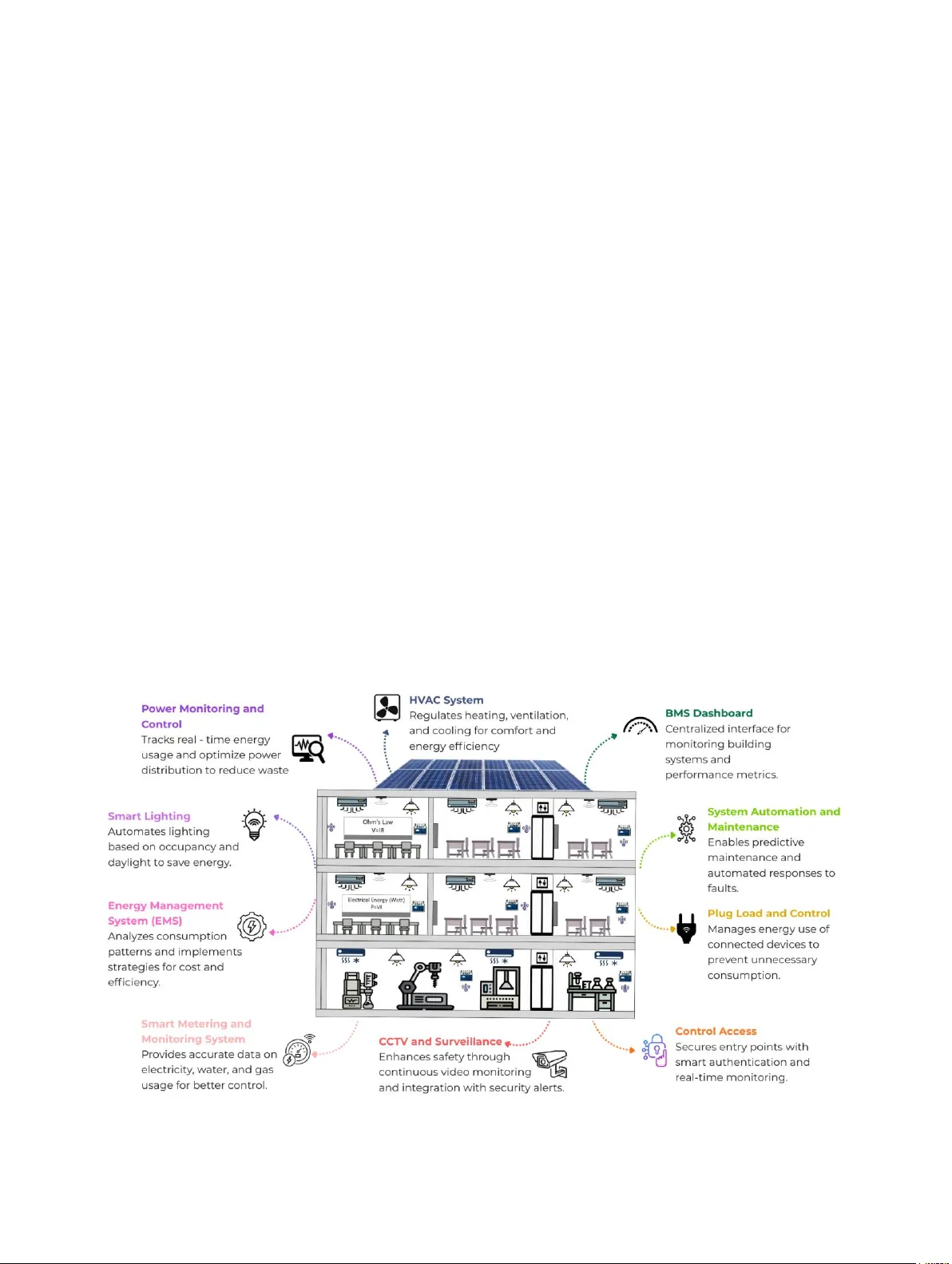
IoT -Driven Building Energy Managem ent Sy stems (BEMS) fo r Net Zer o Energ y Building s: Concept, Integrat ion and Future Dir ectio ns Haizum Hanim Ab Ha lim 1 , Dalila A lias 1 , Akm al Zaini A rsad 1 , L ewis T ee Je n Looi 1 , Rosdiade e Nordin 2,3 , Denny Ng Kok Sum 1 1. Facul ty of Eng ineering and T echnology , Sunwa y Uni versity , No 5 , Jalan Un iversi ti, Banda r Sun way , 47500, S elangor, Malays ia 2. F uture Cities Res earch Institute , Faculty of Eng ineering and T echnology, Su nway Univ ersity, No5 , Jalan Univers iti, Bandar Sun way , 47500 , Sel angor, Malaysia 3. Future Cities Res ea rch Institute , Lanca ster Univ ersity , Lan caster, LA1 4YW , Unit ed Kingdom Abstract: C onstru ction and oper ating of buildings is one of the major c ontribu tors to global g reenhous e emissions . W ith the inef ficient usage of en ergy du e to hum an behavior an d manual op eration, th e ener gy consumpt ion of buildings is further incr eased. These c hal le n ges highligh t the n eed f or improv ed Bu ilding Ener gy M anagement Systems (BEMS) integra te d with Internet of T hings (IoT) and data driven intellig ence to enhan ce energy -eff iciency in a building and c ontribu te to Net -Zero Energy Build ings (NZEB) t arg ets. This paper off ers four keys contributions : i) a s ystemat ic re view of Io T enable d B EMS includi ng componen ts, network architec ture and functiona l capabili ties, i i) an e v al uat ion of real -world BEMS datasets to suppor t Artifici al I ntelligenc e ( AI ) based predictive control , iii) a n analys is of integra tion challeng es related to interop era bil it y , s mart grids a nd net-zero energ y strategies, and iv) a c ase stud y high li gh ti ng g lobal best p ractices , performanc es outc omes, and lesson learned for scaling advanced BEMS solut ions. Keywords : Buildi ng Ener gy M anagement System (BEMS), Intern et of Things (IoT) , Net Zero En ergy Building (N ZEB), Ar tificia l Int elligen ce, Interoperabi lit y , Digital T win ___ ______ _________ ______ _________ ___ Corresp on ding Auth or: Rosd iadee Nordin , rosd iadeen@sun way .edu.my Other Auth ors: Haizu m Hanim A b Halim, h aizum h@sun way. ed u.my Dalila Alias , dalilaa @sunwa y .edu .my Akma l Zaini A rsad , akm alzain i@sunwa y .edu .my Lewis T ee Jen Looi , le wist@sun way.edu.my Denn y Ng Kok Sum , de nnyng @sunway. edu.my 0 Intr oduction Environm ental sus tainability is d irectly t hreatened by carbon e missions from t he buil ding a nd ener gy indus tries has hasten cl im ate change. P ersistent ener gy wastage and low energy effi ciency may rais e resourc e consumpti on and operating expenses due to increasing carbon emissi ons and impeding sus tainab le growth. One of t he major contributors to greenho use gases (GHG) e mi ssions is ener gy usage and w astage in bu il dings , which acco unts for nearly 40 % of g lobal ener gy consumpti on and a significan t portion of ca rbon emiss ions [1] . M eanwhile , embod ied carbo n e mi ssi ons fro m materia ls and c onstruc tion proc esses contr ibutes an other 10% of gl obal c arbon e mi ssi ons attribut able t o buildings [2]. Ener gy was tage in build ings pr imarily resul ts fro m ineff icient he at ing, v entilation, air cond it ioning (H V AC) systems , poor insulat ion, outdated applianc es, and excessive li ghti ng usage, all of which incr ease ener gy demand and carbon e mi ssio ns. As bu il dings rely he avily on electricity generated from fossil fue ls, unnecess ary energy co nsumptio n sig nific antly amplifies greenhous e gas e missions, ma king e nergy effici ency i mprove ments crucial for r educing the environmen tal imp act of the built environm ent. Ineff icient ener gy usag e in H V AC, light ing, and appliances leads to excessive electrici ty demand , further incre asing t he reliance on fossi l fuel -based ener gy productio n and exacerba ting environ mental de grad ation [3]. The sur ge in ener gy costs has p laced financ ial strain on businesses and i ndustries, l ead ing th em to look for more effe ctive ener gy manag ement str at egi es t o re tain profitab il ity and operation al stability . The crisis worsens after Russia’ s in vasion of Ukr aine in 20 22, causing disruptions in global ener gy m arkets that contr ibuted to the sharp rise in ener gy costs , dr iven by fossil fuel price vitality , geopolitica l instability , economic recovery and inflation, which has h ighlighted t he ur gent ne ed for energy -effici ent so lutions a nd t he transi tion to renewabl e energy s ources [4]. Furth ermore, the pos t -pande mic econom ic re bound has dri ven up globa l energ y demand , intensify ing compet it ion for limited resour ces and straining e xist ing ener gy infrastructu re. The shift toward ren ewable energy , including solar and wind pow er , is driven by the urgent need to mitigat e climat e change a nd re duc e depe ndence on fossil fuels, which contribu te to greenhous e gas emissions [5] . How ever , integratin g th ese r ene w able s ources into e xisting power grids pre s ent s challenges such a s interm ittency , storage limitations, and dema nd f luctuations, requ iring intelligen t energy m anageme nt so lutions. Build ing Ener gy and Managem ent Syst ems (BEMS) play a c ruc ial role in addressing these i ssues by monitoring, a naly zing, and optimizing energ y consumpt ion in buildings to ensure efficie nt use of re newa ble energy [6] . By leveraging IoT , AI, and automat ion, BE MS ca n enh ance energy e ffi ciency , reduce operat ional costs, and sup port the transition to smart, sustain able buildings to ach ie ve net z ero emissions. As a r esult, the widespr ea d adoption of BEMS n ot on ly helps or g anizations achieve cos t savings and regulat ory complianc e but also contributes signifi cantly to global sustainabi lity goals and carbon neutr ality effor ts [6]. T o address the c hal le n ges of excessiv e ener gy consumpti on and w aste in buildings, the i mplem entation of BEMS has emerg ed as a crucial soluti on for optimizi ng energy us age and improv ing susta inability . Re cognizing the i mport ance of energy-ef ficien t buildings, govern ments and regulator y bodies worldw ide have introdu ce d policies and standards to pro mote sustaina ble practi ce s . The Unit ed States ha s imple mented the Ener gy Policy A ct, which encourag es the adoption of smart ener gy manage ment technologi es by provi ding incentives and regulatory frameworks to enhance e ner gy eff iciency i n build ings [3]. These init iatives unders core the growing globa l commitm ent to i nte grating i ntel li gent energy mana gement solutions like BEMS to mitigate the environm ental im pac t of buildings and suppor t long-term susta inability . In Malaysia, Na ti onal Energy Po licy places strong emphasis on the integration of energ y -eff icient appliances , smart grids, and renewab le ener gy sour ce s to enhanc e building susta inability and r educe overa ll en ergy consumpti on [7] . This policy aims to prom ote energy efficie ncy by encouraging the adoption of a dvanc ed technologi es such as smart meters, auto mated e ner gy managem ent sys tems, an d i ntellig ent lighting and HV AC controls, which help optimize energ y us age and mi nim ize waste. Add itionally , the im ple mentation of smar t grids plays a crucial role i n improving ener gy distributi on by enabling real-tim e monitorin g, dem and -respons e strat egies, and better i nteg ration of ren ewable energy sources such a s solar and w ind power . By trans itioning t owards cleaner and more effici ent ener gy sys tems, Malaysia aligns wi th global sustai nability effor ts, including the United Nat ions Sustainabl e D evelop me nt Goals (SDG 7 – Afford able and Clean E nergy , a nd SDG 13 – Clim ate Actio n), which focus on ensurin g universal access to r el iable and sustainabl e ene r gy whil e c ombating cli mate change [5]. However , desp ite t hese effor ts, challeng es s uch as hi gh implemen tation costs, regulatory barriers, and the need for greater public awar ene ss cont inue to hinde r wid espread adoption . Ad dressing t hese chal lenges throu gh government incentives , policy refinem ent s , and increased research and dev elopment investm ents wil l be c rit ical i n driving Malays ia’ s t ransit ion towards a mor e energy -effici ent a nd environment ally sustain able building sector . As part of this tra ns ition, renew able ene rgy sour ces such a s solar a nd wind power are increasing ly being integrated i nto B EMS to redu ce dep endence on foss il fuels and lower carbon e mi ssions [8]. 1 Backgr ound and Fundament als BEMS is a syst em tha t monitors and controls a building ’ s en ergy us e to reduce emissions, design ed to b e efficie nt, scalabl e, reliable, and flex ible, with t he ability to sense i ts e nviron ment and m ake autonomous decisions [9 -10]. BEMS of fer significant benef it s by enhancing energy effi ciency , reduc ing costs, and improving building performanc e. By integrat ing monitor ing, analysis, and control sys tems, BEMS help org anizations optimiz e HV AC, ligh ting, and ot her e nerg y-consuming processes , leading to lower operat ional expens es and b et ter r esource utilization [1 1]. The ap plication of B EMS extends to commercial , resident ia l, and indus trial buildings, where it ensures sustainabi lity by mi nim izing ene rg y wast e and red ucing carbon emissions . BE MS leverages advanc ed technolog ies such as real-time monitoring, AI and the IoT to analyz e energy consu mption pat terns, predi ct demand , and automate syst em adjustm ents, ult imately enhancing efficie ncy , low ering opera tional costs, and reducing environm ental impacts [12]. Additiona lly , advanced BEMS technologi es integr at e wi th smart systems like Building Infor mation Modelling (BIM) , AI , a nd IoT , allowing for real-time energy tracking , predictiv e maintenan ce, an d aut om ated control. Overal l, B EMS no t only enhance sustainabi lity and regul at ory complian ce but also im prove o ccupant comfort and operation al eff iciency [1 1, 13]. 1.1 BEMS Components and I mplementation BEMS i s supported by a multi-layered techni cal architec ture integra ting with h ardware, sof tware and commun ication infras tructure to ensure an a ff ective energy m onit oring and bu il ding aut om ation. The componen ts a nd imple mentation of BEMS include sensors, actuators, contro llers, network co mm uni cation, data managem ent systems, and AI optimiz ation. The core components in B EMS are sens ors as t hey initiate the B EMS process. Sensors are devices th at can measure parame te rs , mon it or e nviron mental condit ions and off er real -ti me data such as tempera ture, humidi ty , air quality , occup ancy a nd energy consump tion [14]. S ensors will measur e and collect data for each par ameter befor e sending it to a storage facility for fur the r processing and decision making. Therefore , sensor selec ti on must b e selective and precise to ensur e t he data accuracy which improves s ystem reli ability , control ef fic ac y and system performanc e. The sensor dat a is al so used to forecast energy performan ce for ear ly fault di agnosis. Data acquired by sensors is subsequen tly s ent to a controller , which mak es decisions for t he syste m to improve eff icien cy and comfort. Th ese devices regul ate and control the build ing’ s num erous systems , for exa mple HV AC, l ighting, re newa ble e n ergy a nd ener gy usag e [15 – 16] . The system’ s intellig ence i s det ermined by how the c ontro ller cont rols the system using t he data p rovided. In addition to the controller , actuators such a s val ves were added in HV AC system in BEMS, wh ich are re spo nsible for the dyna mic control of chilled wate r system to achieve specific t em pera ture regulat ion and maximum ener gy efficie ncy of the syste m [ 17]. A ctuators t ransfor m controller commands in to a phys ical ac tion, and without them, a sm art BEMS is only a m onit oring syst em. Once the data has been collected and is ready t o be sent to storage for further processing, reli able commun ication is needed to ensure t he data is transfer red securely a nd robustly . BEMS uses a v ariety of n etwork commun ication protocols base d on layer , for examp le RS485 connects sensors, meters and equipm ent such as lighting and HV AC componen t at physic al layer , fiel d level protocol li ke Modbus and BAC net/IP inte grate w ith smart ener gy meter , photovolt aic syste ms, and ba ttery stora ge system , ne twork and supervisory laye r pro tocol like Ethernet, W iFi and at applicat ion or IoT l ayer protocol like Messa ge Queue T elemetry Tr ansport (MQTT) and CoAP [18 -1 9]. T h e commun ication lay er in BEMS enables secure and interop era ble data flow from fi eld dev ices to centralized and cloud-b ased man agement pl atforms. The acquired data are then transmit te d t o Data Managem ent Syst em (DMS) where they are collec ted, stored and analyzed. T hese syste ms e nable data preprocessin g, validat ion, normaliza tion and s ec ure storage t o ensure dat a i nteg rity and i ntero perabili ty across heterogon ous subsyst ems. Mo reover , DMS supports advanced analytics , model -base d si mulation, and ML applicat ion fo r fault detect ion, pe rfor mance opt imization and predictive e nergy m anag ement. Fig ure 1 shows componen ts in BEMS . Fig. 1 BEMS components 1.2 BEMS Function and Featur es Each component of BEMS has played an impor ta nt role in improvin g ener gy ef ficiency in building op erations t o meet sustai nability and cos t reduction goals. Cor e BEMS ’ s functions a nd featu res include ene rg y m onitoring, contro l and automation, ener gy managem ent and opti mization, maintenan ce support a nd sys tem int egration. The main f unction of BEMS i s tracking e nergy consumpti on, power monitoring , recordin g histori cal performanc e and p erformanc e t rack ing based on real-time data collec te d from sens ors and actuators. S mart metering and monitoring sys tems are used to m onit or features which a re then shown on the B EMS da shbo ard. Monitoring features are perfor med by using smar t metering a nd monitorin g syst em and displ aying in BEMS dashboard. BEMS are al so able to re gulate building s yste ms by control and a utomatio n fun ction, such as HV AC syst em, smart lighting , pl ug l o ad monitoring and contro l and access c ontrol . T his function is conduc ted t o reduc e energy usage, minimiz e ener gy wastage while maintaining comfort an d secur it y . HV AC system maintain ing comfor t room tem perature , meanwh ile maxi mizing the en ergy efficie ncy [ 20], and smart p lugs control ener gy usage by preventing unnecess ary consumpt ion [21] . Energy manage ment and optimization are enabled through the Energy Man agement System (EMS) to provide building ener gy cons umption analysis acros s multiple subsyst ems. The EMS applies optimization strategies such as load scheduling , rea l -time energy optimiza ti on, predictive mainten ance, peak demand managem ent, coordin ation of HV AC, f ault dete ction and data secur ity and interop erabilit y [6]. Moreover , B EMS is equipped with system auto mation and mainten ance that suppo rt fault det ection and diagnosti c (FDD) and pred ictive mainte nance through d ata analytics a nd AI optimi zation [22] . FDD ma y detect ea rly faults to avoid any system d isruption and increasi ng energy ef ficien cy . Even though BEM S concer ns s ystem operationa l an d energy focus ed, safety and secu rity were implemen ted to protect the building sys tems. CCTV with integratio n of access contro l uses s mart authent ication and real-time monitoring to secure e ntry points of t he building [23]. Figure 2 shows the illus tration of BEMS features and applicat ions. By enabling real -ti me data coll ection, autom ated control , and per forman ce visual ization, BEMS not o nly r educes wastage and oper ational costs but also i mprov es o ccupant comfort and suppo rts env ironmental ob jectives . Consequ ently , BEMS has emer ged as a vita l tool in modern smart buil dings a nd is a k ey enabler of the global shift toward ener gy-efficie nt infrastruct ure and low carbon. 2.0 Net Ze ro Ener gy Build ing Concepts and Strateg ies The building sector is a major contributor to global energy consumpt ion and associated w ith GHG emissions , motivating t he developm ent of high energy p erformanc e building pa rad igms aim ed at reduc ing operation al ener gy demand . The concept of n et - zero energ y build ings (NZEBs) has e mer ged a s a str at egy through collec tive effort t o reduce bu il ding-se ctor e n ergy consu mption and Fig. 2 BEMS fea tures an d ap plication s enhance sust ainabili ty of the bu ilt environ ment. Early e ffor ts i n building ene rg y perform ance focus ed on increment al ene rgy efficiency i mprovemen ts. Ove r t ime, this approach evolv ed towards outcom e-based performanc e targe ts, c ulmin ating in t he NZEB concep t defined by a building’ s ability to offs et its oper ational energy demand through r enewable energ y production , typically over a period of one year [24 -25]. The NZEB concept gained instituti onal sup port through government age ncies, profession al bodies, and re s earch organis ations. Th e U nited Sta te s Depart ment of Ener gy (DOE) articula te d long term targets for achieving net zero energy perform ance across build ing sectors , and t he Americ an Socie ty of Heating Refri gerating and Air-Cond itionin g Engineers (ASHRAE) highl ighted the role of NZEB i n future ener gy systems including integrated building, grids , and distribu ted energy r esources [24 , 26]. Despite wid espread adoptio n of the term NZEB, the re is no singl e uni vers al ly s tandardized definit ion of N ZE Bs , with v ariations persisting across r egions, stand ards, and literatur e [ 27] . [ 25] proposed a c la ssif ication framework that d istinguish es NZEBs based on the ener gy accounti ng boundary and perfor ma nce metric, including “Net zero site energy” , “Net zero sour ce energy” , “Net zero ener gy emission” , and “ Net zero e nerg y cost”. As each definition carries dif ferent e mphasis o n system boundar ies and performanc e prior ities, the sele ction of defini ti on h as a signific ant i mpa ct on subsequ ent building design, technology s election, and perfor mance eva luation. Among these, source-based and sit e -based e nergy definitions ar e mos t fre quen tly adopted in literature and building energy pract ices wi th measur able o perational flows. Net zero source energy build ing c onsiders upstrea m energy losses associ ated with fuel extr action, pow er generation , trans mi ssion , and requires site - to -source conversion factors to reflect primary (sour ce) e ner gy usage. This provid es a m ore comprehens ive syst em level perspect ive at additiona l uncert ainty from reg ional variabili ty due to conve rsion fac tors and energy mixes. A net z ero s ite ener gy buil ding be nefi ts from simplicity and direct verifi ability through on-site meteri ng, making it a n attractive des ign for perfor mance e valuation and tr ac king . A N et z ero s ite ener gy b uilding is defin ed as a building that p roduces the s ame a mount of, or more, r enewabl e energy as it consumes on an annual basis, wi th both generation and consump tion being account ed for at th e building site [24 -25]. Besides energy accounting metrics , [28] propos ed a widely referenc ed c lassifi cation system that catego rizes NZEBs b ased on the location and nature of renew able energy supply . T his framework defines four NZEB classes (A – D), ranging fro m bui ldings that re ly ex clusively on renewabl e e nergy ge nera ted within t he buildin g footprint to those t hat de pend on off -site renew able ener gy procurement . This provid es a s tructured approa ch for compar ing NZEB performan ce across projects with differ ent ph ysical and contextu al constrain ts and is applicabl e to individua l buildings a s well a s campus-scale or commun ity-scale de vel opments. This typology also highlights the importa nce of prioritizin g e nergy ef ficien cy f irst, fo llowed by dema nd reduction a nd demand op timization. Aft er which , t he demand is met by on -sit e renew able generat ion b efore resorting t o of f-site so lutions. Thi s a pproa ch emphasi zes the importance of Net zero build ing design, syste m selection , and oper ational c ontrol in achieving Net z ero enegy perfor mance. Therefore , the n eed for e ff ective monitor ing and dem and manage ment stra te gies is eviden t. Therefor e, NZ EBs could be understood as dynamic energy systems whos e performan ce depends on interact ions among build ing designs , grid connectivity , renewabl e energy availabili ty , as well as occ upant requiremen ts and behav ior . T his perspectiv e reinforces the need for advan ced buil ding energ y manag ement strategies, enabled by modern digi tal technolog ies and i nte lligent control systems as discussed in subs equent sectio ns. 2.1 Design Str ategies Achieving net zero ener gy perfo rmance rel ie s on minimiz ing b uilding energy de mand prior to supplyi ng through clean , renewab le ener gy gener at ion. Design strategies for N ZEBs therefore emph asize a hierarchica l approach i n which passiv e designs a re f irst prioritiz ed to reduce intrinsi c loads, followed by active syst ems that efficie ntly serve the r emaining demand [29 -30]. This section r eviews k ey NZEBs p assive a nd active design strategies t hat fun ction a s enablers for a building to achieve net zero ener gy p erformance . 2.1.1 Pass ive Design S trategies Passive design s trategies aim to red uce heating, cool ing, and lighting demand through a rchi tectural and lighting demand thro ugh architec tural and envel ope -level decisions that exploit local clima te conditions . These str at egi es a re particular ly critical for NZ EBs, as they provid e sustainabl e, l ow-m aintenan ce pe rform ance benefi ts and reduce long-ter m re lianc e on mechanical systems [30]. Common stra tegies includ e building ori entation , geom et ry , high perform ance building envelop e, da ylig hting, solar control , shading , natural or mechanically assist ed ventilation [27 , 31 , 34]. The e ff ectiven ess of passive strategies i s maximize d when they are imp lemented a s part of an in tegrated, cli mate -responsi ve design process . Parametri c design s tudies have d emonstr ated syner gistic combin at ions of envelope performan ce, solar control , and ventilation strategi es can a chi eve signi ficantly great er energy reductions than iso lated meas ures [34]. 2. 1. 2 Active Desig n Strategies After passi ve measures h ave r educed i ntrinsic e nergy demand , activ e sys t ems are deployed t o ef ficien tl y m eet remaining l oads whil e m aintaining o cc upan t c omfor t. In NZEBs , active design str ategies focus on high-ef ficien cy systems , cli mate-appropria te s election, and s ynerg istic integratio n with passive d esign featur es. Common strategies in clude high e ffi ciency HV AC sys tems, ener gy recovery ventilators (ER V) systems , e n ergy e ff icient lighting, optimized e quip ment load sizing, a s well as district sc aling of active systems to improv e ener gy efficie ncy [31, 35-38] T able 1 illustrates that both passive a nd active designs play compleme ntary yet distinc t roles in enabling NZEBs . Passive desig ns are critical in deliv ering long term performanc e benef its independent of o perational complexity , while reduc ing the scale a nd cost of downstream active systems . Active de signs address the remaining energ y demand. The e ff ectiveness of active systems is conting ent on pr ior passive demand r eduction and a re subs equently reliant o n o ptimized operat ional strategies to function as intended. 2.2 Ren ewable Ener gy Syst em Real-world data is e ssen tial for rese arc h in BEMS because it offers accura te insights into actual building perfo rmance, supporting th e develop ment of eff ective and appl icable energy manage ment strateg ies. The examples listed below are real-wor ld dat asets in BEMS that have been curat ed to support research in energy monitoring, system optimiza ti on, a nd the de velop me nt of intelligen t control strategies for improv ing build ing perfo rmance and sustainabi lity . The not ion of NZEB sig nifies a substant ial transi tion towards e nvironm entally friendly building methodolo gies, incorporatin g renewabl e ener gy (RE) syst ems such as T able 1 K ey p assive a nd activ e design strategie s supp orting NZEB s per formanc e. Design categ ory Strategy / techn ology Key referen ces Key find ing s relevant to NZEBs Passive Building orien tation and form [30 , 32] Early-stag e ge ometry and orien tation sign ifican tly influen ce so lar gain s and therma l losses, with build ing-sc ale pa rameters sho wing stron ger corre lation with net en ergy perfo rman ce than urban -scale form . Passive High perfo rman ce build ing env elope (insula tion, airtightn ess, glazin g) [27 , 30 , 33] Enve lope optimiza tion is the dom inan t driver of h eating and coo ling loa d reduction acro ss climates, en abling sub stantial dem and reduction prior to system selection . Passive Daylig hting, solar co ntrol and shad ing [27 , 34] Integ rated sh ading an d sola r con trol strategie s redu ce coo ling loa ds while mainta ining d aylig hting perfo rman ce, particularly in coo ling-dom inated climates. Passive Natura l and hyb rid ven tilation [27 , 31 , 34] Climate-resp on sive v entilation strategie s can ac hiev e energy savin gs ran ging from app rox imately 13% to o ver 60% , but perfo rmance is con straine d in ho t – hum id con texts witho ut moistu re con trol. Passive Integ rated smart de sign [30 , 34] Synergistic com bina tions of climate-a ware p assive meas ures o utperform iso lated strategie s, emph asizing the impo rtance of early -stag e integra ted de sign . Active High- efficiency HV A C system s [35 , 36] HV A C systems remain the largest energy co nsu mer in NZEBs; op timal system selectio n is climate- dep end ent and strong ly influence d by prior loa d redu ction . Active Energy Reco very V e ntilation (ER V) [31 , 36] Heat reco ve ry ventilation redu ces HV AC ene rgy con sumption by appro ximate ly 13 – 19%, with effectiven ess vary ing by climate and hum idity . Active Ef ficien t lighting and app liance s [35 , 36] Redu ction o f interna l loads lowers b oth elec trical dem and and second ary cooling load s, influen cing HV A C sizing an d net en ergy balance . Active System integra tion and optima l sizing [30 , 37] Coord inate d passive – active desig n pre vents system ove rsizing and perfo rmance gap s, improv ing efficienc y and cost-e ffectivenes s. Active District scaling (district coo ling/ hea ting) [38] District-scale co oling system s can enhanc e efficiency and pea k load manage ment in dens e urba n contex ts, comp lementing build ing-le vel NZEB strategies . photovolt aic (PV) and w ind power , in conjun ction wi th vital energ y s torage solutio ns (ESS). The s t ructur es ar e defined by their ability to produce a n equivalen t amount of energy from renewabl e sources as th ey utiliz e annu al ly , thereby achie ving energy s tability a nd red ucing dependen ce o n external resourc es. T he i ntegr at ion of onsite RE techno logies, includi ng PV pan els and wind turbines, enhan ce s building autonomy a nd advan ce s overarching ecolog ical goals i n urban areas. T he emphasis on s el f-suff icien cy and diminishe d carbon e missions closely c orresponds wit h current gl oba l initiativ es to address climate ch ange and impr ove en ergy se curity , as shown in F igure 3. The summary T a ble 2 shows contemporar y l iter at ure on BEMS integration with renewabl e energy technolog ies, i ncl uding onsite PV generating and battery storag e, along with their evalu at ion metrics, gaps , and findings. This em p hasis on self-suffi ciency a nd carbon r eduction aligns w i th globa l climate c hang e and e nergy security efforts . F or examp le, [39] examin e i mproved semi-transpa rent PV glass, illustrating how Building-Integr ated Photovoltai cs (BIPV) offer vi sual and fun ction al advantag es wh ile facil itating energy generation in build ings. A systematic approa ch t o the integration of RE technologi es i s impe rative to attain net-zero status. This entails the optimi zation of the configuration and operati on of RE systems to maximi ze energy production and mitigate loss es, i n addit ion t o the select ion of su itable systems . For e xamp le, [41] rev iewed rea l-time managem ent of PV and battery microgrids, which enhances energy savings in apartmen t buildings , wh ile [42] present ed hybrid RE s ystems (solar , w ind, a nd bat tery) controlled by LSTM -ANN models to a chie ve e ff icient smart-grid operation . T able 2 illustra tes tha t a vari ety of studies have detailed s trategies that capitali ze on the on-site insta llation of renew able technologies and underscore the signific ance of E SS i n regul at ing t he intermit te ncy of these r esources. [43] demonstrat es tha t intelligent automation in BEMS contributes to optima l PV -ba sed ener gy manage me nt in residen tial a nd off ice buildings. In add ition, th e integra tion of RE in to NZEB is enhanced using BEMS. Real-ti me and d ata analytics c an be employed by BEMS to m onitor ener gy production and utilization , thereby enabling the dy namic a djustment of energy flows to optimize consu mption patterns . T able 2 also delin eates key out comes fro m a variety of studies , demonstra ti ng how BEMS s trategies contribu te t o t he overall e ffi ciency and functionali ty of N ZEBs by supporting the man agement of ons ite gen eration and storage. [40] under lines the role of smart grids in reinforcing sust ainable ener gy manag ement, though they also identify pers iste nt gaps in the integrat ion of AI with renewabl e systems. The syste ms can inte lligently manage loads, anti cipate ener gy r equirements, and ensure t hat R E is utilized eff iciently by in tegrating AI-driven pred ictive and pres cri p ti ve analytics [43] . Eventu al ly , the shift to NZEBs necessi tates both Fig. 3 Int egration of r enewable en ergy technolog ies for achi eving ne t -zero e ner gy bui ldings technologi cal advanc ements and sup portive poli cies and incentives that promot e investm ent a nd execution . The extensiv e su mmary s tudy provided in T able 2 undersco res existing deficiencies in comp rehension a nd scalability , while pinpo inting many buildi ng categori es, from resident ia l to commercia l, that may benefit from t hese renewabl e syst ems. Governm ent s , indus try s takeholders , and re s earchers are required t o collabo rate t o establish and enhance regulatory fra me wor ks th at f acilitate the incorporatio n of RE solutions i nto the design of buildings . By establish ing ambitious objectiv es and of fering financ ial incentives for de v el opm ents that i ncorpor ate onsite renewabl e technology and energy efficiency initiat ives, stakehold ers can pro mote the extens ive use of NZEBs , facilitatin g a more sust ainable future. 2.3 Oper ational Stra tegies While passi ve and active design strategi es, in combin at ion with ren ewable ener gy supp ly , form the technica l f ea sibil ity and e n ergy balance of NZEBs , sustained net z ero performan ce depends on how bu il dings are oper ated. Operation al s trategies address the temporal mismatch between energ y demand, r enewable g eneration, and grid conditions; ul timately de te rmi ning wh et her ne t zero targ ets can be reliably a chieved with cons istency i n real-world conditions [4 4-45]. Literatur e review highlighte d ener gy flex ibility a s a central requ irement for N ZEBs. En ergy f lexibility re fers to NZEB’ s ab ility t o ad apt its ener gy d emand and on -site energy genera tion in re sp onse to e xtern al inputs such as renewabl e or ener gy storage availab ility , grid c o nstraints, while main taining indoor air quality (IAQ) and occupan t comfort [44 , 46]. Demand sid e manag ement (D SM) str at egi es leverage on HV AC systems, therm al a nd energ y stor age, and controllab le appliances to modulate demand profiles with variable renew able generat ion. Studies show ed t hat load shifting and schedul ing play a critical role in NZEB performanc e. Coordin ated schedu ling of HV AC operation , storage c harg ing, and f lexible loads can signif icantly improve renew able sel f-consu mption and re duce reliance on grid imports, particul arly in buildings wi th on -site PV and battery s ystems [47-48] . How ever , t hese b enefits are constrain ed by comfor t require me nts, storage cap acity , and user behavior , and simplistic rule-based approach es often fail to achieve robust performanc e under changi ng conditions [49]. Peak d emand reduc tion and grid in te rac tion hav e also emer ged as impor tant operat ional objec ti ves . NZEBs increasingly inte ract w it h the grid not only as ener gy consumers but a lso a s fle xible resour ce s capable of peak shaving, load modulation , and export ma nag ement [44], [50]. Studies in corporating electric vehicles , storage, and multi-energ y syst em s further d emonstrate that grid-awar e operationa l strategies c an enhan ce both sys tem -leve l efficie ncy and b uilding-level p erformanc e [51]. BEMS serve a s the primary coordination layer enabling these oper ational strateg ies. BEMS i ntegr ates mon it oring , control , a nd s cheduling functions across buildi ng systems and ener gy assets, translating high-level oper ational objectives into actionabl e contro l decis ions [52]. Empirica l studi es i ndicate that well -imp lement ed BEMS can deliver measu rable improve ments in energy performanc e and flexibility , while poor data qua lit y , limited intero perability , and syst em com plexity oft en undermin e expected b ene fits [47 -48]. Despite pro mising te chnologies , s imulatio ns and pi lot studies, real wor ld op erational p erformance ga ps rem ain. NZEBs frequ ently underp erform due to occupan t behav ior , maintenan ce shor tcomings , degr adation of sys tem performanc e, a nd the increasin g complex it y of flexible operation [ 53-54]. These findings highligh t that operationa l strategies must be c onsidered a n integral componen t of NZEB d esign and delivery . 2.4 Bui ldi ng C ertificatio n, Codes and Standards The i mpl ementation of N ZEB is strongl y influenc ed by the re gula tory , institutiona l, and cert ification frameworks within which bui ldings are de s igned a nd operat ed. W hil e design s trategies, renewabl es and operat ional strat egies address t he technica l and how- to ’ s in enabling ne t zero performanc e; i nstitution al certif ication s ystems , buildi ng codes, and standards provide the formal mec hanisms through whi ch N ZEB c oncep ts are defined , ve rified, and adopted in practice. Th ese framew orks vary across regions in terms of s cope and enforc ement, contribut ing to uneven uptake of NZE Bs globally . At t he internat ional level, early NZEB concep ts emer ged primari ly through researc h -driven init iatives and demonstra ti on proje cts. [57] report docume nted a rang e of early ne t zero cas e s tudies. These e arly ef forts pr eceded formalize d certif ication or regulatory requi rements and relied on pro ject-specific definit ions and p erformanc e metrics. Over time , supr anational a n d national directives such as the Europe an Union’ s amend ed Ener gy Perfor mance of Buildings Directiv e (EPBD ) start ed to institution alize th e concept of nearly ze ro-ener gy build ings (nZEB) by requiring member states to a dop t minimum energy performanc e standards and long-ter m renovat ion strategie s Meanwh ile, intern ational research progr am s le d by the Internation al Energy Ag enc y (IEA) have develop ed foundatio nal defini tions, perfor mance b oundari es, and evaluation m ethodo logies for net zero and ener gy -flexibl e buildings, notably through IEA EBC Annex 40 and Annex 67 [44 , 57]. More recent standards such as the UK Net Zero Carbon Buildings Standard, Canada’ s Zero Carbon Build ing (ZCB) Standard, and ASHRAE Standard 228 reflected a shift toward o utcome-b ased m etrics , emphasi zing measured energy use, peak demand , a nd whole-life carbon performanc e [62-64] . Regiona ll y adapted v oluntary green building rating systems su ch a s Sing apore’ s Green Mark, Aus tralia’ s Green St ar , and Mala ysia’ s Gr een Build ing Index (G BI) demonstra ted l ocalized appl ication of net zero init iative contextual ized to local c limat es, grid c ondi tions, and market r eadiness [65 -67]. Collectiv el y , these cert ification sys tems a nd standards provide the insti tutional backbon e for global NZ EB develop me nt and deploym ent. How eve r , vari ation i n definitions, accounting methods, a n d v erification rigor highligh t the need for harmon ization. T able 3 illustrate net zero related cod es, s tandards , and certifi cation fram eworks in major devel oped economi es, with Malaysia ’ s GBI certific at ion added for con textual l oca l comparison. 3.0 IoT enabled Integration of BEMS in NZEB Io T enabled integratio n e xten ds the functional capabili ty of BEMS in achieving NZEB perform ance by facilitatin g ubiqui tous sensing, r eal -time connect ivity and data informed d ecision m aking . T hrough the deploy ment of IoT a pplications such as sensors, c ontro llers, actuators BEMS Strateg ies Appr oa ch (PV , wi nd) T echnolog y Method Evaluatio n metr ics Key outcom es Gaps Building types Energy efficiency [55] PV gen eration (review ) Solar PV Design review s Energy con sumption indice s Iden tifies app roache s to en ergy redu ction Need for inve stment ac cess and better finan cial mod els Reside ntial Optimal en ergy man age ment [41] On -site PV gen eration Solar PV , battery (Micro grid ) Real-time man age ment Energy savin gs Enha nce s rea l-t ime ene rgy mana gem ent in apa rtm ent build ings Limitations in scalab ility to multifamily u nits Reside nt ial Building -integ rating microg rid ( BIM ) for N ZEB [3 9] On -si te PV and Wind Solar PV , W ind T urb ines Aperio dic microp attern s metho d Enha nced Energy Ef ficien cy Lower en ergy dem ands Limitations in integra tion Reside nt ial , Comm ercia l Phase ch an ge materials (PC M) base d therm al storag e [56 ] PV , wind gen eration (review ) PCM Modelling & con trol ana lysis Carbo n neu trality metrics Enha ncin g building ene rgy effi cie ncy for carb on neutra lity Requ ired for field studie s Comm ercial Intelligen t auto mation for BEMS [43] PV Onsi te intelligen t auto mation Intelligen t auto mation Multi-criteria dec ision mod el Sustainab le ene rgy man age ment Enha nce s dec ision-m aking for optima l energy man age ment Limited ene rgy sou rces and techn ologies Reside ntial, offices Energy manageme nt with hyb rid RE sou rces [4 2] On -site con trol system with PV , wind for Microgrid Hyb rid RE (solar, wind, FC, battery) Design & con trol of LSTM- ANN Ef ficien cy perfo rman ce LST M-A NN con trolle rs for smart grid en e rgy man age men t Requ ire real-wo rld valida tion Smart build ings Smart grid for sustain able e nergy man age ment [40] Smart grid Smart grid Systematic review Sustainab le ene rgy man age ment Add ress integ ration issues o f AI with rene wable s Significan t gaps in implem entation work Reside nt ial , Comm ercia l T able 2 Re ce n t s tudies on renew able en ergy systems for N ZEB and smart meters, BEMS is able to improve ener gy efficie ncy by continuo usly mon itoring en ergy consumpti on, i ndoor environ mental conditions , and on-site renew able energ y g eneration a t h igh s patia l and temporal resolutio n, thereby enhancin g overall ener gy efficie ncy . Effe ctive commun ication archit ecture in BEMS i s fundamen tal to the r eliable syst em. T herefo re, BEMS adopts layered network c ommun ication that i nteg rates physical , fiel d, netwo rk and application-lev el protocols to support i ntero perabili ty and scalab ility of th e B EMS system. Figure 4 illustrates exa mple of IoT applicatio n and network arc hit ecture in B EMS. 3.1 IoT Appl ication Numerous research has b een conducted o n the implemen tation of BEMS technologies and t ools by integratin g IoT , AI , sensors, P V , and HV AC s ystems to enhance energy e ffi ciency in N ZEBs. The resear ch highligh ts the ro le of BEMS i n N ZE B in achieving sustainabl e, cost-eff ective, and environ mentally friendly optimiza ti on. [68] has proposed PV technolo gy i ntegr ates with an IoT based control mecha nism to op timize energ y gener ation and consump tion. The methodolog y involves dep loying sensors, motion detectors , and a R aspberry P i -based gateway to monito r ambient light, user move me nts, and historic al energ y usage d ata, allowing for automated control of light ing and other ener gy cons uming devices . The syst em also includes a web applica tion that enables users to interact with energ y settings remotely and a cloud-bas ed database for real-tim e e ner gy ana lysis. T o improve energ y e ff iciency , the syste m automatic ally adjusts l ighting based on a mbient condi tions and e xports excess solar-gen erated electricity to t he gri d. The resu lts demonstra te that the IoT ba s ed B EMS signif icantly reduces e n ergy consumpt ion, e nhan ces sustainabi lity , and offers econo mic benefits, making it a v ia ble approach for nearly z ero- ener gy bu il d ings [68] . [69] explores the applicati on of HV AC systems in BEMS by an alyzing rea l -time data from smart sensors and automated control sys tems t o optim ize ener gy eff icien cy and i ndoor climate condi tions. By leveraging data -driv en approach es, the research dem onstrates how BEMS can enhance HV AC performanc e, detec t ineffi cienci es, and reduce overall ener gy consum ption in comm ercial buildings. [70] pro posed smart H V AC syst em, e quipp ed with fu zz y logic contro llers, senso rs, and au tomated a ir conditioning , oper ates through a Z igBee-based M2M network for real-tim e energ y opt imization . A r eal- wor ld prototype t ested in labora tories confir med its effectiven ess Figure 4: example of I oT a ppli cation and ne twork ar chitecture in BEMS . T able 3 Majo r net zero related codes , standards , and certifi cation fram eworks Codes / Sta ndard / Fram ework T ype Scope & Geo gra phy Primar y Focus Relev ance to NZEB IEA EBC Annex 40 [57 ] T e chn ical rep ort / framew ork Intern ationa l Net zero energy de finitions , solar integra tion, syste m bou ndaries W ide ly refere nce d conceptua l framewo rk for NZEBs IEA EBC Annex 67 [44 ] T e chn ical rep ort / framew ork Intern ationa l Energy Flexible Bu ildings , deman d respo nse , grid interac tion Emph asize NZEB op eration with energy flex ibility EU EPBD (D irective 201 8/844) [58] Manda tory reg ulatio n Europ ean Union Manda tory n ZEB requirem ents, long term reno va tion strateg ies Policy driv er for large-sc ale NZEB a dop tion in EU mem ber state s throu gh nation al law . LEED Zero [5 9] V o lunta ry Certification United States - Intern ationa l V e rified ne t zero en ergy , carbo n, water, waste Performa nce based LEED add on for NZE B verification BREEAM ( BRE (UK)) [60] V o lunta ry Certification / Rating United Kingdo m - Intern ationa l Comp rehensiv e, policy and planning aligne d A pione ering green build ing su stainability rating sy stem de velo ped by BRE (UK) frequ en tly referen ced by loc al authorities, pu blic secto r and c ommercial de velopme nts. DGNB Carbo n Neu tral Framewo rk [6 1] V o lunta ry Certification Germa ny - Europ ean Union Whole life ca rbon neu trality , lifecycle asses smen t An ex tensio n of DGNB su stainab ility certification system dev eloped by Germ an Sustainable Building Coun cil with emph asis on ca rbon acc ounting UK Net Zero Carb on Building s Standa rd (Pilot rev 2) [64] V o lunta ry Nation al Standa rd United Kingdo m Unified nation al definition , opera tiona l & emb odie d carbon Sets clear req uireme nts an d re porting gu idelines for bu ilding s to be classified as Net Zero Carb on Align ed ASHRAE Stand ard 2 28 [62] V o lunta ry T ech nical Standa rd United States - Intern ationa l Performa nce based bu ilding energy mod eling & verification Engin eering focused , perform ance and metrics d riven enab ler for con sistent NZEB perfo rman ce ass essme nt Cana da Zero Carbon Building (ZCB) Stand ard v3 [63] V o lunta ry Nation al Standa rd Cana da Opera tiona l & embo died carbon neu trality , grid interac tion Comp rehensiv e carb on-b ased framew orks dev eloped b y CAGBC are incre asing ly required for fed eral pro jects. Singap ore Gre en Mark [65] Quas i Mandato ry Nation al Standard / Rating Singap ore T rop ical hig h-p erform ance building s, ene rgy & carbon A nationa l green build ing scheme embedd ed in regu lation, often requ ired via Building Control Act Australia Gre en Star Standa rd [66 ] V o lunta ry Certification / Rating Australia Net zero carbo n, hea lth, resilience Australia’ s na tiona l volun tary gre en buildin g rating system, dev eloped by the Gre en Building Co unc il of A ustralia (GBCA) Malaysia Gre en Build ing Inde x [6 7] V o lunta ry Certification / Rating Malaysia Energy efficiency, trop ical des ign, rene wable s Malaysia’ s orig inal an d well -e stablish ed gre en rating too l. in reduc ing energy consump tion, stabilizing i ndoor temperatu res, and enh ancing bu ilding susta inability . [71] highlights the role of smart sensors , w ireless sensor networks (WSN s), cloud t echnology , and IoT i ntegr ation in monitoring a nd opti mizing energy consumpti on in buildings. B EMS components in the syst ems include HV AC syste ms for clima te contr ol, PV panels for renewabl e ener gy gener ation, IoT based lighting and occupan cy sensors, and automated energy mana gement platforms to redu ce w a ste and improv e effi ciency . T his system proposes a smar t building templa te, i ntegr at ing real-time data collection, a utom ated c o ntrols, and predictive a naly tics to enhance buil ding sust ainab il ity and performanc e. Smart meters are essentia l compon ents of BEMS enabling real -ti me energ y monitoring , self-consum ption analysis, and bidir ectional energy trading. In addit ion, smart meter is able to re motely on/of f the appli ances to avoid e ner gy w asta g e. In N ZE Bs , smart meters help evaluate self-cons umption e ffi ciency by analyzi ng real-time electricity load consumpti on and PV gener at ion data [72]. The study h ighlights that pre cise time resoluti on in s mart meter data c ollect ion is crucial to accurate ly matching PV generation with building e ner gy demand , avoiding overes timated s elf-suffici ency indi ces. Ov erall, smart meters enhance ener gy eff iciency , sust ai nabi lity , and cost op timization in B EMS by improving data a cc uracy , demand-side m anag ement, and r enewab le en ergy integratio n. [73] proposed a comprehensi ve d ata collection methodo logy for BEMS by integrat ing rea l -time electricity consu mption monitoring , environ mental sensing , and user behav ior analysis. Smart meters are installed t o track elec tricity usa ge at hourly , daily , and monthly i nter vals, capturing peak and valley power demands, whi le temp erature and humidity sensors coll ect indoor envi ronm ental data to a ssess the correlation between energ y consump tion and e nviron mental conditions . A dditiona lly , the op erationa l st atus of major energy -consuming equip ment (e.g ., air condi tioning, lighting, elevators) is recorde d, and residents' e ner gy use preferences are gathered through questionna ires and smar t home systems , allowing for a deeper understanding of human fac tors influen cing ener gy consu mption. The implem entation of HV A C systems in BE MS allows for automat ed climate c ontro l by integrati ng smart sensors, IoT , and AI-driv en optimiza tion, ensuring effi cient heating, cooling , and ven tilation based on rea l -time condi ti ons . This integr ation i s c ruci al in r educing e nergy w aste and operationa l c osts, as BEMS can predict a nd adjust H V AC performanc e according to occu pancy patterns and externa l weather data. The im port ance of HV AC in BE MS l ies in its ability to enhanc e occu pant comfort, i mprove air quality , and c ontribu te t o sustainabil ity e ffor ts, making buildings m ore energy-ef ficient and enviro nmentally friendly . T able 4 sh ows the imp lementation of B EMS componen ts. The implementa ti on of BEMS varies across dif ferent global reg ions due to diff erences in object ives, approaches, and constrain ts. These diff erences are lar gely shaped by climatic diversity , as varying weather conditions signific antly affect ener gy demand and building performanc e [74]. For exa mple, in Asi a, East As ia (e.g.: Japan, Norther n China, South Korea) has a te mperate four -s eason climate ; Sout h A sia (e.g., India, Sri Lanka , Banglad esh) e xperi ences tropical condi ti ons ; Cen tral Asi a (e.g.: Iran, Kazakhst an, Uzbekistan) i s charact erized by a semi-arid climate ; Southeas t Asia (e.g.: Mala ysia, Indonesia , Singapor e) fa lls within t he equator ial zone; and parts of W estern Asia (e.g.: Tur key) hav e a Mediterra nean climate [1, 75]. Likewise, E urope an countr ie s typically experienc e tempera te, oceanic, an d contin ental clim ate s , whereas the Middl e East and Nor th Af rica are predomin antly a rid. These c limatic variations require tailored BEMS strateg ies that consider reg ional energy use patterns a nd environmen tal conditions . In regions with arid and semi-arid climates, th ere is heavy reliance on air conditionin g durin g hot , sunny periods, wh ile temperate regions require cooling in summer and he ating in w inter [1]. Areas wi th pro longed summer s easons such a s much of As ia and the Mi ddle Eas t can be nefi t from incorporat ing PV systems alongsid e HV AC systems in BE MS to reduc e reli ance on t he power grid and enhance ener gy e ffic iency . T o max imize ener gy performanc e and suppor t the developmen t of NZEB, BEMS should include a dvanc ed monitoring tech nologies , such as IoT systems, s mart s ensors, and real-time d ata analytics , for respons ive and e ffi cient e ner gy control [76] . Ultimate ly , th e success o f BEMS in any region depends on its ability to adap t to the l ocal climate and integr ate appropriate tech nologies accordingly . T able 4 shows the implemen tation of BE MS across diff erent g lobal regions based on objectives, approaches, and constr aints. 3.2 Interop erability and S mart G rid Integr ation Interoper ability of I oT applic ations in BEM S is very crucial in main taining build ing effecti veness and syste m operability . It i nvolves i n te grat ion and connect ivity of various IoT devices, networ k protocol a nd system within a building t hat allows real -ti me monitoring, control and dat a transmission to maxim ize ener gy eff iciency and reduce energy wastage. Several issues have been ident ified as a signific ant barrier to commun ication which contributes to a la ck of interop era bil it y of th e sys tems. The major issu es are on t he heterog enous na ture , for i nstanc e discrepan cies i n dat a formats a nd arch itecture h ave affe cted data excha nge and integratio n process, l eading to i nef ficiency [77] . This was supported by the lack of standard format i n integrated IoT B EMS solutions t hat has made interoper ability m ore challengin g [78] . In o ther cases, interop erability has b ee n ha mpe red by differ ent d evices and sys tems f rom d ifferent vendors , usually with propr ietary communic ation protocols, for example, a lthough BACn et of fers interopera bility , it also has compat ibility issues wi th modern IoT dev ices [19]. [79] has mentio ned that un ifying descr iptive models that encomp asses both funct ional roles a nd system features offered as a solution that c an be appli ed across diverse devices a nd d ata types. The select ion and standardi zation of com munication protocols are import ant to ensure interoper ability a cross IoT -e nab led BEMS . [80] recommend ed open stand ard and interop era bil it y frameworks such as BACnet, MGTT and OPC UA are sui table to en able seamless commun ication and system integration BEMS. In addition, preserving with specific protocol in BE MS system may help increase operability , for exam ple Ethernet, W i Fi an d RS485 may apply at phys ical da ta trans mission, while BA Cnet a nd Modbus are specified for device lev el integration and control at filed level proto cols [18] . [81] al so highli ghted scalable a nd in teroperab le architectu re should b e prioritized in future r esearch to ov ercome constrai nts i n data commun ication betwe en diffe rent IoT dev ices and platforms which has led to fragment ed systems. Align ed with t he ener gy m anag ement requir ement, t he integratio n of BEMS with smart grid (SG) is essential for overall system a nd faces its own intero perability diffi culties. Integ ration of SG in BEMS system imple me nt demand side manage me nt pract ice wher e i t is allowing interact ion betw een bui lding administra tor, custom er and utilities for mo nitoring a nd re gula tion in b uilding e ner gy utilization [82] . This was suppor ted by [83] t he importanc e of reinfor cing end-custom er p articip ation and optimizing gri d potential to ensure the eff ectivenes s of the program and enhance grid flexibility and reliab ility . The diversi ty of communicat ion protocols in BEMS has made interoper ability an arduous task . How ever , the applicat ion of st andardized protoco ls such as IE C 61850 , IEC 61970/619 68 Common Inform ation Mod el s, IEE E 1815, a nd IEEE 2030 .5 ar e e ssentia ls t o p rovide smooth commun ication and data manag ement wit hin SGs [84] . These standards provid e framework for cons istent data exchang e, sys tem i nteg ration and c oordin ated control within het erogeneous SG infrastru cture. 3.3 BEMS Communicat ion Standa rds and Proto cols Open proto col serves a key function in BEMS t o ensure seamless commun ication an d interoper ability between differ ent compon ent s are achiev ed. The purpose of commun ication s tandards and pro tocol in B EMS are to ensure interoperab ility , syst emized monitorin g and control, efficie nt da ta exchange, redu cing d eploym ent efforts and costing and enable advan ced analyti cs. V ariety of BEMS commun ication protoco ls based on the appl ication evolving from ol der , est ablished, to lightw ei ght I oT protocols . There are severa l establ ished com munication protocols identified due to reliability , robustness and widespre ad adoption to automa ti on building . BACn et is de signa ted for building automation wher e it provides a standard ized commun ication protoco l that enab le s intero perability across v arious building autom ation subsystems including HV AC, l ight ing, sensors, security and fire safety and access control [85 -86] . It operat es over e xisting physical and network standar ds, for exam ple RS485, Etherne t and MS/TP (Master Slave/T oken Pass ing) [87] , while BACnet introduces securit y features like encrypted com munication and device authent ication. Other than that, Modbus is also common ly use d in industri al control sys tems a nd building automatio n a nd imple me nted Modbus TCP (over etherne t) or Modbus R TU (over serial line), bu t M odbus T CP experienc ed lack proper authentica tion mechanism that may risk cyber attacks [88] . Lon W orks also off ered op en standards proto col tha t us ed bot h data protocol and electrical standards b ased on t he LON s chemes [89] . Although LonWOrks is no longer a p opular choice, it still exists in many operation al buildings . KNX or Internation al Sta ndards ISO/IEC 14543-3) is also wide ly used in Europ e specifi cally i n comm ercial and r esidential building [90] . While the conv entional protocol i s still in use, lightweight I oT pro tocols are gradual ly taking p lace to provide e ff icient data t ransfer in modern co nnected with BEMS. Lightw eight IoT protocols w as introduced as low power c onsumptions , scalabi lity , and reliable i n unst able networks [91] . MQ T T h as offered e ff icient d ata transfer across limit ed b andwidth networ ks [92] , as well as CoAP . However , a Low Pow er W ide Ar ea Net w ork (LoRaW AN) technology propos ed connectivi ty i n lar ge s cale s mart buildings with low power and long-r ange commun ication for energy man agement appli cation [93] . Other than that, there are many ot her communic ations protocols integr ated w ith BEMS ap plication for example Ethernet that supported high-speed data trans mi ssion and frequent ly carried prot o cols l ike BACn et/IP [18] and Dali applied in lighti ng [94] . Devi ce N et, C-bus, m-bus also widely adopted in build ing au tomation [95] a long wi th EnOcean that is a st andard base d on I EEE 802.15. 4 [96]. T o e nsure eff ective BEMS c ommun ication , open standards proto col and semantic models shou ld be prioritized to sustain interop era bil ity a cross d iverse devices while reducing integra ti on requir ements. Furthermor e, the adoption of se cure protocol with built -in encrypt ion and aut hent ication together wi th robust security measures to protect ag ainst cyber t hreats. 3.4 Overv ie w of Real-W orl s Datasets in B EMS Real-world data is essenti al for rese arch in BEMS because i t off ers accura te insights into ac tua l building performanc e, supp orting the deve lopment of eff ective and applicabl e energy manage me nt s trategies . The examp le s listed b elow are re al -world datas ets i n BEMS that ha ve been cur ated to supp ort rese arch in en ergy monitoring , system op timization, a nd the de velo pment of in telligent control s trategies for improving building performa nce and sustainabi lity . [97] presented compr ises s ix years (2018 – 2024) of continuous measureme nts collec te d fr om electri cit y , heating, and cooling meters, a s w ell a s a wea ther station installed at the Honda R&D Europe facili ty located in Of fenbach am M ain, Ger many . Data acquisition was conduct ed using a variety of spe cialized m etering devi ces and sensors , w it h tempora l alignment accounting for loca l timezone va ria tions, includin g adjust ments for daylight saving t ime. Through out the d ata collection period , various disrupt ions including measurement out age s , maintenan ce activities , and device replace ments that necessit ated a com preh ensive data c leaning and post-process ing pro tocol. A structured seven-step pipelin e was implem ented to ident ify and correct anomalies, harmoni ze dat a form ats a nd na ming conventions, p erform time align ment, resam ple the data i nto u niform in te rvals (1 minute, 1 5 minu te s , and 1 hour) , and generate derived measuremen ts where necess ary . Addition ally , a reduc ed version of the datas et is made available , of fering a n aggregated and less complex r epresentat ion of bui lding energy consu mption, energy produ ction (el ectricity , heating, and cooling), and associated environ mental conditions , thereby facilitating broad er applica bility in research c ontexts. [98] i ntroduc ed an energy consu mption monit oring dataset from th e Hong Kong U niversity of Sci ence and T echnology (HKUST), comprising dat a from ov er 1,400 meters across more than 2 0 buildings, collec ted over a two-and-a-h al f-ye ar pe riod . T he dataset was curated using the Brick Schema , ensuring semantic consistency and transformi ng raw measu rements into a research-ready format. It enables a wide ra nge of a pp lications, i ncluding load pattern analysis, faul t detectio n, dem and re spo nse planning , and ener gy c onsu mption fore casting. This dataset was collected to a ddress t he growing need for accurate electr ic ity managemen t in ca mpus environments , where u nderstanding l oad patterns is e sse ntial for enhancing ener gy effi ciency and optimizin g usage. However , the avai la bility of detai led electric ity load data for campus bui ldi ngs a nd th ei r in te rnal sys tems remains limited , hind ering progress in related research . [16 6] col lected datasets for over three ye ars dat asets from a n off ice building in Berke ley , California , using over 300 sensors t o re cord energy use, H V AC perfor ma nce , environm ental conditions , and occupan cy across two offic e floors. A three-step cura tion process w as us ed to clean the raw data, model syste m metadata with the Brick schema, and d escribe m etad at a us ing a seman tic JSON schema. Th e re su lting resea rch -grad e dataset suppo rts applicat ions such as energy benchm arking, load analysis , predictive mod eling, and HV AC optim ization to enhanc e building e ff iciency and reduce energy use and emissions. The avail ability of high-qu al ity r eal-world data is critical to the advancement of BEMS , enab ling pr ecise system modeling , perfor mance analysis , and the design of intelligent cont rol str ategies. W hile recen t l arg e -scale datasets hav e suppor ted diverse appli cations, they often present challeng es su ch as missi ng data, s ensor malfuncti ons, and high ac quisit ion costs . T o address these issues, syn thetic data that is g ene rat ed based on valid ated real-world datasets offers a va luab le c ompl ement, enhancing research flexib ility a nd supporti ng machine learning d evelop me nt. The int egration of both r eal and syntheti c dat a w ill be essen tial for bui lding scalab le, T able 4 BEMS imple mentation across diffe rent g lobal regi ons b ased on o bjectives , approa ches, an d con straints . Com ponents/ Applicatio n Objective s Appr oa ch Measured Par ame ter Limitations Regio n/ Climate Reference PV Enha nce ener g y efficiency by inco rpora ting so lar PV Uses IoT and au toma tion to ba lance energy gen eration and con sumption in smart bu ildings. Power co nsu mption , (W att, W) , Electricity con sum ption (kW) , Monthly energy co nsump tion (kW) , CO 2 emission (kg) W eathe r-depen dent ene rgy generation requ ires effective en ergy storag e solutions. T e hran , Iran / As ia / Semi-Arid [68] IoT based con trol system Optimize energy co nsump tion throu gh re al-time mo nitorin g and con trol. Uses a set of se nso rs, servers , and wireless netwo rks to track and manage energy usage. Requ ires stable network infrastru cture; secu rity and data p rivacy conce rns. W ireless Sensor Network Collect an d transm it env ironm ental and ene rgy-related data in building s. Deplo ys a ne twork of interconn ected sens ors (e.g., tempera ture, mo tion, ene rgy meters) to gath er data. High en ergy co nsumption of sensor n odes; pote ntial data los s due to interferen ce. HV A C Optimize HV AC for ene rgy efficiency. Uses IoT -enab led sen sors and AI -ba sed optimiz ation mo de ls to adjust HV AC settings dyn amic ally . High co mp utational requ ireme nts; latenc y issues in real-time resp on se. Smart meter (SM), senso r Monitor an d co llect real-time ene rgy usage data Use IoT -e nab led se nsors to track tem pera ture, occ upancy , and energy consu mption Monthly energy co nsump tion (kWh) , Pea k en ergy con sump tion befo re and after op timization (kWh) , En ergy efficiency (% ) High ins tallation co st; Data secu rity con cerns China / Asia / T e mpe rate (4 seas ons ) [73] AI -base d Optimiza tion Impro ve energy efficiency by pred ictive co ntrol Machin e learnin g mo dels analyz e pa tterns and optimiz e HV A C, lighting, and app liance s Requ ires exte nsive training data; Comp lexity in imp lemen tation Autom ated HV A C con trol Optimize HV A C efficienc y AI -base d pred ictive contro l and sc heduling Energy co nsumption (KWh) , Outdo or/ind oor tempe rature (C°) , Opera tiona l HV AC (°F) Comp lexity in rea l-time ad aptatio n, initial setup cost Barke ley , California / W estern US / Mediterran ean [69] SM & senso rs Measure and monito r real-time ene rgy consump tion IoT -ba sed sensors and SM co llect data fo r ana lysis High co st, data priv acy concern s, and integra tion ch allenges Predictive Maintena nce Preven t failures an d impro ve system longe vity AI -driven fault dete ction a nd p redictive ana lytics High d ata pro cessing req uirem ents, sensor reliability issue s Smart senso rs and actua tors T o mon itor and control ene rgy con sumption . Autom ated e nergy monitorin g through IoT -en able d sma rt sensors . Ambie nt tempe rature (°C) , Energy con sumption with/withou t M2M (kWh) High initial co st Sakary a, T urk ey / Asia / Mediterran ean [70] Cloud -bas ed data proc essing For real-time en ergy man age ment. Data an alytics an d clo ud comp uting fo r pred ictive en ergy manag ement. Data sec urity co nce rns , since cloud -based ene rgy managem ent may be vulne rable to cyb er threa ts. Comm unica ti on n etwork s (M2M techn ology) T o ena ble sea mless d ata exc hange between de vices. W ireless comm unic ation p rotocols (e.g., ZigBee, Wi -Fi) to enh an ce sys tem conne ctivity . Network dep endency , as any failure in the com mun ication system could affect energy man age ment. Cloud techn ology T o impro ve en ergy ef ficien cy in smart bu ildings through the app lication of IoT t ec hno log ies T o collec t data from variou s building sy stems and store this info rmation in a clou d da tabas e. Energy co nsumption (Load , PV) (kWh) , P V suf fic ien t (kWh) , Percen tage erro r (%) May no t be feasib le or lega lly app licable in real-wo rld smart cities Greec e / Europ e / T e mpe rate (4 seas ons ) [71] W ireless Sensor Network s Monitoring and optimiz ing ene rgy consump tion in build ings Manag eme nt system uses this data to track en ergy use, de tect ene rgy waste, and eva luate how the build ing pe rforms on smart readin ess ind icators PV T o crea te a friend ly an d ene rgy-efficient indo or env ironm ent by adju sting con ditions based on occupants’ nee ds. Utilize a clean and renewa ble en ergy source, help s to redu ce green house ga s emission SM , PV Use smart mete rs to facili tate a transition to a low-c arbo n eco nomy by enabling PV self-co nsu mption, espe cially in NZB Using SM to rec ord load co nsu mption an d PV gen eration profiles at different record ing inte rvals and repo rting periods . The stud y co nside rs PV syste ms from 0 .01 to 10 kWp, whic h reflec ts typical hou sehold size s. House hold ene rgy use is unp red ictable, as it depen ds on occup ant beh avio r and app liance usage Spain / Europ e / Mediterran ean [72] T able 5 The type s of da tasets generat ed for B EMS. Categ ory Para mete r Details / U nits Ref. Energy Cons ump ti on Da ta Interv al-ba sed meas urem ents 10 min utes, ho urly, daily [98 - 100] Load types HV A C (heating / coo ling), Lighting , Plug load s, Elevato rs, Mecha nical sy stems [69 , 100 , 101 ] Spatial brea kdo wn Zone -leve l or floor-level (office, lobb y , meeting room) [98 , 102 ] Indo or Enviro nme ntal Data T e mpe rature °C or °F , by zon e [69] Humid ity % Relative Humidity (%RH) CO₂ con cen tration Parts pe r mi llion (ppm) Light leve ls Lux Noise lev els (if releva nt) Decib els (dB), if app licable Occu pancy Data People coun t Numb er of pe ople per room or zon e [69] Motion sen sors Binary (0/1) trigge rs Occu pancy sche du les Examp le: 9am – 5pm week days Externa l W eathe r Data Outdo or tempe rature °C or °F [ 103 ] Humid ity %RH Solar irradian ce W/m² W ind Speed (m/s), Direction (deg rees o r cardinal) Cloud cov er / weath er con dition Code d va lues or desc riptions Equip ment / System Contro l States HV A C status ON/OFF or % loa d [100 , 10 4] Fan spe eds / valv e pos itions % op en or c ontrol valu es Lighting con trol levels Dimming perc entage (%) Energy stora ge / PV gen era tion states ON/OFF , % ch arge, gen eration output System Metadata Zone type Open office, Labo ratories, Hallway, Big Classroo m, Small Classroo m etc. [98 , 102 ] Floor area m² Cons truction type Lightweig ht, heav y , insula ted System ca pac ity e.g., chiller kW , lighting powe r den sity (W/m²) robust, a nd future-re ady energy manageme nt solutions. Notably , t he dataset b y [ 98] aligns w ith the s cope of our project, as it also focus es on analyz ing ener gy consumpti on i n academic buil dings comprising classrooms, laboratori es, and of fices. 3.5 BEMS Dataset G eneration BEMS acquires dat a from s ensors on e n ergy consumpti on, equip ment operation schedu les, o ccupancy patterns , a nd i ndoor environm ental pa ram eters such as temperatu re, hum idity , and air quality , which are then utilized for optimizat ion, predi ctive c ontrol , and informed decision-ma king to enhance energy effici ency and occupan t c omfor t. The types of datasets g enerated for BEMS are a s i n T able 5. 3.6 AI Implementa ti on in BEMS a nd R elated W orks Recent advan cements in BEMS hi ghligh t the integratio n of cutting- edge AI, M L, and deep reinforcem ent learning (DRL ) t echn ique s to opt imize energy usage, enhanc e syste m eff iciency , and reduc e environm ental impac ts. The DR L-based B EMS propose d by [101] focus es on optimizing e nerg y c onsu mption, h eat managemen t, and carbon emissions in res idential buildings by integrating power- to -heat (P2H) technology a nd a two -s ta ge h eat pump syst em. It employs a novel dyna mic action subset – twin delayed deep determ inistic policy grad ient (DAS-TD3) al gori thm, whi ch enhances decision-making under uncert ainty by effici ently control ling distribut ed energy syst em s . The sys tem c ollects and m onitors d ata such a s electricity usage, thermal demand, carbon emissions, weather c onditions , PV g eneration , and us er preferences to inform the DRL age nt' s actions. Results show that the proposed syst em outperfor ms convent ional approach es, achieving reduced ener gy consumption, lower emissions, and improve d therm al comfort [101 ]. Comple me ntin g t his approa ch, [105] explor e Ar tificial Adaptive (AA) systems, specifical ly using L S TM networks , t o pre dic t energy c onsumpt ion in s mart buildings. Their method i ntegr ates s tatistical tools suc h as PCA, ARIM A, and a utocor relation analysis to pr eprocess data and capture temporal patterns. The L ong -Shor t T erm Memory (LS TM) models trained on hi stor ical energy usage, weather , and occupan cy data achieved high prediction accuracy , with a peak precision of 74%, RMSE of 0 . 08, and MA PE of 0.13 . Th is study underl ines th e promise and complexity of depl oying AA sys tems for real-time ene rg y fore casting an d control [10 5]. [103] pro posed t he us e of T abular GAN s to generate syntheti c e lectri city consumpt ion data t hat mirrors real-world pat terns, support ing smart city planning and energy manageme nt amid growing aut oma tion and Net-Zero goals . Using Python and th e 'tabg an' libr ary , the authors trained their model on rea l dat asets to re pli cate the statistica l features of a ctual electricity usage. T h e model utilized t he 'Low Ca rbon London' dataset and NASA weather d ata t o build r ealis ti c c onsu mption profiles. Results demonstr ated that the syn thetic data close ly resembled the orig inal datas et in s tatistical b ehavior and consumpti on trends. The study concludes that T abular GANs are a pro mising tool for simula ti ng e lec tricity demand wher e real-world data may be lim ited or sensit ive. [98] provi de a lar ge-scale, high-reso lution dataset to expand t he accessibility of real data from the Hong Kong Univers it y of Scie nce and T echnol ogy , captur ing over 2.5 years of e ner gy consumpt ion across more than 20 buildings. S tructured using the Bric k S chema, this datase t facilitates inte gration with BEMS for appli cations such as load pattern analysis, fau lt detection, and demand response, supporting institution al energy perfor ma nce evaluations . [99] introduc e BiTSA, a syst em design ed to help bu il d managers optimize energy c onsu mption and achieve sustainabi lity goals through an intera ctive, us er -friend ly dashboard. BiTSA integra te s with Buildin g Manage ment Systems an d supports advance d forecasting models su ch as DLinear , Patch TST , Informer , iTr ansformer , and GPT -2-bas ed On e -Fits-A ll, trained using the Adam optimize r . It processes histori cal bu ilding data whi ch resampled to 10-minu te in te rvals and p reprocess ed with second-orde r polyno mial i nterp olation from the BTS- B and BLDG datasets . The system offers dynami c visualizat ions that provide actionab le insights, enabling users to mak e infor med an d timely ener gy managemen t decisions . [102] propose a condition al diffus ion m ode l designed to generate high-qu ality syntheti c en ergy consump tion d ata by leverag ing metada ta such as bui ldi ng t ypes, meter t ypes, and geographic location. The m odel utilizes U-Net architec ture with a time-embeddi ng layer to ef fectively capture tempora l depende ncies and reverse a no ise injection process to produc e rea li s tic dat a s am ples . It is trained on a dataset of 1,8 28 power met ers from various global locations and outperforms tr aditional models like Condition al GAN s and V A Es in s tatistical similar ity a nd diversity . The results demons trate a 36% improve ment in Fréchet Inception Distanc e and a 13% decrease in Kullback- Le ibler diverg ence, highligh ti ng the model’ s capabili ty in generati ng va riab le and realisti c syntheti c energy patterns . For residentia l energy systems, [ 106] exam ine the feasibility of integr at ing Distribut ed Gener ation (DG) into a smart ho me environm ent using an AI-powered Io T -based Home Ener gy Manage ment System (H EMS). The syste m aims to enhan ce e ner gy mana gement by redu cing the Peak- to -A verage R atio, l owering e lectri city bills , improving energy savings , and increasing consum er comfort . It likely employs J 8 machine learning a lgorithms and the W eka API to analyz e load beh avior and generat e intelligent ener gy-saving recomm endations, s upport ed by IoT communica ti on protocols such as MQTT for scalabili ty . The system monitors live load patterns , appliance energy us e , DG output, gr id status , and us er preferences to d emonstrate th e be nefits of AI-based DG integratio n. [69] presents a three-year datase t t hat sup ports rese arc h on HV AC syste ms and building ener gy man agement by analyzing e ner gy consu mption, e nvironm ental conditions , and occupant behavio r . The HV AC sys tem in the off ice building studied includes underf loor air distrib ution (UF AD ), roof top u nits (R T Us), variable-speed fans, and hydronic heati ng coils, all ma n aged by an Autom ated Logic (ALC) W e bCTRL Building Manag ement System (BMS). The dataset m et hodolo gy invo lves colle cting real-time dat a from 300 + sensors , monitoring HV AC operations , electricity usage , occupa ncy levels, and environm ental factors l ike temperature , humidity , and CO ₂ concentra tion. The dataset was curated using a three -step process: cleaning raw data, structurin g it using the Brick schema, and organ izing m etad ata in a semantic JSON format for enhanc ed usability . T his datas et can be applied for build ing en ergy benchmark ing, load shape analysis , HV AC fau lt detection , and pr edictive analytics, prov iding valuable insights for optimizing building energy efficie ncy . [104] presen ts a case study from the Solar De cathlon Middle East (SDM E), w here AI-driven monitor ing, PV integratio n, and automa ted load c ontrol signif icantly improved ener gy eff iciency . T he proposed syst em utili ze s smart meters , power tags, and pattern recogni tion sof tware to monitor real-time electric it y consump tion and optimize energy us age through A I-bas ed automation . IoT -en abled smart ener gy managemen t systems improv e building performanc e by dy namically adjust ing HV AC settings , lighting, and appliance l oads based on occupancy patterns and ener gy deman d. [100] h as prese nted d etails of e lectricity consump tion and indoor e nvironment al data fro m a s even -story off ice building in Bangkok , collected over 18 months at one-minute interva ls. The dataset includ es power usage of individu al air condi tioning units, lighting, and plug l oads across 33 zon es, as well as temp erature, hum idity , and ambient light l evels record ed by multi -senso rs. These findings enabl e zone-level , floor-l evel , and building-leve l load forecasting , HV AC opti mization, and anomaly detection for energy effi ciency improvemen ts. Th e stu dy highligh ts t he importa nce of smart metering a nd real-time monitor ing in BEMS , d em ons trating how granul ar data supports demand response strateg ies a nd reinforce me nt learning algor it hms for ener gy control. Ultim ately , the dataset provides valu able ins ight s for building simulation models, energy-sav ing stra te gies , and predi ct ive analytics , contribu ti ng to sustainabl e and effic ie n t building operations . These studies c oll ectively demonstrate the transform ative i mpact of AI [69 , 99 , 104 , 106, 107 ], DRL [101], a nd syntheti c dat a generat ion [102 , 103 , 105] on modern BE MS . By leveraging both real -ti me and syntheti c datas et s, i ntegr ating advanced forecasting algorithms, and e nabl ing autonomous d ecision -making , researchers and pr actitioners a re a dvancing toward mor e resilient, eff icient, and sustain able build ing en ergy systems . The syner gy of dat a -driven in telligenc e and smart system integr at ion is k ey to achieving net-zero go al s and responding effec tively t o the dynamic demands of ener gy managem ent i n t he bui lt envi ronm ent. T able 6 shows AI implemen tations in B EMS and related works . 4 Case Stu dy The integrat ion of BEMS into NZEB offers signific ant advantages by pr oviding a simple , user-f riendly pla tform capable of accom modating compl ex operation al needs and unique specifi cations. BEMS enables m onito ring and control of equipmen t in real t ime by the facil ities servi ce s and m aintenan ce personne l, ensuring effici ent oper ation and timely interv entions . In addition, it supports performanc e benchmark ing and asset tracking to optimize long- term operation al ef ficiency . T he system’ s flexibi lity also allows users t o a ccess data fro m mult iple d evices , including PCs , tablet or m obil e devices, th ereby enha ncing usability and de ci s ion -mak ing in ach ieving net zero performanc e goals. 4.1 Globa l Examples of Successful NZEB with advanced BEMS Six case st udies i nvolving usage of BEMS for N ZEB globally . Sever al i mpl ementations furth er demons trate th e effe ctiveness of BEMS and I oT i n achieving net-zero in commerci al and univ ersity buildings . 4.1.1 Com me rci al and off ice buildings : The W ings, Brussels, Belg ium, V orum, German y a nd Ar chiCe, Hanza T ower , Poland The W ings, a 50,00 0 m 2 a mix ed -use developmen t in Brussels, B elgium comprising a hot el, gym , restaura nts and of fices h ave adop ted th e Metasys Building Automat ion System from Johnson Controls Inc. to optimize its dai ly oper ations. Th e integra tion of the BEMS has enabled instan t a ccess to rea l -time building performanc e data, while si multaneously re ducing carbon emissions and lowerin g operat ing costs. Implemen tation of BEMS system has enabled automated contro l and real-time monitoring of the H V AC system. Integr ating sensors such as temper ature sensors , occupan cy sensors , i ndoor air quality senso rs with schedulin g a ssist ants, optimi zes the BMS d ata. W ith suf ficient operation data c ollect ed from BMS system, the indoor relative humidity of The W ing’ s was maintained to approxim ately 50% , which abides the Environmen tal Protection Ag ency (EP A) require ment o f 30-50% rela ti v e humidity in bu ildings [108] . Indoor relat ive hu mi dity is important t o pr event m old growth, w hich wi ll af fect the health and well-being of the residen ts, such a s dry a nd itchy skin symptoms, tiredness, fatigue and drows iness [10 9]. T o ensure only authorized users/devic es conne ct to the B EMS platform , network access control is implemen ted using IEEE 802.1X authenti cation proto col. Other than se curi ng ne twork access c ontrol , commun ication betwe en the f ie ld devices, controllers and BEMS server occurs over a trust ed and verif ied networ k. Similar to the T h e W ings, a multi-purpos e facili ty in Germany , V oru m uses BMS to provid e comfort to it s occupan ts. V orum is a healthcar e facility compr ises of multiple build ings and has to accom modate many occupan ts. T he BEMS syst em of V orum , provid ed by ABB’ s KNX Clim aECO i s designed to control multipl e buildings, i nclud ing treatment and consulta ti on room s , swimming poo l, fitness a rea and administrativ e bui ldi ngs . In V orum, t emperat ure control of any ro om does not limit the contro l of HV AC system but also includes control of the room blinds, to enhan ce opera tional ef ficiency . ArchiCe, an of fice build ing loca ted in Hanza T ower , Poland has implement ed ABB’ s i -bus® KNX as the building and ener gy manage me nt system to reduce the energy us age whil e maintaining the comfort of their employ ee s. The temperature of r ooms was cont roll ed by integratio n of di gital sensors to uch scr ee n and swi tches throughout the of fice. T emper at ure control in th e workspaces was conducted by moni tori ng the rea l t ime temperatu re, along with ve nti lation rate a nd automat ed control of th e curtains. T able 6 A I implem entations in BEMS and related wor ks. Study Function Methods Data Col lection & Mon itoring Results & Find ings [101] Optim ize ene r gy , heat, a nd carbo n in resident ial buildi ngs via DRL-ba sed BE MS with P2H integr ation Uses DAS-TD3 algo rithm for control under uncerta inty Monitor s elect ricity us e, thermal deman d, carbon emissi ons, weat her , PV genera tion, user pre ferences Outperf orms conven ti ona l syst ems, i mprov ing energ y use, emission s, and comfor t [105] Predic t and o ptimize energy use with Artifici al Adaptiv e Sys tems in smart bu ildings Uses LSTM with PCA, AR IMA , autoco rrelat ion; W eka API for ML Data fr om s ensors, act uators, ener gy use, occupanc y , w eather , PCA, Sky Spark Achieved 74% pre cision, RMSE 0.08 , M APE 0.13, R² = 65 % [103] Generat e syn thetic ele ctricity dat a for sma rt planni ng and e nerg y manag ement Python + ‘ tabgan ’; trained on r eal data to mi mic patte rns Used Low C arbon London da ta and N ASA weather variab les Synthet ic dat a matched origin al well ; suppor ts use in limited/ sensit ive data c ases [98] Provide sta ndardized ener gy data for research and ana lytics Used B rick Schema for sema ntic curat ion of raw data Data fro m 1400+ meters across 20+ build ings, 30-min resolut ion Enab les l oad pattern r ecogn ition, fault detectio n, de mand respo nse; used i n campus energ y repor ts [99] Enab le building manag ers to opt imize e ner gy and su stainab ility via dash board Integrat ed for ecasting mode ls (DLinear , Informer , GP T -2); Adam opti mi zer Data fr om BTS -B & BLDG dataset s, resampl ed at 1 0-min in tervals UI provide s act ionable visual insight s, real-tim e inte ractivity [102] Generat e dive rse, h igh-quality synth etic energ y data using metadat a Conditi onal dif f usion mode l with U-Net a nd time- embeddin g 1,828 power mete rs ; include s l oca tion, meter/b uilding type, weather 36% FID and 13 % KL improve ment over GAN s/V AEs ; accurate and va riable pat terns [106] AI -based i ntegrat ion of DG in smart home s for better energy mana gement Likely uses J8 ML , W eka API , MQT T protoco l T racks l oad behav ior , applia nce usage , DG output , grid s tate, pre ferences Demons trates AI-HE MS potentia l i n r educ ing costs a nd increas ing ef ficiency [69] Provide HV AC an d bu ilding energy datase t for resea rch and analytics Brick schema + s em antic JSON format f o r usabil ity 3 yea rs o f da ta from 300+ sensor s: HV AC, occupanc y , temp, CO₂, e lectricity Enab les b enchmar king, fau lt d etectio n, predic tive anal ytics [104] Improve ene r gy effic iency through AI moni toring and load c ont rol in SD ME case Uses pa ttern reco gnition , smart meters , power tags Monitor s rea l -tim e elect ricity , adjusts loads based on pattern s Shows AI and IoT boosts ef ficiency via autom ation in PV -integ rated b uilding s [100] Enab le smart BE MS via granular consum ption and env ironmen tal da ta Smart meter ing w ith mul ti -sens ors; real-tim e moni toring 18 m onth s of 1 -min data ac ross 33 zone s: HV AC, lig hting, te mp, hu midity Suppo rts load forecas ting, ano maly detec ti on, RL for c ontrol 4.1.2 Airp orts: Minneapol is-St. P aul (M SP) Int ernationa l Airport, Minneapolis-S ai nt P aul, Unit ed States Airports are ener gy-intensiv e facilities that accommod ate staf f a nd pass engers around the clo ck. MSP Airport i s a publi c intern ational airport, accommod ating 37.2 million passengers per yea r . MSP Airport c overs an area of 3 million square fee t an d pre s ent s c hallenges in maintain ing a conduc ive environm ent. T o maintain c omfor t, safety and e ffi ciency of an airport, BMS acts a s the dig ital ba ckbone to co ordinate various control systems t o operate the airport. MSP a irports integrate HV AC contro l, lighting, pl umbi ng and se curity using BEMS provided by Hone ywell’ s Niagara Framework ™ to enhan ce occupan ts’ c o mfort and operationa l effici ency . I n M SP , occupa ncy sensors w ere integrated with lighti ng and ven tilation control to e nabl e intelligent and ener gy-ef ficien t ope ration of the building system. P resence or abse nce of people in the d esignat ed space were the factor in adjusting t he lighting l eve ls and ventilation rates. In a fully occupied room, lights w ill be activated, and a ir circula ti on is increas ed to m aintain a comfort able environ ment. On ce the roo m is unoccup ied, the lighting will be dimme d or swi tc hed off, a nd the ventilation rate wil l be redu ce d to a minimal leve l. These steps a re importa nt in lowerin g t h e ener gy consu mption i n MSP ai rport. Occupan cy -bas ed contro l improv es user comfort a nd redu ces unnecessary equipmen t run time, leading to lon ger equipment lif espan and l ow er maintenan ce costs. As MSP airport i s a l arg e facility with multipl e ten ants, the metering for tenant billing has been implem ented. Energy usage of each tenan t can be m oni tored using BMS , allowing t he operator to track ener gy usage patterns , detecting a bnorma l ener gy trends that may i ndic ate equipm ent malfunctio n and iden ti fy any ineffi ciency . The practice promotes tra nsp arency and ener gy account ability between t he MSP oper at ors a nd tenants. MSP ai rport also aims t o reduce 25 % of c onst ruction costs by transition ing from proprie tary syste ms to open-system archit ecture. By adoptin g open protocols and interop era ble system, equip ment can be sourced from multiple suppliers , encoura ging comp etitive pricing a nd eliminating restr ic tion of a single man ufacture r ’ s technology . Cost efficien cy , system scalabili ty , and long-term sust ainabil ity can be e nhan ced. 4.1.3 A cademi c buil dings: The Univ ersit y of British Columbi a, V ancouver , Canad a and The University of Nottingha m, United K ingdom BEMS has been used i n oper ation of acade mi c buildings in the Univ ersity of British Co lumbia, Ca nada and the Uni versity of N ottingh am, United Kingdom . Univers it ies are often built i n a larg e compound, comprised of multiple bu il dings and opera te like a mini city . BEMS i ntegr ates cla ss schedu ling a nd occup anc y sensors t o control heating and c ooling of a ny design ated rooms. R ooms will be coo le d or heated wh en th ere is a class scheduled but the HV AC sys tem will be switch ed off if t h ere is no mo tion detect ed by t he o ccupan cy s ensors. Even t hough there are m ultiple buildings t o be controlled , BMS is able to monitor a ll the rooms in a singl e platf orm, thus providing an ov erall status a t real-time. T o e stim ate building occup ancy and to contro l building’ s H V AC system, the location informa ti on from W i -Fi conne cted devices a re us ed. The Universi ty of British Colu mbia, Can ada uses a BMS with multiple solution providers which are Sie mens, Delta/ESC and J ohnso n Controls Inc. T here are 4,700 units of Siemens co ntrollers, 1,43 0 un it s Delt a/ESC controllers an d 1, 260 un its Johnson contr ollers were deployed througho ut t he campus and monitored using a single platfor m. This open-protocol syst em allows controllers and sensors from di ff erent operators to interac t with each other and s end feedba ck to a sin gle platfor m. In the Un iversity of Nottingha m, Un ited Kingd om, operation syst em from Schn eider Ele ct ric ’ s EcoS truxure Building Operation (EBO) w a s implemente d acros s the campus. Sensors from m ultiple buildings are able t o b e monitor ed and controlled through a s ingle p latform. The system i n Un ive rs ity of Nottingha m uses an open , end- to -end IP a rchitec ture which enab les fast conne ctivity of IoT devices . T o redu ce energ y c onsu mption, SmartX IP controllers and Sm artX Living Spa ce sensors were deployed . Fro m continuous monitoring a nd control , 5% energy c onsumptio n r eduction, 3% red uction on over all energy c os ts and 25% reduct ion of maintenan ce costs have been ach ie ved . T able 7 shows a BEMS implem entation across co mmercial and academi c buildings . 4.2 Key Lesson Learned The implement ation of building and energy managem ent systems in commer cial buildings, airports and acade mic buildings highlight ed s everal key lessons in scalabili ty , stakeho lder engagem ent an d ret urn of investm ent. Fig . 5 s hows BEMS impl ementation across sectors. The adapt ion of an open-a rchi tecture and open-commun ication protoco l system by MSP ai rport and Univers it y of British Colu mbia allows fut ure e xpans ion, technology upg rade, a nd integration wi th IoT . Beyond t he convent ional B EMS platfor ms, integration of IoT provi des a new perspec tive on how BEMS can m onitor , c ontrol and contribu te to net-zero building . BEMS syst em that traditiona ll y serves as platfor m to control mechanica l and electrical equip ment, will now be able to serve as intelligent and distribut ed netw orks for co ntinuous learning, adaptiv e optimization and cross-system collaborat ion. The next g eneration of BEMS with IoT integratio n wi ll be inheren tl y sc alable and wi ll be able to incorporate addition al numbers of sensors , devices and subsystems while maintain ing perform ance. There are t wo types of sc alabilities, vert ical and hor izontal scalabi li ty . V ertical s calabil it y , wh ere th e c apability of the s yste m is increas ed without addin g new sensors , w hile hor izontal scalabili ty is expanding the system by a dding more I oT devices , gatew ays, servers and other t ypes of resour ces [1 16 ]. In enhancing occ upants’ comfo rt and incr easing operationa l eff iciency , integ ration of BEMS with IoT leverages AI and p redictive an alytics to control H V AC, lighting and security [117] . The op en-archit ecture system also allows bet ter collaboration of th e stakehold ers, su ch as t he f acilities managers , engineers, contra ctors and end-users [118] . Faci li ties managers are a ble to make decisions based on real -ti me data, whi le engineers and contractors can schedu le prev entive maint enance programs and users can access meaningful energy data. However , i t i s important to ens ure robust network security i n th e implement ation of BE MS in any bui ldings. As t he system is heavily relying on interconnect ed sensors, controllers and cloud-based platforms, it will be more vulnerable to c yber intrusions . A compro mi sed BEMS can lead to unau thorized access to bu il dings, m anipu lation of operating syst ems and data breac hes. A re cent review by [1 8] shows that i mple mentation of BEMS in com me rci al b uildings resulted in 15-30% of energy savings tra nslating into annual savings of $1.5 – 4.4 m illion , depen ding on the bu ilding s ize and operationa l characterist ics. Simi la rly , [1 19] demons trated a 4.4-year payb ac k period with the deploym ent of BEMS in a conveni ence store, w ith a dvanced logi c control on t he HV AC and the refrig eration syst em. T hes e findings demonstra te that BEMS implement ation ca n reduce operationa l energ y consu mption and d eliver significant T able 7 BEMS implement ation across commercial and academi c bui ldings. cost savings , thus sup porting the ec onom ic viabil it y of BEMS adop tion with quantifiable returns on invest ment. 5 Emerging T rends and Futur e Dir ections BEMS discours e has changed dramati cally in recent years d ue t o technologi cal impr ovements and a ri sing dedication to sustainabil ity . NZE Bs are becomi ng mor e important a s climat e chang e c onc erns rise, advancing innovative energ y -saving and renew able resourc e solutions. This t ransform ation is led by IoT -driv en technologi es tha t ena ble r eal -time data a nalysis , automatio n, and user inte raction in energy ma nag ement. As industry e volv es, AI, Blockcha in, a nd Metaverse will transform ener gy effi ciency and building manag ement. This section examines sus tainable BEMS trends a nd future directions, focusi ng on AI a nd data -driv en op timization , RE integration , occupant-centric designs, support policies , digital t wins , and metav erse a ppli cations. Advanc ed technology and us e r-centr ic ta ctics ar e utili zed in these sectors to offer compl ete e ner gy manage ment solutions for modern buildings. Considering such improv ements, carbon emissions c an potentially be minimized while occupan t comfort and building p erformanc e are improved . Nam e T ype (m 2 ) Controls Reference The W ing s, Brusse ls, Belgium Comm ercial build ing Metasys building auto mation system, Joh nson Con trols [110] V o rum, Nab bu rg, Germa ny Healthc are ABB’ s KNX ClimaECO [111] ArchiCe , Han za T o wer, P o land Offices A BB's i-bus ® KNX [112] Minnea polis-St. Paul In ternatio nal Airport, Minnea polis-Sain t Paul, United States Airport Hon eywe ll's Niaga ra Framewo rk ™ , Hon eywe ll [113] The Univ ersity of British Columb ia, V a nco uver, Cana da Unive rsity Comb ination of Siemens, Delta/ESC and Joh nson Con trols Inc. (JCI) [114] The Univ ersity of Nottingh am, United Kingdo m Unive rsity Schne ider Electric’ s EcoStruxu re Building Op eration (EBO) [115] 5.1 AI and data Dr iven Optim ization The convent ional building automat ion system i s tedi ous and incons istent, oper ating pri marily in a one -way and manual syste m. The integratio n with IoT has signif icantly transform ed these systems by providing comp rehensiv e reporting capabilities which support improvem ent in decision making and e nerg y sav ing init iatives. How ever , enhanced AI function and optimiza tion in BEMS have increas ed the dat a usability and functional ity in expanding system p erformance. Data collected by sensor , meter and IoT applicatio n for real-time monitor ing and control such as power consumpti on, t em pera ture, humidity , l ight, m otion , historic al data and environmen tal for real-time monitoring and control, will under go dat a preprocessi ng including filtering, normali zation a nd imputa ti on [80] . T he a dopti on of AI and ML te chniques in BE MS data is no long er a new thing w here Artificial Neural Network (ANN) , Deep Learning (DL) a nd Reinfor cement Learning (RL ) have applied for ac curate energy forecas ting, demand prediction and the optimization of HV AC sys tem, lighting and RE schedulin g [1 20]. ML and DL t echniques ha ve been applied in h andling bu ilding en ergy (BE) syste m. [1 21] has analy zed that hybri d and ensem ble methods have good ro bustness pe rformance i n for ecasting e ner gy demand , consumpti on for ecasting and load for ecasting compar ed to trad itional ML and Linear R egression (LR) methods. Fu rthermore , Model Predi ctive Control combin ed with data-driv en m ethods has a ppli ed i n improving c ontro l performan ce and reducing comput at iona l complexiti es during onlin e implement ation [1 22 ]. While c urren t research demonstr ates the effectiv ene ss of AI an d d ata dri ven op timization in e nhanc ing BEMS , future trends are focused on develop ing more intelligent, autonomo us and resil ie nt syst ems. Expl ainable AI i s becoming mor e important to in crease transparenc y and interop era bil it y of AI ju dgements for br oader adop tion and data reliabil ity [1 23]. Further more, AI data driv en involves developin g hybrid AI models integratin g IoT, blockch ai n, and edge c omput ing for real-time and decentral ized e nergy manag ement [1 24]. As me ntio ned by [12 5 ], future research shou ld focus on creating advanced optimiza ti on algori thms and sophisti cated contro l designs to prop erly in te grat e RE re sou rces and manag e complica te d building scenarios . The main g oal i s to shift towards autonomo us and resilien t AI -driven energy managem ent syst em that c an adapt to changing conditions and user n ee ds , thus contribu ting to smarte r, more sustainabl e and resil ient built env ironments. Fig. 5 B EMS implem entation a c ross s e ctors 5.2 Integr ation with Renewabl es Energy The integra tion of renewabl e energy sources i nto BEMS has become i ndispens able as the transition t o sustainabl e energy practices accelerat es. The implemen tation of PV sys tems, wind tu rbines, and oth er renewabl e technolo gies en ables th e gener ation of energy on-site, the reby redu ci ng depend ence on f ossil fu els and enhancing grid resilience . Successful ca se studi es, as shown i n Tabl e 2, de monstrate that effec ti v e r enew able integratio n has resulted in subst antial reductions in e nergy costs and gre enhouse gas emissions , th ereby demonstra ti ng a successful alignm ent with global decarboniz ation obje ctives. Additiona ll y, t he optimization of e n ergy consump ti on will be fac ilitated by the integratio n of r ene w able sources with energy storage technologi es, such a s batteries, which will enabl e buildings to stor e e xcess power for subs equent use during peak dem and periods [12 6]. The sea mle ss integra ti on o f renewab le resour ces in to building op erations is facilita ted by a d vanced e nergy managem ent systems . For exampl e, by employing IoT sensors and controllers , B EMS can in telligently r egulate the energy ge ner ated from decentralize d renew able sources , t hereby gu ara nte eing t hat consumption i s consistent with availab ility [12 7]. Fur thermore , the efficacy of this integratio n i s improved by the incorporatio n of energy forecasting m odels, which forecast e nergy ge ner ation ba s ed on histori cal performanc e dat a a nd me te orolog ical conditions . Supporting e nergy independen ce a nd facilita ti ng demand response c apabilities , w hen n ecessary , energy managem ent syst ems can coordinat e with num erous renewabl e so urces [128]. It is anticipated that the future of renewabl e integration in BEMS wi ll capitalize on emergent technologi es, such as blockcha in, to fa cilitate decentral ized energy trading, thereby im p roving the sustainabi lity a nd resil ie nce of energ y systems [1 29 ]. This approach en courages t he exch ange of e nergy and optimizes th e ut ilization of local resou rces by promoting peer- to -p eer energy t radin g among buildin gs within a commun it y. Su ch developm ents will ena b le t h e integration of renewab les into BEMS, thereby fac ilitating t he attainm ent of NZ EBs and transfor ming urban e nergy ecosystems int o more resilient a nd i nte lligent infrastruc tures. 5.3 Occupan t-centric B EMS Occupanc y know ledge is essentia l for e ffec tive building m anagemen t [1 30 ]. The develop ment of BEMS i s signific antly influenced by occupan t -centric desi gn methodo logies that i ncorpor ate performan ce metrics, including thermal comfort , energy efficiency , vi sual comfort , acous tic comfort , and w el lbei ng, as shown in Fig. 6. To be effective, BE MS m us t c onsid er i ntern al and external factors , such a s stakeho lders' requir ements, budgets, and cl imati c conditions. Thi s is be ca us e an improved occup ancy experience can lead to increased productiv it y and satisf action. BE MS can perp etually evolve toward more adapt ive and resilien t systems by incorporatin g these consid erations into i ter ative design and model ling loops [1 31 ]. Recent techn ological adv ancements hav e enabled the develop me nt of more intricate methods for the collection and evaluation of occupant feedbac k, which are fa ci litat ed by simulation models and design appli cations [1 32 ]. This enables t he d ynamic modification of building environm ent s based on re al -time data. Intelligen t technologi es, includ ing occupancy sensors , mood-based illumina ti on, person alized climate contro ls, and AI -driv en analytics , are creating more engaging e nviron ments that optimize e nergy perfor ma nce and c ater t o in dividual preferences . Additiona ll y, research [129] sugg ests that individu als who experi ence a sense of tranquility in their environmen t tend to exhibit increas ed product ivity a nd reduced tension. As a r esult, BEM S are evolving to prior itize th e overall health, comfort, and produ ctivity of occupants , i n addition to en ergy optimiz ation. This paradig m shif t e mphasi ze s the d evelopment of sys tems that recon ci le t echnica l efficiency wi th occupant-centr ic perfor mance metrics . BEMS de monstrates e fficacy i n enha ncing overal l wellness by incorp orating intern al environmen tal quality (IEQ) elements , i ncl uding air quality , t hermal comfort , acousti c pe rform ance, and sp ace plann ing [134]. The systems c ons iste ntly adapt to the c h anging requir ements of inhabitants by utilizing AI , paramet ric analysis, and uncertaint y modelling to maint ai n op timal cond itions. In the future, o ccupant-centric BEMS w ill c apitalize on i nter ac tiv e feedb ack m ech anisms, customi ze d user interfaces , and augm ented r eality to improve engage ment [13 5]. BEMS are cultivating a culture of sust ai nabi lity within the c onstruc ted environmen t by encouragi ng occupan ts to engage in energy-conser ving practices, such as providing behavior al feedback or establishing personal comfort profiles . The developm ent of s ma rt buildings t hat are aligned with net-zero objec tives and e nhanc e urb an quality of life will be dependen t on the integration of building perfor mance simulation , design applications, and real-time o ccupant int eraction. 5 .4 Policy, Regulatory trend and Incentives Support ing NZEB and B EMS D eployment The futur e landsc ape of the architectura l indus try and BEMS is in creasingly shape d by emerging policies, regulatory frameworks , and financ ial incenti ves that a lign with glob al net-zero ambitions . The integration of technologi es that suppo rt NZEB i s being e ncouraged by policies as gov ernments worldwid e com mit to am b itious climate targets, wh ich i s resu lting in the i ncreasing importanc e of sus tainable cons truction practi ces. For instanc e, the Energy Perfo rmance of Bui ldings Dir ective (EPBD) of the Europe an Union has imple me n te d e nergy efficiency standards that e ncour age investment i n advanced b uilding tec hnologies and innova ti on [13 6]. Retrofit Policy Instruments (RPIs ) are also a componen t of potential policy advancem ent s for energy-effic ient buildi ngs, with the objective of improving energy e fficiency and r educing greenh ouse gas emissions in exist ing resident ial struct ures [13 7]. These RPIs encomp ass finan cial in centives, research and s ervices , assessmen t and disclosure tool s , and direction and command instrumen ts [13 8 ]. Building energy e ffi ciency i s also anticipat ed to be enhan ced by enhan ced stand ards and incentives for retrofitt ing HVAC systems [13 9]. A llied t o this, the cu ltivation of renewable pow er a nd t h e decarboniz ation of the energy balan ce a re acknow ledged as essential strategies for reducing th e energy consum ption of bu ildings [1 40 ]. Building-r elated energy consum ption has a lso b ee n successful ly de creased by loc al in it iatives , including energy be nch marking, discl osure r egulations , and mode-shi ft plans fo r urban transpor tation [1 41-142 ]. Financi al incen tives are essential for surmo unting hurdles to the deploymen t of BEMS and energy-effic ient enhancem ents. The financi al feasibil ity of projects t h at are intended to achieve NZEB status is improved by mechanisms such as ta x credits, grants, and subsi dies, which reduce upfront costs. A ccordin g to [14 3 ], target ed incentives can substan tially inc reas e t he market demand for energy-e fficient t ec hnolog ies. Th e implem entation of building energy bench marking p olicies, wh ich necessit ate proprietors t o disclose their energy perform ance, can serve to e nhan ce the market v alue of real estate a nd encourag e further inv estment [1 42]. Simultaneous ly, policy develop ments a re advancing toward more i ntelligent and flex ible r egulatory frameworks , such a s model-predict ive c ontrol , automat ed complianc e monitoring , and s emantic interoper ability among c ompl ex systems [1 44]. The thermal buildi ng regulations ar e an ticipated to be rev ised and e xte nded in order to en hance the quality of b uilding env elopes and minimiz e therma l loss es [1 45]. Such dev el op ments demonstra te a paradi gm shift from conventional complianc e mo dels to more pr oactive, techno logy -driven frameworks th at improve both transp arency and performanc e [146-147 ]. Fig. 6 Fra mewor k for Occup ant-cent ric Bui lding De sign In the futur e, cooperatio n betwe en researche rs, industry stakeholde rs, a nd policym akers will be necess ary to a chieve the widespr ead depl oyment of BEMS and net-zero buildings. Ac celerating t he t ransition to carb on neutrality will require adap tive fra me wor ks that change i n tandem with technology , such as AI-bas ed control systems , blockch ain-enabled energy m anagement, and clever r et rofit techniques . The m ost v iable route to promoting sust ai nabl e c ons truction practices and reachi ng net-zero emission ta rge ts is a comprehens ive strategy that incorporates fin ancial incentiv es, retrof it plans, regulatory mandates, and renew able integ ration. 5 .5 Digital Twins and Metaverse Ap plications for Building Energy Simulations Emerging t rends in IoT i ntegr ation with BEMS a re emphasi zi ng the use of Digital Twin (DT) technology . DT is a dynam ic, real-time vi rtu al repli ca s of physi ca l assets that use IoT sensor data for continuous monitoring , simulation an d o ptimiza ti o n to im prove energy performanc e a n d operationa l decision making throughou t the building lif ecycle [1 48]. The effectiv ene ss of D T and Metavers e applications in BEMS simul ations relies on compreh ensive and divers e data inpu t to virtua lize rep licas the physica l assets in enhancing energy p erformance and occupan t comforts . Research i n DT has s een an exponen tial growth demonstra ti ng s t rong s cholarly and professiona l inter est especially i n the built environmen t. DT use AI a lgorithms to simul ate, a naly ze, fore cast energy perfor mance, e nergy optimiza ti on, thermal managemen t, optimu m design , occupan t we ll -bein g, b uilding functi onality, maint enance and model li ng energy consump ti on by co mbining stati c BIM data w ith dyn amic IoT sensor data [14 9]. Other t han that, AI training engines have applied to generat e datasets , and hybrid DT i ntegr ation with M etaverse spaces has resulted in advan ced scenario-based simu lation for example fire, smok e and emergenc y egress as wel l as spatial beh avior ana lysis through path and eye -tra cking [1 50]. Currently , DT a lso appl ied distri ct scale to emerg ing urban p lanning and helping to und erstand complex urban areas and opti mizing e nergy syste ms [1 51]. T he data-driven virtual r epresentat ions of citi es that co mbine real-time data, geographic al information system (GIS) and AI an alytics to support planning, simul ation and ene rgy monitor ing. DT t echnolog y e nables s usta inable building energy ma nag ement and c ost re duct ion by monitoring , optimizing energy effi ciency and pred ic ting energy consumpti on in real time [1 52]. The future direc tion of D T and M etaverse a pplicat ion and building si mulation is focused on high ly i nteg rated, intelligent and adap table system. The ke y direction includes th e d evelopment of st andardized fra me w ork to guide D T implementa tions and focused on i mprovi ng cybersecu rity a nd i mplem enting occupant be havi our models into DTs [1 53] . Future i nitiat ives w ill focus on establish ing interoperable and scal able fr amework for integratin g heterog ene ous systems into larg e infrastru cture while maintaining robus t data c onfid entiality and security [14 9] . Moreover, increasing interna ti ona l coll aboration i s required to a dvanc e a nd valida te the scho larly research of DT as a solutio n of energy efficiency a n d t her mal comfort [1 54] . [155 ] has m ention ed the integra tion of M L techniques w ith DT technolo gy is enhance d to increas e simulation fore ca s ting capacity and the obligatory of ethical governance into techno logical and poli cy framework as DTs grow more autono mous. Utilizing collaborat ive co-simu lation platforms for urba n DTs and develop ing i nnovat ive di git al t ools wil l a ssis t t o better assessing and evaluating energy us e and demand , therefor e si mplifying the transitio n to more sustain able and energy- efficient bu ilt environ ments [156 ]. 6 Challeng es and R esearch Gaps Despite the rap id growth of IoT a nd their i ncreasing integratio n i nto B EMS, large sca le deploymen t, effective systems remain constra ints by m ultiple interr elated obstacl es. Alth ough IoT-e n abled BEMS has show n great opportunit y and strong potentia l i n enhancing energy efficiency , ope rat ional intelligen ce and sustain ability outcom es particul arly in NZEB , sever al barriers impede their widesp read a dopti on a nd long -ter m perfor mance. The c hal le nges were identified in several c ategories , t here are technical cha llenges, finan cial challenges , organizati onal challeng es and l astly t h e research gaps . 6.1 Techn ical Chal le nges The implement ation of IoT in BEMS encount ers technica l challeng es rel ated to h ardware , so ftware , d ata managem ent and network i ntegr ation. Most of IoT componen ts and devices are self -batt ery and have a shor t service life, increas ing maint enance costs and loweri ng system reliab il ity [15 7 ]. Freq uent battery replacemen t i s not feasible, esp ecially in BEMS appl ications wher e sensor downtim e and d ata loss can occu r when battery fails. To develo p s mart and rel iable BEMS sys tems that combin e diverse systems, such as HVA C, lighting, meters , chilled water sys tem, solar PV, and weather station, a strong netw ork connectiv it y b etween the dev ices or the system is requir ed. Each devi ce prov ided by the vendor must have its own specific ation and c hara ct eri zation, creating a major challeng e in integra ti ng these heterog enous devices, as they often use diff erent commun ication proto cols and d ata form ats. In pr actice, bridging techn ologies such a s g atewa ys, pro tocol translators , and d ata loggers are required to un ify the IoT network. Semantic interope rability is n ecessary to link IoT devices , DT and older BMS platform in B EMS [81 , 144 ] and without cons istent standards , data consolid ation and control across sys tems be comes a sev ere bottlen ec k. NZEB operation requires promp t c ontrol to a chiev e maximum e nergy efficiency, minimize ene rgy was tage while maintaining comfort, for example adjusting lighting and HVAC based on occupancy. IoT impl ementation in BEMS allows for real-time m onitor ing of e nergy consumpti on where the data gen erated by the sensors [15 8 ]. The bigg est technical c hallenge is to ensur e that BEMS can handle and r espond to continuous Io T dat a in real-time. [13 2] stated the re is an i nsuffici ency of compreh ensive energy e fficienc y s trategies and real tim e implemen tation technologies in existing B EMS and th e challenge a rises due to several fact ors, for e xample commun ication error, or sensors failures. Effective energ y m anag ement i n BEMS relies on accurate and rel ia bil ity of t he sensor dat a. G iven t hat Io T sensors are frequent ly placed in hos tile environm ents and are typically low -cost componen ts prone to malfunc tions, it i s quit e challenging t o maintain their c orre ct op eration and pre d iction [ 159]. This requires a precise, automa te d, scalable, and flexible monitor ing proc ess, wh ere th e process i s commo nly known as sensor outlier detect ion to evaluate th e behavior and perfor mance wi thi n t he IoT. As IoT netw orks expand, security challenges inher ently escalate , ma k ing dev ices more sus ceptible to unauthor ized access and data brea che s [77] . Accord ing to studi es [19], IoT devices are hack able and each new devi ce might present new s ecurity risks . To prevent disrup tions, dat a theft, or mal icious control of build ing systems, a n IoT -enabled NZEB requir es strong security at all tiers including secure firmware , encrypt ed con nections and strict authen tication) . Some NZEBs implement ed BEMS with e xisti ng buildings that ha v e c o nventional electrical wir ing, commun ication networ k and struc tures. Integ rating l ega cy BEMS with modern IoT platform pre sents several signific ant challenges , where these cha ll enges are princip al ly caused by the inherent c haracter istic of older systems , for exampl e o utdated proto col s , l imita tions of softwar e and hardw are, and the re quir ement of the new , interconne cted Io T environ ment [1 60]. This may lead to higher cost for repl acement and integration a nd may affec t maintenan ce efficienc y and sys tem scalab ility. 6.2 Financ ial Challen ges Transform ation towards NZE Bs led by IoT-driv en technologi es enables real-time monitoring , intelligen t control , o ptimized e nergy perform ances and preventativ e maintenan ce i mplemen tation. However , implem entation of sm art build ings ha s faced challenges arising fro m various factors in terms of poli cy, financing and regulations. A study conducted by [1 61] ident ifies 23 barriers that limit the developm ent of smart buildings , including lack of finan cial cons traints, lim itation on qualified profess ionals, gov ernmen t policy limitat ions, and regulatory barriers. While the techni cal potenti al of IoT is well recognized, fin ancial constra ints should be a ddress ed to enab le a large-s cale adop ti on. The challenges center primarily on high upfron t costs, diffi culties in quantifyi ng and predict ing return on investm ent (ROI), and limitat ions in suitabl e financing models for software-driven and digital infras tructure. One of the most hi ghli ghted barri ers to IoT deploym ent s to the buil t environmen t, wh ether it is a green field or the brown field is the substanti al initial capital required. T he high upfront costs are a ssociat ed with expendi ture s on sensors , c ommunic at ion networks , data pl atforms, c ybers ecurity infrastru cture and intensiv e integratio n with th e existing building manage me nt systems . In a legacy building, c os ts of retrofitting the overall archi tecture includ es additional wi ring, structura l upgrades, and i nteroper ability soluti ons to enable commun ication between systems . Phased installa ti on was usually required, whi ch re quires temporary shutdow n of building services and extensiv e syst em testing, all of which furth er increas e pro ject duration , and will reflect in the higher pro ject costs. In c ontrast , f or n ew b uildings , although the physical retrofitting is larg ely avoided , signific ant expenditure wi ll be incurr ed during t he de sign and co nstruction phas e to includ e inst allation of s ensor networks , d igital-ready HVAC and electric al syst ems, cybersecu rity frameworks and integ ration wi th advanced building man agement system platforms . T he high initial costs are consisten tl y cited a s the m os t significan t obsta cle for deploy ments, pa rti cularly wh en the funding mechanisms are limi ted or insuf ficient [16 2]. The high initial i nves tment is acco mpanied by considera ble uncer tainty in the quant ification of return on investm ent (ROI) due to lack of reliabl e and s tandard ized methods in Io T -based syste ms. Wh ile impl ementation of IoT -based systems delivers a long-term benef it in terms of energy savings , reduced oper ating c osts, improve fault detection and e nhanc ed asse t perfor mance, a robust prediction of these gains at t h e pr e -implem entation stag e remains highly uncert ai n. T he financial returns are strongly influenced by factors such as occupan t behaviors , weather var iability, build ing schedules , fluct uations in energy tariffs , and dat a qual ity [16 3]. As a re su lt, projected savings frequentl y deviat ed from the actual outcom es, int roduc ing a ddit ional risks into investmen t evaluations . This uncert ai nty translates into extended payback periods, thus weakening the attractiven ess of IoT investm ent s under convention al budgeting c riteria . Furthermor e, advantages of IoT -base d syste ms often come in a qualit ative natur e, such as improv ed indoor environm ental quality , enha nced occupan ts’ s atisfaction , increas ed syst em reliability and proactiv e mainten ance planning . These qualitat ive i ndic ators are often not being captured within standard financi al evaluat ion fr ameworks , thereby contri buting to stakeho lders’ hesit ation toward investing i n an IoT based sys tem [164] . IoT -based syst em a doption is a lso bei ng re stric ted to limitations in fin ancing struc tures a nd access to capital. Conventio nal financ ing models and loan i nstrum ents are typically designed for tangible a ssets with predictabl e depreciat ion and cashflows , where as IoT i nvestm ents are intangible . IoT-based systems are largely software-centric , rapidly evolving and tied to operation al perfo rmance rather than dire ct revenue gener ation. Althoug h emerging mechanisms su ch as ene rgy perform ance contra ct s, l ea sing arrangemen ts, and IoT- as -a-S ervice (Io TaaS) offer potential pathw ays to lower entry ba rriers by aligning paymen ts w ith r ealized sa vings, th eir market penetr at ion remains limited due to regul atory c ons traints, lack of standardi ze d contrac t templates , and perce ived invest ment risks [165] . In developin g e cono mie s , the short age of financing instruments design ed for digital or green infrastruc ture, coup led with conserva ti ve c redit ma rkets , signific antly constrains access to necessary capital. 6.3 Organ izational Challenges In c onte mpt of a dvan ces in re s earch and increasing pilot d evelopmen t in r ecent years, l arge scale deploy me nt of NZ EBs remains cons trained by organiza ti ona l and institution al challenges. Liter ature consistentl y i n dicates that b eside tech nical a nd finan cial c halleng es, fra g mented governan ce structures , skills short ages, misaligned incentives , and limited organ ization al rea diness t o manage complex, data-dri ven buildings contri butes to slow NZEB adoption rate [16 7, 168, 174] . Fragment ation across governan ce, policy, and institution al framewo rks: A recur ring cha llenge is t he fragmen tation of NZE B governanc e across policy, regulatory, a nd market doma ins. Defini ti ons of NZEB and net-zero carbo n buildings vary widely across r egions, jurisdictions , creating un certainty fo r stakehold ers and limiting knowledge transfer [174]. Su pranation al nat ional and national ambitions often requi re translat ion into loca l building codes, enforc ement mechanisms , and implemen tation guidanc e, resulting in a policy – pract ice gap that undermines e ffe ctive deploy ment [16 7, 169] . Discontinu ity across building li fecy cle: NZEB deliv ery typically involves multiple a ctors across design , construct ion, commissio ning, a nd oper ation, yet responsib ilities for performance outcom es are rarely continuous across t hese phases . Studies h ighligh ted that performanc e intent estab lished during desig n could be lost during constru ction or operation due t o organiz ational silos and weak handover processes [16 8, 170]. As a result , design knowledg e or comp liance does not reliably translate i nto sust ained operat ional net-zero perfo rmance [27 , 171]. Skills, kn owledge , and wo rkfor ce capa city gaps: The successfu l design , delivery and operation of NZ EBs require sp ecialized sk ills in integrat ed design, energy modelling , cross disciplinary knowledg e, BEMS and performanc e monitoring . Howeve r, workforc e shortages and lim ited train ing capaci ty remain widespr ea d, particular ly in HVAC operatio n, dig ital sys tems, and dat a interpreta ti on [167]. Case studies from emerging-econo my contexts f urther indi cate reli ance on im ported exp ertise and limited loc al i nstitu tional l earnin g, c ons training scalabili ty and long-ter m performanc e [27, 168]. Misaligne d incentiv es, accountabi lity, and risk allocation: Organizat ional i ncen tives in the building sec tor often prioriti ze upfront capita l c ost, regulat ory complianc e, or c ertificatio n achievement r at her t han p ost construct ion operation al perform ance. Design ers and contractors are rarely held accountabl e for post-occupan cy outcom es, whi le build ing operators may lack both early design access , aut horit y and r esources t o optimize NZ EB operation [16 8]. In existing building to NZEB retrofit contexts , stakehold er resistan ce, uncer tainty re gardi ng benefits , and perc ei ved operat ional risks further slow adoption [1 70]. T h ese misalignments rein force conservat ive decision-m aking and l imit e xperi mentation with advan ced NZEB solutions [171]. Data govern ance, i nter operability, and organ izational readiness for digi talization: As NZE Bs increasingly rely on IoT-enab led BEMS a nd data -driv en operation , organizati onal chal lenges r elated t o d ata gov ernance and system i ntegratio n hav e becom e mo re pronoun ced. The literatur e identifies unclear data own ership, interop era bil it y limitations betw een propr ietary syst ems, and cybers ecurity concerns as signi ficant barrie rs to effective operation al coordin ation [172, 173] . Limited institution al readin ess t o manag e la rge volumes of operationa l dat a f urther cons trains the real ization of potential performance gains [16 7, 170] . Regiona l inequ ities in organiza tional readiness: Organizatio nal capacity to deliv er N ZEBs var ies signific antly across regions , contribu ting to uneven global adoption . Deve loped economies benefit fro m funding potential , stronger policy suppor t, profess ional ecosystems , and demons tration projects , whil e emergi ng econom ie s often face i nstitution al capaci ty constraints , limited e nforce ment mech anisms, a nd c limate -spec ific knowledge g aps [27 , 174]. These disp arities persis t ev en where t echni cal poten tial for NZEB deployment is high , underscorin g the impor tance of institutiona l maturity and context-spec ific org anizational suppor t [16 7, 17 5]. 6.4 Res ea rch G aps Despite extensi ve resear ch on NZEBs several struc tural gaps remai n that limit the a ppli cation, reli ability, and scalabili ty of report ed outco mes. While advances in IoT -enabled BEMS have expanded technical capabili tie s , existing s tudies r emain fr agmented across m etrics, d ata sources , an d evaluat ion appr oaches. Th e follow ing gaps are consist ently eviden t across t he reviewed li terature . Lack of sta n dardized perfor mance metrics: Disc ussed in section 2.0, NZEB are defined and evalu ated using heterog ene ous m etrics, i nclud ing a nnual energy ba la nce , carbon emissi ons, a nd energy flexibility ; often more being framed using va rying sys tem boundar ies and accou nting assumptions . This i ncons istency cons trains c ompar ison across s tudies a nd limits t he t ransfera bility of findings. In parallel , rese arch metrics a re not consistently aligned with those used in regul atory framew orks a nd c ertific ation systems , furth er w ide n ing t he gap between academi c evaluation and pract ical implem entation. Limited re al -world and longitudin al oper ational evidence: A s ubstan tial propo rtion of N ZEB studies rely on simulation-bas ed analysis or short-term m onitor ing, with limited exam ination of long -term oper ational performanc e under real occup ancy conditio ns. Empirical evidence from livi ng -lab studies further demonstrat es that occupan t be havi our, usage p atterns, and oper ational uncertaint y are dominant contributors to devi ations between pr edicted and measu red NZEB perform ance [17 6 ]. The s ca rci ty of longi tudinal operat ional datasets restricts understan ding of perfor mance persist ence, system degradation , and the robustness of con trol s t rategies . A search in literatur e revealed studies ba s ed o n extended BEMS monitoring in real operationa l settings, remains underrepr esented but i s nec essary to address these limitations. Insufficient integratio n of o cc upan t centric , organizati onal and technical dimensions : Most NZEB optimiza ti on a nd BEMS stud ies prioriti ze t echnica l performanc e. Revi ews of smart building re s earch show a growing shift toward human -cyb er-physic al system (HCPS) frameworks, yet human n eeds, ro le s , and decision-ma king remain w eakly embedd ed in control logi c and evaluation methodol ogies [17 7 ]. As organ izational dimensions sig nificantly influe nce operation al ou tc omes , future re s ea rch should more systematica ll y integrat e human-centr ic d ata strea ms, organizatio nal workflow s, and operational decision-ma king int o IoT-enabled BEMS design and evalu ation, moving beyond p urely technology-dr iven opti mization. Fragment ed e valu ation fram eworks f or IoT -en abled BEMS: A lthough a dvanc ed IoT archit ec tures and data-driven control strategies are increasing ly repor ted, there is no w idely accepted framework for evaluating their effectiven ess wi thi n NZEBs. Exist ing studi es often assess isolated perfor mance i ndic ators without considering trade-offs between e nergy performan ce, occupant comfort , operationa l complexit y, and organ izational feasibi lity. The absence of reprod ucible and tra nsf erable evaluation methodo logies limits sys tematic comparison and evidence-b ased scaling of IoT-enabl ed BEMS so lutions. 7 Conclus ions This articl e investig ated the notion of IoT-driven BEMS as a key enabler f or NZ EBs. It emphasizes that achieving n et-zero performa nces goes be yond energy-effic ient design and r enewab le ene rgy deploym ent s to incl ude soph isticated, data -driv en operationa l control through out t he building lifecycle . Modern BEMS use hi gh-reso lutions sensing, real-time monitor ing and auto mated de ci s ion -making to transfor m buildings into a dapt ive e n ergy syste ms capable of balancing energy dema nd, oc cupant c omfor t, a nd e nergy reduction g oals under dynamic op erating conditions. The s tudy shows tha t effectiv e N ZEB implemen tation r equires complet e connec ti vity between building su bsystems, RE technolog ies, energ y storage and SG. BEMS can coordina te HVAC , lighting , distribut ed generation and DS M in r eal -tim e using IoT -en abled commun ication ar chitectures, which a re sup ported by standardi ze d protocols and comprehens ive data managem ent fr ameworks . However , issues w ith heterog enous devices, data quality , cybersecur ity, and system scalab il ity continu e to b e signifi cant imp ediments to w ider implemen tation, r esultin g to pe rform ance g aps between simulated and real-world NZ EB outco mes. Looking fo rward, f uture BEMS develop ment must prioritize scalable, secure, a nd interoperab le systems based on high-qu ality real-wor ld datas ets a nd powerfu l AI approach es. T he integration of predict ive a naly tic s , reinforcem ent learnin g, and D T techno logies ha s t he potential t o significantly improve energy flexibility , f ault resilience a nd l ong-term perform ance optimi za tion . Continued collabor ation among resear chers, industry stakehold ers a nd polic ymakers will be important i n translating these advances into deploy able solutions, allowing BEMS to play a key r ole in h astening the transition to net-zero buildings. Acknow le dg eme nt The authors grateful ly acknowl edge t he finan cial suppor t from Sunway Education Group , Malays ia under projec t no STR-RES-SUS T-NETZ- 003-2025, which e nabl ed th e successfu l exe cution of this research . This wor k was further supported by the sustain ability and research initiatives a t S unway Univ ersity, particul arly through the develop me nt and performan ce analysis of the University’s Net Zero Carbo n Building (Sunway Ec oSph ere) under the Faculty of Engineering and Technolog y. The EcoS phere initiative provided a living laboratory platfor m t hat facilitated real-world validation of low-carbon building strategies and adv anced en ergy sys tem int egration. Th e authors also acknow le d ge the valuabl e c ontri butions of faculty m embers, industry collabor ators, a nd stude nts whose technical expertise and suppor t we re instru me n tal to the comp letion of t his study . Declarat ion of Comp eting Interest The au thors declare that they have no known co mpet in g financial int erests or person al relati onships that could ha ve appeared to influen ce the work reported in this paper. Referenc es [1] Inte rnation al Ene rgy A gency, Birol F, Dea n B, Dulac J , Morgan T, Remme U, & Menec on Consu lting. (2018). The futu re of co oling. In The Future of Co oling [Report]. https://iea.blo b.co re.windo ws.ne t/assets/0b b45525 -277f-4c9c -8d0c -9c0c b5e 7d525/The_ Future _of_Coo ling.pdf [2] WorldGBC (20 21 ). Net Zero Carbo n Buildin gs Comm itment ex pan ds to includ e embodied carbon - World Green B uilding Council. World Green Building Coun cil. https://world gbc .org/article /worldg bc -net-ze ro-ca rbon-building s-c ommit men t-exp ands- to -include -embod ied-carb on/ [3] Dep artmen t of Energ y Sustaina bility Plan (202 2). https://www .sustaina bility.go v/pd fs/doe -2022 -sustainability -plan .pdf [4] Gajd zik B, Woln iak R, Nag aj R , Žuromsk ait˙e -Naga j B, & Grebs ki W W (20 24 ). The influen ce o f the global Ene rgy Crisis o n en ergy Efficiency : A Co mpre hen sive an alys is. Ene rgies, 17 , 94 7. https://do i.org/10 .339 0/en1704 0947 [5] Un ited Natio ns (20 23 ). Sustainab le Dev elop ment Goa ls: Afford ab le ene rgy and clima te action . Retrieved form: https://un stats.un.o rg/sdg s/rep ort/2023/Th e -Sustaina ble-D evelopmen t- Go als-Rep ort-20 23 .pdf [6] Al -Ghaili A M, Ka sim H, Al-Ha da N M, Jørg ense n B N , O thma n M, & Wan g J (2 02 1). Ene rgy man age men t system s an d stra tegies in build ings sec tor: A scop ing re view. I EEE Access , 9 , 6379 0-6 38 13. [7] Yaak ob I S B & Mohame d M B (20 22). NATIONAL E N ERGY POLICY, 2022 - 20 40 . In Prime Minister’s Departme nt & P rime Minister’s Depa rtmen t, Econ omic Planning Unit. https://www.ek ono mi.go v.my/sites /defau lt/files/202 2 -09/Nation al%20En ergy %20Policy _2022_2 040.pd f [8] IRENA (20 25 ). 202 3 Y ear in revie w: Climate -d riven glo bal rene wable Energy pote ntial resou rces and energy de mand. [9] Hossa in J, Ka dir A F A, Ha nafi A N, Share ef H, Kh atib T, Bah arin K A & Sulaima M F (2 02 3). A review on Optimal energ y man agemen t in Comm ercial b uildin gs. En ergies , 16 (4), 1 609 . https://do i.org/10 .339 0/en1604 1609 [10] Du an A L, & Zhan g B C (20 18 , Sep tembe r). Exp loratio n of Building Energy Manag eme nt System in the Fo rm of Energy Intern et. In 201 8 China Internatio nal Confe rence on Electricity D istribution (CICED) (pp. 28 38 -2845). IEEE. [11] Ko zlov ska M, Petkan ic S, Vrana y F, & Vran ay D (2 023 ). Enhan cing Energ y Efficiency and Building Performa nce th rou gh BEMS -B IM Integ ration. Energ ies, 16 (17), 63 27. https://doi.org /10.3 390 /en1617632 7 [12] ASHRAE (2024 ). A SHRAE p osition Do cum ent on energy efficien cy in bu ildings. In ASHRAE Position Doc ume nt on Energy Efficiency in Building s (pp . 1 – 8). https://www.ash rae.o rg [13] Al Naq bi A, Alyieliely S S , Talib M A, Nasir Q, Bettay eb M, & Ghen ai C (202 1). Energ y red uction in bu ilding e nergy ma na gement system s u sing the interne t o f th ings: systematic literatu re re view. In 2 021 Intern ation al Symp osiu m o n Ne tworks , Computers and Commu nications (ISNCC) (pp . 1-7). I EEE. [14] Ca no -Suñé n E, Martín ez I, Fernán dez Á, Za lba B, & Ca sas R (202 3). In terne t of Thin gs (Io T) in bu ilding s: A learn ing fa ctory . Sustainab ility, 15(16 ), 122 19 . https://doi.org /10.3390 /su151 612219 [15] Espe jel-Blanc o D F, Ho yo -Mon tano J A, Ch ave z J M, Herna nd ez-Aguirre F A, C ru z- Flores I A & V alenz uela -Sorian o F J (202 4). Design o f HVA C co ntro l sys tem for b uilding ene rgy man age ment systems. In 20 24 IEEE Confe renc e on Technologies for Sustainab ility (SusTech ) (pp. 1 -5). I EEE. [16] Ba haru din N H, Man sur T M N T, Ali R & Sob ri N F A (202 1). Smart ligh ting system contro l strategies for comm ercial bu ildings : A review . Intern ation al Jo urna l of Adv anc ed Techn olog y and Eng inee ring Explo ration, 8(7 4), 45 . [17] Ji J , Sun Y, Ga o D, & Cui Z (2 023 ). Syste matic analysis method of sens or a n d actuator fa ults propagation and im pac ts for o ptimally con trolled c omp lex buildin g ch illed wa ter syste ms. Jou rnal o f Building Engin eering , 76, 10 7272. https://do i.org/1 0.1016 /j.jobe.2023 .107272 [18] Digitemie N W N & Ekemez ie N I O (2024). A co mpre hen sive review o f Build ing Energ y Manage men t System s (BE MS) for Impro ve d Efficiency . World Jo urn al o f A dva nce d Research a nd Reviews, 21(3), 829 – 841. https ://doi.org/1 0.30574/wjarr.2 024 .21.3 .0746 [19] Cha n R, Yan W K, Man J, MA , Loh K M, Y u T, Low M Y H, Yar K P, Reh man H & Phua T C (2 023). Io T d evices d eploym ent ch allenges and stu dies in bu ilding ma nag ement s ystem . Frontiers in the Inte rnet of Thing s, 2. https://doi.org /10.33 89 /friot.202 3.125416 0 [20] Simpe h EK, Pillay JG, Nd ihok ub wayo R, Na lumu DJ (20 22 ), "Improv ing en ergy efficien cy of HVAC system s in build ings: a rev iew of best practices ". Intern ationa l Jo urna l o f Bu ilding Patho log y and Adap tation, Vol. 4 0 No. 2 pp . 1 65 – 1 82, doi: https://do i.org/10 .110 8/IJBPA - 02 -2021 -0019 [21] Oh J (2 020). IoT -Based smart plug f or res iden tial e nergy Cons erva tion: An em pirical stud y ba sed o n 15 mon ths’ mo nitoring . Energ ies, 13(1 5), 4035. https ://doi.org/1 0.33 90/en1 3154035 [22] Sha mim M M R & Ru dd ro R A (2025 ). Smart Diag no stics in Indu strial Mainten anc e: A System atic Rev iew of Ai -En abled Predictiv e Maintena nce Tools and Con dition Mon itoring Techniq ues. SSRN Electron ic Journ al. https://do i.org/10 .213 9/ssrn .5269918 [23] Wang J , Zhu M, L i M, Sun Y, & Tian Z (20 23). An acc ess con trol metho d again st unauth orized and n oncomplian t behavio rs of Real -Time data in ind ustrial IoT. IEEE Interne t of Things Jou rna l, 11(1 ), 7 08 – 727. https://do i.org/10 .110 9/jiot.20 23.32859 92 [24] Crawley D, Pless S, & Torcellini P (20 09 ). Getting to Ne t Zero . http://www.osti .gov /bridg e [25] To rcellini P , Pless S, D eru M, & Crawley D (20 06). Zero Energ y Building s: A Critical Loo k at the Definition; Preprin t. http://www.osti .gov /bridg e [26] Crowthe r H (2 018 ). Buildin g Ou r New Energ y Futu re. https://www.ash rae.org /File%20 Library /Abou t/Leade rship/n ew_ene rgy_f uture _web_0 61518.pd f [27] Feng W, Zhan g Q, J i H , Wan g R, Zho u N, Ye Q, Hao B , Li Y, Luo D & Lau S S Y (201 9). A re view o f n et z ero en erg y build ings in ho t a nd hum id clima tes: Exp erien ce le arned fro m 3 4 case study b uilding s. Rene wable and Sustainab le Energy Rev iews, 11 4. https://do i.org/10 .101 6/j.rser.20 19.10930 3 [28] Pless S & To rcellini P (20 10 ). Ne t -Ze ro Energ y Build ings: A Classification Sy stem Based on Ren ewab le Energy Supp ly Options . http://www.osti .gov /bridg e [29] Magh ami M R , Mag ho ul A, Tha ng K F, & Su nda ram S (2 025 ). Ne t zero en erg y building s: An o verv iew of pa ssive and active design s. In Energ y Repo rts (Vol. 14, pp . 132 7 – 1348). Elsevie r Ltd. https://do i.org/10 .101 6/j.egyr.20 25.07.02 8 [30] Wei W, & Skye H M (20 21 ). Resid ential ne t -zero e nerg y bu ildings : Review an d pers pec tive. In Re newa ble and Su stainab le En ergy Re views (Vol. 142 ). Elsevier Ltd . https:/ /doi.org /10.1 016 /j.rser.2021.11 0859 [31] Am een A, Ra shid F L, Al -Ob aidi M A, Al Maimuri N M L, Abd alrahe m M K, Agy ekum E B, Ch iban i A & Kezzar M (2 02 6). Ventilation strate gies in n et-z ero energ y buildin gs: Ba lanc ing indo or air qua lity a nd e nergy efficie ncy. In En ergy and Building s (Vol. 351 ). Elsevier Ltd. ht tps://do i.org/1 0.10 16/j.en build.202 5.116724 [32] Li H , Zhe ng J, Zhan g Y, & Zha ng R (20 25). Urb an mo rphology and reside ntial b uildin g net-ze ro energy performance : A globa l meta-a naly sis. In Energ y and Building s (Vol. 346 ). Elsevier Ltd. https://do i.org/10 .101 6/j.enbuild.2 025.11 6142 [33] Meh rpo ur Y, Balal i A , Valipou r A, Yun usa -Kaltun go A, & Shamsn ia S A (20 24 ). En velope design op timisation fo r re sidential net zero e nerg y bu ildings with in c old an d sem i-a rid climate: A c ase stu dy of Shiraz. Ene rgy for Sustainab le De velo pme nt, 78 . https://do i.org/10 .101 6/j.esd.202 3.101352 [34] Tun gnung K (2 02 5). Parametric pa ssive d es ign strateg y towards sustain able net-ze ro energy buildin gs in hot -dry climate z on es o f Ind ia. Solar Energ y, 294 . https://doi.org /10.1 016 /j.solene r.2025.1 13515 [35] Wu W, Skye H M, & Doman ski P A (2018 ). Selecting HVAC system s to achieve comfortab le and c os t-e ffective residen tial n et -zero ene rgy building s. Ap plied Energy , 2 12 , 577 – 591. https://do i.org/10 .101 6/j.apenerg y.2017.12 .046 [36] Wu W, & Sky e H M (2018 ). Net -zero nation: HV AC and PV system s fo r res iden tial ne t-ze ro energy building s ac ross the Un ited States. En ergy Con versio n an d Man age ment, 177 , 605 – 628. https://do i.org/10 .101 6/j.encon man.2018.09 .084 [37] Mistarihi M Z, Kha rseh M, Ab o -Zah had E M , Alama ra K, Elasy M, & A ldhu hoori K (2 025 ). Ene rgy - efficien t strateg ies for net-ze ro build ings in the UAE: a clima te-re si lient blue print. In Energ y Con vers ion and Manage ment: X (V ol . 28). Elsevie r Ltd. https://do i.org/10 .101 6/j.ecmx .2025.101 215 [38] Hu ang Z, Wan g X, Ch en W D, Islam M R, & Chu a K J (202 5). Empo wering deep urba n decarb onization thro ug h sma rt a nd ren ewa ble district c oo ling. Su stainab le Cities an d Society , 1 29. https://do i.org/10 .101 6/j.scs.2025 .106488 [39] Bashe r M K, A la m M N E, & A lame h K (2 02 1). Des ign, dev elopmen t, a nd chara cteriza tion o f lo w distortion advan ced semitran spare nt ph otovoltaic g lass for bu ildings ap plica tions. Energ ies, 14(1 3), 39 29. [40] Biswa s P, Rashid A , Al Masum A, Al Nas im M A, Ferd ous A A, Gup ta K D, & Biswas A (20 25). An ex tensive a nd m etho dical rev iew o f smart grids for susta inab le energ y man agemen t -address ing cha llenges with a i, re new able e nerg y inte gration a nd lead ing -edge tec hnolog ies. IEEE Acce ss. [41] Rezae i E, & Dag do ugui H (2 02 0). Op timal real -time en ergy man age ment in ap artmen t b uilding in tegratin g microg rid with m ultizon e HVAC c ontro l. IEE E Tra nsac tions o n Ind ustrial In forma tics, 16 (11 ), 6848 -6856. [42] Wesley B J, Ba bu G S, & Kum ar P S (20 24). Desig n an d con trol of LSTM-ANN c on trollers for a n efficien t en erg y man agemen t sy stem in a smart grid base d on hybrid rene wable e nergy sources. Engineering Resea rch Exp ress, 6(1 ), 015074 . [43] Uza ir M & Ka zmi S A A (2 02 3). A m ult i-c riteria d ecisio n mod el to sup port s us tainab le b uildin g e n ergy ma nagem ent system with intelligen t auto mation . Energy and Building s, 301, 11 3687 . [44] Jense n S (2 023 ). EBC Ann ex 67 Energ y Flex ible Bu ilding s. Intern ationa l Energy Agency . [45] Reza Ebrahim i S, Rah imiya n M, Ass ili M, & Hajiza deh A (202 5). Energ y man agement o f net -zero ene rgy b uilding s: A two -la yer hierarc hica l approach. Energ y and Build ings, 336. https://do i.org/10 .101 6/j.enbuild.2 025.11 5592 [46] Zhou Y & Cao S (2020 ). Quantifica tion of energy flexibility of reside ntial net-z ero-e nergy b uildings invo lved with dyn amic o peration s of hy brid en ergy storag es and dive rsified en ergy conve rsion strate gies. Sustainab le Ene rgy, Grid s and Netwo rks, 21 . https://do i.org/10 .101 6/j.segan.20 20.10030 4 [47] Liang X, Che n K, Ch en S, Zhu X , Jin X, & Du Z (20 23). IoT -ba sed intelligen t en erg y managemen t sy stem for o ptimal plann ing of HVAC dev ices in net-ze ro emissions PV-battery buildin g considering d emand com plianc e. En ergy Co nversion a nd Man agemen t, 29 2. https://do i.org/10 .101 6/j.encon man.2023.11 7369 [48] Zhan S, Dong B, & Chon g A (20 23). Improv ing en ergy flex ibility and PV self-co nsu mption fo r a tropical ne t zero ene rgy office bu ilding . Energ y and Buildings, 278. https://do i.org/10 .101 6/j.enbuild.2 022.11 2606 [49] De ng J, Wang X, Meng F, & Y in X (2 02 5). A two -sta ge en ergy man age ment strategy for multi-b us sma rt b uilding integra ting PV -storag e system . Susta inab le Energy , G rid s and Network s, 4 3. https://do i.org/10 .101 6/j.segan.20 25.10189 1 [50] Franc on i E, Ro sen berg M, & Hart R (20 21 ). Bu ilding Ene rgy Codes and Grid -Intera ctive Efficien t Buildin gs How bu ilding en ergy c od es can ena ble a mo re dy namic and ene rgy -efficien t built env ironm ent. https://www.ntis .go v/ab out [51] H ou Y, Zhu N , Zh ang Z, Morova t N, & Zhou W (20 26). Performa nce ass essment o f g rid -co nnected PV-b attery -EV integ ration in rural residen tial ne t-ze ro e nerg y building. J ourn al o f Bu ilding Engin eering , 118 . https://doi.org /10.1016 /j.jobe.2025 .114916 [52] Go nza les-Zu rita O, Díaz -Bed oya D, Go nz ález -Rod rígue z M, & Clairand J M (20 26). A rev iew of metho ds an d techniq ues in building ene rgy manag ement sy stems for ene rgy efficie ncy enha ncemen t. In Rene wable and Sustainab le Energy Reviews (Vol. 2 29 ). Elsevier Ltd. https://do i.org/10 .101 6/j.rser.20 25.11660 6 [53] Ba niya B, & G iu rco D (2 02 5). Ne t z ero en erg y b uildin gs an d climate resil ien ce na rratives – Na viga ting the inte rplay in the build ing asset main tenan ce and man agemen t. Energy Rep orts, 13, 163 2 – 1 648. https://do i.org/10 .101 6/j.egyr.20 25.01.01 5 [54] Li R (202 5). Energ y Flexible Building s Toward s Resilient Low Carbo n En ergy Systems (Ann ex 82 ) Summa ry report Energy in Building s and C o mmun ities Technology Collabo ration Prog ramm e. Intern ationa l Energy Agency . [55] D'A gos tino D, & Mazzare lla L (20 19). Wha t is a Nea rly zero e nerg y build ing? Ov ervie w, implemen tation and comparison of defin itions. Jo urn al of Building Engine ering , 21 , 200-212. [56] Lu B, Yu J, Su W, & Zong Y (20 22 , September). An A pplica tion Review of PCM-ba sed Therma l Storage i n Building s toward s Carbo n Neutra lity: Mode ling, Foreca sting and Optimal Con trol with AI. In 2 022 Intern ationa l Co nfere nce o n Artificial In telligen ce and Compu ter Inform ation Tec hnolog y (AICIT) (pp . 1-6 ). IEEE. [57] Garde F, & Donn M (20 14). IEA SH C T as k 40/EBC Annex 5 2 Toward s Net Zero Energ y Solar Buildin gs: A Rev iew o f 30 Ne t ZEBs Case Studies. Intern ation al Ene rgy Agency (IEA) , 130 . http://www.eno b.info /en/n et-z ero-e nergy -buildings/m ap/ [ 58] Europ ean Parliame nt C. o f the E U (2 018 ). DIREC TIVE (EU) 201 8/844 OF THE EURO PEAN PAR LIAMENT AND OF THE COUNCIL o f 30 May 2 018 am ending Direc tive 2010 /31/EU on the ene rgy p erform ance of bu ildings a nd Direc tive 2 01 2/27/EU on en ergy efficien cy (Tex t with EEA relev anc e). [59] U.S. Gre en Build ing Cou nc il. (2018). LEED Ze ro Program Guide . [60] Cole J, & Dell K (2 02 1). Pro perty Di rec torate Sustainab le Cons truction : BREEAM Policy . [61] Braun e A (2020, Ja nuary). D GNB Frame work fo r “Ca rbon -N eutral Building s and Sites”. In Improvin g Energ y E fficien cy in Comme rcial Building s and Sma rt Co mmun ities: Proc eed ings o f the 1 0th In ternatio nal Confe renc e IEECB&SC’18 (pp . 45-5 2). Cham: Springe r Interna tional Publishin g. [62] Americ an So ciety o f Hea ting Refrig erating Air -Con ditionin g Engin eers. ASHRAE (20 23 ). ANSI/A SHRA E Stand ard 228 -2 023: Standa rd Metho d of Evaluatin g Zero Net Energ y a nd Ze ro Net Ca rbon Building Performa nce . [63] Can ada Gre en Bu ilding Co uncil. (20 22 ). Zero Ca rbo n Bu ilding Design Stan dard Versio n 3 . https://www.cag bc .org/wp -c onte nt/upload s/2022/06/CAGBC_ Zero_ Carb on_ Buildin g-De sign_Stand ard_v3.pd f [64] Ne t Zero Carb on Bu ilding Tec hnic al Steerin g group. (2 025). UK Net Zero Ca rbo n Build ings Stan dard (Pilot Version rev 2). https://www.ipcc .ch/sr1 5/ [65] Bu ilding a nd Cons truction Autho rity (2021). Green Mark 2 021 ene rgy tec hnical guid e r1.1. https://www1 .bca.go v.sg /doc s/default -sou rce/docs -corp-b uildsg/sustain a bility/202 10 909_ene rgy-tec hn ical-guide_r1.p df [66] Jac lyn Wh itaker, Na than Stodola, Kare n Qu intan a, Chapa, J ., Milagre, R. , & De sai, K. (2 01 7). Ap pro aches to bu ilding s or fitou ts seek ing a dual rating Gre en Star & WEL L Bu ild ing Stand ard TM. Gre en Building Coun cil of Austra lia. https://a.story blok .com/f/5 2232/x /a9e aa0acdb/green -star-we ll- 2017 - cro ss walk-0 20 117.pd f [67] G reen Bu ilding In de x Sdn Bh d. (201 1). Green Building Ind ex Design Re feren ce Gu ide & Submiss ion Forma t. In Gree n Building Inde x Design Referen ce Gu ide & Submission Format. https://www.gre enb uildin gind ex.org/Files/Resou rces/GBI% 20 Tools/GBI %20 Desig n%20Re ference%20 Guide%20 -% 20Non -Resid ential%20N ew %20 Con struction%20% 28NRNC%2 9% 20V1.05 .pdf [68] Motlagh N H, Khatib i A, Aslani A (20 20), Toward sustaina ble Energ y-In dependen t b uildin gs us ing in ternet of th ings. Energ ies, 13 , 595 4. https://do i.org/1 0.3390/e n13225954 [69] Luo N, Wa ng Z, Blu m D , Weyan dt C, Bo ura ssa N, Piette M A, & Hon g T (202 2). A three -ye ar data set sup porting resea rch on build ing ene rgy manag ement a nd occupan cy an alytics. Scientific Da ta, 9 (1). https://do i.org/10 .103 8/s41597 -022 -01257 -x [70] Ch aouch H, Bay raktar A S, & Çek en C (2019). Energy manag ement in sma rt bu ildings by using M2M com municatio n. In 2019 7 th Intern ationa l Istanbul Sma rt Grids a nd Cities Cong ress a nd Fair (ICSG) (p p. 31 -35). IEEE. [71] Meta llidou C K, Psannis K E, & Egyptiad ou E A (2020 ). Energy efficien cy in sma rt b uilding s: Io T a ppro ach es. IEEE access, 8 , 636 79-6369 9. [72] Jiménez -Castillo G, & Tina G M, (2019 ). Smart meters for the eva luation of self-c ons umption in zero energy buildings. In The 10th Intern ationa l Rene wab le Energy Cong ress (IREC 201 9) (p p. 1 – 10) [Confe renc e-proc eeding]. https ://ieeexp lore.ieee .org/docu ment/87 22019 [73] Liu J, & He Y (20 24 , May). Re searc h o n energ y mana gement and optimiz ation alg orithm b ased on artificial intellige nce in energ y -sav ing build ings. In 20 24 In terna tional Con feren ce on Te lecom munication s and Power Electron ics (T ELEPE) (pp . 985 -990 ). IEEE. [74] Ko ttek M, Gries er J, Be ck C, Rudolf B, & Rub el F (2 006 ). Wor ld Map of the Kö ppen -Geig er climate clas sification u pdated. Meteoro logisch e Zeitschrift, 15(3), 259 – 26 3. https://do i.org/10 .112 7/0941 -2948/2 006/0130 [75] K hatib T, Mohame d A, & Sopian K (20 13 ). A rev iew of pho tovoltaic syste ms size optimiza tion tech niqu es. In Renew able an d Sustainab le Energ y Rev iews. http://dx.d oi.org /10.10 16/j.rser.201 3.02 .023 [76] Kath irgam anathan A, De Ro sa M, Mangin a E, & Finn D P (2 020 ). Data-d riven p redictive c ontro l for unlo ckin g b uilding energ y flexibility: A review. Renewab le and Sustainab le Energ y Reviews, 135 , 1101 20 . https://do i.org/10 .101 6/j.rser.20 20.11012 0 [77] Poy yamozh i M, Muruge san B, Ra jaman ickam N, Sho rfuzz aman M, & Abo elmag d Y (20 24 ). IOT-A Promising solution to ene rgy man age ment in sm art Building s: A System atic Re view, a pplica tions, barriers , a nd future s cope. Buildings, 14(1 1), 344 6.http s://doi.org/1 0.3390 /buildings14113 446 [78] Sabit H & Tun T (202 4). IoT in tegra tion of failsafe Smart Bu ilding Manag eme nt System. IoT, 5(4), 80 1 – 8 15. https://do i.org/10 .339 0/iot504 0036 [79] Tab oa da -Orozco A, Yeton gn on K, & Nico lle C (20 24 ). Sma rt Building s: A Com preh en sive Sys tematic Litera ture Rev iew o n Data-Driv en Building Man age men t System s. Sen sors, 2 4(1 3), 4 40 5. https://do i.org/10 .339 0/s24134 405 [80] Muniand i B, Mau rya P K , Bhav ani Ch, Ku lkarn i S, Yellu R R & Chau han N (202 4). AI-Driven energ y man age ment systems for smart build ings. In Powe rTech Jo urn al (pp. 322 – 324) [Jo urnal-a rticle]. https://po wertech jou rnal.co m [81] Ak bulut L , Taşd elen K, Atılgan A, Malinowsk i M, Coşgu n A, Şenol R, Akb ulu t A, & Petryk A (2025 ). A Systematic Re view of Bu ilding Energ y Manag ement Systems (BEM Ss): sensors , IoT, and AI in tegra tion. Energ ies, 18(2 4), 6522. h ttps://doi.org /10 .339 0/en1824652 2 [82] Dah iru A T, Daud D, Tan C W, Jag un Z T, Samsud in S, & D obi A M (20 23). A co mp rehe nsive rev iew o f d emand side ma nageme nt in distribute d grids based on real estate perspec tives. En vironme ntal Science and Pollution Rese arch, 30(34), 81984 – 82013 . https://do i.org/10 .100 7/s11356 -023 -25146 -x [83] An dreado u N, Tsotak is C, Gka idatzis P A, Pitsi ladis G, Ko tsakis E, Ioan nidis D, Papa niko laou A , & Tz ova ras D (2024). In terop erability testing fo r explicit de mand resp onse in bu ildings. Ene rgies, 17 (12), 29 55 . https://do i.org/10 .339 0/en1712 2955 [84] Dak i H , Saad B, Hann an i A E, Ha idine A , & Ou ahm ane H (20 24 ). Foreca sting Ene rgy Co nsumption in Educ ationa l Building s with Big Data Analy tics. In Inte chOp en eBooks. https://do i.org/10 .577 2/intecho pen.1005 142 [85] Prit on i M, Wetter M, Paul L, Prak ash A, Huang W, Bushb y S , Delgo shae i P, Po plawsk i M, Saha A, Fierro G, Steen M , Bende r J, & Ehrlich, P . (2 024 ). Digital a nd In terop erab le: The fu ture of buildin g auto mation is on the ho rizon . Wh at's in it for me ?. Lawren ce Berk eley Nation al Labora tory. https ://doi.org/1 0.20 357/b76w3 x [86] BACn et Manufa cture rs Assoc iation (2 000 ). Special Rep ort: Intero pera bility goin g be yo nd the standard . In BACnet M an ufac turers Assoc iation. https://bac net.o rg/wp -con tent/uploads/sites/4 /202 2/06/Goin g -Beyon d-the -Standa rd.pd f [87] Barooah P (n.d .). Bu ilding e nergy m anagemen t sy stem. https://www.i itg.ac.in/pb aro oah /publication s/Baroo ahEncy clopedia_2 019 .pdf [88] Ali M U, Akhtar M, & Durad H (2022 ). Indus trial Control and Building Automa tion System Pene trating Testing using Modb us TCP Testbed . V FAST Transac tions on So ftware Enginee ring, 10 (3), 37 – 4 2. https://do i.org/10 .210 15/vtse.v10i3 .1113 [89] H arko nen K, Han nola L, Las sila J, & Lu oran en M (2 02 3). Enha ncin g smartness a nd inte rope rability of bu ilding man agemen t system s in n on -residen tial bu ilding s. Res ourceed ings, 3 (1), 6 4 – 74 . https://do i.org/10 .216 25/resou rceedings.v3 i1.949 [90] Paulau P , Hurka J, Midde lberg J, & Koch S (2024). Centralised mon itoring an d co ntrol of bu ilding s u sing open stand ards. ISPRS A nna ls of the Photo gram metry , Rem ote Sensing an d Spatial In forma tion Science s, X-4/W4 -202 4, 169 – 176 . https://do i.org/10 .519 4/isprs -anna ls-x-4 - w4 -2024 -169-2 024 [91] Amazo n Web Service s, Inc. (20 26 ). Interne t of Thin gs (Io T) Lens AWS Well-Arch itected Frame work . https://do cs.aws.am azo n.co m/pdfs/wellarch itected /latest/iot -lens /wellarc hitected -iot-len s.pdf# choo se-a-lightwe ight-p roto col-for-mess aging [92] Da wood Z K, Al- Turfi M N, & Farh an B S (2 02 5). Re cen t Inno va tions, Challen ges , and Future Directio ns in Bu ilding Man agemen t Systems: A Compreh en sive review. In gé nierie Des Sys tèmes D Inform ation, 30 (9), 25 11 – 2520 . https://doi.org /10.1828 0/isi.30092 4 [93] Islam F, Ahm ed I, & Mihet-Pop a L (2 025 ). Deve lopment an d testing of an Io T pla tform with sma rt alg orithms fo r b uilding e nergy man age ment sy stems. Energy and Buildings , 34 4, 11597 0. https://do i.org/10 .101 6/j.enbuild.2 025.11 5970 [94] To yoda T (2 021). The ne twork struc ture of BEMS an d cyb er secu rity. Jo urn al of Biomedical Systems & Emerg ing Tec hnolog ies. https://www.hilarisp ub lisher.co m/op en -ac cess/the-n etwork -struc ture- of -b ems -and -cyber-se curity.pdf [95] Ma Z, Clause n A, Lin Y, & Jørg en sen B N (2 021). An o verview of digitaliza tion for the buildin g - to -g rid eco system. Energ y Info rmatics, 4(S2). https://do i.org/10 .118 6/s4 2162 -021 -00156-6 [96] Ca talina Giraldo Soto (2 021 ). Op timized m onito ring tech niqu es an d data an alysis de velopme nt for in-s itu charac terizatio n of the buildin g env elope‘s real en erg etic b ehavio ur. Mec han ics [p hy sics]. Un iversité de Borde aux ; Unive rsidad del País Vasco , 202 1. [97] En gel J, Castellan i A, Wollstadt P, Lan ferman n F, Sch mitt T, Schmitt S, F isch er L, L imme r S, Luttro pp D, Jo mrich F, Un ger R, Rode mann T (2 024 ). A real -world ene rgy mana gem ent d ata set fro m a smart compa ny b uilding fo r optimiz ation and ma chin e le arnin g. Publishe d N ov 26, 2024; Updated Feb 2 6, 2 025 on Drya d. https://do i.org/10 .506 1/dryad .73n5tb363 . [98] Li M, Wan g Z, Qu Y , Chu i K M, Leung -Shea M (20 24). A multi-ye ar camp us -leve l sma rt me ter datab ase . Scientific Data, 11 , 12 84 . https://do i.org/10 .103 8/s41597 -024 -04106 -1 [99] Lin X , Prab owo A, Razz ak I, X ue H , Am os M, Behre ns S, & Salim F D (202 4). BITSA : Lev erag ing Time Ser ies Fou nd ation Mod el fo r Building En ergy A naly tics. 2 022 IEEE Intern ationa l Co nfere nce o n Data Mining Worksh op s (ICDMW), 891 – 89 4. https://do i.org/10 .110 9/icdmw6500 4.2024 .00122 [ 100 ] Pipattan aso mporn M, Ch italia G , Son gsiri J , Aswaku l C, Pora W, Suwank awin S, Au do mvong seree K, & Ho onc hareon N (2020). CU -BE MS, smart b uilding elec tricity co nsum ption and indoo r env ironm ental sens or d atasets. Scien tific Data , 7(1 ). https://do i.org/10 .103 8/s41597 -020 -00582 -3 [ 101 ] Kim H J , Lee J Y, Tak H , & Kim D (2 025 ). Dee p reinforc emen t learnin g-b ased reside ntial buildin g energy m anage ment inc orporatin g pow er- to -hea t technology for building electrificatio n. Energ y, 134 601. https://do i.org/10 .101 6/j.ene rgy.2025.1346 01 [ 102 ] Fu C, Kazmi H, Qu intana M, & Miller C (202 4). Creating synth etic ene rgy mete r data using condition al diffusion and building metada ta. Energ y and Building s, 312, 114 216. https://do i.org/10 .101 6/j.enbuild.2 024.11 4216 [ 103 ] Tun T P, & Pisica I (20 23). Synth etic e lectricity con sumption d ata gen eration using tabula r g ene rative adve rsarial netwo rks. 2022 57 th Intern ationa l Unive rsities Power Eng inee ring Co nfe renc e (UPEC), 1 – 6. https://do i.org/10 .110 9/upec57427 .2023.1 0294666 [10 4 ] Ahm ed Z A A, Islam M S B, Du dhe R, More B, & Ba ig M A (202 3). IOT and AI -based Energy Mon itoring a nd Control System fo r NZEB. In 2 023 Adv ances in Sc ience and Engineer ing Techn ology Intern ation al Confe rences (ASET) (pp. 1-6 ). IEEE. [10 5] Koc herla R, Jenc y C, Mohan T M, Mallala B, & Kan th T V R (202 5). M ach ine learning for pred icting energy co ns ump tion in smart build ings us ing artificial ad aptive system s. In Proceed ing s of the Intern ationa l Con ference on Mu lti-Age nt System s for Collabo rative Intelligen ce (ICMSCI-2 025 ) (pp. 672 – 67 7). https://do i.org/10 .110 9/icms ci62561.2025 .1089445 3 [106 ] Raju M P , Saga r E S, & Lax mi A J (20 22 ). AI Powere d IoT base d Home Energy Manag ement System towards DG Integration. P roc edia Comp uter Scien ce, 215 , 846 – 855. https://do i.org/10 .101 6/j.proc s.2022.12.08 7 [107 ] Kwo n K, Lee S, & K im S (202 1). AI -b ased ho me ene rgy man age ment sys tem c onsiderin g ene rgy efficiency and residen t satisfactio n. IEEE Inter net of Thing s Jou rna l , 9 (2 ), 1608-1 621. [108 ] Americ an Lun g Association (ALA), U.S. Env ironm enta l Protection Agen cy (EPA), Nation al Ocean ic and Atmosp he ric Administra tion (NOAA), & Cen ters for D isease Co ntro l and Preven tion (CDC). (n.d .). The state of a ir quality in the Union - 20 25. In The State o f Air Qua lity in the Unio n - 2025. https://iaq.wo rks/wp -co nten t/uploads/2 025/05 /US-Air-Qu ality-Rese arch - and -Repo rt-2025 .pdf [109 ] Jones E R, Cede ño Lau ren t J G, Yo ung A S, Cou ll B A, Spe ngle r J D, & Allen J G (2022 ). Ind oo r h umid ity le vels and associatio ns with repo rted sy mpto ms in office buildin gs. Indo or Air, 32(1 ). https://do i.org/10 .111 1/ina.12961 [1 10 ] John son Contro ls (2 025 , Sep tembe r). Case stu dy: Grou nd brea king prop ertysucc eeds with grou ndbreakin g BAS. Https://Www.Jo hn son controls.Com/Bu ilding -In sigh ts/2025/Featu re-Stor y/Wings -Case-Stud y. [1 11 ] ABB (20 25a , March ). Adva nce d HVAC Buildin g Auto mation with KNX ClimaE CO at th e vo rum Hea lth Center in Na bbu rg. Https://Casestu dies.Ab b.Com/? Id=1 02 0. [1 12 ] ABB (202 5b , March 1 3). Fro m O ffice t o Showroo m: En han ced Comfo rt and En ergy Saving s at Hanza Tower. Https://New.Abb .Com/New s/Detai l/124 24 8/from -Office- to -Show room -a t-Hanz a-Towe r . [1 13 ] Honeywe ll (2 020 , May ). The In telligen t Airp ort is Ah ead o f Sched ule. https://Hbtmk to.Hon ey well.Com/Rs/12 7 -UCB-3 16/Im age s/01-0015 3_M SP_Airport_Ca se%2 0Stud y.Pdf . [1 14 ] UBC (202 5). Buildin g Mana geme nt System (BM S). Https://Fac ilities.Ubc .ca/Infra structu re -and -Systems /Building -Mana geme nt -System-Bms/. [1 15 ] Smart Build ing Mag azine s (2 02 4, Novem ber). Un iversity o f Nottingh am wo rks with Schn eider Electric to cu t en erg y waste an d boost ope ration al efficien cy . https://Smartbu ilding smag azine .Com/Ne ws/Unive rsity - of -Nottingham - Works-w ith-Schn eide r-Electric- to -Cut-Ene rgy -Waste-a nd-Bo ost-O pera ti ona l-Efficiency . [116 ] Subrahma nyam V, Kuma r S, Sriva stava S, Bist A S, Sah B, Pani N K, & Bha mbu P (20 23 ). Op timizing ho rizontal scalab ility in c loud com puting us ing simu lated annea ling fo r Internet of Th ings. Measure men t: Sensors, 28 . https://do i.org/10 .101 6/j.meas en.2023.10 0829 [117 ] Bay asgalan A , Park Y S, Ko h S B , & Son S Y (20 24 ). Comp rehensiv e Review of Bu ilding Energ y Manag emen t Mod els: Grid-Inte ractive Efficien t Buildin g Pers pec tive. In Ene rgies (Vol. 1 7, Issue 19). Multid isciplina ry Digital Publishin g Institute (MD PI). https://do i.org/10 .339 0/en1719 4794 [118 ] Ma Z, & Jørge nse n B N (2 01 8). A d iscus sion of building auto mation a nd s takehold er engag ement for the re adin ess of e nerg y flexible bu ilding s. In En ergy Info rmatics (Vo l. 1, Issu e 1 ). Springe r Nature . https://doi.org /10.11 86 /s42162 -018-0 061-z [119 ] Thomyap itak T, S ae ngsikhiao P, Vessak oso l P, & Taweekun J (202 4). A Study on the Ene rgy Efficien cy of a n Energy Manage men t System for Conve nience Stores. E ne rgies, 17 (19 ). https://do i.org/10 .339 0/en1719 4941 [1 20 ] Woldeg iyo rgis T A, Li H X , Asm are E, Assam new A D , A dma ssu F C , Des alegn G A, Asefa S K, & Mossie, S. Y. (2 025 ). Ha rnes sing Artificial Intell igen ce to improve buildin g perform ance and energ y use: inno vation s, cha llenges, and future p ersp ective s. En ergy In form atics, 8(1), 13 8. [1 21 ] Ardab ili S, Abdo lalizad eh L, Mako C, Torok B, & Mosavi A (202 2). S yste matic review of dee p l ea rning and mach ine learning for build ing en ergy. Frontiers in Energ y Rese arch , 10, 786 027. [1 2 2] Zh ang H, Seal S, Wu D, Bou let B, Bouffard F, & Joos G (2 021 ). Data-d riven model pred ictive an d reinfo rcement learn ing based con trol for b uilding en ergy manag ement: A su rvey . arXiv p rep rint arXiv:2 106 .14450. [1 2 3] Ekanay aka Gu na singhalge L U G, Alaz ab A, & Talukder M A (202 5). Artificial inte lligenc e for ene rgy o ptimization in s mart buildin gs: A system atic review and me ta -ana lysis. Energy Inform atics, 8(1 ), 1- 23. [1 2 4] Billanes J D, Ma Z G, & Jørge nse n B N (202 5). Data -D riven Techn olo gies for Ene rgy Op timization in Smart Build ings: A Scop ing Review . Energies, 18 (2), 1 - 49. [1 2 5] H anafi A M, Moa wed M A, & Abde llatif O E (2 02 4). Ad va ncing sustain able en ergy man age ment: a compreh ens ive revie w of artificial intelligen ce tech niques in b uilding. Engine ering Research Journa l (Shou bra), 53 (2), 26 - 46. [12 6] Jing T, & Zhao Y (2 024 ). Optimizing ene rgy co nsu mptio n in smart build ings: A mo del for effic ient en ergy manage ment a nd re newable integra tion. Energ y an d Buildin gs, 323, 114 754. [12 7] Abbasi O U R, Bukh ari S B A, Iq bal S, Abb asi S W, Re hma n A U , Abo Ras K M, Alsha reef M J , & Gh adi, Y . Y . (20 24 ). Ene rgy man age ment strategy based o n renewables and battery energy storage system with Io T e nab led energy monitoring . Electrica l Eng inee ring, 106 (3), 30 31-3043 . [12 8] Rafique S F, & Jianhu a Z (2 01 8). Energ y manag ement s ystem , gen eration a nd demand p redicto rs: a review. IET Ge nera tion, Transm ission & Distribu tion, 12 (3), 519 - 530. [12 9] Oguny emi O V, Ah med I A, & Ajibo la O A (202 4). Inno vativ e system s for rene wab le ene rgy integration : Harnes sing AI, b lock cha in, and h ybrid tech nologies – A review. Intern ation al J ournal of Resea rch and Scientific Inn ova tion, 11 (10), 60 3 - 34. [1 30 ] Hern ández J L, de Migu el I, Véle z F, & Vasa llo A (2 02 4). Challen ges and opportu nities in Eu ropean smart buildings ene rgy man age ment: A critical rev iew. Re newa ble and Susta inab le En ergy Review s, 199, 11 4472 . [1 31 ] Manic M, Wijaya sek ara D , Amarasing he K, & Rod rigue z -And ina J J (201 6). Building energy ma nagem ent syste ms: The ag e of intelligen t and adap tive bu ildings. IEEE Ind ustrial Elec tronics Mag azin e, 1 0(1), 25 - 39. [1 3 2] Hwa ng J, Kim J, & Yoo n S (2 025). DT -BEMS: Digital twin-en able d build ing en ergy man agemen t sy stem for info rmation fu sion and energy effic iency . Energy , 326, 136 162. [1 3 3] Clemen ts-Croo me D J (20 11 ). The interactio n betwe en the physical env ironm ent and pe op le. In Sick Building Syn dro me: in Public Buildin gs and Work plac es (pp. 239 -2 59 ). Berlin, Heidelb erg: Sp ringer Berl in Heide lberg . [1 3 4] Arif M, K atafyg iotou M, Mazroe i A, K aush ik A, & Elsarrag E (201 6). Imp act o f indoor e nvironm ental quality o n o ccupant well -bein g and comfo rt: A re view o f the literature. Intern ationa l J ourn al of Sustainab le Built Environ men t, 5(1), 1 - 11. [1 3 5] Nikoopay an Tak M S, & Feng Y (20 24). Framework o f Occu pant-Cen tric Measu ring System for Pers ona lized Micro-en viron men t v ia O nline Mod eling. In Intern ation al Co nfe renc e on Huma n-Co mputer In teractio n (p p. 86 -95). Ch am: Sprin ger Nature Switzerland . [13 6] Zhu C, Li X, Zhu W, Gong W, ( 2022 ). Emb odie d carb on emission s and mitiga tion poten tial in China’s buildin g s ector: an o utloo k to 20 60 . Energ y Policy 17 0, 11 3222. [137 ] Zh ang H, Hewage K, Karu na thilake H, Fen g H, Sadiq R, ( 2021 ) . Resea rch on policy strategies for imple men ting energy re trofits in the reside ntial build ings. J. Build. En g. 43, 10 31 61 . [138 ] Gon z´alez -Torres M, P´ere z-Lom bard L, Coro nel J F , Maestre I R, Yan, D., 202 2. A revie w o n buildin gs energ y informa tion: trends , end -use s, fuels and drivers. Energy Rep. 8, 62 6 – 637 . [139 ] G uzovi´c Z, Du ic N, Piacentino A, Markov ska N, Mathiese n B V, Lund H, ( 2022 ). Recen t ad vance s in me thods, p olicies and tech no l o gies at sustain able en ergy sys tems de velopme nt. Energy 245, 12327 6. [1 40 ] Ec ono midou M, To desc hi V , Bertold i P, D’Ag ostin o D, Zang heri P, Castel lazz i L, ( 2020 ). Re view of 5 0 years of EU energy e fficiency policie s for build ings. Energ y Build . 225, 11 0322 . [1 41 ] Max inea sa S G, Iso pesc u D N, Vladoiu C L, ( 2021 ). Co nc epts of ene rgy -efficien t building s. En vironme ntal and Human Impact of Building s: an Ene rgetics Persp ective , pp. 43 – 65. [1 42 ] Colon a F, ( 2023 ). Urban dec arboniza tion po licy as assem bling proc ess: heterogene ous elemen ts, network s and (un) making of targe t grou ps in a Swedish mu nicipality betwee n serendip ity and de sign. J. Enviro n. Pol. Plann. 25 (3), 314 – 326. [1 43 ] Zakari A, Khan I, Tan D , Alvara do R, Dag ar V ( 2022 ). Energ y efficien cy a nd sus tainable d evelopmen t goals (SDGs). Ene rgy 239 , 122 365. [1 44 ] Benndo rf G A , Wystrcil D, R´ehault N ( 2018 ). Energy perfo rman ce o ptimiza tion in bu ildings: a rev iew o n seman tic interop erab ility, fau lt de tection , an d pred ictive co ntrol. A ppl. Ph ys. Re v. 5 (4). [1 45 ] Vaisi S, Varmaz yari P, Esfan diari M, Sharba f S A ( 2023b ) . Deve loping a multi-lev el en ergy benchma rking an d certification system for office buildin gs in a co ld climate re gion . Appl. Energy 336 , 120824. [146 ] Agraw al R, Agraw al S, Sama dh iya A, Ku mar A, Lu thra S, Jain V, ( 2024 ). Adoptio n of gre en fina nce a nd g reen innov ation for a chie ving circula rity: an exp lorato ry rev iew and future direction s. Ge osci. Front. 15 (4), 101 66 9. [147 ] Cama rasa C, Kalah asth i L K , Rosad o L ( 2021 ). Dr ivers an d barriers to ene rgy -efficient techn ologies (EETs) in EU reside ntial build ings. Energ y and Built Enviro nme nt 2 (3), 29 0 – 301. [148 ] Gallag her N & Armstro ng M M (2025 ). What is a Dig ital [149 ] Sghiri A, Gallab M, Merzou k S, & Asso ul S (2 02 5). Lev erag ing digital twins for enh anc ing Build ing en ergy efficienc y: A litera ture review o f ap plica tions, techno logies , an d challeng es. Buildings, 1 5(3 ), 498. [1 50 ] Tang M, Nik olae nko M, A lrefai A , & Kum ar A (2 02 5). Meta verse and digital twins in the a ge of AI an d ex tend ed rea lity. Architectu re, 5(2), 36. https://doi.org/10 .339 0/architec ture502003 6 [1 51 ] Ch eng H, Stock J, Xho nne ux A, Ça kma k H K, & Hag enm eye r V (202 5). Cons truction a nd Co ntrol of Valida ted High ly Co nfig urab le Multi-Phy sics Building Mode ls fo r the Sustain ability Analys is o f Multi-Ene rgy System s in a Co -Simu lation Setup. In Southe astCon 2 025 (pp. 19 -28 ). IEEE. [1 52 ] Tahm aseb inia F, Lin L , Wu S, Kan g Y, & Sep asg oza r S (2023 ). Explo ring the b en efits a nd limitatio ns of d igital twin tec hn olog y in build ing ene rgy. Applied Science s, 13(15 ), 8814 . https://do i.org/10 .339 0/app131 58814 [1 53 ] Arsecu laratn e B, Rod rigo N, & Cha ng R (20 24). Digi tal Twins for redu cing energ y c on sum 50 p tion in Buildings : a review. Su stainab ility, 16(2 1), 92 75. https://doi.org /10.33 90/su1 6219275 [1 54 ] Venkateswa rlu N & Sathiya moorthy M (2025 ). Susta inab le inno vation s in digital twin te chnolog y: a system atic review ab out e nergy efficien cy an d ind oor e nvironme nt qu ality in bu ilt environ men t. Frontiers in Built Env iron men t, 11. https://doi.org /10.3 389/fbu il.2025 .1523464 [1 5 5] Sai S, Sh arma P, Ga ur A, & Ch amo la V (202 4). Pivotal role of digital twins in the m etave rse: A review. D igital Comm unic ations a nd Network s, 11(5 ), 1343 – 1 355. https://doi.o rg/10 .1016/j.dca n.2024 .12.003 [15 6] Jeddoub I, Roqu et M, Ou dad da Y, Hajji R, Dewa llef P, & Billen R (202 5). A Ligh tweight Framework fo r Seamles s In tegratio n o f Bu ilding Energ y Simulation s into Urban Digi tal Twins . The In ternatio nal Archiv es of the Photog ramm etry, Re mote Sens ing and Spatial Inform ation Science s/Intern ational Arch ives of the Photo gram metry , Remo te Sen sing and Spatial In form ation Sciences, XLVIII -4 /W15-2 025 , 77 – 84. https://do i.org/10 .519 4/isprs -a rchives-x lviii-4-w1 5-2025- 77 -202 5 [15 7 ] Naji N, Abid M R , Kram i N, & Benhad dou D (202 1). E n ergy -awa re wireless sen sor n etwork s for smart bu ilding s: a review. Jo urn al of Sen sor and Actuato r Network s , 10 (4), 67 . [15 8 ] Munad i R, Fuady M, No er R, Kev in M A , Farre l M R, & Bura ida (202 5). Towards N et-Ze ro-Ene rgy Buildings i n Tropical Climates: An IoT and EDGE Simulation Ap pro ach . Susta i na bility , 17 (21 ), 9538. [15 9 ] Gadd am A, Wilk in T, Ang elov a M & Gadd am J (20 20 ). Dete cting sens or faults, ano malies and outliers in the internet of th ings: A surv ey o n the ch alleng es and solu tions. Electron ics , 9 (3 ), 511. [1 60 ] Ko rodi A, Nițules cu I V, Fülöp A A, Ve sa V C, Dem ian P, Brane ci, R. A & P op esc u D (2024). Integration of Legacy Industrial Equip ment in a Build ing -Mana gem ent System In dustry 5 .0 Scena rio. Electron ics , 13 (16 ), 3229 . [1 61 ] Affon so E O T, Branc o R R, Menezes O V C, Gue des A L A, Chine lli C K, Ha dd ad A N, & Soares C A P (2024 ). The Main Barriers Limiting the Dev elop men t of Smart Bu ilding s. Buildings , 1 4(6 ). https://do i.org/10 .339 0/building s14061726 [16 2] Kiu M S, Chin Y J , Chia F C , & Wong P F (2 021 ). The re adin ess of IoT e nab led Smart Bu ilding s in Malays ia. J ourn al of Phy sics: Confe renc e Series, 2053(1). https://do i.org/10 .108 8/1742 -6596/2 053/1/0 12001 [16 3] G ao H, Zhong H, & Zou L (2 025). H uma n -centric Io T co ntrol: A framew ork fo r quan tifying the imp act of occ upant beha viour on e nergy efficien cy in sh are d o ffices. Journ al of Buildin g Engine ering , 10 8. https://do i.org/10 .101 6/j.jobe .2025.112784 [16 4] Baha retha S, Soliman A M, Has sana in M A, Alshib ani A, & Ezz M S (20 23 ). Asse ssmen t o f th e cha llenges influe ncing the adop tion of sm art build ing techno logies. Frontiers in Built Environ men t, 9. https://do i.org/10 .338 9/fbuil.202 3.133400 5 [16 5] Y ang E, Ch en C, Li K, Gu o K , Hu a Y, & Zh ang L (2 02 5). Challen ges and strategies for e nergy perfo rmance co ntrac ting: A critical review . J ourn al of Bu ild ing De sign a nd En viron men t. https://do i.org/10 .704 01/jbde .2025.0001 [16 6] Hong T, L uo N, Blum D, and Wang Z (202 2). A Three -Year Building Op eratio nal Performanc e Datasets for Incomin g Energy Efficiency . On Dryad . http s://doi.org /10.79 41 /D1N33Q [16 7] Boe lhe L, Callion i F, Ho warth N, Isik M, Lach man n S, Miller J, Busing e C, V oswin kel F, & Mun ro D (2024). Energy Efficiency 2024 . www.iea.org [16 8] Bro wn D, Tokede O, Li H X, & Edwa rds D ( 20 24). A systema tic review of barriers to impleme nting n et zero energy building s in Austra lia. In J ournal o f Clean er Pro duc tion (Vo l. 4 67 ). Else vier Ltd. https://do i.org/10 .101 6/j.jclepro .2024.1 42910 [16 9] Cielo D & Subian toro A (20 21). Net zero e nerg y bu ilding s in Ne w Zealan d: Ch allen ges and poten tials rev iewed against legislative , clima tic, techn ologica l, and ec onomic factors. Jou rna l of Building Enginee ring , 44 . https://do i.org/10 .101 6/j.jobe .2021.102970 [1 70 ] W eera sing he L N K, Dark o A , Chan A P , Blay K B, & Edward s D J (202 4). Measures , be nefits, and cha llenge s to re trofitting existing build ings to ne t zero carbon: A comp rehensiv e re view. Jou rnal of Building Engin eering , 94 , 109998. [17 1] Ma M, Zhou N, Feng W , & Y a n J (20 24 ). Ch alleng es and opp ortunities in the g loba l n et -zero building sec tor . In Ce ll Rep orts Sus tainability (V ol. 1, Number 8 ). Cell Press. https://do i.org/10.101 6/j.crsu s.2024.10 0154 [172 ] Fernan de z M I, Go Y I, Won g D M L & Früh W G (20 24). Rev iew of cha lleng es an d key ena blers in en ergy system s toward s net ze ro targe t: Rene wable s, storage , building s, & grid tech no logies. In Heliyon (Vol. 10, Numb er 23 ). Elsevier Ltd. https:/ /do i.org/10 .101 6/j.heliy on.2024.e4 0691 [173 ] Stamatescu G, St am atesc u I, Ar ghira N & Fagarasan I (2020). Proceedings of th e 12th Intern ation al Conference o n Electronics, Comp uters a nd Artificial Intell igen ce - ECAI- 2 02 0 : 2 5 J une - 2 7 J une 2020 . IEEE. [174 ] Wang D & Lin Y (20 25). A c omp reh ensive revie w o n defin itions, dev elopmen t, a nd p olicies of n et -zero carb on b uildin gs (nZCBs). In Renewa ble and S us tainab le Energy Reviews (Vol. 217 ). Elsev ier Ltd. https://do i.org/10 .101 6/j.rser.20 25.11575 0 [175 ] Scog nam iglio A, Gard e F , & Røstv ik H N (20 14 ). How n et zero ene rgy bu ilding s a nd cities migh t loo k like? New ch alleng es for pas sive desig n and renewab les d esign . Energy Pr o ced ia , 61 , 1163 – 1166. https://do i.org/10.101 6/j.egy pro.2014.11.1044 [176 ] Sultana S R, Ran a A , Bakh tavar E , Hew age K, Alam M S, & Sadiq R (2 025 ). Ac hiev ing ne t zero ener gy th rough behavioral a naly tics a nd fuzz y re gres sion analysis: A living -lab based stu dy. Jou rna l of Building Engin eering , 1 14 . https ://doi.org/10.10 16 /j.jobe.2025 . 114393 [177 ] Li P, Lu Y, Yan D, X iao J & Wu H (20 21). Sciento metric ma ppin g of smart building researc h: Towards a framework of hum an -cyber-phy sical system (HCPS). In Auto mation in Construc tion (Vol. 129 ). Elsevier B .V. https://do i.org/10 .101 6/j.autcon.2 021.10 3776 Biograph ie s Haizum Hani m Ab Hal im received BEng (Hon s.) i n Indu str ial Electr onic Engin eer ing a t Uni versiti Malays ia Perlis (UniMA P), Ma lay sia in 2010 , Maste r of Technica l Education (Elect ric al Engi neering) at Universit i Tun Hus sein Onn Malaysi a ( UTHM), Malay sia i n 201 2 and PhD with Unive rsi ti Putra Mala ysia ( UPM), Malay sia . S he is n ow work ing in Sun way Univ er sity, Mala ysia as a Post-Do cto ral Res earch F ellow a nd act ively involved in Net Zero Energy Anne x Bui ldi ng, Sun way University . Her re search interest includes Build ing Energy Manag emen t Syst em , Inte rnet o f Thin gs and Sus tainab ility for Data Cent re. Dalila Alia s r eceived t he B.Eng. de gree fro m th e Univers iti Tek nologi PETRO NAS, in 2 009 a nd the Ph.D. deg ree from th e Un iversiti Put ra Malay sia (Malays ia), in 2020 . Sh e is cur rently a postdoc toral resear ch fel low at Sun way University. Currentl y, sh e pla ys an active ro le as a p os tdoctora l res earch f ellow i n the pro ject mana gemen t t eam for a unive rsity -led Net Zero build ing in itiative, con tributing to strateg ic plann ing, industry par tnersh ip, impl emen tation a nd cro ss-dis ciplinar y coo rdination a imed at a chievin g carbon neutrali ty. Akma l Zaini Ars ad rece ived the B.Sc (Hons ) deg ree in phys ics, the M.Sc. deg ree in appl ied ph ysics , a nd t he Ph.D. de gre e in p hy sics from th e Unive rsi ti Kebang saan Malaysia, Malay sia in 2011, 2012, an d 2 017, res pectiv ely. S he has been a Postd oct oral Resea rcher with the Sch ool of Eng ineeri ng, Fa culty of Engin eer ing a nd Tec hno logy, Sunwa y Unive rsi ty s ince 2025 . Her re search inte rests focus o n t he integr ation of arti ficial intel ligence in po wer and ene rgy syst ems, particula rly in hydrog en technologi es, PV – b att ery sto rage, ad vanced co ntrol st rategies, and bu ilding ene rgy mana gemen t syste ms. Her wo rk e ncompa sses b oth simul ation -ba sed ana lysis and real -wor ld imple ment ation sol utions aimed a t advanc ing bui lding energy s ystems t owards net -zero carb on targets. Lewis Tee Jen Looi rec eived Bachelo r of S cienc e in Ele ctrica l Engi neering (BSEE) a t Purd ue Unive rsity, Wes t Lafay ette , US A, 2003 ; and Mas ter o f Sci ence in Engi neering (MSE) at Taylo r’s Univers ity, Lakeside Ca mpus, Malay sia , 2019. He is a chartered eng ineer registered with Engi neering Counc il Un ited Kingdo m (EC-UK), 202 2 an d a p rofessio nal e ngineer reg istere d with Boa rd of E ng in eers Malay sia (BEM), 202 3. He i s work ing in Sun way Univ ersity , Malaysi a. His res earch inte rest include s net zero , su stain able ener gy, and dec arbon isation s trategies . Rosdi ad ee Nordin received the B.Eng. deg ree from the Uni versiti Keb angsaan Malay sia , in 2001 and t he P h. D. deg ree fro m t he Unive rsity of Bris tol, United Kingd om (U.K.), in 2011. He i s curr ently a Co- Direc tor and Prof essor at the Fu ture Cities Rese arc h Institut e (FCRI), a jo int res earch partnership b etwee n Sun way Unive rsi ty , Mal aysia an d Lanc aster Unive rsi ty , U.K. His re sea rch interests inc lude Intern et o f Th ing s wireless commun ica tions, ed ge- enabled sen sing and AI-ass isted wireless systems, with an emphasis on real -world dep loymen ts and scalable solution s for smart and s ustainab le cities . Denn y Ng Kok S um is the Dean of the Fac ulty of Engineeri ng and T echno logy at S un way Uni versity , Ma lay sia. He h as aut hored ov er 260 publicat ions a nd holds an h-index of 45. Actively i nvolved in var ious p rofess ional bo dies in cluding IChemE a nd th e Y ou ng S cie ntists Network – Ac ade my of Scien ces Mala ysia (YSN-ASM) , he is a Fe llo w of both IChemE (U K) and The Highe r Education Acade my (UK). He al so ho lds pro fessio nal registratio ns as a C ha rte red Engin eer ( Enginee ring Council UK), Profe ssio nal Eng ineer (Boa rd o f Eng ineers Ma lay sia), and ASEAN Chart ere d Profes sional Engi neer .
Original Paper
Loading high-quality paper...
Comments & Academic Discussion
Loading comments...
Leave a Comment