FR OM TREES TO TRIPODS: PR OOF OF K ( π , 1) F OR AR TIN GR OUPS WITH AB I -TYPE SPHERICAL P ARABOLICS NIMA HOD A AND JINGYIN HUANG Abstra ct. W e reduce the K ( π, 1) -conjecture for all Artin groups with tree Co x- eter diagrams to prop erties of Artin groups with tripo d-shap ed Coxeter diagrams. Com bining this reduction theorem and prop erties of braid groups in previous w orks of Charney , Crisp-McCammond, Haettel and the second named author, w e deduce that the K ( π , 1) -conjecture holds for every Artin group whose spherical parab olic subgroups a void type D n ( n ≥ 4 ) and the excepti onal types. The reduction theorem relies on pro ducing a “tow er” of injectiv e metric spaces from a single Artin group. The construction of suc h a tow er relies on t w o in- gredien ts of indep enden t in terests: a notion of com binatorial con v exity and a Bestvina-t yp e inequality , in certain injective orthoscheme complexes. These in- gredien ts further rely on the use of structural prop erties of bi-Helly graphs (also kno wn as absolute bipartite retracts) developed in joint w ork of the first named author with Munro. 1. Intr oduction Artin groups form a large and natural class of groups arising in geometric group theory , lo w-dimensional topology , hyperplane arrangemen t and singularit y theory . Despite their simple combinatorial definition, man y basic questions ab out their top ology remain open. One of the most fundamen tal is the K ( π , 1) -conjecture, originating in work of Arnol’d, Briesk orn, Pham, and Thom, whic h predicts that a canonical complex manifold asso ciated to each Artin group is aspherical. An influen tial approach to the K ( π , 1) -conjecture w as prop osed by Charney and Da vis in the 1990s. The guiding principle is that Artin groups are go ve rned by their irreducible spherical standard parabolic subgroups, whic h con trol the local geometry of the complexes on which Artin groups act. Such spherical subgroups are completely classified: they consist of four infinite families A n , B n , D n , and I 2 ( n ) , together with six exceptional groups. As a particularly imp ortan t instance of this principle, Charney and Da vis prop osed the follo wing deep conjecture on braid groups and sho wed that it would imply the K ( π , 1) -conjecture for a substantial p ortion of Artin groups. Conjecture 1.1 (Charney–Da vis) . The spheric al Deligne c omplex of any br aid gr oup is CA T (1) . Theorem 1.2 ([CD95, Cha04]) . If Conje ctur e 1.1 holds, then the K ( π , 1) -c onje ctur e holds for any A rtin gr oup whose every irr e ducible spheric al p ar ab olic sub gr oup is of typ e A , B , or I 2 . Here type A , B or I 2 means type A n , B n or I 2 ( n ) , for some n , resp ectiv ely . A t presen t, ho w ever, Conjecture 1.1 is kno wn only for braid groups on at most four strands [Cha04]. One of the main observ ations of this pap er is that its full strength is not required. W e sho w that a substantially weak er geometric condition on braid groups (Theorem 1.15 and Remark 1.16), which holds true b y com bining previous w orks of Charney , Crisp-McCammond, Haettel and the second named author, al- ready suffices to deduce the corresp onding conclusion for the K ( π , 1) -conjecture. As a result, we obtain the follo wing unconditional theorem. 1 2 NIMA HODA AND JINGYIN HUANG Theorem 1.3. The K ( π , 1) -c onje ctur e holds for any A rtin gr oup whose every irr e- ducible spheric al p ar ab olic sub gr oup is of typ e A , B , or I 2 . Equiv alently , the K ( π , 1) -conjecture holds for all Artin groups whose spherical parab olic subgroups av oid type D n ( n ≥ 4 ) and the exceptional types. More broadly , Theorem 1.3 is a consequence of a general reduction theorem for the K ( π , 1) -conjecture, which constitutes the main contribution of this pap er and suggests a pathw a y to w ard the remaining case. 1.1. A reduction theorem for the K ( π , 1) -conjecture. In a previous article [Hua26], the second named author reduced the K ( π , 1) -conjecture for all Artin groups to prop erties for Artin groups whose Co xeter diagrams are trees. Theorem 1.4 ([Hua26]) . Supp ose that for every A rtin gr oup A S whose Coxeter diagr am is a tr e e with e dge lab els ≤ 5 , the gr oup A S satisfies the K ( π , 1) -c onje ctur e and every sp e cial 4 -cycle in its Artin c omplex ∆ S admits a c enter. Then the K ( π , 1) - c onje ctur e holds for al l Artin gr oups. In the presen t article, we reduce the verification of the K ( π , 1) -conjecture for Artin groups with tree Co xeter diagrams to understanding the follo wing three families of Artin groups, whose Co xeter diagrams generalize the classical types E , F , and H . Definition 1.5. See Figure 1 for the follo wing three families. A Co xeter diagram Λ is of typ e F r,s if it is a linear graph with exactly one edge lab eled 4 and all other edges lab eled 3 , where r (resp. s ) is the num b er of edges on one (resp. the other) side of the edge labeled 4 . F or example, F 1 , 1 is the Coxeter diagram of type F 4 , and F 1 , 2 = e F 4 . A Coxeter diagram Λ is of typ e H r,s if it is a linear graph with exactly one edge lab eled 5 and all other edges lab eled 3 , with r and s defined similarly . F or example, H 1 , 0 = H 3 and H 2 , 0 = H 4 . A Co xeter diagram Λ is of typ e E r,s,t if it is a trip o d with all edges lab eled 3 , where r, s, t denote the num b er of edges in the three arms. F or example, E 2 , 2 , 1 = E 6 and E 2 , 1 , 1 = D 5 . 4 5 F r ,s H r ,s E r ,s,t Figure 1. Three sp ecial families. Theorem 1.6 (Informal version of the main theorem) . The K ( π , 1) -c onje ctur e for A rtin gr oups with tr e e Coxeter diagr ams c an b e r e duc e d to the K ( π , 1) -c onje ctur e for the families F r,s , H r,s , and E r,s,t , to gether with c ertain pr op erties of 4 -cycles and 6 -cycles in their Artin c omplexes. W e now in tro duce the terminology needed to state the main theorem precisely . Let A S b e an Artin group with standard generating set S and Coxeter diagram Λ . The A rtin c omplex of A S , denoted by ∆ S or ∆ Λ , ([CD95, Par14, CMV23]) is the simplicial complex whose v ertices are in bijection with left cosets of the form { g A S \{ s } } g ∈ A S ,s ∈ S , where A S \{ s } is the subgroup of A S generated b y S \ { s } . A collection of v ertices spans a simplex if and only if the corresp onding cosets ha v e FR OM TREES TO TRIPODS 3 nonempt y in tersection. This construction naturally generalizes the Co xeter complex asso ciated to a Coxeter group. In the main theorem, we do not attempt to imp ose conditions on all 4- and 6-cycles in the 1 -sk eleton of the Artin complex. Instead, to obtain the strongest p ossible statement, w e restrict attention to a minimal p ossible class of suc h cycles, whic h we no w sp ecify . Definition 1.7. A vertex of the Artin complex ∆ S is said to be of type ˆ s = S \ { s } if it corresp onds to a coset of the form g A S \{ s } . A sp e cial 4 -cycle in ∆ S is an embedded 4 -cycle in the 1 -sk eleton ∆ 1 S whose vertex t yp es alternate as ˆ s ˆ t ˆ s ˆ t for some s, t ∈ S . Let Λ b e a Coxeter diagram in Definition 1.5. A B n -like ( n ≥ 2) sub diagram Λ ′ of Λ is a linear sub diagram with one terminal edge e of Λ ′ ha ving lab el ≥ 4 . If n ≥ 3 , then the b ase vertex of Λ ′ is the terminal v ertex of Λ ′ not con tained in e . If n = 2 , then b ase vertex of Λ ′ is c hosen to b e an y v ertex of Λ ′ . F or n ≥ 3 , a D n -sub diagr am of Λ is a sub diagram Λ ′ isomorphic to the Co xeter diagram of type D n . If n ≥ 5 , the b ase vertex of Λ ′ is the leaf vertex of Λ ′ furthest a w a y from the v alence 3 v ertex of Λ ′ . If n = 4 , the base vertex of Λ ′ is chosen to b e an y leaf vertex of Λ ′ . If n = 3 , the base v ertex of Λ ′ is the only in terior vertex of Λ ′ . Definition 1.8. Let Λ b e a Co xeter diagram in Definition 1.5. A sp e cial 6-cycle in the Artin complex ∆ Λ is an embedded 6-cycle with vertex type ˆ s ˆ t 1 ˆ s ˆ t 2 ˆ s ˆ t 3 suc h that s, t 1 , t 2 , t 3 are vertices of a sub diagram Λ ′ ⊂ Λ such that (1) Λ ′ is either a D n -sub diagram ( n ≥ 3 ) or a B n -lik e sub diagram ( n ≥ 2 ); (2) s is the base vertex of Λ ′ , and { t i } 3 i =1 are non-base leaf v ertices of Λ ′ (it is p ossible that t i = t j ). Suc h special 6-cycle ω has a quasi-c enter , if the three v ertices of ω corresp onding to the base v ertex of Λ ′ are adjacent to a common v ertex in ∆ Λ . The study of these 4-cycles and 6-cycles and their close relativ es already app ears in previous works [EM02, Cha04, BM10, HKS16, CCHO14, Hir20, Hae24, Hae25] in some sp ecial cases, usually in connection to non-p ositiv e curv ature asp ects of p olyhedral complexes. Theorem 1.9. L et Λ b e a tr e e Coxeter diagr ams such that the fol lowing holds for any induc e d sub diagr am Λ ′ ⊂ Λ in families F r,s , H r,s , and E r,s,t : (1) the Artin gr oup A Λ ′ satisfies the K ( π , 1) -c onje ctur e; (2) any sp e cial 4-cycles in the A rtin c omplex ∆ Λ ′ has a c enter, and any sp e cial 6-cycle in ∆ Λ ′ has a quasi-c enter. The A Λ satisfies the K ( π , 1) -c onje ctur e. This theorem actually holds under w eaker assumption - it is not necessary to consider all sp ecial 4-cycles in ∆ Λ ′ , see Theorem 5.17. Corollary 1.10. Supp ose that for any Coxeter diagr am Λ b elongs to the families F r,s , H r,s , and E r,s,t in Definition 1.5, the fol lowing holds true: (1) the Artin gr oup A Λ satisfies the K ( π , 1) -c onje ctur e; (2) any sp e cial 4-cycles in the Artin c omplex ∆ Λ has a c enter, and any sp e cial 6-cycle in ∆ Λ has a quasi-c enter. The any A rtin gr oup with tr e e Coxeter diagr ams satisfies K ( π , 1) -c onje ctur e. As a b ypro duct, we pro duce actions of these Artin groups on metric spaces with features of non-p ositiv e curv ature, which migh t b e of indep enden t interests. 4 NIMA HODA AND JINGYIN HUANG Theorem 1.11 (Theorem 5.18) . Under the assumption of The or em 1.9, if Λ do es not b elong to the families in Definition 1.5, then A Λ acts c o c omp actly on an inje ctive metric sp ac e or a CA T (0) sp ac e such that al l the p oint stabilizers ar e isomorphic to pr op er standar d p ar ab olic sub gr oups of A Λ . These injectiv e metric spaces or CA T (0) spaces arise from metrizing relative Artin complexes, introduced in [Hua24b]. Remark 1.12. The assumptions for sp ecial 4-cycles and 6-cycles can b e reformu- lated in terms of requiring certain p osets on v ertices of relative Artin groups are b o wtie free and upw ard flag, see Definition 5.1 and Theorem 5.16. Corollary 1.10 is not readily to b e com bined with Theorem 1.4 unless we can add to the conclusion of Corollary 1.10 that any sp ecial 4-cycle in ∆ Λ has a center whenev er Λ is tree. W e will discuss a sp ecial class of Artin groups where this can b e done in the next section, based on a somewhat ad ho c metho d. How ev er, the com bination of these t wo theorems in full generalit y needs a different idea and a differen t set of conditions, it is treated in an indep enden t article [GHP26]. 1.2. Applications. The K ( π , 1) has b een established for sev eral imp ortan t classes of Artin groups, notably spherical, t yp e FC, affine, 3-dimensional etc [Del72, CD95, Cha04, CMS10, PS21, Juh23, Gol24, HH25, Hua24b, Hua24a, GH25, HP25]. Nev- ertheless, the understanding of the conjecture remains limited in dimensions ≥ 4 . Our reduction theorems could b e a useful to ol to systematically study these higher dimension cases. As an example, we explain ho w Theorem 1.3 follo ws from these reduction theorems. An Artin group is of typ e AB I if it satisfies the assumption of Theorem 1.3. A Co xeter diagram is of typ e AB I if the asso ciated Artin group is of t yp e AB I . In such case, one can strengthen the conclusion of Theorem 1.9: Prop osition 1.13 (Corollary 6.13) . L et Λ b e a tr e e Coxeter diagr ams of typ e AB I with e dge lab el ≤ 5 such that the two assumptions of The or em 1.9 hold for any induc e d sub diagr am Λ ′ ⊂ Λ in families F r,s , H r,s , and E r,s,t . Then A Λ satisfies the K ( π , 1) -c onje ctur e and any sp e cial 4-cycle in ∆ Λ has a c enter. No w Prop osition 1.13 and Theorem 1.4 can b e combined as follows. Corollary 1.14. L et Λ b e a Coxeter diagr ams of typ e AB I such that the two as- sumptions of The or em 1.9 hold for any induc e d sub diagr am Λ ′ ⊂ Λ in families F r,s , H r,s , and E r,s,t . Then A Λ satisfies the K ( π , 1) -c onje ctur e. Note that Λ ′ in Corollary 1.14 must b e of t yp e A n or B n . As the K ( π , 1) -conjecture for Artin groups of type A n and B n are already known [FN62, Bri06], and chec king the conditions on sp ecial cycles in the B n case can b e reduced to the A n case ([Hae24, Prop 6.6] and [Hua24a, Lem 12.2]), so Theorem 1.3 reduces to pro ving the follo wing. Theorem 1.15. Supp ose A Λ is an A rtin gr oup of typ e A n (i.e. the br aid gr oup with n + 1 str ands). Then any sp e cial 4-cycle in ∆ Λ has a c enter, and any emb e dde d 6-cycle in ∆ Λ of typ e ˆ s ˆ t ˆ s ˆ t ˆ s ˆ t with s, t not c ommuting has a c enter. The statement ab out 4-cycles follows from an unpublished result of McCammond and Crisp (see [Hae24, Thm 5.10]), and the statement about 6-cycles is prov ed in [Hua24a, Thm 5.6]. Thus Theorem 1.3 follows. Remark 1.16. The Artin complex of a braid group is isomorphic to the spherical Deligne complex of this braid group. It is shown in [Cha04] that Theorem 1.15 and Conjecture 1.1 are equiv alent for braid groups with ≤ 4 strands (equiv alently dim(∆ Λ ) ≤ 2 ). How ev er, Theorem 1.15 is m uc h weak er than Conjecture 1.1 in higher FR OM TREES TO TRIPODS 5 dimensions. Existing wa ys of proving a space is C AT (1) rely on understanding the collection of lo ops of length < 2 π in the space. Even if we restrict our atten tion to the sub class of e dge lo ops , namely lo ops made of a sequence of edges, then as dim(∆ Λ ) → ∞ , the n umber of edges in an edge lo op of ∆ Λ of len gth < 2 π go es to ∞ via a direct computation (see [Vin93, F ormula (13)]). Ho w ev er, Theorem 1.15 only in v olves lo ops made of at most six edges in all dimensions. F rom this persp ectiv e, pro ving Conjecture 1.1 is muc h more in v olved than proving Theorem 1.15. 1.3. Discussion of pro of. W e only discuss the pro of of Theorem 1.9. Our goal is to reduce this theorem to a problem ab out triangulation of a 2-dimensional disk. Ov erview Recall that a geo desic metric space X is inje ctive if every family of pairwise intersecting closed metric balls has nonempty total intersection. The mo del example is R n endo w ed with the ∞ -metric. Injectiv e metric spaces are contractible, and thus pro vide canonical candidates for geometric mo dels of classifying spaces. Constructing isometric actions of Artin groups on injectiv e metric spaces already pla ys a role in understanding K ( π , 1) -conjecture and other properties of certain Artin groups, see [HO21, Hae24, HH25, Hua24a, HP25]. One of the central aims of this article is to promote this viewp oint to a systematic inductive structure. Starting from a single Artin group, w e construct a tower of inje ctive metric sp ac es . More p recisely , let A S b e an Artin group whose Coxeter diagram is a tree. W e construct a co compact isometric action of A S on an injective metric space X S with the follo wing recursive feature: every point stabilizer is itself an Artin group with strictly fewer generators, and these stabilizers admit co compact isometric actions on injectiv e metric spaces whose stabilizers are smaller still. The iteration terminates precisely at the class of Artin groups sp ecified in Definition 1.5, whic h form level 0 of the to wer. The principal new ingredien t is a pr op agation the or em asserting that injective ac- tions ascend the to w er: if every Artin group at level k admits a co compact isometric action on an injectiv e metric space, then so do es ev ery Artin group at lev el k + 1 . This propagation mec hanism is the k ey to construct suc h a to w er. Once the to w er is constructed, it is not hard to use the contractilit y of injectiv e metric spaces to deduce the K ( π , 1) -conjecture, so we will fo cus on how to construct this tow er. Piecewise ∞ -metric on relativ e Artin complexes An n -dimensional unit orthoscheme is the conv ex h ull of v 0 = (0 , 0 , . . . , 0) , v 1 = (1 , 0 , . . . , 0) , v 2 = (1 , 1 , . . . , 0) , · · · , v n = (1 , 1 , . . . , 1) in R n . W e endo w the unit orthoscheme with the ∞ -metric. A pie c ewise ∞ or- thoscheme c omplex is a simplicial complex obtained b y gluing a collection unit or- thosc heme with ∞ -metric (p ossibly of differen t dimensions) isometrically along their faces. Such complex has a natural gluing metric, and it is an inje ctive orthoscheme c omplex if this metric giv es an injective metric space. Let W S b e a Co xeter group with generating set S . The Coxeter c omplex , denoted b y C S , is defined in a similar w a y to the Artin complex, and a v ertex of C S is of t yp e ˆ s if it corresp onds to a coset of form g W S/ { s } . The fundamental domain of the action W S ↷ C S is a top-dimensional simplex. The same holds true for the action A S ↷ ∆ S . These tw o fundamen tal domains can b e canonically iden tified, by lo oking at t yp es of vertices. Giv en S ′ ⊂ S , the ( S, S ′ ) -r elative Artin c omplex ∆ S,S ′ , is the induced sub complex of ∆ S spanned by v ertices of type ˆ s with s ∈ S ′ . Equiv alen tly , w e write ∆ S,S ′ = ∆ Λ , Λ ′ , where Λ ′ is the induced sub diagram of Λ on S ′ . As the action A S ↷ ∆ S preserv es types of v ertices, w e obtain an action A S ↷ ∆ S,S ′ , whose fundamen tal domain is again a simplex with its vertices lab eled b y { ˆ s } s ∈ S ′ . Hence 6 NIMA HODA AND JINGYIN HUANG the fundamental domain of the action A S ↷ ∆ S,S ′ can b e canonically identified with the fundamental domain of W S ′ ↷ C S ′ . W e say a Coxeter diagram Λ dominates another Coxeter diagram Λ ′ , if there is an isomorphism f : Λ → Λ ′ of the underlying graphs such that for any edge e of Λ , the lab el of e is ≥ the label of f ( e ) . A tree Coxeter diagram is e C -elementary , if it do es not contain an induced sub diagram that dominates a Co xeter diagram of t yp e e C n , e B n or e D n . These are exactly diagrams in Definition 1.5. On the other hand, if a tree Co xeter diagram Λ contains a sub diagram Λ ′ dominating a Co xeter diagram Λ ′′ of t yp e e C n , e B n or e D n , then we metrize ∆ Λ , Λ ′ or its appropriate sub division as follo ws. It suffices to metrize the fundamental domain of A Λ ↷ ∆ Λ , Λ ′ , whic h is iden tified with the fundamental domain of W Λ ′′ ↷ C Λ ′′ via the dominating map Λ ′ → Λ ′′ . When Λ ′′ is of t yp e e C n , C Λ ′′ is isomorphic to the tessellation of R n b y unit or- thosc hemes, so the fundamen tal domain of W Λ ′′ ↷ C Λ ′′ can b e metrized as a unit orthosc heme with ∞ -metric. As up to scalin g, the fundamen tal domain of the ac- tion of the Co xeter group of type e B n (resp. e D n ) on R n can b e naturally subdivided in to 2 (resp. 4) unit orthoschemes, this induces a sub division of ∆ Λ , Λ ′ as a piecewise ∞ orthosc heme complex. Propagation of link conditions W e wish to show ∆ Λ , Λ ′ (or its sub division) is an injectiv e orthosc heme complex. W e use a theorem of Haettel [Hae24, Hae25], which roughly sa ys that for certain t yp e of piecewise ∞ orthosc heme complex X (whic h applies to ∆ Λ , Λ ′ ), if the link lk( x, X ) of each v ertex x ∈ X satisfies a purely com bi- natorial condition, and X is simply-connected, then X is an injective orthosc heme complex, in particular X is contractible, see Theorem 2.25 for a precise statement. This com binatorial condition on lk( x, X ) can b e formulated in graph theoretical terms - namely it is required that certain 4-cycles in the 1-skeleton of lk( x, X ) ha v e a center and certain 6-cycles in the 1-skeleton of lk( x, X ) hav e a quasi-center. The simply-connectedness of ∆ Λ , Λ ′ is alread pro v ed in [Hua24b]. Given a v ertex x ∈ ∆ Λ , Λ ′ of type ˆ s , its link is again a relative Artin complex ∆ Λ \{ s } , Λ ′ \{ s } . So c hec king the link condition reduces to studying the existence of cen ters or quasi- cen ters for a collection of 4-cycles and 6-cycles in ∆ Λ \{ s } , Λ ′ \{ s } ⊂ ∆ Λ \{ s } . This can b e formulated as a prop ert y of ∆ Λ \{ s } , called atomic BD r obust in Definition 5.1. As we wish to fo cus on the o verall strategy , w e skip the tec hnical discussion on the precise formulation of atomic BD robust, and simply mention that when connected comp onen ts of Λ \ { s } b elong to families in Definition 1.5, then the assumption of Theorem 1.9 exactly corresp onds to these families are atomic BD robust. Thus if Λ \ { s } b elongs to the families in Definition 1.5, we conclude immediately that ∆ Λ , Λ ′ is injectiv e (hence con tractible). This establishes the first level of the tow er. In general, kno wing the link condition (atomic BD robust) for Artin groups in lev el k − 1 implies Artin groups in lev el k admit desired actions on injectiv e metric spaces. The main difficulty here is to establish the atomic BD robustness for Artin groups in higher lev els (the assumption of Theorem 1.9 only guarantees it in level 0). The k ey result in this article is the follo wing propagation theorem on atomic BD robust- ness, from whic h the existence of the desired tow er follows, as well as Theorem 1.11. Theorem 1.17 (Theorem 5.14) . L et Λ b e a tr e e Coxeter diagr am such that every pr op er induc e d sub diagr am is atomic BD-r obust. Supp ose Λ is not in level 0 (i.e. not b elongs to the families in Definition 1.5). Then Λ is atomic BD-r obust. Bridging Theorem 1.17 with con v exit y Let Λ b e as in Theorem 1.17. Th ere are differen t types of 4-cycles and 6-cycles to consider in the pro of of atomic BD- robustness of Λ . T o illustrate the idea, we only discuss a particular case and let FR OM TREES TO TRIPODS 7 ω = x 1 x 2 x 3 x 4 x 5 x 6 b e the t ype of 6-cycle in the 1-sk eleton of ∆ Λ whic h the atomic BD-robustness requires to find a quasi-cen ter x ∈ ∆ Λ that is adjacent to { x 1 , x 3 , x 5 } . As Λ is not at level 0 , we can find a sub diagram Λ ′ ⊂ Λ dominating a Coxeter diagram Λ ′′ of type e C n , e B n or e D n . As all the diagrams at a low er lev er compared to Λ satisfy the atomic BD-robust condition, by previous discussion, ∆ Λ , Λ ′ is an injectiv e orthosc heme complex. In general, the sub complex ∆ Λ , Λ ′ of ∆ Λ and the 6-cycle ω migh t not b e related to eac h other. By a careful c hoice of Λ ′ , one might arrange that x 2 , x 4 , x 6 ∈ ∆ Λ , Λ ′ , how ev er, in general x 1 , x 3 , x 5 are outside ∆ Λ , Λ ′ . F or i = 1 , 3 , 5 , let X i b e the full sub complex of ∆ Λ , Λ ′ spanned by vertices of ∆ Λ , Λ ′ that are adjacen t to x i . As x 2 , x 4 , x 6 ∈ ∆ Λ , Λ ′ , we kno w { X 1 , X 3 , X 5 } pairwise in tersects. Ev en tually we will show { X 1 , X 3 , X 5 } hav e a common in tersection, whic h giv es the desired quasi-center x . The idea is to argue X i is conv ex in ∆ Λ , Λ ′ in an appropriate sense, then w e use conv exit y to find the common intersection. Normal form conv exit y via bi-Helly graphs Since w e only hav e lo cal com bi- natorial information describing ho w the sub complexes X i sit inside ∆ Λ , Λ ′ in terms of v ertex link conditions, the ab o v e argumen t requires a notion of conv exit y—usually a global prop ert y—that admits a purely lo cal com binatorial characterization in terms of v ertex links. This is achiev ed by relating our setting to prop erties of bi-Helly graphs studied in [HM], as w e no w explain. Let Z b e an injective orthosc heme complex. F or each ordered pair of v ertices ( x, y ) , w e wish to sp ecify a preferred geo desic path in the 1 -sk eleton Z 1 from x to y , called the normal form p ath from x to y . In general, the normal form path from x to y need not coincide with the normal form path from y to x . W e first show that a certain subgraph of Z 1 is a bi-Helly graph (see Definition 3.1). In [HM], the first named author and Munro show ed that in an y bi-Helly graph one can tra v el b et w een any t w o vertices via a canonical normal form sequence of near-cliques called a directed geo desic (Definition 3.2), and that such sequences admit a purely lo cal c haracterization (Theorem 3.5). W e translate this normal form sequence into a canonical geo desic path in Z 1 . Un- der mild additional assumptions on Z , the lo cal c haracterization from [HM] admits a link condition interpretation: given a sequence of consecutive v ertices z 1 , z 2 , . . . , z n in Z , one can detect whether it forms a normal form path via a purely combinatorial condition describing ho w z i − 1 and z i +1 sit in the link lk( z i , Z ) . The detectabilit y of normal form paths via vertex link condition is the k ey feature required for our approac h. W e now define a sub complex Z ′ ⊂ Z to b e c onvex if, for any vertices x, y ∈ Z ′ , the normal form path from x to y is en tirely con tained in Z ′ . Although this definition is global in nature, the lo cal c haracterization of normal form paths yields a v ertex link criterion for conv exit y . In particular, we sho w that the sub complexes X i ⊂ ∆ Λ , Λ ′ in tro duced earlier are conv ex in this sense. Bestvina-t yp e inequality and triangulation of disks Unfortunately , for this notion of conv exit y it is not true in general that three pairwise in tersecting con v ex subcomplexes ha v e nonempty common in tersection. Ho w ever, this prop- ert y do es hold for certain sp ecial con vex sub complexes, including the sub complexes X 1 , X 3 , X 5 ⊂ ∆ Λ , Λ ′ discussed ab o ve. T o prov e this, l et Θ denote the collection of all triples ( u 1 , u 3 , u 5 ) of v ertices suc h that u 1 ∈ X 1 ∩ X 3 , u 3 ∈ X 3 ∩ X 5 , and u 5 ∈ X 5 ∩ X 1 . Eac h suc h triple determines a triangle whose sides are the normal form paths from u 1 to u 3 , from u 1 to u 5 , and from u 3 to u 5 . By con v exity , each side of the triangle is con tained in one of the sub complexes X 1 , X 3 , X 5 . Among all triangles arising in this w a y , w e show that an y 8 NIMA HODA AND JINGYIN HUANG triangle of minimal size must b e degenerate, which implies that X 1 ∩ X 3 ∩ X 5 = ∅ . Since ∆ Λ , Λ ′ is simply connected, eac h suc h triangle spans a triangulated disk. It therefore suffices to sho w that if a triangle is of minimal size, then the triangulation of the corresp onding disk is necessarily degenerate. A k ey ingredien t in the pro of is an inequalit y inspired b y w ork of Bestvina. In the con text of Garside theory , Bestvina in tro duced an asymmetric metric on the cen tral quotien t of a Garside group, and sho w ed that given a v ertex x and a normal form sequence from y to z , an asymmetric distance from x to p oin ts along this sequence first strictly decreases and then strictly increases [Bes99, Prop osition 3.12]. W e sho w that a version of Bestvina inequality still holds for certain injective orthosc heme complexes. Namely , given u 1 and the normal form path from u 3 to u 5 , the distance in Z 1 from u 1 to v ertices along this path first decreases and then increases. Our inequality is sligh tly weak er than Bestvina’s original form ulation: the decreasing segmen t need not b e strictly monotone—explicit examples exhibit this b eha vior. Nev ertheless, this weak er form suffices to control the geometry of the triangles describ ed ab ov e and the triangulations of their spanning disks, whic h constitutes the most tec hnically inv olv ed part of the article. 1.4. Organization of the article. In Section 2 we collection preliminaries on Artin groups, Coxeter groups, p osets and con tractibilit y criterion on simplicial complexes. In Section 3 we discuss normal forms in the 1-skeleton of injectiv e orthosc heme complexes, notion of con v ex sub complexes, and Bestvina type inequality . Section 4 is mostly a review of material in [Hua24a] ab out sub division of certain relative Artin groups. Section 5 is devoted to study configuration of several conv ex sub complexes in certain injectiv e orthosc heme complexes, and w e prov e the ke y propagation theorem (Theorem 1.17), which allo ws us to deduce Theorem 1.9. In Section 6 we prov e Theorem 1.3. 1.5. A c kno wledgmen t. W e kindly thank Piotr Przyticki and Katherine Goldman for helpful discussions in the course of this research. W e also thank AIM and the organizers of th e AIM w orkshop “Geometry and top ology of Artin groups,” in Sep- tem b er 2023, where this research w as initiated. The first named author was partially funded by an NSER C Postdoctoral F ello w- ship. The second named author is partially supported b y a Sloan fello wship and NSF gran t DMS-2305411. 2. Preliminaries 2.1. Artin complexes and relativ e Artin complexes. A Coxeter diagr am Λ is a finite simple graph with vertex set S = { s i } i , where eac h edge s i s j is lab eled by an in teger m ij ∈ { 3 , 4 , . . . , ∞} . If s i s j is not an edge, w e set m ij = 2 . The associated A rtin gr oup A Λ is generated b y S with defining relations s i s j s i · · · = s j s i s j · · · , where b oth sides are alternating w ords of length m ij whenev er m ij < ∞ . The Coxeter gr oup W Λ is obtained from A Λ b y adding the relations s 2 i = 1 for all i . The pur e Artin gr oup P A Λ is the k ernel of the natural homomorphism A Λ → W Λ . W e say that A Λ is spheric al if W Λ is finite. F or an y subset S ′ ⊂ S , the subgroup generated b y S ′ is canonically isomorphic to the Artin group A Λ ′ , where Λ ′ is the induced sub diagram of Λ on S ′ [vdL83]. Such a subgroup is called a standar d p ar ab olic sub gr oup . Artin and Coxeter complexes. The A rtin c omplex ∆ Λ , in tro duced in [CD95] and further studied in [GP12, CMV23], is defined as follo ws. F or eac h s ∈ S , let A ˆ s denote the standard parab olic subgroup generated by ˆ s := S \ { s } . The v ertices of FR OM TREES TO TRIPODS 9 ∆ Λ corresp ond to the left cosets of the subgroups { A ˆ s } s ∈ S . A collection of vertices spans a simplex if and only if the corresp onding cosets ha v e nonempt y in tersection. By [GP12, Prop. 4.5], ∆ Λ is a flag complex. The Coxeter c omplex C Λ is defined analogously by replacing A ˆ s b y the parab olic subgroup W ˆ s < W Λ generated by ˆ s . A vertex of ∆ Λ or C Λ corresp onding to a left coset of A ˆ s or W ˆ s is said to hav e typ e ˆ s . The Coxeter complex C Λ is isomorphic to the quotien t of ∆ Λ under the action of the pure Artin group P A Λ . Theorem 2.1 ([GP12], Thm. 3.1) . Supp ose A S is not spheric al. If ∆ S is c ontr actible and e ach p ar ab olic sub gr oup A ˆ s satisfies the K ( π , 1) -c onje ctur e, then A S satisfies the K ( π , 1) -c onje ctur e. W e record a lo cal prop erty of Artin complexes. Lemma 2.2. L et { s, t, r } b e thr e e p airwise distinct vertic es in a Coxeter diagr am Λ such that t and r ar e in the same c omp onent of Λ \ { s } . L et xy b e an e dge in ∆ Λ such that x has typ e ˆ s and y has typ e ˆ t . Then ther e exists a vertex z ∈ ∆ Λ of typ e ˆ r such that z ∼ x and z ≁ y . Pr o of. It suffices to find z in lk( x, ∆ Λ ) ∼ = ∆ Λ \{ s } of t yp e ˆ r such that z is not adjacen t to y . Let Θ b e the connected component of Λ \ { s } con taining t and r . Then ∆ Θ is a join factor of ∆ Λ \{ s } , and we can view y as a vertex in ∆ Θ , and it suffices to find z ∈ ∆ Θ of type ˆ r with z ≁ y . W e assume without loss of generality that y corresp onds to the identit y coset A Θ \{ t } . W e need to find g ∈ A Θ suc h that g A Θ \{ r } ∩ A Θ \{ t } = ∅ . By considering the homomorphism from A Θ to the asso ciated Co xeter group W Θ , it suffices to find g ∈ W Θ suc h that (2.3) g W Θ \{ r } ∩ W Θ \{ t } = ∅ . Let t 1 t 2 · · · t k b e an em b edded edge path in Θ from t 1 = t to t k = r . Let g = t 1 t 2 · · · t k . Then [Hua24b, Lem 5.9 (2)] implies that g is the point in g W Θ \{ r } that are closest to iden tit y with resp ect to the w ord metric on W Θ . By standard facts of Co xeter groups, eac h h ∈ g W Θ \{ r } has a reduced representativ e with g as its prefix. Since this representativ e has letter t , h / ∈ W Θ \{ t } . Thus (2.3) follows. □ Barycen tric sub division. Let ∆ ′ Λ denote the barycentric sub division of ∆ Λ . If x ∈ ∆ ′ Λ is the barycenter of a simplex σ ⊂ ∆ Λ whose vertices ha ve t yp es ˆ s 1 , . . . , ˆ s k , w e define the typ e of x to be ˆ T := T k i =1 ˆ s i . V ertices of t ype ˆ T in ∆ ′ Λ are in 1-1 cor- resp ondence with left cosets g A S \ T , where A S \ T is the standard parab olic subgroup generated by S \ T . Giv en tw o vertices x, y ∈ ∆ ′ Λ , we write x ∼ y if they are contained in a common simplex of ∆ Λ . Equiv alen tly , x ∼ y if the asso ciated left cosets hav e nonempty in tersection. Lemma 2.4 ([HP25], Lem. 2.2) . L et x 1 , x 2 , x 3 b e vertic es of ∆ ′ Λ of typ es ˆ S 1 , ˆ S 2 , ˆ S 3 , r esp e ctively. Supp ose that for any s ∈ S 1 \ S 2 and t ∈ S 3 \ S 2 , the vertic es s and t lie in differ ent c onne cte d c omp onents of Λ \ S 2 . If x 1 ∼ x 2 and x 2 ∼ x 3 , then x 1 ∼ x 3 . If S 1 \ S 2 = ∅ , then it is understo o d that the assumption of Lemma 2.4 is satisfied. Lemma 2.5 ([Hua26], Lem. 2.16) . L et { x i } i ∈ Z / 4 Z b e vertic es of ∆ ′ Λ with x i ∼ x i +1 for e ach i . Then ther e is a vertex x ′ 2 ∈ ∆ ′ Λ of the same typ e as x 4 such that x ′ 2 ∼ { x 1 , x 2 , x 3 } . L et { x i } i ∈ Z / 5 Z b e vertic es of ∆ ′ Λ such that x i ∼ x i +1 for e ach i . Then ther e exist vertic es x ′ 2 , x ′ 3 of ∆ ′ Λ of the same typ es as x 2 , x 3 , r esp e ctively, such that x ′ 3 ∼ { x ′ 2 , x 4 , x 5 } and x ′ 2 ∼ { x ′ 3 , x 1 , x 5 } . 10 NIMA HODA AND JINGYIN HUANG Relativ e Artin complexes. Let A Λ b e an Artin group with generating set S , and let S ′ ⊂ S . The ( S, S ′ ) -r elative A rtin c omplex ∆ S,S ′ , introduced in [Hua24b], is the induced subcomplex of ∆ S spanned b y vertices of t yp e ˆ s with s ∈ S ′ . W e also write ∆ S,S ′ = ∆ Λ , Λ ′ , where Λ ′ is the induced sub diagram of Λ on S ′ . Lemma 2.6 ([Hua24b], Lem. 6.2) . If | S ′ | ≥ 3 , then the r elative A rtin c omplex ∆ S,S ′ is simply c onne cte d. Links of v ertices in relative Artin complexes are describ ed as follo ws. Lemma 2.7 ([Hua24b], Lem. 6.4) . L et ∆ = ∆ Λ , Λ ′ , and let v ∈ ∆ b e a vertex of typ e ˆ s with s ∈ Λ ′ . L et Λ s and Λ ′ s b e the induc e d sub diagr ams of Λ and Λ ′ , r esp e ctively, sp anne d by the vertic es other than s . Then ther e is an isomorphism pr eserving typ es of vertic es lk( v , ∆) ∼ = ∆ Λ s , Λ ′ s . Mor e over, let I s b e the union of c onne cte d c omp onents of Λ s that c ontain at le ast one c omp onent of Λ ′ s . Then Λ ′ s ⊂ I s , and ther e is an isomorphism pr eserving typ es of vertic es lk( v , ∆) ∼ = ∆ I s , Λ ′ s . The following is a sp ecial case of [HP25, Lem 11.7 (2)]. Lemma 2.8. L et T b e a subset of vertic es of a Coxeter diagr am Λ . Supp ose ∆ Λ \ R is c ontr actible for e ach nonempty subset R of T . Then ∆ Λ deformation r etr acts onto ∆ Λ , Λ \ T . 2.2. P osets. A p oset P is called we akly gr ade d if there is a p oset map r : P → Z , i.e. such that for every x < y in P , w e hav e r ( x ) < r ( y ) : the map r is called a r ank map . A p oset P is we akly b ounde d ly gr ade d if there is a rank map r : P → Z with finite image. An upp er b ound for a pair of elemen ts a, b ∈ P is an elemen t c ∈ P suc h that a ≤ c, b ≤ c . A minimal upp er b ound for a, b is an upp er b ound c suc h that there does not exist upp er b ound c ′ of a, b suc h that c ′ < c . The join of tw o elemen ts a, b in P is an upp er b ound c of them such that for an y other upp er b ound c ′ of a, b , we ha v e c ≤ c ′ . W e define lower b ound , maximal lower b ound , and me et similarly . In general, the meet or join of tw o elemen ts in P might not exist. A p oset P is a lattic e if any pair of elements hav e a meet and a join. A quasi-b owtie x 1 y 1 x 2 y 2 consists of elements of P satisfying x i < y j for all i, j = 1 , 2 , and it is a b owtie if these elemen ts are distinct, y 1 , y 2 are minimal upper b ounds for { x 1 , x 2 } , and x 1 , x 2 are maximal lo wer b ounds for { y 1 , y 2 } . Definition 2.9. A c enter for a quasi-b o wtie x 1 y 1 x 2 y 2 in P is an element z ∈ P suc h that x i ≤ z ≤ y j for all i, j = 1 , 2 . A p oset P is b owtie fr e e if each quasi-b o wtie in P has a cen ter. Lemma 2.10 ([BM10, Prop 1.5] and [HH25, Prop 2.4]) . If P is a b owtie fr e e we akly gr ade d p oset, then any subset Q ⊂ P with a lower b ound has the join, and any subset Q ⊂ P w ith an upp er b ound has the me et. Definition 2.11. A p oset P is upwar d flag if any three pairwise upp er b ounded elemen ts ha v e an upp er b ound. A p oset is downwar d flag if any three pairwise low er b ounded elemen ts hav e a lo w er b ound. A p oset is flag if it is b oth upw ard flag and do wn ward flag. A poset P is we akly upwar d flag if whenev er eac h pair in { x, y , z } hav e a upp er b ound in P whic h is not maximal, then { x, y , z } ha ve a common upp er b ound. Similarly , w e define weakly do wn ward flag and w eakly flag. FR OM TREES TO TRIPODS 11 A weakly graded p oset ( P , ≤ ) is with a rank function r : P → Z taking v alue b et w een 1 and n is r -satur ate d , if for any p ∈ P and an y in tegers m 1 , m 2 with n ≥ m 1 > r ( p ) > m 2 ≥ 1 , there is p 1 , p 2 ∈ P suc h that p 1 ≥ p ≥ p 2 and r ( p i ) = m i for i = 1 , 2 . Lemma 2.12. L et P b e an r -satur ate d we akly gr ade d p oset with its r ank function r taking value b etwe en 1 and n . Then P is b owtie fr e e under the fol lowing two additional assumptions: (1) for e ach p ∈ P with r ( p ) = n , P
y 1 . Then the quasi-b o wtie x 1 y ′ 1 x 2 y 2 has a cen ter z b y Assumption 2. If r ( z ) = n , then y ′ 1 = y 2 and y 1 ≤ y 2 , hence y 1 is a cen ter for x 1 y 1 x 2 y 2 . If r ( z ) < n , then x 1 y 1 x 2 z is a quasi-b o wtie in P y 1 . By previous discussion the quasi-b o wtie x 1 y ′ 1 x 2 y 2 has a center, and w e can rep eat the previous argument to pro duce a center for x 1 y 1 x 2 y 2 . No w w e argue b y con tradiction and suppose there is a quasi-bowtie x 1 y 1 x 2 y 2 without a cen ter. Supp ose x 1 and x 2 are chosen suc h that r ( x 1 ) + r ( x 2 ) is maximized among all quasi-b owties in P without center. W e assume without loss of generality that r ( x 1 ) > r ( x 2 ) . Then we find x ′ 1 ∈ P with r ( x ′ 1 ) = r ( x 2 ) and x ′ 1 < x 1 . Then x ′ 1 y 1 x 2 y 2 is a quasi-b owtie whic h has a cen ter z by previous paragraph. If r ( z ) = r ( x 2 ) , then x ′ 1 = x 2 and x 2 < x 1 , hence x 1 is a cen ter for x 1 y 1 x 2 y 2 , contradiction. If r ( z ) > r ( x 2 ) , then the quasi-b o wtie x 1 y 1 z y 2 has a cen ter z ′ as r ( x 1 ) + r ( z ) > r ( x 1 ) + r ( x 2 ) . Then z ′ ≥ z ≥ x 2 and z ′ is a cen ter for x 1 y 1 x 2 y 2 , contradiction. Hence the lemma is prov ed. □ Corollary 2.13. L et P b e an r -satur ate d we akly gr ade d p oset with its r ank function r taking value b etwe en 1 and n . Supp ose e ach quasi-b owtie x 1 y 1 x 2 y 2 in P with r ( x 1 ) = r ( x 2 ) < r ( y 1 ) = r ( y 2 ) has a c enter. Then P is b owtie fr e e. Pr o of. Let P [1 ,k ] b e the collection of elemen ts of P with r -v alue b et w een 1 and k . Then P [1 ,k ] is r -saturated. Note that P [1 ,n − 1] is b o wtie free implies that Assumption 1 of Lemma 2.12. Th us Lemma 2.12 implies that P is b o wtie free giv en that P [1 ,n − 1] is b o wtie free and Assumption 2 of Lemma 2.12 holds. By rep eatedly applying this observ ation, we deduce the corollary . □ Lemma 2.14. L et P b e an r -satur ate d we akly gr ade d p oset with its r ank function r taking value b etwe en 1 and n . Supp ose that (1) P is b owtie fr e e; (2) for e ach p ∈ P with r ( p ) = 1 , P >p is upwar d flag; (3) e ach p airwise upp er b ounde d r ank 1 triple have a c ommon upp er b ound. Then P is upwar d flag. Pr o of. W e argue b y con tradiction and let { p 1 , p 2 , p 3 } b e a pairwise upper b ounded collection in P which do not hav e a common upp er b ound. Supp ose q i is a upper b ound for { p i , p i +1 } for i ∈ Z / 3 Z . Then at least one of them, say p 1 , has rank > 1 . T ake p ′ 1 ∈ P such that p ′ 1 < p 1 and r ( p ′ 1 ) = 1 . Then { p ′ 1 , p 2 , p 3 } is pairwise upper b ounded. As the rank sum is smaller, they hav e a common upp er b ound z . 12 NIMA HODA AND JINGYIN HUANG Note that p ′ 1 q 1 p 2 z and p ′ 1 q 3 p 3 z are quasi-b owties. As P is bowtie free, let z 1 and z 2 b e centers for these quasi-b o wties resp ectiv ely . Thus { z 1 , z 2 , p 1 } are pairwise upp er b ounded, and they are con tained in P ≥ p ′ 1 . As r ( p ′ 1 ) = 1 , by Assumption 2, { z 1 , z 2 , p 1 } ha ve a common upp er b ound z ′ . Note that p 2 ≤ z 1 ≤ z ′ and p 3 ≤ z 2 ≤ z ′ . Th us z ′ is a common upp er bound for { p 1 , p 2 , p 3 } , con tradiction. Thus the lemma is prov ed. □ Corollary 2.15. L et P b e an r -satur ate d we akly gr ade d p oset with its r ank function r taking value b etwe en 1 and n . Supp ose that (1) P is b owtie fr e e; (2) for any 1 ≤ k ≤ n − 1 , e ach p airwise upp er b ounde d r ank k triple have a c ommon upp er b ound. Then P is upwar d flag. W e will mainly in terested in p osets arising from relative Artin complexes and their v ariations. Let Λ b e a Coxeter diagram, and let Λ ′ ⊂ Λ be a linear induced sub diagram. W e c ho ose a linear order of the vertices { s i } n i =1 of Λ ′ , and define a relation on the vertex set of ∆ Λ , Λ ′ as follo ws: for vertices w , v ∈ ∆ Λ , Λ ′ , v < w if v and w are adjacen t in ∆ Λ , Λ ′ and the t yp e ˆ s i of v and the t yp e ˆ s j of w satisfy i < j . This relation dep ends on the choice of the linear order on Λ ′ . W e sa y an induced sub diagram Λ ′ of a Coxeter diagram Λ is admissible , if for an y vertex s ∈ Λ ′ , if s 1 , s 2 ∈ Λ ′ are vertices in different connected comp onen ts of Λ ′ \ { s } , then they are in different comp onents of Λ \ { s } . By Lemma 2.4, if Λ ′ an admissible linear sub diagram of Λ , then for any choice of the linear order on Λ ′ , the asso ciated relation on ∆ 0 Λ , Λ ′ is a p oset. Definition 2.16 ([Hua24b, Def 6.8]) . Suppose Λ ′ is an admissible linear sub diagram of an Co xeter diagram Λ with consecutiv e vertices of Λ ′ b eing { s i } n i =1 . W e define ∆ Λ , Λ ′ is b owtie fr e e if the p oset defined on its v ertex set as ab o v e is b owtie free. The prop ert y of b eing b o wtie free do es not dep end on the choice of one of the t w o linear orders on Λ ′ . Similarly , ∆ Λ , Λ ′ is flag or we akly flag , if the p oset defined on its v ertex set is flag or weakly flag. 2.3. P oset prop erties of simplicial complexes of t yp e S . Let S = { s 1 , s 2 , . . . , s n } . A simplicial complex X is of typ e S if all the maximal simplices of X has dimension n − 1 and there is a type function Type from the vertex set of X to { ˆ s 1 , ˆ s 2 , . . . , ˆ s n } suc h that T yp e( x ) = T yp e( y ) whenever x and y are adjacent v ertices of X . This la- b eling induces a bijection betw een { ˆ s 1 , ˆ s 2 , . . . , ˆ s n } and the vertex set of eac h maximal simplex of X . If A S ′ is an Artin group, and S ⊂ S ′ , then the relativ e Artin complex ∆ S ′ ,S is a simplicial complex of type S . W e will b e in terested in more general simplicial complexes of t yp e S , for some S not necessarily made of generators of an Artin group. Definition 2.17. Let X b e a simplicial complex of t yp e S . W e put a total order on S , and define a relation < on the v ertex set V of X induced by this total order as follows: x < y if x and y are adjacent, and Type( x ) < Type( y ) . As all maximal simplices of X hav e the same dimension, w e kno w that for eac h x ∈ V of type ˆ s s uc h that s is not the smallest element in S , there exists x ′ ∈ V with x ′ < x ; and for each x ∈ V of type ˆ s such that s is not the biggest element in S , there exists x ′ ∈ V with x ′ > x . Definition 2.18. Let Λ b e a Co xeter diagram whic h is a tree, with its v ertex set S . Let Z b e a simplicial complex of type S . Let X b e the 1-skeleton of Z with its FR OM TREES TO TRIPODS 13 v ertex types as explained abov e. W e say Z satisfies the lab ele d 4-cycle c ondition if for any induced 4-cycle in X with consecutive v ertices being { x i } 4 i =1 and their t yp es b eing { ˆ s i } 4 i =1 , there exists a vertex x ∈ X adjacen t to eac h of x i suc h that the type ˆ s of x satisfies that s is in the smallest subtree of Λ ′ con taining all of { s i } 4 i =1 . Remark 2.19. As an immediate consequence of the definition, supp ose Λ ′ is a tree induced sub diagram of Λ and Λ ′′ ⊂ Λ ′ is a subtree. If ∆ Λ , Λ ′ satisfies the lab eled 4-cycle condition, then ∆ Λ , Λ ′′ satisfies the lab eled 4-cycle condition. The following is a consequence of [Hua24b, Lem 6.14 and Prop 6.17]. Lemma 2.20. Supp ose Λ ′ is an admissible tr e e sub diagr am of Λ . Then the r ela- tive A rtin c omplex ∆ Λ , Λ ′ satisfies the lab ele d 4-cycle c ondition if and only if for al l maximal line ar sub diagr am Λ ′′ ⊂ Λ ′ , ∆ Λ , Λ ′′ is b owtie fr e e. Lemma 2.21. Supp ose Λ ′ is an admissible tr e e sub diagr am of Λ such that ∆ = ∆ Λ , Λ ′ satisfies the lab ele d 4-cycle c ondition. L et x 1 x 2 x 3 x 4 b e an emb e dde d 4-cycle in ∆ . Supp ose x i has typ e ˆ a i with a i ∈ Λ ′ such that { a 1 , a 2 , a 3 } ar e the valenc e one vertic es of a trip o d sub diagr am Λ ′′ of Λ ′ , and a 2 = a 4 . Then either x 1 is adjac ent to x 3 , or ther e is a vertex y ∈ ∆ adjac ent to e ach x i such that y has typ e ˆ a with a c ontaine d in the line ar sub diagr am of Λ ′′ fr om the valenc e thr e e vertex of Λ ′′ to a 2 . This lemma is an immediate consequence of [Hua24b, Lem 6.18]. Ho w ev er, the original pro of of [Hua24b, Lem 6.18] missed one case. Here w e giv e the correct pro of whic h is also m uc h shorter. Pr o of. Let Λ 12 b e the linear sub diagram of Λ from a 2 to a 1 . W e put a partial order on vertex set V of ∆ Λ , Λ 12 as in Section 2.2 such that vertices of t yp e ˆ s 2 are minimal. Then x 1 is a common upp er b ound for { x 2 , x 4 } in ( V , < ) . By Lemma 2.20 and Lemma 2.10, x 2 and x 4 ha v e the join y in ( V , < ) . In particular, y ≤ x 1 in ( V , < ) . By applying Lemma 2.5 to x 2 y x 4 x 3 , there is a v ertex y ′ ∈ ∆ of the same type as y suc h that y ′ ∼ { x 2 , x 3 , x 4 } . In particular, y ′ ∈ V , which implies y = y ′ . So y ∼ x 3 . Supp ose y has t yp e ˆ a with a ∈ Λ 12 . Let a ′′ b e the v alence 3 vertex in Λ ′′ . If a is in the interv al [ a 1 , a ′′ ] , then x 1 ∼ x 3 b y Lemma 2.4. The case a ∈ [ a ′′ , a 2 ] exactly corresp onds the second p ossibilit y in the lemma. □ Theorem 2.22 ([Hua24b, Thm 8.1]) . Supp ose A Λ is an irr e ducible spheric al A rtin gr oup. Then for any line ar sub diagr am Λ ′ ⊂ Λ , ∆ Λ , Λ ′ is b owtie fr e e. This theorem is a consequence of Theorem 2.23 b elo w and Lemma 2.20. Theorem 2.23 ([Hua24b, Prop 2.8]) . Supp ose A S is an irr e ducible spheric al Artin gr oup. Then ∆ S satisfies the lab ele d 4-cycle c ondition. Theorem 2.24 ([Hae24, Prop 6.6]) . L et A S b e the Artin gr oup of typ e B n . L et S = { s 1 , s 2 , . . . , s n } b e c onse cutive vertic es the Coxeter diagr am with m s n − 1 ,s n = 4 . W e or der S by s 1 < s 2 < . . . < s n . Then the induc e d p oset on ∆ 0 S is upwar d flag. 2.4. A contractibilit y criterion for simplicial complexes. Given a simplicial graph Γ endo wed with the path metric suc h that each edge has length 1 , a c ombi- natorial b al l in Γ is the collection of v ertices in the metric ball B ( x, r ) of radius r cen tered at a v ertex x . The graph Γ is Hel ly if whenever a collection of combinato- rial balls in Z ha v e non-empty pairwise in tersection, then the common in tersection of these balls is non-empty . Let S = { s 1 , . . . , s n } with a total order s 1 < s 2 < · · · < s n . This giv es a relation on the v ertex set of a simplicial complex of type S as in Definition 2.17. The following 14 NIMA HODA AND JINGYIN HUANG is a consequence of w ork of Haettel [Hae24, Thm 1.15], [Hae24, §7] and [Hae25, Sec 4.3, Thm B]. Theorem 2.25. L et X b e a simply c onne cte d simplicial c omplex of typ e S . F or vertex x , let V ≥ x (r esp. V ≤ x ) b e the c ol le ction of vertic es that is ≥ x (r esp. ≤ x ). Assume that (1) the r elation < on the vertex set V of X is a p artial or der; (2) for e ach x ∈ V , V ≥ x is b owtie fr e e and upwar d flag; (3) for e ach x ∈ V , V ≤ x is b owtie fr e e and downwar d flag. Then X is c ontr actible. Mor e over, let Υ b e a gr aph whose vertex set is the same as the vertex set of X , and two vertic es y 1 , y 2 ∈ Υ ar e adjac ent if ther e exist vertic es z 1 ∈ X of typ e ˆ s 1 and z 2 ∈ X of typ e ˆ s n such that z 1 ≤ y i ≤ z 2 for i = 1 , 2 . Then Υ is a Hel ly gr aph. The graph Υ in the ab o v e theorem is called the thickening of X . Remark 2.26. In [Hae25, Sec 4.3, Thm B], it is required that X is lo cally finite. Ho w ever, for conclusion of the ab o ve theorem, the lo cally finite assumption can be dropp ed b y rep eating [Hae24, §7]. More precisely , follo wing [Hae24, Def 1.10], using the order on the v ertex set of eac h top-dimensional simplex in X , w e can iden tify it with a unit orthoscheme (as discussed in Section 1.3) suc h that v 0 is iden tified with the smallest vertex and v n is identified with the biggest vertex. W e put ∞ - metric on each top-dimensional simplex in X , which induces a piecewise ∞ -metric on X . Then by the argument in [Hae24, §7], one deduces that X is uniformly lo cally injectiv e from the assumptions of Theorem 2.25 and [Hae24, Thm 6.3]. Thus X is an injective metric space [Hae24, Thm 1.15], hence is contractible. A simplicial complex X of t yp e S is e C -like , if it is simply-connected and satisfies all the assumptions of Theorem 2.25. Examples of e C -lik e complexes includes Co xeter complex of t yp e e C n , Euclidean building of t yp e e C n and Artin complex of t ype e C n [Hae24]. Lemma 2.27 ([Hua24a, Lem 5.1]) . Supp ose X and ( V , ≤ ) satisfy the assumptions of The or em 2.25. Then ( V , ≤ ) is b owtie fr e e and flag. 3. Normal f orms and combina torial convexity on or thoscheme complexes 3.1. Bi-Helly graphs and normal forms. In this section we summarize recent w ork of the first named author and Munro on directed geo desics in bi-Helly graphs. W e will need these results in later sections in order to define normal forms in or- thosc heme complexes. W e b egin with some basic definitions. Let Γ b e a bipartite simplicial graph. F or a subset S ⊂ V (Γ) we use the notation B ( S, n ) to indicate the n -neighborho o d of S : B ( S, n ) = { v ∈ V (Γ) : d ( v , u ) ≤ n for some u ∈ S } . The half-b al l in Γ of radius n ∈ N cen tered at a v ertex u ∈ V (Γ) is the set B h ( u, n ) = { v ∈ V (Γ) : d ( v , u ) ≤ n and d ( v , u ) ≡ n (mo d 2) } . Note that B h ( u, n ) is the intersection of the metric ball B ( u, n ) with one of the tw o parts of the bipartition of V (Γ) . Definition 3.1 ([BDS87]) . A bipartite simplicial graph Γ is bi-Hel ly if any pair-wise in tersecting collection of half-balls B h ( u α , k α ) α has a common v ertex. FR OM TREES TO TRIPODS 15 Bi-Helly graphs were first in tro duced by Bandelt, Dählmann and Sch ütte as ab- solute bip artite r etr acts [BDS87]. They are a bipartite analog of Helly graphs with whic h they share man y similar prop erties [BFH93, CCG + 25]. The following definitions and results on dir e cte d ge o desics in bi-Helly graphs are the work, in preparation, of the first named author and Munro [HM], inspired b y analogous definitions for systolic complexes of Januszkiewicz and Świ ¸ atko wski [JŚ06]. A ne ar-clique K in a bi-Helly graph Γ is a non-empty collection of vertices that are pair-wise at distance 2 , i.e. d ( u, u ′ ) = 2 for all u, u ′ ∈ K . T w o near-cliques K and K ′ are at uniform distanc e n if d ( u, u ′ ) = n for all u ∈ K and u ′ ∈ K ′ . The r esidue of a near clique K is the set Res( K ) = { v ∈ V (Γ) : d ( v , u ) = 1 for all u ∈ K } , i.e., the residue of K is the set of all vertices that are adjacen t to every v ertex of K . Definition 3.2 ([HM]) . A sequence of near-cliques K 0 , K 1 , . . . , K n of length n ≥ 2 in a bi-Helly graph Γ is a dir e cte d ge o desic if (1) K 0 and K n are at uniform distance n ; and (2) K i = Res( K i − 1 ) ∩ B ( K n , n − i ) for all i = 1 , 2 , . . . , n − 1 . Lemma 3.3 ([HM]) . F or every p air of ne ar-cliques K, K ′ at uniform distanc e n in a bi-Hel ly gr aph ther e exists a unique dir e cte d ge o desic K = K 0 , K 1 , . . . , K n = K ′ . Lemma 3.4 ([HM]) . L et K 0 , K 1 , . . . , K n b e a dir e cte d ge o desic in a bi-Hel ly gr aph Γ and let v 0 , v 1 , . . . , v n b e a p ath in Γ satisfying v i ∈ K i for al l i . Then v 0 , v 1 , . . . , v n is a ge o desic. Theorem 3.5 (Lo cal c haracterization of directed geo desics [HM]) . A se quenc e of ne ar-cliques K 0 , K 1 , . . . , K n of length n ≥ 2 in a bi-Hel ly gr aph is a dir e cte d ge o desic if and only if, for every i = 1 , 2 , . . . , n − 1 , the subse quenc e K i − 1 , K i , K i +1 is a dir e cte d ge o desic, i.e., K i − 1 and K i +1 ar e at uniform distanc e 2 and (3.6) K i = Res( K i − 1 ) ∩ B ( K i +1 , 1) . 3.2. Bi-Helly subgraphs of e C -lik e complexes. Let S = { s 1 , . . . , s n } with s 1 < s 2 < · · · < s n . Let X b e a e C -lik e simplicial complex of t yp e S . A vertex of X is extr emal if it is of type ˆ s 1 or type ˆ s n . The follo wing prop osition, whose proof relies on Theorem 2.25 of Haettel ensures that the subgraph of extremal v ertices of X is bi-Helly . Prop osition 3.7. L et X b e e C -like, let Γ b e the induc e d sub gr aph of X 1 sp anne d on extr emal vertic es of X and let Υ b e the Hel ly thickening of X 1 describ e d in The or em 2.25. Then Γ is bi-Hel ly and the emb e dding Γ → Υ is isometric with r esp e ct to the p ath metric wher e e dges have length 1 . In p articular, the emb e dding Γ → X 1 is also isometric. Pr o of. W e b egin by pro ving that that the em b edding Γ → Υ is isometric. Recall that Υ has the same v ertex set as X 1 and t w o distinct v ertices of Υ are joined by an edge if and only if they hav e a common lo w er bound of type ˆ s 1 and a common upp er b ound of type ˆ s n . Note that these upp er and low er b ounds are vertices of Γ . Because Γ em b eds in Υ , it suffices to show that for an y geo desic x 0 , x 1 , . . . , x k of Υ b et ween vertices of x 0 , x k ∈ Γ , there exists a path of length at most k in Γ b et w een x 0 and x k . Without loss of generality , w e may assume that x 0 is of t yp e ˆ s 1 . 16 NIMA HODA AND JINGYIN HUANG F or each i = 1 , 2 , . . . k , there exist v ertices y i , z i ∈ Γ such that y i ≤ x i − 1 ≤ z i and y i ≤ x i ≤ z i . Then, for i = 1 , 2 , . . . , k − 1 , w e ha v e y i ≤ x i ≤ z i +1 and z i ≥ x i ≥ y i +1 so that y i and z i +1 are adjacent and z i and y i +1 are adjacent in Γ . Th us there exists a path in Γ of length k − 1 from y 1 to either y k or z k , dep ending on the parity of k . But x 0 is of t yp e ˆ s 1 and x k is either of type ˆ s 1 or ˆ s n so x 0 = y 1 and either x k = y k ≤ z k or x k = z k ≥ y k . Therefore there is a path of length at most k from x 0 to x k in Γ . This concludes the pro of that Γ → Υ is an isometric embedding. W e no w use the isometric embeddedness of Γ in the Helly graph Υ to prov e that Γ is bi-Helly . Let { B h Γ ( u α , k α ) } α b e a pairwise intersecting family of half-balls in Γ . Then, since each half-ball is contained in a part of the bipartition of Γ , the union S α B h Γ ( u α , k α ) must also b e contained in one part of the bipartition. Th us, without loss of generalit y , w e ma y assume that ev ery vertex of S α B h Γ ( u α , k α ) is of t yp e ˆ s 1 . Since Γ is isometrically em b edded in Υ , w e ha v e B h Γ ( u α , k α ) ⊂ B Γ ( u α , k α ) ⊂ B Υ ( u α , k α ) , for each α , where B Γ ( · , · ) and B Υ ( · , · ) denote metric balls in the vertex sets of Γ and Υ , resp ectively , with the graph path metric. Thus { B Υ ( u α , k α ) } α is a pairwise in tersecting family of balls in Υ so that, since Υ is Helly , there is a common v ertex x ∈ T α B Υ ( u α , k α ) . Let v b e an y v ertex of t yp e ˆ s 1 satisfying v ≤ x . W e will sho w that, for ev ery α , there exists a path in Γ of length at most k α from v to u α . Let x = x 0 , x 1 , . . . , x k = u α b e a geo desic in Υ from x to u α . Then k ≤ k α and, for each i = 1 , 2 , . . . k , there exist v ertices y i , z i ∈ Γ suc h that y i ≤ x i − 1 ≤ z i and y i ≤ x i ≤ z i . Thus, by transitivit y , w e ha ve a path v , z 1 , y 2 , z 3 , . . . , w k of length k in Γ where w k = y k if k is ev en and w k = z k if k is o dd. Since u α is a v ertex of Γ , either u α has t ype ˆ s 1 and u α = y k ≤ z k or u α has t ype ˆ s n and u α = z k ≥ y k . Th us if either k is ev en and u α has type ˆ s 1 or k is o dd and u α has type ˆ s n then there is a path of length at most k ≤ k α from v to u α . So w e ma y assume that either k is even and u α has t yp e ˆ s n or k is o dd and u α has t yp e ˆ s 1 . Notice that k α is ev en if and only if u α and the vertices of B h Γ ( u α , k α ) hav e the same. It follows that, since B h Γ ( u α , k α ) consists of vertices of t yp e ˆ s 1 , we see that k and k α do not hav e the same parit y in either case. So k < k α and v , z 1 , y 2 , z 3 , . . . , w k , u α is a path of length k + 1 ≤ k α from v to u α in Γ . Th us d ( u α , v ) ≤ k α . Since v and the vertices of B h Γ ( u α , k α ) are all of type ˆ s 1 (i.e. in the same part of the b ipartition of Γ ) we also hav e d ( u α , v ) ≡ k α (mo d 2) and so v ∈ B h Γ ( u α , k α ) . Then v ∈ T α B h Γ ( u α , k α ) , which completes the pro of that Γ is bi-Helly . □ W e call the subgraph Γ of X 1 from Prop osition 3.7 the bi-Hel ly sub gr aph of X . 3.3. Normal forms on orthosc heme complexes. Let X be a simplicial complex of t yp e S suc h that the relation on X 0 in Definition 2.17 is a partial order. W e define X to b e lo c al ly determine d if for any pair of v ertices x < y in X , there is an extremal y ′ with x < y ′ suc h that y ′ and y are not comparable; and there is an extremal vertex x ′ with x ′ < y such that x ′ and x are not comparable. The meaning of lo cally determined is justified by the following lemma, which is an immediate consequence of the definition and Lemma 2.10. Lemma 3.8. Supp ose ( X 0 , < ) is b owtie fr e e (this holds w hen X is e C -like, se e L emma 2.27). If X is lo c al ly determine d, then for e ach vertex x ∈ X , x is the me et of al l typ e ˆ s n elements in X that ar e ≥ x , and x is the join of al l typ e ˆ s 1 elements in X that ar e ≤ x . F or eac h vertex x , the lower link (resp. upp er link ) of x in X , denoted b y lk − ( x, X ) (resp. lk + ( x, X ) ), is the full sub complex of lk( x, X ) spanned by v ertices of X that are < x (resp. > x ). FR OM TREES TO TRIPODS 17 An up-down path in X is an edge path x 1 x 2 . . . x n in X suc h that x i and x i +1 are adjacen t v ertices for 1 ≤ i ≤ n − 1 , and for each 2 ≤ i ≤ n − 1 , x i − 1 < x i implies x i > x i +1 and x i − 1 > x i implies x i − 1 < x i . This path is tight , if x i − 1 < x i > x i +1 implies that x i is the join of x i − 1 and x i +1 , and x i − 1 > x i < x i +1 implies that x i is the meet of x i − 1 and x i +1 . Definition 3.9. Let ω = x 1 . . . x n b e an up-do wn path in X . W e say ω is a lo c al normal form p ath fr om x 1 to x n if for eac h 2 ≤ i ≤ n − 1 the following holds: (1) if x i − 1 < x i > x i +1 , then there do not exist a sequence of vertices a 1 = x i − 1 , a 2 , a 3 , a 4 = x i +1 in lk − ( x i , X ) with a 1 ≤ a 2 ≥ a 3 ≤ a 4 ; (2) if x i − 1 > x i < x i +1 , then there do not exist a sequence of vertices a 1 = x i − 1 , a 2 , a 3 , a 4 = x i +1 in lk + ( x i , X ) with a 1 ≥ a 2 ≤ a 3 ≥ a 4 . In the case n = 2 and ω is a single edge, ω is automatically a lo cal normal form from x 1 to x 2 as b oth tw o requirements ab o v e do not apply . Giv en an up-do wn path ω = x 1 · · · x n in X , let K i b e the set of all extremal v ertices of X that is > x i (resp. < x i ) if x i has a neigh b our in ω that is < x i (resp. > x i ). Prop osition 3.10. Supp ose X is e C -like and lo c al ly determine d, with its bi-Hel ly sub gr aph Γ . Supp ose ω = x 1 . . . x n b e an up-down p ath in X which is in lo c al normal form. Then { K i − 1 , K i , K i +1 } is a dir e cte d ge o desic in Γ for 1 < i < n . Conversely, supp ose { K 1 , . . . , K n } is a se quenc e of ne ar-cliques in Γ fr om such that for e ach 1 ≤ i ≤ n − 1 , K i and K i +1 form a c omplete bip artite sub gr aph in Γ ; and { K i − 1 , K i , K i +1 } is a dir e cte d ge o desic in Γ for 1 < i < n . L et x i ∈ X b e the me et (r esp. join) of al l elements in K i if elements of K i ar e of typ e ˆ s 1 (r esp. ˆ s n ). Then x 1 . . . x n is a lo c al ly normal form fr om x 1 to x n . Note that the x i in the second paragraph of the prop osition exists b y Lemma 2.27 and Lemma 2.10. Pr o of. Supp ose x i has a neigh b our in ω that is < x i . If K i − 1 , K i , K i +1 fails (3.6), then there is a v ertex z / ∈ K i of type ˆ s n suc h that z is adjacen t to each v ertex in K i − 1 and a v ertex a 3 ∈ K i +1 . As a 3 ≤ x i +1 and x i +1 < x i , we hav e a 3 < x i . As X is lo cally determined, z ≥ x i − 1 . Then b oth z and x i are common upp er b ounds for { x i − 1 , a 3 } . Let a 2 b e the join of x i − 1 and a 3 , which exists by Lemma 2.27. Then a 2 ≤ x i . Note that a 2 = x i , otherwise x i ≤ z which contradicts z / ∈ K i . Thus a 2 < x i and a 2 ∈ lk − ( x i , X ) . By construction, x i − 1 ≤ a 2 ≥ a 3 ≤ x i +1 , contradicting that ω is lo cally normal at x i . It remains to show K i − 1 and K i +1 are at uniform distance. F rom the definition of each K i , it suffices to sho w K i − 1 ∩ K i +1 = ∅ . Supp ose we can find a ∈ K i − 1 ∩ K i +1 , then a ≤ x i − 1 < x i and a ≤ x i +1 < x i , which giv es x i − 1 ≤ x i − 1 > a < x i +1 in lk − ( x i , X ) , con tradiction. Thus K i − 1 ∩ K i +1 = ∅ , and this finishes the pro of that { K i − 1 , K i , K i +1 } is a directed geo desic in Γ . The case x i has a neighbour in ω that is > x i is similar. F or the con v erse, as K i and K i +1 span a complete bipartite subgraph, x i and x i +1 are comparable. Note that x i = x i +1 , otherwise x i − 1 is comparable to x i +1 and K i − 1 ∩ K i +1 = ∅ , con tradiction. Th us x 1 . . . x n forms an up-do wn path in X . Now w e show this path is lo cally normal from x 1 to x n . W e only consider the case of x i − 1 < x i > x i +1 as the other case is similar. Supp ose there is a sequence of vertices a 1 = x i − 1 , a 2 , a 3 , a 4 = x i +1 in lk − ( x i , X ) with a 1 ≤ a 2 ≥ a 3 ≥ a 4 . As a 2 < x i and X is lo cally determined, there is z of t yp e ˆ s n suc h that z / ∈ K i and a 2 ≤ z . Then x i − 1 ≤ z ≥ a 3 . Let y ∈ X b e a v ertex of type ˆ s 1 suc h that y ≤ a 3 (suc h y exists as X is a simplicial complex of t yp e S ). Then x i − 1 ≤ z ≥ y ≤ x i +1 . Th us z is adjacen t 18 NIMA HODA AND JINGYIN HUANG to each vertex of K i − 1 , and z is adjacen t to y ∈ K i +1 . As z / ∈ K i , this contradicts (3.6). □ Definition 3.11. Let ω = x 1 . . . x n b e an up-down path in X . Let d b e the path metric on X 1 with unit edge length. W e sa y ω is a normal form p ath from x 1 to x n , if ω is geodesic in X 1 , and for eac h 1 ≤ i ≤ n − 1 and any vertex y of X adjacen t to x i with d ( y , x n ) = n − i − 1 , we m ust ha v e either x i < x i +1 ≤ y or x i > x i +1 ≥ y . Prop osition 3.12. Supp ose X is e C -like and lo c al ly determine d. If up-down p ath ω = x 1 . . . x n is in lo c al ly normal form x 1 to x n , then it is in normal form fr om x 1 to x n . Pr o of. W e assume n ≥ 3 , otherwise the prop osition is clear. Suppose ω is a lo cal normal path from x 1 to x n . W e first show ω is geo desic. W e define { K 1 , . . . , K n } as b efore, which satisfies (3.6) b y Prop osition 3.10. By Theorem 3.5, { K 1 , . . . , K n } is a directed geo desic in the bi-Helly subgraph Γ in the sense of Definition 3.2, and d Γ ( k 1 , k n ) = n − 1 for any k 1 ∈ K 1 , k n ∈ K n , where d Γ denotes the path metric measured in d Γ . F or eac h i , take β i ∈ K i . Prop osition 3.7 implies d X ( β 1 , β n ) = n − 1 with d X b eing the path metric measured in X 1 , hence d X ( x 1 , β n ) ≥ n − 2 . W e claim d X ( x 1 , β n ) = n − 1 and d X ( β 1 , x n ) = n − 1 . By symmetry , we only pro v e the first statement. If d ( x 1 , β n ) = n − 2 , then consider a shortest edge path ω 1 from x 1 to β n in X 1 . Let z b e the v ertex in ω 1 adjacen t to x 1 . Note that ω 1 is an up-do wn path. By replacing v ertices of ω 1 b y appropriate extremal v ertices, w e can assume in addition that all v ertices of ω 1 are extremal except x 1 . As β n is extremal and β 2 . . . β n is an up-do wn path as well, x 1 < z if and only if β 2 < β 3 if and only if x 2 < x 3 . Thus z ∈ K 1 , which con tradicts that d X ( z , β n ) = n − 3 . Hence the claim follo ws. No w w e prov e d X ( x 1 , x n ) = n − 1 . W e only treat the case x 1 < x 2 , as the other case is similar. By previous paragraph, d X ( x 1 , x n ) ≥ n − 2 . If d X ( x 1 , x n ) = n − 2 , then let ω 2 b e shortest edge path connecting x 1 and x n . As b efore, we can assume ω 2 is an up-do wn path with all its interior vertices b eing extremal. Let y 2 b e the vertex of ω 2 adjacen t to x 1 . If y 2 < x 1 , then y 2 ∈ K 1 . As d ( y 2 , x n ) = n − 3 , this contradicts d X ( β 1 , x n ) = n − 1 as β 1 can b e any element in X 1 . If y 2 > x 1 , then by comparing the up-do wn path ω 2 and x 1 x 2 · · · x n − 1 , w e know z < x n if and only if x n − 2 < x n − 1 if and only if x n − 1 > x n where z is the neigh b our of x n in ω 2 . Th us z ∈ K n and d X ( x 1 , z ) = n − 3 . How ev er, the previous paragraph implies that d X ( x 1 , z ) = n − 1 , con tradiction. Thus ω is geo desic. It remains to prov e ω is normal. W e only verify the case i = 1 in Definition 3.11, as the other cases are similar. As b efore, we will assume x 1 < x 2 . T ak e vertex x ∈ X adjacen t to x 1 suc h that d X ( x, x n ) = n − 2 . Then there is a geo desic ω ′ from x 1 to x n passing through x . As ω ′ is distance minimizing, it is an up-down path. If x 1 > x , then x < z where z is the other neighbour of x in ω ′ . W e take β to b e an extremal v ertex ≤ x . Then x 1 > β < z . Hence β ∈ K 1 , and d X ( β , x n ) = n − 2 , whic h con tradicts the ab ov e claim. Th us x 1 < x . Let K x b e the collection of extremal v ertices that are > x . Then x 1 < α > z for any α ∈ K x . Thus α is adjacen t to eac h v ertices of K 1 and d Γ ( α, β n ) = n − 2 for eac h α ∈ K x . By Definition 3.2 (2), K x ⊂ K 2 . As X is lo cally determined, by Lemma 3.8 we ha v e x ≥ x 2 , as desired. □ Prop osition 3.13. Supp ose X is e C -like and lo c al ly determine d. Then for any vertic es x, y ∈ X such that y is extr emal, ther e is a unique lo c al normal form p ath fr om x to y . Thus ther e is a unique normal form p ath fr om x to y . Pr o of. Supp ose d X ( x, y ) = n . W e assume n ≥ 2 , otherwise the prop osition is clear. As an y geo desic in X 1 from x to y is an up-down path and y is extremal, we can FR OM TREES TO TRIPODS 19 assume the neighbour of x in an y suc h geo desic is > x (up to p ossibly reserving the total order on S ). Let z b e one suc h neighbour of x . Then d X ( z , y ) = n − 1 . Let K x b e the collection of all extremal v ertices that is < x . As x < z , α < z for an y α ∈ K x . Th us d X ( α, y ) ≤ n for any α ∈ K x b y considering the edge path ω whic h is the concatenation of αz with a geo desic from z to y . Hence d Γ ( α, y ) ≤ n by Prop osition 3.7, where Γ is the bi-Helly subgraph of X . Note that ω is an up-do wn path, so we can replace in terior v ertices of ω by extremal v ertices of X to obtain an edge path in Γ of length n from α to y . If d Γ ( α, y ) < n , then d Γ ( α, y ) ≤ n − 2 as Γ is bipartite. Th us d X ( α, y ) ≤ n − 2 by Prop osition 3.7. Ho w ever, this con tradicts that d X ( x, y ) = n and d ( α, x ) = 1 . So d Γ ( α, y ) = n for an y α ∈ K x . By Lemma 3.3, there is a directed geodesic form { K 1 , . . . , K n } in Γ from K 1 = K x and K n = { y } , whic h also satisfies (3.6) by Theorem 3.5. As K n is a singleton, b y Definition 3.2, K i and K i +1 span a complete bipartite subgraph for 1 ≤ i ≤ n − 1 . This gives a lo cal normal form path from x to y b y Prop osition 3.10. The uniqueness of lo cal normal form path follows from Prop osition 3.10, Theorem 3.5, the uniqueness in Lemma 3.3 and X b eing locally determined (Lemma 3.8). The existence of normal form path follo ws from Prop osition 3.12, and the uniqueness follows from definition. □ 3.4. Con v exit y of com binatorial distance function. Lemma 3.14. Supp ose X is a simplicial c omplex of typ e S which is e C -like and lo c al ly determine d. L et ω = x n . . . x 1 and ω ′ = y m . . . y 1 b e normal form p aths fr om x n to x 1 and y m to y 1 r esp e ctively. Supp ose x 1 = y 1 is extr emal, n ≤ m and x n and y m ar e adjac ent in X . Then either x i ≤ y i for 1 ≤ i ≤ n or x i ≥ y i for 1 ≤ i ≤ n . Pr o of. First supp ose n = m . If x n − 1 < x n , then y n − 1 < y n since b oth ω and ω ′ are up-do wn paths and x 1 = y 1 is extremal. Supp ose x n ≤ y n . Then x n − 1 < y n . As y m . . . y 1 is a normal form and d ( x n − 1 , y 1 ) = n − 2 , b y Definition 3.11, x n − 1 ≤ y n − 1 . As y n − 1 < y n − 2 , x n − 1 < y n − 2 . As x n − 1 . . . x 1 is a normal form and d ( x 1 , y n − 2 ) = n − 3 , b y Definition 3.11 x n − 2 ≤ y n − 2 . Rep eating this argumen t we obtain x i ≤ y i for 1 ≤ i ≤ n . Similarly , if x n ≥ y n , then x i ≥ y i for 1 ≤ i ≤ n . The case of x n − 1 > x n is similar. No w supp ose m = n + 1 . Supp ose y n < y n +1 . As y n +1 . . . y 1 is a normal form and d ( x n , y 1 ) = n − 1 , Definition 3.11 implies that x n < y n +1 and x n ≤ y n . Now w e are reduced to the previous paragraph and deduce x i ≤ y i for 1 ≤ i ≤ n . The case y n > y n +1 is similar. □ Prop osition 3.15. Supp ose X is a simplicial c omplex of typ e S which is e C -like and lo c al ly determine d. L et ω = x 1 . . . x n b e a lo c al normal form p ath in X fr om x 1 to x n . L et z b e an extr emal vertex in X . Then the function f ( i ) = d ( z , x i ) first de cr e ases, then strictly incr e ases. The decreasing part of f is not necessarily strict. Also one of the decreasing part and the increasing part of f could b e trivial. Pr o of. W e assume z / ∈ ω , otherwise the prop osition is clear. W e claim there do es not exist i such that d ( x i − 1 , z ) < d ( x i , z ) > d ( x i +1 , z ) . First we consider the case x i − 1 < x i > x i +1 . Let ω b e a normal form path from x i to z which exists by Prop osition 3.13, and let y i b e the neigh b our of x i in ω . Then Definition 3.11 implies x i − 1 ≤ y i ≥ x i +1 , contradicting Definition 3.9 (1) (note that x i − 1 ≤ y i ≥ x i +1 ≤ x i +1 pla y the role of a 1 , a 2 , a 3 , a 4 ). The case of x i − 1 > x i < x i +1 is similar. W e claim there do es not exist i with d ( x i − 1 , z ) < d ( x i , z ) = d ( x i +1 , z ) . Supp ose x i − 1 < x i > x i +1 . Let a 2 (resp. a 3 ) b e neighbour of x i (resp. x i +1 ) in a normal form path from x i (resp. x i +1 ) to z . By Definition 3.11, a 2 < x i and a 2 ≥ x i − 1 . As 20 NIMA HODA AND JINGYIN HUANG d ( x i +1 , z ) = d ( x i , z ) and z is extremal, a 2 < x i implies a 3 < x i +1 . Thus a 3 < x i . By Lemma 3.14, x i > x i +1 implies a 2 ≥ a 3 . So in lk − ( x i , X ) w e hav e x i − 1 ≤ a 2 ≥ a 3 < x i +1 , contradicting Definition 3.9 (1). The case of x i − 1 > x i < x i +1 is similar. These t w o claim imply that if f ( i ) < f ( i + 1) for some i , then f ( j ) < f ( j + 1) for an y j ≥ i . Thus the prop osition follows. □ 3.5. A notion of con v ex sub complexes. Definition 3.16. Let X b e a simplicial complex of type S = { s 1 , . . . , s n } whic h is e C -lik e and lo cally determined. W e sa y a full sub complex Y ⊂ X is lo c al ly c onvex , if (1) Y is also a simplicial complex of type S ; (2) for any vertex y ∈ Y , any tight up-down edge path of length 2 in lk + ( y , X ) with endp oin ts in lk + ( y , Y ) is contained in lk + ( y , Y ) , and any tigh t up-down edge path of length 2 in lk − ( y , X ) with endp oin ts in lk − ( y , Y ) is contained in lk − ( y , Y ) ; (3) for any v ertex y ∈ Y , any tigh t up-do wn edge path a 1 < a 2 > a 3 < a 4 in lk − ( y , X ) with a 1 , a 4 ∈ lk − ( y , Y ) is contained in lk − ( y , Y ) , and an y tight up-do wn edge path a 1 > a 2 < a 3 > a 4 in lk + ( y , X ) with a 1 , a 4 ∈ lk + ( y , Y ) is con tained in lk − ( y , Y ) . Prop osition 3.17. L et X b e a simplicial c omplex of typ e S = { s 1 , . . . , s n } which is e C -like and lo c al ly determine d. L et Y ⊂ X b e a c onne cte d lo c al ly determine d lo c al ly c onvex sub c omplex. Then Y itself is e C -like. Mor e over, if y 1 , y 2 ar e vertic es of Y with a lo c al normal form p ath ω ⊂ X fr om y 1 to y 2 with y 2 extr emal, then ω ⊂ Y . Pr o of. F or eac h v ertex y ∈ Y , b y Definition 3.16, the v ertex set of lk + ( y , Y ) (resp. lk − ( y , Y ) ) is closed under taking join and meet in lk + ( y , X ) (resp. lk − ( y , X ) ). Th us Y satisfies all the requirements of e C -lik e complexes except simply connectedness. Let e Y b e the universal co v er of Y with the induced structure of simplicial complex of type S . Then e Y is e C -lik e and lo cally determined. Let π : e Y → Y b e the co v ering map. Given ω = y 1 . . . y n ⊂ e Y b e a local normal path from y 1 to y n , w e claim ¯ ω = ¯ y 1 . . . ¯ y n is a local normal path in X from ¯ y 1 to ¯ y n , where ¯ y i = π ( y i ) . Supp ose ¯ ω is not lo cally normal at ¯ y i with ¯ y i − 1 < ¯ y i > ¯ y i +1 . Then there are v ertices ¯ a 2 , ¯ a 3 ∈ lk − ( ¯ y i , X ) with ¯ y i − 1 ≤ ¯ a 2 ≥ ¯ a 3 ≤ ¯ y i +1 . Up to replacing ¯ a 2 and ¯ a 3 b y appropriate v ertices, we can assume either ¯ y i − 1 and ¯ y i +1 are connected by a tight up-do wn path P of length ≤ 2 in lk − ( ¯ y i , X ) , or ¯ y i − 1 < ¯ a 2 > ¯ a 3 < ¯ y i +1 giv es a tigh t up-down path P in lk − ( ¯ y i , X ) . As Y is lo cally conv ex, in either cases we ha v e P ⊂ lk − ( ¯ y i , Y ) . By lifting P to lk − ( y i , e Y ) , w e deduce that ω is not locally normal at y i , contradiction. The case ¯ y i − 1 > ¯ y i < ¯ y i +1 is similar. Th us the claim follows. W e conclude that π is the iden tit y map, otherwise there exist t w o extremal v ertices y = y ′ ∈ e Y that are mapped to the same vertex ¯ y ∈ Y and the local normal path from y to y ′ (whic h exists b y Prop osition 3.13) is mapp ed to a lo cal normal path from ¯ y to itself, con tradicting Prop osition 3.12. Thus Y is simply-connected, hence it is a e C -lik e complex. The moreo v er part of the prop osition follo ws from the ab ov e claim, and Prop osition 3.13. □ 4. Subdivision of some rela tive Ar tin complexes W e review sub division of certain t yp es of relativ e Artin complexes from [Hua24a]. F or n ≥ 2 , a D n +1 -like sub diagram Λ ′ of a Co xeter diagram Λ is an induced sub diagram which is a cop y of the Coxeter diagram of t yp e D n +1 (see Figure 2 left) with arbitrary edge lab els. F or n ≥ 3 , a D n +1 -lik e sub diagram is e B n -like , if the lab el of edge b n b n +1 is ≥ 4 . F or n ≥ 1 , a e D n +3 -like sub diagram Λ ′ of Λ is an induced FR OM TREES TO TRIPODS 21 sub diagram that is a cop y of the Coxeter diagram of t yp e e D n +3 (see Figure 2 right) with arbitrary edge lab els. Definition 4.1. Let Λ b e a Coxeter diagram with an in duced D n +1 -lik e sub diagram Λ ′ . Let { b i } n i =1 b e v ertices of Λ ′ as in Figure 2 left. Let ∆ = ∆ Λ , Λ ′ b e the asso ciated relativ e Artin complex. W e sub divide each edge of ∆ connecting a v ertex of type ˆ b 1 and a v ertex of t yp e ˆ b 2 . W e say the middle p oin t of such edge is of t yp e m . Cut eac h top dimensional simplex in ∆ into t w o simplices along the co dimensional 1 simplex spanned by vertices of type m and { ˆ b i } n +1 i =3 . This giv es a new simplicial complex, whic h w e denoted by ∆ ′ . Define a map τ from the v ertex set V ∆ ′ of ∆ ′ to { 1 , 2 , . . . , n, n + 1 } b y sending v ertices of t yp e ˆ b 1 , ˆ b 2 to 1 , v ertices of type m to 2 , vertices of t yp e ˆ b i to i for i ≥ 3 . W e then view ∆ ′ as a simplicial complex of type S = { 1 , 2 , . . . , n + 1 } and define a relation < on V ∆ ′ as follows. F or x, y ∈ V ∆ ′ , x < y if x and y are adjacent and τ ( x ) < τ ( y ) . The simplicial complex ∆ ′ , together with the relation < on its v ertex set, is called the ( b 1 , b 2 ) -sub division of ∆ Λ , Λ ′ . b 1 b 2 b 3 b 4 b 5 b n b n +1 a 1 a 2 c 1 c 2 b 1 b 2 b n Figure 2. e B -like and e D -lik e sub diagrams. When Λ ′ is an admissible subgraph of Λ , the relation < is a partial order [Hua24a, Lem 8.2]. The ( b 1 , b 2 ) -sub division ∆ ′ of ∆ is upwar d or downwar d flag or b owtie fr e e , if ( V ∆ ′ , < ) is a p oset whic h is upw ard or do wn w ard flat or b o wtie free. Lemma 4.2. L et Λ ′ b e an induc e d admissible D n +1 -like sub diagr am of Λ . If ∆ Λ , Λ ′ satisfies the lab ele d 4-cycle c ondition, then the ( b 1 , b 2 ) -sub division of ∆ Λ , Λ ′ is b owtie fr e e. Pr o of. Let ∆ ′ b e the ( b 1 , b 2 ) -sub division of ∆ Λ , Λ ′ , with the p oset structure on its v ertex set as in Definition 4.1. Let P b e the poset ((∆ ′ ) 0 , < ) . F or an y p ∈ P with τ ( p ) = 1 , then P >p can be iden tified with the v ertex set of ∆ Λ , Λ ′ \{ b 1 } or ∆ Λ , Λ ′ \{ b 2 } , whic h is bowtie free by Lemma 2.20. Given a quasi-bowtie x 1 y 1 x 2 y 2 in P with 1 = τ ( x 1 ) = τ ( x 2 ) < τ ( y 1 ) = τ ( y 2 ) . If τ ( y 1 ) = τ ( y 2 ) = 2 , then either x 1 = x 2 or y 1 = y 2 . If τ ( y 1 ) = τ ( y 2 ) ≥ 3 , then Lemma 2.21 giv es the center for this quasi- b o wtie. Now the lemma follo ws from Lemma 2.12. □ Lemma 4.3. Supp ose Λ is a Coxeter diagr am which c ontains an admissible D 3 -like sub diagr am Λ ′ with its thr e e c onse cutive vertic es b eing { b 1 , b 3 , b 2 } . Supp ose ∆ Λ , Λ ′ is b owtie fr e e. Then ∆ Λ , Λ ′ is we akly flag (Definition 2.11) if and only if the ( b 1 , b 2 ) - sub division of ∆ = ∆ Λ , Λ ′ is downwar d flag. Pr o of. The only if direction is [Hua24a, Lem 8.7]. It remains to pro ve the if direction. Let ∆ ′ b e the ( b 1 , b 2 ) -sub division of ∆ and supp ose ∆ ′ is do wn w ard flag. W e assume the partial order on ∆ 0 is induced by b 1 < b 3 < b 2 . Giv en { p 1 , p 2 , p 3 } ∈ ∆ 0 of type ˆ b 1 suc h that p i and p i +1 ha v e a common upp er b ound q i in (∆ 0 , < ) of type ˆ b 3 for i ∈ Z / 3 Z . W e can assume { q 1 , q 2 , q 3 } are pairwise distinct, otherwise w e are already done. Then { q 1 , q 2 , q 3 } are pairwise lo wer b ounded in ((∆ ′ ) 0 , < ) , hence they ha ve a common low er b ound q in ((∆ ′ ) 0 , < ) , whic h can b e chosen to hav e type ˆ b 1 or type ˆ b 2 . If q has type ˆ b 1 , then q and p 1 are b oth common low er b ounds for { q 1 , q 3 } in (∆ 0 , < ) . 22 NIMA HODA AND JINGYIN HUANG As q 1 = q 3 and (∆ 0 , < ) is b owtie free, q = p 1 . Similarly , q = p 1 = p 2 = p 3 . If q has t yp e ˆ b 2 , then w e deduce p 1 ∼ q from q 1 ∼ q i , q i ∼ q and Lemma 2.4. Similarly , p i ∼ q for 1 ≤ i ≤ 3 , so q is common upp er b ound for { p 1 , p 2 , p 3 } in (∆ 0 , < ) , as desired. This shows (∆ 0 , < ) is weakly upw ard flag. W eakly down w ard flagness can b e pro ved in a similar wa y . □ Lemma 4.4. L et Λ ′ = b 1 b 3 b 2 b e a D 3 -like sub diagr am of a tr e e Coxeter diagr am Λ . Supp ose (∆ Λ , Λ ′ ) 0 with the p artial or der induc e d by ˆ b 1 < ˆ b 3 < ˆ b 2 is b owtie fr e e and upwar d flag. Then the ( b 1 , b 2 ) -sub division of ∆ Λ , Λ ′ is b owtie fr e e and downwar d flag. Pr o of. The b o wtie free part follows from Lemma 2.12, and the down w ard flag part reduces to pro ving ∆ Λ , Λ ′ is w eakly flag b y Lemma 4.3. Ho w ever, upw ard flagness of ∆ Λ , Λ ′ implies the w eakly flagness of ∆ Λ , Λ ′ , whose pro of is iden tical to [Hua24a, Lem 12.2]. □ Prop osition 4.5 ([Hua24a, Prop 2.24]) . L et Λ b e a Coxeter diagr am with an ad- missible e B n -like sub diagr am Λ ′ . L et { b i } n +1 i =1 b e vertic es of Λ ′ as in Figur e 2 left. Supp ose n ≥ 3 . F or i = 1 , 2 , n + 1 , let Λ i (r esp. Λ ′ i ) b e the c onne cte d c omp onent of Λ \ { b i } (r esp. Λ ′ \ { b i } ) that c ontains b 3 . Supp ose that the fol lowing holds: (1) the ( b 1 , b 2 ) -sub division of ∆ Λ n +1 , Λ ′ n +1 is b owtie fr e e and downwar d flag; (2) for i = 1 , 2 , the vertex set of the r elative Artin c omplex ∆ Λ i , Λ ′ i , endowe d with the p artial or der induc e d fr om b i < b 3 < b 4 < · · · < b n +1 is b owtie fr e e and upwar d flag for i = 1 , 2 . Then the ( b 1 , b 2 ) -sub division of ∆ Λ , Λ ′ , viewe d as a simplicial c omplex of typ e S with S = { 1 , . . . , n + 1 } , satisfies al l the assumptions of The or em 2.25. In p articular ∆ Λ , Λ ′ is c ontr actible. Prop osition 4.6 ([Hua24a, Prop 9.1]) . L et Λ , Λ ′ , Λ i , Λ ′ i , { b i } n +1 i =1 b e as in Pr op o- sition 4.5. Supp ose al l the assumptions in Pr op osition 4.5 holds true. Then the fol lowing holds true: (1) F or i = 1 , 2 , the vertex set of the r elative A rtin c omplex ∆ Λ , Λ ′ i , endowe d with the or der induc e d fr om b i < b 3 < · · · < b n +1 , is a b owtie fr e e, upwar d flag p oset. (2) The ( b 1 , b 2 ) -sub division of ∆ Λ , Λ ′ n +1 is b owtie fr e e and downwar d flag. (3) Assume in addition that ∆ Λ n +1 , Λ ′ n +1 satisfies the lab ele d 4-cycle c ondition, then ∆ Λ , Λ ′ satisfies the lab ele d 4-cycle c ondition. Definition 4.7. Let Λ b e a Co xeter diagram with a e D m -lik e sub diagram Λ ′ suc h that m ≥ 4 . Let a 1 , a 2 , { b i } n i =1 , c 1 , c 2 b e v ertices of Λ ′ as in Figure 2 righ t. Let ∆ = ∆ Λ , Λ ′ b e the asso ciated relative Artin complex. W e add midp oin t to eac h edge of ∆ of type ˆ a 1 ˆ a 2 or type ˆ c 1 ˆ c 2 , and define the midp oin t to b e of t yp e ˆ a or ˆ c resp ectiv ely . Cut each top dimensional simplex in ∆ in to four simplices whose vertex set is of t yp e { ˆ a i , ˆ a, ˆ b 1 , . . . , ˆ b n , ˆ c, ˆ c j } 1 ≤ i,j ≤ 2 . This giv es a new simplicial complex ∆ ′ . Define a map τ from the v ertex set V ∆ ′ of ∆ ′ to { 1 , . . . , n + 4 } by sending vertices of type ˆ a i , ˆ a, ˆ b 1 , . . . , ˆ b n , ˆ c, ˆ c j to 1 , 2 , 3 , . . . , n + 2 , n + 3 , n + 4 resp ectiv ely . W e will then view ∆ ′ as a simplicial complex of t yp e S = { 1 , . . . , n + 4 } . W e define a relation < on V ∆ ′ as follows. F or x, y ∈ V ∆ ′ , x < y if x and y are adjacen t and τ ( x ) < τ ( y ) . ( V ∆ ′ , ≤ ) is a p oset, under the additional assumption that Λ ′ is admissible in Λ . Prop osition 4.8 ([Hua24a, Prop 2.26]) . L et Λ b e a Coxeter diagr am with a e D m -like admissible sub diagr am Λ ′ such that m ≥ 4 . L et a 1 , a 2 , { b i } n i =1 , c 1 , c 2 b e vertic es of Λ ′ as in Figur e 2 right. L et Λ a i (r esp. Λ ′ a i ) b e the c onne cte d c omp onent of Λ \ { a i } (r esp. Λ ′ \ { a i } ) that c ontains { b i } n i =1 . Similarly we define Λ c i and Λ ′ c i . Supp ose that the fol lowing holds for i = 1 , 2 : FR OM TREES TO TRIPODS 23 (1) the ( a 1 , a 2 ) -sub division of ∆ Λ c i , Λ ′ c i is b owtie fr e e and downwar d flag; (2) the ( c 1 , c 2 ) -sub division of ∆ Λ a i , Λ ′ a i is b owtie fr e e and downwar d flag. Then the simplicial c omplex ∆ ′ in Definition 4.7, viewe d as a simplicial c omplex of typ e S with S = { 1 , . . . , n + 4 } , satisfies al l the assumptions of The or em 2.25. In p articular ∆ Λ , Λ ′ is c ontr actible. Prop osition 4.9 ([Hua24a, Prop 9.2]) . L et Λ , Λ ′ , { Λ a i } 2 i =1 , { Λ c i } 2 i =1 , { Λ ′ a i } 2 i =1 , { Λ ′ c i } 2 i =1 b e as in Pr op osition 4.8. Supp ose al l the assumptions in Pr op osition 4.8 holds true. Then the fol lowing holds true. (1) F or i = 1 , 2 , the ( a 1 , a 2 ) -sub division of ∆ Λ , Λ ′ c i is b owtie fr e e and downwar d flag. (2) F or i = 1 , 2 , the ( c 1 , c 2 ) -sub division of ∆ Λ , Λ ′ a i is b owtie fr e e and downwar d flag. (3) Assume in addition that ∆ Λ c i , Λ ′ c i and ∆ Λ a i , Λ ′ a i satisfy the lab ele d 4-cycle c on- dition, then ∆ Λ , Λ ′ satisfies the lab ele d 4-cycle c ondition. Note that Assertion 3 i s not explicitly stated in [Hua24a, Prop 9.2], ho w ever, b y Assertions 1 and 2, and Lemma 2.20, to pro v e Assertion 3, it remains to prov e ∆ Λ ,a 1 b 1 a 2 and ∆ Λ ,c 1 b n c 2 are b o wtie free. How ev er, this can b e pro ved in the same wa y as [Hua24a, Prop 9.1 (3)]. 5. Reduction fr om tree to special tripods 5.1. A tomic BD-robustness. Let Λ b e a Coxeter diagram. An induced sub di- agram Λ ′ of Λ is B n -lik e, if it is a linear subdiagram with consecutiv e vertices s 1 · · · s n suc h that m s n − 1 ,s n ≥ 4 (other edge lab els are arbitrary). A B n -lik e sub dia- gram is e C n − 1 -like if in addition m s 1 ,s 2 ≥ 4 . Suppose n ≥ 2 . A B n -lik e subdiagram Λ ′ = s 1 · · · s n ⊂ Λ with m s n − 1 ,s n ≥ 4 is Λ -atomic , if all other edges ha v e label = 3 and the em b edding Λ ′ → Λ preserve v alence of in terior vertices of Λ ′ except at s 2 and s n − 1 . A D n +1 -lik e sub diagram Λ ′ is Λ -atomic if all edges of Λ ′ are labeled by 3 and the em b edding Λ ′ → Λ preserves v alence of in terior v ertices of Λ ′ except at v ertices b 3 and b n in Figure 2 left. Definition 5.1. Let Λ b e a tree Coxeter diagram. W e define Λ is BD-r obust if the follo wing tw o conditions hold simultaneously for all n ≥ 2 : (1) ( B -robust) for any B n -lik e sub diagram Λ ′ with consecutive vertices s 1 . . . s n and m s n − 1 ,s n ≥ 4 , ∆ Λ , Λ ′ is b o wtie free and up w ard flag, where the partial order on v ertices of ∆ Λ , Λ ′ is induced by s 1 < s 2 < · · · < s n ; (2) ( D -robust) for any D n +1 -lik e sub diagram Λ ′ with b 1 , b 2 ∈ Λ ′ b e as in Figure 2 left, the ( b 1 , b 2 ) -sub division of ∆ Λ , Λ ′ is bowtie free and down w ard flag with resp ect to the partial order in Definition 4.1, moreo ver, ∆ Λ , Λ ′ satisfies the lab eled 4-cycle condition. W e say Λ is atomic BD-r obust if the ab o v e t w o condition are only required to hold for Λ -atomic B n -lik e sub diagrams and D n -lik e sub diagrams. In later application of Definition 5.1, sometimes w e migh t reserve the partial order on the v ertex set of ∆ Λ , Λ ′ (or its appropriate sub division), in which case down w ard flag and upw ard flag are exc hanged. An induced sub diagram Λ ′ of a Coxeter diagram Λ is a e C -c or e , if Λ ′ is either e B n -lik e, or e C n -lik e or e D n -lik e. Given a e C -core Λ ′ of Λ , we define ¯ ∆ Λ , Λ ′ to b e the sub division of ∆ Λ , Λ ′ as in Definition 4.1 if Λ ′ is e B n -lik e; ¯ ∆ Λ , Λ ′ = ∆ Λ , Λ ′ if Λ ′ is e C n -lik e; and ¯ ∆ Λ , Λ ′ is the sub division of ∆ Λ , Λ ′ as in Definition 4.7 if Λ ′ is e D n -lik e. In eac h case the vertex set of ¯ ∆ Λ , Λ ′ is endow ed with a partial order and let τ ( x ) b e defined 24 NIMA HODA AND JINGYIN HUANG in Definition 4.1 and Definition 4.7 (if Λ ′ = s 1 . . . s n +1 is e C n -lik e, then τ ( x ) = i if x is of type ˆ s i ). Sometimes w e will reserv e the partial order (hence the v alue of τ ) on ( ¯ ∆ Λ , Λ ) 0 to obtain another partial order. Ho wev er, if (( ¯ ∆ Λ , Λ ) 0 , < ) satisfies the assumptions of Theorem 2.25, then the same holds after reserving the partial order. Giv en a v ertex s ∈ Λ ′ , note that all v ertices in ∆ Λ , Λ ′ of t yp e ˆ s hav e the same τ -v alue, whic h is defined to τ ( s ) . A v ertex of ¯ ∆ Λ , Λ ′ is fake , if it is not a v ertex of ∆ Λ , Λ ′ , otherwise this v ertex is r e al . F ak e v ertices of ¯ ∆ Λ , Λ ′ are barycen ters of edges in ∆ Λ , hence w e can define their t yp es as in Section 2.1. Lemma 5.2. Supp ose Λ is a tr e e Coxeter diagr am and Λ ′ ⊂ Λ is a e C -c or e. Then ¯ ∆ Λ , Λ ′ is lo c al ly determine d. Pr o of. This follows from Lemma 2.2. □ A e C -core Λ ′ of Λ is r obust , if ¯ ∆ Λ , Λ ′ is e C -lik e. 5.2. Con v exit y of certain sub complexes. Lemma 5.3. L et Λ b e a tr e e Coxeter diagr am with a D n +1 -like sub diagr am Λ 0 such that its vertic es ar e lab ele d as Figur e 3 left. L et ¯ ∆ Λ , Λ 0 b e the ( b 1 , b 2 ) -sub division of ∆ Λ , Λ 0 and assume ( ¯ ∆ Λ , Λ 0 ) 0 is endowe d with the p artial or der in Definition 4.1 such that vertic es of typ e ˆ b 1 and ˆ b 2 ar e minimal. W e assume (( ¯ ∆ Λ , Λ 0 ) 0 , < ) is b owtie fr e e and downwar d flag. L et s b e a vertex in Λ such that b 1 is the vertex in Λ 0 that is closest to s . L et vertex x ∈ ∆ Λ b e of typ e s and let vertic es x 1 ≤ x 2 ≥ x 3 ≤ x 4 b e in ¯ ∆ Λ , Λ 0 . W e assume x ∼ { x 1 , x 4 } . Then either x 1 and x 4 ar e adjac ent in ¯ ∆ Λ , Λ 0 , or x ∼ x 2 . Recall that x ∼ y means x and y are con tained in the same simplex of ∆ Λ . F or x, y ∈ ¯ ∆ Λ , Λ 0 , x ∼ y do es not necessarily mean they are adjacen t in ¯ ∆ Λ , Λ 0 . Also note that s = b 1 is allow ed in the lemma. Pr o of. Supp ose x i has type ˆ S i for S i ⊂ Λ 0 . If x 1 is not type ˆ b 2 , then any vertex in S 2 \ S 1 and s are differen t connected comp onen ts of Λ \ S 2 . Lemma 2.4 implies that x ∼ x 2 . Now assume x 1 has type ˆ b 2 . Let τ 0 b e the function on ( ¯ ∆ Λ , Λ 0 ) 0 as in Definition 4.1. Supp ose the lemma fails. Then w e can find a coun terexample to the lemma with smallest possible v alue of τ 0 ( x 2 ) + τ 0 ( x 4 ) . By Lemma 2.5 applying to xx 1 x 2 x 3 x 4 , there are z 1 , z 2 ∈ ¯ ∆ Λ , Λ 0 with x 1 ≤ z 1 ≥ z 2 ≤ x 4 suc h that z 2 , x 3 ha v e the same type and z 1 , x 2 ha v e the same type. Let z ′ 2 b e the meet of x 4 and z 1 in (( ¯ ∆ Λ , Λ 0 ) 0 , < ) , whic h exists as this p oset is b o wtie free (Lemma 2.10). By Lemma 2.5 applying to x 4 z ′ 2 z 1 x , there is v ertex z ′′ 2 ∈ ¯ ∆ Λ , Λ 0 suc h that z ′′ 2 and z ′ 2 ha v e the same t yp e and z ′′ 2 ∼ { z 1 , x, x 4 } . Th us z ′′ 2 is a low er b ound for { z 1 , x 4 } in (( ¯ ∆ Λ , Λ 0 ) 0 , < ) . By definition of z ′ 2 , we obtain z ′ 2 = z ′′ 2 . Thus z ′ 2 ∼ x . As { x 4 , z 1 , x 2 } are pairwise low er b ounded in (( ¯ ∆ Λ , Λ 0 ) 0 , < ) , by assumption of the lemma, there is a vertex x ′ 3 ∈ ¯ ∆ Λ , Λ 0 whic h is a common low er b ound for { x 4 , z 1 , x 2 } . As z ′ 2 is the meet of x 4 and z 1 , z ′ 2 ≥ x ′ 3 . Let x ′ 2 b e the join of x ′ 3 and x 1 in (( ¯ ∆ Λ , Λ 0 ) 0 , < ) . Then x ′ 2 ≤ z 1 and x ′ 2 ≤ x 2 . Set x ′ 4 = z ′ 2 . Then x 1 ≤ x ′ 2 ≥ x ′ 3 ≤ x ′ 4 . By construction, x ′ 4 ≤ x 4 , x ′ 2 ≤ x 2 , and x 1 , x ′ 4 ∼ x . If x ′ 2 = x 2 , then τ 0 ( x ′ 2 ) + τ 0 ( x ′ 4 ) < τ 0 ( x 2 ) + τ 0 ( x 4 ) . Th us either x 1 is adjacent to x ′ 4 in ¯ ∆ Λ , Λ 0 or x ′ 2 ∼ x . In the former case, as τ 0 ( x 1 ) = 1 , x 1 ≤ x ′ 4 . As x ′ 4 ≤ x 4 , we obtain x 1 ≤ x 4 , contradiction to that { x 1 , x 2 , x 3 , x 4 } is a coun terexample to the lemma. In the latter case, as τ 0 ( x 1 ) = 1 , w e m ust ha v e x ′ 2 = x 1 , otherwise w e ha v e x ′ 3 = x 1 , whic h implies that x 1 and x 4 are adjacen t in ¯ ∆ Λ , Λ 0 , con tradiction. Thus τ 0 ( x ′ 2 ) > 1 . Then x ′ 2 ≥ x 2 implies that an y v ertex in S 2 \ S ′ 2 and s are in differen t connected comp onen ts of Λ \ S ′ 2 , where x ′ 2 has t yp e ˆ S ′ 2 . Lemma 2.4 implies that x 2 ∼ x , con tradiction again. If x 2 = x ′ 2 , then w e FR OM TREES TO TRIPODS 25 deduce x 2 = z 1 from τ 0 ( x 2 ) = τ 0 ( z 1 ) . Hence x 2 ∼ x , contradiction again. So there are no coun terexamples to the lemma and the pro of is finished. □ Giv en a e C -core Λ ′ ⊂ Λ and a vertex s ∈ Λ , w e sa y s is Λ ′ -extr emal if the v ertex t ∈ Λ ′ closest to s is a leaf vertex of Λ ′ . Such s is Λ ′ -maximal (resp. Λ ′ -minimal ) if τ ( t ) achiev es maximal (resp. minimal) v alue. Lemma 5.4. Supp ose Λ is a tr e e Coxeter diagr am such that with a r obust e C -c or e Λ ′ . L et s ∈ Λ b e a vertex that is Λ ′ -extr emal. L et x ∈ ∆ Λ b e a vertex of typ e ˆ s and let X b e the ful l sub c omplex of ∆ Λ , Λ ′ sp anne d by vertic es that ar e adjac ent or e qual to x . L et ¯ X b e the sub c omplex of ¯ ∆ Λ , Λ ′ c orr esp onding to X . Then for any vertex y ∈ ¯ X with x 1 ≤ x 2 ≥ x 3 ≤ x 4 in lk − ( y , ¯ ∆ Λ , Λ ′ ) (or lk + ( y , ¯ ∆ Λ , Λ ′ ) ) such that x 1 , x 4 ar e non-adjac ent vertic es in ¯ X , we have x 3 ∈ ¯ X if s is Λ ′ -maximal and x 2 ∈ ¯ X if s is Λ ′ -minimal. Pr o of. W e assume y = x , otherwise the lemma is clear. W e only treat the case when s is Λ ′ -minimal. The Λ ′ -maximal case follo ws by reserving the partial order on ( ¯ ∆ Λ , Λ ′ ) 0 . Let b 1 ∈ Λ ′ b e the v ertex closest to s . Then τ ( b 1 ) = 1 . Note that there is at most one another v ertex in Λ ′ with τ -v alue b eing 1 . This vertex, if exists, is denoted by b 2 , and b 2 m ust b e a leaf v ertex of Λ ′ . The lemma follows immediately from Lemma 2.4 if x 1 is not of type ˆ b 2 . So w e will assume b 2 exists and x 1 is of t yp e ˆ b 2 . Then τ ( x 1 ) = 1 . Hence { x i } 4 i =1 are in lk − ( y , ¯ ∆ Λ , Λ ′ ) . Supp ose τ ( y ) ≥ 3 (otherwise x 1 = x 2 = x 3 = x 4 and the lemma is trivial), and suppose y of t yp e ˆ T . Let Γ b e the connected comp onent of Λ \ T that con tains s, b 1 , b 2 , and let Γ 0 = Γ ∩ Λ ′ . By Lemma 2.7, lk − ( y , ¯ ∆ Λ , Λ ′ ) can b e iden tified with ¯ ∆ Γ , Γ 0 , whic h is the ( b 1 , b 2 ) -sub division of ∆ Γ , Γ 0 . By our assumption, ¯ ∆ Λ , Λ ′ is e C -lik e, so (( ¯ ∆ Γ , Γ 0 ) 0 , < ) is b o wtie free and do wnw ard flag. Note that x can b e view ed as a v ertex in ∆ Γ , and { x i } 4 i =1 are vertices in ¯ ∆ Γ , Γ 0 . Now w e are done b y Lemma 5.3. □ Corollary 5.5. The fol lowing hold under the same assumption as L emma 5.4: (1) ¯ X is lo c al ly c onvex in ¯ ∆ Λ , Λ ′ in the sense of Definition 3.16; (2) if y 1 , y 2 ar e vertic es of ¯ X with a lo c al normal form p ath ω in ¯ ∆ Λ , Λ ′ fr om y 1 to y 2 with y 2 extr emal, then ω ⊂ ¯ X ; (3) if y 1 , y 2 ar e vertic es of ¯ X such that y 1 and y 2 have a c ommon upp er b ound (r esp. lower b ound) in ¯ ∆ Λ , Λ ′ , then the join (r esp. me et) of y 1 and y 2 in ¯ ∆ Λ , Λ ′ is c ontaine d in ¯ X . Pr o of. Eac h vertex y ∈ ¯ X is contained in a maximal simplex of ¯ ∆ Λ , Λ ′ , by con- sidering the maximal simplex of ∆ Λ that contains y and x simultaneously . Th us Definition 3.16 (1) follows. F or Definition 3.16 (2), w e assume y = x , and con- sider a tight up-do wn edge path x 1 x 2 x 3 in lk + ( y , ¯ ∆ Λ , Λ ′ ) with x 1 , x 3 ∈ lk + ( y , ¯ X ) . As y ∼ { x, x 1 , x 2 , x 3 } , b y Lemma 2.7 and Lemma 2.5 applying to xx 1 x 2 x 3 in lk( y , ∆ Λ ) , there exists vertex x ′ 2 ∈ ¯ ∆ Λ , Λ ′ suc h that x ′ 2 ∼ { x 1 , x, y , x 3 } and x ′ 2 has the same t yp e as x 2 . In particular, x ′ 2 ∈ lk( y , ¯ X ) . The tigh tness of x 1 x 2 x 3 implies x ′ 2 = x 2 , as desired. Other cases of Definition 3.16 (2) can b e chec k ed similarly . Definition 3.16 (3) reduces to Definition 3.16 (2) by Lemma 5.4. No w we pro ve Ass ertion 2. First w e consider the case s / ∈ Λ ′ . Note that X 0 is made of vertices in lk( x, ∆ Λ ) that are of type ˆ t with t ∈ Λ ′ . If s / ∈ Λ , then Lemma 2.7 implies lk( x, ∆ Λ ) ∼ = ∆ Λ \{ s } . Hence X ∼ = ∆ Λ \{ s } , Λ ′ , which is connected (actually simply-connected) b y Lemma 2.6. By Lemma 5.2, ¯ X ∼ = ¯ ∆ Λ \{ s } , Λ ′ is lo cally determined. Now Assertion 2 follo ws b y Lemma 5.2 (again) and Prop osition 3.17. Supp ose s ∈ Λ ′ . Then x ∈ ∆ Λ , Λ ′ . If there do es not exists vertex s ′ = s of Λ ′ with τ ( s ′ ) = τ ( s ) , then ¯ X is the closed star of s in ¯ ∆ Λ , Λ ′ , and Assertion 2 follo ws 26 NIMA HODA AND JINGYIN HUANG from Prop osition 3.15 and Lemma 5.2. Supp ose there is a v ertex s ′ = s of Λ ′ with τ ( s ′ ) = τ ( s ) . W e assume without loss of generality that τ ( s ) = τ ( s ′ ) = 1 . Let ω = z 1 · · · z k b e a lo cal normal form in ¯ ∆ Λ , Λ ′ from z 1 = y 1 to z k = y 2 . Let d b e the path metric on the 1-skeleton of ¯ ∆ Λ , Λ ′ with unit edge length. As ω is geo desic in ¯ ∆ Λ , Λ ′ b y Lemma 5.2 and Prop osition 3.12, k ≤ 5 . Note that d ( z i , x ) ≤ 2 for i = 1 , k , hence this holds for 1 ≤ i ≤ k by Prop osition 3.15. W e claim that if d ( z 1 , x ) = 2 , then d ( z 2 , x ) = 1 ; and if d ( z k , x ) = 2 , then d ( z k − 1 , x ) = 1 . Note that this claim together with Prop osition 3.15 implies that d ( z i , x ) ≤ 1 for 1 < i < k , whic h giv es ω ⊂ ¯ X . It remains to pro ve the claim. W e will only prov e d ( z 1 , x ) = 2 implies d ( z 2 , x ) = 1 , as the other part is similar. Assume b y contradiction that d ( z 2 , x ) = 2 . Let z 2 z ′ 2 x b e the lo cal normal form path from z 2 to x in ¯ ∆ Λ , Λ ′ , which exists b y Lemma 5.2 and Prop osition 3.13. Then z 2 z ′ 2 x is also a normal form path by Proposition 3.12. As τ ( x ) = 1 , we hav e x < z ′ 2 > z 2 . If d ( z 3 , x ) = 1 , then b y Definition 3.11 applied to z 2 z ′ 2 x , w e ha v e z 3 > z 2 , whic h con tradicts z 1 < z 2 > z 3 (as ω is an up-down path). Th us d ( z 3 , x ) = 2 . F or i = 1 , 3 , let z i z ′ i x b e a local normal form path from z i to x , whic h is also in normal form from z i to x . Then x < z ′ i > z i for i = 1 , 3 . Note that { z ′ 1 , z 2 , z ′ 3 } is pairwise low er b ounded, hence they ha v e a common low er bound z b y Lemma 2.27. W e can assume τ ( z ) = 1 . As τ ( z ′ 1 ) = 2 , we obtain z = z 1 or x . If z = x , then d ( z 2 , x ) = d ( z 2 , z ) = 1 . If z = z 1 , then z 1 ≤ z ′ 3 . As x < x ′ 3 and z ′ 1 is the join of { z 1 , x } , z ′ 1 ≤ z ′ 3 . As z 2 is the join of { z 1 , z 3 } and z ′ 3 is a common upp er b ound for { z 1 , z 3 } , z 2 ≤ z ′ 3 . If k = 3 , then z 3 is of type ˆ s ′ and τ ( z ′ 3 ) = 2 . As z ′ 1 ≤ z ′ 3 and τ ( z ′ 1 ) = 2 , w e hav e z ′ 1 = z ′ 3 and z 3 < z ′ 1 . Hence z 3 = z 1 or z 3 = x . The former is imp ossible as ω is geo desic, and the latter implies d ( z 2 , x ) = 1 . No w assume k > 3 . If d ( z 4 , x ) = 1 , then z ′ 3 ≤ z 4 as z 3 z ′ 3 x is in normal form from z 3 to x . Then z 2 ≤ z ′ 3 ≤ z 4 , contradicting that ω is geo desic. Th us d ( z 4 , x ) = 2 . It follo ws that k > 4 , otherwise z 4 ∈ ¯ X and τ ( z 4 ) = 1 , contradicting z 3 < z 4 . Let z 4 z ′ 4 x b e the lo cal normal form (hence normal form) from z 4 to x . Then z 4 < z ′ 4 > x . If d ( z 5 , x ) = 1 , then x < z 5 > z 4 , contradicting z 4 > z 5 (as ω is up-down). So d ( z 5 , x ) = 2 . Let z 5 z ′ 5 x b e the lo cal normal form z 5 to x . As z 5 ∈ ¯ X , w e know z 5 is of type ˆ s ′ and τ ( z ′ 5 ) = 2 . Hence { z ′ 3 , z ′ 5 , z 4 } is pairwise lo w er b ounded, and we argue as b efore to deduce that z 4 ≤ z ′ 3 . By considering z 2 ≤ z ′ 3 ≥ z 4 in lk + ( z 3 , ¯ ∆ Λ , Λ ′ ) , this con tradicts that z 2 z 3 z 4 is lo cally normal. Thus the claim is prov ed. No w we prov e Assertion 3. Let z b e the join of y 1 and y 2 in ¯ ∆ Λ , Λ ′ . By considering xy 1 z y 2 and using Lemma 2.5, there exists z ′ of the same t ype as z suc h that z ′ ∼ { x, y 1 , y 2 } . In particular, z ′ ∈ ¯ X . The type of z ′ implies z ′ is a vertex of ¯ ∆ Λ , Λ ′ , so z ′ is a common upp er b ound for { y 1 , y 2 } . Thus z ′ = z and Assertion 3 follows. The case of z b eing the meet of y 1 and y 2 is similar. □ 5.3. In tersection of con v ex sub complexes. Throughout Section 5.3, w e will b e w orking under Assumption 5.6 b elow. Assumption 5.6. L et Λ b e a tr e e Coxeter diagr am with a r obust e C -c or e Λ ′ . L et Λ 0 b e a B m -like ( m ≥ 2) or D m -like ( m ≥ 4) sub diagr am of Λ . If Λ 0 is B m -like, we lab el Λ 0 = s 1 . . . s m with m s m − 1 ,s m ≥ 4 and assume that Λ 0 ∩ Λ ′ is the e dge s m − 1 s m , as in Figur e 3 (1), (2), and (5). If Λ 0 is D m -like, we lab el the vertic es of Λ 0 as in Figur e 3 (0) and assume that Λ 0 ∩ Λ ′ is D 4 -like, as in Figur e 3 (3) and (4). L et ¯ ∆ Λ , Λ 0 denote ∆ Λ , Λ 0 if Λ 0 is B m -like, and the ( b m , b m − 1 ) -sub division of ∆ Λ , Λ 0 if Λ 0 is D m -like. W e endow ¯ ∆ Λ , Λ 0 with a p oset structur e on its vertex set such that vertic es of typ e ˆ s m ar e maximal when Λ 0 is B m -like, and vertic es of typ e ˆ b m FR OM TREES TO TRIPODS 27 or ˆ b m − 1 ar e maximal when Λ 0 is D m -like (that is, we r everse the p artial or der fr om Definition 4.1). Supp ose that for e ach vertex s ∈ Λ ′ \ Λ 0 , the c omplex ¯ ∆ Ω , Λ 0 is b owtie-fr e e and upwar d flag, wher e Ω is the c onne cte d c omp onent of Λ \ { s } c ontaining Λ 0 . The p oset structur e on ( ¯ ∆ Ω , Λ 0 ) 0 is define d similar to the pr evious p ar agr aph. If Λ ′ is e D 4 -like, we further assume that ( ¯ ∆ Γ , Γ ′ ) 0 is upwar d flag, wher e Γ ′ = (Λ ′ ∪ Λ 0 ) \ { b m − 1 } , Γ is the c onne cte d c omp onent of Λ \ { b m − 1 } c ontaining b m − 2 , and ¯ ∆ Γ , Γ ′ is the sub division of ∆ Γ , Γ ′ as in Definition 4.1, endowe d with the p oset structur e in which vertic es of typ e ˆ b 1 ar e minimal. L et t 1 b e the vertex of Λ ′ that is closest to the vertic es in Λ 0 \ Λ ′ . L et θ 1 , θ 2 , θ 3 b e vertic es in (Λ 0 \ Λ ′ ) ∪ { t 1 } . F or e ach i = 1 , 2 , 3 , let x i ∈ ∆ Λ b e a vertex of typ e ˆ θ i , and let X i b e the ful l sub c omplex of ∆ Λ , Λ ′ sp anne d by vertic es that ar e adjac ent to or e qual to x i . Define ¯ ∆ Λ , Λ ′ , ¯ X i , and τ : ( ¯ ∆ Λ , Λ ′ ) 0 → Z as b efor e, and assume τ takes values in { 1 , . . . , n } . Up to r eversing the p artial or der on ( ¯ ∆ Λ , Λ ′ ) 0 , we assume that θ 1 , θ 2 , θ 3 ar e Λ ′ -minimal. Ther e is at most one additional vertex of Λ ′ with τ -value 1 ; if it exists, we denote it by t ′ 1 (in Figur e 3 (3) and (4), t ′ 1 = b m − 1 ). s 1 s 2 s m − 1 s m s 1 s 2 s m − 1 s m b m b m − 1 b m − 2 (1) (2) (3) b 1 (4) b 1 ≥ 4 b 1 b 2 b m − 2 b m − 1 b m b m b m − 1 b m − 2 (0) s m s m − 1 s 1 ≥ 4 (5) ≥ 4 Figure 3. The thick ened sub diagram indicates the robust e C -core Λ ′ . In (3), Λ ′ can be e D 4 -lik e, in whic h case b m is a leaf v ertex of Λ ′ . Similarly , in (4), Λ ′ can b e e B 3 -lik e, in which case b m is a leaf v ertex of Λ ′ . Note that ¯ X i ⊂ ¯ ∆ Λ , Λ ′ satisfies the conclusion of Corollary 5.5. As ¯ ∆ Λ , Λ ′ is e C -lik e and lo cally determined by assumption, there is a lo cal normal form path b et w een an y t w o extremal v ertices of ¯ ∆ Λ , Λ ′ b y Prop osition 3.13, which is also a normal form path by Prop osition 3.12. Lemma 5.7. Under Assumption 5.6, supp ose that ¯ X 2 ∩ ¯ X 3 is nonempty and c ontains a vertex of typ e ˆ s for some s ∈ Λ 0 . L et ( u 1 , u 2 , u 3 ) b e thr e e extr emal vertic es in ¯ ∆ Λ , Λ ′ such that u 1 , u 2 ∈ ¯ X 2 and u 2 , u 3 ∈ ¯ X 3 . Assume that u 2 is chosen so as to minimize the quantity (5.8) d ( u 1 , u 2 ) + d ( u 2 , u 3 ) , among al l extr emal vertic es u 2 ∈ ¯ X 2 ∩ ¯ X 3 , wher e d denotes the p ath metric on the 1 -skeleton of ¯ ∆ Λ , Λ ′ with unit e dge lengths. Supp ose further that d ( u 1 , u 2 ) ≥ 2 . L et ω = y 1 y 2 · · · y k b e a p ath fr om u 2 to u 3 that is in lo c al normal form either fr om u 2 to u 3 or fr om u 3 to u 2 . Then the fol lowing hold: (1) If τ ( u 2 ) = 1 , then d ( u 1 , y 2 ) > d ( u 1 , u 2 ) . (2) If τ ( u 2 ) = n and we ar e not in the sp e cial c ase wher e Λ ′ is e D 4 -like, u 2 is of typ e ˆ b m , and y 2 is of typ e ˆ b m − 1 , then d ( u 1 , y i ) ≥ d ( u 1 , u 2 ) for al l 1 ≤ i ≤ k . 28 NIMA HODA AND JINGYIN HUANG (3) If Λ ′ is e D 4 -like, u 2 is of typ e ˆ b m , and y 2 is of typ e ˆ b m − 1 , then ther e exists at most one index i such that d ( u 1 , y i ) < d ( u 1 , u 2 ) ; mor e over, if such an index exists, then i = 2 . Pr o of. By Corollary 5.5, ω ⊂ ¯ X 3 . F or each i , let y a i i y a i − 1 i · · · y 1 i b e the lo cal normal form path form y i = y a i i to y 1 i = u 1 ( a i = d ( y i , u 1 ) − 1 ), whose existence is guaranteed b y Prop osition 3.13. This path is also a normal form path by Prop osition 3.12. y a 1 1 y a 1 − 1 1 y a 2 − 1 2 y a 2 2 y a 3 3 x 2 x 3 y a 1 1 y a 1 − 1 1 y a 2 2 x 3 y a 1 − 2 1 x 2 y a i − 2 i − 2 y a i − 2 − 1 i − 2 y a i − 1 i − 1 y a i − 1 − 1 i − 1 y a i i x 3 x 3 y a 1 j y a 1 j − 1 y a 1 − 1 j y a 1 − 2 j y a 1 − 2 j − 1 y a 1 − 2 j − 2 y a 1 j − 3 y a 1 − 1 j − 3 y a 1 j − 2 z y a 1 − 1 j − 2 ( I ) ( I I ) ( I V ) z y a 1 1 y a 1 − 1 1 y a 2 2 x 3 y a 1 − 2 1 x 2 y a 3 3 y a 2 − 1 2 y a 3 − 1 3 ( I I I ) ( V ) Figure 4. Some diagrams in the pro of of Lemma 5.7. First w e consider the case when τ ( u 2 ) = 1 . See Figure 4 (I). Then y a 2 2 > y a 1 1 and y a 1 − 1 1 > y a 1 1 . W e first consider the sub case d ( u 1 , y 2 ) = d ( u 1 , u 2 ) . By Lemma 3.14, y i 2 ≥ y i 1 for an y i , in particular, y a 2 − 1 2 ≥ y a 1 − 1 1 . As y a 1 − 2 1 < y a 1 − 1 1 , w e deduce y a 1 − 2 1 < y a 2 − 1 2 . Then y a 2 − 1 2 > y a 2 2 , otherwise y a 2 2 > y a 1 − 2 1 b y transitivity , whic h implies that d ( y a 2 2 , u 1 ) ≤ d ( y a 1 − 2 1 , u 1 ) + 1 = d ( u 1 , u 2 ) − 1 , con tradiction. As ω is an up-do wn path, y a 3 3 < y a 2 2 . Th us y a 3 3 < y a 2 − 1 2 and y a 1 1 < y a 1 − 1 2 . Note that x 2 ∼ y a 1 − 1 1 and y a 1 − 1 1 ∼ y a 2 − 1 2 . As τ ( y a 1 − 1 1 ) > 1 , Lemma 2.4 implies x 2 ∼ y a 2 − 1 2 . Hence y a 2 − 1 2 ∈ ¯ X 2 . Similarly , y a 2 − 1 2 ∈ ¯ X 3 . Let u ′ 2 ∈ ¯ ∆ Λ , Λ ′ b e an extremal v ertex with u ′ 2 ≥ y a 2 − 1 2 . As τ ( y a 2 − 1 2 ) ≥ 2 , Lemma 2.4 implies u ′ 2 ∼ { x 2 , x 3 } . Note that u ′ 2 ≥ y a 2 − 2 2 and u ′ 2 ≥ y a 3 3 . Hence d ( u ′ 2 , u 1 ) ≤ d ( u 2 , u 1 ) − 1 and d ( u ′ 2 , u 3 ) ≤ d ( u 2 , u 3 ) − 1 . Th us replacing u 2 b y u ′ 2 decreases (5.8), con tradiction. The sub case d ( u 1 , y 2 ) < d ( u 1 , u 2 ) is similar. Supp ose τ ( u 2 ) = n . Supp ose there is i suc h that d ( u 1 , y i ) < d ( u 1 , u 2 ) , and let i b e the smallest p ossible such v alue. By Prop osition 3.15 and the c hoice of ω , d ( u 1 , y j ) = d ( u 1 , u 2 ) for j < i . First assume i = 2 . See Figure 4 (I I). Then y a 1 − 1 1 < y a 1 1 and y a 2 1 < y a 1 1 . Definition 3.11 implies that y a 2 2 ≤ y a 1 − 1 1 . As y a 1 − 1 1 < y a 1 − 2 1 (the normal form path from y 1 to u 1 is an up-down path), y a 2 2 < y a 1 − 2 1 . If y 2 is not of type ˆ t ′ 1 , then Lemma 2.4 implies that x 3 ∼ y a 1 − 2 1 and we can decrease (5.8) by replacing u 2 b y an y u ′ 2 suc h that τ ( u ′ 2 ) = n and u ′ 2 ≥ y a 1 − 2 . Now assume y 2 is of t yp e ˆ t ′ 1 . If τ ( y a 1 − 1 1 ) ≤ 3 , then Lemma 2.4 implies that x 2 ∼ y 2 , hence we can decrease (5.8) by replacing u 2 b y y 2 . So w e assume τ ( y a 1 − 1 1 ) > 3 , in which case n ≥ 5 . Supp ose y a 1 1 = u 2 has t yp e ˆ t with t / ∈ Λ 0 . Let Ω b e the connected comp onen t of Λ \ t that con tains b 1 . Our assumption giv es vertex z ∈ ¯ ∆ Λ , Λ ′ of t yp e ˆ s with s ∈ Λ 0 ∩ Λ ′ suc h that z ∼ { x 2 , x 3 } . By Lemma 2.4, w e can assume s = b m or b m − 1 . By applying Lemma 2.5 to the 4-cycle x 2 z x 3 y 1 in ∆ Λ , up to replacing z , w e can assume z is adjacent to y 1 in ∆ Λ . W e first assume that we are not in the sp ecial situation that Λ ′ is e D n − 1 -lik e and τ ( y a 1 − 1 1 ) = n − 1 hold simultaneously . As τ ( y a 1 − 1 1 ) > 3 , z x 2 y a 1 − 1 1 y 2 x 3 forms a 5-cycle in lk( y a 1 1 , ∆ Λ ) . Lemma 2.7 implies we FR OM TREES TO TRIPODS 29 can view z x 2 y a 1 − 1 1 y 2 x 3 as a 5-cycle in ∆ Ω with z , x 2 , y 2 , x 3 ∈ ∆ Ω , Λ 0 . As ( ¯ ∆ Ω , Λ 0 ) 0 is up w ard flag and b o wtie free (Assumption 5.6, paragraph 5), Lemma 5.3 implies that either x 2 and y 2 are adjacen t in ∆ Λ , in whic h case w e conclude as the previous paragraph; or x 3 is adjacen t to y a 1 − 1 1 . As y a 1 − 1 1 < y a 1 − 2 1 and τ ( y a 1 − 1 1 ) ≥ 2 , Lemma 2.4 implies y a 1 − 2 1 ∈ ¯ X 3 . Hence replacing u 2 b y a maximal vertex in ¯ ∆ Λ , Λ ′ that is ≥ y a 1 − 2 1 decreases (5.8). In the sp ecial case that Λ ′ is e D n − 1 -lik e and τ ( y a 1 − 1 1 ) = n − 1 , y a 1 − 1 1 is the midp oin t of the edge y a 1 1 y a 1 − 2 1 of ∆ Λ , so z x 2 y a 1 − 2 1 y 2 x 3 forms a 5-cycle in lk( y a 1 1 , ∆ Λ ) and w e can finish as b efore. No w w e consider the case t ∈ Λ 0 . This can only happen when Λ ′ is e D 4 -lik e and t = b m . Then n = 5 and τ ( y a 1 − 1 1 ) = 4 . See Figure 4 (I I I) for the following discussion. If d ( y 3 , u 1 ) = d ( y 2 , u 1 ) , as y a 1 − 1 1 < y a 1 − 2 1 , w e know y a 2 2 < y a 2 − 1 2 and y a 3 3 < y a 3 − 1 3 . As y 2 < y 3 , by Lemma 3.14, y a 2 − 1 2 < y a 3 − 1 3 . As θ ( y a 3 3 ) ≥ 2 , x 3 ∼ y a 3 3 and y a 3 3 ∼ y a 3 − 1 3 , Lemma 2.4 implies that x 3 ∼ y a 3 − 1 3 . Let P = (( ¯ ∆ Γ , Γ ′ ) 0 , < ) b e in Assumption 5.6. Note that y a 2 2 ∼ { y a 1 − 1 1 , y a 2 − 1 2 , x 3 } . By Lemma 2.7, we view { y a 1 − 1 1 , y a 2 − 1 2 , x 3 } as in P that are pairwise upp er b ounded (if τ ( y a 2 − 1 2 ) = 2 , then y a 2 − 2 2 exists and we replace y a 2 − 1 2 b y y a 2 − 2 2 ). Th us they ha v e a common upp er b ound z in P . As y a 1 1 and y a 1 − 2 1 are the only t w o elements in P that is > y a 1 − 1 , we can assume z = y a 1 1 or y a 1 − 2 1 . The former is impossible as d ( y a 1 1 , y a 2 − 1 2 ) = 2 . The latter implies y a 1 − 2 1 ∼ x 3 and w e conclude the pro of as b efore. The case of d ( y 3 , u 1 ) < d ( y 2 , u 1 ) can be ruled out similarly . Th us d ( y 3 , u 1 ) > d ( y 2 , u 1 ) and Prop osition 3.15 implies d ( y j , u 1 ) ≥ d ( u 1 , u 2 ) for an y j ≥ 3 . No w w e consider the case i > 2 . See Figure 4 (IV). As y a 1 − 1 1 < y a 1 1 and d ( u 1 , y j ) = d ( u 1 , y 1 ) for 1 ≤ j < i , w e know y a j − 1 j < y a j j for 1 ≤ j < i . In particular y a i − 1 − 1 i − 1 < y a i − 1 i − 1 . Thus y a i i < y a i − 1 i − 1 as y a i i is con tained in a geo desic from u 1 to y a i − 1 i − 1 . Thus i is ev en. Lemma 3.14 implies that y a i − 2 − 1 i − 2 ≤ y a i − 1 − 1 i − 1 and y a i i ≤ y a i − 1 − 1 i − 1 . Th us b y considering y a i − 2 i − 2 ≥ y a i − 2 − 1 i − 2 ≤ y a i − 1 − 1 i − 1 ≥ y a i i in lk − ( y a i − 1 i − 1 , ¯ ∆ Λ , Λ ′ ) and Lemma 5.4, we kno w y a i − 1 − 1 i − 1 ∈ ¯ X 3 . Next we show if y a 1 − 1 j ∈ ¯ X 3 for j o dd with i > j > 3 , then y a 1 − 1 j − 2 ∈ ¯ X 3 (note that a j = a 1 for an y j < i ). See Figure 4 (V). Indeed, as j is o dd, b y Lemma 3.14, y p j − 3 ≤ y p j − 2 ≥ y p j − 1 ≤ y p j for 1 ≤ p ≤ a 1 . If y a 1 − 1 j − 1 = y a 1 − 1 j , then by considering the path y a 1 j − 3 y a 1 − 1 j − 3 y a 1 − 1 j − 2 y a 1 − 1 j − 1 in lk − ( y a 1 j − 2 , ¯ ∆ Λ , Λ ′ ) and Lemma 5.4, w e hav e y a 1 − 1 j − 2 ∈ ¯ X 3 . No w assume y a 1 − 1 j − 1 < y a 1 − 1 j . Then τ ( y a 1 − 1 j ) ≥ 2 . As x 3 ∼ y a 1 − 1 j and y a 1 − 1 j < y a 1 − 2 j , Lemma 2.4 implies x 3 ∼ y a 1 − 2 j . Th us y a 1 − 2 j ∈ ¯ X 3 . By Corollary 5.5, the meet z of y a 1 − 2 j and y a 1 j − 2 is con tained in ¯ X 3 (note that y a 1 − 2 j and y a 1 j − 2 ha v e a common lo w er b ound y a 1 − 1 j − 1 ). As d ( u 1 , z ) = a 1 − 1 = d ( u 1 , y j − 2 ) − 1 , z is in a geo desic from y j − 2 to u 1 . Definition 3.11 implies that z ≤ y a 1 − 1 j − 2 . By considering y a 1 j − 3 ≥ y a 1 − 1 j − 3 ≤ y a 1 − 1 j − 2 ≥ z in lk − ( y a 1 j − 2 , ¯ ∆ Λ , Λ ′ ) and Lemma 5.4, then y a 1 − 1 j − 2 ∈ ¯ X 3 . The previous tw o paragraphs imply that y a 1 − 1 3 ∈ ¯ X 3 . As y a 1 − 1 2 ≤ y a 1 − 1 3 ≥ y a 1 − 1 4 b y Lemma 3.14, if τ ( y a 1 − 1 3 ) = 1 , then y a 1 − 1 2 = y a 1 − 1 4 , con tradicting that ω is a geo desic. Th us τ ( y a 1 − 1 3 ) ≥ 2 . As x 3 ∼ y a 1 − 1 3 and y a 1 − 1 3 < y a 1 − 2 3 , Lemma 2.4 implies that y a 1 − 2 3 ∈ ¯ X 3 . Let y b e the meet of y a 1 1 and y a 1 − 2 3 . Then y ∈ ¯ X 3 b y Corollary 5.5. Similar to the previous paragraph, y ≤ y a 1 − 1 1 . If τ ( y ) ≥ 2 , then x 3 ∼ y and Lemma 2.4 implies that y a 1 − 1 1 ∼ x 3 . By Lemma 2.4 again y a 1 − 2 1 ∼ x 3 . Then we can replace u 2 b y any u ′ 2 with τ ( u ′ 2 ) = n and u ′ 2 ≥ y a 1 − 2 1 to decrease (5.8). If τ ( y ) = 1 , as y a 1 − 1 2 is a common low er b ound for y a 1 1 and y a 1 − 2 3 , y = y a 1 − 1 2 . Hence y a 1 − 1 2 ∈ ¯ X 3 , and we can argue in the same wa y as the i = 2 case to finish the pro of. □ Prop osition 5.9. Under Assumption 5.6, supp ose for 1 ≤ i = j ≤ 3 , X i ∩ X j c ontains a vertex of typ e ˆ s with s ∈ Λ 0 . Then X 1 ∩ X 2 ∩ X 3 = ∅ . 30 NIMA HODA AND JINGYIN HUANG Pr o of. By Lemma 2.4, if ¯ X i ∩ ¯ X j con tains a vertex which is not of type ˆ t ′ 1 , then ¯ X i ∩ ¯ X j con tains a v ertex with τ -v alue n . Thus ¯ X i ∩ ¯ X j alw a ys contain an extremal vertex. Let Ξ b e the triple of extremal v ertices ( z 1 , z 2 , z 3 ) in ¯ ∆ Λ , Λ ′ suc h that z i ∈ ¯ X i ∩ ¯ X i +1 for i ∈ Z / 3 Z . Let ( u 1 , u 2 , u 3 ) b e an element in Ξ that minimizes (5.10) d ( u 1 , u 2 ) + d ( u 2 , u 3 ) + d ( u 3 , u 1 ) among all elements in Ξ , where d denotes the path distance in the 1-sk eleton of ¯ ∆ Λ , Λ ′ with edge length 1 . W e will prov e t w o of { u 1 , u 2 , u 3 } are the same, which implies the proposition. F or no w w e assume { u 1 , u 2 , u 3 } are pairwise distinct, and aim at deducing con tradictions. Let ω = y 1 y 2 · · · y k b e the lo cal normal form path from u 2 to u 3 . Then ω ⊂ ¯ X 3 b y Corollary 5.5. F or eac h i , let y a i i y a i − 1 i · · · y 1 i b e the lo cal normal form path form y i = y a i i to y 1 i = u 1 (Prop osition 3.13), which is also a normal form path b y Prop osition 3.12. W e first treat the case when Λ ′ is not e D 4 -lik e. As eac h of { u 1 , u 2 , u 3 } is extremal, they can not b e pairwise adjacent in ¯ ∆ Λ , Λ ′ . So there must be t w o of them, sa y u 1 , u 2 , satisfies d ( u 1 , u 2 ) ≥ 2 . Then Lemma 5.7 implies that d ( u 1 , u 3 ) ≥ d ( u 1 , u 2 ) ≥ 2 . No w applying Lemma 5.7 with roles of u 2 and u 3 exc hanged implies that d ( u 1 , u 2 ) ≥ d ( u 1 , u 3 ) . Thus d ( u 1 , u 2 ) = d ( u 1 , u 3 ) . By Prop osition 3.15, eac h v ertex in ω has the same distance to u 1 . Similarly , eac h vertex in a lo cal normal form path from u i to u j (or from u j to u i ) has the same distance to u k for any pairwise distinct { i, j, k } = { 1 , 2 , 3 } . Lemma 5.7 also implies τ ( u i ) = n for 1 ≤ i ≤ 3 . Let Z b e the directed graph as in Figure 5 (I) with a map f : Z 0 → ( ¯ ∆ Λ , Λ ′ ) 0 suc h that f maps the top horizontal path of Z to ω , and maps eac h vertical path to the normal form path from y i to u 1 for some i . The map f is admissible , i.e. if there is an oriented edge from p to p ′ , then f ( p ) ≤ f ( p ′ ) (orientation of horizontal edges is deriv ed from Lemma 3.14 and orien tation of b evel edges follo ws from transitivity of the relation < ). W e sligh tly abuse notation and use the same name for a v ertex in Z and its f -image. Let m = ( k − 1) / 2 . Let P m b e the direct subgraph of Z whic h is the full subgraph spanned b y the follo wing collection of v ertices: u 1 , y i j with i = 2 and j o dd, and y i j for 3 ≤ i ≤ (5 + k ) / 2 and j = i − 2 , i, i + 2 , i + 4 , . . . , k − ( i − 3) . See Figure 5 (I I) for P 4 . In general P m is made of a b ottom lay er made of m hexagons, and lay ers of squares ab o v e them. W e highligh t a few sp ecial v ertices p m,s , p m,n , p m,n − , p m,n + , p m,w and p m,e in P m , see Figure 5 (I I). Let f m : ( P m ) 0 → ¯ ∆ Λ , Λ ′ b e the restriction of f . W e now construct an admissible map f m − 1 : ( P m − 1 ) 0 → ( ¯ ∆ Λ , Λ ′ ) 0 from f m suc h that (w e slightly abuse notation and use the same sym b ol for a vertex and its image) (1) p m,w ≤ p m − 1 ,w , p m,e ≤ p m − 1 ,e and p m − 1 ,s = p m,s ; (2) p m,n − , p m,n , p m,n + are comparable to p m − 1 ,n − , p m − 1 ,n , p m − 1 ,n + resp ectiv ely . See Figure 5 (I I I) for the follo wing discussion. F or p ositiv e in terger d , let Q d b e the set of v ertices in P m − 1 that are distance d from p m − 1 ,s . W e construct the map f m − 1 inductiv ely on Q d . Note { y 2 i , y 4 i +1 , y 2 i +2 } are pairwise upp er b ounded for each o dd i , and let z 3 i +1 b e a common upp er b ound of them (Lemma 2.27). Then vertices in Q 2 are mapped to z 3 i with i even. Let z 2 i b e the meet of z 3 i and u 1 . Then vertices in Q 1 are mapp ed to z 2 i with i even. By construction { z 3 i , y 5 i +1 , z 3 i +2 } are pairwise lo w er b ounded for i = 2 , 4 , 6 , . . . , k − 1 , then let z 4 i +1 b e a common lo w er b ound for them. V ertices in Q 3 are mapp ed to z 4 i with i = 3 , 5 , 7 , . . . , k − 2 . By rep eating this pro cedure w e obtain f m − 1 with the desired prop erties. No w w e show f m − 1 ( p m − 1 ,w ) = z 2 2 ∈ ¯ X 2 and τ ( z 2 2 ) ≥ 2 . Let z b e the join of y 4 2 and y 2 1 , which exists by Lemma 2.27 and Lemma 2.10. Then z ≤ y 3 1 and z ≤ z 3 2 . As y 4 1 y 3 1 y 2 1 is in normal form and y 4 1 ≥ y 4 2 , w e know d ( y 4 2 , y 2 1 ) = 2 . Hence z = y 2 1 and τ ( z ) > τ ( y 2 1 ) . In particular τ ( z ) ≥ 2 . If z = y 3 1 , then we deduce from x 2 ∼ z , FR OM TREES TO TRIPODS 31 y 1 y 2 y k p m,s p m,n p m,w p m,e y 2 1 y 2 3 y 2 5 y 2 7 y 2 9 y 3 1 y 3 3 y 3 5 y 3 7 y 3 9 z 3 2 z 3 4 z 3 6 z 3 8 y 4 2 y 4 4 y 4 6 y 4 8 z 4 3 z 4 5 z 4 7 z 2 2 z 2 4 z 2 6 z 2 8 y 5 3 y 5 5 y 5 7 p m,n + p m,n − ( I ) ( I I ) ( I I I ) Figure 5. Some diagrams in the pro of of Prop osition 5.9. z ≤ z 3 2 and Lemma 2.4 that z 3 2 ∈ ¯ X 2 . As z 2 2 ≥ y 2 1 , by Corollary 5.5, z 2 2 ∈ ¯ X 2 . If z = y 3 1 , by considering the path y 2 1 z y 4 2 y 4 1 in lk( y 3 1 , ¯ ∆ Λ , Λ ′ ) and Lemma 5.4, z ∈ ¯ X 2 . As τ ( z ) > τ ( y 2 1 ) > 1 . As x 2 ∼ z and z ≤ z 3 2 , by Lemma 2.4, x 2 ∼ z 3 2 and we deduce z 2 2 ∈ ¯ X 2 as b efore. If τ ( z 2 2 ) = 1 , as z 2 2 is the meet of z 3 2 and u 1 , w e must ha v e y 2 1 = y 2 3 . As the distance b et w een y 2 3 and y k in Z is k − 2 , hence d ( y 2 1 , u 3 ) < d ( u 3 , u 1 ) , con tradicting that vertices of a lo cal normal form path b et w een u 1 and u 2 ha v e equal distance to u 3 . Th us τ ( z 2 2 ) ≥ 2 . Similarly , w e ha v e f m − 1 ( p m − 1 ,e ) = z 2 k − 1 ∈ ¯ X 1 and τ ( z 2 k − 1 ) ≥ 2 . By iterating the preceding pro cedure, we obtain a sequence of admissible maps { f r : ( P r ) 0 → ( ¯ ∆ Λ , Λ ′ ) 0 } 1 ≤ r ≤ m suc h that p r,w ≤ p r − 1 ,w , p r,e ≤ p r − 1 ,e , p r − 1 ,s = p r,s , and eac h of p r,n − , p r,n , p r,n + is comparable with the p r − 1 ,n − , p r − 1 ,n , p r − 1 ,n + , resp ec- tiv ely . It follows that z 2 2 ≤ p 1 ,w and z 2 k − 1 ≤ p 1 ,e . Note that d ( p m,n , y k +1 2 ) ≤ k − 5 2 , d ( p m,n − , y 1 ) ≤ k − 3 2 , d ( p m,n + , y k ) ≤ k − 3 2 . 32 NIMA HODA AND JINGYIN HUANG Hence d ( p 1 ,n , y k +1 2 ) ≤ d ( p m,n , y k +1 2 ) + ( m − 1) ≤ k − 5 2 + k − 1 2 − 1 = k − 4 . Similarly , d ( p 1 ,n + , y k ) ≤ k − 3 , d ( p 1 ,n − , y 1 ) ≤ k − 3 . Since τ ( z 2 2 ) ≥ 2 and τ ( z 2 k − 1 ) ≥ 2 , Lemma 2.4 implies p 1 ,w ∈ ¯ X 2 and p 1 ,e ∈ ¯ X 1 . The v ertices p 1 ,w , p 1 ,e , p 1 ,n admit a common upp er b ound; let ∗ denote one suc h b ound. W e ma y assume τ ( ∗ ) = n . Then ∗ ∈ ¯ X 1 ∩ ¯ X 2 , and d ( ∗ , y ( k +1) / 2 ) ≤ k − 3 , d ( ∗ , y k ) ≤ k − 1 , d ( ∗ , y 1 ) ≤ k − 1 . W e no w replace u 1 b y ∗ . By the minimality of ( u 1 , u 2 , u 3 ) , we ha v e d ( ∗ , u 2 ) = d ( ∗ , u 3 ) = d ( u 2 , u 3 ) . As b efore, it follo ws that all v ertices along a local normal form path from u 2 to u 3 are equidistant from ∗ , contradicting the b ound d ( ∗ , y ( k +1) / 2 ) ≤ k − 3 . It remains to consider Λ ′ is e D 4 -lik e. Lemma 5.7 and Prop osition 3.15 imply that for { i, j, k } pairwise distinct, if d ( u i , u j ) ≥ 2 and d ( u j , u k ) ≥ 2 , then d ( u i , u j ) = d ( u i , u k ) ; if in addition d ( u j , u k ) ≥ 3 , then all v ertices in a lo cal normal form path from u j to u k or from u k to u j ha v e the same distance to u i . Th us if among { d ( u 1 , u 2 ) , d ( u 2 , u 3 ) , d ( u 1 , u 3 ) } , one of them is ≥ 3 , and another one is ≥ 2 , then we rep eat the previous argumen t to obtain a con tradiction. By triangle inequality , it remains to consider d ( u i , u j ) ≤ 2 for any 1 ≤ i = j ≤ 2 . Supp ose t w o of { u 1 , u 2 , u 3 } , sa y u 2 , u 3 , are adjacen t in ¯ ∆ Λ , Λ ′ . If d ( u 1 , u 2 ) = d ( u 1 , u 3 ) , then y a 1 1 < y a 1 − 1 1 if and only if y a 2 2 < y a 2 − 1 1 . Thus one of u 2 , u 3 is not ex- tremal, con tradiction. No w we assume without loss of generality that 2 = d ( u 1 , u 2 ) > d ( u 1 , u 3 ) = 1 . Lemma 5.7 implies u 2 is of t yp e ˆ b m and u 3 is of t yp e ˆ b m − 1 . W e as- sume τ ( y a 1 − 1 1 ) = 4 (as τ ( y a 1 − 1 1 ) ≤ 3 and Lemma 2.4 imply u 3 ∼ x 2 , which giv es u 3 ∈ X 1 ∩ X 2 ∩ X 3 ). Thus u 1 is not of type ˆ b m . Now w e apply Lemma 5.7 with the role of u 1 , u 2 , u 3 in the lemma replaced b y u 2 , u 1 , u 3 resp ectiv ely , and deduce that d ( u 2 , u 3 ) ≥ d ( u 2 , u 1 ) , contradiction. Supp ose d ( u i , u j ) = 2 for any i = j . By previous discussion, it suffices to consider the case that up to p erm utations of { u 1 , u 2 , u 3 } , v ertices of ω are not at constant distance from u 1 . Assume d ( y 2 , u 1 ) = 1 . Lemma 5.7 implies that u 2 and u 3 ha v e t yp e ˆ b m and y 2 has t yp e ˆ b m − 1 . W e assume y a 1 − 1 1 = y 2 , otherwise x 2 ∼ y 2 and y 2 ∈ X 2 ∩ X 3 , whic h reduces to the case in the previous paragraph. Similarly we assume y a 3 − 1 1 = y 2 . In particular τ ( y a 1 − 1 1 ) ≥ 2 and τ ( y a 3 − 1 1 ) ≥ 2 . Then { y a 1 − 1 1 , y a 3 − 1 1 , x 3 } is pairwise upp er b ounded in (( ¯ ∆ Γ , Γ ′ ) 0 , < ) with ¯ ∆ Γ , Γ ′ defined in Assumption 5.6, and their common upp er b ound is contained in X 1 ∩ X 2 ∩ X 3 . □ In the follo wing discussion, w e will often use the follo wing simple observ ation: for Co xeter diagrams Λ 1 ⊂ Λ 2 with Λ 1 connected, ∆ Λ 2 , Λ 1 is canonically isomorphic to ∆ Λ ′ 2 , Λ 1 where Λ ′ 2 is the connected comp onen t of Λ 2 that contains Λ 1 . Corollary 5.11. Under Assumption 5.6, supp ose that: (1) for any vertex s ∈ Λ ′ \ Λ 0 , ( ¯ ∆ Λ \{ s } , Λ 0 ) 0 is b owtie-fr e e; mor e over, for any terminal vertex r ∈ Λ 0 which is not s 1 or b 1 , we r e quir e ∆ Λ \{ r } , Λ 0 \{ r } is b owtie fr e e; (2) for e ach le af vertex s ∈ Λ ′ , ∆ Λ \{ s } , Λ ′ \{ s } satisfies the lab ele d 4-cycle c ondition. Then ( ¯ ∆ Λ , Λ 0 ) 0 is b owtie-fr e e, and ∆ Λ , Λ 0 satisfies the lab ele d 4-cycle c ondition. As- sume in addition that FR OM TREES TO TRIPODS 33 (3) if Λ 0 is D m -like, then for any c onne cte d pr op er sub diagr am Ω ′ ⊂ Λ c ontaining b m − 2 , b m − 1 , b m , the ( b m − 2 , b m ) -sub division of ∆ Ω ′ ,b m − 2 b m − 1 b m with the induc e d p oset structur e fr om ( ¯ ∆ Λ , Λ 0 ) 0 is upwar d flag. Then ( ¯ ∆ Λ , Λ 0 ) 0 is upwar d flag. Pr o of. F or a vertex s ∈ Λ 0 with s = s 1 , b 1 , let Γ s b e the connected comp onen t of Λ 0 \ { s } containing s 1 or b 1 . Then Assumption 1 implies that ∆ Λ \{ s } , Γ s is b owtie free. This is clear if s is terminal in Λ 0 . Now assume s is not terminal in Λ 0 . Then there is a vertex t such that either t ∈ Λ ′ \ Λ 0 or t is terminal in Λ 0 suc h that s separates Γ s from t . Let Λ s b e the connected comp onent of Λ \ { s } containing Γ s . Then ∆ Λ \{ s } , Γ s ∼ = ∆ Λ s , Γ s . Note that Λ s ⊂ Λ \ { t } and Γ s ⊂ Λ 0 \ { t } . By Lemma 2.7, ∆ Λ s , Γ s can b e realized as a join factor of lk( x, ∆ Λ \{ t } , Λ 0 \{ t } ) where x is an y v ertex in ∆ Λ \{ t } , Λ 0 \{ t } of type ˆ s . Th us ∆ Λ s , Γ s is b o wtie free by Assumption 1. Let P = (( ¯ ∆ Λ , Λ 0 ) 0 , < ) , and let τ 0 b e the rank function on P such that t yp e ˆ b 1 or ˆ s 1 elemen ts hav e rank 1. First w e show P is b o wtie free. W e only treat the case of Figure 3 (3), as the other cases are similar and simpler. By Lemma 2.12 and Assumption 1, it suffices to pro v e for an y p 1 , p 2 , p 3 , p 4 b e elements in P such that p 1 , p 3 ha v e the same type, p 2 and p 4 are maximal, and p 2 and p 4 are common upp er b ounds for { p 1 , p 3 } , there is p ∈ P such that { p 1 , p 3 } ≤ p ≤ { p 2 , p 4 } . By Assumption 2, Prop osition 4.6 (3) and Prop osition 4.9 (3), ∆ Λ , Λ ′ satisfies the lab eled 4-cycle condition. By Remark 2.19, ∆ Λ , Λ ′ ∩ Λ 0 satisfies the lab eled 4-cycle condition. By Lemma 4.2, we only need to consider the case when p 1 , p 3 ha v e type ˆ t with t / ∈ Λ ′ . Let Θ = Λ ′ ∪ Λ 0 . W e claim if there is an edge path ω = y 1 · · · y ℓ from p 2 to p 4 in ∆ Λ , Θ suc h that y i is adjacent to b oth p 1 and p 3 for each i , then the desired p exists. In the follo wing discussion, we assume ω is the shortest such path. Supp ose y i has t yp e ˆ u i . Then u i do es not separate u i − 1 from u i +1 , otherwise u i − 1 and u i +1 are adjacen t b y Lemma 2.4 and w e can shorten ω . Similarly , y i = y i +2 and they are not adjacent for an y 1 ≤ i ≤ − 2 , otherwise we can shorten ω . Note that u 1 = b m or b m − 1 . W e only treat the case u 1 = b m as the other case is similar. W e first show that up to replacing y 2 , w e can assume d ( u 2 , b 1 ) < d ( u 1 , b 1 ) . Indeed, if d ( u 2 , b 1 ) ≥ d ( u 1 , b 1 ) , then u 2 = b m − 1 or u 2 ∈ Λ ′ \ Λ 0 . Let Λ 2 b e the line segment from b 1 to b m . As ∆ Λ \{ u 2 } , Λ 2 is bowtie free (Assumption 1) and y 1 is a common upp er b ound for { p 1 , p 3 } in ∆ 0 Λ \{ u 2 } , Λ 2 with the obvious partial order, we let y ′ 2 ∈ ∆ 0 Λ \{ u 2 } , Λ 2 b e the join of p 1 and p 3 , whic h exists by Lemma 2.10. Then y ′ 2 ∼ y 1 . If y ′ 2 = y 2 , then d ( u 2 , b 1 ) ≤ d ( u 1 , b 1 ) and the equalit y holds when y 2 = y 1 (as y 2 ≤ y 1 in ∆ 0 Λ \{ u 2 } , Λ 2 ), whic h allows us to shorten ω . Thus d ( u 2 , b 1 ) < d ( u 1 , b 1 ) . It remains to consider y ′ 2 = y 2 . By Lemma 2.5 applying to the 4-cycle y ′ 2 p 1 y 3 p 3 ⊂ ∆ Λ \{ u 2 } , there is a vertex in y ′′ 2 ∈ ∆ Λ \{ u 2 } of the same t yp e as y ′ 2 suc h that y ′ 2 is adjacen t to each of { p 1 , y 3 , p 3 } . As y ′′ 2 is a common upp er b ound for { p 1 , p 3 } in ∆ 0 Λ \{ u 2 } , Λ 0 \{ u 2 } , w e must hav e y ′′ 2 = y ′ 2 . So y ′ 2 is adjacen t to y 3 . Supp ose y ′ 2 is of t yp e ˆ u ′ 2 . By construction d ( b 1 , u ′ 2 ) ≤ d ( b 1 , u 1 ) . If u ′ 2 = u 1 , then y ′ 2 = y 1 and y 1 and y 3 are adjacen t, con tradicting that ω is shortest. So by replacing y 2 b y y ′ 2 , we can assume d ( u 2 , b 1 ) < d ( u 1 , b 1 ) . No w w e sho w = 3 by arguing that the existence of y 4 leads to a con tradiction. If d ( u 3 , b 1 ) < d ( u 2 , b 1 ) , then Lemma 2.4 implies that y 1 and y 3 are adjacen t, contradict- ing that ω is shortest. So d ( u 3 , b 1 ) > d ( u 2 , b 1 ) . Let Λ 3 b e the in tersection of Λ 0 with the line segmen t from b 1 to the v ertex adjacen t to u 3 in Λ \ { u 3 } . Then ∆ Λ \{ u 3 } , Λ 3 is b o wtie free by the first paragraph of the pro of. As y 2 is a common upp er b ound for { p 1 , p 3 } in (∆ Λ \{ u 3 } , Λ 3 ) 0 , w e define y ′ 3 to be the join of p 1 and p 3 in (∆ Λ \{ u 3 } , Λ 3 ) 0 . Similarly to the previous paragraph, y ′ 3 is adjacent or equal to eac h of { y 2 , y 4 , p 1 , p 3 } . Note that y ′ 3 = y 2 and y ′ 3 = y 4 , otherwise ω is not the shortest. W e replace y 3 b y 34 NIMA HODA AND JINGYIN HUANG y ′ 3 . By construction, d ( u 3 , b 1 ) < d ( u 2 , b 1 ) , and we deduce a contradiction as before. Th us = 3 and w e found the desired p . No w we pro duce the path ω in the claim. Note that p 2 , p 4 ∈ ¯ ∆ Λ , Λ ′ . F or i = 1 , 3 , let Y i b e the full sub complex of ∆ Λ , Λ ′ spanned by v ertices that are adjacen t to p i in ∆ Λ , and let ¯ Y i b e the sub complex of ¯ ∆ Λ , Λ ′ corresp onding to Y i . Then ¯ Y i satisfies the conclusion of Corollary 5.5. Moreo v er, p 2 , p 4 ∈ ¯ Y 1 ∩ ¯ Y 3 . Note that there is an edge path ω = y 1 y 2 . . . y ℓ ⊂ ¯ Y 1 ∩ ¯ Y 3 joining p 2 and p 4 . Indeed, if one of p 2 and p 4 is extremal in ¯ ∆ Λ , Λ ′ , then this follows from Corollary 5.5 and Prop osition 3.13. If none of p 2 and p 4 are extremal, then let p ′ 2 b e a vertex with τ ( p ′ 2 ) = n and p ′ 2 ≥ p 2 . W e deduce from Lemma 2.4 that p ′ 2 ∼ p 1 , p 3 . Thus p ′ 2 ∈ ¯ Y 1 ∩ ¯ Y 3 . Corollary 5.5 and Prop osition 3.13 imply p ′ 2 is connected to p 4 b y an edge path in ¯ Y 1 ∩ ¯ Y 3 , which giv es the desired path ω . This finishes the pro of that P is b o wtie free. As we also kno w ∆ Λ ,b m − 1 b m − 2 b m ⊂ ∆ Λ , Λ ′ satisfies lab eled 4-cycle condition by discussion b efore, it follows that ∆ Λ , Λ 0 satisfies lab eled 4-cycle condition. No w we v erify P is upw ard flag, and let τ 0 b e the rank function on P as b efore. By Corollary 2.15, it suffices to sho w that for pairwise upp er b ounded elements p 1 , p 2 , p 3 ∈ P with 1 ≤ τ 0 ( p 1 ) = τ 0 ( p 2 ) = τ 0 ( p 3 ) ≤ m − 1 , { p 1 , p 2 , p 3 } hav e a common upp er b ound in P . If { p 1 , p 2 , p 3 } are Λ ′ -extremal (which is equiv alent to { p 1 , p 2 , p 3 } ⊂ (Λ 0 \ Λ ′ ) ∪ { t 1 } ), then let X i b e the full sub complex of ∆ Λ , Λ ′ spanned b y v ertices that are adjacen t or equal to p i . As { p 1 , p 2 , p 3 } is pairwise upp er b ounded in P , the assumption of Prop osition 5.9 is satisfied. So X 1 ∩ X 2 ∩ X 3 = ∅ . T ake a v ertex z ∈ X 1 ∩ X 2 ∩ X 3 and supp ose z has t yp e ˆ t z . Then z is adjacent to { p 1 , p 2 , p 3 } in ∆ Λ . If t z ∈ Λ 0 ∩ Λ ′ , then z is a common upp er b ound of { p 1 , p 2 , p 3 } in P . Supp ose t z / ∈ Λ 0 . Let Ω b e the connected comp onen t of Λ \ { t z } that contains b 1 . Let q i b e a common upp er bound for p i and p i +1 in P for i ∈ Z / 3 Z . By applying Lemma 2.5 to p i q i p i +1 z , w e can assume q i ∼ z up to replacing q i b y another elemen t of the same t yp e. By Lemma 2.7 applied to lk( z , ∆ Λ ) , we can view { p 1 , p 2 , p 3 } as pairwise upp er b ounded elemen ts in ( ¯ ∆ Ω , Λ 0 ) 0 , and use Assumption 5.6 to pro duce a common upp er b ound for them. It remains to consider the case that { p 1 , p 2 , p 3 } are not Λ ′ -extremal. Then w e are either in Figure 3 (5) with p 1 , p 2 , p 3 b eing t yp e ˆ s m − 1 , in whic h case the existence of their common upp er b ound follows from the flagness of ¯ ∆ Λ , Λ ′ (Lemma 2.27), or Λ 0 is D m -lik e. If τ 0 ( p i ) = m − 1 , then each p i is the middle p oin t of an edge of ∆ Λ b et w een a type ˆ b m v ertex and a t yp e ˆ b m − 1 v ertex, and the existence of common upp er b ound is clear. The only case left is τ ( p i ) = m − 2 . Let q i b e as b efore, and we can assume eac h q i is of type ˆ b m or t yp e ˆ b m − 1 . As ∆ Λ ,b m − 1 b m − 2 b m is b o wtie free, by Lemma 4.3, it suffices to consider all the q i ’s are of type ˆ b m , or all of them hav e t yp e ˆ b m − 1 . In the former case, as ( ¯ ∆ Λ , Λ ′ ) 0 is flag (Lemma 2.27), { p 1 , p 2 , p 3 } has a common upp er b ound z in (( ¯ ∆ Λ , Λ ′ ) 0 , < ) , and we conclude in the same wa y as the previous paragraph. If all q i ’s are of type ˆ b m − 1 , then Lemma 2.27 implies that { p 1 , p 2 , p 3 } has a common lo w er b ound z in (( ¯ ∆ Λ , Λ ′ ) 0 , < ) . W e can assume τ ( z ) = 1 . If z is of t yp e ˆ b m − 1 , then the bowtie free prop ert y of ∆ Λ ,b m − 1 b m − 2 implies that z = q 1 = q 2 = q 3 , whic h gives a common upp er b ound for { p 1 , p 2 , p 3 } in P . Now assume z is of type ˆ t 1 . By using Lemma 2.5 as in the previous paragraph, we assume p 1 q 1 p 2 q 2 p 3 q 3 is contained in ∆ Ω ′ ,b m − 2 b m − 1 b m , where Ω ′ is the connected comp onen t of Λ \ { t 1 } containing b m − 1 . By Assumption 3, vertex set of the ( b m − 1 , b m ) -sub division of ∆ Ω ′ ,b m − 2 b m − 1 b m with induced partial order from P is up w ard flag, which giv es the desired common upp er b ound for { p 1 , p 2 , p 3 } . □ 5.4. Propagation of robustness. Let Λ b e a tree Co xeter diagram. A D n -lik e sub diagram Λ 0 of Λ is we akly Λ -atomic , if all the requiremen ts for being Λ -atomic FR OM TREES TO TRIPODS 35 holds for Λ 0 , except that one of b 1 b 3 and b 2 b 3 is allow ed to hav e label > 3 (we lab el v ertices of Λ 0 as in Figure 2 left). Lemma 5.12. L et Λ b e a tr e e Coxeter diagr am such that al l its induc e d sub diagr ams ar e atomic BD-r obust. L et Λ 0 b e a we akly Λ -atomic D n -like sub diagr am with vertic es lab ele d as Figur e 2 left. Then the ( b 1 , b 2 ) -sub division of ∆ Λ , Λ 0 , with the p oset on its vertex set as in Definition 4.1, is b owtie fr e e and downwar d flag. Mor e over, ∆ Λ , Λ 0 satisfies lab ele d 4-cycle c ondition. Pr o of. W e induct on the num ber of vertices in Λ . The base case when Λ has one v ertex is trivial. W e assume without loss of generalit y that b 1 b 3 has lab el > 3 and b 2 b 3 has lab el 3 . If n = 3 , then Λ 0 is Λ -atomic B 3 -lik e, hence ∆ Λ 0 is b o wtie free and up w ard flag, with the partial order on its v ertex set induced by b 2 < b 3 < b 1 . By Lemma 4.4, the ( b 1 , b 2 ) -sub division of ∆ Λ , Λ 0 with the p oset on its v ertex set in Definition 4.1 is b o wtie free and down w ard flag. W e assume n ≥ 4 for the rest of the discussion. Let Λ ′ = b 1 b 3 ∪ b 2 b 3 ∪ b 4 b 3 . Let ¯ ∆ Λ , Λ ′ b e the ( b 2 , b 4 ) -sub division of ∆ Λ , Λ ′ . By Lemma 2.7 and the assumption of Lemma 5.12, ¯ ∆ Λ , Λ ′ is e C -lik e. Then the pair (Λ ′ , Λ 0 ) b elongs to the configuration in Figure 3 (4), and the lemma follows from Corollary 5.11, mo dulo justifying all the assumptions of this corollary . Indeed, Assumption 5.6 do es not apply as Λ ′ is not e D 4 -lik e and Λ ′ \ Λ 0 = ∅ . Assumption 1 of Corollary 5.11 corresp onds to c hec king b o wtie free condition for ∆ Λ \{ b 2 } , Λ 0 \{ b 2 } and ∆ Λ \{ b 1 } , Λ 0 \{ b 1 } . The former follo ws from that Λ 0 \ { b 2 } is Λ \ { b 2 } -atomic B m − 1 - lik e. The latter follows from Theorem 2.22 if the connected component of Λ \ { b 1 } containing Λ 0 \ { b 1 } is of type A n . Otherwise Λ 0 \ { b 1 } is con tained in a connected sub diagram of Λ \ { b 1 } which is (weakly) Λ \ { b 1 } -atomic D k -lik e or B k - lik e, hence ∆ Λ \{ b 1 } , Λ 0 \{ b 1 } is b o wtie free b y induction assumption. In Assumption 2 of Corollary 5.11, Λ ′ \ { s } is Λ \ { s } -atomic D 3 -lik e or B 3 -lik e, hence this assumption holds true. Assumption 3 of Corollary 5.11 corresp onds to considering the ( b 1 , b 2 ) - sub division of ∆ Ω ′ ,b 1 b 3 b 2 for prop er sub diagram Ω ′ ⊂ Λ . As b 1 b 3 b 2 is a Ω ′ -atomic B 3 -lik e, this assumption holds by Lemma 4.4. □ Lemma 5.13. L et Λ b e a tr e e Coxeter diagr am such that every pr op er induc e d sub diagr am is atomic BD-r obust, and supp ose that Λ c ontains a e C -c or e. Then for e ach sub diagr am Λ 0 that is Λ -atomic and B m -like or D m -like, ther e exists a r obust e C -c or e Λ ′ such that Λ ′ \ Λ 0 is c onne cte d and every vertex in Λ 0 \ Λ ′ is Λ ′ -extr emal. If Λ 0 ⊂ Λ ′ , then we may assume that the p air (Λ 0 , Λ ′ ) app e ars in one of the c onfigur ations shown in Figur e 6 (11)–(19). If Λ 0 ⊈ Λ ′ , then we may assume that (Λ 0 , Λ ′ ) app e ars in one of the c onfigur ations shown in Figur e 6 (1)–(10). Mor e over, the fol lowing c onditions hold: (1) In Figur e 6 (1)–(10), let Θ b e the smal lest subtr e e of Λ c ontaining Λ 0 and Λ ′ . Then the emb e dding Θ → Λ pr eserves the valenc e of al l interior vertic es of Θ , exc ept p ossibly at the squar e vertex app e aring in Figur e 6. (2) In Figur e 6 (1)–(2) and (4)–(10), al l unlab ele d e dges of Θ have lab el 3 , while e dges marke d with a “ + ” sign may c arry any lab el ≥ 3 . (3) In Figur e 6 (3), if Λ ′ is e D 4 -like, then the e dge of Λ ′ not c ontaine d in Λ 0 may have any lab el ≥ 3 ; if Λ ′ is e D k -like with k ≥ 5 , then al l e dges of Θ have lab el 3 . (4) In Figur e 6 (11)–(16), the emb e dding Λ ′ → Λ pr eserves the valenc e of al l interior vertic es of Λ ′ , exc ept p ossibly at the squar e vertex; and al l unlab ele d e dges of Λ ′ have lab el 3 . In Figur e 6 (12) and (14), one of the e dges marke d with a “+” sign may c arry any lab el ≥ 3 , the other one is lab ele d by 3 . 36 NIMA HODA AND JINGYIN HUANG s m − 1 s m (11) ≥ 4 ≥ 4 s m − 1 s m ≥ 4 (12) b 1 b 2 b 3 ≥ 4 b 1 b 2 b 3 b 1 or b 2 b 3 ≥ 4 b 2 or b 1 b 1 or b 2 b 3 b 2 or b 1 ≥ 4 b 3 b 3 ≥ 4 ≥ 4 b 3 (13) (14) (15) (16) (17) (18) (19) s 1 s 2 s m − 1 s m ≥ 4 s 1 s 2 s m − 1 s m b 3 b 3 ≥ 4 b 3 ≥ 4 ≥ 4 (1) (2) (6) (7) (3) b m (4) b m ≥ 4 (8) b 3 (9) b 3 ≥ 4 b 3 s m s m − 1 s 1 ≥ 4 ≥ 4 b 3 (5) (10) + + b 1 or b 2 b 1 or b 2 b 1 or b 2 b 1 or b 2 b 1 or b 2 + + + + Figure 6. V ertices of Λ 0 are labeled as s 1 . . . s m with m s m − 1 ,s m ≥ 4 if Λ 0 is B m -lik e, and v ertices of Λ 0 are labeled as Figure 2 left if Λ 0 is D m -lik e. The thick ened diagram indicates the robust e C -core Λ ′ . In Figure 3 (6)–(10) and (17)–(19), Λ 0 is D 3 -lik e, and the cen ter v ertex b 3 of Λ 0 is lab eled in eac h figure. Moreo v er, b 3 is allo w ed to b e coincide with a leaf v ertex of Λ ′ in Figure 3 (8)–(10). In Figure 6 (11)– (12), Λ 0 is B m -lik e and only v ertices s m − 1 , s m of Λ 0 are indicated. In Figure 6 (13)–(16), Λ 0 is D m -lik e for m ≥ 3 . Similar to Figure 3, we allo w Λ ′ to b e e D 4 -lik e in (3) and e B 3 -lik e in (4). Pr o of. First w e assume Λ 0 is Λ -atomic D n -lik e ( n ≥ 4 ). W e lab el v ertices of Λ 0 as in Figure 2 left. Let { e i } 3 i =1 b e the three edges of Λ ′ con taining b 3 . If b 3 has v alence > 3 in Λ , then we c ho ose Λ ′ to b e e 1 ∪ e 2 ∪ e 3 ∪ e where e is another edge of Λ containing s . Then for each leaf vertex t of Λ ′ , Λ ′ \ { t } is Λ \ { t } -atomic or weakly Λ \ { t } -atomic D 4 -lik e. As Λ \ { t } is atomic BD-robust, Prop osition 4.8 and Lemma 5.12 imply that ∆ Λ , Λ ′ is e C -lik e. Thus Λ ′ is a robust e C -core. This corresp onds to Figure 6 (3). Supp ose b 3 has v alence 3 in Λ (in particular b 3 = b m − 1 ). If b m − 1 has v alence ≥ 3 in Λ , let e 0 = b m − 1 t 0 b e an edge with t 0 / ∈ Λ 0 , and let Λ ′ = Λ 0 ∪ e 0 . Then { t 0 , b m , b 1 , b 2 } are terminal v ertices of Λ ′ . As Λ 0 is Λ -atomic, for i = 1 , 2 , Λ ′ \ { t i } ⊂ Λ \ { b i } is w eakly Λ \ { b i } -atomic. Note that Λ ′ \ { t 0 } is Λ \ { t 0 } -atomic D m -lik e; and Λ ′ \ { b m } is either Λ \ { b m } -atomic D m -lik e (when e 0 is lab eled b y 3), or Λ ′ \ { b m } is a robust e C -core in Λ \ { b m } (when e 0 has label ≥ 4 ). The latter follo ws from Proposition 4.5 and the assumption of Lemma 5.13, and we still know that the ( b 1 , b 2 ) -sub division of ∆ Λ \{ b m } , Λ ′ \{ b m } is b o wtie free and down w ard flag b y Lemma 2.27. Then Λ ′ is a robust e C -core in Λ b y Lemma 5.12 and Prop osition 4.8. This corresp onds to Figure 6 (14). FR OM TREES TO TRIPODS 37 No w we assume b m − 1 has v alence 2 in Λ . Let Φ b e the set of all edges in Λ that hav e lab el ≥ 4 together with all vertices of Λ that are not b 3 and hav e v alence > 2 . As Λ has a e C -core, Φ is non-empty . W e consider an elemen t φ of Φ that has shortest distance to b 3 . If φ an edge, then let L b e the smallest linear subgraph of Λ containing φ and b 3 . Then w e define Λ ′ = L ∪ e 1 ∪ e 2 ∪ e 3 . Note that each in terior v ertex of L has v alence t wo in Λ except the one s ϕ that is con tained in φ . Thus for eac h leaf v ertex t of Λ ′ , Λ ′ \ { t } is Λ \ { t } -atomic D m -lik e or B m -lik e. As Λ \ { t } is atomic BD-robust, Prop osition 4.5 implies that an appropriate sub division of ∆ Λ , Λ ′ is e C -lik e. As b m − 1 has v alence 2 in Λ , each v ertex in Λ ′ \ Λ 0 is Λ ′ -extremal. This corresp onds to Figure 6 (4), (13) and (15). If φ is a vertex of Λ , let L b e the linear subgraph from φ to b 3 , and let e 4 b e the edge of L containing φ . W e choose another tw o edges e 5 , e 6 at φ such that { e 4 , e 5 , e 6 } con tains all edges of Λ ′ with one v ertex being φ (if there are an y). W e can assume e 4 , e 5 , e 6 are lab eled by 3 , otherwise we are reduced to the previous paragraph. Define Λ ′ = L ∪ ( ∪ 6 i =1 e i ) . Then for each leaf vertex t ′ of Λ ′ , Λ ′ \ { t ′ } is Λ \ { t ′ } -atomic D m -lik e. Thus Λ ′ is a robust e C -core in Λ b y Prop osition 4.8. By construction each vertex of Λ 0 \ Λ ′ is Λ ′ -extremal. This corresp onds to Figure 6 (3), (14) and (16). Let Λ 0 = s 1 s 2 . . . s m b e a Λ -atomic B m -lik e sub diagram with m s m − 1 ,s m ≥ 4 . Sup- p ose s 2 has v alence > 2 in Λ . Let e b e an edge at s 2 that is not in Λ 0 . W e define Λ ′ = Λ 0 ∪ e . Then Λ ′ \ { s m } is either Λ \ { s m } -atomic or weakly Λ \ { s m } -atomic D m -lik e. Let t b e the v ertex of e that is not in Λ 0 . Then Λ ′ \ { t } is Λ \ { t } -atomic B m -lik e. If e has lab el 3 , then Λ ′ \ { s 1 } is Λ \ { s 1 } -atomic B m -lik e; if e has lab el > 3 , then Λ ′ \ { s 1 } is a robust e C -core in Λ \ { s 1 } (as Λ ′ \ { s 1 , t } is Λ \ { s 1 , t } -atomic B m − 1 -lik e for any leaf v ertex t of Λ ′ \ { s 1 } ), hence ∆ Λ \{ s 1 } , Λ ′ \{ s 1 } is b o wtie free and flag by Lemma 2.27. Th us Prop osition 4.5 implies that Λ ′ is a robust e C -core in Λ , as desired. This corresp onds to Figure 6 (12). Supp ose s m − 1 has v alence > 2 in Λ . Let e b e an edge at s m − 1 that is not in Λ 0 and we define Λ ′ = s m − 2 s m − 1 ∪ s m − 1 s m ∪ e . By a similar argumen t as b efore (and use Lemma 4.4 if e has lab el ≥ 4 ), Λ ′ is a robust e C -core in Λ . This corresp onds to Figure 6 (5). No w w e assume no in terior vertex of Λ 0 has v alence > 2 in Λ . Let Φ b e the set of all edges in Λ with lab el ≥ 4 that are not s m − 1 s m , together with all vertices of Λ with v alence > 2 . Then Φ = ∅ . Let φ b e an elemen t of Φ that is closest to the edge s m − 1 s m . If φ is an edge with lab el ≥ 4 , then Λ ′ is the smallest linear sub diagram con taining s m − 1 s m and φ . Then Λ ′ \ { t ′ } is Λ \ { t ′ } -atomic B k -lik e for each leaf v ertex t ′ of Λ ′ . Th us Λ ′ is a robust e C -core in Λ . As s i has v alence = 2 in Λ for 2 ≤ i ≤ m − 1 , eac h vertex in Λ 0 \ Λ ′ is Λ ′ -extremal. This corresp onds to Figure 6 (2) and (11). If φ is a vertex with v alence > 2 , then we define Λ ′ to b e the smallest linear subdiagram L containing φ and s m − 1 s m , together with t w o edges e 1 , e 2 at φ that are not in L . Assume e 1 and e 2 ha v e lab el 3 , otherwise w e are reduced to the previous case. Then Λ ′ is the desired robust e C -core in Λ b y Prop osition 4.5 and the v alence assumption on { s i } m − 1 i =2 . This corresp onds to Figure 6 (1) and (12). It remains to consider Λ 0 is Λ -atomic D 3 -lik e with vertices lab eled as in Figure 2 left. As the argument is largely similar to before, here we only giv e a sk etc h. If b 3 has v alence > 2 in Λ , then w e find a robust e C -core containing Λ 0 , as in Figure 6 (13)-(16). If b 3 has v alence 2 in Λ , then let Φ b e the collection of v ertices of v alence ≥ 3 together with edges with lab el ≥ 4 in Λ . F or i = 1 , 2 , let Φ i b e the collection of elements in Φ that are con tained in the same comp onen t of Λ \ { b 3 } as b i . Then Φ = Φ 1 ∪ Φ 2 . If b oth Φ 1 and Φ 2 are nonempty , then Λ 0 is contained in a robust 38 NIMA HODA AND JINGYIN HUANG e C -core of Λ , as in Figure 6 (17)-(19). Now we assume Φ 1 = ∅ and Φ 2 = ∅ . Let Φ ′ 1 b e the collection of elemen ts of Φ 1 that are closest to b 3 . If Φ ′ 1 con tains b oth a vertex v of v alence ≥ 3 and an edge of lab el ≥ 4 , then Λ ′ is tak en to b e a union of three edges containing v as in Figure 6 (10) (note that ev en if Φ ′ 1 ha v e tw o edges of lab el ≥ 4 , w e still wan t to add one more edge to form Λ ′ for the purp ose of arranging that each vertex in Λ 0 \ Λ ′ is Λ ′ -extremal). If Φ ′ 1 only has an edge with lab el ≥ 4 , then Φ ′ 1 ⊊ Φ 1 and w e take an elemen t in Φ 1 whic h is next closest to b 3 , and these t w o elements of Φ 1 giv e the desired Λ ′ , see Figure 6 (6) and (7). Now w e assume Φ ′ 1 is made of a single v ertex. If this vertex has v alence ≥ 4 , then Λ ′ is taken to b e a e D 4 -lik e sub diagram con taining this v ertex. If this vertex has v alence 3 , then w e find the next closest element in Φ 1 as b efore, see Figure 6 (8) and (9). □ Theorem 5.14. L et Λ b e a tr e e Coxeter diagr am such that every pr op er induc e d sub diagr am is atomic BD-r obust and Λ c ontains a e C -c or e. Then Λ is atomic BD- r obust. Pr o of. Let Λ 0 b e a Λ -atomic B m -lik e or D m -lik e sub diagram. Let ¯ ∆ Λ , Λ 0 b e as b efore. Let Λ ′ b e the robust e C -core of Λ given by Lemma 5.13. W e first consider the case Λ 0 ⊂ Λ ′ . If the pair (Λ 0 , Λ ′ ) is as in Figure 6 (11)–(14), then ¯ ∆ Λ , Λ 0 is bowtie free and satisfies the flagness requiremen ts in Definition 5.1 b y Lemma 2.27, Prop osition 4.6 (1) and Prop osition 4.9 (1) (2). By Lemma 5.13 (4), for each leaf vertex s ∈ Λ ′ , Λ ′ \ { s } is either Λ \ { s } -atomic B m -lik e, or (weakly) atomic Λ \ { s } -atomic D m -lik e, or a robust e C -core of Λ \ { s } . In the last case, Λ ′ \ { s, s ′ } is Λ \ { s, s ′ } -atomic B m -lik e or D m -lik e for an y leaf vertex s ′ of Λ ′ \ { s } . By Lemma 5.12, Prop osition 4.6 (3) and Prop osition 4.9 (3), ∆ Λ , Λ ′ satisfies the lab eled 4-cycle condition. Hence ∆ Λ , Λ 0 satisfies the lab eled 4-cycle condition. If we are in Figure 6 (15) and (16), then Λ 0 ⊂ Λ 1 where Λ 1 is the union of all edges of Λ ′ con taining b 3 . Let ¯ ∆ Λ , Λ 1 b e the ( b 1 , b 2 ) -sub division of ∆ Λ , Λ 1 , endo w ed with the partial order on its v ertex set whic h is opp osite to the one in Definition 4.1. By Corollary 5.11, ( ¯ ∆ Λ , Λ 1 ) 0 is bowtie free and upw ard flag, and ∆ Λ , Λ 1 satisfies the lab eled 4-cycle condition, mo dulo c hec king the assumptions of this corollary . Indeed, Figure 6 (15) and (16) correspond to the degenerate situation of Figure 3 (3) and (4) where b 1 is a leaf vertex of Λ ′ , so Assumption 5.6 holds true automatically . As- sumptions 1 and 3 of Corollary 5.11 are clear from the assumption of Theorem 5.14. By Lemma 5.13 (4), Λ ′ \ { s } in Assumption 2 of Corollary 5.11 is Λ \ { s } -atomic B m -lik e or D m -lik e, hence this assumption holds true. If we are in Figure 6 (17)–(19), then Prop osition 4.6 (1), Prop osition 4.9 (1) (2), Lemma 2.20 and Remark 2.19 imply that ∆ Λ , Λ 0 is b o wtie free, hence its ( b 1 , b 2 ) - sub division is b o wtie free b y Lemma 4.2. By Lemma 4.3, it suffices to sho w ∆ Λ , Λ 0 is w eakly flag. Giv en an embedded 6-cycle ω = x 1 y 1 x 2 y 2 x 3 y 3 of type ( ˆ b 1 ˆ b 3 ) 3 in ∆ Λ , Λ 0 , w e aim to find a v ertex of t yp e ˆ b 3 or ˆ b 2 that is adjacent to eac h of { x 1 , x 2 , x 3 } in ∆ Λ , Λ 0 . W e view v ertices of ω as elements in ( ¯ ∆ Λ , Λ ′ ) 0 . As ( ¯ ∆ Λ , Λ ′ ) 0 is flag (Lemma 2.27), there is a vertex z of type ˆ t z suc h that z is adjacen t to each of { x 1 , x 2 , x 3 } and t z is in the connected component of Λ ′ \ { b 1 } that con tains b 3 . As ( ¯ ∆ Λ , Λ ′ ) 0 is b o wtie free and { x 1 , x 2 , x 3 } are pairwise distinct, z is adjacent or equal to eac h of { y 1 , y 2 , y 3 } in ¯ ∆ Λ , Λ ′ . If z is of type ˆ b 3 or ˆ b 2 , then w e are done. Suppose this is not true. Then ω ⊂ lk( z , ∆ Λ ) . Let Λ z b e the connected comp onen t of Λ \ { z } that con tains Λ 0 . By Lemma 2.7, ω ⊂ ∆ Λ z , Λ 0 . By our assumption of the theorem, ∆ Λ z , Λ 0 satisfies the lab eled 4-cycle condition and its ( b 1 , b 2 ) -sub division with the partial order in Definition 4.1 is down w ard flag. Lemma 4.3 and Lemma 2.20 imply ∆ Λ z , Λ 0 is w eakly flag, which gives the desired z . Other requiremen ts of w eakly flagness can b e chec k ed in a similar w a y . FR OM TREES TO TRIPODS 39 No w w e consider the case Λ 0 ⊈ Λ ′ . If w e are in Figure 6 (1)–(5), then Corol- lary 5.11 implies that ( ¯ ∆ Λ , Λ 0 ) 0 with the partial order in Assumption 5.6 is b o wtie free and upw ard flag, and ∆ Λ , Λ 0 satisfies the lab eled 4-cycle condition. Indeed, the requiremen t in the 5th paragraph of Assumption 5.6 holds as eac h prop er induced sub diagram of Λ is atomic BD-robust. Let Γ , Γ ′ b e in the 6th paragraph of Assump- tion 5.6. Then Lemma 5.13 (1) and (3) imply that Γ ′ is Γ -atomic or weakly Γ -atomic D k -lik e. So the requirement in the 6th paragraph of Assumption 5.6 follows from Lemma 5.12. Th us Assumption 5.6 holds true. Corollary 5.11 Assumption 1 is clear except the moreov er part, and let r ∈ Λ 0 b e as defined there. By Lemma 5.13 (1) (2) (3), either the connected comp onen t of Λ \ { r } containing Λ 0 \ { r } is of type A n , or Λ 0 \ { r } is con tained in a (weakly) Λ \ { r } -atomic D m -lik e or B m -lik e sub diagram, and the desired b o wtie free condition in Corollary 5.11 Assumption 1 holds true either b y Theorem 2.22 or the assumption of Theorem 5.14 and Lemma 5.12. Corol- lary 5.11 Assumption 2 follo ws from Lemma 5.13 (1) (2) (3) and our assumption. Corollary 5.11 Assumption 3 is satisfied as b m − 2 b m − 1 b m is atomic D 3 -lik e in Ω ′ . It remains to consider Figure 6 (6)–(10). Let Θ b e the smallest subtree con taining Λ 0 and Λ ′ . Then w e can find Λ 1 ⊂ Θ containing Λ 0 suc h that Λ 1 is B m -lik e or D m - lik e suc h that the pair (Λ 1 , Λ ′ ) belongs to Figure 6 (1)–(5). By Corollary 5.11 (with Λ 0 replaced by Λ 1 ), ¯ ∆ Λ , Λ 1 is b o wtie free and upw ard flag. Th us ∆ Λ , Λ 0 is b o wtie free, whic h implies ¯ ∆ Λ , Λ 0 is b o wtie free by Lemma 4.2. W e can prov e ∆ Λ , Λ 0 is w eakly flag in a similar w a y as treating Figure 6 (17)-(19), using the one sided flagness of ¯ ∆ Λ , Λ 1 . □ A tree Coxeter diagram is e C -elementary if it does not con tain any e C -core. If Λ is e C -elemen tary , then either Λ is linear diagram with at most one edge with label ≥ 4 , or Λ is a union of three linear sub diagrams emanating from a common p oin t, with all edges lab eled b y 3 . Theorem 5.15. L et Λ b e a tr e e Coxeter diagr am such that al l its e C -elementary induc e d sub diagr ams ar e BD-r obust. Then any c onne cte d induc e d sub diagr am of Λ is atomic BD-r obust. In p articular Λ is atomic BD-r obust. Conse quently, supp ose al l the e C -elementary Coxeter diagr ams ar e BD-r obust. Then al l tr e e Coxeter diagr ams ar e atomic BD-r obust. Pr o of. Let P ( n ) b e the statement that any connected sub diagram of Λ with ≤ n v ertices is atomic BD-robust. P (1) is clear. Suppose P ( n ) is true. Let Λ 1 ⊂ Λ b e a connected sub diagram with n + 1 v ertices. If Λ 1 do es not contains a e C -core, then Λ 1 is e C -elemen tary , hence it is BD-robust by our assumption. If Λ 1 con tains a e C -core, then by Theorem 5.14 and P ( n ) , Λ 1 is atomic BD-robust. This finishes the pro of. □ Theorem 5.16. Supp ose Λ is a for est Coxeter diagr am such that any induc e d e C - elementary sub diagr am Π of Λ is BD-r obust and A Π satisfies the K ( π , 1) -c onje ctur e. Then A Λ satisfies the K ( π , 1) -c onje ctur e. Conse quently, supp ose any e C -elementary Coxeter diagr ams ar e BD-r obust and the asso ciate d Artin gr oups satisfy the K ( π , 1) -c onje ctur e. Then A Λ satisfies the K ( π , 1) -c onje ctur e for any tr e e Coxeter diagr am Λ . Pr o of. Assume Λ is not spherical, other the K ( π , 1) -conjecture for A Λ already follows from [Del72]. W e claim for an y induced non-spherical sub diagram Λ ′ ⊂ Λ , ∆ Λ ′ is con tractible. W e induct on the num ber of vertices in Λ ′ and supp ose the claim holds whenever Λ ′ has ≤ n v ertices. T ak e an induced non-spherical sub diagram Λ ′ of Λ with n + 1 vertices. W e assume Λ ′ is connected, otherwise ∆ Λ ′ is a join 40 NIMA HODA AND JINGYIN HUANG ∆ Λ ′ 1 ◦ ∆ Λ ′ 2 with Λ ′ 1 ⊊ Λ ′ non-spherical, and the induction hypothesis implies the con tractibilit y of ∆ Λ ′ 1 , which gives the contractibilit y of ∆ Λ ′ . If Λ ′ is e C -elemen tary , then A Λ ′ satisfies the K ( π , 1) -conjecture. Consequently , A Λ ′′ satisfies the K ( π , 1) - conjecture for an y induced subdiagram Λ ′′ ⊂ Λ ′ b y [P ar14, Cor 2.4]. As Λ ′ is non-spherical, [P ar14, Thm 3.1] implies that ∆ Λ ′ is con tractible. Suppose Λ ′ is not e C -elemen tary . By Theorem 5.15, an y prop er induced sub diagram of Λ ′ is atomic BD- robust. As Λ ′ con tains a e C -core, Lemma 5.13 implies Λ ′ con tains a robust e C -core Λ 0 . Then Theorem 2.25 implies that ∆ Λ ′ , Λ 0 is contractible. As Λ 0 is not spherical, the induction hypothesis implies that for any induced subdiagram Λ 1 with Λ 0 ⊂ Λ 1 ⊊ Λ ′ , ∆ Λ 1 is con tractible. Thus Lemma 2.8 implies that ∆ Λ ′ deformation retracts onto ∆ Λ ′ , Λ 0 . Hence ∆ Λ ′ is con tractible. This pro v es the claim. The theorem follo ws from this claim and Theorem 2.1 b y induction on the n um b er of v ertices in Λ ′ . □ Recall the notion of sp ecial 4-cycles in ∆ Λ is defined in the introduction. W e sa y a sp ecial 4-cycle is supp orte d on a sub diagram Λ ′ of Λ if the 4-cycle is of type ˆ s ˆ t ˆ s ˆ t with s, t ∈ Λ ′ . Theorem 5.17. L et Λ b e a tr e e Coxeter diagr ams such that the fol lowing holds for any induc e d sub diagr am Λ ′ ⊂ Λ in families F r,s , H r,s , and E r,s,t in Definition 1.5: (1) the Artin gr oup A Λ ′ satisfies the K ( π , 1) -c onje ctur e; (2) any sp e cial 4-cycles in the A rtin c omplex ∆ Λ ′ supp orte d in a B k -like or D k - like sub diagr am of Λ ′ has a c enter, and any sp e cial 6-cycle in ∆ Λ ′ has a quasi-c enter. The A Λ satisfies the K ( π , 1) -c onje ctur e. Pr o of. Let Λ ′ b e an induced e C -elemen tary sub diagram of Λ . By Theorem 5.16, it suffices to sho w Λ ′ is BD robust and A Λ ′ satisfies the K ( π , 1) -conjecture. First w e assume Λ ′ b elongs to one of the families of Definition 1.5. Then A Λ ′ satisfies the K ( π , 1) -conjecture b y Assumption 1. Let x 1 x 2 x 3 x 4 b e a sp ecial 4-cycle in ∆ Λ ′ of t yp e ˆ s ˆ t ˆ s ˆ t . By Assumption 2, there is a vertex x ∈ ∆ Λ ′ of t yp e ˆ r which is a cen ter for ω . W e claim x can b e c hosen so t is con tained in the linear sub diagram from s to t . Indeed, if this is not the case, then ω ⊂ lk( x, ∆ Λ ′ ) . Let Λ ′′ b e the connected comp onen t of Λ ′ \ { r } that con tains s and t . Then Λ ′′ still b elongs to the families of Definition 1.5, and by Lemma 2.7, we can view ω as a sp ecial 4- cycle in ∆ Λ ′′ . By rep eating this argument finitely many times, the claim follo ws. Lik ewise, let x 1 x 2 x 3 x 4 x 5 x 6 b e a sp ecial 6-cycle of type ˆ s ˆ t 1 ˆ s ˆ t 2 ˆ s ˆ t 3 as in Definition 1.8, then we can assume its quasi-cen ter is of t ype ˆ r with r con tained in the sub diagram Λ ′ of Definition 1.8 (1) – this follows from a similar argumen t as before (note that Lemma 2.5 implies the quasi-cen ter is a center up to replacing x 2 , x 4 , x 6 b y vertices of the same t yp e). By Corollary 2.13, ∆ Λ ′ , Λ ′ 0 is b o wtie free for any linear sub diagram Λ ′ 0 of Λ ′ . Hence ∆ Λ ′ satisfies the lab eled 4-cycle condition. Hence Λ ′ is BD robust b y the assumption on sp ecial 6-cycles, Corollary 2.15, and Lemma 4.2. It remains to consider Λ ′ is e C -elemen tary but not b elong to any families in Defi- nition 1.5. Then Λ ′ is a linear diagram with exactly one edge with label ≥ 6 , and all other edges ha ving lab el 3 . The K ( π , 1) -conjecture for A Λ ′ follo ws from [Hua24b, Thm 1.1]. B y [Hua26, Prop 9.8] and Theorem 2.23, ∆ Λ ′ is bowtie free. Given a B n - lik e sub diagram Λ ′′ = s 1 s 2 · · · s n ⊂ Λ ′ suc h that s n − 1 s n has label ≥ 6 , we consider the complex ∆ = ∆ Λ ′ ,s n − 2 s n − 1 s n , and metrize it as a piecewise Euclidean complex suc h that its fundamental domain (whic h is a single 2-simplex) is a flat triangle with angle π / 2 at v ertex of t yp e ˆ s n − 1 , angle π / 6 at v ertex of t ype ˆ s n − 2 , and angle π / 3 at v ertex of t yp e ˆ s n . It follows from Theorem 2.23 and [Hua24b, Prop 9.11] that ∆ is FR OM TREES TO TRIPODS 41 CA T (0) . Given an em b edded 6-cycle x 1 x 2 x 3 x 4 x 5 x 6 ⊂ ∆ Λ , Λ ′′ of t yp e ˆ s 1 ˆ s n ˆ s 1 ˆ s n ˆ s 1 ˆ s n , for i = 1 , 3 , 5 , let X i b e the full sub complex of ∆ spanned by vertices that are adjacen t to x i in ∆ Λ . By [Hua24b, Lem 9.4, Prop 9.11 (1)] and Theorem 2.22, X i is a con v ex sub complex of ∆ in the sense of CA T (0) geometry . By construction, { X 1 , X 3 , X 5 } pairwise intersect. By an argumen t similar to [Hua26, pp. 47-48], X 1 ∩ X 2 ∩ X 3 = ∅ , which giv es a v ertex in ∆ that is adjacent to eac h of { x 1 , x 3 , x 5 } in ∆ Λ ′ . This giv es the desired flagness prop ert y on ∆ Λ , Λ ′ b y Corollary 2.15. □ Theorem 5.18. Under the assumption of The or em 1.9, if Λ do es not b elong to the families in Definition 1.5, then A Λ acts c o c omp actly on an inje ctive metric sp ac e or a CA T (0) sp ac e such that al l the p oint stabilizers ar e isomorphic to a pr op er standar d p ar ab olic sub gr oups of A Λ . Pr o of. If Λ is not e C -elemen tary , then any e C -elemen tary sub diagram of Λ is BD robust by the pro of of Theorem 5.17. Hence any induced sub diagram of Λ is atomic BD-robust b y Theorem 5.14. Then Λ has a robust e C -core Λ ′ b y Lemma 5.13. Then Theorem 2.25 and Remark 2.26 giv e an injective metric on ∆ Λ , Λ ′ in v ariant under the action of A Λ . If Λ is not e C -elemen tary but not in the families of Definition 1.5, then w e can pro duce a CA T (0) relativ e Artin complex where A Λ as in the pro of of Theorem 1.9. □ 6. Ar tin gr oups of type AB I A Coxeter diagram is of type AB I , if every induced irreducible spherical sub dia- grams is of t yp e A n , B n or I 2 ( n ) . Our goal in this section is the follo wing. Theorem 6.1. L et Λ b e a Coxeter diagr am of typ e AB I . Then the K ( π , 1) - c onje ctur e holds true for A Λ . This theorem can b e deduced from [Hua26, Thm 1.5], Prop osition 6.2 and Prop o- sition 6.3. Prop osition 6.2. L et Λ b e a tr e e Coxeter diagr am of typ e AB I with e dge lab els ≤ 5 . Then Λ is atomic BD-r obust, and A Λ satisfies the K ( π , 1) -c onje ctur e. Pr o of. By Theorem 5.15 and Theorem 5.16, it suffices to sho w any e C -elemen tary induced sub diagram Λ ′ of Λ is BD-robust and satisfies the K ( π , 1) -conjecture. As Λ is type AB I with edge lab els ≤ 5 , Λ ′ is of type A n or B n , hence A Λ ′ satisfies the K ( π , 1) -conjecture. In the A n -case, w e deduce BD-robustness from [Hua24a, Thm 5.6], Lemma 4.3 and Theorem 2.22. In the B n -case, w e deduce BD-robustness from [Hua24a, Lem 12.2], Lemma 4.3, Lemma 4.4, Theorem 2.24 and Theorem 2.22. □ Prop osition 6.3. L et Λ b e a tr e e Coxeter diagr am of typ e AB I with e dge lab els ≤ 5 . Then ∆ Λ satisfies the lab ele d 4-cycle c ondition and Λ is B -r obust. This prop osition follows from Corollary 6.13. In the rest of this section, we prov e Corollary 6.13. 6.1. T ree diagrams with e C 2 -lik e sub diagram. Prop osition 6.4. L et Λ b e a tr e e Coxeter diagr am such that every pr op er induc e d sub diagr am is B -r obust and satisfies the lab ele d 4-cycle c ondition. W e assume in addition that Λ c ontains a e C 2 -like sub diagr am Λ ′ = t 1 t 2 t 3 . Then ∆ Λ satisfies the lab ele d 4-cycle c ondition. Pr o of. Let Ω = r 1 · · · r m b e a maximal linear sub diagram of Λ . By Lemma 2.20, it suffices to sho w ∆ Λ , Ω is b o wtie free. Then Λ ′ is a robust e C -core of Λ . Let τ b e 42 NIMA HODA AND JINGYIN HUANG the rank function on (∆ Λ , Λ ′ ) 0 suc h that v ertices of t yp e ˆ t 3 are maximal. Consider a graph morphism π : Λ → Λ ′ sending each vertex of Λ to the closet vertex in Λ ′ . Then π (Ω) is either Λ ′ (Figure 7 (1)), or a leaf v ertex of Λ ′ (up to symmetry w e assume it is t 1 , see Figure 7 (2)), or t 2 (Figure 7 (3)), or an edge of Λ ′ (up to symmetry we assume it is the edge t 2 t 3 , see Figure 7 (4)). t 1 t 2 t 3 t 1 t 2 t 3 t 1 t 2 t 3 t 1 t 2 t 3 (1) (2) (3) (4) r 1 r m r 1 r m r 1 r m r 1 r m Figure 7. The dotted segmen ts in (2) and (3) are allo w ed to b e trivial. In (1), it is p ossible that r 1 = t 1 or t 3 = r m . In (4), it is p ossible that t 3 = r m . F or a vertex z ∈ ∆ Λ of type ˆ r with r / ∈ Λ ′ , w e define Z z to b e the full subcomplex of ∆ Λ , Λ ′ spanned b y v ertices that are adjacen t to z . Note that Z z satisfies the conclusion of Corollary 5.5. Indeed, this follo ws from Corollary 5.5 if π ( r ) = t 1 or t 3 . The case of π ( r ) = t 2 can b e prov ed in a similar wa y and we omit the details. Giv en vertices s, t ∈ Λ , let Λ st b e the line segment from s to t . The vertices s, t ∈ Λ \ Λ ′ are we akly sep ar ate d by Λ ′ , if either a vertex of Λ ′ separates s from t , or Λ ′ ∩ Λ st = ∅ and the v ertex of Λ st closest to Λ ′ separates s from t . Claim 1. Supp ose that for an y em b edded 4-cycle z 1 z 2 z 3 z 4 in ∆ Λ of t yp e ˆ s ˆ t ˆ s ˆ t suc h that s, t are w eakly separated by Λ ′ , we ha ve either Z z 1 ∩ Z z 3 = ∅ or Z z 2 ∩ Z z 4 = ∅ . Then the prop osition holds true. Pr o of. If Λ 0 = s 1 s 2 . . . s k is a line segmen t from s 1 ∈ Λ \ Λ ′ to s k ∈ Λ ′ , then ∆ Λ , Λ 0 is b o wtie free. Indeed, we enlarge Λ 0 if necessary , so that s k − 1 s k is an edge of Λ ′ . Then this follo ws from Corollary 5.11, except the case Λ ′ ⊂ Λ 0 , whic h can b e treated using the same argumen t in the pro of of Corollary 5.11. Let Ω b e as b efore and take s, t ∈ Ω . By Corollary 2.13, w e need to show an y em b edded 4-cycle z 1 z 2 z 3 z 4 ⊂ ∆ Λ of type ˆ s ˆ t ˆ s ˆ t has a center z of type ˆ r with r ∈ Λ st . If s, t are not wea kly separated b y Λ ′ , then this follo ws from the previous paragraph. Supp ose s, t are weakly separated by Λ ′ . If Z z 1 ∩ Z z 3 = ∅ , then there is a v ertex z ′ ∈ ∆ Λ of type ˆ r ′ suc h that r ′ ∈ Λ ′ and w is adjacen t { z 1 , z 3 } . Let Λ 0 b e the line segmen t from s to r ′ . W e put the partial order on (∆ Λ , Λ 0 ) 0 suc h that vertices of t yp e ˆ s are minimal. Then z ′ is a common upp er b ound for { z 1 , z 3 } in (∆ Λ , Λ 0 ) 0 . By previous paragraph, { z 1 , z 3 } ha v e the join, denoted by z , of type ˆ r . Now w e consider the 4-cycle z 1 z z 3 z 2 . By Lemma 2.5, there is a v ertex ¯ z of the same t ype as z such that ¯ z is adjacen t to { z 1 , z 3 , z 2 } . Then ¯ z is a common upp er b ound for { z 1 , z 3 } in (∆ Λ , Λ 0 ) 0 , which implies that z = ¯ z . Hence z is adjacen t to z 2 . Similarly , z is adjacent to z 4 . If r ∈ Λ st , then z is the desired cen ter. If r / ∈ Λ st , then Lemma 2.7 implies that the 4-cycle z 1 z 2 z 3 z 4 is con tained in ∆ Λ \{ r } , Λ st , and w e can conclude using the b o wtie free prop ert y of ∆ Λ \{ r } , Λ st . The case of Z z 2 ∩ Z z 4 = ∅ can b e handled in a similar wa y . □ In the rest of the pro of, we show the assumption of Claim 1 holds true. W e can assume without loss of generalit y that s = r m and t = r 1 , and r 1 , r m / ∈ Λ ′ . Let Z i = Z z i . Let Ξ b e the collection of all quadruples ( u 1 , u 2 , u 3 , u 4 ) suc h that eac h u i is an extremal vertex in Z i ∩ Z i +1 for i ∈ Z / 4 Z . F or each elemen t in Ξ , we consider FR OM TREES TO TRIPODS 43 the quantit y (6.5) d ( u 1 , u 2 ) + d ( u 2 , u 3 ) + d ( u 3 , u 4 ) + d ( u 4 , u 1 ) . Let Ξ min ⊂ Ξ b e the collection of elements in Ξ such that (6.5) is minimized. Claim 2. Supp ose w e are in Figure 7 (2)-(4). Then there exists ( u 1 , u 2 , u 3 , u 4 ) ∈ Ξ min suc h that u i = u j for some 1 ≤ i = j ≤ 4 . In particular, Z 1 ∩ Z 3 = ∅ or Z 2 ∩ Z 4 = ∅ . W e need a preparatory claim b efore pro ving Claim 2. Given ( u 1 , u 2 , u 3 , u 4 ) ∈ Ξ . Let ω = y 1 y 2 · · · y k b e a lo cal normal form path from u 2 to u 3 . Then ω ⊂ Z 3 b y Corollary 5.5. F or each i , let y a i i y a i − 1 i · · · y 1 i b e the lo cal normal form path form y i = y a i i to y 1 i = u 1 , whic h exists by Prop osition 3.13. These lo cal normal form paths are also normal form paths by Prop osition 3.12. Claim 3. Supp ose we are in Figure 7 (2)-(4). Supp ose { u 1 , u 2 , u 3 } are pairwise distinct. If d ( y 2 , u 1 ) ≤ d ( u 2 , u 1 ) , then we can replace u 2 b y another extremal vertex u ′ 2 ∈ Z 2 ∩ Z 3 suc h that d ( u ′ 2 , u 3 ) + d ( u ′ 2 , u 1 ) < d ( u 2 , u 3 ) + d ( u 2 , u 1 ) . Pr o of. W e only treat the case d ( y 2 , u 1 ) = d ( u 2 , u 1 ) as the case d ( y 2 , u 1 ) < d ( u 2 , u 1 ) is similar and simpler. If τ ( u 2 ) = 3 , then y 2 < y 1 = u 2 and Lemma 3.14 implies that y i 2 ≤ y i 1 for 1 ≤ i ≤ a 1 , see Figure 8 (2). Similarly , if τ ( u 1 ) = 1 , then y i 2 ≥ y i 1 for 1 ≤ i ≤ a 1 . See Figure 8 (1). In the latter case b y the second paragraph of the pro of of Lemma 5.7, y a 2 2 < y a 2 − 1 2 (the argument relies on the existence of y a 1 − 2 1 , how ev er, if y a 1 − 2 1 do es not exist, then y a 1 − 1 is maximal and y a 1 − 1 1 = y a 2 − 1 2 , hence y a 2 2 < y a 2 − 1 2 is clear). y a 1 1 y a 1 − 1 1 y a 2 − 1 2 y a 2 2 z 3 z 2 y a 1 1 y a 1 − 1 1 y a 2 − 1 2 y a 2 2 z 3 z 2 (1) (2) u 3 v 2 v 4 v v 0 z 3 z 4 (3) z 3 z 4 v 4 v v 2 (4) v ′ 2 v ′ z Figure 8. The arro ws indicate p oset relations. If we are in Figure 7 (2) and τ ( u 2 ) = 1 , then by Lemma 2.4 z 2 ∼ y a 2 − 1 2 and z 3 ∼ y a 2 − 1 2 , as y a 2 − 1 2 is of t yp e ˆ t 3 , and t 1 separates t 3 from { r 1 , r m } . So y a 2 − 1 2 is an extremal v ertex in Z 2 ∩ Z 3 . The claim follo ws b y taking u ′ 2 = y a 2 − 1 2 . If τ ( u 2 ) = 3 , then w e deduce from z 3 ∼ y a 2 2 and y a 2 2 ∼ y a 2 − 1 2 that z 3 ∼ y a 2 − 1 2 . Similarly , z 2 ∼ y a 2 − 1 2 . Th us we can take u ′ 2 = y a 2 − 1 2 as b efore. The cases of Figure 7 (3) can b e treated again by taking u ′ 2 = y a 2 − 1 2 . If we are in Figure 7 (4) and τ ( u 2 ) = 3 , then z 3 ∼ y a 1 1 and y a 1 1 ∼ y a 2 − 1 2 imply z 3 ∼ y a 2 − 1 2 , and z 2 ∼ y a 1 − 1 1 and y a 1 − 1 1 ∼ y a 2 − 1 2 imply z 2 ∼ y a 2 − 1 2 . Th us we take u ′ 2 = y a 2 − 1 2 . Supp ose τ ( u 2 ) = 1 . Then z 2 ∼ y a 2 − 1 2 . Consider the 4-cycle y a 2 − 1 2 y a 2 2 z 3 z 2 in lk( y a 1 1 , ∆ Λ ) . By Lemma 2.7, we view y a 2 − 1 2 y a 2 2 z 3 z 2 as a 4-cycle in ∆ Λ \{ t 1 } , Ω , whic h is b owtie free. By consider the join of y a 2 2 (whic h is of type ˆ t 2 ) and z 2 (whic h is of t yp e ˆ r 1 ) in (∆ Λ \{ t 1 } , Ω ) 0 (assume vertices of ˆ r m are maximal), we deduce that either z 3 ∼ y a 2 − 1 2 , in which case tak e u ′ 2 = y a 2 − 1 2 , or z 2 ∼ y a 2 2 . As y a 2 2 is not extremal, 44 NIMA HODA AND JINGYIN HUANG y a 3 3 exists and it is of type ˆ t 2 . As t 2 separates r 1 from t 1 , Lemma 2.4 implies that z 2 ∼ y a 3 3 . Thus y a 3 3 is an extremal v ertex in Z 2 ∩ Z 3 and we tak e u ′ 2 = y a 3 3 . □ Pr o of of Claim 2. T ake ( u 1 , u 2 , u 3 , u 4 ) ∈ Ξ min . Assume { u 1 , u 2 , u 3 , u 4 } are pairwise distinct. W e will either deduce a contradiction, whic h implies tw o of them must b e the same, or w e will replace one of u i to obtain another elemen t in Ξ min satisfying Claim 2. F or i = 2 , 4 , let v i b e the v ertex in the normal from path from u i to u 3 that is adjacen t to u 3 ( v 2 = y k − 1 ). Claim 3 and Prop osition 3.15 imply that d ( u 3 , u 1 ) > d ( v 2 , u 1 ) . Similarly , d ( u 3 , u 1 ) > d ( v 4 , u 1 ) . By Corollary 5.5, v 4 ∈ Z 4 . Let u 3 v v 0 b e the first three vertices in the normal form path from u 3 to u 1 (whic h exists b y Prop osition 3.13), see Figure 8 (3). If w e are in Figure 7 (2) with τ ( u 3 ) = 3 , then v 2 < u 3 and v 4 < u 3 . As b oth v 2 and v are in geo desics from u 1 to u 3 , v < u 3 . So v > v 0 . As d ( u 1 , v 2 ) < d ( u 1 , u 3 ) , Lemma 3.14 implies that v 2 ≤ v . Similarly , v 4 ≤ v . Th us v i < v 0 for i = 2 , 4 . As z 3 ∼ v 2 and v 2 ∼ v 0 , Lemma 2.4 implies that z 3 ∼ v 0 . Similarly , z 4 ∼ v 0 . Let v ′ 0 b e an extremal v ertex in ∆ Λ , Λ ′ with v ′ 0 ≥ v 0 . Then v ′ 0 ∼ z i for i = 3 , 4 , and d ( v ′ 0 , u 1 ) = d ( u 3 , u 1 ) − 2 . Moreo v er, d ( u 2 , v ′ 0 ) ≤ d ( u 2 , u 3 ) and d ( u 4 , v ′ 0 ) ≤ d ( u 4 , u 3 ) . So if we replace u 3 b y v ′ 0 , the quan tit y (6.5) will not increase. If v ′ 0 = u 1 , then w e are done. No w we assume v ′ 0 = u 1 . By the c hoice of { u i } 4 i =1 , d ( u 2 , v ′ 0 ) = d ( u 2 , u 3 ) and d ( u 4 , v ′ 0 ) = d ( u 4 , u 3 ) . Let y ′ 1 y ′ 2 b e the first tw o v ertices in the lo cal normal form path from u 2 to v ′ 0 . As d ( v ′ 0 , u 1 ) = d ( u 3 , u 1 ) − 2 , by Prop osition 3.15, d ( u 1 , y ′ 1 ) < d ( u 2 , y ′ 2 ) is impossible. Claim 3 implies that w e can replace u 2 to decrease (6.5), whic h is a con tradiction. Supp ose τ ( u 3 ) = 1 . Then u 3 < v 4 . As z 3 ∼ u 3 and u 3 ∼ v 4 , w e hav e z 3 ∼ v 4 . T ak e v ′ 4 to b e an extremal vertex in ∆ Λ , Λ ′ with v ′ 4 ≥ v 4 . Then v ′ 4 ∼ z 3 , v ′ 4 ∼ z 4 , d ( v ′ 4 , u 4 ) = d ( u 3 , u 4 ) − 1 and d ( v ′ 4 , u 2 ) ≤ d ( u 3 , u 2 ) + 1 . By the c hoice of { u i } 4 i =1 , d ( v ′ 4 , u 2 ) = d ( u 3 , u 2 ) + 1 . W e replace u 3 b y v ′ 4 . If v ′ 4 = u 4 or u 1 , then w e are done. Supp ose v ′ 4 = u 4 and v ′ 4 = u 1 . As v 4 is in a geo desic (whic h is an up-do wn path) from u 1 to u 3 , so is v ′ 4 . Hence d ( u 1 , v ′ 4 ) = d ( u 1 , u 3 ) − 1 . Let y ′ 1 y ′ 2 b e the first t w o v ertices in the lo cal normal form path from u 2 to v ′ 0 . Again by Prop osition 3.15 d ( u 1 , y ′ 1 ) < d ( u 2 , y ′ 2 ) is imp ossible, and w e reac h a contradiction. Supp ose we are in Figure 7 (4) and τ ( u 3 ) = 3 . Then z 3 ∼ u 3 , u 3 ∼ v 4 , u 3 b eing of type ˆ r m and u 3 > v 4 imply that z 3 ∼ v 4 . Then we finish in the same wa y as the previous paragraph. Supp ose τ ( u 3 ) = 1 . Then v ≤ v 2 . W e deduce from z 3 ∼ v 2 and v 2 ∼ v that z 3 ∼ v . If v = v 4 then z 3 ∼ v 4 and we finish as b efore. Supp ose v = v 4 . Then τ ( v ) = 2 and τ ( v 4 ) = 3 . Consider the 4-cycle v v 4 z 4 z 3 in lk( u 3 , ∆ Λ ) . W e can view cycle as in ∆ Λ \{ t 1 } , Ω b y Lemma 2.7. As ∆ Λ \{ t 1 } , Ω is b o wtie free, by considering the meet of z 3 and v 4 in (∆ Λ \{ t 1 } , Ω ) 0 (supp ose vertices of type ˆ r 1 are minimal), either z 3 ∼ v 4 or z 4 ∼ v . In the former case, w e conclude as b efore. In the latter case, v ∈ Z 3 ∩ Z 4 . As τ ( v ) = 2 and u 3 < v , w e ha v e v 0 < v and τ ( v 0 ) = 1 . Lemma 2.4 implies v 0 ∈ Z 3 ∩ Z 4 and we conclude as in the previous paragraph. Supp ose we are in Figure 7 (3). Then cases of τ ( u 3 ) = 3 and τ ( u 3 ) = 1 are symmetric, so w e only treat τ ( u 3 ) = 3 . Consider z 3 z 4 v 4 v v 2 in lk( u 3 , ∆) . See Figure 8 (4) for the follo wing discussion. By Lemma 5.3, there exist v ′ 2 , v ′ of the same t yp e as v 2 , v resp ectiv ely such that z 3 ∼ v ′ 2 , v ′ 2 ∼ v ′ , v ′ ∼ v 4 and z 4 ∼ { v ′ 2 , v ′ } . W e consider z 3 v ′ 2 v ′ v 4 v v 2 , view ed as in ∆ Λ \{ t 3 } , Ω ′ , where Ω ′ is the line segmen t from r 1 to t 1 . W e assume vertices of t yp e ˆ t 1 are maximal in (∆ Λ \{ t 3 } , Ω ′ ) 0 . Then (∆ Λ \{ t 3 } , Ω ′ ) 0 is b owtie free and up w ard flag. Note that { v ′ , v , z 3 } are pairwise upp er b ounded in (∆ Λ \{ t 3 } , Ω ′ ) 0 , hence they hav e a common upp er b ound, denoted b y z . W e can assume z is of t yp e ˆ t 1 . No w consider z v ′ v 4 v in (∆ Λ \{ t 3 } , Ω ′ ) 0 . Note that z and v 4 are common upp er b ounds for { v ′ , v } . It follo ws from b o wtie free property of (∆ Λ \{ t 3 } , Ω ′ ) 0 that either z = v 4 or v ′ = v . In the former case, z 3 ∼ v 4 and we finish as before. In the FR OM TREES TO TRIPODS 45 latter case, z 4 ∼ v . Note that z 4 has t yp e ˆ r 1 , v has type ˆ t 1 or ˆ t 2 , and v ≥ v 2 , we deduce that z 4 ∼ v 2 , which is symmetric to the case of z 3 ∼ v 4 . □ In the remainder the proof, w e are in the case of Figure 7 (1). If d ( u 2 , u 3 ) = 1 , then Z 2 ∩ Z 4 = ∅ (indeed, if u 2 < u 3 , then z 2 ∼ u 4 ; if u 2 > u 3 , then u 3 ∼ z 2 ). If d ( u 2 , u 3 ) = 2 and τ ( u 2 ) = 1 , then y 1 < y 2 > y 3 and consequently y 2 ∈ Z 2 ∩ Z 4 . By Claim 1, we will assume d ( u 2 , u 3 ) ≥ 2 if τ ( u 2 ) = 3 and d ( u 2 , u 3 ) ≥ 3 if τ ( u 2 ) = 1 . By symmetry , we also assume d ( u 4 , u 3 ) ≥ 2 if τ ( u 4 ) = 1 and d ( u 4 , u 3 ) ≥ 3 if τ ( u 4 ) = 3 . T ake ( u 1 , u 2 , u 3 , u 4 ) ∈ Ξ min . Claim 4. Under suc h assumptions, if τ ( u 2 ) = 3 , then there is a geo desic path ω ′ = w 1 w 2 · · · w k ⊂ Z 3 from u 2 to u 3 suc h that the function f ( i ) = d ( w i , u 1 ) is strictly increasing in [2 , k ] . If τ ( u 2 ) = 1 , then d ( y i , u 1 ) is strictly increasing in [3 , k ] . Pr o of. Supp ose τ ( u 2 ) = 3 . Then we deduce from z 2 ∼ y a 2 2 , y a 2 2 ∼ y a 2 − 1 2 and Lemma 2.4 that z 3 ∼ y a 2 − 1 2 . Similarly z 3 ∼ y a 1 − 1 1 . Thus y a 1 − 1 1 ∈ Z 2 ∩ Z 3 . If y a 1 − 1 1 is extremal, then replacing u 2 b y y a 1 − 1 1 decreases (6.5). So y a 1 − 1 1 is not extremal. Then τ ( y a 1 − 1 1 ) = 2 . Moreo v er, y a 1 − 2 1 exists and τ ( y a 1 − 2 1 ) = 3 . First we consider the case d ( y 2 , u 1 ) < d ( u 2 , u 1 ) . W e aim to show d ( y 3 , u 1 ) > d ( y 2 , u 1 ) , then the claim follo ws from Prop osition 3.15. W e first treat the sub case d ( y 3 , u 1 ) = d ( y 2 , u 1 ) . Then y a i − 1 i > y a i i for i = 2 , 3 . Note that y a 2 2 < y a 3 3 (as ω is an up-down path), th us τ ( y a 3 3 ) = τ ( y a 1 − 1 1 ) = 2 , and τ ( y a 2 2 ) = 1 . If y a 3 − 1 3 = y a 1 − 2 1 , then we consider the 4-cycle z 3 y a 3 3 y a 3 − 1 3 y a 1 − 1 1 , view ed as in ∆ Λ \{ t 1 } , Ω , where Ω is the line segmen t from t 2 to r m . Since d ( y a 1 1 , y a 3 3 ) = 2 , y a 3 3 = y a 1 − 1 1 . Then we deduce from the b o wtie free prop ert y of ∆ Λ \{ t 1 } , Ω that z 3 ∼ y a 1 − 2 1 . Thus y a 1 − 2 1 is an extremal vertex in Z 2 ∩ Z 3 . Then replacing u 2 b y y a 1 − 2 1 decreases (6.5). Now w e assume y a 3 − 1 3 = y a 1 − 2 1 . By considering the 6-cycle z 3 y a 3 3 y a 3 − 1 3 y a 2 − 1 2 y a 1 − 2 1 y a 1 − 1 1 in lk( y a 2 2 , ∆ Λ ) , we know { z 3 , y a 3 − 1 3 , y a 1 − 2 1 } is pairwise upper bounded in (∆ Λ \{ t 1 } , Ω ) 0 (assume vertices of type ˆ t 2 are maximal). Th us there is a v ertex z of t yp e ˆ t 2 suc h that z ∼ { z 3 , y a 3 − 1 3 , y a 1 − 2 1 , y a 2 2 } . If z = y a 1 − 1 1 , then we consider the 4-cycle y a 1 − 1 1 z 3 z y a 1 − 2 1 in ∆ Λ \{ t 1 } , Ω and deduce that z 3 ∼ y a 1 − 2 1 , and conclude as b efore. If z = y a 1 − 1 1 , then z = y a 3 3 . Consider the 4-cycle z z 3 y a 3 3 y a 3 − 1 3 in ∆ Λ \{ t 1 } , Ω , w e deduce z 3 ∼ y a 3 − 1 3 . As z 2 ∼ z and z ∼ y a 3 − 1 3 , we deduce from Lemma 2.4 that z 2 ∼ y a 3 − 1 3 . Th us y a 3 − 1 3 is an extremal vertex in Z 2 ∩ Z 3 . Replacing u 2 b y y a 3 − 1 3 decreases (6.5). This finishes the sub case d ( y 3 , u 1 ) = d ( y 2 , u 1 ) . The sub case d ( y 3 , u 1 ) < d ( y 2 , u 1 ) is similar and simpler, so we omit the details. Next we consider the case d ( y 2 , u 1 ) = d ( u 2 , u 1 ) . As y a 1 1 > y a 2 2 > y a 2 − 1 2 , τ ( y a 2 − 1 2 ) = 1 . Note that z 3 ∼ y a 2 − 1 2 . W e set w 1 = z 3 and w 2 = y a 2 − 1 2 . Let w 2 w 3 · · · w k b e the lo cal normal form path from w 2 to u 3 . As w 2 ∈ Z 3 , we know w 2 · · · w k ⊂ Z 3 b y Corollary 5.5. By the same argument in the previous paragraph (with the roles of y 2 , y 3 replaced b y w 2 , w 3 , and y a 3 − 1 3 replaced b y the second v ertex in the lo cal normal form path from w 3 to u 1 ), w e know d ( w 3 , u 1 ) > d ( w 2 , u 1 ) . Hence the claim follo ws from Prop osition 3.15. No w assume τ ( u 2 ) = 1 . If d ( y 2 , u 1 ) > d ( y 1 , u 1 ) , then the claim follo ws from Prop osition 3.15. If d ( y 2 , u 1 ) < d ( y 1 , u 1 ) , then z 2 ∼ y 2 and replacing u 2 b y y 2 decreases (6.5). It remains to consider d ( y 2 , u 1 ) = d ( y 1 , u 1 ) . As y a 2 − 1 2 > y 2 > y 3 , d ( y 3 , u 1 ) ≤ d ( y 2 , u 1 ) . How ev er, d ( y 3 , u 1 ) < d ( y 2 , u 1 ) is ruled out by Prop osition 3.12 and Definition 3.11. So d ( y 2 , u 1 ) = d ( y 3 , u 1 ) . Next we prov e d ( y 4 , u 1 ) > d ( y 3 , u 1 ) . W e first rule out d ( y 4 , u 1 ) = d ( y 3 , u 1 ) . Lemma 2.4 implies that z 2 ∼ y i 2 for a 2 − 2 ≤ i ≤ a 2 . As y 3 < y 4 < y a 4 − 1 4 , τ ( y 4 ) = 2 . Th us y 5 exists and y 5 < y 4 . Moreov er, we argue as b efore to deduce d ( y 5 , u 1 ) = d ( y 4 , u 1 ) . As y 1 < y 2 > y 3 < y 4 , Lemma 3.14 implies that y a 1 − 1 1 ≤ y a 2 − 1 2 ≤ y a 3 − 1 3 ≤ y a 4 − 1 4 . Note that y a 2 − 1 2 = y a 3 − 1 3 , indeed, if this is not 46 NIMA HODA AND JINGYIN HUANG the case, as y 1 < y 2 < y a 2 − 1 2 , w e ha v e τ ( y a 2 − 1 2 ) = 3 ; hence from y a 2 − 1 2 = y a 3 − 1 3 and y a 3 − 1 3 ≤ y a 4 − 1 4 w e deduce y a 2 − 1 2 = y a 4 − 1 4 . This implies d ( y 1 , y 5 ) = 4 by considering y 1 y a 2 − 1 2 y 5 , contradicting that y 1 · · · y k is a normal form path (Prop osition 3.12). No w w e consider z 2 y 2 y 3 y a 3 − 1 3 y a 3 − 2 3 y a 2 − 2 2 in lk( y a 2 − 1 1 , ∆ Λ ) . Let Ω ′ b e the line segment from r 1 to t 2 . Then Lemma 2.7 implies that we can view z 2 y 2 y 3 y a 3 − 1 3 y a 3 − 2 3 y a 2 − 2 2 as in ∆ Λ \{ t 3 } , Ω ′ . Th us there is a vertex z of type ˆ t 2 suc h that z ∼ { y a 2 − 1 2 , z 2 , y 3 , y a 3 − 2 3 } . By considering z y 3 y a 3 − 1 3 y a 3 − 2 3 , we deduce from the b o wtie free prop ert y of ∆ Λ \{ t 3 } , Ω ′ that z = y a 3 − 1 3 . This gives a 4-cycle z 2 y 2 y 3 z in ∆ Λ \{ t 3 } , Ω ′ . By b o wtie free again, z 2 ∼ y 3 . Th us replacing u 2 b y y 3 decreases (6.5). This rules out d ( y 4 , u 1 ) = d ( y 3 , u 1 ) . W e can rule out d ( y 4 , u 1 ) < d ( y 3 , u 1 ) b y a similar argumen t. Thus d ( y 4 , u 1 ) > d ( y 3 , u 1 ) and the claim follo ws from Prop osition 3.15. □ T o conclude the pro of in the case of Figure 7 (1), w e argue in the same wa y as the pro of of Claim 2, using Claim 4, to replace u 3 b y another extremal v ertex in Z 3 ∩ Z 4 suc h that the new quadruple is still in Ξ min , but d ( u 1 , u 3 ) decreases. Rep eating this pro cedure for finitely many times we end up in one of the situations discussed righ t b efore Claim 4. □ 6.2. Lab eled 4-cycle prop ert y for t yp e AB I diagrams. Lemma 6.6. L et Λ b e a tr e e Coxeter diagr am such that e ach pr op er induc e d sub di- agr am of Λ is atomic BD-r obust. L et Λ ′ b e a e B 3 -like sub diagr am with its vertex set lab ele d as Figur e 2. Then the ( b 1 , b 2 ) -sub division of ∆ Λ , Λ ′ is e C -like. In p articular, this holds when Λ is a tr e e Coxeter diagr am of typ e AB I with e dge lab els ≤ 5 . Pr o of. W e first consider the case that b oth b 1 b 3 and b 2 b 3 are lab eled by 3 . Then b 1 b 3 b 2 is Λ \ { b 4 } -atomic D 3 -lik e, hence ∆ Λ \{ b 4 } ,b 1 b 3 b 2 satisfies Assumption 2 of Prop o- sition 4.6. Note that b 1 b 3 b 4 is Λ \ { b 2 } -atomic B 3 -lik e, and b 2 b 3 b 4 is Λ \ { b 1 } -atomic B 3 -lik e. Th us Assumption 1 of Prop osition 4.6 holds true. Hence the lemma follo ws. If b 1 b 3 has lab el 3 and b 2 b 3 has lab el ≥ 4 , then b 1 b 3 b 2 is Λ \ { b 4 } -atomic B 3 -lik e. Hence Lemma 4.4 implies that ∆ Λ \{ b 4 } ,b 1 b 3 b 2 satisfies Assumption 2 of Prop osition 4.6. Note that b 2 b 3 b 4 is robust e C -core in Λ \ { b 1 } . Hence ∆ Λ \{ b 1 } ,b 2 b 3 b 4 is upw ard flag and b o wtie free b y Lemma 2.27. No w the lemma follo ws from Prop osition 4.6. The remaining cases can b e handled in a similar w a y . The last sentence of the lemma follows from Prop osition 6.2. □ Prop osition 6.7. L et Λ b e a tr e e Coxeter diagr am of typ e AB I with e dge lab els ≤ 5 . Supp ose every pr op er induc e d sub diagr am of Λ is B -r obust and satisfies the lab ele d 4-cycle c ondition. Then ∆ Λ satisfies the lab ele d 4-cycle c ondition. Pr o of. By Prop osition 6.4, it suffices to consider the case when Λ does not contain an y e C 2 -lik e subdiagram. As b efore, let Ω = r 1 · · · r m b e a maximal linear sub diagram of Λ and it suffices to sho w ∆ Λ , Ω is b owtie free. As Λ is of t yp e AB I , Ω has at most t w o edges with lab el ≥ 4 , and suc h edges, if exist, app ear at the t w o ends of Ω . If Ω has tw o edges with lab el ≥ 4 , as ∆ Λ \{ t } is B -robust for each terminal vertex t of Ω , we deduce from Theorem 2.25 that Ω is a robust e C -core of Λ . Lemma 2.27 implies that ∆ Λ , Ω is b o wtie free. Supp ose Ω has at most one edges with lab el ≥ 4 . W e assume suc h edge, if exists, is r m − 1 r m . At least one in terior v ertex of Ω has v alence ≥ 3 in Λ , otherwise Λ = Ω is spherical and w e are done b y Theorem 2.22. Supp ose r m − 1 has v alence ≥ 3 . Let e ′ b e an edge based at r m − 1 suc h that e ′ ⊈ Ω . Let Λ ′ = ( r m − 2 r m − 1 r m ) ∪ e ′ . If r m − 1 r m has lab el ≥ 4 , then the ( r m − 2 , r ′ ) -sub division of ∆ Λ , Λ ′ is a e C -lik e complex b y Lemma 6.6, where r ′ is the v ertex of e ′ outside Ω . Then (Ω , Λ ′ ) is the configuration in Figure 6 (5) (with Ω pla ying the role of Λ 0 ). By Corollary 5.11, ∆ Λ , Ω is b o wtie free. FR OM TREES TO TRIPODS 47 No w we assume either r m − 1 has v alence 2 in Λ , or r m − 1 has v alence 3 and r m − 1 r m has lab el 3 . Let r k b e an interior vertex of Ω with v alence ≥ 3 in Λ . As Λ is of t yp e AB I without e C 2 -lik e sub diagrams, r k has v alence 3 in Λ and the edge e ′ at r k outside Ω has label ≥ 4 . Let Λ ′ = ( r k − 1 r k r k +1 ) ∪ e ′ . Then Lemma 6.6 implies that the ( r k − 1 , r k +1 ) -sub division ¯ ∆ of ∆ Λ , Λ ′ is e C -lik e. Let τ b e the rank function on the v ertex set of ¯ ∆ as in Definition 4.1, taking v alue b etw een 1 and 4 . W e define the v ertex r ′ ∈ e ′ as b efore. Let z 1 z 2 z 3 z 4 b e an embedded 4-cycle in ∆ Λ of type ˆ r m ˆ r 1 ˆ r m ˆ r 1 . Let Z i b e the full sub complex of ∆ Λ , Λ ′ spanned by v ertices that are adjacen t to z i , and let ¯ Z i b e the sub complex of ¯ ∆ corresp onding to Z i . Then ¯ Z i ⊂ ¯ ∆ satisfies the conclusion of Corollary 5.5. By considering a maximal simplex of ∆ Λ con taining the edge z i z i +1 , w e know ¯ Z i ∩ ¯ Z i +1 con tains an extremal v ertex of ¯ ∆ for eac h i . Claim. Either ¯ Z 1 ∩ ¯ Z 3 = ∅ or ¯ Z 2 ∩ ¯ Z 4 = ∅ . Pr o of. Let Ξ b e the collection of all quadruples ( u 1 , u 2 , u 3 , u 4 ) suc h that eac h u i is an extremal vertex of ¯ ∆ in ¯ Z i ∩ ¯ Z i +1 for i ∈ Z / 4 Z . F or each elemen t in Ξ , w e consider the quantit y in (6.5), where d is the distance function in the 1-skeleton of ¯ ∆ with unit edge length. Let Ξ min ⊂ Ξ b e the collection of elements in Ξ suc h that (6.5) is minimized. W e define ω = y 1 · · · y k and y a i i y a i − 1 i · · · y 1 i in the same w a y as in the pro of of Prop osition 6.4. T ake ( u 1 , u 2 , u 3 , u 4 ) ∈ Ξ min . W e assume these u i ’s are pairwise distinct, otherwise the claim already follows. No w we pro ve d ( y 1 , u 1 ) < d ( y 2 , u 1 ) . Supp ose τ ( u 2 ) = 1 . W e first rule out d ( y 1 , u 1 ) = d ( y 2 , u 1 ) . Indeed, if this is the case, then we argue in the same w a y as in Prop osition 6.4 (or Lemma 5.7) to deduce that y i 1 ≤ y i 2 for an y i and y 2 < y a 2 − 1 2 . As τ ( y 2 ) ≥ 2 and τ ( y a 1 − 1 1 ) ≥ 2 , w e deduce from z 3 ∼ y 2 and y 2 < y a 2 − 1 2 that z 3 ∼ y a 2 − 1 2 , and w e deduce from z 2 ∼ y a 1 − 1 1 and y a 1 − 1 1 ≤ y a 2 − 1 2 that z 2 ∼ y a 2 − 1 2 . Th us y a 2 − 1 2 ∈ Z 2 ∩ Z 3 . Let u ′ 2 b e an extremal v ertex of ¯ Z that is ≥ y a 2 − 1 2 . Then u ′ 2 ∈ Z 2 ∩ Z 3 and replacing u 2 b y u ′ 2 decreases (6.5). This rules out d ( y 1 , u 1 ) = d ( y 2 , u 1 ) . Similarly w e can rule out d ( y 1 , u 1 ) > d ( y 2 , u 1 ) . Supp ose τ ( u 2 ) = 4 . If d ( y 1 , u 1 ) = d ( y 2 , u 1 ) , then u 2 > y 2 > y a 2 − 1 2 and u 2 > y a 1 − 1 1 ≥ y a 2 − 1 2 . Thus τ ( y a 2 − 1 2 ) = 1 or 2 . If τ ( y a 2 − 1 2 ) = 2 , then y a 2 − 1 2 is the midpoint of an edge v v ′ of ∆ Λ , Λ ′ suc h that v ′ is of type ˆ r k − 1 and v is of type ˆ r k +1 . As r k separates r k − 1 from r m , we deduce z 3 ∼ v ′ . Similarly , z 2 ∼ v . Consider the 4-cycle z 3 y 2 v z 2 in lk( y 1 , ∆ Λ ) , whic h can also b e viewed as inside ∆ Λ \{ r ′ } , Ω . Using b o wtie freeness of ∆ Λ \{ r ′ } , Ω and Lemma 2.10, we kno w either z 2 ∼ y 2 or z 3 ∼ v . In the former case, as y 2 < y 3 and τ ( y 2 ) ≥ 2 , we kno w z 2 ∼ y 3 and replacing u 2 b y any extremal v ertex of ¯ ∆ that is ≥ y 3 decreases (6.5). In the latter case, z 3 ∼ y a 2 − 1 2 . If z 2 ∼ y a 2 − 1 2 , then { z 2 , z 3 , v , v ′ } span a simplex in ∆ Λ . Then replacing u 2 b y v or v ′ decreases (6.5). If z 2 ≁ y a 2 − 1 2 , then by considering z 2 z 3 v ′ y a 1 − 1 1 in ∆ Λ \{ r ′ } , Ω , w e obtain that z 3 ∼ y a 1 − 1 1 . As τ ( y a 1 − 1 1 ) ≥ τ ( y a 2 − 1 2 ) = 2 , z 3 ∼ y a 1 − 2 1 , if y a 1 − 2 1 exists. Then replacing u 2 b y any extremal vertex of ¯ ∆ that is ≥ y a 1 − 2 1 (or replacing u 2 b y y a 1 − 1 1 if y a 1 − 2 1 do es not exist) decreases (6.5). No w supp ose τ ( y a 2 − 1 2 ) = 1 . Then y a 2 − 1 2 is of t yp e ˆ r k − 1 or ˆ r k +1 . W e will only treat the case that y a 2 − 1 2 is of type ˆ r k − 1 , as the other case is similar. Then z 3 ∼ y a 2 − 1 2 . If z 2 ∼ y a 2 − 1 2 , then w e replace u 2 to decrease (6.5) as b efore. Supp ose z 2 ≁ y a 2 − 1 2 . Then τ ( y a 1 − 1 1 ) = 3 . Consider z 2 z 3 y a 2 − 1 2 y a 1 − 1 1 in lk( u 2 , ∆ Λ ) , also view ed as in ∆ Λ \{ r ′ } , Ω , w e deduce from the b o wtie free prop erty that z 3 ∼ y a 1 − 1 1 and replace u 2 to decrease (6.5) in the same wa y as b efore. This rules out d ( y 1 , u 1 ) = d ( y 2 , u 1 ) . The case of d ( y 1 , u 1 ) > d ( y 2 , u 1 ) can b e ruled out in a similar wa y . 48 NIMA HODA AND JINGYIN HUANG Next we show that as long as { u i } 4 i =1 are pairwise distinct, then it is p ossible to replace u 3 b y another extremal vertex in ¯ Z 3 ∩ ¯ Z 4 suc h that the resulting quadru- ple is still con tained in Ξ min , but d ( u 1 , u 3 ) decreases. Let v 2 ∈ ¯ Z 3 , v 4 ∈ ¯ Z 4 and v , v 0 b e defined identical to the pro of of Claim 2 in Prop osition 6.4, see Figure 8 (3). As d ( y 1 , u 1 ) < d ( y 2 , u 1 ) , b y Prop osition 3.15, d ( u 3 , u 1 ) > d ( v 2 , u 1 ) . Similarly , d ( u 3 , u 1 ) > d ( v 4 , u 1 ) . Supp ose τ ( u 3 ) = 1 . Then u 3 is of type ˆ r k − 1 or ˆ r k +1 . If u 3 is of type ˆ r k − 1 , as r k − 1 separates r 1 from an y v ertices of Λ ′ \ { r k − 1 } , Lemma 2.4 implies that z 4 ∼ v 2 . Hence v 2 ∈ Z 3 ∩ Z 4 . Let σ b e a maximal simplex of ∆ Λ con taining { z 3 , z 4 , v 2 } . Then w e can replace u 3 b y the maximal v ertex u ′ 3 of ¯ ∆ in σ . Note that d ( u ′ 3 , u i ) ≤ d ( u 3 , u i ) − 1 for i = 1 , 2 and d ( u ′ 3 , u 4 ) ≤ d ( u 3 , u 4 ) + 1 . The case of u 3 b eing t yp e ˆ r k +1 is symmetric. Supp ose τ ( u 3 ) = 4 . First we treat the case τ ( v 2 ) ≥ 2 . As v 2 ≤ v , z 3 ∼ v . If τ ( v 4 ) ≥ 2 , then z 4 ∼ v . As v ≤ v 0 and τ ( v ) ≥ τ ( v 2 ) = 2 , v 0 ∈ ¯ Z 3 ∩ ¯ Z 4 . Then w e replace u 3 b y any extremal v ertex in ¯ ∆ that is ≥ v 0 . Now assume τ ( v 4 ) = 1 . If v 4 is of type ˆ r k − 1 , then z 4 ∼ v and we conclude as b efore. Supp ose v 4 is of type ˆ r k +1 . If τ ( v ) = 2 , then v is the midp oin t of an edge in ∆ Λ , Λ ′ with one endp oint b eing v 4 . Th us z 3 ∼ v implies z 3 ∼ v 4 and w e replace u 3 b y v 4 . Supp ose τ ( v ) = 3 . Then v is of type ˆ r k . Consider the 4-cycle z 3 z 4 v 4 v in lk( u 3 , ∆) , which can also b e viewed as a 4-cycle in ∆ Λ \{ r ′ } , Ω . As ∆ Λ \{ r ′ } , Ω is b o wtie free, either z 3 ∼ v 4 or v ∼ z 4 . So w e replace u 3 b y v 4 in the former case, and u 3 b y an extremal vertex of ¯ ∆ that is ≥ v 0 in the latter case. By symmetry , the case of τ ( v 4 ) ≥ 2 can b e treated similarly . F rom no w on we assume τ ( v 2 ) = τ ( v 4 ) = 1 . If v 2 is of t ype ˆ r k +1 , then z 3 ∼ v 2 and v 2 ∼ v imply z 3 ∼ v . Hence we can repeat the argumen t as before. By symmetry , the same argumen t applies if v 4 is of t yp e ˆ r k − 1 . It remains to consider v 2 is of type ˆ r k − 1 and v 4 is of type ˆ r k +1 . If v 2 = u 2 , then z 2 ∼ v 2 . As z 2 is of type ˆ r 1 and v 2 < u 3 , we obtain z 2 ∼ u 3 , hence u 3 ∈ Z 2 ∩ Z 4 . Thus w e will assume v 2 = u 2 in the follo wing discussion. In particular, y k − 2 exists. As τ ( v ) ≤ 3 , v 2 ∼ v 4 . Let v 2 v ′ 2 v ′′ 2 b e the first three v ertices in the normal form path from v 2 to u 1 (then v ′ 2 = y a k − 1 − 1 k − 1 ). Consider z 3 u 3 v 4 v 0 v ′ 2 y k − 2 in lk( v 2 , ∆ Λ ) (if τ ( v ′ 2 ) = 2 , then we repl ace v ′ 2 b y v ′′ 2 ). This 6-cycle can also b e view ed as in ∆ Λ \{ r ′ } , Ω ′ where Ω ′ is the line segmen t from r m to r ′ . As y k − 2 > v 2 < u 3 , b y Lemma 3.14, y k − 2 ≥ v ′ 2 ≤ v 0 . Th us { v 4 , v ′ 2 , z 3 } is pairwise upp er b ounded in (∆ Λ \{ r ′ } , Ω ′ ) 0 . Hence there is a v ertex z of ty p e ˆ r ′ suc h that z ∼ { v 4 , v ′ 2 , z 3 , v 2 } . Then d ( z , u 1 ) ≤ d ( v ′ 2 , u 1 ) + 1 = d ( u 3 , u 1 ) − 1 . Consider z 3 u 3 v 4 z in ∆ Λ \{ r ′ } , Ω ′ . If z 3 ∼ v 4 , then we replace u 3 b y v 4 as b efore. So w e assume z 3 ≁ v 4 . Note that u 3 = z as they are at different distances from u 1 in ¯ ∆ 1 . Thus z 3 u 3 v 4 z is an induced 4-cycle in ∆ Λ \{ r ′ } , Ω ′ . As ∆ Λ \{ r ′ } , Ω ′ is b o wtie free, there is a vertex z ′ of type ˆ r k suc h that z ′ is a center for z 3 u 3 v 4 z . Consider z 3 z ′ v 4 z 4 in lk( u 3 , ∆ Λ ) , also view ed as in ∆ Λ \{ r ′ } , Ω . As z 3 ≁ v 4 , we deduce from b o wtie free prop ert y of ∆ Λ \{ r ′ } , Ω that z ′ ∼ z 4 . As z 4 , z ′ , z hav e types ˆ r 1 , ˆ r k , ˆ r ′ resp ectiv ely and r k separates r 1 from r ′ , we obtain z 4 ∼ z . Hence z ∈ Z 3 ∩ Z 4 . Note that d ( z , u 4 ) ≤ d ( z , v 4 ) + d ( v 4 , u 4 ) = 1 + d ( u 3 , u 4 ) − 1 = d ( u 3 , u 4 ) and d ( z , u 2 ) ≤ d ( z , v ′ 2 ) + d ( v ′ 2 , y k − 2 ) + d ( y k − 2 , u 2 ) = d ( u 2 , u 3 ) . So replacing u 3 b y z satisfies all the requirements. As such replacement can b e done as long as { u i } 4 i =1 are pairwise distinct, after finitely man y replacemen ts, t w o of { u 1 , u 2 , u 3 , u 4 } are iden tical, and the claim follows. □ By Corollary 5.11, ∆ Λ , Λ( r 1 ,r ′ ,r k +1 ) satisfies the lab eled 4-cycle condition, where Λ( r 1 , r ′ , r k +1 ) is the smallest subtree of Λ con taining { r 1 , r ′ , r k +1 } . In particular, ∆ Λ , Λ( r 1 ,r k +1 ) is b o wtie free. Similarly , ∆ Λ , Λ( r k − 1 ,r m ) is b o wtie free. Th us w e can reduce FR OM TREES TO TRIPODS 49 the prop osition to the abov e claim in the same w ay as Claim 1 of Prop osition 6.4. This finishes the pro of. □ 6.3. A v ariation of in tersection lemma. W e pro v e a small v ariation of Propo- sition 5.9. Assumption 6.8. L et Λ b e a tr e e Coxeter diagr am with a r obust e C -c or e Λ ′ . L et Λ 0 b e a B m -like ( m ≥ 2) or D m -like ( m ≥ 4) sub diagr am of Λ . If Λ 0 is B m -like, we lab el Λ 0 = s 1 . . . s m with m s m − 1 ,s m ≥ 4 and assume that Λ 0 ∩ Λ ′ is the e dge s m − 1 s m , as in Figur e 3 (1), (2), and (5). If Λ 0 is D m -like, we lab el the vertic es of Λ 0 as in Figur e 3 (0) and assume that Λ 0 ∩ Λ ′ is D 4 -like, as in Figur e 3 (3) and (4). W e define ¯ ∆ Λ , Λ 0 and the p oset structur e on its vertex set in the same way as Assumption 5.6. L et t 1 , t ′ 1 , { θ i } 3 i =1 , { X i } 3 i =1 , { ¯ X i } 3 i =1 and τ b e as in Assumption 5.6. In the c ase when t ′ 1 exists, let Γ ′ = (Λ ′ ∪ Λ 0 ) \ { t ′ 1 } . L et Γ b e the c onne cte d c omp onent of Λ \ { t ′ 1 } that c ontains Γ ′ . L et ¯ ∆ Γ , Γ ′ b e either ∆ Γ , Γ ′ or its appr opriate sub division (when Γ ′ is D m -like). W e or der vertic es in ¯ ∆ Γ , Γ ′ such that vertic es of typ e ˆ b 1 or ˆ s 1 ar e minimal. Lemma 6.9. Under Assumption 6.8, supp ose ( ¯ ∆ Γ , Γ ′ ) 0 is upwar d flag. L et ( u 1 , u 2 , u 3 ) b e thr e e extr emal vertic es in ¯ ∆ Λ , Λ ′ such that u 1 , u 2 ∈ ¯ X 2 and u 2 , u 3 ∈ ¯ X 3 . Supp ose u 2 is chosen such that the quantity (6.10) d ( u 1 , u 2 ) + d ( u 2 , u 3 ) is minimize d among al l extr emal vertic es u 2 ∈ ¯ X 2 ∩ ¯ X 3 . L et ω = y 1 y 2 · · · y k b e a p ath fr om u 2 to u 3 which is either in lo c al normal fr om u 2 to u 3 or in lo c al normal form fr om u 3 to u 2 . Supp ose d ( u 1 , u 2 ) ≥ 2 . (1) If τ ( u 2 ) = 1 , then d ( u 1 , y 2 ) > d ( u 1 , u 2 ) ; (2) If τ ( u 2 ) = n , then ther e is at most one i with d ( u 1 , y i ) < d ( u 1 , u 2 ) , and if such i exists then i = 2 . Pr o of. The pro of is iden tical to Lemma 5.7 except the case when θ ( u 2 ) = n , d ( y 2 , u 1 ) < d ( y 1 , u 1 ) and y 2 is of type ˆ t ′ 1 . The pro of of Lemma 5.7 in this case relies on the ex- istence of z in Figure 3, which is not guaranteed by the assumption of this lemma, so we need to find an alternativ e argument (in the same line as the e D 4 -lik e sub case of Lemma 5.7). Our goal is to ru le out d ( y 3 , u 1 ) ≤ d ( y 2 , u 1 ) . See Figure 9 (I) for the follo wing discussion. If d ( y 3 , u 1 ) = d ( y 2 , u 1 ) , as y a 1 − 1 1 < y a 1 − 2 1 , we kno w y a 2 2 < y a 2 − 1 2 and y a 3 3 < y a 3 − 1 3 . As y 2 < y 3 , by Lemma 3.14, y a 2 − 1 2 < y a 3 − 1 3 . As τ ( y a 3 3 ) ≥ 2 , x 3 ∼ y a 3 3 and y a 3 3 ∼ y a 3 − 1 3 , w e know x 3 ∼ y a 3 − 1 3 . Note that y a 2 2 ∼ { y a 1 − 1 1 , y a 2 − 1 2 , x 3 } , and y a 2 2 = { x 3 , y a 2 − 1 2 } . W e can assume y a 2 2 = y a 1 − 1 1 , otherwise y a 2 2 ∈ X 2 ∩ X 3 and replacing u 2 b y y a 2 2 decreases (6.5) (note that y a 2 2 is an extremal vertex in X 2 ∩ X 3 ). In particular τ ( y a 1 − 1 1 ) ≥ 2 . Let Γ , Γ ′ b e as in Assumption 6.8. By Lemma 2.7, w e view { y a 1 − 1 1 , y a 2 − 1 2 , x 3 } as in ¯ ∆ Γ , Γ ′ that are pairwise upp er b ounded mo dulo the following consideration: • w e can assume τ ( y a 1 − 1 1 ) = 2 , otherwise y a 1 − 1 1 is the middle p oint of an edge in ∆ Λ , hence x 2 ∼ y a 2 2 and replacing u 2 b y y a 2 2 decreases (6.5); • if τ ( y a 2 − 1 2 ) = 2 , then y a 2 2 ∼ y a 2 − 2 2 and we replace y a 2 − 1 2 b y y a 2 − 2 2 . Th us { y a 1 − 1 1 , y a 2 − 1 2 , x 3 } hav e a common upp er b ound z in (( ¯ ∆ Γ , Γ ′ ) 0 , < ) . W e can assume z is maximal in (( ¯ ∆ Γ , Γ ′ ) 0 , < ) , hence z ∈ ¯ ∆ Λ , Λ ′ and τ ( z ) = n . Then d ( z , u 1 ) ≤ d ( z , y a 2 − 1 2 ) + d ( y a 2 − 1 2 , u 1 ) ≤ 1 + a 2 − 1 < a 1 . As x 2 ∼ y a 1 − 1 1 and y a 1 − 1 1 ∼ z , w e deduce from τ ( y a 1 − 1 1 ) > 1 and Lemma 2.4 that x 2 ∼ z . Hence z ∈ X 2 ∩ X 3 . As y a 3 3 is not extremal, y a 4 4 m ust exist. Then y a 4 4 < y a 3 3 , hence 50 NIMA HODA AND JINGYIN HUANG y a 4 4 < y a 3 − 1 3 and d ( z , y a 4 4 ) ≤ 3 . It follo ws that d ( z , u 3 ) ≤ d ( u 2 , u 3 ) . Th us replacing u 2 b y z decreases (5.8). The case of d ( y 3 , u 1 ) < d ( y 2 , u 1 ) can b e ruled out similarly . Th us d ( y 3 , u 1 ) > d ( y 2 , u 1 ) and Prop osition 3.15 implies d ( y j , u 1 ) ≥ d ( u 1 , u 2 ) for any j ≥ 3 . □ y a 1 1 y a 1 − 1 1 y a 2 2 x 3 y a 1 − 2 1 y a 3 3 y a 2 − 1 2 y a 3 − 1 3 y a 4 4 y a 2 − 2 2 ( I ) u 2 z u 1 u 3 x 3 y x 1 ( I I ) Figure 9. Diagrams in the pro of of Lemma 6.9 and Prop osition 6.11. Prop osition 6.11. Under Assumption 6.8, supp ose ( ¯ ∆ Γ , Γ ′ ) 0 is upwar d flag. If any p airwise interse ction of { X 1 , X 2 , X 3 } c ontains a vertex whose typ e is not ˆ t ′ 1 , then X 1 ∩ X 2 ∩ X 3 = ∅ . Pr o of. By Lemma 2.4, if ¯ X i ∩ ¯ X j con tains a vertex whic h is not of type ˆ t ′ 1 , then ¯ X i ∩ ¯ X j con tains a vertex with θ -v alue n . Th us ¯ X i ∩ ¯ X j alw a ys con tain an extremal v ertex. Let ( u 1 , u 2 , u 3 ) b e as in the pro of of Prop osition 5.9 whic h minimizes (6.10). W e will pro v e t w o of { u 1 , u 2 , u 3 } are the same, which implies the proposition. F or no w we assume { u 1 , u 2 , u 3 } are pairwise distinct, and aim at deducing contradictions. By the same argumen t in the pro of of Prop osition 5.9, w e are reduced to consider d ( u i , u j ) ≤ 2 for an y 1 ≤ i = j ≤ 2 . W e will use the same notation as the proof of Prop osition 5.9 in the follo wing discussion. Supp ose t w o of { u 1 , u 2 , u 3 } , sa y u 2 , u 3 , are adjacen t in ¯ ∆ Λ , Λ ′ . If d ( u 1 , u 2 ) = d ( u 1 , u 3 ) , then y a 1 1 < y a 1 − 1 1 if and only if y a 2 2 < y a 2 − 1 1 . Thus one of u 2 , u 3 is not ex- tremal, contra diction. Assume without loss of generality that d ( u 1 , u 2 ) > d ( u 1 , u 3 ) . Then Lemma 6.9 (1) implies τ ( u 2 ) = n , hence u 3 < u 2 . Then u 3 ≤ y a 1 − 1 1 b y Defi- nition 3.11. As d ( u 1 , u 2 ) ≤ 2 , u 1 and u 3 are adjacen t. Let z = y a 1 − 1 1 , see Figure 9 (I I). If u 3 is not of type ˆ t ′ 1 , then b y u 3 < u 1 and Lemma 2.4, u 1 ∈ ¯ X 3 . Hence u 1 ∈ ¯ X 1 ∩ ¯ X 2 ∩ ¯ X 3 . Suppose u 3 is of type ˆ t ′ 1 . By our assumption, there is a vertex y ∈ ¯ X 2 ∩ ¯ X 3 suc h that y is not of t yp e ˆ t ′ 1 . By Lemma 2.5 (applying to u 3 x 3 y x 1 ), w e can assume y is adjacen t to u 3 in ¯ ∆ Λ , Λ ′ . By considering x 3 y x 1 u 1 z u 2 around u 3 and using Lemma 2.7, w e deduce that { x 3 , x 1 , z } are pairwise upp er b ounded in (( ¯ ∆ Γ , Γ ′ ) 0 , < ) , hence they hav e a common upp er b ound w which can tak en to b e extremal in (( ¯ ∆ Γ , Γ ′ ) 0 , < ) . Then w ∈ ¯ ∆ Λ , Λ ′ and τ ( w ) = n . As z > u 3 , τ ( z ) > 1 . Then x 2 ∼ z , z ≤ w and Lemma 2.4 imply x 2 ∼ w . Hence w ∈ ¯ X 1 ∩ ¯ X 2 ∩ ¯ X 3 . It remains to consider d ( u i , u j ) = 2 for 1 ≤ i = j ≤ 3 . This is similar to the last paragraph of the pro of of Prop osition 5.9 and we omit the details. □ 6.4. Propagation of B -robustness. Prop osition 6.12. L et Λ b e a tr e e Coxeter diagr am of typ e AB I with e dge lab els ≤ 5 such that every pr op er induc e d sub diagr am is B -r obust and satisfies the lab ele d 4-cycle c ondition. Supp ose Λ is not e C -elementary. Then ∆ Λ satisfies the lab ele d 4-cycle c ondition and Λ is B -r obust. FR OM TREES TO TRIPODS 51 Pr o of. By Prop osition 6.7, it suffices to show Λ is B -robust. Let Ω = r 1 · · · r m b e a B m -lik e sub diagram of Λ with m r m − 1 ,r m ≥ 4 . If Ω has another edge e ′ with lab el ≥ 4 , then let Λ ′ the sub diagram spanned b y r m − 1 r m and e ′ . As any prop er sub diagram of Λ is B -robust, ∆ Λ , Λ ′ is e C -lik e. As ∆ Λ satisfies the lab eled 4-cycle condition (Prop osition 6.7), ∆ Λ , Ω is b o wtie free. T o show ∆ Λ , Ω is up w ard flag, b y Corollary 2.15, it suffices to show if { p 1 , p 2 , p 3 } are pairwise upp er b ounded in (∆ Λ , Ω ) 0 suc h that p 1 , p 2 , p 3 ha v e the same type ˆ t , then there is a common upp er b ound p for them in (∆ Λ , Ω ) 0 . This is true if t ∈ Λ ′ , as (∆ Λ , Λ ′ ) 0 is flag by Lemma 2.27. If t ∈ Ω \ Λ ′ , then we let X i b e the full sub complex of ∆ Λ , Λ ′ spanned by vertices that are adjacen t to p i in ∆ Λ . Note that X i ∩ X j con tains a vertex of type ˆ r m for an y 1 ≤ i = j ≤ 3 . Th us X 1 ∩ X 2 ∩ X 3 = ∅ b y Prop osition 6.11. Any v ertex in suc h in tersection is a common upp er b ound for { p 1 , p 2 , p 3 } . No w w e assume Ω only has one edge e = r m − 1 r m with lab el ≥ 4 . As Λ is of type AB I , but not e C -elemen tary , at least one of the following holds true: (1) there are at least t wo edges lab eled b y 3 at the vertex r m − 1 or at the v ertex r m ; (2) there is another edge e ′ of Λ with lab el ≥ 4 such that the sub diagram Λ ′ of Λ spanned by e and e ′ satisfies that either Ω ⊂ Λ ′ , or Λ ′ \ e ′ ⊂ Ω . or Ω ∩ Λ ′ = r m − 1 r m . W e first consider case (1). If the t w o edges in case (1), denoted b y e 1 , e 2 , are based at r m , then m = 2 (otherwise we obtain a F 4 -sub diagram of Λ ). Let Λ ′ = r m − 1 r m ∪ e 1 ∪ e 2 . By Lemma 6.6, Λ ′ is a robust e C -core of Λ . Hence ∆ Λ , Ω is a graph with girth ≥ 8 b y Lemma 2.27. Hence ∆ Λ , Ω is flag. It remains to consider e 1 and e 2 are based at r m − 1 . W e can assume e 1 = r m − 2 r m − 1 if m ≥ 3 . Let Λ ′ b e as b efore, whic h is a robust e C -core of Λ b y Lemma 6.6. Then the pair (Ω , Λ ′ ) corresp onds to Figure 3 (5). Note that the requirement in paragraph 5 of Assumption 5.6 holds true. Let { p 1 , p 2 , p 3 } b e pairwise upp er b ounded elemen ts in (∆ Λ , Ω ) 0 of the same t yp e, and w e define { X i } 3 i =1 as b efore. Then Proposition 5.9 implies that X 1 ∩ X 2 ∩ X 3 = ∅ . Let p b e an element in the common intersection and supp ose p has t yp e ˆ t . If t ∈ Ω , then p is a common upp er b ound for { p 1 , p 2 , p 3 } . If t / ∈ Ω , then w e can assume { p 1 , p 2 , p 3 } is pairwise upp er b ounded in ∆ Λ \{ t } , Ω (indeed, if the upp er b ound q i of p i and p i +1 is not adjacen t to p in ∆ Λ , then w e use Lemma 2.5 to pro duce q ′ i of the same type as q i suc h that q ′ i is adjacent to { p i , p i +1 , p } in ∆ Λ ). Thus { p 1 , p 2 , p 3 } hav e a common upp er b ound in ∆ Λ \{ t } , Ω , hence in ∆ Λ , Ω . It remains to consider case (2). As b efore, ∆ Λ , Λ ′ is e C -lik e. W e assume Ω is not con tained in Λ ′ , otherwise ∆ Λ , Ω is up w ard flag b y Lemma 2.27. If Ω ∩ Λ ′ = r m − 1 r m , then (Ω , Λ ′ ) b elongs to the configuration in Figure 3 (2). Consider { p i } 3 i =1 and { X i } 3 i =1 as before. By Prop osition 5.9, there is a vertex p ∈ X 1 ∩ X 2 ∩ X 3 , and w e conclude in the same wa y as the previous paragraph. It remains to consider Λ ′ \ e ′ ⊂ Ω . Supp ose r k = e ′ ∩ Ω . Let r ′ b e the other vertex of e ′ , and let Λ ′ = ( r k − 1 r k · · · r m ) ∪ e ′ , whic h is e B n -lik e for some n . W e claim Λ ′ is a robust e C -core of Λ . It suffices to sho w the tw o assumptions of Proposition 4.6 hold true. Note that Λ ′ \ { r k − 1 } is a robust e C -core in Λ \ { r k − 1 } . Thus Assumption 2 of Prop osition 4.6 follows from Lemma 2.27. Now we consider Λ ′ \ { r m } . If k = m − 1 , then Λ ′ \ { r m } = r m − 2 r m − 1 r ′ , and ∆ Λ \{ r m } ,r m − 2 r m − 1 r ′ is b o wtie free and up w ard flag (with v ertices of t yp e ˆ r ′ b eing maximal). By Lemma 4.4, Assumption 1 of Prop osition 4.6 holds true. Supp ose k < m − 1 . Let Λ ′′ = ( r k − 1 r k r k +1 ) ∪ e ′ , whic h is e B 3 -lik e. By Lemma 6.6, Λ ′′ is a robust e C -core in Λ \ { r m } . Then the pair (Λ ′ \ { r m } , Λ ′′ ) corresp onds to Figure 3 (4), where the thick ened part corresp onds to Λ ′′ and b m − 2 b m = e ′ . Now w e argue in the 52 NIMA HODA AND JINGYIN HUANG same wa y as the second paragraph of the pro of of Lemma 5.12, using Corollary 5.11, to deduce that Assumption 1 of Prop osition 4.6 holds true for ∆ Λ \{ r m } , Λ ′ \{ r m } . Th us the claim is pro v ed. The sub diagram Θ = Ω ∪ Λ ′ corresp onds to Figure 3 (4), with the thick ened sub diagram b eing Λ ′ . Let { p 1 , p 2 , p 3 } ⊂ (∆ Λ , Ω ) 0 b e as before suc h that they are of t yp e ˆ t . If t ∈ Λ ′ , then the existence of common up per b ound for { p i } 3 i =1 follo ws from the previous claim and Lemma 2.27. If t / ∈ Λ ′ , then w e define { X i } 3 i =1 as before. As ∆ Λ \{ r ′ } , Ω is up w ard flag, Prop osition 6.11 implies that ∩ 3 i =1 X i = ∅ , and w e conclude as b efore. □ The follo wing is deduced from Proposition 6.12, Theorem 2.22 and Theorem 2.24 b y induction on the num b er of vertices in Λ . Corollary 6.13. L et Λ b e a tr e e Coxeter diagr am of typ e AB I with e dge lab els ≤ 5 . Then ∆ Λ satisfies the lab ele d 4-cycle c ondition and Λ is B -r obust. References [BDS87] H.-J. Bandelt, A. Dählmann, and H. Sc h ütte. Absolute retracts of bipartite graphs. Discr ete Appl. Math. , 16(3):191–215, 1987. [Bes99] Mladen Bestvina. Non-positively curved asp ects of Artin groups of finite t yp e. Ge om. T op ol. , 3:269–302 (electronic), 1999. [BFH93] Hans-Jürgen Bandelt, Martin F arb er, and Pa vol Hell. Absolute reflexive retracts and absolute bipartite retracts. Discr ete Appl. Math. , 44(1-3):9–20, 1993. [BM10] Thomas Brady and Jonathan P . McCammond. Braids, p osets and orthoschemes. A lgebr. Ge om. T op ol. , 10(4):2277–2314, 2010. [Bri06] Egb ert Brieskorn. Sur les groupes de tresses [d’après vi arnol’d]. In Séminair e Bourb aki vol. 1971/72 Exp osés 400–417 , pages 21–44. Springer, 2006. [CCG + 25] Jérémie Chalopin, Victor Chep oi, Anthon y Genevois, Hiroshi Hirai, and Damian Os- a jda. Helly groups. Ge om. T op ol. , 29(1):1–70, 2025. [CCHO14] Jérémie Chalopin, Victor Chepoi, Hiroshi Hirai, and Damian Osa jda. W eakly mo dular graphs and nonpositive curv ature. arXiv pr eprint arXiv:1409.3892. T o app e ar in Mem. A mer. Math. So c. , 2014. [CD95] Ruth Charney and Michael W. Da vis. The K ( π , 1) -problem for h yp erplane complements asso ciated to infinite reflection groups. J. Amer. Math. So c. , 8(3):597–627, 1995. [Cha04] Ruth Charney . The Deligne complex for the four-strand braid group. T r ansactions of the Americ an Mathematic al So ciety , 356(10):3881–3897, 2004. [CMS10] Filippo Callegaro, Davide Moroni, and Mario Salv etti. The K ( π , 1) problem for the affine Artin group of t yp e e B n and its cohomology . Journal of the Eur op e an Mathematic al So ciety (EMS Publishing) , 12(1), 2010. [CMV23] María Cumplido, Alexandre Martin, and Nicolas V askou. Parabolic subgroups of large- t yp e Artin groups. Mathematic al Pr o c e e dings of the Cambridge Philosophic al So ciety , 174(2):393–414, 2023. [Del72] Pierre Deligne. Les immeubles des group es de tresses généralisés. Invent. Math. , 17:273– 302, 1972. [EM02] Murra y Elder and Jon McCammond. Curv ature testing in 3-dimensional metric p oly- hedral complexes. Exp erimental Mathematics , 11(1):143–158, 2002. [FN62] Ralph F ox and Lee Neuwirth. The braid groups. Mathematic a Sc andinavic a , 10:119– 126, 1962. [GH25] Katherine Goldman and Amy Herron. The Deligne complex for the B 3 Artin group. arXiv:2503.15820 , 2025. [GHP26] Katherine Goldman, Jingyin Huang, and Piotr Przytyc ki. T rip o d reduction for K ( π, 1) - conjecture, 2026. [Gol24] Katherine Goldman. The K ( π , 1) conjecture and acylindrical hyperb olicity for relatively extra-large Artin groups. Algebr aic & Ge ometric T op olo gy , 24(3):1487–1504, 2024. [GP12] Eddy Go delle and Luis Paris. K ( π, 1) and word problems for infinite type Artin– Tits groups, and applications to virtual braid groups. Mathematische Zeitschrift , 272(3):1339–1364, 2012. FR OM TREES TO TRIPODS 53 [Hae24] Thomas Haettel. Lattices, injectiv e metrics and the K ( π , 1) conjecture. A lgebr aic & Ge ometric T op olo gy , 24(7):4007–4060, 2024. [Hae25] Thomas Haettel. A link condition for simplicial complexes, and CUB spaces. Mathe- matische Annalen , 393(2):1939–1987, 2025. [HH25] Thomas Haettel and Jingyin Huang. New Garside structures and applications to Artin groups. Duke Mathematic al Journal , 174(9):1665–1722, 2025. [Hir20] Hiroshi Hirai. Uniform mo dular lattices and affine buildings. A dvanc es in Ge ometry , 20(3):375–390, 2020. [HKS16] Thomas Haettel, Da wid Kielak, and P etra Sch w er. The 6-strand braid group is CA T(0) . Ge om. De dic ata , 182:263–286, 2016. [HM] Nima Ho da and Zachary Munro. Combing bi-Helly graphs. In preparation. [HO21] Jingyin Huang and Damian Osa jda. Helly meets Garside and Artin. Inventiones math- ematic ae , 225(2):395–426, 2021. [HP25] Jingyin Huang and Piotr Przytyc ki. 353-combinatorial curv ature and the 3 -dimensional K ( π, 1) conjecture. arXiv pr eprint arXiv:2509.06914 , 2025. [Hua24a] Jingyin Huang. Cycles in spherical Deligne complexes and application to K ( π , 1) - conjecture for Artin groups. arXiv pr eprint arXiv:2405.12068 , 2024. [Hua24b] Jingyin Huang. Lab eled four cycles and the K ( π, 1) -conjecture for Artin groups. Inven- tiones mathematic ae , 238(3):905–994, 2024. [Hua26] Jingyin Huang. Bestvina metric and tree reduction for K ( π , 1) conjecture. arXiv pr eprint , 2026. [JŚ06] T adeusz Januszkiewicz and Jacek Świ ¸ atk o wski. Simplicial nonp ositiv e curv ature. Publ. Math. Inst. Hautes Études Sci. , 104:1–85, 2006. [Juh23] Ary e Juhász. A class of Artin groups in which the K ( π , 1) conjecture holds. Journal of Pur e and Applie d Algebr a , page 107401, 2023. [P ar14] Luis P aris. K ( π , 1) conjecture for Artin groups. Ann. F ac. Sci. T oulouse Math. (6) , 23(2):361–415, 2014. [PS21] Gio v anni Paolini and Mario Salvetti. Pro of of the K ( π, 1) conjecture for affine Artin groups. Invent. Math. , 224(2):487–572, 2021. [vdL83] Harm v an der Lek. The homotopy typ e of c omplex hyp erplane c omplements . 1983. [Vin93] Ernest Borisovic h Vinberg. V olumes of non-euclidean p olyhedra. Russian Mathematic al Surveys , 48(2):15–45, 1993. Instytut Ma tema tyczny, Uniwersytet Wrocła wski, pl. Grunw aldzki 2, 50–384 Wr ocła w, Poland Email addr ess : nima@nimahoda.net Dep ar tment of Ma thema tics, Tufts University, Medford, MA 02155, USA Email addr ess : nima@nimahoda.net Dep ar tment of Ma thema tics, The Ohio St a te University, 100 Ma th Tower, 231 W 18th A ve, Columbus, OH 43210, U.S. Email addr ess : huang.929@osu.edu
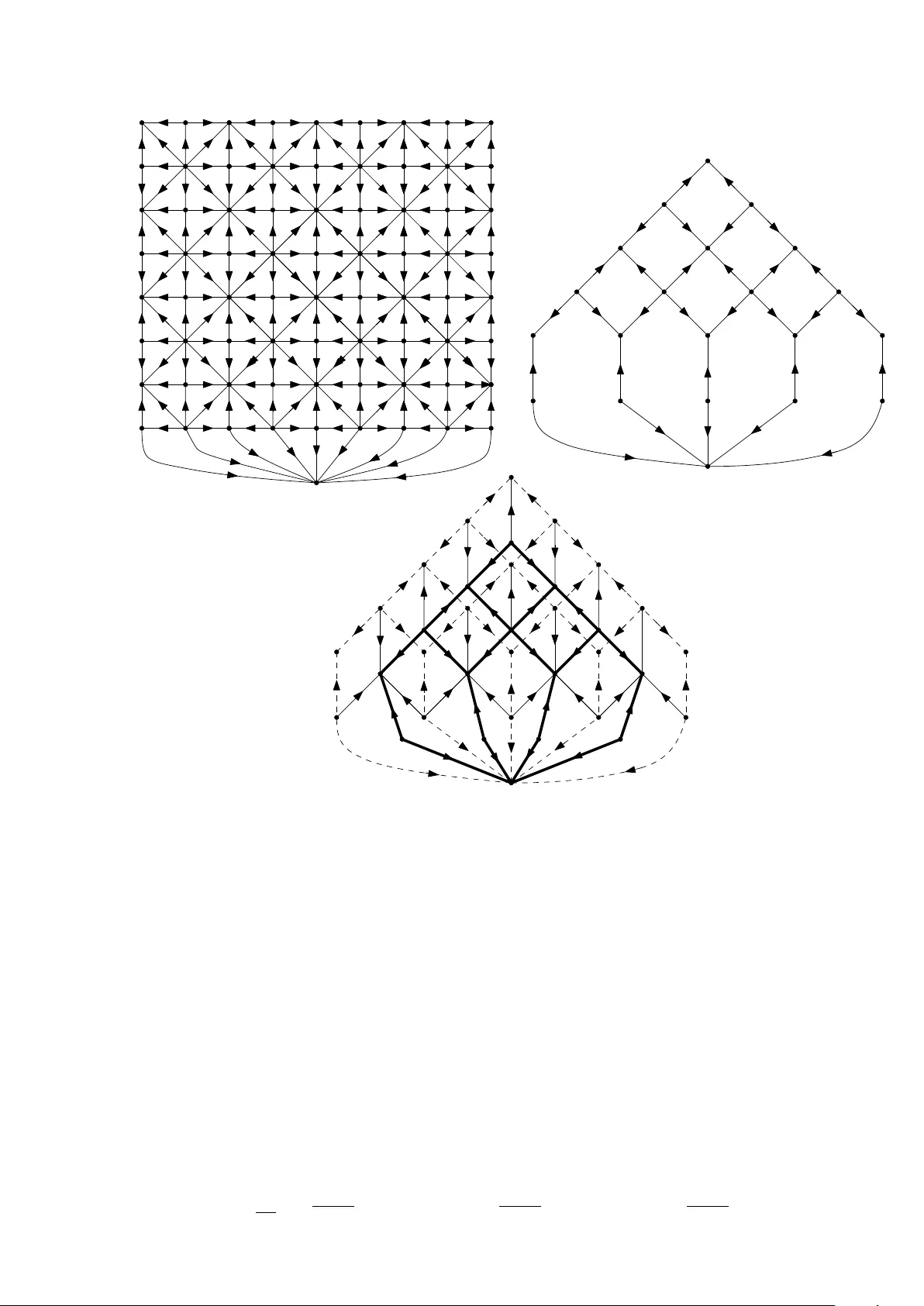
Comments & Academic Discussion
Loading comments...
Leave a Comment