NYUSIM: A Roadmap to AI-Enabled Statistical Channel Modeling and Simulation
Integrating artificial intelligence (AI) into wireless channel modeling requires large, accurate, and physically consistent datasets derived from real measurements. Such datasets are essential for training and validating models that learn spatio-temp…
Authors: ** - NYU WIRELESS 연구팀 (주요 저자 미상, 논문에 명시된 참고문헌에 기반) **
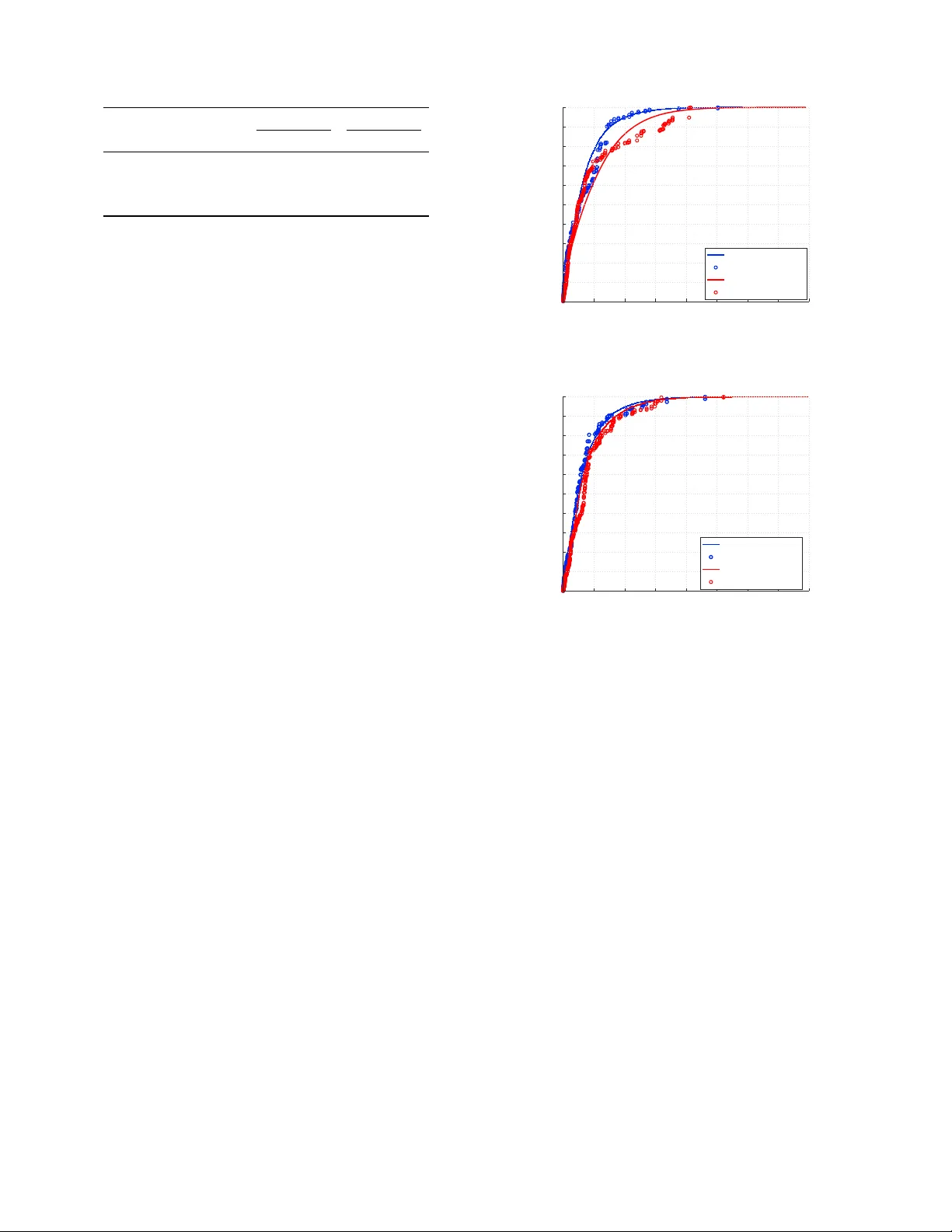
I. Jariwala, X. W ang, B. Meier , G. Qian, D. Shakya, M. Y ing, H. Nikbakht, D. Abraham, and T . S. Rappaport, “NYUSIM: A Roadmap to AI-Enabled Statistical Channel Modeling and Simulation, ” to appear in IEEE International Conference on Communications (ICC) , Glasgow , UK, Jun. 2026, pp. 1–6. NYUSIM: A Roadmap to AI-Enabled Statistical Channel Modeling and Simulation Isha Jariwala 1 , Xinquan W ang, Bridget Meier , Guanyue Qian, Dipankar Shakya, Mingjun Y ing, Homa Nikbakht 2 , Daniel Abraham, and Theodore S. Rappaport 3 New Y ork Univ ersity , T andon School of Engineering, Brooklyn, NY , USA { 1 ij2221, 2 homa.n, 3 tsr } @nyu.edu Abstract —Integrating artificial intelligence (AI) into wir eless channel modeling requir es large, accurate, and physically con- sistent datasets derived fr om real measur ements. Such datasets are essential for training and v alidating models that learn spatio- temporal channel beha vior across frequencies and en vironments. NYUSIM, introduced by NYU WIRELESS in 2016, generates realistic spatio-temporal channel data using extensive outdoor and indoor measurements between 28 and 142 GHz. T o improve scalability and support 6G research, we migrated the complete NYUSIM framework from MA TLAB to Python, and are incorpo- rating new statistical model generation capabilities from extensive field measurements in the new 6G upper mid-band spectrum at 6.75 GHz (FR1(C)) and 16.95 GHz (FR3) [1]. The NYUSIM Python also incorporates a 3D antenna data format, referred to as Ant3D , which is a standardized, full-sphere format for defining canonical, commercial, or measured antenna patterns f or any statistical or site-specific ray tracing modeling tool. Migration from MA TLAB to Python was rigorously validated through Kolmogor ov–Smirno v (K–S) tests, moment analysis, and end-to- end testing with unified randomness contr ol, confirming statistical consistency and reproduction of spatio-temporal channel statistics, including spatial consistency with the open-sour ce MA TLAB NYUSIM v4.0 implementation. The NYUSIM Python version is designed to integrate with modern AI workflows and enable large- scale parallel data generation, establishing a rob ust, verified, and extensible foundation for future AI-enabled channel modeling. Index T erms —NYUSIM, FR3, FR1(C), Artificial Intelligence (AI), Machine Learning (ML), 6G, 3D antenna modeling, sta- tistical spatial channel modeling I . I N T R O DU C T I O N A N D B AC K G RO U N D Reliable channel models form the foundation for the design, test, and standardization of wireless communication systems. Over the past decade, the demand for accurate, measurement- based channel modeling has increased as mobile networks ev olve tow ard higher frequencies, wider bandwidths, and greater spatial complexity in antenna radiation patterns. The NYUSIM channel simulator , introduced by NYU WIRELESS in 2016 [2]–[4], has become a global reference platform for studying millimeter-wa ve (mmW av e), sub-T erahertz (sub-THz), and now upper mid-band (FR3) propagation en vironments. Built on more than a decade of outdoor and indoor measure- ment campaigns, spanning 28 to 142 GHz, NYUSIM imple- ments the statistical spatial channel model (SSCM) using the time cluster spatial lobe (TCSL) framework [5], [6]. NYUSIM captures the physical beha vior of multipath propagation, re- producing large-scale path loss (PL), multipath delay , angular spreads, and spatio-temporal power distributions observed in real measurements. Since its public release, NYUSIM has become one of the most widely used open-source propagation tools, downloaded ov er 100,000 times, cited in more than 3,300 publications (as of 2024), and incorporated into network-lev el simulators such as ns-3 [7], [8]. The evolution of NYUSIM, beyond version 4.0 as presented here, describes three major advancements: (1) extension to FR3 frequencies, (2) inclusion of realistic three-dimensional (3D) antenna pattern modeling, and (3) complete conv ersion of the MA TLAB code base into a modular and open Python framew ork with clearly separated functional components. The FR3 band (7–24 GHz) represents the “upper mid-band” of the spectrum expected to support global 6G deployment [1]. Recent actions by the ITU, NTIA, FCC, and WRC-23 have highlighted specific FR3 sub-bands (e.g., 7 . 125 - 8 . 4 GHz, 14 . 8 - 15 . 35 GHz) as strong candidates for future mobile allocations [1]. Emerging use cases in 6G and integrated sensing and com- munication (ISA C) applications further increase the need for accurate, measurement-based FR3 channel models [9]. Pre vious upper mid-band w ork [10], [11] reported indoor line-of-sight (LOS) and non-line-of-sight (NLOS) path-loss exponents and delay spreads at selected frequencies (e.g., 6–14 GHz), but datasets were limited in bandwidth, en vironment, or angular cov erage. In contrast, NYU WIRELESS conducted the world’ s first comprehensiv e measurement campaigns pairing 6 . 75 GHz (FR1(C)), and 16 . 95 GHz (FR3) [1], [12]–[14]. Accurate statistical channel modeling in FR1(C) and FR3 requires realistic embedded antenna patterns [15], [16]. Here, we de velop a 3D antenna data format, referred to as Ant3D . Ant3D is a standardized, full-sphere format for defining canon- ical, commercial, or measured antenna patterns for any sta- tistical or site-specific (e.g., ray-tracing) modeling tools. Each antenna pattern is represented as a gain matrix ov er azimuth and ele vation with optional frequency components, allowing directional and polarization effects to be incorporated into simulated spatial channel impulse responses. Ant3D extends NYUSIM beyond the canonical uniform linear array (ULA), enabling channel simulations with realistic array geometries, and sidelobe structures [17]–[19]. NYUSIM 4.0 is ported from MA TLAB to Python to provide a reliable, transparent AI-native channel simulator derived from gold-standard measurement data, and it can learn as new propagation data becomes av ailable. The migration to NYUSIM Confidential Python provides a modular, scalable software architecture to support AI workflo ws for generative and discriminative chan- nel models, faithfully reproduces real-world channel spatio- temporal sample functions, while allowing future measure- ments to be seamlessly integrated and learned within this platform [20]–[22]. I I . M O T I V A T I O N T O U S E A I I N S I M U L A T I O N Recent advances in generativ e and discriminative AI hav e moti- vated a paradigm shift from purely statistical channel modeling to data-driv en wireless channel synthesis. AI-driv en modeling uses measured datasets to learn complex, and nonlinear map- pings between en vironmental v ariables (frequency , scenario, ge- ometry) and channel characteristics (path loss, delay spread, an- gular spread, cluster dynamics) [23], [24]. Generati ve AI mod- els such as diffusion models, v ariational autoencoders (V AEs), and generative adversarial networks (GANs) are capable of learning the joint probability distribution of channel parameters [23]. Generativ e AI allows for realistic synthesis of unseen propagation environments by sampling from measurement- based statistical distributions that capture the spatio-temporal characteristics of real channels. Discriminativ e models, such as deep neural networks and random forests, are capable of predicting large-scale and small-scale parameters or beamform- ing statistics from input conditions such as frequency , antenna geometry , and mobility [24]. The approaches in [23], [24] are increasingly being in vestigated for 6G digital twins, map- aware simulations, and AI-nativ e PHY/MA C co-design, where analytical interpolation (e.g., linear or parabolic) f ails to capture frequency-dependent nonlinearity and spatial correlation [25]. Classical channel simulators, especially closed or proprietary ones, are not easily integrated with AI models for three reasons: • Restricted data access: Measurement datasets and param- eter generation are often embedded in compiled code, limiting large-scale data export for AI training. • Limited scalability: The software architectures of tradi- tional channel simulators are not scalable, as they are not designed for parallel generation or cloud execution, which makes it difficult to produce millions of labeled and unlabeled samples required by modern AI models. • Limited interoperability: Closed systems do not integrate cleanly with AI framew orks such as PyT orch and T ensor - Flow , thus preventing direct embedding of learned models into the channel-simulation workflo w that generates chan- nel coefficients and impulse responses. The aforementioned shortcomings limit progress in self- ev olving modeling, as accurate AI-driv en channel simulators require massive datasets across frequency and spatio-temporal dimensions. A Python implementation of NYUSIM aligns naturally with modern AI and systems workflo ws, enabling capabilities that are difficult to realize in MA TLAB. Python interfaces directly with mainstream ML ecosystems, and NumPy arrays conv ert to PyT orch/J AX/T ensorFlow in one line. Hence, generati ve mod- els (diffusion, GANs, V AEs) and discriminativ e models (for path loss, spreads, blockage, beams) can be trained without in- termediate con versions or custom wrappers. Python toolchains also support large-scale, automated data generation and stream- ing via multiprocessing or cluster framew orks (e.g., Ray/Dask), making supervised and self-supervised training on millions of channel realizations practical. Through Python APIs, NYUSIM integrates with the network simulator (ns-3) for closed-loop experiments in which learning agents observe PHY/MA C states and act within the same ns-3 process [26]. Consider ho w NYUSIM Python supports the AI work- flows described abov e through a measurement-driven learn- ing pipeline. After collecting field measurements at a new frequency or environment, data is imported directly into the NYUSIM Python framework. An AI model then trains on measurements to automatically learn the underlying statistical patterns, such as ho w signal po wer decays with distance, how multipath clusters arriv e in time, or how energy spreads across angles. Because the AI learns patterns from the data itself, it can capture propagation behaviors that are difficult to deri ve manually through traditional curve fitting. The learned model is then plugged into NYUSIM through its modular Python interface, updating the relev ant simulation modules. I I I . N Y U S I M : F R O M M A T L A B T O P Y T H O N The migration of NYUSIM from MA TLAB to Python improv es accessibility , scalability , and reproducibility in propagation re- search, as Python enables integration with AI and ML frame- works for data-driven channel modeling. The first four MA T - LAB versions of NYUSIM established the foundation for the SSCM and ha ve long been used to study mmW a ve and sub-THz channels [5], [6], [20]. Ho we ver , extending NYUSIM to new frequency bands or channel conditions required manual mod- ification of the open-source code, and lar ge parameter sweeps or parallel runs were constrained by MA TLAB’ s proprietary ex ecution model. Integration with external network simulators such as ns-3 also in volved custom interfaces and translation layers [7], [8]. The ne w Python framework retains all physical equations, statistical behavior , and input–output structures of the MA TLAB version, while introducing a modular architecture that simplifies model expansion, parallel execution, and AI integration [2], [27]. A. NYUSIM Python F r amework T o ensure consistency with the MA TLAB version, we reor- ganized the channel-generation functions of NYUSIM Python into deterministic and stochastic classes, a standard split in wireless propagation modeling [16], [21], [22]. Deterministic classes (e.g., mean free-space path loss, atmospheric attenua- tion, frequenc y scaling) encode fixed physics and are verified by comparing function outputs between the MA TLAB and Python versions of NYUSIM. Stochastic classes (e.g., shadow fading, power delay profiles, angular spreads) capture randomness and are v alidated via Monte Carlo (MC) ensembles by comparing distributions and moments, using seed-controlled draws [7], [17], [18], [20], [28]. The class separation isolates each ph ysical process for targeted testing and extension, while preserving internal consistency across environments and frequencies. Confidential During the code con version, each MA TLAB function was translated into a Python function with identical input–output structures and parameter definitions. Constants, unit con ven- tions, and random number seeds were preserved to maintain physical accuracy and reproducibility [6]. The matrix opera- tions and vectorized calculations in MA TLAB were mapped to equivalent NumPy and SciPy in Python to achie ve similar computational behavior while improving expandability . Con- ditional logic used in MA TLAB scripts was refactored into structured Python dictionaries that describe the channel state, such as environment type, transmitter–receiv er geometry , and frequency configurations [2]. The migration of NYUSIM from MA TLAB to Python shows that channel simulators can ev olve while preserving physical rigor and measurement fidelity . The Python framework under- scores a k ey lesson for the propagation community: accurate modeling relies not only on high-quality measurements but also on transparent and reproducible software architectures that support ongoing validation [2], [20] and enable learning from large-scale measurement data through AI and ML methods to refine and extend propagation models. The principles of transparency , reproducibility , and measurement-dri ven model- ing may be applied to upgrade or dev elop future simulators that enable AI-assisted learning in propagation research [27]. B. V erification and Statistical V alidation of NYUSIM Python W e describe frameworks for verification and statistical vali- dation testing of NYUSIM Python. 1) Function-to-Function T esting W e developed a function-to-function testing frame work to confirm that each deterministic and stochastic process in the Python v ersion produces statistically equi v alent outputs to its MA TLAB counterpart. Deterministic functions were compared element-wise using absolute and relati ve error thresholds to ensure numerical equi v alence between MA TLAB and Python outputs. Stochastic functions were statistically validated in more than 10,000 MC realizations using the K–S test and moment-based analysis. The K–S test sho wed that the empirical distributions of delay spread, angular spread, and shado w fading, were statistically indistinguishable between MA TLAB and Python, while the means and variances of NYUSIM Python agreed within 1% . T ests were performed across all standardized NYUSIM environments: urban microcell (UMi), urban macro- cell (UMa), rural macrocell (RMa), indoor f actory (InF), and indoor hotspot (InH), and ov er frequencies from 28 to 142 GHz under both LOS and NLOS conditions. The function-to- function verification confirms that, for each operating frequenc y and propagation scenario defined in the MA TLAB version, the Python implementation reproduces both deterministic and stochastic behaviors with extremely high statistical fidelity . 2) End-to-End T esting of NYUSIM Python Operation In the end-to-end testing, MA TLAB serves as the baseline, and the Python code is required to mirror it. End-to-end testing aims to verify that the full workflow from inputs to final outputs, such as the number of multipaths, path delays, powers, and RMS delay and angular spreads, matches in ov erall statistics. The testing is challenging because small numerical and stochastic output dif ferences of each function can accumulate. The main difficulty is random number generation. MA TLAB uses MT19937, which is a deterministic pseudo- random generator with period 2 19937 − 1 . While NumPy uses PCG64, a permuted congruential generator (PCGs) [29] and a dif ferent float-mapping path. As a result, feeding identical seeds to the MA TLAB and Python versions of NYUSIM leads to numerically different sequence outputs. T o address the sequence mismatch, we implemented the same MT19937 in both MA TLAB and Python versions of NYUSIM, adopted an identical 53-bit uniform mapping, and routed all random draws (uniform, normal, lognormal, exponen- tial, Poisson, gamma) through functions that mimic calls. W e also matched formulas, constants, array shapes, and edge-case rules and accounted for MA TLAB 1-based, column-oriented style versus NumPy 0-based indexing. Finally , we executed MA TLAB and Python versions on the same element-wise inputs and compared outputs. T est results confirmed that the dev eloped Python implementation reproduces the statistics of MA TLAB. In addition, we performed an end-to-end MC test with 10,000 iterations using random seeds. The MC results also confirmed the consistency between the two versions using the K–S test and moment-based analysis. Note that in single- run execution, the Python and MA TLAB implementations have comparable runtime and memory usage. The scalability advan- tage of Python allo ws parallel simulation across many machines using free tools such as multiprocessing, Ray , or Dask, without licensing costs, which is important when generating the large datasets needed for AI training. I V . I M P L E M E N T I N G 3 D A N T E N NA P A T T E R N S I N N Y U S I M A. Ant3D F ormat NYUSIM Python incorporates a unified 3D antenna data format, referred to as Ant3D , to represent customizable, com- mercial, or canonical real antenna radiation behavior in spatial channel simulations. The Ant3D format provides a standard- ized description of both transmitting and receiving antennas, enabling the use of measured, simulated, or vendor -supplied radiation patterns in a consistent structure [5], [17], [20], [22]. Each storable antenna pattern is defined on a spherical grid of azimuth ( 𝜙 ) and ele vation ( 𝜃 ) angles, covering [ 0 ◦ , 360 ◦ ] and [ − 90 ◦ , 90 ◦ ], respectiv ely . Azimuth 𝜙 is defined counterclockwise in the horizontal plane, and elev ation 𝜃 is measured from the horizontal plane with positi ve elev ation. A OD/A OA map to azimuth, while ZOD/ZOA are conv erted to elev ation via 𝜃 = 90 ◦ − ZOD/ZO A. Antenna patterns are applied in simulation as either gain-only patterns or using spherical field components. The format stores antenna gain values in dBi within a matrix 𝐺 ( 𝜃 , 𝜙 ) . Data structure accommodates isotropic, horn, dipole, and phased-array antennas, as well as imported 3D patterns from commercial antenna specifications, electromagnetic solvers, or measurement campaigns [15], [18], [19]. All data in the Ant3D antenna pattern format are normal- ized to the maximum gain of the antenna to ensure consistency across frequencies and scenarios. Confidential The Ant3D structure is implemented in Python as a data block with clearly defined data fields (i.e., labeled components of the dataset), including frequency , angular grids, gain matrix, polarization, and normalization reference. Each record stores both the normalized gain matrix 𝐺 ( 𝜃 , 𝜙 ) and the corresponding peak gain 𝐺 max , ensuring that directional gain information is preserved for every frequency or scenario. Data blocks also describe the orientation, placement configuration, operating frequencies and 3D antenna pattern data source of the antenna. During simulation, NYUSIM Python interpolates gain v al- ues for the randomly generated arri val and departure angles and applies orientation alignment at both the transmitter and receiv er . The resulting direction-dependent gain modifies the power of each multipath component, capturing the effects of beam directivity , sidelobes, and polarization mismatch on the channel impulse response. By standardizing antenna represen- tation, the Ant3D format enables reproducible e valuation of antenna-dependent propagation in FR3, mmW a ve, and sub-THz frequencies [6], [16]. B. 3D Reconstruction of Antenna P atterns T o allow NYUSIM users to employ practical commercial an- tenna patterns sold throughout the industry and across emerging FR3 and higher frequencies, a ne w antenna pattern (AntPat) module is used in NYUSIM Python. The AntPat module provides a unified workflo w to import vendor antenna patterns from Ant3D formatted data (as described in Sec. IV -A) as well as to alternati vely generate 3D patterns that comply with 3GPP or other standards. The AntPat module provides a single representation on the unit sphere that can be visualized, stored, and consumed by the NYUSIM v4.0 channel simulation frame- work as described in [2]–[4], [7], [8], [30]–[32]. Specifically , NYUSIM users can select a specific 3GPP or commercial antenna at both TX and RX when simulating channels with the Python version. The NYUSIM Python AntPat module includes sev eral com- mercial antenna patterns from different v endors, where addi- tional vendors and antenna patterns are easily implemented using the AntPat module. Howe ver , vendor documentation commonly provides principal cuts only: a vertical cut (V -cut) 𝐺 V ( 𝜃 ) at 𝜙 = 0 ◦ and a horizontal cut (H-cut) 𝐺 H ( 𝜙 ) at 𝜃 = 0 ◦ , together with catalog peak gain and half-power beamwidth (HPBW) values. The AntPat module reconstructs a full 3D radiation pattern from these parameter inputs through an AntPat reconstruction pipeline that remains faithful to the provided measurements by the vendor . T o upload a v endor’ s antenna pattern in NYUSIM Python, the user simply enters the V -cut and H-cut data in the required tabular format with angle (degrees) versus gain (dBi) for each cut, and then imports the table into the NYUSIM Python AntP at module. The AntP at reconstruction procedure first reads the two plane cuts (V -cut and H-cut), remov es duplicate angles, and sorts the data. Both cuts are then mapped to a uniform spherical grid by the NYUSIM Python AntPat module. The 3D gain is synthesized from the orthogonal cuts using the multiplication (b) Customiza ble 3GPP C omp liant Anten na Patter n 10 0 - 10 - 20 - 30 - 40 HPBW=3 5 ° HPBW=45 ° HPBW=55 ° 7GHz Horn Gain( dBi ) 0.9GHz BS 2.65 GHz BS (a) Preset Commerc ial A nten na P attern Fig. 1. Examples of the AntPat module in NYUSIM Python. (a) Preset com- mercial antenna patterns (e.g., JMA iV02OMI136 0.9/2.65 GHz and Pasternack PENW AN-137 antennas). (b) Customizable 3GPP-compliant element/array patterns with adjustable parameters. method from [33]. In the decibel scale, 𝐺 ( 𝜃 , 𝜙 ) [dBi] ≈ 𝐺 H ( 𝜙 ) [dBi] + 𝐺 V ( 𝜃 ) [dBi] − 𝐺 max [dBi] , (1) where 𝐺 H ( 𝜙 ) and 𝐺 V ( 𝜃 ) are the measured H-cut gain and V -cut gain in dBi, and 𝐺 max (dBi) is the catalog peak gain reported by the vendor . In linear scale, each linear cut gain divided by 10 𝐺 max / 10 yields a weighting factor between zero and one (since each cut gain ≤ 𝐺 max (dBi)), and the product of these two weighting factors multiplied by 10 𝐺 max / 10 yields the linear 3D gain, which is therefore always non-negati ve and bounded by the peak gain. In linear scale, 𝑔 ( 𝜃 , 𝜙 ) = 10 𝐺 ( 𝜃 , 𝜙 ) / 10 is normalized to satisfy ∫ 2 𝜋 0 ∫ 𝜋 0 𝑔 ( 𝜃 , 𝜙 ) sin 𝜃 𝑑 𝜃 𝑑 𝜙 = 4 𝜋, (2) Here, 𝑔 ( 𝜃 , 𝜙 ) denotes the absolute linear antenna gain, with peak value 10 𝐺 max [dBi] / 10 . Finally , the AntPat module maps the gain to field components on the ( ˆ 𝜃 , ˆ 𝜙 ) basis and exports the grid to the Ant3D format with entries 𝜙 (rad), 𝜃 (rad), 𝐸 re 𝜙 , 𝐸 im 𝜙 , 𝐸 re 𝜃 , 𝐸 im 𝜃 . The AntPat module also generates standard-compliant pat- terns directly from specification parameters such as defined in T able 7.3-1 of 3GPP TR 38.901 [16]. Let 𝜃 ′′ ∈ [ 0 ◦ , 180 ◦ ] denote the zenith angle and 𝜙 ′′ ∈ [ − 180 ◦ , 180 ◦ ] denote the azimuth angle. The vertical and horizontal cuts in the decibel scale are 𝐴 V dB ( 𝜃 ′′ , 𝜙 ′′ = 0 ◦ ) = − min ( 12 𝜃 ′′ − 90 ◦ 𝜃 3dB 2 , SLA v ) , (3) 𝐴 H dB ( 𝜃 ′′ = 90 ◦ , 𝜙 ′′ ) = − min ( 12 𝜙 ′′ 𝜙 3dB 2 , 𝐴 max ) , (4) and thus the 3D pattern is 𝐴 dB ( 𝜃 ′′ , 𝜙 ′′ ) = − min − 𝐴 V dB ( 𝜃 ′′ , 0 ◦ ) + 𝐴 H dB ( 90 ◦ , 𝜙 ′′ ) , 𝐴 max . (5) For the parameters in (5), we use default settings in [16]: 𝜃 3dB = 65 ◦ , 𝜙 3dB = 65 ◦ , SLA v = 30 dB , 𝐴 max = 30 dB , and element peak gain 𝐺 𝐸 , max = 8 dBi . NYUSIM users can also customize these parameters and export the grid to the Ant3D format. Confidential T ABLE I: Measured [12]–[14] vs. Simulated Dir . RMS DS Mean and Std. Dir . RMS DS 16.95 GHz 6.75 GHz log 10 [ns] Meas. Sim. Meas. Sim. 𝜇 RMS DS dir LOS 1.23 1.30 1.29 1.30 NLOS 1.35 1.38 1.43 1.36 𝜎 RMS DS dir LOS 0.67 0.55 0.60 0.53 NLOS 0.55 0.85 0.50 0.46 C. Inte gration of AntP at module with NYUSIM Python T o integrate antenna patterns into the NYUSIM Python simulation workflo w , we implemented a multi-step process as follows. 1) Interactive V isualization of Antennas in NYUSIM Python T o allow quick validation of beamwidth, sidelobe re gion, and polarization settings before simulation, the AntPat module provides interactiv e 3D inspection using Python. The interface renders 𝐴 ( 𝜃 , 𝜙 ) or 𝑔 ( 𝜃 , 𝜙 ) on a sphere or as a surface over ( 𝜃 , 𝜙 ) , with hover inspection, color scales, and camera controls, as shown in Fig. 1. 2) Inte gration of 3D antenna pattern into Simulation W e inte grate the 3D AntP at module into NYUSIM Python as a post-generation spatial filter applied to the full omnidirec- tional multipath list. • In each simulation, the NYUSIM Python first gener - ates 𝐿 omnidirectional spatial-temporal impulse responses with angle-dependent multipath components using same method in NYUSIM v4.0, as described in [2]–[4], [7], [8], [30]–[32] and validated in Sec. III. • Then, NYUSIM Python uses the 3GPP or commercial antenna at TX and RX per user’ s selection, ev aluating each path’ s AoD/AoA angles. Specifically , the AntPat module ev aluates the chosen 3D patterns at each path’ s AoD/AoA to obtain antenna gains 𝐺 t ( 𝜃 t ℓ , 𝜙 t ℓ ) and 𝐺 r ( 𝜃 r ℓ , 𝜙 r ℓ ) . • Finally , for each path, the directional path power is com- puted using the same method in NYUSIM v4.0 [2]–[4], [7], [8], [30]–[32]. This inte gration allo ws antenna pattern effects on the directional PL to be quantified while maintaining the NYUSIM v4.0 framew ork [2]–[4], [7], [8], [30]–[32]. V . F R 3 M O D E L I N G I N N Y U S I M P Y T H O N In 2024, NYU WIRELESS conducted the first comprehensiv e propagation measurement campaigns in New Y ork City at 6 . 75 GHz (FR1(C)) and 16 . 95 GHz (FR3) using a 1 GHz wideband sliding-correlation sounder with dual co-located RF front-ends, precise PTP-synchronized rubidium clocks, and full azimuth/elevation horn-antenna sweeps, capturing tens of thousands of PDPs across LOS/NLOS conditions [12]–[14]. Figs 2 and 3 illustrate examples of the measurement-based statistical channel model (SCM) developed in [1], [12]–[14], implemented in NYUSIM Python. In particular , Fig. 2 and Fig. 3 show CDFs for measured and simulated directional root mean square (RMS) delay spread (DS) for the 16.95 GHz and 6.75 GHz campaigns, respectiv ely . The RMS DS is a measure of the temporal spread of multi- path components (MPCs) in a channel. T o ev aluate directional 16.95 GHz Directional RMS DS 0 50 100 150 200 250 300 350 400 Directional RMS DS (ns) 0 0.1 0.2 0.3 0.4 0.5 0.6 0.7 0.8 0.9 1 Probability LOS Simulation LOS Empirical NLOS Simulation NLOS Empirical Fig. 2: CDF of directional RMS DS for 16.95 GHz. Measurements [12]–[14] were conducted using a 1 GHz-bandwidth sliding-correlation channel sounder and directional horn antennas with 20 dBi gain and 15° HPBW . 6.75 GHz Directional RMS DS 0 50 100 150 200 250 300 350 400 Directional RMS DS (ns) 0 0.1 0.2 0.3 0.4 0.5 0.6 0.7 0.8 0.9 1 Probability LOS Simulation LOS Empirical NLOS Simulation NLOS Empirical Fig. 3: CDF of directional RMS DS for 6.75 GHz. Measurements [12]–[14] were conducted using a 1 GHz-bandwidth sliding-correlation channel sounder and directional horn antennas with 15 dBi gain and 30° HPBW . DS, an arbitrary complex antenna patterns 𝑔 TX and 𝑔 RX are applied to the omnidirectional channel impulse response (CIR) giv en by [34, Eq. (3)], which results in the directional CIR to be of the following form [34]: ℎ dir 𝑡 , ® Θ , ® Φ = 𝑁 𝑛 = 1 𝑀 𝑛 𝑚 = 1 𝑎 𝑚, 𝑛 𝑒 𝑗 𝜑 𝑚, 𝑛 𝛿 𝑡 − 𝜏 𝑚, 𝑛 𝑔 TX ® Θ − ® Θ 𝑚, 𝑛 𝑔 RX ® Φ − ® Φ 𝑚, 𝑛 , (6) where 𝑡 is the absolute propagation time, ® Θ = 𝜙 A OD , 𝜃 ZOD represents the TX pointing direction vector , and ® Φ = 𝜙 A O A , 𝜃 ZO A is the RX pointing direction vector . 𝑁 and 𝑀 𝑛 denote the number of time clusters (TCs) and the number of spatial lobes (SLs), respecti vely; 𝑎 𝑚, 𝑛 is the magnitude of the 𝑚 th SL belonging to the 𝑛 th TC, while 𝜑 𝑚, 𝑛 and 𝜏 𝑚, 𝑛 represent the phase and propagation delay of the SL, respec- tiv ely . Likewise, ® Θ 𝑚, 𝑛 and ® Φ 𝑚, 𝑛 are the v ectors representing A OD/ZOD and A O A/ZO A for the SL, respectively . In the simulation, in each run, 10,000 directional channel impulse responses are generated, and the directional RMS DSs are then extracted. The statistical channel model follows the clustered delay model in [34, T able VIII], with exponential inter-cluster and intra-cluster delay distrib utions. W e set 𝑁 𝑐 = 4 , and for Confidential the 16.95 GHz, 𝜇 𝑠 , 𝐿 𝑂𝑆 = 30 , 𝜇 𝑠 , 𝑁 𝐿 𝑂 𝑆 = 32 and for 6 . 75 GHz, 𝜇 𝑠 , 𝐿 𝑂𝑆 = 18 , and 𝜇 𝑠 , 𝑁 𝐿 𝑂 𝑆 = 22 . T able I sho ws the corresponding mean and standard deviation of the RMS DS in the base- 10 logarithmic domain. Figs. 2 and 3 and T able I show that NYUSIM Python faithfully recreates the extensiv e field measurements reported in [12]–[14]. Further work verifies that the Python code faithfully recreates the statistics of NYUSIM v4.0 MA TLAB when running 10,000 runs to produce sample functions ov er many operating modes and en vironments. V I . C O N C L U S I O N A N D F U T U R E W O R K This paper describes the evolution of NYUSIM as a wideband statistical, physically based, and measurement-driven channel simulator . The verified NYUSIM Python version preserves the accuracy and statistical behavior of the MA TLAB implementa- tion while establishing a reproducible foundation for lar ge-scale simulation and integration with AI and ML for channel mod- eling. A standardized 3D antenna data format (Ant3D) and the inclusion of FR3 propagation statistics extend the simulator’ s real-world accurac y and faithful reproduction of realistic spatio- temporal channel impulse response models, enabling the study of spatial, angular , and polarization ef fects that dominate at FR3 and mmW ave frequencies. Building on the existing integration with ns-3, future work will expand NYUSIM Python to model dynamic mobility , vehicular , and sub-THz channels, and to enable AI-based channel synthesis and parameter inference. Creating the new Python code base will strengthen the role of NYUSIM as a measurement-based and physically interpretable platform to advance 6G propagation, PHY -layer research, and system design. A C K N O W L E D G M E N T This work was supported by the NYU WIRELESS Industrial Affiliates Program, NSF Grant No. 2234123, and NYU T ech- nology Acceleration and Commercialization A ward. R E F E R E N C E S [1] D. Shakya et al. , “Comprehensive FR1(C) and FR3 lower and upper mid- band propagation and material penetration loss measurements and channel models in indoor environment for 5G and 6G, ” IEEE Open J. Commun. Soc. , vol. 5, pp. 5192–5218, 2024. [2] H. Poddar et al. , “ A tutorial on NYUSIM: Sub-terahertz and millimeter- wav e channel simulator for 5G, 6G, and beyond, ” IEEE Commun. Surve ys T uts. , vol. 26, no. 2, pp. 824–857, 2024. [3] T . S. Rappaport et al. , “Investig ation and comparison of 3GPP and NYUSIM channel models for 5G wireless communications, ” in Proc. IEEE VTC-F all , 2017, pp. 1–5. [4] S. Sun et al. , “ A nov el millimeter-wa ve channel simulator and applications for 5G wireless communications, ” in Pr oc. IEEE ICC , 2017, pp. 1–7. [5] M. K. Samimi and T . S. Rappaport, “Statistical channel model with multi- frequency and arbitrary antenna beamwidth for millimeter-wa ve outdoor communications, ” in Pr oc. IEEE GLOBECOM W orkshops , 2015, pp. 1–7. [6] T . S. Rappaport et al. , “W ideband millimeter-wav e propagation measure- ments and channel models for future wireless communication system design, ” IEEE T rans. Commun. , vol. 63, no. 9, pp. 3029–3056, 2015. [7] H. Poddar et al. , “Full-stack end-to-end mmW ave simulations using 3GPP and NYUSIM channel model in ns-3, ” in Proc. IEEE ICC , May 2023, pp. 1048–1053. [8] H. Poddar et al. , “ns-3 implementation of sub-terahertz and millimeter wav e drop-based nyu channel model (NYUSIM), ” in Proceedings of the 2023 W orkshop on ns-3 , 2023, pp. 19–27. [9] A. Bazzi et al. , “Upper mid-band spectrum for 6G: Vision, opportunity , and challenges, ” IEEE Commun. Mag. , 2025, to appear . [10] N. O. Oyie and T . J. O. Afullo, “Measurements and analysis of large- scale path loss model at 14 and 22 GHz in indoor corridor, ” IEEE Access , vol. 6, pp. 17 205–17 214, 2018. [11] M. Kim et al. , “Large-scale parameters and double-directional character- ization of indoor wideband radio multipath channels at 11 GHz, ” IEEE T rans. Antennas Propa g. , vol. 62, no. 1, pp. 430–441, 2014. [12] D. Shakya et al. , “Propag ation measurements and channel models in indoor environment at 6.75 GHz FR1(C) and 16.95 GHz FR3, ” in Pr oc. IEEE GLOBECOM , 2024, pp. 998–1003. [13] M. Ying et al. , “Upper mid-band channel measurements and character- ization at 6.75 GHz FR1(C) and 16.95 GHz FR3 in an indoor factory scenario, ” in Proc. IEEE ICC , 2025, pp. 3303–3308. [14] D. Shakya et al. , “Wideband penetration loss through building materials and partitions at 6.75 GHz in FR1(C) and 16.95 GHz in the FR3 upper mid-band spectrum, ” in Pr oc. IEEE GLOBECOM , 2024, pp. 1665–1670. [15] A. Sulyman et al. , “Radio propagation path loss models for 5G cellular networks in the 28 GHz and 38 GHz bands, ” IEEE Commun. Mag. , vol. 52, no. 9, pp. 78–86, 2014. [16] 3GPP , “Study on channel model for frequencies from 0.5 to 100 GHz, ” ETSI, T ech. Rep. TR 38.901 V17.0.0, 2022. [17] D. Nov otny et al. , “Millimeter-wav e channel sounding for over -the-air testing, ” Nat. Inst. Standards T echnol. (NIST), T ech. Rep. T echnical Note 2068, 2019. [18] Y . Xing et al. , “Indoor wireless channel properties at millimeter wave and sub-terahertz frequencies, ” in Pr oc. IEEE GLOBECOM , 2019, pp. 1–6. [19] Y . Xing and T . S. Rappaport, “Propagation measurements and path loss models for sub-THz in urban microcells, ” in Pr oc. IEEE ICC , 2021, pp. 1–6. [20] T . S. Rappaport et al. , “Overvie w of millimeter-wav e communications for fifth-generation (5G) wireless networks—with a focus on propagation models, ” IEEE T rans. Antennas Pr opag. , vol. 65, no. 12, pp. 6213–6230, 2017. [21] L. Liu et al. , “The COST 2100 MIMO channel model, ” IEEE W ireless Commun. , vol. 19, no. 6, pp. 92–99, 2012. [22] S. Jaeck el et al. , “QuaDRiGa: A 3-D multi-cell channel model with time ev olution for enabling virtual field trials, ” IEEE T rans. Antennas Propa g. , vol. 62, no. 6, pp. 3242–3256, 2014. [23] T . W u et al. , “CDDM: Channel denoising diffusion models for wireless semantic communications, ” IEEE T rans. W ir eless Commun. , vol. 23, no. 9, pp. 11 168–11 183, Sep. 2024. [24] P . Dong et al. , “Deep CNN-based channel estimation for mmwave massiv e MIMO systems, ” IEEE J. Sel. T opics Signal Pr ocess. , vol. 13, no. 5, pp. 989–1000, Sep. 2019. [25] U. Sengupta et al. , “Generativ e diffusion models for radio wireless channel modelling and sampling, ” in Proc. IEEE GLOBECOM , 2023, pp. 4779–4784. [26] M. Abadi et al. , “T ensorflow: A system for large-scale machine learning, ” in Proc. 12th USENIX Symp. OSDI , 2016, pp. 265–283. [27] K. B. Letaief et al. , “The roadmap to 6G: AI-empowered wireless networks, ” IEEE Commun. Mag. , vol. 57, no. 8, pp. 84–90, 2019. [28] W . H. Tranter et al. , Principles of Communication Systems Simulation with W ir eless Applications . Upper Saddle River , NJ, USA: Prentice Hall, 2004. [29] M. E. O’Neill, “PCG: A family of simple fast space-efficient statistically good algorithms for random number generation, ” Harve y Mudd College, Claremont, CA, T ech. Rep. HMC-CS-2014-0905, Sep. 2014. [30] T . S. Rappaport et al. , “NYUSIM version 4.0 user manual, ” NYU WIRELESS, NYU T andon School of Engineering, T ech. Rep., 2022. [Online]. A vailable: https://wireless.engineering.nyu.edu/n yusim/ [31] M. K. Samimi and T . S. Rappaport, “3-D millimeter-w ave statistical channel model for 5G wireless system design, ” IEEE T rans. Micr ow . Theory T ec hn. , vol. 64, no. 7, pp. 2207–2225, Jul. 2016. [32] S. Sun et al. , “Propagation models and performance ev aluation for 5G millimeter-wa ve bands, ” IEEE T rans. V eh. T ec hnol. , vol. 67, no. 9, pp. 8422–8439, Sep. 2018. [33] ITU-R, “Modelling and simulation of IMT networks and systems for use in sharing and compatibility studies, ” International T elecommunication Union (ITU-R), Geneva, Switzerland, Recommendation M.2101-0, Feb. 2017. [34] D. Shak ya et al. , “Radio propag ation measurements and statistical channel models for outdoor urban microcells in open squares and streets at 142, 73, and 28 GHz, ” IEEE T rans. Antennas Propag . , vol. 72, no. 4, pp. 3580–3595, 2024.
Original Paper
Loading high-quality paper...
Comments & Academic Discussion
Loading comments...
Leave a Comment