Adaptive Selection of Codebook Using Assistance Information and Artificial Intelligence for 6G Systems
This paper addresses the problem of adaptive codebook (CB) selection for downlink (DL) precoder quantization in channel state information (CSI) reporting. The accuracy of precoder quantization depends on propagation conditions, requiring independent …
Authors: ** *저자 정보가 논문에 명시되지 않아 현재 확인 불가* **
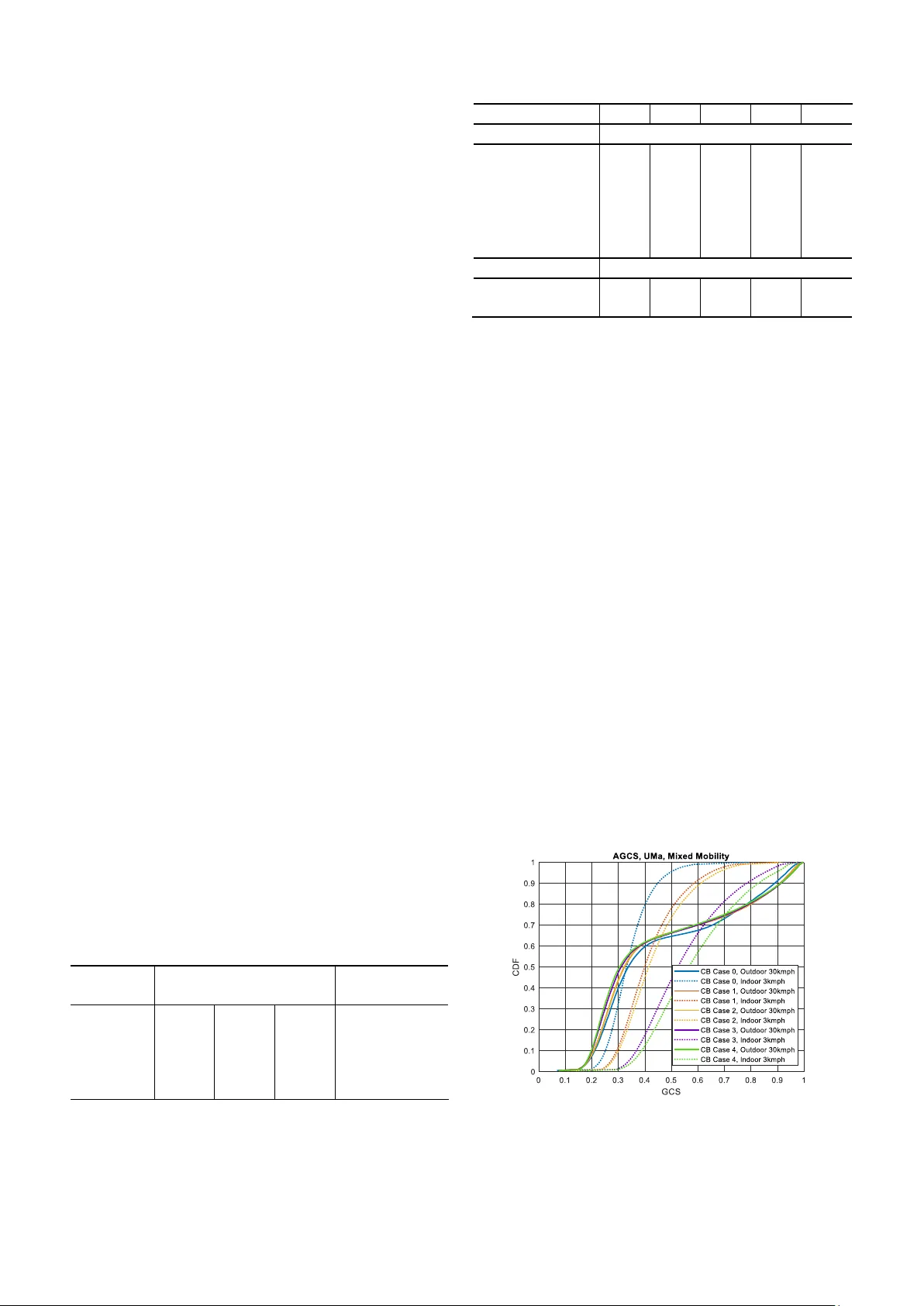
Adaptive Selection of Codebook Using Assistance Information and Artificial Intelligence for 6G Systems Denis Esiunin Sam sung Research d.esiunin@samsung.com Alexei Davydov Sam sung Research av.davydov@samsung.com Abstract — This paper addresses the problem of adaptive codebook (CB) selection for dow nlink (DL) precoder quantization i n channel state infor mation (CSI) reporting. The accuracy of precoder quantization depends on propagation conditions, requiring in dependent para meter adaptation fo r each user equipment (UE). To enable optimal CB selection, this paper proposes UE-assisted CB selection at the b ase sta tion (B S) using report ed by the UE statistical channel properties across time, frequency, and spatial do mains. The reported assistance information serves as input to a neural network ( NN ), w hich predicts the quantiza ti on a ccur acy of var ious CB types for each served user. The predicted accuracy is then used to select t he optimal CB w hile considering the associated CSI r eporting overhead and precoding perform ance. Sy stem-level simulations demonstrate t hat the pr oposed approach re duces total CSI overhead while m aintaining the target syste m t hroughput performance. Keywords — CB selection, assistance information, cha nnel correlation, precoder quantization error prediction, g eneralized cosine similarity, artificial intelligence, 6G I. I NTRODUCTION Massive Multipl e-Input Multiple-Out put (M -MIMO ) antenna system s have becom e an integral part of commercia l 5-th Generati on New Radio ( 5G NR) deploy ments in the C-band [1]. In practic e, this technology has demonstra ted significan t advantages , including higher spatial multiplex ing gains and improved transmission directivity through the use of advan ced beam forming sch emes. M-MIMO, a long w ith its evolution f or upper mid-bands, is also consider ed a key solution for meetin g the grow ing capacity d eman ds o f futu re 6-th Gene ration ( 6G ) cellular networks [2]. The performance benefits of M-MIMO system s are achieved through advanced precoding schemes implemented at the b ase station (BS) t ransm itter. Two types of channe l state inform ation ( CSI) are comm only co nsi dered to ass ist the beamf orming operations. The first type relies on channel reciproc ity and sounding reference signals (SRS) transm itted by the user e quipment ( UE). However, its eff iciency is lim ited by uplink (UL ) tran smission pow er constr aints, makin g it more suitable for cell-cent er users. T he second, more widely applicabl e approach is codebook (CB)-base d downlink (DL) precoding. In this method, the UE m easures the chan nel response from the BS dig ital antenn a p orts u sing channel stat e reference signals (CSI-RS) . The measured channel is then quantize d using a predefined CB and reported to the BS via the UL c ontrol channe l, enabli ng DL beamf orming. To support CSI compressi on, 5G NR specifies vari ous types of CB s that quantize CSI across the spat ial, frequen cy , and Doppler/tim e domains [3]. The level of compression and resultin g UL control overhea d are primarily controll ed by a set of parameters defining the number of Discrete Fourier Transform (DFT ) b asis vectors used to represen t the quantized CSI. In addit ion to CB -based methods, 6G system is expected to ado pt AI/ML-base d approa ches for CSI compressi on, particula rly usin g auto-enco ders. This technique offers higher CSI compression levels while maintaining the sim ilar or lower CSI q uant ization error. Furtherm ore, different levels of compressi on c an be supporte d by adapting the num ber of auto-enco der outputs [ 4]. A key practical chall enge in supporting various CSI quantizat ion is the proper sele ction of CSI compressi on level and configuration of the CB parameters to ensure target CSI quantizat ion error and UL contr ol channel overhead. From a netw ork perspective, the quality of CSI q uant ization is typically unknown at the BS. As a result, practi cal BS configura tions sh ould rely on a common set of CB param eters for all UEs , which m a y not alway s provide optim al perform ance under dive rse channel c onditions. The problem of UE-specific CB selection has b een discussed in several papers. More specific ally, [5] proposes a basic approach based on Line- of -Sig ht ( LoS) and Non-Line- of -Sight (NLoS) channel classificati on servin g as foundation for coarse switching b etween basic CB ty pes . In [6] , a fede rated res ervoir c omputing framew ork (CA-FedRC) fo r 5G NR CB adaptat ion is introduc ed, balancing perf ormance and f eedback overh ead based on som e CSI in dicators. Usin g simple link-lev el channel models, it was shown that dynamic switch ing o f CB unde r d iverse commun ication condit ions can signif icantly improv e throughput perform ance while reducing UL control channel overhead . How ever, th e correspon ding method requir es large number o f input paramete rs and som e convergen ce time to make optimal CB selection decision possibly resulting into perform ance d egra dation during transient time . In [7] an UE - assistan ce inf ormation-based approach is proposed , leveraging time- variability ch aracteristics of the channel between BS and UE f or system param eter selecti on including basic sw itching of CB s . The pro posed UE assist ance inform ation, which correspon ds to the channel correlation in time domain, enables 5G netw ork to UE -s pecifically select feedback param eters (i.e., ty pe of CSI feedback) to maxim ize both user and system perform ance. Howev er, the approach proposed in [8] relies solely on traditiona l single threshold- based CB selection, making it challenging to deter min e accurate threshold for optimal adaptation. Moreover, time- domain channel properties (TDCP) alone may not be sufficien t to determ ine the optimal CB configurati on s of all paramete rs. A more accurate approa ch should consider other channel char acteristics (e.g ., in spatial and fr equency domains) and em ploy joint select ion m ethod f or CB adaptation . In particular, it is well know n that CSI compressi on based on Type-1 CB in 5 G NR may exper ience severe perfo rmance degradation in rich sc attering environm ents ( i.e., channels with high delay and angular spreads) [8]. However, in high-mobili ty scenario with lower channel correlat ion in time-domain , Type- 1 CB provi des m ore robust perform ance and may outperfo rm other CSI quantizat ion m ethods d epen ding o n Doppler s pread. T his necessitat es joint consi deration of all channel properti es to deci de on the optim al CB . Taking these conside rations into account, this paper proposes a more comprehen sive UE assistance feedback mechan ism that provides channel properties across spatial, frequency , and t ime dimen sions. T he assistance inform ation is utilized as in put to a neural n etw ork ( NN ) deploy ed at the BS to predict the CSI quantizati on accuracy at the UE for all supported CB ty pes. The predicted quanti zation accuracy also considers chann el aging issues associate d w ith CSI measurem ent and r eporting delay s (see Fig. 1) . Two CB selection strategi es are then considered at the BS base d on the predicte d quantization errors. In the first approach, the CB with the low est CSI overh ead m eet ing the min imum CSI quantizat ion accuracy requiremen t is selected for the UE . In the s econd a pproach, CB s election takes int o accoun t the tradeoff between improved DL precoding, achieved through more accurate CSI, and the UL overhead r equir ed fo r the correspon ding CSI trans mission. II. G ENERALIZED P RECODI NG S CHEME We consider a general M-MIMO antenna system serving a set of UEs within the covera ge area of a BS equipped with cross- po larize d and two-dim ensional antenna arrays with digital antenna ports. Each UE periodically or on demand provides the BS w ith assistance information describin g statistical channel properties across all dim ensions to enable optimal CB selection . The selected CB based on certain criteri a is then co nfig ured for the UE to facil itate DL precoding quantization . For 6G system, w e d efine a gene ralized precodin g matrix of dimension repres enting beamf orming over tim e slot groups (co nt aining slots) and frequency sub-bands (containin g resource blocks) w hich can be expressed as: , (1) where is actual precoding vect or for k -th frequency subband and l -th slot group , and repres ent complex conjugate trans pose and Kronecker produc t respective ly. In (1) , and correspon d to the spatial do main basis, frequency domain basis, and tim e domain b asis respective ly. More specifically , is a block diagonal matrix consistin g of DFT spatia l basis vector s obtained from oversample d t wo-dimensional DFT matrix, while is an matrix compose d of DFT frequency basis vect ors obtain ed from oversampled fr equency domain DFT matrix . Sim ilarly, is an matrix consistin g of DFT time basis vectors. The matrix represents the combined space- frequency -time complex coefficients w ith a dim ension . Due to sparse structure of the ch annel afte r DFT tran sform, only the strongest coefficients may be selected for the report from all coefficien ts in The s elected f rom linear combinati on (LC) coefficien ts, along with the corresponding indexes of the chosen DFT basis vectors are reported by the UE. The precoding structure descr ibed in (1) aligns with the Release 18 5G NR CB and is expecte d to be adopted in 6G as a generaliz ed DL precoding quantization method, enabling flexible quantization ada ptation across various dimension s. More sp ecifically , the pr ecoding m atrix in (1) can be adjust ed for CSI compression over selecte d dimensions, depending on the scenario. For instance, it ca n be reduced to spatial- frequency CSI compr ession (e.g., eType- 2 CB in 5 G NR) or to spatial-only compression (e.g., T ype- 2 CB in 5G NR). If CSI compr ession is perf ormed solely in the spatial dimension using a single DFT vector (i.e., ), the DL precodin g method becom es align ed w ith the Type- 1 CB in 5G NR system s . In the generalized DL precoding matrix (1), quantizati on accuracy can be also adjusted by varying the number of used DFT basis vectors in each compression dimension, i.e., , and . In p articu lar, incre asing the num ber of DFT basis vectors typically enhances the accuracy o f DL precode r quantizat ion. However, this also leads to a higher CSI overhead due to the increase d num ber o f coefficients that must be reported in the matrix of dimen sion . Therefore , enabling CB adaptation pr ocedure in 6G system is crucial for achiev ing optimal precoding perform ance while avoiding un necessary UL overhead. III. UE -A SSISTANCE I NFORMATI ON Channel au tocorrelati on is a s tatistical metric that describes how rapidly the channel v aries over a given dimension, such as space, frequency , or time. It serves as a useful measure for determin ing the num ber of required DFT vectors to r epresent the c orresponding DL pre coding. Fig. 1 The cons idered syste m, whe re BS sele cts CB fo r the UE using UE- assis tance informa tion obta ined using refe rence sign als transm itte d fro m the B S ante nna por ts. T he sel ected CB is the n use d for CSI repo rting Specifically, channels with high co rrelation (e.g., LoS channel) typi cally requi re fewer DFT vectors to quanti ze CSI over the correspon ding dim ension, whereas channels with low correlati on re quire more DFT vectors . For realistic channel models, autoco rrelation depends on the propagation conditions of the UE an d is difficu lt to fully ch aracterize u sing a single paramete r [7]. As a result, a general correl ation function sh ould be c onsidered f or CB adaptation process . In Releas e 18 5G NR, the T DCP is in troduced t o describe channel correlation in the time domain [9]. TDCP is configure d using the CSI reporting fram e w ork, where each reporting config uration specifies the number of delay values for w hich normalize d autocorrelat ion (eithe r complex or real- valued amplitudes ) is reported. Additiona lly, the CSI-RS for tracking is used for TDCP measurem ents a re configured as part of the reporting setup. The TDCP metric propose d in [7] is intr oduced for s electing basic system param eters including type o f CB . H owever, T DCP alone is insufficient for selecting all parameters of generali zed precoder. In this pape r , we propose extending UE assistance inform ation to additionally include spatial and frequenc y correlation, enabling more inform ed selecti on of CB par ameters for generalize d pre coder in (1), specific ally the num ber of required DFT v ectors a cross the correspon ding dimensio ns. The proposed correl ation metrics ca n be jointly used to predict the accuracy of CSI quantizat ion of different CB s taking into ac count CSI measurem ent and reportin g delay s. To achieve this objective, the spatial-dom ain channel autocorrel ation with port o ffsets and in the first and second dimensions, respective ly, can b e defined as follow s: (2) where corresp onds to the channel at the antenna port index of the BS , the variable represents the resource b lock ( RB ) index and is the slot index . Spatial domain chann el properties ( SDCP), den oted as , is then calculated as normalize d correlation functi on to correlati on with zero antenna port o ffsets , i.e., : (3) A similar correlat ion functi on can be defined in the frequency domain for differen t RB block offsets denoted as (4) In this case frequen cy domain channel properties ( FDCP) , denoted as , is then calculated as n ormalized frequency correlati on function to freque ncy correlation with zero RB offset, i .e., : (5) Finally, time domain correlati on is calculated for set o f time delays define d according t o [9] (6) TDCP in this case can be defined follow ing current 5G NR specific ation as normaliz ed time domain correlation to correlati on with ze ro delay, i .e ., : (7) For calculation of SDC P and FDCP, the convent ional C SI-RS can be reused w ithout creatin g extra referen ce signals and reporte d to the BS usin g the sam e approach as TDCP . IV. AI -B ASED Q UNATIZATION E RROR P REDI CTION A. Aging-Aware Genera lized Cosine Similarity In this paper, it is assum ed that UE provides assistan ce inform ation to the BS in the form of , and reports to support prediction of the DL precoding quantizat ion accuracy for d iffer ent CB s. To this end, Generalize d Cosin e Similarit y (GCS) is widely used to character i ze CS I quantiz ation errors for both CB an d Artific ial Intelligen ce ( AI ) driven compression methods [ 10 ]. GCS serves as an interm ediate indicator for evaluating CSI compressi on and recove ry accura cy, w here a hig her GCS value typically reflec ts im proved perform ance. C onsequently , this paper proposes GCS as a metric for predicting the accu ra cy of DL prec oding across va rious CB s. To account DL p recodin g aging in the presence o f UE mobility , the conven tional GCS metric shoul d be extended to incorpora te CSI feedback measurem ent and reporting delays . We propose aging-aw are GCS (AGCS), which extends the standard GCS formulati on to capture the impact of channel variati on over tim e. Specifica lly, for a given CB def ined by the param eters set , and discussed in Section II, AGCS denoted as is define d as follo ws: (8) In this f ormulation: corresponds t o the -norm, represents the expec tation o ver differen t channel realizati ons of the UE , and define frequency subband index, slot group index, RB index in the subban d and slot index in the slot group res pectively, is the id eal DL pre coder, is the quantized DL precoder obtained according to expression (1) taking into account possible CSI measurem ent and r eporting delay , and are number o f RBs in the frequency sub- band and num ber of slots in the slot group, denote the total number of samples to compute A GCS . Unlike the conventi onal GCS, the ideal and quantized DL precoder in equati on (8) are evalu ated with considerati on of granulariti es of the DL precoder updates not only in the frequency , but a lso in th e tim e domain . A dditional ly , th e paramete r effectively accounts for CSI measurem ent and reporting delays, capturing chann el aging effects caused by Doppler. T his is particula rly important for CSI quantizat ion schemes that do not perfo rm c ompression in Doppler/tim e domain f or CSI predict ion. B. A GCS Prediction Prob lem In this paper, we address the AGCS p redict ion problem fo r CB , taking into account CB paramete rs , , and the impact of CS I measurem ent and repo rting delay . Our objective is to achieve an accurate estimation of the DL precoding quantization err ors, reflected by , based on the know n channel properties , report ed to the BS by the UE. The predicted value is subsequently employ ed for optimal CB sele ction at the B S, follow ing the schemes outlin ed in Sec tion V. The desired AGCS predicti on function is param etrized by set of parameters and can b e expressed as follows : (9) Consequently , the p roblem lies in finding the param eter se t that provides accurate estimation of AGCS using availabl e UE assistan ce inform ation. Since the expr ession in (9) fundam entally involves learning a complex function , we adopt in th is paper NN s as the AGCS estim ator. C. Training Loss Function for NN Sin ce the g oal of NN -b ased fu nction in (9) is to predi ct th e AGCS, we formu late the learni ng task as a reg ression problem using a supervise d learning approach . To t rain the NN model, we u se mean squared error (MSE) as the loss function. For each predicted AGCS sample, the loss function is defined as follow s: ( 10 ) The objective of learnin g process is to fin d a set of NN model parameters that minimizes the average loss over the entire dataset, w hich can be e xpressed as f ollows: ( 11 ) where is the size of data set, the details of which will be provided in the Section VI and are the trained model paramete rs. D. Network A rchitecture For AGCS predicti on, we adopt a simple NN-based on a fully co nnected (FC) architect ure composed of layers . W e denote the input layer as 0-th layer and the output layer as -th layer. Each hid den layer contains neu rons. The output layer contains n odes, representin g the possible CB s candidates for which AGCS is evalu ated. ReLU activation function is employed in the output layer as well as in the hidden lay ers. For improved perform ance and reduce d complexity , AGCS prediction can also utilize conv olutional NN or other advanc ed architecture s. However, even with the simple FC model conside red in the paper, accu rate pre diction resu lts were achi eved. V. C ODEBOOK S EL ECTION S CHEMES In this section, we propose po tential strategie s for selecting a CB based on the estimated AG CS of each candidate CB . W e assume that all candidate CB s ar e ordered accord ing to the ir CSI reporting over head i n increasing order . The first appr oach proposed in the paper in volves selecting the CB with th e lowest CSI overhead that m eets the minimum CSI quantization ac curacy requirement , i.e., (1 2) In (1 2), the AGCS thre shold for CB selection is common across all candidate CB s and can be se lected based on the target transmission scheme in use. For instance , in single-user MIMO (SU-MIMO) scheme, can be set to a lower value than in multi-user MIMO (MU-MIMO) transmission. T his adj ustment is necessary bec ause MU - MIMO requires better accurac y f or intra-cell interference suppression, which demands a higher threshold value . Additionally supp orting a larger number of MU -MIMO layers further i ncreases t he require ments o n quantization accuracy, necessitating a higher threshold . In the second ap proach, the reference CB (e. g., Type- 1) , denoted as , is used b y the BS as default option. If the AGCS difference bet ween a candidate CB and the reference CB becomes better th an pr e-deter mined threshold, the candidate CB with largest AGCS is selected. This condition is expressed as follows: subject to (13) where is CB dependent threshold ac counting the difference in CSI overhead among candidate CB s . Compared to the approach in (1 2), this method introduces a CB -specific threshold to better reflect the varying C SI overheads . As a result, t his approach eff ectively b alances the trade -off between improved DL precoding, achieved through m ore accurate CSI, and the UL overhead required for the corresponding CSI trans mission. VI. S IMULA TION R ESULTS A. Channel Model and Dataset In simulations M -MIMO s ystem deplo yed in upper mid band w ith central frequen cy of 7GHz and 100MHz bandwidth is con sidered. The BS is equip ped with 256 cross- polarized digital antenna ports (±45 0 slant) arranged into t wo- dimensional array with dimensions por ts in the horizontal dimension and in the vertical di mension. Each antenna port is connecte d to 4 vertical an te nna elements with a ntenna spacing of 0 .6 w avele ngth creating antenna array at t he BS . UE has 2 pairs of cr oss-polarized antennas. The channels for data set are generated using system- level simulator for 3GPP Urban Macro (UMa) scenario with inter - site distance (ISD) of 500m. Both LoS and NLoS propagation conditions are considered acco rding to 3GPP evaluation methodolog y . T he param eters of the CB s for NN training are provided in Table I, where for simplicity DL qua ntization schemes are co nsidered w ithout CSI co mpression in Doppler /tim e do main. B. A GCS Prediction A ccuracy Evaluation s We first eval uate the accurac y of A GC S p rediction in the scenarios with low UE mobility. T able II illustrates t he achieved AGCS prediction accuracy, characterized b y MSE , averaged across two MIMO layers . As can be seen the NN is able to accuratel y estimate DL precod er quan tization accuracy based on the p roposed UE-assistance information . It is in teres ting to n ote that SD CP is sufficient information to predict AGCS for CB w ith co arse sp atial do main quantizatio n using single DFT vector, i.e., . Ho wev er, for other CB types supp orting CSI quantization in b oth spatial and frequency do mains, i.e . and , FDCP should be additionally used b y NN at the BS for i mproved prediction performance. Table II also presents the results for AGCS pr ediction in a mixed-mobility scenario, where the CSI measureme nt and reporting delay was set to 5 ms . T he e valuation co nsidered mobility speeds of 3km/h for all indoo r UEs (80%) and 30km/h for all ou tdoor UEs (20%). The results indicate tha t SDCP and FDCP alone are insufficient for ac curately predicting AGCS across all CB types. Ho w e ver, incorporating TDCP information in NN as input p arameter significantly i mproves th e AGCS prediction accurac y. Additionally, Fig. 2 sho ws the detailed distribution of AGCS of the CB s for lo w-mobility and hi gh-mobility users. I t is observed that for most of outd oor UEs with high mobility containing LoS and NLoS cases , DL precod ing based on the first CB co nfiguration i n T able I w ith de monstrates better A GCS performance than other CB types . However, the AGCS performance tre nd is different for lo w-mobility users. This o bservation aligns with the p revious findin gs in [7] which indicate that the per formance o f eT ype-2 DL precoding is more sensitive to Do ppler effects. C. Feature Importance Analysis One po tential dra w back of s upporting UE -assista nce is the additional CSI overhead. This overhead can be minimized by pruning certain co mponents in the SDCP, FDCP and TDCP repor ts that have minimum impact on the pr ediction accuracy. This appro ach, known as feature importanc e analysis, is a common tech nique used in machine learning to reduce di mensionality of N N by ide ntifying t he input variables that have the greatest i nfluence on a model’s predictions. In t he conte xt of CB ad aptation through AGCS pred iction , we adopt permutation i mportance [11] – a powerful and model-agnostic technique that esti mates feature importance by measuring the ef fect of i nterleaving in dividual feature values on NN model per formance. By rando mly p ermuting feature values and observing the res ulting performance degradation, we can as sess the significance of each feature – with larger performance drops indicating g reater impor tance. Our ana lysis, p resented in Fi g. 2 for lo w-mobility case , shows in T able I II that app roximately 20 %- 40% o f the calculated UE -assistance infor m atio n is typically su fficient to achieve good AGCS p rediction accuracy. However, further sub - sampling o f UE-assis tance in formation, contained in and , s ignifica ntly degrad es the AGCS prediction performance. TABLE I . Q UNATIZATION P ARAMETERS OF C ODEBOOKS CB Case Quantization P arameters 5G NR CB 0 1 - - Type-1 1 2 5 10 eTy p e-2 2 2 5 20 eTy p e-2 3 12 5 60 eTy p e-2 a 4 12 9 216 eTy p e-2 a a. New parameters for M-MIMO with 256 ports TABLE II . AGCS MSE ( 10 -3 ) F OR NN - BASED P REDICTION CB Case 0 1 2 3 4 Low-Mobility Scen ario SDCP 3.5 6.2 7.1 16.4 20.1 FDCP 4.4 5.2 5.6 4.2 4.0 TDCP 5.7 9.2 9.4 15.0 16.6 SDCP+TDCP 3.8 5.7 6.4 12.3 15.3 FDCP+T DCP 4.4 5.0 5.3 3.8 3.4 SDCP+FD CP 3.0 3.1 3.3 3.4 3.7 Mixed-Mobilit y Scenario SDCP+FD CP 4.1 4.7 5.0 6.5 7.7 SDCP+FD CP+TDCP 3.8 3.8 3.9 3.3 3.2 Fig. 2 AGCS distri bution for differe nt CB s D. System- level Evaluation s A UE-specific CB selection sche mes based on the predicted AGCS were also evaluated in the system level simulations ( SLS) , where the accuracy of t he corresp onding CB selectio n is directl y r eflected in the PDS CH precodin g efficiency. Fo r the evaluation, the fir st and the second CB selection strategies described in Section V were applied to the SU -MIMO scenario . In the first CB selection strateg y, the CB with the lo west CSI overhead that pro vided the pred icted AGCS above the threshold 0.55 was selected for the UE. I f t he predicted AGCS for all CB types fell belo w t h is threshold , the CB with the highest predicted A G CS was ch ose n in stead . In the seco nd approach the AGCS thresholds for CB selection were set equal to 0 .04, 0.045, 0.1, 0.25 to pr ovide the balance bet ween D L precoding per formance and CSI overhead. The user-perceived throughput (UPT ) results and CSI overhead comparison are presented in Fig. 3, where CB case 4, offering the mi nimum quantization loss for DL precodin g, w as used as baseline. For performance co mparison, the idea l LoS/NLoS-based CB adaptatio n from [5] was also ev aluated , assigning LoS UEs to CB case 0 and NLoS UEs to CB case 4. The results demonstrate that both proposed UE -specific CB selection approaches, based on predicted AGCS, significantly outperform fixed CB case 0 DL precod ing in terms of a verage a nd 5%-til e UPT . They also exceed the performance of t he idea l LoS/NLoS based CB adap tation by 5% on average, while limitin g t he 5 %-tile UPT loss to less than 3% with reduced CSI overhead . Moreover , they achieve performance co mparable to the baseline DL preco ding based on CB case 4 while reducin g CSI overhead b y appro ximately 45 % - 53 %. Additionally, the results i n Fig. 3 indicate that the seco nd CB selection ap proach achieves better CSI overhead saving . The im prove ment ste ms from a m ore intelligent CB selectio n across the e ntire AGC S range includi ng low values. In contrast, the first CB selection strategy d oes not adaptively regulate AGCS for the val ues below t he threshold . As the result the specific selection of the CB in the correspondin g region may not be always optimal from CSI overhead perspective, p articularly for low AGCS val ues. VII. C ONCLU S IONS This paper presen ts a novel appro ach for adaptive DL CB selection in 6G system s. T he proposed meth od leverage s assistan ce information from the UE, wh ich captures channel correlati on properties across spatial, frequency , and time dimensions . This inform ation is utiliz ed by a NN at the BS to predict the DL precoder quantization accuracy of various CB s, considering the channel aging effects induced b y user mobility . System- level simulations demonstrat e that the proposed appr oach effect ively reduces t otal CSI overhea d while m aintaining the target sy stem through put perfo rmance. R EFERENCES [1] R. M. Dreifuerst and R. W . H eath, "Massive MIMO in 5G : Ho w Beamforming, Codebooks, and Feedback Enable Larger Arrays," in IEEE Communications Magazine, vol. 61, no. 1 2, pp. 18-23, December 20 23, doi: 10.1109/MCOM.001.2 300064. [2] K . Lee, J. Kim, E. W. Jin and K. S. K im, "Extreme Massive M I MO for Upper-Mid Band 6 G Communicatio ns," 2022 13th International Conference on Information and Commu nication Technology Converge nce (ICTC), Jeju Island, Korea, Republic of, 2022, pp. 997- 999 . [3] H. Ji n et al., " Massive MI MO Evo lution Tow ard 3GPP Release 18," in IEEE Journal on Sel ected Areas in Communications , vol. 41, n o. 6, pp. 1635-1654, June 2023, doi: 10.11 09/JSAC.2023.3273768. [4] J. L ee, J. K im and Y. Choi , "Le arning Variable-Rate CSI Compre ssion with M ulti-Stage Vector Q uantization," I CC 2024 - I EEE I nternational Conference on Communica tions, Denve r, CO, USA, 2 024, pp. 5123-5128. [5] P. A. Shirin Abadi and A . A bbasi, "UW B Chan nel Classification Using Convolutional NN s," 2019 I EEE 10th Annual Ubiquito u s Computing, Electronics & M obile Communication Conference (UEMCON), New York, NY, USA , 2019, pp. 1064-1068, doi: 10.1109/UEMCON 47517.2019.8993100. [6] Z. Ye et al., "CA-FedRC: Codebook Adaptation Via Fede rated Reservo ir Computing in 5G NR," in IEEE Transactions on Vehicular Technolo gy, doi: 10.1109/TVT .2025.3542139. [7] P. Ernström, S. D. Muruganathan, K. K. Nagalapur, and F. Athley , “ Time- domain Channel Property Feedback in 5G -A dvanced and Beyond ” , arXiv [cs .IT]. 2023. [8] L . Suárez, R. Kovalchukov, E. Visotsky and F . Tosato, "3GPP Release 18 M I MO Enhancements: Channel State Information for Higher Speed Scenarios," 2023 15th International Congress on Ultra Modern Telecomm uni cations and Control Systems and W orkshops (ICUMT ), Ghent, Belgium, 2023, pp. 250 -256, doi: 10.1109/I CUMT61075.2023.10333289. [9] “3G PP TS 38.215 V18.4.0, NR; Phy sical layer measurements (Rele as e 18),” January 2025. [10] “3GPP TR 38.843 V18.0.0, Study on Artificial Intelligence (AI)/Machine L earning (ML) for NR air interface,” January 2024. [11] L. Breiman, “Random F orests”, Machine Le arning, 45(1), 5 -32, 2001 TABLE III . MSE ( 10 -3 ) O F AGCS WITH R EDUCED O VERHEAD Overhead Reduct ion in UE-Assistance In fo CB Case 0 1 2 3 4 0% 3.0 3.1 3.3 3.4 3.7 40% 3.1 3.1 3.3 3.3 3.5 60% 3.7 3.9 4.2 3.4 3.6 80% 3.8 4.0 4.2 4.3 4.3 95% 5.1 5.4 5.6 5.8 5.3 Fig. 3 SL S throughput and CSI o verhead results
Original Paper
Loading high-quality paper...
Comments & Academic Discussion
Loading comments...
Leave a Comment