Incorporating energy storage and user experience in isolated microgrid dispatch using a multi-objective model
In order to coordinate multiple different scheduling objectives from the perspectives of economy, environment and users, a practical multi-objective dynamic optimal dispatch model incorporating energy storage and user experience is proposed for isola…
Authors: Yang Li, Zhen Yang, Dongbo Zhao
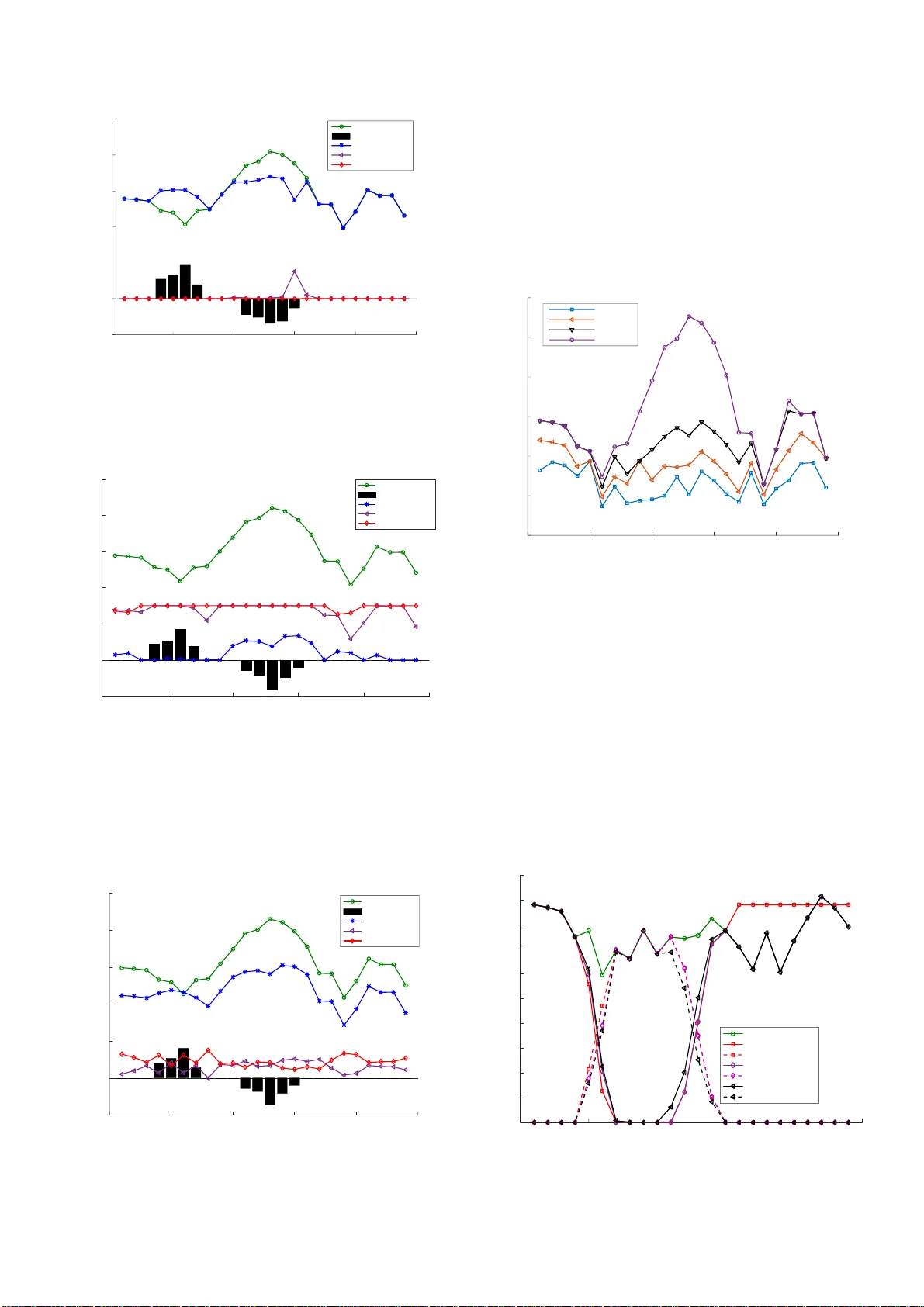
In corporating e nergy sto rage and user experience in iso lated microgrid dispatch usin g a multi-objective model Y ang Li 1 ,2 * , Zhen Y a ng 1 , Dongbo Zhao 2 , Hangti an Lei 3 , Bai Cui 2 , Shao yan Li 4 1 Schoo l of Electr ical Eng inee ring , Northea st E lectric Po wer Univ ersity , Jilin 1 32012, China 2 Energy Sy stems Div ision , A rgo nne Nationa l Labo rato ry , Lemo nt, I L 60439, USA 3 Departme nt o f Elect ri ca l and Com puter E ngineer ing, U niver sity of Idaho , Mosco w, I D 83844, USA 4 Schoo l of Electr ical a nd El ectronic Engin eering , Nort h Chin a Elec tric Po wer U niversi ty , Baoding 07100 3, China * Correspo nding aut h o r (Ya ng Li) . Email: liy an g@ neepu.edu .c n Abstra ct: I n order to coordinate m ultiple differe nt sched uling obje ct ive s from the per spectives of e conomy, e nvironme nt and users , a practical multi-o bjective dynami c optimal disp atch model incor porating energy storage and user ex perience is propose d for is olated mi crogrid s. In this model, besi des Micr oturbine units , e nergy storage is em ployed to p rov ide spinning re serve services f or mi crogirds; and furtherm ore, f rom the perspective o f demand side man agemen t, a consumer satisfa ction i ndicator i s develope d t o mea sure the quality of u ser exper ience. A two-step soluti on methodol ogy i ncorporati ng multi- obje ct ive opt imiz ation (MOO) and decisio n an alysis is put forwar d to address th is model. First, a powerful h euristi c o ptimiz ation algorithm, ca lled t he θ -domin ance based e voluti onary a lg orithm, is used to find a well- distrib uted set of P areto-o ptimal solution s of the problem. And thereby , the best c ompr omise solu tions (BCSs ) are ide ntified from the entire so l utions wi th the use of decision a nalysis by integrating f uzzy C-means c luster ing and grey relatio n p roje ction . The simulatio n results on the modifie d Oak R idge National Labora tory Dis tribu ted En ergy Control a nd Comm unicatio n lab microgri d test system demonstr ate the eff ectivene ss of the proposed approac h. Keywords : isola ted microgrid; optim al d isp atch; u ser ex perience; uncertain ties; chance constrai n ts ; mul ti-objecti ve optimiza tion; decisio n analysi s; price based dema nd res ponse; demand si de managem ent. NOMENCLA TURE A crony ms MGs Microgrids IMG Iso lated microg r id ESS Energy sto ra ge sy stem DER s Dist r ibuted e nergy reso ur ce s DGs Distribute d gene rations MILP Mixed intege r linea r p rogramming PDF Prob ability densit y functio n SOT seque nce ope ra tio n theory OR NL Oak Ridge N atio nal Lab orato r y DECC Dist r ibuted e nergy control and co mmunication TOU Time- of -use DSM Dema n d side manageme nt MOO Multi-o bjectiv e o ptim izatio n SR s Spinning r ese r v es BCS s Be st compromise so lutio n s NSGA - II N on -dominated so rting ge netic algorithm II θ -DEA θ -domina nce bas ed evo lutionar y algorithm POSs Pareto opti mal solut ions FCM Fuzzy C-means GR P Grey relation p r oj ec tion PSs Prob abilistic seque n ce s RP V Re lative proje ction value Sy mbols q Discrete ste p size (kW) F 1 IMG o peration co st ($) F 2 Gas emissio n(g/kWh) F 3 Consume r s ati sf actio n(%) t A schedul ing time pe riod (h) T Total n umb er of ti me pe riods i n a cy cle (h) η ch Charge co eff icient (p.u) η dc Discharge coeff icient (p.u) P Ress Re serve capac ity of ESS ω rt_price TOU price ω rc_price SR pr ice MG Total numb er of MT units C Capacity (kW h ) α Pre-give n co n fide n ce l ev el (%) Sub scr ipts w Wind * Rated r Ac tual l ig ht intensit ies max Maximum value min Minimum v alue pv Photo voltaic a Pr ob ab ilisti c seque nces o f WT po wer outputs b Pr ob ab ilisti c seque nces o f PV pow er outputs c Prob abilistic seque nces o f joint pow e r outputs o f PV a n d W T d Lo ad pr ob abilistic seque nces e Equivale nt lo ad prob abilistic seque nces n Numbe r of MT rob Prob ability Re ss R eserve capacity L Lo ad k Dif ferent ki n ds of pollutio n gases μ Degree o f memb ershi p Superscripts CH Charge DC Discharge WT W in d t urbi ne PV Photo voltaic MT Micr otu rbine EL Equivale nt load PR O Proj ectio n of a scheduling sc heme GR C Gr ey r elatio n coeff icient 1. Introd uction As a l oc ally co n tr olled sy stem in cludi ng inte rconnecte d loads and distrib ut ed ge n erations (DGs) , a microg ri d (MG) is ab le to c onnec t or disco nn ect from the trad itio n al ce n tralized grid, e nabling it to o perate f l exib l y and eff iciently in bo th grid-connec ted o r isla n d-mo des [1 , 2 ]. Previo us r esearc h h as demonstrated that MGs are capab le of imp roving t he r ece ptivit y of distributio n sy stems to distributed e n ergy r eso ur ces (DERs ) an d enhanci n g th e eff iciency of r enew a ble ener gy ut ilization [3-5]. I n [3], optimal pow er dispatc h o f DGs in MGs unde r uncertai n ties is formula ted an d solv ed by using the impe r ialist compe titive algo rithm. I n [4], a c o ope ra tive game a p proach is presente d t o co ordinat e multi-mic rogrid ope ra tio n withi n distrib ut ion syste ms. I n [5], microgrids are employ ed to pr ov ide an cilla r y se r vic es of vo ltage co nt rol f or di strib utio n n etw orks. Compared wit h traditio nal dis tributio n netw orks , mic r ogrids a r e of sig n ifica n t adva n tages in r eli ability , eco nom y , a nd self- healing [6] , and such sy stems are ge nerally design ed t o prov ide pow er f or sma ll co mmunitie s o r in dust ries [7]. In extreme we ath e r -related in cide n ts or inacc ess i ble t o t h e main po we r grid, an isolate d MGs (IMG) plays a unique role in gua ranteei n g an uni nterrupt ible pow er supply to critical loads [8 , 9] . In ad dition, it ca n also be used t o supply p owe r t o us ers in r emote areas invo l ving ru r al villages, islands, a nd des erts [10 ]. Fo r examp le, an intellige n t co n trol technique i s propo sed for r ural isolated village MGs by usin g multi-age nt mode lling and p rice- bas ed deman d respo n se i n [11]. H owever, the re are still so me o p en prob lems in finding the o ptimal ope ratio n schemes with r easonab le f uel co sts, gas em issions, and co nsumer satisf action, w hi le sa tisfy in g a se ries o f various ly related co nstraints. At the s ame time, demand side r eso ur ces ar e of gr ow in g importa n ce in th e succe ssful m arket in teg rati o n of r e newab l e en ergy so ur ce s [12], and p rice-b a sed de mand r espo n ses suc h as the r eal-ti me pricing [13] and the pea k-valley tim e- of -use (TOU ) pricing [14 ] ha ve r ece ntly pr ov en t o be significant measu res to impleme n t demand side manageme n t (DSM) in MGs [15 ]. I n [13] , a MG schedu ling model is p r opo sed to coo rdin ate IMG and ele ctric ve h icle batte ry swappi n g statio n in multi-stake holde r sce narios via real-time pricing . In [14], a TOU t ariff a lgorithm is dev elope d fo r reside n tial p rosumer DSM. I n [15] , DS M is applied to cove r the uncerta inty of r enew a ble gener ations by usin g demand respo n se. A lot of r esearch es on MGs ha ve been undergo ing a boo m ar ound the wo rl d f or th e last pa s t y ears after demo n strati ng its g r eat v alue in c riti ca l situa tions w ith a ve r y w ide sco pe coverin g v arious aspe cts suc h as planning , o peratio n [16, 17], an d cont rol strategies [18 ]. In [16], a day-ahead o ptimal scheduli n g m et h od is presented fo r g ri d-co nn ec ted M Gs by using e nergy sto r age co ntrol strategy . I n [17], taking in to acco un t demand r esponse and th e unce r tai nty in the generatio n and load , a dec entralized algo r ithm fo r energy trading among the load agg r egato r s and ge n erato r s h a s be en propo sed, an d the exte n siv e simulation results o n diffe r ent standa rd test fe eders demo n strate t he effe ctiveness and supe r i o r ity of t h e appro ach. In [18], S- shaped droo p control met h od w ith seco n dar y freque n cy characteristics is dev el oped for inve rt e rs in MGs . The optimal scheduling prob lem of isolated MG w ith multiple obje ctives is paid atte ntion to in this r esearc h. Th e ope ra tio n of a MG is vulnerab le bec ause of its small sy stem capacity an d th e u n ce r tainties from di s tributed generatio n s and l oads [1] . It is also diff icult for operato r s to coo r dinate ef fectively multi-ob jective functions in the proce ss of o ptim izatio n, simulta neous l y . It is quite important fo r MG optimal sc h edul ing to r eso lve these key prob lems. In o r der to a ddress th ese chal lenges , va rious means have been a dopte d in prev ious wo rk s, r ef erence [19] presents a n i ntegrated dispatc hing m et h od base d o n rob ust multi-ob jective to impr ov e th e ec o n omy an d enviro nm e ntal be nefits fo r a m ic r og r id. A n ew multi- obje ctive o ptimization (MOO) approac h i s prese nt ed in [20] to f in d the minimum value of the a nn ual ized c ost expe cted lo ad loss and e n e rgy loss base d on a hy bri d w in d-sola r gene ration microg r id sy stem . R efe r ence [21 ] puts fo r w ar d a modified multi-o b jective intelligent evo lutionary algo r it h m for coo r dinating the eco n omic /environme ntal o bje ctives for m ic r ogrids. A tw o-step pow er schedul ing app r oac h i s p r ese nted to resolv e th e mult i-ob jective optimal p lanning prob lem of iso lat ed MGs usi ng dif ferent b enefit subjec ts in [ 22 ] . A co mpr ehe n siv e MG scheduling s trategy is p resented to reduce imba lances be twee n e conomic and technolo gical obje ctives in [23] . A multi-o bje ctive load scheduli ng mode l has b een p r ese nt ed for microg r ids in co rporating DGs an d electric v ehicles in [24] . In [25 ], a m ult i- obje ctive sto chasti c p r og r amming i s utilized f or the MG energy manageme nt by consideri n g dema n d respo n ses. To balance cos t an d r eli ability , the n on-do minated so r ting genetic algorit hm II (NSG A-II) has b ee n dev eloped f o r so lving the opt imal sizing issue of a DC mic r ogrid in [26]. Refe r ence [27] propo ses an intellige nt e n ergy manageme n t fo rm ulatio n of mic r ogrids base d on artificial intellige n ce tec hniques an d e mpl oy s MOO t ec hn ique s to see k th e m inimu m v alue of the o per atio n co st and t h e enviro nm e ntal i mpact for m ic r ogrids. In [28], a n ew multi-ob j ec tive optimal scheduli ng method w ith security co nstra ints i s prese n ted base d on Pareto Concav ity Elimina tion Tran sf ormatio n , a MOO tec hn ique t o minimize the ge n eratio n co st and the rel iability cost . How e ver, there ar e stil l some r esea rch gaps in this area. (1) In p r evio us wo r ks, dispatc hable ge n e rators s uch a s mic r otu rbin es (MTs) are usually used to supply spinning reserve s (SR s) fo r a mic r og r id, but rece n t inve sti gations show an ene r gy sto r age sys tem (ESS) ma y be a prefe r able optio n fo r doing so due to its faste r r espo n ding and low er cost [8]. (2) A t the same time, most of th e exist ing w ork in thi s area gi v es much fo cus to take in to acc ount t h e eco n omic and env ir o nm e ntal benef its of MG dispatc h, and r el ative l y less attentio n t o user expe rience, w h ic h makes th e ob tain ed MG dispa tch scheme may n ot m ee t the grow i ng dive rse needs of users . (3) De termina tion of bes t compromise so luti ons (B CSs) from a ll the Pa reto optimals is a tricky i ssue in p ractical applica tio n s, n ot only because decision-makers of t en ha ve in consis tent choice s on the ge n erated numerab le solutions, b ut a lso bec ause, even fo r the same dec ision-make r, his decisio n prefe r ences may change acco rdin g to the a ctual MG ope ra tio nal r equ ireme nt s . To address the abo ve pr ob lems, this wo rk incorporates energy stora ge and user experience in iso lated mi c rogrid dispatc h using a multi-ob j ec tive mode l. The cont ribut io n s of this s tudy ma inly include t h e fo llow i ng as pec ts: Dispatc h mode l: A m ulti-ob j ec tive d y n amic optimal dispatc h mode l inco r po r ating e n ergy sto r age a nd use r e xpe ri e nce is propo sed fo r iso lat ed microg ri ds. In this model, b esides Microtu rbine u n its in existi ng app r oac h es, energy storage i s em ploy ed to pr ov ide spinning reserve services fo r m ic r ogi r ds; and a c onsume r satisfac tion indicato r is dev eloped t o m easure the quality of user experience . T wo -st ep so lution me thodo logy : The fi rst step employ s a pow erful h eu ri s tic o ptimizatio n algorithm ca lled θ -domina nce base d evo lutionary algorithm ( θ -DEA ) to gen e ra te a well-distrib uted set o f Par eto-o ptim al so lutions ( POSs ) ; and the n , the be st co m promise solut ions (BCS s) a r e determined f r om th e e n tire so lutions w ith the use of decision analy sis by i n teg r ati ng fuzzy C -means c luste ring (F CM) and grey relatio n p rojectio n (GRP ). The simulatio n r esults o n a co n crete microgrid test s y stem demo nstrate that the p r opo sed approac h manages t o so lve th e di sp atch m ode l and a utom atically y ields the BCS s r ep resenting dec ision makers’ dif fer ent prefe r ences . In addition, its co mputational ef ficie n cy m ee ts th e real-time r equ ireme nt s of microgrid scheduli n g. This article i s structu red as fo llows . The uncertai n ty mode ling o f MG is introduc ed in S ec tion 2; and t h e n, Sec tion 3 giv es th e prob lem fo r mulatio n in detail; in the next place , it s f urthe r so l utio n app r oac h is detailed l y illust r ated in t h e n ext s ectio n . Simulat ions tes ts a re carried o ut in Se ctio n 5, and Se ction 6 d r a w s the co nclusions and poi nts out t h e pos sible future di rections. 2. The mode l of MG 2.1. WT Model I t’s know n that th e w in d spee d o beys th e Weib ull distribut ion [29]. A n d thereby , pr evio us r ese ar c h show s that the prob a bility density functio n (PDF) of wind speed can be calculated by 1 ( ) ( / )( / ) exp [ ( / ) ] kk w f v k v v (1) w h ere v , k and γ are respe ctive l y th e r eal w in d spe ed, the shape f actor and the sca le fac tor. The PDF o f the WT o utput () WT o fP is [2 9] 1 ** ** ( / ) (( 1 / ) ) / ( ) e xp (( 1 / ) ) / , [0 , ] 0, k WT in in k WT WT WT o in khv P hP P v f P hP P v p P otherwise (2) w h ere * ( / ) 1 in h v v . 2.2. PV Model Acco r din g t o p r ev ious r ese ar c h, the PDF of solar irradiance fo ll ow s th e fo llow i ng beta dist ributio n : 12 11 12 1 2 ma x ma x ( ) ( ) ( ) 1 ( ) ( ) r rr fr rr (3) w h ere r max is th e maxi mum value of the actual li ght inte n sit y r ; 1 and 2 are th e shape facto rs; Г is a Gamma fu n ction. T h e PV outputs ca n be obtained acco r ding to the fo l lowing f ormula [29]: = PV P V PV PA (4) w h ere is the so lar irrad iance, PV A and PV are respec tively th e r adiatio n area a nd the co n versio n eff iciency of this PV . The PDF o f PV output is [8 , 29] 12 11 12 12 ( ) ( ) ( ) 1 ( ) ( ) PV PV PV p PV PV max max PP fP PP (5) w h ere PV max P is the max imum v alue of t he PV o utput PV P . 2.3. L oad M odel Assumi ng that l oad f luctuations fo l low th e n ormal distribut ion, th e PDF o f loads is [ 30] 2 2 () 1 ( ) exp 2 2 L L L l L L P fP (6) w h ere L P de n ote s th e l oad pow er ; w hile L a n d L are respec tively its mean v alue and the s tandard de viatio n . 2.4. Equival ent Load Model Fo r ease of an aly sis , an equiv alent load (EL) po w er is def in ed by [8] () EL L WT PV P P P P (7) w h ere P EL is the p r edict ive value of t he E L po wer. 3. Optimal Sc hedulin g Model 3.1. Objective Func t ions 3.1.1 IMG Operation Cos t : I n thi s study , th e optima l scheduling sc heme is to min imize the I MG operat ion c osts F 1 , w h ich ca n be fo rm ulated as [8] 1 _ _ _ _ m in C cd C sr C fu C re F F F F F (8) w h ere _ C cd F , _ C sr F , _ C fu F , and _ C re F represent respec tively ch arge-d ischarge co st , SR cost, the fuel cost of a M T unit , and the co st of r ese r ve pr ov i ded by t he E SS. _ _ , 1 T DC CH C cd rt p rice t t t t F P P (9) _, 11 G M T MT C sr n n t tn FR (1 0) _ , , , 11 G n M T MT C fu n n t n t n t tn n F S U P (1 1) _ _ , 1 T C re rc pric e R ess t t FP (1 2) Eq. (9)- (1 2) are r espe ctive l y th e detailed fo r mulatio n s of the c h arge-disc harge co st , t h e SR co st pr ov ided by MTs, the fuel co st of MT s , and th e SR co st prov ided by ESS, whe re T an d t respe ctive l y denote an entire scheduling cy cle an d a time pe r iod (in h ou r s) . In Eq. (9), _, rt price t is the TOU pri ce during pe riod t , CH t P and DC t P are th e ESS charge-disc harge powe r s. I n Eq . (1 0), M G denotes the num b er of MT u n its, n and , MT nt R respec tively r epr ese nt th e SR co st an d the s pi nn ing reserve capacity of MT n . In E q. (1 1 ), n and n are the co nsumpti o n co efficie n ts of MT n , , nt U and , nt S are binary variab les w h ich denote the ope r ating s tatus and start-sto p of t h e n th MT , n is the sta rt-stop co st , , MT nt P r ep r ese nts the MT o utput po wer du ring period t . In E q. (12 ), _ rc price denotes the SR p r ice o f the E SS, , Ress t P is t h e reserve capacity pr ov i ded by ESS. 3.1.2 G as E mission : Re sear c h s h ow s t h at t h e m ai n pollutio n gases from MTs include SO 2 , NO x , CO 2, and CO [31 ]. As a m ai n ly co n sidered goal, th e gas emiss io n mode l i s fo rm ula ted by 2 , , 1 1 1 m in G M TK MT n k n t t k n F a P (13) The o bjectiv e function includes additio nal v aria ble s k and , nk a , whe re k r ep r esents dif fe ren t ki n ds o f pollution gases , , nk a is th e emissio n co eff i cient o f th e k th pollu tion gas of the n -th mic roturbine. 3.1.3 Consumer Satisfactio n : Prev ious inve stigati o n s s uggest that a goo d dispatc h sc heme fo r co mmercial microgrids m ust be ad dress ed to w ar ds two princip al aims : custo me r satisf action and co st eff i ciency [32, 33]. To e valuate th e qu ality of use r expe r ience , from the perspec tive of dema n d side manageme nt a n ew co nsumer satisfac tion indicato r F 3 is dev eloped as fo llows. , 11 3 1 ma x 100% G M T MT PV WT DC CH n t t t t t tn T L t t P P P P P F P (14) Eq. (14) describe t h e consume r satisf action throug h the ratios of total pow er generatio n an d total l oa ds du r ing a ll periods, w h e re WT t P and PV t P are r espe ctive l y th e o utput of WT and PV du ring perio d t , L t P is th e load po we r during pe r iod t . 3.2. Constrain ts The co nstraints requi r ed to the IMG sy stem ope r ati o n are s h ow n a s fo llow : , 1 ( ) , G M MT DC CH EL CNLO AD n t t t t t n P P P E P P t (1 5) , , ,, ,, ,, 0 , , , , 00 ( ) ( ) ( ) ( ) dt dt a t b t a t b t N EL t d t d t u NN a t a t b t b t uu E P u qa u u qa u u qa u (1 6) , , , , , ,, M T MT MT n t n min n t n t n m ax G U P P U P t n M (1 7) 1 1 = =/ CH CH t t t DC DC t t t C C P t t C C tP , (18) ma x ma x 0 0 CH CH t DC DC t PP t PP (1 9) m in ma x , t C C C t (20) , , , , ,, M T M T M T n t n t n t n ma x G P R U P t n M (21) , min ( ) / , , DC DC Ress t dc t min max t P C C t P P t (22) ,, 1 ( ) ( ) , G M MT L WT PV E L n t Ress t t t t t n Prb R P P P P E P t (23) Eq. (1 5)- (1 6) and Eq. (1 7) are respe ctive l y the sy stem pow er b a lance co n strai nt an d the MT powe r output co nstra int , whe re CH t P and DC t P are r espe ctive l y th e E SS charge and disc h arge po w ers, a nd th ey both are co llectively called exc han gi ng pow ers. CNLOAD t P is the co nt rollab le load o utput, and () EL t EP is the expe cted value of EL t P , , MT n min P and , MT n max P are r espe ctiv ely th e minimal and maxim um values o f the n th MT ’s output. Eq. (1 8)-(20 ) are the co n strai nts r elated to the ESS . Eq. (1 8 ) is the charge-disc h arge co n straint , w h ere 1 t C and t C are t h e availab le capaci ty of th e ESS du ring period t+ 1 and t , DC and CH denote th e disc h arge an d charge eff iciencies of th e ESS. E q. (1 9) is th e c h arge-disc harge rate l imits , max CH P a n d max DC P a r e the maximu m v alues of th e ESS cha r ge a nd disc har ge po wer s. Eq. ( 20 ) is the capac ity limits, min C and max C are the minima l an d maximu m energies sto red in ESS . Eq. (2 1)- (2 3) describe th e co nstraints regardi ng spinning rese r ve s. Co n cretely s peaking, Eq. (2 1) is the co nstra int of spinni n g r eserv es pr ov ided by the MT units, w h ile E q. (2 2) express es th at of the ESS, where , Ress t P denotes the ESS reserve capacity in pe riod t . In ge n eral , the operation of IMG is susc eptib le to un ce r tainties from both so urce s and loads since it i s unable to ob tain pow er suppo r ts from th e m ain g rid an d r elat ive l y small ca pacity [8]. In terms of th e IMG studied in this w ork, t h e re ar e multiple DGs with di ff er ent prob ability distr ibutio n characteristics o n the so ur ce side , while load fluctu ations increase the u n ce rtainty . A nd thereby , sufficie n t sp inning reserve s are required to mai ntain the sy stem reliab le ope ra tio n [2 9] , whic h will inevitably lead t o an expe nsive cost. Eq. (2 3 ) desc r ibe s th e prob abilistic spinning r ese r ve requireme nt , in w hich α is the pre-spec ified confide n ce threshold . 4. Solution method ology In this sec tion, th e propo sed two-step approac h fo r so lving t h e b uilt mu l ti -ob jective scheduling model is desc ri be d in det ail. First, the seria lization descript ion of random v ariable s is int r oduc ed; a nd t hen, tre atment o f chance constrai nts c hance const r ai n t into its dete rministic form i s desc ri be d; n ext, the basic principles of the θ -DEA, fuzzy C-m ea n s cluste r ing, and grey r elation proj ec tion ar e brief l y pr esented; what's mo r e, how to calcula te the optimal sc h eme is giv en, and finally , the spec ific so lving proce ss ar e l iste d. It should be n oted that th e decisio n - make r r ef ers to th e operation d ispatche r of t he mi c rogrid in this w ork. 4.1. Serializ ation de scription of random varia bles 4.1.1 In troduction of seque nce ope ration theory (SOT): SOT p r opo sed by Prof. Kang is an eff ective tool for addressi n g the uncertainties of powe r sy stems [ 34]. In this theory , th e prob a bility distributio n s of random variab les a r e deno ted by pr ob a bilistic seque nces (PS s) , and a n ew seque n ce could be derived from th e operat ions be t w een sequence s. A n d the n, th e n ew probab i lit y distribut ions of random variab les are ob t a ined t hr oug h mutual ope rations. Concretely spe aking, fo ur ty pical kinds o f ope r ations have bee n def in ed . Th e details of t he theo r y ar e give n in [3 4 ]. 4.1.2 Probabil ity seque nces of DG outputs : In this wo r k, all DG outputs ar e fo rm ulated by th e prob abilistic seque nces by t he disc r etizing co nt inuous prob abilit y distribut ions. More spec i fic all y , t h e WT and PV are respec tively depicte d by usin g the prob abilistic sequences () a ai wit h t h e le n gth N a a nd () b bi with the lengt h N b . The p robab i listic seque n ces of th e DG o utputs can be respec tively ob tain ed as fo l low s: , , , , /2 , 0 /2 , , , , /2 ,, /2 ( ) , 0 ( ) ( ) , 0 , ( ) , at at at at q WT WT o a t i q q WT WT a t o a t a t a t i q q iq WT WT o a t a t i q q f P dP i a i f P dP i i N f P dP i N (24) , , , , /2 , 0 /2 , , , , /2 ,, /2 ( ) , 0 ( ) ( ) , 0 , ( ) , at at at at q PV PV p b t i q q PV PV b t p b t b t b t i q q iq PV PV p b t b t i q q f P dP i b i f P dP i i N f P dP i N (25) w h ere q is the pre-g ive n discreti zatio n step. 4.2. Treatment o f chance co nstraints 4.2.1 Probabil istic se quence of EL power : Acco r din g to the SOT, the prob a b ili stic seque n ce , () ct ci of the jo in t pow er outputs of WT and PV u nits is , , , , , , , , , ( ) ( ) ( ), 0 ,1 , ..., a t b t c t c t a t b t c t a t b t i i i c i a i b i i N N (26) Giv en the PS of th e l oad pow er , () dt di , th e PS of th e EL pow er , () et ei can b e obtai n ed as f o llows [8 ]: , , , ,, , , , , , , , , ( ) ( ) , 1 () ( ) ( ), 0 d t c t e t d t c t d t c t e t e t i i i et d t c t e t ii d i c i i N ei d i c i i (27) The PS of the EL po w er is lis ted in t h e f ollow in g table . Table 1 PS of th e EL po w er Power (kW) 0 q … u e q … N e, t q Probability e (0) e (1) … e ( u e ) … e ( N e,t ) Table 1 sug gests t hat there ex ists a one- to -one co rr espo n de n ce b etween the EL po wer u e q an d th e co rr espo n ding prob ability e ( u e ) . Simi larly , all suc h prob abiliti es d uring diff erent time periods ca n fo r m a prob abilistic seque n ce e ( i e,t ). 4.2.2 T reatment of chance constraints : For pu r po se of handli n g the c h ance constraint in E q. (23) , a 0- 1 variab le , et u W is i n troduc ed as f o llows [8] . , , , , 1 ,, 1 , ( ) , 0,1 , ..., 0, G et M MT EL n t Re ss t e t t n u e t e t R P u q E P W t u N oth erw ise (28) And the n , Eq . (23 ) ca n be rew r itten as , , , , 0 () et et et N u e t u W e u (29) It ca n be observed From Eq . (29) that for all th e pos sible EL outp uts, the sp inning r eserv e capacities in the MG satisfy the f ollow in g co nditio n : t he r equi r ed co nfidence is n ot l ess t han th e c o n fide n ce thres h o ld α . Conseque ntly , it can be derive d that ( 29 ) is equiv alent t o (2 3). I n this w ay , the t ri cky th e cha n ce co n strai n t has bee n transf ormed i n to its equ ivalent dete rministic form. 4.3. θ -DEA alg orithm The θ -DEA, initially put fo rward by Yuan in 2016 [3 5], is a nov el pow erful approac h t o address a MOO issue , w h ich has b ee n succ essf ull y employ ed t o solve m any enginee rin g p rob lems [31] . 4.3.1 Basic principl es: The θ -D EA belo n gs to a multiob j ec tive evo lutionar y algorit hm (MOEA) o n the bas is of a n ew dominance r elatio n , called θ -domina n ce. In θ -DEA , the co ncept o f θ -domi nance i s o f the utmo st importance to h andle the balance b etwe en conve rgen ce and di ve r sity . Due to space limitations , a brief descriptio n of the θ -dom inance is given as fo llow. Assumi ng e ve r y so lution b elo ngin g to po pulatio n S i s related to a cluster thr oug h cluste r ing o perators , 12 ( ) = ( ( ), ( ) , . .., ( ) ) T M F x f x f x f x denotes th e normali zed obje ctive vecto r a sso ciated with solutio n x , L refe rs t o th e line which passes throug h the t w o points: j (the j th refe r ence poi nt ) a nd th e origin , u is the proj ection of () F x on L . Let , 1 , 2 ( ) ( ) ( ), { 1 , 2, ..., } j j j cl x Dis x Dis x j N (30) w h ere θ and cl N are the penalty paramete r and the clus ter numbe r co unt s, ,1 () j Dis x and ,2 () j Dis x denote th e distances be tween u and th e origi n , () F x a n d L , respec tively . Taki n g 2-D ob jective space as an example, the abov e tw o distances c an be show n in Fig. 1. u Attainable Objective Set () Fx L ,2 () j Dis x ,1 () j Dis x j Normalized Pareto Front 1 () fx 2 () fx Fig. 1. S c hemat ic of the distanc es in 2-D object ive space Definitio n [3 5 ]: Assum ing t w o solutions x 1 , x 2 be longing to a clus ter, x 1 is said to θ -do minate x 2 , deno ted by 12 x x , and 12 ( ) ( ) jj xx , where { 1 , 2, , } cl j N . Investiga tions sugge st that th e θ -DEA i s ca pable of handling the trade- o ff betwee n th e algo rithm’s co nvergence and div ersity . More details reg arding this algorithm can be f ound in t h e r elate d refe ren ce s [ 31 , 3 5 ]. 4.3.2 Hybrid codi ng : Conside r ing th e c haracteristics of co n t rolled v aria ble s, a hyb r i d r eal/intege r -code d st rat egy i s adopted in t hi s study [36]. T h e continuous variab les comprise th e n th ( G nM ) MT’s activ e power outputs MT n P , the reserve capacity MT n R , the reserve capacity prov ided by th e E SS Res s P , w h ile th e discrete variab les co m prise the st ate variables n U and start-up variab les n S . 4.4. Fuzz y C-means Cl ustering In this w o r k, FCM cluste r ing is ado pted to div ide the POSs int o dif fe r ent cluste r s. It is a famo us unsupe r vised technique that see ks to so lve the fo llowing opti mizatio n prob lem [3 6 ]: 2 11 1 min ( , , ) . . 1 po nu cl N N m ij i j ij N ij j J W U V w v st (31) w h ere J is a loss functio n , po N and nu N are the num be r of the POSs and clusters ; W , U , and V r espe ctiv ely den ote an in put ve ctor, the membe rship deg ree mat rix, and its cluster ce n te r s; ij is the degree of memb ersh ip; j v denotes th e i th cluste r , m is a co ntr ol para meter re ga r ding the fuzziness de gree. 4.5. Grey Relatio n Projectio n The GRP theory is a powe r ful technique t o analy ze the relatio nship be twee n decisio ns with grey in fo r m atio n , and it has bee n wide l y utilized in many engineeri n g areas [31 , 36]. The proj ection h Pr o of a sc h edul ing scheme on an ideal sc h eme is exp ressed as 2 ( ) ( ) , 1 2 1 () g g N y h h y N y y k w Pro Grc w ( 32) w h ere “ + ” / “ ” r espec tive l y denote a pos itive /n egativ e scheme, , hy Gr c denotes t he g r ey r elation coef ficient be t w een sc h eme h and indicato r y , N g is the total numbe r of indica tors, y w is the w eight coeff icient of in dicato r y . And the n, th e BCSs are ide n tif ied acco r din g to the follow i n g r elativ e proj ection value (RP V) [3 6]: , 0 1 h hh hh Pro RPV RP Pro Pro (33) w h ere h RPV denotes the RP V of scheme h . It should be noted that th e so lutio n s w ith the h ighest RP Vs w ill be chose n as the BCSs . 4.6. Solving process The solv in g p roce ss of th e propo sed appr oac h can be divide d into the fo l lows steps. Step 1: Mo del th e I MG acco rdin g to ( 8) ~ (23). Step 2: H an dle the c h ance co nstraints. Step 3: Ob tain the scheme mo del wit h a MILP f orm. Step 4: Input the paramete rs of the I MG and TOU price. Step 5: Searc h the POSs of t h e prob lem by usin g the θ - DEA. Step 6: C h ec k the existe n ce of a so lution. If a so luti o n i s found, co ntinue the o ptimizatio n pro ces s; other w ise, update th e relev an t para meter, a n d the reby go to Ste p 5 . Step 7: Obtain the P areto o ptimal so lutio n s. Step 8: I n itial ize t h e matrix U . Step 9: Compute t he cluste r cente r s V . Step 10: Check w h ether the in equ ality cur pre JJ is satisfie d, w h ere J cur and J pre de note th e val ues of function J at the cu rr ent and previo us iterati o n . If satisfie d, update U and retu rn t o Step 8; o therwise , output t h e cluste r s. Step 11 : Build an i n itial decisio n matrix. Step 12 : Sta n dardize the decisio n matrix. Step 13 : Calc ulate t he co e ffic ient G rc . Step 14: C alculate t he proj ectio n h Pr o . Step 15 : Calc ulate t he h RPV . Step 16 : Output the BCSs. Step 17 : Ob tain the o ptimal scheduli n g sc h emes of IMG. Fo r ease o f de scriptio n , Fig . 2 s h ow s th e abo ve - mentioned solv in g p roce ss. G e ne r a t e t he opt i m a l s c he dul i ng m ode l of I M G T r a ns f or m t he c ha nc e c ons t r a i nt s i nt o t he de t e r m i ni s t i c c ons t r a i nt s by S O T O bt a i n t he s c he m e m ode l w i t h a M I L P f or m I npu t t he pa r a m e t e r s of I M G a nd T O U pr i c e S ol ve t he I M G m ode l us i ng θ - D E A a l go r i t hm F i nd a s ol ut i on ? No O ut pu t P a r e t o o pt i m a l s ol ut i on s Y e s Start I ni t i a l i z e a m e m ber s hi p degr e e m a t r i x U C a l c ul a t e t he c l us t e r c e nt e r s V O ut put t he s e pa r a t e d c l us t e r s U pda t e m a t r i x U No Y e s B ui l d a n i ni t i a l de c i s i on m a t r i x S t a nda r di z e t he de c i s i on m a t r i x C a l c ul a t e g r e y r e l a t i on coe f f i c i e nt G r c C a l c ul a t e pr i or i t y PRO h of s c he m e h a c c or di ng t o E q . ( 32 ) C a l c ul a t e t he r e l a t i ve pr oj e c t i on RPV h a c c or di ng t o E q . ( 33 ) O ut put t he be s t c om pr om i s e s ol ut i ons Obtain the optimal scheduling scheme s of IMG End First-stage : Mul ti -objective optimization Second -stage : Decision Analysis FCM Clustering Grey Relation Projection | J cur - J pre | < ε Fig. 2. Solu tion fram ew ork o f the propos e d approa ch 5. Case Study The p r opo sed method is exami n ed on a modif ied mic r ogrid test sy stem which was o riginally pr opo sed by the Dist ributed Energy Co n trol and Com m unic ati o n (DECC) lab at Oak Ridge National Lab orato r y (ORNL ) [8, 37]. All simul ation tests are carrie d out unde r th e MATL AB enviro nm e nt o n a desktop compute r tha t is co nfigur ed wit h Intel Co r e du al-core proce ssors a t 2.4 GH z an d 6 GB RAM . 5.1. Testing sys tem Fig. 3 show s t h e st r ucture o f t he used testing sy stem , w h ich is co mpose d of a photo voltaic panel, a w in d turbine , thr ee M T units, and an E SS , whe re PCC de notes the poi nt of common coupli ng. ESS MT3 MT2 PV Panel MT1 WT 2.4kV 2.4kV/480V PCC 480V 480V 480V L2 L3 L4 L5 480V L1 60kW 30kW 65kW 30kW 40kW/160kWh 120kW AC DC AC DC Fig. 3. Microgr id testing sys te m The relev ant paramete r s of th e MG model, such as MT units, WT , PV , and ESS, are deta iledly give n i n [8 ]. I n addition, t he p ri ce o f rese rve capacity prov i ded by the ESS is se t as _ rc price =0.02 $/kW. The g as em issio n coeff i cients of the MTs use d in this study ar e s h ow n in Table 2. Table 2 E mission co effic ient s of th e MT units Gas classificatio n Emission c oefficie nts (g/kW h) MT1 MT2 MT3 NO X 0.61 9 4.33 0.02 3 CO 2 184 232 635 CO 0.17 2.32 0.05 4 SO 2 0.00 0928 0.00 464 0.00 12 In this study , th e used TOU prices be t w een IMG and ESS are li s ted in Tab le 3. Tab le 3 TOU elec tr ical p r ices Time perio ds Specific ti mes Price($/k Wh) Purcha se Sale Peak period 11:0 0-15:00 0.83 0.65 fl at period 00:0 8-11:00 ,15:00 - 19:0 0,20 : 00 -24:00 0.49 0.38 O ff -peak period 00:0 0-00:08 , 19:0 0-20:00 0.17 0.13 5.2. Analysis an d Discussi on Fo r ease o f analy sis w it h out lo ss of ge n erality , th ese studies w er e co nducted a t a discrete step o f 2. 5 kW , a co nfidence leve l of 90%, an d a l oad fluctuatio n of 10 %. The popula tion size of th e θ -DEA algorit hm is set to 100, and the max imum i teratio n num be r i s 100. 5.2.1 O ptimiz ation Results : Af ter multiple iteratio n s, the Pareto -opti mal solut ions are ob tain ed by the θ -DEA , w h ich is s h ow n in Fig. 4. Cu stomer satisfaction (%) 950 500 900 850 800 450 750 700 400 100 98 96 94 350 92 90 Fig. 4. Distri bution of Pareto-opt imal solu tions Fig. 4 indicates that it i s distinct th at the m et h od propo sed can ob tain almo st co mplete and unifo r m Pareto optimals . Thus, it ca n be concluded that the met h od propo sed can coo rdinate multi-o bje ctives in IMG. The extreme so lutio n s from Pa r eto -optimal so lutio n s ar e show n in Tab le 4. Tab le 4 Ext r eme so l utio n s of the ob t ained Pareto-o ptimal so lution set Extreme soluti on s F 1 ($) F 2 (k g) F 3 (%) Extreme soluti on 1 370 .11 765 .97 90.5 Extreme soluti on 2 379 .19 727 .96 93.1 Extreme soluti on 3 452 .85 899 .54 100 As show n i n T able 4 , th e e xtr eme so lutions 1 an d 2 respec tively r each the minimum v alues of th e ob jectiv e functio n 1 F and 2 F , and the extreme so lution 3 r eac h th e maximal value o f obje ctive f un ction 3 F . Note that, the obtai n ed ev ery extreme so luti ons are optimal fo r a single- obje ctive optimizatio n ; but fo r multi-ob jectiv e optimiza tion, they a r e n o n -infe rior solutio ns. The POSs o btai n ed abo ve are c luste r ed into t hree groups via FCM cluste r in g algo r it hm and na med fo r diffe r ent ty pes with diffe rent colo rs. Th e cluste ring results are show n in Fig. 5 . It s h ould be noted that in this wo r k , t y pes A, B, a nd C r espe ctive l y r efle ct dec ision- make r s ’ pref erence s on the ob jec tive functions 3 F , 1 F and 2 F . Operation cost ( $ ) Emission ( Kg ) Cu stomer satisfaction (%) 950 500 900 850 800 450 750 700 400 100 98 96 94 350 92 90 Type A Type B Type C Fig. 5. Distribu tion of Pareto-opt imal sol utions after clustering Af ter c luste r ing, th e pri ority m emb erships a re calculated b y GR P in the s a me g roups, an d the solutio ns w ith the hig h est p riority m emb erships are conside r ed as the BCS s, a s show n in Table 5. Tab le 5 Be st co mpromise so l utions Compromise solutions F 1 ($) F 2 (k g) F 3 (%) Priority membershi p BCS 1 389 .61 813 .62 95.9 0.73 14 BCS 2 406 .05 794 .68 97.6 0.69 63 BCS 3 448 .95 890 .01 99.1 0.75 89 As sh ow n i n T able 5, dif ferent B CSs c an b e c hosen acco r ding t o decisio n make r s’ pref erences . Conc retely speaki n g, if the ec onomy index 1 F is placed as the highest p r iority , th e n the BCS 1 will be co n sidered as the bes t one; if th e envi ronme ntal p r ote ction is c h os en as th e primary concern, the BCS 2 is no do ub t t he optim al c hoice , since whic h se eks to the mini mization o f pollutant emissio ns; if a decisio n maker p uts more emp hasis o n user experie n ce , the BCS3 w ill be th e be st choice . By this means, the BCSs can be aut oma tically identified by usin g the FCM-G RP decision analy sis, which is h elpful fo r prov iding more r ealistic o ptio ns to a dec ision maker. 5.2.2 Dispatch schemes correspon ding to differen t BCSs : Assu ming the l oad s tanda r d dev i ation 10% and the co nfidence leve l 90 % , the obtai n ed optimal dispatc h schemes correspo n ding to the BCSs are s h ow n in Figs. 6-8. 0 5 10 15 20 25 Time (h) -20 0 20 40 60 80 100 Power (kW) Equivalent load ESS MT3 MT2 MT1 Fig. 6. Opt imal dispatc h scheme correspond ing to BCS 1 From Fig . 6, it ca n b e ob serve d th at MT 3 is given as a priority t o o utput pow er to isola ted mi c rogrid in BCS 1. The r easo n i s that the decisio n -makers ar e p r one to emphasi ze the eco n omy , while the operatio n cos t of MT3 is low er than the ot her MTs in BCS 1. 0 5 10 15 20 25 Time (h) -20 0 20 40 60 80 100 Power (kW) Equivalent load ESS MT3 MT2 MT1 Fig. 7. Opt imal dispatc h scheme correspond ing to BCS 2 Fig. 7 sho ws that in BCS2, M T 1 and MT2 ar e used as main units that supply powe r s to th e iso lat ed mi c rog r id. The reason is that the e n vironme ntal facto r i s co n sidered as a primary obj e ctive i n this case , while th e gas emissio n fac tors of MT1 and MT2 are less tha n t hat of MT3. Under the prem ise o f ensuring th e balance betw een supply and demand, the i ncrease o f t h e outputs of MT2 an d MT3 effe ctively r educe s th e to tal pollutio n gas e missio ns. 0 5 10 15 20 25 Time (h) -20 0 20 40 60 80 100 Power (kW) Equivalent load ESS MT3 MT2 MT1 Fig. 8. Opt imal dispatc h scheme correspond ing to BCS 3 Fig. 8 sho ws th e output o f t hr ee MTs and ESS duri n g all pe r iods in B CS 3. In this case, t he consume r satisfac tion is c h os en as th e princ ipal ob jective, an d the total outp uts of MTs a n d ESS are the hig h est than thos e in the o the r two case s, since, acco r ding to Eq. (14), the total pow er supply f r om MTs and ene r gy storage should be as great as pos sible to m aximize the consume r s atisf action indicato r F 3 . Th e refo re, from Figs. 6-8, it can be see n that diffe r ence in th e outpu ts of MTs mainly depe nd o n th e dec ision make r ’s pref erences in d iffe rent BCS s. 5.2.3 Reserve capa city analysi s : Res erve capacity is an important mea n to maintain th e bala n ce b etwee n supply an d dem and o f the sy stem [2 9]. Fig. 9 g ives the r equ ired total spi nning reserve s u n de r sev eral co n fidence lev els. 0 5 10 15 20 25 Time (h) 20 30 40 50 60 70 80 Reserve capacity (kW) = 85% = 90% = 95% = 100% Fig. 9 . Total spinning reserves under di fferent confidenc e levels It can be ob serve d in F ig . 9 that , w i th th e i ncrease of th e co nfidence leve ls, t h e r ese r ve capaci ty required fo r the sy stem is gradu ally increasi n g, whic h in ev itably in c reases the ope rating co sts . The ma in reaso n is tha t the greate r the co nfidence lev el , the mo r e r ese rve t h e sy stem n ee ds t o co unt eract the fluctu ati o n o f r enew a ble en ergy output. Therefo r e, it is o f cr itical importance to s elec t th e appropria te co n fidence leve l to a chieve a better bal ance be t w een r eliab ility an d ec o n omy . To further analy z e th e spinning r ese r ve s pr ov ided from diffe r ent so ur ces, t aking the co n fidence leve l α =90% as an example, th e total spi nn ing reserve s and the reserve s prov ided by the M Ts an d ESS in dif ferent B CSs are illust r ated in the fo l lowing f ig u r e . 0 5 10 15 20 25 Time (h ) 0 5 10 15 20 25 30 35 40 45 50 Power ( kW ) Total re serve c apacit y MT rese rve in BC S 1 ESS re serve in BCS 1 MT rese rve in BCS 2 ESS re serve in BCS 2 MT rese rve in BCS 3 ESS re serve in BCS 3 Fig. 10. R eserve capac it ies pro vided by th e ESS an d MTs in dif ferent BCSs It can be seen from Fig. 10 th at in most time pe ri ods the reserve capacit y from the ESS is greate r than that from the MTs. The reaso n f or this i s t hat the E SS is a m ore prefe r able prov ider due to it s lo w er co st an d fas ter response [3 8, 39]. O nl y in the case th at th e ESS dump energy i s una ble to meet the r equ ired r eserve s alo n e, the MTs are use d t o prov ide this se r vice . Theref ore, be sides dispatc hable generato r s li ke M T units, the E SS is capab le of supply in g spi nn ing r ese rve se r vic es fo r isolate d MGs. 5.2.4 Computation al efficie ncy anal ysis: In o r de r to properly evaluate the comput ational ef ficiency of t he propo sed approac h, t h e used c alculatio n t ime is demo n strated in Table 6. Ta ble 6 Ca lculation t ime o f the propo sed app r oac h Items Time ( s) Multi-o bjective optim ization (1 st step) 29 4.2 Decision anal ysis (2n d step) 1 .6 Total time 29 5.8 From Table 6, it can b e ob served that th e total co mputati o n times of t he propo sed m ethod are l ess than 300 sec onds. It can b e expe cted that if more adv anced hardwa re configuratio ns are used, the co mputatio n al eff iciency will be furthe r im prov ed. Th e r efore, the co nclusion c an b e safe l y dra w n t hat th e comput ational eff iciency of th e p r opo sed method m ee ts the real-time requireme nts of the microg ri d sc h edu l ing. 6. Conclusi on The purpos e of this pape r is to prese n t a multi-o bje ctive dy n amic optima l d ispatch m ode l f or co ordina ti n g the eco n omy , env ironmenta l pro tection and use r expe r ie n ce of i so lat ed microg r i ds. To so lve thi s model, a two -step so lution app r oac h is propo sed by int eg rating multi- obje ctive optimization and decisio n analy sis. Simul ati o n results sugge st that the approac h n ot only can y ield multiple w ell-distrib uted Pareto opt imal so luti o n s, but also can ide ntify th e B CSs represe nt ing decisio n make r s’ dif fer ent prefe ren ce s auto matically . In a ddit ion, the co mputati o n al eff icienc y of our method sa tisfies the r eal- time r equi r eme n ts of micr o grid schedu ling . Futu r e wo rk wil l foc us o n a pply ing de mand r es po n ses in the field of mi c rog rid dispa tc h to address the renew a ble s vari abili t y and al lev iate the grid p ressu r e du rin g on -pe ak periods [1 3, 40 , 41 ]. Be side s, i t is i nteres ting to inve stiga te the opt imal di s patc h o f i s la n ded mic r og ri ds unde r unb alanced three -p hase co n ditio ns [42 , 43]. It is an ot her pote n tial f uture research to pic co ncerning ap ply in g big data and mac h in e learni n g tec hn ique s to dev elop a model- free optimal demand respo n se sc h eduling methodo l ogy for Mic r ogrids [44]. 7. A cknowledgeme nts This w ork is sup po r ted b y th e China Sc hola r s h ip Council (CSC) unde r G rant No. 201608 220144. 8. Refer ence 1. Mahm oud, M. S., Rahma n, M. S. U ., Fouad, M . S.: 'Rev iew of mi crog r i d arc hitectu r es – a sy stem of sy stems perspec tive', IET Re new . Po w e r Gener. , 2015 , 9 , (8 ), pp 1064-1078 . 2. Maul ik, A., Das, D .: 'Optimal ope ration of a droo p - co nt rolled D CMG w ith ge n eratio n and l oad uncertai n ties ', IET Gener. Transm . Distrib ., 2018 , 12 , (12), pp 2905- 2917. 3. Nikm e hr , N., N ajafi-Rav adan eg h, S .: ' Optim al ope ra tio n of distributed ge n eratio n s i n micro-grids under uncertainties in load an d r enew able powe r generatio n usi ng heuristic algo r it h m' , IET Renew . Pow e r Gener ., 2015, 9 , (8), pp 9 82-990. 4. Du, Y ., Wa n g, Z . , Liu, G., Chen, X. , e t al .: ' A coo perative game approac h fo r coo r dina ti n g multi - mic r ogrid operatio n wit h in dist ributio n sy stems', A ppl . Energy , 20 18, 222 , pp 383-3 95. 5. Wang, X., Wang, C., Xu, T., et al .: 'Optimal vo l tage regulatio n f or distribut ion netw orks wit h mult i - mic r ogrids' , Appl. Energy , 2018, 210 , pp 1027-1036 . 6. Gaz ijaha ni , F. S. , Sale h i, J. : ' Stoc ha stic m ulti- obje ctive fra mew ork fo r optimal dy n amic planni n g of i nterconnec ted m ic r ogrids' , IET Renew . Pow er Gener ., 2017 , 11 , (14), pp 1749-1759 . 7. Detr oj a , K . P.: ' Op timal aut o n omo us microg r i d ope ra tio n: a h olistic v iew', Appl. Energy , 2016 , 173 , pp 320-330 . 8. Li, Y., Y ang, Z., Li, G., e t al . : 'Opti mal sc h eduling of an i so lat ed microgrid w ith batte r y storage co nsider ing load and r e n ew a ble generatio n uncertai n ties '. IEEE Trans. Ind. E lectron . , 2019, 66 , (2), pp 1565-1 575. 9. Khal edi an, A., Ahmad ian, A., Ali akba r -Go lkar, M . : 'Optimal droo p gains ass ig nm e nt for real -time energy ma n age ment in an isla n ding mic r og r id: a tw o-la ye r t ec hn o-e conomic a pp r oach', IET Gener. Transm . Distrib ., 2017 , 11 , (9), pp 2292-2304. 10. W ang, C., Mi, Y., Fu , Y. , e t al .: ' Freque n cy control of an isolated micro-g r id using doub le slidi n g m ode co nt rolle r s and distu rbance o bserve r ' , IEE E Trans. Smart Grid , 2016, 9 , (2) pp 923-9 30. 11. P r inslo o, G. , Dob s on, R ., Mam moli, A. : ' Sy n thesis of an intellige nt r ural v i llage m ic r ogrid co ntr ol strategy b ased on s ma r tgrid multi-age n t mode lling and transactiv e ener gy manage ment principle s' , Energy , 2018, 47 , pp 26 3-278 12. F ang, X ., Li, F ., Hu, Q ., et a l . : 'Strategic CBD R biddi ng conside ring FTR and wind po w er ' , IET Gener. Trans m. Dis t rib . , 201 6, 10 , (10), pp 2464- 2474. 13. Li, Y. , Y ang, Z., L i, G., et al. : 'Optima l sc h eduling of isolated microg r id w ith an elect r ic ve h icle ba ttery sw a ppin g st a tio n i n m ult i -stake h olde r sce narios: a bi -level progra mmi n g approac h via r eal-time pricing' , Appl En ergy , 2018 , 2 32 , pp 54-68. 14. Venizelo u, V. , P hi lippo u, N ., H adjipanay i, M ., et al. : 'Dev elopment of a nov el time- of -use tar iff al gorit hm for r esidential prosumer pric e-base d demand side manageme n t', Energ y , 2018, 142 , pp 63 3-646. 15. A ghajani, G . R., S ha y an far, H . A., S haye ghi, H. : 'Demand side manageme nt i n a s mart mic r o-grid in the presence o f r e newab l e gen eratio n and dema n d response' . Energ y , 2017, 126 , pp 6 22-637. 16. X iangy u, Kong, Li n qua n, Bai., Qinra n , H u . , et al .: 'Day -ah ead o ptimal sc h edul ing m et h od fo r gri d- co nn ected m icrog r id b ased on ene r gy storage control strategy ' , J. Mod. Pow er Syst. Clean Energ y , 2016, 4 , (4), pp 648-65 8. 17. Bahrami, S., Ami n i, M. H., S h afie-khah, M. , et al. : 'A dec entralized r e new able generati o n manageme nt and demand response in powe r dist r ibutio n netwo r ks', IEEE Trans. Sustai n. Energy , 2018, 9, (4), pp 1783-1797 . 18. L i, J., Li, F ., Li, X., et al .: ' S-s haped droo p co ntr ol metho d with sec ondary freque n cy chara cte r istics fo r inve r ters in microg ri d', IE T Gener. Transm . Distrib . , 2016, 10 , ( 13), pp 3385-339 2. 19. Wang, L ., Li , Q ., D ing, R ., et al .: 'I n teg rated scheduling of en ergy supply an d dem and in mic r ogrids u n de r u n certainty : a r o bust m ult i - obje ctive optimization approac h' , Energ y , 2017, 130 , pp 1- 14 . 20. B a ghaee, H. R., Mirsalim , M., G h are h petia n, G . B., et al .: ' Re liability /c os t-based mult i-ob jectiv e par eto optimal desig n of sta nd-alone wind/ PV / FC generatio n mic rogrid sy stem ', Energy , 2016, 115 , (1), pp 1022-1041 . 21. J avidsha r ifi, M., N iknam , T., Ag ha ei , J., et al .: 'Multi-ob j ec tive short-term schedu ling of a renew a ble-base d m ic r ogrid in th e presence o f tidal resource s and storage dev i ce s', Appl. E nergy , 216 , pp 367-381 . 22. G uo, L., Wa n g, N., Lu, H ., et a l .: 'Mult i-ob jective optimal planni ng o f the stand -alo n e mi c rog r id sy stem base d on diff er ent benef it sub jects', Energy , 2016 , 116 , pp 353-363 . 23. Ca rpin e lli, G., Mottola , F., Proto , D ., et al .: 'Minimizing u n bal ances in lo w-vo ltage mic rogrids: optimal schedul ing o f di strib uted r eso ur ces', Appl. Energy , 201 7, 191 , pp 170-182 . 24. Lu, X., Zhou, K., Y an g, S., et a l .: ' Multi-o bj ective optimal load dispatc h of microg ri d w ith sto chastic acce ss of electric v eh icles', J. Cle an. P rod. , 2018 , 195 , pp 187 -199. 25. Tab ar, V. S., Ji r de hi, M. A., He mmati, R. : 'Ene r gy manageme n t in mic r og r i d b ased on the mul ti obje ctive stoc ha stic prog r ammi n g inco rporati n g portable re n ew a ble energy r eso ur ce as dema n d response o ption', Energ y , 2017, 118 , pp 827-839 . 26. K aur, R ., K rishnas amy , V., K andasa my , N. K. : 'Optimal sizing of w in d – PV -based DC microg r id fo r telec om power supp l y in r emo te ar eas', IET Renew . Pow e r Gener ., 2018, 12 , (7), pp 859-866 . 27. Chaouachi, A., Kamel, R. M ., Andoulsi , R., et al .: 'Multiob jective i nt el ligent en e r gy mana geme nt fo r a mic r ogrid', IE EE Trans. Ind. E lectron ., 2012 , 60 , (4), pp 1688-1699 . 28. Sar fi , V., L ivani, H . : 'An e co n omic-reliability sec uri ty -constrained optima l dispatc h fo r mic r ogrids' , IEE E Trans. Pow er Syst ., t o be published . DOI : 10.1109/ TPWR S. 2018.2835421 . 29. W ang, MQ ., Goo i , HB .: 'Spi nning r ese r ve estimatio n in microg r ids', I EEE Trans. Pow er Syst ., 2011, 26 , ( 3) pp 1164-11 74. 30. Villanuev a, D., Pa zos, J. L., Feijo o, A. : ' Prob abilistic l oad f l ow in cludi ng w i n d pow er generatio n' . I EEE Trans. Pow er Syst ., 2011, 26 , (3), pp 1659-1667 . 31. Li, Y ., W ang, J., Z hao, D ., et al .: 'A two -stage approac h fo r comb in ed h eat an d po wer eco nomic emissio n dispatc h: Comb ining m ulti-ob jectiv e optimiza tion w ith inte grated de cisio n maki ng ', Energy , 2018, 162 , pp 237-254 . 32. Gama rr a, C ., Gue rrero, J. M . 'Co m putatio n al optimiza tion tec hniques applied to mic r ogrids planning : A rev iew'. Renew . Sustai n. E nergy R ev. , 2015, 48 , pp 413-424 . 33. Li, G ., Bie , Z., Xie , H ., Li n , Y.: 'Custome r satisfac tion b ased reliabil ity ev aluation of active distribut ion netwo r ks'. Appl. Energy , 2016, 162 , pp 1571-1578. 34. Wang, Y ., Z hang, N ., Ka n g, C., e t a l : 'An ef ficient approac h to pow er sy stem uncertainty an aly sis with high-dime nsional depe ndencies' , I EEE Trans. Pow er Syst ., 2018 , 33 , (3), pp 2984-2994 . 35. Yuan, Y., Xu, H . , Wang, B. , et a l .: 'A new domi nan ce relat ion-based evo lut ionary algorit h m for many -objectiv e o ptimization' , IEEE Trans . Evol. Comput. , 2016 , 20 (1) , pp 16-37. 36. Li, Y ., Li, Y., Li, G., et a l .: 'T w o-s tage mu lti- obje ctive OPF f or AC/DC grids wit h VSC-H VDC: Incorpo r ating decisio n s analy sis into optimiz atio n proce ss' , Energy , 2018, 147 , pp 286-296 . 37. Liu, G., S tarke, M., Xiao , B., et al .: ' Mic r ogrid optimal sc heduling w ith c h ance-co n strained islandi n g capab ility ' , Electric Pow er Syst. R es . , 2017, 145 , pp 197-2 06. 38. Kazemi, M., Zareipour, H ., Amj ady , N., e t al .: 'Operatio n sc h eduling o f batter y storage sy stems in jo i n t en e rgy a n d a n c illary se r vic es mar kets' , I EEE Trans. Sust ain. En ergy , 2017, 8 , (4), pp 172 6-1735. 39. Li, Y., Fe ng, B., Li, G., et al .: 'Optimal dist r ibuted generatio n planning in active dist ri butio n netw orks co nsider ing integ r ation of energy storage', Appl. Energy , 201 8, 210 , pp 1 073-1081. 40. Jin, M. , Feng, W., Liu , P., et al .: ' MOD -DR: Microgrid o ptimal dispatc h w ith dema n d r espo n se' , Appl. En ergy , 2017, 187 , pp 758-776 . 41. Shafie-kha h, M. , Sia n o, P . , Catalao, J. P. ' Op timal demand r espo n se strategies to mitigate oligo polistic be ha vio r of gene r ation co mpanies using a multi- obje ctive decisio n analys is', I EEE Tr ans. P o w e r Syst. , 2018 , 33 , (4), pp 4264-4274 . 42. Vergara, P.P . , R ey , J.M., S hake r , H . R., et al. : 'Distrib uted st r ategy for opti mal disp atch o f unbala n ced thr ee-p h ase islanded mi c rogrids', IEE E Trans. Smart Gri d . To b e published. DOI : 10.1109/ TSG.2018.2 820748. 43. Jin, P., Li, Y., Li, G., et al. : 'Optimized hi e rar c hi ca l pow er os cillations co n trol fo r dist ri bute d gene rati o n under unba lanced co n dit ions' , Appl E nergy , 2017, 194 , pp 343-3 52. 44. Li, F ., Du, Y.: 'From AlphaGo to pow er sy stem AI: w h at e n ginee r s can lea rn from solv in g the mos t co mplex bo ar d game', IEE E Pow er and Energ y Magazin e , 2018, 16 , ( 2), pp 76-84.
Original Paper
Loading high-quality paper...
Comments & Academic Discussion
Loading comments...
Leave a Comment