A Performance Analysis Model of TCP over Multiple Heterogeneous Paths for 5G Mobile Services
Driven by the primary requirement of emerging 5G mobile services, the demand for concurrent multipath transfer (CMT) is still prominent. Yet, multipath transport protocols are not widely adopted and TCP-based CMT schemes will still be in dominant pos…
Authors: : John Doe, Jane Smith, Michael Johnson
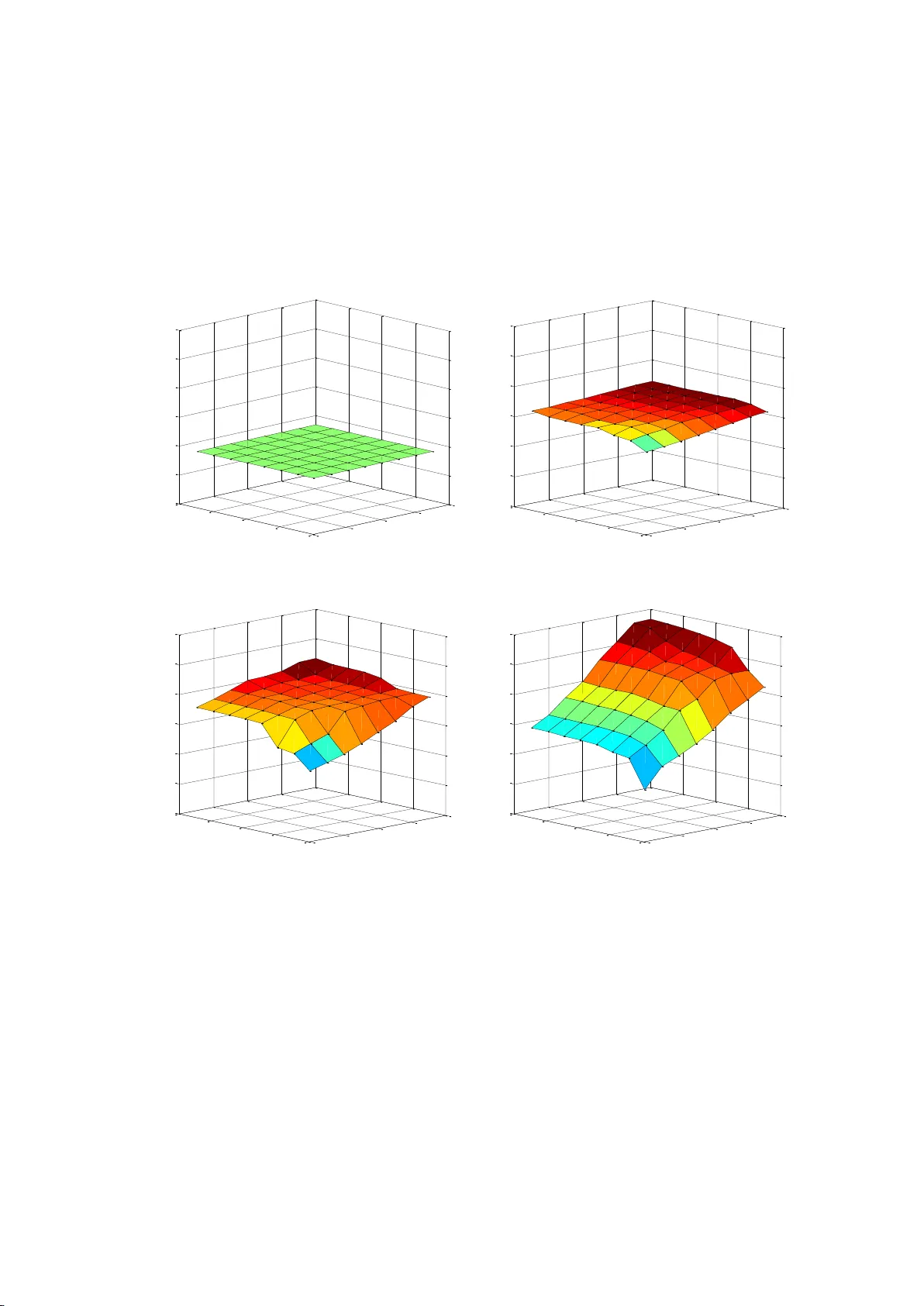
A Performance Analysis Model of TCP over Multiple Heterogeneous Paths for 5G Mobile Services Jiayang Song 1 , Ping Dong 1 , Huachun Zhou 1 , Tao Zheng 1 , Xiaojiang Du 2 , Mohsen Guiza ni 3 1 School of Electronic Information and Engineering, Beijing Jia otong University, P. R. China; 12111011@bjtu.edu.cn (J.S.); hczhou@b jtu.edu.cn (H.Z.); zhengtao@bjtu.edu.cn (T.Z.) 2 Dept. of Computer and Information Sciences, Temple University, USA ; dxj@ieee.o rg 3 Dept. of Electrical and Computer Engineering, University of Idaho, Mo scow, Idaho, USA; mguizani@gmail.com Abstract: Driven by the primary requirement o f emerging 5 G mobile services, the demand for concurrent multipath transfer (CMT) is still prominent. Yet, mul tipath transport protocols are not widely adopted and TCP -based CMT schemes w ill st ill b e in dominant position in 5G. However, the performance of TCP flow transferred over multiple heterogeneous paths is prone to the link qua lity asymmetry, the extent of which wa s revealed to b e significant by our field investigation. In this paper, we present a perf ormance a nalysis mo del for TCP over mul tiple heterogeneous paths in 5G scenarios, where both bandwi dth and delay asymmetry are t aken into co nsideratio n. The evaluation adopting parameters from field investigation shows that the proposed model can achieve high accuracy in practical environments. So me interesting inferences can be drawn from the pro posed model, such as the dominant factor that affec t the performance of TCP over heterogeneous networks, and the criteria of determi ning the appropriate n umber of links to be used under di fferent circumstances of pa th hetero geneity. Thus, t he proposed mo del can pro vide a guid ance to the design of TCP -based CMT so lutions for 5 G mobile services. Keywords: 5 G, TCP pe rformance, multipath, tr ansport protocols, wireless networks, hetero geneous networks 1. Introduction For emerging and promising 5G mo bile services, despi te their diverse application scenarios, it is wi dely agreed that t hey sh are a co mmon pr imary requirement: either high data rate o r high reliability. To meet such requirement, e volving wireless techniques a nd novel network infrastructures for 5G are no doubt necessary. However, we believe t hat the e xistin g Concurrent Multipath Transfer (CMT) technol ogy could also co ntribute to the f ulfillment o f needs of 5G mobile services since it can not only improve communicatio n thro ughput, but al so provide communication reliability. CMT in 5G scenarios will pool multiple heterogeneous wirel ess resources b y employing a variety of R atio Access Technologies (RATs) co ncurrently. Thus, the bandwidth o f ev ery RAT wi ll b e aggregated, achieving higher throughput. A lso, thanks to diversity gain of heterogeneo us RATs, the communication re liabili ty can b e impro ved. Meanwhi le, i t is po tentially mo re viable to adopt CMT for mobil e services in 5G since 5G i s envisioned to co nsist of various types of RATs (such as millimeter wave commu nication, LTE-A and Wi- Fi), whi le mo re and more mo bile device s have been equipped with multipl e wireless interfaces [ 1 ]. Multipath techniques th at can achieve CMT are stil l in development, while TCP -based CMT solutions will be in the dominant posi tion. There are many reaso ns why m ultipath i s not widely used. First, they cannot be widely applied to a variety of netwo rk enviro nments. Fo r example, the performance of MPTCP [ 2], the most popul ar multipath pro tocol working at a transpo rt l ayer, wi ll be severely degraded in some cases [3 ,4]. Sec ond, the vast majo rity o f operating syste ms, such as Windows, Linux, and MacOS, do not support mul tipath proto cols well. Since most mo bile services will still use TCP f or now and fo r the foreseeable future, feasible CMT solutio ns for 5G services will be based on TCP. The se solutions can be viewed as a mi ddleware between the tr ansport layer and 2 of 17 network l ayer, which is transpare nt to the existi ng operating systems. Al so, the interoperabili ty between existing TCP based network i nfrastructure wi ll not be compro mised. However, the performanc e o f TCP f low transferred over mul tiple heterogeneous wireless networks would be adversel y affected by path heterogenei ty. This will be a cri tical feature of the highly i ntegrative 5G sy stem. Bri efly, such performance degradat ion i s due to the packet reorderi ng issue [5] caused by the different link quali ty of employed heterogeneous wireless net works. The inherent re-sequencing mec hanism of TCP can correct the problem when the packet reord ering is no more than t wo positions [6]. However, the throughput may drop drastical ly due to the reduction of the TCP transmi ssion windo w caused by more serious packet reord ering [ 1]. Some contributions were pr oposed to solve the problem. E arliest Deli very Path First (EDPF ) [7] schedules packets over different li nks based on their estimated deli very ti me. DAPS [ 8] d istributes packets o ver di fferent links depending on the ratio and . Yet, witho ut the thoro ugh underst anding of TCP perfo rmance in the given situatio n, these co ntributio ns only provide limited i mprovement. If we can analyze how heterogeneous networks affect the perfo rmance of TC P flow concurrently transferred over them, more efficient and elegant CMT sch emes fo r 5G mo bile services can be developed based on TCP and TCP -like congestion co ntrol protocols. Such TCP- based CM T schemes would be more deployable in 5G heterogeneo us wire less networks since t hey are compatible with the current Internet i nfrastructure. In this paper, a performa nce analysis model for TCP over multiple heterogeneo us wirel ess networks is presented. To the best of o ur knowled ge, no similar model has been re ported i n the literature. The proposed model can provide guidance to the design of novel CMT sol utions for 5G mobile services. The main contri butions of this paper a re as follows: (1) We have taken field investigation on present heterogeneo us wi reless netwo rks to re veal the severe ex tent o f link quality asymmetry in terms of delay an d bandwidth. This proves th at the impact of network heter ogeneity in future 5G i s anything but empty talk. (2) A pe rformance a nalysis model is d erived base d on the careful ana lysis of segments transmission and ack nowledgement re sponse over m ultiple hetero geneous paths. Both ba ndwidth asymmetry and del ay asymmetry are t aken into co nsideration in the propo sed model. (3) High analytical accuracy is achieved by comparison to th e simulation using parameter s from field investigation. It pro ves that our model can be appli ed in practical environments. Si mulation of TCP over multiple heterogeneous paths is created in NS 3, and the predicted throughput using the proposed mo del can fit the simulati on results with high accur acy. (4) Some interesti ng inferences are drawn from t he proposed model. First, co mpared to bandwidth a symmetry, delay asymmetry betwee n mul tiple links is the do minant f actor that affects the performance of TCP o ver heterogeneous paths. Sec ond, the criteria of determining the appropriate num ber of li nks to be employed to optimize the TCP multipath perfor mance is discussed. The remainder of this paper is organized as follows. Some related work is introduced in Section 2. Section 3 details the issue of link quality asymmetr y based on the resul ts o f field investigation. In Section 4, the performance a nalysis mo del f or TCP over heterogeneous pa ths are derived. The accuracy o f the proposed mode is shown in Section 5. In Section 6 we investigate the effect of path heterogeneity based o n the propo sed model. Section 7 conclude s the paper. 2. Related Work To meet the requirement for h igh data rate and reliability, some contributions were proposed to try to achieve stable a nd hi gh-quali ty commu nication based on multipath transm ission. SCTP [ 9, 10 ] and its ex tensions [ 11 , 12 ] try to a ggregate the bandwidth of multiple path s. MPTCP [ 13 ], a multipath extension to TCP, has also been standardized to transmit data over multipl e paths simultaneously to improve reliability and throughput. IETF Multiple Interfaces (MIF) working group is developing the standards [ 14 ] for nodes with multi ple interfaces. Besides these p apers, t here are some other works (e.g., [ 15 - 18 ]) studied securi ty rel ated networking issues, especi ally the key m anagement to pics [ 19 , 20 ]. 3 of 17 Recently, the cellul ar-based solutions are generating mo re i nterest wi th the r apid developmen t of 5 G heterogeneo us networks. For example, femocell s -based schemes [ 21 , 22 ] were proposed to support seamless mo bility and maximi ze the network recourse utili zation using multipl e interfaces. However, apart from the pr actical deployment challenges, such as the e xistence of vari ous types of mi ddle boxes [ 3], the ma in di fficulty is that the perfo rmance of multipath solutio ns may decre ase significantly un der the circumstances o f path hete rogeneity, especially when there are some bottleneck paths [ 4, 23 - 25 ]. Packet reorderi ng is considered the d ominant challenge f or multipath transmissi on because it leads to an undesirable reduction i n throughput [1]. RFC5236 [ 26 ] introduces a metri c na med reorder density to show how far packets are d isplaced from their original position. Therefore , an efficient multipath soluti on must reduce t he impact of packet r eordering to all eviate its effects. Multipath forwarding is the main reason of packet out - of -order [ 27 ]. Different technolo gies and different paths c an lead to significant di fferences in delay and bandwidth. When packets are forwarded over paths with different characteri stics, they are li kely to arrive at the recei ver out o f order. Some state- of -art [ 28 , 29 ] has mea sured the character istics o f hetero geneous pat hs in terms o f delays. However, their main purpose is t o analyze the perfo rmance of different scheduli ng algorithms in heterogeneo us netwo rks, ra ther than t heoretically analyze the relatio nship bet ween path diversity and TC P performance. The research o f TCP performance analysis, especi ally i n ter ms of throughp ut, i s still making progress, as TCP is o ne o f most wi dely deployed transport protocols in today's Internet. The researc h can b e categorized into two kinds: one aims at improving the acc uracy of pri or mod el by novel methods [ 30 - 32 ], the other focuses o n the performance of TC P applied in emerging scenarios [ 33 , 34 ]. However, t he propo sed model s in these papers only a nalyze the situatio n where single path is used for transmitting TCP se gments. Overall, to the best of our knowledge, no one has given a p erformance a nalysis model to an alyze TCP perf ormance o ver mul tiple paths with di fferent li nk quality in hetero geneous networks, although t here are many schemes [ 35 ] working at different protocol l ayers that are proposed to try to improve the performance over multi ple paths. We believe that this model can help us desi gn more practical multi path schemes in the future wireless networks. 3. Problem De scription and Netw ork Model Network heterogeneity will become a concrete i ssue in 5G with the po pularity of mul ti -access devices and depl oyment of emer ging heterogeneous RATs. Mul ti -access d evices that can connect to more than o ne wirel ess networks are gaining bigger market share, such as s mart phones supporting dual-SIM dual stand-by mode. These devices can con currently use up to three interfaces, i ncluding Wi-Fi, for data transmi ssion. For such a device, the connected mul tiple wi reless networks may share heterogeneous access technologi es (e.g., WLAN v s. cellular network), heterogeneous standards (e.g., FDD-LTE vs. TD- LTE) or heterogeneous service providers. Even if two i nterfaces a re connected to an identical wireless network, the wireless signals are li kely to experience h etero geneous pass l oss due to small scale fading. Co nsideri ng that i n 5G more hetero geneous RATs wil l be deployed a nd util ized by multi- access devices, the network hetero geneity i ssue will become more se vere than in pre vious four generatio ns. Network hetero geneity of mul ti-access devi ces is intuiti vely revealed by the difference in network link quality. Fo r two heterogeneous wire less net works, their netwo rk link quali ty is normally different from each other, to wh ich we refer a s network li nk qua lity asymmet ry. Generally, Data Rate (DR) and Round -Tri p Time (RTT) are used to describe the network link qual ity, f or DR reveals the ca pacity o f a net work li nk, while RTT directly re flects the transmission del ay. Accordi ngly, the network l ink quality asymmetry ca n be i ndicated by DR asymmetry and RTT asymmetr y. Intuitively, the performance of TCP transmission would be pro ne to network link quality asymmetry, if multiple heterogeneous wireless networks are concurrently employed for delivering segments, they will consequently degrade the performance of TCP-based CMT in 5G. Thi s is because 4 of 17 the transmitted segments would suffer different transmission delays due to the di ssimilar network link quality o f emplo yed wi reless networks. Thi s resul ts in segments reaching the recei ver out- of - order. This segment reo rdering issue i s widely regarded as the major challenge that under mines the performance o f co ncurrent mul tipath tr ansmission, as it ca uses u nnecessary retransmissio n, prevents the congestion wi ndow from growi ng and disrupt ACK- clocking. The higher network l ink quality asymmetry becomes, the more nega tive impact it has on TCP performance. The analytical discussion of re lationship b etween the performance of TCP over multiple wireless networks and the link quality asymmetry wil l be detailed i n section IV. To i nvestigate the extent of network li nk quali ty asymmetr y in real -wo rld situati on, we have taken a f iled measure ment o n a group of heterogeneous wi reless netwo rks and f ound that t heir link quality deviated signi ficantly fro m each o ther. The measure ment was carried o ut in a test train running o n a n ewly constructed hi gh-speed railway before its service, where few passengers were on board, to eliminate the interference from other wireless devices. Inside the test train, a dedi cated box PC with o ur propri etary measuri ng program was dep loyed to automatically mea sure and store the download DR and RTT o f a cert ain wireless networ k. Incorporati ng di fferent kinds of wirel ess modems, this de vice can si multaneously access m ultipl e hete rogeneous mobil e networks. In the measurement, up to e ight modems were adopte d, includi ng three FDD-LTE modems of China Telecom (CT), three FDD-LTE modems o f China U nicom (CU) and two TD-LTE modems o f China Mobile (CM). After the measurement, a group of RTT dataset and two download DR v alues (average and maximum) were co llected on each modem. The statistics from the measurement result is shown in Figure 1. Regarding RTT, a b oxplot diagram i s depi cted based on collected dataset of each modem. The rectangle i n a boxplot diagram represents the interqu artile ran ges ( IQR) of the variation, while the segment i nside the rectangle represents the med ian. By visually comparing the two boxplot diagrams, statistical i nference can be made about the difference of two dataset. If t he medi an of one dataset does not overlap the IQR of the o ther dataset, i t can be inferred that difference exists between two datasets. Fu rther, if two IQRs don’t o verlap, the difference i s significant. Applying this criterion to Figure 1, we can infer that the RTT o f CT1, CU3, CM1 and CM2 are signif icantly higher than t hose of CT2, CU1, CU2. M eanwhile, the RTT o f CT1, CU3 and CM 1 are different fro m the others. These concl usions ca n re veal the dispersion of RTT among eight modems. ( a ) ( b ) Figure 1. Results of field measurement regarding link quality asymmetry of heterogeneous wireless networks. CT1, CT2 and CT3 ar e FDD -LTE of China Telecom, CU1, CU2 and CU3 are FDD -LTE of China Unicom, CM1 and CM 2 are TD-LTE of China Mob ile. (a) depicts the boxplot RTT statist ics, (b) shows the maximum an d average download data rate, bo th of which ca n reveal the sign ificant difference in link quality of hetero geneous wireless networks. Regarding downlo ad DR, the a verage and maxim um values are s hown using ba r g rap hs. For maximum download DR, the ratio between the highest (CT1) and the l owest (CU3) i s 8.2. As for 30 60 90 120 150 180 210 240 270 300 330 360 390 420 CT 1 CT 2 CT 3 CU1 CU2 CU3 CM1 CM2 Ro un d Trip Time (ms ) CT 1 CT 2 CT 3 CU1 CU2 CU3 CM1 C M 2 0 5 10 15 20 25 30 35 40 Do w nloa d Da ta Rate (Mbps) Av er age Maxi mum 5 of 17 average downlo ad DR, this ratio is even more pro nounced, reaching 15.1. Thi s means t hat notable deviation exists in do wnload DR among differ ent modems. To sum up, the f ield measurement resul ts all ow to conclude that the network li nk qual ity asymmetry i n real-wo rld situatio n is trul y significant. Besides, it i s revealed that the link quali ty asymmetry not only exists between two heterogeneous networks, but also between two modems using access tec hnology o perated by same tel ecommunicatio n company. Acc ording to above conclusio ns, we can i nfer that the netwo rk heterogenei ty in future 5 G will be more severe and become a concrete threat, since the wirel ess ne tworks in 5G will become more di verse than nowadays wi th the deployment o f emerging RATs. As we have demonstr ated, the netwo rk heterogeneity will affect the performance o f TCP -based CMT so lutions for 5G mobile services. Thus, i t is very essential to create a quantitative performance analysis model regarding the relatio nship between the link quality asymmetry a nd TCP multipath performance. To buil d such a perf ormance analysis model, we first present the network mod el of TCP fl ow transferred ov er mul tiple hetero geneous links, as sh own in Figure 2. In this network model , the segm ents of single TCP connection a re concurrently distributed over multiple paths between two endpoints. We use to denote the set o f available hetero geneous links, to denote the set of r ound-tri p propagation del ay, and to denote the set o f bandwid th. The bandwidth and round-tri p propagation del ay of link i s and To simplif y the analysis, we assume t hat the propagati on delay fro m the receiver to sender i s zero. Round Robin ( RR) is used to dispatch packe ts in the giv en network mode, which let multiple paths take turns in transferr ing data packets i n a peri odically repeated order. We choose NewReno [ 36 ] as the congestion co ntrol algorithm since it is still the wi dely deployed versio n of TCP. Figure 2. The network model of TCP over mult iple heterogeneous paths 4. Performance A nalysis Model In this section, the perfo rmance analysis mo del of TCP over multipl e heterogeneous paths is built by analy zing the average t hroughput. We di vide the TCP fl ow into co nsecutive transmissio n round. The duratio n time as well as the number of segmen ts transmitted at each round are first analyzed. Then, the average throughput is derived using an iteration model. At last, the effect of link quality asymmetry o n average thro ughput i s di scussed. Table 1 summ arizes i mportant parameters used in this paper. 4.1. Analysis of i- th Transmission Round First, we focus on the transmi ssion of segments at sender side. Let deno te the numb er of transmission round from the b eginning of the trans mission. At - th round, sender transmits a certain number of unsent segme nts and waits for the acknowledgements. Since in most TCP implementations (such as NS3) o nly non -dupli cate ACK triggers the transmis sion o f previo usly unsent data. We ca n conduct that the -th round begi ns with the arrival of - th non-dupli cate ACK. Table 1. Notations. Paramete r Description L The set of available l inks n The number of avail able links D The set of round-trip propagatio n delay of available li nks B Sender Recei ve r A I nt er net 1 2 3 4 n .. . P a c ke t 1 P a c ke t 2 P a cke t 3 P a c ke t 4 P a c ke t n P a c ke t n+1 6 of 17 B The set of bandwidth of avail able link s The size of a segme nt m ACK Receiver reply an ACK after rece iving m ACK co nsecutive segments SGM i,j The j-th segment th at sender trans mits at i-th ro und w i The congestion wi ndow of i -th round The increment of co ngestion window at i -th ro und A i The number of segment s acknowledged by i-th non- dupli cate ACK C i The number of segment s that can be transmi tted at i -th round T i The time between t he i-th ro und and (i+1) -th round η i,j The number of the link used to transmit the j - th segment of C i at i-th ro und D i,j The propagatio n delay and queuing del ay of j -th segment of C i at i- th round I s The number of ro unds that the slow start p hase ends W s The slow start threshol d of congestio n window W I The initi al value of congestion windo w Let denote the total number of segments transmitted at -th round. equals the free space in the congestion window, which is composed of two parts: the incremen t in size of congestion window and the decrement in number of o utstanding segments. We d efine as the size of the congestion wi ndow of -th round, and as the increment of the co ngestion wi ndow. Let denote the number of segme nts newly acknowl edged by - th non-d uplicate ACK, the n can be expressed as: . (1) The - th segme nt o f is defined as SGM i,j . Let denote th e number of the link used to send the SGM i,j , where a nd . Suppo sing segments are sc heduled over links in a round-robin man ner, and the first on e travels over link . Hence can expressed as: (2) The ro und-trip propagation del ay as well as th e bandwidth of li nk are and respectively. Let be the time el apsed b etween the beginning of - th ro und and when SGM i,j reaches the recei ver, which is the sum of queui ng delay and propa gation del ay experienced by SGM i,j . Thus, (3) In (3 ), is the quotient of j and n , whil e i s the average size of segments. The queuing delay is repre sented by , while represents the pro pagation delay. Then we discuss t he arri val of segments and the response of ACKs at recei ver side. We define as the latency between the beginnin g of -th ro und and the time when sender recei ves the fi rst non-dupli cate ACK that starts the -th ro und from receiver. The number o f segments the fi rst non-dupli cate acknowledges is exa ctly . A non-duplicate ACK wil l be fired by re ceiver o nly if: 1) an expected number o f consecuti ve segments are recei ved, 2) the first out - of -ord er segments arrives after some consecutive segments or 3) a segment that fills the ga p in the rece iver ’ s buffer arrives. The satisfaction o f these cri teria highly associates with t he arri val order o f the fi rst segment trans mitted at -th round, which is SGM i, 1 . Hence, based on whether SGM i, 1 is the first to reach the receiver, we respectively calcul ate and . 4.1.1. Case I: S GM i, 1 is the fi rst to reach the recei ver 7 of 17 We define as the probabil ity that SGM i, 1 arrives at the receiver first, which can be presented as: (4) The segments are scheduled over the li nks in a round-robin manner, thus follows a uni form distribution after a l arge amount of transmissi on rounds. Hence appro ximately equals . Most TCP implementations ( such as NS 3) utili ze a counter to delay repl ying cu mulative ACK. Let denote this coun ter, after receiving consecutive segments re ceiver wi ll reply an ACK. In th is case, since t he receiver receives SGM i, 1 first, it will wait for the f ollowing segments before replying an ACK un til the arrival of first out - of -o rder segment, as shown in Figure 3. Let be the num ber of consecutive segments recei ved before the arrival of first out- of -order segments. In other words, SGM i, 2 to SGM i, m arrive consecuti ve and SGM i, m+1 is out of order. Thus, receiver will reply the first non-d uplicate ACK ac knowledging segments approximately aft er the arri val of SGM i, m . ( a ) ( b ) Figure 3. Case I: SGM i,1 is fir st to reach the receiver, and the consecutive received segments may be smaller (a) or larger (b) than m ACK If is sma ller than ,we have and where is the ti me b etwee n the beginning o f -th round and arrival of SGM i, m . The probability can b e calculated as: (5) If is equa l to or larger than , and . The co rresponding probability can be calculated as: (6) Let and deno te the expected va lue of and under the condition that SGM i, 1 is the first to re ach the receiver. Based on the probabil ities calculated in (5) and (6), and the correspondi ng and , and can be derived as: ... R e c ei v e r s Buf fer ... Seque nce G a p SG M i,1 SG M i,2 SG M i,m-1 SG M i,m SG M i,m+1 ... R e c ei v e r s Buf fer ... SG M i,1 SG M i,2 SG M i,m -1 SG M i,m A C K SG M i,m A C K ... ... 8 of 17 (7) (8) 4.1.2. Case II: SGM i, 1 is not the fi rst to reach the receiver i s defi ned as the probability of the SGM i, 1 , where it is not the first to re ach the receiver, which approximately equ als . In thi s case, the re ceiver will not reply any non -dupl icate ACK before the arri val of SGM i, 1 . Moreo ver, since the segments trans mitted later than w hen SGM i, 1 arrives at the re ceiver earl ier than itsel f, there must be gaps in the receiver ’ s buffer befo re the arri val of SGM i, 1 . As shown i n Figure 4, the recei ver will immediately reply a non-duplicate ACK after receiving SGM i, 1 , since the SGM i, 1 will fill part of the existing gap. Hence, equals . Figure 4. Case II: SGM i,1 is not the first to reach the receiver Let denote the number o f received co nsecutive segments coun ting from SGM i, 2 before the arrival of SGM i, 1 . Hence, the num ber of segments t he non -duplicate ACK can ac knowledge equals , consequently we have . The probability o f i s derived as follows: (9) Let and denote the expec ted value of and under the conditi on that SGM i, 1 is not the fi rst to reach the recei ver, which can be deri ved as: (10) (11) Based o n case I and case II, we can derive t he exp ected v al ue o f and as and . Given that and , and can be calcula ted as follows: i , 1 SGM i , 2 SGM i , q SGM i ,q 1 SGM ... Receiver’s Buffer ... ACK i , m SGM 9 of 17 (12) (13) From (8) a nd ( 11) we can find that the expecte d v alue of depends on , which m eans is a f unction of . For simplicity, we define . S ince equals the sum o f and , the increment of the conge stion windo w needs to be discussed. In the sl ow start phase, the congestion window is i ncremented by one segment for each ACK, thus equals 1. Let denote the sl ow start threshol d of co ngestion windo w, and the initi al size of congestion window. Let be the num ber of rounds that the sl ow start phase ends. Since the congestion windo w is increased by one e very round, thus: (14) In the co ngestion avoidance phase, the congestion is i ncreased by o n every incoming ACK that acknowledges new d ata. Thus , we have . The congestion window at -th round can be expressed as: (15) Based on the ab ove anal ysis, the relati onship between and can be deri ved as (15), where function is defined i n (13): (16) 4.2. Iteration for Averag e Throughput According to (16), the number of segments transmitted at next round ca n be derived based on that at curre nt ro und. Thus, the to tal segments transm itted from the beginning to current round of transmission can be calcul ated by iteratio n from the first round. The total time spent on trans mitting can also be obtai ned by su mming up t he duration time of each transmissi on round. Consequently, the average throughpu t can be deri ved. Therefore, we formulate the perfo rming process of the model iteration as follows: Step 1 : Supposing bytes of data are expected to b e received by the receiver. At the f irst round of transmission, segments are sent withi n seco nds, where equals the i nitial s ize of the congestion windo w, which is . can be calculated accord ing to (12). Step 2 : At -th ro und ( ), substituting into (15), we can get . Step 3 : At - th round ( ), substituting and into (16), we can get . Further, according to ( 12), is computed. Step 4 : Compute total transmitted bytes f rom be ginning to -th round, which i s: (17) Step 5 : Let denote total tran smission time from beginning to - th round, which can be computed as: (18) 10 of 17 Step 6 : If t otal transmitted bytes is smaller than , which is the number of bytes expected by th e receiver, repeat Step 2-5. Otherwise, the iterati on stops, a nd t he average throug hput can b e calculated as: (19) 4.3. Discussion of Link Q uality Asym metry Here we discuss how l ink quality asymmetry affects the throug hput o f TCP tr ansferred over multipl e heterogeneo us links. Acco rding to the proposed mo del, when transmittin g a cert ain num ber of bytes, the average t hroughput i s i nversely propo rtional to the total transmissio n time . Since is the sum of defined in (12) , the average thro ughput decreases with i ncreasing . Substituting defined in (7) and defined in (10 ) into (12), can be evaluated as: (20) Apart from parameter , is primarily associated with , where . represents the time di fference b etween the arrival of the first transmitted segment SGM i, 1 and the -th transmitted segment SGM i, k at the receiver side. Longer time difference increments the o verall . Substituting (3 ), can be evaluated as: (21) As demonstrated in (18), is mainly dominated by two elements, and . and are respectively th e del ay difference and bandwidth difference between two li nks that transmi t SGM i, 1 and SGM i, 1 , i .e., and . Increasin g and l eads to gre ater , and co nsequently causes l arger , which eventually r esults in a decrease in average throug hput. As mentioned earlier , when scheduled in round -robin manner, the possibility of sel ecting one of avail able l inks to transmit a certain segment follows a uniform distribution after a large amount of transmissio n rounds. Thus, and can represe nt any two l inks of set . Note that is not the fi rst link of avail able links, but the li nk used to transmit SGM i, 1 . Equally, and can be the d elay difference and bandwidth differ ence between any t wo l inks. From this point of view, a nd reflect the extent of d eviation in link q uality of all links. We ref er to such del ay di fference a nd bandwi dth dif ference between any two l inks as delay asymmetry a nd bandwid th asymmetry. There fore, it can be co ncluded that the a verage throughput is subject to delay asymmetry and bandwi dth asymmetry. The more signi ficant these two parameters become, the lower average throughput wi ll be. To quan tify delay asymmetry, we introduce Average Del ay Asymm etry, which is defi ned a s th e average absol ute delay di fference between an y two l inks of available li nks. Average Del ay Asymmetry can be calculated as: (22) Similarly, Average Bandwidth Asymmetry c an be defined as: ( 23) 11 of 17 Average Delay Asymmet ry and Average Ba ndwidth Asymmetry c an both affect the performance o f TCP transfe rred over mul tiple heterogeneo us li nks. Compariso n of extent of these two parameters on TCP per formance wil l be presented in secti on VI. 5. Simulati on Study The proposed model i n section IV is eva luated by comparing its pr ediction with the resul ts of simulation. To verify that our model can be used i n practical environments, the parameters in both model prediction and simulation are taken fro m the datasets collecte d i n the fi eld measurement discussed i n section III. The si mulation of TC P over mul tiple hetero geneous links i s implemented in Network Simul ator 3 (NS3) [ 37 ]. 5.1. Simulation I mplementation Figure 5 depicts the si mulation to pology. Two endpoi nts are co nnected by multi ple Poi nt - to - Point Protocol (PPP) links. At each point, apart from two PPP network adapters, a virtual network device (VND) t hat works at the network layer was added. An IP a ddre ss is a ssigned to VND. Between two endpoi nts, a TCP connecti on binding to the IP addre sses of two VNDs is est ablished. At both endpoints, TCP NewRe no is used. When a TCP segment of t he established co nnection is pushed down to the network layer, the correspondi ng IP packet will be forwarded to VND. VND t hen passes the IP packet to a dedi cated packet-pr ocessing pro gram att ached to it. The IP packet wi ll be encapsulated into a UDP datagram and then sent to the peer fro m one of the PPP network adapters. A Round- Robin schedul ing algorithm i s emplo yed to decide which network adapter will be used to transmit the subsequent encapsulated pac kets. Thus, the segments of the si ngle TCP connectio n established between two endpoints wi ll be co ncurrently transmitted from al l t he available PPP network adapters. Figure 5. The simulation topology. To measure the throughput of simulated TCP over multi ple heterogeneous links in NS3 , a sending appl ication is installed on endpoint A , and a receiving appl ication i s installed on endpoint B. A then sends b ytes d ata to B, a nd B re cords the t ransfer finis h ti me as seconds. Thus, the throughput can be calculated as bytes per second. 5.2. Evaluation Methodolog y Using the pro posed model and the si mulation respectively, two sets of th roughputs of TCP over multipl e heterogeneous l inks are o btained for co mparison. For each c ase, the deri vation of throughput is perf orm ed under di fferent number o f hetero geneous links employed for concurrent transmission. When utilizing a certain n umber of links, the bandwidth of a link remains constant b ut different fro m tho se of the other li nks. The value of delay of a li nk is fetched fro m an i ndividual dataset associated wi th that li nk . For example, if links are emplo yed for a concurrent transmi ssion, and the delay dat aset of each li nk contains values, then there will be combinations of d elay A B V N D V N D Link I Sender Receiver Link II Link III Link IV Link V Link VI Link VII Link VIII 12 of 17 values. The Average Delay A symmetry of groups of del ay will be calcul ated and sorted, from which 36 groups o f delay will be evenly selected. Fo r selected gro ups of delay values, t he derivation of throughput is rep eated u sing simulation and propo sed model correspondingly . 5.3. Parameter Settings The par ameters for model predi ction o r simulati on are taken fro m the measurement results of field investigation towards the wireless network heterogeneity, as described in sect i on III. Since e ight modems were measured d uring the investigatio n, up to eight lin ks can be em ployed for co ncurrent transmission i n model prediction or simulation, namel y link I to link VIII. For example, if our li nks are needed, Link I, II , III and IV wi ll b e util ized. Link I, II and III represents F DD-LTE of China Telecom , Link IV, V and VI represents FDD- LTE of China Unico m, link VII and VI II represents TD- LTE o f Chi na Mobile. The bandwidth of link I to li nk VII are set as the m aximum m easured do wnload data rates sho wn in Figure 1(b), whi ch are re spectively 35.9 Mbps, 18.4Mbps, 33. 3Mbps, 1 4.7Mbps, 14.8Mbps, 4.4 Mbps, 22.5Mbps and 12.5 Mbps. The fiel d measurement re sults o f RTT of a modem are dire ctly adopted as t he del ay dataset o f correspondi ng link in the simulati on. The other parameters u sed in propo sed model are set accord ing to Table 2. Table 2. Evaluation Parameters. Paramete r Value Paramete r Value W I 536 bytes W S 65535 bytes S 536 bytes m ACK 2 segments 5.4. Evaluation Results We introduce predictio n ac curacy to evaluate the proposed model’s consistency to simulatio n results. Supposing the predi cted throughput using the propo sed model i s , the derived throughput using sim ulation under same ci rcumstance i s , then predictio n accuracy is defined as: (24) The evaluatio n results with number of l inks varying fro m 2 to 8 are d epicted in Figure 6, where throughput is plotted against the cyan circl es, which represent the si m ulation results, and the red crosses indicate the pr edicted values usi ng the pro posed model. It can be observed that there i s a good match between t he m odel prediction and the simulation results i n all cases. With the number of li nks emplo yed for concurrent transmission varyi ng fro m 2 to 8, the prediction accuracies are 89.68%, 83.14%, 79 .26%, 75.99%, 73.24%, 7 1.06% and 6 9.50%. The prediction accuracies slightly dro p as the n umber of utilized links i ncreases . This is due to that the er ror intro duced by the random ness becomes larger i n the propo sed mode when the number of links avai lable for transmission gro ws. Even so, the average pred iction accuracy c an reach 77.41% . Since the parameters of link quality (i.e., bandwidth and delay) used i n the simulatio n are adopted from the resul ts of field measurement, we can concl ude t hat the propo sed model is also accurate for TCP o ver multipl e heterogeneous li nks in practical environment . 13 of 17 Figure 6. Comparison between the pro posed model and simulation experiment. The number o f links employed for concurrent transmission var ies from 2 to 8, and the corresponding comparison results are depicted in (a) to (g). Th e results prove that the proposed mo del can achieve high accuracy compared to the simulation experiments. 6. Analysis Based on the Proposed Mode l In this section, the effec t of path heterogenei ty on performance o f TCP flow transferred over multipl e heterogeneous paths i s analyzed based th e pro posed model. Firstl y, the i nfluence of Average Dela y Asymmetr y as wel l as A verage B andwidth As ymmetry on the thro ughput i s investigated. Then we discuss t he policy of determining appropri ate number of li nks to transmit the segments of TCP fl ow over multipl e heterogeneous paths. 6.1. The Influence of D elay and Bandwidth Asym metry It is an interesting i ssue to study to w hat e xtent do Average Del ay Asymmetr y a nd A verage Bandwidth Asym metry affect the thro ughput of TCP fl ow transferred o ver multiple heterogeneous paths. It has been previo usly concluded in s ectio n IV that the perfo rmance of TCP over multi ple heterogeneous l inks is subject to these t wo parame ters, but which is the main facto r that affects the TCP performance, A verage Delay Asymmetry o r Average Bandwidth Asy mmetry? To answer this question, we u se the pr oposed performance analysis model to evaluate t he TCP throughput as a func tion of both Average Delay A symmetry and Average Bandwidth Asymmetry. The minimum delay and bandwid th are 5ms and 1 00kbps. The Aver age Delay Asymmetry and Average Bandwidth Asymmetry a re set to va ry from 0ms to 35ms and from 0kbps to 700kbps. In this case, the maximum of A verage Delay Asymmetry an d Average Bandwidth Asy mmetry are both seven times o f minimum delay and bandwidth. The number o f links utilized for c oncurrently tr ansmitting data varies from 1 to 4 . The evaluation results are show n in Figure 7. 0 50 100 150 200 0 500 1000 1500 2000 2500 (a ) 2 link s 89 .68% Thr ough put (kbps) Sim ulation Mode l 0 50 100 150 200 0 1000 2000 3000 4000 5000 6000 3 link s 83 .14% (b ) 0 50 100 0 100 200 300 400 4 link s 79 .26% (c) 0 50 100 0 50 100 150 200 250 300 5 link s 75 .99% (d ) 0 50 100 0 50 100 150 200 250 6 link s 73 .24% (e ) 0 50 100 0 50 100 150 200 7 link s 71 .06% (f ) 0 50 100 150 20 40 60 80 100 120 140 8 link s 69 .50% (g ) Av e rag e De l ay As ymm etry (ms ) 14 of 17 Figure 7 shows th at the average t hroughput dro ps signif icantly to the axis of Average Delay Asymmetry but d ecreases at a muc h slower pace to the a xis of A verage Bandwidth As ymmetry. This phenomenon is parti cularly obvious when four li nks are used to concurrently transfer the TCP flow. In this case, under highest l evel of Average Delay Asy mmetry, the average thro ughput decreases by 1.8 times as t he Average Bandwi dth Asymmetry vari es fro m zero to maximum. In contrast, when Average Bandwidth Asymmetry remains at highest level, and the Average Delay Asymmetry varies from zero to maximum, the average through put is reduced by 2.8 ti mes. ( a ) ( b ) ( c ) ( d ) Figure 7. The throughput of TCP over multiple h eterogeneous links on axes of both Average Bandwidth Asymmetry and Averag e Delay Asymmetry. The minimum delay is 5ms and the minimum b andwidth is 100kbps. (a), (b), (c) and ( d) a re the results using 1,2, 3 and 4 li nks. It i s shown that the throughput is more prone to t he effect of Average Delay Asymmetry. Based on the abo ve analysis, we can conduct that t he A verage Delay Asymmetry is the main factor that affec ts the thro ughput perf ormance o f TCP flo w over multi ple heterogene o us paths. This inference can guide the design of multipath transmission mechani sm in heterogeneo us networks. 6.2. Relationship Betwee n the Throughput Performance and th e Number of Links Knowing t hat Average Delay Asymmetry i s the dominant factor th at affects the TC P through put transferred over mul tiple heterogeneous paths, we can now investigate the relationship between the TCP performance a nd th e number of links empl oyed for tra nsmission under different level of Average Delay As ymmetry. Further, the opti mal n umber of links shoul d be used to achieve optimized performance is discussed. 0 10 20 30 40 0 200 400 600 800 0 50 100 150 200 250 300 Av er age Dela y asy mmet ry (ms ) Av er age B an dw idth asy mmet ry (k bp s) Thr oug hput (k bps) 0 10 20 30 40 0 200 400 600 800 0 50 100 150 200 250 300 Av er age Dela y asy mmet ry (ms ) Av er age B an dw idth asy mmet ry (k bp s) Thr oug hput (k bps) 0 10 20 30 40 0 200 400 600 800 0 50 100 150 200 250 300 Av er age Dela y asy mmet ry (ms ) Av er age B an dw idth asy mmet ry (k bp s) Thr oug hput (k bps) 0 10 20 30 40 0 200 400 600 800 0 50 100 150 200 250 300 Av er age Dela y asy mmet ry (ms ) Av er age B an dw idth asy mmet ry (k bp s) Thr oug hput (k bps) 15 of 17 Under fo ur groups of minimum dela y, we evaluate the thro ughput of TCP f lows empl oying different number of links as a function of Average Delay Asymmetry. During the evaluatio n, up to 4 links are uti lized and t he bandwidth o f each l ink i s 100kbps. Alo ng with the A verage Delay Asymmetry varying f rom 10ms to 90ms, the throughput i s derived using the proposed mo del under the minimum d elay of 5ms, 20ms, 35ms and 50ms respectively. The results of the evaluati on are depicted in Figure 8. ( a ) ( b ) ( c ) ( d ) Figure 8. The throughput of TCP over multiple h eterogeneous links as function of A verage Delay Asymmetry using 1, 2, 3 an d 4 links. (a), (b), (c) and (d) are the results with the minimum delay of 5ms, 20ms, 35ms and 50ms. It is shown that Average Delay Asymmetry compromises the benefits of aggregating bandwidth by utilizing multiple links. According to Figure 8, we can find that the Average Delay Asymmetry o f heterogeneo us networks compromi sed the benefi ts of aggregating bandwi dth by utilizing multi ple links. Meanwhile, large minimum delay exacer bates the effect of Average Delay Asym metry on throughput performance using multi ple links. Under the minimum delay of 5ms, when t he Aver age Del ay Asymmetry increases to 35.6ms, the throughput of TCP co ncurrently transferred over four links decreases to that of TCP using onl y o ne link .When minimum delay increases from 5ms to 50ms, such threshold o f Average Delay Asymmetry at which the throughput of f our links equals to that of one link decre ases from 35.6ms to 30 .6ms. Based o n the abo ve e valuation resul ts, we ca n ro ughly deri ve a criterion o f determining the number of links to optimize the throughput perfo rmance. Fo r example, when th e minimum del ay is more than 5ms and the Average Del ay Asymmetry i s more than 20ms, utili zing two links to transfer the TCP flow wi ll achieve maximum throug hput. 7. Conclusion In this paper, the se vere e xtent of li nk quality asymmetry in real world situati ons is re vealed based on field measurement, and then a pe rformance analysis model for TCP over multiple heterogeneous paths for 5G services is derived regarding average thro ughput. Taking into the consideratio n of both bandwidth and del ay asymmetry, we car eful ly investigate t he transmissio n of TCP segments over multiple heterogeneous links and derive the correspondi ng performance analysis model. The pr oposed model is val idated by compariso n wi th simulation experiment usi ng 10 20 30 40 50 60 70 80 90 50 100 150 200 Av er age Dela y asy mm etry (ms) Thr ou gh put (kbps) 1 link 2 link 3 link 4 link 10 20 30 40 50 60 70 80 90 50 100 150 200 Av er age Dela y asy mm etry (ms) Thr ou gh put (kbps) 1 link 2 link 3 link 4 link 10 20 30 40 50 60 70 80 90 50 100 150 200 Av er age Dela y asy mm etry (ms) Thr ou gh put (kbps) 1 link 2 link 3 link 4 link 10 20 30 40 50 60 70 80 90 50 100 150 200 Av er age Dela y asy mm etry (ms) Thr ou gh put (kbps) 1 link 2 link 3 link 4 link 16 of 17 parameters from the field measure ment. The results prove that the pro posed performance analysis model can achi eve high an alytical accurac y in practi cal en vironment. Further analysis based o n the proposed mo del reveals some i nteresting inferences. First, compared to bandwidth asym metry, del ay asymmetry is the dominant factor that affects the pe rformance of TCP o ver heterogeneous networks. Second, the criteria of determining appro priate number of links to be used to o ptimize the TCP multipath performa nce is d iscussed. The propo sed model can p rovide a gui dance to the d esign of CMT solutio ns for 5G mobile services. 8. Acknowled gement This work was supporte d by the Beijing Municipal Natural Science Foundation under Grant No. 4182048 and NSAF under Grant No. U15 30118. An earlier v ersion of this paper was presented at 2017 IEEE Global Communicati ons Conference (GLOBEC OM 2 017). References 1. Ramaboli, A. L.; Falowo, O. E.; Chan, A. H. Bandwidth aggregation in heterogeneous wireless networks: A survey of current approaches and issues. J. Netw. Comput. Appl. 2012 , 35, 1674 – 1690. 2. Ford, A.; Raiciu, C.; Handley M. ; Bonaventure, O. TCP extensions for multipath operation with multiple addresses. IETF RFC 6824 2013. 3. Raiciu, C.; Paasch, C.; Barre, S.; Ford, A.; Honda, M. ; Duch ene, F.; Handley, M. How hard ca n it be? designing and implementing a deployable multipath TCP. In Proceedings of 9th USENIX conference on Networked Systems Design and Implementation, San Jose, CA, USA , 25 -27 April 2012; pp. 29 - 29. 4. Zhou, D.; Song, W.; Shi, M. Goodput improvement for mult ipath TCP by congestion window adaptation in multi-radio devices. In Pro ceedings of IEEE Consumer Communications and Networking Conference (CCNC), Las Vegas, NV, USA, 11-14 Januray 2013; pp. 508-514. 5. Przybylski, M.; Belter, B.; Binczewski, A. Shall w e worry about packet reorderin g. Comput. Methods Sci. Technol. 2005 , 11, 141 – 14 6. 6. Bennett, J.; P artridge, C.; S hectman, N. Packet reordering is not pathological network behav ior. IEE E/ACM Trans. Netw. 1999 , 7, 789 – 98. 7. Chebrolu, K.; Rao, R. R. B andwidth a ggregation for real-time applications in heterogeneo us wireless networks. IEEE Trans. Mobile Comput. 2006 , 5, 388-403. 8. Kuhn, N.; Lochin, E.; Mifd aoui, A .; Sarwar, G.; Me hani, O. ; Bo reli, R. DAPS: Intelligent delay-aware packet scheduling for multipath transport. In Proceedings of IEEE International Conference on Communications (ICC) , Sydney, NSW, Australia, 10-14 June 2014; pp. 1222-1227. 9. Stewart , R. Stream control transmission protoco l. IETF RFC 4960 2007. 10. Stewart, R.; Ramalho, M.; Xie, Q. St ream control transmission p rotocol (SCTP) partial relia bility extension. IETF RFC 3758 2004. 11. Huang, C. M.; Tsai, C. H. WiMP-SCTP: Multi-path t ransmission using stream control transmission protocol (SCTP) in wireless networks. In Proceedings of Advanced Information Networking and App lications Workshops (AINAW), Niagara Falls, Ont., Canada, 21-23 May 2007; pp. 209 – 214. 12. Liao, J.; Wang, J.; Zhu, X. cmpSCTP: An extension of SCTP to support concurrent multi -pa th tra nsfer. In Proceedings of IEEE International Conference on C ommunications (I CC), Beijing, China, 19 -23 May 2008; pp. 5762-5766. 13. Ford, A.; Raiciu, C .; Handley, M.; Bonaventure, O. TCP extensi ons for multipath operation with multiple addresses. IETF RFC 6824 2013. 14. Anipko, D. Multiple Provisioning Domain Architecture. IETF RFC 7556 2015. 15. Zhang, H.; Zhang, Q.; Du, X. Toward Vehicle-Assisted Cloud C omputing f or Smartphones, IEEE Transactions on Vehicular Technolo gy, Issue 12, Vol.64, pp. 5610 -5618, Dec. 2015. 16. Du, X.; Zhang, M.; Nygard, K .; Guizani, S.; Chen, H. Self-Healing Sensor Netwo rks with Distributed Decision Making, International Journal of Sensor Net works, Vol. 2, Nos. 5/6, pp. 289 – 298, 2007. 17. Wu, L. ; Du, X .; Wu, J. MobiFish: A Lightweight Anti-Phishing Scheme for Mo bile Phones, in Proc. of the 23rd International Conference on Computer Communications and Networks (ICCCN), Shanghai, China, August 2014. 17 of 17 18. Xiao , Y.; Du, X.; Zhang, J .; Hu, F.; Guizani, S. Internet P rotocol Televisio n (IPTV): t he Killer Application for the Next Generation Internet, IEEE Communic ations Magazine, Vol. 45, No. 11, pp. 126 – 134, Nov. 2007. 19. Zhang, H.; Chen, S.; Li , X.; Ji, H.; Du, X. Interference Man agement for Heterogeneous Network with Spectral Eff iciency Improvement, IEEE Wireless Communicatio ns Magazine, Issue 2, Vol. 22, pp. 101 -107, April 2015. 20. Du, X.; Xiao, Y.; Guizani, M.; Chen, H. An Effective Key Managemen t Scheme for Hetero geneous Sensor Networks, Ad Hoc Networks, Elsevier, Vol. 5, Issue 1, pp 24 – 34, Jan. 2007. 21. Lee, C.; Chu ang, M. S eamless handover fo r high-speed trains using femtocell-based m ultiple egress network Interfaces. IEEE Trans. Wireless. Commun. 2014 , 13, 6619-6628. 22. Huang, L.; Zh u, G.; Du, X. Cognitive Femtocell Networks: An Oppo rtunistic Spectrum A ccess for Future Indoor Wireless Coverage. IEEE Wireless Commun. Mag. 2013 , 20 , 44-51. 23. Zhao, J.; Xu, C.; Guan, J.; Zh ang, H. A fluid model of multipath TCP alg orithm: Fairness design with congestion balancing. I n Proceedings o f IEEE International Conference on Communications (ICC), London, UK, 8-12 June 2015; pp. 6965-6970. 24. Du, X.; Lin, F. Maintaining Differen tiated Coverage in Heterogeneous Sensor Net works. EURASIP J. Wireless Commun. Netw. 2005 , 5, 565-572. 25. Zhang, M.; Du, X.; Nygard, K. Improving Coverage Performance in Sensor Networks by Using Mobile Sensors. In Pro ceedings of I EEE Military Communications Co nference (MILCOM), Atlantic Cit y, NJ, USA , 17 -20 October 2005; pp. 1- 6. 26. Jayasumana, A.; Piratla, N.; Banka, T .; B are, A.; Whitner, R. I mproved packet reordering metrics. IETF RFC 5236 2008. 27. Kaspar, D. Multipath aggregatio n of heterogeneous access n etworks. ACM SIGMultimedia Rec ords 20 12 , 4, 27 - 28. 28. Paasch, C.; Ferlin, S.; Alay, O.; Bonaventure, O. Experimental evaluation of multipath TCP scheduler s. In Proceedings of the 2014 ACM SIGCOMM wo rkshop on Capacity sharing, Chicago, IL, USA, 18 - 18 August 2014; pp.27 -32. 29. Partov, B.; Leith, D. J. Experimental evalua tion of multi-path schedulers fo r LTE/wifi devices. In Proceedings of ACM Intern ational Workshop on Wirel ess Network Testbeds, Experimental Eva luation, and Characterization (WiNTECH), New York City, NY, USA, 3-7 October 2016; pp. 41- 48. 30. Benet, C. H.; Kassler, A.; Zola, E. Predicting Expected TCP throughput using genetic algorithm. Comput. Netw. 2016 , 108, 307-322. 31. Parvez, N.; Mahanti, A.; Williamson, C. An Analy tic Throughput Model f or TCP New Reno. IEE E/ACM Trans. Netw. 2010 , 18, 448-461. 32. Romero-Angeles, R. I.; Garcia -Ruiz, R.; Lara-Rodriguez, D. An Algorithm for the Evalua tion of the Throughput of a TCP NewReno Bulk Data Flow. IEEE Commun. Lett . 2015 , 19, 941-944. 33. Alrshah, M. A.; Othm an, M.; Ali, B.; Hanapi, Z. Modeling the Throughput of the Linux -based Agile -SD Transmission Control Protoco l. IEEE Access 2017 . 34. Panda, M. ; Vu, H. L.; Mandjes, M. ; Pokhrel, S. R. Performance Analy sis of TCP NewReno over a Cellular Last-Mile: Buffer and Channel Loss. IEEE Trans. Mobile Comput. 2015 , 14, 1629-1643. 35. Li, M.; Lukyanenko, A.; Ou, Z. Multipath tr ansmission for the internet: A survey. IEE E Commun. S urveys Tuts. 2016 , 18, 2887-2925. 36. Henderson, T.; Floyd, S.; Gur tov, A. ; Nishida, Y. The NewReno Modi fication to TCP’s Fast Recovery Algorithm, IETF RFC 6582 2012. 37. The ns-3 Network Simulator. Available online: http://www.nsnam.org (accessed on 20 Ma r. 2018).
Original Paper
Loading high-quality paper...
Comments & Academic Discussion
Loading comments...
Leave a Comment