Rethinking the Micro-Foundation of Opinion Dynamics: Rich Consequences of the Weighted-Median Mechanism
To identify the main mechanisms underlying complex opinion formation processes in social systems, researchers have long been exploring simple mechanistic mathematical models. Most existing opinion dynamics models are built on a common micro-foundatio…
Authors: Wenjun Mei, Francesco Bullo, Ge Chen
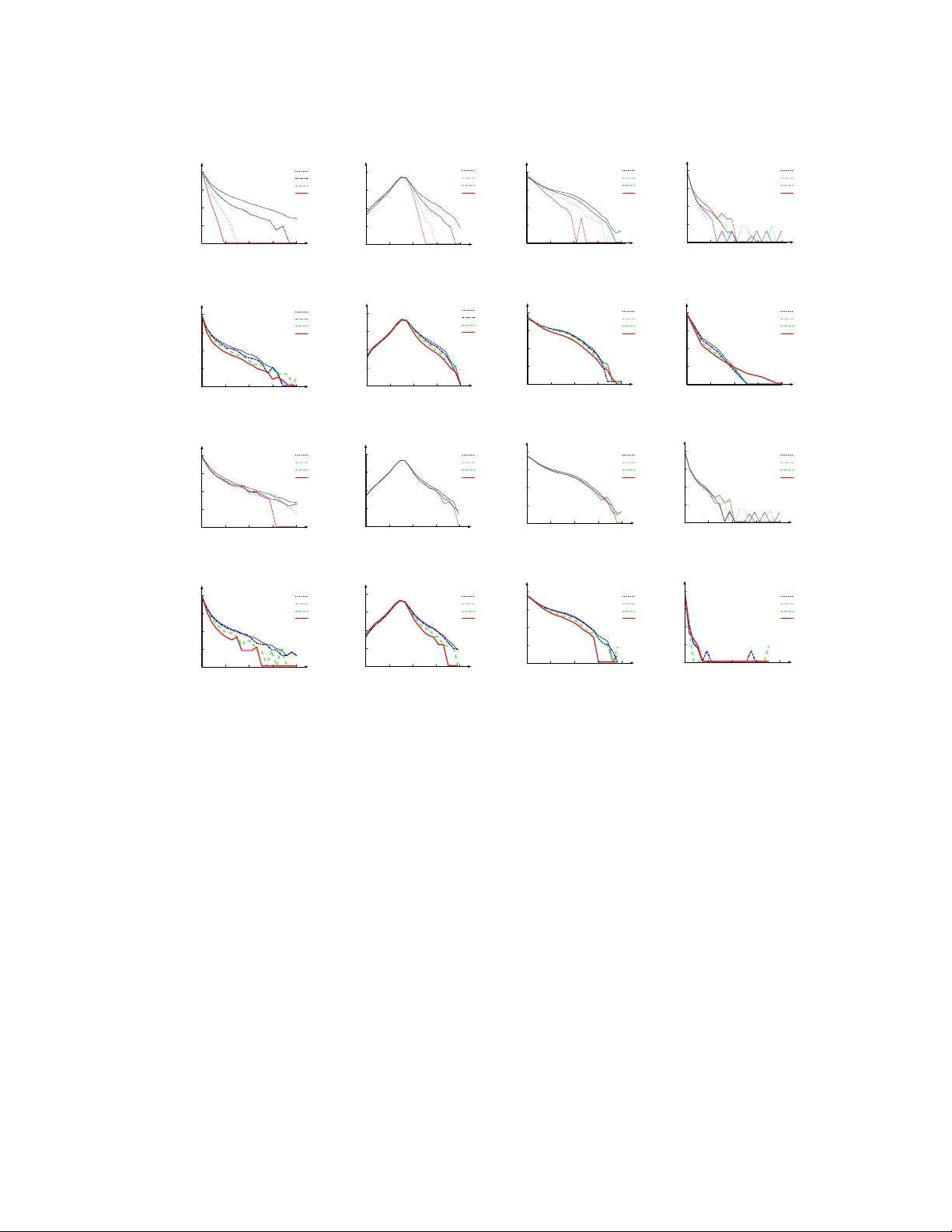
Rethinking the Micr o-F oundation of Opinion Dynamics: Rich Consequences of the W eighted-Median Mechanism W enjun Mei*, Francesco Bullo, Ge Chen, Julien M. Hendrickx, Florian D ¨ orfler Abstract T o identify the main mechanisms underlying complex opinion formation processes in social systems, researchers ha ve long been exploring simple mechanistic mathematical models. Most e xisting opinion dynamics models are built on a common micro-foundation, i.e., the weighted-averaging opinion update. Howe ver , we argue that this universally- adopted mechanism features a non-negligible unrealistic feature, which brings unnecessary dif ficulties in seeking a proper balance between model complexity and predictiv e po wer . In this paper, we propose the weighted-median mechanism as a ne w micro-foundation of opinion dynamics, which, with minimal assumptions, fundamentally resolves the inherent unrealistic feature of the weighted-av eraging mechanism. Derived from the cogniti ve dissonance theory in psychology , the weighted-median mechanism is supported by online experiment data and broadens the applicability of opinion dynamics models to multiple-choice issues with ordered discrete options. Moreov er , the weighted-median mechanism, despite being the simplest in form, captures various non-trivial real-world features of opinion ev olution, while some widely-studied av eraging-based models fail to. 2 MAIN TEXT 1 Introduction The ke y discourse in democratic society starts from exchanges of opinions in deliberati ve groups, o ver public debates, or via social media, to e ventually reaching consensus or disagreements. Mathematical models help provide mechanistic understandings of how empirically observed macroscopic opinion-formation phenomena emerge from certain micro- scopic social-influence mechanisms and certain social network structures. Due to the complexity of social interactions, the key challenge in building predictive and mathematically tractable models is to identify the “salient features”, i.e., the micro-foundations, that gov ern the interpersonal influence processes. Most e xisting opinion dynamics models are based upon a common micro-foundation: the weighted-av eraging mech- anism, also kno wn as the classic DeGr oot model [12, 14]. Consider n indi viduals discussing some issue and each individual i ’ s opinion at time t is denoted by x i ( t ) . The mathematical form of the DeGroot model is written as x i ( t + 1 ) = Mean i x ( t ) ; W = n ∑ j = 1 w i j x j ( t ) . (1) Here w i j characterizes the influence individual j has on i , and the influence matrix W = ( w i j ) n × n induces a directed and weighted graph, referred to as the influence network and denoted by G ( W ) , see an example in Fig. 1(a). Namely , each indi vidual is a node in G ( W ) , and each entry w i j corresponds to a link from i to j with weight w i j . By definition, w i j ≥ 0 for any i , j , and w i 1 + · · · + w in = 1 for any i . The DeGroot model is decei vingly elegant but leads to an ov erly-simplified prediction that the individuals’ opinions reach consensus, i.e., x i ( t ) − x j ( t ) → 0 as t → ∞ for any i , j , whenev er G ( W ) has a globally reachable and aperiodic strongly connected component [12, 33] (see the Supplementary Section I for a brief revie w of graph theory). This is a bold conclusion based on mild connectivity conditions. The intuition behind DeGroot model’ s always-consensus behavior is that the weighted-averaging mechanism leads to a non-negligibly unrealistic implication, illustrated via the following simple example and visualized in Fig. 1(b): Suppose an individual i is influenced by indi viduals j and k via the weighted-averaging mechanism: x i ( t + 1 ) = x i ( t ) + w ik x k ( t ) − x i ( t ) + w i j x j ( t ) − x i ( t ) . The equation abo ve implies that whether i ’ s opinion mov es towards x k ( t ) or x j ( t ) is determined by whether w ik | x k ( t ) − x i ( t ) | is larger than w i j | x j ( t ) − x i ( t ) | . That is, the “attractiveness” of opinion x j ( t ) to individual i is proportional to the opinion distance | x j ( t ) − x i ( t ) | . Such proportionality implies ov erly lar ge “attracti ve forces” between distant opinions, which driv e the DeGroot model to consensus under mild conditions. Moreov er , the notion of opinion distance depends on numerical representation of opinions, which could be arbitrary if the opinions are not numerical by nature. The weighted-averaging mechanism is widely adopted for its simplicity . Ho wever , as indicated by the argument abov e, such simplicity comes at a cost: In order to explain an ything other than consensus, the inherent unrealistic features of weighted a veraging ha ve to be first remedied by introducing additional assumptions and parameters that help resist the ov erly large attractions between distant opinions, see v arious important extensions of the DeGroot model [1, 2, 10, 11, 16, 17, 22, 26, 27, 33, 34, 36]. For instance, Abelson [1] assumes that the weights decay with opinion distances. In a more recent paper [3], individuals with more extreme opinions are assumed to assign more weights to themselves. These 3 modified a veraging mechanisms, howe ver , still lead to opinion consensus under mild network connectivity conditions. The Friedkin-Johnsen model [16] generates disagreement by introducing individuals’ persistent attachments to their initial conditions, which resist the attractions by others’ opinions. In the biased-assimilation model [10], individuals process weighted a verages of others’ opinions in a highly nonlinear manner , by weighing confirming evidence more heavily than dis-confirming evidence, which leads to opinion polarization. The bounded-confidence models [11, 22] assume that opinion attractiv eness first increases proportionally with opinion distance and is then truncated to zero once the distance exceeds a pre-assumed threshold, which leads to opinion clustering. All the aforementioned models in volve additional crucial parameters that need to be identified. (b) k j i x i ( t ) x k ( t ) x j ( t ) w ik | x k ( t ) - x i ( t ) | w ij | x j ( t ) - x i ( t ) | x i ( t+ 1) = x i ( t ) + w ik ( x k ( t ) - x i ( t ) ) + w ij ( x j ( t ) - x i ( t ) ) Opinion (c) W = 2 6 6 6 6 6 6 4 0 . 30 . 200 . 10 . 40 00 . 40 . 300 . 30 00 0 . 20 . 80 0 00 . 300 . 30 . 40 00 . 20 00 . 40 . 4 0 . 60 0 0 00 . 4 3 7 7 7 7 7 7 5 AAACu3icbVFNT8MwDE3Ld/kacOQSMYE4VS1UMA5ISFw4gsQ2pHWgNPO2sDStkhQxVfuT3Pg3pN3YxoalWM9+frHjRClnSnvet2WvrK6tb2xuOds7u3v7lYPDhkoySaFOE57Il4go4ExAXTPN4SWVQOKIQzMa3Bd88wOkYol41sMU2jHpCdZllGiTeqt8NfEtdsIIekzkUUy0ZJ8jx3Mv8Rn23IvCl8gvfVD4MHS8WTSunKFfdqZ3a7/xVLmgWbh32nWuS1Cw7tU8M6twQhCd6fRvlarneqXhZeBPQBVN7NEsIewkNItBaMqJUi3fS3U7J1IzymHkhJmClNAB6UHLQEFiUO283P0In5pMB3cTaY7QuMzOK3ISKzWMI1Np5uurRa5I/se1Mt2ttXMm0kyDoONG3YxjneDiI3GHSaCaDw0gVDIzK6Z9IgnV5rsdswR/8cnLoHHh+oF78xRU764m69hEx+gEnSMfXaM79IAeUR1Rq2a9Wj2rb9/a1H63+bjUtiaaI/TH7OwHuLO1pA== 1 2 4 5 3 6 0.3 0.4 0.2 0.3 0.4 0.4 0.2 0.1 0.4 0.3 0.2 0.3 0.8 0.3 0.4 0.4 0.6 (a) Influence matrix Influence network 1 2 4 5 0.3 0.2 0.4 0.1 x 1 < x 4 < x 2 < x 5 ) Cognitive dissonance of node 1 x 1 x 4 x 2 x 5 Opinions: W eights: 0.3 0.1 0.2 0.4 < 0.5 < 0.5 W eighted median = x 2 For node 1: ) x 1 x 4 x 2 x 5 z AAAB/XicbVDLSgMxFM34rPU1PnZugkVwY5mRoi4LblxWsA9ohyGTZtq0SWZIMmo7Lf6KGxeKuPU/3Pk3pu0stPXAhcM593LvPUHMqNKO820tLa+srq3nNvKbW9s7u/befk1FicSkiiMWyUaAFGFUkKqmmpFGLAniASP1oH898ev3RCoaiTs9iInHUUfQkGKkjeTbhy2VcL8HH/zU7Y1Hw7NHvzfy7YJTdKaAi8TNSAFkqPj2V6sd4YQToTFDSjVdJ9ZeiqSmmJFxvpUoEiPcRx3SNFQgTpSXTq8fwxOjtGEYSVNCw6n6eyJFXKkBD0wnR7qr5r2J+J/XTHR45aVUxIkmAs8WhQmDOoKTKGCbSoI1GxiCsKTmVoi7SCKsTWB5E4I7//IiqZ0X3Yti6bZUKJezOHLgCByDU+CCS1AGN6ACqgCDIXgGr+DNerJerHfrY9a6ZGUzB+APrM8fqCGVXQ== X j w 1 j | z x j | AAAB+HicbVA9SwNBEN2LXzF+5NTSZjEIVuFORC0DWlhYRDAfkBxhb7OXLNnbPXbnlHjkl9hYKGLrT7Hz37hJrtDEBwOP92aYmRcmghvwvG+nsLK6tr5R3Cxtbe/slt29/aZRqaasQZVQuh0SwwSXrAEcBGsnmpE4FKwVjq6mfuuBacOVvIdxwoKYDCSPOCVgpZ5b7t6yCDQfDIForR57bsWrejPgZeLnpIJy1HvuV7evaBozCVQQYzq+l0CQEQ2cCjYpdVPDEkJHZMA6lkoSMxNks8Mn+NgqfRwpbUsCnqm/JzISGzOOQ9sZExiaRW8q/ud1Uogug4zLJAUm6XxRlAoMCk9TwH2uGQUxtoRQze2tmA6JJhRsViUbgr/48jJpnlb98+rZ3Vmldp3HUUSH6AidIB9doBq6QXXUQBSl6Bm9ojfnyXlx3p2PeWvByWcO0B84nz87vpN8 , Fig. 1. Implications of the weighted-averaging and the weighted-median mechanisms. Panel (a) is an example of a 6 × 6 influence matrix and the corresponding influence network with 6 nodes. Pandel (b) illustrates the underlying implication of the weighted- av eraging opinion update. P anel (c) plots the cogniti ve dissonance function for node 1 in the influence network sho wn in Panel (a), following the weighted-median mechanism. Node 1 updates its opinion by first sorting its social neighbors’ opinions and picking the one such that the cumulativ e weights assigned to the opinions on its both sides are less than 0.5. In this paper, we resolve the inherent unrealistic features of weighted averaging in a more fundamental w ay . Instead of further e xtending the DeGroot model, we propose the weighted-median mechanism as an alternati ve micro-foundation of opinion dynamics, in which opinion attractiveness and opinion distance are not intrinsically coupled. This new mechanism is not proposed arbitrarily , but derived from network games and the cognitiv e dissonance theory in psy- chology , and is supported by an online experiment dataset. As will be manifested in later sections, such an incon- spicuous change from averaging to median leads to rich consequences. The weighted-median mechanism broadens the applicability of opinion dynamics models to multiple-choice issues with ordered discrete options, e.g., political elections. Moreover , comparative numerical studies indicate that, the weighted-median mechanism, despite being the simplest in form, captures non-trivial real-world features of opinion e volution, while some widely-studied extensions of the DeGroot model fail to, in the follo wing aspects: First, the weighted-median mechanism predicts that consensus is less likely to be achiev ed in larger groups or groups with more clustered network structure; Second, the weighted- median mechanism predicts that extreme opinion holders tend to reside in peripheral areas of social netw orks and form into local clusters, which resembles the pattern revealed by a large-scale T witter dataset; Third, the weighted-median mechanism generates various empirically observed public opinion distributions without deliberately tuning any param- eters. In summary , while it is implausible for one single model to explain ev ery aspect of real-world opinion dynamics, the clear sociological interpretations, the empirical evidence, and the realistic model predictions in various aspects support the weighted-median mechanism as a well-founded and expressi ve micro-foundation of opinion dynamics. 4 2 Results and Discussion 2.1 Model Derivation and Set-up Model derivation The deriv ation of the weighted-median mechanism is inspired by network games and the cognitive dissonance theory in psychology: Individuals experience cognitiv e dissonance by disagreeing with others and tend to reduce the dissonance by adjusting their opinions [13, 29]. Such dissonance can be mathematically formalized in different w ays [19] and the arguably most parsimonious form is u i ( x i , x − i ) = ∑ j : w i j > 0 w i j | x i − x j | α , for any indi vidual i , where x − i denotes the opinions of all the other indi viduals e xcept i , and α > 0 is an important model parameter . In this context, indi viduals’ opinion updates can be modeled as the following best-response dynamics: for any i , x i ( t + 1 ) ∈ argmin z ∈ R ∑ j : w i j > 0 w i j | z − x j ( t ) | α . (2) Although it might be overly assertive to claim that such “dissonance functions” really exist and are being minimized in human minds, the above framew ork does help derive opinion-update mechanisms with clear sociological interpre- tations. For e xample, due to the con ve xity of x α for x ≥ 0, u i ( x i , x − i ) with α > 1 implies that mo ving towards a distant opinion reduced more dissonance than moving tow ards a nearby opinion by the same distance. Namely , distant opin- ions are more attracti ve. In particular, α = 2 results in the DeGroot model [8]. On the other hand, α < 1 implies that nearby opinions are more attractiv e. In this letter, we adopt the neutral hypothesis α = 1, which does not imply any pre-assumption on how opinion attractiv eness is coupled with opinion distance. If necessary , one could incorporate any such coupling by assuming opinion-dependent weights w i j ( x ) , which is a formidable research direction b ut out of the scope of this letter . In turns out that equation (2) with α = 1 derives the weighted-median mechanism, illustrated in Fig. 1(c) and formalized below . The detailed deriv ation is giv en by Supplementary Section II.2. Model set-up The weighted-median model is formalized as a discrete-time stochastic process. Giv en the influence matrix W = ( w i j ) n × n and the initial condition x ( 0 ) ∈ R n , at each time t + 1, an individual i is randomly acti vated and update their opinion via the following weighted-median mechanism: x i ( t + 1 ) = Med i x ( t ) ; W , (3) where Med i x ( t ) ; W denotes the weighted median of the n-tuple x ( t ) = x 1 ( t ) , x 2 ( t ) , . . . , x n ( t ) associated with the weights ( w i 1 , w i 2 . . . , w in ) , i.e., the i -th row of the matrix W . The value of Med i x ( t ) ; W is in turn giv en as follows: Med i x ( t ) ; W = x ∗ ∈ R if x ∗ satisfies ∑ j : x j < x ∗ w i j ≤ 1 2 , and ∑ j : x j > x ∗ w i j ≤ 1 2 . For generic weights W , Med i x ( t ) ; W is unique. Otherwise, let Med i x ( t ) ; W be the weighted median closest to x i ( t ) , which again guarantees its uniqueness, see the Supplementary Section II.1 for a detailed discussion. Br oader applicability of the weighted-median model The weighted-median operator is well-defined as long as opinions are ordered. This prominent feature broadens the applicability of opinion dynamics models to multiple-choice issues with discrete and ordered options, which hav e not been extensiv ely studied before by quantitativ e models. Debates 5 and decisions about ordered multiple-choice issues are prev alent in reality . For example, in modern societies, many political issues are ev aluated along one-dimension ideology spectra and political solutions often do not lend themselves to a continuum of viable choices. At a fundamental level, the weighted-median mechanism is independent of numerical representations of opinions. Such representations may be non-unique and artificial for any issue where the opinions are not intrinsically quantitative. Obviously , a nonlinear opinion rescaling leads to major changes in the ev olution of the av eraging-based opinion dynamics. It is notable that the human mind often perceives and manipulates quantities in a nonlinear fashion, e.g., the perception of probability according to prospect theory [25]. 2.2 Empirical V alidation The weighted-median mechanism, derived from psychological theory and first principles, is also supported by empir- ical e vidence. Analysis of an online experiment dataset [38] indicates that median-based mechanisms enjoy signifi- cantly lower errors than a veraging-based mechanisms in predicting indi viduals’ opinion shifts under social influence. In each such experiment, 6 anonymous individuals answer 30 questions sequentially within tightly limited time. The questions are guessing the number of dots in a certain color in a given image, see Fig. 2(a) for one example. For each question, the 6 participants answer for 3 rounds. After each round, the y see all the 6 participants’ answers anon ymously as feedback and possibly alter their o wn answers. The dataset records the participants’ answers in each round of the 30 questions. Such experiment design has several desired features. Firstly , the questions being asked can be considered as judgmental issues, since there is no sys tematic w ay to solve them in limited time but subjecti ve guessing. Secondly , since the participants see each other’ s answers anonymously , the underlying influence network is conceiv ably all-to- all with uniform weights. Namely , the experiment design rules out any other factor , e.g., prejudice or communication pattern, but focuses on the core comparison between median and a verage. (a) (b) 0 500 How many red crosses do you see? Counting game Predictions by median (H1) Observed opinions 500 Predictions by average (H2) Observed opinions 0 500 500 Predictions’ err or rates (%) median error rate H1 H2 mean error rate H3 H4 H5 H6 Hypotheses: 25 20 15 10 5 0 (c) Fig. 2. Empirical analysis of the experiment dataset [38]. Panel (a) shows an example of the counting game. Panel (b) sho ws the scatter plots between the participants’ observed 3rd-round answers and the predictions by median (hypothesis H1) and av erage (hy- pothesis H2) respecti vely . P anel (c) is a visualized presentation of some indicative statistics of hypothese H1-H6’ s prediction errors. The black bars indicate the medians of prediction error rates for each hypothesis, while the vertical ranges of the colored rectangles are the associated 95% confidence intervals, computed by the binomial distrib ution method [9]. The colored dots correspond to the means of the prediction error rates for each hypothesis. W e randomly sampled 18 experiments from the dataset, in which 71 participants answer all the 30 questions at each round. For each question, we predict the participants’ third-round answers based on their second-round answers using the following h ypotheses H1-H6 in pairs: Each participant i ’ s answer x i ( t + 1 ) at the ( t + 1 ) -th round is gi ven by 6 H1: x i ( t + 1 ) = Median x ( t ) ; H2: x i ( t + 1 ) = A verage x ( t ) ; H3: x i ( t + 1 ) = γ i ( t ) x i ( t ) + ( 1 − γ i ( t )) Median x ( t ) ; H4: x i ( t + 1 ) = β i ( t ) x i ( t ) + ( 1 − β i ( t )) A verage x ( t ) ; H5: x i ( t + 1 ) = ˜ γ i ( t ) x i ( 1 ) + ( 1 − ˜ γ i ( t )) Median x ( t ) ; H6: x i ( t + 1 ) = ˜ β i ( t ) x i ( 1 ) + ( 1 − ˜ β i ( t )) A verage x ( t ) , where “Median” and “ A verage” means arithmetic median and av erage of all the six participants’ answers, respectively . If there are tw o arithmetic medians, then Median ( x ( t )) denotes the one closest to x i ( t ) . Hypothesis H3 (H4 resp.) can be interpreted as the median (a veraging resp.) mechanism with “inertia”, while hypothesis H5 (H6 resp.) can be interpreted as the median (av eraging resp.) mechanism with “prejudice”. For hypotheses H3-H6, the parameters γ i ( t ) , β i ( t ) , ˜ γ i ( t ) and ˜ β i ( t ) are estimated by least-square linear regression based on the participants’ answers in the first 20 questions as the training set. Then these estimated parameters are used to predict their answers in the remaining 10 questions. Using the abo ve method for t = 2, we obtain 71 × 30 = 2130 predictions of the participants’ 3rd-round answers by each of H1 and H2, and 71 × 10=710 predictions by each of H3-H6. Fig. 2(b) sho ws the scatter plots between the observed answers and the predictions by H1 and H2. W e compute the error rate for each prediction by H1-H6 as follows: error rate = | predicted v alue − observed v alue | observed v alue Some indicati ve statistics of the prediction error rates for H1-H6 are visualized in Fig. 2(c) and are presented in details in Supplementary Fig. 1, according to which the median error rate of the predictions by median (H1) is 46.36% lo wer than that of the predictions by average (H2). In addition, for each pair of hypotheses, the median-based mechanism bears lower median (and also mean) prediction error rate than the av erage-based counterpart. Notably , hypotheses H3 and H4 achiev e remarkably low prediction errors by introducing individual inertia as additional parameters. Despite being useful for fitting the models, these parameters do not reflect intrinsic attributes of the individuals, nor are they stable over time. Hence, we refrain from such extensions and focus on the core issue, namely mean v .s. median. In addition, we also predict the participants’ opinion shifts from the first round to the second round of each question. The results yield quantitativ ely similar conclusions, see the Supplementary Fig. 1. 2.3 Comparative numerical studies Fig. 3 shows a typical e volution of the weighted-median model on a lattice graph, from which some immediate ob- servations can be obtained. First, unlike the DeGroot model, indi viduals in the weighted-median model do not always reach consensus but usually form into different opinion clusters. Second, most of the e xtreme opinion holders (i.e., the dark grey blocks), initially scattered uniformly in the lattice, gradually conv ert to more moderate opinions. Namely , the typical effect of social influence on moderating the opinions of indi viduals in groups are still present b ut not o verly strong as in the DeGroot model. Further insights re vealed by the weighted-median model are to be presented in the rest of this section. Particularly , we compare the behavior of the weighted-median model with some widely-studied extensions of the DeGroot model, in- cluding the Friedkin-Johnsen model [16], the biased-assimilation model [10], and the networked bounded-confidence model [32], all with randomized model parameters. Their mathematical forms and simulation set-ups are provided in the Methods section. 7 t = 0 t = 1000 t = 2000 t = 5000 Fig. 3. One simulation of the weighted-median model on a 30 × 30 lattice graph. Each block is an individual and is bilaterally connected with all their adjacent blocks (not including the diagonally adjacent blocks). Each individual has a self loop and uni- formly assigns weights to all their neighbors including themself. Individuals’ initial opinions are independently randomly generated according to the uniform distribution on [ − 1 , 1 ] . The grayscale of each block is proportional to the absolute v alue of the individual’ s final opinion, i.e., their degree of e xtremeness. After 5000 time steps, the ev olution reaches an equilibrium. Consensus pr obability Since the weighted-median mechanism resolves the ov erly large attractions between distant opinions, the ef fects of network structures on generating persistent disagreement naturally emerge. W e inv estigate how the group size and the clustering coefficient of the underlying influence network affect a group’ s probability of reaching consensus. W e simulate different models on W atts-Strogatz small-world networks [39], whose structure is tuned by three model parameters: the network size n , the average degree d , and the r ewiring pr obability β . Specifically , the smaller β , the more clustered the network is. F or the simulation results shown in Fig. 4(a)-(c), we fix the rewiring probability as β = 1 and estimate ho w the probability of reaching consensus changes with the network size n , under various fixed values of the average degree d . For the simulation results shown in Fig. 4(d)-(f), we fix the network size as n = 30 and estimate how the probability of reaching consensus changes with the re wiring probability β , under v arious fixed values of the av erage degree d . For each model and network set-up, the consensus probability is estimated over 5000 independent simulations. As indicated by Fig. 4(a)(d), in the weighted-median model, consensus is less likely to be achieved in larger or more clustered networks. This feature is consistent with previous empirical studies [21, 42] and ev en everyday experience. Predictions by other models are shown in Fig. 4(b)(c)(e)(f): The Friedkin-Johnsen model almost surely leads to non-consensus; The biased assimilation model and the networked bounded-confidence model capture the decreasing of consensus probability with network size, b ut does not show clear patterns regarding the relation between consensus probability and clustering coefficient. 0 150 50 0 1 0.5 Network size 100 average degree = 3 average degree = 5 average degree = 7 average degree = 9 Consensus probability: WM =1 ( ) (a) 0 1 0.5 Network size 0 70 35 Consensus probability: others =1 ( ) NBC , ave. degree = 3 NBC , ave. degree = 5 NBC , ave. degree = 7 NBC , ave. degree = 9 DeGroot model F-J model (c) 0 1 0.5 0 Consensus probability: NBC 0.9 0.3 0.6 average degree = 9 average degree = 11 average degree = 13 (network size = 30) (f) Acronyms: WM = the weighted-median model; F-J = the Friedkin-Johnsen model; BA = the biased-assimilation model; NBC = the networked bounded-confidence model. 0 1 0.5 0 0.9 0.3 Consensus probability: WM 0.6 (network size = 30) (d) average degree = 13 average degree = 11 average degree = 9 0 1 0.5 Network size 0 90 45 Consensus probability: BA =1 ( ) (b) ave. degree = 3 ave. degree = 5 ave. degree = 7 ave. degree = 9 0 1 0.5 0 0.9 0.3 Consensus probability: BA 0.6 (network size = 30) (e) average degree = 9 average degree = 11 average degree = 13 Fig. 4. Different models’ predictions on how consensus probability depends on network size and clustering coefficient. These models are simulated on W atts-Strogatz small-world networks [39]. In P anel (a)-(c), we fix the av erage individual degree d and the rewiring probability β , and plot how the consensus probability changes with the network size n . Panel (a) presents the predictions by the weighted-median model when β = 1. For other values of β , the results are qualitatively similar , e.g., see Supplementary Fig. 2 for the results when β = 0 . 3. In Panel (d)-(f), we fix n and d , and plot ho w the consensus probability changes with β . Panel (d) presents the predictions by the weighted-median model when n = 30. For other values of n , the results are qualitatively similar, e.g., see Supplementary Fig. 2 for n = 20. Since the DeGroot and the Friedkin-Johnsen models lead to trivial predictions of either almost-sure consensus or almost-sure disagreement, their curves are not plotted in P anel (d)-(f). 8 Locations of extr eme opinions From Fig. 3, one could already see that extreme opinions in the lattice graph behave differently than moderate opinions. T o further in vestigate how extreme opinions are distributed in social networks, we simulate different models for 100 times independently on randomly generated scale-free networks [4] with 5000 nodes. The initial opinions are uniformly randomly generated from [ − 1 , 1 ] and opinions are classified into 4 categories, see Fig. 5(a). W e estimate the in-degree centrality distributions for indi viduals holding dif ferent categories of opinions at the steady states of each simulation. As Fig. 5(b) indicates, only in the weighted-median model, the in-de gree distri- bution curv es for dif ferent categories of opinions are clearly separated, and, moreov er, the curv e for extreme opinions decays the fastest as in-degree increases. That is, only the weighted-median model sho ws that extreme opinions tend to reside in peripheral areas of social networks. This feature is consonant with previous empirical, conceptual, and case studies [20, 23, 28, 30, 37, 40], which explain opinion radicalization via social-influence processes and identify social marginalization as a key cause. Such a connection has barely been captured by quantitative opinion dynamics models and the weight-median mechanism provides perhaps the simplest explanation for it. T o a void the risk of bias due to the higher probability of being absolutely stubborn (self-weight > 1 / 2) in the weighted-median model when the in-degree is small, we perform a second experiment on graphs without self-weights, and obtained similar results, see Supplementary Fig. 4. Simulations for closeness and between centrality or for different categorizations of opinions, also lead to similar results and are presented in Supplementary Fig. 3 and Supplementary Fig. 5. Acronyms: WM = the weighted-median model; F-J = the Friedkin-Johnsen model; BA = the biased-assimilation model; NBC = the networked bounded-confidence model. (b) (c) (a) 0 22+ 11 0 1 Extremist focus Indegree centrality 0 1 10 100 500 5000 10000 Counts Prediction by WM 0.5 0 22+ 11 0 1 Extremist focus Indegree centrality 0 10 100 500 5000 50000 500000 Counts Prediction by BA 0 22+ 11 0 1 Extremist focus Indegree centrality 0 1 10 100 500 5000 35000 Counts Prediction by F-J 0 22+ 11 0 1 Extremist focus Indegree centrality 0 10 100 500 2000 20000 100000 Counts Prediction by NBC (d) Opinion moderate biased radical extreme biased radical extreme 1 -1 0 0.25 0.5 0.75 -0.25 -0.5 -0.75 30 15 45 Log probability density: WM -7 0 -14 0 In-degree centrality moderate biased radical extreme 30 15 45 Log probability density: BA -7 0 -14 0 In-degree centrality moderate biased radical extreme 30 15 45 Log probability density: F-J -7 0 -14 0 In-degree centrality moderate biased radical extreme 30 15 45 Log probability density: NBC -7 0 -14 0 In-degree centrality moderate biased radical extreme Fig. 5. Distributions of e xtreme opinions predicted by different models. Panel (a) is the categorization of opinions. Panel (b) shows different models’ predictions on the in-degree centrality distributions for individuals holding different categories of opinions at the steady states. Panel (c) shows dif ferent models’ predictions on the two-dimensional distributions, i.e., the in-degree and the extremist focus, for the extreme opinion holders at steady states. In each heat map, the last column “22+” records the number of extreme individuals with in-degrees larger than or equal to 22. Panel (d) is Figure 5 in [7], licensed under Creativ e Commons CC0 public domain dedication (CC0 1.0). This figure plots the empirical distribution of randomly sampled T witter users over the in-degree and the ISIS focus (the ratio of one’ s pro-ISIS social neighbors). For each model in comparison, we further simulate them on a scale-free network with 2000 nodes for 1000 times independently . T o avoid the tri vial cases that some individuals might stick to extreme opinions just because the y hav e self loops with weights larger than 1/2, the simulations are conducted on networks without self loops. For extreme opinion holders at the steady states, we compute their extr eme foci , i.e., the ratios of their neighbors also holding extreme opinions, and plot their two-dimensional distributions over the in-degree and the extreme focus, see the heat maps in Fig. 5(c). The heat map generated by the weighted-median model exhibits a clearly distinct pattern to those generated by the other models: In the weighted-median model, extreme opinion holders tend to have lo w in-degrees and their extreme foci concentrate around the v alue 0.5, which implies that they form into local clusters in peripheral 9 areas of the networks. This observ ation indicates a mechanistic explanation for opinion radicalization among socially marginalized indi viduals: In social networks, some local clusters are formed by individuals with low centrality , which usually implies fe w social contacts. Inside those local clusters, if extreme opinions constitute the “mainstream”, i.e., the weighted-median opinions, individuals will adhere to extreme opinions by yielding to social influence, due to the ov erwhelming social pressure and lack of diverse information sources. Remarkably , the heat map generated by the weighted-median model impressi vely resembles a real dataset of the network among randomly sampled T witter users, in which some users ha ve their accounts suspended for posting pro-ISIS terrorism contents and are considered as extreme opinions holders, see Fig. 5(d). 0 1 0.5 0 300 150 Initial opinions Counts 0 1 0.5 0 800 400 Final opinions Counts 0 1 0.5 0 5000 2500 Final opinions Counts 0 1 0.5 0 2500 1250 Final opinions Counts 0 1 0.5 0 600 300 Final opinions Counts 0 1 0.5 0 2000 1000 Final opinions Counts Initial distribution Final distribution: WM Final distribution: DeGroot Final distribution: BA Final distribution: F-J Final distribution: NBC 0 1 0.5 0 600 300 Initial opinions Counts 0 1 0.5 0 600 300 Final opinions Counts 0 1 0.5 0 5000 2500 Final opinions Counts 0 1 0.5 0 5000 2500 Final opinions Counts 0 1 0.5 0 420 210 Final opinions Counts 0 1 0.5 0 1200 600 Final opinions Counts 0 1 0.5 0 600 300 Initial opinions Counts 0 1 0.5 0 900 450 Final opinions Counts 0 1 0.5 0 5000 2500 Final opinions Counts 0 1 0.5 0 3000 1500 Final opinions Counts 0 1 0.5 0 900 450 Final opinions Counts 0 1 0.5 0 2500 1250 Final opinions Counts Uniform initial opinion distribution Bimodal initial opinion distribution 3-modal initial opinion distribution 0 1 0.5 0 440 220 Initial opinions Counts 0 1 0.5 0 1400 700 Final opinions Counts 0 1 0.5 0 5000 2500 Final opinions Counts 0 1 0.5 0 2500 1250 Final opinions Counts 0 1 0.5 0 760 380 Final opinions Counts 0 1 0.5 0 2400 1200 Final opinions Counts Uni-modal initial opinion distribution Acronyms: WM = the weighted-median model; BA = the biased-assimilation model; F-J = the Friedkin-Johnsen model; NBC = the networked bounded-confidence model. Fig. 6. Distrib utions of the initial opinions and the final opinions predicted by dif ferent models. All simulations are run on the same scale-free network with 5000 nodes and starting with the same randomly generated initial conditions. Steady public opinion distributions Empirical evidence suggests public opinions do not only achie ve persistent dis- agreement, but also form into certain steady distributions [24, 27]. In fact, it has long been an open problem what mathematical models naturally lead to the emergence of various empirically observed steady public opinion distribu- tions [15]. By simulating dif ferent models on a randomly generated scale-free network with 5000 nodes, we compare their predictions on the final steady opinion distributions, starting from various initial opinion distributions. Fig. 6 shows a set of typical simulation results. Among all the models in comparison, only the weighted-median model, without deliberately tuning any model parameters, naturally generates various types of empirically-observed steady distributions of public opinions. Comparisons conducted on a small-world network [39] indicate similar conclusions and are provided in Supplementary Fig. 6. Namely , the weighted-median model provides perhaps the simplest expla- nation of the famous Abelson’ s diversity puzzle [1]: “Since universal ultimate agr eement is an ubiquitous outcome of a very br oad class of mathematical models, . . . what on earth one must assume in or der to generate the bimodal outcome of community cleavage studies. ” 10 2.4 Conclusions and Future Resear ch Directions T o sum up, with minimal assumptions, the weighted-median mechanism resolves the unrealistic proportionality be- tween opinion attractiv eness and opinion distance implied by the widely-adopted weighted-av eraging mechanism. Despite its simplicity in form, the weighted-median mechanism leads to higher accuracy in quantitati vely predicting individuals’ opinion shifts in an online experiment and captures various interesting real-world phenomena. While it is implausible for one single model to explain ev ery aspect of real-world opinion ev olution, all the aforementioned features support the weighted-median mechanism as a well-founded and expressiv e micro-foundation of opinion dy- namics, especially for multiple-choice issues with discrete and ordered options. A major limitation of the weighted-median mechanism is that no new opinion is created during the opinion updates. Therefore, it does not capture the behavior that indi viduals compromise at intermediate opinions. This limitation could be resolved by assuming that individuals mov e tow ards instead of directly taking their weighted-median opinions. In addition, one could make the model more realistic by considering state-dependent weights, e.g., by assuming that individuals with more extreme opinions become more stubborn, as in [3]. Moreover , many non-trivial e xtensions introduced to the classic DeGroot model can also be incorporated into the weighted-median mechanism, e.g., the presence of antagonistic relations [36], individual prejudice [16], the logical constraints among issues [17], and the issue alignments [5, 6]. In addition, rigorous analysis of the dynamic behavior , e.g., con vergence and graph-theoretic conditions for consensus/disagreement, of the weighted-median model and its variations would also be of important theoretical value. 3 Methods Simulations in this paper are conducted via MA TLAB. In this section, we provide the information needed to replicate the simulation results presented in this paper . 3.1 Models in comparison Besides the weighted-median model, we also simulate the Friedkin-Johnsen model [16], the biased-assimilation model [10], and the networked bounded-confidence model [32], their mathematical formalization and parametriza- tion are as follows. The Friedkin-Johnsen model [16] assumes that indi viduals ha ve persistent attachments to their initial opinions in their opinion updates. The mathematical form is written as x i ( t + 1 ) = ( 1 − a i ) ∑ j w i j x j ( t ) + a i x i ( 0 ) with a i ∈ [ 0 , 1 ] for any individual i . Here the parameter a i characterizes individual i ’ s tendency of attaching to their initial opinion. In our simulations, each a i is independently randomly generated from the uniform distrib ution on [ 0 , 1 ] . The biased-assimilation model [10] is based on the idea that indi viduals weight confirming evidence more heavily than disconfirming evidence. The model is formalized as follo ws: x i ( t + 1 ) = w ii x i ( t ) + x i ( t ) b i s i ( t ) w ii x i ( t ) + x i ( t ) b i s i ( t ) + ( 1 − x i ( t )) b i ( d i − s i ( t )) , 11 where s i ( t ) = ∑ j w i j x j ( t ) , d i = ∑ j w i j , and b i ≥ 0 is an individual parameter characterizing how biased individual i is. If b i = 0, then individual i process others’ opinions according to exactly the DeGroot model; The larger b i , the more heavily indi vidual i tends to weigh confirming evidence relativ e to disconfirming evidence, i.e., the more biased i is. Since theoretical analysis indicates that b i = 1 is somehow a critical threshold [10], we assume that each b i is independently randomly generated from the uniform distribution on [ 0 , 2 ] . The networked bounded-confidence model [32] assumes that individuals are embedded on an influence network but are only influenced by those whose opinions are within certain prescribed confidence radii from their own opinions. Its mathematical form is giv en as follows x i ( t + 1 ) = ∑ j ∈ N i : | x j ( t ) − x i ( t ) | < r i w i j x j ( t ) ∑ j ∈ N i : | x j ( t ) − x i ( t ) | < r i w i j , for any i , where N i = { j | w i j > 0 } . Here r i is the confidence radius for individual i . In our simulations, if the initial opinions are generated from the range [ 0 , 1 ] ( [ − 1 , 1 ] resp.), then the indi vidual confidence radii are independently randomly generated from the uniform distribution on [ 0 , 0 . 5 ] ( [ 0 , 1 ] resp.). 3.2 Generation of initial opinions For the simulation results presented in Fig. 4 and 5, the initial opinion of each indi vidual in each simulation is inde- pendently randomly generated from the uniform distribution on [ − 1 , 1 ] . Regarding the simulation results presented in Fig. 6, different initial opinion distrib utions are generated as follows: (i Regarding the uniform distribution, we let the initial opinion of each indi vidual be independently randomly sam- pled from the uniform distribution on [ 0 , 1 ] , i..e, x i ( 0 ) ∼ Unif [ 0 , 1 ] for any i ∈ { 1 , . . . , n } ; (ii Regarding the uni-modal distribution, we let the initial opinion of each indi vidual be independently randomly sampled from the Beta distribution Beta ( 2 , 2 ) ; (iii Regarding the bimodal distrib ution, each individual i ’ s initial opinion is independently generated in the following way: Firstly we generate a random sample Y from the Beta distribution Beta ( 2 , 10 ) , and then let x i ( 0 ) = Y or 1 − Y with probability 0.5 respectiv ely; (iv Regarding the 3-modal distrib ution, each indi vidual i ’ s initial opinion is independently generated in the follo wing way: Firstly we generate two random samples Y and Z from Beta ( 2 , 17 ) and Beta ( 12 , 12 ) respectiv ely , and then let x i ( 0 ) be Y , 1 − Y , or Z with probabilities 0.33, 0.33, and 0.34 respectiv ely . For each initial opinion distribution, we randomly generate the initial opinion of each indi vidual independently and let the models in comparison start with the same initial condition. 3.3 Generation of random graphs Simulations in this paper are conducted on either the scale-free networks or the small-world networks. All these networks consist of only bilateral links. The scale-free networks are generated according to the Barab ´ asi-Albert pref- erential attachment model [4]. The network construction process starts with an initial seed network, which is set as a graph with 5 nodes and with the link set { 1 , 2 } , { 1 , 5 } , { 2 , 3 } , { 3 , 4 } , { 4 , 5 } . Whenev er a new node is added to the network, two bilateral links are built according to the preferential-attachment rule. The process terminates when the number of nodes, i.e., the network size, meets the prescribed v alue n . The 12 small-world networks are generated according to the W atts-Strogatz random graph model [39], which in volv es three parameters: the network size n , the a verage de gree d ( d < ( n − 1 ) ), and the re wiring probability β ( β ∈ [ 0 , 1 ] ). Once a random graph is constructed via either of the above methods, unless specified, self loops are added to each node. Then each link is assigned a weight independently randomly sampled from the uniform distribution on [ 0 , 1 ] . Then the link weights are normalized so that the weights of each node’ s out-links (including the self loop if any) sum up to one. Namely , the corresponding adjacency matrix W always satisfies ∑ n j = 1 w i j = 1 for any i . 3.4 Determination of con vergence and consensus In the simulations of different opinion dynamics models, we adopt the following numerical criteria to determine whether a model has reached a steady state or whether the group of individuals has reached consensus. Let t be the index for the iteration time step in the simulations, and let x ( t ) = x 1 ( t ) , x 2 ( t ) , . . . , x n ( t ) be the opinions of all the individuals after the t -th iteration. For the weighted-median model, starting from t = 1, whenever t satisfies “ t mod n = 0”, we check whether k x ( t ) − x ( t − n ) k 1 < 0 . 001 , where k·k denotes the 1-norm of n -dimension vectors. If the abov e inequality holds for 10 consecutiv e checkpoints, then the model is considered as having reached a steady state and the iteration terminates. For the other models in comparison, if the inequality k x ( t ) − x ( t − 1 ) k 1 < 0 . 001 holds for 1000 consecuti ve time steps, then the model is considered as having reached a steady state and the iteration terminates. If a model reaches a steady state at iteration time step T , then the individuals’ opinions are considered as having reached consensus if the following inequality holds: x ( T ) − mean x ( T ) 1 n 1 < 0 . 001 , where 1 n is the n -dimension vector with all entries equal to 1. 13 References 1. R. P . Abelson. Mathematical models of the distribution of attitudes under controv ersy . In N. Frederiksen and H. Gulliksen, editors, Contributions to Mathematical Psyc hology , v olume 14, pages 142–160. Holt, Rinehart, & W inston, 1964. 2. D. Acemoglu, G. Como, F . Fagnani, and A. Ozdaglar . Opinion fluctuations and disagreement in social networks. Mathematics of Operation Resear ch , 38(1):1–27, 2013. 3. V . Amelkin, F . Bullo, and A. K. Singh. Polar opinion dynamics in social networks. IEEE T ransactions on Automatic Contr ol , 62(11):5650–5665, 2017. 4. A.-L. Barab ´ asi and R. Albert. Emergence of scaling in random networks. Science , 286(5439):509–512, 1999. 5. F . Baumann, P . Lorenz-Spreen, I. M. Sokolov , and M. Starnini. Modeling echo chambers and polarization dynamics in social networks. Physical Review Letters , 124(4):048301, 2020. 6. F . Baumann, P . Lorenz-Spreen, I. M. Sokolov , and M. Starnini. Emergence of polarized ideological opinions in multidimen- sional topic spaces. Physical Review X , 11(1):011012, 2021. 7. M. C. Benigni, K. Joseph, and K. M. Carley . Online extremism and the communities that sustain it: Detecting the isis supporting community on twitter . PloS one , 12(12):e0181405, 2017. 8. D. Bindel, J. Kleinberg, and S. Oren. How bad is forming your own opinion? Games and Economic Behavior , 92:248–265, 2015. 9. M. Bland. An Intr oduction to Medical Statistics . Oxford University Press, 2015. 10. P . Dandekar , A. Goel, and D. T . Lee. Biased assimilation, homophily , and the dynamics of polarization. Pr oceedings of the National Academy of Sciences , 2013. published ahead of print March 27, 2013. 11. G. Def fuant, D. Neau, F . Amblard, and G. W eisbuch. Mixing beliefs among interacting agents. Advances in Comple x Systems , 3(1/4):87–98, 2000. 12. M. H. DeGroot. Reaching a consensus. Journal of the American Statistical Association , 69(345):118–121, 1974. 13. L. Festinger . A Theory of Cognitive Dissonance . Stanford Univ ersity Press, 1957. 14. J. R. P . French Jr . A formal theory of social power . Psychological Re view , 63(3):181–194, 1956. 15. N. E. Friedkin. The problem of social control and coordination of complex systems in sociology: A look at the community cleav age problem. IEEE Control Systems , 35(3):40–51, 2015. 16. N. E. Friedkin and E. C. Johnsen. Social influence and opinions. Journal of Mathematical Sociolo gy , 15(3-4):193–206, 1990. 17. N. E. Friedkin, A. V . Proskurnikov , R. T empo, and S. E. Parsegov . Network science on belief system dynamics under logic constraints. Science , 354(6310):321–326, 2016. 18. C. M. Grinstead and J. L. Snell. Intr oduction to Probability . American Mathematical Society , 1997. 19. P . Groeber, J. Lorenz, and F . Schweitzer. Dissonance minimization as a microfoundation of social influence in models of opinion formation. Journal of Mathematical Sociolo gy , 38:147–174, 2014. 20. J. R. Halverson and A. K. W ay . The curious case of colleen larose: Social margins, new media, and online radicalization. Media, W ar & Conflict , 5(2):139–153, 2012. 21. A. P . Hare. A study of interaction and consensus in different sized groups. American Sociological Revie w , 17(3):261–267, 1952. 22. R. Hegselmann and U. Krause. Opinion dynamics and bounded confidence models, analysis, and simulations. Journal of Artificial Societies and Social Simulation , 5(3), 2002. 23. E. C. Hug. The role of isolation in radicalization: How important is it? Master’ s thesis, Nav al Postgraduate School Monterey CA, 2013. 24. K. Janda, J. M. Berry , J. Goldman, D. Schildkraut, and P . Manna. The Challenge of Democracy: American Government in Global P olitics . Cengage Learning US, 2019. 25. D. Kahneman and A. Tversk y . Prospect theory: An analysis of decision under risk. Econometrica , 47(2):363–391, 1979. 26. T . Kurahashi-Nakamura, M. M ¨ as, and J. Lorenz. Robust clustering in generalized bounded confidence models. Journal of Artificial Societies and Social Simulation , 19(4), 2016. 27. J. Lorenz. Modeling the evolution of ideological landscapes through opinion dynamics. In Advances in Social Simulation 2015 , pages 255–266. Springer , 2017. 14 28. S. L yons-Padilla, M. J. Gelfand, H. Mirahmadi, M. Farooq, and M. V an Egmond. Belonging nowhere: Marginalization & radicalization risk among muslim immigrants. Behavioral Science & P olicy , 1(2):1–12, 2015. 29. D. C. Matz and W . W ood. Cognitiv e dissonance in groups: The consequences of disagreement. Journal of P ersonality and Social Psychology , 88(1):22–37, 2005. 30. C. McCauley and S. Moskalenko. Mechanisms of political radicalization: Pathw ays tow ard terrorism. T errorism and P olitical V iolence , 20(3):415–433, 2008. 31. S. Morris. Contagion. The Review of Economic Studies , 67(1):57–78, 2000. 32. R. P arasnis, M. Franceschetti, and B. T ouri. On graphs with bounded and unbounded con vergence times in social hegselmann- krause dynamics. In IEEE Conf. on Decision and Contr ol , pages 6431–6436, Nice, France, 2019. 33. A. V . Proskurnikov and R. T empo. A tutorial on modeling and analysis of dynamic social netw orks. Part I. Annual Reviews in Contr ol , 43:65–79, 2017. 34. A. V . Proskurniko v and R. T empo. A tutorial on modeling and analysis of dynamic social networks. Part II. Annual Reviews in Contr ol , 45:166–190, 2018. 35. K. Sabo and R. Scitovski. The best least absolute deviations line–properties and two ef ficient methods for its derivation. The ANZIAM Journal , 50(2):185–198, 2008. 36. G. Shi, C. Altafini, and J. S. Baras. Dynamics over signed netw orks. SIAM Review , 61(2):229–257, 2019. 37. E. Tsintsadze-Maass and R. W . Maass. Groupthink and terrorist radicalization. T err orism and P olitical V iolence , 26:735–758, 2014. 38. C. V ande Kerckho ve, S. Martin, P . Gend, P . J. Rentfrow , J. M. Hendrickx, and V . D. Blondel. Modelling influence and opinion ev olution in online collective beha viour . PLoS One , 11(6):1–25, 06 2016. 39. D. J. W atts and S. H. Strogatz. Collective dynamics of ‘small-w orld’ networks. Nature , 393:440–442, 1998. 40. J. W oelfel, J. W oelfel, J. Gillham, and T . McPhail. Political radicalization as a communication process. Communication Resear ch , 1(3):243–263, 1974. 41. E. Y ildiz, D. Acemoglu, and A. Ozdaglar. Diffusion of innovations in a stochastic linear threshold model. In IEEE Conf. on Decision and Contr ol and European Contr ol Confer ence , Orlando, USA, December 2011. 42. Y . Y oo and M. Alavi. Media and group cohesion: Relati ve influences on social presence, task participation, and group consen- sus. MIS quarterly , pages 371–390, 2001. Data and materials av ailability : The dataset used for empirical validation in this paper are obtained from the research paper [38] and is av ailable on its journal website, see https://journals.plos.org/plosone/article?id=10.1371/journal.pone.0230584 15 SUPPLEMENT AR Y MA TERIALS This document contains a brief revie w of some basic concepts in graph theory , the definition and uniqueness of weighted median, supplementary empirical results and supplementary simulations results referred to in the main text. S1 Brief Review of Graph Theory Graph theory is a basic mathematical tool to model networks. Some important concepts in graph theory introduced in this section are used in the main te xt. A graph is a triple G ( V , E , A ) . Here V denotes the set of nodes and V = { 1 , ..., n } for a network of n nodes. Let E ⊆ V × V be the set of links defined as follows: ( i , j ) ∈ E if there exists a link from node i to node j . A link from node i to itself is called a self loop . For any node i ∈ V , any node j with ( i , j ) ∈ E is an out-neighbor of node i , while any node j with ( j , i ) ∈ E is an in-neighbor of node i . Graphs in which the links are all undirected can be considered as the graphs in which all the links are directed but bilateral. Therefore, in this document, we assume all the network links to be directed, unless specified. The graph is weighted if a real-value weight is assigned to each link. A directed and weighted graph with n nodes can be characterized by an n × n matrix A = ( a i j ) n × n , referred to as its adjacency matrix . For any i , j ∈ V , a i j 6 = 0 if and only if there is a directed link from node i to node j . The value of a i j , if non-zero, denotes the weight of the link from i to j . Since the adjacency matrix contains all the information of a graph, the graph associated with an adjacency matrix A can be denoted by G ( A ) . On a graph G ( A ) , a path from node i 0 to node i ` with length ` is an ordered sequence of distinct nodes { i 0 , i 1 , . . . , i ` } , in which a i k i k + 1 6 = 0 for any k ∈ { 0 , 1 , . . . , ` − 1 } . A graph is str ongly connected if, for any i , j ∈ V , there is at least one path from i to j . A node i is a globally r eachable node if, for any j ∈ V , there exists a path from j to i . A path from node i to itself, with no repeating node except i , is referred to as a cycle and the number of distinct nodes in volv ed is called the length of the cycle. A self loop is a cycle with length 1. The greatest common di visor of the lengths of all the cycles in a graph is defined as the period of the graph. A graph with the period equal to 1 is called aperiodic . By definition, a graph with self loops is aperiodic. A graph G 0 ( V 0 , E 0 ) is a subgraph of graph G ( V , E ) if V 0 ⊆ V and E 0 ⊆ E ∩ ( V × V ) . The subgraph G 0 ( V 0 , E 0 ) is called an induced subgr aph of G ( V , E ) , or , equiv alently , the subgraph of G ( V , E ) induced by V 0 , if E 0 contains all the links in E between the nodes in V 0 . A subgraph G 0 is a str ongly connected component of G if G 0 is strongly connected and any other subgraph of G strictly containing G 0 is not strongly connected. S2 Derivation and uniqueness of we ighted median S2.1 Uniqueness of weighted median The formal definition of weighted median is giv en as follows: Definition 1 (W eighted median). Given any n-tuple of r eal numbers x = ( x 1 , . . . , x n ) and the associated n-tuple of nonne gative weights w = ( w 1 , . . . , w n ) , wher e ∑ n i = 1 w i = 1 , the weighted median of x, associated with the weights w, is denoted by Med ( x ; w ) and defined as the r eal number x ∗ ∈ { x 1 , . . . , x n } such that ∑ i : x i < x ∗ w i ≤ 1 / 2 , and ∑ i : x i > x ∗ w i ≤ 1 / 2 . 16 By carefully examining this definition, one could observ e that, associated with certain specific weights w , there might exist multiple weighted medians of x satisfying the definitions abo ve. Here we point out the follo wing facts: Fact 1: The weighted median of x associated with w is unique if and only if there e xists x ∗ ∈ { x 1 , . . . , x n } such that ∑ i : x i < x ∗ w i < 1 2 , ∑ i : x i = x ∗ w i > 0 , and ∑ i : x i > x ∗ w i < 1 / 2 . In this case, x ∗ is the unique weighted median; Fact 2: The weighted medians of x associated with w are NO T unique if and only if there e xists z ∈ { x 1 , . . . , x n } such that ∑ i : x i < z w i = ∑ i : x i ≥ z w i = 1 / 2. Among all these weighted medians of x , the smallest one, denoted by x ∗ , satisfies ∑ i : x i < x ∗ w i < 1 2 , ∑ i : x i = x ∗ w i > 0 , and ∑ i : x i > x ∗ w i = 1 2 , while the largest weighted median, denoted by x ∗ , satisfies ∑ i : x i < x ∗ w i = 1 2 , ∑ i : x i = x ∗ w i > 0 , and ∑ i : x i > x ∗ < 1 2 . Moreov er , if there exists any ˆ x ∈ { x 1 , . . . , x n } such that x ∗ < ˆ x < x ∗ , then ˆ x is also a weighted median and it must hold that ∑ i : x i = ˆ x w i = 0. For generic weights, e.g., if w 1 , . . . , w n are independently randomly generated from some continuous probability distributions, the case in Fact 2 nev er occurs since almost surely there does not e xist any θ ∈ { 1 , . . . , n } such that ∑ i ∈ θ w i = 1 / 2. Therefore, giv en generic weights w , the weighted median of x is unique. In order to a void unnecessary mathematical comple xity , we would like to mak e each individual’ s opinion update well- defined and deterministic. Therefore, in the weighted-median opinion dynamics, we slightly change the definition of weighted median when it is not unique according to Definition 1. Consider a group of n individuals discussing some certain issue. Denote by x i ( t ) the opinion of individual i at time t and let x ( t ) be the n -tuple x 1 ( t ) , . . . , x n ( t ) . The interpersonal influences are characterized by the influence matrix W = ( w i j ) n × n , which is entry-wise non-negati ve and satisfies ∑ n j = 1 w i j = 1 for any i ∈ { 1 , . . . , n } . The formal definition of weighted-median opinion dynamics is gi ven as follows. Definition 2 (W eighted-median opinion dynamics). Consider a gr oup of n individuals discussing on some certain issue, with the influence matrix given by W = ( w i j ) n × n . The weighted-median opinion dynamics is defined as the following pr ocess: At each time t + 1 , one individual i is randomly picked and update their opinion accor ding to the following equation: x i ( t + 1 ) = Med i x ( t ) ; W , wher e Med i ( x ( t ) ; W ) is the weighted median of x ( t ) associated with the weights given by the i-th r ow of W , i.e ., ( w i 1 , w i 2 , . . . , w in ) . Med i x ( t ) ; W is well-defined if such a weighted-median is unique. If the weighted-median is not unique, then let Med i x ( t ) ; W be the weighted median that is the closest to x i ( t ) . This set-up guarantees the uniqueness of Med i ( x ; W ) since only one of the following 3 cases can occur when the weighted medians are not unique: i) x i ≤ x ∗ , where x ∗ is the smallest weighted median of x associated with the weights ( w 1 , . . . , w n ) . In this case, Med i ( x ; W ) = x ∗ is unique; 17 ii) x i ≥ x ∗ , where x ∗ is the largest weighted median of x associated with the weights ( w 1 , . . . , w n ) . In this case, Med i ( x ; W ) = x ∗ is unique; iii) x ∗ < x i < x ∗ . According to Fact 2 for the weighted median in last paragraph, this must imply that ∑ j : x j = x i w i j = 0 and x i is also a weighted median of x associated with the weights ( w 1 , . . . , w n ) . Therefore, in this case, Med i ( x ; W ) = x i is also unique. Note that, if the entries of W are randomly generated from some continuous distributions, then, for any subset of the links on the influence network G ( W ) , the sum of their weights is almost surely not equal to 1 / 2. As a consequence, the weighted median for each indi vidual at any time is almost surely unique. Therefore, for generic influence networks, the weighted-median opinion dynamics defined by Definition 2 follow a simple rule and is consistent with the formal definition of weighted median given in Definition 1. In the rest of this article, by weighted-median opinion dynamics, or weighted-median model, we mean the dynamical system described by Definition 2. According to Definition 2, for any given initial condition x ( 0 ) = ( x 0 , 1 , . . . , x 0 , n ) > , the solution x ( t ) to the weighted-median opinion dynamics satisfies x i ( t ) ∈ { x 0 , 1 , . . . , x 0 , n } for any i ∈ { 1 , . . . , n } and any t ≥ 0. Moreover , according to Definition 2, for each node i , x i ( t + 1 ) > x i ( t ) if and only if ∑ j : x j ( t ) > x i ( t ) w i j > 1 / 2 , and x i ( t + 1 ) < x i ( t ) if and only if ∑ j : x j ( t ) < x i ( t ) w i j > 1 / 2 . S2.2 Derivation of the weighted-median mechanism fr om the absolute-value cognitive dissonance function Consider an influence network G ( W ) with n indi viduals. Gi ven the opinion vector x , each individual i ’ s cognitive dissonance generated by disagreeing with others can be modelled as C i ( x i , x − i ) = n ∑ j = 1 w i j | x i − x j | α , and individual i ’ s opinion update can be modelled as the best response to minimize the cognitiv e dissonance C i ( x i , x − i ) . That is, the updated opinion of individual i , denoted by x + i , satisfies x + i = argmin z ∈ R n ∑ j = 1 w i j | z − x j | α . (S1) W e use equality here in the sense that the right-hand side of the equation abov e is unique for generic weights w i j ’ s. The following proposition states the relation between the system gi ven by equation (S1) and the weighted-median opinion update, when we set the value of the parameter α = 1. Proposition 1 (W eighted-median update as best-r esponse dynamics). Given the r ow-stochastic influence matrix W = ( w i j ) n × n and the vector x = x 1 , . . . , x n > , the following statements holds: for any i ∈ { 1 , . . . , n } , i) If ther e exists x ∗ ∈ { x 1 , . . . , x n } such that ∑ j : x j < x ∗ w i j < 1 2 , and ∑ j : x j > x ∗ w i j < 1 2 , then Med i ( x ; W ) = x ∗ = argmin z n ∑ j = 1 w i j | z − x j | ; 18 ii) If ther e does not exist suc h x ∗ , then the set M i ( x ; W ) = n y ∈ { x 1 , . . . , x n } ∑ j : x j ≤ y w i j ≤ 1 2 , ∑ j : x j > y w i j ≤ 1 2 o is non-empty and Med i ( x ; W ) = argmin y ∈ M i ( x ; W ) | y − x i | ∈ h inf M i ( x ; W ) , sup M i ( x ; W ) i = argmin z n ∑ j = 1 w i j | z − x j | . This proposition is a straightforward consequence of Definition 1 in this document and Lemma 3.1 in the paper by Sabo et al. [35]. S3 Supplementary empirical results In this section, we provide some supplementary empirical results on the analysis of the online experiment dataset published in the paper by Kerckho ve et al. [38] and described in Section 2.2 of the main text. As mentioned in the main text, we predict the participants’ answers at each round using the follo wing hypotheses: Hypo. 1 (median): x i ( t + 1 ) = Median x ( t ) ; Hypo. 2 (av erage): x i ( t + 1 ) = A verage x ( t ) ; Hypo. 3 (median with inertia): x i ( t + 1 ) = γ i ( t ) x i ( t ) + ( 1 − γ i ( t )) Median x ( t ) ; Hypo. 4 (av erage with inertia): x i ( t + 1 ) = β i ( t ) x i ( t ) + ( 1 − β i ( t )) A verage x ( t ) ; Hypo. 5 (median with prejudice): x i ( t + 1 ) = ˜ γ i ( t ) x i ( 1 ) + ( 1 − ˜ γ i ( t )) Median x ( t ) ; Hypo. 6 (av erage with prejudice): x i ( t + 1 ) = ˜ β i ( t ) x i ( 1 ) + ( 1 − ˜ β i ( t )) A verage x ( t ) . The meanings of the notations and parameters in the above equations are explained in the main text. Regarding the predictions of the opinion shifts from the first round to the second round, Hypotheses 5 and 6 are equiv alent to Hy- potheses 3 and 4 respectiv ely . The histograms of the errors rates of the predictions by different hypotheses on the individuals’ opinions at the second (third respectively) rounds are presented in Panel (a) (Panel (b) respectiv ely) of Supplementary Fig. S1. Some indicative statistics on the error rates of the predictions of the 2nd-round opinions by different hypotheses are presented in Panel (c) of Supplementary Fig. S1. Regarding the predictions of opinion shifts from the 2nd round to the 3rd round, the data analysis results are provided in P anel (d). S4 Supplementary simulation results S4.1 Consensus probability In this main text, when we in vestigate the ef fect of network size on consensus probability , we fix the re wiring prob- ability β the small-world networks as β = 1. The results presented in Fig.4(a)-(c) in the main text are robust to the value of β , e.g., see Supplementary Fig. S2(a) for the qualitatively similar results when β is set to be 0.3, obtained under the same simulation set-up as in the main text. Similarly , although the v alue of n is set to be 30 in Fig. 4(d)-(f) of the main te xt when we in vestigate the ef fect of the rewiring probability β , the results presented there are rob ust to the value of n , e.g., see Supplementary Fig. S2(b) for the qualitatively similar results when n is set to be 20, obtained under the same simulation set-up as in the main text. 19 Predictions of the 2nd-round opinions Predictions by Hypothesis 1 Hypothesis 2 Median error rate 0.0946 0.1510 95% confidence interval [ 0.0909, 0.1002 ] [ 0.1437, 0.1575 ] MER 0.2030 0.2682 Hypothesis 3 Hypothesis 4 0.0541 0.0592 [ 0.0481, 0.0625 ] [ 0.0521, 0.0667 ] 0.1452 0.1518 (c) Prediction of the 3rd-r ound opinions (d) Predictions by Hypothesis 1 Hypothesis 2 Median error rate 0.0714 0.1331 95% confidence interval [ 0.0667, 0.0769 ] [ 0.1230, 0.1408 ] MER 0.1776 0.2332 Hypothesis 3 Hypothesis 4 0.0291 0.0349 [ 0.0242, 0.0330 ] [ 0.0299, 0.0392 ] 0.0698 0.0724 Hypothesis 5 Hypothesis 6 0.0507 0.0744 [ 0.0435, 0.0592 ] [ 0.0656, 0.0794 ] 0.0939 0.1091 (a) 2+ Hypothesis 1 (median) 0 0 Error 1400 Counts 2+ Hypothesis 2 (average) 0 0 Error 1400 Counts 1+ Hypothesis 3 (median with inertia) 0 0 Error 500 Counts 1+ Hypothesis 4 (average with inertia) 0 0 Error 500 Counts 1+ Hypothesis 5 (median with prejudice) 0 0 Error 400 Counts 1+ Hypothesis 6 (average with prejudice) 0 0 Error 400 Counts (b) 1 1 2+ Hypothesis 1 (median) 0 0 Error rate 1200 Counts Hypothesis 2 (average) 1 2+ 0 0 Error rate 1200 Counts 1 Hypothesis 3 (median with inertia) Hypothesis 4 (average with inertia) 2+ 0 0 Error rate 500 Counts 1 2+ 0 0 Error rate 500 Counts 1 0.5 0.5 0.5 0.5 Fig. S1. Empirical analysis results for the dataset collected in an online human-subject experiment [38]. Here Hypothesis 1-6 correspond to median, average, median with inertia, a verage with inertia, median with prejudice, and average with prejudice, respectiv ely . In the x -axis of the plots in Panel (a) and (b), “2+” means “larger than or equal to 2”. The acronym “MAE” in these tables is short for “mean absolute-value error” and “MER” is short for “mean error rate”. 0 150 50 0 1 0.5 Network size 100 average degree = 3 average degree = 5 average degree = 7 average degree = 9 Consensus probability (a) 0 1 0.5 0 1 Consensus probability 0.5 ( n = 20 ) average degree = 13 average degree = 11 average degree = 9 (b) ( ) AAAB8XicbVBNS8NAEN3Ur1q/qh69LBbBU0i0qBeh4MVjBfuBbSib7aRdutmE3YlQSv+FFw+KePXfePPfuG1z0OqDgcd7M8zMC1MpDHrel1NYWV1b3yhulra2d3b3yvsHTZNkmkODJzLR7ZAZkEJBAwVKaKcaWBxKaIWjm5nfegRtRKLucZxCELOBEpHgDK300A0BGb323PNeueK53hz0L/FzUiE56r3yZ7ef8CwGhVwyYzq+l2IwYRoFlzAtdTMDKeMjNoCOpYrFYILJ/OIpPbFKn0aJtqWQztWfExMWGzOOQ9sZMxyaZW8m/ud1MoyugolQaYag+GJRlEmKCZ29T/tCA0c5toRxLeytlA+ZZhxtSCUbgr/88l/SPHP9C7d6V63UankcRXJEjskp8cklqZFbUicNwokiT+SFvDrGeXbenPdFa8HJZw7JLzgf3/NNj8s= =0 . 3 Fig. S2. The weighted-median model’ s predictions on how consensus probability depends on network size and clustering coefficient. In Panel (a), we plot ho w the consensus probability changes with n , for fix ed v alues of d and β ( β is set to be 0.3). In Panel (b), we plot ho w the consensus probability changes with β for fixed v alues of n and d ( n is set to be 20). All the probabilities are estimated ov er 5000 independent simulations. S4.2 Distribution of extr eme opinions In Section 2.3 of the main te xt, we in vestigate the in-degree distributions for dif ferent categories of opinions. W ith the same simulation set-up as in the main te xt, we obtain qualitati vely similar results if the in-degree centrality is replaced by the closeness centrality or the betweenness centrality . Ho we ver , results for the eigen vector centrality do not rev eal any clear pattern, see Supplmentary Fig. S3. 20 0 45 22.5 -14 0 -7 Centrality Log probability density moderate biased radical extreme 0 45 22.5 -14 0 -7 Log probability density Centrality 0 45 22.5 -14 0 -7 Log probability density Centrality 0 2.5 1.25 -14 0 -7 Log probability density Centrality 0 2.5 1.25 -14 0 -7 Log probability density Centrality 0 2.5 1.25 -14 0 -7 Log probability density Centrality 0 12 6 -14 0 -7 Log probability density Centrality 0 12 6 -14 0 -7 Log probability density Centrality 0 12 6 -14 0 -7 Log probability density Centrality 0 60 30 -14 0 -7 Log probability density Centrality 0 60 30 -14 0 -7 Log probability density Centrality 0 60 30 -14 0 -7 Log probability density Centrality WM model BA model F-J model In-degree centrality Closeness centrality Betweenness centrality Eigenvector centrality Acronyms: WM = the weighted-median model; BA = the biased-assimilation model; F-J = the Friedkin-Johnsen model; NBC = the networked bounded-confidence model. 0 45 22.5 -14 0 -7 Log probability density Centrality 0 2.5 1.25 -14 0 -7 Log probability density Centrality 0 12 6 -14 0 -7 Log probability density Centrality 0 60 30 -14 0 -7 Log probability density Centrality NBC model moderate biased radical extreme moderate biased radical extreme moderate biased radical extreme moderate biased radical extreme moderate biased radical extreme moderate biased radical extreme moderate biased radical extreme moderate biased radical extreme moderate biased radical extreme moderate biased radical extreme moderate biased radical extreme moderate biased radical extreme moderate biased radical extreme moderate biased radical extreme moderate biased radical extreme Fig. S3. Centrality distributions for moderate, biased, radical and extreme final opinions predicted by dif ferent models. The dis- tributions are presented in the form of log probability density . Here the initial opinions be randomly generated from the uniform distribution Unif [ − 1 , 1 ] and classify the opinions into four categories: the moderate opinions correspond to those in the interval [ − 0 . 25 , 0 . 25 ] ; the biased opinions correspond to those in [ − 0 . 5 , − 0 . 25 ) ∪ ( 0 . 25 , 0 . 5 ] ; the radical opinions correspond to those in [ − 0 . 75 , − 0 . 5 ) ∪ ( 0 . 5 , 0 . 75 ] ; the extr eme opinions correspond to those in [ − 1 , − 0 . 75 ) ∪ ( 0 . 75 , 1 ] . For the results sho wn in Fig. 5 of the main text, the opinion dynamics models in comparison are simulated on networks with self loops. Simulations with the same set-up b ut on networks without self loops lead to qualitatively similar results, see Supplementary Fig. S4. T o test whether the predictions by the weighted-median model on the distribution of extreme opinions, shown in Fig. 5 of the main text, are robust to the criteria of “extreme” opinions, we adopt two alternativ e classifications of opinions and repeat the simulations on the centrality distributions for different categories of opinions, as well as the extremist-focus-inde gree distributions, for the weighted-median model. Qualitatively similar results are obtained, see Supplementary Fig. S5. 21 0 50 25 -14 0 -7 Log probability density In-degree centrality moderate biased radical extreme 0 3 1.5 -14 0 -7 Log probability density Closeness centrality moderate biased radical extreme 0 9 4.5 -14 0 -7 Log probability density Betweenness centrality moderate biased radical extreme 160 0 80 -14 0 -7 Log probability density Eigenvector centrality moderate biased radical extreme -1 0 1 0.5 -0.5 extreme extreme Opinion spectrum radical radical biased biased moderate moderate (a) (b) (c) (d) (e) Fig. S4. Centrality distributions for moderate, biased, radical and extreme final opinions predicted by the weighted-median model, on a scale-free network with no self loop. The distributions are presented in the form of log probability density . The opinion spectrum is giv en by Panel (a). Panels (b)-(d) sho w the log probability distributions in terms of dif ferent measures of centrality . 35 17.5 In-degree centrality Log probability density moderate biased radical extreme -7 0 -14 0 (a) Log probability density Closeness centrality 2.5 1.25 moderate biased radical extreme -7 0 -14 0 9 4.5 Betweenness centrality Log probability density moderate biased radical extreme -7 0 -14 0 90 45 Eigenvector centrality Log probability density moderate biased radical extreme -7 0 -14 0 30 15 In-degree centrality Log probability density moderate biased radical extreme -7 0 -14 0 (c) Log probability density Closeness centrality 2.5 1.25 moderate biased radical extreme -7 0 -14 0 10 5 Betweenness centrality Log probability density moderate biased radical extreme -7 0 -14 0 90 45 Eigenvector centrality Log probability density moderate biased radical extreme -7 0 -14 0 0 12 6 0 1 0.5 Extremist focus Indegree centrality 0 1 10 100 500 5000 12000 Counts (b) 0 12 6 0 1 0.5 Extremist focus Indegree centrality 0 1 10 50 100 500 3000 Counts (d) Fig. S5. Predictions by the weighted-median model on the distribution of extreme opinions, with dif ferent classifications of opinions. Panels (a) and (b) correspond to the following criteria: moderate ( [ − 0 . 2 , 0 . 2 ] ), biased ( [ − 0 . 4 , − 0 . 2 ) ∪ ( 0 . 2 , 0 . 4 ] ), radi- cal ( [ − 0 . 7 , − 0 . 4 ) ∪ ( 0 . 4 , 0 . 7 ] ), extreme ( [ − 1 , − 0 . 7 ) ∪ ( 0 . 7 , 1 ] ). Panels (c) and (d) correspond to the following criteria: moderate ( [ − 0 . 3 , 0 . 3 ] ), biased ( [ − 0 . 6 , − 0 . 3 ) ∪ ( 0 . 3 , 0 . 6 ] ), radical ( [ − 0 . 9 , − 0 . 6 ) ∪ ( 0 . 6 , 0 . 9 ] ), extreme ( [ − 1 , − 0 . 9 ) ∪ ( 0 . 9 , 1 ] ). Panels (a) and (c) show the centrality distrib utions of dif ferent categories of opinions at the final steady states, while Panels (b) and (d) sho w the two- dimensional distributions over the extremist-focus and the in-degree centrality for the etreme opinion holders at the final steady states. S5 Steady final opinion distribution s Fig. 6 in the main text shows the predictions on the final opinion distributed by different opinion dynamics models simulated on a scale-free network with 5000 nodes. Simulations on small-world networks with 5000 nodes lead to similar results and are presented in Supplementary Fig. S6. 22 Uniform initial opinion distribution Bimodal initial opinion distribution 3-modal initial opinion distribution Uni-modal initial opinion distribution Initial distribution Final distribution: WM Final distribution: DeGroot Final distribution: BA Final distribution: F-J Final distribution: NBC 0 1 0.5 0 300 150 Initial opinions Counts 0 1 0.5 0 800 400 Final opinions Counts 0 1 0.5 0 5000 2500 Final opinions Counts 0 1 0.5 0 2500 1250 Final opinions Counts 0 1 0.5 0 600 300 Final opinions Counts 0 1 0.5 0 1100 550 Final opinions Counts 0 1 0.5 0 440 220 Initial opinions Counts 0 1 0.5 0 1000 500 Final opinions Counts 0 1 0.5 0 5000 2500 Final opinions Counts 0 1 0.5 0 2500 1250 Final opinions Counts 0 1 0.5 0 760 380 Final opinions Counts 0 1 0.5 0 1400 700 Final opinions Counts 0 1 0.5 0 600 300 Initial opinions Counts 0 1 0.5 0 600 300 Final opinions Counts 0 1 0.5 0 5000 2500 Final opinions Counts 0 1 0.5 0 2500 1250 Final opinions Counts 0 1 0.5 0 420 210 Final opinions Counts 0 1 0.5 0 1200 600 Final opinions Counts 0 1 0.5 0 600 300 Initial opinions Counts 0 1 0.5 0 5000 2500 Final opinions Counts 0 1 0.5 0 1000 500 Final opinion Counts 0 1 0.5 0 2500 1250 Final opinions Counts 0 1 0.5 0 900 450 Final opinions Counts 0 1 0.5 0 1800 900 Final opinions Counts Acronyms: WM = the weighted-median model; BA = the biased-assimilation model; F-J = the Friedkin-Johnsen model; NBC = the networked bounded-confidence model. Fig. S6. Distrib utions of the initial opinions and the final opinions predicted by different models. The simulations are run on the same small-world network with 5000 nodes.
Original Paper
Loading high-quality paper...
Comments & Academic Discussion
Loading comments...
Leave a Comment