Machinery for Proving Sum-of-Squares Lower Bounds on Certification Problems
💡 Research Summary
This paper develops a general “machinery” for proving Sum‑of‑Squares (SOS) lower bounds on a broad class of certification problems, extending the pseudo‑calibration techniques originally introduced for the planted‑clique problem by Barak et al. (BHK+16). A certification problem asks, given a random input, to certify that a certain structure (e.g., a large clique, a high‑value tensor direction, or a sparse signal) does not exist. While SOS relaxations provide systematic certificates for such statements, understanding the limits of SOS—how large a degree is required before a certificate becomes possible—is crucial for both algorithm design and complexity theory.
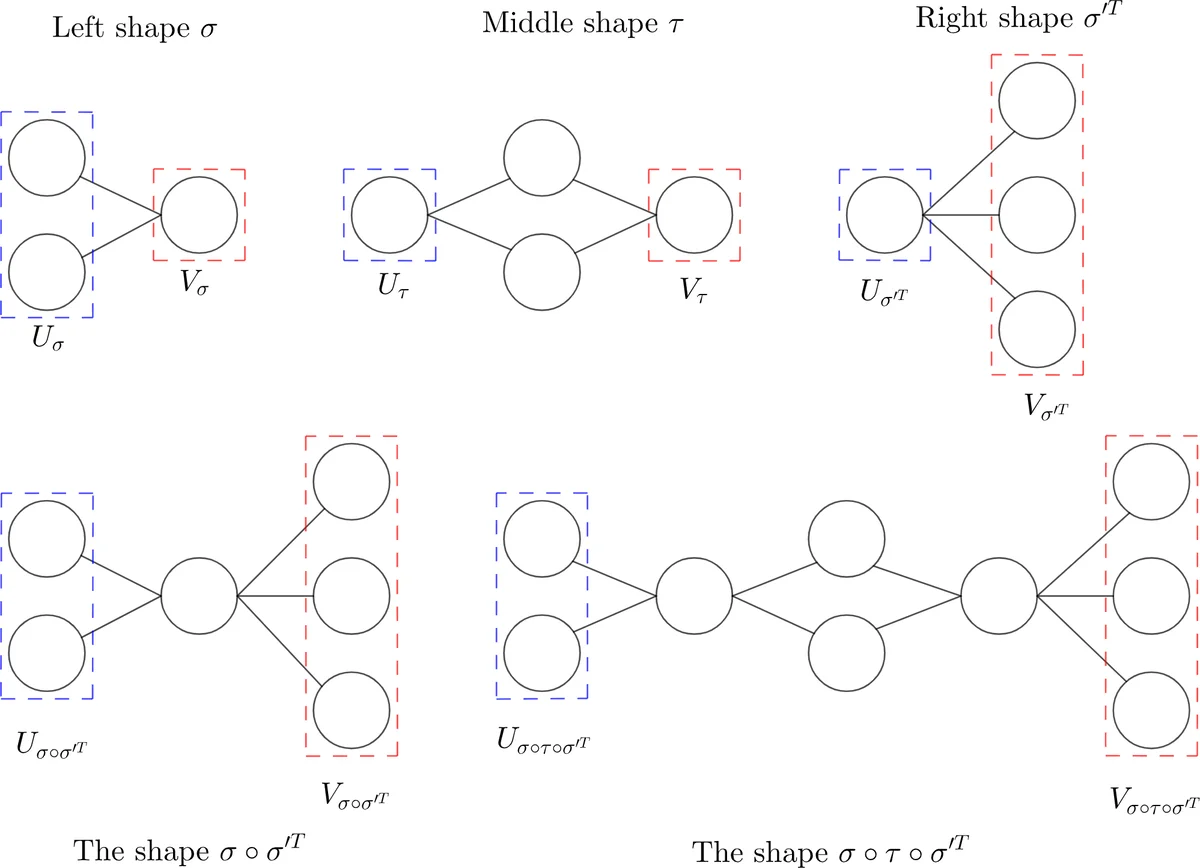
The authors first abstract the pseudo‑calibration approach: they construct a “maximum‑entropy” planted distribution that contains the hidden structure, and then define a pseudo‑expectation operator (\tilde{\mathbb{E}}) that matches low‑degree moments of the planted distribution while being defined on the random distribution. This yields a candidate moment matrix (\Lambda). Proving that (\Lambda) is positive semidefinite (PSD) with high probability implies that any SOS proof of degree equal to the size of (\Lambda) cannot certify the desired statement.
The key technical contribution is a set of general spectral conditions on the coefficient matrices that arise from pseudo‑calibration. By expressing the entries of (\Lambda) in terms of these coefficient matrices, the authors show that if the matrices satisfy simple eigenvalue lower‑bounds (essentially that their smallest eigenvalue is non‑negative), then (\Lambda) is PSD. This abstracts away the intricate, problem‑specific combinatorial calculations that were required in earlier works on planted clique.
Using this framework, the paper derives high‑degree SOS lower bounds for three concrete problems:
-
Planted Slightly Denser Subgraph – A random graph (G\sim G(n,1/2)) is compared against a planted model where a subset of size (k\le n^{1/2-\varepsilon}) has edge probability (p=1/2+\Theta(n^{-\alpha})). The authors prove that SOS of degree (d=n^{\Omega(\varepsilon)}) cannot certify that the random graph lacks a subgraph of size (k) with density (p). This improves dramatically over the earlier (o(\log n)) lower bound for planted cliques, showing that even SOS of near‑linear degree fails.
-
Tensor PCA – For an order‑(k) tensor (A=\lambda u^{\otimes k}+B) with Gaussian noise (B) and signal strength (\lambda\le n^{k/4-\varepsilon}), the paper shows that SOS of degree (d=n^{\Omega(\varepsilon)}) cannot certify an upper bound on (\max_{|x|=1}\langle A, x^{\otimes k}\rangle) better than (\lambda). This matches known algorithmic upper bounds (e.g., BGL16) and confirms that the SOS hierarchy is tight at this degree.
-
Wishart Model of Sparse PCA – With a data matrix (S) whose rows are i.i.d. Gaussian, possibly perturbed by a rank‑one spike (\lambda uu^\top) (where (u) is (k)-sparse), the authors prove that SOS of degree (d=n^{\Omega(\varepsilon)}) cannot certify the absence of a sparse spike when the sample size (m), sparsity (k), and signal strength satisfy natural sub‑linear relations (e.g., (m\le d^{1-\varepsilon}), (k\le d^{1-\varepsilon}), (\lambda\sqrt{k}\le d^{1-\varepsilon})). This yields a tight lower bound matching the best known polynomial‑time algorithms.
Beyond these concrete results, the paper discusses the connection to the low‑degree conjecture, which posits that low‑degree polynomial lower bounds for a problem imply SOS lower bounds for a noisy version. The machinery shows that if a low‑degree polynomial lower bound can be expressed via coefficient matrices that meet the spectral conditions, then the corresponding SOS lower bound follows automatically. Hence, the framework could serve as a bridge between average‑case hardness evidence from low‑degree polynomials and SOS lower bounds.
The authors also acknowledge a technical limitation: the planted distributions used in the pseudo‑calibration are only approximately satisfying the problem constraints (e.g., the planted subgraph size or sparsity is not exact). Resolving this issue, as recently done for planted clique, remains an open direction.
In summary, the paper provides a unifying, linear‑algebraic method for establishing high‑degree SOS lower bounds across a variety of average‑case certification problems. By isolating a small set of spectral conditions on coefficient matrices, it removes the need for problem‑specific, intricate analyses, and opens the door to systematic SOS hardness proofs for many other statistical and combinatorial problems.
Comments & Academic Discussion
Loading comments...
Leave a Comment