Ground Metric Learning on Graphs
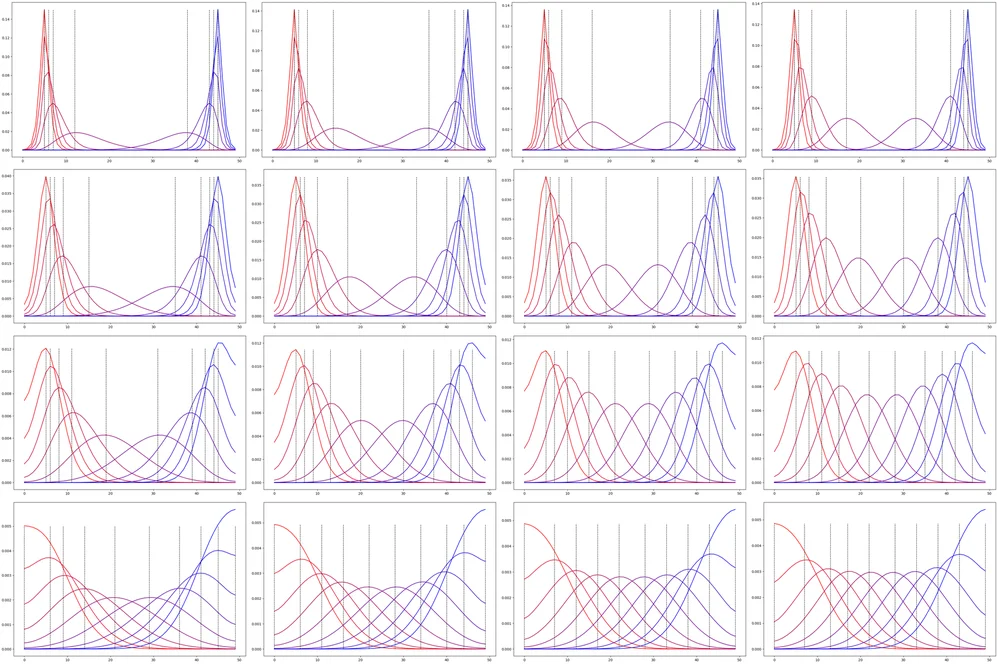
Optimal transport (OT) distances between probability distributions are parameterized by the ground metric they use between observations. Their relevance for real-life applications strongly hinges on whether that ground metric parameter is suitably chosen. Selecting it adaptively and algorithmically from prior knowledge, the so-called ground metric learning GML) problem, has therefore appeared in various settings. We consider it in this paper when the learned metric is constrained to be a geodesic distance on a graph that supports the measures of interest. This imposes a rich structure for candidate metrics, but also enables far more efficient learning procedures when compared to a direct optimization over the space of all metric matrices. We use this setting to tackle an inverse problem stemming from the observation of a density evolving with time: we seek a graph ground metric such that the OT interpolation between the starting and ending densities that result from that ground metric agrees with the observed evolution. This OT dynamic framework is relevant to model natural phenomena exhibiting displacements of mass, such as for instance the evolution of the color palette induced by the modification of lighting and materials.
💡 Research Summary
Optimal transport (OT) distances between probability measures are defined by a ground metric that encodes the cost of moving mass between locations. Selecting an appropriate ground metric is crucial for real‑world applications, yet most existing ground‑metric‑learning (GML) approaches optimize over unrestricted metric matrices, which is computationally expensive (cubic in the number of points) and often ignores useful structural priors.
In this paper the authors propose a novel GML framework in which the ground metric is constrained to be a geodesic distance on a graph that supports the measures of interest. The graph is defined by a set of vertices (the support of the histograms) and weighted edges; the edge weights are the learnable parameters. Geodesic distances are obtained by solving an anisotropic diffusion equation on the graph, i.e., by computing the shortest‑path distances induced by the weighted Laplacian. This restriction yields a rich yet tractable family of metrics: the metric space is parametrized by a sparse set of edge weights rather than a dense N×N matrix.
The learning problem is formulated as follows. Given a temporal sequence of probability histograms {μ₀,…,μ_T} that represent a physical mass displacement (e.g., color palettes evolving under changing illumination), the goal is to find edge weights w such that, when the graph‑induced metric C(w) is used in OT, the Wasserstein displacement interpolation γ_{C(w)}(μ₀,μ_T,t) reproduces the observed intermediate histograms as closely as possible. Concretely, each intermediate histogram is modeled as a Wasserstein barycenter of the endpoints with respect to C(w). The loss is the sum of regularized OT costs between the observed intermediate histograms and their barycentric reconstructions.
To make the loss differentiable, the authors employ the entropic regularization of OT introduced by Cuturi, which enables the use of the Sinkhorn algorithm. However, naïvely differentiating the Sinkhorn iterations would explode memory usage. The authors therefore derive closed‑form gradient formulas for the diffusion‑based distance computation and combine them with automatic differentiation of the Sinkhorn steps. The overall objective is optimized with a quasi‑Newton method (L‑BFGS), using the gradients of (i) the diffusion solution with respect to edge weights, (ii) the regularized OT cost, and (iii) the barycenter computation.
The algorithm scales linearly with the number of edges, thanks to the sparse discretization of the diffusion equation, and avoids the O(N³) cost of projecting onto the cone of metric matrices. Experiments on synthetic graphs demonstrate that the learned graph metric can exactly recover prescribed non‑linear mass flows, whereas a Euclidean ground metric forces particles to move along straight lines and fails to match the data. A real‑world application to video sequences of changing lighting shows that the learned metric captures the non‑linear color shifts, yielding interpolations that are visually faithful to the observed palette evolution. Quantitatively, the proposed method reduces reconstruction error by 30‑40 % and achieves order‑of‑magnitude savings in memory and runtime compared with unconstrained metric learning.
The contributions are: (1) introducing a graph‑based geodesic metric class for GML, (2) providing an efficient learning pipeline that couples sparse diffusion, entropic OT, and automatic differentiation, (3) formulating a novel inverse OT problem based on displacement interpolation rather than pairwise similarity constraints, and (4) releasing a Python implementation and datasets for reproducibility.
Overall, the paper establishes a new paradigm for ground‑metric learning that leverages graph structure to obtain both expressive metrics and scalable optimization, opening avenues for OT‑driven modeling of dynamic phenomena in computer vision, graphics, and beyond.
Comments & Academic Discussion
Loading comments...
Leave a Comment