An evolutionary approach to continuously estimate CPR quality parameters from a wrist-worn inertial sensor
Cardiopulmonary resuscitation (CPR) is one of the most critical emergency interventions for sudden cardiac arrest. In this paper, a robust sinusoidal model-fitting method based on a Evolution Strategy inspired algorithm for CPR quality parameters -- …
Authors: Christian Lins, Bj"orn Friedrich, Andreas Hein
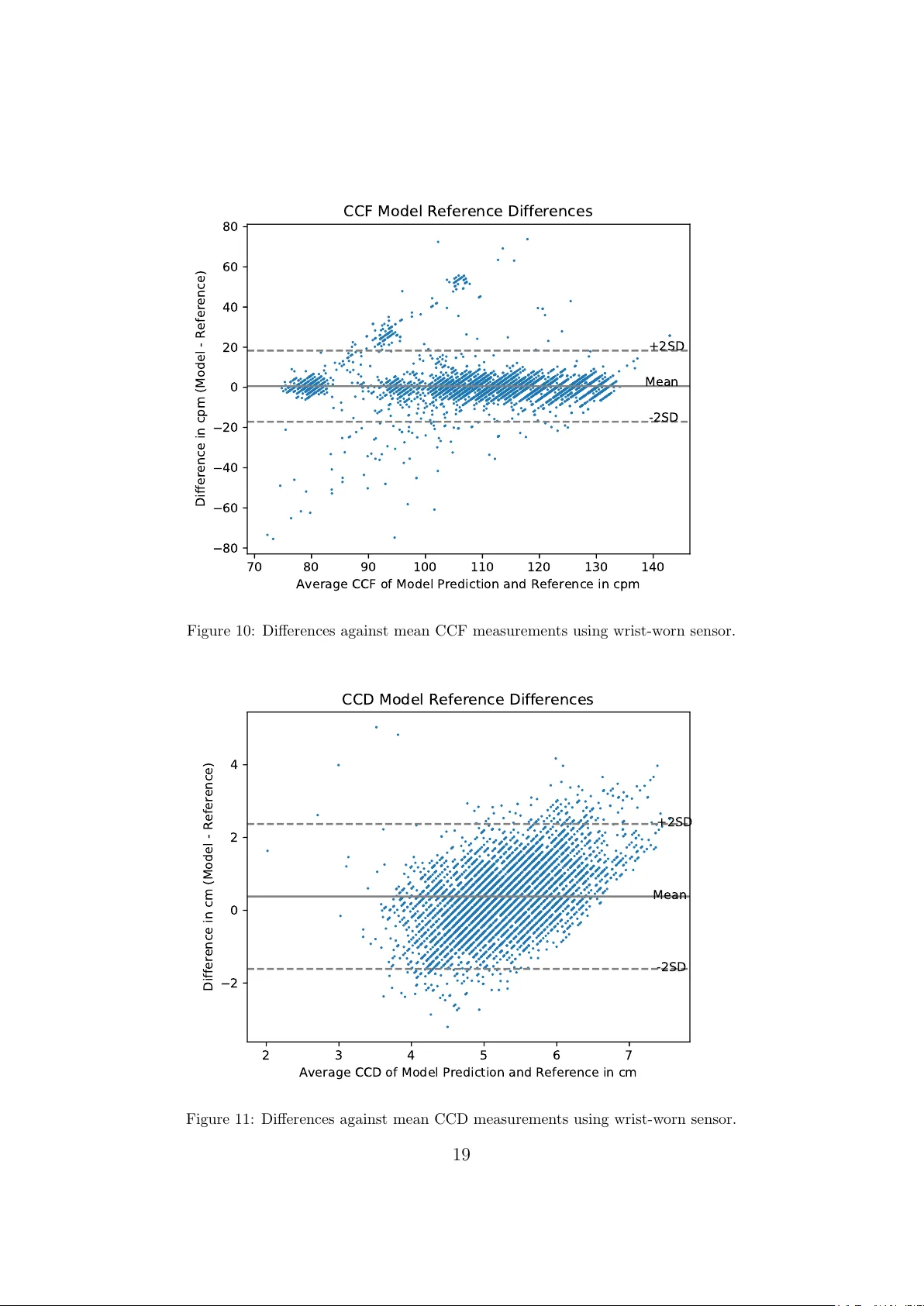
An ev olutionary approac h to con tin uously estimate CPR qualit y parameters from a wrist-w orn inertial sensor Christian Lins a,b, ∗ , Bj¨ orn F riedric h a , Andreas Hein a,b , Sebastian F udic k ar a a Carl von Ossietzky University Oldenbur g, Assistanc e Systems and Me dic al Devic e T e chnolo gy, Dep. He alth Servic es R ese ar ch, Ammerl¨ ander He erstr. 140, 26129 Oldenbur g, Germany b OFFIS – Institute for Information T e chnolo gy, Div. He alth, Escherwe g 2, 26121 Oldenbur g, Germany Abstract Cardiopulmonary resuscitation (CPR) is one of the most critical emergency in terven tions for sudden cardiac arrest. In this pap er, a robust sinusoidal mo del-fitting metho d based on a Ev olution Strategy inspired algorithm for CPR quality parameters – naming chest compression frequency and depth – as measured by an inertial measurement unit (IMU) attac hed to the wrist is presen ted. The prop osed approac h will allow b ystanders to improv e CPR as part of a contin uous closed-lo op supp ort system once integrated in to a smartphone or smartw atch application. By ev aluating the mo del’s precision with data recorded by a training mannequin as reference standard, a v ariance for the compression frequency of ± 2 . 22 compressions p er min ute (cpm) has b een found for the IMU attac hed to the wrist. It w as found that this previously unconsidered p osition and thus, the use of smartw atches is a suitable alternativ e to the typical placement of phones in hand for CPR training. Keywor ds: Cardiopulmonary Resuscitation, Sin usoidal Mo del, Evolutionary Algorithm, Ev olution Strategy, Inertial Measurement Unit, Smartw atch, Parameter Estimation 1. In tro duction Sudden cardiac arrest (SCA) is one of the most prominen t diseases (350,000-700,000 in- dividuals a year in Europ e are affected [1 – 3]). SCA can significan tly affect the indep endent ∗ Corresp onding author Email addr ess: christian.lins@offis.de (Christian Lins) Pr eprint submitte d to Elsevier Octob er 27, 2020 living of the victims if medical treatmen t is not a v ailable within a few minutes [4, 5]. In the case of cardiac arrest, the transp ort of oxygen and glucose to the human b o dy’s cells stops immediately due to the disrupted heart function. This leads to irreparable cell dam- age if blo o d circulation is not quic kly reestablished, e.g. supp orted b y cardiopulmonary resuscitation (CPR). If the bloo d circulation is in terrupted, the cells of the nervous system, including the brain, reduce their functionality after 10 seconds, which leads, for example, to unconsciousness [6]. The death of the cells b egins after ab out 3 min utes without blo o d circulation [6]. Medical p ersonnel such as paramedics are trained in Adv anced Life Supp ort (ALS) [7] metho dology that includes CPR. Unfortunately , paramedics are usually not immediately a v ailable if a cardiac arrest o ccurs in the field. The t ypical median reaction time of paramedics is ab out 5-8 minutes [4] and with every minute the c hances of surviv al of the victims with- out CPR decrease. Thus, victims rely on the initial CPR supp ort of bystanders within the first so-called golden minutes after cardiac arrest to prev en t long-term adv erse effects or death. Since these bystanders can offer essen tial initial resuscitation supp ort, corresp onding tec hnical solutions to supp ort them with online feedbac k regarding the qualit y of CPR are b eneficial. F or the follo wing discussion, the optimal Basic Life Supp ort (BLS) [4] pro cedure (the metho dology aiming for non-sp ecialists) is worth while to b e briefly recapitulated (see Figure 1): In case of a cardiac arrest, it is essential to ensure sufficien t o xygenation of the nerv e cells via correctly conducted cardiac massages (chest compressions) as the most critical countermea- sure. During this cardiac massage, the heart is compressed b y orthogonal pressure onto the breastb one. In order to sustain a minimal blo o d circulation, a c hest compression frequency Call Emergency Services Victim unresponsive and not breathing normally Give 30 chest compressions Give 2 rescue breaths AED available? Activate AED and follow instructions No Yes Figure 1: Basic Life Supp ort Algorithm. AED is automated external defibrillator. 2 (CCF) of the cardiac massage should range within 100-120 c ompr essions p er minute (cpm), and a chest compression depth (CCD) of 5-6 cm is required. With a CCF below 100 cpm, blo o d circulation is insufficient to fullfill the essen tial tissue o xigenation, while with a CCF o ver 120 cpm the heart complete refillmen t with blo o d is not assured, thus resulting in to little amount of blo o d b eing circulated in the next compression. Ideally , but not necessarily , the pro cedure is com bined with rescue breathing, to impro v e the chance of surviv al and reduce neurological deficits [4]. While t ypical b ystanders can dev elop a sufficien t feeling of semi-ideal compression depth, the consistent application of the correct compression frequency and depth is challenging, esp ecially for extended p erio ds of cardiac massage with the asso ciated muscle-fatigue and men tal pressure. Thus, instan t feedback regarding the correct execution (regarding CCD and CCF) during a cardiac arrest will b e b eneficial for untrain ed b ystanders. Suc h feedbac k could b e derived from online monitoring of the qualit y of the cardiac massage from the v ertical acceleration measured b y inertial measuremen t units (IMUs) and giving contin uous feedbac k and adjustment hin ts. Corresp onding smartphone applications are well suited for this purpose due to their high av ailability [8, 9]. Rensha w et al. ha ve confirmed the general b enefit regarding CCF/CCD for the BHF P o ck etCPR application and recognized an impro ved performance (from 66 to 91 cpm) and increased confidence of bystanders [10]. Ho wev er, for suc h CPR training apps, accurate CPR information (regarding CCF and CCD) is an essential requirement [9], which is achiev ed partially b y the existing implemen tations (as summarized in T able 1). Most of these approac hes use F ast F ourier T ransformation (FFT) to determine the regular frequencies from the inertial data and iden tify the frequency sp ectrum’s central frequencies via p eak detection. While b eing straightforw ard, this approac h is susceptible to erroneous p eak selection and a resulting frequency shift of the CCFs b y orders of magnitudes. Also, the double-in tegration of the acceleration signal – a standard processing step to determine the displacemen t-vector as a prepro cessing step for the CCD – is c hallenging due to the signal drift if the accelerometer is not perfectly aligned with the gra vity axis [17]. Consequen tly , the t ypical integration pro cess is inheren tly unstable and leads to relev ant errors unless b oundary 3 T able 1: Accuracies of existing on-b ody c hest-compression algorithms. P osition Algorithm / System CCF Er- ror [cpm] CCD Er- ror [mm] Reference System Y ear On chest Sp ectral techniques on short acceleration interv als (FFT- based) < 1.5 < 2 photo electric distance sensor 2014 [11] On chest Butterw orth HP filter, 2x in- tegration, manual reset - 1.6 (within 95%) mannequin p oten tiome- ter 2002 [12] On chest W eighted smoothing, dou- ble 2x (transient comp onen t emphasizing + integration), p eak detection (U-CPR) - 1.43 mean (SD 1.04) mannequin p oten tiome- ter 2015 [13] On chest P o ck etCPR, metho d un- kno wn - 1.01 mean (SD 0.74) mannequin p oten tiome- ter 2015 [13] On chest Sp ectral analysis of accelera- tion 0.9 me- dian 1.3 me- dian displacemen t sensor 2016 [14] W rist SamCPR, metho d unknown - - - 2015 [15] W rist Smart-w atch life sa ver App - - - 2015 [16] conditions are applied for eac h compression cycle (e.g. in very short windows) [14]. The motion in cardiopulmonary resuscitation is primarily a rh ythmic mov emen t that ap- pro ximates the natural rh ythm of the human heartb eat. Th us, the use of a robust sin usoidal mo del, i.e., sine curv e, migh t not suffer from disadv an tages of the FFT and its subsequent effects on the derived CPR parameters (see Figure 2), due to its implicit p erio dic accordance with the CPR. A concept that w as shown for depth-image based motion capture of CPR mo vemen ts [18, 19], but still needs to b e confirmed for use with acceleration data recorded directly via IMUs at rescuers. 4 Accelerometer Data Sinusoidal Model CPR Quality Parameter CCF CCD Figure 2: Basic approach of a sin usoidal mo del for CPR quality parameter estimation (see Section 2.1 and Figure 3 for more details). The accelerometer data is measured b y an IMU sensor and then windo w-based fitted to a sine function, which in turn pro vides the CCF/CCD parameters sought. F urthermore, the discussed algorithms ha v e b een mainly ev aluated for the use of IMUs in a grasp-in-hand use (i.e., the sensor or smartphone is held b etw een the back of the low er hand and the palm of the upp er hand during the pro cedure). A p osition that has b een reported to b e a slightly uncomfortable and disturbing p ositioning for b ystanders [20], which as w ell migh t mislead them into learning incorrect p ostures [21]. T o o vercome this drawbac k, P ark et al. [20] prop osed the fixation of smartphones via an armband on the dorsum man us or at the arm and had shown an increased con venience compared to the common grasp-in- hand approac h. Ho w ever, they rep orted a reduced sensitivit y , whic h they explained with the amplified inertial forces resulting from the additional device’s swing. Similarly , Ruiz de Gauna et al. [22] compared sensor placement at the dorsum manus with one fixed to the forearm 7 cm ab o ve the wrist. They confirmed a significantly increased error for the forearm placemen t. Consequen tly , while IMUs ha ve generally prov en to b e a precise and practical approach to measuring chest compression depth and frequency during CPR, user-friendliness via smart- phones is a challenging task as it affects the qualit y of CPR for b ystanders. Smartw atches hold b enefits ov er the use of smartphones regarding usability . They could b e exp ected to ac hieve higher reliability tow ards arm-mov emen ts b ecause they are p oten tially less affected b y hand mo vemen ts and rigidly attached to the wrist. F urthermore, they o vercome challeng- ing asp ects of reduced tactile pressure sensation at the hands. Ho wev er, the use of IMUs 5 on alternativ e placemen ts w as repetitively found c hallenging for sufficien t accuracy . The suitabilit y of smart watc hes for CPR training and online-supp ort regarding the sensitivit y of CCD and CCF detection has y et to b e inv estigated. Our approac h is the com bination of a wrist-worn IMU with a sin usoidal mo del. T o fit the accelerometer data to the sine curv e of the mo del, an appropriate optimization algorithm is required. Evolutionary metho ds hav e already b een found to b e principally suitable for a similar approach: Lins et al. [19] use a Differential Ev olution (DE) algorithm to fit optical motion capture data to a sinusoidal mo del. In this context DE is used for con tinuous windo w-based curv e fitting of the mo del by optimizing the parameters of a sine function. The article at hand proposes a Ev olution Strategy (ES) inspired algorithm for the contin uous mo del-fitting (i.e., without complete reinitialization of the p opulation) with IMU data. Nature-inspired algorithms such as a Genetic Algorithm (GA) ha ve also already pro ven useful in signal pro cessing [23 – 25]. In addition, there are already some w ork that has used GAs for curve fitting, e.g. Zhao et al. use a GA to fit the parameters of a Bezier curve [26]. GAs ha ve also b een used to fit p olynomials [27]. In the recen t w ork of Jiang et al. a mo dified GA is used to optimize the parameters of sine signals [28, 29]. Consequen tly , in this study , w e aim to inv estigate the following tw o researc h questions: 1. How suitable are wrist-worn inertial sensors (e.g. smart w atches) for the online detec- tion of the chest compression during CPR regarding the accuracy of resulting CCF and CCD parameters compared to b oth the Resusci Anne training mannequin and the t ypical hand-holding as the gold standard? 2. How suitable is the algorithmic approach for fitting a sin usoidal mo del of the chest compression during CPR regarding the accuracy of resulting CCF and CCD param- eters for the considered sensor placemen ts compared to the Resusci Anne training mannequin as reference system? In Section 2, our system approac h, details of the used algorithm, study design, and applied ev aluation methodology is in tro duced. In Section 3, the results of the study are presen ted and discussed in Section 4. The article is concluded in Section 5. 6 2. Materials and Metho ds 2.1. System Appr o ach Sinusoidal Regression Model for CPR Frequency Evolutionary Algorithm Linear Acceleration (3DOF) Dimensionality Reduction and Gravity Correction CPR Frequency f = 100 Hz Update with f U Pre- processing of S len samples Sinusoidal Regression Model for CPR Depth CPR Depth Figure 3: System concept ov erview of the prop osed metho d. In the prop osed system, the curve of chest compressions during CPR is (Figure 3) an- alyzed from data of a wrist-worn (and hand-held as reference) three-dimensional inertial sensor containing accelerometer, gyroscop e, and magnetometer (9DOF). The accelerometer signal contains earth gra vity as a constant component distributed among all three accelerom- eter axis, depending on the sensor orien tation. F or fitting the model function, only the accel- eration caused b y the orthogonal pressure on the patient’s chest is relev ant. Unfortunately , when placed on the wrist, the orientation of the sensor is never en tirely orthogonal to the c hest. So the earth’s gravit y is distributed ov er all three axes with different magnitudes. The approach to handle this is to consider only the total acceleration a , i.e. the Euclidean distance ov er all axes and subtract the constan t gra vity (9 . 81 m s 2 ) from the total acceleration, whic h is one-dimensional (see Equation 1). 7 a i = q ( a i,x 2 + a i,y 2 + a i,z 2 ) − 9 . 81 m s 2 , i ∈ { 1 , . . . , S len } (1) This one-dimensional time-series data are window-based (windo w length S len ) fitted to a sin usoidal function mo del. The fitting generates adapted mo dels p er f U − 1 seconds, from whic h the CPR parameters frequency (CCF) and compression depth (CCD) can b e deriv ed (recap Figure 3). 2.2. Mo del F unction The approach is to fit the time series of the accelerometer readings to a sinusoidal func- tion. This is p ossible b ecause of the p erio dic nature of CPR (see Figure 4). The sought CPR quality parameters can then b e derived directly from the parameters of the sinusoidal function. The generic parameterized sine function can b e written as follo ws: ˆ f ( t ) = A · sin ( ω t + ρ ) + D (2) A 2 π . ω -1 Figure 4: Fitting of the sinusoid mo del to the accelerometer data. P arameter A and ω are of primary in terest: A is the amplitude, ω the angular frequency ( D is the vertical displacemen t, ρ the phase shift). A, ω , ρ are adapted so that the sine 8 curv e fits the accelerometer data. Assuming that the arms of a p erson p erforming CPR are orthogonal (and rigid) on the patien t’s c hest, the relative mov ements of the b ystanders’ arms are equal to the chest compression depth. It is also assumed that the c hest is wholly reliev ed after each compression (full c hest recoil as recommended b y ALS/BLS guidelines). Additionally , the frequency of lo w to high to low compression depth represents one com- pression cycle. Since it is not applicable to fit the accelerometer data (total acceleration) directly to the sine curv e (see Equation 2) and derive the displacemen t of the arm from it, the accelerometer data must b e in tegrated twice to determine the v ertical displacemen t ( R R acceleration → R v elo city → displacemen t). Ho w ever, the double integration of the acceleration v alues induces errors since the accelerometer can not b e assumed to b e per- fectly calibrated, so this is rarely a practical wa y . T o a void this integration errors, we use the second deriv ativ e of the sine function as a mo del function. Th us, the analytical solution of the double in tegration is already known ( ˆ f , see Equation 2): f ( t ) = ∂ 2 ∂ t 2 ( A · sin ( ω t + ρ ) + D ) (3) f ( t ) = − Aω 2 · sin ( ω t + ρ ) (4) On a fitted function, parameter ω is the CPR frequency (CCF), and 2 · A is the com- pression depth (CCD). T o fit the function f ( t ), w e minimize the ro ot mean squared error (RMSE). Th us, we formulate the minimization problem (loss function L ) as follows: L = min v u u t 1 | a | T X t =0 ( a ( t ) − y ( t )) 2 (5) In Equation 5, a is the T-dimensional tuple of accelerometer measurements (total ac- celeration or vertical acceleration), | a | is the dimension of the tuple a , i.e., its n umber of elemen ts. T is deriv ed from the windo w length S len (e.g., S len = 3 s with 100 Hz → T = 300), whic h has b een optimized in [19]. 9 2.3. Evolutionary Fitting of the Mo del F unction In order to estimate the three v ariables ω , A, ρ of the sine function f (Equation 4), herein a Ev olution Strategy inspired algorithm is applied (see Algorithm 1). The algorithm uses also elemen ts from GA, e.g. it is p opulation-based and optimizes the p opulation throughout sev eral generations (( µ + λ )-Ev olution-Strategy based on [30] but with a GA-like p opulation). P opulation-based algorithms can use the diversit y of their p opulation to optimize several lo cal minima (in case of a minimization problem) in parallel ov er generations. In the case of the sine mo del, there are not several different lo cal minima (only p erio dic ones), so only λ individuals of the p opulation are mutated and recombined p er generation G . This reduces the computational effort p er generation. The p opulation-elemen t of the algorithm is used as arc hiv e for p ossible go o d solutions. The optimization is done b et ween a transition from one generation G to the next generation G + 1. Within each transition from one generation to the next, the algorithm comprise the steps mutation , cr ossover , and sele ction , whic h are discussed in the next sections. Algorithm 1 is con tinuously applied on S len long data windo ws while retaining fractions of the p opulation until G = G max or the con vergence of G is smaller than c min . 2.3.1. Initialization of the Par ameter Sp ac e Be x i,G a 3-dimensional vector (con taining sought parameter A, ω , ρ ) of individual i for generation G : x i,G with i ∈ [1 , µ ] , G ∈ [1 , G max ] (6) In ev ery generation G λ = 1 + 1 + 3 = 5 individuals are newly generated ( ˆ x µ +1 to ˆ x µ + λ ). Ev ery of the µ individuals represents a p ossible solution to the minimization problem (see Equation 5). A t the first start, the p opulation is initialized by dra wing parameters from an uniform random distribution (exploration). In the optimization process, individual solutions will mo ve closer and closer to the optimum, and the v ariance within the p opulation will decrease (exploitation). Every new individual of the p opulation is also initialized taking random 10 Data: Timeseries of accelerometer data with 100 Hz sampling rate Result: A, ω , ρ 1 while sensor data available do 2 Ev ery f U , get next windo w S with length S len ; 3 if first start then 4 initialize p opulation on first run; 5 else 6 re-initialize fraction ε of the p opulation; 7 end 8 Ev aluate all individuals, x 0 is curren tly b est solution; 9 while G < G max and c onver genc e > = c min do 10 Create completely random individual ˆ x µ +1 ; 11 Mutate x 0 to form ˆ x µ +2 ; 12 Create λ − 2 offspring ˆ x µ +3 to ˆ x µ + λ using random c hosen parents; 13 Ev aluate all individuals with cost function and window S ; 14 Remo ve λ worst individuals from p opulation; 15 end 16 output mo del parameter A, ω , ρ of x 0 17 end Algorithm 1: Pseudoco de of used evolutionary algorithm. v ariables from a uniform random distribution to foster the exploitation of the parameter space. F or the sp ecific task of fitting a sinusoidal function, the interv al of the random distribution can b e restricted to the problem’s b ounds. T able 2 summarizes the parameter space o ver all dimensions for the given task of fitting the CPR sinusoidal mo del. 2.3.2. Mutation In the applied approac h, mutation o ccurs in tw o wa ys. The first child ˆ x µ +1 is simply a newly generated random individual. This ensures that the algorithm can still exploit the 11 T able 2: P arameter limits for every dimension used for initialization. The individuals are initialized by dra wing random n umbers from the given in terv als using a uniform random distribution. Individual x F unction P arameter Interv al CCF/CCD x i,G (0) A ∈ [0 . 1 , 5 . 0] CCD is 2 A in cm x i,G (1) ω ∈ [ π , 7 π ] CCF is ω 2 π · 60 in cpm x i,G (2) ρ ∈ [0 , 2 π ] only used for mo del fitting parameter space. Then, in eac h generation G , the currently b est individual x 0 is mutated minimally and forms the second c hild ˆ x µ +2 of the curren t generation. This mutation is a fine-tuning element to optimize the curren t solution. The following λ − 2 offspring are created as follo ws (with constan t M = 0 . 999), where U generates a random v alue from a uniform random distribution within the in terv al: m k = U ( M , 2 − M ) (7) ˆ x µ +2 ( k ) = m k · x 0 ( k ) for k ∈ [0 , 1 , 2] (8) k is the index of the 3-dimensional solution vector (see T able 2). 2.3.3. Cr ossover The crossov er step is used to transfer information, i.e., p ossible solutions, from the current generation to the next generation and to recom bine it. In the approach chosen here, three ( λ − 2) offspring p er generation are generated from t w o randomly selected paren t individuals. x a with a = U (1 , µ ) (9) x b with b = U (1 , µ ) , b 6 = a (10) ˆ x µ + i ( k ) = U ( min ( x a ( k ) , x b ( k )) , max ( x a ( k ) , x b ( k ))) with k ∈ [0 , 1 , 2] (11) 12 This crossov er metho d corresp onds to the blended crosso ver (or BLX- α or heuristic crosso ver) with α = 0 [31, 32]. 2.3.4. Sele ction The selection step determines whic h individuals are passed to the next generation b y ev aluating them against the cost function. Herein, the RMSEs are summed up for every solution candidate x i,G as cost function: T X t =0 a ( t ) − f x i,G ( t ) 2 (12) with a b eing a T -dimensional tuple S of samples (accelerometer data) and f x i,G the parameterized sinusoidal function of individual x i,G . After the steps mutation and crosso ver µ + λ individuals exist. The p opulation is therefore reduced to the µ fittest individuals after the ev aluation of the p opulation. Once the optimization has finished, i.e. when G max or c min has b een reac hed, the individual with the low est RMSE represen t the parameter of the sin usoidal mo del ( x 0 ). F rom these parameters, the CCF and CCD can b e obtained with C C F = ω 2 π · 60 cpm and C C D = 2 A cm. 2.4. R e c onsider ation of the Population Herein, the algorithm is initially only executed for a small windo w of 3 seconds ( S len = 3) of IMU data. Once a subsequen t data-windo w is av ailable (next 3s with 2s ov erlap → f U = 1 s − 1 ), the algorithm is executed for a new fitting run. In a previous approach [19], the evolutionary optimization was p erformed with a completely new p opulation. Possible solutions that are very similar to the current solutions m ust alwa ys b e found and optimized anew. In contrast, herein a part of the p opulation is retained and only one fraction is completely reinitialized. On the one hand, a large div ersity of the initial p opulation can b e ensured. On the other hand, go o d solutions from the past are retained in the exp ectation that they will also fit the current data window with a few adjustments. F raction is b eing optimized in the h yp erparameter optimization step (see App endix A). 13 Initially , the fa v orable h yp erparameters of the algorithm ( µ, G max , , c min ) are determined based on sim ulated data of sin usoidal curv es (see App endix A). With these sp ecific h yp er- parameters, the algorithm is then ev aluated within a study with human participants. Based on the results of Mon te Carlo simulations, w e select µ = 400, G max = 10, = 0 . 5, c min = 0 . 05 as suitable hyperparameters for further ev aluation with human participants. 2.5. Exp erimental Setup The Laerdal Resusci Anne Simulator mannequin w as used as a reference system and was placed on the flo or (see Figure 3). Within the Resusci Anne sim ulator, sensors measure the depth of thorax compression and decompression, the frequency of the compressions, and the v olume of ven tilation. Figure 5: Resusci Anne training mannequin. While conducting CPR trainings on the Recusci Anne, the participan ts hav e b een equipp ed with t wo IMU sensors (see Figure 6) to ev aluate the relev ance of their placement. One IMU sensor was placed at the left wrist of the participan t with a bracelet, and the other one was placed b et w een the hands of the participan t (b et ween the bac k of the hand of the first hand and the palm of the second hand). Otherwise, no sp ecific arm or upp er b o dy p osture was explicitly required. The sensors and the training mannequin were collecting data that was sync hronized man ually after the recording via visual insp ection of the accelerometer signal. 14 Figure 6: IMU sensor used in the study unpack ed (left) and with bracelet (right). The 9DOF-IMU sensor con tains a Bosch BMA180 triaxial accelerometer with sensitivit y ranges from 1G up to 16G. A sampling rate of 100 Hz was selected, which is considered a t ypical sampling rate on smart watc hes and also represen ts a reasonable compromise b et ween computing effort and precision. The participants w ere ask ed to place themselv es on any side of the training mannequin and p erform the CPR within 80-140 cpm. The study director monitored the correct imple- men tation of the CPR and, where necessary , corrected with v erbal advice. The recording lasted for t wo minutes. 2.6. Statistic al analysis F or every compression cycle recognized by the reference system, a 3-second window S ( S Len = 3 s ) of the sensor data is used to fit the sinus mo del every second ( f U = 1 s − 1 ) as recommended by Lins et al. [19]. Here, it is S len > f − 1 U , so the used datasets S are in terleav ed (see Figure 7). Also, one Resusci Anne ev ent E (a complete compression/decompression cycle) ma y b e smaller, equal, or larger than f − 1 U so that we must com bine one or more mo del predictions b efore comparing it with E (Equation 13). Thereb y , the weigh ted mean of n subsequent mo del predictions within eac h interv al ( E S tar t , E E nd ) is calculated with the o verlap ratio σ represen ting the weigh t: p ( t ) = 1 P n i =1 σ i n X i =1 σ i f i (13) F or each compression even t E , a corresp onding prediction p is determined according to Equation 13. 15 f 1 f 2 f 3 f E t Reference Event E Model t 1 Model t 2 Model t 3 S len E Start E End t U1 t U2 t U3 Figure 7: Ho w mo del predictions and reference v alues are compared. The measurement-error is calculated as the absolute difference b et ween predicted CCF/CCD and the CCF/CCD of the reference system for every CCF/CCD prediction o ver ev ery par- ticipan t. F or comparison with the predictions of the sine models, one-dimensional 1000-point Discrete F ourier T ransformations (DCT) w ere calculated for the iden tical windows using the FFT algorithm. 3. Results The study cohort consisted of 18 participan ts, aged 19-48, 12 male, 6 female. The partic- ipan ts were recruited amongst students and staff of the Univ ersity of Oldenburg, Germany . The study received ethics approv al num b er “Drs.EK/2018/31” of the IRB of the Universit y of Olden burg. T able 3 contains the ov erall results of the comparison betw een mo del predictions and reference data. The results show the least error ( ± 2 . 22 cpm) for CCF prediction for the sin usoidal mo del based on the sensor data from the wrist-worn sensor. The alternativ e metho d FFT shows a m uch higher error with ± 7 . 42 cpm. When predicting the compression depth CCD, the wrist sensor’s data with ± 0 . 69 cm sho w an sligh tly higher error as the hand-held sensor, whic h median error is ± 0 . 64 cm. 16 T able 3: Results summary: Absolute median [min, max] errors b etw een predictions and reference v alues (lesser is b etter). P osition Hand W rist CCF (Sine Mo del) 2.38 [0.0-108.7] cpm 2.22 [0.0-110.8] cpm CCF (FFT) 8.05 [0.0-127.9] cpm 7.42 [0.0-120.0] cpm CCD (Sine Mo del) 0.64 [0.0-3.89] cm 0.69 [0.0-5.03] cm 0 10 20 30 40 50 Hand (Sine Model) Wrist (Sine Model) Hand (FFT) Wrist (FFT) CCF prediction error (Model − Reference) in cpm Figure 8: Absolut error distribution of models/metho ds for CCF prediction (range [-50, 50]). Figure 8 shows the error distribution of the CCF prediction of the sine mo del v ersus FFT considering the t w o sensor p ositions. The sine mo dels’ errors are predominan tly in the area of [0 , 5] cpm showing little outliers. The error distribution for the FFT v ariants is mainly in the area of ab out [0 , 15] sho wing more outlier sets b etw een [25 , 50] cpm. Figure 9 sho ws the error distribution of the CCD prediction of the sine mo dels for the tw o considered sensor p ositions. The distribution of the mo del based on the hand-held sensor is cen tered around 0 . 5 cm with no notable outlier groups (some outliers up to 4 cm). The wrist-w orn sensor’s distribution is also centered around 0 . 5 cm, also with no notable outlier groups but some outliers up to 5 cm. In Figures 10 and 11 – unique forms of p oin t diagrams (Bland-Altman plots) – the differ- 17 0 1 2 3 4 5 Hand (Sine Model) Wrist (Sine Model) CCD prediction error (Model − Reference) in cm Figure 9: Absolute error distribution of models/metho ds for CCD prediction. ences b et w een the predictions of the sin usoidal mo dels and the measurement of the reference system are plotted against the mean v alue of the tw o metho ds. F or the compression fre- quency (Figure 10) the error is within one standard deviation in most cases. A closer lo ok rev eals a linear relationship b et ween increasing error and measured frequency (diagonal ar- rangemen t of data p oints). In case of the compression depth (Figure 11) most measuremen ts and predictions are b et ween 4-6.5 cm and within tw o standard deviations and few outliers. 18 70 80 90 100 110 120 130 140 Average CCF of Model Prediction and Reference in cpm 80 60 40 20 0 20 40 60 80 Difference in cpm (Model - Reference) +2SD -2SD Mean CCF Model Reference Differences Figure 10: Differences against mean CCF measuremen ts using wrist-w orn sensor. 2 3 4 5 6 7 Average CCD of Model Prediction and Reference in cm 2 0 2 4 Difference in cm (Model - Reference) +2SD -2SD Mean CCD Model Reference Differences Figure 11: Differences against mean CCD measuremen ts using wrist-w orn sensor. 19 4. Discussion In this study , tw o research questions ha ve b een inv estigated. T o clarify the suitability of smart watc h-like inertial sensors for the detection of the c hest compression frequency (CCF) and depth (CCD) during CPR in comparison to the t ypical hand-held smartphone sensor, b oth sensor positions w ere ev aluated with the Resusci Anne training mannequin as reference system. With an error of ± 2 . 22 cpm, the CCF accuracy of the wrist sensor was slightly more accurate compared to an error of ± 2 . 38 cpm for the common grasp-in-hand use. Both errors remain in the same order of magnitude, confirming the algorithm’s robustness and the general suitabilit y of the sinusoidal mo del-based approac h. Consequently , w e could confirm the suitabilit y of the smartw atch-related wrist p ositioning for CCF calculation. Considering the CCD, w e found a slightly higher error (0.69 cm) for the wrist sensor when compared to the grasp-in-hand use (0.64 cm). Nev ertheless, even with the relatively high error of the wrist sensor, a fundamen tal qualitativ e statement can b e made ab out the compression depth, since relev an t deviations from the optimal compression depth of 5-6 cm (e.g., to o low compression depths of 3 cm) migh t b e still detectable. How ever, it should b e noted that the CCD prediction errors are probably to o high for quan titative statements. Concerning the second research question, the applicabilit y of the ev olutionary approac h for curve-fitting of the c hest compression during CPR w as examined, especially regarding the accuracy of resulting CCF and CCD parameters for the considered t wo sensor placements in comparison to the Resusci Anne as a reference system. The predictions of the sin usoidal mo del were compared to the FFT metho d and achiev ed significantly low error v alues b oth for sensor p osition hand (Sine Mo del: ± 2 . 38 cpm, FFT: ± 8 . 05 cpm) and sensor p osition wrist (Sine Mo del: ± 2 . 22 cpm, FFT: ± 7 . 42 cpm). With an error of ± 2 . 22 cpm in predicting the CCF, it is higher than the range given in the literature. Even though Ruiz de Gauna et al. [14] rep orted a low er median error of 0.9 cpm for their approach, differences among b oth studies could as well b e affected b y v ariations among reference system (photo electric sensor) and IMU sensor (ADXL330, Analog Devices, USA). It thereb y migh t not only b e 20 related to the algorithmic sp ecifics. In an y case, the error of 2.22 cpm is far b elow the critical target range of 100-120 cpm and thereby do es not affect the practical applicabilit y of the algorithm. In comparison to the related approac hes, the prop osed system achiev es a comparable CCF accuracy within the ER C guideline requiremen ts of ± 10 cpm [4]. Ho w ever, we found a high in ter-sub ject v ariability of the sensitivity to measure the CCD. Consequen tly , wrist-w orn devices can accurately predict the CCF, while CCD measure can b e exp ected to hold an error of up to 0.69 cm. Although CCD prediction still shows p o- ten tial for improv emen t, the results are sufficien t for practical applications in smartw atches to make qualitativ e statements ab out the qualit y of the CPR. Smart w atches are therefor a w ell suited, unobtrusive, and high av ailable alternativ e platform for giving CPR feedback for b ystanders in emergencies. While the prop osed CPR mo deling via a sinusoidal mo del is intended for an online sys- tem, it w as tested as an offline system for ev aluation purp oses. Due to its iterative nature, the sine mo del fitting can probably b e used w ell on (mobile) em b edded devices. In con trast, the p opulation-based optimization of the ev olutionary algorithm is well suited for paral- lelization on m ulti-core systems, whic h b ecome defacto-standard in current mobile devices. As the algorithm can b e dynamically adapted to v arying pro cessing p ow er conditions, e.g. b y adjusting h yp erparameters suc h as n umber of generations and individuals the given ap- proac h is well suited for use in smartw atch application where even with cheaper hardware go o d results can b e ac hieved, alb eit not with the highest precision. The con v ergence ensures that each offspring generation is at least as go o d as the previous one, and ev en in limited generations, mo dels can b e exp ected to b e fine-tuned to the physiological characteristics of the users and the sensor en vironment. A more complex sine function, suc h as a linear combination of sev eral sine terms, may b e also an appropriate mo del function. F or the usage scenario here, namely to determine the frequency and compression depth of the CPR in a straigh tforw ard wa y , a more complex function would b e a hindrance, ev en though it migh t fit b etter to the data. Therefore a comparativ ely simple sine function was chosen here. 21 5. Conclusion The article in tro duces and ev aluates an approach to predict frequency and depth pa- rameters of CPR training via accelerometer data of a wrist-worn IMU in comparison to a hand-held IMU. The sin usoidal mo dels for estimating the compression frequency and depth w ere dynamically adapted using a Evolution Strategy inspired evolutionary algorithm. The approac h w as ev aluated with 18 human participan ts for b oth hand-held and wrist-w orn sen- sor p ositions. The chest compression frequency (CCF) was predicted with a median error of ± 2 . 22 cpm and the compression depth (CCD) with a median error of ± 0 . 69 cm for the wrist sensor p osition. Thus, our work represen ts an essential step to wards complete and precise mo deling of the CPR using mobile sensors as can b e found in smart watc hes. While fo cusing on the algorithmic asp ects of the detection of the CPR parameters, the general feasibilit y of smart w atches for CPR feedbac k (e.g. via a full-featured smart watc h application) has to b e in vestigated further. The next steps are the developmen t of a corresp onding smartw atc h application and subsequen t usability studies. Ac kno wledgements This w ork w as supp orted b y the funding initiative Nieders¨ ac hsisches V orab of the V olk- sw agen F oundation and the Ministry of Science and Culture of Low er Saxon y as a part of the In terdisciplinary Research Centre on Critical Systems Engineering for So cio-T echnical Systems I I. References References [1] J. Berdowski, R. A. Berg, J. G. P . Tijssen, R. W. Koster, Global incidences of out-of-hospital cardiac arrest and surviv al rates: Systematic review of 67 prosp ectiv e studies, Resuscitation doi:10.1016/j. resuscitation.2010.08.006 . [2] J. T. Gr¨ asner, J. Herlitz, R. W. Koster, F. Rosell-Ortiz, L. Stamatakis, L. Bossaert, Quality managemen t in resuscitation - T ow ards a Europ ean Cardiac Arrest Registry (EuReCa), Resuscita- tion doi:10.1016/j.resuscitation.2011.02.047 . 22 [3] J.-T. Gr¨ asner, L. Bossaert, Epidemiology and management of cardiac arrest: What registries are re- v ealing, Best Practice & Research Clinical Anaesthesiology doi:10.1016/j.bpa.2013.07.008 . [4] G. D. P erkins, A. J. Handley , R. W. Koster, M. Castr´ en, M. A. Sm yth, T. Olasv eengen, K. G. Mon- sieurs, V. Raffay , J. T. Gr¨ asner, V. W enzel, G. Ristagno, J. Soar, L. L. Bossaert, A. Caballero, P . Cassan, C. Granja, C. Sandroni, D. A. Zideman, J. P . Nolan, I. Maconochie, R. Greif, Euro- p ean Resuscitation Council Guidelines for Resuscitation 2015. Section 2. Adult basic life supp ort and automated external defibrillation., Resuscitation 95 (2015) 81–99. , doi:10.1016/j.resuscitation.2015.07.015 . [5] V. J. De Maio, I. G. Stiell, G. A. W ells, D. W. Spaite, Optimal defibrillation response interv als for maxim um out-of-hospital cardiac arrest surviv al rates, Annals of Emergency Medicine 42 (2) (2003) 242–250. doi:10.1067/mem.2003.266 . [6] R. F. Schmidt, F. Lang, F. Heckmann, Physiologie des Menschen, Springer, 2011. doi:10.1007/ 978- 3- 642- 01651- 6 . URL http://www.springer.com/us/book/9783642016509 [7] J. Soar, J. P . Nolan, B. W. B¨ ottiger, G. D. P erkins, C. Lott, P . Carli, T. Pellis, C. Sandroni, M. B. Skrifv ars, G. B. Smith, K. Sunde, C. D. Deakin, R. W. Koster, K. G. Monsieurs, N. I. Nik olaou, Euro- p ean Resuscitation Council Guidelines for Resuscitation 2015. Section 3. Adult adv anced life support., Resuscitation 95 (2015) 100–147. doi:10.1016/j.resuscitation.2015.07.016 . [8] M. Kalz, N. Lenssen, M. F elzen, R. Rossain t, B. T abuenca, M. Sp ec ht, M. Skorning, Smartphone apps for cardiopulmonary resuscitation training and real incident supp ort: A mixed-metho ds ev aluation study, Journal of Medical In ternet Research doi:10.2196/jmir.2951 . [9] C. Ahn, Y. Cho, J. Oh, Y. Song, T. H. Lim, H. Kang, J. Lee, Ev aluation of Smartphone Applications for Cardiopulmonary Resuscitation T raining in South Korea, BioMed Researc h In ternational doi:10. 1155/2016/6418710 . [10] J. Rensha w, G. Eaton, P . Gregory , T. Kilner, The BHF Pock etCPR smartphone application: ‘Staying aliv e’ with b ystander CPR, Resuscitation 118 (2017) e3–e4. doi:10.1016/j.resuscitation.2017. 08.232 . URL https://doi.org/10.1016/j.resuscitation.2017.08.232 [11] D. M. Gonz´ alez-Otero, J. Ruiz, S. Ruiz De Gauna, U. Irusta, U. Ayala, E. Alonso, A New Method for F eedbac k on the Quality of Chest Compressions during Cardiopulmonary Resuscitation, BioMed Researc h International arXiv:NIHMS150003 , doi:10.1155/2014/865967 . [12] S. O. Aase, H. Myklebust, Compression depth estimation for CPR quality assessment using DSP on accelerometer signals, IEEE T ransactions on Biom edical Engineering doi:10.1109/10.983461 . [13] Y. Song, J. Oh, Y. Chee, A New Chest Compression Depth F eedback Algorithm for High-Qualit y CPR 23 Based on Smartphone, T elemedicine and e-Health 21 (1) (2015) 36–41. doi:10.1089/tmj.2014.0051 . URL http://online.liebertpub.com/doi/abs/10.1089/tmj.2014.0051 [14] S. R. De Gauna, D. M. Gonz´ alez-Otero, J. Ruiz, J. K. Russell, F eedback on the rate and depth of c hest compressions during cardiopulmonary resuscitation using only accelerometers, PLoS ONE 11 (3) (2016) 1–17. doi:10.1371/journal.pone.0150139 . URL http://dx.doi.org/10.1371/journal.pone.0150139 [15] Peperzaken, SamCPR (2019). URL https://www.peperzaken.nl/samcpr- saving- lives- with- your- smartwatch/ [16] A. Gruenerbl, G. Pirkl, E. Monger, M. Gobbi, P . Luko wicz, Smart-W atch life sav er: Smart-W atch in teractive-feedbac k system for impro ving b ystander CPR, ISWC 2015 - Pro ceedings of the 2015 ACM In ternational Symp osium on W earable Computers (September) (2015) 19–26. doi:10.1145/2802083. 2802086 . [17] Q. Ladetto, On fo ot na vigation: contin uous step calibration using b oth complemen tary recursive pre- diction and adaptive k alman filtering, in: Pro ceedings of ION GPS, V ol. 2000, 2000, pp. 1735–1740. [18] C. Lins, A. Klausen, S. F udick ar, S. Hellmers, M. Lipprandt, R. R¨ ohrig, A. Hein, Determining Car- diopulmonary Resuscitation P arameters with Differential Ev olution Optimization of Sinusoidal Curv es, in: Pro ceedings of the 11th International Joint Conference on Biomedical Engineering Systems and T echnologies, SCITEPRESS - Science and T echnology Publications, F unchal, Madeira - Portugal, 2018, pp. 665–670. doi:10.5220/0006732806650670 . URL http://www.scitepress.org/DigitalLibrary/Link.aspx?doi=10.5220/0006732806650670 [19] C. Lins, D. Eckhoff, A. Klausen, S. Hellmers, A. Hein, S. F udick ar, Cardiopulmonary resuscitation qualit y parameters from motion capture data using differential evolution fitting of sinusoids, Applied Soft Computing doi:10.1016/j.asoc.2019.03.023 . URL http://www.sciencedirect.com/science/article/pii/S1568494619301413 [20] J. P ark, T. Lim, Y. Lee, W. Kim, Y. Cho, H. Kang, Assessmen t of c hest compression depth obtained us- ing the P o c ketCPR as an educational tool according to smartphone attac hment site, American Journal of Emergency Medicine 34 (11) (2016) 2243–2246. doi:10.1016/j.ajem.2016.08.066 . [21] J. Park, H. Kang, The authors’ resp ond the letter: The use of the Pock etCPR ® application in basic life supp ort training, The American Journal of Emergency Medicine 35 (1) (2017) 190. doi:10.1016/ j.ajem.2016.10.084 . URL http://www.sciencedirect.com/science/article/pii/S0735675716308051 [22] S. R. de Gauna, D. M. Gonz´ alez-Otero, J. Ruiz, B. Chicote, J. Ruiz, J. K. Russell, Estimation of the chest compression depth using an accelerometer p ositioned on the rescuer’s back of the hand or forearm, Resuscitation 96 (2015) 16. doi:10.1016/j.resuscitation.2015.09.036 . 24 [23] K. Upadhy ay , M. Kumar, T. K. Raw at, Optimal design of W eighted Least Square based fractional dela y FIR filter using Genetic Algorithm, 2014 In ternational Conference on Signal Propagation and Computer T echnology , ICSPCT 2014 (I) (2014) 53–58. doi:10.1109/ICSPCT.2014.6884908 . [24] M. Kumar, T. K. Raw at, Optimal design of FIR fractional order differentiator using cuc koo search algorithm, Exp ert Systems with Applications 42 (7) (2015) 3433–3449. doi:https://doi.org/10. 1016/j.eswa.2014.12.020 . URL http://www.sciencedirect.com/science/article/pii/S0957417414007982 [25] A. Aggarw al, T. K. Ra wat, M. Kumar, D. K. Upadhy ay , Optimal design of FIR high pass filter based on L1 error approximation using real co ded genetic algorithm, Engineering Science and T echnology , an In ternational Journal 18 (4) (2015) 594–602. doi:10.1016/j.jestch.2015.04.004 . URL http://dx.doi.org/10.1016/j.jestch.2015.04.004 [26] L. Zhao, J. Jiang, C. Song, L. Bao, J. Gao, Parameter optimization for bezier curve fitting based on genetic algorithm, in: Y. T an, Y. Shi, H. Mo (Eds.), Adv ances in Swarm In telligence, Springer Berlin Heidelb erg, Berlin, Heidelb erg, 2013, pp. 451–458. [27] J. Clegg, J. F. Da wson, S. J. P orter, M. H. Barley , The use of a genetic algorithm to optimize the functional form of a multi-dimensional polynomial fit to experimental data, 2005 IEEE Congress on Ev olutionary Computation, IEEE CEC 2005. Pro ceedings 1 (2005) 928–934. doi:10.1109/cec.2005. 1554782 . [28] C. Jiang, Y. Chen, C. Cho, A No vel Genetic Algorithm for P arameter Estimation of Sin usoidal Signals, Pro ceedings - 2019 12th In ternational Congress on Image and Signal Pro cessing, BioMedical Engineer- ing and Informatics, CISP-BMEI 2019 (2019) 0–4 doi:10.1109/CISP- BMEI48845.2019.8966081 . [29] C. Jiang, P . Serrao, M. Liu, C. Cho, An enhanced genetic algorithm for parameter estimation of sin usoidal signals, Applied Sciences (Switzerland) 10 (15) (2020) 26–29. doi:10.3390/app10155110 . [30] D. Simon, Evolutionary Optimization Algorithms, Wiley , 2013. [31] C. R. Houck, M. G. Ka y , A genetic algorithm for function optimization: A matlab implementation. [32] F. Herrera, M. Lozano, J. L. V erdega y , T ackling real-co ded genetic algorithms: Op erators and tools for b eha vioural analysis, Artificial in telligence review 12 (4) (1998) 265–319. App endix A. Ev aluation with simulated data F or the simulation-based optimization, p erio dic acceleration data for ten random fre- quencies were generated within the interv al [1, 3] Hz (60-180 cpm). F or each frequency , a three-second sample was generated using the mo del function (see Equation 4) and normal- distributed Gaussian noise w as applied. The amplitude of the function was randomly se- 25 lected from [0.01, 0.05] m. This one test round with ten random frequencies w as considered as one individual for a meta ev olution using the Differen tial Ev olution (DE) algorithm (Python/scip y implementation). A cost function w as chosen that considers the num b er of individuals and the maximum n umber of generations (less is b etter): cost = µ · G max · 10 X i =1 | M C C F − F | · 10 X i =1 | M C C D − D | (A.1) with M b eing the n umber of mo del predictions and F and D the random frequency and depth v alues. The DE algorithm w as optimizing with a p opulation size of 100 and 100 iterations. Simulation Data R esults. The meta-optimization of the hyper parameters using the DE algorithm pro duced the near optimal v alues shown in T able A.4. Since the results of heuristic algorithms are sub ject to random fluctuations, the meta-optimization was p erformed 100 times in total and the deviations were noted. T able A.4 giv es mean and median deviations of the optimizations. T able A.4: Results of the hyperparameter optimization, Monte-Carlo-Sim ulations N = 100 P arameter µ G max c min Mean [Min-Max] 404 [39-956] 8 [5-24] 0.5 [0.0-1.0] 0.05 [0.0-0.1] Median [SD] 334 [242] 7 [3] 0.5 [0.28] 0.5 [0.03] 26
Original Paper
Loading high-quality paper...
Comments & Academic Discussion
Loading comments...
Leave a Comment