Eminence Grise Coalitions: On the Shaping of Public Opinion
We consider a network of evolving opinions. It includes multiple individuals with first-order opinion dynamics defined in continuous time and evolving based on a general exogenously defined time-varying underlying graph. In such a network, for an arb…
Authors: Sadegh Bolouki, Rol, P. Malhame
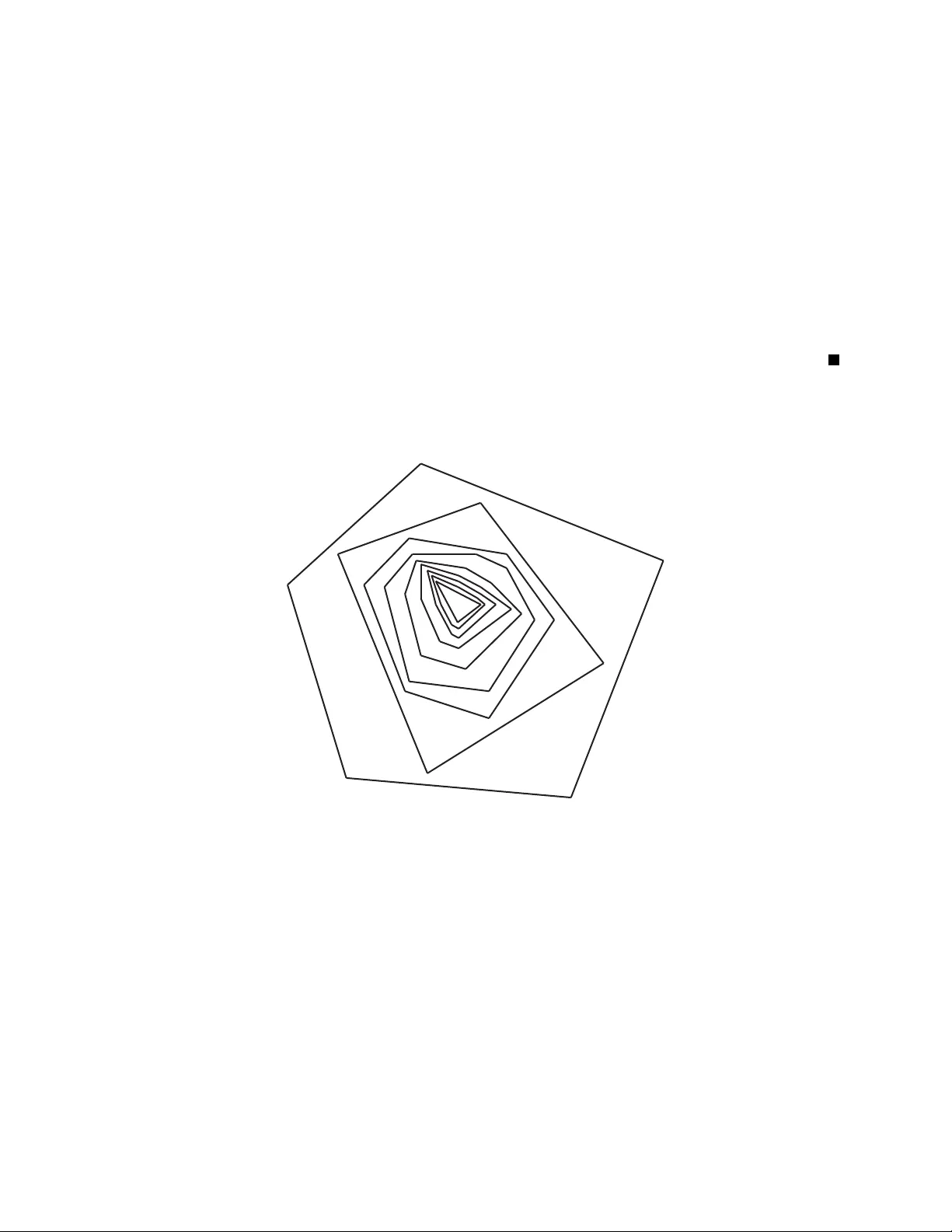
1 ´ Eminence Grise Coalitions: On the Shaping of Public Opinion Sadegh Bolouki, Roland P . Malham ´ e, Milad Siami, and Nader Motee Abstract W e consider a network of ev olving opinions. It includes multiple individuals with first-order opinion dynamics defined in continuous time and ev olving based on a general exogenously defined time-varying underlying graph. In such a network, for an arbitrary fixed initial time, a subset of individuals forms an ´ eminence grise coalition , abbre viated as EGC, if the individuals in that subset are capable of leading the entire network to agreeing on any desired opinion, through a cooperative choice of their own initial opinions. In this endeav or , the coalition members are assumed to hav e access to full profile of the underlying graph of the network as well as the initial opinions of all other individuals. While the complete coalition of indi viduals always qualifies as an EGC, we establish the existence of a minimum size EGC for an arbitrary time-varying network; also, we dev elop a non-tri vial set of upper and lo wer bounds on that size. As a result, we show that, ev en when the underlying graph does not guarantee con ver gence to a global or multiple consensus, a generally restricted coalition of agents can steer public opinion towards a desired global consensus without affecting any of the predefined graph interactions, provided they can cooperati vely adjust their own initial opinions. Geometric insights into the structure of EGC’ s are giv en. The results are also extended to the discrete time case where the relation with Decomposition-Separation Theorem is also made e xplicit. I . I N T RO D U C T I O N In this paper , we are mainly concerned with the occurrence of consensus in networks of indi viduals with opinions updated via a class of continuous time weighted distributed av eraging algorithms characterized in general by an e xogenous underlying chain of opinion update matrices, S. Bolouki, M. Siami, and N. Motee are with the Department of Mechanics and Mechanical Engineering, Lehigh Uni versity , Bethlehem, P A, 18015 USA e-mail: { bolouki,siami,motee } @lehigh.edu. R.P . Malham ´ e is with the Department of Electrical Engineering, Polytechnique Montr ´ eal, Montreal, QC, H3T 1J4 CA e-mail: roland.malhame@polymtl.ca. April 24, 2022 DRAFT 2 which beha ve like intensity matrices of a continuous time Markov chain. In such networks, consensus is said to occur if all opinions con verge to the same value as time grows large. Further - more, Multiple consensus is said to occur if each indi vidual’ s opinion asymptotically conv erges to an individual limit. It is well kno wn that such asymptotic behaviors relate directly to the properties of the Markov chain which underlies the opinion update dynamics. More specifically , the underlying chain of an opinion network may be such that consensus or multiple consensus occurs unconditionally , i.e., irrespectiv e of the v alues of initial opinions of the indi viduals in the network. The unconditional occurrence of consensus is prov ed to be equiv alent to er godicity of the underlying chain [1]. There is a similar correspondence between the unconditional occurrence of multiple consensus and class-ergodicity of the underlying chain [2], [3]. Ergodic and class-ergodic chains, i.e., chains leading to unconditional consensus or multiple consensus, have attracted an increasing attention in the literature in the past decade. Researchers of many dif ferent fields including robotics, social networks, economics, biology , etc., have been particularly interested in conditions under which a consensus algorithm guarantees consensus or multiple consensus to occur for an arbitrary choice of initial opinions. It is generally accepted that the earliest work on this class of opinion formation models was done in [4]. The model was defined in discrete time, and the considered underlying chain was time-in v ariant. Later , more general cases were considered in [1], where the authors also made explicit the relationship between consensus and ergodicity of the underlying chain. Some of the earliest significant results on consensus date back to [5]–[7]. Interest in distributed consensus for agents moving in space was triggered by the numerical experiments in [8] where a nonlinear algorithm w as proposed for modeling ev olution of multi-agent systems in discrete time. In this model, agents are assumed to hav e the same speed but different headings, and states are headings of agents. Using simulations, con v ergence to some kind of consensus (emerging behavior) was displayed in [8]. A linearized version of the model in [8] was considered in [9], where sufficient conditions for consensus based on analyzing infinite products of stochastic matrices, consistent with those of [5]–[7] are established. F ollo wing [9], man y w orks ha ve focused on identifying the lar gest class of underlying update chains for which consensus occurs unconditionally . Because of their close relationship to our current w ork, we mention in particular [3], [10]–[22]. In addition, [2], [3], [14], [15], [17]–[22] also addressed the unconditional multiple consensus problem, or equi valently class- ergodicity of the underlying chain. For the continuous time case, [15] appears to provide the April 24, 2022 DRAFT 3 most general results thus far on consensus and multiple consensus. On the other hand, in our recent work [2], inspired by [18] and [23], and to the best of our knowledge, we have identified for the discrete time case, the largest class to date of ergodic and class-ergodic chains. In contrast to the abov e papers, which are concerned with “unconditional” consensus, the current paper aims at providing some answers to the following questions: What if the underlying chain is not ergodic? Ho w can consensus still be achie ved in a network with absolutely no assumption on the underlying chain? In other words, for a network with a general time-v arying underlying opinion update chain, ha ving fixed the initial time, what can be said about particular (non-tri vial) choices of initial opinions leading to a possible consensus? Geometric insights on the nature of the “march” tow ards consensus allo w one to realize that such choices of initial opinion vectors form a vector space the dimension of which is related to the characteristics of the underlying chain. The fact that such initial opinion v ectors form a vector space suggests the existence of a possibly small subgroup of individuals in the network who are naturally capable of leading the whole group to ev entually agree on any desired value only by collecti vely adjusting their own initial opinions. The word “naturally” here refers to the fact that the subgroup does not need to manipulate the nature of the network, and particularly leaves all the interactions between any two individuals including themselves untouched . They act like hidden leaders, or “ ´ eminences grises”, not identifiable by title or position, yet who can, giv en time, thoroughly shape the ultimate public opinion. A subgroup with such leadership property is referred to as an ´ Eminence Grise Coalition , or simply EGC, in this work. The EGC’ s that a network admit are determined by the properties of the underlying chain of the network only . While it is trivial to establish the e xistence of at least one largest EGC, namely the universal coalition of individuals, one of our main points of interest in this work is to characterize the size and identity of the smallest coalition that can achiev e public opinion shaping. Tight bounds on the size of that coalition are also of interest. The reasons why such individuals may want to act as a coalition can be multiple. T wo such possibilities are: (i) They have been identified as key decision makers by a kno wledgeable negotiator , ha ve collecti vely agreed on a bargaining position, yet need to steer their peers towards the collectiv e agreement, (ii) A shady opinion manipulator has identified them as key decision makers and has succeeded in “buying out” their collaboration. The rest of the paper is org anized in such a way that no confusion arises between the continuous time and the discrete time cases. W e explicitly deal with the continuous time case in April 24, 2022 DRAFT 4 the largest part of the paper , that is Sections II – VII, and discuss the discrete time case in Section VIII. More specifically , we explicitly state the problem setup in Section II, where we introduce the notion of rank of a chain of matrices which is sho wn to be equal to the size of the smallest EGC of the network. In Section III, a geometric framew ork is dev eloped to interpret the notion of rank of a chain and also obtain an upper bound for the rank, or equiv alently the size of the smallest EGC of a consensus algorithm. This geometric frame work proves to be useful in dealing with both the continuous time and the discrete time cases. W e establish in Section IV, lower bounds on the rank based on the existing notions in the literature, namely the so-called infinite flo w graph and unbounded interactions graph of a chain. The rank of time-in v ariant chains is discussed in Section V. W e address a large class of time-v arying chains, the so-called Class P ∗ , and their rank in particular , in Section VI. It is shown that chains of the the two classes discussed in Sections V and VI, are examples of chains for which the bounds on rank obtained earlier in Sections III and IV are actually attained. Full-rank chains, namely chains with rank equal to the size of the network are characterized in Section VII. In the process of characterizing full-rank chains, we also discover another upper bound on rank. In Section VIII, we extend our analysis of the continuous time case to the discrete time case. As will be shown, the size of the smallest EGC is equal to the number of jets in the jet decomposition of the Sonin Decomposition Separation Theorem (see [2], [23]). Concluding remarks and suggestions of future work end the paper in Section IX. I I . N OT I O N S A N D T E R M I N O L O G Y The notions, preliminaries, and notation described in this section are for the purposes of the continuous time part of this paper , i.e., Sections II – VII, although some may be consistent with the contents of Section VIII, the discrete time analysis. Let N be the number of individuals and V = { 1 , . . . , N } be the set of indi viduals. Assume that t stands for the continuous time index. Let a time-varying chain { A ( t ) } t ≥ 0 of square matrices of size N be such that each matrix A ( t ) , t ≥ 0 , has zero ro w sum and non-negati v e off-diagonal entries and each entry a ij ( t ) of A ( t ) , i, j ∈ V , is a measurable function. Continuous time chains of matrices, that we deal with in this paper , are assumed to have these properties. According to these constraints, A ( t ) can be viewed as the ev olution of the intensity matrix of a time inhomogeneous Markov chain. Let dynamics of an opinion network be described by the following continuous time distributed April 24, 2022 DRAFT 5 av eraging algorithm: ˙ x ( t ) = A ( t ) x ( t ) , t ≥ t 0 , (1) where t 0 ≥ 0 is the initial time and x ( t ) ∈ R N is the vector of opinions at each time instant t ≥ t 0 . Thus, x i ( t ) is the scalar opinion of individual i at time t ≥ t 0 . Chain { A ( t ) } t ≥ 0 , or simply { A ( t ) } , is referred to as the underlying chain of the network with dynamics (1). Assume that Φ( t, τ ) , t ≥ τ ≥ 0 denotes the state transition matrix associated with chain { A ( t ) } . Therefore, for the network with dynamics (1), we must hav e: x ( t ) = Φ( t, τ ) x ( τ ) , ∀ t ≥ τ ≥ t 0 . (2) From [24, Section 1.3], the Peano-Baker series of state transition matrix Φ( t, τ ) , t ≥ τ ≥ 0 , associated with chain { A ( t ) } is expressed as: Φ( t, τ ) = I N × N + R t τ A ( σ 1 ) dσ 1 + R t τ A ( σ 1 ) R σ 1 τ A ( σ 2 ) dσ 2 dσ 1 + R t τ A ( σ 1 ) R σ 1 τ A ( σ 2 ) R σ 2 τ A ( σ 3 ) dσ 3 dσ 2 dσ 1 + · · · , (3) where I N × N denotes the identity matrix of size N . Remember that state transition matrix Φ( t, τ ) is in vertible for ev ery t ≥ τ ≥ 0 . W e use the follo wing notation throughout this paper: Φ i ( t, τ ) and Φ i,j ( t, τ ) , 1 ≤ i, j ≤ N , denote the i th column and the ( i, j ) th element of Φ( t, τ ) respecti vely . Moreover , the transposition of a matrix is indicated by the matrix followed by prime ( 0 ). W e emphasize that Φ 0 i ( t, τ ) refers to the i th column of Φ 0 ( t, τ ) (prime acts first). For an arbitrary vector v ∈ R N , and 1 ≤ i ≤ N , v i denotes the i th element of v . V ectors of all zeros and all ones in R N are indicated by 0 N and 1 N respecti vely . For an arbitrary subset S ⊂ V , V \S denotes the complement of S in V . Remark 1: Notice that Φ i,j ( t, τ ) , t ≥ τ ≥ 0 , for a fixed τ , can be viewed as a transition probability in a backward propagating inhomogeneous Markov chain. In particular , for every t 2 ≥ t 1 ≥ τ ≥ 0 , we have: Φ i,j ( t 2 , τ ) = X k Φ i,k ( t 2 , t 1 )Φ k,j ( t 1 , τ ) , (4) April 24, 2022 DRAFT 6 with the conditions: Φ i,j ( t, τ ) ≥ 0 , (5) X j Φ i,j ( t, τ ) = 1 , (6) Φ i,j ( τ , τ ) = δ ij , (7) where δ ij is the Kronecker symbol. A. ´ Eminence Grise Coalition Definition 1: For an opinion network with dynamics (1), a subgroup of indi viduals S ⊂ V is said to be an ´ Eminence Grise Coalition if for any arbitrary x ∗ ∈ R and any initialization of opinions of indi viduals in V \S , there exists an initialization of opinions of individuals in S such that lim t →∞ x ( t ) = x ∗ . 1 N , i.e., all individuals asymptotically agree on x ∗ . The term ´ Eminence Grise Coalition may also be referred to as acronym EGC . From another point of view that also justifies the selection of the term ´ Eminence Grise Coalition, an EGC of a network with dynamics (1) is a subgroup of indi viduals who are capable of leading the whole group to wards a global agreement on an y desired ultimate opinion only by properly initializing their o wn opinions, with the assumption that the y are aw are of the underlying chain of the network and initial opinions of the rest of individuals. Lemma 1: In an opinion network with dynamics (1), a subset S ⊂ V is an EGC if and only if for any initialization of opinions of indi viduals in V \S , there exists an initialization of opinions of individuals in S such that lim t →∞ x ( t ) = 0 N . Pr oof: The “only if ” part is obvious by setting x ∗ = 0 in Definition 1. Con versely , assume that S ⊂ V has the property that for any initialization of indi viduals in V \S , there exists an initialization of indi viduals in S such that all opinions asymptotically con verge to zero. T o sho w that S is an EGC according to Definition 1, let arbitrary x ∗ ∈ R be the desired value of agreement and assume that for ev ery i ∈ V \S , the opinion of indi vidual i is initialized at ˆ x i ∈ R , where ˆ x i is arbitrary . W e seek an initialization of opinions of individuals in S leading to an asymptotic agreement of all indi viduals on x ∗ . For a moment, let us assume that for e very i ∈ V \S , the opinion of individual i w as initialized at ˆ x i − x ∗ . For such an initialization, by the assumption on S , there would be an initialization of opinions of indi viduals in S , say at ˆ x i for each individual April 24, 2022 DRAFT 7 i ∈ S , such that all opinions would asymptotically con ver ge to zero. In other words, if the indi vidual opinions in the network with dynamics (1) were initialized as: x i (0) = ˆ x i − x ∗ if i ∈ V \S ˆ x i if i ∈ S (8) then, lim t →∞ x ( t ) = 0 N . Now , the follo wing initialization, which is basically a translation of the pre vious initialization by x ∗ , will lead to an agreement on x ∗ : x i (0) = ˆ x i if i ∈ V \S ˆ x i + x ∗ if i ∈ S (9) Agreement on x ∗ is easily prov ed from the previous agreement on zero and noticing that translations are preserved in consensus dynamics (1) since Φ( t, t 0 ) , for every t ≥ t 0 , has an eigen v ector 1 N corresponding to eigen v alue 1. Thus, for an arbitrary initialization of indi viduals in V \S , we found an initialization of individuals in S such that all opinions asymptotically con v erge to the desired value x ∗ , which completes the proof. Our primary objecti ve in this work is characterizing the smallest EGC in an opinion network with dynamics described by (1). In particular , the size of the smallest EGC is of interest. B. Rank of a Chain W e now define sev eral operators for chains of matrices. Bold style is used for chain operators in this paper to distinguish them from matrix operators that are in roman style. Let { A ( t ) } be a chain of matrices and Φ( t, τ ) , t ≥ τ ≥ 0 be its associated state transition matrix. Definition 2: The null space of chain { A ( t ) } at time τ ≥ 0 , denoted by null τ ( A ) , is defined by: n ull τ ( A ) , n v ∈ R N | lim t →∞ Φ( t, τ ) v = 0 N o . (10) It is straightforward to show that null τ ( A ) is a vector space for ev ery τ ≥ 0 . Lemma 2: The dimension of vector space null τ ( A ) , τ ≥ 0 , is independent of τ . Pr oof: Let τ 2 > τ 1 ≥ 0 be two arbitrary time instants. Define linear operator φ τ 2 ,τ 1 : R N → R N by: φ τ 2 ,τ 1 ( v ) , Φ( τ 2 , τ 1 ) v , ∀ v ∈ R N . (11) April 24, 2022 DRAFT 8 Noticing that Φ( τ 2 , τ 1 ) is inv ertible, it is not difficult to see that operator φ τ 2 ,τ 1 creates a one- to-one correspondence between the two vector spaces n ull τ 1 ( A ) and n ull τ 2 ( A ) . As a result, the two vector spaces are of equal dimensions. Definition 3: The constant dimension of n ull τ ( A ) , τ ≥ 0 , which is independent of τ , is called nullity of chain { A ( t ) } and is denoted by nullit y ( A ) . Moreover , the rank of chain { A ( t ) } is defined by: rank ( A ) , N − nullit y ( A ) . (12) The following theorem suggests that one can in vestigate the size of the smallest EGC via the notion of rank. Theor em 1: For an opinion network with dynamics described by (1), the size of the smallest EGC is rank ( A ) . Pr oof: T o simplify the proof, let r , rank ( A ) and h be the size of the smallest EGC. Our aim is to show that r = h . Equiv alently , we prov e, in the following, that h ≤ r and r ≤ h . ( h ≤ r ) : W e show that there is an EGC of size r . From Lemma 1, it suffices to show that there exists a subset S ⊂ V of size r with the property that for any initialization of the opinions of indi viduals in V \S , there e xists an initialization of the opinions of indi viduals in S such that all opinions asymptotically con ver ge to zero. Note that n ull t 0 ( A ) is a vector space with dimension n ullit y ( A ) = N − r . Let β 1 , . . . , β N − r be a basis of n ull t 0 ( A ) . Notice that the column-rank of matrix h β 1 | · · · | β N − r i (13) is N − r , and so is its row-rank. Thus, matrix (13) has N − r linearly independent ro ws. Note that the choice of the N − r linearly independent rows is not necessarily unique. Assume that i 1 , . . . , i N − r are the indices of N − r independent rows of matrix (13). It is straightforward to sho w that subset S ⊂ V defined by: S = V \{ i 1 , . . . , i N − r } , (14) has the desired property . ( r ≤ h ) : Since there exists an EGC of size h , there are N − h individuals such that no matter what their initial opinions are, there is an initial opinion v ector that results in all opinions April 24, 2022 DRAFT 9 asymptotically going to zero, or equi v alently , an initial opinion vector that belongs to n ull t 0 ( A ) . Thus, vector space null t 0 ( A ) has dimension greater than or equal to N − h , i.e., N − r ≥ N − h . Remark 2: Another point of interest regarding the issue of consensus, that we will not further discuss in this work, is that of the nature of the set of initial opinion vectors leading to consensus in the network with dynamics (1); more precisely: { x ( t 0 ) | ∃ x ∗ ∈ R : lim t →∞ x ( t ) = x ∗ . 1 N } , (15) It is straightforward to see that set (15) is the vector space generated by null t 0 ( A ) and 1 N . Consequently , vector space (15) has dimension nullit y ( A ) + 1 . K eeping Theorem 1 in mind, we focus on the notion of rank in the rest of the paper . In the follo wing, we give the continuous time version of the definition of l 1 -approximation initially introduced in [17] for discrete time chains. Definition 4: Chain { A ( t ) } is said to be an l 1 -appr oximation of chain { B ( t ) } if: Z ∞ 0 k A ( t ) − B ( t ) k dt < ∞ , (16) where for con venience only , the norm refers to the max norm , i.e., the maximum of the absolute v alues of the matrix elements. It is not difficult to show that l 1 -approximation is an equiv alence relation in the set of chains that are candidates of the underlying chain of an opinion network. The importance of the l 1 - approximation notion in this work comes from the follo wing lemma. The proof is eliminated due to its similarity to the proof of [17, Lemma 1]. Lemma 3: The rank of a chain is in variant under an l 1 -approximation. C. Er godicity and Class-Er godicity Se veral other definition related to chains of matrices will be needed and are gi ven as follo ws. Definition 5: Chain { A ( t ) } is said to be ergodic if for ev ery τ ≥ 0 , its associated state transition matrix Φ( t, τ ) con ver ges to a matrix with equal ro ws as t → ∞ . From [1], we kno w that ergodicity of { A ( t ) } is equiv alent to the occurrence of unconditional consensus in (1). April 24, 2022 DRAFT 10 Definition 6: Chain { A ( t ) } is class-ergodic if for ev ery τ ≥ 0 , lim t →∞ Φ( t, τ ) exists but has possibly distinct rows. It is known that chain { A ( t ) } is class-ergodic if and only if multiple consensus occurs in (1) unconditionally (see [2], [3]). W e define, in what follows, the ergodicity classes of a chain according to [17]. Definition 7: For an opinion network with state transition matrix Φ( t, τ ) , t ≥ τ ≥ 0 , two indi viduals i, j ∈ V are said to be mutually weakly er godic if and only if for ev ery τ ≥ 0 : lim t →∞ k Φ 0 i ( t, τ ) − Φ 0 j ( t, τ ) k = 0 . (17) It is easy to see that the relation of being mutually weakly ergodic is an equiv alence relation on V . The equiv alence classes of this relation are referred to as er godicity classes in this paper . Indeed, these equiv alence classes form a partitioning of V , and while in some cases they may simply be singletons, they can always be defined for an arbitrary chain { A(t) } . If chain { A ( t ) } is class-ergodic, i.e,. lim t →∞ Φ 0 i ( t, τ ) exists for e very i ∈ V and τ ≥ 0 , then i, j ∈ V are in the same er godicity class if lim t →∞ Φ 0 i ( t, τ ) = lim t →∞ Φ 0 i ( t, τ ) , for ev ery τ ≥ 0 . W e refer to the ergodicity classes of a class-ergodic chain as ergodic classes . I I I . A G E O M E T R I C I N T E R P R E TA T I O N O F T H E R A N K In this Section, we employ a geometric approach to analyze the asymptotic properties of a chain of matrices . This approach, which can be used for both the continuous and discrete time cases, will help us to (i) geometrically interpret the rank of a general time-v arying chain, (ii) identify an upper bound for the rank, and (iii) inv estigate the limiting behavior of a large class of time-varying chains, namely Class P ∗ as discussed in Section VI. For time-varying chain { A ( t ) } t ≥ 0 , define C t,τ , t ≥ τ ≥ 0 as the con ve x hull of points in R N corresponding to the columns of the transpose of associated state transition matrix Φ( t, τ ) . Note that C t,τ is a polytope, with no more than N vertices, in R N . W e recall that each column of Φ 0 ( t, τ ) is a stochastic vector , i.e., its elements are non-negati v e and add up to 1. W e now ha ve the following lemma regarding conv ex hull C t,τ . Lemma 4: For e very t 2 ≥ t 1 ≥ τ , we ha ve: C t 2 ,τ ⊂ C t 1 ,τ , i.e., polytopes C t,τ , for an arbitrary fixed τ , form a monotone decreasing sequence of polytopes in R N . April 24, 2022 DRAFT 11 Pr oof: Note that: Φ( t 2 , τ ) = Φ( t 2 , t 1 )Φ( t 1 , τ ) , (18) or equiv alently , Φ 0 ( t 2 , τ ) = Φ 0 ( t 1 , τ )Φ 0 ( t 2 , t 1 ) (19) Since Φ 0 ( t 2 , t 1 ) is a column-stochastic matrix, relation (19) implies that each column of Φ 0 ( t 2 , τ ) is a con v ex combination of the columns of Φ 0 ( t 1 , τ ) . Therefore, each column of Φ 0 ( t 2 , τ ) lies in or on C t 1 ,τ , and the lemma is proved. Lemma 4 sho ws that for a fixed τ ≥ 0 , polytopes C t,τ ’ s, t ≥ τ , are nested in R N . An e xample of these nested polytopes projected on a two-dimensional subspace of R N is depicted in Fig. 1. Fig. 1: Nested polygons con ver ging to a triangle. Note that for ev ery τ ≥ 0 , lim t →∞ C t,τ exists and is also a polytope in R N due to the existence of a uniform upper bound, namely N , on the number of vertices of the nested polytopes. Let C τ denote the limiting polytope and c τ be the number of its vertices. Lemma 5: c τ , τ ≥ 0 , is independent of τ . Pr oof: Assume that τ 2 ≥ τ 1 ≥ 0 are two arbitrary time instants. Define linear operator φ 0 τ 2 ,τ 1 : R N → R N by: φ 0 τ 2 ,τ 1 ( v ) , Φ 0 ( τ 2 , τ 1 ) v , ∀ v ∈ R N . (20) April 24, 2022 DRAFT 12 Note now that from (19), for t ≥ τ 2 ≥ τ 1 ≥ 0 we hav e: Φ 0 ( t, τ 1 ) = Φ 0 ( τ 2 , τ 1 )Φ 0 ( t, τ 2 ) . (21) Therefore, in vie w of (21) by taking t to infinity , the v ertices of C τ 2 are uniquely mapped to vectors in R N which because of the linearity of map (20), will play the role of vertices for the generation of con vex hull C τ 1 . Also, it is not difficult to show that the images of vertices of C τ 2 must remain vertices of C τ 1 , for if one of the images of a vertex of C τ 2 , say v , turned out to be a con ve x combination of other vertices of C τ 1 , this would also be true for the in v erse images of these vertices (also vertices of C τ 2 due to in vertibility of matrix Φ 0 ( τ 2 , τ 1 ) ), and v would then fail to be a vertex of C τ 2 . In conclusion, C τ 1 and C τ 2 will hav e the same number of v ertices, and (20) constitutes a one to one map between corresponding pairs of vertices. Let integer c be the constant value of c τ , τ ≥ 0 . W e will show later in this section that c is equal to rank ( A ) . T o prov e this, we first state the following two lemmas. Lemma 6: rank ( A ) is equal to the dimension of the vector space generated by the vectors corresponding to the vertices of C τ , for ev ery τ ≥ 0 . Pr oof: It suffices to pro ve Lemma 6 for τ = 0 . Let v 1 , . . . , v c ∈ R N be the c vertices of C 0 . It is easy to see that for any u ∈ R N : u ∈ N 0 ( A ) ⇐ ⇒ v 0 i u = 0 , ∀ i, 1 ≤ i ≤ c. (22) It implies that the dimension of the v ector space generated by v 1 , . . . , v c is N − n ullit y ( A ) , which prov es the lemma. Lemma 7: For e very τ ≥ 0 , the vectors corresponding to the vertices of C τ are linearly independent. Pr oof: It is sufficient to prove the lemma for τ = 0 , i.e., to show that the vertices of C 0 , namely v 1 , . . . , v c , are linearly independent. Assume that α 1 , . . . , α c ∈ R are such that: c X i =1 α i v i = 0 . (23) W e note that vector v i , 1 ≤ i ≤ c , must lie outside of the con ve x hull of vectors v j ’ s, j 6 = i , for otherwise it would not qualify as a verte x. For ev ery i , 1 ≤ i ≤ c , let w i be the projection of v i April 24, 2022 DRAFT 13 on the con ve x hull of v j ’ s, j 6 = i . Define the follo wing positiv e numbers: , 1 4 min {k v i − w i k | 1 ≤ i ≤ c } , (24) and: 1 , / (2 N ) . (25) Because C 0 is the limit of C t, 0 as t goes to infinity , there must e xist a suf ficiently large time T ≥ 0 , such that for t ≥ T , ev ery point in C t, 0 lies within an 1 -distance of C 0 . As depicted in Fig. 2, for e v ery i , 1 ≤ i ≤ c , let l i be the hyperplane in R N distant from v i , crossing se gment v i w i and orthogonal to it. Let also m i be the hyperplane which is parallel to l i , on the other side of v i , distant 1 from v i . Fig. 2: Planes l i and m i are orthogonal to segment v i w i . Define for ev ery i , 1 ≤ i ≤ c : S i = { j ∈ V | Φ 0 j ( T , 0) lies in the strip margined by l i , m i } . (26) Note that by the assumption, e very point in C T , 0 , including Φ 0 j ( T , 0) , lies within an 1 -distance of C 0 . Therefore, Φ 0 j ( T , 0) must lie on the same side of m i as v i does. In other words, Φ 0 j ( T , 0) April 24, 2022 DRAFT 14 either lies in the strip margined by l i and m i or lies on the side of l i opposite to v i (belo w l i in Fig. 2). This implies that S i , 1 ≤ i ≤ c , is non-empty . Indeed otherwise, Φ 0 j ( T , 0) w ould lie below l i in Fig. 2 for e very j resulting in C T , 0 also lying below l i , which would be a contradiction since C T , 0 must contain C 0 and v i in particular . One can also show that S i ’ s, 1 ≤ i ≤ c , are pairwise disjoint sets. More specifically , one can show that any point of C T , 0 that lies in the intersection of any two of sets S i ’ s cannot be within -distance of C 0 , and since > 1 , this would violate the defining property of T . C 0 being the limit of shrinking con ve x hulls C t, 0 ’ s, it follo ws that for i = 1 , . . . , c , there exists sequences { i t } of individuals such that Φ 0 i t ( t, 0) con ver ges to v i . Therefore, after some finite time, we hav e the following inequality: k Φ 0 i t ( t, 0) − v i k < 1 . (27) W ithout loss of generality , we can assume that the inequality (27) holds for e very t ≥ T (otherwise, we would proceed by replacing T with T 0 , T 0 > T , such that inequality (27) holds for ev ery t ≥ T 0 ). W e have for ev ery t ≥ T : Φ 0 i t ( t, 0) = Φ 0 ( T , 0)Φ 0 i t ( t, T ) = P j ∈V Φ i t ,j ( t, T )Φ 0 j ( T , 0) = P j 6∈ S i Φ i t ,j ( t, T )Φ 0 j ( T , 0) + P j ∈ S i Φ i t ,j ( t, T )Φ 0 j ( T , 0) . (28) W e now show that for e very i , 1 ≤ i ≤ c , the follo wing two inequalities must hold: X j 6∈ S i Φ i t ,j ( t, T ) < 2 / (2 N + 1) , (29) X j ∈ S i Φ i t ,j ( t, T ) > 1 − 2 / (2 N + 1) . (30) T o prove (29) and (30), we use (28) to find a lower bound for the distance from Φ 0 i t ( t, 0) , t ≥ T , to hyperplane m i as drawn in Fig. 2. Remember that if j ∈ S i , then, Φ 0 j ( T , 0) lies in the strip margined by m i and l i , while if j 6∈ S i , then, Φ 0 j ( T , 0) lies belo w l i in Fig. 2. For a fixed i , 1 ≤ i ≤ c , let η , P j 6∈ S i Φ i t ,j ( t, T ) . Φ( t, T ) being row-stochastic, it immediately follows that P j ∈ S i Φ i t ,j ( t, T ) = 1 − η . Using (28), we now conclude that: η ( 1 + ) + (1 − η ) . 0 (31) April 24, 2022 DRAFT 15 is a lo wer bound for the distance from Φ 0 i t ( t, 0) , t ≥ T , to hyperplane m i . This distance, on the other hand, is upper bounded by 2 1 since inequality (27) is satisfied for e very t ≥ T . Thus, we must hav e: η ( 1 + ) + (1 − η ) . 0 < 2 1 , (32) which immediately results in η < 2 / (2 N + 1) (remember that = 2 N 1 ), and inequalities (29) and (30) follow . Now remember by construction that lim t →∞ Φ 0 i t ( t, 0) = v i where v i is a giv en verte x of C 0 . Furthermore, noting that: Φ 0 i t ( t, 0) = Φ 0 ( T , 0)Φ 0 i t ( t, T ) , (33) and taking limits on both sides as t goes to infinity , it follo ws that lim t →∞ Φ 0 i t ( t, T ) is the image of a verte x of C 0 and therefore (following the proof of Lemma 5) is itself a verte x of C T , say u i . Considering (30) again, and taking limits as t → ∞ , one can conclude: X j ∈ S i ( u i ) j ≥ 1 − 2 / (2 N + 1) , (34) and consequently: X j 6∈ S i ( u i ) j ≤ 2 / (2 N + 1) . (35) Inequality (34) can be established for i = 1 , . . . , c , where u i , i = 1 , . . . , c are the vertices of C T . Recalling linear operator φ τ 2 ,τ 1 from (20) one can write for some permutation σ ov er set { 1 , . . . , c } : u i = Φ 0 ( T , 0) v σ ( i ) , ∀ i, 1 ≤ i ≤ c, (36) Combining relations (23) and (36) yields: c X i =1 α σ ( i ) u i = 0 , (37) If we now assume that k , 1 ≤ k ≤ c , is such that: | α σ ( k ) | = max 1 ≤ i ≤ c {| α i |} , α, (38) No w noting that (34) and (35) hold only for the vertex u i which is the image of v i , and that the April 24, 2022 DRAFT 16 S i ’ s are disjoint sets of agents, one can write the following: 0 = | P j ∈ S k P c i =1 α σ ( i ) ( u i ) j | = | P j ∈ S k α σ ( k ) ( u k ) j + P j ∈ S k P i 6 = k α σ ( i ) ( u i ) j | ≥ | α σ ( k ) | . | P j ∈ S k ( u k ) j | − P i 6 = k | α σ ( i ) | . P j ∈ S k ( u i ) j ≥ | α σ ( k ) | . | P j ∈ S k ( u k ) j | − P i 6 = k | α σ ( i ) | . P j 6∈ S i ( u i ) j ≥ α (1 − 2 / (2 N + 1)) − α ( c − 1) . 2 / (2 N + 1) = α (2( N − c ) + 1) / (2 N + 1) > 0 , (39) which is a contradiction. Thus, we must hav e α = 0 , which means α i = 0 , ∀ i , 1 ≤ i ≤ c . This prov es the lemma. Theor em 2: rank ( A ) is equal to c , i.e, the constant v alue of c τ , τ ≥ 0 , where c τ is the number of vertices of limiting polytope C τ . Pr oof: Theorem 2 is an immediate result of Lemmas 6 and 7. Combining Theorems 1 and 2 result in the following corollary . Cor ollary 1: The size of the smallest EGC of a network with dynamics (1) is c . Lemma 8: c is less than or equal to the number of ergodicity classes. Pr oof: Recall limiting polytope C 0 with vertices v 1 , . . . , v c from earlier in the section. Remember , from the proof of Lemma 7, that for i = 1 , . . . , c , there exists sequences { i t } of indi viduals such that Φ 0 i t ( t, 0) con ver ges to v i . Let: 2 = 1 3 min {k v i − v j k | i, j ∈ V , i 6 = j } . (40) By definition of ergodicity classes, there exists T ≥ 0 such that for ev ery t ≥ T , for a fixed τ , and for ev ery i, j in the same ergodicity class, we hav e: k Φ 0 i ( t, τ ) − Φ 0 j ( t, τ ) k < 2 . (41) On the other hand, there exists T 0 > 0 such that for ev ery t ≥ T 0 , and i = 1 , . . . , c , we hav e: k Φ 0 i t ( t, 0) − v i k < 2 . (42) April 24, 2022 DRAFT 17 Therefore, for ev ery t ≥ T 0 , and i 6 = j , 1 ≤ i, j ≤ c , we must hav e: 3 2 ≤ k v i − v j k ≤ k v i − Φ 0 i t ( t, 0) k + k Φ 0 i t ( t, 0) − Φ 0 j t ( t, 0) k + k Φ 0 j t ( t, 0) − v j k < 2 + k Φ 0 i t ( t, 0) − Φ 0 j t ( t, 0) k + 2 , (43) where the first inequality abov e is a result of (40), the second inequality is the triangle inequality , and the third inequality is a consequence of (42). From (43), we no w have: k Φ 0 i t ( t, 0) − Φ 0 j t ( t, 0) k > 2 , ∀ t ≥ T 0 . (44) T aking (41) into account, from (44) we conclude that i t and j t cannot be in the same er godicity class for e very t ≥ max { T , T 0 } . Thus, there are at least c distinct ergodicity classes, and the lemma is prov ed. Cor ollary 2: For an arbitrary chain { A ( t ) } , rank ( A ) is less than or equal to the number of ergodicity classes of { A ( t ) } . Cor ollary 3: For an opinion network with dynamics (1), the size of the smallest EGC is upper bounded by the number of ergodicity classes of { A ( t ) } . Remark 3: In case { A ( t ) } , the underlying chain of a network with dynamics (1), is class- ergodic, the occurrence of multiple consensus in the network is guaranteed, and the number of ergodic classes becomes equal to the number of consensus clusters. Y et this number may be larger than the size of the smallest EGC of the network. In other words, there may exist an EGC in which some of the consensus clusters hav e no representativ e. As a simple illustrati ve example, consider system (1) of three individuals with a fixed underlying chain: A ( t ) = 0 0 0 1 / 3 − 1 2 / 3 0 0 0 , ∀ t ≥ 0 . (45) W e then have: lim t →∞ x ( t ) = x 1 ( t 0 ) ( x 1 ( t 0 ) + 2 x 3 ( t 0 )) / 3 x 3 ( t 0 ) . (46) April 24, 2022 DRAFT 18 Notice also that for the corresponding state transition matrix we have: lim t →∞ Φ( t, τ ) = 1 0 0 1 / 3 0 2 / 3 0 0 1 , ∀ τ ≥ 0 . (47) Therefore, each individual forms a consensus cluster , i.e., there are three consensus clusters. Ho wev er , subgroup { 1 , 3 } with size two, is an EGC of the network. In other words, starting at an arbitrary initial time t 0 ≥ 0 , irrespectiv e of the initial opinion of individual 2, an agreement on value x ∗ is achiev ed if individuals 1 and 3 initialize their opinions at x ∗ . I V . L O W E R B O U N D S O N T H E R A N K O F C H A I N S In this section, we clarify how the underlying chain of a network with dynamics (1) imposes lo wer bounds on the size of its smallest EGC, which is equal to rank ( A ) . W e recall the following definition from [15], [22]. Definition 8: The unbounded interactions graph of a chain { A ( t ) } , H 1 ( V , E 1 ) , is a fixed directed graph such that for every distinct nodes i, j ∈ V , ( i, j ) ∈ E 1 if and only if: Z ∞ 0 a j i ( t ) dt = ∞ . (48) In other words, a link is drawn from i to j if the total influence of individual i on individual j is unbounded ov er the infinite time interval. Definition 9: A subset S 0 ⊂ V is called a s-r oot of H 1 ( V , E 1 ) if for e very node i ∈ V , we hav e i ∈ S 0 or there exists j ∈ S 0 such that i is reachable from j . Theor em 3: Let H 1 ( V , E 1 ) be the unbounded interaction graph associated with chain { A ( t ) } . Then, rank ( A ) is greater than or equal to the size of the smallest s-root of H 1 ( V , E 1 ) . Pr oof: Form a chain { B ( t ) } from chain { A ( t ) } by eliminating all influences that individual i ∈ V gets from indi vidual j ∈ V if ( j, i ) 6∈ E 1 . More specifically , for e very i 6 = j ∈ V and t ≥ 0 , we have: b ij ( t ) = a ij ( t ) if ( j, i ) ∈ E 1 0 if ( j, i ) 6∈ E 1 (49) and b ii ( t ) = − P j 6 = i b ij ( t ) , for ev ery i ∈ V and t ≥ 0 . Since chain { B ( t ) } is an l 1 -approximation of chain { A ( t ) } , from Lemma 3, the two chains share the same rank. Notice also that the two April 24, 2022 DRAFT 19 chains share the same unbounded interactions graph. Thus, it suffices to prov e Theorem 3 for chain { B ( t ) } . Consider an opinion network with underlying chain { B ( t ) } : ˙ y ( t ) = B ( t ) y ( t ) , t ≥ t 0 , (50) where y ( t ) ∈ R N is the vector of opinions. Since rank ( B ) is the size of the smallest EGC of the network with dynamics (50), it is suf ficient to sho w that ev ery EGC of the network with dynamics (50) is a s-root of H 1 . Assume, on the contrary , that subset S ⊂ V is an EGC which is not a s-root of H 1 . Define: n ( S ) , S ∪ { i | i ∈ V , ∃ j ∈ S : i is reachable from j in H 1 } (51) Since S is not a s-root, n ( S ) ( V . From the definition of n ( S ) , it is easy to see that there is no link from n ( S ) to V \ n ( S ) in H 1 . According to the way that chain { B ( t ) } was constructed, this means that n ( S ) has zero influence on V \ n ( S ) at any time instant. Thus, since S ⊂ n ( S ) , indi viduals in S cannot, in general, lead individuals in V \ n ( S ) to agreeing on an arbitrary value x ∗ . For instance, given a desired consensus value x ∗ , if the opinions of indi viduals in V \ n ( S ) are all initialized at value x ∗ + 1 , they will never change, and consequently , they will ne ver con v erge to x ∗ . Thus, S is not an EGC, which completes the proof. An important special case of Theorem 3 is described in the follo wing. Let us first define the continuous time counterpart of the infinite flow graph of a chain according to [16]. Definition 10: The infinite flow graph H 2 ( V , E 2 ) of a gi ven chain { A ( t ) } , is an undirected graph formed as follows: for two distinct nodes i, j ∈ V , draw a link between i and j in H 2 , if and only if: Z ∞ 0 ( a ij ( t ) + a j i ( t )) dt = ∞ (52) W e now hav e the following lower bound on the rank of a chain which is a special case of Theorem 3. Cor ollary 4: rank ( A ) is greater than or equal to the number of connected components of the infinite flow graph associated with { A ( t ) } . April 24, 2022 DRAFT 20 V . R A N K O F T I M E - I N V A R I A N T ( T I ) C H A I N S Let { A ( t ) } be a TI chain, i.e., A ( t ) = ˆ A , ∀ t ≥ 0 , where ˆ A is a fixed matrix with the property that each of its rows adds up to zero and its of f-diagonal elements are non-negati v e. Assume that rank( ˆ A ) and n ullit y ( ˆ A ) represent the rank and the nullity of ˆ A . Notice that roman style is used for matrix operators as opposed to the chain operators so as to av oid any ambiguity . For state transition matrix Φ( t, τ ) associated with TI chain { ˆ A } , we hav e: Φ( t, τ ) = e ˆ A ( t − τ ) , t ≥ τ ≥ 0 . (53) Note that ˆ A is marginally stable and has all negati v e eigen v alues but one eigen v alue zero with algebraic multiplicity n ullit y( ˆ A ) . Thus, lim t − τ →∞ Φ( t, τ ) e xists, and the limit has eigen value zero with algebraic multiplicity rank( ˆ A ) and eigen v alue one with algebraic multiplicity nullit y( ˆ A ) . Hence: rank ( A ) = nullit y( ˆ A ) . (54) Employing a graph theoretic approach, treating ˆ A as the Laplacian of its associated weighted dir ected graph, nullit y ( ˆ A ) represents the size of the smallest s-root of the graph (see Fig. 3). 1 2 3 4 5 6 7 9 8 1 2 3 4 Fig. 3: Unweighted underlying graph of two TI linear algorithms. { 1 , 4 } (left) and { 1 , 3 , 8 } (right) are the smallest s-roots. Since an unweighted v ersion of the graph described abov e serves as the unbounded interactions graph associated with TI chain { A ( t ) } , A ( t ) = ˆ A , ∀ t ≥ 0 , we hav e the following corollary . Cor ollary 5: For a TI chain { A ( t ) } , the lower bound provided in Theorem 3 is achiev ed. More specifically , rank ( A ) is size of the smallest s-root of the unbounded interactions graph April 24, 2022 DRAFT 21 associated with { A ( t ) } . Remember that any TI chain { A ( t ) } is class-ergodic and the number of ergodic classes provides an upper bound for rank ( A ) according to Corollary 2. For example, for the underlying graphs depicted in Fig. 3, the number of ergodic classes are 4 (left) and 6 (right). The graph interpretation of the notion of rank explains the follo wing two properties: (i) For any TI chain { A ( t ) } and α > 0 : rank ( { αA ( t ) } ) = rank ( { A ( t ) } ) . (55) (ii) For any two TI chains { A ( t ) } and { B ( t ) } , rank ( { A ( t ) + B ( t ) } ) ≤ min n rank ( { A ( t ) } ) , rank ( { B ( t ) } ) o . (56) Remark 4: While Statement (i) seems to hold for any time-varying chain { A ( t ) } as well, there exist time-varying chains { A ( t ) } and { B ( t ) } that do not satisfy Statement (ii). This means that more interactions between agents may surprisingly increase the size of the smallest EGC of a network. The following is an example; let: A ( t ) = − 1 1 0 0 0 0 0 0 0 if t ∈ [2 2 k − 1 , 2 2 k ) , k ∈ N , (57) and, A ( t ) = 0 0 0 0 − 1 1 0 0 0 if t ∈ [2 2 k , 2 2 k +1 − 1) , k ∈ N , (58) and A ( t ) = 0 3 × 3 else where. Let also: B ( t ) = 0 0 0 0 0 0 0 1 − 1 if t ∈ [2 2 k +1 − 1 , 2 2 k +1 ) , k ∈ N , (59) April 24, 2022 DRAFT 22 and, B ( t ) = 0 0 0 1 − 1 0 0 0 0 if t ∈ [2 2 k +1 , 2 2 k +2 − 1) , k ∈ N , (60) and B ( t ) = 0 3 × 3 else where. Note that at ev ery time instant either A ( t ) or B ( t ) is 0 3 × 3 . It is easy to see that both { A ( t ) } and { B ( t ) } are ergodic chains. More specifically , for ev ery τ ≥ 0 , we hav e: lim t →∞ Φ A ( t, τ ) = h 0 0 1 i h 1 1 1 i 0 , (61) and, lim t →∞ Φ B ( t, τ ) = h 1 0 0 i h 1 1 1 i 0 . (62) Therefore, rank ( A ) = rank ( B ) = 1 . Ho wev er , one can sho w that rank ( { A ( t ) + B ( t ) } ) = 2 . More precisely , subgroup { 1 , 3 } forms the smallest EGC of the network with underlying chain { A ( t ) + B ( t ) } . V I . R A N K O F C H A I N S I N C L A S S P ∗ From the fundamental work [25], it is kno wn that for e very state transition matrix Φ( t, τ ) , t ≥ τ ≥ 0 , associated with a chain { A ( t ) } , there exists a sequence of stochastic row vectors { π ( t ) } , called an absolute pr obability sequence , such that: π ( τ ) = π ( t )Φ( t, τ ) , ∀ t, τ , t ≥ τ ≥ 0 . (63) Remember that by a stochastic v ector , we mean a vector with elements adding up to 1. W e may no w extend [18, Definition 3] to the continuous time case in the following. Definition 11: A chain { A ( t ) } is said to be in Class P ∗ if its associated state transition matrix Φ( t, τ ) , t ≥ τ ≥ 0 admits an absolute probability sequence { π ( t ) } such that for some constant p ∗ > 0 : π ( t ) > p ∗ , ∀ t ≥ 0 . (64) It is possible to characterize chains of Class P ∗ more concretely . T o do so, we first state the follo wing lemma. April 24, 2022 DRAFT 23 Lemma 9: For e very j ∈ V , π j ( τ ) ≤ inf ( X i ∈V Φ i,j ( t, τ ) | t ≥ τ ) . (65) Pr oof: Obvious, since for ev ery t ≥ τ : π j ( τ ) = π ( t )Φ j ( t, τ ) = X i ∈V π i ( t )Φ i,j ( t, τ ) ≤ X i ∈V Φ i,j ( t, τ ) . (66) W e now ha ve the follo wing lemma that provides an alternati ve definition of chains in Class P ∗ . Lemma 10: A chain { A ( t ) } is in Class P ∗ if and only if for its state transition matrix Φ( t, τ ) , t ≥ τ ≥ 0 , we hav e: inf t,τ ( X i ∈V Φ i,j ( t, τ ) | t ≥ τ ≥ 0 ) > 0 , ∀ j ∈ V . (67) Pr oof: The “only if ” part is an immediate result of Lemma 9, and the “if ” part is a result of the way an absolute probability sequence can be obtained in [25] by always choosing to initialize agent probabilities on finite intervals with a uniform distribution. Lemma 10 roughly implies that the underlying chain of a system is in Class P ∗ , if and only if the opinion of any individual, at any time, continues to hav e influence on the formation of indi viduals’ opinions at all future times. W e now state a theorem on the class-ergodicity of chains in Class P ∗ (see [26, Theorem 6]). Theor em 4: Every chain { A ( t ) } in Class P ∗ is class-ergodic. Furthermore, the number of ergodic classes is equal to the number of connected components of the infinite flo w graph of chain { A ( t ) } . Theorem 4 implies that if chain { A ( t ) } is in Class P ∗ , the upper bound provided for its rank in Corollary 2 is equal the lo wer bound provided in Corollary 4. Therefore, both bounds become equal to rank ( A ) . Cor ollary 6: The rank of a chain in Class P ∗ is determined by the number of connected components of the infinite flow graph associated with the chain. April 24, 2022 DRAFT 24 V I I . F U L L - R A N K C H A I N S One can characterize chains with maximum possible rank as the following. Theor em 5: A chain { A ( t ) } is full-rank , i.e., rank ( A ) = N if and only if { A ( t ) } is an l 1 -approximation of the neutral chain, i.e., the chain of matrix 0 N × N . Pr oof: The sufficienc y is immediately implied using Lemma 3 and taking into account that the neutral chain is full-rank. T o prov e the necessity , assume that { A ( t ) } is full-rank. W e may no w once again take advantage of our geometric framework de veloped in Section III based on the associated state transition matrix. Recall that c is defined by the number of vertices of limiting polytope C τ for an arbitrary τ ≥ 0 . Since rank ( A ) = c , we conclude that c = N . Letting v 1 , . . . , v N be the N v ertices of C 0 , for a permutation σ ov er { 1 , . . . , N } , we must hav e: lim t →∞ Φ 0 ( t, 0) = h v σ (1) | · · · | v σ ( N ) i , (68) since each column of Φ 0 ( t, 0) is a continuous function of t such that its distance from { v 1 , . . . , v N } v anishes as t grows large. Recalling: Φ( t, 0) = Φ( t, τ )Φ( τ , 0) , ∀ t ≥ τ ≥ 0 , (69) and taking into account that, based on Lemma 7, the columns of the RHS of relation (68) are linearly independent stochastic vectors, for a sufficiently large T ≥ 0 , Φ( t, τ ) is arbitrarily close to the N × N identity matrix for every t ≥ τ ≥ T . In particular , Φ( t, τ ) has positiv e diagonal elements (well aw ay from zero) for ev ery t ≥ τ ≥ T . Form chain { B ( t ) } from { A ( t ) } by eliminating all interactions between individuals o ver time interv al [0 , T ) . Then, the state transition matrix associated with chain { B ( t ) } has positiv e diagonal elements all the times. Recalling Lemma 10, we conclude that chain { B ( t ) } is in Class P ∗ . On the other hand, chain { B ( t ) } is an l 1 -approximation of chain { A ( t ) } due to boundedness of interactions ov er time interv al [0 , T ) . Consequently , rank ( B ) = rank ( A ) = N . Theorem 4 now implies that rank ( B ) = N is the number of connected components of the infinite flow graph associated with chain { B ( t ) } . This completes the proof since the two chains share the same infinite flow graph. Assume that the infinite flow graph of chain { A ( t ) } , i.e., H 2 ( V , E 2 ) , has h 2 connected compo- nents. Form chain { B ( t ) } , which is an l 1 -approximation of { A ( t ) } by eliminating all interactions between distinct connected components. Since the subchain corresponding to each connected April 24, 2022 DRAFT 25 component is full-rank if and only if it contains a single node, the follo wing proposition follows from Lemma 3, that provides an upper bound for rank ( A ) . Pr oposition 1: Let { A ( t ) } be a time-varying chain with infinite flow graph H 2 . Then: rank ( A ) ≤ N − h 0 2 , (70) where h 0 2 is the number of connected components of H 2 containing two or more nodes. V I I I . D I S C R E T E T I M E A N A LY S I S In this section, we turn our attention to the case in which the opinions of the individuals are updated at discrete time instants. Our aim is to characterize EGC’ s in a network for the discrete time case. T o this aim, we adopt, with a slight modification, the same approach followed in the continuous time case, i.e., an approach based on the notion of rank. After we define the rank of a discrete time chain, we carry out the discrete time counterpart of our statements in Sections II – VII. Remember that in this section, time v ariables t, τ , t 0 , etc. refer to the discrete time indices. Let { A ( t ) } t ≥ 0 be a time-v arying chain of row-stochastic square matrices of size N . A row-stochastic matrix, or simply stochastic matrix, is a matrix with non-negati v e elements and the property that its each row elements sum up to 1 . Discrete time chains of matrices, that we deal with in this paper, are assumed to be chains of stochastic matrices. Indeed, A ( t ) can be viewed as the transition matrices of a time inhomogeneous Markov chain. Let dynamics of an opinion netw ork be described by the following discrete time distributed av eraging algorithm: x ( t + 1) = A ( t ) x ( t ) , t ≥ t 0 , (71) where t 0 ≥ 0 is the initial time, x ( t ) ∈ R N is the vector of opinions at each time instant t ≥ t 0 , and chain { A ( t ) } t ≥ 0 , or simply { A ( t ) } , is the underlying chain of the network. The notion of EGC in a network of indi viduals with discrete time dynamics (71) is defined consistently with Definition 1. More specifically , for an opinion network with dynamics (71), an EGC refers to a subgroup of indi viduals who are able to lead the whole group to asymptotically agreement on an y desired value by cooperativ ely and properly choosing their o wn initial opinions, based on an awareness of underlying chain { A ( t ) } as well as the initial opinions of the rest of indi viduals. Notice that Lemma 1, with a similar proof, also holds for a network with dynamics April 24, 2022 DRAFT 26 (71). In the follo wing, by extending the notions of null space, nullity , and rank to discrete time chains, we exploit the relationship between the characterization of an EGC in a network, size of the smallest EGC, and properties of the underlying chain of the network. For the sake of notational consistency , let Φ( t, τ ) , t ≥ τ ≥ 0 , be the state transition matrix associated with discrete time chain { A ( t ) } . State transition matrix Φ( t, τ ) satisfies relation (2). we also hav e: Φ( t, τ ) = A ( t − 1) · · · A ( τ ) , ∀ t > τ ≥ 0 , (72) and Φ( t, t ) = I N × N , ∀ t ≥ 0 . Define the null space of discrete time chain { A ( t ) } at an arbitrary time instant τ ≥ 0 , null τ ( A ) , consistently with its continuous time v ersion, i.e., Definition 2. n ull τ ( A ) , τ ≥ 0 , is again a vector space. Ho wev er , since the state transition matrix in the discrete time case may be singular at times, unlike the continuous time case, the dimension of n ull τ ( A ) , denoted by dim( null τ ( A )) , can vary as τ grows. Ho wev er , it is not dif ficult to show that dim( n ull τ ( A )) is non-increasing with respect to τ . W e no w hav e the follo wing theorem on the size of the smallest EGC of a network with dynamics (71). The proof is eliminated as it is similar to the proof of Theorem 1. Theor em 6: For an opinion network with dynamics (71), the size of the smallest EGC is N − dim( null t 0 ( A )) . Since dim( null τ ( A )) is non-increasing with respect to τ , from Theorem 6, we conclude that initializing the network with dynamics (71) at a later time results in a greater or equal size of its smallest EGC. Notice now that dim( n ull t 0 ( A )) is an integer -valued operator bounded belo w by zero. Thus, dim( null τ ( A )) becomes constant after a finite time. Define the nullity of chain { A ( t ) } , n ullit y ( A ) , by that constant: n ullit y ( A ) , lim τ →∞ dim( n ull τ ( A )) . (73) Define no w the rank of chain { A ( t ) } , rank ( A ) , as in continuous time, by rank ( A ) = N − null ( A ) . The following corollary , to be viewed as the discrete time counterpart of Theorem 1, is an immediate result of Theorem 6 and the definition of rank ( A ) . Cor ollary 7: If a network with dynamics (71) is initialized at a suf ficiently lar ge time, the size of its smallest EGC is rank ( A ) , where a sufficiently large time refers to some time after the RHS of (73) has conv erged. April 24, 2022 DRAFT 27 In the rest of this section, we focus on the notion of rank of a chain. W e recall the definition of l 1 -approximation of a discrete time chain from [17]. Definition 12: Chain { A ( t ) } is said to be an l 1 -appr oximation of chain { B ( t ) } if: ∞ X t =0 k A ( t ) − B ( t ) k < ∞ , (74) where for con venience only , the norm refers to the max norm , i.e., the maximum of the absolute v alues of the matrix elements. It can be shown that, rank, as we defined it for the discrete time case, is in variant under an l 1 -approximation, i.e., Lemma 3 holds for the discrete time case as well. A. Rank via Sonin Decomposition-Separation Theor em W e aim to address in this subsection, the rank of a discrete time chain of stochastic matrices via an approach based on the Sonin D-S Theorem [2], [23]. Some preliminaries are required first. According to [27] as reported in [23], the definition of jet will be recalled. It plays a crucial role in our discrete time arguments. Definition 13: Giv en the set of indi viduals V = { 1 , . . . , N } , a jet J in V is a sequence { J ( t ) } of subsets of V . A jet J in V is called a pr oper jet if ∅ 6 = J ( t ) ( V , ∀ t ≥ 0 . Complement of jet J = { J ( t ) } in V , denoted by ¯ J is also a jet in V expressed by sequence {V \ J ( t ) } . For a fixed subset S ⊂ V , jet S refers to a jet which is equal to S at all time instants. Definition 14: A tuple of jets ( J 1 , . . . , J c ) is a jet-partition of V , if ( J 1 ( t ) , . . . , J c ( t )) forms a partition of V for e very t ≥ 0 . Consider a multi-agent system with states e volving according to linear algorithm (71). Based on the work [25], we know that discrete time chain { A ( t ) } admits an absolute probability sequence { π ( t ) } which propagates backwards in time: π 0 ( t + 1) A ( t ) = π 0 ( t ) , ∀ t ≥ 0 . (75) From chain { A ( t ) } , construct chain { P ( t ) } of stochastic matrices satisfying: π i ( t ) p ij ( t ) = π j ( t + 1) a j i ( t ) , ∀ i, j ∈ V , ∀ t ≥ 0 . (76) April 24, 2022 DRAFT 28 More specifically , if π i ( t ) 6 = 0 , then set: p ij ( t ) = π j ( t + 1) a j i ( t ) /π i ( t ) , (77) while if π i ( t ) = 0 for some i ∈ V and t ≥ 0 , choose non-negati ve p ij ( t ) ’ s arbitrarily such that: N X j =1 p ij ( t ) = 1 . (78) Note that in the former case ( π i ( t ) 6 = 0 ), (78) is automatically satisfied, implying that P ( t ) is a stochastic matrix for ev ery t ≥ 0 . It is easy to see that: π 0 ( t ) P ( t ) = π 0 ( t + 1) , ∀ t ≥ 0 , (79) indicating that { π ( t ) } can now be vie wed as a non homogeneous forwar d propagating Markov chain. Definition 15: Let the total flow between two arbitrary jets J s and J k in V over the infinite time interval, denoted by V ( J s , J k ) , be defined as: V ( J s , J k ) , ∞ X t =0 X i ∈ J k ( t ) X j ∈ J s ( t +1) r ij ( t ) + X i ∈ J s ( t ) X j ∈ J k ( t +1) r ij ( t ) , (80) where r ij ( t ) = π i ( t ) p ij ( t ) = π j ( t + 1) a j i ( t ) . (81) From a Markov chain point of vie w , value r ij ( t ) can be interpreted as the absolute joint probability of being in state i at time t and state j at time t + 1 . Theor em 7: (Sonin D-S Theor em) There exists an integer c , 1 ≤ c ≤ N , and a decomposition of V into jet-partition ( J 0 , J 1 , . . . , J c ) , J k = { J k ( t ) } , such that irrespectiv e of the particular time or values at which x i ’ s are initialized, (i) For ev ery k , 1 ≤ k ≤ c , there exist real constants π ∗ k and x ∗ k , such that: lim t →∞ X i ∈ J k ( t ) π i ( t ) = π ∗ k , (82) and: lim t →∞ x i t ( t ) = x ∗ k , (83) April 24, 2022 DRAFT 29 for ev ery sequence { i t } , i t ∈ J k ( t ) . Furthermore, lim t →∞ P i ∈ J 0 ( t ) π i ( t ) = 0 . (ii) For ev ery distinct k , s , 0 ≤ k , s ≤ c : V ( J k , J s ) < ∞ . (iii) This decomposition is unique up to jets { J ( t ) } such that for any { π ( t ) } we hav e: lim t →∞ X i ∈ J ( t ) π i ( t ) = 0 , (84) and: V ( J, V \ J ) < ∞ . (85) Theor em 8: The unique jet decomposition of V with respect to chain { A ( t ) } in the Sonin D-S Theorem, consists of jet J 0 and rank ( A ) other jets. Pr oof: Theorem 8 is an immediate result of [26, Remark 2] combined with Theorem 9, that will be stated later in the paper . B. A Geometric Interpr etation W e dev eloped, in Section III, a geometric framework, that interprets the rank of the underlying chain of a network, based on the state transition matrix of the network, i.e, Φ( t, τ ) . A similar argument can be made for the discrete time case, with the state transition matrix expressed as (72). The only difference here is that c τ , which is the number of vertices of limiting polytope C τ , is not in variant as τ gro ws. As a matter of fact, it can be shown that: c τ = N − dim( N τ ( A )) . (86) Therefore, c τ is a non-decreasing function of τ and becomes constant after a finite time since it is bounded abov e by N . In correspondence to Theorem 2, we hav e the following theorem: Theor em 9: For the number of the vertices of limiting polytope C τ , τ ≥ 0 , i.e., c τ : lim τ →∞ c τ = rank ( A ) . (87) Consequently , there exist t 0 ≥ 0 such that c τ is equal to rank ( A ) for every τ ≥ t 0 . Pr oof: (87) is easily obtained by taking the limit of both sides of (86) as t → ∞ . Similar to the continuous time case, we define ergodicity classes of a discrete time chain as equi valence classes resulted by the relation of being weakly mutually ergodic (see Definition 7). April 24, 2022 DRAFT 30 It can be shown, similar to the proof of Lemma 8, that c τ for every τ ≥ 0 is less than or equal to the number of ergodicity classes (note that ergodicity classes are defined irrespectiv e of the initial time). This, together with Theorem 9, implies that the number of ergodicity classes being an upper bound for the rank, i.e., Corollary 2, also holds in the discrete time case. C. Lower Bounds W e stated, in Theorem 3 and Corollary 4, lower bounds on the rank of a continuous time chain. The discrete time counterparts of these theorems are subsumed through an approach employing the notion of jets. Definition 16: For a jet J in V , let U in ( J ) denote the total influence of ¯ J on J ov er the infinite time interval: U in ( J ) = ∞ X t =0 X i ∈ J ( t +1) X j 6∈ J ( t ) a ij ( t ) . (88) Theor em 10: For a discrete time chain { A ( t ) } , rank ( A ) is greater than or equal to the maximum number of disjoint jets, say J , each of which satisfying: U in ( J ) < ∞ . (89) Pr oof: The proof of Theorem 10 is similar to that of Theorem 3. For chain { A ( t ) } , let J 1 , . . . , J d be d disjoint jets. Form a chain { B ( t ) } from chain { A ( t ) } by eliminating all interactions between any two distinct jets among J 1 , . . . , J d ov er the infinite time interv al. Since { B ( t ) } is an l 1 -approximation of { A ( t ) } , the two chains share the same rank, as well as the same collections of disjoint jets. Therefore, it is suf ficient to prov e Theorem 10 for chain { B ( t ) } . Note that for chain { B ( t ) } , for e very s 6 = k , 1 ≤ s, k ≤ d , we hav e: ∞ X t =0 X i ∈ J s ( t +1) X j ∈ J k ( t ) b ij ( t ) + X i ∈ J k ( t +1) X j ∈ J s ( t ) b ij ( t ) = 0 . (90) W e now consider an opinion network with underlying chain { B ( t ) } . Keeping Theorem 1 in mind, it suffices to show that the size of the smallest EGC of the opinion network defined ov er chain { B ( t ) } is at least d . Consider a particular EGC of the opinion network defined over chain { B ( t ) } . By definition, that particular EGC is able to create global consensus under certain circumstances for infinitely many choices of initial time. Let t 0 ≥ 0 be one of those infinitely April 24, 2022 DRAFT 31 many possible choices of initial time. Relation (90) means that for an y jet among J 1 , . . . , J d , say J s , the opinions of individuals in J s ( t ) , ∀ t ≥ t 0 , only depend on the opinion of individuals in J s ( t 0 ) . Therefore, that particular EGC must contain at least one of the indi viduals in J s ( t 0 ) or else it would have no control on the opinion of individuals in jet J s at an y future time. Thus, the size of that particular EGC is greater than or equal to d , which is the number of disjoint jets J 1 , . . . , J d . This prov es the theorem. Theorem 10 would serve as the discrete time counterpart of Theorem 3, if the choice of jets were limited to the time-in variant jets. W e skip the analysis of time-in variant discrete time chains, since it is no dif ferent from its continuous time counterpart. D. Rank of Discr ete T ime Chains in Class P ∗ W e, first, briefly discuss the limiting behavior of a discrete time chain { A ( t ) } in Class P ∗ from two viewpoints: (i) The Sonin D-S theorem; (ii) The geometric viewpoint. Giv en that { A ( t ) } belongs to Class P ∗ , there is a representation of Sonin’ s jet decomposition without a J 0 jet. Therefore, each individual lies within ∪ c k =1 J k ( t ) for any t ≥ 0 , with c being equal to rank ( A ) . Thus, the opinion of each individual stays arbitrarily close to set { x ∗ k | 1 ≤ k ≤ c } , with size rank ( A ) , as t gro ws large. Considering now the geometric vie wpoint, we focus on limiting polytopes C τ as discussed in Section VIII-B. For the discrete time case, it was pointed out that the number of vertices of C τ is non-decreasing and becomes constant past a finite time t 0 ≥ 0 , with rank ( A ) being that constant. As pro ved in [26], if { A ( t ) } is in Class P ∗ , for e very arbitrary fixed τ ≥ t 0 , ev ery column of Φ 0 ( t, τ ) stays arbitrarily close to the rank ( A ) v ertices of C τ as t gro ws large. Since x ( t ) = Φ( t, τ ) x ( τ ) , each column i of Φ 0 ( t, τ ) (row i of Φ( t, τ ) ) is in correspondence with the opinion of an individual i . Thus, columns of Φ 0 ( t, τ ) staying arbitrary close to the rank ( A ) vertices of C τ as t → ∞ , leads to the same conclusion from the other point of view , that is the opinions staying arbitrary close to a set of rank ( A ) (generally distinct) v alues. Thus, to sum up, although con ver gence of each individual’ s opinion is not guaranteed here unlike the continuous time case, there is a finite number of accumulation points for the opinions ov er the infinite time interv al, and that finite number is rank ( A ) . No w reconsider jet-partition ( J 1 , . . . , J c ) in the Class P ∗ based jet-decomposition of the Sonin April 24, 2022 DRAFT 32 D-S Theorem. According to the Sonin D-S Theorem, for ev ery two jets J k and J s , we hav e: V ( J k , J s ) < ∞ . (91) Recalling (81) and taking into account that π j ( t + 1) in (81) is greater than or equal to some p ∗ > 0 since chain { A ( t ) } has been assumed to be in Class P ∗ , inequality (91) implies that the total interaction between any two jets J k and J s is finite ov er the infinite time interval, i.e., ∞ X t =0 X i ∈ J k +1 ( t ) X j ∈ J s ( t ) a ij ( t ) + X i ∈ J s +1 ( t ) X j ∈ J k ( t ) a ij ( t ) < ∞ . (92) Fix an arbitrary k , and consider the set of inequalities obtained as s 6 = k goes from 1 to c in (92). Adding the c − 1 obtained inequalities of type (92), and noting that J 1 , . . . , J c is a jet partition of V , we conclude that the total interaction between J k and ¯ J k , and in particular the total influence of ¯ J k ov er J k , is also finite o ver the infinite time interv al. Therefore, for each of disjoint jets J 1 , . . . , J c , say J k , V in ( J k ) < ∞ (see (89)). Thus, recalling rank ( A ) = c , we conclude that the lower bound provided in Theorem 10 is achiev ed for discrete time chains in Class P ∗ . E. Full-Rank Chains One characterizes full-rank discrete time chains according to the following theorem. Theor em 11: A discrete time chain { A ( t ) } is full-rank, i.e., rank ( A ) = N if and only if { A ( t ) } is an l 1 -approximation of a permutation chain, i.e., a chain of permutation matrices. Pr oof: The proof of Theorem 11, which is the discrete time version of Theorem 5, is omitted since the proofs of the two theorems are very similar . I X . C O N C L U S I O N W e considered a network of multiple individuals with opinions updated via a general time- v arying continuous or discrete time linear algorithm. The notion of EGC, an acronym associated with ´ Eminence Grise Coalition, in the network was defined as follo ws. Giv en the time that network starts to update, an EGC is a subgroup of indi viduals who, cooperativ ely , can manage to create a global consensus on any desired opinion in the network only by adequately setting their initial opinions assuming that the y are a ware of the underlying chain of the network as April 24, 2022 DRAFT 33 well as the rest of individuals initial opinions. The size of the smallest EGC can be treated as a characteristic of the underlying update chain of the network. W e then introduced an extension of the notion of rank, from an individual matrix related notion to one related to a Markov chain in continuous or discrete time. A key result is that the rank of the underlying chain of a network is also the size of its smallest EGC in the continuous time case. The same holds in the discrete time case provided the initial time is “sufficiently large” in a sense made precise in the paper . Geometrically , and associated with the chain, one can define a monotone decreasing con vex hulls (polytopes) generated by an underlying sequence of vertices. The rank of the chain is the limiting number of linearly independent vertices in the sequence of polytopes, which is reached in finite time. The continuous time case is peculiar in the sense that the rank (number of linearly independent vertices) of the elements of the polytopic sequence remains constant, while it is monotonically increasing in the discrete time case. This, in turn, makes consensus behavior some what simpler in continuous time than in discrete time. A collection of upper and lower bounds on the rank was also established. These two bounds are shown to be equal to the rank for both time inv ariant chains (possibly not in Class P ∗ ), as well as for Class P ∗ chains in the time inhomogeneous case. From a practical standpoint, this work establishes the rather intuitiv e result that the less “natural” dissension exists in an opinion network, the easier it is to steer the network tow ards global consensus. In cases where an “av erage” amount of natural dissonance exists, then the theory points at the need to minimally “infiltrate” identifiable dissenting clusters and work from the inside so to speak to steer the global opinion to a consensus. Success in doing so hinges on an ability to enlist ke y agents cooperation giv en that the y must act as a “grand coalition” of key agents. This in turn opens the door to games ov er opinion networks whereby key agents might choose to break up into smaller coalitions and work tow ards conflicting goals. This will be the subject of future research. Another direction for future research is that of dev eloping simple algorithms to identify ke y agents in the opinion network. Finally , a question of mathematical interest is the following: Gi ven an arbitrary non-ergodic time-varying chain, what is the sparsest time-in v ariant chain such that sum of the two chains becomes er godic? There seems to be a relationship between the sparsity index of the corresponding graph of the sparsest time-in v ariant chain and the rank April 24, 2022 DRAFT 34 of the time-varying chain. R E F E R E N C E S [1] S. Chatterjee and E. Seneta, “T owards consensus: some conv ergence theorems on repeated averaging, ” Journal of Applied Pr obability , pp. 89–97, 1977. [2] S. Bolouki and R. P . Malham ´ e, “Consensus algorithms and the decomposition-separation theorem, ” in Pr oceedings of 52th IEEE Confer ence on Decision and Control Conference (CDC 2013) , 2013, pp. 1490–1495. [3] B. T ouri and A. Nedi ´ c, “On backward product of stochastic matrices, ” Automatica , vol. 48, no. 8, pp. 1477–1488, 2012. [4] M. H. DeGroot, “Reaching a consensus, ” Journal of the American Statistical Association , vol. 69, no. 345, pp. 118–121, 1974. [5] J. N. Tsitsiklis, “Problems in decentralized decision making and computation. ” DTIC Document, T ech. Rep., 1984. [6] J. N. Tsitsiklis, D. P . Bertsekas, M. Athans et al. , “Distributed asynchronous deterministic and stochastic gradient optimization algorithms, ” IEEE transactions on automatic control , vol. 31, no. 9, pp. 803–812, 1986. [7] D. P . Bertsekas and J. N. Tsitsiklis, P arallel and distributed computation: numerical methods . Prentice-Hall, Inc., 1989. [8] T . V icsek, A. Czir ´ ok, E. Ben-Jacob, I. Cohen, and O. Shochet, “Novel type of phase transition in a system of self-driv en particles, ” Physical re view letters , vol. 75, no. 6, pp. 1226–1229, 1995. [9] A. Jadbabaie, J. Lin, and A. S. Morse, “Coordination of groups of mobile autonomous agents using nearest neighbor rules, ” IEEE T ransactions on Automatic Control , vol. 48, no. 6, pp. 988–1001, 2003. [10] V . Blondel, J. Hendrickx, A. Olshe vsky , and J. Tsitsiklis, “Con ver gence in multiagent coordination, consensus, and flocking, ” in Pr oceedings of 44th IEEE Confer ence on Decision and Contr ol and Eur opean Contr ol Confer ence (CDC-ECC 2005) , 2005, pp. 2996–3000. [11] L. Moreau, “Stability of multiagent systems with time-dependent communication links, ” IEEE T ransactions on Automatic Contr ol , vol. 50, no. 2, pp. 169–182, 2005. [12] J. M. Hendrickx and V . Blondel, “Conv ergence of different linear and nonlinear vicsek models, ” in Proceedings of 17th International Symposium on Mathematical Theory of Networks and Systems (MTNS2006) , 2006, pp. 1229–1240. [13] S. Li, H. W ang, and M. W ang, “Multi-agent coordination using nearest neighbor rules: a revisit to vicsek model, ” arXiv pr eprint cs/0407021 , 2004. [14] J. Lorenz, “ A stabilization theorem for dynamics of continuous opinions, ” Physica A: Statistical Mechanics and its Applications , vol. 355, no. 1, pp. 217–223, 2005. [15] J. M. Hendrickx and J. N. Tsitsiklis, “Con vergence of type-symmetric and cut-balanced consensus seeking systems, ” IEEE T ransactions on Automatic Contr ol , vol. 58, no. 1, pp. 214–218, 2013. [16] B. T ouri and A. Nedi ´ c, “On ergodicity , infinite flow , and consensus in random models, ” IEEE T ransactions on Automatic Contr ol , vol. 56, no. 7, pp. 1593–1605, 2011. [17] ——, “On approximations and er godicity classes in random chains, ” IEEE T ransactions on Automatic Contr ol , vol. 57, no. 11, pp. 2718–2730, 2012. [18] ——, “Product of random stochastic matrices, ” IEEE T ransactions on A utomatic Contr ol , v ol. 59, no. 2, pp. 437–448, 2014. [19] S. Bolouki and R. P . Malham ´ e, “On the limiting behavior of linear or con vex combination based updates of multi-agent systems, ” in Proceedings of 18th IF AC W orld Congress , 2011, pp. 8819–8823. April 24, 2022 DRAFT 35 [20] ——, “On consensus with a general discrete time conv ex combination based algorithm for multi-agent systems, ” in Pr oceedings of 19th Mediterranean Conference on Contr ol & Automation (MED 2011) , 2011, pp. 668–673. [21] ——, “Theorems about ergodicity and class-ergodicity of chains with applications in kno wn consensus models, ” in Pr oceedings of 50th Annual Allerton Conference on Communication, Contr ol, and Computing (Allerton) , 2012, pp. 1425– 1431. [22] ——, “Ergodicity and class-ergodicity of balanced asymmetric stochastic chains, ” GERAD T echnical Report G-2012-93 , 2012. [23] I. M. Sonin et al. , “The decomposition-separation theorem for finite nonhomogeneous marko v chains and related problems, ” in Markov Processes and Related T opics: A F estschrift for Thomas G. K urtz . Institute of Mathematical Statistics, 2008, pp. 1–15. [24] R. W . Brockett, F inite dimensional linear systems . New Y ork W iley , 1970. [25] A. Kolmogorof f, “Zur theorie der markof fschen ketten, ” Mathematische Annalen , vol. 112, no. 1, pp. 155–160, 1936. [26] S. Bolouki and R. P . Malham ´ e, “Consensus algorithms and the decomposition-separation theorem, ” , 2014. [27] D. Blackwell, “Finite non-homogeneous chains, ” Annals of Mathematics , pp. 594–599, 1945. April 24, 2022 DRAFT
Original Paper
Loading high-quality paper...
Comments & Academic Discussion
Loading comments...
Leave a Comment