Embedding Lithium-ion Battery Scrapping Criterion and Degradation Model in Optimal Operation of Peak-shaving Energy Storage
Lithium-ion battery systems have been used in practical power systems for peak-shaving, demand response, and frequency regulation. However, a lithium-ion battery is degrading while cycling and would be scrapped when the capacity reduces to a certain …
Authors: Qingchun Hou, Yanghao Yu, Ershun Du
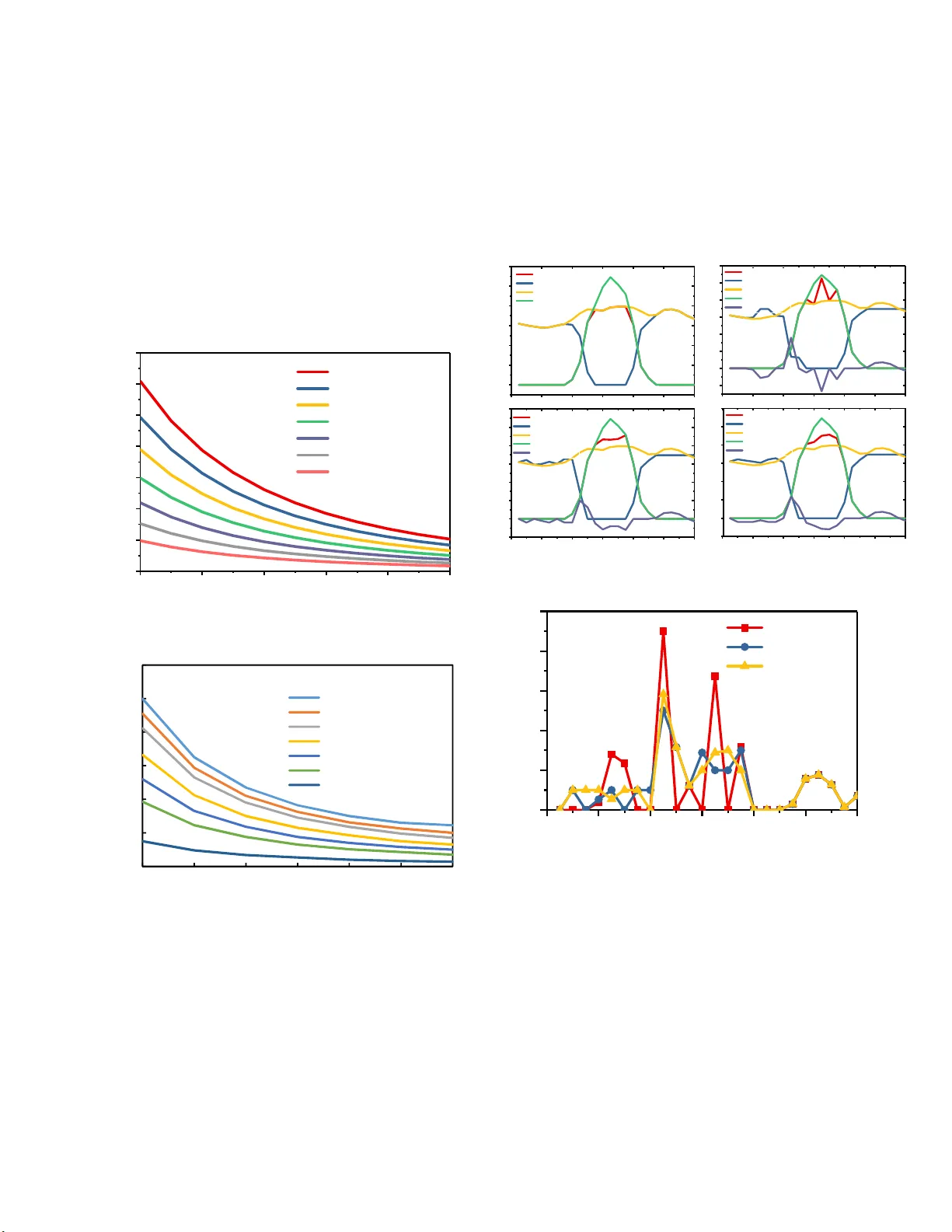
Embedding Lit hium-ion Battery Scra pping Crite rion and Degradation Model in Optimal Operation of Pea k-shaving Energy Stora ge Qingchun Hou, Yanghao Y u, Ershun Du, Hongjie He, Ning Zhang , Chongqing Kang Depart ment of Electric al Engi neering Tsinghua U niversity , B eij ing, China Guojing Liu, Huan Zhu Econo mic Research Instit ute Jiangsu Electric Po wer Compan y, Nanjing, China Abstract —Lithium-ion battery systems have b een used in practical power systems for peak-shaving, demand response, and frequency regulation. How ever, a lithium-ion battery is degrading while cycling and would be scr apped w hen the capaci ty reduces to a cer tai n threshold (e.g. 80%). Such scrapping criterion may not ex plore the maximu m benefit fr om the battery storage. In this paper, we propose a novel scrapping criterion for peak-shaving energy storage based on battery efficiency, ti m e- of- use price, and arbitrage benefit. A ne w batter y life mod el with scrapp ing param eters is the n derived using this criterio n. Embed ded with the life mod el, an optim al operation meth od for peak -shaving energy stora ge system is presen ted. The results of case study sho w t hat the operation meth od could maximize the benefits of peak-sha ving e ner gy stora ge w hile delaying batte ry degrada tion. Compared with the tradition al 8 0% capacity-bas ed scrapp ing criterion, our efficien cy-based scrapp ing criterion can significan tly im prove the li fetime b enefit of the batter y. Index Terms —power system peak shaving, e nergy stor age operation optimization, l ithium-ion battery life mo del, b attery scrapping criterion. I. I NTRODUCTION The burden o f power system peak-s having has been sh arply increasing due to the m ismatch between peak lo ad a nd renewable energy generation and th e s hortage of f lexible resources [1][2][ 3]. To ease the b urden, more energy storage syst e ms are needed to im pro ve pow er system flexibility [4][ 5]. Lithium-i on battery sys tems have been used in practical pow er syst e ms for peak-shaving [6], de mand response [7], frequency regulation [8 ][9][10], and r enewable energy f luctuations suppression [1 1][12]. Meanwhile, lithium -ion battery degrades over time and cycles [13]. The corres ponding b attery l ife is called calendar and c ycle l ife, respectively. The degradation is mainly ca used by two factors: 1) loss o f lithium-ions due to solid electrolyte interface ( SEI) formation; 2) lo ss of electrode sites [14]. T hese changes increase internal resistance, decrease capacity and effi ciency, a nd eventually shorten the battery life [15][16]. Theref ore, the d egradation inevitably affe cts the optimal operation and lifetim e ben efit o f lithium -ion batte ry energy storage, especially with increasing energy storage penetration i n power system. It’s in urgent need to m odel lithium- ion battery degradation, determine the battery end of life, a nd consider battery degradation cost in grid-conne cted energy storag e operation. Researchers have de veloped several models to uncover the battery d egradati on m echanism. Xu et a l. classifie d t he l ithium- ion battery l ife m od el into th eoretical models an d empirical models [17]. The theo retical models f ocus on the loss of activ e materials and ex planation o f degradation mechanism , w hile the empirical models are easier to em bed in operation an d plan ning research. They further p roposed a new empirical stress model for cycle loss of three types of lithium -ion batter ies. Wang et al. establish ed a capacity loss m odel for g raphite-LiFePO4 battery [14]. The capacity loss is a power-law function o f charge throughput an d an Arrhen ius function of temperatur e. Redondo-Iglesias et a l. fou nd that there is high d ependence between efficiency decrease and capacity fade in calendar life of lithium- ion battery for electric vehicl es [18]. They proposed a battery degradati on model based on the correlation between capacity fade an d efficiency d ecrease. However, degradation of grid-connected lithiu m-ion batte ry has been l argely ignored because it is d ifficult to embed the c omplex a nd non-linear battery life model in optim ization [11][19][20][ 21][22]. In addition, Mishra et a l. conclude th at the lithium -ion battery life varies significantly for different energy storage application scenarios such a s time-of-use energy management, so lar s elf- consumption , and power backu p [23]. Recently, many r esearchers try to consi der the battery degradation in optim ization and integrate battery li fe model into different power sy stem applications [24]–[26]. For instan ce, Maheshw ar i et al. developed a no n-lin ear lithium- ion b attery degradation model from experimental data. They embedded th e model into energy storage optimal operati on by making it compatible with a MILP formulati on [ 26]. Li e t al. integrate d the lithi um-ion ba ttery degradati on such as capacity fade into power flow m od el. T he model aim s to m ake the renewable energy d ispatchabl e using ener gy storage system [2 7]. Liu et al. introduced the capacity loss model w.r.t time, d epth o f discharge ( DOD), and charge throughout [28]. They f urther simplified the model to incorporate it in capacity planning o f lithium- ion b attery c onsideri ng PV generation. Shi et al. assum ed that the lithium-ion battery has a constant marginal degradation cost [6]. The degradation c ost is included in the objective of battery operatio n model for peak shav ing and frequency regulati on. T hey con cluded that the benefit o f joint optimization is high er than the sum of individual benefits f rom peak shaving and frequency regulation. He et al. used power function to model the relation ship between maximum ba ttery cycle number and D OD, and then derived the loss of battery life [29]. They applied the model into battery operation for frequency regulation on electri city market. T ran, et al. p roposed a battery life model for micro-grid application based o n lifetim e energy throughput. T he re sults show the model could improve both the e nergy storage efficiency a nd battery life [12]. Shi, et al. applied R ainflow algorithm to identify battery cycle number and embedded the cycle-based cost into optimization model. They proved the model is c onvex and can extend the lifetime of battery [30] . This work w as su pported by Scientific & technical project of State Grid (No. 5102-201918309A-0-0- 00). Corresponding author: Ni ng Zhang (ningzhang@tsinghua.edu.cn) a nd Chongqing Kang (cqkang@tsing hua.edu.cn). Previous researches about embedding battery d egradati on in optimization mainly focus on ca pacity decrease. In contrast, the efficiency decrease, especi ally for c ycle life, is less studied [18]. For exam ple, Ahmadi et al. applie d use d lithium- ion battery pack for po wer system applicati on and concluded that the efficiency is important for re-used lithium -ion battery. Due to the lack of efficiency data, they a ssum ed that efficien cy decrease has the s ame tre nd as capacity fade [16]. I n a dditio n, the scrapping criterion for grid-connected energy storage syst e m is seld om dis cussed and most rese arches use a capaci ty- based criterion, such as 80% capacity to determine the e nd of life (EOL) of lithium-ion battery [15]. This cr iterion may be suitable for electrical vehicles b ecause high po wer is req uired for e xtreme traffic scenar ios. Ho wever, it is hardl y effe ctive for grid -connected b attery. A fter r eaching 8 0% capacit y, the grid-connected batter y can still benefit fro m electricit y marke t for pe ak-shavin g and frequenc y regulatio n. The ne w scrapi ng criterio n and d egrad ation model are nece ssary to explore maximu m benefit from grid -connected lithium-ion ba ttery energy storage syste m. To bridge the gap, this paper proposes a novel efficiency - based lithi um-ion battery scrapping criterion for peak-shaving energy storage system to explore maximum lif etime benefit from the battery. This criterion c an be used for both new and re-used battery in power sy stem pe ak shaving applications . We also present a battery life model using the proposed criterion. In the model, maximum cycle number of the b attery is derived as a function of DOD and scrappi ng parameters to make the model easy to embed in optimizatio n. Furthe rmore, we proposed an optimal operation model for peak-shaving energy storage syst e m considering the battery degradation. T his m odel can maximize the benefit of p eak-shav ing wh ile minimizin g the cost of battery degradation. Theref ore, the contributions of this paper are as f ollows: (1) We p ropose an effici ency-based lithium- ion battery scraping criteri on for p eak-shaving e nergy storage to explore maximum lifetim e benefit from lithium-ion battery ; (2) We prop ose a new ba ttery degradation model with scraping param e ters; (3) We embed the battery degradation model in energy storage operation optimizati on to maxim ize the bat tery lifet ime benefit. A lifetime be nefit com par ison between e fficiency - based a nd capacity-based scrapin g criterions is conducted using Jiangsu pr ovince data in Chi na. The remain der of t he pa per is org anized as follows. Section II pr esents the methodology framework, th e ne w scrapping criterion, and batt ery life model. S ection II I int roduces the energy storage operation optimization model. Section IV presents a case s tudy using Jiangsu p rovince da ta in China for validation a nd compares the benefit b etween efficiency -based and capacity-based degradatio n model. Section V concludes the paper and des cribes future w ork. II. M ETHODOLOG Y A. Framework There are three main issues related to lithium- ion b attery optimal operation: 1) how to quantify the EOL of lithium- io n battery? 2) How to model the batte ry l ife and embed it in operation optimizati on with different scrapping criteria ? 3) How to make the operati on optimization model ea sy to solve? To this e nd, Fig. 1 shows the fram ework of o ur three-stage method. First, we propose a new scrapping criterion b ased on battery efficiency and time-of-u se prices . Second, w e derived a battery life model using this criterion. The model descri bes the relationshi p among maximum cycle num be r, DOD, and the scrapping p arameter . Third, t he maximum c ycle nu mber is expressed as the l oss rate o f the battery an d then embedded in the operation optim ization model. The objective o f the optimization model is to maxim ize the benefit of peak-sh aving and minimize the cost of battery degradation. The constraints of e nergy storage, re newable energy, and power balance are also taken into consideratio n. To make the optimization problem easy to solve, degradation cost is approxim ated by multiplying the cycle loss r ate and investment co st of energy storage. Figure 1. The framew ork of the method B. Efficiency-b ased Sc rapping Criterion Instead of 80% o f rated capacity, our lithium -ion b attery scrapping criteri on for peak-shaving energy storage is b ased on battery efficiency , tim e-of-use prices, and arbitrage ben efit. The core idea is that th e battery should be scrappe d when the arbitrage benefit of pe ak-shaving battery energ y stor age cannot balance the battery operat ion and maintenance (O&M) cost: c c c / + / p dis v cha s dis cha v s dis cha p s E E E E ( ) (1) where E is el ec tricity charged into the battery in the valley load time of power system . p and v are electricity prices in the p eak load time and the valley load time, respectively . dis and ch a are the discharge and c harge efficiency of the b attery, respectively . c s is the average O&M cost for unit c harge or discharge. It should b e n oted that the effici ency of energy storage here is not coul ombic efficiency but en ergy efficien cy. When incorpo ra ting the sc rapping criterion in to battery life model, the most difficult part is to model the efficiency decrease of lithium -ion battery, w hich is seldom studied in the cy cle life [18]. T hus, we try to establish a r elationshi p among average energy efficiency, c apacity, and resistance. Fig. 2 illustrates t he equivalent circuit of a lith ium-ion battery a nd how it is connected to the grid b y inver ter. We assum e that lithium-i on battery ch arges and discharges with cha n and d is n C current , respectively . cha V and dis V are the average voltage of charge and di scharge, respectively . Then, the scrapping criterion can be expressed in terms of internal resistance R , and c apacity L C (with the un it of Ah) as fol lows: 2 2 ( ) ( ) dis total inv dis cha inv cha dis dis dis inv L L cha c ha cha L L dis dis dis v cs inv L cha cha cha p cs L P P n C V n C R n C V n C R V n C R n n V n C R (2) where inv is the a verage overall efficiency of the inverter. tot al is t he total efficienc y of inverter and batter y. dis dis a c L ch ha L n n C V C V should hold in (2 ) to ensure the b alance between o utput power a nd inp ut power. Figure 2. Illustration of lithium -ion battery connected to the grid . Simplify ing equation (2), the lithium -ion bat tery r eaches EOL when : ( + ) ( ) dis cha L dis cha v cs cha p cs inv dis V yV C R n yn n y n (3) Equation (3) t ransforms th e original efficiency-based criterion t o a capacity and resistance-bas ed criterion. C. Lit hiu m-ion Battery Life Model The cycle degrada tion o f normalized capacity * L C and normalized resist ance * R is a function of D OD and charg e throughput [13]: * 0 1 1 ( ) L C d Q (4) * 0 1 1 ( ) R d Q (5) where d is the D OD. Q is the char ge throu ghput. 0 , 1 , 0 , 1 ar e calculated as: 3 2 4 0 3 1 4 2 5 0 4 1 ( ) 7.348 10 ( 3.66 7) 7.600 10 4.081 10 ( ) 2.1 53 10 ( 3.725 ) 1.521 10 2.798 10 V V V V (6) where V is the a verage voltage of charge a nd dis charge. To derive the ba ttery lif e usin g maximum c ycle number, we approximately express Q by cy cle number an d DOD: 2 st N d Q C (7) where N is the cycle n umber, st C is the batter y initial capacit y. 1) Li fe mode l with cap acity-b ased scrappin g criterio n Substituting ( 7) into (4), the function between cycle number N and capacity degradation is : * 2 2 0 1 ( 1 ) = 2 L st C N C d d (8) Thus, the maximum c ycle number en d N with ca pacity degradation c riterion end C is: 2 2 0 1 ( 1 ) = 2 end end st C N C d d (9) Equation (9) establishes the relationship between l ife model and capacity- based scraping cr iterion. 2) Li fe mode l with efficien cy-base d scrapp ing c riterion Multiplyi ng (4) by (5), the function between * * L C R and Q is: * * 0 1 0 1 0 1 0 1 = 1 ( ( ) ) ( ( ) ) ( ( ) ) ( ( ) ) L C R V d Q V d Q V d V d Q Q (10 ) Equation (10) shows that * * L C R and Q have a cubic relationshi p. T hus, there is an analytical-form solution for Q expressed by * * L C R , denoted as: * * , cubic L R Q C f d (11) where c ub ic f is a real and po sitive solution of cubi c func tion (10). I n this pap er, this sol ution functio n c ub ic f is calculated by Mathematica. Substituting (7) int o (10), t he m aximum cycle nu mber en d N with new scrapping criterion end end C R is: 2 , 2 cubic end end end st f C R d d N C (12) where the end end C R is deter mined by (3 ). Equation (12) e stablish es the relat ionship between life model and effi ciency-based s craping criteri on. D. Degrada tion Co st of Lithium -ion Batte ry Because the relat ionship shown in equations (9) and (1 2) is complex, it is d ifficult to embed life model into b attery operation optimization. T o this end, we express battery degradation as the loss rate o f b attery life [29]. T he loss rate ( , ) cy cle n d f after n cycles w ith DOD d can be derived as: ( , ) = ( ) cy cle end n N f n d d (13 ) Battery reaches end of life when the accum ulated loss ra te is “1”. Therefore, the b attery cycle degradation cost ( , ) loss J n d can be e xpressed as the product of l oss rate and total investment cost: ( , ) ( , ) cycle cycle inv J n d n d f (14) where inv is the inv estment cost of the lithium- ion battery. Similarly , the calendar life loss ra te ca l f and the corresponding degradation cos t ca l J in an oper ation day can b e calculated as follows: 1 = cal end cal cal inv f T J f (15) where the end T is co nst ant calendar life. The calculation method can be found in [13]. III. O PERATION O PTIMIZATI ON M ODEL A. Objective fun ction Our aim is to maximize the peak-shav ing benefit o f energy storage system with PV and load wh ile delaying the ba tte ry degradation. Therefore, the objective of o ur operation optimization model, shown in (16), is t o minimize the sum of four terms: 1) the cost of buying electricity from grid, 2) the cost o f p eak c apacity, 3) the O& M cost o f lithium-ion b atter y, and 4) the degrad ation cost of lithium-ion battery . The benefits of pe ak-shaving en ergy s torage com e from re ducing the cost of the first t wo terms. 1 1 1 , , , , 1 1 min + ( ) (0.5 , ) M M c cs cha i t i t K day g g pk dis t t t i t M cycle i t K cal i t i i t P J d J L P P J ( 1 6 ) where day J is the daily tota l cost. M , K are the numbers o f time inter vals and ba tteries, respectivel y. g t , c are the t ime- of-use elec tricit y price at ti me t and t he peak capacit y price, respectivel y. g t P , pk L are the po wer fr om the g rid at time t and peak capa city durin g a da y, re spectively. , s i t di P , , cha i t P , , i t d , , cycl e i t J , ca l i J are the disc harge power, charge power, DOD, cycle degrada tion co st, and calendar degradation cost of i th battery at time t , respec tively. B. Constraints The operati on optimization m odel considers power balance constraint, energy s torage constraints, and renewable energy constraints. The power balance constraint is the power from the g rid g t P , PV generation r t P , and energy stora ge output , , dis cha i t i t P P should m eet the load t L at time t . , , 1 g cha i t i t K r dis t t t i P P P P L t M ( ) (17) The energy storage has constr aints of maximum SOC and power output. , , , 1 , 0 1 0 0 i t dis dis i cha ch i i t i b i a t S C P p P p t M i K (1 8) where b i C , di s i p , cha i p are energy capacity, maximum discharge and charge power of i th ba ttery , respectively . , i t S is the SOC of i th battery at tim e t . The relationship between SOC and energy st orage net output is as follows : , , , , , , 1 , , / 1 , 1 dis cha ch b dis i t b i t i t i a i t i t i t i t t t M i P P P S S P K (19 ) where , , , , , d b i t is ch a i t i t P are net o utput, dis charge and char ge efficiency o f i th batter y at time t , respec tively. The DOD is cal culated as follo ws: , , / 1 , 1 b b i b t t i i d t M K C i P (20) The output of renewable e nerg y should be less than the day- ahead predicti on r t p . 0 1 r r t t t p p M (21) The peak capacity is the maximum load from the grid d uring a day: max pk g t L P (22) For real-w orld power systems i n China, selling electricit y to the grid fr om the battery -PV system is not al lowed currently . 0 1 t g t M P (23 ) C. Solving Meth od We l inearize equation (13 ) usin g piec e-linearized technique and solve the operation optimization model with Gurobi. The solving meth od is listed in A lgorithm 1. Algorithm 1: O perati on optimizat ion of peak - shaving storage input B attery param e ters (ini ti al capac ity and efficie ncy, average discharge and charge vol tage, r ated charge and disc harge curre nt), loa d, PV predic tion, time- of- use prices Step 1 D eterm ine the EOL using (2) - (3 ) or 80% capacity S tep 2 D eterm ine param eters of life model us ing (9) o r (1 2 ) Step 3 Derive the degradati on cost using (13 ) - (15 ) and piece-li nearize deg radatio n cost f unction S tep 4 S olve the linear opera tion optim ization model (16 ) - (23) wi th Gurobi Outpu t Battery output, PV gener atio n, C ost o f buying electr icity, peak capacity, O&M, an d degradati on D. Lifetime Be nefit Estim ation According to (13)-(15), a battery reaches EOL when the sum of loss rate is “1”. T herefore, the lifetime total T (the unit i s day) can be expressed as: 1 (0.5 , ) 1 + total cal t M cycle t t T J d J (24) Then, the total be nefit total J of the b attery c an be estimated as the product of typical dail y benefit and lifetim e: 0 total day total J J J T (25 ) where 0 J is the da ily operatio n cost without batter y. It s hould be not ed th at (2 4) is an estimation of battery lifetime when using average capacity and efficiency in daily operation. A ccurate life time can be obtained by sim ulating battery operation iteratively until the b attery reaches the EOL, which comput ation burden is much heavier. IV. C ASE S TUDY We co nsider a 4 MW / 4 MWh lithium- ion energy storage syst e m with 12 MW PV in Jian gsu Province, C hina. In the rest of the section, we wi ll validate the propose d m ethods with analysis and com parison of case study results . A. Data Description In this c ase study, real-w or ld data such a s time-of-use pr ices, PV generati on, and load profi le are from J iangsu Province of China. T he load profile and typical P V predicti on of a typical day are show n in Fig. 3. The load m ainly has tw o peaks durin g 9:00-17:00 and 20:00-22:00. The PV generation peaks a t 13:00. Noted that the uncertainty of PV p rediction can be consi dered using stochastic program ing with typical generation scenarios [6]. The time-of-use prices and peak capacity price for industrial load a re listed in T able I. We use 18650 lithium- ion battery pack that is rated for 3 00-500 full cycles. T he parameters for the battery EOL calculation are show n in Table II. We assume that all batteries in the pack have the sam e degradation tr end. Thus, the average voltage and c urrent in Table II are param e ters of a single battery. The investm ent cost of lithium -ion battery is 1 76 $/kWh [31]. To st udy how the degradation and scrapping criterion affect the operat ion and peaking-shaving b enefits of battery, fo ur scenarios a re studied. Scenario 1: without e nergy storage ; Scenario 2: with energy storage but ignoring de gradati on; Scenario 3 : with energy storage and 80% capacity-based scrapping criteri on, and Scenario 4: with e nergy stora ge and efficiency- based sc rapping criterion. Calcul ated by Equation (2) with para mete rs in Table I, the overall scraping e fficien cy is 61.6%. The overal l efficien cy is def ined as the product of charge and di scharge effici ency. 0 4 8 12 1 6 20 24 0 2 4 6 8 10 12 P ow er (M W ) Time (h) Load PV prediction Figure 3. Lo ad a nd PV prediction of a ty pic al day T ABLE I T HE TIME - OF - U SE PRICES AN D PEAK CAPACITY PR ICE FOR INDUSTRIAL AND COMMERCIAL LOA D IN J IANG SU Peak energy /kW h Norm al ener gy /kW h Valle y ener gy /kW h Month ly Peak capacit y /k W Price /$ 0.153 0.09 2 0.05 10 Time 8:00 - 12:00 17:00- 21:00 12:00 - 17:00 21:00- 24:00 0:00-8: 00 _ T ABLE II T HE PAR AMETERS OF CALCUL ATING BATTERY EOL The charge and d ischarg e effici ency of batt ery The effici ency of inv erter Avera ge volta ge /V Char ge and disch arge curr ent / C Avera ge O&M co st /($/ k Wh) 89 % 9 0% 3 .7 1 0 .0 1 7 B. Results of Ba ttery Life Mode l Fig. 4 and F ig. 5 show how capacity an d effici ency degrad e over cycle number w ith a certain DOD , respe ctively. B oth capacity a nd efficiency o f lithium -ion battery decrease when cycle number increases, but th e decr easing rate f or efficiency is much slo wer. For example, after 2 000 full DOD cycles, the capacity drops from 100% to 50% while the e fficiency declin es from about 80% to 60%. B esides, smaller DOD can significantly slow down the d ecrease in capacity a nd efficienc y. 0 2000 4000 6000 8000 10000 1 2000 50 60 70 80 90 100 Capaci ty (%) Cycle number 0.5 DOD 0.55 DOD 0.6 DOD 0.65 DOD 0.7 DOD 0.75 DOD 0.8 DOD 0.85 DOD 0.9 DOD 0.95 DOD 1 DOD Figure 4. The degradation of bat tery capacity with increasing cycle number 0 1000 2000 3000 4000 5000 6000 7000 60 65 70 75 Efficienc y (%) Cycle number 0.50 DOD 0.55 DOD 0.60 DOD 0.65 DOD 0.70 DOD 0.75 DOD 0.80 DOD 0.85 DOD 0.90 DOD 0.95 DOD 1 DOD Figure 5. The degradation of bat tery overall eff ici ency with increasing cycle number We further show the relationship be tween maximum c ycle number and DOD using either capacity-based (Fig. 6) or efficiency- based scrapping criterion (Fig. 7 ). Under 50% capacity- ba sed or 60 % effi ciency-based s crapping c riterion, reducing DOD from 1 to 0.5 c an extend the battery lifetime approximately four times and two times, respectively . The maximum c ycle num ber is significantly affected b y t he scrapping criterion. For example, both reducing the scrappin g capacity from 80% to 50% and r educing scrapping effici ency from 75% to 60% can exten d the lifetim e of battery nearly five times. As show n in Fig . 6 and Fig. 7, t he relationship between the maxim um cycle num ber and D OD is convex. T his feature makes it easy to linea rize the m aximum c ycle num ber function and embed it in the optim ization model. 0.5 0.6 0.7 0.8 0.9 1. 0 0 200 0 400 0 600 0 800 0 10000 12000 14000 Cycle number DOD 50% ca pacity 55% cap acity 60% cap acity 65% cap acity 70% cap acity 75% cap acity 80% cap acity Figure 6. The relationship betw een maximum cycle number and depth of discharge given capacity scrapping cri terion Figure 7. The relationship betw een maximum cycle number and depth of discharge given ef ficienc y scrapping criterion C. Results of Optimal Operation Fig. 8 shows the battery out put, lo ad, PV generation, power from the grid, P V prediction from four scenarios in a typical day. In Scenario 1, the local load is mainly served by po wer from the grid an d PV generati on. Some PV generati on wi ll be curtailed at noon d ue to overg eneration. In Scenario 2, the battery main ly charges during valley load time (3:0 0-7:00) and PV o vergenerati on time (10:00-16:00), a nd discharges d uring peak load time (9:00- 10:00 a nd 1 9:00-23: 00). In Scena rio 3 and 4, the charg e and discharge tim e are similar to Sc enario 2. However, considering the trade-off between peak-shaving benefit and battery degradation , the batteries in Scenario 3 and 4 te nd to charge and discharge with much s maller D OD and less frequently to extend the lifetime of b attery . Fig . 9 further show s the D OD of S cenarios 2, 3 , 4. The DOD in Scen ario 2 is predominan tly be tween 0.3-0.9, wh ile DOD in Scenario 3 and 4 are m ainly between 0 .1-0.6 and 0.1-0.5, respectiv ely. T he number of high DOD cycles is a lso smaller in Scenario 3 a nd 4 . 0 4 8 12 16 20 24 0 2 4 6 8 10 12 0 4 8 12 16 20 24 -2 0 2 4 6 8 10 12 0 4 8 12 16 20 24 -2 0 2 4 6 8 10 12 0 4 8 12 16 20 24 -2 0 2 4 6 8 10 12 Power (MW) PV generation Power from grid Load PV prediction Scenario 1 PV generation Power from grid Load PV prediction Battery output Scenario 2 Power (MW) Time (h) PV generation Power from grid Load PV prediction Battery output Scenario 3 Time (h) PV generation Power from grid Load PV prediction Battery output Scenario 4 Figure 8. The battery output, load, PV generation, power fr om grid, PV prediction of four scenarios. 0 4 8 12 16 20 24 0.0 0.2 0.4 0.6 0.8 1.0 DOD Time (h) Scenario 2 Scenario 3 Scenario 4 Figure 9. The depth of disc ha rge of scenarios 2, 3, and 4. Table III shows the daily and lifetime benefits of battery in four scenari os. 1. Com par ing Scenario 2 with Scenario 1, the daily cost decreases from 12918 $ to 12150 $ by 768 $. T he b enefit in Scenario 2 main ly comes from the reduction of energy cost (689 $) and p eak capacity cost (236 $) due to peak-shav ing energy storage. The peak capacity is reduced by 0.7 MW from 7.66 MW to 6.96 MW. However, wh en the investm ent cost is taken into consideration , the lifetime benefit reduces to -315161 $ . This means that the benefits from arbit rage and peak-shaving cannot even cover the investm ent. The m ain r eason is that battery has a short lifeti me (506 days) due to high DOD cycles and thus fast degradation sp eed. 0 2000 4000 6000 8000 10000 12000 0.4 0.5 0.6 0.7 0.8 0 .9 1 Maximium Cy cle Number Depth of Discharge 60.0% 61.6% 62.5% 65.0% 67.5% 70.0% 75.0% Efficiency Criterion 2. Compari ng Scena rio 3 w ith Scenari o 2, t he daily benef it reduces from 768 $ to 580 $ due to lower DOD cycles, higher energy c ost, and the consideration of degradation cost in daily operation. However, the lifetime benefit increases from - 315161 $ to 690380 $ beca use the li fetim e increases by nearly 100% to 1052 days. T his means that considering the proposed degradation m odel in battery optimal operation can extend battery lifet ime and increas e lifetim e b enefit. 3. Compari ng Scena rio 4 w ith Scenari o 3, t he daily benef it slightly increases from 580 $ to 670 $, whi le t he lifetime b enefit sharply increases by nearly 100%, from 609380 $ to 1199935 $. The d aily benefit increase is mainly due to the decreasing degradation c ost from 167 $ to 98 $. The l ifetime ben efit increase is attributed to both higher daily benefit and longer lifetime (from 1052 days to 1792 d ays). T his result indicates that the efficiency criterion can extend battery lifetime as well as raise dai ly operation ben efit. T ABLE III T HE DA ILY AND LIFETIME BEN EFIT OF BATTERY IN FOUR SCENARIOS Scenar io 1 Scenar io 2 Scenar io 3 Scenar io 4 Daily toal co st/$ 1 2918 12150 12338 12248 Daily energy cost/ $ 10363 9674 9704 9674 Daily O&M co st/$ 0 157 148 157 Daily degra dation cost/ $ 0 0 167 98 Daily peak lo ad cos t/$ 2555 2319 2319 2319 Daily benef it of battery /$ - 7 68 580 670 Lifeti me es timation / day - 5 06 1052 1792 Lifeti me be nefit of battery /$ - -3151 61 609380 11999 35 Peak capacity /MW 7.6 6 6.96 6.96 6.96 V. C ONCLUSION AND F UTURE WORK This paper proposes a novel lithium- ion battery scrapping criterion for peak-shaving energy storage based on e nerg y efficiency, time-of-u se prices, and a rbitrage benefit of e nergy storage. This criterion ca n be used for both new and re-used battery in power system applications to determine EOL. T he maximum cycle number is derived a s a function o f DOD and scrapping par ameters, whi ch makes the life m odel easy to embed in battery operati on optim ization model. T he re sults o f the case study validat e the p roposed method and show t hat battery life is significantly affected by DOD an d scrappin g criterion. Embedding the battery degradation model into operation optim iza tion model can maximi ze the lifetim e benefit of the lithium-ion energy storage system, and delay the battery degradation by fewer high DOD cycles. Compared to the 80% capacity- ba sed c riteri on, a suitable efficiency- based scrapping criterion c an incr ease the battery l ifetime benef it by 100% w ith extended battery lifetim e and i mproved daily oper ation benefit. There are some limitations of the proposed scrapping criterion and life model: 1) this criterion is more suitable for power system s with stable tim e-of-use prices. For real-w or ld power systems , especially in China, the price is contro lled by the governm ent a nd quite stable. If it is not the case, the scrapping criterion and life model have to be c hanged according to the pol icy. In such a scenario , sw itching to the proposed capacity- ba sed life model is also a good option. 2) T he proposed optimal operation model c annot be applied in power syst e m frequ ency regul ation. Th e cycle number in this paper is approximatel y c alculated be cause time gr anular ity for pe ak- shaving is hour ly based. This may not hold for frequency regulation due to frequent c ycles in a sho rt time inter val. Future wor k a ims at using th e Rainflo w a lgor ithm to co unt cycle n umber a nd con siderin g frequency regulatio n be nefit in the batter y operatio n with the p roposed life model. R EFERENCES [1] Y. Ding, C. Shao, J. Yan, Y. Song, C. Zhan g, and C. Guo, “Economi cal flexibility opti ons for integrating fluctuating wind energy in p ower systems: The case of China,” Appl. Ene rgy , vol. 228, no. January, pp. 426–436, 2018. [2] N. Zhang et al. , “Reducing curtailment of wind electricit y in Chin a by employing electric bo ilers for heat and pumped hydro f or ene rgy storag e,” Appl. Energy , vol. 184, pp. 987–994, Dec. 2016. [3] Q. Hou, N. Zhang, E. Du, M. Miao, F . Peng, a nd C. K ang, “Probabilistic duck curve in h igh PV pe netration power system: Conc ept, modeling, and empirical analysis in China,” Appl. Energy , vol. 242, pp. 205–215, May 2019. [4] J. L eadbette r and L. G. S wan, “Selection of ba ttery technol ogy to sup port grid-integrated renew able electrici ty,” J. Power Sources , vol. 216, pp. 376–386, 2012. [5] Q. Hou, E. Du, N. Zhang, and C. Kang, “I mpa ct of High Renewable Penetration on the Power System Operation M ode: A Data-Driven Approach,” IEEE Trans. Power S yst. , vol. 35, no. 1 , p p. 731–741, Jan. 2020. [6] Y. Shi, B. Xu, D. Wang, and B. Zhang, “Using Battery Storage for Peak Shaving and Frequency Regulation: Joint Optimization for Superlinear Gains,” IEEE Trans. Power Syst . , vol. 33, no. 3, pp. 28 82–2894, 2018. [7] M. F . Zia, E. Elbouchikhi, and M. Benb ouzid, “Optimal operational planning of scalable DC microgrid with demand re sponse, island ing, and battery d egradation cost considerations,” Appl. En ergy , vol. 237, no. December 2018, pp. 695–707, Mar. 2019. [8] Q. Zhai, K. Meng, Z. Y. Dong, and J. Ma, “Modeli ng and Analysis of Lithium Battery Operations in Spot and Fre qu ency Regulation Service Markets in Australia Electricity Ma rket,” IEEE Trans. Ind. Informatics , vol. 13, no. 5, pp. 2576–258 6, 2017. [9] D.-I. Stroe, M. Swierczynski, A.-I. Stroe, R. Laerke, P. C. Kjaer, and R . Teodorescu, “De grada tion Behavior of Lithium-Ion Batteries Based on Lifetime Models a nd F ield Meas ured F requency R egulation Mission Profile,” IEEE Trans. Ind. A ppl. , vol. 52, no. 6, pp. 5009–5018, Nov. 2016. [10] D. I. Stroe, V. Knap, M. Swierczynski, A. I. Stroe, and R. Teo dorescu, “Operation of a grid-connected li thium-ion battery energy st orage system for prim ary frequency regulation: A b att ery lifetime p erspective,” IEEE Trans. Ind. Appl. , vol . 53, no. 1, pp. 430– 438, 2017. [11] D. M . Davies et al. , “Combined economic and technological evaluation of battery energy storage for g rid a pplications,” Nat. Energy , Dec. 20 18. [12] D. Tran and A. M . Khambadkone, “Energy management for lifetime extension of energy storage system i n micro-grid applications,” IEEE Trans. Smart Grid , vol. 4, no. 3, pp. 1289–1296, 2013. [13] J. Schmalstieg, S. Käbitz, M. Ecker, and D. U. Sauer, “A holisti c aging model for L i(NiMn Co)O2 ba sed 18650 lithium-ion batteries,” J . P ower Sources , vol. 257, pp. 325–3 34, 2014. [14] J. Wang e t al. , “Cycle-life model for graphite-LiFePO4 cells,” J. Power Sources , vol. 196, no. 8, pp. 3942–3948, 2011. [15] K. S mith , A. Saxon, M . K eyser, B. L und strom, Z. Cao, a nd A. Roc, “L ife prediction model for grid-connected Li-ion battery energy storage system,” Proc. Am. Control Conf. , no. August, pp. 4062–4068, 2017. [16] L. Ahmadi, M. Fowler, S. B. You ng, R. A. Fraser, B. G affney, and S. B. Walker, “Energy efficiency of Li-ion battery packs re-used in stationary power applications,” Sustain. Energy Technol. Assessment s , vol. 8, pp. 9–17, 2014. [17] B. Xu, A. Oudalo v, A. Ulbig, G. Andersson, and D. S. Kirschen, “Modeling of lithium-ion battery degradation for cell life assessment,” IEEE Trans. Smart Grid , vol . 9, n o. 2, pp. 1131–1140, 2018. [18] E. Redondo-Iglesias, P. Venet, and S . Pelissier, “Efficiency De gradati o n Model of Lithium-Ion Batteries for Electric Vehicle s,” IEEE Trans. Ind. Appl. , vol. 55, no. 2, pp. 1932–1940, 2019. [19] D. Pozo, J. Contreras, and E. E. Sauma, “Unit commitment with ideal and generic energy storage units,” IEEE Trans. Power Syst. , vol. 29, no. 6, pp. 2974–2984, 2014. [20] Y. Yang, S. Bremner, C. Menictas, and M. Kay , “Batt ery energy storage system si ze determ in ation in re newable energy systems: A review,” Renew. Sustain. Energy Rev . , vol. 91, no. Marc h, pp. 109–125, 2018. [21] A. Ou dalov, R. Cherkaoui, and A. B eguin, “Sizing and Optimal Operation of Batte ry Energy Storage System for Peak Shaving Application,” in 2007 IEEE Lausanne Power T ech , 2007, no. 1, p p. 621– 625. [22] A. J. Gonzalez-Castell an os, D. Pozo, and A. Bischi, “Non-i deal Linear Operation Model for Li-ion Bat teries,” IEEE Trans. Power Sy st. , pp. 1 – 1, 2019. [23] P. P. Mishra e t al. , “A nalysis of degrad ation in re sidential battery energy storage systems for rate-based u se-cases,” Appl. Energy , vol. 264, no. February, p. 114632, 202 0. [24] H. Qiu et al. , “Multi-interval-uncertainty constrained ro bust dispatch for AC/DC hybrid mi crogrids with dynamic energy storag e degradati on,” Appl. Energy , vol. 228, no. J un e, pp. 205–214, 2 018. [25] G. Li, G. Li, and M. Zhou, “Model and application of renewable energy accommodation capacity calculation considering utilization level of inter-provincial tie-line,” Prot. Control Mod. Power S yst. , vol. 4, no. 1, 2019. [26] A. M aheshwari, N. G. Paterakis, M. Santarelli, and M . Gibescu, “Optimizing the operati on of energy storage usin g a non-lin ear lithium- ion battery degradati on model,” Appl. En ergy , vol. 261, no. October 2019, p. 114360, 2020. [27] Y. L i et al. , “ Design o f minimum c ost degradation-conscious lithium-ion battery energy storage s ystem to achieve rene wable po we r dispatchability,” Appl. Energy , vol . 260, no. Nove mber 2019, p . 114282, 2020. [28] J. Liu, Z. Wang, and C. Hu, “Optim izing Size of Lithiu m-I on Batt ery Combined with PV Generation,” in 2019 IEEE Transportation Electrification Conference and Ex po (ITEC) , 2019, no. i, pp. 1–6. [29] G. He, Q. Chen, C. Kang, Q. Xia, and K. Poolla, “Cooperation of Wind Power and Battery Storage to Provide Frequency Regulation in Power Markets,” IE EE Trans. Power Syst. , vol. 32, no. 5, pp. 3559–3568, 2017. [30] Y. Shi, B. Xu, Y. Tan, and B. Zhang, “A Convex Cycle-base d Degradation Model for Battery Ene rgy Storage Planning and Operation,” Proc. Am. Control Conf. , vol . 2018-June, pp. 4590–4596, 2 018. [31] L. Go ldie-Scot, “A Behind the Scenes Take on Lithium-ion Battery Prices,” 2019. [ Online]. Available: https://about.bnef.com/blog/behind- scenes-take-lithium-ion-battery -prices/.
Original Paper
Loading high-quality paper...
Comments & Academic Discussion
Loading comments...
Leave a Comment