Growing Random Graphs with Quantum Rules
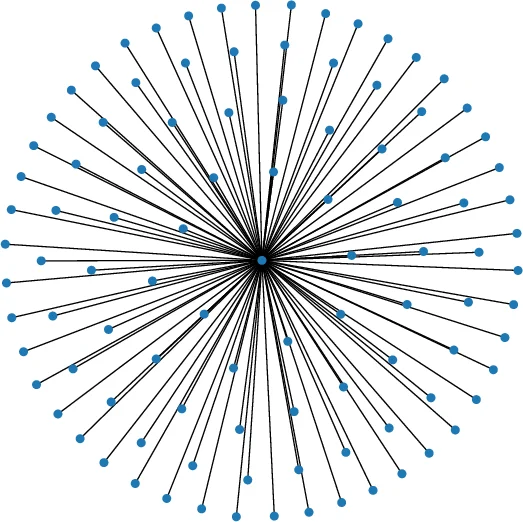
Random graphs are a central element of the study of complex dynamical networks such as the internet, the brain, or socioeconomic phenomena. New methods to generate random graphs can spawn new applications and give insights into more established techniques. We propose two variations of a model to grow random graphs and trees, based on continuous-time quantum walks on the graphs. After a random characteristic time, the position of the walker(s) is measured and new nodes are attached to the nodes where the walkers collapsed. Such dynamical systems are reminiscent of the class of spontaneous collapse theories in quantum mechanics. We investigate several rates of this spontaneous collapse for an individual quantum walker and for two non-interacting walkers. We conjecture (and report some numerical evidence) that the models are scale-free.
💡 Research Summary
The paper introduces two novel stochastic growth models for random graphs that are driven by continuous‑time quantum walks (CTQWs). The core idea is to exploit the intrinsic randomness of quantum measurement: a quantum walker evolves unitarily on a graph whose adjacency matrix serves as the Hamiltonian, and after a random waiting time drawn from an exponential distribution with mean τ, the walker’s position is measured (a “spontaneous collapse”). A new vertex is then attached to the measured node, and the process repeats, increasing the Hilbert space dimension by one at each step.
Single‑walker model (tree growth).
With a single walker, each measurement adds exactly one edge, so cycles never form and the resulting structure is a tree (clustering coefficient zero). For short τ the walker tends to collapse repeatedly on the central node of emerging star‑like subgraphs, producing many small stars linked by single edges. The authors analytically examine a star of size n: the adjacency matrix has eigenvalues ±√n and 0 (multiplicity n‑2), leading to an oscillation frequency √n for the central amplitude. The probability of staying on the centre after time t is cos²(√n t). Consequently, the expected star size scales as 1/τ, and the expected number of stars after N steps is ≈N/τ. As τ increases, the walker has more time to explore the graph, yielding larger, more complex trees.
Multiple‑walker model (general graph growth).
To generate graphs with non‑zero clustering, the authors introduce two independent walkers that collapse simultaneously. A new vertex is attached to each of the two measured nodes; if the nodes differ, a triangle is formed, creating cycles and a positive clustering coefficient. The model reproduces richer topologies, and the authors show that the leaf‑fraction (proportion of degree‑1 nodes) drops sharply with τ and stabilises around τ≈1, suggesting a phase transition in the bulk‑surface structure of the graph.
Numerical investigations.
Simulations on graphs of 500–1000 vertices were performed for τ ranging from 0.001 to 10. Key observables include:
- Degree distribution: For larger τ the empirical distribution approaches a power law d(k)∝k^{‑α}, indicating scale‑free behaviour.
- Diameter: Peaks for intermediate τ (≈0.1–1), reflecting a balance between local star formation and global exploration.
- Leaf fraction: Decreases rapidly with τ and becomes τ‑independent beyond τ≈1, hinting at a universal property.
- Clustering coefficient: Decreases with τ and is essentially zero for the single‑walker case; multi‑walker cases retain modest values.
Spectral analysis.
The authors compute characteristic polynomials of adjacency matrices composed of multiple star components, showing that each star contributes a pair of non‑zero eigenvalues ±√n. Tracking eigenvalue evolution confirms the intuitive picture of star growth and subsequent saturation.
Complexity considerations.
Because the adjacency matrix is non‑negative, the Hamiltonian is stoquastic. Stoquastic Hamiltonians are believed to be simulable in polynomial time, implying that the quantum growth process does not introduce exponential computational overhead compared with classical random‑walk based models.
Limitations and future work.
The study relies heavily on numerical evidence; rigorous proofs of scale‑free exponents, infinite‑size limits, and the nature of the apparent first‑order transition at τ≈1 are absent. Potential extensions include:
- Introducing entanglement or interaction between walkers.
- Adding a quantum coin to move toward discrete‑time quantum walks.
- Embedding a third walker that performs quantum search on the evolving graph, aiming at “optimized” network structures.
- Formal complexity‑theoretic classification of the growth dynamics.
Overall, the paper presents an inventive bridge between quantum stochastic processes and network science, showing that quantum measurement can serve as a principled source of randomness for graph generation, and opening several avenues for both theoretical analysis and practical applications in quantum‑enhanced network design.
Comments & Academic Discussion
Loading comments...
Leave a Comment