El experimento de Cavendish
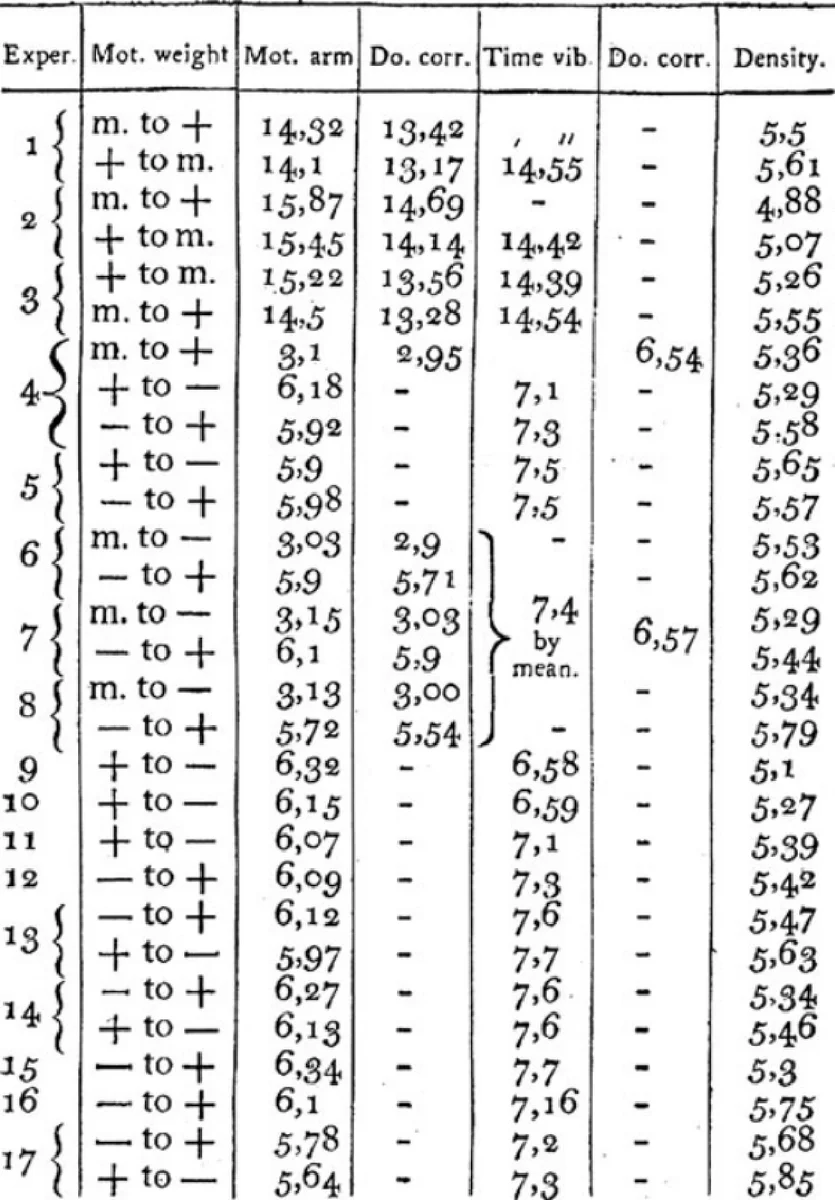
In this article, we present a description of the \textit{apparatus} employed by Henry Cavendish, which in turn is actually a compendium of 17 complex experiments, to try to experimentally measure the universal gravitation constant, theoretically posed by the divine Sir Isaac Newton, in his monumental \textit{Principia Mathematica}.\ Since the gravitational force is very small, gravitational experiments in the laboratory are highly susceptible to strange disturbances. Measuring gravitation in the laboratory is then that problematic and today such difficulties persist.
💡 Research Summary
**
The paper revisits Henry Cavendish’s 1798 experiment to determine the universal gravitational constant (G) and the Earth’s density, presenting it as a compilation of seventeen interrelated sub‑experiments. It begins with a historical overview, noting that while Newton’s inverse‑square law was well‑verified on astronomical scales, laboratory verification at terrestrial distances remained elusive for more than a century. Cavendish’s apparatus consisted of two lead spheres (≈5 cm diameter) suspended from a thin torsion wire (≈1 m long) attached to a rigid wooden frame inside a 10‑foot‑high room. The room was sealed to minimise temperature fluctuations and air currents, and observations were made from outside via telescopes and lamps, ensuring a non‑contact measurement.
The authors describe in detail the mechanical layout: the lead balls are housed in narrow wooden boxes, the torsion wire is anchored to a central balance bar, and two external masses (W and W) can be moved on pulleys to exert controlled torques on the system. By moving these masses between two positions, the balance bar is deflected in opposite directions; the resulting angular displacement is read on a Vernier scale divided into 0.025 mm increments. Cavendish determined the equilibrium (rest) point by recording three successive extrema of the damped oscillation and taking the midpoint between the first and third extrema, a method that reduces bias from the gradually decaying motion.
The paper conducts a thorough error analysis. Primary sources of systematic error include thermal expansion of the torsion fiber, residual air currents affecting the shallow wooden boxes, limited resolution of the scale, and possible electromagnetic interactions with the surrounding metal fixtures. Cavendish himself noted the shallow depth of the boxes made the system unusually sensitive to airflow, a flaw he intended to correct in future trials. Random errors stem from the manual timing of oscillations and the subjective reading of the scale.
Subsequent 19th‑century work is surveyed, highlighting how researchers such as Mackenzie, Nevil Maskelyne, and later torsion‑balance experiments (e.g., the Schiehallion mountain measurement) built upon Cavendish’s design. The authors point out that the torsion‑balance method became the standard for G determinations throughout the 1800s, largely because it embodied the same principles of isolation, mechanical stability, and non‑contact observation that Cavendish pioneered.
Modern verification efforts are also discussed. In 2001, a University of Washington team employed a metallic ring suspended from a torsion pendulum, with ten equally spaced holes, to test the inverse‑square law at a separation of 218 µm, confirming Newtonian predictions to high precision. Contemporary experiments now use laser interferometry, ultra‑high‑vacuum chambers, and cryogenic temperature control to reduce uncertainties to parts in 10⁵ or better, far surpassing the capabilities of the 18th‑century setup yet still relying on the same fundamental torsional principle.
The authors conclude that Cavendish’s experiment is more than a historical curiosity; it established methodological foundations—temperature control, mechanical isolation, and indirect optical readout—that remain central to precision gravimetry. The continuity of methodology over more than a century, combined with advances in materials science and measurement technology, has progressively refined the value of G while preserving the core experimental philosophy introduced by Cavendish.
Comments & Academic Discussion
Loading comments...
Leave a Comment