Software Framework for Tribotronic Systems
Increasing the capabilities of sensors and computer algorithms produces a need for structural support that would solve recurring problems. Autonomous tribotronic systems self-regulate based on feedback acquired from interacting surfaces in relative m…
Authors: Jarno Kansanaho, Tommi K"arkk"ainen
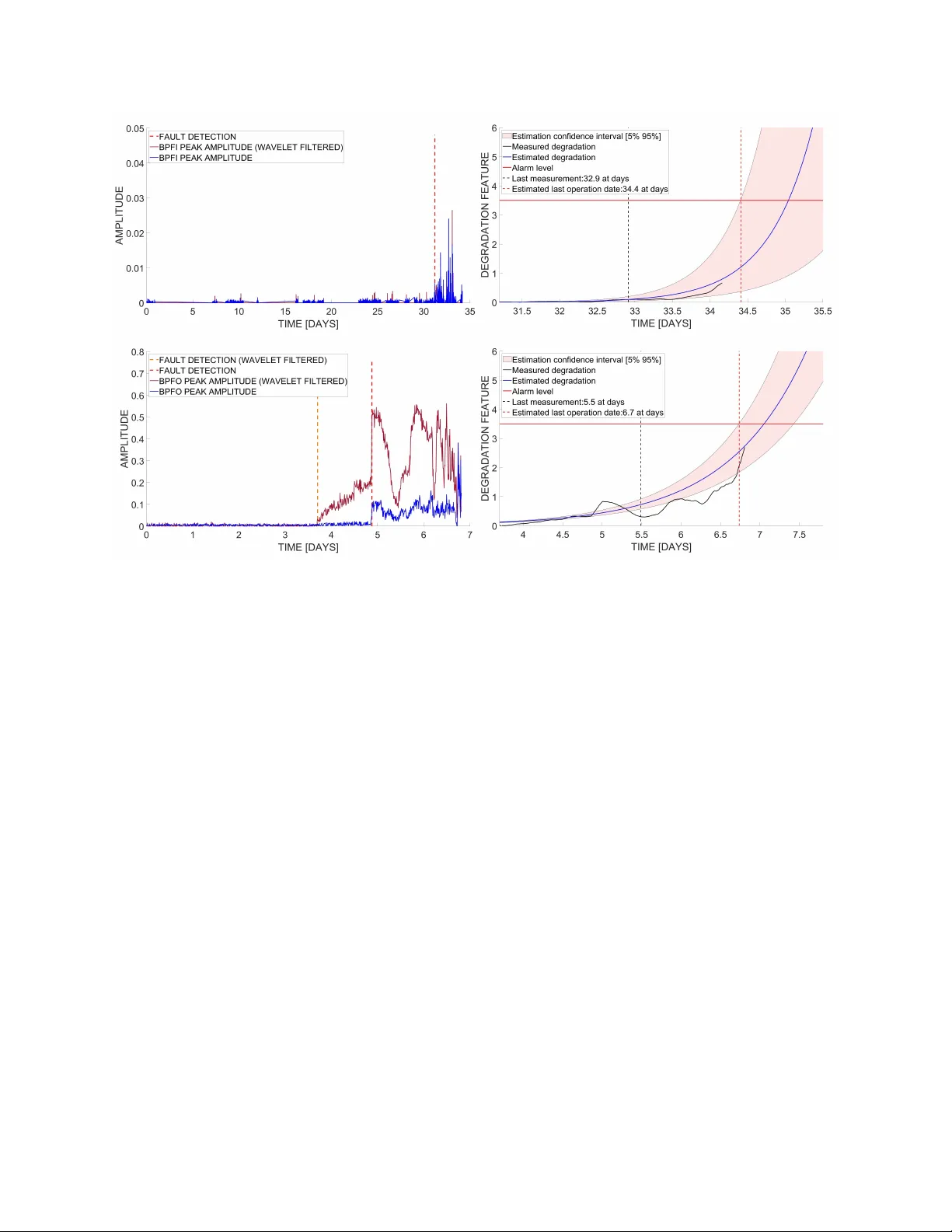
S O F T W A R E F R A M E W O R K F O R T R I B OT R O N I C S Y S T E M S A P R E P R I N T Jar no Kansanaho ∗ Faculty of Information T echnology Univ ersity of Jyväskylä, FI-40014, Finland jarno.m.kansanaho@jyu.fi T ommi Kärkkäinen Faculty of Information T echnology Univ ersity of Jyväskylä, FI-40014, Finland tommi.karkkainen@jyu.fi October 31, 2019 A B S T R AC T Increasing the capabilities of sensors and computer algorithms produces a need for structural support that would solve recurring problems. Autonomous tribotronic systems self-re gulate based on feedback acquired from interacting surfaces in relati ve motion. This paper describes a software frame work for tribotronic systems. An example of such an application is a rolling element bearing (REB) installation with a vibration sensor . The presented plug-in framework of fers functionalities for vibration data management, feature e xtraction, fault detection, and remaining useful life (R UL) estimation. The frame work was tested using bearing vibration data acquired from N ASA ’ s prognostics data repository , and the e valuation included a run-through from feature extraction to fault detection to remaining useful life estimation. The plug-in implementations are easy to update and ne w implementations are easily deployable, e ven in run-time. The proposed software frame work improv es the performance, efficienc y , and reliability of a tribotronic system. In addition, the framework f acilitates the ev aluation of the configuration complexity of the plug-in implementation. K eywords Software frame work · T ribotronic system · Bearing diagnostics · Bearing prognostics · V ibration analysis 1 Introduction The term ’tribology’ was introduced and defined in The Jost Report [ 1 ] as "the science and technology of interacting surfaces in relativ e motion and of the practices related hereto." It was reported that enormous amounts of resources were wasted because mechanical surface phenomena was ignored [ 2 ]. Ho we ver , The Jost Report did not pay much attention to wear, the most significant tribological phenomenon [ 2 ]. T ribology enables the effecti ve design of both machines and lubrication to minimize the impact of friction and wear [ 3 ]. The successful implementation of tribological practices into design procedures for v arious machines and mechanisms has resulted in significant economic savings through improv ements in machine performance and reliability [ 3 ]. T ribology combines physics, chemistry , materials engineering, machinery theory , and products of its own engineering science [ 4 ]. Holmberg [ 5 ] defined a taxonomy for different le vels of occurrence of tribological phenomena: univ erse, global, national, plant, machinery , component, contact, asperity , and molecular . Each le vel of this classification comprises its o wn components and interactions between them. A system is a set of related and interdependent elements that regularly interact to form an integrated whole [ 6 ]. At high lev els of abstraction, a tribological system can be described with input and output variables and the interaction between these v ariables. The input variable is energy (e.g. force, moment and kinematics) and the output variables are matter and signals [ 4 ]. The interaction between elements causes friction and wear losses that are summarized as loss-outputs [ 7 ]. A tribosystem is a tribological system that includes at least two contacting tribological components [ 8 ]. A number of input and output v ariables in tribosystems can be infinite due to the number of physical and chemical properties of the surfaces in contact, the properties of the medium (i.e., the lubricant), and the environmental conditions [ 4 ]. For example, bearings, gears, and mechanical seals are tribological components. Glav atskih et al. [ 3 ] outlined a tribotronic ∗ Corresponding author A P R E P R I N T - O C T O B E R 3 1 , 2 0 1 9 system that would unite the tribosystem, sensors, real-time control system, and actuators. The tribotronic system is distinct from a mechatronics system because tribosystems use loss outputs, such as wear , vibration, temperature, and friction. Controlling these outputs allows a tribosystem to try to improve the performance, ef ficiency , and reliability of the whole machine [ 3 ]. A desirable output for a tribotronic system should be expressed in terms of endurance life and probability of failure [5]. One of the main goals of software engineering is to reuse existing code [ 9 ]. A software’ s framework is a "skeleton" that can be used to supplement application-specific software, so recycling existing framew orks is a key technique when implementing software platforms. Software frame works are customized to complete a software application by filling empty code blocks with product-specific code. An important property of software frameworks is in version control, which enables the framework itself to call user-implemented methods, that is not possible in traditional procedural programming [ 10 ]. If framew orks were not reused during software dev elopment, a considerable amount of code would be written repeatedly . Our study focused on object-oriented frameworks. Abstract framew orks provide only software interfaces; they do not include any runnable code. White-box frameworks use subclasses as extensions, which allo w the implementation of methods for base classes. Black-box framew orks use a composition approach and include ready-to-use classes. It should be noted that white-box frameworks e volve into black-box frameworks o ver time [ 10 ]. Gray-box framew orks merge black-box and white-box issues [ 11 ]. Layered framew orks can be applied to large-scale platforms when dif ferent frame works need to be fused [ 12 ]. Plug-in frame works are specialized because the y implement application-specific interfaces, or plug-ins [ 13 ]. Caropreso et al. [ 14 ] presented a structured methodology to define the architecture for communication frame works with multiframe capabilities. It is an example of maintainable object-oriented framew ork that is applicable for embedded systems. Figure 1 depicts a schematic tribotronic system with a control unit and real-time software. In this paper, we introduce an object-oriented plug-in framew ork for such tribotronic systems. The main moti vation for this work is to speed up and ease the deployment of diagnostic and prognostic algorithms into tribotronic systems. The purpose of the frame work is to improv e the performance, efficienc y , and reliability of a tribotronic system. The frame work cov ers asset and data management, fault detection, and R UL estimation. The plug-in implementation was targeted for REBs that were monitored using vibration sensors. Figure 1: Tribotronic system [3] The contents of this article are as follows. Bearings (tribosystem) and their wear evolution will be introduced in Section 2. V ibration analysis, fault detection, and R UL estimation will be explained in Section 3. Designed plug-in framework will be presented in Section 4. Evaluation of the framew ork will be presented in Section 5. Finally , conclusions and future work will be summarized in Section 6. 2 T ribosystem - Bearing Bearings are widely used in rotating machinery to support shafts. Bearings are cate gorized as either REBs or journal bearings based on their structure [ 15 ]. REBs contain spherical, cylindrical, tapered, and needle-shaped rolling elements. 2 A P R E P R I N T - O C T O B E R 3 1 , 2 0 1 9 Journal bearings contain only sliding surfaces –no rolling elements. Monitoring the condition of these bearings is very important because a bearing f ailure is a very common reason for machine breakdo wns. In general, the vibration and temperature of a tribological system (REB) are monitored to detect lost outputs. 2.1 Bearing failure Bearing failures fall under six categories: fatigue, wear , corrosion, electrical erosion, plastic deformation, and frac- ture/cracking [ 16 ]. W ear is a cumulati ve quantity re gularly measured by condition monitoring systems [ 17 ]. When a measured variable directly determines a bearing’ s failure, the condition monitoring method is direct; when a measured variable pro vides information associated with and affected by the bearing’ s condition, the condition monitoring method is indirect [ 17 ]. Common direct and indirect condition monitoring methods consist of the following [ 18 , 19 , 20 , 21 ]: i) indirect methods include monitoring vibrations, acoustic emissions, basic physical quantities such as heat and pressure, basic electrical quantities such as voltage, current, po wer , and resistance, and ultrasound or infrared testing, and ii) direct methods include oil debris or corrosion analysis as well as visual inspection using a borescope. Furthermore, new methods are constantly being sought that would be more sensiti ve when measuring bearing defects [22]. Presenting wear e volution of REBs as a time series describes the wear interaction and ev olution at different lifetime stages. A fiv e-stage descriptive model of lifetime stages, as depicted in 2, was presented by El-Thalji et al. [ 23 ]: running-in, steady-state, defect initiation, defect propagation, and damage growth. First, during the running-in stage, the surface asperities and the lubrication film become uniform [ 23 ]. The length of the steady-state stage, the healthy stage of the lifetime, depends on maximum load-induced stress, material characteristics, and operating temperature [ 24 ]. The wear process starts and will af fect surface roughness and wa viness in the defect initiation stage [ 25 ]. According to [ 23 ], this stage can be further split into the sub-stages of defect localization, dentation, crack initiation, and crack opening. The linear elastic fracture mechanics commences in the defect propagation stage [ 26 ]. Incubation, stable, and crack-to-surface are then the main ev ents that occur [ 27 ]. The defect starts to grow in three dimensions (length, width, and depth) and the ef fect of multiple asperities is prominent in the damage gro wth stage [ 23 ]. Direct condition monitoring makes it possible to detect lifetime stages of wear e volution directly from measurements; ho we ver , this is not possible using raw vibration measurements. Figure 2: W ear ev olution process [23] 3 V ibration analysis V ibration sensors interpret vibration v alues indirectly using mechanical and optical quantities. V ibration sensors are categorized as contacting or non-contacting according to their measurement principles. Both contacting and non-contacting sensors are further divided according to path, speed, and acceleration measurement. Path measurement uses potentiometric transmitters and linear variable differential transformers; speed is measured using principles of electrodynamics and seismometers; acceleration is measured using piezoelectric, piezo-resisti ve, resistiv e, and inductiv e sensors [28]. 3 A P R E P R I N T - O C T O B E R 3 1 , 2 0 1 9 A machine’ s vibrational signature is related to either a standard condition or a fault condition [ 29 ]. A tribotronic system measures vibrations and processes them to disco ver informati ve features using feature extraction. Frequently , features calculated from vibration signals are high-dimensional and non-Gaussian. Further , feature selection is applied to extracted features to leav e over the most relev ant features. Descriptiv e classification for features of vibration signals is the following: i) time-domain features; ii) frequency-domain features; iii) time-frequency-domain features; iv) phase-space dissimilarity measurements; v) complexity measurements; vi) other features [ 30 ]. A considerable amount of research has been directed tow ards the development of the digital signal processing of vibrational signals [22]. 3.1 Fault detection Randall stated [ 29 ] that "fault detection is the first step in the ov erall process of detection, diagnostics and prognostics. Since all signals have to be processed to determine whether a significant change has occurred, the techniques employed must be considerably more ef ficient than those which might be used for the latter processes." Early fault detection allo ws time to predict fault progression and estimate RUL before catastrophic failures occur [ 31 ]. Fault detection is one of the main functionalities in the designed frame work. Depending on the response from the fault detection algorithm, the tribosystem (REB) would be controlled by actuators. 3.2 Remaining useful life estimation R UL estimation is an important prognostic and health management task that enables optimized maintenance plans to enhance production, minimize costly downtime, and av oid catastrophic breakdowns [ 32 , 33 ]. R UL estimation approaches are categorized into physical model approaches, data-dri ven approaches, and hybrid approaches [ 34 , 32 ]. Further , the data-driv en approaches can be categorized into knowledge-based, statistical, and supervised methods [ 35 ]. Recent machine learning approaches have frequently been applied to the diagnoses and prognoses of REBs [ 36 ]. Howe ver , the effecti veness of the machine learning methods rely on the quality of features of vibration signals. An ideal signal processing method should be capable of detecting the bearing degradation phases on changing defect conditions [ 22 ]. Crucial for RUL estimation is to find the most suitable feature to describe the degradation process when vibration measurements are used. Measuring vibrations is an indirect methods to monitor the condition of REBs. R UL estimation is another main functionality of the framework. 4 Implementation of the framework The plug-in framew ork designed for tribotronic systems supports asset and data management, feature extraction, fault detection, and R UL estimation. The framework design is sho wn in Figure 3. A measurement database can be deployed in a local or remote computer . The results of the fault detection and RUL estimation are inputs for a condition analyzer that passes the results to a module that decides ho w the tribosystem is controlled. The general architecture of the system has been presented Figure 1. A component linking the condition analyzer, the decision-maker , and the actual control of the system was not explicitly defined in the frame work because it would depend on the machine, according to the sorts of actions needed to maintain running conditions or stop the machine’ s operation. The frame work includes interfaces for measurement data ( IMeasurementData ), asset data ( IAssetData ), feature extraction ( IFeatureExtractor ), fault detection ( IFaultDetector ), and R UL algorithms ( IRULalgorithm ). The measurement data is acquired from the sensor and the asset data is relates to the tribotronic component in question. Fault detection and R UL estimation are e xecuted by the CConditionAnalyzer class. The PluginLoader class loads the de- sired plug-in that includes the appropriate implementations for the application in question. The BearingApplication plug-in implements the interfaces of the frame work using inheritance (Figure 3). The presented plug-in was designed for REBs. The plug-in implementations are based on pre vious research on feature e xtraction from vibration signals, fault detection, and R UL estimation of REBs. T echnical bearing data is included in the CBearingData class. The bearing dimensions are the minimum data required to calculate characteristic fault frequencies, which are required for the f ault detection algorithm. Measurement data is specialized as a CVibrationData class that handles vibration data. V ibration signals are loaded from the database as sho wn in Figure 1. V ibration data includes vibration signals and their measurement time and sampling frequency . Further , specialization of the measurement data could be easily done, for example, to address temperature and oil debris data that represent other commonly used condition monitoring measurements for REBs. The CConditionAnalyzer class uses the CBearingFeatureExtractor that includes methods to extract specified features from vibrational signals. Methods used to calculate statistical features, such as RMS, skewness, and Kurtosis, include an optimal degradation parameter , a fast Fourier transform (FFT), and a squared en velope spectrum. The FFT is 4 A P R E P R I N T - O C T O B E R 3 1 , 2 0 1 9 Figure 3: Tribotronic plug-in frame work a sub-routine for the squared en velope spectrum calculation. Pre viously , an introduced fault detection algorithm was implemented into CWaveletAnalyzer . The fault detection algorithm is called by CConditionAnalyzer and implemented in the CMetropolisHastings class. The algorithm requires the characteristic fault frequencies of an REB and the sampling frequency of a vibrational signal as input parameters. The algorithm returns a boolean value indication of a fault or not-f ault status. Similar to fault detection, the R UL estimation algorithm is called by CConditionAnalyzer . The model parame- ters are stored in the CBearingData class when a model-based R UL estimation is applied. The accuracy calcula- tions, as defined in equation 1refeq:1, which were used to determine degradation features were implemented in the CBearingFeatureExtractor class. The best degradation feature, the R UL model parameters, and the alarm level are input parameters for the R UL estimation algorithm that was implemented in the CMetropolisHastings class. The R UL algorithm returns the time of the last operation date. The plug-in implementations are tested with unit tests. Unit tests are carefully designed to test the smallest components. Unclear definitions of unit testing leads to bad and inconsistent testing and makes the software error -prone [ 37 ]. This guarantees the reliability of the framew ork being run and can be updated in real-time. A sequence diagram of fault detection and R UL estimation with the suggested realization of the framework are sho wn in Figure 4. The performance of the framework is measured by an internal timer initialized in the first call. Elapsed times for data loading, feature extraction, fault detection, and R UL estimation are recorded. Howe ver , R UL estimation is not ex ecuted if the result from fault detection is neg ativ e, indicating a non-faulty bearing. A very important aspect of a system is its configuration complexity [ 38 ]. A complex algorithm does not need to be complex to configure; e.g. [39]. Complicated configurations can be error -prone and time-consuming, which increases the cost of the system. The meta-parameters of the algorithms play the k ey role in the ev aluation of the configuration complexity . The configuration complexity can be ev aluated based on the meta-parameters in the plug-in implementation: alarmLevelF ault , motherW avelet , nOfDecompLevels , de gP aramW eights , alarmLevelR UL , R ULmodelP arameters and nOfSimulations . 5 A P R E P R I N T - O C T O B E R 3 1 , 2 0 1 9 Figure 4: Sequence diagram of fault detection and R UL estimation 4.1 Specific algorithm descriptions The plug-in’ s implementation of the fault detection algorithm uses time-frequency domain features. The algorithm exploits discrete spline wa velet decomposition with bior6.8 as the basis wa velet [40]. The squared en velope spectrum of the reconstructed signals is searched for characteristic fault frequencies for each w av elet decomposition level, and the peaks are detected based on local maxima. The peak detection algorithm uses a user-defined alarm le vel. A method proposed by Zhang et.al. [ 41 ] for degradation feature selection was integrated into a plug-in; the method defines the feature goodness metrics of correlation, monotonicity , and rob ustness. The optimal degradation feature is selected using a weighted linear combination of the proposed metrics: max X ∈ Ω J = ω 1 C orr ( X ) + ω 2 M on ( X ) + ω 3 Rob ( X ) , (1) where J is the score value, Ω is the set of candidate degradation features, and ω i is the weight for individual metrics. The implemented R UL estimation algorithm is based on the adaptive Metropolis-Hastings algorithm so it can calculate the parameters for the degradation model. The Metropolis-Hastings algorithm is a sampling algorithm based on Markov-Chain-Monte-Carlo (MCMC) algorithm [ 42 ]. MCMC methods aim to solve multi-dimensional integrals using numerical approximations. The Metropolis-Hastings algorithm generates a random walk using a proposal density and a method for rejecting some of the proposed moves. In our study , an Adaptiv e Metropolis (AM) algorithm is used where the Gaussian proposal distribution is updated along the process using the complete information cumulated so far [ 43 ]. A simple exponential de gradation model is used in the ev aluation [44, 45]: Deg = c exp( bt ) , (2) where c and b are the model parameters, t is the time, and D eg is the degradation indicator . The exponential model is very often used in R UL estimation for REBs, although different modifications ha ve been suggested [46]. 5 Experimental results A popular REB dataset from the Center for Intelligent Maintenance Systems (IMS) of the University of Cincinnati was used in the e valuation. Much research has analyzed the IMS dataset [ 48 , 49 , 50 , 51 , 47 , 52 , 53 ]. In these run-to-a- 6 A P R E P R I N T - O C T O B E R 3 1 , 2 0 1 9 T able 1: IMS BEARING DA T A SPECIFICA TIONS BEARING INFORMA TION Bearing model Rexnord ZA-2115 Bearing type Double row bearing VIBRA TION MEASUREMENTS Number of bearings 4 Sampling frequency 20480 Hz [47] Sampling length 20480 data points Shaft rotation speed 33.3 Hz Inner race fault frequency (BPFI) 297 Hz Outer race fault frequency (BPFO) 236 Hz Rolling element fault frequency (BSF*2) 278 Hz D A T ASET 1 Number of measurements 2156 Recording duration 34 days 12 hours Detected bearing faults Bearing 3 / BPFI, Bearing 4 / BSF D A T ASET 2 Number of measurements 984 Recording duration 6 days 20 hours Detected bearing faults Bearing 1 / BPFO D A T ASET 3 Number of measurements 4448 Recording duration 31 days 10 hours Detected bearing faults Bearing 3 / BPFO failure-tests, four Re xnord ZA-2115 double row bearings were installed on one shaft. The shaft rotation (2000 RPM) and the radial load (6000 LBS) were constant during the test-runs and all bearings were force-lubricated. During the test-runs, the designed lifetime of the bearing was exceeded for all failures. The IMS bearing data specifications are collected in T able 1. Datasets for the ev aluation were selected based on recent findings by [ 47 ]. Selected cases of faulty bearings include an inner fault in bearing 3 (Dataset 1) and an outer race fault in bearing 1 (Dataset 2). V ibration signals were processed through the realizations of the IFilter and ITransform interfaces, which pro vide feature extraction methods. The resulting features are shown in T able 2. T able 2: VIBRA TION SIGNAL FEA TURES ST A TISTICAL TIME DOMAIN FEA TURES FEA TURE DESCRIPTION 1. Root Mean Square (RMS) The power content 2. Crest Factor The ratio of the peak amplitude to the RMS 3. Shape Factor The RMS divided by the signal mean 4. Impulse Factor The maximum of the peak amplitudes divided by the signal mean 5. Shannon Entropy The de gree of uncertainty 6. Log Energy Entropy The degree of uncertainty 7. Skewness Asymmetry measure of the PDF of the signal 8. Kurtosis The impulsiv eness of the signal FREQUENCY DOMAIN FEA TURES Squared En velope Spectrum 9. - Amplitude of characteristic defect frequency (1. harmonic) TIME-FREQUENCY DOMAIN FEA TURES Re-constructed signal of W av elet Decomposition Lev els (bior6.8) Squared En velope Spectrum 10. - Amplitude of characteristic defect frequency (1. harmonic) The fault detection algorithm calculates the squared en velope spectrum of a vibration signal. The amplitudes of the characteristic fault frequencies are identified from the en velope spectrum using peak detection. The fault state indication 7 A P R E P R I N T - O C T O B E R 3 1 , 2 0 1 9 is determined using an alarm lev el three times the mean of the maximum amplitude of the en velope spectrum of the steady state (i.e., non-f aulty) signal. The alarm le vel was justified earlier based on the noise le vel of non-f aulty vibration signals. The left side of Figure 5 illustrates the fault detection for both bearings, with bearing 3 on the top and bearing 1 on the bottom. The dotted red line represents the f ault detection time. The blue line represents the amplitude of the ball pass frequency of the inner race (BPFI) in the en velope spectrum of the vibration signal. The orange plot is the highest amplitude of the BPFI in the en velope spectrum of the re-constructed signals. The BPFI was detected after testing bearing 3 for 31.5 days (Figure 5). The wa velet decomposition w as determined for twelve lev els, resulting in the highest frequency band from 5 kHz to 10 kHz. The wav elet filtering does not give an y earlier indication of the fault compared to the en velope spectrum. The ball pass frequency of the outer race (BPFO) was detected at 3.8 days into the testing of bearing 1. The wav elet filtered signal provided fault detection 1.1 days earlier than the en velope spectrum. R UL estimation was processed following fault detection using the adapti ve Metropolis-Hastings MCMC algorithm. The best de gradation feature was determined using the goodness metrics defined in equation 1. T able 3 includes the goodness metrics calculations for the selected features. All the features were normalized to the same sampling rate and the features were smoothened using a moving a verage with a windo w of 20 samples. In terms of time, the windo w is 3.3 hours to gi ve adequate resolution for R UL estimation. The exponential model from equation (2) was fitted to the degradation curv es of both cases using the least squares approximation. As a result, the prior estimates of the model parameters (c,b) and the error v ariance were obtained. The Metropolis-Hastings MCMC algorithm was e xecuted with the prior parameters to estimate the R UL. T able 3: DEGRADA TION GOODNESS METRICS 1 2 3 4 5 6 7 8 9 10 0.438 0.342 0.418 0.348 0.424 0.453 0.359 0.328 0.270 0.235 Figure 5 represents R UL estimation with 5% - 95% confidence. RUL estimation w as done after the last measurement date (the dashed black line). Time intervals between the fault detection time and the last measurement date were approximately two days in both cases. The solid blue line is the estimate of the degradation feature. The estimate was calculated using the exponential model with the model parameters obtained from the R UL algorithm at the last measurement date. The estimation confidence limits were calculated using the model parameters at 5% - 95% confidence. The alarm lev el for the degradation feature (the solid red line) was set to 3.5. The threshold was set higher than the last degradation feature v alues in both cases for ev aluation purposes. The dashed red line represents the last operation date of the bearing. The last operation date was determined when the 5% confidence limit reached the alarm threshold. T able 4: FRAMEWORK PERFORMANCE TESTS Intel Core i5-6440HQ CPU 2.60GHz - 100 R UNS / FUNCTION FUNC.2 FUNC.5 FUNC.10 FUNC.13 Mean [s] 0.1616 0.0325 0.1303 24.6400 Std [s] 0.0313 0.0258 0.0365 0.5709 Intel Core i5-4300 CPU 1.90GHz - 100 R UNS / FUNCTION (Fig.4) FUNC.2 FUNC.5 FUNC.10 FUNC.13 Mean [s] 0.2385 0.0490 0.3256 56.1089 Std [s] 0.0137 0.0356 0.2200 2.7115 Performance tests for the developed framework were run on two CPUs. T able 4 includes av erages of 100 runs for the main functions defined in the sequence diagram (Figure 4). It is notable that the function call getAssetData() (FUNC.2) also includes the function call getMeasurementData() that reads vibration signal data from external files, which is an operation dependent upon a hard drive. The function call estimateRUL() depends on how many measurements were collected since the bearings started to be used. Other than R UL estimation calculations, execution times of the main functions are not significantly large. Howe ver , the performance test should be run on embedded systems that include less computing power . 6 Conclusions T ribotronic systems are installed in different en vironments with various configurations. These systems are vulnerable; consequently , complex algorithms are developed to interpret measurements from modern sensors and to make decisions 8 A P R E P R I N T - O C T O B E R 3 1 , 2 0 1 9 Figure 5: Fault detection (LEFT) and R UL estimation (RIGHT): Bearing 3(TOP), Bearing 1(BO TTOM) to control the actuators that give feedback to a tribosystem. The fundamental phenomenon of interacting surfaces is the main motiv ator to build such self-adjusting tribotronic systems. This paper introduced a unique Tribotronic plug-in software frame work that offers assets and data management, feature extraction, fault detection, and R UL estimation for tribotronic systems. The plug-in implementation targets REBs. Further , the plug-in implementation is interchangeable; ergo, it perfectly fits with other tribosystems, such as gears. The frame work is platform-independent and also applies to embedded systems. It is extensible and implements functionalities that require considerable amounts of computing power can be implemented in lower-le vel programming languages. Unit testing capabilities increase the reliability of the implemented plug-in. The experimental e valuation of the tribotronic plug-in framework were done using bearing vibration data acquired from N ASA ’ s prognostics data repository . The ev aluation included a run-through from feature extraction to fault detection to RUL estimation. The purpose of the ev aluation was not to introduce fault detection or RUL estimation methods, but to sho w that the framework can handle complex algorithms and produce reliable results. The performance tests demonstrate that the running times are short on ordinary CPUs; howe ver , the lengths of the vibration measurements can be considerably longer , which leads to longer running times. The configuration complexity of the implemented plug-in is low from the point of vie w of the total number of meta-parameters. Future research should focus on performance testing of the frame work on embedded systems and benchmarking the framew ork in other tribotronic systems. References [1] Great Britain. The jost report. T echnical report, Department of Education and Science. Lubrication Engineering (Education and Research) W orking Group., 1966. [2] W Brostow , G Darmarla, and J Howe. Determination of wear of surfaces by scratch testing. e-P olymers , 4(1), 2013. 9 A P R E P R I N T - O C T O B E R 3 1 , 2 0 1 9 [3] Sergei Gla vatskih and Erik Hoglund. T ribotronics towards acti ve tribology . T ribology International , 41(9):934 – 939, 2008. [4] S Kivioja, S Ki vivuori, and P Salonen. T ribologia - Kitka, kuluminen ja voitelu . Otatieto, 2004. in Finnish. [5] Kenneth Holmber g. Reliability aspects of tribology . T ribology International , 34(12):801 – 808, 2001. [6] A Backlund. The definition of system. K ybernetes , 29(4):444 – 451, 2000. [7] Horst Czichos. T ribology: a systems appr oach to the science and technology of friction, lubrication, and wear . Elsevier Science, 2000. [8] P J Blau. T ribosystem analysis: a practical approac h to the dia gnosis of wear pr oblems . CRC Press T aylor and Francis Group, 2016. [9] Jan Bosch, Peter Molin, Michael Mattsson, and PerOlof Bengtsson. Object-oriented frame work-based software dev elopment: Problems and experiences. ACM Computing Surveys , 32(1es), Mar 2000. [10] R E Johnson and B Foote. Designing reuseable classes. J ournal of Object-Oriented Pr ogr amming , 1988. [11] Michael Mattsson. Object-Oriented F rame works . PhD thesis, Apr 1999. [12] Stephen H. Kaisler . Software P aradigms . W iley , 2005. [13] Christoph Herrmann, Thomas Kurpick, and Bernhard Rumpe. Sselab: A plug-in-based framework for web-based project portals. 2012 2nd International W orkshop on Developing T ools as Plug-Ins, TOPI 2012 - Pr oceedings , Jun 2012. [14] R. de T . Caropreso, R. A. S. Fernandes, D. P . M. Osorio, and I. N. Silva. An open-source frame work for smart meters: Data communication and security traf fic analysis. IEEE T ransactions on Industrial Electr onics , 66(2):1638 – 1647, Feb 2019. [15] B J Hamrock and W J Anderson. Rolling element bearings. T echnical report, NASA, Jun 1983. [16] SKF Group. Bearing in vestigation . SKF Group, 2012. [17] AH Christer and W W ang. A simple condition monitoring model for a direct monitoring process. Eur opean Journal of Operational Researc h , 82(2):258 – 269, 1995. [18] D Banjevic and A K S Jardine. Condition Monitoring . John W iley & Sons, 2008. [19] E Jantunen. A summary of methods applied to tool condition monitoring in drilling. International Journal of Machine T ools and Manufactur e , 42(9):997 – 1010, 2002. [20] J-J W ang, Y -H Zheng, L-B Zhang, L-X Duan, and R Zhao. V irtual sensing for gearbox condition monitoring based on kernel factor analysis. P etr oleum Science , 14(3):539 – 548, Aug 2017. [21] P R Dongre, S S Chiddarwar , and V S Deshpande. T ool condition monitoring in v arious machining operations and use of acoustic signature analysis. International J ournal on Mechanical Engineering and Robotics (IJMER) , 1(1):2321 – 5747, 2013. [22] A Rai and S Upadhyay . A revie w on signal processing techniques utilized in the fault diagnosis of rolling element bearings. T ribology International , 96, Apr 2016. [23] I El-Thalji and E Jantunen. A descriptive model of wear ev olution in rolling bearings. Engineering F ailur e Analysis , 45:204 – 224, 2014. [24] N K Arakere and G Subhash. W ork hardening response of m50-nil case hardened bearing steel during shakedown in rolling contact fatigue. Materials Science and T echnology , 28(1):34 – 38, 2012. [25] J M Cookson and P J Mutton. The role of the en vironment in the rolling contact fatigue cracking of rails. W ear , 271(1):113 – 119, 2011. [26] V V Panasyuk, O P Datsyshyn, and H P Marchenko. The crack propagation theory under rolling contact. Engineering F ractur e Mechanics , 52(1):179 – 191, 1995. [27] A V Olver . The mechanism of rolling contact fatigue: An update. Pr oceedings of the Institution of Mechanical Engineers, P art J: Journal of Engineering T ribology , 219(5):313 – 330, 2005. [28] K H Ruhm. Sensor en der Schwingungsmesstechnik . 2010. [29] R B Randall. V ibration based Condition Monitoring: Industrial, Aer ospace and Automotive Applications . Dec 2010. [30] W Caesarendra and T Tjahjowidodo. A re vie w of feature extraction methods in vibration-based condition monitoring and its application for degradation trend estimation of low-speed sle w bearing. Machines , 5:21, Sep 2017. 10 A P R E P R I N T - O C T O B E R 3 1 , 2 0 1 9 [31] B. Zhang, C. Sconyers, C. Byington, R. Patrick, M. E. Orchard, and G. V achtsev anos. A probabilistic fault detection approach: Application to bearing fault detection. IEEE T ransactions on Industrial Electr onics , 58(5):2011 – 2018, May 2011. [32] Q W ei and D. Xu. Remaining useful life estimation based on gamma process considered with measurement error . In 2014 10th International Conference on Reliability , Maintainability and Safety (ICRMS) , pages 645 – 649, Aug 2014. [33] Jinjiang W ang, Robert Gao, Zhuang Y uan, Zhaoyan Fan, and Laibin Zhang. A joint particle filter and expectation maximization approach to machine condition prognosis. J ournal of Intelligent Manufacturing , Oct 2016. [34] Kamal Medjaher , Diego Alejandro T obon-Mejia, and Noureddine Zerhouni. Remaining useful life estimation of critical components with application to bearings. IEEE T ransactions on Reliability - TR , 61:292 – 302, Jun 2012. [35] J.Z. Sikorska, M. Hodkie wicz, and L. Ma. Prognostic modelling options for remaining useful life estimation by industry . Mechanical Systems and Signal Pr ocessing , 25(5):1803 – 1836, 2011. [36] Q. T . T ran, S. D. Nguyen, and T . Seo. Algorithm for estimating online bearing f ault upon the ability to e xtract meaningful information from big data of intelligent structures. IEEE T ransactions on Industrial Electr onics , 66(5):3804 – 3813, May 2019. [37] Per Runeson. A survey of unit testing practices. IEEE Softwar e , 23(4):22 – 29, Jul 2006. [38] A K eller , B Brown, A Hellerstein, and J Hellerstein. A configuration comple xity model and its application to a change management system. IEEE T ransactions on Network and Service Mana gement , 4:13 – 27, Jan 2007. [39] K Saarinen and J Kansanaho. Decision of faulty bearing, WO2018069187. [40] J Kansanaho, K Saarinen, and T Kärkkäinen. Spline wa velet based filtering for denoising vibration signals generated by rolling element bearings. International J ournal of COMADEM , 21(4), 2018. [41] Bin Zhang, Lijun Zhang, and Jinwu Xu. Degradation feature selection for remaining useful life prediction of rolling element bearings. Quality and Reliability Engineering International , 32(2):547 – 554, 2016. [42] G O Roberts and J F Rosenthal. 2004 general state space marko v chains and mcmc algorithms. Pr obability Surve ys 2004 , 1, Apr 2004. [43] H Haario, E Saksman, and J T amminen. An adaptive metropolis algorithm. Bernoulli , 7, Apr 2001. [44] Kai Goebel, Bhaskar Saha, Abhinav Sax ena, Jose Celaya, and Jon Christophersen. Prognostics in battery health management. Instrumentation & Measurement Magazine, IEEE , 11:33 – 40, Sep 2008. [45] Dawn An, Joo-Ho Choi, and Nam Ho Kim. Prognostics 101 a tutorial for particle filter-based prognostics algorithm using matlab . Reliability Engineering and System Safety , 115:161 – 169, 2013. [46] N. Li, Y . Lei, J. Lin, and S. X. Ding. An improved exponential model for predicting remaining useful life of rolling element bearings. IEEE T ransactions on Industrial Electr onics , 62(12):7762 – 7773, Dec 2015. [47] W Gousseau, J Antoni, F Girardin, and J Griff aton. Analysis of the rolling element bearing data set of the center for intelligent maintenance systems of the univ ersity of cincinnati. In CM2016 , Charenton, France, Oct 2016. [48] Hai Qiu, Jay Lee, Jing Lin, and Gang Y u. W avelet filter -based weak signature detection method and its application on rolling element bearing prognostics. J ournal of Sound and V ibration , 289(4):1066 – 1090, 2006. [49] A K Mahamad, S Saon, and T Hiyama. Predicting remaining useful life of rotating machinery based artificial neural network. Computers and Mathematics with Applications , 60(4):1078 – 1087, 2010. [50] A. Soualhi, H. Razik, G. Clerc, and D. D. Doan. Prognosis of bearing failures using hidden markov models and the adaptiv e neuro-fuzzy inference system. IEEE T ransactions on Industrial Electr onics , 61(6):2864 – 2874, Jun 2014. [51] G Gautier , R Serra, and J M Mencik. Subspace-based damage identification of roller bearing. MA TEC W eb of Confer ences , 20, 2015. [52] P . Arun, S. Abraham Lincon, and N. Prabhakaran. Reliability of using characteristic frequency components for the detection and characterization of bearing faults. Procedia Computer Science , 115:740 – 747, 2017. [53] W . Ahmad, S. A. Khan, and J. Kim. A hybrid prognostics technique for rolling element bearings using adapti ve predictiv e models. IEEE T ransactions on Industrial Electr onics , 65(2):1577 – 1584, Feb 2018. 11
Original Paper
Loading high-quality paper...
Comments & Academic Discussion
Loading comments...
Leave a Comment