Aggregation dynamics of active cells on non-adhesive substrate
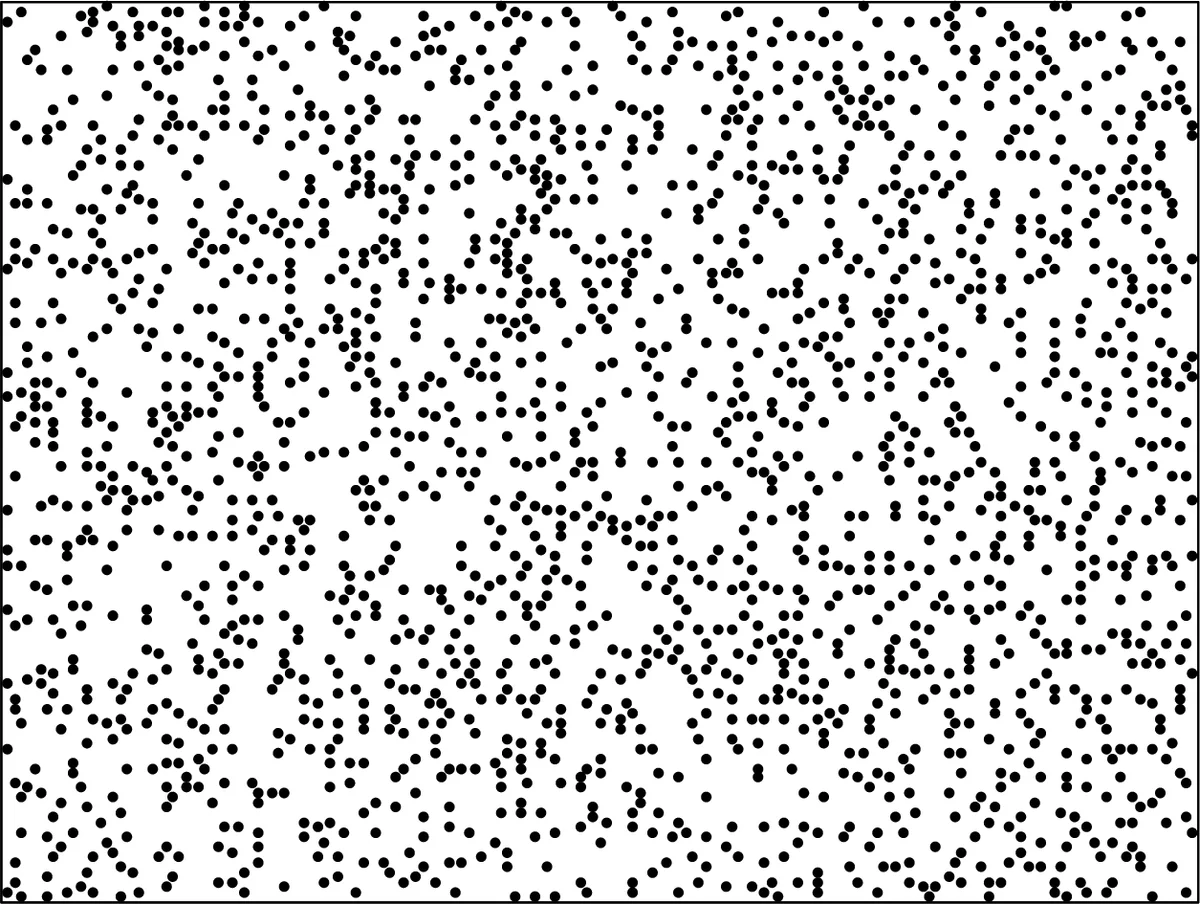
Cellular self-assembly and organization are fundamental steps for the development of biological tissues. In this paper, within the framework of a cellular automata model, we address how an ordered tissue pattern spontaneously emerges from a randomly migrating single cell population without the influence of any external cues. This model is based on the active motility of cells and their ability to reorganize due to cell-cell cohesivity as observed in experiments. Our model successfully emulates the formation of nascent clusters and also predicts the temporal evolution of aggregates that leads to the compact tissue structures. Moreover, the simulations also capture several dynamical properties of growing aggregates, such as, the rate of cell aggregation and non-monotonic growth of the aggregate area which show a good agreement with the existing experimental observations. We further investigate the time evolution of the cohesive strength, and the compactness of aggregates, and also study the ruggedness of the growing structures by evaluating the fractal dimension to get insights into the complexity of tumorous tissue growth which were hitherto unexplored.
💡 Research Summary
In this paper the authors develop a cellular automaton (CA) model to investigate how active cells self‑assemble into compact tissue structures on a non‑adhesive substrate without any external cues. Starting from a random distribution of N₀ cells on a two‑dimensional L × L square lattice, each lattice site can be either occupied or empty. Cells are grouped into clusters; a single cell is also a cluster. At each simulation step every existing cluster is selected in random order and given three possible actions: (i) diffusion, (ii) local reorganization (rolling), or (iii) remain stationary.
Diffusion is governed by a size‑dependent probability Pₘ(n)=μ/n (μ=1), reflecting the experimentally observed slowdown of motility as clusters grow (diffusion coefficient D∝1/m). If a diffusion move is accepted, the whole cluster translates to a randomly chosen empty first‑nearest‑neighbour site. Upon contact with another cell or cluster, the two stick irreversibly (sticking probability = 1), forming a larger cluster.
Local reorganization captures the slow process of cells within a cluster rearranging to increase cell‑cell binding strength. This occurs with probability Pᵣ(n)=β n, where β encodes the intrinsic tendency of a cell type to roll. A candidate move is generated by selecting an empty first‑nearest‑neighbour site for a randomly chosen cell inside the cluster. The interaction energy is defined as E=−γ₁n₁−γ₂n₂−γ₃n₃ with γ₁=3, γ₂=2, γ₃=1 and n₁, n₂, n₃ the numbers of first, second and third neighbours respectively. If the new position lowers the energy (Eₙ≤E₀) the move is accepted; otherwise it is accepted with Metropolis probability exp(−ΔE). Moves that would split the cluster are prohibited.
Simulation results reveal two distinct temporal regimes. In the early “diffusion stage” small clusters rapidly wander, collide, and stick, producing branched, diffusion‑limited‑aggregation (DLA)‑like structures. As clusters reach a critical size n_c (experimentally around 10–30 cells), diffusion essentially ceases and the rolling mechanism dominates. The “compaction stage” then drives internal rearrangements, leading to increasingly rounded, high‑density aggregates.
Quantitative analyses show: (1) the number of clusters N(t) decays roughly exponentially; (2) the total projected area A(t) exhibits a non‑monotonic trajectory—initial growth followed by reduction as clusters compact, matching experimental observations; (3) average binding energy and mean neighbour count rise with time, indicating strengthening cohesion; (4) the fractal dimension D_f, computed from box‑counting, decreases from ~1.7 (branched) to ~1.2 (compact) as β increases, providing a metric to distinguish normal from tumorous growth patterns.
The model demonstrates that the sole principle of maximizing cell‑cell adhesion is sufficient to reproduce the experimentally observed aggregation dynamics on non‑adhesive surfaces, supporting Steinberg’s Differential Adhesion Hypothesis at a microscopic level. By tuning μ and β, the framework can emulate different cell phenotypes, suggesting utility for tissue engineering, cancer modeling, and the design of scaffold‑free bio‑fabrication strategies. Limitations include the two‑dimensional lattice representation, omission of cell shape changes, and neglect of substrate mechanics; the authors propose extending the model to three dimensions and incorporating mechanochemical feedback in future work.
Comments & Academic Discussion
Loading comments...
Leave a Comment