Trends in the optimal location and sizing of electrical units in smart grids using meta-heuristic algorithms
The development of smart grids has effectively transformed the traditional grid system. This promises numerous advantages for economic values and autonomous control of energy sources. In smart grids development, there are various objectives such as v…
Authors: Kayode Adetunji, Ivan Hofsajer, Ling Cheng
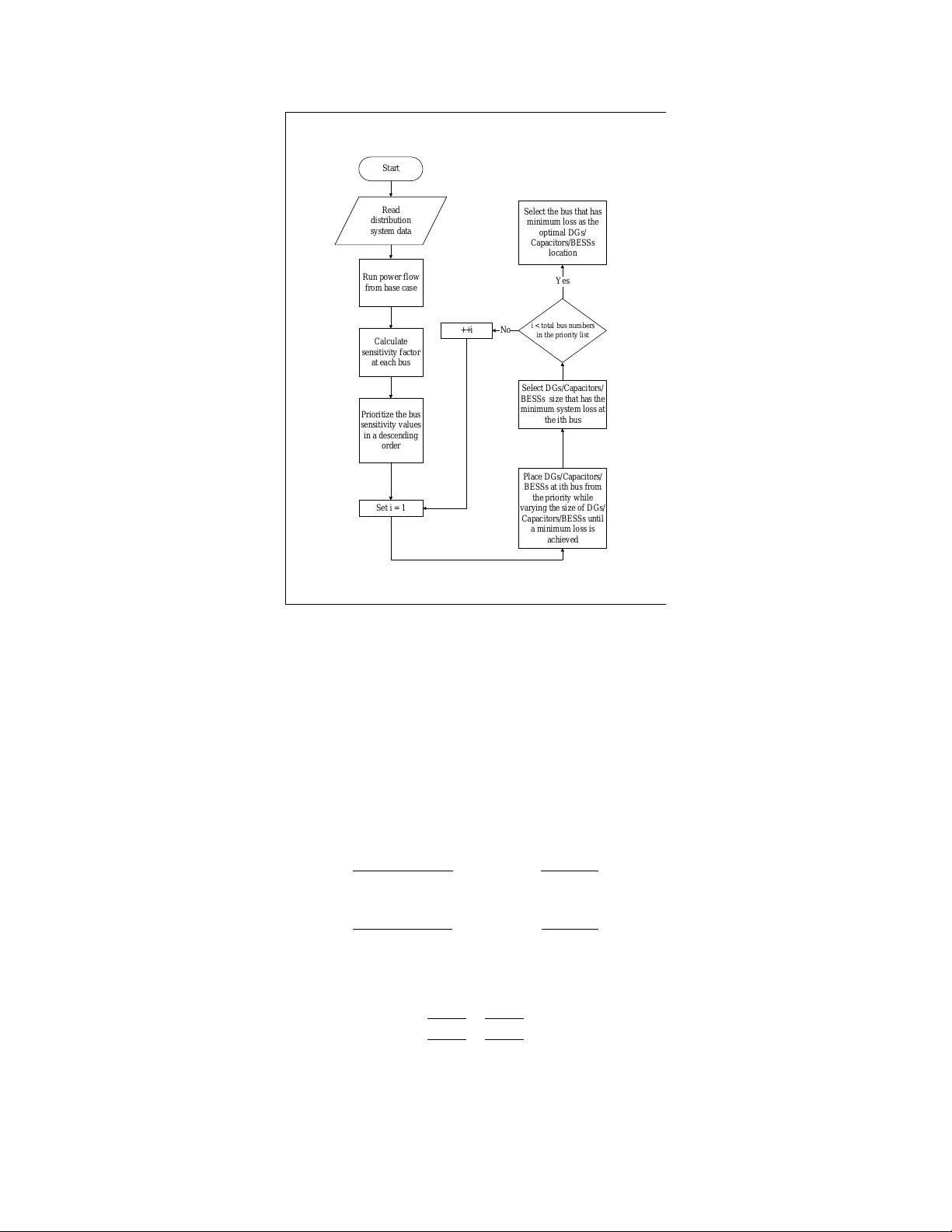
T R E N D S I N T H E O P T I M A L L O C A T I O N A N D S I Z I N G O F E L E C T R I C A L U N I T S I N S M A RT G R I D S U S I N G M E T A - H E U R I S T I C A L G O R I T H M S A P R E P R I N T Kayode E. Adetunji School of Electrical and Information Engineering Univ ersity of the W itwatersrand Johannesbur g kayvins@gmail.com Ivan Hofsajer School of Electrical and Information Engineering Univ ersity of the W itwatersrand Johannesbur g ivan.hofsajer@wits.ac.za Ling Cheng School of Electrical and Information Engineering Univ ersity of the W itwatersrand Johannesbur g ling.cheng@wits.ac.za October 22, 2019 A B S T R AC T The de velopment of smart grids has ef f ecti vely transformed the traditional grid system. This promises numerous advantages for economic values and autonomous control of energy sources. In smart grids de velopment, there are various objecti ves such as voltage stability , minimized po wer loss, minimized economic cost and voltage profile improvement. Thus, researchers hav e inv estigated sev eral approaches based on meta-heuristic optimization algorithms for the optimal location and sizing of electrical units in a distrib ution system. Meta-heuristic algorithms ha ve been applied to solv e different problems in po wer systems and they ha ve been successfully used in distribution systems. This paper presents a comprehensiv e revie w on existing methods for the optimal location and sizing of electrical units in distribution networks while considering the improvement of major objectiv e functions. T echniques such as voltage stability index, po wer loss index, and loss sensiti vity factors hav e been implemented alongside the meta-heuristic optimization algorithms to reduce the search space of solutions for objecti ve functions. Howe ver , these techniques can cause loss of optimality . Another perceiv ed problem is the inappropriate handling of multiple objectiv es, which can also af fect the optimality of results. Hence, a recent method such as Pareto fronts generation has been dev eloped to produce non-dominating solutions. This revie w sho ws a need for more research on (i) the effecti ve handling of multiple objecti ve functions, (ii) more ef ficient meta-heuristic optimization algorithms and/or (iii) better supporting techniques. K eywords Distribution netw orks · Meta-heuristic algorithms · Optimal location and sizing · Smart grids 1 Introduction The field of optimization has developed quickly in the past few years. Optimization problems occur in many fields such as physics, biology , engineering, economics, commerce, management science, and ev en politics. In engineering, areas are spread around process control, characterization, approximation theory , curv e fitting, modelling, which are in the field of ci vil, electrical, chemical, and mechanical. In this cause, se veral optimization solutions ha ve e volved to tackle related optimization problems. Some general methods are numerical, experimental, analytical, and graphical methods. A P R E P R I N T - O C T O B E R 2 2 , 2 0 1 9 Numerical methods have been the most prominent of these methods, and regarded as mathematical programming [ 1 , 2 ]. Over time, mathematical programming (basically deterministic or exact) has spanned into se veral branches such as linear , non-linear , quadratic, dynamic, integer , mixed integer linear , and mixed integer non-linear programming. These methods hav e been termed as deterministic or exact methods. Current de velopments in optimization algorithms hav e seen a major di vision into two types which are deterministic and heuristic. Deterministic algorithms are developed such that the y find an optimal solution at a logically r equired time [ 3 ]. They use the features of the problem to generate a search graph where con vergence to optimum v alues is attained. Howe ver , the tougher problems may pose higher computational requirement such as time and memory . Most problems fall in the category of NP-hard or NP-complete, as the y increase exponentially in dimensions to a discrete change in v ariables. Heuristic algorithms on the other hand, are designed to greedily search a possible best solution to such puzzling problem, usually having superiority (in terms of computational efficiency) over the deterministic algorithms [ 4 ]. These heuristic algorithms are problem-dependent and are often stuck at a local optima. This means that the solution found may be worse compared to other potentially a vailable viable solutions. This ef fect may also cause computational complexity . Overcoming this shortcoming birthed the meta-heuristic algorithms. Meta-heuristic algorit+hms are dynamic algorithms that e xtensiv ely search for a solution in global optima [ 3 ]. They are independent of any problem and their high-lev el nature permits them to roam in and out se veral local optima. Meta-heuristics are mostly nature-inspired and are majorly based on two concepts: ev olutionary and swarm-based intelligence algorithms [ 5 ]. Evolutionary algorithms are started with the initialization of a random population, where the best indi viduals are passed to the next generation (clearly imitating the theory of e volution). Swarm-based intelligent algorithms mimic the social beha vior of animals and how they collecti vely interact with each to achie ve a common goal. Hence, meta-heuristic algorithms ha ve been applied heavily to the field of power systems, and to be more specific, distribution netw orks of smart grids. In order to get full benefits of the integration of units in smart grids, their location and size should be optimally determined on the basis of better po wer/voltage quality , reduced po wer loss, and improv ed in vestment cost. This has led to se veral revie ws. [ 6 ] and [ 7 ] re viewed dif ferent technologies and benefits of Energy Storage Systems (ESS), and methods for optimal location, sizing and control. The authors emphasized on further studies to be done on the performance and control of ESS. [ 8 ] revie wed the application of a meta-heuristic algorithm, harmony search in power systems. Their studies were focused on economic dispatch/unit commitment, optimal power flow , control, optimal placement of F A CTS devices, e xpansion and planning, prediction, parameter identification, reconfiguration, optimal reacti ve po wer dispatch among others. [ 9 ] re viewed dif ferent methods used in the optimal placement and sizing of Distrib ution Synchronous Static Compensator (D-ST A TCOM). It was concluded that there is need to place D-ST A TCOM and in dif ferent conditions, and impro ve on the speed and accuracy in solving the optimal placement and sizing of D-ST A TCOM. [ 10 ] revie wed ESS installation and expansion in distribution and transmission networks. A qualitativ e analysis was carried out on the storage type, objecti ve functions, constraints, and solutions. [ 11 ] and [ 12 ] focused on different approaches used for solving the optimal location and sizing of DG units, considering the objecti ve functions, indices, and constraints. [ 13 ] re vie wed multi agent system applications to power system problem. The y focused on its application to DG units management system, electric v ehicle management system, electricity market, energy management and control, po wer generation expansion, and fault detection and protection. T ill date (2019), meta-heuristic algorithms ha ve been hea vily applied to the optimal location and sizing of units in a distribution system. Therefore, there is a need to re view existing research studies on the application of these algorithms in smart grids. This paper focuses on the pros and cons in the application of meta-heuristic algorithms to smart grids planning, especially with the optimal sizing and location of electrical units. The rest of this paper is as follows: Section 2 discusses the brief background of smart grids main constituents and meta-heuristic algorithms. Section 3 presents a detailed re view of meta-heuristic algorithm application in optimal sizing and location of ener gy sources and de vices for distribution systems in smart microgrids. Section 4 discusses the summary of findings from revie ws. Finally , conclusions are drawn in Section 5 . 2 Background 2.1 Smart grids Microgrids are replica of a grid system in a constrained situation, which can be case of a remote location or a standalone institution. Howe ver , the de velopment of a microgrid must have the standard essential components such as DG, storage facility , and load. These components are connected through the Point of Common Coupling (PCC), and can be controlled by switches for dynamic ener gy source use, or connection to a main grid. Hence, a microgrid can be islanded or standalone, and can be an A C or DC network. The characteristics of a microgrid can also permit only low and medium voltage distrib ution network system [ 14 ]. 2 A P R E P R I N T - O C T O B E R 2 2 , 2 0 1 9 Figure 1: Configuration of a microgrid with the integration of an ESS (adapted from [ 20 ]) Smart grids have a bi-directional communication system which allo ws for the dynamic control and communication for updates in the distrib ution network. The National Institute for Standards and T echnology (NIST) hav e coined out concepts from a standard smart grid, which are architecture, architecture process, ener gy services interface, functional requirement, harmonization, interchangeability , and inter -operability [ 15 ]. One significant de vice in the topology of the smart grid is smart meters [ 16 ], which could be central for control, sensing, and communication [ 17 ]. The installation makes it seamless for data communication. The input of Renew able Energy Systems (RES) in smart grids comes with a limitation, as its intermittent nature will not allow continuous po wer flow in the distribution netw ork. Therefore, Ener gy Storage systems (ESS) ha ve been deployed to o vercome this shortcoming. ESS makes it possible to store ener gy for high demand hours, which promotes the demand side management in a smart grid. Another property of an ESS is its allow ance for a smoothing power output through frequenc y variation [ 18 ] and [ 19 ]. An integration of ESS in a microgrid is sho wn in Figure 1 [ 20 , 21 , 22 ]. Howe ver , the implementation of this technology comes with a cost [ 23 , 24 , 25 , 26 ]. Sizing and siting of ESS are the major economic factors of de veloping a smart grid. Optimal sizing eliminates initial cost and redundant energy [ 27 ], while optimal siting minimizes power line loss, which may in turn cause an increase in size of the ESS or ev en the whole generators. Therefore, the location of an ESS cannot be ov eremphasized. [ 28 ] emphasized on the importance of the line loss reduction, and included the location and rating of generators as important factors to line loss reduction. There are major parameters that are considered when finding an optimal size and location in a distribution network. These are the real power of a b us, the reactive po wer from a b us, the resistance on a branch due to real power flo w , and the reactance on a branch due to reacti ve po wer flow . The power flo w/load flow studies make use of these parameters to mostly calculate the total po wer loss in a netw ork. More discussion is in Section 2.1.1 . Giv en the potential of standalone smart grids, this paper presents a revie w on the recent meta-heuristic algorithms used for optimal sizing and location of key units that constitute a smart grid. 2.1.1 Po wer Flow Model Power flo w is an important factor in distribution systems. In order to measure the transmission or distribution loss in a network, an appropriate representation of power flo w must be achieved. Po wer flow methods range from optimal power flow (OPF), continuous po wer flow (CPF), probabilistic power flo w (PPF) and so on. These methods have been used to analyze the components on a power bus line, hence determining the calculation of power losses on such lines. Ho wever , power loss equations will be based on the type of generator source. For example, the output power of diesel generators will defer from the power from PVs or WT . Also, single- or three-phase type will change the model of its power flo w . The deriv ation for the single-phase power supply is sho wn from the initial diagram in Figure 2 [ 29 ]. Since current is a flow of electricity on a po wer line, it plays a huge role in the calculation of power flo w . P p,p +1 = P p − P load p +1 − R p,p +1 ( P 2 p,p +1 − Q 2 p,p +1 ) | V P | 2 (1) 3 A P R E P R I N T - O C T O B E R 2 2 , 2 0 1 9 Figure 2: Schematic of a single line illustration of an RDN Q p,p +1 = Q p − Q load p +1 − X p,p +1 ( P 2 p,p +1 − Q 2 p,p +1 ) | V P | 2 (2) | V p,p +1 | 2 = | V p | 2 − 2( R 2 p,p +1 P 2 p,p +1 + X 2 p,p +1 Q 2 p,p +1 ) + ( R 2 p,p +1 + X 2 p,p +1 ) ( P 2 p,p +1 + Q 2 p,p +1 ) | V P | 2 (3) where p is the sending b us and p + 1 is the recei ving bus. The total po wer loss of the system is represented in Equation 4 below P LOS S total = n − 1 X p =1 P loss p,p +1 (4) According to the Equation 4 , derived loss equations can be supplemented by the addition of energy devices such as capacitors and ST A TCOM. Figure 3 sho ws the addition of battery and a wind turbine, which are factors of voltage instability . Capacitors are used for supporting power flow through reacti ve power enhancement. On the other hand, ST A TCOM devices consists of V oltage Source Con verters (VSCs) coupled with transformers and energy devices. They are used for compensating b us voltage distrib ution power systems, hence improving po wer quality . ST A TCOM dynamically injects and/or absorbs reactiv e power for impro ving voltage stability and profile [ 9 ]. W ith the addition of other energy sources. Equation 5 - 7 may be updated as follo ws: P p +1 = P p − P LOAD p +1 − ( R p,p +1 ( P 2 p,p +1 − Q 2 p,p +1 ) | V P | 2 ) + P RE S 1 + P B AT T (5) Q p +1 = Q p − Q LOAD p +1 − ( X p,p +1 ( P 2 p,p +1 − Q 2 p,p +1 ) | V P | 2 ) + α q Q C p +1 (6) The reactiv e power can be updated as sho wn in Equation 7 Q p +2 = Q p +1 + Q S T AT C OM p +2 (7) P RE S 1 and P RE S 2 can be integrated as solar modules and battery energy systems respectively . Here, αQ C is the reactiv e power compensation by the capacitor with an α factor and Q S T AT C OM p +2 is the reactiv e power compensation by the ST A TCOM at bus p + 2 . The aforementioned units need a proper sizing and location to av oid excess installation and maintenance cost and cascading ef fect on a power system netw ork respectiv ely . The cascading effect might lar gely affect the sizing of any units, thereby hitting on the economic value of a smart grid. These ef fects explain the importance of optimization in a power system netw ork. Figure 3: Addition of devices to a single line illustration of an RDN 4 A P R E P R I N T - O C T O B E R 2 2 , 2 0 1 9 Start Calculate the fitness functi ons based o n the objective function(s) Initiali ze a pop ulation of search a gents or generati on of solutions Input rel evant data Update the fitne ss using the algorithm update rul e Is max ite ration? Print results End NO YES Figure 4: Generic flowchart of a meta-heuristic algorithm [ 6 ] 2.2 Meta-heuristic Algorithms The concept of most meta-heuristic algorithms is based on agent or set of agents (called multi agent systems). These systems are comprised of characterized agents that operate without human interaction, to achie ve an objective or a set of objecti ves [ 30 ]. An agent has the ability to coordinate an action based on the current situation of the system and/or other agents within that system. Particle Swarm Optimization (PSO) [ 31 ] and Ant Colony Optimization (A CO) [ 32 ] are good examples of the use of agents. On the other hand, there are population based meta-heuristic algorithms such as the Genetic Algorithm (GA) [ 33 ], which uses the Darwinian e volution and the natural selection theory . The defined characteristics of a meta-heuristic algorithm is well related to its underlying inspiration, which simulates the behavioural routine without being monitored. This concept makes it intelligent, dubbed computational intelligence (a part of artificial intelligence). A standard approach for searching for best solutions are based di versification and intensification [ 34 ]. The former is a sporadic search of a whole solution search, while the latter is the search of a particular region of the search space. This concept is the fundamental for reaching a global optima, hence finding optimal solutions. Procedural measures to solve the objectiv e functions are illustrated in Figure 4 . The superiority of a particular algorithm to solve e very problem is unrealistic. This is substantiated by the “No Free Lunch” theory [ 35 ], which states that all algorithms will perform a veragely . This means that algorithm A can outperform algorithm B in a specific objecti ve function, but algorithm B may outperform algorithm A in a different objecti ve function. This has made researchers focus on the problem, rather than finding the ov erall best algorithm for e very problem. The CEC benchmark functions incorporate single and multi-objectives and constrained objecti ves [ 36 ]. These functions are used to test newly de veloped or modified algorithms. The advent of the benchmark functions ha ve seen the de velopment of other algorithms such as Bat Algorithm (B A) [ 37 ], Cuckoo Search (CS) [ 38 ], Harmony Search (HA) [ 39 ], Flower Pollination Algorithm (FP A) [ 40 ], and Firefly Algorithm (F A) [ 41 ]. Other new meta-heuristic algorithms have also been de veloped such as Ant Lion Optimizer (ALO) [ 42 ], Whale Optimization Algorithm (WO A) [ 43 ], Grey W olf Optimizer (GWO) [ 44 ]. One major benefit of meta-heuristic algorithms is their capability to solv e highly computational tasks at a substantial efficienc y . These algorithms will present a near best result rather than using highly computational resources for a 5 A P R E P R I N T - O C T O B E R 2 2 , 2 0 1 9 perfect result. In applications such as power systems, the problem can be combinatorial which may make it an NP-hard, making deterministic or analytical approaches not advisable. Also, continuous nature of po wer system such as sizing needs to be very “near best” to a void e xtreme economic badness. Therefore, local optima (where results may be far away from being the optimum best) is not entertained. Since decisions are stochastic, there is a likelihood that such algorithms hit the global optima during a rerun. Ho wever , A good reason for meta-heuristic inappropriate setting of parameters can be a premature con ver gence [ 45 ]. The application of both ne w and old meta-heuristic algorithms in po wer systems, specifically optimal placement and sizing of electrical units has seen a massiv e success. 3 Optimal Location and Sizing of Electrical Units 3.1 Energy Sources Energy sources are central to the de velopment of smart grids. These energy sources can be Renew able Energy Sources (RES) and may be configured as a single source or multiple DG units. Either type of energy source configuration should have an appropriate size and location of the energy source itself. Some examples of ener gy sources used in literature are Battery Ener gy Storage Systems (BESS), wind turbines, PV modules, and diesel generators. BESS are used to compensate for the epileptic nature of the RES. While BESS ha ve been enhanced with improv ement in chemical composition and structure [ 7 ], there is also a need to optimally place them at strategic location to achiev e optimum power deli very . Researches such as in [ 46 , 47 , 48 , 49 ] proposed algorithms to find optimal size and location of BESS in a distrib ution networks. Indi vidual energy sources such as PVs and wind turbines hav e also been optimally placed and sized for optimum energy transfer ([ 50 ]). Howe ver , these sources can be DG units and their optimal placement in a distribution network is essential for power deli very . The authors [ 51 , 52 , 53 , 54 , 55 ] dev eloped meta-heuristic algorithms to optimally size and place BESS-based DG units in distribution netw orks. 3.2 Po wer Electronic Devices The inception of microgrid comes with the po wer delivery problem, which is mostly po wer stability . Po wer electronic devices hav e been used to compensate distorted po wer , thereby enhancing power quality . Overtime, power electronic devices ha ve been sized and placed at strategic location. Examples are capacitors (or capacitor banks), Distribution Synchronous Static Compensator (D-ST A TCOM), and Dynamic V oltage Restorer (D VR). Capacitors are generally the most economic, hence it attracts more studies. Researches such as in [ 56 , 57 , 58 , 59 , 60 , 61 , 62 ] worked on the optimal sizing and allocation of capacitors in a distrib uted network through the use of meta-heuristic algorithms. Other po wer electronic devices such as D-ST A TCOM, which consists of coupling transformers, energy storage devices and in verters [ 63 ], hav e also been optimally placed and sized. 3.3 Non-arbitrary Data-set Optimal sizing and placement of energy sources and po wer electronic devices are based on parameters such as real & reactiv e power of b uses and resistance & reactance of branches that connect the buses. These parameters influence the major objectiv e functions such as power loss, voltage profile, and v oltage stability . Bus and branch (or line) datasets are used for ev aluating algorithm performance. The IEEE dataset is a standard for solving sizing and placement problems, and has been strongly prioritized for choosing research papers for this re view . Real data from location grids were also considered from literature. 3.4 Metaheuristic Algorithms for Objective Optimization Algorithms such as the GA and PSO are more like a paradigm for meta-heuristic algorithms, as they hav e been successfully applied in dif ferent applications. This explains the pre valence of their applications in optimal sizing and location. Some of their applications are discussed below . [ 64 ] utilized the GA to acquire the optimal data for load flo w analysis. The method was used to enhance reactive power flo w to optimal placement of capacitor banks in strategic locations along bus lines, and allowed for different load scenarios, hence its combinatorial nature. The dev eloped algorithm was tested on the Saudi Electricity Company (SEC). In the same vein, [ 65 ] considered the optimal placing of BESS in a V irtual Po wer Plant (VPP) for optimal planning of a distribution netw ork. The objecti ve was to reduce the po wer loss and the power fluctuation induced by PV plants, while considering uncertainties of po wer output and load gro wth. The GA was synchronized with a Monte Carlo 6 A P R E P R I N T - O C T O B E R 2 2 , 2 0 1 9 simulation to achiev e optimal planning. Ho wev er, the algorithm is not computationally ef ficient, mainly because of the slow con ver gence time. [ 66 ] used a strongly modified GA to enhance po wer loss minimization objecti ve, for optimal capacitor placement in an unbalanced distribution system. They considered daily load variation curv e as their loading conditions, and tested the algorithm on the IEEE 4- and 123-b us and 85-bus feeder . Multiphase Optimal Power Flo w (MOPF) tool was used to find near-best allocation, while considering reacti ve po wer injections. GA was utilized for optimum compensation values of the reacti ve power on the b us, with the use of discrete capacitors. In the quest for constraint handling, [ 67 ] de veloped a genetic algorithm that specially handles constraint for discrete optimization. This kind of optimization technique would be ef ficient for solving the optimal placement of capacitors. The algorithm could handle constraints without using a penalty function, which eliminates the process of selecting a penalty parameter, hence it was coined as a Penalty Free Genetic Algorithm (PFGA). Three sets of load profile (residential, commercial, and industrial) were loaded as acti ve and reactiv e power . The PFGA was used to minimize power and ener gy losses, and was tested on 18-, 68-, and 141-b us systems. From [ 68 ], the GA was implemented alongside the modelling of the OPF for the optimal siting and sizing of BESS in a distribution network. The OPF method specifically enhances BESS scheduling and minimizes network losses while the GA optimizes the net present cost (NPV). The algorithm was tested on the IEEE 33-b us system, and was tested with previous GA implementation. The results show that the number of generations of a GA can be reduced while achieving good results, hence reducing computational time. Recently , [ 69 ] dev eloped a GA-based optimization that was implemented for the inte gration of DGs, ST A TCOM, and Plug-in Hybrid Electric V ehicles (PHEVs). This was done with optimal location and size of the energy sources and a F A CTS device, to reduce total real power loss in the distribution network. The DGs and loads were modeled into four types to savor the real-world characteristics. The GA e valuates the fitness values of each chromosome, which in turn updates each b us power state. The algorithm was ev aluated on the IEEE 37-bus RDN, with conclusion that the integration of DGs, ST A TCOM, and PHEVs will deliv er enhanced real and reacti ve po wer support and enhanced system power f actor . The framew ork can be ev aluated on other test bus systems. Other meta-heuristic algorithms may also be implemented for performance comparison. PSO has been implemented in the same light. [ 70 ] used the PSO for optimally locating and sizing of shunt capacitors in a radial distrib ution system to reduce high current that causes v oltage drop and to minimize real line po wer loss. The algorithm was tested on an IEEE 10-, 15-, and 34-bus RDN. [ 71 ] proposed a discrete PSO for the optimal placement of capacitors, considering load patterns in distribution systems. A Gaussian probabilistic distribution, with a chaotic model was implemented for power flow . This model enhances the voltage profile and minimizes the power loss in a distribution network. For further studies, algorithm should be ev aluated on bus test systems. In the same vein, [ 72 ] used the PSO for solving comprehensive objecti ve function to optimally place and size capacitor banks. Real and reactiv e power were considered in the reduction of po wer loss, and a function was used to penalize line v oltage drops. The algorithm w as tested on a 10-, 33-, and 69-b us distribution system. [ 51 ] presented a method to optimally place distributed BESSs in a distribution network using Artificial Bee Colony (ABC), with improv ements being made through addressing po wer loss alongside voltage deviation and line loading. A heavily rene wable energy-dependent IEEE 33-bus system was used as a testbed for the simulations and also for comparing the ABC to the PSO. From [ 73 ], two metaheuristic algorithms (Bat Algorithm (B A) and Cuckoo Search (CS)) were compared, while solving the optimal capacitor sizing and location problem. The objectiv e was to minimize the real power loss and maximize network sa vings, which was ev aluated on a 34- and 85 bus system. It was concluded that the CS is better than the B A in solution quality , but slo wer to con verge than B A. [ 74 ] formulated a multi-objective problem based on power loss minimization, v oltage deviation maximization, and voltage stability improv ement. A Chaos Symbiotic Organisms Search (CSOS) algorithm was de veloped to optimally place and size DGs in a microgrid based on the objectives, and w as tested on 33-, 69-, and 118-bus RDS. The algorithm was also compared with the con ventional Symbiotic Organisms Search (SOS). Recently , a lot of algorithms hav e been developed to improv e the objectiv e functions regarding optimal sizing and location. Some are the Whale Optimization Algorithm (WO A), Ant Lion Optimizer (ALO), Moth Flame Algorithm (MF A) and Grey W olf Optimizer (GWO). Some of their successful applications in optimal placement and sizing are itemized below: 1. [ 75 ] used ALO-based optimization technique to optimally place fixed shunt capacitors in a distrib ution system, with the consideration of objecti ve functions such as minimization of both total distrib ution power loss and total annual cost. A backward/forward technique was used to compute the load flo w of the test system, and was tested on the IEEE 33- and 69-bus test system. [ 55 ] also utilized the ALO for optimal placing of shunt 7 A P R E P R I N T - O C T O B E R 2 2 , 2 0 1 9 capacitors in an RDN, with objecti ves to minimize power loss and to impro ve v oltage profile. The ALO was ev aluated on IEEE 33-bus and IEEE 69-bus. 2. [ 60 ] implemented WO A for optimal sizing and placement of capacitors in an RDN. Their objectiv e was to reduce po wer loss, to improv e voltage profile, and to minimize cost. The WOA was compared to other meta-heuristics such as PSO and BFO A, and was tested on IEEE 34-bus and IEEE 85-b us system. 3. [ 76 ] used the Discrete Lightening Search Algorithm (DLSA) for optimal placement of capacitors in wind farms. The proposed objecti ves were based on energy loss minimization and management cost reduction. Howe ver , power loss must be calculated to solve for energy loss. The DLSA was compared to the GA and Discrete Harmony Search Algorithm (DHSA). 4. [ 77 ] de veloped a hybrid Gre y W olf Optimizer for optimally allocating DGs in a microgrid. Their objectiv e was to reduce po wer loss (both activ e and reactiv e). They ev aluated the algorithm on the IEEE 33-bus, IEEE 69-bus, and the Indian 85-b us radial system. 5. From [ 78 ], MF A was used to optimally size and place capacitor banks in distrib ution networks. Power flo w was solv ed for loss minimization using an iterativ e algorithm while an arbitrarily simulated real and reacti ve load profile with a 15-minute interval w as used for the load conditioning. 6. [ 79 ] used Modified Shuffled Frog Leaping Algorithm (MSFLA) for optimally locating and sizing of DGs and D-ST A TCOM. Their objectiv e was to minimize distrib ution line losses and increase voltage stability , to improv e power quality . They performed the algorithm on the IEEE 33-bus system, and compared it to the GA algorithm. So far , the efficient use of meta-heuristic is dependent on the mode of handling objecti ve functions. Multi-objecti ve functions stand the risk of not being optimized simultaneously due to the distincti ve interference among them. For example, a form of multi-objecti ve handling (sequential goal programming) will create a master and slav e objectiv e, where the master objective is prioritized. During iterations, the master objective function is handled firstly , which paves a way to handle the slav e objective(s). This process is repeated until all objectiv es are handled [ 80 ]. It is observed that this method of multi-objectiv e handling can be computationally expensi ve among other drawbacks. Another type of multi-objective handling is aggreg ation of more objecti ves into a single objecti ve. This is done through weights assignment. The aggregated objecti ve is solved a priori to the optimization process. Howe ver , this method may require (i) multiple runs with weights v ariation to achiev e optimal solutions, (ii) a good knowledge of objecti ve prioritization (which is always subjecti ve), and (iii) scaling for different objecti ves. In addition, there is also no information exchange among solutions during the optimization process and Pareto fronts are not feasible due to the non-conv ex outputs. Most of these drawbacks can be ob viated by the a posteriori method of multi-objectiv e handling. The a posteriori method is a Pareto-based multi-objecti ve function handling that eliminates the setback of conflicting objectiv es by generating an optimum set of points called the P areto frontier . All objectiv e functions are optimized collecti vely and the non-conflicting solutions are selected as the best outputs [ 81 ]. These outputs can be non-dominating, which implies that a subset of solutions is not entirely better than other subset of solutions. Fe wer studies regarding the a posteriori method have been carried out in the field of optimal location and sizing of electrical units. Some of the studies are discussed below: [ 53 ] proposed a special multi-objectiv e, non-dominated sorting genetic algorithm (NSGA-II) for the optimal siting of DG units in a power system, with objecti ve functions to reduce network power losses and to increase system reliability . Probabilistic method was used to determine the power flow and uncertainties with the consideration of constraints and uncertainties. The algorithm was tested on an IEEE 37-bus system. [ 82 ] used similar algorithm for the optimal capacitor placement in distribution networks. The authors implemented an RE-based power flow with the consideration of uncertainties from acti ve power of wind and solar energy and load. Ho wev er , the objecti ve was voltage profile improv ement and was ev aluated on the Serbia grid network. [ 46 ] used the NSGA-II for computing optimal solutions for battery energy storage system (BESS) sizing and allocation. They used the objecti ve function to estimate aggregate the energy losses in the distribution network, and the total in vestment cost of DGs and BESSs. By using v oltage regulation, they increased the lifespan of the BESS. The algorithm was tested on an IEEE 906 b us European test feeder . [ 83 ] used NSGA-II for po wer loss minimization and v oltage profile improv ement. Electricity prices and probabilistic load (with peak) were modelled based on time series for optimally sizing and placing capacitors in a distrib ution system. The algorithm was tested on the IEEE 33-b us distribution test system. [ 84 ] also implemented the PSO in a non-dominated sorting multi-objective as an adv anced Pareto front. The algorithm was to minimize total power loss and improv e voltage profiles, while sizing and placing DGs optimally in an RDN. The algorithm was implemented alongside the VSI and PLR techniques. 8 A P R E P R I N T - O C T O B E R 2 2 , 2 0 1 9 T able 1: Optimization with no indices References Grid sce- nario MH algorithm Flow model type unit type Objective Evaluation system [ 64 ] T ransmission inter-tie GA OLF Capacitors Reactiv e power flow enhancement 37-bus system [ 66 ] Unbalanced DS GA MOPF Capacitors Power loss minimization IEEE 4- and 123-bus system [ 67 ] DS Penalty-free GA HPF Capacitors Power loss minimization 18- and 69- , 141-bus sys- tem [ 68 ] RE- based DS GA OPF DG and ESS network loss minimization, enhanced ESS scheduling IEEE 33-bus system [ 65 ] VPP GA PPF BESS ESS cost reduction, power de- viation improv ement, cost reduction IEEE 33 test feeder [ 69 ] smart grid GA OPF DG, ST A T - COM, and PHEV T otal real power loss minimization IEEE 37-bus system [ 46 ] RE- based DS NSGA-II PPF WT , PV , and BESS Energy loss minimiza- tion, V oltage profile im- prov ement, cost minimiza- tion IEEE 906 bus European low-v oltage test feeder [ 83 ] DS NSGA-II PPF Capacitors Power loss minimization, V oltage profile improv ement IEEE 33-bus system [ 53 ] DS NSGA-II PPF DG Network loss minimiza- tion, Cost minimization IEEE 37-bus system [ 82 ] RE- based DS NSGA-II OPF Capacitors V oltage profile im- prov ement Serbia real RDN [ 70 ] DS PSO OPF Capacitors Power loss minimiza- tion, total annual cost minimization, IEEE 10- and 15-, 34-bus system, Al- gerian real RDN [ 71 ] DS Discrete PSO Chaotic LF Capacitors Power loss minimization, V oltage profile improv ement IEEE 33-bus system 9 A P R E P R I N T - O C T O B E R 2 2 , 2 0 1 9 T able 1: Optimization with no indices (continued) References Grid sce- nario MH algorithm Flow model type Unit type Objective T est system [ 72 ] DS PSO OPF Capacitors Power loss minimization IEEE 10-, 33- , and 69-bus system [ 51 ] RE- based DS ABC OPF ESS Power loss minimization, V oltage profile improv ement IEEE 33-bus system [ 73 ] DS B A & CS B/F sweep PF Capacitors Real po wer loss min- imization and network savings maximization 34-bus and 85- bus system [ 75 ] Microgrid ALO B/F sweep PF Capacitors Power loss minimization and total annual cost minimization IEEE 33-bus and 69-bus test systems [ 55 ] DS ALO B/F sweep PF Capacitors Power loss minimization and V olt- age profile improv ement IEEE 33-bus and 69-bus test systems [ 85 ] DS ALO B/F sweep PF Capacitors Power loss minimization and V olt- age profile improv ement IEEE 33-bus and 69-bus test systems [ 76 ] Wind Farms Discrete LSA OPF Capacitors Energy loss minimization and V olt- age profile improv ement 40-bus test systems [ 77 ] DS FP A OPF DG Power loss minimization and V olt- age profile improv ement IEEE 33-b us, 69-bus, and Indian 85-bus test systems [ 78 ] DS MF A OPF Capacitors Power loss minimization and V olt- age profile improv ement 33-node feeder [ 79 ] DS MSFLA B/F sweep PF DG and D- ST A TCOM Power loss minimization and V olt- age profile improv ement IEEE 33-bus test systems [ 86 ] DS PSO-GA N-R PF Capacitors Power loss minimization and V olt- age profile improv ement 34-bus test systems 10 A P R E P R I N T - O C T O B E R 2 2 , 2 0 1 9 T able 1: Optimization with no indices (continued) References Grid sce- nario MH algorithm Flow model type Unit type Objective T est system [ 87 ] DS TS-PSO PPF ESS Power loss minimization and V olt- age profile improv ement 21-node test feeder [ 60 ] DS WO A OPF Capacitors Power loss minimization and V olt- age profile improv ement IEEE 34-and 85-bus test systems 3.4.1 Optimization with indices method V oltage stability is another concern in a power systems network. There is a need for a power system to maintain satisfactory le vel of v oltage at the b uses with re gards to normal or disturbing conditions. Such conditions can be v arying loads or power injections from distributed sources. As per the IEEE/CIGRE (Canada2009) definition, “voltage stability refers to the ability of a po wer system to maintain steady voltages at all b uses in the system after being subjected to a disturbance from a giv en initial operating condition”. An extreme case of voltage instability is a voltage collapse. This may be due to bad weather ev ents or ov erloaded power lines. The inability to compensate for reactive po wer loss will also cause voltage instability ([ 63 ]), especially with small-scale network microgrids. This is because the load type and varying cause a negati ve ef fect on voltage stability . Reactiv e power , Q mov es from the low v oltage zone to the high voltage zone. Hence, there would be a need for high voltage to transmit reactiv e power o ver long distances. Howe ver , the upsurge of reactiv e power during transmission will increase loss of activ e and reactiv e power ( P Loss and Q Loss ). V oltage Stability Index (VSI) is a method used for controlling v oltage instability . This can be carried out in two ways: either by identifying the set of weakest b uses and lines in a distrib ution network or by adding a re verse component in real time [ 63 ]. In the first case, a static analysis can be done by obtaining po wer system data to ev aluate for the weak buses, then the set of weakest b uses is identified for the placement of DGs, capacitors, D-ST A TCOM, or BESSs. The second case is achiev ed through a wide area measurement system (W AMS), which consists of phasor measurement units that provide necessary data in real time for fending of f voltage instability . Since VSIs can be used alone to solv e planning of distribution systems, several methods have been dev eloped with deviating strategies ([ 63 ]). Some of the proposed methods are Line Stability Inde x (Lmn), Line Stability Index (Lp), Nov el Line Stability Index (NLSI), Line V oltage Stability Inde x (L VSI), Fast V oltage Stability Inde x (FVSI), V oltage Collapse Proximity Inde x (VCPI) ect. Overtime, VSI has been combined with meta-heuristic algorithms for distrib ution network planning. A common equation for solving VSI is giv en in Equation 8 : VSI ( p +1) = V 4 p − 4[ P ( p +1) X p − Q ( p +1) R p ] 2 − 4[ P ( p +1) R p + Q ( p +1) X p ] 2 V 2 p (8) Another index is the Power Loss Index (PLI), which has been developed to serve as a measure for po wer loss on a transmission or distribution line. The PLI will be calculated through the measure of power loss reduction at ev ery node, and buses with larger PLI will ha ve the priority to be selected as candidate buses for possible compensation. Studies that hav e used these indices are discussed in the following. From [ 88 ], a fuzzy GA was implemented alongside VSI to particularly enhance voltage stability for optimal placement and sizing of capacitors in a DS. The algorithm was tested on a 33-node RDN. [ 54 ] utilized the combination of GA and Intelligent W ater Drops (IWD) for optimally sizing and allocating DGs in a microgrid. VSI was used to reduce acti ve power losses through the identification of candidate b uses. The hybrid algorithm was tested on a 33-b us and 69-bus system and sho ws a good computational time which increases linearly with number of DGs. From [ 89 ], a new index based on the VSI method, was successfully implemented with a modified Imperialistic Competitiv e Algorithm (ICA) for optimally placing and sizing DG units. The algorithm minimizes real and reactiv e 11 A P R E P R I N T - O C T O B E R 2 2 , 2 0 1 9 power loss and impro ves the v oltage profile in different load scenarios, and it w as tested on a 34-b us and 69-bus test system. Comparison with the CS algorithm showed impro vement in the voltage profile and reacti ve power loss. [ 90 ] used a newly dev eloped algorithm, W ater Cycle Algorithm (WCA) to simultaneously size and place DGs and capacitors in a microgrid. Their algorithm was proposed as single- and multi-objectiv es, to minimize distribution power loss and to improv e voltage profile through the VSI. Economic and en vironmental factors such as reduction of generation costs and emission reductions were also considered. From [ 52 ], a hybrid multi-objectiv e algorithm (Multi-Objectiv e Particle Swarm Optimization (MOPSO) and NSGA-II), was proposed to optimally allocate ener gy storage systems in a wind farm grid, considering the uncertainties. Their objecti ve was to improv e v oltage deviation and to reduce operation costs and carbon emissions. The proposed algorithm was tested on the IEEE 30-b us system. The NSGA-II algorithm was implemented in [ 91 ] to optimally allocate and size BESS in a distribution system. A probabilistic load flo w method was used to model a 24-hour steady and emer gency state configuration with the objecti ve function to minimize real po wer losses. The NSGA-II was tested on an unknown rural distrib ution network. [ 92 ] proposed a ne w framew ork for simultaneously placing and sizing of wind turbines (WT) and BESS in a distrib ution network. The framew ork is based on the GA using a probabilistic approach to simulate wind power and BESS output. Their objectiv e was to minimize total system loss and the cost of WTs, which was tested on the IEEE 33-b us system. [ 93 ] used Chance Constrained Programming (CCP) to solv e the probabilistic power flo w in the optimal planning of distribution systems. The planning inv olves the siting of DGs at the commencement of distribution networks. The objectiv e was to reduce economical cost through the correlation of uncertainties using NSGA-II for the Pareto optimal fronts. Wind speed, illumination intensity , and load profiles were considered for the uncertainty parameters, and a 61-bus test system was used for ev aluation. Ho wev er, no comparison was made with other algorithms to test for performance. It is also observed that the method will not be applicable with the use of BESS in distribution systems. [ 94 ] implemented the Symbiotic Organism Search (SOS) for improving the performance of microgrids through the optimal allocation of ESSs. The SOS was implemented alongside the VSI method to identify the most sensiti ve nodes to critical v oltage instability . The whole algorithm was based on daily curv e and renew able DGs po wer output to minimize po wer loss, to improve v oltage profiles and to boost voltage stability of microgrids. The algorithm was not ev aluated on a test bus system neither w as it benchmarked with other algorithms. [ 59 ] proposed the Improv ed Harmony Algorithm (IHA) for optimally sizing capacitors in an RDN. The PLI w as used to determine possible b uses for the optimal installation of capacitors, and was follo wed by the implementation of the IHA. The algorithm was tested on a 69-bus distribution system, and was compared to other algorithms such as the PSO, ABC, DE, and HS. From [ 95 ], the PLI was used to detect high potential b uses for effecti ve injection of reacti ve po wer . Afterwards, the CS algorithm was used to optimally place shunt capacitors in distrib ution networks, to reduce peak power loss and to improv e voltage profiles. The performance of the CS algorithm was examined on a 33-b us and 69-bus system. From [ 57 ], Flower Pollination Algorithm (FP A) and PLI was implemented to solve the optimal location and size of capacitors in an RDS. The algorithm was tested on 15-bus, 69-bus, and 118-b us RDS, and was compared with the PSO, DSA, TBLO, ABC, CS, HSA, and Plant Growth Simulation Algorithm (PGSA). [ 96 ] used the WO A to optimally size RE-based DG units for the minimization of power losses, improvement of v oltage profile, and increase of reliability in an RDN. An index vector w as used to select candidate buses for optimal location of the DG units, and w as verified with other types of DG units with v arying power factor . The whole algorithm was ev aluated on the IEEE 15-, 33-, 69-, and 85-bus system. [ 58 ] proposed a new PLI method for identifying possible b uses placing capacitors. They implemented the cro w search algorithm to solve the combinatorial problem of capacitor placement. The algorithm was tested on a 69- and 118-b us test system and was compared to other v ariants of the PLI technique. [ 97 ] proposed a hybrid algorithm to optimally allocate capacitors for the reconfiguration of distribution feeders fed with ESS, DG and solar PV . An improv ed PSO and MSFLA was used alongside with VSI technique to achie ve po wer loss minimization and voltage de viation reduction. The VSI technique was used as one of the objective functions, follo wing a load flo w technique from Thev enin’ s equiv alent circuit. The VSI is used with a penalty factor for unstable decision parameters, hence av oiding buses that ha ve VSI v alues greater than zero. The IPSO-MSFLA algorithm was e valuated on the IEEE-95-nodes test system. Howe ver , the modified algorithm was not compared with other algorithm. [ 98 ] introduced an extended version of the NSGA-II (E_NSGA-II) to optimally add solar PV , BESS, and D-ST A TCOM to a smart microgrid, using a probabilistic model for power flo w . A VPI technique was used to compute voltage profile improv ement after the integration of the three units. The algorithm was tested on a 69-bus test system to ev aluate 12 A P R E P R I N T - O C T O B E R 2 2 , 2 0 1 9 S t a r t R e a d d i s t r i b u t i o n s y s t e m d a t a R u n p o w e r f l o w f r o m b a s e c a s e C a l c u l a t e s e n s i t i v i t y f a c t o r a t e a c h b u s P r i o r i t i z e t h e b u s s e n s i t i v i t y v a l u e s i n a d e s c e n d i n g o r d e r S e t i = 1 P l a c e D G s / C a p a c i t o r s / B E S S s a t i t h b u s f r o m t h e p r i o r i t y w h i l e v a r y i n g t h e s i z e o f D G s / C a p a c i t o r s / B E S S s u n t i l a m i n i m u m l o s s i s a c h i e v e d S e l e c t D G s / C a p a c i t o r s / B E S S s s i z e t h a t h a s t h e m i n i m u m s y s t e m l o s s a t t h e i t h b u s i < t ot a l b us n um ber s i n t he pr i or i t y l i s t No + + i Y e s S e l e c t t h e b u s t h a t h a s m i n i m u m l o s s a s t h e o p t i m a l D G s / C a p a c i t o r s / B E S S s l o c a t i o n Figure 5: Flowchart of an LSF algorithm as a standalone optimizer the voltage profile, environmental benefit, reliability , and benefit cost ratio. Afterwards, a non-parametric test was performed to compare the performance of the proposed algorithm to other multi-objective algorithms such as MOGA, MOPSO, and NSGA-II. 3.4.2 Optimization with Loss Sensitivity Factors Loss sensitivity f actors (LSF) is a method to determine candidate nodes for the optimal allocation and sizes of DGs and capacitors. These factors are attained from the parameters derived from po wer flow models. LSF can be used to reduce both real and reactiv e power , especially in the case of DGs, where reactiv e power can also be supplied. The calculation for LSF for both activ e and reactiv e power loss is gi ven in Equation 9 and Equation 10 . ∂ P loss ( m,m +1) ∂ P ( m +1) = R ( m,m +1) 2 Q ( m +1) V 2 ( m +1) (9) ∂ Qloss ( m,m +1) ∂ Q ( m +1) = X ( m,m +1) 2 Q ( m +1) V 2 ( m +1) (10) Studies from literature pertaining to the use of LSF with meta-heuristic algorithms show that real po wer loss is mostly considered. A loss sensitivity matrix is attained as in Equation 11 . ∂ P loss ∂ P 2 ∂ Qloss ∂ P 2 ∂ P loss ∂ Q 2 ∂ Qloss ∂ Q 2 ! (11) The LSF technique also helps to reduce the search space of candidate solutions and the v alues are stored in a priority list (in a descending order). These values can be based on normalized voltages of 1.01 or lesser , and are calculated by dividing the v oltage on each bus by 0.95. A flowchart of LSF algorithm is illustrated in Figure 5 . 13 A P R E P R I N T - O C T O B E R 2 2 , 2 0 1 9 [ 99 ] implemented the PSO alongside the LSF to solve the optimal capacitor and sizing problem in an electric po wer system. Their framew ork used the LSF technique to select candidate buses that require compensation on a po wer line. Afterwards, the PSO w as implemented as a discrete form to determine the optimal size of capacitors. The proposed framew ork was e valuated on a 10-, 15-, and 34-b us system, and results show impro vement in v oltage profile and line loss minimization. [ 100 ] dev eloped a hybrid PSO (coupled with Quasi Newton algorithm) for the optimal location and size of shunt capacitors in distrib ution systems. The objecti ve function was to enhance v oltage profile, to minimize po wer loss, and to decrease total annual system cost. The LSF technique was implemented to obtain the most suitable buses for capacitor placement, and was follo wed by the implementation of the hybrid PSO to choose the optimal location. The algorithm was examined on the IEEE 15-b us and 34-bus standard RDS, and the 111-bus Mosco w grid. [ 62 ] optimally sized and allocated capacitors in a distribution network using PSO, to reduce real po wer losses and economic costs. The Backward/F orward sweep po wer flow method was used to deri ve the rele vant parameters. The de veloped PSO was e valuated on 34-b us and 85-bus system was mainly compared with the W OA. Results sho w that the PSO had higher voltage profile impro vement than the WO A. [ 101 ] proposed a hybrid ABC-PSO approach with load flo w calculation based on fuzzy load flo w to solve capacitor sizing, to minimize power loss and to improv e voltage profile. The LSF technique was used to detect buses sensiti ve to power loss, then a fuzzy inference system w as used to select the optimal capacitors placement. ABC-PSO algorithm was used to size the capacitors was tested on a 34-node RDN. Also, [ 102 ] de veloped a hybrid algorithm, HSA-ABC to optimize capacitor size and placement in an RDN, considering dif ferent load models. PLI, VSI, and LSF were implemented, to calculate total network po wer loss, to detect low quality v oltage in nodes, and to identify high activ e power loss in nodes for capacitor placement respecti vely . [ 56 ] worked on the optimal location and size of capacitors in a distribution network. Here, the LSF technique was implemented to select candidate b uses for the capacitor placement, which led to the implementation of the Gra vitational Search Algorithm (GSA) to size optimally size the capacitors on the selected buses. From [ 103 ], LSF was used to assign candidate b uses with lowest v alues for capacitor placement. The FP A-based algorithm was used to optimally select the LSF-elected buses for capacitor placement, with the focal objecti ve function to minimize real power loss. The algorithm was e valuated on a 10-, 33-, and 69-b us system. [ 61 ] de veloped a MF A-based algorithm to optimally size capacitors in RDNs, with the objectiv e to reduce energy losses considering variation of load while using the LSF technique to select the possible candidate buses. The results from the LSF technique preceded the implementation of the MF A. The algorithm was tested on a standard 69-b us RDS. From [ 104 ], ALO was implemented alongside LSF to optimally allocate and size renewable DGs in a microgrid respectiv ely . The proposed algorithm was ev aluated on a 69-bus RDS and compared to other algorithms to show the improvement of total power loss reduction and net sa vings enhancement. [ 105 ] dev eloped an improved bacterial foraging optimization algorithm (IBFO A) with symmetric fuzzy methods to optimally place and size capacitors in RDN. LSF and VSI were implemented alongside the algorithm to minimize power loss and impro ve v oltage stability . Their frame work was tested on a 33-, 69-, and 141-node RDN. [ 106 ] used a two-stage optimization framew ork to optimally place and size BESS and DGs in an active distrib ution network. The framew ork consists of an LSF technique and a multi-objective ALO (MO ALO), which solved the initial capacity and location of the DGs and BESS respecti vely . The MOALO was initially used to find Pareto-optimal solution, which is follo wed by obtaining the order of significance of each Pareto solutions. The final results addresses the objective which minimizes the power losses and maximizes the voltage stability and in vestment benefits, while considering the uncertain outputs of energy sources (DG and BESS). The framew ork was tested on the PG & E 69-bus and compared to the NSGA-II, MOPSO, and MOHA. Results sho wed that their two-stage optimization method is better than the aforementioned algorithms in terms of line losses voltage stability and in vestment costs. Similarly , [ 107 ] optimally sized and placed BESS in a PV -integrated grid distrib ution system, using a GA-based bi-le vel optimization framework. The aim was to reduce voltage fluctuations caused by PV outputs to the RDN. V oltage fluctuations could be termed as voltage instability since its ef fect can also break down a PSN. The study was validated on the IEEE 8500-node test feeder and was compared to an evolutionary algorithm. Their work may also be compared to other meta-heuristic algorithms, to test for fast con vergence, accuracy , and computational time. Also, this method may also be carried out to minimize line losses. 14 A P R E P R I N T - O C T O B E R 2 2 , 2 0 1 9 4 Discussion The summary of studies on distrib ution systems is presented in T ables 1 , 2 , and 3 . The studies focused on the optimal sizing and placement of energy sources and power electronic de vices. The tables were categorized according to the techniques (such as V oltage Sensitivity Index (VSI), Power Loss Index (PLI), and Loss Sensitivity Factor (LSF)) supplemented to meta-heuristic algorithms. Each tables were categorized into objectiv e functions, meta-heuristic algorithm types, grid scenarios, and distribution test systems types. The study unco vers studies on simultaneous sizing and placement of tw o or more capacitors, ST A TCOM, DGs, and BESS. DGs ha ve been classified into types such as (i) real power supply , e.g. from PVs (ii) reacti ve power supply , e.g. from capacitors and ST A TCOMs (iii) real power supply and absorbs reacti ve power e.g. wind turbines (i v) real and reacti ve po wer supply e.g. combined heat and power (CHP) plants. Howe ver , the size and location of these DGs will affect v oltage stability and in vestment cost. Since all DGs do not supply reactiv e power , power electronic de vices compensate for steady voltage profile, hence finding optimal solutions. In the era of promoting clean energy and making up for the intermittent power supply from RE, optimal sizing and allocation of ESS in acti ve RDNs ha ve been understudied. It is evident from the re view that probabilistic and fuzzy load flow model has been de veloped in lieu of earlier models such as DLF , OPF and backward/forward po wer flow . From the re view , major applied meta-heuristic algorithms are the PSO and GA. These algorithms hav e been modified and combined with other meta-heuristic algorithms for increased efficiency such as in [ 86 , 87 , 101 , 97 ]. Howe ver , new algorithms hav e also been applied and bench-marked for performance e valuation. Such studies are from [ 60 , 104 , 96 , 90 , 58 ]. Traditional PSO and GA ha ve been improved and outperformed the ne w algorithms as in [ 62 , 66 , 67 ]. Since optimal size and placement require a multi-objecti ve optimization technique, and as discov ered from the study , sequential process and priority-based objectiv es are the most applied form of multi-objectiv e programming. The latter do require sensiti vity analysis depending on the weight assessments. Recently , Pareto a posteriori optimal fronts hav e also been implemented for simultaneous independent solutions. Some of these algorithms are MOPSO, NSGA-II, and MO ALO. Their implementation, especially with other techniques has yielded excellent results, taking a cue from [ 98 , 52 , 106 ]. Observations from the re view sho w that some articles do not compare new algorithms results with existing ones. The authenticity of the data-set used may be questionable, because of the unkno wn source of the data-set. It is suggested that the application of any improved or newly dev eloped meta-heuristic algorithm in the area of optimal sizing and placement, must be compared to previously applied algorithms with accompanying comments from results. Also, their ev aluation must be carried out on a standard test system such as the IEEE b us and branch data. The trend of optimal sizing and placement of electrical units in a distribution network grid is shifting tow ards a full-blown smart grid, where clean energy will be prev alent. Hence, more studies will need to be carried out on optimal placement and sizing of ESSs, wind turbines, solar PVs, and PHEVs. T able 2: Optimization with voltage stability indices References Grid sce- nario MH algorithm Flow model type Placement type Objective T est system [ 88 ] - Fuzzy GA OPF Capacitors power loss minimization 33-node test feeder [ 54 ] MG GA-IWD OPF DG Power loss minimization IEEE 33- and 69-bus system [ 89 ] MG ICA OPF DG real power loss minimiza- tion, V oltage profile im- prov ement 34- and 69- bus system [ 90 ] - WCA OPF DG and capaci- tors real power loss minimiza- tion, V oltage profile im- prov ement, cost reduction IEEE 33- and 69-bus system. Egyptian grid 15 A P R E P R I N T - O C T O B E R 2 2 , 2 0 1 9 T able 2: Optimization with voltage stability indices(continued) References Grid sce- nario MH algorithm Flow model type Unit type Objective T est system [ 57 ] DS FP A OPF Capacitors Power loss minimization and V olt- age profile improv ement 15-, 69-, and 118-bus test systems [ 96 ] RE- based DS WO A B/F sweep PF DG Power loss minimization and V olt- age profile improv ement IEEE 15-, 33- , 69- and 85- bus test sys- tems [ 52 ] WT - based grid MOPSO- NSGA-II PPF BESS Emission reduction, V oltage deviation improv ement, cost reduction IEEE 30-bus system [ 92 ] WT - based grid GA PPF WT -DG and BESS T otal power loss miniza- tion and cost reduction IEEE 33-bus system [ 91 ] - NSGA-II PPF BESS Power loss minimization - [ 93 ] - NSGA-II PPF DG DG planning - [ 94 ] RE- based grid SOS - BESS Power loss minimization, V oltage profile improv ement - [ 84 ] DS Adv anced- PFNDMOPSO B/F sweep PF DG Power loss minimization and V oltage stability improv ement IEEE 33-bus test systems [ 59 ] DS Improv ed HSA OPF Capacitors Power loss minimization and total cost reduction 15-, 69-, and 118-bus test systems [ 97 ] - IPSO- MSFLA [ 98 ] MG E_NSGA-II PPF PV , BESS, and ST A T - COM V oltage profile im- prov ement 69-bus system T able 3: Optimization with Loss Sensitivity Factors References Grid sce- nario MH algorithm Flow model type Placement type Objective T est system 16 A P R E P R I N T - O C T O B E R 2 2 , 2 0 1 9 T able 3: Optimization with Loss Sensitivity Factors(continued) References Grid sce- nario MH algorithm Flow model type Placement type Objective T est system [ 99 ] - Discrete PSO OPF Capacitors Power loss minimization and volt- age profile improv ement 10-, 15-, and 34-bus system [ 100 ] - Hybrid PSO B/F sweep Capacitors Power loss minimization and volt- age profile improv ement IEEE 15- and 34-bus system. Moscow grid [ 62 ] - PSO B/F sweep Capacitors Power loss minimization and volt- age profile improv ement 34 and 85-b us system [ 101 ] - ABC-PSO Fuzzy load flow Capacitors Power loss minimization and volt- age profile improv ement 34-node test feeder [ 56 ] - GSA NR-Fast decou- pling LF Capacitors Power loss minimization 33-,69-,85-, and 141-bus system [ 103 ] - FP A B/F sweep Capacitors Power loss minimization 10-, 33-, and 69-bus system [ 61 ] - MF A B/F sweep Capacitors Energy loss minimization 69-bus system [ 104 ] RE- based grid ALO - DG Power loss minimization and savings increase 69-bus system [ 74 ] MG Chaos SOS - DG Power loss minimization and volt- age profile improv ement 33-,69-, and 118-bus system [ 105 ] RDNs IBFO A Fuzzy laod flow Capacitors Power loss minimization and volt- age profile improv ement 33-,69-, and 141-bus system [ 106 ] Activ e RDNs MO ALO PPF BESS and DG Power loss minimization and volt- age profile improv ement [ 107 ] Activ e RDNs GA - BESS Power loss minimization and voltage fluctuation reduction IEEE 8500- node 17 A P R E P R I N T - O C T O B E R 2 2 , 2 0 1 9 5 Conclusion Distributed generation units, capacitors, and D-ST A TCOM hav e played an important role for distrib ution systems in power system. Th e se developments ha ve brought a ne w paradigm to the power grid. For instance, acti ve po wer flow is present compared to the traditional passi ve power flow , where a po wer generation only comes from one feed-source. Also, there hav e been improvements in v oltage stability and minimized po wer loss, by optimally allocating and sizing DGs and other electrical units. The study rev eals that power loss minimization, v oltage profile improvement, and cost minimization are the most common objectiv es while finding optimal location and size. This study has revie wed the application of meta-heuristic algorithms for solving the optimal placement and sizing problem, and also its dynamic implementation to solv e objectiv e functions. These algorithms hav e ev olved into ne w and improv ed ones, thereby making room for ne w improv ements in smart grids. Since the optimal location and size problem is recently based on improving more than one objecti ve, researchers are faced with an additional decision making, which is to choose a conv enient but correct method to handle objective functions. It is noteworth y that the handling of objectiv e functions correctly can be equiv alent to the authenticity of results. Some common methods of handling multiple objectiv e functions in the optimal placement and sizing problem are sequential handling and priority-based handling. The former is the simplest form but comes with a limitation. T o correctly utilize this method, objecti ve functions must be closely related. In most cases, the solution of an objecti ve function can be a variable in another function. Priority-based handling is the most common method. Researchers hav e to assign weights (prior to the optimization process) to objectiv e functions based on (i) their solid understanding of power systems or (ii) previous studies. This process seem subjective since there will always be human intervention ev en after dev eloping objectiv e functions. Another method is the Pareto-based handling. This is a recent, independent, and non-deterministic approach to handling multiple objective functions. The set of objectives are optimized at the same time, to find non-dominated solutions from each objecti ve. Future research in this direction will domain will be interesting. Since optimization algorithms may require a high complexity for solving the optimal placement problem, model simplification method has been widely used. This method uses a two-step framework which firstly derive a simple model (or a bus network) and apply an algorithm to solve a problem based on the simplified network. T echniques such as LSF , VSI, and PLI have been used to simplify b us networks. These techniques are based on different traditional power system calculations and may come at a cost of information loss, hence it af fects the ov erall performance of the algorithm. There are two prospecti ve solutions to impro ve the ov erall performance. First is the dev elopment of better techniques to improv e optimal location. Second is the improvement of the ef ficiency of metaheuristic algorithms to handle a whole bus network. Overall, balancing the comple xity (of bus networks) and the efficienc y (of meta-heuristic algorithms) is very important. Howe ver , suggested future works may be required in the • development of better objecti ve functions to explain the features of a distrib ution networks • development of better techniques for selecting candidate b uses from a bus netw ork • development of ef ficient algorithms to conv eniently solve the optimal placement and sizing problem • dev elopment of multi-objectiv e based meta-heuristic algorithms for non-dominated solutions for optimal placement and sizing problem. References [1] Richard Peralta. Optimization Theory. Gr oundwater Optimization Handbook , pages 57–58, 2012. [2] Jonathan M. Borwein and Adrian S. Lewis. Conv ex Analysis and Nonlinear Optimization. Con vex Analysis and Nonlinear Optimization , 2013. [3] Xin-She Y ang. Revie w of Metaheuristics and Generalized Evolutionary W alk Algorithm. 3(2):77–84, 2011. [4] Jang Sung Chun, Hyun K yo Jung, and Song Y op Hahn. A study on comparison of optimization performances between immune algorithm and other heuristic algorithms. IEEE T ransactions on Magnetics , 34(5 P AR T 1):2968–2971, 1998. [5] Gerhard V enter . Revie w of Optimization T echniques. Encyclopedia of Aer ospace Engineering , pages 1–12, 2010. [6] Ling Ai W ong, V igna K. Ramachandaramurthy , Phil T aylor, J. B. Ekanayak e, Sara L. W alker , and Sanjee vikumar Padmanaban. Revie w on the optimal placement, sizing and control of an ener gy storage system in the distrib ution network. Journal of Ener gy Storage , 21(June 2018):489–504, 2019. 18 A P R E P R I N T - O C T O B E R 2 2 , 2 0 1 9 [7] Choton K. Das, Octa vian Bass, Ganesh Kothapalli, Thair S. Mahmoud, and Daryoush Habibi. Overview of energy storage systems in distrib ution networks: Placement, sizing, operation, and po wer quality. Renewable and Sustainable Ener gy Reviews , 91(March):1205–1230, 2018. [8] Alireza Askarzadeh. Solving electrical po wer system problems by harmony search: a revie w. Artificial Intelligence Revie w , 47(2):217–251, 2017. [9] Reza Sirjani and Ahmad Rezaee Jordehi. Optimal placement and sizing of distrib ution static compensator (D- ST A TCOM) in electric distribution networks: A revie w. Renewable and Sustainable Ener gy Revie ws , 77(October 2016):688–694, 2017. [10] Mohammad Reza Sheibani, Gholam Reza Y ousefi, Mohammad Amin Latify , and Sarineh Hacopian Dolatabadi. Energy storage system expansion planning in po wer systems: a revie w. IET Renewable P ower Generation , 12(11):1203–1221, 2018. [11] Y . Latreche, H. R.E.H. Bouchekara, F . Kerrour , K. Naidu, H. Mokhlis, and M. S. Jav aid. Comprehensiv e revie w on the optimal integration of distrib uted generation in distrib ution systems. Journal of Renewable and Sustainable Ener gy , 10(5), 2018. [12] Prem Prakash and Dheeraj K. Khatod. Optimal sizing and siting techniques for distributed generation in distribution systems: A re view. Renewable and Sustainable Ener gy Revie ws , 57:111–130, 2016. [13] A. Sujil, Jatin V erma, and Rajesh Kumar . Multi agent system: concepts, platforms and applications in po wer systems. Artificial Intelligence Re view , 49(2):153–182, 2018. [14] N.D. Hatziargyriou and A.L. Dimeas. Operation of a Multiagent System for Microgrid Control. IEEE T ransac- tions on P ower Systems , 20(3):1447–1455, 2005. [15] NIST . NIST Special Publication 1108R2 NIST Framew ork and Roadmap for Smart Grid Interoperability Standards , NIST Special Publication 1108R2 NIST Frame work and Roadmap for Smart Grid Interoperability Standards. Nist Special Publication , pages 1–90, 2012. [16] Alvaro A. Cárdenas and Reihaneh Safa vi-Naini. Security and Priv acy in the Smart Grid. Handbook on Securing Cyber-Physical Critical Infr astructur e , pages 637–654, 2012. [17] Amit Aggarwal, Swathi K unta, and Pramode K. V erma. A proposed communications infrastructure for the smart grid. Innovative Smart Grid T echnologies Confer ence, ISGT 2010 , pages 1–5, 2010. [18] Jianwei Li, Rui Xiong, Qingqing Y ang, Fei Liang, Min Zhang, and W eijia Y uan. Design/test of a hybrid energy storage system for primary frequency control using a dynamic droop method in an isolated microgrid power system. Applied Ener gy , 201:257–269, 2017. [19] P . S. Indu and M. V . Jayan. Frequency regulation of an isolated hybrid power system with Superconducting Magnetic Energy Storage. Proceedings of 2015 IEEE International Confer ence on P ower , Instrumentation, Contr ol and Computing, PICC 2015 , 1:5–10, 2016. [20] Iván Patrao, Emilio Figueres, Gabriel Garcerá, and Raúl González-Medina. Microgrid architectures for low voltage distrib uted generation. Renewable and Sustainable Ener gy Reviews , 43:415–424, 2015. [21] Conference Paper , Alaa Mohd, Panasonic Europe, and Alaa Mohd. Challenges in integrating distributed Ener gy storage systems into future smart grid Challenges in Integrating Distributed Energy Storage Systems into Future Smart Grid. ieeexplor e.ieee.or g , (May), 2015. [22] Omid Palizban and Kimmo Kauhaniemi. Energy storage systems in modern grids—Matrix of technologies and applications. J ournal of Energy Stor age , 6:248–259, 2016. [23] Alexandre Oudalov , Daniel Chartouni, and Christian Ohler . Optimizing a battery energy storage system for primary frequency control. IEEE T ransactions on P ower Systems , 22(3):1259–1266, 2007. [24] N. S. W ade, P . C. T aylor , P . D. Lang, and P . R. Jones. Evaluating the benefits of an electrical energy storage system in a future smart grid. Ener gy P olicy , 38(11):7180–7188, 2010. [25] Y uri V . Makarov , Pengwei Du, Michael C W Kintner-Meyer , Chunlian Jin, and Howard F . Illian. Sizing energy storage to accommodate high penetration of v ariable ener gy resources. IEEE T ransactions on Sustainable Ener gy , 3(1):34–40, 2012. [26] Behnam Zakeri and Sanna Syri. Electrical energy storage systems: A comparativ e life cycle cost analysis. Renewable and Sustainable Ener gy Reviews , 42:569–596, 2015. [27] Mohammad Reza Aghamohammadi and Hajar Abdolahinia. A ne w approach for optimal sizing of battery ener gy storage system for primary frequency control of islanded Microgrid. International Journal of Electrical P ower and Ener gy Systems , 54:325–333, 2014. 19 A P R E P R I N T - O C T O B E R 2 2 , 2 0 1 9 [28] P Chiradeja. Benefit of Distributed Generation : A Line Loss Reduction Analysis. pages 1–5, 2005. [29] A. Mohamed Imran, M. Ko wsalya, and D. P . Kothari. A novel integration technique for optimal network reconfiguration and distributed generation placement in po wer distribution networks. International J ournal of Electrical P ower and Energy Systems , 63:461–472, 2014. [30] M. Pipattanasomporn, H. Feroze, and S. Rahman. Multi-agent systems in a distributed smart grid: Design and implementation. In 2009 IEEE/PES P ower Systems Conference and Exposition, PSCE 2009 , 2009. [31] James K ennedy and Russell Eberhart. Particle Sawrm Optimization. In Neural Networks Pr oceedings., IEEE International Confer ence , 1995. [32] Marco Dorigo and Christian Blum. Ant colony optimization theory: A survey. Theor etical Computer Science , 344(2-3):243–278, 2005. [33] L. D Davis and Melanie Mitchell. Handbook of Genetic Algorithms . 1991. [34] Xin-she Y ang. Nature-Inspir ed Metaheuristic Algorithms Second Edition . Number May . 2010. [35] David H. W olpert and William G. Macready . No free lunch theorems for optimization. IEEE T ransactions on Evolutionary Computation , 1(1):67–82, 1997. [36] Y Chen. Problem Definitions and Evaluation Criteria for the CEC 2005 Special Session on Real-Parameter Optimization Problem Definitions and Evaluation Criteria for the CEC 2005 Special Session on Real-Parameter Optimization. Natural Computing , 2005. [37] Xin She Y ang. A new metaheuristic Bat-inspired Algorithm. In Studies in Computational Intelligence , volume 284, pages 65–74. Springer , 2010. [38] Xin-She Y ang and Suash Deb. Engineering Optimisation by Cuckoo Search. T echnical Report 4, 2010. [39] G.V . Loganathan, Zong W oo Geem, and Joong Hoon Kim. A New Heuristic Optimization Algorithm: Harmony Search. Simulation , 76(2):60–68, 2001. [40] Emad Nabil. A Modified Flower Pollination Algorithm for Global Optimization. Expert Systems with Applica- tions , 57:192–203, 2016. [41] Xin-She Y ang. Firefly Algorithm, Stochastic T est Functions and Design Optimisation. T echnical Report 2, 2010. [42] Seyedali Mirjalili. The ant lion optimizer. Advances in Engineering Softwar e , 83:80–98, 2015. [43] Seyedali Mirjalili and Andre w Lewis. The Whale Optimization Algorithm. Advances in Engineering Softwar e , 95:51–67, 2016. [44] Seyedali Mirjalili, Seyed Mohammad Mirjalili, and Andrew Lewis. Grey W olf Optimizer. Advances in Engineering Softwar e , 69:46–61, 2014. [45] A. Rezaee Jordehi and J. Jasni. Parameter selection in particle swarm optimisation: A surve y, 2013. [46] Khawaja Khalid Mehmood, Saad Ullah Khan, Soon-Jeong Lee, Zunaib Maqsood Haider , Muhammad Kashif Rafique, and Chul-Hwan Kim. Optimal sizing and allocation of battery ener gy storage systems with wind and solar power DGs in a distribution network for voltage regulation considering the lifespan of batteries. IET Renewable P ower Generation , 11(10):1305–1315, 2017. [47] Miguel Ramírez, Rafael Castellanos, Guillermo Calderón, and Om Malik. Placement and sizing of battery energy storage for primary frequency control in an isolated section of the Mexican po wer system. Electric P ower Systems Resear ch , 160:142–150, 2018. [48] Carlos D. Rodríguez-Gallegos, Dazhi Y ang, Oktoviano Gandhi, Monika Bieri, Thomas Reindl, and S. K. Panda. A multi-objective and robust optimization approach for sizing and placement of PV and batteries in off-grid systems fully operated by diesel generators: An Indonesian case study. Ener gy , 160:410–429, 2018. [49] W eiqiang Dong, Y anjun Li, and Ji Xiang. Optimal sizing of a stand-alone hybrid power system based on battery/hydrogen with an improv ed ant colony optimization. Energies , 9(10), 2016. [50] Mukul Dixit, Prasanta Kundu, and Hitesh R. Jariwala. Optimal placement of PV array in distribution system for power loss minimization considering feeder reconfiguration. EEEIC 2016 - International Conference on En vir onment and Electrical Engineering , pages 1–6, 2016. [51] Choton K. Das, Octavian Bass, Ganesh K othapalli, Thair S. Mahmoud, and Daryoush Habibi. Optimal placement of distributed energy storage systems in distribution networks using artificial bee colony algorithm. Applied Ener gy , 232(July):212–228, 2018. [52] V ahid Jani and Hamdi Abdi. Optimal allocation of energy storage systems considering wind power uncertainty. Journal of Ener gy Storag e , 20(June):244–253, 2018. 20 A P R E P R I N T - O C T O B E R 2 2 , 2 0 1 9 [53] Payman Dehghanian, Se yed Hamid Hosseini, Moein Moeini-Aghtaie, and Amirsaman Arabali. Optimal siting of DG units in power systems from a probabilistic multi-objecti ve optimization perspecti ve. International Journal of Electrical P ower and Energy Systems , 51:14–26, 2013. [54] M. H. Moradi and M. Abedini. A nov el method for optimal DG units capacity and location in Microgrids. International Journal of Electrical P ower and Energy Systems , 75:236–244, 2016. [55] Christeen G. Boktor , Abdel Raheem Y oussef, Asmaa H. Ali, and Salah Kamel. Optimal distribution po wer flow including shunt capacitor allocation based on voltage de viation and power loss minimization. 2017 19th Interna- tional Middle-East P ower Systems Conference , MEPCON 2017 - Pr oceedings , 2018-Febru(December):909–914, 2018. [56] Y . Mohamed Shuaib, M. Surya Kalav athi, and C. Christober Asir Rajan. Optimal capacitor placement in radial distribution system using Gravitational Search Algorithm. International Journal of Electrical P ower and Energy Systems , 64:384–397, 2015. [57] A. Y . Abdelaziz, E. S. Ali, and S. M. Abd Elazim. Optimal sizing and locations of capacitors in radial distrib ution systems via flower pollination optimization algorithm and power loss index. Engineering Science and T echnology , an International Journal , 19(1):610–618, 2016. [58] Meysam Montazeri and Alireza Askarzadeh. Capacitor placement in radial distribution networks based on identification of high potential busses. International T ransactions on Electrical Energy Systems , 29(3):1–15, 2019. [59] E. S. Ali, S. M. Abd Elazim, and A. Y . Abdelaziz. Improved Harmony Algorithm for optimal locations and sizing of capacitors in radial distribution systems. International Journal of Electrical P ower and Ener gy Systems , 79:275–284, 2016. [60] D. B. Prakash and C. Lakshminarayana. Optimal siting of capacitors in radial distribution network using Whale Optimization Algorithm. Alexandria Engineering J ournal , 56(4):499–509, 2017. [61] Nagataly Upper , Ashraf M. Hemeida, and A. A. Ibrahim. Moth-flame algorithm and loss sensiti vity factor for optimal allocation of shunt capacitor banks in radial distribution systems. 2017 19th International Middle-East P ower Systems Conference , MEPCON 2017 - Pr oceedings , 2018-Febru(December):851–856, 2018. [62] G. E. Mendoza, V . M. V acas, and N. R. Ferreira. Optimal Capacitor Allocation and Sizing in Distribution Networks Using P article Swarm Optimization Algorithm. In WCNPS 2018 - W orkshop on Communication Networks and P ower Systems , 2018. [63] Jav ad Modarresi, Eskandar Gholipour, and Amin Khodabakhshian. A comprehensiv e revie w of the voltage stability indices. Renewable and Sustainable Ener gy Reviews , 63:1–12, 2016. [64] M. H. Shwehdi, S. Raja Mohamed, and D. Dev araj. Optimal capacitor placement on W est–East inter-tie in Saudi Arabia using genetic algorithm. Computers and Electrical Engineering , 68(April):156–169, 2018. [65] Y uan Liu, Jun Y ang, Y ufei T ang, Jian Xu, Y uanzhang Sun, Y an Chen, Xiaotao Peng, and Siyang Liao. Bi-lev el fuzzy stochastic expectation modelling and optimization for ener gy storage systems planning in virtual po wer plants. J ournal of Renewable and Sustainable Ener gy , 11(1), 2019. [66] Leandro Ramos de Araujo, Débora Rosana Ribeiro Penido, Sandov al Carneiro, and José Luiz Rezende Pereira. Optimal unbalanced capacitor placement in distribution systems for voltage control and energy losses minimiza- tion. Electric P ower Systems Researc h , 154:110–121, 2018. [67] Jovica V uleti ´ c and Mirko T odorovski. Optimal capacitor placement in distorted distrib ution networks with different load models using Penalty Free Genetic Algorithm. International Journal of Electrical P ower and Ener gy Systems , 78:174–182, 2016. [68] Jun Xiao, Linquan Bai, Zequn Zhang, and Haishen Liang. Determination of the optimal installation site and capacity of battery energy storage system in distribution network integrated with distributed generation. IET Generation, T ransmission & Distribution , 10(3):601–607, 2015. [69] Bindeshwar Singh and Swati Singh. GA-based optimization for integration of DGs, ST A TCOM and PHEVs in distribution systems. Ener gy Reports , 5:84–103, 2019. [70] M. Mosbah, R. D. Mohammedi, S. Arif, and A. Hellal. Optimal of shunt capacitor placement and size in Algerian distribution netw ork using particle swarm optimization. Pr oceedings of 2016 8th International Confer ence on Modelling, Identification and Contr ol, ICMIC 2016 , pages 192–197, 2017. [71] Chu Sheng Lee, Helon V icente Hultmann A yala, and Leandro Dos Santos Coelho. Capacitor placement of distribution systems using particle swarm optimization approaches. International J ournal of Electrical P ower and Ener gy Systems , 64:839–851, 2015. 21 A P R E P R I N T - O C T O B E R 2 2 , 2 0 1 9 [72] Hossein Karimi and Reza Dashti. Comprehensive frame work for capacitor placement in distribution netw orks from the perspectiv e of distribution system management in a restructured environment. International Journal of Electrical P ower and Energy Systems , 82:11–18, 2016. [73] Satish Kumar Injeti, V inod Kumar Thunuguntla, and Meera Shareef. Optimal allocation of capacitor banks in radial distrib ution systems for minimization of real po wer loss and maximization of network sa vings using bio-inspired optimization algorithms. International J ournal of Electrical P ower and Energy Systems , 69:441–455, 2015. [74] Subhodip Saha and V iv ekananda Mukherjee. Optimal placement and sizing of DGs in RDS using chaos embedded SOS algorithm. IET Generation, T ransmission & Distribution , 10(14):3671–3680, 2016. [75] Thomas George, Abdel Raheem Y oussef, Mohamed Ebeed, and Salah Kamel. Ant lion optimization technique for optimal capacitor placement based on total cost and power loss minimization. Pr oceedings of 2018 International Confer ence on Innovative T r ends in Computer Engineering, ITCE 2018 , 2018-March(1):350–356, 2018. [76] Reza Sirjani. Optimal capacitor placement in wind farms by considering harmonics using discrete lightning search algorithm. Sustainability (Switzerland) , 9(9), 2017. [77] R. Sanjay , T . Jayabarathi, T . Raghunathan, V . Ramesh, and Nadarajah Mithulananthan. Optimal allocation of distributed generation using hybrid gre y W olf optimizer. IEEE Access , 5:14807–14818, 2017. [78] O ˇ guzhan Ceylan and Sumit Paudyal. Optimal capacitor placement and sizing considering load profile variations using moth-flame optimization algorithm. Pr oceedings - 2017 International Confer ence on Modern P ower Systems, MPS 2017 , (Mps), 2017. [79] Majid Moazzami, Ge vork B. Gharehpetian, Hossein Shahinzadeh, and Seyed Hossein Hosseinian. Optimal locating and sizing of DG and D-ST A TCOM using Modified Shuffled Frog Leaping Algorithm. 2nd Conference on Swarm Intelligence and Evolutionary Computation, CSIEC 2017 - Pr oceedings , pages 54–59, 2017. [80] Adel A. Abou EL Ela and Shaimaa R. Spea. Optimal correcti ve actions for power systems using multi-objectiv e genetic algorithms. Electric P ower Systems Researc h , 79(5):722–733, may 2009. [81] N M Pindoriya, S N Singh, and Kwang Y Lee. A comprehensiv e survey on multi-objective ev olutionary optimization in power system applications. In IEEE PES General Meeting , pages 1–8. IEEE, jul 2010. [82] Mohamed B. Jannat and Aleksandar S. Sa vi ´ c. Optimal capacitor placement in distribution networks re garding uncertainty in acti ve po wer load and distributed generation units production. IET Generation, T ransmission & Distribution , 10(12):3060–3067, 2016. [83] Mortaza Farsadi, T ohid Sattarpour Dizaji, and Hadi Hosseinnejad. Capacitor allocation in order to maximize the loss reduction benefit and improv e the voltage profile based on NSGA-II. ELECO 2015 - 9th International Confer ence on Electrical and Electr onics Engineering , pages 515–520, 2016. [84] Kumar Mahesh, Perumal Nallagownden, and Irraiv an Elamvazuthi. Advanced Pareto front non-dominated sorting multi-objecti ve particle swarm optimization for optimal placement and sizing of distributed generation. Ener gies , 9(12), 2016. [85] Jovica V uleti ´ c and Mirko T odorovski. Optimal capacitor placement in radial distrib ution systems using clustering based optimization. International J ournal of Electrical P ower and Ener gy Systems , 62:229–236, 2014. [86] Garvita Upadhyay , Rachit Saxena, and Gaurav Joshi. Optimal capacitor placement and sizing in distribution system using hybrid approach of pso-g a. Pr oceedings of IEEE International Confer ence on Advances in Electrical T echnology for Gr een Ener gy 2017, ICAETGT 2017 , 2018-Janua(2):1–6, 2018. [87] Mahdi Sedghi, Ali Ahmadian, and Masoud Aliakbar-Golkar . Optimal storage planning in active distrib ution network considering uncertainty of wind po wer distributed generation. IEEE T ransactions on P ower Systems , 31(1):304–316, 2016. [88] Ahmed R. Abul’W afa. Optimal capacitor placement for enhancing voltage stability in distribution systems using analytical algorithm and Fuzzy-Real Coded GA. International Journal of Electrical P ower and Energy Systems , 55:246–252, 2014. [89] Bahram Poornazaryan, Peyman Karimyan, G. B. Gharehpetian, and Mehrdad Abedi. Optimal allocation and sizing of DG units considering v oltage stability , losses and load variations. International Journal of Electrical P ower and Energy Systems , 79:42–52, 2016. [90] Adel A.Abou El-Ela, Ragab A. El-Sehiemy , and Ahmed Samir Abbas. Optimal Placement and Sizing of Distributed Generation and Capacitor Banks in Distribution Systems Using W ater Cycle Algorithm. IEEE Systems Journal , 12(4):3629–3636, 2018. 22 A P R E P R I N T - O C T O B E R 2 2 , 2 0 1 9 [91] Gianni Celli, Fabrizio Pilo, Giuditta Pisano, and Gian Giuseppe Soma. Distrib ution energy storage in vest- ment prioritization with a real coded multi-objectiv e Genetic Algorithm. Electric P ower Systems Researc h , 163(Nov ember 2017):154–163, 2018. [92] Bahman Khaki, Pritam Das, and Senior Member . Sizing and Placement of Battery Energy Storage Systems and W ind T urbines by Minimizing Costs and System Losses. 2018. [93] Shenxi Zhang, Haozhong Cheng, K e Li, Nengling T ai, Dan W ang, and Furong Li. Multi-objectiv e distributed generation planning in distribution network considering correlations among uncertainties. Applied Energy , 226(June):743–755, 2018. [94] Mostafa Hassan Mostafa, Samia Gharib Ali, Shady Hossam Eldeen Abdel Aleem, and Almoataz Y oussef Abdelaziz. Optimal Allocation of Ener gy Storage System for Improving Performance of Microgrid Using Symbiotic Organisms Search. 2018 20th International Middle East P ower Systems Conference, MEPCON 2018 - Pr oceedings , pages 474–479, 2019. [95] Attia A. El-Ferg any and Almoataz Y . Abdelaziz. Cuckoo search-based algorithm for optimal shunt capacitors allocations in distribution netw orks. Electric P ower Components and Systems , 41(16):1567–1581, 2013. [96] P . Dinakara Prasad Reddy , V . C. V eera Reddy , and T . Gowri Manohar . Whale optimization algorithm for optimal sizing of rene wable resources for loss reduction in distribution systems. Renewables: W ind, W ater , and Solar , 4(1):1–13, 2017. [97] Hossein Lotfi, Reza Ghazi, and Mohammad bagher Naghibi-Sistani. Multi-objective dynamic distribution feeder r econfiguration along with capacitor allocation using a new hybrid evolutionary algorithm . Number 0123456789. Springer Berlin Heidelberg, 2019. [98] Sriparna Roy Ghatak, Surajit Sannigrahi, and Parimal Acharjee. Multi-Objective Approach for Strategic Incorporation of Solar Energy Source, Battery Storage System, and DST A TCOM in a Smart Grid En vironment. IEEE Systems Journal , 2:1–12, 2018. [99] Ahmed Elsheikh, Y ahya Helmy , Y asmine Abouelseoud, and Ahmed Elsherif. Optimal capacitor placement and sizing in radial electric powe r systems. Alexandria Engineering J ournal , 53(4):809–816, 2014. [100] Ahmed A.Zaki Diab, Vladimir N. T ulsky , and Mohamed A. T olba. Optimal shunt capacitors sittings and sizing in radial distribution systems using a nov el hybrid optimization algorithm. 2016 18th International Middle-East P ower Systems Conference , MEPCON 2016 - Pr oceedings , pages 445–452, 2017. [101] Sarika Sharma and Smarajit Ghosh. FIS and hybrid ABC-PSO based optimal capacitor placement and sizing for radial distribution netw orks. Journal of Ambient Intelligence and Humanized Computing , 0(0):0, 2019. [102] K. Muthukumar and S. Jayalalitha. Multiobjective hybrid e volutionary approach for optimal planning of shunt capacitors in radial distrib ution systems with load models. Ain Shams Engineering J ournal , 9(4):1975–1988, 2018. [103] A. Y . Abdelaziz, E. S. Ali, and S. M. Abd Elazim. Flower Pollination Algorithm and Loss Sensitivity Factors for optimal sizing and placement of capacitors in radial distribution systems. International Journal of Electrical P ower and Energy Systems , 78:207–214, 2016. [104] E. S. Ali, S. M. Abd Elazim, and A. Y . Abdelaziz. Optimal allocation and sizing of rene wable distributed generation using ant lion optimization algorithm. Electrical Engineering , 100(1):99–109, 2018. [105] Chandan Kishore, Smarajit Ghosh, and V inod Karar . Symmetric Fuzzy Logic and IBFOA Solutions for Optimal Position and Rating of Capacitors Allocated to Radial Distribution Netw orks. Ener gies , 11(4):766, 2018. [106] Y ang Li, Bo Feng, Guoqing Li, Junjian Qi, Dongbo Zhao, and Y unfei Mu. Optimal distributed generation planning in activ e distribution netw orks considering integration of energy storage. Applied Ener gy , 210(August 2017):1073–1081, 2018. [107] Oytun Babacan, W illiam T orre, and Jan Kleissl. Siting and sizing of distributed energy storage to mitigate voltage impact by solar PV in distrib ution systems. Solar Ener gy , 146:199–208, 2017. 23
Original Paper
Loading high-quality paper...
Comments & Academic Discussion
Loading comments...
Leave a Comment