Development of test materials for assessment broadcasting video path
The analysis of metrological agents for the estimation of the quality of telecommunication path treatments is carried out. Analysis of subjective and objective estimation methods is presented. The justification for choosing an objective method of mea…
Authors: Nameer Hashim Qasim, Volodymyr Pyliavskyi, Valentina Solodka
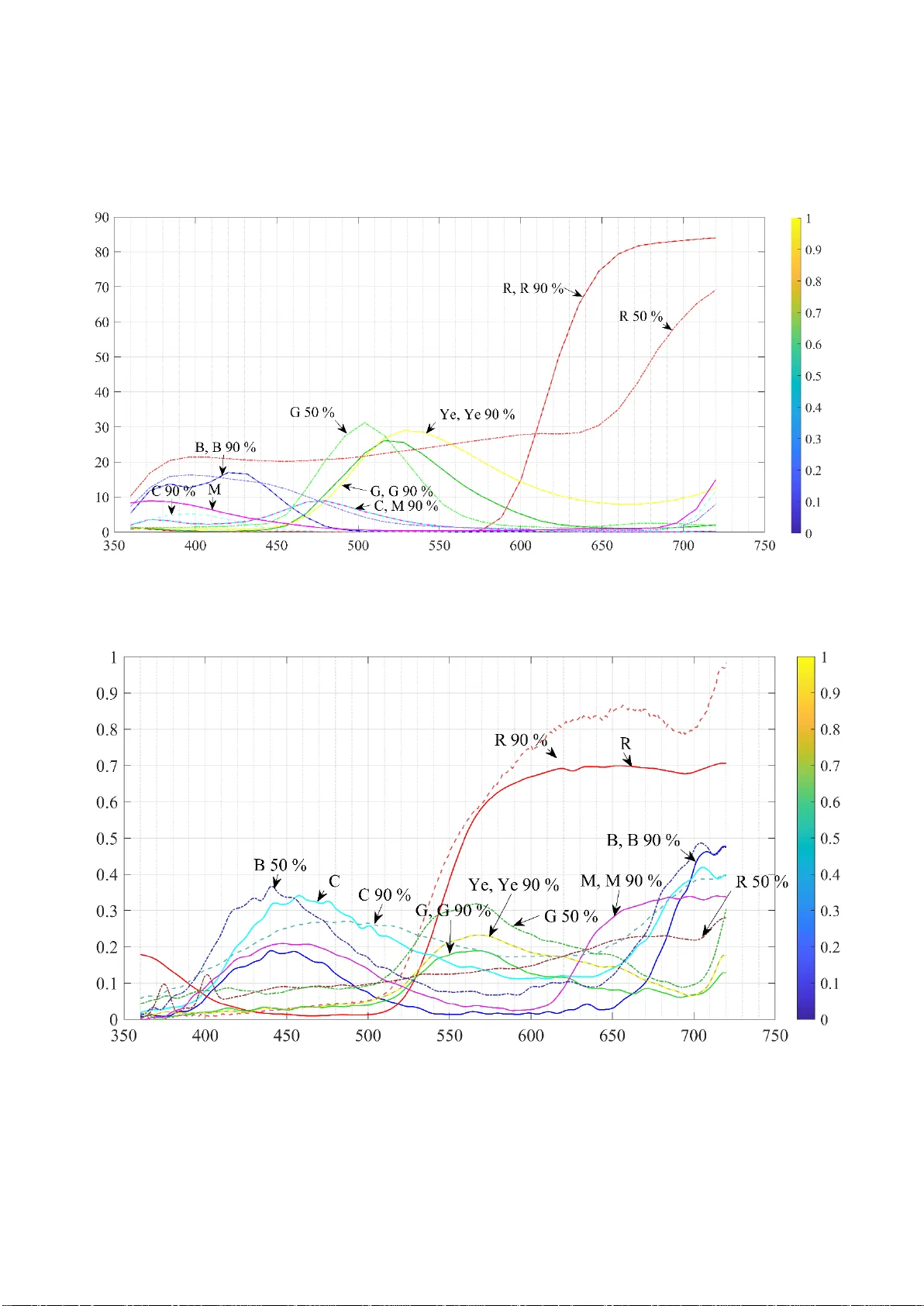
DEVELOPMEN T OF TEST MATER IALS FOR ASSESMENT BROADCA STING VIDEO PA TH Nameer Hashim Qasim 1) , V olodymyr Pyl iavskyi 2) , V alentina Solodk a 2) 1) AL -Qa lam University College 1 Departament of Computer Tec hniques Engine ering nameer.q asim@icloud.com 2) O.S. Popov O dessa National Academy of Te lecommunicat ions 2 Department radio a nd television bro adcasting v.pilyavs kiy@ukr.net The analysis of metrologica l agents for the estimation of the quality of telecommunic ation path t reatments is carried out. A nalysis of su bjective and o bjective estimation meth ods is presen ted. The justi fication for ch oosing an o bjective met hod of measuring is presented. Are r eporte d a list of existing goals and objectives, which face the curre nt progress of the implementa tion of promising systems f or broadc asting and improvement of existing ones. The latter include the absence of normative documents and recommendations for optical specime ns of testing tables, etc. Researches related to the choice o f optical samples f rom existing se ts of colors from a number of international d ocuments and recomm endations are presented. D eficiency of t hese sets is substantiated, as some of the colors necessary for evaluation of telecommunicati on pathts canno t be pr ovided wit h no col or of set s. Provi des recommen dations a nd refinements about w hich colors from ex isting sets s hould be used and w hat constraint s exist when used and h ow to solve. It is shown, that saturated colors of green and red colors are not pr ovided with spectral from the ex isting sets, t herefore, it is proposed to expand the traditional understanding of metrological means by using atlases of colors. Satin colors In contrast t o exis ting ones have a number of a dvantage s a nd c an be used for evaluation in advanced conditions, rather than in the studio that is rigidly defined by the r egulati ons. It is n oted that for different brightness values there are a different num be r o f testing points. The number of testing points directly depends on the evaluation criteria, is driven by several possible sets of colors for evaluation. Recommendatio ns for other ev aluation c onditions are provided. Use satin colors to construct tes ting tables Keywords: spectrum, colorimetry, color reproduction, color perception, quality scores, colorimet ric measurem ents, test tables, video c ommunication, CAM 16 1. Introduction The rapid devel opment of vi deo technologi es – speech, s pecial purpose, indu strial – requires all stricter conditions to t he quality of the transmitted content. W hen a river comes about quality, it should be understood the complex of a number of subjective and objective indicators. At the m oment there are quite a l ot of methods of evaluating quality. The l atter should b e attributed to the most comm on -the s ubjective methods [ITU500], and objective methods [EBU3350, EBU3333, ITU601,]. The subjective methods of t hem are quite expensive, and the receipt of the result is qu ite extended in time. Therefore it is worth consideri ng measuring material methods, allowin g to assess in a fairly short period of tim e to receive results. What is relevant considering the fact that e xisting sets of testing m aterial are not su fficient, and their optica l spectral distribution is n ot defined. 2. Analysis of liter ature data and problem statement Objective methods of quality measurement have a lot of testing material and tools for obtaining resu lts. Their diversity is caused by a large num ber o f devices an d systems that require evaluat ion. One of the c omm o n measuring material s, which is the basis for subsequent metrologica l instrum ents, can be considered [1, 2]. Another work, [3] focuses on an o bjective evalua tion of system s with an extended dy namic range and a n extended area of the transmitted colors, but all are received estimates are estim ates made for sta ndard conditi ons without t he use of variations. Currently , it is necessary to take into account different variants of measurem en t, includin g the use and optical tables, which are not marked in these wor ks. The emergence of work [4] is aim ed at evaluating the quality of ultra -high-defi nition 4k, 8k s ystem s , but also by the subjective method, but wi th the us e of images. Proposed subjective meth od of quality measurem ent is quite co stly in tim e, and have generalize d chara cter. In the real environm ent, a set of images in a different plot is require d for a full evaluation, which requires an increase in the m easurement time wit h an increase in the im age set. For this reason, you should use the test sets of colors included in the test image to quickly obtain estimates. Also in these works is o ffered onl y a set of nine colors, including the main and additional colors o f 90% saturation. A s et of a s uch number of colors has been proposed f or a sy s tem t hat is not widely used a t the present time, so the data present ed is o f questionable relevance. There is a number of Works [5 – 7], which indicate this set, but not optical colors, and a rtificially gen erated levels of signals that transmit them through comm un ication channe ls. This type of signa l allows evaluatin g the transmission tract without en d -convertin g devices. Therefore, optical samples should be used fo r evaluation of the vitreous tract, with the defined spectral distribution. Among the existing known sets of spectral color , distribution are [8]. The set presents a l arge number of s pectra, and what needs to be used for the evaluation is unclear. One addition al set m ay be noted [9], which is represented by significantly fewer sp ectral di stributions, but its use is no t indicat ed for the particular m easu rem ent case. At the mom ent, there are other methods for defining the spectral distribution of the desired color [10]. This m ethod is universal and allows to define the spectral distribution and m ake it a spectral sample for measuring. This procedure qu ite long in time and re quires signif icant costs fo r the prod uction of t he sample, b ut it allows quite accurately set the optical parameters of t he sam ple. The unsolved task re mains the definition which should be the spectral distributions of colors fo r estimation of th e quality of operation of the t hrough telecomm unication pathes. 3. Purpose and obj ectives of the s tudy The ai m o f the study is to develop a test material of colorimetric evaluation of video systems functioning. This will allow you to quickly assess the func tioning of video transfer s ystem s in terms of colo r reproduction and construction of new system s. To achieve the goal, the follow ing tasks we re set: – To specify the minim u m permissible set of metrologica l support; – Identify possible options for evaluating colorim etric characteristics o f multim edia pathe s; – Take into acc ount the dynam i sm of the e valuation con ditions. 4. Materials an d methods of stud y of speech estim ation mean To achieve the tasks you should use o ptical s am ples with the k nown spectral distribution. Since the recommendations and unambiguous decision on the use of a definite set of spectra are not, so are proposed by solving the problem of finding such spectra. The search is perform ed by s olving a m at hematical problem of finding lower extremism of functional dependence, w h ich expre sses the distance betwee n the coordinates reference and created a range of color. Assum ing th at existing spectral distributions do not fully meet the purpose, i t is proposed to use the color atlas and t o search for the ir spectral distr ibution to use t he algorithm [10 ]. 4. 1. Se ar ch f or a m in im um al lowa ble s e t of c ol or s an d t h ei r s p ec t ra Finding the optimal co lors is the problem o f finding the minimum ex tremum of functional depen dency (1). ( ) ( ) ( ) 2 2 2 eta lo n opti ma l eta lo n opti ma l etal on opti ma l , = − + − + − E x x y y z z 1 where x etalon , y etalon , z etalon are the color coordinates defined as reference colors. The values of the reference colors are presented in the table. 1. x optimal , y optimal , z optimal are color coordinates derived from absolute color coordinate values (2). optim al optim al optim al , , , , , , . = x y z X Y Z X Y Z 2 This value [ X, Y, Z ] optimal is derived from the expression ( 3). ( ) ( ) 720 op tim al CI E 360 , , , , . = X Y Z S P x y z 3 In the expression (3) The spectral distribution o f the optimum op tical sam ple S (λ), P (λ) describes the spectral distribu tion of the light source, and {x 10 , y 10 , z 10 } CIE – Spectral charac teristics of t he camera CO LOR bands accord ing to CIE Standar d. The task of minim ization was solved using the search funct ion of such spectral distribution S (λ) f or which δε ≤ 1 0 -5 . % x0 reference point coordinates, y0, z0 are se t in the Funerror function delta_E = optimset (' Display ', ' off ', ' TolX ', 1e -5); Lambda = Fminsearch (@funerror, [490.545], delta_E); Disp ([' lambda1 = ', Num2str (lambda (1))]) Disp ([' Lambda2 = ', Num2str (Lambda (2))]) This algorithm is proposed to be perform ed in the Matlab m odeling environm ent [11] using the following script. The s cript is the main program and includes auxiliary programs im p lemented with the use of func tional depe ndencies (1) – (3). 4.2. Possible options for evaluating colorimetric characteristics of multim edia path ts The m easuring materials u sed for the evaluation of colorim etric evaluation should include test i m ages. Test images consi st of colors that are defined b y co ordinate s color. But this i s not enough when it comes to optical im ages, the colors of which should be uniquely defined in term s of spectral d istribut ion. That is why i t seems to determ ine optimal spectral sets, what they should be in perfect form and real spectral distributions. 4.2. 1. Optimum col ors and their spectral d istribution The limit options for implementation of t he Optical test table (OVT) can be accepted by the table whose elements correspond to the optimum colors of the first and second genus [10]. Optimal colors correspond to the equivalent spectral radiation in the Spectrum area (4) ( ) 12 12 пр и ; , 0 пр и ; , = K S 4 For colors Ye , C , g , g 0.5 0,5 , , , Y e C G G . In the form of t wo plots (5) ( ) 360 1 2 720 360 1 2 720 пр и ; & ; , 0 пр и ; & ; . = K S 5 For colors R , R 0.5 , b , b 0.5 , M , where λ 360 and λ 720 are blue and red Spectrum boundari es λ 360 = 360 n m an d λ 720 = 720 nm. In t able 1, the following parameters λ 1 , λ 2 , K , as well as the relative brightness values of L C colors correspondin g to t he HDTV standard, according to which K values are calculated. Wavelengths and coordinates are shown in Fig. 1. Table 1 Optim um color Data R G B Ye C M R 0.5 G 0.5 B 0.5 W W R 1 0 0 0.5 0 0.5 0.667 0.167 0.167 0.333 G 0 1 0 0.5 0.5 0 0.167 0.667 0.167 0.333 B 0 0 1 0 0.5 0.5 0.167 0.167 0.667 0.333 L C 0.213 0.715 0.072 0.464 0.394 0.142 0.272 0.524 0.202 1.000 X 0.64 0.30 0.15 0.4193 0.2246 0.3209 0.4403 0.3058 0.2242 0.3127 Y 0.33 0.60 0.06 0.5053 0.3287 0.1542 0.3293 0.4758 0.1827 0.3290 λ , NM 611 547 464 569 491 – 611 547 464 – λ 1 , NM 412 481 497 480 378 496 445 460 526 360 λ 2 , nm 584 592 660 609 591 585 545 608 612 720 K × 100 0.823 0.869 0.858 0.908 0.929 0.875 0.439 0.560 0.574 0.00946 Figure. 1. Determ i nation of cen tral length s of waves of Optimum colors It should b e borne in m ind that in publications and documents in the field of TV technology is used the definition of relative brightn ess normalized to the unit inter val, ie Y ϵ (0... 1). Acc ordingly , the b rightnes s t esting col ors in the table. 1 equal s 0 ;1 Y L C ϵ (0... 1). In the works devoted t o models of color perception, the relative brightness calculation is used n ormalized to the level of 100, ie 0 ;1 C L Y ϵ (0... 100). In Fig. 2 t he relative b rightness designation for each 0 ;1 00 Y L C ζ color, where ζ = 100, 75 and 25 are defined as the share of grea test possible brightness for the c olor. 400 450 500 550 600 650 λ, nm E( λ ) 0 1 0.9 0.8 0.7 0.6 0.5 0.4 0.3 0.2 0.1 M B 50 % R 50 % G 50 % R 50 % B 50 % B R C Ye G M B R 700 Figure. 2. Spectral distribution of optim um colors A set of optimum spectral distributions is introduced for high -definition digital system s. Co lors with a saturation of 50% are included in the color set, as they sp ecify the colorim etric score. But in p ractice, spectral distributions differ from optimal, so one of the methods of constructing spectral distributions, which is approxim ate to real is the study [10, 12]. It should be understood that the s pecif ied method eliminates the possibil ity of investigation e g METE MERIZMU phenom enon. 4.2. 2. Variant s of using real spectr al color distr ibutions In previous sets, the variant of using of a set of colors with the saturation of 100, 75 and 25% w ere considere d. This set is not com plete and t herefore does not allow to estimate th e saturate d colors to the full est . Limited is that an estim ation of saturated colors cannot be made because the evaluation area is limited by the color triangle and the evaluation sector is limited by its acute angle. If you conside r 75% saturation, we may not e that t his i s not e nough to es tim ate the saturated colors. A som ewhat different approach is offe red in the se interpreta tions. Since the implementation o f optimal co lors i n p ractice i s q uite problematic, so these spectra are an ex am ple of what should be approached. However, for real co nditions, the colors o f real objects and those that are al ready kno wn range are used. Therefore, the known spectral d istribut ions of objects tha t are represented in the documents [8, 9, 13], to choose such colors can satisfy the set of reference color s. Sp ectral distr ibutions of a set o f colors of testing material for high -definition multim edia systems are pr oposed. Table. 2 color markers have been marked with pairs that have b een selected for both colo rs due to the absence of other spectra. In practice, choose a color to test the color with the sm al lest error. Presented in the table. 2 results can be used to construct optical metrological support to e valuate the qual ity of the trans mission operat ion of vide o inform ation. Table 2 Recomm ended color data for display co lor assessment ( x , y – High Definiti on TV color, x spectral , y spectral – Color co ordinates equiva lent to the m ost bottom spectrum ) Selection of co lors from the spectra set according to [8 ] Selection of co lors from spectra set according to [9] X Spectral Y Spectral Color ID E X Spectral Y Spectral Color ID E R 0.6359 0.3299 Pr_ds_2 (2) 0.001 0.624 0.351 164 0.045 G 0.3441 0.5040 ph03_t (216) 0.002 0.343 0.514 1492 0.233 B 0.1742 0.1014 ph03_t (228) 0.007 0.199 0.136 2386 0.083 C 0.2411 0.3150 ph03_t (47) 0.001 0.210 0.286 3328 0.024 M 0.3084 0.1786 Pr_ds_3 (4) 0.006 0.325 0.171 3321 0.106 Ye 0.4194 0.4607 Pr_sh_2 (73) 0.000 0.398 0.483 1895 0.045 R 0.9 0.6359 0.3299 Pr_ds_2 (6) 0.006 0.607 0.349 158 0.011 G 0.9 0.3441 0.5040 ph03_t (216) 0.002 0.343 0.514 1492 0.205 B 0.9 0.1742 0.1014 ph03_t (228) 0.005 0.228 0.200 3099 0.006 C 0.9 0.3247 0.1734 Pr_ds_2 (4) 0.001 0.264 0.332 2832 0.004 M 0.9 0.2411 0.3150 ph03_t (43) 0.002 0.264 0.332 2832 0.097 Ye 0.9 0.4194 0.4607 Pr_sh_2 (73) 0.002 0.398 0.483 1895 0.021 R 0.5 0.4392 0.3287 Silk (475) 0.000 0.413 0.331 3527 0.034 G 0.5 0.3093 0.4672 gr_s (393) 0.002 0.336 0.478 3436 0.093 B 0.5 0.2246 0.1838 Pr_sh_1 (5) 0.001 0.228 0.200 3099 0.006 W 0.3110 0.3322 Pa_o (41) 0.3127 0.3313 3091 0.003 In Fig. 3, 4 is shown + – colors defined for color assessm ent, and + – those that are found according to t he reference. It is not difficult to notice the difference in t he placem ent of coordinates, first of all , it is due to the fact that Sets h ave a lim ited number of sets o f spectral distributions. Secondly , some colors are not advisable to use for evaluating saturated colors, namely green and blue areas. As for no t saturated colors, the set m ore satisfies the presented in Fig. 3. the Figure. 3. Colors fr om the set t hat can be select ed for evalua tion As for the set of colors represente d in Fig. 4, this se t pro vides ev en fewer requirem ents for a set of testing colors. But still , they can be used to replace those spectral distri bution o f which is unknow n. Figure. 4. Colors fr om the set t hat m ay be selected for evalua ti on Spectral distr ibutions of represen ted color points are represe nted in Fig. 5, 6. Figure. 5. Spectral distribution of c olors d epicted in fig. 3 Figure. 6. Spectr al distributio n of the color s depicted in fi g. 4 The sp ectra are represented in Fig. 5, 6, is the desired result for use in building optical t esting tables. Its shortcom in gs and so m e , not the m atches depicted in Fig. 3, 4 , but the existing curre ntly standardized spectral distributions corres pond to the chosen colors. 4.3. Accounting f or dynam ic measurement cond itions You should objectively judge ho w m uch of the existing color area can be transmitted to TV systems, t aking into account the visual perception of color images. To ensure this purpose, it i s d esirable to repr esent the region of transmitting colors in the coordinates of the equivalent color space. Below is a boundary of the transm itting color area in the coo rdinate plane of the equivalent color space, in more detail the model is represe nted in the w orks [15, 16 ]. , MM ab ( ) C A M 1 6 , MM ab At the present stage, this posts can be c onsidered the most prom ising color space for color assessm ents, based on modern models of color percepti on. Struct ural diagram of the m odel is presented in Fig. 7. This model w ill be used for further con struction of testing color set s. CAM16 Lightness ( J ) Coordinate of c olor ( a ’ M ) XYZ Coordinate of c olor ( b ’ M ) X W, Y W, Z W Y b L A Figure. 7. Input a nd output parameters of t he color appeara nce m odel CAM16 In Fig. 7 flagged adapting values : X W , y w , Z w – colorability coordinates of the lighting source, y b – color image background brightness, L A – Brightness setting that adjusts eyesigh t. Unlike the traditional XYZ coordinate system, the colors in the equivalent coordinate sy stem are at the sam e distance. T his gives an o pportunity to argue th at the square o f the transmitted color system will be able to estimate the specified area. The distance between colors in the work was c hosen 2 units IKO, w hich c orresponds to t he threshold of Kolororozr ìznennâ. T his thr eshold is se lected for reasons that if the transmission of color will be with an error, it can be found both objective and subjective method. These c olor sets are r epresented i n Fi g. 8 – 13. Figure. 8. The c olor region in t he coordinates a ' m , b ' m , which is transm itted to the TV with the adapta tion cond itions of 50 A L = 2 cd/m 2 , view conditions (V C) – ' Average ' 10 J = Figure. 9. The c olor satin point s are shown in Fig. 6, prese nted in a trad itional coordinate sy stem XYZ Figure. 10. The co lor area in t he coordinate s of a ' M , b ' m , which is transm i tted to a tweeter with the adaptation c onditions of 50 A L = 2 cd/m 2 , Terms of v iew (VC) – ' Dark ' 50 J = Figure. 11. The co lor satin d ots are show n in Fig. 8, presented in a traditional coordinate sy stem XYZ Figure. 12. The co lor area in t he coordinate s of a ' M , b ' m , which is transm i tted to a tweeter with the adaptation c onditions of 50 A L = 2 cd/m 2 , Terms of view (VC) – ' Average ' 90 J = Figure. 13. The co lor satin p oints are show n in Fig. 10, presented in a traditional coordinate sy stem XYZ From Fi g. 8 – 13 It is noticeable that for different conditions of adaptation and light ( J ) The value of sets of points differs. and notably , in dark and d im terms the number o f colors and their threshold distinguishing is much lower than in brighter. These interpretations can be To observe Fig. 6 – 9. While increasing the brightness of the environm ent, the n um ber of color points increases, but the region of transmitting colors decrease s, which is the physical limita tion of the im age transfer system . 5. Discussion of research resu lts propose d adaptation al gorithm According to the optim al value of color dots, it is customary to choose basic and additional co lors with relative bri ghtness of 100, 75 and 25%, as shown in P. 4. 2. Bu t their use is insufficient and does not allow to assess the saturate d color in full, as well as less saturated c olors. Therefore, the proposed set o f color fig. 2, table. 1 is defined on the base of optimum col or, which c onsists of the basic, com pl em entary colors and colors w ith the saturation o f 50%. The proposed alg orithm fo r finding optimal spectral distributio ns is universal an d a llows to o btain the spectral distribution of optim al color s for the arbitrary sy stem. In practice, it is difficult to make optical samples with optimum spectral distribution, which is why it was suggested to define a set o f colors from existing sets of spectra. The kits of th e proposed spectral distributions are represented in Fig . 3, 4, and the value of their errors in the table. 1. Not exceeding 0 .2 CIE units. This set is recomm ended for evaluat ion of high defin ition multim edia system s. If the task is to determ ine the most accurate error of t ransm itt ed colors, the proposed sets of col ors are not enough. Therefore, you need to use s atin colors, presented in Fig. 8 – 13. These color atlases are constructed u sing an equivalent coordinate system w hich enables to define the necessary set of colors t aking into account the cha racteristic s of the hum an vision. It should be understood, that in practice can b e used test material with a set presented in Fig. 1, 2, o r more ad vanced features. 5, 6, or the most complete fig. 8 – 13. The choice of one or another set depends on the required accuracy of the obtained results and the ra te of recei pt. It is also necessary to m ention th e limitations of this study, in p articular , to indicate the boundaries of the application o f the proposed solutions both in practical terms and in theoretical. Further develo pment of these researc hes can be generat ors of testing sig nals, and also for constructing optical testing of tables for estimation of the functioning of multim edia pathts. 7. Conclusions 1. It is recomm ended to u se for measurement of colorim etric parameters of digital system s of objective m eas urement m et hods. For objective a ssessm ents, the developm ent of effective evaluation methods is offered, namely th e u se of optical testing tables with spectral distributions. For an option of no optical test table, the color atlas coordinates should be prese nted in t he work. 2. According to the results of the study, a set o f optimum colors were offered, which at the m oment is used to assess their nu m ber equal to seven colors, and it is proposed to extend this set to sixteen. The latter s et is more effective as it allows to estimate the colors with the saturation 100, 90 and 50%. The color sets and algorithm of their s earch for the high -definition television system are presented. The error when using the proposed algorithm is Δ Ε ≤ 10 -5 . At the s am e time for the spectra of the ex isting sets, the amoun t of error is presented not exceeding 0.2 units MKO. For a detailed assessment of colorimetric Properties of the transmission quality and the transmitting c olor area, use the color se t presented in the wor k. 3. Taken into account the dy namic pro perties o f the adaptive properties of human vision, represented in Fig. 7. Recommendations for the full estimation of colorimetri c characteristic s should be m ad e using satin co lors with distances of 2 u nits of IKO. This distance is classified by the person as "not n oticeable" c olor changes, so if a discrepancy is noticeable it will g ive an opportunity to cl assify the system work , as that distorts the transm itted inform at ion. Equal distance between c olors achieved using the equivalent CAM 16 sy stem. Thanks The work is performed within the rese arch on request of the Ministry of Education a nd Science of Ukra ine, registra tion num b er 0117U006808 References 1. R.M., B. (1988). The q uality of color television im ages. Moskov: Radio and Comm unication 2. Zubarev Yu. B., K. M. (2001). Tsifrovoe Televizionnoe V eschanie. Osnovyi, Metodyi, Sistem yi. Moskow : NIIR. 3. J . Pytlarz, E. Pieri и R. A tkins, "Objectively Evaluat ing High D ynam ic Range and Wide Color Gamut Color Differences, " SMPTE Motio n Imaging Journal, pp. 27 - 32, 2017. 4. Y. K. M. B. P. C. K ongfeng Berger, "Subj ective quality assessm ent comparing UHD and HD resolution in HEVC transmission chains," 2015 Seventh Internationa l Workshop on Qu ality of Mul timedia Experience (Q oMEX), pp. 1 - 6, 201 5. 5. BT. 2111-0, R. (2017). Specification of colour bar test p attern for hig h dynamic ran ge televisio n systems. G eneva: ITU-R 6. BT. 1729 -0, R. (2005). Common 16:9 or 4:3 aspect ratio digital Television reference test pat tern. G eneva: ITU-R 7. EBU TECH 3325 S (2008). Studio Monitor m easu rem ents -test patter ns. Germany : EBU TECH 8.16066, I. (2003). Graphic Technology-Standard Object co lour spectra database for c olour reproduc tion evaluation (SOCS). Geneva: IS O 9. Retrieved fr om Floral Reflectance D atabase: http ://reflectance .co.uk/ 10. Dzhakoniy a V.E ., A.A., Ya , V (2004 ). Televidenie: Uchebnik Dlya Vuzov. Moskow: Rad io i Svyaz 11. V. Pyliavsky i, «Development of the algorithm of video image adaptation to spectral power distribution of illuminants,» Eastern -Europea n Jou rnal of Enterprise Technologies, T. 1, No. 9 ( 97), pp. 58-67, 2019 12. Sponsored L icense: http s://www.m athworks.com / 13. Khanh, T. Q., Bodrogi, P., & Vinh, T. Q. (20 17). C olor Qual ity of Semiconductor an d Conventional Li ght Sources. Wiley 14. C., L., Z., L., & al., W . Z. (2017). C o mprehe nsive Color Solutions: CAM16, CAT16, and CAM 16‐UCS. Color Res Appl., 7 03 -718. 15. Li, C., Xu, Y., Wang, Z., & Luo, M. R. (2018). Comparin g two‐step and one‐ step chromatic adaptation transform s using the CAT16 m odel. Color Res. & Appl. , 633-642
Original Paper
Loading high-quality paper...
Comments & Academic Discussion
Loading comments...
Leave a Comment