Randomisation Algorithms for Large Sparse Matrices
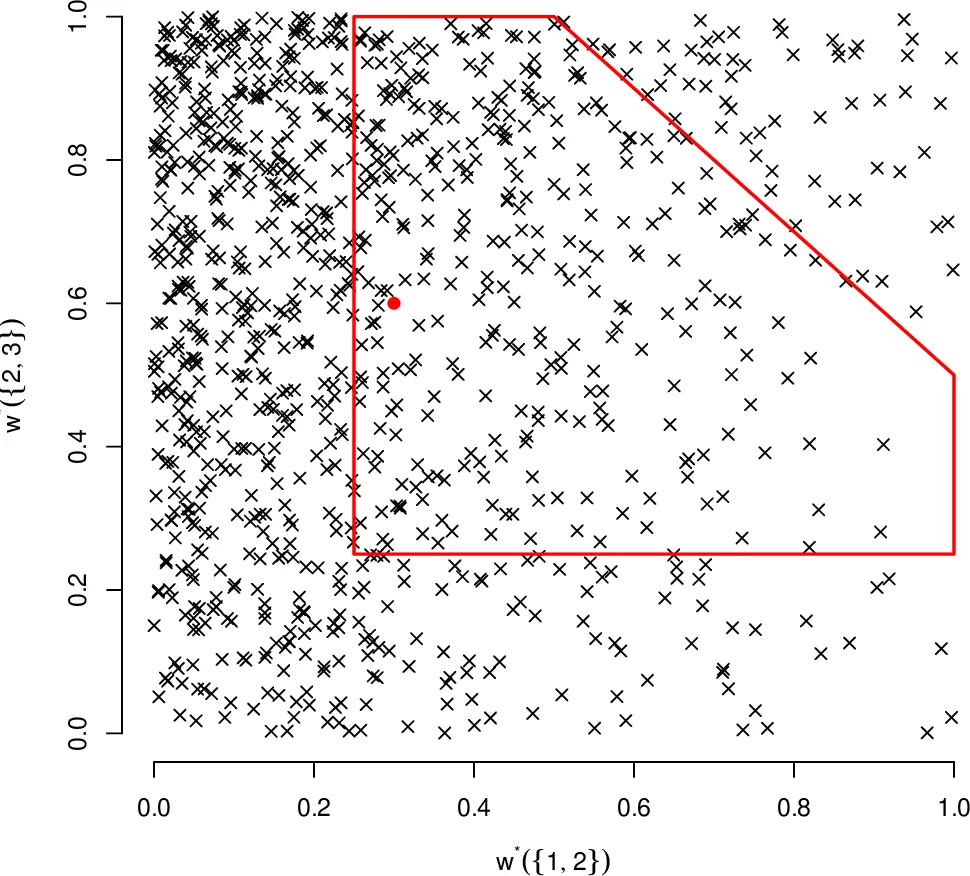
In many domains it is necessary to generate surrogate networks, e.g., for hypothesis testing of different properties of a network. Furthermore, generating surrogate networks typically requires that different properties of the network is preserved, e.g., edges may not be added or deleted and the edge weights may be restricted to certain intervals. In this paper we introduce a novel efficient property-preserving Markov Chain Monte Carlo method termed CycleSampler for generating surrogate networks in which (i) edge weights are constrained to an interval and node weights are preserved exactly, and (ii) edge and node weights are both constrained to intervals. These two types of constraints cover a wide variety of practical use-cases. The method is applicable to both undirected and directed graphs. We empirically demonstrate the efficiency of the CycleSampler method on real-world datasets. We provide an implementation of CycleSampler in R, with parts implemented in C.
💡 Research Summary
The paper addresses the problem of generating surrogate networks that preserve the original graph’s topology while satisfying constraints on edge weights and node weights. Existing approaches fall into two categories: property‑preserving methods that freely rewire edges (often assuming a complete graph) and structure‑preserving methods that keep the edge set fixed but usually enforce node‑weight constraints only in expectation (e.g., maximum‑entropy models). Both have drawbacks: the former can create edges that never existed in the real system, while the latter may produce samples that violate hard physical limits such as a maximum total call duration per person.
To overcome these limitations, the authors propose CycleSampler, a Markov‑chain Monte‑Carlo (MCMC) algorithm that works directly on the original edge set. The algorithm handles two constraint regimes: (i) each edge weight must lie within a prescribed interval
Comments & Academic Discussion
Loading comments...
Leave a Comment