A convex cover for closed unit curves has area at least 0.0975
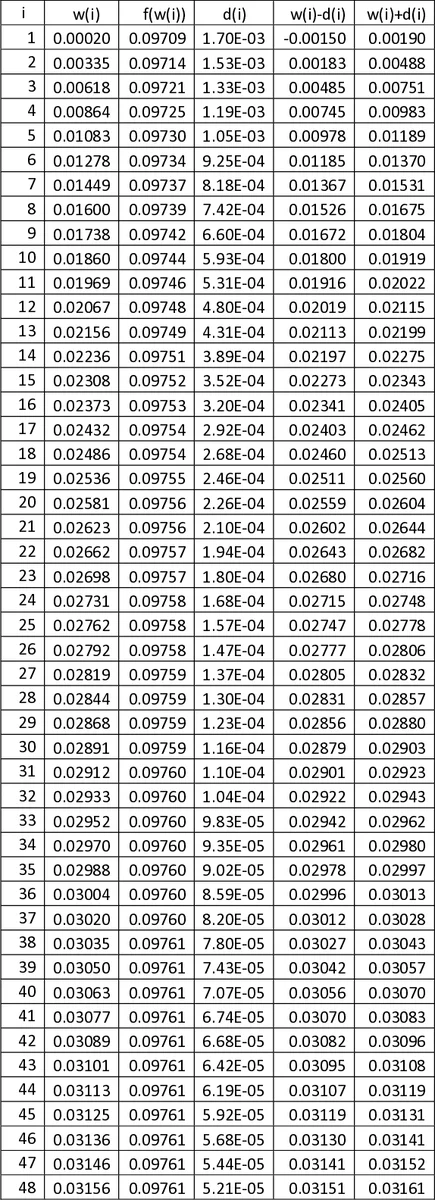
We combine geometric methods with numerical box search algorithm to show that the minimal area of a convex set on the plane which can cover every closed plane curve of unit length is at least 0.0975. This improves the best previous lower bound of 0.096694. In fact, we show that the minimal area of convex hull of circle, equilateral triangle, and rectangle of perimeter $1$ is between 0.0975 and 0.09763.
💡 Research Summary
The paper addresses a variant of the classic “Moser’s worm problem,” which asks for the smallest planar region that can contain every curve of length 1 after suitable translation and rotation. When the covering region is required to be convex, its minimal possible area is denoted by β. Prior work established only a modest lower bound β ≥ 0.096694 (or an unpublished 0.096905) and an upper bound β ≤ 0.11023. The authors improve the lower bound to β ≥ 0.0975 and provide a very tight numerical estimate of the true minimum, approximately 0.09762742, with a rigorous upper bound β ≤ 0.09763.
Main geometric construction
Three simple convex shapes are considered: a circle C of perimeter 1 (radius r = 1/(2π)), an equilateral triangle T of perimeter 1 (side length 1/3), and a rectangle R of perimeter 1 with side lengths u = 0.0375 and v = 0.4625 (so u+v = 0.5). The rectangle is chosen because it is the smallest axis‑aligned rectangle known to be necessary for covering all closed unit curves. The circle is approximated by a regular 500‑gon F to make exact computations feasible.
Parameterisation
The placement of R and T relative to the fixed polygon F is described by five real parameters: (x₁, y₁) – the centre of R, (x₂, y₂) – the centre of T, and θ – the rotation angle of T. For a given parameter vector z = (x₁, y₁, x₂, y₂, θ) the authors define
f(z) = area of ConvexHull(F ∪ R ∪ T).
The function f is continuous on ℝ⁵.
Geometric lemmas
- Convexity in each coordinate – Using a result of Fáry and Rédei (Lemma 2), the authors show that if one convex set moves linearly while the other stays fixed, the volume of their convex hull is a convex function of time. Applying this to each coordinate separately yields that f is convex in x₁, y₁, x₂, y₂ (Corollary 3).
- Domain reduction – By exploiting symmetry (the problem is invariant under reflections and rotations) and simple area estimates, they restrict the search to a bounded box Z:
0 ≤ x₁ ≤ 0.05, 0 ≤ y₁ ≤ 0.04, −0.17 ≤ x₂ ≤ 0.17, −0.13 ≤ y₂ ≤ 0.13, 0 ≤ θ ≤ 2π/3.
If f(z) > 0.0975 holds throughout Z, it holds everywhere (Lemma 4). - Lipschitz bounds – Lemma 6 establishes explicit constants C₁…C₅ such that for any small perturbations Δz, the change in f is bounded by Σ C_i |Δz_i|. The constants are derived from geometric considerations of how far a vertex can move before the convex hull changes shape.
Box‑search algorithm
The authors employ a rigorous interval‑arithmetic “box‑search” (also called a branch‑and‑bound) method. For a given box B =
Comments & Academic Discussion
Loading comments...
Leave a Comment