Active Stacking for Heart Rate Estimation
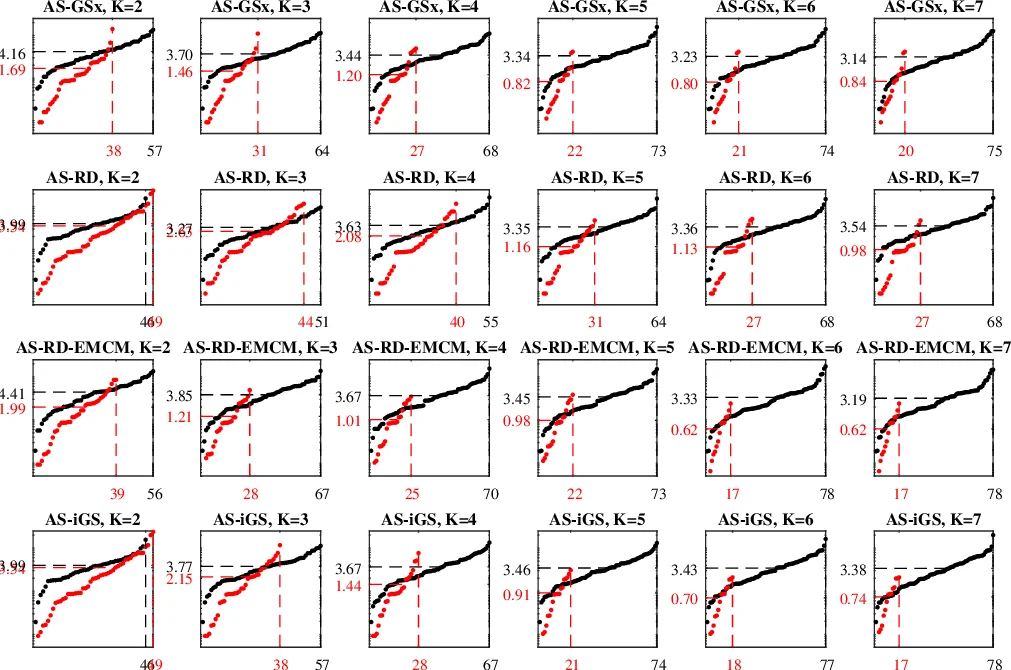
Heart rate estimation from electrocardiogram signals is very important for the early detection of cardiovascular diseases. However, due to large individual differences and varying electrocardiogram signal quality, there does not exist a single reliable estimation algorithm that works well on all subjects. Every algorithm may break down on certain subjects, resulting in a significant estimation error. Ensemble regression, which aggregates the outputs of multiple base estimators for more reliable and stable estimates, can be used to remedy this problem. Moreover, active learning can be used to optimally select a few trials from a new subject to label, based on which a stacking ensemble regression model can be trained to aggregate the base estimators. This paper proposes four active stacking approaches, and demonstrates that they all significantly outperform three common unsupervised ensemble regression approaches, and a supervised stacking approach which randomly selects some trials to label. Remarkably, our active stacking approaches only need three or four labeled trials from each subject to achieve an average root mean squared estimation error below three beats per minute, making them very convenient for real-world applications. To our knowledge, this is the first research on active stacking, and its application to heart rate estimation.
💡 Research Summary
This paper addresses a critical challenge in personalized healthcare: accurately estimating heart rate from electrocardiogram (ECG) signals, particularly those from wearable devices which are often noisy and subject to significant inter-individual variability. The authors argue that no single heart rate estimation algorithm performs reliably across all subjects, as each may fail on specific individuals. To overcome this, the paper proposes a novel fusion of two machine learning paradigms: ensemble regression and active learning, termed “Active Stacking.”
The core methodology is built upon a foundation of ensemble methods. The authors first outline simple unsupervised ensemble techniques like averaging and median filtering, which require no labeled data but offer limited performance. They then introduce supervised “stacking,” where a meta-model (linear Support Vector Regression or Ridge Regression) is trained on labeled data to optimally combine the outputs of multiple base heart rate estimators. However, acquiring sufficient high-quality labeled data for each new subject is costly, as it requires expert annotation.
To minimize this labeling burden, the paper integrates Active Learning for Regression (ALR). Four ALR strategies are explored for intelligently selecting the most informative trials to label: GSx and RD (unsupervised, selecting samples based on representativeness and diversity in the input feature space), and RD-EMCM and iGS (supervised, which also consider the informativeness of samples based on an initially trained model). The key innovation is combining these ALR strategies with stacking, resulting in four distinct “Active Stacking” approaches: AS-GSx, AS-RD, AS-RD-EMCM, and AS-iGS. These algorithms use the respective ALR method to select a small batch of ECG trials, query an expert for their true heart rates, and then train a subject-specific stacking model on this minimal labeled set.
The experiments are conducted on 95 subjects from the PhysioNet 2014 Challenge dataset, using seven base heart rate estimation algorithms. The results are compelling. All four proposed Active Stacking methods significantly outperform the three unsupervised ensemble baselines (Average, Median) and a supervised stacking model trained on randomly selected samples. Remarkably, the Active Stacking approaches require only three or four labeled trials per subject to achieve an average Root Mean Square Error (RMSE) below three beats per minute, a level of accuracy suitable for real-world applications. Among the proposed methods, those incorporating supervised ALR criteria (AS-RD-EMCM, AS-iGS), which consider the informativeness of samples, generally show superior or comparable performance to the unsupervised ALR-based ones (AS-GSx, AS-RD).
In conclusion, this paper makes a significant contribution by pioneering the “Active Stacking” framework. It successfully demonstrates how to build highly accurate, subject-specific heart rate estimation models with minimal expert labeling effort, effectively balancing performance and practical cost constraints. This work has important implications for the development of personalized and efficient health monitoring systems.
Comments & Academic Discussion
Loading comments...
Leave a Comment