Vector OFDM Transmission over Non-Gaussian Power Line Communication Channels
Most of the recent power line communication (PLC) systems and standards, both narrow-band and broadband, are based on orthogonal frequency-division multiplexing (OFDM). This multiplexing scheme however suffers from the high peak-to-average power rati…
Authors: Bamidele Adebisi, Khaled M. Rabie, Augustine Ikpehai
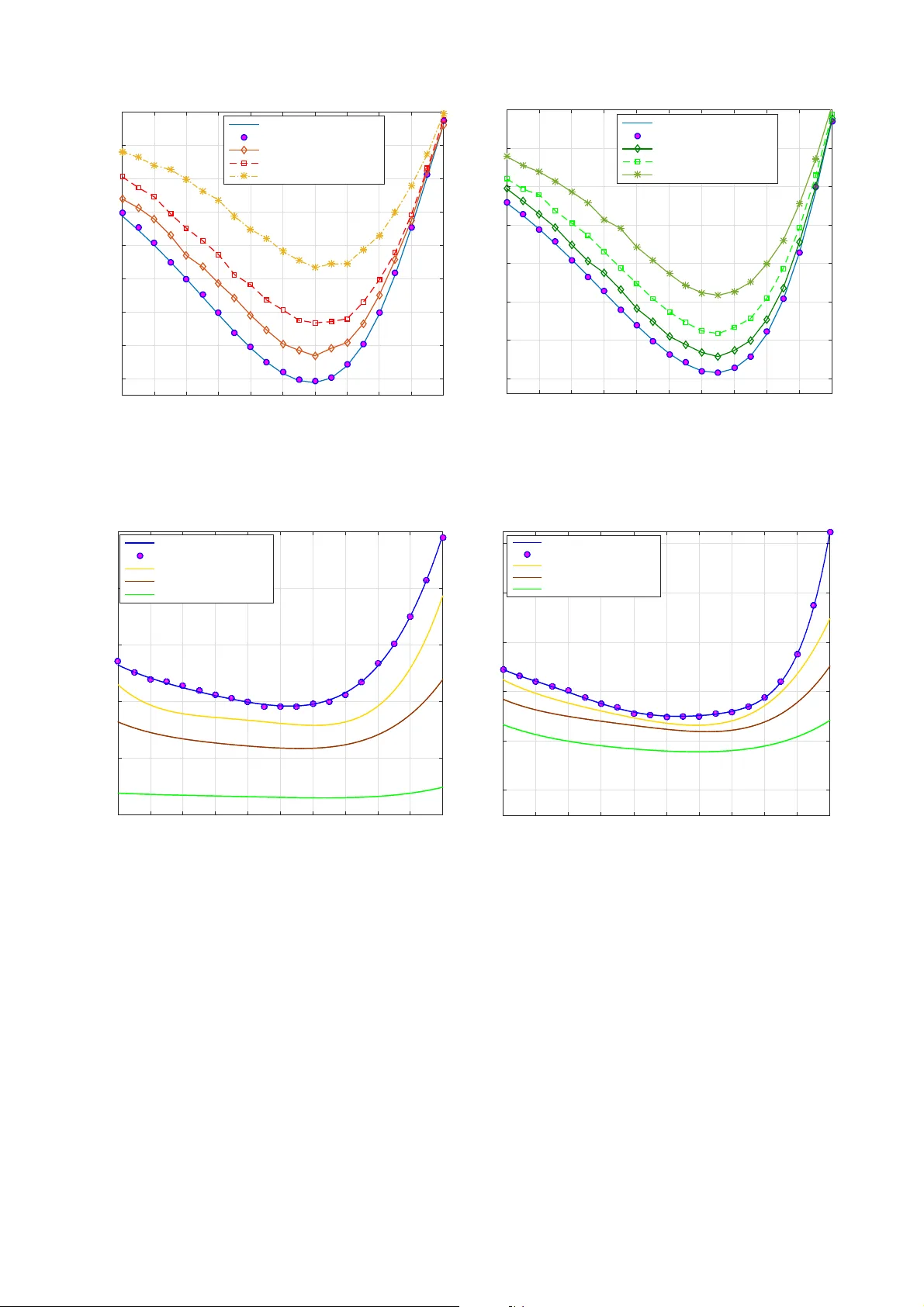
V ector OFDM T ransmission o v er Non-Gaussian Po wer Line Communication Channels Bamidele Adebisi, Senior Member , I EEE , Khaled M. Rabie, Member , I EEE, Augustine Ikpehai, Student Member , IEEE, Cinna Soltanpur , Membe r , IEEE, an d Andrew W ells , Me mber , IEEE Abstract — Most of the recent power line communication (PLC) systems and standards, both narro w-b and and broa d- band, are based on orthogonal frequency-division multiplexing (OFDM). This multiplexing scheme howev er suffers from the high peak-to-a verage po wer ratio (P APR) which can consider - ably impact the ener gy efficiency , size and cost of PLC m odems as well as cause electroma gnetic compatibility (EM C) issues. This paper inv estigates the perf ormance of vector OFDM (V OFDM), wh ich has inherently better P AP R properties, over non-Gaussian broadband PLC channels equipped with two nonlinear preprocessor s at the receiv er . In addition, the low P AP R property of the VOFDM system is exploited to fu rther enhance the efficiency of the nonlin ear preprocessors. T he achiev able gains are studied in terms of th e complementary cumulative distribution fun ction of t he P APR, probability of noise detection error and the signal-to-noise ratio at th e output of the nonlinear preprocessor s. For comparison’ s sake, the perfo rmance of conv entional OFD M systems is also presented throughout the paper . Results rev eal that the proposed system is able to p ro vide up t o 2 dB saving in th e transmit power relati ve to the con ventional OFDM u nder same system con- ditions, which ev en tually also translates into a system that is more resilient to EMC limits, reduced cost and size of PLC modems. It is also sho wn that the achiev able gains become more signi ficant as the vector block (VB) size of the VOFDM system is increased. Index T erms — Electromag netic co mpatibility , non-Gaussian noise, power -lin e communication (PLC), signal-to-noise ratio (SNR), v ector blocks (VBs), ve ctor OFDM (V OFDM). I . I N T RO D U C T I O N I N addition to their traditional distribution of electricity , power lin es have evolved into a commu nication m edium for many applica tions in the areas of home- networking and smart grids [1 ]–[3]; th is is also known as power line commun ication (PLC). This technolo gy howe ver is faced with se veral challenges such as high cable attenuation, frequen cy-selectivity , no n-Gaussian noise as well as the limited tran smit power restrictions to comp ly with elec- tromagn etic comp atibility (EMC) regulation s [4]– [6]. T o cope with the se, several technique s hav e bee n repor ted in the liter ature including coope rativ e r elaying, mu ltiple-input multiple-ou tput (MIMO) schemes, and very recently , energy harvesting in PLC systems [7] –[10] . Orthogo nal frequen cy-division multiplexing (OFDM) h as been widely u sed as the main transmission techn ique in B Adebisi, K. M. Rabie and A. Ikpehai are with the school of Electric al Engineering, Manche ster Metropo litan Uni versit y , Manchester , M15 6BH, UK. (e-mails: b.a debisi@mmu.ac.uk; k.rabie@mmu.ac.uk; au- gustine.ik pehai@st u.mmu.ac.uk). C. Solta npur is with the School of Electri cal and Computer Engi- neering , Univ ersity of Oklahoma, Norman, OK 73019 USA. (e-mail: cinna@o u.edu). A. W ells is with Jaguar Land Rov er Limited, W arwick CV35 ORR, U.K. (email: awell s@jaguarl andro ver . com). most narrow-band and broadb and PLC systems for its ability to co mbat fr equency-selectivity as well as the n on- Gaussian in terference [1 1]–[1 3]. In addition, other merits o f OFDM inc lude its hig h spectral efficiency , adapti ve po wer allocation and low imp lementation complexities throu gh the use of in verse fast Fourier transform (IFFT) an d fast Fourier transform (FFT). Despite the above qualities and its wide acceptance, one majo r drawback of co n ventional OFDM remains its high peak-to- av erage power ratio (P APR) arising from the parallel proce ssing o f symbo ls by th e IFFT , which can seriou sly affect the spectral efficiency and energy efficiency of OFDM-b ased PLC system s [13]–[ 15]. T o re- duce P APR, different tech niques have b een introd uced such as p artial tran smit sequen ce (PTS) and selecti ve mapp ing (SLM) [13] , [16 ]. Th ese techniques howe ver requir e side informa tion tran smission wh ich can b e energy in efficient and c hallenging to implem ent in pr actice, especially over non-Gau ssian PLC chan nels. In o rder to tackle this issue, we pro pose vector OFDM (V OFDM), which has inheren tly good P APR features [17]– [19], fo r th e non -Gaussian b roadba nd PLC chan nel 1 . V OFDM can also offer more flexibility in system design, serving as a bridge co nnecting conv entional OFDM and single-carrier frequency domain equalizatio n. T wo nonlinear prepro cessors are implemented at th e receiver to further improve the p erform ance of the VOFDM system, namely nulling and clip ping. It is worthwhile no ting tha t numer ous studies have invest igated the per forman ce of nulling and clipping in conventional OFDM systems, see e.g. [21 ]– [23] and th e refere nces therein. W e e valuate the system perfor mance in terms of the co mplementar y cumulative distribution functio n (CCDF) of the P APR, the proba bility of noise detection error and the ou tput SNR . Results show that the pro posed scheme can provide up to 2 dB transm it power sa vings compa red to conv entional OFDM to m eet the same perfo rmance r equiremen t. This reduction in the transmit power can consequently minimiz e th e electr omag- netic e missions from po wer lines, and a lso reduce cost and size of PLC mo dems as will be discussed later in more details. Fur thermor e, results demonstrate that the ach iev ab le gains will in crease as we inc rease the nu mber of vector blocks (VBs) of V OFDM and that the V OFDM-nulling system can gen erally offer more significant improvements than V OFDM with clipping. The rest o f the paper is structu red as follows. Section II pre sents and d iscusses previous research , and Section III describes the system model. In Section IV, we examine the 1 Note that VOFDM with Masreliez filtering has recently been inv esti- gated ov er non-Gaussian PLC channels in [20]. 2 Figure 1: System diagram of the VOFDM system with nonline ar preprocessing at the recei ver ov er non-Gaussia n channel s. CCDF of the P APR an d d iscuss the pro bability of noise detection erro r for b oth V OFDM and co n ventional OFDM systems. The ou tput SNR of the V OFDM sy stem with nulling an d clipping nonlinear prep rocessors is stud ied in Section V. Section VI addresses the threshold optimization problem of the no nlinear p reprocessor s and presents ana- lytical and simulated resu lts. Section VII provid es a brief compariso n between VOFDM and conventional OFDM and highlights some p ractical implementation issues o f the propo sed system. Finally , Section VIII conclu des the pap er . I I . R E L AT E D W O R K A N D O U R C O N T R I B U T I O N S Similar to many PLC solutions orig inated in the w ireless domain, V OFDM was first introduced in the context o f wireless communicatio ns by Xia in [24] to reduce the size of FFT , IFFT and th e cycle prefix overhead. This was followed by ma ny studies inv estigating different aspects of VOFDM systems. For instance, in 20 05, Zhang et al. [25] an alyzed som e pr actical issues of VOFDM such a s guard- band setting s, synchro nization an d time estimatio n. In 2010, Han et al. [26 ] showed th at the performan ces of different VBs in V OFDM can d iffer co nsiderably when the maximu m likelihood receiver is deployed. In addition , to overcome this and e nsure consistent perf ormance over all VBs, the authors pro posed a new constellation rotation technique . Later in 2 011, Cheng et al. [18 ] studied the perfor mance of V OFDM in term s of di versity and c od- ing gains over multipath Rayleigh fading ch annels with a max imum likelihood receiver . In 20 12, Li et al. [15] propo sed linear receivers for VOFDM suc h as zero-forcin g (ZF) and m inimum-m ean square error (MMSE) receivers. T wo years late r , the author s of [ 27] investigated thoroughly the perfo rmance of VOFDM over fast fading ch annels. V ery recently , Ngebani et al. [17] explored phase noise in V OFDM sy stems and proposed two algorithms to estimate and mitigate this noise u sing linear MMSE recei vers. All the ab ove work, howe ver , ha s been limited to ad- ditiv e wh ite Gaussian noise ( A WGN) wireless systems. In contrast, and to the best of our knowledge, this paper studies for the first time VOFDM over the n on-Gau ssian broadban d PLC channel and then e stablishes a relation ship between the low P APR p roperty of V OFDM and impr oving the noise cancellation at the PLC receiver . Note that in our ev alu ations, PLC n oise is ch aracterized using the Bern oulli- Gaussian noise mo del, [28], as it is the most widely used in ev aluating the perfor mance of b roadb and PLC systems, see e.g. [29]–[31 ]. The contributions of this work ar e as follows. First, we in vestigate the P APR perfo rmance of VOFDM and relate its influence on the noise ca ncellation pro cess at the rece i ver . Second, we examin e the probability of noise detection erro r , the outp ut SNR an d the op timized system perfo rmances of the VOFDM-nulling a nd V OFDM-clipping systems. I n addition, some practical implementa tion issues of the p ro- posed system are also br iefly discussed in compar ison to conv entional OFDM in terms of com plexity , co st, en ergy efficiency and electromagn etic comp atibility . I I I . S Y S T E M M O D E L In Fig. 1, we illustrate th e blo ck diagram of the system under consideratio n. This figur e shows the transmitter and receiver sides of the VOFDM system. First, the inform ation bits are mapp ed using qu adrature -amplitude mo dulation (QAM) to pro duce base-ba nd QAM symbols denoted as S . A sequence o f N modulate d symb ols is then column - wise blocked to L vectors each of length M , i.e. N = M L. These vectors will be refer red to as vecto r blocks (VBs) and the l th VB can be represented as S l = [ S lM , S lM +1 , . . . S lM + M − 1 ] T l = 0 , 1 , . . . , L − 1 (1) This can be written in a matrix f ormat of M rows an d L columns as S = S 0 S M S 2 M . . . S ( L − 1) M S 1 S M +1 S 2 M +1 . . . S ( L − 1) M +1 . . . . . . . . . . . . . . . S M − 1 S 2 M − 1 S 3 M − 1 . . . S LM − 1 (2) After that, an IFFT of size L is perfo rmed over the M VBs compon ent-wise as illustrated in th e example in Fig. 1 (for M = 2 and L = 4 ) . The V OFDM time-domain signal after the IFFT can then b e e xpressed as 3 ¯ s q = 1 √ L L − 1 X l =0 S l exp j 2 π q l L , q = 0 , 1 , . . . , L − 1 (3) which can also be written in a vector form as ¯ s q = [ ¯ s qM , ¯ s qM +1 , . . . , ¯ s qM + M − 1 ] T q = 0 , 1 , . . . , L − 1 (4) The n ext step is to reshap e the vector in (4) to yield a vector o f length N , that is ¯ s = ¯ s T 0 , ¯ s T 1 , . . . , ¯ s T L − 1 = [ ¯ s 0 , ¯ s 1 , . . . , ¯ s N − 1 ] (5) The correspond ing P APR of this signal is calculated as P APR = max | ¯ s k | 2 E h | ¯ s k | 2 i , k = 0 , 1 , . . . , N − 1 (6) where ma x ( · ) deno tes the maximum argu ment, |·| is th e absolute value opera tor and E [ · ] is the expecta tion oper ator . The VOFDM signa l is then transmitted over the PLC channel where it bec omes con taminated with the PLC noise (consisting of backg roun d and impu lsi ve com po- nents). Therefor e, the received signal can be written in th e following fo rm ¯ r k = ¯ s k + n w, k + n i,k , k = 0 , 1 , . . . , N − 1 (7) or in a vector form as ¯ r = [ ¯ r 0 , ¯ r 1 , . . . , ¯ r N − 1 ] T (8) where ¯ r k is the received si gnal, an d n w and n i represent the backgr ound and impulsive noise co mponen ts, respecti vely . The Bernou lli-Gaussian noise mod el is used h ere to c har- acterize b oth the backg round and impu lsi ve n oise, in which impulsive noise is generated as [28], [3 2] n i,k = b g k , k = 0 , 1 , 2 , . . . , N − 1 (9) where g k is complex wh ite Gau ssian noise with mean zero and b is the Bernoulli process with p robability Pr ( b = 1) = p , and p is the p robability occurren ce o f imp ulsiv e noise. Therefo re, th e probab ility den sity function (PDF) of the total noise n t = n w + n i , can be expressed as P n t ( n t ) = 1 X m =0 p m G n t , 0 , σ 2 m (10) where G ( · ) is the Gau ssian PDF g i ven as G x, µ, σ 2 x = 1 √ 2 π σ 2 x exp − ( x − µ ) 2 2 σ 2 x , p 0 = (1 − p ) , p 1 = p , σ 2 0 = σ 2 w and σ 2 1 = σ 2 w + σ 2 i . Th e v ariances σ 2 w and σ 2 i denote the backg round and imp ulsiv e noise powers and define the in put SNR and sign al-to-impu lsi ve no ise ratio (SIN R), respectively , as SNR = 10 log 10 σ 2 s σ 2 w and SINR = 10 log 10 σ 2 s σ 2 i , and σ 2 s is the tra nsmitted signa l variance. Commonly , to reduce the effect of noise in PLC systems, nonlinear p reproc essors ar e imp lemented at the front- end of the receiver . Therefo re, the rec eiv ed signal, ¯ r k , is n ow passed throu gh a non linear prepro cessor (either nu lling or clipping) wher e the incomin g sign al is pr ocessed wh en it exceeds a predetermined thre shold v a lue. • Nulling: in this schem e the re ceiv ed signa l is set to zero when it exceeds the nulling threshold ( T n ) . The principle of this de v ice is y k = ( ¯ r k , | ¯ r k | ≤ T n 0 , | ¯ r k | > T n k = 0 , 1 , . . . , N − 1 (11) where y k is the output of the n ulling device. • Clipping: the received signal in this config uration is clipped when it exceeds the clipp ing thr eshold ( T c ) . The princip le of this d evice is given math ematically a s y k = ( ¯ r k , | ¯ r k | ≤ T c T c exp ( j arg ( ¯ r k )) , | ¯ r k | > T c (12) where y k is the output of the clipper and arg ( x ) retu rns the argument o f x . After that, we column -wise block y = { y 0 , y 1 , . . . , y N − 1 } to an M × L matr ix as f ollows Y = y 0 y M y 2 M . . . y ( L − 1) M y 1 y M +1 y 2 M +1 . . . y ( L − 1) M +1 . . . . . . . . . . . . . . . y M − 1 y 2 M − 1 y 3 M − 1 . . . y LM − 1 (13) and then take the FFT over every row to pro duce the frequen cy-domain signal. Th is ma trix is then r eshaped to produ ce a 1 × N -size vecto r before p erform ing the ba se- band demodu lation and decision. As mentioned earlier , one of th e most attrac ti ve features of VOFDM over conv entional OFDM is its low P APR perfor mance. Th is fe ature is exploited in this work to make PLC systems more ro bust. Th erefore, a br ief re view o f the P APR p roperties o f V OFDM is cru cial to have an insight into its perfo rmance an d to establish a relatio nship between P APR r eduction and the p robab ility of noise detection er ror . I V . C C D F O F V O F D M A N D P RO B A B I L I T Y O F N O I S E D E T E C T I O N E R RO R The CCDF is d efined basically as the p robab ility that the P APR of the VOFDM symb ol exceed s a certain threshold value, P APR o . That is CCDF = 1 − Pr { P APR ≤ P APR o } . (14) T o illustrate the impact of the VBs on the P APR per for- mance of the VOFDM appro ach, we plot in Fig. 2 the P APR perfor mance versus the number of VBs for several v alues of 4 Number of VBs ( M ) 0 10 20 30 40 50 60 70 PAPR o (dB) 6 6.5 7 7.5 8 8.5 9 9.5 10 10.5 11 11.5 CCDF = 0.5 CCDF = 0.1 CCDF = 0.01 CCDF = 0.001 Figure 2: P APR performance of the VOFDM system as a functio n of the number of VBs for sev eral CCDF va lues. ( M = 1 represents the con vention al OFDM system). the CCDF when N = 25 6 sub-c arriers. It is seen from this figure that, f or all the CCDF values consider ed, VOFDM always h as better P APR per forman ce than conventional OFDM (i. e. M = 1 ), a nd that increasing the num ber o f VBs will always fu rther reduce P APR. Th is is b ecause V OFDM uses smaller IFFT size to generate its sign al in compariso n to con ventional OFDM. The other o bservation one can see is that the P APR re duction is more significant in low CCDF values and this become s less prono unced as CCDF is increased. For in stance, the P APR reduction gain obtained whe n CCDF = 0.001 a t M = 64 is aroun d 5 d B relativ e to the conv entional OFDM system whereas on ly about 2 d B gain is attained when C CDF = 0.5 at the same value of M . The o ther remark on these results is that wh en M is very large, e.g. M = 64 , the P APR per forman ce is equ al f or all the conside red CCDF values. This P APR reduction in conjunctio n with n onlinear prepr ocessing at the receiver will allo w more accurate detection o f the noise. It should be noted that ev en though increasing M will increase the comp utational comp lexity , this is not very challenging to im plement consid ering the adv anced super-fast an d low- power c hips a vailable toda y . W e now lo ok into the influ ence of reducing P APR o n the probab ility of n oise d etection erro r , P de . T his p robab ility is defined as the p robab ility that the am plitude o f the V OFDM signal exceeds a pre determined th reshold value when it is unaffected by no ise, and is calcu lated as P de = Pr ( | ¯ r k | > T i |H 0 ) Pr ( H 0 ) (15) where i ∈ { n, c } and the null h ypothe sis H 0 denotes the absence of impulsi ve no ise. Fig. 3 depicts some results for the probability of detection error f or the V OFDM system with sev eral VB sizes. It is evident that the V OFDM -based system always has better perfor mance compared to con ventional OFDM an d this gain increases as we in crease the number of VBs. It is also Threshold Value 1.5 2 2.5 3 3.5 4 4.5 5 Probability of Error Detection 10 -6 10 -5 10 -4 10 -3 10 -2 10 -1 10 0 OFDM (analytical) OFDM (simulation) VOFDM ( M = 8) VOFDM ( M = 16) VOFDM ( M = 32) VOFDM ( M = 64) Figure 3: Probability of detect ion error performance versus the threshold value for the V OFD M system with vari ous valu es of VBs when the input SN R = 25 dB. noticeable that when the thresho ld is lo w , both OFDM and V OFDM systems behave similarly r egardless of th e n umber of VBs d eployed. However , as the th reshold is incr eased, the gap b etween the tw o systems bec omes larger . For m ore commun ication performa nce metric, we next evaluate to th e output SNR perform ance and highlight the transmit p ower sa vings attainable with the proposed approach. V . O U T P U T S N R P E R F O R M A N C E In this section, we in vestigate the transm it power sa vings obtained with the pro posed system. W e th erefore consider the SNR at the outp ut of th e non linear prep rocessors which can be found as [23] γ o 1 = E h | R 1 ¯ s k | 2 i E h | y k − R 1 ¯ s k | 2 i (16) where R 1 is a real constant chosen as R 1 = (1 / 2) E h | y k ¯ s ∗ k | 2 i . The system p arameters u sed in this section on ward are: N = 256 sub -carriers, input SNR = 25 dB, SINR = − 15 dB and p = 0 . 01 . T o v isualize th e imp ortant imp act of the thresh old v alue on the system pe rforman ce, we plot in Fig. 4 the output SNR of the pr oposed system with respe ct to the th reshold value f or b oth nu lling and clipping cases with various VB sizes. For compar ison, the outpu t SNR of conventional OFDM is also inclu ded on th is plot, the analytical results of which, f or both nullin g and clipp ing, can be calculated using γ o 2 = 2 R 2 2 E o − 2 R 2 2 (17) where R 2 =1 − X i ∈{ 0 , 1 } p i " exp − T 2 2 (1 + σ 2 i ) + T Ξ # , (18) 5 Threshold value 0 1 2 3 4 5 6 7 8 9 Output SNR (dB) 0 2 4 6 8 10 12 14 16 18 OFDM (analytical) OFDM (simulation) VOFDM ( M = 16) VOFDM ( M = 32) VOFDM ( M = 64) Nulling Clipping Figure 4: Output SNR performan ce of t he proposed system ve rsus the threshold value with nulling and clipping nonline ar preprocessing . E o = 2 + 2 X i ∈{ 0 , 1 } p i σ 2 i − Γ exp − T 2 2 (1 + σ 2 i ) (19) and E o is the total sig nal power at th e outp ut of the nonlinear pr eprocessor . For th e nu lling-based system Ξ = T 2 ( 1+ σ 2 i ) exp − T 2 2 ( 1+ σ 2 i ) and Γ = 1 + σ 2 i whereas fo r the clipping- based scheme Ξ = − q π 2 ( 1+ σ 2 i ) Q T √ 1+ σ 2 i and Γ = 1 + T 2 + σ 2 i [21], [23]. It is clear from Fig. 4 that the outpu t SNR o f VOFDM always outperfo rms that of conventional OFDM even with a small numb er of VBs. It is also obvious that the simulation results o f th e latter system are in good agreement with the a nalytical ones, obtained fr om (17), which verifies the accuracy of o ur simulation mo del. Moreover , similar to the previous section, increasing the num ber o f VBs will yield better output SNR performance . In addition , it is seen that, for both nulling and clip- ping system s, when th e th reshold value is to o small, the system per forman ce deteriorates sharply as a result o f the great loss in the useful sign al energy . Similarly , when the threshold value is too high, per forman ce will also degrad e significantly . Hen ce, ther e exists an o ptimal th reshold value that will ma ximize th e output SNR of the systems under consideratio n. Notably , increasing the numb er of VBs will slightly reduce the optimal threshold. Further more, since the PLC chann el is more a ccurately represen ted as frequen cy selecti ve, we plot in Fig. 5 a sample of results for the output SNR versus the thresh old value f or b oth VOFDM and OFDM over the frequency selectiv e PLC channel which is assumed to follow lo g-nor mal d istribution [ 9], [ 29], [30] , [33]. Comparing Fig. 4 and Fig. 5, it is clear that the channel frequen cy selective fading degra des the p erforma nce of both V OFDM and conventional OFDM systems similarly . Threshold value 0 1 2 3 4 5 6 7 8 9 Output SNR (dB) 0 2 4 6 8 10 12 14 16 18 OFDM VOFDM ( M = 16) VOFDM ( M = 32) VOFDM ( M = 64) Nulling Clipping Figure 5: Output SNR perfor mance of the proposed system versus the threshold va lue with nulling and clipping nonlinear preproce ssing ov er a frequenc y selecti ve channel. Next, th e op timization problem of th e thre shold values is in vestigated more thoro ughly . V I . P E R F O R M A N C E O P T I M I Z AT I O N Since our perform ance ev aluation of th e proposed V OFDM system is based on compu ter simulations, de- riving mathem atical expression s for the op timal tun ing o f the system param eters is beyon d th e scope of this paper . W e theref ore conduct in this section exten si ve comp uter simulations to find the optimal thresho ld values that will offer the max imum achievable o utput SNR an d m inimum bit error rate (BER) perfo rmances o f the propo sed sy stem, for d ifferent values o f the VBs and no ise scenarios. This is obtained as maximize T i , i ∈{ n,c } γ o 2 ( T i , M , p, SINR , SNR ) subject to 0 < T i < 20 σ 2 s M = 1 , 16 , 3 2 , 64 (20) Clearly , eq uation (20) is a no nlinear ob jectiv e fun ction with a single- variable ( T i ) . This o ptimization pr oblem is solved numer ically using the exhau sti ve search metho d. Now , using ( 20), we plot in Fig. 6 th e m aximum achievable output SNR of the prop osed system, correspo nding to the optimal nulling th reshold values, with respect to SINR for p = 0 . 01 and 0 . 1 . In additional, the optimized output SNR curves of the conventional OFDM sy stem are also p resented on these plots. For a f air comparison , the transmit power for both OFDM systems are assum ed to be equal. With this in mind, it is evident fro m Fig . 6 that, at given p and SIN R values, the optimized V OFDM system can o ffer h igher o utput SNR compare d to conventional OFDM which mean s that lower transmit power v alues can be used in the propo sed system and can still main tain same perf ormance a s the latter . In addition, com paring the results in Figs. 6a an d 6b, it is clear that as the no ise probability increases the achiev able gains 6 SINR (dB) -20 -18 -16 -14 -12 -10 -8 -6 -4 -2 0 Optimal Output SNR (dB) 15 15.5 16 16.5 17 17.5 18 18.5 19 Optimized OFDM (analytical) Optimized OFDM (simulation) Optimized VOFDM ( M = 16) Optimized VOFDM ( M = 32) Optimized VOFDM ( M = 64) (a) p = 0 . 01 . SINR (dB) -20 -18 -16 -14 -12 -10 -8 -6 -4 -2 0 Optimal Output SNR (dB) 6.5 7 7.5 8 8.5 9 9.5 10 Optimized OFDM (analytical) Optimized OFDM (simulation) Optimized VOFDM ( M = 16) Optimized VOFDM ( M = 32) Optimized VOFDM ( M = 64) (b) p = 0 . 1 . Figure 6: Maximum achie v able output SNR performance as a function of SINR for the V OFDM-nulling system with va rious VB sizes and noise probabil ities. Analyti cal and simulated output SNR results of the optimized conv entional OFDM are also shown. SINR (dB) -20 -18 -16 -14 -12 -10 -8 -6 -4 -2 0 Opimal Nulling Threshold 3 3.5 4 4.5 5 5.5 Optimized OFDM (analytical) Optimized OFDM (simulation) Optimized VOFDM ( M = 16) Optimized VOFDM ( M = 32) Optimized VOFDM ( M = 64) (a) p = 0 . 01 . SINR (dB) -20 -18 -16 -14 -12 -10 -8 -6 -4 -2 0 Opimal Nulling Threshold 2.5 3 3.5 4 4.5 5 Optimized OFDM (analytical) Optimized OFDM (simulation) Optimized VOFDM ( M = 16) Optimized VOFDM ( M = 32) Optimized VOFDM ( M = 64) (b) p = 0 . 1 . Figure 7: Optimal nulling threshold as a function of SINR for the V OFDM-nulling approach with var ious VB sizes and noise probabilit ies. obtained with V OFDM become less significant. The o ther observation one can see is that for both n oise p robabilities, the highest gains are obtained in the intermediate SIN R region. Howev er , the two systems tend to h av e similar perfor mance wh en SINR is very low . T o better un derstand the beh avior o f these system s, we illustrate in Figs. 7a and 7 b the optim al nulling thresho lds correspo nding to the output SNR curves shown in Fig s 6a and 6 b, r espectiv ely . It is interesting to notice that th e optimal th reshold f or the prop osed system decreases as the VB size is incr eased due to th e fact that V OFDM lowers the P APR, and hence lower nu lling threshold will allow more efficient n oise reduction . In ad dition, it is seen that conven- tional OFDM h as the highest optimal th reshold throughout the SINR spectr um. For all the systems considered h ere, the optimal th resholds are large when SINR is either extrem ely low or extrem ely hig h, which is mo re obviou s in the conv entional system. On the other hand, wh en SINR is very high, i.e. appr oaches 0 dB, the amp litudes of the noise pulses bec ome very com parable to th e info rmation signal and theref ore to avoid wro ng nu lling, la rge thresh old values become optimal. Now , co mparing the r esults in Figs. 7a a nd 7b, we can see that the op timal threshold will be lower whe n the noise probab ility b ecomes more intensiv e. Also, interestingly enoug h, a s the VB size is incr eased, the optimal threshold becomes less dep endent on the noise ch aracteristics and more so f or small p values. For instance, when M = 6 4 , the optimal th reshold beco mes almost co mpletely in depend ent of SI NR when p = 0 . 01 , at aroun d 3.2. This imp lies that if V OFDM is implem ented with sufficiently lar ge VB size with nulling at the receiver , it will b e possible to always 7 SINR (dB) -30 -20 -10 0 Optimal Output SNR (dB) 13 14 15 16 17 18 19 Optimized OFDM (analytical) Optimized OFDM (simulation) Optimized VOFDM ( M = 16) Optimized VOFDM ( M = 32) Optimized VOFDM ( M = 64) (a) p = 0 . 01 SINR (dB) -30 -20 -10 0 Optimal Output SNR (dB) 5 6 7 8 9 10 11 Optimized OFDM (analytical) Optimized OFDM (simulation) Optimized VOFDM ( M = 16) Optimized VOFDM ( M = 32) Optimized VOFDM ( M = 64) (b) p = 0 . 1 Figure 8: Maximum achie vabl e output SNR performance versus SINR for the V OFDM-clippi ng a pproach with vario us VB sizes and noise probabil ities. The output SNR results of the o ptimized con ven tional OFDM are also included. null the noise op timally by simply fixing the threshold value at 3 .2. This can con siderably reduce the com plexity of the receiver compared to the c ase where estimating noise statistics is requir ed to determin e the optimal thresho ld. No doubt that this will fu rther simplif y the cir cuitry of th e PLC modem, hence size and cost will be reduc ed. On th e other hand, Fig . 8 demonstrates the perfor- mance of b oth op timized VOFDM and c onv entional OFDM schemes when clip ping is implem ented, for two noise probab ilities. Similar to the nulling case, VOFDM a lw ays outperf orms conventional OFDM an d this enh ancemen t can be as high as 1 dB at low SINR values. Comparing Figs. 6 an d 8, it can be noticed that unlike the nu lling b ased systems in which p erform ance enh ances as SINR beco mes smaller , in the clippin g case, the perfor mance worsens with reducing SINR. Further , the optimal clipping thresholds cor - respond ing to the optimized output SNR curves in Fig. 8 are shown in Fig . 9. Unlike th e op timal n ulling thr eshold whic h lev els o ff when M is su fficiently large, the op timal clipp ing threshold always v aries as the noise parameters are chang ed. Moreover , a sample of re sults o f the min imum achiev able BER p erform ance cor respond ing to th e o ptimal clipping threshold is shown in Fig. 10. Clearly , the prop osed system always ou tperform s the conventional OFDM app roach with clipping. V I I . P R AC T I C A L I M P L E M E N TA T I O N O F VO F D M From the discussions above, V OFDM seems to b e more suitable for the n on-Gau ssian PLC cha nnel than conv en- tional OFDM in terms of both cost and perfor mance. The lower P APR p roperty of VOFDM will n ot on ly allow the deployment of cheaper n onlinear power amp lifiers in PLC modems, but a lso, with som e b asic signal p rocessing a t the receiver such as nu lling or clipp ing, ca n p rovide consid- erable transmit power savings. As a result, this transmit power r eduction will reduce electroma gnetic emissions from power lines. In terms of c omputatio nal co mplexity , V OFDM seems to be more complex than con ventional OFDM since SINR (dB) -20 -15 -10 -5 0 Opimal Clipping Threshold 2 2.2 2.4 2.6 2.8 3 3.2 3.4 Optimized OFDM (analytical) Optimized OFDM (simulation) Optimized VOFDM ( M = 16) Optimized VOFDM ( M = 32) Optimized VOFDM ( M = 64) (a) p = 0 . 01 SINR (dB) -20 -15 -10 -5 0 Opimal Clipping Threshold 1.5 1.6 1.7 1.8 1.9 2 2.1 2.2 2.3 2.4 Optimized OFDM (analytical) Optimized OFDM (simulation) Optimized VOFDM ( M = 16) Optimized VOFDM ( M = 32) Optimized VOFDM ( M = 64) (b) p = 0 . 1 . Figure 9: Optimal clipping threshol d va lue with respect to SINR for the VOFDM-c lippin g s ystem with various VB sizes and noise probabil ities. The output SNR results of the o ptimized con ven tional OFDM are also included. SINR (dB) -20 -15 -10 -5 0 BER Performance 10 -3 10 -2 10 -1 10 0 OFDM VOFDM ( M = 16) VOFDM ( M = 32) VOFDM ( M = 64) (a) p = 0 . 1 SINR (dB) -20 -15 -10 -5 0 BER Performance 10 -3 10 -2 10 -1 10 0 OFDM VOFDM ( M = 16) VOFDM ( M = 32) VOFDM ( M = 64) (b) p = 0 . 01 . Figure 10: Minimum achie v able BER performance versus SINR for the VOFDM-c lippin g s ystem with various VB sizes and noise probabil ities. it requires M IFFTs and M FFTs. Ho we ver , this issue can be easily cop ed with in practice, thank s to th e advances in processing c hips av ailab le tod ay with their low cost. In terms of hard ware implementatio n complexity , the two OFDM systems do not differ significantly since they con sist of the same main d evices as demon strated in Fig. 1 . A brief compariso n betwee n the VOFDM and OFDM systems is illustrated in T able I. Finally , it is w orth men tioning at this stage that p ractical implementation of the p roposed system could not be done in this pr oject due to the unav ailability of the specialized hardware test-b ed. This is n ow howe ver a subject of future research. V I I I . C O N C L U S I O N This paper pro posed V OFDM for non-Gau ssian PLC systems. Th e main advantage of VOFDM over con ventional OFDM is its go od P APR pro perty which beco mes more 8 OFDM V OFDM Suitabi lity for PLC Less suitabl e More suitabl e P APR performanc e Bad Good Tra nsmitter comple xity Less complex Comple x EMC Bad Good Side information No No T able I: Comparison between V OFDM and con ventiona l OFDM systems. importan t in no n-Gaussian en vironme nts, such as the PLC network. It was shown that as we increase the number of VBs of the V OFDM system, the P APR performa nce enhances and as a result n oise d etection b ecomes m ore accurate. T wo nonlinear p reproc essors, namely nulling and clipping, were implemented at the recei ver and it w as shown that optimizing th e th reshold value of the non linear devices is crucial to maximize performance. In g eneral, VOFDM was fo und to be a p romising sch eme for PLC systems of fering conside rable tran smit power sav- ings compare d to conventional OFDM. More specifically , under the same system setup , the V OFDM-nulling system can provide ab out 2 d B transmit power gains in compa rison to conv entional OFDM. This implies that power amplifiers with smaller dyn amic ran ge can b e u sed, reducin g cost and the EMC issue. A C K N O W L E D G M E N T This r esearch h as been c arried o ut within the “Smart In-Building Micro Grid fo r Energy Manag ement” p roject funded by EPSRC ( EP/M5067 58/1) and sup ported by In- novate UK (Innovate UK Project 101836) . R E F E R E N C E S [1] A. Ikpehai, B. Adebisi, and K. M. Rabie, “Broadband PLC for clus- tered adv anced metering infrastruct ure (AMI) architect ure, ” Ener gies , vol. 9, pp. 1–19, Jul. 2016. [2] B. Adebisi, A. T rey tl, A. Haid ine, A. Portnoy , R. Shan, D. Lund, H. Pille, and B. Honary , “IP-c entric high rate narrowba nd PLC for smart grid applicatio ns, ” IEEE Commun. Mag. , vol. 49, no. 12, pp. 46 –54, Dec. 2011. [3] A. Ikpehai, B. Adebisi, K. M. Rabie, R. Haggar , and M. Baker , “Experiment al study of 6LoPLC for home ener gy management systems, ” Energi es , vol. 9, no. 12, 2016. [4] M. Gebhardt, F . W einmann , and K. Dostert, “Physic al and regul atory constrai nts for communicat ion ove r the po wer supply grid, ” IEEE Commun. Mag . , vol. 41, no. 5, pp. 84–90, May 2003. [5] B. Adebisi and B. Honary , “Comparisons of indoor PL C emissions measurement results and regulatio n standards, ” in Pr oc. IEEE Int. Symp. P ower Lines Commun. and its Appl. (ISPLC) , Oct. 2006, pp. 319–324. [6] M. Rozman, A. Ikpehai, B. Adebisi, and K. M. Rabie , “Channel charac terisat ion of cooperat i ve relaying power lin e communication systems, ” in Proc . IEEE Int. Symp. Commun. Systems, Netw orks and Digital Signal Proc essing (CSNDSP) , Jul. 2016, pp. 1–5. [7] L. Lampe and A. J. H. V inck, “Cooper ati ve m ultihop power line communicat ions, ” in Proc. IEEE Int. Symp. P ower Lines Commun . and its Appl. (ISPLC) , Mar . 2012, pp. 1–6. [8] A. M. T onello, F . V ersolatt o, and S. D’Alessandro, “Opportuni stic relayi ng in in-home PLC networks, ” in Pr oc. IEEE Global T elec om- mun. Conf. (GLOB ECOM) , Dec. 2010, pp. 1–5. [9] K. M. Rabie, B. Adebisi, and A. Salem, “Improving ener gy effic ienc y in dual-hop c ooperat i ve PLC relaying systems, ” in Pr oc. IEEE Int. Symp. P ower Lines Commun. and its Appl. (ISPLC) , Mar . 2016, pp. 196–200. [10] K. M. Rabie, B. Adebisi, A. M. T onello, and G. Nauryzbay e v , “For more energy efficie nt dual- hop DF cooperati ve relaying plc systems, ” IEEE Systems Jo urnal , pp. 1–12, Jan. 2017. [11] S. D Alessandro, A. M. T onell o, and L. Lampe, “On powe r allocati on in ada pti ve cyclic pre fix OFDM, ” in Proc. IEEE Int . Symp. P ower Lines Commun. and its Appl. (ISPLC) , pp. 183–188, Mar . 2010. [12] F . Rouissi, F . Tlili, A. Ghazel, and A. Zeddam, “ Adaptiv e technique for impulsi ve noise cancella tion in broad-ban d power line communi- catio n system, ” in Proc . IEEE Int. Symp. Signal Proc ess. Inf. T echnol. (ISSPIT) , Dec. 2004, pp. 413–416. [13] J. S. Lee, H. M. Oh, J. T . Kim, and J . Y . Kim, “Performanc e of scaled SLM for P APR reduction of OFDM signal in PLC channe ls, ” in Proc. IEEE Int. Symp. P ower Lines Commun. and its A ppl. (ISPLC) , Mar . 2009, pp. 166–170. [14] X. Zhu, W . Pan, H. Li, and Y . T ang, “Simplified approach to optimize d iterati ve clipping and filtering for P AP R reduction of OFDM signal s, ” IEEE T rans. Commun. , v ol. 61, no. 5, pp. 1891– 1901, May 2013. [15] Y . Li, I. Ngebani, X.-G. Xia, and A. Høst-Madse n, “On performanc e of vector OFDM with linear recei vers, ” IEEE T rans. Signal P r ocess. , vol. 60, no. 10, pp. 5268–5280, Nov . 2012. [16] T . T . Nguyen and L. Lampe, “On partial transmit sequence s for P AR reducti on in OFDM systems, ” IEE E T rans. W irele ss Commun. , vol. 7, no. 2, pp. 746–755, Feb . 2008. [17] I. Ngebani, Y . Li, X.-G. Xia, and M. Z hao, “EM-based phase noise estimati on in vector OFDM systems using linear MMSE recei vers, ” IEEE T rans. V eh. T echnol. , vol. 65, no. 1, pp. 110–122, Jan. 2016. [18] P . Cheng, M. T ao, Y . Xiao, and W . Zhang, “V-OFDM: On perfo r- mance limits ov er multi-pat h rayleigh fading channel s, ” IEEE T rans. Commun. , vol. 59, no. 7, pp. 1878–1892, Jul. 2011. [19] I. Ngebani, Y . Li, X. G. Xia, S. A. Haider , A. Huang, and M. Zhao, “ Analysis and compensation of phase noise in vecto r OFDM sys- tems, ” IEE E T rans. Signal Pr ocess. , vol. 62, no. 23, pp. 6143–6157, Dec. 2014. [20] C. Solta npur , K. M. Rabie, B. Adebi si, and A. W ells, “Masrel iez- equali zed VOFDM in non-Gaussian channels: P o wer line communi- catio n systems, ” IEEE Systems Journal , pp. 1–9, Jan. 2017. [21] S. V . Zhidkov . , “Performanc e analysis and optimiz ation of OFDM recei ver with blanki ng nonlinearity in impulsi ve noise en vironment, ” IEEE T rans. V eh. T echnol. , vol. 55, no. 1, pp. 234–242, Jan. 2006. [22] F . H. Juwono, Q. Guo, D. Huang, Y . Chen, L. Xu, and K. P . W ong, “On the performance of blanking nonlinea rity in real-va lued OFDM- based PLC, ” IEEE T rans. Smart Grid , Sept. 2016. [23] S. V . Z hidko v , “ Analysis and co mparison of seve ral simple impul- si ve noise mitigation schemes for OFDM recei vers, ” IE EE T rans. Commun. , vol. 56, no. 1, pp. 5–9, Jan. 2008. [24] X.-G. Xia, “Precode d a nd vector OFDM robust to channel spectral nulls and with reduced c yclic prefix length in single transmit antenna systems, ” IEEE T rans. Commun. , vol. 49, no. 8, pp. 1363–1374, Aug. 2001. [25] H. Zhang, X. -G. Xia, L. J. Cimini, and P . C. Ching, “Synchroniza tion techni ques and guard-band-configu ration scheme for s ingle-a ntenna vec tor-OFDM systems, ” IEE E T rans. W irel ess Commun. , vol. 4, no. 5, pp. 2454–2464, Sept. 2005. [26] C. Han, T . Hashimoto, and N. Suehiro, “Constell ation-ro tated vecto r OFDM and its performance analy sis ov er Rayleigh fa ding channel s, ” IEEE T rans. Commun. , vol. 58, no. 3, pp. 828–838, Mar . 2010. [27] W . Zhou, L. Fan, and H. Chen, “V ector orthogonal frequenc y division multiple xing system ove r fast fading channels, ” IET Commun. , vol. 8, no. 13, pp. 2322–2335, Sept. 2014. [28] M. Ghosh, “ Analysis of the e f fect of impulse noise on multicarrie r and sing le carrie r QAM syste ms, ” IEEE T rans. Commun. , vol. 44, no. 2, pp. 145–147, Feb . 1996. [29] A. Dubey and R. K. Mallik, “PLC system performance with AF Relayi ng, ” IEE E T rans. Commun. , vol. 63, no. 6, pp. 2337–2345, Jun. 2015. [30] A. Dube y , R. K. Malli k, and R. Schober , “Performance analysis of a multi-hop power line communicat ion system over log-nor mal fading in presence of impulsi ve noise, ” IE T Commun. , vol . 9, no. 1, pp. 1–9, Jan. 2015. [31] N. H. T . S . P . Herath an d T . Le-Ngoc, “Optimal sig naling sche me and capa city limit of PLC under Bernoulli -Gaussian impulsiv e noise, ” IEEE T rans. P ower Del. , vol. 30, no. 1, pp. 97–105, Feb. 2015. [32] K. M. Rabie, B. Adebisi, and M. Rozman, “Outage probability analysi s of WPT systems with m ultipl e-ante nna access point, ” in Pr oc. IEEE Int. Symp. Commun. Systems, Networks and Digital Signal Pr ocessing (CSNDSP) , Jul. 2016, pp. 1–5. [33] A. M. T onello, F . V ersolatt o, and A. Pittolo , “In-home power li ne communicat ion channel: Statist ical characte rizat ion, ” IEEE T rans. Commun. , vol. 62, no. 6, pp. 2096–2106, Jun. 2014.
Original Paper
Loading high-quality paper...
Comments & Academic Discussion
Loading comments...
Leave a Comment