Price-Based Market Clearing with V2G Integration Using Generalized Benders Decomposition
Currently, most ISOs adopt offer cost minimization (OCM) auction mechanism which minimizes the total offer cost, and then, a settlement rule based on either locational marginal prices (LMPs) or market clearing price (MCP) is used to determine the pay…
Authors: Reza Jamalzadeh, Sajjad Abedi, Masoud Rashidinejad
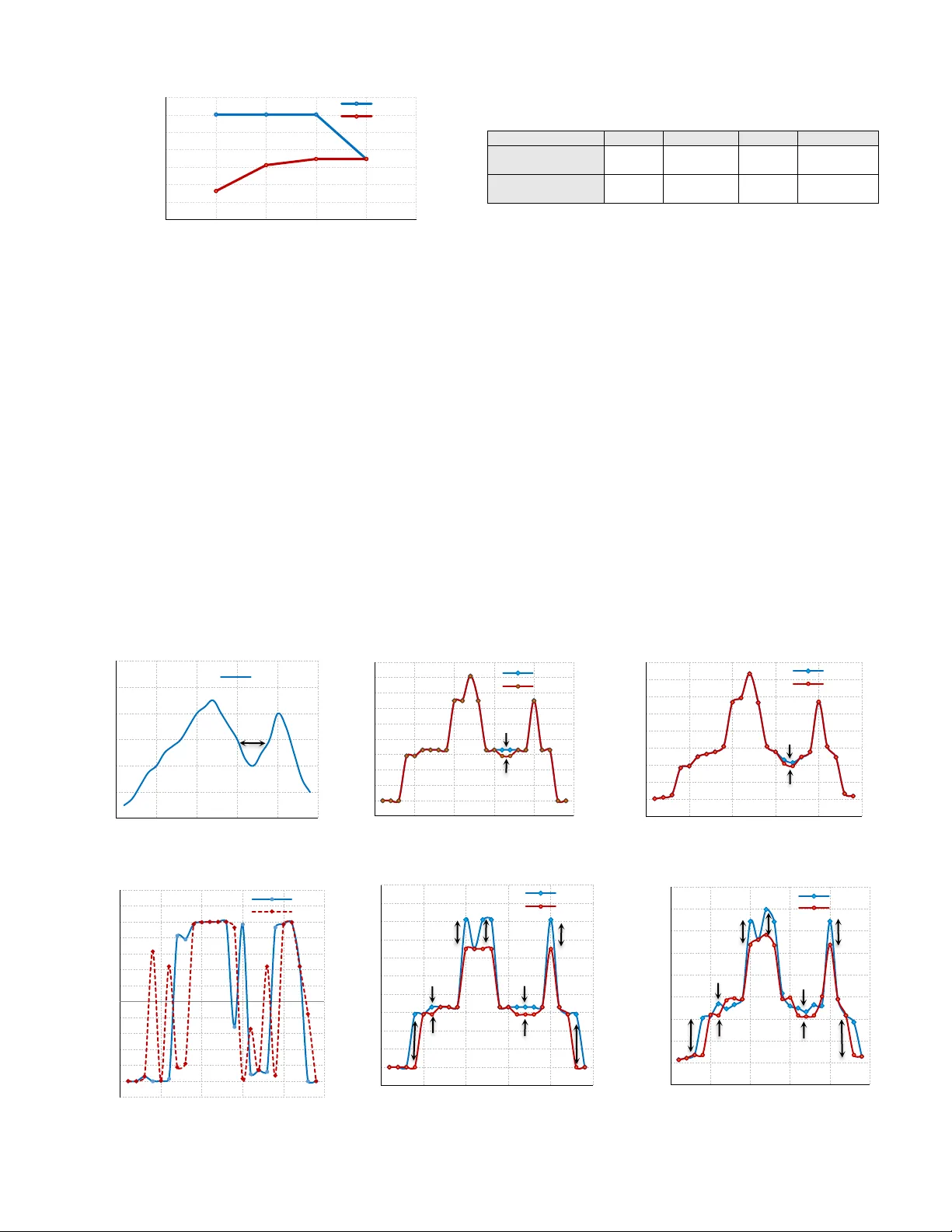
1 Abstract — Curren tly, most ISOs adopt offer cost minimization (OCM) auction m echanism which m inimizes the t otal o ffer cost, and then, a settle ment rule ba sed on either locational margina l prices (LMPs) or market clearing price (M CP) is used to determine the payments to the committed units, w hich is not compatible with the auction mechanism because t he minimized cost is different fr om the pay m ent cost calcu lated by the settle men t rule. This inconsistency can drastically increase the payment cost. On the other h and, payment cost minimization (PCM ) auction mechanism eliminates this inconsistency; however, PCM problem is a nonlinear self-referring NP-hard problem which poses grand computational burden. In this paper, a mixed-integer nonlinear programing (M INLP) formulation of PCM pr oblem are p resented to address additional complexity of fast-grow ing penetration of Vehicle- to -G rid (V2G) in the price-based market cle aring problem, and a solution me thod based on the ge neralized benders decomposition (GBD) is then proposed to solve the V2G-integrated PCM problem, and its favorable performance in ter ms of convergence an d computational efficien cy is demonstrated using case studies. The proposed G BD-based method can handle s caled- up models with the increased number of decision variables and constraints w hich facilitates the use of PCM mechanism in t he market clearing of large-scale power system s. Th e im pact of u sing V2G technologies on the OCM and PCM m e chanisms in ter m s of MCPs and payments is also investigated, and by using numerical results, the performances of these t wo m e chanisms are com pared. Index Terms — Generalized benders decomposition, market clearing mechanism, uniform pricing, offer cost minimization, payment cost minimization, plug-in electric vehicle, vehicle to grid. N OMENCLAT URE Parameters B i ( t ) Single block bid p rice of unit i at time perio d t. C i NL No load co st of generating unit i. D ( t ) Total system load de ma nd at time period t. E v min , E v max Minimum/maximu m energy stored in batteries of PEV fleet v . NT i Number of intervals of the sta ir- wise startup cost function of unit i. P i max ( t ) , P i min ( t ) Maximum and m inimum po wer offered by unit i at time perio d t . P v CH,max , P v CH,min Maximum/minimum chargin g capacity of PEV fleet v. P v DS CH,max , P v DSCH,min Maximum/minimum dischar ging capacity of PEV fleet v. RU i , RD i Ramp up and ra m p do wn rates for unit i . off i t i SU Cost of the interval t i off (offline time) of the stair-wise startup cost f unction of uni t i. SD i Shutdown cost of unit i . t i off Number of periods unit i has been offline prio r to the startup T Number of periods of the ti me span. η v Charging/discharging c ycle efficiency of the PEV fleet v. λ , µ Lagrangian multipliers. Variables E v ( t ) Available energy in batteries of fleet v at tim e t. MCP ( t ) MCP at time t . p i ( t ) Power output of unit i at time t. p v ( t ) Power output of PEV fleet v at time t . sc i u ( t ) Startup cost of unit i at time t. sc i d ( t ) Shutdow n cost of unit i at time t. u i ( t ) Comm it m ent status of unit i at time t . u v CH ( t ) , u v DSCH ( t ) Charging/disch arging status of P EV fleet v at time t . Set Indices i Index for generating units. t Index for study time interval. v Index for PEV fleets. I. I NTRODUCTI ON A. Backgrou nd and Motivation n electricit y markets (e. g., the day-ahead markets), based on offers received fro m market participants ( i.e., energy of fers from producers and energy bids fro m consumers), independ ent system operato rs (ISOs) use a clearing al gorithm to d etermine the market-clearing price, the po w er productions, and the consumption level of consumers in every period of tim e . Generally, there are two m a in clearing mec hanisms: First, offer cost minimization (OCM) mechanism which is used to select offers in a way that the total bid cost is minimized, and second, payment cost minimization (P CM) which is used to select offers for minimizing t otal actual payments to the accepted bidders [1 - 7] . A fter using clear ing algor ithm b y ISO, in order to deter m ine the pa yments to the selected b idders, a settle m ent rule ( e. g., pay- as - bid pricing, unifor m pricing) s hould be used [1 - 7] . In pay- as - bid pricing, since each acce pted bidder is p aid at its Price-Based Market Clearing with V2G Integr atio n Using Generalized Benders Decomposition Reza Jam alzadeh, Member, IEEE , Sa jjad Abedi, Memb er, IEEE, Masoud Ra shidinejad, Senior Member , IEEE, and Mingguo Hong , Member, IEEE I Reza Jamalzadeh and Mingguo Hon g are with Department of Electrical Engineering and Computer Science, Case Western Reserve University, OH, USA . (e -mail: rxj171@case.edu and mxh543@case.edu ). Sajjad Abe di is with School of Mechanical Engineering, Purdue University, IN, U SA . (email: sabedi@purdue.edu ). Masoud R ashidinejad is with Department of Electrical Engineering, Bahonar University, Iran. (e-mail: mrashidi@uk.ac.ir ). 2 offer, the payment cost is t he sa me as the offer cost so that there is no differe nce bet w een two auction mec hanisms. Ho wever , wh e n pay- as -market clearing price (MCP ) or pay- as -locational marginal p rice ( LMP) is utilized as the s ettlement rule, the payment cost would b e different from the o ffer cost ; therefore, PCM and OCM auctio ns may provide different clear ing solutions whic h might result in different market e quilibrium. Currently, t he majority of market op erators (e.g., NY -ISO, ISO-NE, ERCOT , PJM, MISO) adopt OCM auction mechanism in their markets. One of the justifications is t hat the OCM model is simpler to solve as co mpared to the PCM, and straightforward sol ution approaches have been develop ed to minimize the total production cost ( including units’ offer co sts and fixed costs) and maximize social welfare. Afterwards, pay- as -MCP mechanism or p ay- as -LMP mechanism is u sed as a settlement rule which is n ot compatible with the auction mechanism u tilized because th e min imized cost i s different from t he pa yment cost. This inconsistency between the cleari ng algorithm (i.e., OCM) and th e settlement rule (i.e., p ay- as -MCP or pay- as -LMP) can drastically increase the p ayment co st. B y using PCM auction mecha nism, this inconsistenc y is effectively eliminated, and considerable reduction in payments in comparison with payments of OCM mechanism is achieved [1 - 10] . Literature has sho wn tha t for the same set o f bids, PCM leads to reduce co nsum er pa yments. T he market particip ants , however, may bid differently under the t w o auction mechanisms. In [1 1], the supplier ’ s strategic b ehaviors ar e investigated in a simpli fied day-ahead energ y market under t he two auctions, and it i s co ncluded that P CM still lead s to significant red uctions in p ayments even with strategic bid ding . In [12 ], it is shown that t he sensitivit ies of LMP s with r espect to the system uncertainties under the PCM mec hanism are lower comparing to th ose und er the OCM mechanism. This demonstrates yet a nother significant advantage of the P CM over the OCM mechan ism. The P CM problem has recently received considerab le attention due to the open challenges in both m odelin g and solution algorithm . The PCM problem i s a n NP -hard p roblem [3, 7]. Also because the m ar ket prices (eith er MCP or LMP) are present in the obj ective function, the P CM proble m is a self - referring op timization pr oblem [ 12] and suffers from add ed complexity and computatio nal burden. Therefore, inefficient solution algorithms ma y lead to p rolonged computational time or even failure o f co nvergence . To address these challenges , this paper presents an efficient solution algorithm based on the Generalized Bend ers Decomposition ( GBD). B. Related Work o n PCM The existing OCM auction in electricity m arkets is similar t o the u nit co mmitment pr oblem in centralized market operations and solution methods for solving OCM a uction ab ound. T he solution methods for solvin g PCM pro blem, however, ar e limited and mostly ine fficient [3, 4] . In [8] , a solution method based on forward dynamic programmin g was presented to solve a simple P CM problem, but the author acknowledges t hat the method is not suited for large- scale problems ( due to “curse o f dimensionality”) . Reference [5] proposed a graph search algorithm to so lve a simple PCM problem b y assuming simple bids with price -quantity curve. But because of the complexity of the method, it is not suitable for solving large-sca le pro blems either . In addition , the MCPs in th is stud y are loosely defined as the maximum of a m ortized bid co sts. In [13] , the genetic algorithm was used to solve th e PCM problem that also su ffers from lo w co mputational efficiency. References [3 , 7, 9 ] present ed solution methods based on the augmented Lagra ngian relaxation a nd surro gate opti mization. B ut the proposed methods can not guara ntee so lution feasibility [ 4] . In [10] , a solution method based on bile vel programing w as p roposed and i n [4] , w e presented a m ixed -integer linear programming (MILP) formulation of P CM problem. The solution methods presented in [4 ] and [10 ] can merely b e used to solve PCM problems with inelastic d emands, but they cannot d eal with the nonlinearities posed by energy stora ge systems , de mand response (or elastic de man d) , and V2G. In this pap er w e extend the for mulation presented in [4] to addr ess this c hallenge, and solve the resultant mixed integer nonlinear programing (MINLP) for m ulation of PCM through GBD. It is o bserved that so me studi es in the literat ure [1 -5, 8, 9] solved the P CM pro blem without considering the transmission constraints, while some others did [7, 10, 12]. Without loss of generality, tran smission const raints ar e not con sidered in this study a nd the uniform price settlement mechanism based on MCP is used. As necessar y , transmission co nstraints can be added to the model and the LMPs ca n be used as market clearing prices . C. Integ ration of V2G in PCM Plug-in electric vehicles (PEVs) as the portable source of electricity s torages have u ndeniable benefits th rough intelligen t charging and disc harging sch eme in a smart grid environ ment [14- 20] . The techno-economi c advantages of PEVs includ e flattening load curve a nd minimizing load curtail ment by discharging P EVs in p eak time and charging at off-peak periods, and p roviding frequency regulatio n and spinning reserves in fast response, etc . Due to the significant bene fits , there is a pressing need to study market o perations with a high level o f V2G penetratio n. T his pap er has studied the impact of V2G on OCM and PCM in terms o f both MCPs and payments for the first time . D. Main Con tributions of This Work In our proposed GB D-based solution algorit hm, the MI NLP model formulatio n of PCM splits i nto 1) feasib ility and optimality s ubproblems that are mixed inte ger linear programing (MILP) problems, and 2) a master problem which is a linear programing ( LP) problem. The case studies and numerical comparison with other solution methods confir m the solution p erformance of the proposed solution algorith m, in terms of both co mputational convergence and spee d. T he proposed GB D-based method can handle scaled -up models with consideratio ns for V2G, demand response (or elastic demand), and energy stor age systems with the increased number of decision variables and co nstraints which facilitates the use of P CM mechanism i n the market clearing o f large-scale 3 power s y stems. Me anwhile , this work has modeled V2G in the PCM auction m echanisms for the first t ime. After analyzing the impacts on MCPs a nd payments, our stu dy de m onstrate s further benefits of the PCM over the OCM m echanism with V2G integration. The remainder o f the paper is or ganized as follows. Section II presents the MINLP formulation of PCM -V2G p roblem; for comparison, the MILP for mulation of the OCM -V2G proble m is also d escribed. Section I II presents the GBD-based solution method f or th e PCM-V2G problem. Case studies and n umerical results are illustrated in sectio n IV where the benefits of V 2G on both the PCM and OCM mechanisms are compared while the GBD-based algorithm solutio n perfor m ance is demonstrated. Finall y, conclusions are p resented in section V. II. OCM AND PCM F ORMULATIONS In this section, the formulation s of OCM and PCM auctio n mechanisms incorporating V2G are p resented. It is assumed that s ystem lo ad de mand is fixed and transmissio n constraints are not considered without loss of generality . A. The OCM-V2G Problem Generally, the objective f unction of the OCM -V2G p roblem is for mulated as the mini mization of the total production co st as follows: ( ) m in ( ( ), ). ( ) ( ) i i i i ti O p t t p t C t + (1) where O i ( p i ( t ), t ) is the offer price functi on of unit i in ter ms of p i ( t ) at time period t , and C i ( t ) represents the fixed costs associated w it h unit i at time t . By cons idering the ty pical s ingle block offer c urve, O i ( p i ( t ), t ) in (1) as a g eneric function is replaced w it h B i ( t ) , and the objective fun ction of OCM p roblem becomes: ( ) 11 min ( ) ( ) ( ) ( ) ( ) TI u d NL i i i i i i ti B t p t sc t sc t C u t == + + + (2) where B i ( t ) is a constant parameter f or unit i at time t , and sc i u ( t ) and sc i d ( t ) are each the startup cost and shutdown cost variables associated with unit i , and C i NL is t he no load cost of unit i . The OCM-V2G pro blem is subject to the follo wing constraints. a. Startup co st constraints: A typical exponential s tartup c ost functio n in ter ms of o ffline time is s hown in Fi g. 1 b y the dashed line. T o model the problem as a MILP formulati on, the stair - wis e startup cost function (solid line in Fig.1) is m odeled by us ing t he following two con straints. 1 ( ) ( ) ( ) ( ) , , , 1 , ..., off i off i t t u off i i i i i i n sc t SU t u t u t n i t t NT = − − = ( 3) ( ) 0 , , u i sc t i t (4) where off i t i SU is the startup cost of the interval t i off of the stair - wise startup cost function o f unit i (Fig. 1 ). b. Shut do wn cost constraints: ( ) ( ) ( 1 ) ( ) , , d i i i i sc t SD u t u t i t − − (5) ( ) 0 , , d i sc t i t (6) where constant para meter SD i is the shutdo wn cost of unit i . c. Power balance equa tion constraints : ( ) ( ) ( ) , iv iv D t p t p t t = + (7) where p v ( t ) is the output po wer of PEV fleet v at time t. Variable p v ( t ) is positive when the aggregated P EV fleet is discharging, and negative when the aggregated PEV fleet is charging. d. Constraint s for the power output of generatin g units: min ma x ( ) ( ) ( ) ( ) ( ) , , i i i i i P t u t p t P t u t i t (8) e. Active po w er ramp constrai nts: ma x ( ) ( 1 ) ( 1 ) . [ 1 ( 1 )] , , i i i i i i p t p t u t RU u t P i t − − − + − − (9 ) ma x ( 1 ) ( ) ( ). [ 1 ( )] , , i i i i i i p t p t u t RD u t P i t − − + − (10) f. Con straints for chargin g and d ischarging po w er o f the P EV fleets: ma x min ( ) ( ) ( ) , , DSC H DSCH , CH CH , v v v v v p t u t P u t P t v − (1 1) min ma x ( ) ( ) ( ) , , DSC H DS CH, CH CH, v v v v v p t u t P u t P t v − (1 2) ( ) ( ) 1 , , CH DSCH vv u t u t t v + (1 3) where u v CH ( t ) and u v DSCH ( t ) ar e binar y variables represent ing the charging and discharging status of PEV flee t v at time t , respectively. g. T he energy equation constraint of each PEV fleet: ( ) ( 1 ) ( ), , v v v v E t E t p t t v = − − (14) where E v ( t ) is the ava ilable energ y in batteries of fleet v at time t and is ca lculated based the available energy at time ( t - 1) and the hourly power output of P EV f leet v factored by the charging cycle efficiency of t he PEV fleet v ( η v ). h. Constraint s for energy capacity li mits of the PEV fleets: min m ax ( ) , , v v v E E t E t v (1 5) ( ) ( ), vv E T T v = (1 6) where E v min ( t ) and E v max ( t ) are minimum and maximum energy stored in batteries o f PEV fleet v , a nd 𝜎 𝑣 ( T ) is the targeted energy level of PEV fleet v at t he end of t he study period. Other generator constraints can be also incorporated, such as minimum r un time [2 1]. T here are numerous solution methods Off-line time (h) 1 2 NT i . . . . . . 3 t i off Fig. 1. Exponen tial and stair-w ise startup cost funct ions. SU i 1 SU i 2 SU i 3 SU i NT i 4 for th e OCM-V2G problem. In this study, the OCM problem as defined b y (2) -(16) is solved a s a MILP prob lem u sing a readily available commercial MI LP solver such as CPLEX [22]. After clearing the market, most ISOs use pay- as -M CP o r pay- as -L MP as the settlement r ule. W hen transmission constraints are not co nsidered, the uniform price settlement mechanism based on MCP is used. As a result, t he MCP is defined as the highest o ffer accepted during each time period t . ( ) max ( ( ), ) ( ) i i i MCP t O P t t u t = ( 17 ) The MCP as d etermined by ( 17 ) is merely used for energy payment ; the co mmitted generators can be paid separately to cover startup costs a nd shut do wn costs. B. The PCM-V2G Problem In the PCM-V2G p roblem without transmissio n co nstraints, a unifor m m arket clearing price, i.e., MCP is being determined to clear the m arket. The objective function of th e PCM problem directly minimizes the p rocurement cost and can be generally formulated as the follo wing: ( ) m in ( ) ( ) ( ) ii ti MC P t p t C t + ( 18 ) where C i ( t ) represents the fixed costs associated with unit i at time t . In (18), MCP ( t ) is equal to the highest offer accepted by ISO. In the PCM-V2G problem formulation, MCP ( t ) is defined as a variable. With s pecific fixed cost, th e objective function of PCM-V2G is prese nted as: ( ) m in ( ) ( ) ( ) ( ) ( ) u d NL i i i i i ti MC P t p t sc t sc t C u t + + + (1 9) The follo wing constraint e nsures that t he value o f MCP ( t ) is the maximum accepted offer among all ge neration of fers B i ( t ) [4]. ( ) ( ) ( ) , , ii MCP t B t u t i t ( 20 ) Under constrai nt (20), continuous variables MCP ( t ) take on discrete v alues. The PCM-V2G problem is d efined b y obj ectiv e function (19), and constraints (3) -(16), and (20). III. P ROPOSED S OL U TI ON M ETHOD U SING G ENERALIZ ED B ENDERS D ECOMPOSI TION The nonlinearity of objective functions presented in (19 ) lines i n the pro duct o f two variables in the first par t of the objective function. T his pro blem is a NP -hard prob lem ; if the problem di mension become s larger with more variables, solving the problem gets more difficult or even impossible , such as for a large -scale syst em with various DG sources . In this study, GBD [2 3] is utilized to split the prob lem into subproble m s which are MILP problems, and ma ster pro blem which is a LP pr oblem. A. Formulation of the optimality subprob lem To apply the GBD m ethod to the pro blem, the decision variables are split into two groups X and Y . { ( )} { ( ), ( ), ( ), ( ), ( ), ( ), ( ), ( )} u d CH DSCH i i i i v v v v Y MCP t X p t u t sc t sc t p t u t u t E t = = ( 21 ) where Y is the set of co mplicating variab les. T hen, the objective function and constraints o f PCM-V2G ca n be written as: ( ) , m in ( ) ( ) ( ) ( ) ( ) u d NL i i i i i x X y Y ti MC P t p t sc t s c t C u t + + + ( 22 ) ( ) ( ) ( ) ii MCP t B t u t ( 22 - 1) ( ) 0 gX ( 22 - 2) where g ( X ) ≤ 0 correspo nds to the constraints (3)-(16 ). By fixing y i = y i ∈ Y and for x i X , the opti mality subprob lem is for mulated as: ( ) ˆ min ( ) ( ) ( ) ( ) ( ) u d NL i i i i i xX ti MCP t p t sc t sc t C u t + + + ( 23 ) ˆ ( ) ( ) ( ) ii MCP t B t u t λ i ( t ) ( 23 - 1) ( ) 0 gX µ ( 23 - 2) where λ i ( t ) is the lagrangian multiplayer cor responding to constraint ( 23 -1) for unit i at time period t, and µ is t he vec tor of lagran gian multipla yer corresponding to constraint ( 23 -2). Now, if optimality subproble m ( 23 ) is feasible, its optimal solution is denoted by X with opti m al multiplier vectors and . The solution of ( 23 ) provides an upper bo und ( UBD ) for the solution of the mai n problem ( 22 ). ˆ Sub UBD Z = ( 24 ) where UBD is the upper bound of the main proble m ( 22 ) and 𝑍 sub is the opti mal obj ective function value of the optimality subproble m ( 23 ). B. Formulation of the feasibility subproblem If the optimality s ubproblem ( 23 ) is infeasible, the fea sibility subproble m is formulated as: ( ) , ( ) m in i i x X t ti wt = (2 5) ˆ ( ) ( ) ( ) ( ) i i i MCP t t B t u t + λ i ( t ) (2 5- 1) ( ) 0 gX µ (2 5- 2) where α i ( t ) is the slack variable cor responding to unit i at time t , and g ( X ) ≤ 0 corresponds to constraints ( 3)- (1 6). C. Formula tion of the master prob lem Each time the opti m ality or fe asibility subproblem is solved, an opti m ality cut or a feasibilit y cut is generated and enforced for the following master pr oblem: , min yY (2 6) s.t. Optimality cut: ˆ ˆ ( , , ) LY (2 6- 1) Feasibility cut: ˆ ˆ ( , , ) 0 LY (2 6- 2) with : ( ) ( ) * ( ) ( ) ( ) ( ) () ( , , ) inf ( ) ( ) ( ) ( ) ( ) ud ii i NL t i t i ii X T i i i ti sc t sc t MCP t p t C u t LY t B t u t MCP t g X ++ + + = − + (2 6- 3) 5 ( ) * ( ) ( ) ( ) ( ) ( ) ( , , ) 1 inf () i i i i T ti X T t B t u t MCP t t LY gX − − + =+ (2 6- 4) where multipliers μ and in (26-1) and (2 6-2) are iteratively provided from the solutions of optimality a nd feasibility subproble ms . The ex plicit expressions of function L* presented in (26-3) can ’ t be easily o btained since variables x and y ar e not separable inside the infimum term which satisfy neither the P nor the P’ prop erties [24]. However, as often practiced in other engineering fields [2 4], the primal opti mal solution 𝑥 of the optimality subproble m is utilized in this study to ap proximate L *, and thus, the op timality cut (2 6-1) can be simplified as follows: ( ) , ˆ (t) ( ) it ti UBD MCP MCP t + − (2 7) wh ere π i,t =λ i,t +p i ( t ) in which π i,t , λ i,t ,and p i ( t ) are each the optimality multiplayer, optimal lagrangian multiplayer corresponding to ( 23 - 1) , and optimal generation schedule o f unit i at time t obtained from the optimality subproblem ( 23 ) for fixed y= y . L ikew ise, feasibility cuts can be f ormulated for each time period 1≤ t ≤ T as follows: ( ) , ˆˆ ˆ ( ) ( ) 0, t i t i w MCP t MCP t t + − (2 8) wh ere w t = ∑ α i ( t ) i in w hich α i ( t ) is the slack variable corresponding to un it i at tim e p eriod t ach ieved from the feasibility subpro blem (25 ) for fixed y= y =M C P ( t ) . In (28 ), λ i,t is the optimal lagrangian multiplayer corresponding to (2 5- 1) o btained from the feasibility subprob lem (2 5) for fixed y= y =M C P ( t ) . The solution of the m aster pro blem (26 ) provides a lower bound ( LBD ) for the solution of main p roblem ( 22 ). ˆ LBD = (2 9) wh ere 𝜂 is the optimal obj ective function value of the master problem (2 6). D. Summary of the GBD-based solution algorithm The GBD-based solution algorith m is started u sing an initial guess y= y =M C P ( t ) . For exa m ple, the initial p oint ca n be the highe st b id p rice of generation units, i.e., y 0 ( t ) =M C P ( t ) = max i { B i (t) } . As shown in [4], the solution of OCM proble m can also be used as an i nitial value for the PC M problem. T hen, opti m ality subpr oblem ( 23 ) is solved for the initial guess y =y 0 , and UBD for the m a in problem ( 22 ) is obtained thro ugh ( 24 ), and an optimality cut for the m aster problem is constructed. If op tim ality subproble m ( 23 ) is infeasible, the feasibility su bproblem ( 25 ) is solved an d a feasibility cut for the master problem is constructed. After solving the subprob lem , the master pr oblem is sol ved with the new opti mality or fea sibility cut, a nd LBD for the m a in proble m ( 22 ) is obtained through (2 9), and the updated solution y =y 1 f or subproble m s are achieved. The solution proced ure contin ues, and optimality subp roblem or feasibil ity s ubproblem is constructed with the updated solution y =y 1 . The above iterativ e process co ntinues until t he U BD and LBD co nverge within a predefined tolerance threshold . IV. N UMERICAL C ASE S TUDI ES In th is stud y, a 24 -hour proble m with 1 0 generating units is considered. T he system data, market offers, and hourly system load demands have been extracted f rom [21, 25]. In this case study, startup cost functions are modeled by a two interval stair wise linear function. int int off t i off i i i off i HSC t T SU CSC t T = (27) where HSC i is th e hot startup cost, and C SC i is th e cold startup cost of unit i ; therefore, startu p cost of first and second block of stair wise curve in Fi g. 1 are equal to HSC i and CSC i , respectively. I n fact, i f offline time of u nit i is lower than T i int , the startup cost is eq ual to HSC i , and startup co st is equal to CSC i , other w i se. Also in this study, the 100000 PEVs are assumed for simulation. The probabilistic model of the a ttendance of PEVs in t he P EV fleets for t he hour s of a day is extracted from [2 6] , where the d ata is obtained fro m a parkin g lot fro m the cit y of Livermore, CA [27]. The maximum number o f PEVs with charging/discharging status at each hour is pres umed to be 10 percent of total PEVs in PE V fleets . In additio n, the follo wing parameters ar e consid ered for each vehicle i n the PEV fleets: battery capacity of each PEV is 15 kWh, state of charge of each PEV is 50%, and charging/discharging cycle efficiency of each PEV is 85 %. In model i mplementation, GAMS [2 8] with the CP LEX solver [22] is used to implement and solve both the OCM-V2 G and the GBD-based PCM-V2G problems . The algorith m solutions are perfor m ed on desktop co mputers with Intel Co re i3 CPU 530 @3 GHz and 3 GB RAM. For comparative anal ysis , the OCM a nd P CM problems ar e first solved as MIP pro blems without con sidering V2 G . T he load demand p rofile, MCP as well as the payment cost of bo th PCM and OCM as results of the so lution are p resented in Fig. 2. As shown in Fig. 2 , the PCM problem solves to lower MCPs and p ayment co sts in the valley of the load p rofile, as co mpared to the OCM p roblem . Also a s sho wn in T able I , the aver age MCP ( 62.792 $ /MWh) and the total p ayment cost ($1 816480) of the PCM problem are lower than those of the OCM (63.125 $/MWh and $ 1823570, respectively). Therefore w ithout the V2G , the PCM mechanism a chieves a total saving of $ 7090 (0.38%) over 24 -hour st udy perio d as compared to the OCM mechanism . The case study is then e xamined with considering V2G in the s ystem. T o solve the PCM-V2G proble m, the proposed GBD-based method is utilized to split the main problem, which is a self -referring and NP -hard prob lem , into MILP optimality and f easibilit y subprob lems as well as LP master problem. Solver CPLEX is used to solve the resulted subpro blems and master p roblem in each iteration. T he solution algor ithm starts with a n initial guess for MCP ( t ). Based on the definitio n of MCP, MC P ( t ) is between t he minimum and m a ximum bid price of generators. T he initial value for MCP is as sumed to be the highest bid price of generators ( i.e., MCP 0 ( t ) =Max { B i }=111 ) . With the initial gu ess, the optimality subproblem ( 23 ) was solved, and then, the o ptimality cut w a s constructed and app lied to the master pro blem. The master problem with the opti m ality cut was conseque ntly solved to obtain new values for y (i. e., 6 MCP ( t )). T he second iteration starts with the new 𝑌 1 wh ich is achieved from the ma ster p roblem. Opti mality subproble m based on new 𝑌 1 was in feasible; therefore, the feasibilit y subproble m was solved to create the first feasibility cut for the master prob lem. After 4 iterations, and after 2 feasibility c uts and 2 optimality cuts were applied to the m as ter problem, solution converge nce was achieved with the o bjective cost $1734015.125. The convergence of the GBD met hod has been presented in Fig. 3. The charging and dischargin g patterns of PEVs in OCM - V2G and PCM-V2G have been illustrated in Fig. 4(a). As shown in Fig. 4(a), PEVs are ch arged at the off -peak of demand profile, and they are discharge d at the peak of load profile. As illustrated in Fi g. 2 (b) and Fig. 2(c), without V2G, PCM h as t he lower MCP and payment cost compared to those in OCM mechanism in the valle y of load profile. However, when V 2G is utilized in t he s ystem, P CM has a better performance compared to OCM not merely in t he valley o f lo ad profile, it has also a better performance in other tim e periods, as sho wn in Fig. 4( b) and Fig. 4(c) . It is because PCM mechanis m uses the opportunity of chargi ng and discharging P EVs to control and decrease MCP s and pa yment co sts e ffectively. Bu t, O CM mechanism uses ch arging and disch arging P EVs to d ecrease the offer cost due to the obj ective functio n o f O CM; therefore, because of the inconsistenc y bet ween the clear ing algorith m and the settle ment rule, the MCP and pa yment cost in OCM- V2G ar e much hi gher than those in PCM- V2G mechanis m. As presented in Table I , the average MCP of PCM-V2G (60.417 $/MWh), and also, t he tota l payment co st o f PCM-V2 G ($1734015.12 5) are l o wer than the av erage MCP of OCM-V2G (66.167 $/MWh) and the tot al payment cost of OCM-V2G ($1888584.14), respectively. I n fact, b y using P CM instead of OCM in the system with V2G, $154569 is saved for this case study at the 24 -hour p eriod o f time, and 8.1 8% saving is achieved. In su mmary, without V2G, PCM res ult ed in $7 090 (0.38%) saving for pa yments compared to the OCM mechanism; however, t his a mount significa ntly increase d to $154569 ( 8.18%) when V2G is utilized. The curves of the ne t de mand, MCP and the payment cost of OCM i n the system with and without V2G are presented in Fig. 5. By using V2G in the system, in OCM mechanism, the offer cost is decreased from $10 13048 to $99349 3.69; how ever , as s hown in Fig. 5, MCP and payment co st h ave been increased due to the incompatibilit y between the clearing al gorithm ( i.e. , OCM) and the settle ment rule (i.e., p ay- as -MCP). In fact, Fig. 2. Per formance of PC M and OCM mec hanisms in the sy st em w i thout V2G: (a) Load profile; (b) MCP; (c) Payme n t cost Fig. 4. Compar i son of the perfo rmance of OCM and PCM me chanisms in the sy stem w ith and without V2G: (a) Charging and d ischarging patte rn of PEVs; (b) MCP; (c) Payme nt cost 600 800 1000 1200 1400 1600 1800 0 5 10 15 20 25 Lo ad(MW) Time (h) Load Profile (a) 20 30 40 50 60 70 80 90 100 110 120 0 5 10 15 20 25 MCP ( $/MWh) Time (h) OCM PCM (b) 0 20000 40000 60000 80000 100000 120000 140000 160000 180000 0 5 10 15 20 25 Payme nt cost ($) Time (h) OCM PCM (c) -12000 -10000 -8000 -6000 -4000 -2000 0 2000 4000 6000 8000 10000 12000 14000 0 5 10 15 20 25 Number of PEVs Time (h) OCM PCM (a) 20 30 40 50 60 70 80 90 100 110 120 130 0 5 10 15 20 25 MCP ($/MWh) Time (h) OCM PCM (b) 0 20000 40000 60000 80000 100000 120000 140000 160000 180000 0 5 10 15 20 25 Payme nt cost ($) Time (h) OCM PCM (c) Fig. 3. Co nvergence of the proposed GBD- based algorithm 0 500000 1000000 1500000 2000000 2500000 3000000 3500000 0 1 2 3 4 5 Cost ($) I teration UBD LBD T ABLE I P AYMENT C OST AND A VERAGE MCP F OR PCM AND OCM M ECHANISMS W ITH A ND W ITHOUT V2G OCM OCM-V2G PCM PCM-V2G Total Pay m ent Cost ($) 1823570 1888584.14 1816480 1734015.125 Average MCP ($/MWh) 63.125 66.167 62.792 60.417 7 because of t he ob jective fu nction o f OCM, O CM mechanism uses charging and d ischarging PEVs to decr ease the offer cost without regarding to the i ncrease of t he pa yment cost s and MCPs. Therefore, MCPs and pa ym ent costs in OCM in t he system with V2G have been increased in comparison with th ose in the system without V2 G. The curves of the net demand, MCP and the payment cost of P CM in the system with and with out V2 G ar e pr esented in Fig. 6. As sho wn in Fig. 6, by using V2 G in t he system, t he performance of P CM has been improved, and MCP s and payment costs have been dec reased d ue to the compatibilit y between the clea ring a lgorithm ( i.e., PCM) and the settlement rule (i.e., p ay- as -MCP). Payments to each unit for each OCM, OCM-V2G, PCM, and PCM-V2G pro blems ar e presented in Tab le II . As shown in T able II , in PCM m echanis m, b y u sing V2G in the system, unit 9 which had o ffered h igh price is not utilized, and pa yment cost decreases. I n OCM mechanism, by using V2 G, because of the goal of the OCM pro blem (i.e., minimizing offer cost), u nit 10 w ith lower startup cost and higher bid price is selected instead of unit 7 with higher startup co st and lower bid price to decrease the o ffer cost, and it is the r eason why desp ite decreasing the offer co st in OCM-V2G, the payment co st has increased. To examine t he perfor mance of the proposed GBD -based method, the PCM-V2G problem was also solved by using two commercial solvers DICOPT [29] , which i s based on the extensions of the outer -approximation algorithm for the equality relaxation strategy, and SBB [ 30], which is based on a combination o f the standard B ranch and B ound method and some o f t he standar d nonlinear programing soft ware ( NLP) solvers, as well as three free solvers SCIP [31], COUENNE [32], and B ONMIN [33] . Table II I demonstrates the effective performance of the prop osed GB D-based solution method compared to MINLP solvers. V. C ONC LUSIONS This study has pro posed a GBD-based solution method to solve PCM problems which is ab le to handle the nonlinear ity posed by the V2G integration . Furthermore, in this s tudy, the performances of PCM and OC M auction mechanisms has been investigated in the system with a nd without V2G. The ke y finding in this pap er are summarized as follo ws: 1) By using V2G in O CM mec hanism, the offer cost were slightly decrea sed; however, MCP and payment cost were increased which is because of the incompatibility b etween t he clearing algorithm ( i.e., OCM) and t he settlement rule ( i.e., pay- as -MCP). But, by using V2G in th e system, the performance of PCM were improved, and MCPs and payment costs were decreased due to the compatibilit y bet ween the clearing algorithm (i.e., PC M) and the settlement rule (i.e ., pay- as - MCP). Based on the numerical r esults, without usi ng V2G , PCM result ed i n $7090 (0.38%) saving for p ayments compared to the OCM mechanis m; however, this a mount si gnificantly increased to $154569 (8 .18%) when V2G is utilized . In conclusion, i n the s ystem in which V2G is utilized, using the PCM mechanism can con siderably decrea se the pa yment costs and achieve a h uge saving compared to OCM mec hanism. 2) It has been shown that the proposed GBD-based m ethod is effective to solve the PCM problem which is a co mplex self- referring and NP-hard p roblem . Since th e proposed GBD-based method split the P CM-V2G p roblem into simple MILP subproble m s and LP m aster pr oblem , it can be utilized in large scale syste ms with the increas ed number of decision variables and constrai nts . In add ition, s ince t he proposed method is an iterative method, linear sensitivity coefficient s (LSC) can be also used to cope with the nonlinearity posed by nonlinear network constraints (either in transmission or di stribution systems) as explained m o re in [34, 35] . In conclusion, the proposed GBD -based method presented in this paper can pave the way for future research works on PCM auction mechanism. Future work may include nonlinear network constraint s as well as the pr obabilistic characteris tics of load variation, especial ly under the smart grid initiati ves for demand response. R EFERENCES [1] S. Hao, G. A. Angelidis, H. Singh, and A. D. Papale xopoulos, "Consumer payment minimization in pow er pool au ctio ns," Power Systems, IEEE T ransactions on, vol. 13, pp. 986-991, 1 998. [2] J. A lonso, A. Trías, V. Gaitán, and J. J. Alba, "Thermal plant bids and market clearing in an electricity pool. Minimization of costs vs. minimization of consumer payments," Power Systems, IEEE Transactions on, vo l. 14, pp. 1327-1334, 1999. [3] P. B. L uh, W. E. Blankson, Y. Chen, J. H. Yan, G. A. Stern, S. -C. Chang , et al. , "Payment cost minimization auction for deregulated electricity markets u sing surrogate optimization," Power Systems, IEE E Transactions on, vo l. 21, pp. 568-5 78, 2006. T ABLE II U NITS P AYMENTS IN PCM AND OCM M ECHANISMS IN THE S YSTEM W ITH AND W ITHOUT V2G Unit OCM OCM-V2G PCM PCM-V2G 1 687225 722540 585221 659750 2 674925 713877.5 669185 638955.5 3 113016 99895.31 122260 106031.1 4 99040 107192.11 146850 86050.47 5 198866 224533.71 220734 184624.3 6 29303 14373.75 39960 38680 7 20 025 0 26105 19923.75 8 1170 1170 0 0 9 0 0 6165 0 10 0 5001.75 0 0 T ABLE III T HE P ERFORMANCE OF T HE PROPOSED M ETHOD C OMPARED TO O THER M ETHODS FOR PCM-V2G P ROBLEM Solution methods Optimal Solution ($) Converge nce Time (Se c) Relative Gap (%) Proposed G BD-based method 1734015.125 1.166 0 DICOPT 1734015.125 111.605 0 SBB 1972314.025 360 1.1581 SCIP 2020842.85 360 118.54 COUENNE 2132356.15 360 3.0119 BONMI N 2788054.25 360 1.8917 8 [4] R . Jamalzadeh, M. M. Ardehali, S. H. Hosseinian, and M . Choopani , "Payment cost minimisatio n auction for deregulated electricity market using mixed-integer linear p rog ramming approach," Generation, Transmission & Distri buti on, IET, vol. 7, pp. 907-918, 2013. [5] C . Vázquez, M . Rivier, and I . J. Pérez-Arriaga, "Production cost minimization ve rsus consumer payme nt minim ization in el ectricity pools," Power Systems, IEEE Transactions on, vol. 17, pp. 119-127, 2002. [6] S. Hao and F. Zhuang, "New models for in tegrate d short-term forward electricity markets," Power S ystems, IEEE Tra nsactions on, vol. 18, p p. 478-485, 2003. [7] F. Zhao, P. B. Luh, J. H. Yan, G. A. Stern, and S. -C. Chang, "Pay ment cost minimization auction for deregulated electricity markets with transmission c apacity c onstrai nts," IEEE Transactio ns on Powe r Systems, vol . 23, pp. 532-544, 2008. [8] D. P. Mendes, "Resource sche duling and pr icing in a cen tralised ene rgy market," in Proc . 14th Power Sys tem Computatio n Conf , 2002, pp. 1- 7. [9] M . A. Bragin, X. Han, P. B. L uh, and J. H. Yan, "Payment cost minimization using Lagrangian relaxation and modified surrogate optimization app roa ch," in Power and Energy S ociety G eneral Meeting, 2011 IEEE , 2011, pp. 1- 7. [10] R. Fernández- Blanco, J. M. A rroyo, and N. Al guacil, "A unified bileve l programming framewor k for price-based market clearing under marginal pricing, " IEEE Transaction s on Power Systems, vol. 27, pp. 517-525, 2012. [11] F. Zhao, P. B. Luh, J. H. Yan, G . A. Stern, and S.-C. Chang, "Bid cost minimization versus payme nt co st minimization: A game theoretic study of electricity auctions," IEEE Transactio ns on Power Systems, vol . 25, pp. 181-194, 2010. [12] A. Nouri and S. H. Hosseini, "Compa rison of LMPs' Sensitivity Und er Payme nt Cost Minimization and Offe r Cost Minimizatio n Mechanisms," IEEE Systems Jour nal, vol. 9, pp. 150 7-1518, 2015. [13] Y. Xu, Q. Hu, and F. Li, "Probabilistic model of payment cost minimization considering wind power and it s uncertainty," IEEE Transactions on S ustainable Ener gy, vol. 4, pp. 716-72 4, 2013. [14] C. Yiji a, T. Shengwe i, L . Canbing, Z. P eng, T. Yi, Z . Z hikun , et al. , "An Optimized EV Charging Model Consider ing TOU Price and SOC Curve," Smart Gri d , IEEE Tr ansactions on, vol. 3, pp. 388-393, 2012. [15] W. Kempton and J. T omić, "Vehicle - to -grid power implementation: From stabilizing the grid to supporting large-scale renewable energy," Journal of Power Sources, vol. 144, pp. 280-294, 2005. [16] C. G ui ll e an d G. Gro ss, "A conceptual f ramewor k f or the vehicle- to - grid (V2G) imple mentation," Energy Po licy, vol. 37, pp. 43 79-4390, 2009. [17] P. D. K. Parks, and T. Markel, "Costs and emissions associated with plug-in hybrid electric vehicle charging in the Xcel Energy Colorado service ter ritory," Technical Repor t NREL/TP, vol. 640-414 10, 2007. [18] S. Acha, T . C. G reen, and N. S hah, "Eff ects of optimised plug-in hy brid vehicle charging strategie s on electric distribution n etw ork losses," in Transmission and Distribution Conference and Exposition, 2 010 IEEE PES , 2010, p p. 1- 6. [19] S. Abedi, A. Arvani, and R. Jamalzadeh, "Cyber Security of Plug -in Electric Vehicle s in Smart Grids: Application of Intrusion Detectio n Methods," in Plug In Electric Vehicles in Smart Grids , ed: Springer, 2015, pp. 129-147. [20] S. Rajakaruna, F. Shahnia, and A. Ghosh, Plug in electric vehicles in smart grids : Spri nger, 2016. [21] M. Carrión and J. M. A rroyo, " A computatio nally efficient mixed- integer linear formulation for the thermal unit commitment problem," Power Systems , IEEE Transac tions on, vol. 21, pp. 13 71-1378, 2006. [22] (2011). The ILOG CPLEX Website Available: http://www.il og.com/products/cplex / . [23] A. M. Geoffr ion, "Generalized benders decomposit ion," Journal of optimization theor y and a pplications, vol. 10, pp. 2 37-260, 1972. [24] M. B agaje wicz and V. Manousiouthakis , "On the generalized Benders decomposition," Com puters & chemical engineering, vol. 15, pp. 691- 700, 1991. [25] S. A. K azarlis, A. Ba kirtzis, an d V. Pe tridis, "A genetic algo rithm solution to the u nit commitme nt problem," Pow er Systems, IEEE Transactions on, vo l. 11, pp. 83-92, 1 996. [26] M. H. Bi o ki, M. Z. Jahromi, and M. Rashidinejad, "A combinatorial artificial i ntellige nce real-time solution to the unit commitme nt pro blem incorporating V 2G," Electrical En gineering, pp. 1-15, 20 12. [27] City of Livermore, “Dow ntown parking study,” Livermore, CA, February 2006. [28] (2011). The GAMS Development Corporation Website . Available: http://www .gams.com/ Fig. 5. Per formance of OCM me chanism in the sy stem with and without V2G: (a) Net demand; (b) M CP; (c) Payme nt cost Fig. 6. Per formance of PC M mechanism in the system w i th and without V2G: (a) Net demand; (b) MCP; (c) Payme n t cost 600 700 800 900 1000 1100 1200 1300 1400 1500 1600 1700 0 5 10 15 20 25 Net demand (MW ) Time (h) Without V2G With V2G (a) 20 30 40 50 60 70 80 90 100 110 120 130 0 5 10 15 20 25 MCP ($/MWh) Time (h) Without V2G With V2G (b) 0 20000 40000 60000 80000 100000 120000 140000 160000 180000 0 5 10 15 20 25 Payme nt cost ($) Time (h) Without V2G With V2G (c) 600 700 800 900 1000 1100 1200 1300 1400 1500 1600 1700 0 5 10 15 20 25 Net demand (MW ) Time (h) Without V2G With V2G (a) 20 30 40 50 60 70 80 90 100 110 120 0 5 10 15 20 25 MCP ($/MWh) Time (h) Without V2G With V2G (b) 0 20000 40000 60000 80000 100000 120000 140000 160000 180000 0 5 10 15 20 25 Payme nt cost ($) Time (h) Without V2G With V2G (c) 9 [29] I. E. Grossm ann, J. Viswanathan, A. Ve cchietti, R. Rama n, a nd E . Kalvelage n , " GA M S/DI COPT: A di scre te continuous optimization package," GAMS C orporation Inc, 2002. [30] M. R . Bussieck and A. Drud, "SBB: A n ew solver for mixed i nteg er nonlinear progr amming," GAMS Dev elopment C orp, 2001. [31] A. Gleixner, L . Ei fle r, T. Gally, G. Gamrat h, P. Gemander, R. L. Gottwald , et al. , "T h e SCI P Optimization Suite 5.0," 2017. [32] P. Belotti, "Couenne: a user’s manual," Technical report, Le high University20 09. [33] P. Bonam i and J. L ee, "BONM I N user’s manual," Numer Math, vol. 4, pp. 1-32, 2007. [34] R. Jamalz a deh and M. Hong, "A n approximate met hod for vo ltage sensitivity calculation in unbalanced distr ibution systems," in Transmission and Distri bution Conference and Exposition (T& D), 2016 IEEE/PES , 201 6, pp. 1- 5. [35] R. Jamalzadeh, F. Zhang, and M. Hong, "An economic dispatch algorithm incorporating voltage management f or active distribution systems using generalized benders decomposition," presented at the PES General Meeting| Confe rence & Exposition, 2 016 IEEE, 2016.
Original Paper
Loading high-quality paper...
Comments & Academic Discussion
Loading comments...
Leave a Comment