Big Data Driven Vehicular Networks
Vehicular communications networks (VANETs) enable information exchange among vehicles, other end devices and public networks, which plays a key role in road safety/infotainment, intelligent transportation system, and self-driving system. As the vehicular connectivity soars, and new on-road mobile applications and technologies emerge, VANETs are generating an ever-increasing amount of data, requiring fast and reliable transmissions through VANETs. On the other hand, a variety of VANETs related data can be analyzed and utilized to improve the performance of VANETs. In this article, we first review the VANETs technologies to efficiently and reliably transmit the big data. Then, the methods employing big data for studying VANETs characteristics and improving VANETs performance are discussed. Furthermore, we present a case study where machine learning schemes are applied to analyze the VANETs measurement data for efficiently detecting negative communication conditions.
💡 Research Summary
The paper “Big Data Driven Vehicular Networks” provides a comprehensive survey and analysis of how the explosive growth of data generated by vehicular communication systems (VANETs) can be both supported by emerging networking technologies and exploited to improve network performance. It begins by characterizing VANET data as a classic example of big‑data “5Vs”: massive volume, high variety (sensor readings, GPS traces, high‑definition camera/LiDAR streams, infotainment traffic), high velocity (real‑time streaming), valuable information for safety and autonomous driving, and varying veracity. The authors argue that traditional IEEE 802.11p‑based DSRC, with its distributed MAC and limited bandwidth, cannot meet the stringent QoS demands of modern and future vehicular applications.
To address the transmission challenge, the paper advocates the deployment of 5G as the primary backbone. 5G’s three service categories—enhanced Mobile Broadband (eMBB), Ultra‑Reliable Low‑Latency Communication (URLLC), and massive Machine‑Type Communication (mMTC)—map directly onto VANET needs: eMBB for gigabit‑per‑second video and LiDAR feeds, URLLC for safety‑critical V2V/V2I messages requiring sub‑5 ms latency and 99.999 % reliability, and mMTC for the billions of lightweight sensors deployed on vehicles and road infrastructure. The authors also highlight 5G’s network slicing and software‑defined networking (SDN) capabilities, which enable dynamic allocation of radio resources per vehicle or per service class, thereby ensuring differentiated QoS while maintaining overall spectral efficiency.
Recognizing that 5G alone will not be sufficient—especially during the early rollout phase and for cost‑sensitive data transfers—the paper proposes complementary “opportunistic data pipes.” Wi‑Fi offloading leverages roadside access points; by predicting vehicle trajectories and Wi‑Fi hotspot availability, a delay‑tolerant offloading decision can be made, reducing cellular load. Cognitive Radio (CR) techniques, particularly the use of TV White Spaces (TVWS), are discussed as a way to tap underutilized VHF/UHF spectrum; however, the high mobility of vehicles imposes frequent spectrum sensing overhead. Device‑to‑Device (D2D) communication is presented as a means to achieve ultra‑low latency and improve spectral reuse, but challenges such as rapid channel state information (CSI) aging and complex interference patterns in vehicular topologies must be addressed.
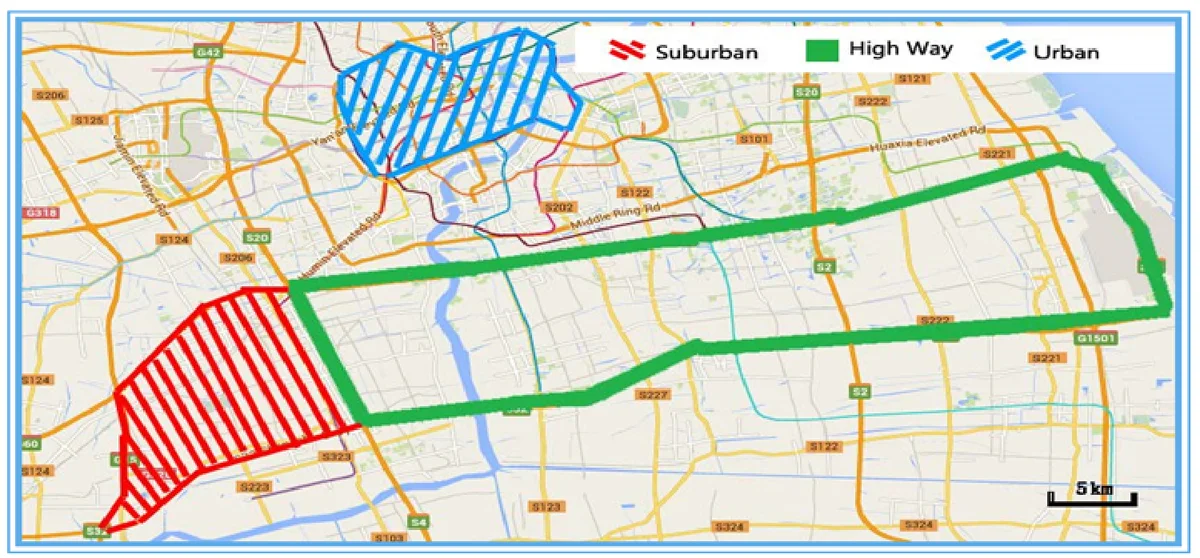
On the data‑utilization side, the authors illustrate two representative datasets. First, large‑scale vehicle mobility traces are analyzed to extract connectivity graphs, predict link lifetimes, and design mobility‑aware routing protocols (e.g., delay‑tolerant forwarding, opportunistic forwarding). Second, real‑world VANET measurement logs—including packet loss, RSSI, and latency—are fed into machine‑learning pipelines to detect “negative communication conditions” (e.g., sudden degradation, blackout periods). The case study compares Support Vector Machines, Random Forests, and deep neural networks, showing that feature engineering (e.g., temporal smoothing, statistical descriptors) significantly boosts detection accuracy over simple threshold‑based methods. The ML‑based anomaly detector can trigger proactive remedial actions such as switching to alternative radio interfaces or adjusting transmission power.
Overall, the paper delivers a dual‑focused roadmap: (1) how to build a robust, high‑capacity, and flexible communication substrate for VANET big data using 5G, Wi‑Fi, CR, and D2D; and (2) how to turn the collected big data into actionable intelligence through mobility modeling, channel characterization, and machine‑learning‑driven network management. By systematically discussing trade‑offs (bandwidth versus cost, latency versus reliability, mobility versus spectrum availability) and providing empirical validation with real measurement data, the work offers both academic insight and practical guidance for researchers, network operators, and automotive manufacturers aiming to realize the next generation of intelligent transportation systems.
Comments & Academic Discussion
Loading comments...
Leave a Comment