Constrained Least Squares, SDP, and QCQP Perspectives on Joint Biconvex Radar Receiver and Waveform design
Joint radar receive filter and waveform design is non-convex, but is individually convex for a fixed receiver filter while optimizing the waveform, and vice versa. Such classes of problems are fre- quently encountered in optimization, and are referre…
Authors: Pawan Setlur, Sean ORourke, Muralidhar Rangaswamy
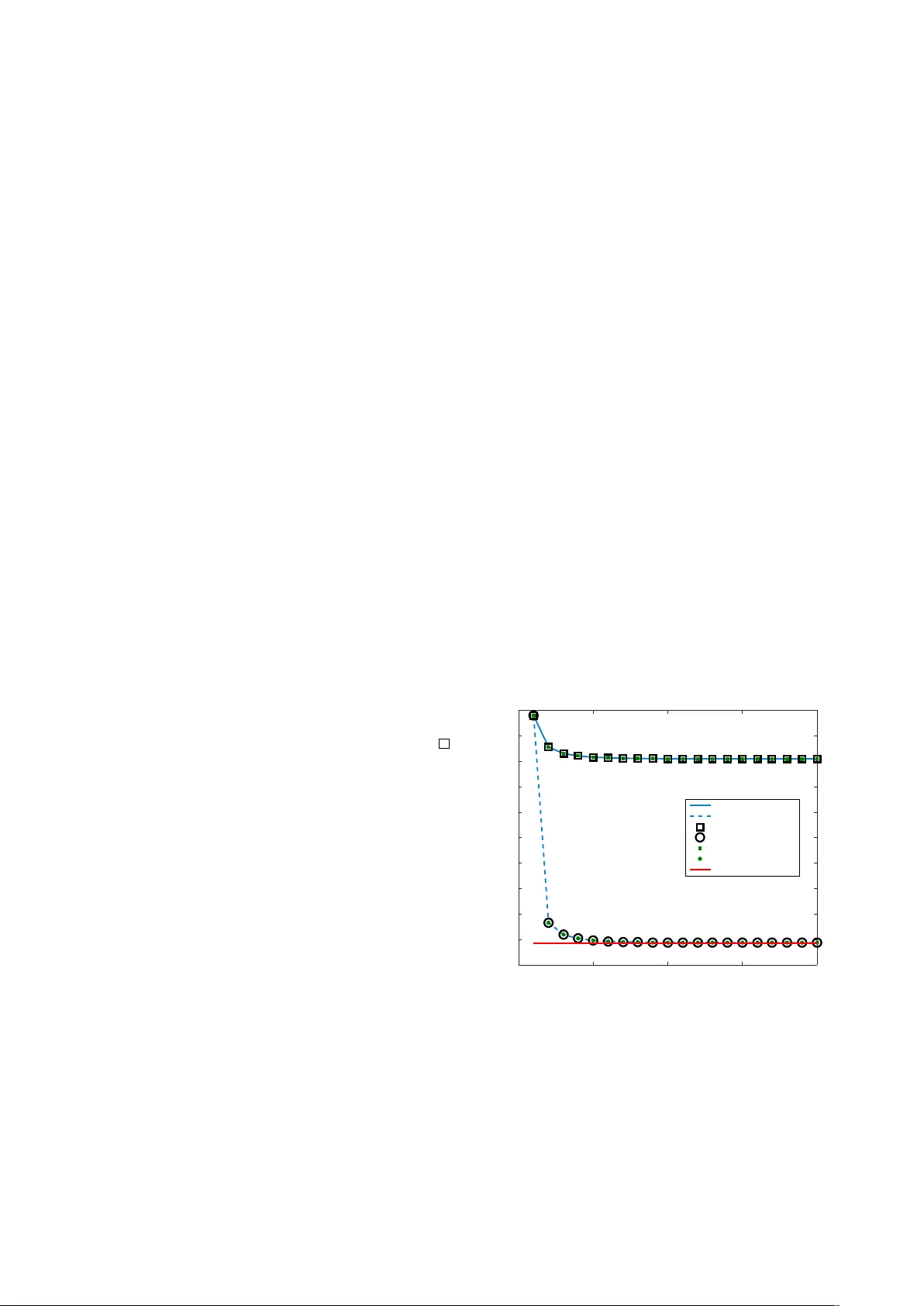
C o n s t r a i n e d L e a s t S q u a r e s , S D P , a n d Q C Q P P e r s p e c t i v e s o n J o i n t B i c o n v e x R a d a r R e c e i v e r a n d W a v e f o r m d e s i g n P a w an S et l ur ∗† , Se a n M. O ’R o ur k e ∗ , Mu r al i dh a r Ra ng as w am y ∗ , ∗ US Ai r F or c e R es e ar c h L ab o ra t or y , S e ns or s Di r ec t or a te , WP AF B, OH 45 4 33 , † Wr i gh t St at e Re se ar c h In st i tu te , Be av er cr e ek , OH 45 43 1 K e yw or d s: Ra d ar ST A P , w a v ef or m de si gn , bi co n v e x, no n co n ve x, Ca p on be am fo rm e r . A bs t ra c t Jo i nt ra d ar re c ei ve f il te r an d wa ve fo r m de s ig n is no n- co n v e x, b ut is i nd i vi du a ll y co n v ex fo r a fi x ed re ce i v er f il te r wh i le op ti mi zi n g th e w a ve f or m, an d vi c e v er sa . Su c h cl a ss es o f pr ob l em s ar e fr e - qu e nt ly en co u nt er ed in op t im iz at io n , an d ar e re fe rr ed to bi c on v e x pr o gr am s. Al te rn at in g mi n im iz at io n (A M) is pe rh ap s th e mo st po pu - la r , ef fe ct i v e , a nd si mp le st al go ri t hm th a t ca n de al wi t h bi -c on v e xi ty . In t hi s pa p er we co ns id e r ne w p er sp ec ti v es on th is p ro bl em vi a ol d er , we ll es t ab li sh ed pr ob l em s in th e op ti mi z at io n li te r at ur e. It is sh o wn h er e sp ec if i ca ll y th at th e ra d ar wa ve f or m op ti mi z at io n ma y be ca s t as co ns t ra in ed le as t sq ua re s, se mi -d e fi ni te pr og ra m s ( SD P) , an d qu a dr at ic al l y co ns tr ai n ed q ua dr at i c pr og ra ms ( Q CQ P) . Th e bi - co n v e x co n st ra in t in t ro du ce s se t s wh ic h v ar y fo r eac h it er at io n in th e al t er na t- in g mi n im iz at io n . W e pr o v e co n v er ge nc e of al te rn at i ng mi ni mi za ti o n fo r bi co n v e x pr o bl em s wi th bi co n v e x co ns tr ai n ts by sho wi n g th e eq u i v al e nc e o f t hi s to a bi co n ve x pr o bl em wit h co ns t ra in ed Ca rt es ia n pr o du ct co n ve x se ts b ut fo r co n ve x hu ll s of sm a ll di am et er . 1 I nt r o du c ti o n W e ad dr es s w a ve f or m de si gn in ra d ar sp a ce ti m e a da pt i v e pr oc es s in g (S T AP ) [ 1 – 7] . An ai r -b or ne ra da r is as s um ed wi th an ar ra y of se n so r el e me nt s ob se rv i ng a m o vi ng ta r ge t on th e gr ou nd . W e wi ll a ss um e th a t th e wa v ef or m de si g n an d sc he du li n g ar e pe rf or m ed o v er on e CP I ra th er th an on an in d i vi du al pu l se re pe ti ti o n in te rv al (P RI ). In li ne wi th tr ad it i on al ST AP , th e op ti mi z at io n is ca st as an mi ni mu m v a ri an ce di s to rt io n -l es s re s po ns e (M VD R) ty pe o pt im iz at i on [5 – 7] . Cl a ss ic al R ad ar ST AP is c om pu ta t io na ll y ex pe n si ve b u t w a v ef or m- a da pt i v e ST AP in c re as es th e com p le x it y by se v er al or de rs of ma g ni tu de . Th er e fo re , th e be ne f it s of wa ve f or m de si gn in ST AP co m e at th e e xp en se of in c re as ed co mp u ta ti on al co m pl e xi ty . It w as sh o wn in [5 , 6] th at th e op ti mi z at io n pr ob le m is bi co n v ex [7 ], th e re fo re al te rn at in g mi ni mi z at io n wa s us ed . A co n ve x r el ax at io n ap p ro ac h w as pu rs ue d in [7 ]. Co n tr ib ut io ns : He r e, we al so em pl o y a lt er na t in g mi ni mi za ti o n, b ut ou r co nt r ib u ti on s in t hi s p ap er ar e t o d em on st ra t e t he re l at io ns hi p s o f th i s ra da r op t im iz at io n p ro bl em to se v er al we ll es ta bl i sh ed co n ve x pr o gr am mi ng co ns tr uc ts in th e li te ra tu re . In pa r ti cu la r , w e sho w th a t in th e wa ve f or m de si g n st ag e, th e pr o bl em ma y be c as t as an SD P , a QC QP wi th a si ng l e co ns tr ai n t, a nd a co ns tr ai ne d l ea st sq u ar es pr ob le m on h yp er -e ll ip se s. Th e bi - co n v e xi t y in th e jo in t ra d ar re ce i v e fi lt er an d w a v ef or m op ti m iz at io n in tr od u ce s v ar yi ng co n st ra in t se t s, in pa rt ic ul ar , it er at io n v a ry in g co ns tr a in t se ts . Th at is , a t e ac h it er at i on , t he c on st ra i nt s et s di ff e r fr om th e pr e vi ou s it e ra ti on . O ur ot he r co nt ri b u ti on is to de mo ns tr a te th e co n v e r ge nc e of th e al te rn at in g mi n im iz at io n to b ic on v e x pr ob le m s, an d de ve lo p th e ne ce s sa ry co n di ti on s wh en th i s o cc ur s . A s a f ir st st e p, w e co n si de r ce rt ai n as s um pt io ns wh er e ou r pr oo f s ar e v al id . Sp ec if ic al l y , th o se re gi o ns whe r e th e co n v e x hu ll of th e it er at es of th e a lt er na t in g mi n im iz at io n is sm al l. 2 P r el i mi n ar i es W e c on si de r th e d ef in it i on of a bi -c on v e x pr ob le m an d th e n de l ve in t o th e ra da r sp ec if ic s. 2. 1 Bi - co n ve x pr og ra mm in g Co n si de r an ob j ec ti ve fu nc t io n f ( x , y ) : F N × F M → R , wi th tw o v ec to r pa ra me te rs , x , y , an d wh er e th e f ie ld F = R or C . De f in it io n 1 (B i- co n ve x) . An op ti mi za ti o n pr ob le m , mi n x , y f ( x , y ) s. t. g i ( x , y ) ≤ 0 , i = 1 , 2 , .. . , (1 ) h j ( x , y ) = 0 , j = 1 , 2 , .. ., is bi -c on v e x if an d on ly if , fo r so me ˜ x × y ∈ do m ( f ( · , · ) ) an d fo r so m e x × ˜ y ∈ do m ( f ( · , · ) ) , 1. th e fu n ct io ns f ( x , y = ˜ y ) an d f ( x = ˜ x , y ) , ar e co n v ex in x , y re s pe ct i v el y , an d 2. i f th e in e qu al it y co ns t ra in t fu nc ti o ns g i ( x , y = ˜ y ) ≤ 0 an d g i ( x = ˜ x , y ) ≤ 0 a re co n ve x in x , y re sp ec ti v el y , fo r a ll i = 1 , 2 , .. . , an d 3. i f th e e qu al it y co ns tr a in ts h j ( x , y = ˜ y ) = 0 an d h j ( x = ˜ x , y ) = 0 ar e co n v e x in x , y re sp e ct i v el y , fo r al l j = 1 , 2 , . .. . W e no te th at bi -c on v e x pr ob le ms ar e sp ec ia l c as es o f no n- co n ve x pr o bl em s an d, in ma n y ca se s, ar e ge ne r al ly e as ie r to s ol v e th an a ge n er al no n- co n v ex op ti mi z at io n pr ob le m . In es s en ce , bi -c on v e xi t y is a mi ld er fo rm of no n- c on v e xi ty . Th e alt e rn at in g mi n im iz at io n (A M ) al go ri th m op er a te s by in it ia li zi n g x = x 0 ∈ X 0 , y = y 0 ∈ Y o , an d th e n at ea ch it er a ti on so lv es th e 1 re d uc ed di me ns i on op ti mi z at io ns y k = ar g mi n y f ( x k , y ) s. t. g i ( x k , y ) ≤ 0 , i = 1 , 2 , .. ., (2 a ) h j ( x k , y ) = 0 , j = 1 , 2 ,. .. , x k +1 = ar g mi n x f ( x , y K ) s. t. g i ( x , y k ) ≤ 0 , i = 1 , 2 , .. . , ( 2b ) h j ( x , y k ) = 0 , j = 1 , 2 , .. ., fo r so me k = 0 , 1 , 2 , . .. . T hi s si mp le , ye t po we rf ul id ea is lo ng - st a nd in g, an d co u ld po ss ib ly be at tr ib ut ed to Jo hn V o n Ne um an n’ s w or k in th e 19 30 s. No n et he le ss , al t er na ti n g mi ni mi za t io n an d it s v ar ia nt s (e .g . bl o ck co -o rd in at e d es ce nt , or G au ss -S e id el et c. ) ar e em er gi ng as fr o nt ru nn er s in ma n y d ee p le a rn in g a nd bi g da ta op t im iz at io n ch al le ng es . Th e A M al go ri th m by co ns tr u ct io n af fo rd s a n im po rt an t pr o pe rt y – tha t is , a mo no to n ic co st fu nc ti o n de cr ea se at ea c h it er at i on , i. e. f ( x 0 , y 0 ) ≥ f ( x 1 , y 0 ) ≥ f ( x 1 , y 1 ) ≥ ·· · f ( x k , y k − 1 ) ≥ f ( x k , y k ) · · · . 2. 2 Ra d ar mo de l Co n si de r an ai rb or ne ra da r ST AP de te ct io n pr o bl em , wi th M se n so rs , N fa s t ti me sa mp le s, an d L w a v ef or m re pe t it io ns . As su m e a hy p ot he si ze d ta r g et a t a p ar ti cu la r ra ng e g at e, an d Do pp le r f d an d at sp a ti al co -o r di na te s at θ t ,φ t . T he de te ct io n pr ob le m is ca s t as H 0 : y r = y u H 1 : y r = y t + y u wh e re y r is t he ra d ar me as u re me nt a t t he ch o se n r an ge g at e. Th e v ec to rs y t , y u ar e th e hy po th e si ze d de te rm in is t ic ta r ge t re s po ns e an d th e st oc ha s ti c c lu tt er -p lu s- i nt er fe re n ce -p lu s- n oi se me a su re me nt , re sp e ct i v el y , an d ar e as su me d st at is ti c al ly i nd ep en de n t fr o m e ac h ot he r . If th e wa v ef or m i s de fi ne d as s ∈ C N , th en y t = ρ t v ( f d ) ⊗ s ⊗ a ( θ t , φ t ) , wh er e ρ t is a co mp le x sc a la r t ar g et re s po ns e, an d v ( f d ) , a ( θ t ,φ t ) ar e t he Do pp l er an d sp at ia l s te er in g v ec to r s, re sp ec ti v el y , an d ⊗ is th e Kr o ne ck e r pr od uc t. No w le t th e ra d ar re c ei ve r us e a we i gh t ve ct o r w ∈ C M N L to pr oc es s th e ra da r re tu rn s. Th e co v ar ia nc e ma t ri x of y u is R u ( s ) = R c ( s )+ R n + R i i. e . th e c lu tt er pl us in te rf er e nc e pl us no is e co v ar ia nc e ma t ri x, an d as su c h i s a f un ct io n of th e wa ve fo r m s . Th is is be ca us e th e clu t te r is de pe nd en t on th e tr an s mi tt ed wa v ef or m, wh er ea s th e no i se an d in te rf e re nc e ar e no t . Mo re de t ai ls o n th e ra da r ST AP mo de l fo r jo in t re ce i v e r an d wa v ef or m de si g n ca n be se en in [6 ] ,[ 5] . 3 J o in t Ra d ar Re c ei v e r an d W a v ef o rm D es i gn Th e ra da r re tu r n at th e co n si de re d r an ge ga te is pr oc es s ed by a fi l te r ch ar a ct er iz ed by a w ei gh t v ec to r , w , wh os e ou tp u t is gi ve n by w H y r . Si nc e th e ve c to r s ∈ C N pr o mi ne nt ly fi gu re s in th e st e er in g v ec to rs , th e ob je c ti ve is to jo i nt ly ob ta in th e de si re d we ig ht v ec t or w an d w a v ef or m v ec to r s . It is d es ir ed th at th e wei g ht ve ct o r wi l l mi n im iz e t he o u tp ut p o w er , E {| w H y u | 2 } = w H R u ( s ) w . Ma t he ma ti ca l ly , we ma y fo rm u la te th is pr ob l em as : mi n w , s w H R u ( s ) w s. t w H ( v ( f d ) ⊗ s ⊗ a ( θ t ,φ t )) = κ (3 ) s H s ≤ P o In (3 ) , th e fi rs t co ns tr a in t is th e we ll kn o w n C ap on co ns tr ai n t w he re , ty p ic al ly , κ = 1 . An en er gy co ns tr ai nt , en f or ce d vi a th e se co nd co n- st r ai nt , ad dr es se s ha rd w ar e li mi ta t io ns i n t he ra da r . Th e op ti mi z at io n in (3 ) w as sh o wn to be bi- c on v e x ac co rd in g to De fi ni t io n 1 in [5 , 6] . If AM is us ed t o so l ve (3 ), we ha ve , at t he k -t h i te ra ti o n [5 , 6 ], a we i gh t v ec to r an d wa ve fo r m up da te gi v en by w k = κ R − 1 u ( s k − 1 ) Gs k − 1 s k − 1 H G H R − 1 u ( s k − 1 ) Gs k − 1 (4 a ) s k = κ F − 1 G H w k w K H G F − 1 G H w k (4 b ) wh e re , v ( f d ) ⊗ s ⊗ a ( θ t ,φ t ) = Gs , an d F = Q P q =1 Z q ( w k ) + λ I ! . Th e ma tr ix Q P q =1 Z q ( w k ) is re l at ed to th e su m of th e co v ar ia nc e of th e Q cl u tt er pa tc he s. Ad di ti on al de ta il s on th is re l at io ns hi p ar e un ne ce s - sa r y he re , si nc e it di g re ss es fr om th e mai n fo c us ; ho w e v er , th es e ma y be fo u nd in [5 , 6] . W e al so ha v e λ as a La g ra ng e pa ra m et er , wh e re λ = ma x[ 0 , λ ∗ ] (5 ) λ ∗ so l ve s λ ∗ κ 2 w H G F − 2 G H w − P o ( w H G F − 1 G H w ) 2 = 0 . As a pr ac ti ca l ma tt er , P o is la r ge si nc e th e ra da r ex pe r ie nc es an id e al po we r lo ss fa ct or of 1 / R 4 1 . Th is de em s th e po we r tr an sm it te d to be la r g e, in th e or de rs of se v er al MW to de te ct ta r ge ts at ra ng es of a fe w ki l om et er s. W i th th is in ef fe ct , it wa s sh o wn in [5 , 6] th at λ = 0 wh e n P o > κ . W he n it is de si r ed th at th e p o we r tr a ns mi tt ed be s tr ic tl y eq u al to P o , th en th e ge ne r al so l ut io n pr es en t ed in (5 ) mu s t be us e d. Co m pu ta ti on a l an d ha rd wa r e or ie nt e d co mp r om is e s: W e no te th a t th e j oi nt re ce i v er an d w a v ef or m de si g n A M in v ol v es tw o ma tr ix in ve rs i on s at ea ch it er at io n an d is th e re fo re co mp ut at io n al ly co mp le x . Co m pu ta ti on a l co mp le x it y ma y be re d uc ed by pe rf o rm in g pr oj ec te d gr a di en t al te r na ti ng de sc en t on th e pr ob l em , th e de t ai ls of w hi ch ma y be fo un d in [8 ]. Th e ob je ct i v e in th e pr oj ec te d gr ad ie n t de sc en t al g or it hm is to ci rc u mv e nt ma t ri x in v er si on at ea ch st a ge . A t ra de of f be t we en ac hi e v in g a lo we r ob j ec ti v e an d th e n um be r of it er a ti on s w as ob se rv ed in [8 ]. As an ot he r co mp r om is e, λ = 0 ma y al wa y s b e c ho se n by ma k in g th e po we r co n st ra in t re d un da nt (i na c ti ve in La gr an g e th eo ry pa rl a nc e) , an d th en so lv in g th e de s ig n pr ob le m [6 ]. Su bs eq ue nt l y , on e w ou ld sc a le th e so lu ti on to sa ti sf y th e po we r co ns t ra in t wi th eq ua l it y . Th is ap p ro ac h of fe r s a sm al l co mp ut at i on al a dv an ta ge b ut w it h so me tr ad e- of f , a s d is cu ss ed su bs eq ue n tl y . Mo re im po rt an t ly , h o we v er , th is is ap - pe a li ng fr om a ha r dw ar e st an d po in t si nc e so lv in g th e eq ua ti o n i n (5 ) in vo l ve s ro ot fi nd i ng of a n on li n ea r e qu at io n an d m ay no t b e e as il y im - 1 Th e p o wer lo ss is gr ea te r co ns id eri ng ot he r re al w orl d eff ec ts su ch as ant en na lo ss es , ra da r cro ss se ct ion et c. 2 pl e me nt ab le in ha rd w ar e. In ca s es wh e n an e x ac t so lu ti on n ee ds t o be fo u nd – o r f or e xa mp le , w he n i n t he ra da r ca se th e m at ri x Q P q =1 Z q ( w k ) in th e w a v ef or m de si gn s ta ge i s ra nk de f ic ie nt – (5 ) ma y th en be us ed . Sc a li ng th e λ = 0 so lu ti on : If ( w ∗ , s ∗ ) is a so lu t io n of th e al te rn at - in g m in im iz a ti on wit h λ = 0 ( i .e . it is e it he r a li m it p oi nt or a s ol ut io n wh i ch sa ti sf ie s th e de si r ed ob je ct i v e to le ra n ce ). Th e n co ns id er th e fo l lo wi ng sc al ed so lu t io n, ( || s ∗ || √ P o w ∗ , √ P o || s ∗ || s ∗ ) . Th e sc al ed so l ut io n sa t is fi es th e po we r co n st ra in t as we l l as th e ca po n co ns t ra in t. No w si n ce w e c an wr it e R c ( s ) = P q A q s s H A H q , t he sc a le d so lu ti on ha s a n id en ti ca l cl u tt er ob je ct i v e as th e or ig i na l so lu ti on . T ha t is ma t he ma ti ca l ly , || s ∗ || w ∗ H √ P o R c √ P o s ∗ || s ∗ || || s ∗ || w ∗ √ P o = w ∗ H R c ( s ∗ ) w ∗ . Ho we v er , th e sc a li ng d oe s in cr ea se t he no i se pl u s i nt er fe re n ce re - sp o ns e b y a fa ct or of || s ∗ || 2 /P o wh e n c om pa re d t o t he or ig i na l so l ut io n. In ad di t io n t he re is no gu ar an te e th at th e sc al ed so l ut io n sa t- is f ie s th e KK T’ s of th e ori g in al pr ob le m. No ne t he le ss , if mi ti g at in g th e cl ut t er re s po ns e or ha vi ng it at a de s ir ab le le ve l is ap p ea li ng , th en sc a li ng is pr ef e rr ed . 3. 1 QC Q P F or mu l at io n W e de mo ns tr a te a re l at io n of t he w a v ef or m de s ig n in ( 4b ) to a qu a dr at ic al l y co ns tr ai ne d qu a dr at ic pr og ra m mi ng (Q CQ P) pr ob le m. At th e k - th it er a ti on , th e wa ve fo r m de si gn is mi n s s H F ( w k ) s s. t . s H y w k = κ (6 ) || s || 2 ≤ P o wh e re we h a ve y w k = G H w k , an d we in te nt i on al ly wr i te F as F ( w k ) t o re i nf or ce th e d ep en de nc e o n w k . Th e we ig ht ve c to r mu s t sp an so me of th e no is e or in te rf er en c e an d cl ut te r su bs p ac es , an d hen c e y w = G H w mu s t sp an at le as t so me of th es e su bs pa ce s . As s um e th en , wi th ou t lo ss o f a n y ge ne ra li t y , th a t i t sp an s a K di m en si on al su b sp ac e U . W e th en de co m po se C N as C N = U ⊕ V , di m { U } = K, di m { V } = N − K. (7 ) In l ig ht o f (7 ) an d th e pr ec ed in g fa ct s, t he v ec to r s ca n be r e wr it te n as s = s U + s V = s y w + s U y w + s V (8 ) wh e re s U ∈ Sp an { U } , s V ∈ Sp an { V } , s y w = < s , y w > || y w || 2 y w s U y w ∈ Sp an { U } bu t ⊥ y w . (9 ) Us i ng pr oj ec ti o n ma tr ic e s, it is re ad il y sh o w n th at s U = P u s , s V = ( I − P u ) s , s y w = P w s , s U y w = ( I − P w ) P u s (1 0 ) If U is ma d e up of U = [ u 1 , u 2 ,. .., u K ] ∈ C N × K li n ea rl y i nd ep en - de n t ve ct o rs , th en P u = U ( U H U ) − 1 U H an d P w = y w y w H || y w || 2 . No w us i ng th es e ar gu me nt s , th e pr ob le m ca n be re fo rm ul a te d as mi n s y w , s U y w , s V s H F ( w k ) s s. t. s H y w = κ || s || 2 ≤ P o s = s y w + s U y w + s V . (1 1 ) Co n si de r a c ha ng e of v a ri ab le s, s ν = κ < s , y 1 > s y w , an d s U V = s U y w + s V . Fu r th er , si nc e C N = w ⊥ ⊕ w , wi th s U V ∈ Sp a n { w ⊥ } , we re a di ly ha ve P w P u = P u P w = P w , wh e re we us e t he no ta ti o n w ⊥ a s th e s ub sp ac e o rt ho go na l t o w . Th is is b ec au se w ⊂ U , w ⊥ ⊂ V . He nc e th e pr ob le m in (1 1 ) ca n be re -w ri tt e n as mi n s ν , s U V | < s , y w > | 2 || y w || 4 y w H F ( w k ) y w + s U H V F ( w k ) s U V +2 R e { s U H V F ( w k ) < s , y w > || y w || 2 y w } s. t. < s , y w > = κ || s U V || 2 ≤ P o − κ 2 / | | y 1 || 2 s U H V y w = 0 s = < s , y 1 > κ s ν + s U V . (1 2 ) If an d on ly if a so l ut io n ex i st s to (1 2) , th en th i s s ol ut io n al so i s a so l ut io n to mi n s U V κ 2 || y w || 4 y w H F ( w k ) y w + s U H V F ( w k ) s U V +2 κ || y w || 2 Re { s U H V F ( w k ) y w } s. t. || s U V || 2 ≤ P o − κ 2 / | | y 1 || 2 s U H V y w = 0 . (1 3 ) W e ca n si m pl if y (1 3) fu r th er , co ns id er an ar bi t ra ry q ∈ C N , th e v ec to r s U V = P ⊥ w q = ( I − P w ) q w il l al so al wa ys sa ti sf y th e la st co n st ra in t. Us in g t hi s fa c t an d ig no ri ng th e co ns t an t ter m of th e ob j ec ti v e in (1 3) , we ha ve , mi n q q H P ⊥ w F ( w k ) P ⊥ w q +2 κ || y w || 2 Re { q H P ⊥ w F ( w k ) y w } s. t. || P ⊥ w q || 2 ≤ P o − κ 2 || y w || 2 (1 4 ) Th e so lu ti on to (1 4 ) is re ad il y sh o w n to be , γ κ 2 || y w || 4 y w H A H ( γ ) P ⊥ w A ( γ ) y w − P o + κ 2 || y w || 2 = 0 A ( γ ) = ( P ⊥ w F ( w k ) P ⊥ w + γ P ⊥ w ) † P ⊥ w F ( w k ) , γ ≥ 0 . (1 5 ) wh e re γ is a no th er La gr an ge pa ra me te r an d ( · ) † de n ot es t he ps e ud oi n ve r se of a ma tr ix . Th e w a v ef or m de si g n s ol ut io n at th e k -t h 3 it e ra ti on of th e AM is gi v e n by s k = P ⊥ w q ( γ ∗ ) + κ y w || y w || 2 q ( γ ) = − κ || y w || 2 A ( γ ) y w (1 6 ) wh e re γ ∗ is th e so lu ti on of (1 5 ). Si m il ar ar g um en ts on γ m ay be m a de a s i n λ fo r th e o ri gi n al pr o bl em . Th at is , γ = 0 ma y be cho s en to ma ke co mp u ta ti on al an d ha r dw ar e or ie nt ed co m pr om is es . 3. 2 SD P F or mu la ti o n A se m i- de fi ni t e pr og ra m (S DP ) fo rm ul at io n to (1 4 ) is re a di ly se en . Co n si de r th e du al pr ob le m of (1 4 ), gi ve n b y in f q q H ( P ⊥ w F ( w k ) P ⊥ w + α P ⊥ w ) q + 2 κ || y w || 2 Re { q H P ⊥ w F ( w k ) y w } + ακ || y w || 2 − α P o = ακ || y w || 2 − α P o − κ 2 || y w || 4 b H B † ( α ) b H B ( α ) 0 , b / ∈ Nu ll ( B ( α ) ) −∞ ot h er wi se wh e re B ( α ) = P ⊥ w ( F ( w k ) + α P ⊥ w ) P ⊥ w , b = P ⊥ w F ( w k ) y w . Us i ng th e ap pr oa ch of Sh or [9 ], we ha ve th e SD P du a l fo rm ul at i on ma x α, β β s. t . " B ( α ) κ || y w || 2 b κ || y w || 2 b H ακ || y w || 2 − α P o − β # 0 (1 7 ) α ≥ 0 . Al t er na ti v el y , af te r a ch an ge of v a ri ab le s, ma x α, β β + ακ || y w || 2 − α P o s. t . " B ( α ) κ || y w || 2 b κ || y w || 2 b H − β # 0 (1 8 ) α ≥ 0 . Pr i ma l SD P r el a xa ti on An ot he r we l l kn o wn ap pr oa c h to S DP re l ax at io n is by re w ri ti ng (1 4 ) as mi n q T r ( q q H q q H 1 " B (0 ) κ b || y w || 2 κ b H || y w || 2 0 #) s. t. T r q q H q q H 1 P ⊥ w 0 0 0 ≤ P o − κ 2 || y w || 2 (1 9 ) Fr o m (1 9) , we r ec og n iz e im m ed ia te ly th at if w e s ub st it ut e Q = h qq H q q H 1 i an d wi th Q 0 , we ha v e th e SD P pr i ma l re la xa t io n mi n Q T r ( Q " B (0 ) κ b || y w || 2 κ b H || y w || 2 0 #) s. t. T r Q P ⊥ w 0 0 0 ≤ P o − κ 2 || y w || 2 Q 0 , wi th Q ( N , N ) = 1 . (2 0 ) Re m ar k 1 ( S tr o ng Du al it y) . It ca n be re ad i ly sh o wn th at , gi ve n a si g n c ha ng e fo r th e v ar ia bl e β , (1 8 ) is al so th e du al pr o bl em fo r (2 0 ) . Th u s, we ca n cl ai m th e fo ll o wi ng (s ee , e. g. , [1 0, Ap pe nd ix B] fo r th e re a l v ar ia bl e ca s e) : Si nc e th e pr im al SD P (2 0 ) is a re la xa t io n of th e QC Q P (1 4 ) , th en it s op ti m al v al ue is a lo we r bo un d on th e QC QP ’ s op t im al v al ue ; th at is , ν o QCQP ≥ ν o SDP − P . Fu rt he r mo re , as a du al pr o bl em fo r (2 0) , t he du al S DP (1 8) ’ s v al ue is a lo we r bo un d on th e pr im al SD P , wh ic h th us im pl i es ν o QCQP ≥ ν o SDP − P ≥ ν o SDP − D . No w , if th er e i s a s tr ic tl y f ea si bl e sol u ti on fo r ( 14 ), th en st ro n g du a li ty be tw ee n ( 14 ) a nd (1 8) h o ld s, an d ν o SDP − D = ν o QCQP . Cl e ar ly th en , ν o SDP − P = ν o QCQP as we ll , w hi ch im pl ie s st ro n g du a li ty h ol ds b et we en (1 4) , (1 8) , an d (2 0 ). In fa ct , an y ran k -1 op t im al so lu ti o n of (2 0) is th er e fo re op ti ma l fo r (1 4) . 3. 3 Le a st Sq ua r es on Hy pe r e ll ip se s W e ca n sh o w th at (1 4 ) ca n be re wr it te n as a co ns tr ai ne d le as t sq ua r es , sp e ci fi ca ll y , l ea st sq ua re s co ns tr ai n ed to li e on a hy pe re l li ps oi d. Th is ca n be se en si nc e F ( w k ) is He rm it i an an d pe rm i ts a sq ua re ro ot fa c- to r iz at io n, B (0 ) = p F ( w k ) H p F ( w k ) . Le t C = P ⊥ w p F ( w k ) H an d d = − κ || y w || 2 p F ( w k ) y w . T he n, (1 4) ca n b e wr it te n as , mi n q || C q − d || 2 s. t. || P ⊥ w q || 2 ≤ P o − κ 2 || y w || 2 . (2 1 ) Th i s is a co ns t ra in ed le as t sq ua re s pr o bl em in st an d ar d fo rm , wi t h th e co n st ra in t be in g a hy pe r el li ps e. A s ol ut io n to (2 1 ) is st ra i gh tf or w ar d b ut i s no t pr es en te d he re du e to s pa ce co ns t ra in ts . Th e SV D ca n be us e d v er y ef fi ci e nt ly to so lv e (2 1) , se e fo r ex am p le [1 1] . W e no te no w th a t t he op t im al so lu ti on q ∗ fr o m a n y o ne of (1 7 ) , (1 8 ) an d th e on e de ri v ed fr om (2 0 ) ma y be su bs ti tu te d in (1 6 ) to ob t ai n th e op ti ma l s ∗ k . 4 C on ve r g en c e o f AM fo r B i- c on ve x Op t im i za t io n In th is s ec ti on , w e di sc u ss t he c on di ti o ns a nd a ss um p ti on s un d er w hi ch th e AM al go r it hm co n v er ge s fo r th e bi -c on v e x (s ee De f in it io n 1 ) op t im iz at io n i n (1 ) . Us in g t he se as su mp ti o ns an d co n di ti on s, we pr ov e th a t if f an d o nl y i f li m it po in ts e xi st fo r a bi - co n ve x p ro bl em , th en th os e li mi t po in ts ar e al so st at io na r y . W e de l in ea te th e co nd it io ns ne c es sa ry fo r co n v er g en ce ne xt . Co n di ti on C 1 : W e fi rs t as su m e th at a f un ct io na l re l at io ns hi p ex is ts be t we en th e it er at e s at th e k -t h it er at io n an d th e ir pr e vi ou s co u nt er - 4 pa r ts . Th at is , as su me x k = f 1 ( y k − 1 ) = f 1 ( f 2 ( x k − 1 )) := f y ( x k − 1 ) y k = f 2 ( x k − 1 ) := f x ( x k − 1 ) , k = 1 , 2 , .. . (2 2 ) wh e re f 1 : F M → F N an d f 2 : F N → F M , and x 0 ∈ X 0 , y 0 ∈ Y 0 . Mo s t we ll de f in ed an d pr ac ti ca l bi -c o n v e x pr ob le ms ma y ha ve su ch fu n ct io na l re la ti on s hi ps . F or ou r ra da r pr ob le m, it is e vi de nt f ro m (4 ) th at su ch fu nc t io na l re la t io ns hi ps de f in it el y e xi st . De f in e t he se q ue nc e o f it er at es fr o m t he AM al g or it hm as x k , y k ,k = 1 , 2 ,. .. . Co n di ti on C 2 : Th e co ns tr ai n t se t s a re an e xp li ci t fu n ct io n of th e pr e vi ou s i te ra te s: A k ( x k − 1 ) := { x | g i ( x , f x ( x k − 1 )) ≤ 0 , h j ( x , f x ( x k − 1 )) = 0 } , an d B k ( x k − 1 ) : = { y | g i ( x k − 1 , y ) ≤ 0 , h j ( x k − 1 , y ) = 0 } , wi th i = 1 , 2 , . .. ,j = 1 , 2 , .. . . Fr o m he re on wa r d, fo r si mp li c it y of no ta ti on , w e w il l dr op th e e xp l ic it de p en de nc e of t he pr e v io us it er at es on th es e se ts , an d de no te th e m si mp ly as A k , B k . Th e re fo re , we ca n re wr it e (2 ) su c ci nc tl y as x k = ar g mi n x ∈ A k f ( x , y k − 1 ) , y k = ar g mi n y ∈ B k f ( x k − 1 , y ) . ( 23 ) No w as su me th at th e s eq ue nc es { x k } & { y k } an d ea ch of th e ir co r re sp on di n g su bs eq ue n ce s ha ve a fi n it e li mi t po i nt . Fu rt he r as su m e th a t f is un if or ml y c on ti nu o us e v er yw he re , an d th at it s d om ai n in c lu de s th e Ca rt es ia n pr o du ct of tw o me tr iz ab le su p er se ts . Th e de fi ni ti on of Ha u sd or ff di st a nc e an d th e di a me te r of a se t wil l al s o pr o v e to be us ef ul . De f in it io n 2 (H a us do rf f di st an ce ) . Le t A , B b e tw o se ts i n so m e me t ri c sp ac e ( X .d ) , th e Ha u sd or ff di st a nc e is de fi ne d as , d H ( A , B ) := su p a ∈ A in f b ∈ B d ( a , b ) ∨ s up b ∈ B in f a ∈ A d ( a , b ) . (2 4 ) Wh e re as us ua l, d ( a , b ) = | | a − b | | . On e ca n th in k of th e Ha us do rf f di s ta nc e as me t ri c wh ic h me a su re s si mi l ar it y of tw o se ts , A , B . De f in it io n 3 (D ia me te r of a se t) . A s et A ha s a di am et er , D A = su p d ( a , b ) , fo r a ∈ A , b ∈ A . W it h re sp ec t to no ta ti on , we de no te t he c on v e x hu ll of a se t A as Co n v ( A ) , an d t he cl os ur e of a se t as C l ( A ) . N o w de fi ne th e se ts , wi t h a sl ig ht ab us e of no ta t io n, C X 0 := [ x 0 ∈X 0 C x 0 , D Y 0 := [ y 0 ∈Y 0 D y 0 wh e re C x 0 = { x 0 } ∪ ( [ k ∈ Z + { x k | x k = ar g mi n x ∈ A k f ( x , y k − 1 ) } ) D y 0 = { y 0 } ∪ ( [ k ∈ Z + { y k | y k = ar g mi n y ∈ B k f ( x k − 1 , y ) } ) (2 5 ) an d wh e re Z + = { 1 , 2 , 3 . .. } . Th e se ts C X 0 , D Y 0 ar e th e se t of al l x , y it e ra te s fo r e ve r y x 0 ∈ X 0 , y 0 ∈ Y 0 , res p ec ti v el y . De f in e th e tw o co n v e x cl os u re s ˚ C X 0 , ˚ D Y 0 as ˚ C X 0 = Cl ( C on v ( C X 0 )) , ˚ D Y 0 = Cl ( C on v ( D Y 0 )) (2 6 ) an d en do w th e to po l og y T x to ˚ C X 0 , an d t he to po lo gy T y to ˚ D Y 0 , bo t h o f w hi ch ar e i nd uc ed by th e me tr i c d ( · , · ) . W e a re no t in te re s te d in ar bi tr ar y se qu en c es of s om e ar bi tr ar y su bs e ts ¯ C x ⊂ ˚ C X 0 an d ¯ D y ⊂ ˚ D X 0 b ut on l y th os e se q ue nc es , { x c k } an d { y d k } su ch th at , x c k = ar g mi n x ∈ ˚ C X 0 f ( x , y d k − 1 ) , y d k = ar g mi n y ∈ ˚ D Y 0 f ( x c k − 1 , y ) . ( 27 ) As s um pt io n 1 : As s um e th at th e se qu e nc es { x c k } an d { y d k } ha v e a li mi t po i nt id en ti ca l to th e se qu en c es , { x k } an d { y k } , de no t ed as x ∗ an d y ∗ , re sp e ct i v el y , an d fo r an y in it i al iz at io n x 0 ∈ X 0 , y 0 ∈ Y 0 . Th i s as su mp ti on is mo ti v at ed by co ns id er in g D Co n v ( C X 0 ) ≤ 1 , an d D Co n v ( D Y 0 ) ≤ 2 . T yp ic a ll y , bo t h 1 an d 2 ar e sm al l b ut po si ti v e. W e no w pr ov e th at i ff a li m it p oi nt ( x ∗ , y ∗ ) e xi st s, t he n th is li mi t po i nt is al so st at i on ar y . A sk et c h of th e pr oo f is pr o vi d ed ne x t. Th e or e m 1 ( Co n ve r ge nc e of AM ) . L et As su mp ti on 1 be s at is fi ed an d if 1. fu nc ti on a l r el at io ns h ip s x k = f y ( x k − 1 ) a nd y k = f x ( x k − 1 ) e x is t an d th e mi ni mi ze r s at e ac h st a g e of th e AM ar e un iq ue a nd , 2. fo r k → ∞ , th e co ns tr a in t se ts ar e st at io na r y , i .e li m k →∞ d H ( A k , A ) → 0 an d l im k →∞ d H ( B k , B ) → 0 , th e n if a l im it po in t ( x ∗ , y ∗ ) e xi s ts , th en it is al so a st a ti on ar y po in t . Pr oo f. S in ce we re qu i re As su mp ti o n 1 to be sa ti sf ie d , w e w il l co n si de r on ly th os e sp ec ia l li m it po in ts wh ic h sa ti sf y As su m pt io n 1. Th e fu nc t io na l re la ti on s hi ps f x ,f y be t we en th e i te ra te s ar e ne ce ss ar y fo r tw o re a so ns . Fi rs t, th e y en su re si mu lt an eo u s c on v er ge nc e in bo t h th e x an d y i te ra te s. If su ch a fu nc ti on a l re la ti on s hi p di d no t e xi st , co n v er g en ce in on e w ou ld no t in fl ue nc e c on v er ge nc e in th e o th er , wh i ch mi g ht le a d t o c yc l in g & a fa il ur e to c on v er ge en t ir el y . F or e xa mp l e, co ns id er t he k o th it er at io n of an al go ri th m wi th ou t s uc h a de p en de nc e. As s um e hy po th e ti ca ll y th a t th e se qu en c e be g in ni ng wi t h th e i te ra te y k o co n v er ge s t o th e l im it po in t y ∗ , i. e. y k o + n → y ∗ as n → ∞ . If th e fu nc t io na l re la ti o ns hi p di d no t e xi st , th en th e ne xt x it er at e , x k o +1 , is no t gu ar an t ee d t o b e i n a co n ve r ge nt se qu en ce to t he li mi t po in t x ∗ . Fu rt h er mo re th en , t he hy po th e si s is pr o v en fa l se , an d th er e wi l l al m os t ce r ta in ly t he n e xi st a k > k o wh e re a se q ue nc e st a rt in g wi th y k wi l l no t c on v er ge to y ∗ . Se c on d, th es e fu nc ti on a l r el at io n sh ip s al on g wi th co nd it io n C 2 en - fo r ce th e d ep en d en c y of t he co ns tr a in t s et s A k an d B k on t he pr e vi o us it e ra te s, wh ic h me an s th e se s et s ar e no t ar bi tr ar y . A dd it io na l ly th en , co n v er ge nc e in th e it e ra te s wi l l al so en fo rc e t he st at io na ri t y of th e co n- st r ai nt s et s li m k →∞ A k → A , an d li m k →∞ B k → B . If t he se s et s do n ot co n - v er ge , th e n th er e is no g ua ra nt ee t ha t t he it er at e s th em s el v es co n v er g e. No w co n si de r th e fo l lo wi ng op ti mi za t io n pr ob l em : mi n x ∈ ˚ C X 0 , y ∈ ˚ D Y 0 f ( x , y ) (2 8 ) 5 Th e s ol ut io n to (2 8) is a ls o ( x ∗ , y ∗ ) . As su me th at th is i s no t tr ue , an d th er e is an ot he r l im it po in t, ( x ∗ , y ∗ ) = in f x ∈ ˚ C X 0 , y ∈ ˚ D Y 0 f ( x , y ) . th e n s in ce it be lo n gs to th e co n v e x hu ll , ∃ α k ,k = 1 , 2 ,. .., P i α k = 1 an d ∃ β i ,i = 1 , 2 ,. .. , P i β k = 1 , su ch th at f ( x ∗ , y ∗ ) = f X k α k x k , X k β k y k ! ≤ X k α k f x k , X k β k y k ! (2 9 ) ≤ α in f x k f x k , X k β k y k ! + ( 1 − α ) su p x k f x k , X k β k y k ! = ⇒ f ( x ∗ , y ∗ ) ≤ in f x k f x k , X k β k y k ! wh e re , in th e fi rs t in eq ua l it y , we ha ve us ed th e co n ve xi ty of f ( x , y ) fo r a fi x ed y , an d th e s ec on d in e qu al it y f ol lo ws fr om th e Ca ra t h ´ e od o ry ’ s th eo re m o n th e re al ax is . T he l as t in eq ua l it y fo ll o w s as a sp e ci al c as e f or α = 1 . N o w s ta rt in g fr om t he la st in eq ua li ty an d fo l lo wi ng th e sa me pr o ce du re as be fo r e, we ha v e f ( x ∗ , y ∗ ) ≤ in f x k , y k f ( x k , y k ) = f ( x ∗ , y ∗ ) . Th i s is a c on tr ad i ct io n si nc e, by As su m pt io n 1, th es e se qu en c es mu s t ha v e id en ti c al li m it po i nt s. T he re fo re , x ∗ = x ∗ an d y ∗ = y ∗ W e ca n no w ap pl y th e sa me t ec hn iq ue as in [1 2 , Pr op . 2. 7. 1] to th e pr ob l em in ( 28 ) b y us i ng th e AM al g or it hm o n th i s mo d if ie d op t im iz at io n p ro bl em an d de mo ns t ra te th at l im it po in t is al so a st a ti on ar y poi n t. 5 S im u la t io n s In th is se ct io n , we v al id at e th e c on cu rr en c e of AM , th e SD P an d QC Q P fo rm ul at io n gi v en i n Se ct io n 3 th ro ug h a si mu l at ed e xa mp l e. Ad di ti on al l y , we wi l l s ho w t ha t an y of th e se al g or it hm s, if ap pr o pr ia te ly re sc a le d to sa ti sf y a po we r eq ua li t y co ns tr ai nt , bo t h ou t pe rf or ms a v er s io n o f t he te c hn iq ue in [1 3] an d a sy mp to ti c al ly ap p ro ac he s the o pt im al v al u e of th e re la x ed pr ob l em gi ve n i n [7 ]. In bo t h of th es e ca se s, we wi ll le t κ = P o = 1 fo r tw o re as o ns : fi rs t, to de mo n st ra te th e in he r en t tr ad eo f f in r es tr ic t in g λ = 0 w he n th e af o re me nt io n ed co n di ti on is no t sa ti s fi ed , an d se co nd , to fa ci l it at e co m pa ri so n wi th th e al go ri t hm in [1 3 ] w he re th es e pa rt ic u la r v al ue s ar e im pl ic it ly a ss um ed . Th e sc en ar i o p re se nt e d t o t he so lv er s i s a s f ol lo ws : W e as su me th e ra d ar t ra ns mi ts L = 8 p ul se s of N = 8 s am pl es e ac h, an d re c ei e v es th em wi th a u ni fo rm li n ea r ar r ay of M = 5 el em en t s on a mo vi ng pl at fo rm . W e as su me th at th e si gn al in de pe nd e nt n oi se co v ar ia n ce ma tr ix R n is a T oe pl it z ma t ri x wi th th e ( i , j ) th el e me nt eq u al to ex p( − 0 . 0 05 | i − j | ) . A si ng le in t er fe re r is pr e se nt at th e az i mu th el e v a ti on pa ir (0 . 39 41 , π/ 3 ) ra di an s wi th a f as t ti me -s l o w ti m e co r re la ti on gi v e n by ex p( 0 . 02 n ) . T he ta r ge t is lo ca t ed at th e az i mu th -e le v a ti on pa ir (0 , π/ 3 ) ra di a ns , mo vi n g a t a r el at i v e no rm al - iz e d Do pp le r of -0 .1 44 3 to th e pl at fo r m. T he cl ut te r is de sc ri be d by 25 st at is t ic al ly in de pe nd e nt pa tc h es wh o se no m in al p ha se ce n te rs ar e at az i mu th s li ne a rl y sp ac ed in th e in t er v al [ − π/ 2 ,π/ 2] ra d ia ns an d an el e v a ti on an gl e of 0. 3 ra di an s . Ad d it io na l pa ra me t er s ar e a s in [5 ]. Fi r st , we co mp ar e th e al te rn at i ng mi ni mi za ti o n (A M) wi th th e th e - or e ti ca ll y eq u i v al en t QC QP in (1 2 ) an d pr oj ec te d SD P in (1 9 ) . A ll al g or it hm s we r e te rm in at e d af te r 20 it er at io n s an d th e pa ra me t er λ w as di re ct ly de te rm in e d by a li ne se ar ch at ea ch it er at i on . Re su lt s of an e xa mp le co n v e rg e nc e ru n a re de mo n st ra te d in Fi g ur e 1, wh er e we co m pa re th em wi th th e op ti ma l v al ue of th e jo in t re la x ed bi qu ad ra ti c pr o ga m (R BQ P ) pr op os ed in [7 ]. Cl ea rl y , w he n fu ll y im p le me nt ed , AM , th e Q CQ P m et ho d, an d Pr oj ec te d SD P ( th e f ir st se t of cu rv e s) co - in c id e e xa ct ly a nd co n ve r ge r at he r qu i ck ly to a ce r ta in li mi t po in t in a ma n ne r re mi ni sc en t of T he or em 1. Ad di ti on a ll y , th er e is an ex p ec te d g ap be tw ee n th e op ti ma l v al ue s of th e or ig in al pr ob le m an d it s re la x- at i on . Th e se co nd s et o f cu rv e s sh o ws t he e qu i v a le nt c os t if th e po we r co n st ra in t w as al w ay s sa t is fi ed wi th eq ua l it y , wh i ch we en fo rc e by re s ca li ng th e op ti m al w , s pa i rs at e ac h it er a ti on su ch t ha t || s k || 2 = P o an d th e Ca po n co ns t ra in t is m ai nt ai ne d . Th is i s i mp or ta nt b ec au s e th e it e ra ti v e so lv e rs we pr op os e pr e fe r to se qu en ti a ll y lo we r th e po we r un t il co n v er ge nc e, wh ic h ma ke s co mp ar i so n wi th te c hn iq ue s th at en - fo r ce po we r li mi t at io ns wi th eq u al it y di ff ic ul t . As no te d ab o v e, ho w- e v e r , th es e re sc a le d it er at es ma y no t be KK T po in ts of th e o ri gi na l ly co n si de re d pr ob le m . Un s ur pr is in g ly , th e t hr ee al go ri th ms ag ai n co in - ci d e; ho w e v er , un li k e th e in eq ua li t y c on st ra in e d ite r at es , th e re sc al ed it e ra te s cl ea rl y co n v er g e to an as ym p to te gi ve n by th e op ti ma l v al ue of th e re la x ed pr ob le m, de sp i te no t be in g gu a ra nt ee d to sa t is fy th e or i gi na l pr ob l em ’ s KK Ts . He n ce , we ha v e v er i fi ed th e eq ui v al en c e an d co n v er ge nc e pr o pe rt ie s of th e af or em en t io ne d pr ob l em s. 0 5 10 15 20 Itera tion 4.5 5 5.5 6 6.5 7 7.5 8 8.5 9 9.5 Equi va lent cos t # 10 -4 AM AM, k s k k 2 = P o Pro j. SDP Pro j. SDP , k s k k 2 = P o QCQP QCQP , k s k k 2 = P o RBQP Opt. Val. Fi g . 1: Co n v er ge nc e co mp ar is on of AM , QC QP , an d pr oj e ct ed SD P (u n sc al ed an d sc al ed ). Ne xt , we co mp ar e th e co n ve r ge n ce pr op e rt ie s of th e eq ui v al en t me th - od s ab o v e wi th tw o ot he r al go r it hm s. Th e fi rs t al go ri th m is a su bo p- ti m al fo rm of pr oj e ct ed SD P wh er e th e La gr an ge mu lt i pl ie r λ is se t to ze ro at ea c h s te p. T hi s so lu ti on is su b op ti ma l si nc e λ = 0 do e s n ot ne c es sa ri ly sa ti sf y th e KK Ts wh en P o = κ . Li k e th e o pt im al v er si on 6 T a bl e 1: Me an co n ve r ge n ce co mp ar i so n of al go ri t hm s. Al g or it hm ˆ ν / ν ? RBQP AM / QC QP 2. 12 SD P 2. 06 SD P , λ = 0 1. 3 3 AM / QC QP /S DP Re s ca le d 1. 0 1 AA 2 2. 1 6 ab o v e, th is ve r si on is te rm i na te d af te r 20 it er at io ns . Th e se co nd al go - ri t hm is a m od if ie d v er s io n of th e al go ri t hm i n [1 3] (h en ce f or th , AA 2) wh e re th e si mi la ri t y co ns tr ai n t is re mo v ed . Wh il e AA 2 no mi na ll y ma x im iz es SI NR , we ca n ma ke a re as on ab l e co mp ar is o n of t he eq ui v- al e nt ob je c ti ve f or th e ot he r pr o bl em s by e x am in in g th e re ci p ro ca l. In th i s ca se , we se t th e co n ve r ge nc e pa ra me te r = 1 – as co n ve r g en ce to l er an ce s g o, th i s ma y se em ra th er la r ge , b ut it is o ur ex pe r ie nc e th a t e v en th is ca n le a d to ex t en de d ru nt i me s fo r th e al g or it hm . F or co m pa ri so n, w e e xa mi ne th e me an ob je c ti ve v a lu e ˆ ν at t ai ne d by ea ch al g or it hm (r es c al ed , if ne ce ss ar y ) af te r 20 it er at i on s or , in th e ca se of AA 2, wh en th e al go ri t hm w as de em ed to ha v e co n ve r g ed if it oc - cu r re d be fo re 20 i te ra ti o ns . Th i s w as a ch ie v ed by a v e ra gi ng t he re su l ts of 50 Mo nt e Ca rl o t ri al s, wi th ea ch al g or it hm in it ia li z ed wi th a gi v e n ra n do ml y- ge n er at ed si gn al fo r e ac h t ri al . Th e r es ul ts ar e pr es en te d in T ab le 1, w he re w e e xp re ss th e re su l ta nt o bj ec t i v e v al ue in m ul ti pl e s of th e op ti ma l v al ue of RB QP ν ? RBQP (h e re , 4 . 2 1 × 1 0 − 4 ), wh i ch we ha v e pr e vi ou sl y es ta b li sh ed as a n e mp ir ic al co n ve r ge n ce as y mp to te . It i s cl ea r th at AA 2 to an ef fe c ti ve l y hi gh er l im it po i nt th an an y of th e ge n er al ly eq ui v al en t fo r ms ab ov e or th ei r mo r e co mp ar ab le re sc al e d co u nt er pa rt s . T hi s is al s o tr ue fo r t he su bo pt i ma l pr oj e ct ed SD P; ho we v er , e v en th is me th o d ou tp e rf or ms AA 2 i n ou r e xp er i me nt s. Fu r th er mo re , sub o pt im al pr oj ec t ed SD P re qu ir es mi ni ma l re s ca li ng (t h at is, | | s k || 2 ≈ P o fo r a ll i te ra ti on s ). He n ce , it ma y be a mo r e vi a bl e op t io n th a n su bo p ti ma l AM fo r ti me s wh en P o ≈ κ , wh ic h fr e qu en tl y ha s it er a te s ex c ee d th e po we r co ns tr ai nt if λ is fo rc ed to ze ro an d, wh en re sc a le d, ca n pr od uc e so lu t io ns wi th hi gh er co st s th a n an y of th e me th od s li st ed he re in . R ef e r en c es [1 ] R. Kl em m, Pr in ci pl es o f Sp ac e- T im e A da pt iv e Pr o ce ss in g . I ns ti tu ti on of El ec tr ic al En gi ne er s, 20 02 . [2 ] J. W ar d, Sp ac e- ti me A da pt iv e Pr o ce ss in g fo r Air bo rn e Ra da r , se r . T e c. Re p. Ma ss ac hu se tt s I ns ti tu te of T ec hn ol og y , Lin co ln La bo ra to ry , 19 94 . [3 ] J. Gu er ci , Sp ac e- T im e Ad ap ti ve P r o ce ss in g fo r Ra da r . Ar te ch Ho us e, 20 03 . [4 ] L. E. Br en na n a nd L. S. Re ed , “T he or y of Ad ap ti ve Ra da r, ” IEE E T r an sa ct io ns on A er os pa ce an d El ec tr on ic Sy st em s , v ol . AE S- 9, no . 2, pp . 23 7– 25 2, Mar . 197 3. [5 ] P . Se tl ur an d M. Ra ng as wa my , “W a v ef or m de si gn for ra da r st ap in si gn al d ep en de nt int er fe re nc e, ” IE EE T ra ns ac ti on s on Si gn al Pr o ce ss in g , v ol . 64 , no . 1, p p. 1 9– 34 , Ja n 201 6. [6 ] —— , “J oi nt fi lt er an d wa v ef or m des ig n fo r ra da r ST AP in si gn al de pe nd en t in te rf er en ce , ” ht tp s: // ar xi v .o r g/ ab s/ 15 10 .0 00 55 , US Ai r F or ce Re s. La b ., Se ns or s Dir ec to ra te , WP AF B, Da yt on , O H, T ec h. Re p. DT IC , ava il ab le at : h tt ps :/ / ar xi v .o r g/ ab s/ 151 0. 00 05 5 , 20 14 . [7 ] S. M. O’ Ro ur ke , P . Se tl ur , M. Ra ng as w am y , and A. L. Sw in dl eh ur st , “R el ax ed bi -q ua dr at ic op ti mi za ti on f or jo in t fi lt er -s ig na l de si gn in s ig na l- de pe nd en t s pa ce -t im e ad ap ti v e pr oc es si ng ( st ap ), ” Ai r Fo rc e Re se ar ch La bo ra to ry , Sen so rs D ir ec to ra te , Int er im AF RL -R Y -W P- TR -2 01 6- 01 97 , De ce mb er 2 01 6. [O nl in e] . A v ai la bl e: ht tp s: // ar xi v .o r g/ ab s/ 17 03 .0 81 15 [8 ] P . Se tl ur and M. Ra ng as w am y , “P ro je ct ed gr ad ie nt w a v ef or m des ig n fo r ful ly ada pt i v e r ad ar st ap , ” in In Pr oc . IE EE Ra da r Co nf er en ce , 20 15 . [9 ] N. Z. Sho r , “Q ua dr at ic opt im iz at io n pr ob le ms , ” S ov ie t J ou rn al of Ci r cui ts an d Sys te ms Sc ie nc es , vo l. 25, no . 6, pp . 1– 11 , 19 87 . [1 0] S . Bo yd an d L . V and en be r gh e, Co n ve x O pt im iz at io n . Ne w Y ork , NY , U SA : Ca mb ri dg e Un i ve rs it y Pr es s, 2 00 4. [1 1] G . H. Go lu b a nd C. F . V an Loa n, M at ri x Co mp ut at io ns (4t h Ed .) . Ba lt im or e, MD , USA : Jo hn s Ho pk in s Un i v er si ty P re ss , 199 6. [1 2] D. P . Be rt se ka s, N on li ne ar Pr o gr am mi ng , 2n d ed . A th en a Sc ie nt if ic , 19 99 . [1 3] A. Aub ry , A. De Ma io , A. F a ri na , an d M. W ic ks , “K no wle dg e- ai de d (p ot en ti al ly co gn it i v e) tra ns mi t si gn al an d re ce i v e fi lt er des ig n in si gn al -d ep en de nt clu tt er , ” IE EE T r an s. Ae r o sp ac e a nd El ec tr on ic Sy st em s , vo l. 49 , no. 1, pp . 93 –1 17 , Ja n 20 13 . 7
Original Paper
Loading high-quality paper...
Comments & Academic Discussion
Loading comments...
Leave a Comment