Identifying Harm Events in Clinical Care through Medical Narratives
Preventable medical errors are estimated to be among the leading causes of injury and death in the United States. To prevent such errors, healthcare systems have implemented patient safety and incident reporting systems. These systems enable clinicians to report unsafe conditions and cases where patients have been harmed due to errors in medical care. These reports are narratives in natural language and while they provide detailed information about the situation, it is non-trivial to perform large scale analysis for identifying common causes of errors and harm to the patients. In this work, we present a method based on attentive convolutional and recurrent networks for identifying harm events in patient care and categorize the harm based on its severity level. We demonstrate that our methods can significantly improve the performance over existing methods in identifying harm in clinical care.
💡 Research Summary
The paper “Identifying Harm Events in Clinical Care through Medical Narratives” addresses the critical public health issue of preventable medical errors, a leading cause of injury and death. Healthcare systems utilize patient safety incident reporting systems where clinicians submit free-text narratives describing events. While rich in detail, these unstructured reports are immensely challenging to analyze at scale to identify common causes and, crucially, to determine if and how severely a patient was harmed.
The authors propose a deep learning-based Natural Language Processing (NLP) method to automatically classify patient safety reports into two key dimensions: 1) a binary classification of whether the incident resulted in patient harm or was a “no-harm” event (e.g., a near miss), and 2) a multi-class classification of the harm’s severity level based on the Agency for Healthcare Research and Quality (AHRQ) taxonomy, which ranges from “no error” (Category A) to “error that resulted in death” (Category I). This task is complicated by the narratives often describing chained events and evolving situations, leading to potential initial mis-categorization.
Moving beyond traditional methods that rely heavily on manual feature engineering (like Bag-of-Words with SVM classifiers), the authors introduce a novel neural network architecture that learns directly from raw text. The model is a sophisticated hybrid design consisting of several sequential layers:
- Embedding Layer: Transforms the tokenized report text into a sequence of dense word vector representations.
- Convolutional Neural Network (CNN) Layer: Applies multiple filters to the sequence of word embeddings to extract local, salient features (e.g., indicative phrases or n-grams) relevant to harm identification.
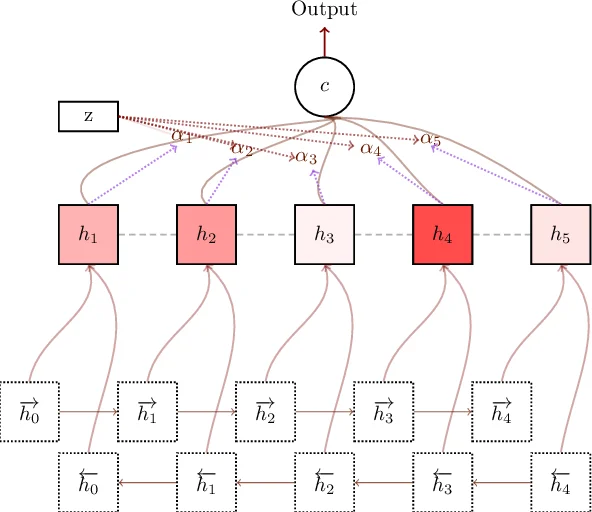
- Recurrent Neural Network (RNN) Layer: Processes the sequence of feature maps produced by the CNN. This layer is designed to capture long-range dependencies and the contextual flow of information throughout the entire narrative, modeling how earlier events relate to later outcomes.
- Attention Mechanism: Applied to the outputs of the RNN, this layer learns to assign different weights to different parts of the narrative. It allows the model to dynamically “focus” on the words, phrases, or events that are most indicative of harm severity, improving both performance and offering a degree of interpretability.
- Fully Connected & Softmax Layer: The weighted context vector from the attention layer is fed into a classifier to produce the final harm severity probability distribution.
The model was rigorously evaluated on two large datasets of real-world patient safety reports. The results demonstrated that the proposed CNN-RNN-Attention architecture significantly outperformed strong baselines, including standard CNN models and feature-based traditional machine learning methods (like SVM with Bag-of-Words), in both binary harm detection and multi-class severity classification tasks.
The study’s primary contribution is a high-performing, end-to-end deep learning model that effectively handles the complexity of clinical narratives for a vital patient safety task. By automating and improving the accuracy of harm event identification, this technology has the potential to streamline the analysis process for healthcare professionals, enable faster response to serious incidents, and ultimately contribute to systemic improvements in patient care and safety.
Comments & Academic Discussion
Loading comments...
Leave a Comment