Evolutionary Multitasking for Single-objective Continuous Optimization: Benchmark Problems, Performance Metric, and Baseline Results
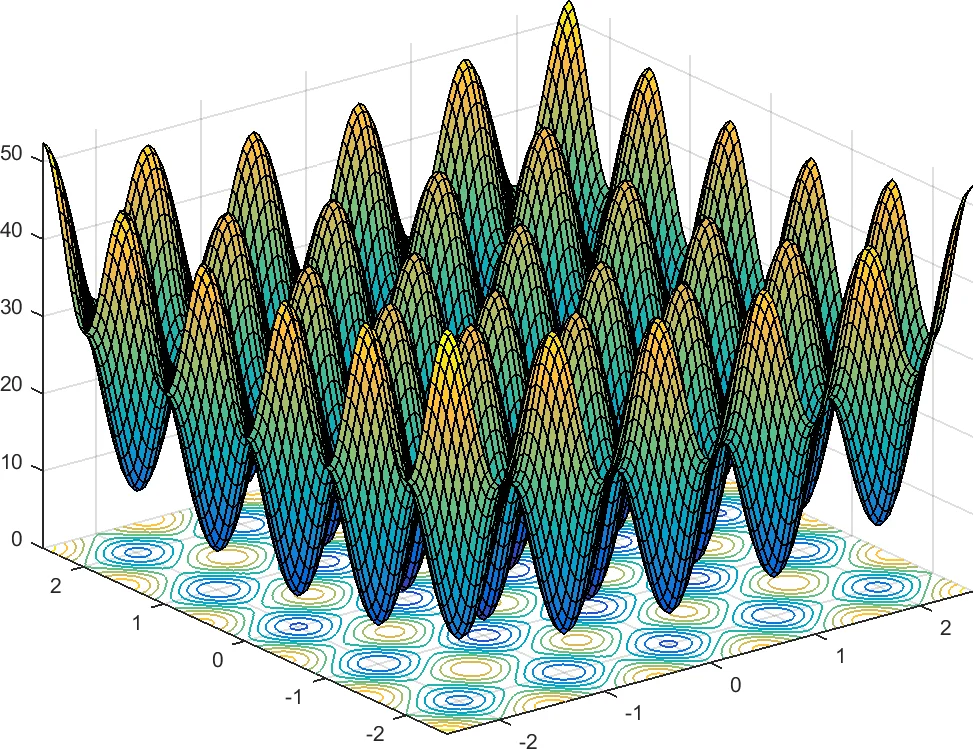
In this report, we suggest nine test problems for multi-task single-objective optimization (MTSOO), each of which consists of two single-objective optimization tasks that need to be solved simultaneously. The relationship between tasks varies between different test problems, which would be helpful to have a comprehensive evaluation of the MFO algorithms. It is expected that the proposed test problems will germinate progress the field of the MTSOO research.
💡 Research Summary
The paper presents a comprehensive benchmark suite and performance assessment methodology for Multi‑Task Single‑Objective Optimization (MTSOO) under the evolutionary multitasking paradigm. Building on the concept of Multifactorial Optimization (MFO), the authors formalize a population‑based framework where K independent minimization tasks are tackled simultaneously by a single population evolving in a unified genotype space. Four key constructs are introduced: factorial cost (objective value plus a large penalty for constraint violation), factorial rank (ordering of individuals by cost), skill factor (the task on which an individual attains its best rank), and scalar fitness (the reciprocal of the rank on the skill factor). These definitions enable a rank‑based, population‑dependent comparison that guarantees an individual achieving a global optimum on any task obtains a scalar fitness of 1, thereby defining multifactorial optimality.
The core algorithm, the Multifactorial Evolutionary Algorithm (MFEA), proceeds as follows: an initial population is randomly generated in the unified space Y, and each individual is assigned a skill factor in a round‑robin fashion to ensure balanced representation. During reproduction, crossover and mutation produce offspring that inherit the skill factor of one parent via a selective imitation rule, so each offspring is evaluated on only one task, dramatically reducing computational cost when K is large. After evaluation, offspring and parents are merged, scalar fitnesses are recomputed, and the N best individuals are selected for the next generation. The unified search space dimension D_multitask is set to the maximum dimensionality among the tasks, and a random‑key encoding maps each gene to a real value in
Comments & Academic Discussion
Loading comments...
Leave a Comment