A discount strategy in word-of-mouth marketing and its assessment
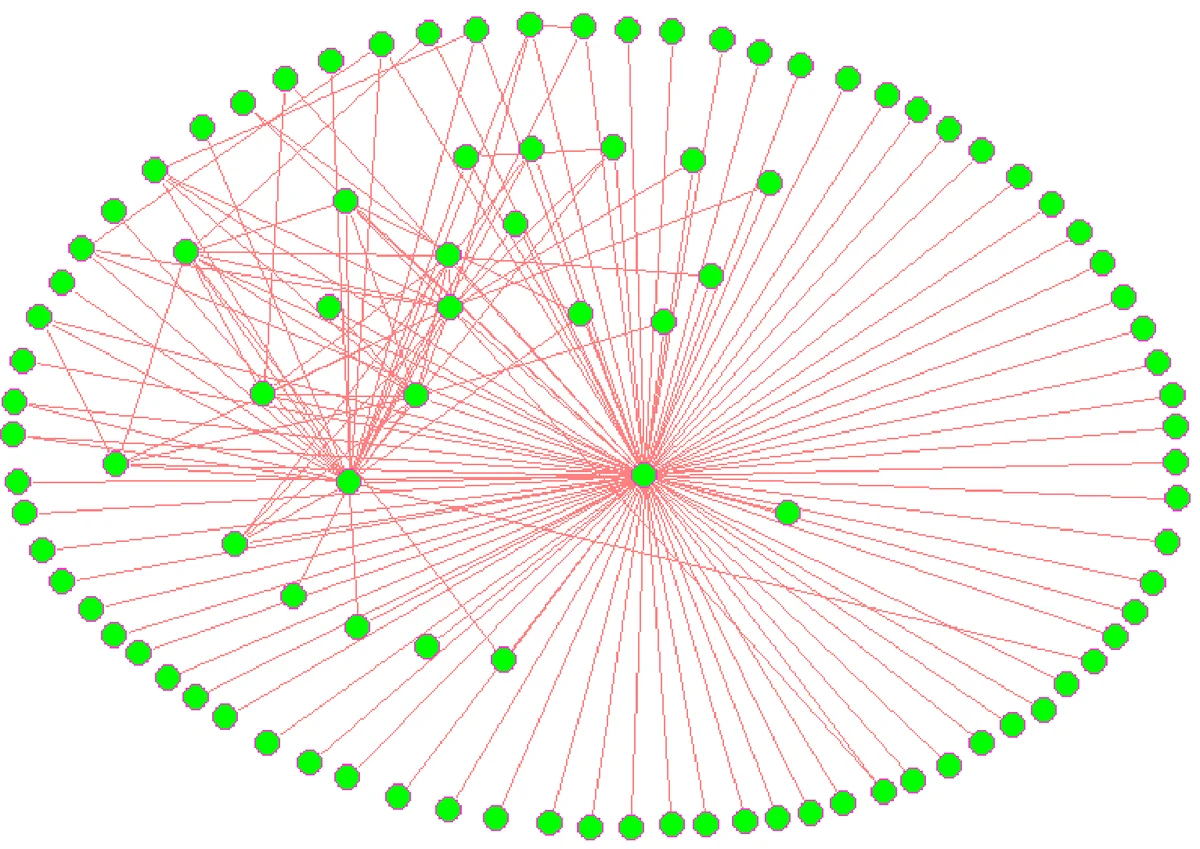
This paper addresses the discount pricing in word-of-mouth (WOM) marketing. A new discount strategy known as the Infection-Based Discount (IBD) strategy is proposed. The basic idea of the IBD strategy lies in that each customer enjoys a discount that is linearly proportional to his/her influence in the WOM network. To evaluate the performance of the IBD strategy, the WOM spreading process is modeled as a dynamic model known as the DPA model, and the performance of the IBD strategy is modeled as a function of the basic discount. Next, the influence of different factors, including the basic discount and the WOM network, on the dynamics of the DPA model is revealed experimentally. Finally, the influence of different factors on the performance of the IBD strategy is uncovered experimentally. On this basis, some promotional measures are recommended.
💡 Research Summary
The paper tackles the problem of designing a discount policy that leverages word‑of‑mouth (WOM) effects in modern social‑network‑driven markets. The authors propose an “Infection‑Based Discount” (IBD) strategy in which each consumer receives a discount proportional to his or her influence within the WOM network. Influence is quantified as a normalized in‑degree measure d_i (0 ≤ d_i ≤ 1) derived from the adjacency matrix of the network. The actual discount offered to consumer i is θ·d_i, where θ (0 ≤ θ ≤ 1) is a controllable “basic discount” set by the marketer.
To evaluate the IBD strategy, the authors construct a dynamic model of WOM diffusion called the DPA model (Dormant‑Potential‑Adopting). Each individual can be in one of three states: dormant (no purchase intention), potential (wants to buy), or adopting (has bought). State transitions are governed by four key rates:
- α – WOM force: dormant → potential at rate α ∑_j a_ij A_j(t), i.e., the more adopting neighbors a dormant node has, the higher the chance it becomes a potential buyer.
- β₁ – Rigid demand: potential → adopting at a constant baseline rate, representing purchases that would happen even without any discount.
- β₂ – Lure force: an additional potential → adopting rate equal to β₂ θ d_i, capturing the extra incentive provided by the discount.
- γ – Viscosity: adopting → dormant at rate γ, modeling the fact that a customer cannot keep buying indefinitely and may lose interest over time.
From these assumptions, the authors derive a system of ordinary differential equations:
dP_i/dt = α (1 − P_i − A_i) ∑_j a_ij A_j − (β₁ + β₂ θ d_i) P_i
dA_i/dt = (β₁ + β₂ θ d_i) P_i − γ A_i
where P_i(t) and A_i(t) denote the probabilities that node i is in the potential or adopting state at time t, respectively. The vector form d x/dt = f(x) makes clear that the dynamics depend on the network topology (through A), the basic discount θ, and the four parameters (α, β₁, β₂, γ).
The expected profit of the IBD strategy is defined as
E_P(θ) = ∫₀ᵀ ∑_{i=1}^N (β₁ + β₂ θ d_i) P_i(t) (1 − θ d_i) dt
The term (1 − θ d_i) reflects the revenue loss due to the discount, while (β₁ + β₂ θ d_i) P_i(t) captures the purchase rate induced by both baseline demand and discount lure.
To explore how model parameters and network structure affect both the diffusion dynamics and the profit, the authors conduct extensive simulations on six synthetic networks: three small‑world graphs (SW₁‑SW₃) with rewiring probabilities p = 0.1, 0.2, 0.3, and three scale‑free graphs (SF₁‑SF₃) with power‑law exponents r = 1.9, 2.0, 2.1. Each network contains 100 nodes.
Key experimental findings:
- WOM force (α) – Larger α raises both the transient and steady‑state fractions of potential and adopting customers. The profit curve versus α exhibits an S‑shaped growth, indicating diminishing returns after a certain point.
- Rigid demand (β₁) – Higher β₁ reduces the steady‑state fraction of potential customers but increases the adopting fraction, reflecting faster conversion from intention to purchase.
- Lure force (β₂) – Increasing β₂ similarly pushes potential customers into adoption more quickly, boosting the adopting fraction while shrinking the pool of potentials.
- Viscosity (γ) – Greater γ accelerates the return of adopters to the dormant state, thereby lowering the steady‑state adopting fraction. Its effect on the potential fraction is ambiguous.
- Network randomness (small‑world) – As the rewiring probability p grows, the steady‑state potential fraction rises while the adopting fraction falls, suggesting that higher randomness weakens clustered diffusion pathways.
- Network heterogeneity (scale‑free) – Larger power‑law exponent r (i.e., less heterogeneous degree distribution) leads to higher steady‑state fractions of both potentials and adopters, indicating that a more uniform degree distribution facilitates broader spread.
- Basic discount (θ) – Raising θ reduces the potential fraction but increases the adopting fraction. However, profit does not increase monotonically; beyond a moderate θ, the revenue loss from deeper discounts outweighs the gain from additional adopters, producing a peak in the profit curve.
The authors also examine the profit surface as a function of pairs of parameters (e.g., α vs. θ, β₂ vs. γ) and find that optimal profit typically lies in a region where WOM force and lure force are strong but viscosity is moderate, and where θ is tuned to balance discount depth against network‑wide adoption.
Based on these insights, the paper proposes practical promotional guidelines:
- Identify high‑influence nodes (large d_i) via network analysis and allocate larger discounts to them, thereby exploiting their amplification effect.
- Calibrate the basic discount θ according to the underlying network topology; dense, highly clustered networks (low p) tolerate higher θ, while highly random networks require more modest discounts.
- In markets with high viscosity (e.g., products with short purchase cycles), focus on increasing WOM force (α) rather than deep discounts, as the latter yields diminishing profit returns.
- For scale‑free social media platforms, concentrate discounts on the few hub users, as their large d_i values generate disproportionate WOM cascades.
In summary, the study provides a mathematically grounded framework that integrates discount design with epidemic‑style WOM diffusion on explicit network structures. By linking the basic discount, network influence, and dynamic parameters to an analytically defined profit function, the work offers marketers a quantitative tool for optimizing discount campaigns in networked consumer environments.
Comments & Academic Discussion
Loading comments...
Leave a Comment