Algorithmic complexity of proper labeling problems
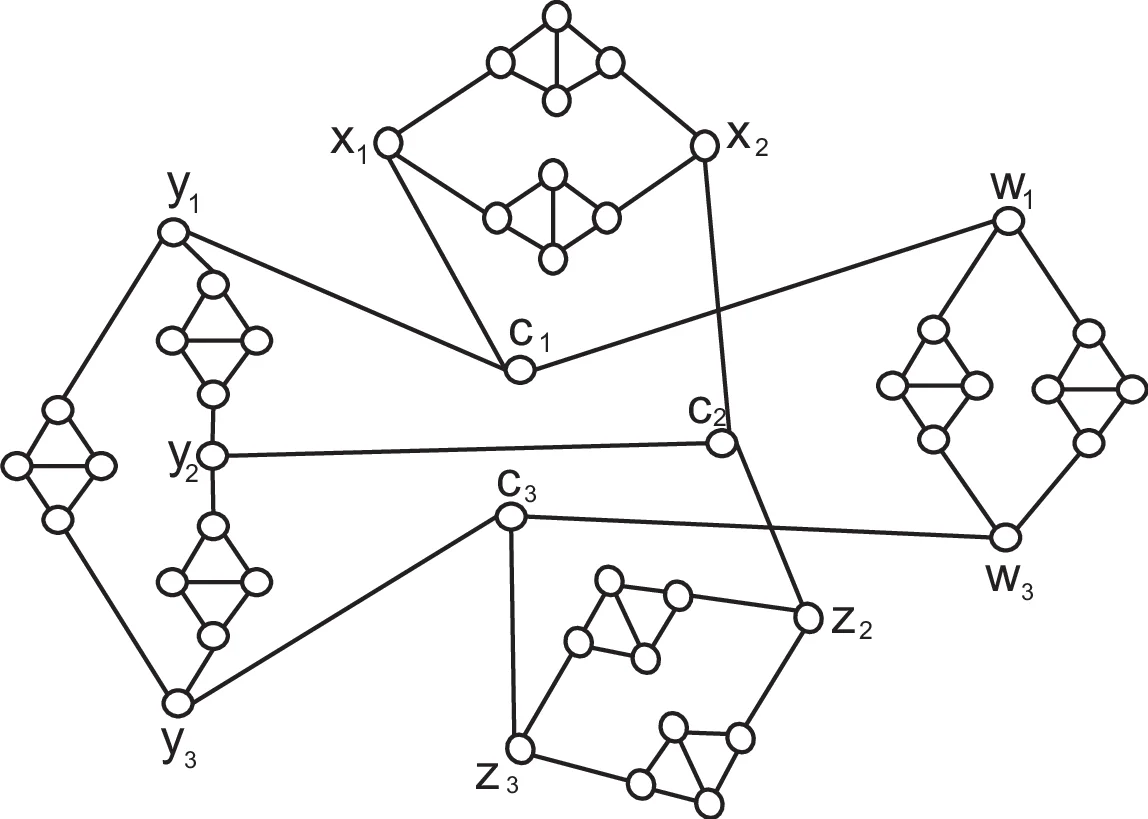
A proper labeling of a graph is an assignment of integers to some elements of a graph, which may be the vertices, the edges, or both of them, such that we obtain a proper vertex coloring via the labeling subject to some conditions. The problem of proper labeling offers many variants and received a great interest during recent years. We consider the algorithmic complexity of some variants of the proper labeling problems, we present some polynomial time algorithms and $ \mathbf{NP} $-completeness results for them.
💡 Research Summary
This paper presents a comprehensive study on the algorithmic complexity of various “proper labeling” problems in graph theory. A proper labeling is an assignment of integers to some elements of a graph (vertices, edges, or both) such that a proper vertex coloring is induced subject to specific rules based on the assigned labels. Initiated by Karoński, Łuczak, and Thomason, this area has spawned numerous intriguing variants. The authors systematically investigate the computational tractability of these variants, presenting both polynomial-time algorithms and NP-completeness proofs.
The core of the paper involves defining and analyzing several distinct labeling models:
- Edge-labeling by sum: The color of a vertex is the sum of labels on its incident edges.
- Vertex-labeling by sum: The color of a vertex is the sum of labels on its adjacent vertices.
- Edge-labeling by product: The color of a vertex is the product of labels on its incident edges.
- Vertex-labeling by product: The color of a vertex is the product of labels on its adjacent vertices.
- Edge-labeling by gap: The color of a vertex is the difference between the maximum and minimum labels on its incident edges (with special rules for degree 0 and 1).
- Vertex-labeling by gap: The color of a vertex is the difference between the maximum and minimum labels on its adjacent vertices.
- Vertex-labeling by degree: The color of a vertex is the product of its own label and its degree.
- Vertex-labeling by maximum: The color of a vertex is the maximum label among its neighbors.
For each model, the paper addresses key questions: What is the computational complexity of deciding if a given graph admits such a labeling using labels from a given set Nk = {1, 2, …, k}? What are the theoretical bounds on the minimum number k required?
Main Findings:
- NP-completeness Results: The authors prove strong NP-completeness results even for highly restricted graph classes. Key theorems show that determining the existence of an edge-labeling by sum from N2 is NP-complete for 3-regular graphs (Theorem 1). Similarly, edge-labeling and vertex-labeling by product from N2 are NP-complete for planar 3-colorable graphs (Theorems 2 & 3). For k ≥ 3, problems like vertex-labeling by product, edge-labeling by gap, vertex-labeling by gap, and vertex-labeling by maximum from Nk are also proven NP-complete for general or k-colorable graphs.
- Polynomial-Time Algorithms: In contrast, some problems are tractable. Deciding if a graph has a vertex-labeling by degree from N2 is in P (Theorem 7(i)). For planar bipartite graphs with minimum degree at least two, edge-labeling by gap from N2 is in P (Theorem 5(i)). Furthermore, vertex-labeling by gap from N2 is in P for planar bipartite graphs (Theorem 6(i)).
- Dichotomy Phenomena: The paper reveals intriguing complexity dichotomies. For instance, vertex-labeling by gap from N2 is polynomially solvable for planar bipartite graphs but becomes NP-complete for general bipartite graphs (Theorem 6), highlighting the subtle impact of graph restrictions.
- Theoretical Bounds and Conjectures: The authors discuss known upper bounds for the minimum label set size in each model, often relating to famous open conjectures. The most notable are the “1,2,3-Conjecture” (edge-labeling by sum) and the “Multiplicative 1,2,3-Conjecture” (edge-labeling by product), which posit that labels {1,2,3} are sufficient for all connected graphs (with known exceptions like K2). Current best bounds are N5 and N4, respectively.
- Results on Random Graphs: Theorem 4 provides an asymptotic positive result, showing that almost all random graphs G(n,p) have a vertex-labeling by product from N11.
- Open Problems: The paper concludes by posing several compelling open problems. These include whether every graph has a vertex-labeling by product using only χ(G) labels (Problem 1), the complexity of vertex-labeling by gap for 3-regular bipartite graphs (Problem 4), and whether there exists a polynomial-time algorithm to decide if a graph admits a vertex-labeling by maximum (Problem 6).
In summary, this work provides a detailed map of the computational complexity landscape within the proper labeling paradigm. It demonstrates that while many natural decision problems are computationally intractable even under strong constraints, efficient algorithms exist for specific models and graph classes. The paper successfully bridges structural graph theory with computational complexity, offering valuable insights for researchers in graph algorithms and combinatorial optimization.
Comments & Academic Discussion
Loading comments...
Leave a Comment