Wideband Spectrum Sensing in Cognitive Radio Networks
Spectrum sensing is an essential enabling functionality for cognitive radio networks to detect spectrum holes and opportunistically use the under-utilized frequency bands without causing harmful interference to legacy networks. This paper introduces …
Authors: Zhi Quan, Shuguang Cui, Ali H. Sayed
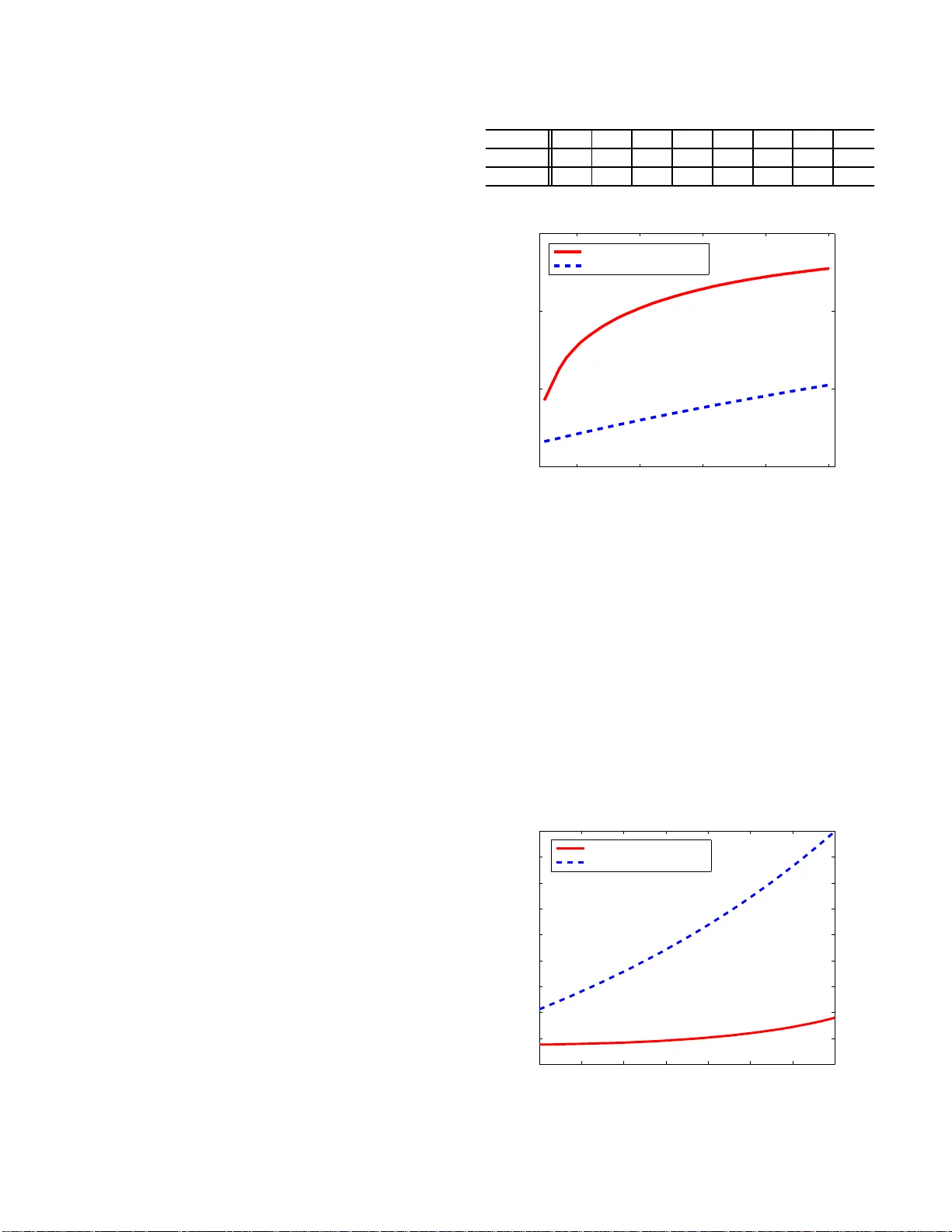
W ideband Spectrum Sensing in Cogniti ve Radio Netw orks Zhi Quan † , Shuguan g Cui ‡ , Ali H. S ayed † , and H. V incent P oor § † Departmen t of Electrical En gineering , Univ ersity of Califor nia, Los Ang eles, CA 900 95 ‡ Departmen t of Electrical and Computer E ngineerin g, T exas A&M Univ ersity , College Station, TX 77843 § Departmen t of Electrical Engineer ing, Princeton Univ ersity , P rinceton , NJ 085 44 Email: { quan , sayed } @ee.ucla.e du; cui@ece.tamu.ed u; poor@prin ceton.ed u Abstract — Spectrum sensing is an essential enab ling fu nction- ality for cognitive radio networks to detect spectrum h oles and opportunistically use the under-utilized frequency bands without causing harmful interference to legacy networks. This paper introduces a nov el wideb and sp ectrum sensing techniq ue, called multiband joint detection , which jointly detects the si gnal energy lev els ov er multiple frequency bands rather than consider one band at a time. The proposed strategy is effi cient in improv ing the dynamic spectrum utilization and r educing interference to the primary users. The spectrum sensing problem is for mulated as a class of opti mization problems in interference limited cognitive radio networks. By exploiting the hid den con ve xity in the seemingly non-con vex p roblem form ulations, opt imal solutions fo r multiband joint detection are obtained un der practical cond i- tions. Simulation results show that the pro posed spectrum sensing schemes can considerably impro ve the system perfo rmance. T his paper establishes important p rinciples for the design of wi deband spectrum sensin g algorithms in cognitiv e radio networks. I . I N T R O D U C T I O N Spectrum sensing is an essential fun ctionality of cogn iti ve radios since the devices need to reliably d etect weak prima ry signals of possibly- unknown types [1]. In gene ral, spectrum sensing techniques can be classified into three categor ies: energy detection [ 2], matched filter coherent detection [3], and cyclostationary featu re detectio n [4] . Sinc e n on-coh erent energy de tection is simp le and is able to locate spec trum- occupan cy inform ation quick ly , we will adop t it as a build- ing b lock fo r con structing the propo sed wideband sp ectrum sensing scheme. There are p revious studies on spectrum sensing in cog nitiv e radio network s with fo cus on co operatio n amo ng multiple cognitive rad ios [1] [5] [6] via distributed detection approach es [7] [ 8]. Howev er , they are limited to the detection o f sig nals on a single frequen cy band. I n [9] , two decision-co mbining approa ches were studied: har d decisio n with the AND log ic operation an d soft decision usin g the likelihood ratio test [ 7]. It was shown that the soft dec ision comb ination of spectrum sensing results y ields gains over hard decision comb ining. In [10] , th e authors exploited th e fact that summing signals from two secondary users can increase the signal-to-noise ratio (SNR) and detection reliability if the signals ar e correlated. In [11], a gener alized likelihood ratio test for detecting th e presence of cyclostationarity over multiple cyclic freq uencies was pro posed an d evaluated through Mo nte Carlo simulation s. Along with these works, we have d ev eloped a linear cooper- ation strategy [1 2] [13] b ased on the optim al combination of the local statistics from spatially distributed cognitive radio s. Generally speaking, the qua lity of the d etector d epends on the lev el of coop eration an d the band width o f the co ntrol chan nel. The literature o f wideband spectru m sensing for cognitive radio networks is very limited. An early ap proach is to use a tunab le narrowband ba ndpss filter at the RF f ront-end to sense o ne narrow fr equency ban d at a time [ 14], over which the existing narrowband spectrum sensing tec hniques can b e applied. In ord er to o perate over multiple frequ ency band s at a time , the RF front- end r equires a wideb and architectu re and the spectrum sensing u sually in v olves the estimation of the power spectral d ensity (PSD) of th e wideband signal. In [15 ] and [1 6], the wavelet tr ansform was u sed to estimate the PSD over a wide frequ ency ran ge given its multi-resolution fe atures. Howe ver , n one of th e previous works c onsiders makin g joint decisions over multiple frequ ency bands, which is essential fo r implementin g efficient cognitive radio s networks. In this paper, we in troduce the multiban d joint detection framework for wideba nd spectrum sensing in individual cog- nitiv e radios. W ithin this framework, we jo intly optimize a bank o f mu ltiple na rrowband detectors in order to impr ove the oppor tunistic throug hput capacity of cognitive rad ios an d r e- duce their interferen ce to the p rimary comm unication systems. In par ticular , w e for mulate wideband spe ctrum sensing into a class o f optimization problem s. The objective is to max imize the o pportu nistic thr oughp ut in an interferen ce lim ited co gni- ti ve radio network. By exploiting the hidden co n vexity of the seemingly non-convex problem s, we show that the o ptimiza- tion problem s ca n be reformulated into conv ex p rogram s un der practical con ditions. Th e multiband joint detectio n strategy allows cognitive radios to efficiently ta ke advantage of the unused frequency band s and limit the resulting interferen ce. The rest of this paper is organized a s follows. In Sectio n II, we descr ibe the system mo del fo r wide band spec trum sensing. In Section II I, we develop the m ultiband joint detectio n alg o- rithms, which seek to maximize the op portun istic throug hput. The proposed spectrum sensing algo rithms are examined by numerical examples in Section IV an d co nclusions are drawn in Sectio n V. Subbands occupied by primary users Spectrum holes 1 0 1 1 1 1 0 0 0 0 Fig. 1. A schemati c illustrati on of a multiban d channel. I I . S Y S T E M M O D E L S A. W ideband Spec trum Sen sing Consider a p rimary comm unication system (e.g. , a multicar- rier modu lation b ased system) over a wideba nd cha nnel that is divided into K non-overlapp ing nar rowband subc hannels. In a p articular geograp hical region an d time, some of the K subchannels migh t no t be utilized by the prim ary user s and ar e av ailable for o pportun istic sp ectrum access. Mu ltiuser orthog onal fr equency di vision multiplexing (OFDM) is an ideal candidate for such a scen ario since it makes th e subb and manipulatio n e asy and flexible. W e model the oc cupancy detection problem on subch annel k a s one o f choosing between H 0 ,k (“ 0 ”), which rep resents the absence of p rimary signals, and H 1 ,k (“ 1 ”), which represents the p resence of primary signals. An illustrativ e examp le where only some of the K bands are oc cupied by p rimary users is depicted in Fig. 1. Th e u nderlyin g hypo thesis vector is a binary rep resentation of the subchanne ls th at are allowed for or prohibited from o pportu nistic spectr um a ccess. The cruc ial task of spectrum sensing is to sen se the K narrowband subch annels and identify spectral holes f or op- portun istic use. For simp licity , we assum e that the high-lay er protoco ls, e.g., th e medium access contro l (MAC) lay er , can guaran tee that all cognitive radios keep quiet d uring th e detec- tion interval such th at the o nly spectral power remain ing in the air is e mitted b y th e pr imary user s in additio n to backgro und noises. In this pa per , in stead of consider ing a sing le subband at a time, we pr opose to use a multiband detection techn ique, which jointly takes into account th e dete ction o f p rimary u sers across mu ltiple fre quency ban ds. W e n ext p resent the system model. B. Received Signa l Consider a mu lti-path fading en vironm ent, wher e h ( l ) , l = 0 , 1 , . . . , L − 1 , denotes the d iscrete-time channel impu lse response between the p rimary transmitter and cognitive r adio receiver , with L as the n umber of resolvable pa ths. T he re- ceiv ed baseba nd sig nal at the CR front-en d can b e represented as r ( n ) = L − 1 X l =0 h ( l ) s ( n − l ) + v ( n ) , n = 0 , 1 , . . . , N − 1 ( 1) where s ( n ) is the primary transm itted signal at time n (after the cyclic p refix has been rem oved) and v ( n ) is additive com - plex white Gaussian n oise with zero mean an d variance σ 2 v , i.e., v ( n ) ∼ C N 0 , σ 2 v . I n a multi-path fadin g environment, the wideband cha nnel exhibits frequency-selective fea tures [17] [18 ] [19 ] and its d iscrete freq uency response is given by H k = 1 √ N L − 1 X n =0 h ( n ) e − j 2 π nk/ N , k = 0 , 1 , . . . , K − 1 (2) where L ≤ N . W e assume that the channel is slo wly varying such that the cha nnel frequ ency responses { H k } K − 1 k =0 remain constant d uring a d etection inter val. In th e freque ncy dom ain, the received signal at each subchannel can be estima ted by first computing its d iscrete Fourier transform (DFT): R k = 1 √ N N − 1 X n =0 r ( n ) e − j 2 π nk/ N = H k S k + V k , k = 0 , 1 , . . . , K − 1 (3) where S k is the p rimary transm itted sig nal at sub channel k and V k = 1 √ N L − 1 X n =0 v ( n ) e − j 2 π nk/ N , k = 0 , 1 , . . . , K − 1 (4) is the received n oise in frequ ency d omain. The r andom variable V k is independ ently and n ormally d istributed with zero mean an d variance σ 2 v , i.e., V k ∼ C N 0 , σ 2 v , since v ( n ) ∼ C N 0 , σ 2 v and the DFT is a linear ope ration. W ithout loss of gen erality , we assume that the tran smitted signal S k , the channel gain H k , and the additi ve noise V k are independen t of each o ther . C. Signal Detection in I ndividua l Bands Here, we co nsider signal detection in a sing le narrowband subchann el, wh ich will constitute a building b lock for multi- band join t detection . T o decide wh ether the k -th subch annel is o ccupied or n ot, we test the following b inary hy potheses H 0 ,k : R k = V k H 1 ,k : R k = H k S k + V k , k = 0 , 1 , . . . , K − 1 (5) where H 0 ,k and H 1 ,k indicate, respectively , the absen ce an d presence of the primary signal in the k -th subchan nel. For each subchann el k , we c ompute the su mmary statistic as the sum of received signal energy over an inter val of M samples, i.e., Y k = M − 1 X m =0 | R k ( m ) | 2 , k = 0 , 1 , . . . , K − 1 (6) and the d ecision r ule is g iv en by Y k H 1 ,k R H 0 ,k γ k , k = 0 , 1 , . . . , K − 1 (7) where γ k is th e cor respond ing decision thr eshold. For simp licity , we assume that the tran smitted signa l at each subch annel h as unit p ower , i.e., E | S k | 2 = 1 . This assumption holds whe n p rimary radios deploy u niform power transmission stra tegies giv en no channel knowledge a t the transmitter side . Accord ing to the central limit theor em [20], Y k is asymptotically in M n ormally d istributed with m ean E ( Y k ) = M σ 2 v H 0 ,k M σ 2 v + | H k | 2 H 1 ,k (8) and variance V ar ( Y k ) = 2 M σ 4 v H 0 ,k 2 M σ 2 v + 2 | H k | 2 σ 2 v H 1 ,k (9) for k = 0 , 1 , . . . , K − 1 . Thus, we write th ese statistics compactly as Y k ∼ N ( E ( Y k ) , V ar ( Y k )) , k = 0 , 1 , . . . , K − 1 . Using th e decision ru le in (7), the prob abilities of false alarm and detection at su bchanne l k can be respectiv ely calculated as P ( k ) f ( γ k ) = Pr ( Y k > γ k |H 0 ,k ) = Q γ k − M σ 2 v σ 2 v √ 2 M (10) and P ( k ) d ( γ k ) = Pr ( Y k > γ k |H 1 ,k ) = Q γ k − M σ 2 v + | H k | 2 σ v p 2 M ( σ 2 v + 2 | H k | 2 ) ! (11) where Q ( · ) denotes the comp lementary distribution fun ction of the standard n ormal distribution. The choice of th e threshold γ k leads to a trad eoff b etween the probab ility o f false alarm and the prob ability of miss 1 , P m = 1 − P d . Spec ifically , a hig her thre shold will result in a smaller probability of false alarm and a larger pr obability of miss, and vice versa. The proba bilities of false alarm and miss have uniqu e implications for cognitiv e radio network s. Low pro babilities of false alarm are necessary in orde r to m aintain p ossible high thr oughp ut in cognitive radio systems, since a false alarm would prevent the unused spectral segments from bein g ac- cessed by cognitive radios. On the o ther han d, the probability of miss measure s the interfer ence fro m c ognitive rad ios to the pr imary users, which should be limited in op portun istic spectrum access. These implicatio ns ar e based on a typical assumption that if primar y signals are detected , the seco ndary users should not use the correspon ding channel and that if no primary signals are d etected, then the cor respond ing f requency band will be oc cupied b y seco ndary users. I I I . M U LT I BA N D J O I N T D E T E C T I O N In this section, we present th e multiband joint detec tion framework for wideb and spec trum sensing, as illustrated in Fig. 2. The de sign ob jecti ve is to find the optimal thr eshold vector γ = [ γ 0 , γ 1 , . . . , γ K − 1 ] T so that the cognitive radio system can make ef ficient u se of the unoccupied spectral segments witho ut causing h armful in terferenc e to the primary 1 The subscript k is omitted whenev er we refer to a generic frequenc y band. …... RF Front-End h ( n ) s ( n ) + w ( n ) h ( n ) s ( n ) + w ( n ) A/D FFT P M 1 m =0 | · | 2 P M 1 m =0 | · | 2 P M 1 m =0 | · | 2 P M 1 m =0 | · | 2 P M 1 m =0 | · | 2 P M 1 m =0 | · | 2 …... R 0 ( m ) R 0 ( m ) R 1 ( m ) R 1 ( m ) H 0 / H 1 H 0 / H 1 H 0 / H 1 H 0 / H 1 H 0 / H 1 H 0 / H 1 Y 1 Y 1 Y 0 Y 0 …... 0 0 1 1 Joint Detection Down Conversion Remove Prefix, and Serial-to- Parallel Convert Y K 1 Y K 1 R K 1 ( m ) R K 1 ( m ) K 1 K 1 Fig. 2. A schematic representation of multiband joint detection for wideband spectrum sensing in cogniti ve radio networks. users. For a given thresh old vecto r γ , th e pro babilities o f false alarm and d etection can be com pactly rep resented as P f ( γ ) = h P (0) f ( γ 0 ) , P (1) f ( γ 1 ) , . . . , P ( K − 1) f ( γ K − 1 ) i T (12) and P d ( γ ) = h P (0) d ( γ 0 ) , P (1) d ( γ 1 ) , . . . , P ( K − 1) d ( γ K − 1 ) i T (13) respectively . Similarly , the prob abilities of miss can be written in a vector as P m ( γ ) = h P (0) m ( γ 0 ) , P (1) m ( γ 1 ) , . . . , P ( K − 1) m ( γ K − 1 ) i T (14) where P ( k ) m ( γ k ) = 1 − P ( k ) d ( γ k ) , k = 0 , 1 , . . . , K − 1 , compactly written as P m ( γ ) = 1 − P d ( γ ) , with 1 the all-one vector . Consider a cog nitiv e radio sensing the K narrowband su b- channels in order to o pportu nistically u tilize the unu sed on es for tran smission. Le t r k denote th e thro ughpu t achie vable over the k -th subchan nel if used by cogn iti ve rad ios, and r = [ r 0 , r 1 , . . . , r K − 1 ] T . Since 1 − P ( k ) f measures the opp ortunistic spectrum utilization of sub channel k , we define the agg regate oppor tunistic th rough put cap acity as R ( γ ) = r T [ 1 − P f ( γ )] (15) which is a function of the threshold vector γ . Due to th e in- herent tr ade-off between P ( k ) f ( γ k ) and P ( k ) m ( γ k ) , max imizing the sum rate R ( γ ) will r esult in large P m ( γ ) , hence ca using harmfu l interferen ce to p rimary u sers. The interfere nce to prim ary users should be limited in a cognitive rad io network. For a wid band primary com munica- tion system, the impact of interferen ce in duced by cog nitiv e devices can be character ized by a r elativ e p riority vecto r over the K subchan nels, i.e., c = [ c 0 , c 1 , . . . , c K − 1 ] T , wh ere c k indicates the cost incurred if the primary user at subchannel k is in terfered with. Sup pose that J prim ary users share a portion of the K subch annels and each primary user occupies a subset S j . Conseque ntly , we define the agg regate interference to prim ary user j as P i ∈ S j c i P ( i ) m ( γ i ) . In special cases where each primary u ser is e qually imp ortant, we m ay h a ve c = 1 . T o summ arize, our objective is to find the optimal threshold s { γ k } K − 1 k =0 of these K subch annels, collecti vely maximizing the aggregate opp ortunistic thro ughpu t su bject to constra ints on the aggr egate in terference for each primary user and individual constraints on the s ubban ds. As s uch, the optimization problem for a multi-user p rimary system ca n be form ulated as max R ( γ ) (P1) s . t . X i ∈ S j c i P ( i ) m ( γ i ) ≤ ε j , j = 0 , 1 , . . . , J − 1 P m ( γ ) α (16) P f ( γ ) β (17) with the optimization variables γ = [ γ 0 , γ 1 , . . . , γ K − 1 ] T . The constraint ( 16) limits the inter ference on e ach sub channel w ith α = [ α 0 , α 1 , . . . , α K − 1 ] T , and the last co nstraint in (17) dic- tates that each subchannel should achieve at least a minimum oppor tunistic spectr um utilization that is proportion al to 1 − β k . For the sing le-user primar y system wher e all the subch annels are u sed by one primary u ser , we have J = 1 . Intuitively , we could make some ob servations o n the multi- band joint detection. First, the subch annel with a higher oppor tunistic rate r k should hav e a high er threshold γ k (i.e., a smaller prob ability of false alarm) so that it can be highly used b y co gnitive radios. Seco nd, the subchannel that ca rries a higher priority p rimary user shou ld have a lower th reshold γ k (i.e., a smaller proba bility of miss) in o rder to prevent harmful interferen ce b y second ary users. Th ird, a little co mprom ise on those subcha nnels carr ying less impor tant prim ary users might boost the aggregate rate considerably . Thu s, in the determinatio n of the optimal threshold vector , it is necessary to strike a balance among the channel conditio n, the opportun istic throug hput, a nd the relativ e prior ity of each subchan nel. The o bjective and constraint functio ns in ( P1 ) ar e gen erally nonco n vex, mak ing it d ifficult to efficiently so lve for the global optimum . In most cases, subo ptimal solutio ns or heuristics have to be used. Howe ver , we fin d that this seemingly non con- vex pr oblem can be made conv ex by reformulating th e problem and exploiting the hidde n conve xity . W e observe the fact that the Q -functio n is mo notonically non-in creasing allows u s to transform the constraints in (16) and (17) in to linear constraints. From (16), we have 1 − P ( k ) d ( γ k ) ≤ α k , k = 0 , 1 , . . . , K − 1 . (18) Substituting ( 11) into ( 18) g i ves γ k ≤ γ max ,k k = 0 , 1 , . . . , K − 1 (19) where γ max ,k ∆ = M σ 2 v + | H k | 2 + σ v r 2 M σ 2 v + 2 | H k | 2 Q − 1 (1 − α k ) . (20) Similarly , the combinatio n o f ( 10) and (17) lead s to γ k ≥ γ min ,k k = 0 , 1 , . . . , K − 1 (21) where γ min ,k = σ 2 v h M + √ 2 M Q − 1 ( β k ) i . (22) Consequently , the original p roblem ( P1 ) has th e following equiv alent for m min K − 1 X k =0 r k P ( k ) f ( γ k ) (P2) s . t . X i ∈ S j c i P ( i ) m ( γ i ) ≤ ε j , j = 0 , 1 , . . . , J − 1 ( 23) γ min ,k ≤ γ k ≤ γ max ,k , k = 0 , 1 , . . . , K − 1 . (24) Although the constrain t (24) is linear, the prob lem is still nonco n vex. Howe ver , it can be f urtherm ore tran sformed into a tractable con vex o ptimization problem in th e regime o f low probab ilities of false alarm and miss. T o establish the transform ation, we nee d the f ollowing results. Lemma 1 : The fun ction P ( k ) f ( γ k ) is conv ex in γ k if P ( k ) f ( γ k ) ≤ 1 2 . Pr o of: T aking the second d eriv ati ve of P ( k ) f ( γ k ) from (10) g iv es d 2 P ( k ) f ( γ k ) dγ 2 k = − 1 √ 2 π d dγ k exp " − γ k − M σ 2 v 2 4 M σ 4 v # = γ k − M σ 2 v 2 M σ 2 v √ 2 π exp " − γ k − M σ 2 v 2 4 M σ 4 v # . (25) Since P ( k ) f ( γ k ) ≤ 1 2 , we h av e γ k ≥ M σ 2 v . Consequ ently , the second deriv ativ e of P ( k ) f ( γ k ) is greater than o r equ al to zero , which implies tha t P ( k ) f ( γ k ) is con vex in γ k . Lemma 2 : The fun ction P ( k ) m ( γ k ) is conv ex in γ k if P ( k ) m ( γ k ) ≤ 1 2 . Pr o of: This result can be p roved using a similar tech- nique to tha t used to pr ove Lemma 1. By taking the second deriv ativ e of (11), we can show that P ( k ) d ( γ k ) is concave, an d hence P ( k ) m ( γ k ) = 1 − P ( k ) d ( γ k ) is a convex function . Recall that the nonnegative weigh ted sum of a set o f co n vex function s is also conv ex [21]. The p roblem ( P 1 ) becomes a conv ex pr ogram if we enfo rce the following cond itions: 0 < α k ≤ 1 2 and 0 < β k ≤ 1 2 , k = 0 , 1 , 2 , . . . , K − 1 . (26) This r egime of prob abilities of false alarm and miss is that of practical interest in co gnitive radio networks. W ith th e con ditions in (26), th e feasible set of pr oblem ( P2 ) is c on vex. Th e optimization pro blem takes the form of minimizing a co n vex functio n sub ject to a co n vex constraint, and th us a local maximu m is also th e g lobal maxim um. Efficient numerical search algorithm s s uch as the interior-point method can b e used to solve for th e optimal solutions [ 21]. Alternatively , we can f ormulate the multiba nd joint detec- tion problem into another optimization problem that minimizes the interfe rence fr om cog nitiv e rad ios to the prima ry com mu- nication system, subject to som e constraints on th e agg regate oppor tunistic th rough put, i.e. , minimize c T P m ( γ ) (P3) st . r T [ 1 − P f ( γ )] ≥ δ P m ( γ ) α P f ( γ ) β with δ the requir ed minimum a ggregated rate an d γ the optimization v ariables. L ike proble m ( P1 ), this pr oblem can be transforme d into a conv ex optimization p roblem by en- forcing the conditions in ( 26). The r esult will be illustrated numerically later in Sectio n I V. I V . S I M U L AT I O N R E S U LT S In this sectio n, we numerically evaluate the proposed spectrum sensing schemes. Consider a m ultiband single-u ser OFDM system in which a wideb and channel is equally divided into 8 su bchanne ls. Each subch annel has a cha nnel gain H k between the pr imary user and the co gnitive radio, a thro ughpu t rate r k if used by cogn iti ve radio s, and a co st co efficient c k indicating a penalty incurr ed when the pr imary signal is interfered with by th e co gnitive radio. For each subchan nel k ( 0 ≤ k ≤ 7 ) , it is expected that the o pportu nistic spectrum utilization is at least 50% , i.e., β k = 0 . 5 , and the prob ability that the primary user is in terfered with is at most α k = 0 . 1 . For simplicity , it is assumed that the no ise power level is σ 2 v = 1 and the length of e ach detection interval is M = 100 . This example studies mu ltiband join t detectio n in a single co gnitive radio. The p roposed spectrum sensing algorithms ar e e xamined by comparing with an appro ach t hat searches a uniform thresh- old to maxim ize the aggregate oppo rtunistic through put. W e random ly ge nerate the chann el condition between the primary user and the cogn iti ve ra dio, the opportun istic thr oughp ut over each subchan nel, and the co st of interferen ce o f each subchann el. On e realization examp le is given in T able I. W e maximize th e agg regate op portun istic thro ughp ut over the 8 subchann els subject to some constraints on the inter- ference to the primary u sers, as formulated in ( P1 ). Fig. 3 plots the ma ximum agg regate o pportu nistic rates a gainst the aggregate inte rference to the primary commu nication system. It can be seen that th e multiband joint detection algorith m with optimized thr esholds can ach iev e a mu ch hig her oppo rtunistic rate than that achieved by th e on e with un iform threshold . Note th at in the ref erence algorith m, th e un iform threshold is searched to maximize the achiev able rate for a fair comparison . That is, the proposed multib and joint detection algo rithm makes better use of the wid e spectrum b y balancin g the conflict betwee n improvin g spe ctrum utilization a nd r educing the interferen ce. In addition , it is ob served th at the aggregate oppor tunistic r ate inc reases as we relax the constraint o n the aggregate interfer ence ε . An altern ativ e example is d epicted in Fig. 4 , sh owing th e numerical r esults of minimizing th e a ggregate interfer ence subject to th e constrain ts on the opportu nistic thr oughp ut as T ABLE I P A R A M E T E R S U S E D I N S I M U L AT I O N S | H k | 2 .50 .30 .45 .65 .25 .60 .40 . 70 r (kbps) 612 524 623 139 451 409 909 401 c 1.91 8.17 4.23 3.86 7.16 6.05 0.82 1.30 0.12 0.13 0.14 0.15 0.16 2000 2500 3000 3500 Aggregate Interference Aggregate Opportunistic Throughput (kbps) Multiband Joint Detection Uniform Threshold Fig. 3. The aggre gate opportunistic throughput capacity vs. the constraint on the aggre gate interfe rence to the primary communicat ion system. formu lated in ( P3 ). It can b e ob served that the multiband joint d etection strategy ou tperfor ms the one using u niform thresholds in terms of the ind uced in terference to the p rimary users for any gi ven opp ortunistic throughput. F or illustra- tion purp oses, the optimized th resholds and th e associated probab ilities of miss and false alarm are giv en in Fig. 5 for ( P1 ) and ( P3 ). T o summarize, these nu merical results show that multiband joint detection can conside rably improve the spectr um efficiency by making mo re efficient use of th e spectral di versity . 2400 2500 2600 2700 2800 2900 3000 3100 1 1.2 1.4 1.6 1.8 2 2.2 2.4 2.6 2.8 Aggregate Interference Aggregate Opportunistic Throughput (kbps) Multiband Joint Detection Uniform Threshold Fig. 4. T he aggrega te interferenc e to the primary communication system vs. the constraint on the aggre gate opportunisti c throughput. 0 1 2 3 4 5 6 7 90 100 110 120 130 Thresholds 0 1 2 3 4 5 6 7 0 0.05 0.1 Prob. Miss Det. 0 1 2 3 4 5 6 7 0 0.2 0.4 0.6 Prob. False Alarm P1 P3 Fig. 5. The optimized thresho lds and the associate d probabilitie s of miss and false alarm: ( P1 ) ε = 1 . 25 and ( P3 ) δ = 3224 kbps. V . C O N C L U S I O N In this paper, we have p roposed a multiband jo int detection approa ch for wid eband spectrum sensing in cognitive radio networks. The b asic strategy is to take into accoun t th e detec- tion of primary users across a bank of narrowband subch annels jointly rather than to consider only on e sing le band at a time. W e have formulate d the joint de tection p roblem into a class of optimization p roblems to imp rove the spectral efficiency an d reduce the interferen ce. By exp loiting the h idden con vexity in the seemingly nonco n vex prob lems, we have obtain ed the optimal so lution u nder pr actical cond itions. The pro posed spectrum sensing algorith ms h av e been examin ed numer ically and shown to b e able to p erform well. A C K N O W L E D G M E N T This researc h was sup ported in part by th e Natio nal Sci- ence Foundatio n under Grants ANI -03-3 8807, C NS-06-2 5637, ECS-06012 66, ECS-0725 441, CNS-07219 35, CCF-072674 0, and b y th e Dep artment of Defense und er Grant HDTRA-07- 1-003 7. R E F E R E N C E S [1] D. Cabric, S. M. Mishra, and R. Brodersen, “Implementat ion issues in spectrum sensing for cogniti v e radios, ” in Proc . 38th Asilomar Confer enc e on Signals, Systems and Compu ters , Pacific Grov e, CA, No v . 2004. [2] S. M. Kay , Fundamentals of Statistical Signal Pr ocessing: Detection Theory . Prentic e Hall, Upper Saddle Riv er , NJ, 1998. [3] H. V . Poor , An Int r oduction to Signal Detection an d E stimation . Springer -V erlag, New Y ork, 1994. [4] S. Enserink and D. Cochran, “ A c yclostat ionary feature detector , ” in Pr oc. 28th Asilomar Confe ren ce on Signals, Systems, and Computers , Paci fic Grov e, CA, Oct. 1994. [5] D. Cabri c, A. Tkachenko, and R. W . Brode rsen, “Experiment al study of spectrum sensing based on energy detec tion and network cooperation, ” in Proc. ACM Int. W orkshop on T echnolo gy and P olicy for A ccessing Spectrum (TAP AS) , Boston, MA, Aug. 2006. [6] S. Haykin, “Cogniti ve radio: Brain-empo wered wireless communic a- tions, ” IEEE J . Select. Areas Commun. , vol. 23, no. 2, pp. 201–220, Feb . 2005. [7] R. S. Blum, S. A. K assam, and H. V . Poor , “Distrib uted detect ion with multiple sensors: Part II - Advan ced topics, ” Pr oc. IEE E , vol. 85, no. 1, pp. 64–79, Jan. 1997. [8] P . K. V arshney , Distribute d Detect ion and Data Fusion . Springer - V erlag, New Y ork, 1997. [9] E. V istotsk y , S. Kuf fner , and R. Peterson, “On collaborati ve detec tion of TV transmissions in support of dynamic spectrum sharing, ” in Pr oc. IEEE Symposium on New F r ontie rs in Dynamic Spectrum Access Network s (DySP AN) , Balti more, MD, Nov . 2005. [10] G. Ghurumuruha n and Y . Li, “ Agility improv ement through co operati ve di versi ty in cogniti v e radio, ” in Proc . IEEE Global Commun. Conf . , S t. Louis, MO, Nov . 2005. [11] J. Lunden, V . K oi vunen, A. Huttunen , and H. V . Poor , “Spectrum sensing in cognit i ve radios based on multiple cyc lic frequencie s, ” in Proc. 2nd Internati onal Confere nce on Cognitiv e Radio Orient ed W ir eless Network s and Communication s (CRO WNCOM) , Orlando, FL , July 200 7, (in vit ed paper). [12] Z. Quan, S. Cui, and A. H. Sayed, “ An optimal strate gy for coopera ti ve spectrum sensing in cogniti ve radio networks, ” in Proc. IEEE Global Commun. Conf. , W ashingt on D.C., Nov ., pp. 2947–2951 . [13] Z. Quan, S. Cui, and A. H. Sayed, “Optimal linear coope ration for spectrum sensing in cogniti ve radio network s, ” IEEE J . Select. T opics Signal Proce ssing , vol . 2, no. 1, June 2008. [14] A. S ahai and D. Cabric , “ A tutorial on spectrum sensing: Fundament al limits and practic al chall enges, ” in Pr oc. IEEE Symposium on New F r ont iers in Dynamic Spec trum Access Networks (DySP AN) , Baltimore, MD, Nov . 2005. [15] Z. Tia n and G. B. Giannaki s, “ A wav elet approac h to w ideba nd spectrum sensing for cogni ti ve radios, ” in Proc. 1st Int. Confer enc e on Cognitive Radio Oriented W ireless Networks and Communica tions (CR O WNCOM) , Mykonos Island, Greece, June 2006. [16] Y . Hur , J. Park, W . W oo, K. Lim, C.-H. Lee, H. S. Kim, and J. Laskar , “ A wideband analog multi-resolut ion spectrum sensing technique for cogniti ve radio systems, ” in Pr oc. IEE E International Symposium on Cir cuits and Systems (ISCAS) , Island of Kos, Greece, May 2006, pp. 4090–4093. [17] J. G. Proakis, Digital Communications , 4th ed. McGraw-Hil l, Ne w Y ork, 2001. [18] A. Goldsmit h, W irele ss Communications . Cambrid ge Univ ersity Press, Cambridge , UK, 2006. [19] A. H . Sayed, Fundamental s of Adaptive Fi ltering . W iley , NY , 2003. [20] B. V . Gen denko and A. N. K olmogoro v , Limit Distri bution s for Sums of Independ ent Random V ariables . Addiso n-W esley , Reading, MA, 1954. [21] S. Bo yd and L. V andenber ghe, Con ve x Optimization . Cambrid ge Uni versi ty Press, Cambridge , UK, 2003.
Original Paper
Loading high-quality paper...
Comments & Academic Discussion
Loading comments...
Leave a Comment