Singularity confinement and chaos in two-dimensional discrete systems
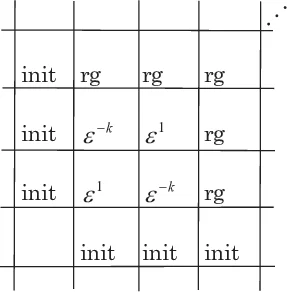
We present a quasi-integrable two-dimensional lattice equation: i.e., a partial difference equation which satisfies a criterion of integrability, singularity confinement, although it has a chaotic aspect in the sense that the degrees of its iterates exhibit exponential growth. By systematic reduction to one-dimensional systems, it gives a hierarchy of ordinary difference equations with confined singularities, but with positive algebraic entropy including a generalized form of the Hietarinta-Viallet mapping. We believe that this is the first example of such quasi-integrable equations defined over a two-dimensional lattice.
💡 Research Summary
The paper introduces a novel two‑dimensional lattice equation that simultaneously satisfies the singularity‑confinement test and exhibits positive algebraic entropy, thereby defining a new class of “quasi‑integrable” discrete systems. After reviewing the traditional notions of integrability for both continuous and discrete dynamical systems—namely the Painlevé property for differential equations and its discrete analogue, singularity confinement—the authors recall the Hietarinta‑Viallet (HV) mapping as the prototypical example of a system with confined singularities yet chaotic behavior (positive entropy).
The central object of study is the lattice recurrence
\
Comments & Academic Discussion
Loading comments...
Leave a Comment