Polynomials in categories with pullbacks
The theory developed by Gambino and Kock, of polynomials over a locally cartesian closed category E, is generalised for E just having pullbacks. The 2-categorical analogue of the theory of polynomials and polynomial functors is given, and its relatio…
Authors: Mark Weber
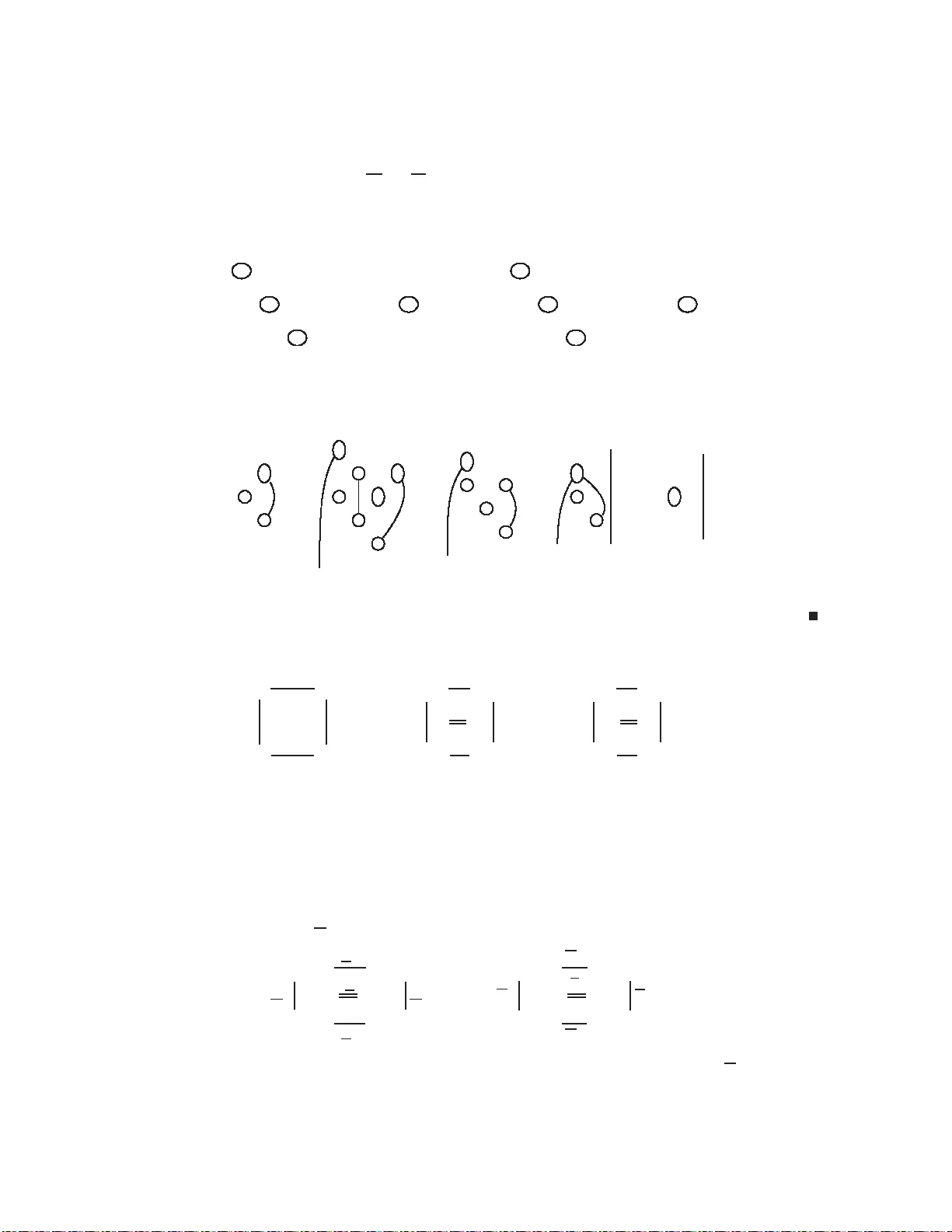
POL YNOMIALS IN CA TEGORIES WITH PULLBA CKS MARK WEBER Abstract. The theory developed by Gambino and Ko ck, of p olynomials over a lo cally cartesian closed category E , is generalised for E just ha ving pullbac ks. The 2-categor ical analogue of the theory of poly no mials and p olynomial functors is given, and its r ela- tionship with Street’s theory of fibrations within 2-categ ories is explored. Johnstone’s notion of “bag domain data” is adapted to the present framework to make it easie r to completely exhibit examples of p olynomial monads. 1. In tro duction Thanks to unpublished w ork of Andr´ e Jo y al dating bac k to the 198 0’s, p olynomials admit a b eautiful categorical in terpretation. Giv en a m ultiv aria ble p olynomial function p with natural n um b er co efficie n ts, like sa y p ( w , x, y , z ) = ( x 3 y + 2 , 3 x 2 z + y ) (1) one ma y break dow n it s fo rmation as follow s. There is a set I n = { w , x, y , z } of “input v ariables” and a tw o elemen t set Out of “output v ariables”. Rewriting p ( w , x, y , z ) = ( x 3 y + 1 + 1 , x 2 z + x 2 z + x 2 z + y ), there is a set MSum = { x 3 y , (1) 1 , (1) 2 , ( x 2 z ) 1 , ( x 2 z ) 2 , ( x 2 z ) 3 , y } of “monomial summands”, and a set UV ar = { x 1 , x 2 , x 3 , y 1 , x 4 , x 5 , z 1 , x 6 , x 7 , z 2 , x 8 , x 9 , z 3 , y 2 } of “usages of v ariables”, informally consisting of no w ’s, nine x ’s, tw o y ’s and three z ’s. The task of forming the p olynomial p can then b e done in t hree steps. Fir st one tak es the input v ariables and duplicates o r ig no res t hem according to ho w often eac h v ariable is used. The b o ok-k eeping of this step is by means of the eviden t function p 1 : UV ar → In , whic h in our example forgets the subscripts of elemen ts of UV ar . In the second step one p erforms all the m ultiplications, a nd this is b o ok-k ept by taking pro ducts o v er the fibres of the function p 2 : UV ar → MSum whic h sends eac h usage to the monomial summand in whic h it o ccurs, tha t is x 1 , x 2 , x 3 , y 1 7→ x 3 y x 4 , x 5 , z 1 7→ ( x 2 z ) 1 x 6 , x 7 , z 2 7→ ( x 2 z ) 2 x 8 , x 9 , z 3 7→ ( x 2 z ) 3 y 2 7→ y . 2000 Mathematics Sub ject Classification: 18A0 5; 18D20; 18D50. Key w ords and phra s es: p o lynomial functor s, 2-mo nads. c Mark W eb er, 2015. Permission to copy for priv ate use grant ed. 1 2 Finally one adds up t he summands, and this is b o ok-k ept b y summing ov er the fibres of the eviden t function p 3 : M Sum → Out . Th us the p olynomial p “is” the diagram In UV ar MSum Out o o p 1 p 2 / / p 3 / / (2) in the category Set . A categorical in terpretation of the formula ( 1 ) from the dia g ram ( 2 ) b egins by regarding a n n -tuple of v ariables as (the fibres of ) a f unction into a g iv en set o f cardinalit y n . Duplication of v ariables is then interpretted by the functor ∆ p 1 : Set / In → S et / UV ar giv en by pulling bac k along p 1 , taking products b y t he functor Π p 2 : Set / UV ar → Set / MSu m and taking sums b y applying the functor Σ p 3 : Set / MSum → Set / Out giv en by comp osing with p 3 . Comp o sing these functors giv es P ( p ) : Set / In → Set / Out the p olynomial functor correspo nding to the p olynomial p . F unctors of the form ∆ p 1 , Π p 2 and Σ p 3 are part o f the bread and butter o f category theory . F o r an y map p 3 in any category , one ma y define Σ p 3 b et w een the appropriate slices, and one requires only pullbac ks in the am bien t category to interpret ∆ p 1 more generally . The f unctor Π p 2 is b y definition the righ t adjoint of ∆ p 2 , and its existence is a condition on the map p 2 , c alled exp on entiability . Lo cally cartesian closed categories are b y definition catego r ies with finite limits in whic h a ll maps are exponentiable. Consequen tly a reasonable g ene ral categorical definition of p olynomial is as a diagram X A B Y o o p 1 p 2 / / p 3 / / (3) in some lo cally cart esian closed category E . The theory p olynomials and p olynomial functors w as dev elop ed at t his generality in the b eautiful pap er [ 11 ] of Gam bino and Ko c k. There the question of what structures p olynomials in a lo cally cartesian closed E form was considered, and it was established in particular that p olynomials can b e seen as the arrows of ce rtain canonical bicategor ies , with the pro cess of forming the asso ciated p olynomial functor giving homomorphisms of bicategories. In this pap er w e shall fo cus on the bicategory P oly E of p olynomials and cartesian maps b et w een them in the sense of [ 11 ]. Our desire to generalise the ab ov e setting comes from the existence of canonical p olynomials and p olynomial functors for the case E = Cat and the wish that they sit prop erly within an established framew ork. While lo cal car t es ian closedness is a v ery natural condition of great imp ortance to categorical logic, enjo y ed for example b y any elemen tary top os, it is no t satisfied by Cat . Av oiding the assumption of lo cal cartesian closure ma y b e useful also for applications in categorical logic. F o r example, the catego ries of classes considered in Algebraic Set Theory [ 14 ] ar e t ypically not assumed to b e lo cally cartesian closed, but the small maps are assumed to b e exp onen tiable. The natural remedy of this defect is to define a p olynomial p b et we en X a nd Y in a category E with pullbac ks to b e a diagram as in ( 3 ) suc h that p 2 is an exponentiable map. Since exp onen tiable maps are pullbac k stable a nd closed under comp osition, one obtains 3 the bicategory Poly E together with the “asso ciated-p olynomial-functor homomorphism”, as b efore. W e describ e this in Section 3 . The main tec hnical innov ation of Sections 2 and 3 is to remov e any r elianc e o n type theory in the pro ofs, giving a completely categorical accoun t of the theory . In establishing the bicategory structure on Pol y E in Section 2 o f [ 11 ], the internal language of E is used in an essen tial w a y , especially in the pro of of Prop osition 2.9. Our dev elopmen t make s no use of t he in ternal language. Instead w e isolate t he concept of a distributivit y pullbac k in Section 2.2 and prov e some elemen ta ry facts ab out them. Armed with this technology w e t hen pro ceed to give an elemen ta ry account of the bicategory of p olynomials, and the homomorphism whic h enco des t he formation o f asso ciated p olynomial functors. Our treatmen t requires o nly pullbac ks in E . Our second extension to the catego r ical theory of po lynomials is motiv a ted by the fact that Cat is a 2-catego ry . Thu s in Section 4.1 w e dev elop the theory of po lyn omials within a 2-category K with pullbac ks, and the p olynomial 2-functors that t hey determine. In this con t ex t t he structure formed b y p olynomials is a degenerate kind of tricategory , called a 2-bicategory , whic h roughly sp eaking is a bicategory whose homs are 2-categories instead of categor ies . How ev er except f or this change, the theory works in the s a me way as for categories. In fact o ur treatmen t o f the 1- categorical ve rsion of the t heory in Section 3 w as ta ilo red in order to mak e the previous sen tence true (in addition to giving t he desired generalisation). A first source of example s of 2 -categorical p olynomials come from the 2 - monads consid- ered first b y Street [ 27 ] whose algebras are fibrations. In P rop osition 4.2 .3 these 2-mona ds are exhibited as b eing p o lynomial in general. Fibratio ns in a 2-category pla y anot her ro le in this w ork, b ecause it is often the case that the maps participating in a p olynomial ma y themselv es b e fibrations or o pfibra tions in the sense of Street. This has implications for the prop erties that the resulting p olynomial 2-functor inherits. T o this end, the g ene ral t ypes of 2-functor that are compatible with fibrations a re recalled f r o m [ 34 ] in Section 4.3 , and the p olynomials that giv e rise to them are identifie d in Theorem 4.4.5 . As explained in [ 7 , 23 ] certain 2- catego rical colimits called co descen t ob jects are im- p ortan t in 2-dimensional monad theory . Theorem 4.4.5 has useful consequences in [ 32 ], in whic h certain co descen t ob jects whic h arise naturally fr o m a morphism of 2- mona ds are considered. When these co descen t ob jects arise from a situation conforming app opriately to the hypotheses of Theorem 4.4.5 , t hey acquire extra structure whic h facilitates their computation. Also of relev ance to the computation of asso ciated co descen t ob jects, w e ha v e in Theorem 4.5.1 iden tified sufficien t conditions o n polynomials in Cat so that t heir induced p olynomial 2-f unctors preserv e all sifted colimits. While the bicategorical comp osition of p olynomials has b een established in [ 11 ], and more generally in Sections 3 and 4 of this pap er, actually exhibiting explicitly a p olynomial monad requires some effort due to the complicated nature o f this comp osition. Ho w ev er one can often av oid the need to chec k monad axioms by using a n alternativ e approac h, based on Johnstone’s notion of “bagdo main data” [ 13 ]. Th e essence of this approach is described in Theorem 5.3.3 and its 2- categorical analogue Theorem 5.4.1 . These metho ds 4 are then illustrated in Section 5.4 , where v arious fundamen tal examples of p olynomial 2-monads on Cat are exhibited. In particular the 2-monads on Cat for symmetric and for braided monoidal categories are p olynomial 2-monads. P o lynomial functors ov er some lo cally cartesian close d catego ry E ar ise in div erse math- ematical contexts as explained in [ 11 ]. They a rise in computer science under the name of c ontainers [ 1 ]. T am bara in [ 30 ] studied p olynomials o v er categories of finite G -sets motiv ated b y represen tation theory and group cohomology . V ery in teresting applications of T am bara’s w ork w ere found b y Brun in [ 8 ] to Witt vec tors, and in [ 9 ] also to equiv- arian t stable homotopy theory and cob ordism. Moreo v er in [ 22 ] one finds applicatio ns of p olynomial functors to higher category theory . Ha ving generalised to the consideration of non-lo cally cartesian closed categories w e ha v e expanded t he p ossible scop e of applicatio ns. In this article we ha v e described some basic examples of p olynomial monads ov er Cat . F ur t her examples for Cat of relev ance to op erads are pro vided in [ 3 , 32 , 33 ]. The results of Section 3 apply also to p olynomials o v er T op whic h w ere a part of the basic setting o f the work of Joy al and Bisson [ 4 ] on Dy er-Lashof op erations. Notations . W e denote b y [ n ] t he ordinal { 0 < ... < n } regarded as a category . The category of functors A → B and natural tr ansformations b et ween them is usually denoted as [ A , B ], though in some cases w e a lso use exp onen tial notatio n B A . F or instance E [1] is the arro w category o f a category E , and E [2] is a category whose ob jects are comp osable pairs o f arrows of E . A 2 -monad is a Cat -enric hed monad, a nd giv en a 2- monad T on a 2-category K , we denote by T -Alg s the 2 - category of strict T -algebras a nd strict maps, T -Alg the 2-category of strict algebras and strong maps 1 and Ps- T -Alg for the 2-category of pseudo- T -algebras a nd strong maps, follow ing the usual notations of 2 - dimens ional monad theory [ 5 , 23 ]. 2. Elementary noti ons In this section we describe the elemen tary notions whic h underpin our categorical treat - men t of t he bicategory of p olynomials in Section 3 . In Section 2.1 we recall basic fa cts and terminology regarding exponentiable morphisms. In Section 2.2 w e intro duce dis- tributivit y pullbac ks, a nd pro ve v arious general facts ab out them. 2.1. Exponentiable morphisms. Give n a morphism f : X → Y in a category E , w e denote b y Σ f : E / X → E / Y the functor given b y comp osition with f . When E has pullbac ks Σ f has a righ t adjoin t denoted as ∆ f , giv en b y pulling bac k maps along f . When ∆ f has a righ t adjoint, denoted as Π f , f is said to b e exp onentiable . A comm utativ e 1 Whic h are T - a lgebra morphisms up to coher en t isomorphism 5 square in E as on the left A B D C f / / k / / g h E / A E /B E /D E /C Σ f / / O O ∆ k / / Σ g ∆ h O O α + 3 E / A E /B E /D E /C o o ∆ f Π k ∆ g o o Π h k s β determines a natural transformation α a s in the middle, as the mate of the iden tit y Σ k Σ f = Σ g Σ h via the adjunctions Σ h ⊣ ∆ h and Σ k ⊣ ∆ k . W e call α a l e ft Be ck- Cheval ley c el l for the original square. There is another left Bec k-Chev alley cell for this square, namely Σ h ∆ f → ∆ g Σ k , obtained by mating the iden tit y Σ k Σ f = Σ g Σ h with the adjunctions Σ f ⊣ ∆ f and Σ g ⊣ ∆ g . If in addition h and k are exp onen tiable maps, then taking righ t adjoin ts pro duces the natural transformat ion β from α , and w e call this a right Be ck-Cheval ley c el l for the origina l square. There is another right Bec k-Chev alley cell ∆ k Π g → Π f ∆ h when f and g are exp onen t ia ble. It is w ell-kno wn that the original square is a pullbac k if and only if either asso ciated left Bec k-Chev alley cell is in v ertible, and when h and k are exp onen tiable, these conditions are also equiv a len t to the righ t Bec k-Chev alley cell β b eing an isomorphism. Under these circumstances w e shall sp eak of the left or righ t Bec k-Chev alley isomorphisms. Clearly expo nen tiable maps are closed under comp osition and any isomorphism is exp o nen tiable. Moreo v er, exp onen tiable maps are pullbac k stable. F or giv en a pullbac k square as ab o v e in whic h g is expo nen tiable, one has Σ h ∆ f ∼ = ∆ g Σ k , and since Σ h is comonadic, ∆ g has a righ t a djoin t b y t he Dubuc adjoin t triangle theorem [ 10 ]. When E has a terminal ob ject 1 and f is the unique map X → 1, we denote b y Σ X , ∆ X and Π X the functors Σ f , ∆ f and Π f (when it exists) respective ly . In f a ct since Σ X : E /X → E takes the domain of a give n arrow into X , it makes sense to sp eak of it ev en when E do esn’t hav e a terminal ob ject. An ob ject X o f a finitely complete category E is exp onen tiable when the unique map X → 1 is exp onen t ia ble in the ab o v e sense (ie when Π X exists). A finitely complete category E is c artesian close d when all its ob jects are exp onen tiable, and l o c al ly c artesian c lose d when all its morphisms are exponentiable. Note that as righ t adjoin ts the functors ∆ f and Π f preserv e terminal ob jects. An ob ject h : A → X of the slice category E /X is terminal if and o nly if h is an isomorphism in E , but there is also a canonical choice of terminal ob ject for E /X – the iden tit y 1 X . So for the sake of con ve nience w e shall often assume b elo w that ∆ f and Π f are c hosen so that ∆ f (1 Y ) = 1 X and Π f (1 X ) = 1 Y . 2.2. Distributivity p ullba cks. F or f : A → B in E a category with pullbacks , ∆ f : E /B → E / A expresses the pro cess of pulling bac k along f as a f unctor. One may then ask: what basic catego rical pro cess is expressed b y the f unc tor Π f : E / A → E / B , when f is an exp onen tia ble map? Let us denote by ε (1) f the counit of Σ f ⊣ ∆ f , and when f is exp onen tiable, by ε (2) f the 6 counit of ∆ f ⊣ Π f . The comp o nen ts o f these counits fit into the follow ing pullbac ks: Y X B A ε (1) f ,b / / b / / f ∆ f b pb Q P A B R ε (2) f ,a / / a / / f / / Π f a ε (1) f , Π f a pb (4) No w the univ ersal prop ert y of ε (1) f , as the counit of the adjunction Σ f ⊣ ∆ f , is equiv a len t to the square on the left b eing a pullbac k as indicated. An answ er to the ab o v e question is obtained b y iden tifying what is special ab out the diagram on the rig ht in ( 4 ), that corresp onds to the univ ersal prop ert y of ε (2) f as the counit of ∆ f ⊣ Π f . T o this end w e mak e 2.2.1. Definition. Let g : Z → A and f : A → B b e a comp osable pair of morphisms in a category E . Then a pul lb ack ar ound ( f , g ) is a diag r am X Z A B Y p / / g / / f / / r q pb in whic h the square with b oundary ( g p, f , r , q ) is, as indicated, a pullback. A morphism ( p, q , r ) → ( p ′ , q ′ , r ′ ) of pullbac ks around ( f , g ) consists of s : X → X ′ and t : Y → Y ′ suc h that p ′ s = p , q s = tq ′ and r = r ′ s . The category of pullbacks around ( f , g ) is denoted PB( f , g ). F o r example the pullback on the right in ( 4 ) exhibits ( ε (2) f ,a , ε (1) f , Π f a , Π f a ) as a pullback around ( f , a ). One may easily observ e directly that the univ ersal pro p erty of ε (2) f ,a is equiv alent to ( ε (2) f ,a , ε (1) f , Π f a , Π f a ) b eing a terminal ob ject of PB( f , a ). Th us w e make 2.2.2. Definition. Let g : Z → A and f : A → B b e a comp osable pair of morphisms in a category E . Then a distribut ivity pullbac k around ( f , g ) is a terminal ob ject of PB( f , g ). When ( p, q , r ) is a distributivit y pullbac k, w e denote this diagramatically a s follows: X Z A B Y p / / g / / f / / r q dpb and w e sa y that this diagram exhibits r as a distributivit y pullbac k of g along f . Th us the answe r to the question p osed at the b eginning of this section is: when f : A → B is an exp onen tiable map in E a category with pullbac ks, the functor Π f : E / A → E /B enco des the pro cess of ta king distributivity pullbac ks a long f . 7 F o r any ( p, q , r ) ∈ PB( f , g ) one has a Bec k-Chev alley isomorphism as on the left Π q ∆ p ∆ g ∼ = ∆ r Π f δ p,q ,r : Σ r Π q ∆ p → Π f Σ g whic h when y ou mate it b y Σ r ⊣ ∆ r and Σ g ⊣ ∆ g , giv es a natural transformation δ p,q ,r as on the r ig h t in the previous displa y . When this is an isomorphism, it expresses a ty p e of distributivit y of “sums” o v er “pro ducts”, and so the following prop osition explains wh y w e use the terminology distributivity pullback. 2.2.3. Prop osition. L et f b e an exp onentiable map in a c ate gory E with pul lb acks. Then ( p, q , r ) i s a di stribut ivity pul l b ack a r ound ( f , g ) if a n d only if δ p,q ,r is an isomorphism. Proo f. Since ( ε (2) f ,g , ε (1) f , Π f g , Π f g ) is terminal in PB( f , g ), one has unique morphisms d and e fitting into a comm utat iv e diagram Z X Y B E D w w p ♦ ♦ ♦ ♦ ♦ ♦ ♦ ♦ ♦ q / / r ' ' ❖ ❖ ❖ ❖ ❖ ❖ ❖ ❖ ❖ g g ε (2) f ,g ❖ ❖ ❖ ❖ ❖ ❖ ❖ ❖ ❖ ε (1) f , Π f g / / Π f g 7 7 ♦ ♦ ♦ ♦ ♦ ♦ ♦ ♦ ♦ d e pb in which the middle square is a pullbac k by the elemen tary prop erties of pullbac ks. Th us ( p, q , r ) is a distributivit y pullbac k if and only if e is a n isomorphism. Since the a djunctions Σ r ⊣ ∆ r and Σ g ⊣ ∆ g are cartesian, δ p,q ,r is cartesian, and so it is a n isomor phism if and only if its comp onen t at 1 Z ∈ E / Z is an isomorphism. Sinc e ∆ p (1 Z ) = 1 X and Π q (1 X ) = 1 Y one may easily witness directly that ( δ p,q ,r ) 1 X = e . When manipulating pullbac ks in a general category , one uses the “ ele men ta r y fact” that giv en a commutativ e diagram of the form A B C F E D / / / / / / / / pb then the front square is a pullback if and only if the comp osite square is. In the remainder of this section w e iden tif y three elemen tar y facts ab out distributivit y pullbac ks. 2.2.4. Lemma. (C omp osi tion /c anc e l lation) Given a diagr am of the form B 6 B 2 B X Y B 3 B 4 B 5 Z h 9 / / h 6 / / h 7 / / g / / f h h 2 h 8 / / h 3 h 5 h 4 pb dpb pb 8 in any c ate g o ry with p ul lb acks, then the right-most p ul lb ack is a di stribut ivity pul lb a c k ar ound ( g , h 4 ) if and only if the c omp osite di a gr am is a dis tributivity pul lb ack ar ound ( g f , h ) . Proo f. Let us supp ose that righ t-most pullbac k is a distributivit y pullbac k, and that C 1 , C 2 , k 1 , k 2 and k 3 as in B 6 B 2 B X Y B 3 B 4 B 5 Z C 1 C 2 C 3 h 9 / / h 6 / / h 7 / / g / / f h h 2 h 8 / / h 3 h 5 h 4 & & k 1 k 2 / / k 3 ✒ ✒ ✒ ✒ ✒ ✒ ✒ ✒ ✒ ✒ ✒ ✒ ✒ ✒ ✒ ✒ ✒ ✒ ✒ ✒ ✒ ✒ ✒ ✒ ✒ ✒ k 4 k 5 1 1 , , k 6 k 7 $ $ k 8 k 9 k 10 k 11 pb dpb dpb are give n such that the square with b oundary ( hk 1 , g f , k 3 , k 2 ) is a pullbac k. Then w e m ust exhibit r : C 1 → B 6 and s : C 2 → B 5 unique suc h that h 2 h 8 r = k 1 , h 6 h 9 r = sk 2 and h 7 s = k 3 . F orm C 3 , k 4 and k 5 b y taking the pullbac k of k 3 along g , and then k 6 is unique suc h that k 5 k 6 = k 2 and k 4 k 6 = f hk 1 . Clearly the square with b oundary ( hk 1 , f , k 4 , k 6 ) is a pullbac k around ( f , h ). F rom the univ ersal prop ert y o f the left-most distributivity pullbac k, one has k 7 and k 8 as show n unique suc h that k 1 = h 2 k 7 , h 3 k 7 = k 8 k 6 and h 4 k 8 = k 4 . F rom the univ ersal prop ert y of the rig h t-most distributivit y pullbac k, one ha s k 9 and k 10 as shown unique suc h that k 8 = h 5 k 9 , h 6 k 9 = k 10 k 5 and h 7 k 10 = k 3 . Clearly h 5 k 9 k 6 = h 3 k 7 and so b y the univ ersal prop ert y o f t he top-left pullbac k square one has k 11 as show n unique suc h that h 8 k 11 = k 7 and h 9 k 11 = k 9 k 6 . Clearly h 2 h 8 k 11 = k 1 , h 6 h 9 k 11 = k 10 k 2 and h 7 k 10 = k 3 and so w e ha ve established the existence of maps r and s with the required prop erties. As for uniqueness, let us suppo se now that r : C 1 → B 6 and s : C 2 → B 5 are giv en suc h that h 2 h 8 r = k 1 , h 6 h 9 r = sk 2 and h 7 s = k 3 . W e m ust v erify that r = k 11 and s = k 10 . Since the righ t-most distributivit y pullbac k is in particular a pullback, one has k ′ 9 : C 3 → B 4 unique suc h that h 4 h 5 k ′ 9 = k 4 and h 6 k ′ 9 = sk 5 . Since ( h 4 h 5 , h 6 ) are jointly monic, and clearly h 4 h 5 h 9 r = h 4 h 5 k ′ 9 k 6 and h 6 h 9 r = h 6 k ′ 9 k 6 , w e hav e h 9 r = k ′ 9 k 6 . By the univers al prop ert y of the left-most distributivit y pullbac k, it follow s that h 5 k ′ 9 = k 8 and h 8 r = k 7 . Th us b y the univers al prop ert y of the left-most distributivity pullbac k, it follo ws that k 9 = k ′ 9 and k 10 = s . Since ( h 8 , h 9 ) are join tly monic, h 8 k 11 = k 7 = h 8 r and h 9 k 11 = k 9 k 6 = h 9 r , w e ha v e r = k 11 . Con vers ely , supp ose that the comp osite diagram is a distributivit y pullback around 9 ( g f , h ), and that C 1 , C 2 , k 1 , k 2 and k 3 as in B 6 B 2 B X Y B 3 B 4 B 5 Z C 3 C 2 C 1 h 9 / / h 6 / / h 7 / / g / / f h h 2 h 8 / / h 3 h 5 h 4 k 3 ✒ ✒ ✒ ✒ ✒ ✒ ✒ ✒ ✒ ✒ ✒ ✒ ✒ ✒ ✒ ✒ ✒ ✒ ✒ ✒ ✒ ✒ ✒ ✒ ✒ ✒ k 2 / / / / k 5 k 4 $ $ k 1 k 8 k 7 k 6 pb dpb pb are giv en suc h that the square with b oundary ( h 4 k 1 , g , k 3 , k 2 ) is a pullbac k. W e m ust giv e r : C 1 → B 4 and s : C 2 → B 5 unique suc h that k 1 = h 5 r , h 6 r = sk 2 and h 7 s = k 3 . Pullbac k k 1 along h 3 to pro duce C 3 , k 4 and k 5 . This mak es the square with b oundary ( hh 2 k 4 , g f , k 3 , k 2 k 5 ) a pullbac k around ( g f , h ). Th us one has k 6 and k 7 as sho wn unique suc h that h 8 k 6 = k 4 , h 6 h 9 k 6 = k 7 k 2 k 1 and k 7 h 7 = k 3 . By univ ersal prop erty of the right pullbac k and since g h 4 k 1 = h 7 k 7 k 2 , o ne has k 8 as shown unique suc h tha t h 5 k 8 = k 1 and h 6 k 8 = k 7 k 2 . By the uniquness part of the univ ersal prop ert y of the left distributivit y pullbac k, it fo llo ws that h 5 k 8 = k 1 , and so we ha v e established the existence of maps r and s with the required prop erties. As f or uniqueness let us supp ose that w e a re giv en r : C 1 → B 4 and s : C 2 → B 5 suc h tha t k 1 = h 5 r , h 6 r = s k 2 and h 7 s = k 3 . W e m ust v erify that r = k 8 and s = k 7 . By the univ ersal prop ert y of the to p- left pullbac k one has k ′ 6 unique suc h that h 8 k ′ 6 = k 4 and h 9 k ′ 6 = rk 5 . By the uniquness part of the univ ersal prop ert y of the left distributivit y pullbac k, it fo llo ws that h 8 k 6 = h 8 k ′ 6 and h 5 k 8 = h 5 r . Th us by the uniquness part of the univ ersal prop ert y of the comp osite distributivit y pullbac k, it f ollo ws that k 6 = k ′ 6 and s = k 7 . Since ( h 4 h 5 , h 6 ) are jointly monic, it follows that r = k 8 . 2.2.5. Lemma. (T he cub e lemma). Given a diagr am of the form A 2 A 3 A 1 B 2 B 1 D 2 D 1 C 2 C 3 C 1 f 1 / / k 1 / / g 1 h 1 f 2 / / k 2 / / g 2 h 2 h 3 d 1 ) ) ❘ ❘ ❘ ❘ ❘ ❘ ❘ ❘ d 2 ) ) ❘ ❘ ❘ ❘ ❘ ❘ ❘ ❘ d 3 5 5 ❧ ❧ ❧ ❧ ❧ ❧ ❧ ❧ d 4 5 5 ❧ ❧ ❧ ❧ ❧ ❧ ❧ ❧ d 5 u u ❧ ❧ ❧ ❧ ❧ ❧ ❧ ❧ ❧ ❧ ❧ ❧ ❧ ❧ ❧ ❧ ❧ ❧ ❧ ❧ d 6 i i ❘ ❘ ❘ ❘ ❘ ❘ ❘ ❘ ❘ ❘ ❘ ❘ ❘ ❘ ❘ ❘ ❘ ❘ ❘ pb pb (1) (2) (3) dpb in any c ate g o ry with pul l b acks, in whi ch r e gions (1) and (2) c ommute, r e gion (3) is a pul lb ack ar ound ( f 2 , d 2 ) , the squar e with b oundary ( f 1 , k 1 , g 1 , h 1 ) is a pul lb ack an d the 10 b ottom distributivity pul lb ack i s ar ound ( g 2 , d 4 ) . Then r e gions (1) and (2) ar e pul lb acks if and only if r e gion (3) is a distributivity pul lb ack ar ound ( f 2 , d 2 ) . Proo f. Let us suppo se that (1) and (2) are pullbacks and p , q and r are giv en as in A 2 A 3 A 1 B 2 B 1 D 2 D 1 C 2 C 3 C 1 f 1 / / k 1 / / g 1 h 1 f 2 / / k 2 / / g 2 h 2 h 3 d 1 ) ) ❘ ❘ ❘ ❘ ❘ ❘ ❘ ❘ d 2 ) ) ❘ ❘ ❘ ❘ ❘ ❘ ❘ ❘ d 3 5 5 ❧ ❧ ❧ ❧ ❧ ❧ ❧ ❧ d 4 5 5 ❧ ❧ ❧ ❧ ❧ ❧ ❧ ❧ d 5 u u ❧ ❧ ❧ ❧ ❧ ❧ ❧ ❧ ❧ ❧ ❧ ❧ ❧ ❧ ❧ ❧ ❧ ❧ ❧ ❧ d 6 i i ❘ ❘ ❘ ❘ ❘ ❘ ❘ ❘ ❘ ❘ ❘ ❘ ❘ ❘ ❘ ❘ ❘ ❘ ❘ pb pb pb pb pb dpb X Y p ☛ ☛ ☛ ☛ ☛ ☛ ☛ q / / r ✒ ✒ ✒ ✒ ✒ ✒ ✒ ✒ ✒ ✒ ✒ s 2 t 2 s s s t + + suc h that the square with b oundary ( q , r , f 2 , d 2 p ) is a pullbac k. Then one can use the b ottom distributivity pullbac k to induce s 2 and t 2 as sho wn, and then the pullbacks (1) and (2) to induce s and t , and these clearly satisfy d 1 s = p , f 1 s = tq and r = d 5 t . On the other hand giv en s ′ : X → A 1 and t ′ : Y → B 1 satisfying these equations, define s ′ 2 = h 1 s ′ and t ′ 2 = k 1 t ′ . But t hen b y the uniqueness par t of the univ ersal prop ert y o f the b ottom distributivit y pullback it f o llo ws that s ′ 2 = s 2 and t ′ 2 = t 2 , and from the uniqueness parts of the univ ersal prop erties of the pullback s (1) and (2), it follows tha t s = s ′ and t = t ′ , thereb y v erifying that s and t a re unique satisfying the a f oremen tioned equations. F o r the con v erse supp ose that (3) is a distributivity pullbac k. Note that (2) b eing a pullbac k implies that (1) is b y elemen tary prop erties of pullbacks , so w e m ust sho w that (2) is a pullbac k. T o that end consider s and t as in A 2 A 3 A 1 B 2 B 1 D 2 D 1 C 2 C 3 C 1 f 1 / / k 1 / / g 1 h 1 f 2 / / k 2 / / g 2 h 2 h 3 d 1 ) ) ❘ ❘ ❘ ❘ ❘ ❘ ❘ ❘ d 2 ) ) ❘ ❘ ❘ ❘ ❘ ❘ ❘ ❘ d 3 5 5 ❧ ❧ ❧ ❧ ❧ ❧ ❧ ❧ d 4 5 5 ❧ ❧ ❧ ❧ ❧ ❧ ❧ ❧ d 5 ❧ ❧ ❧ ❧ ❧ ❧ ❧ ❧ ❧ u u ❧ ❧ ❧ ❧ ❧ ❧ ❧ ❧ ❧ d 6 i i ❘ ❘ ❘ ❘ ❘ ❘ ❘ ❘ ❘ ❘ ❘ ❘ ❘ ❘ ❘ ❘ ❘ ❘ ❘ pb pb = = dpb dpb P Z s ✒ ✒ ✒ ✒ ✒ ✒ ✒ ✒ ✒ ✒ ✒ t ✸ ✸ ✸ ✸ ✸ ✸ ✸ ✸ ✸ ✸ ✸ ✸ ✸ ✸ ✸ ✸ ✸ ✸ ✸ ✸ ✸ ✸ ✸ ✸ ✸ ✸ ✸ ✸ u ✱ ✱ ✱ ✱ ✱ ✱ ✱ ✱ ✱ ✱ ✱ v / / w x y s s z + + suc h that k 2 s = d 6 t , and then pullbac k s a nd f 2 to pro duce P , u and v . Using the fact that the b ottom distributivit y pullbac k is a mere pullback, one has w unique suc h that d 4 d 3 w = h 2 u and g 1 w = tv . Us ing the inner left pullback , one has x unique suc h that h 3 x = d 3 w and d 2 x = u . Using the distributivit y pullbac k (3), one has y and z unique 11 suc h that d 1 y = x , f 1 y = z v a nd s = d 5 z . By the unique ness part of the univ ersal property of the b ottom distributivit y pullbac k, it follows that t = k 1 z . Th us we hav e constructed z satisfying s = d 5 z a nd t = k 1 z . On the other hand given z ′ : Z → B 1 suc h that s = d 5 z ′ and t = k 1 z ′ , one has y ′ : P → A 1 unique suc h that d 2 d 1 y = u and f 1 y = z v , using the fact that the top distributivit y pullbac k is a mere pullback . Then from the uniqueness part of the univ ersal prop ert y of that distributivity pullback, it follows that y = y ′ and z = z ′ . Th us as required z is unique satisfying s = d 5 z a nd t = k 1 z . 2.2.6. Lemma. (S e ctions of distributivity pul lb ac k s ). L et D A B C E p / / g / / f / / r q dpb b e a distributivity pul lb ack a r ound ( f , g ) in any c ate gory with pul lb ac k s . Thr e e maps s 1 : B → A s 2 : B → D s 3 : C → E which ar e se ctions o f g , g p and r r esp e ctivel y, and ar e natur al in the sen s e that s 1 = ps 2 and q s 2 = s 3 f , ar e determine d uniquely by the either of the fo l lowing: ( 1 ) the se ction s 1 ; or (2) the se ction s 3 . Proo f. Give n s 1 a section of g , induce s 2 and s 3 uniquely as show n: D A B C E p / / g / / f / / r q dpb B C s 1 f 1 ; ; s 2 / / s 3 / / using the univ ersal prop ert y of the distributivit y pullback . On the other hand g iv en the section s 3 , one induces s 2 using the fact that the distributivit y pullback is a mere pullbac k, and then put s 1 = ps 2 . W e often assume that in a g iv en category E with pullbacks , s ome choice of all pullbac ks, and o f all existing distributiv it y pullbac ks, has b een fixed. Moreov er w e mak e the following harmless a ss umptions, for the sak e of con v enience, on these choic es once they hav e b een made. First w e assume that the c ho sen pullbac k of a n iden tity along any map is an iden tity . This ensures that ∆ 1 X = 1 E /X and that ∆ f (1 B ) = 1 A for any f : A → B . Similarly we assume that all diag r a ms o f the form • • • • • 1 / / 1 / / f / / 1 f dpb • • • • • 1 / / g / / 1 / / g 1 dpb 12 are among our ch osen distributivity pullbac ks. This has the effect of ensuring that Π f (1 A ) = 1 B for an y exp onen t ia ble f : A → B , and that Π 1 X = 1 E /X . 3. P olynom ials in categor ies This section contains our general theory of p olynomials and p olynomial functors. In Section 3.1 we give an elemen tary accoun t of the compo sition of polynomials, culminating in Theorem 3.1.10 , in whic h p olynomials in a category E with pullbac ks are exhibited as the 1- cells of the bicatego r y P oly E . Then in Section 3.2 , w e study the pro cess of forming the asso ciated p olynomial f unctor, exhibiting this as the effect on 1- cells of the homomorphism P E : P oly E → CA T in Theorem 3.2.6 . A t this generalit y , the homs of the bicategory Pol y E ha v e pullbac ks, and the hom f unctors of P E preserv e them. This giv es the sense in whic h the theory of p olynomial functors could b e iterated, and this is described in Section 3.3 . The organisation o f this section has b een c hosen to f a cilitate its generalisation to the theory of p olynomials in 2-categories, in Section 4.1 . 3.1. Bica tegories of pol ynomials. Let E be a category with pullbacks . In this section w e giv e a direct description of a bicategory Poly E , whose ob jects are those o f E , and whose one cells are p olynomials in E in the following sense. F or X , Y in E , a p olynomial p fro m X to Y in E consists of thr ee maps X A B Y o o p 1 p 2 / / p 3 / / suc h that p 2 is exp onen t ia ble. Let p and q b e p olynomials in E from X to Y . A c a rtesia n morphism f : p → q is a pair of maps ( f 0 , f 1 ) fitting into a comm uta tiv e diagram X A B Y B ′ A ′ p 1 ⑧ ⑧ ⑧ ⑧ ⑧ ⑧ ⑧ p 2 / / p 3 ❄ ❄ ❄ ❄ ❄ ❄ ❄ _ _ q 1 ❄ ❄ ❄ ❄ ❄ ❄ ❄ q 2 / / q 3 ? ? ⑧ ⑧ ⑧ ⑧ ⑧ ⑧ ⑧ f 0 f 1 pb W e call f 0 the 0 -c o mp onen t of f , and f 1 the 1 -c o mp onen t of f . With comp osition inherited in the eviden t wa y fro m E , o ne has a category Poly E ( X , Y ) o f p olynomials fro m X to Y and cartesian morphisms b et w een them. These are the homs of our bicategory Poly E . In order to describ e the bicategorical comp osition of p olynomials, we intro duce the concept of a sub divide d c omp os i te of a given comp osable sequence of p olynomials. This enables us to giv e a direct description of n -ary composition for P oly E , and then t o describ e the sense in which coherence fo r this bicategory “follows fr o m univ ersal prop erties”. Consider a comp osable sequence of p olynomials in E of length n , that is to sa y , p oly- nomials X i − 1 A i B i X i o o p i 1 p i 2 / / p i 3 / / in E , where 0 < i ≤ n . W e denote suc h a sequence as ( p i ) 1 ≤ i ≤ n , or more briefly as ( p i ) i . 13 3.1.1. Definition. Let ( p i ) 1 ≤ i ≤ n b e a comp osable sequence of p olynomials of length n . A sub divide d c omp osi te o v er ( p i ) i consists of ob jects ( Y 0 , ..., Y n ), morphisms q 1 : Y 0 → X 0 q 2 ,i : Y i − 1 → Y i q 3 : Y n → X n for 0 < i ≤ n , and mo r phis ms r i : Y i − 1 → A i s i : Y i → B i for 0 < i ≤ n , suc h that p 11 r 1 = q 1 , p n 3 s n = q 3 and Y i A i +1 X i B i r i +1 / / p i +1 , 1 / / p i 3 s i = Y i − 1 Y i B i A i q 2 i / / s i / / p i 2 r i pb F o r example a sub divided comp osite ov er ( p 1 , p 2 , p 3 ), that is when n = 3, a ss em bles in to a comm utativ e diag ram like this: • • • • • • • • • • • • • • o o p 11 p 12 / / p 13 / / o o p 21 p 22 / / p 23 / / o o p 31 p 32 / / p 33 / / q 21 / / q 22 / / q 23 / / r 1 s 1 ⑧ ⑧ ⑧ ⑧ ⑧ ⑧ ⑧ r 2 ❄ ❄ ❄ ❄ ❄ ❄ ❄ s 2 ⑧ ⑧ ⑧ ⑧ ⑧ ⑧ ⑧ r 3 ❄ ❄ ❄ ❄ ❄ ❄ ❄ s 3 q 1 ⑧ ⑧ ⑧ ⑧ ⑧ ⑧ ⑧ q 3 ❄ ❄ ❄ ❄ ❄ ❄ ❄ pb pb pb W e denote a general subdivided comp osite o v er ( p i ) i simply as ( Y , q , r , s ). 3.1.2. Definition. Let ( p i ) 1 ≤ i ≤ n b e a comp osable sequence of p olynomials of length n . A morphism ( Y , q , r , s ) → ( Y ′ , q ′ , r ′ , s ′ ) of sub di v ide d c omp osites consists of morphisms t i : Y i → Y ′ i for 0 ≤ i ≤ n , suc h t ha t q 1 = q ′ 1 t 0 , q ′ 2 i t i − 1 = t i q 2 i , q 3 = q ′ 3 t n , r i = r ′ i t i − 1 and s i = s ′ i t i . With comp ositions inherited from E , one ha s a cat ego ry SdC( p i ) i of sub divided comp osites o v er ( p i ) i and morphisms b et w een them. Giv en a sub divided comp osite ( Y , q , r , s ) ov er ( p i ) i , note that the morphisms q 2 i are exp o nen tiable since exp onen tiable maps ar e pullbac k stable, and that the comp osite q 2 : Y 0 → Y n defined a s q 2 = q 2 n ...q 21 is also exp onen tiable, since exponentiable maps are closed under comp osition. Th us w e mak e 3.1.3. Definition. The asso ciate d p olynomial of a giv en subdivided comp osite ( Y , q , r , s ) o v er ( p i ) i is defined to b e X 0 Y 0 Y n X n o o q 1 q 2 / / q 3 / / The pro cess of taking a ss o ciated p olynomials is the o b ject map of a functor ass : SdC ( p i ) i − → P oly E ( X 0 , X n ) . Ha ving made the necessary definitions, w e now describ e the canonical op erations on sub divide d comp osites whic h giv e rise to the bicategorical comp osition of p olynomials. 14 Let n > 0 and ( p i ) 1 ≤ i ≤ n b e a comp osable sequence of p olynomials in E . One has eviden t forgetful functors res 0 and res n as in SdC( p i ) 1 0 a n d ( p i ) 1 ≤ i ≤ n b e a c omp osa ble se quenc e of p olynomia ls in a c ate gory E with pul lb ac ks. Then one has c anonic al isom orphisms SdC( p i ) 1 ≤ i
Original Paper
Loading high-quality paper...
Comments & Academic Discussion
Loading comments...
Leave a Comment