A Conversation with Richard A. Olshen
Richard Olshen was born in Portland, Oregon, on May 17, 1942. Richard spent his early years in Chevy Chase, Maryland, but has lived most of his life in California. He received an A.B. in Statistics at the University of California, Berkeley, in 1963, …
Authors: John A. Rice
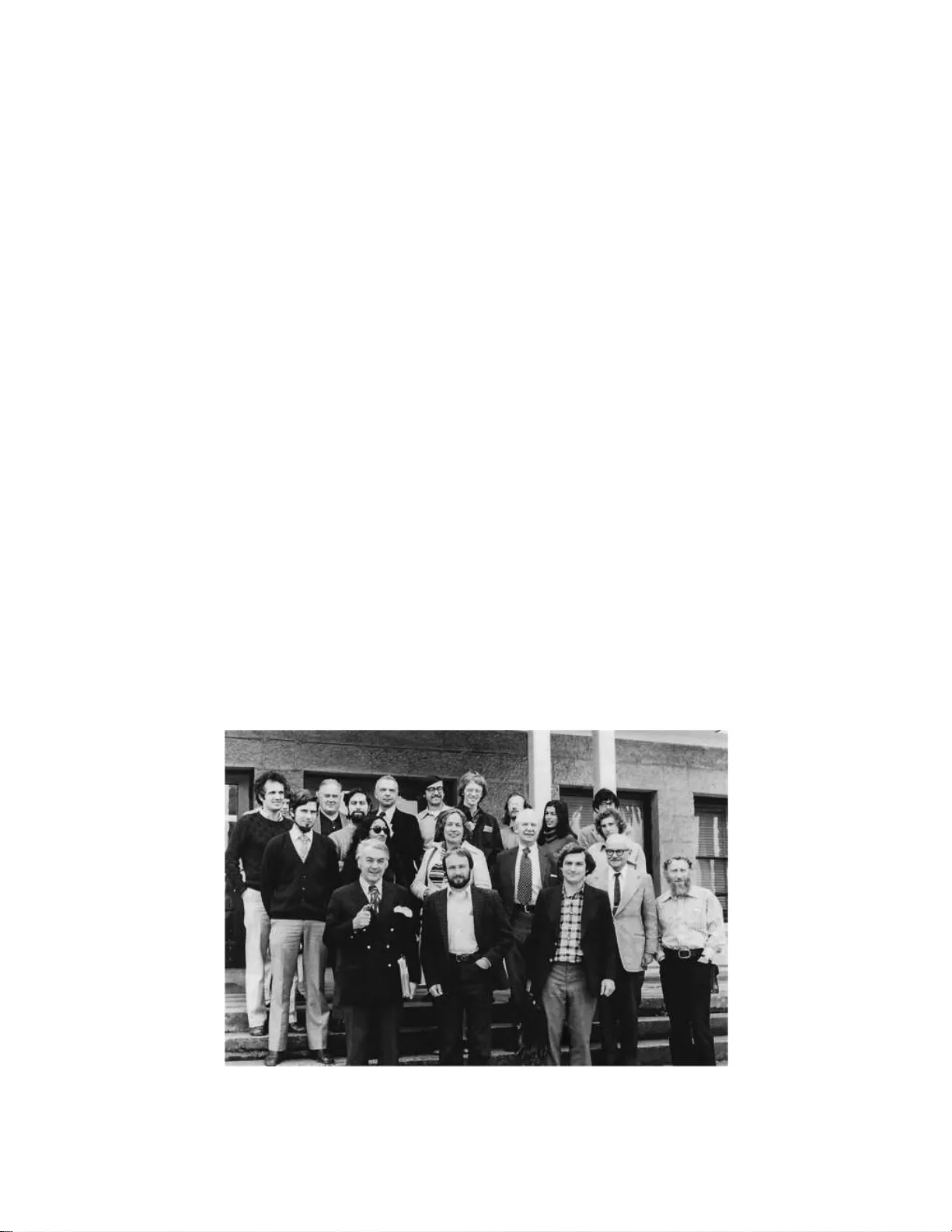
Statistic al Scienc e 2015, V ol. 30, No. 1, 118– 132 DOI: 10.1214 /14-STS492 c Institute of Mathematical Statisti cs , 2015 A Conversation with Richa rd A. Olshen John A. Rice Abstr act. Ric h ard Olshen was b orn in P ortland, Oregon, on Ma y 17, 1942. Ric hard sp en t his early y ears in Ch evy Chase, Maryland, but has lived most of his life in California. He receiv ed an A.B. in Statistics at th e Universit y of California, Berk eley , in 1963, and a Ph .D. in Statistics from Y ale Unive rsity in 196 6, w r iting his dissertation under the direction of Jimmie S av age and F rank Anscom b e. He serv ed as Researc h Staff Statistician and Lec turer at Y ale in 1 966–196 7. Ric h ard accepted a facult y app oint ment at Stanford Univ ersit y in 1967, and has held ten ured facult y p ositi ons at the Universit y of Mic higan (1972–197 5), the Universit y of California, San Diego (1975–1 989), and S tanf ord Un iv ersit y (since 1989). At Stanford , he is Professor of Health Researc h and P olicy (Biostatistics), Ch ief of the Division of Biostatist ics (since 1998) and Professor (by courtesy) of Electrical Engineering and of Statistics. A t v arious times, he has had visiting faculty p ositions at Colum bia, Harv ard , MIT, S tanford and the Hebrew Univ ersit y . Ric h ard’s researc h in terests are in statistics and mathematics and their applications to medicine and biology . Muc h of his w ork has concerned binary tree-structured algorithms for c lassification, regression, surviv al a nalysis and cl ustering. Th ose for classification and surviv al analysis ha ve b een used wit h success in compu ter-aided diagnosis and p r ognosis, esp ecially in cardiology , oncology and to xicology . He coauthored the 1984 b o ok Classi- fic ation and R e gr ession T r e es (with Leo Brieman, Jerome F riedman and C harles S tone) whic h giv es motiv ation, alg orithms, v arious examples and mathematical theory for what ha v e come to b e kno wn as CAR T algo rithms. Th e approac hes to tree-structured cluster- ing hav e b een applied to problems in digital radiography (with S tanford EE Professor Rob ert Gra y) and to HIV genetics, the latte r work includ ing studies on single n ucleotide p olymorph isms, which has help ed to shed li ght on the presence of hypertension in certain subp opulations of women. Ric h ard also has a long-standing in terest in the analyses of longitudinal data. This includes a detailed study of the pharmacokinetics of in traca vitary c hemotherap y with systemic rescue (with Stephen Ho we ll and John Rice). Related efforts ha v e fo cused on “mature walking,” concomitan ts of high c holesterol, and asp ects of glomerular filtration in patien ts with n ephrotic disorders (with Brya n Myers). With the late Da vid Sutherland , Edmund Biden and Marilynn Wyat t, h e coauthored the monograph The Development of Matur e Walking . Ric hard’s other sto c hastic-statistic al inte rests include exc hangeabil- it y , conditional significance lev els of particular test statistics, CAR T-lik e estimators in regression and successive standard ization of rectangular arra ys of num b ers . Ric h ard is an elected F ello w of the IMS, the AAAS, the ASA and the IEEE. He is a former Guggenheim F ello w and has b een a Researc h Scholar in Cancer of the American Cancer S o ciet y . John A . Ric e is Emeritus Pr ofessor, Dep artment of Statistics, 367 Evans Hal l, University of Cali fornia, Berkeley, California 94720 -3860, US A e-mail: ric e@stat.b erkeley.e du . This is an electronic reprin t of the original article published b y the Institute of Mathematical Statistics in Statistic al Scienc e , 2015 , V ol. 30, No . 1, 118–13 2 . This reprint differs from the or iginal in pagination and t yp ogr aphic detail. 1 2 J. A. RICE Fig. 1. Richar d Olshen, 20 10. Rice: It’s a great pleasure to in terview you, Ric h ard. W e go bac k a long wa y to UC San D iego in the 1970’s. I’d lik e to b egin with your distan t past, if y our memory go es bac k that far. What c hild h o o d influences drew y ou into mathemat ics and stati stics and medical science? Olshen: My father was a Ph.D. studen t of Henry Lewis Rietz of the R ietz Lectures an d the IMS . He had a Ph.D. in mathematics from the State Uni- v ersit y of Io wa. He was a v ery troub led p erson, bu t ev ery once in a while he had a clear view of things. He knew a fair bit of mathematics and some statis- tics, suc h as it w as when he w as y ounger. Interesting ideas were alwa ys in t he air. I remem b er when I w as a c hild wondering if there we re more r eal num b ers than in tegers. Rice: A t what age w as that? Do y ou know, roughly? Olshen: I think I w as nine. I rememb er learning something ab out transfinite arithmetic and Canto r; but th at w as man y y ears ago, and I don ’t remem b er man y of the details. As far as sta tistics goes, I wa s a join t Statistics and Ma thematics ma jor at Berk eley , but the p ers on who advised my letter of th e alphab et in the Department of Mathematics wan ted me to tak e a course th at I didn’t w ant to tak e; so I dropp ed the Mathematics p art. Rice: Oh , is that how y ou end ed up a Statistics ma jor? I know you wen t to Berke ley , presum ably b ecause y ou had an in terest in Mathematics. Olshen: I wa s recruited to go to the Universit y of Chicago f or no goo d reason I could e v er discern. My father w ouldn’t hear of me going to the Univ ersit y of Ch icago. A wo man of whom I w as very fond w as going to Berk eley , and I th ough t it w as a prett y go o d sc h o ol. It w asn’t Stanford. Stanford was not a w elcome w ord in my h ouse. Rice: Oh, really? Olshen: When I wa s a junior in h igh sc ho ol, my mother and I wen t to college admissions n igh t at Burlingame High Sc ho ol. W e liv ed in Burlin game, California, then, whic h is near the San F rancisco air- p ort. W e were sitting in a ro om, and the woman who w as someho w in c harge of outreac h fr om Stanford got up; and the first w ord s out of her mouth w ere, “Life d o esn’t end if yo u don ’t get int o Stanford.” My mother grabb ed m y arm and p ulled me out of the r o om and said, “Y ou’re not applying there.” Rice: Goo d for y our mother! Olshen: That didn ’t app eal to her aesthetic. Rice: What was the course in statistics that drew y ou in to the sub j ect at Berk eley? Olshen: It wa sn’t so muc h a course as it was a p erson. I had tak en probab ility wh en I w as a sopho- more. In those d a ys, you could actually do V olume 1 of F eller. No w it’s somewh at forb idden b ecause the problems are too hard. I wa s prett y go o d at it. Fig. 2. R ichar d’ s hi gh scho ol g r aduation pictur e. T aken Spring 1958, age 16. A CONV ERSA TION WITH RICHARD A. OLSHEN 3 Fig. 3. Richar d as a gr aduate s tudent at Y ale. T aken Spring 1965. Then, when I wa s a junior in college I met the late Da vid F reedman. I b eliev e I was in the first cours e he taught at Berke ley . Rice: That must hav e b een ve ry early in his career. Olshen: That w as in 1961. He w as someb od y I w ant ed to please. He w as a stern guy and ob- viously v ery sharp . In those da ys, it w as clear, b oth at Berkele y and at Y ale, that the very y oung facult y— an d Da vid was c ertainly y oung then—that the y oung faculty lo oked on the able stu den ts as comp etitors for their jobs, and so that tension was alw a ys th ere. He was pr etty secure and d idn’t reall y feel th is w a y , but there w ere others w ho seemed to ha v e that att itude. Rice: Y ou though t that at b oth Berk eley and Y ale? Olshen: W ell, those w ere t wo go o d places to get jobs. Y es, I w as surp r ised, b u t that w as the sense that I had, esp ecially at Y ale . Rice: Ho w man y statistics ma jors w ere in y our class? It must hav e b een a v ery small n umber. Olshen: I don’t kno w. There were more th an 10 and not more than 30. Rice: It’s gro wn substantia lly in the last few yea rs. There are more than 300 n ow at Berk eley . Olshen: There’s a c han ge in enrollment at Stan- ford, too, although th er e is no und er grad u ate ma jor in statistics at Stanford. There’s a Math/Comp Sci ma jor on w h ic h Bradley Efron has w orked h ard. It’s really go o d, and it’s one of the b est undergraduate ma jors at S tanford. I d on’t kno w ho w many students it has, but quite a few. Th e m aster’s program in the Departmen t of Statistics wa s almost nonexistent 10 y ears ago. No w it has 90+ students, and p eople are clamoring to get into the m aster’s program. Pe ople from all ov er the w orld w h o w ould h a ve b een Ph .D. student s 20 years ago, bright kids. I think statistics serv es these young p eople wel l. It teac hes them something ab out compu ting. It teac hes them something ab out statistical in ference. I think these are all go o d things to kn ow, no matter what they choose to d o. It’s hard to learn m uc h s ub ject matter very we ll if y ou’re less than 20, b ut in y our early t we ntie s it ’s a go o d idea to learn what y ou can. That means ju niors and seniors in college and fi rst and second ye ar graduate studen ts. Rice: That’s what y ou did in g oing from Berk eley to Y al e. W as that transition a big c hange? Olshen: W ell, yes and n o. It w as not a c h ange in difficult y . They were equally d ifficult. Berkele y and Y ale we re b oth, for me, really , really hard . If they had b een one p ercen t harder I couldn’t ha v e done either one. But Berk eley’s statistics was more decision theoretic. I w ould say more of W ald’s de- scenden ts than an ything else. Y ale , b ecause F rank Anscom b e was the found er of its Department of Statistics, w as m uc h more British, m uch mo re Fish- erian, m uc h more lik eliho od oriented. I w as the first Ph.D. stu den t there. What w as deemed imp ortan t in s tatistics was dif- feren t in the tw o p laces. But as a stu d en t, one is faced with challenge s of v arious sorts, and those c h allenges w ere formidable f or me in b oth p laces. Rice: What led y ou to go to Y ale for y our graduate studies? Olshen: W ell, I thought, p erhaps , th at I w ould go to Pr inceton; and Da vid F reedman, who in - fluenced me at Berk eley , w as a friend of F rank Anscom b e, w ho was then at Prin ceton. An ywa y , I visited P r inceton th e su mmer of 1962, and ul- timately was not admitted to the Departmen t of Mathematics at Princeton, an ywa y . But I didn’t kno w th at then, when in Jan uary of 1963, I got a p ersonal letter from F rank, w hic h included an a ppli- cation to Y ale. F rank said, “I’m mo ving from Prince- ton to Y ale. Do yo u wan t t o come to Y ale? If y ou do, here’s a n applicatio n.” I ask ed Da vid , “Is there an y- b o d y go o d at Y ale?” b eca use I did n ’t kno w muc h ab out it. F or p ersonal reasons, I w an ted to get far a wa y from the San F rancisco Ba y area. I thought New Hav en was far enough. 4 J. A. RICE Da vid said, “Oh, y eah. There are lots of great p eo- ple at Y ale.” He menti oned some of th em. He wa s righ t. I said, “Fine. I’ll go there.” That’s ho w I ended up th ere. Rice: Whic h Y ale facult y had a strong infl uence on you? Olshen: D urin g my four y ears in New Ha ve n, Y ale in general and Hillhouse Aven ue there in p articular w ere exciting p laces to b e. F rank Anscom b e w as a remark able statisticia n who, in r etrosp ect, ke pt h is considerable mathematical skills to o hidden. Sev- eral of us, esp ecially F rank and Phyllis Ans combe, recruited Jimm ie and Jean Sa v age to Y ale in the spring in 1964. Jimm ie’s last name, not his original family name, w as nonetheless well c hosen. I b eliev e that his fame in statistical history is deserv ed. Es- p ecially m y last t wo y ears in New Ha v en h e w as ex- traordinarily generous with his time, usu ally sp end- ing an hour with me ev ery day , most time sp ent w orking on mathematical problems. Jimmie’s abili- ties were remark able. F or example, u na wa re of the w ork of Kolmogoro v and Arn old b efore h im, Jimm ie solv ed a v ariation of Hilb ert’s thirteenth p roblem b y h imself. Unfortun ately , few solutions of the v ari- ous problems w e discussed ev er led to pub lications. The late Shizuo Kakutani taugh t measure theory and man y asp ects of probabilit y . Pa ul L ´ evy wa s the originator of m uch probabilit y Kakutani taught ; so, to o, we re the stu d ies of Mark o v pro cesses and er- go d ic theory by h im and Y oshida. Some of th e prob- lems in measure theory h e aske d us o w ed to (sepa- rate) b o oks by K urato wski, S ierp inski, and Haus- dorff, though studen ts w ere left to d isco ver them ourselv es. Alan James taugh t multiv ariate analysis from his un ique p ersp ectiv e that combined as seri- ous computation as wa s p ossible then with the study of matrix groups . There w as a yea r long course in utilit y th eory and g ame theory b y Johnny Au mann, and m u c h else, too. Rice: L et me l o ok ahead in time here. Y our ca reer has had a remark able tra j ectory . I th ink o ne of y our first pu b lications w as on asymptotic p rop erties of the p erio dogram. Olshen: That wa s my thesis. Rice: Oh, I didn’t know that. One of the most re- cen t was on some cytokine b ead assays. I d on ’t kn o w ev en what they are. But I w onder, b efore w e go into some of these areas in more detail, as an o verview, are there land m ark topics that you’v e visite d during y our career that sketc h out the con tours of this tra- jectory? W e’ll r eturn to some o f th ese more in depth later, I’m ju s t trying to get a sense of sco p e and fl o w no w. Olshen: I th ink of statistic s as a triangle. There’s a computational p art, at w hic h y ou’re v er y exp ert, and I’m n ot; a mathematical p art, wh ic h I th in k is one of m y strengths; and sub ject matter stuff. I can’t do all three corners of the triangle, or at least I’m not v ery goo d at one of them; and so I try to d o the other t w o. I grew up in the Sputnik era. Mathematics w as one of those things that wa s in the a ir, and so that ’s what w e d id. When I w as a freshman in college, I remem b er b eing in a class where we did Hardy’s A Course in Pur e Mathematics . W e tried to do the problems, whic h w er e pr ett y tough for this 17-y ear old. Rice: Y es, that was an era of intense interest and en th usiasm for m athematics and mathematics edu- cation. It wa s a heady time to b e a m ath ma jor. Olshen: As far as sub ject matter goes, my feeling is that it’s h ard for me, maybe b ecause I’m slo w, to b e m uch of a d abbler. I’v e encountered a few top- ics that hav e r eally int erested me, and I’ve tried to sta y with th em long enough so that I could learn enough to b e of use. I think that if y ou’re going to do statistics, then you ha v e to meet sub ject m atter p eople on th eir turf. In order to do th at, y ou h a v e to eat h u m ble p ie, a l ot of it sometimes, and b e will- ing to tak e y our lum ps, and just try y our b est to learn whateve r sub ject it h app ens to b e. There ha ve b een four or five su b jects in m y life th at I’ve tried to learn. Probably I’v e not learned an y of them v ery w ell, but it’s not for lac k of trying. That’s alwa ys b een m y attitude. There was the mathematics on the one hand, and there w as trying to learn sub j ect matter areas on the other. T ogether, they’v e b een prett y muc h a full time job. Rice: After y ou got your Ph .D., y ou mo v ed around a bit, sp ending time at Colum bia, Michig an an d Stanford. Then y ou landed in San Diego in 1975. What led yo u to come to San Diego? I was v ery happy y ou did, of course. Olshen: W ell, I w as happy , to o. There were a couple reasons. Firs t of all, they w ould ha ve me, whic h wa s n ot a trivial matter. S econd of all, they ga ve me ten ur e ab initio. Since I had h ad tenure at the Univ ers it y of Mic higan an ywa y , and offers of ten ure at other places, that w as imp ortan t to me. When I c ame to San D iego m y billet, or whatev er it w as called, w as join t b et we en Mathematics and the Sc ho ol of Medicine. I w as interview ed by th e Dean A CONV ERSA TION WITH RICHARD A. OLSHEN 5 of the Medical Sc ho ol, who aske d, “Are you really in terested in m ed icine?” I was in terested enough to sa y , “If yo u h ire me, I’l l b e faithful to the medica l school’s welfare.” I m eant it, and I tried to be. The idea of doing mathematics and medicine alw a ys app ealed to me. Rice: Ha ving a fo ot in eac h of these places on cam- pus didn’t create a cog nitiv e dissonance? Olshen: I d on ’t kno w. In that resp ect, nothing has c h anged v ery muc h . My job titles hav e c hanged, but nothing ab out me in that resp ect h as c hanged. I nev er stopp ed to ask. I think that p eople are driv en to do wh at they’re going to do. It’s n ot f ruitful to ask wh y . One do es what one d o es. If it’s robbing b anks or hurting p eople, that’s not an admissible strategy; but y ou can lo ok after y our career and pursue what in terests y ou or do what y ou think y ou can do. I’ve nev er stopp ed to ask. Rice: O n e thing you did at UCSD d uring the time y ou w ere there w as to create a real presence for statistics, p articularly in the medical sc ho ol, in whic h it hadn ’t had m uch presence b efore. I w as w ondering: ho w did y ou go ab out doing that? It can b e so cially and culturally difficult. Olshen: UCSD wa s started, as y ou p robably kno w, as a universit y campus in the 1960s, as opp osed to b eing merely the S cripps Institute of O ceanograph y , whic h had existed since the early 20th century . It w as founded by Rog er Rev elle, an amazing man. He fough t hard agai nst prejud ices that w ere ruled illegal b y the 1964 civil righ ts la w. He brought scien tific activit y to a part of the world where it hadn’t b een so muc h b efore. But if Roger Rev elle h ad a blind sp ot, it w as that he just didn’t like statistics. There w as neve r a De- partmen t of Statistics at UCSD lik e there w ere at v arious other UC campuses, as y ou wel l kno w. A lot of problems in medicine really inv olv e sta- tistical issues, and n ot just in medicine, b ut in a lot of scien tific areas. Think of the v alidation of the d is- co very of the Hig gs boson, for example. It seemed to me that there was a v acuum , that there w as a need for p eople inte rested in int erpreting d ata. I don’t kno w that I filled it very well. Rice: Th ere m ust hav e b een a few k ey p eople in medicine who h elp ed you fill that v acuum. Olshen: There were. On e of th e things that help ed promote that was that in the late 1970s th ere was an attempt to get National C ancer Institute desig- nation for a Cancer C en ter at UCSD. T he leader of the effort w as John Mendelsohn. There was a group of p eople includin g not on ly Mendelsohn, bu t also Stev e Ho well , Mark Green and Iv or Royston. They w ere eclectic, bu t real dynamos, all of them in their o w n w ays. They included me. I think that was certainly one path. Another path that I th ink was really helpfu l to m e at UCSD w as that UCSD had this tradition of cardio v ascular medicine. Gene Br au nw ald of Har- v ard had b een at UCSD briefly . He brought Joh n Ross and Jim Co vell and other p eople there. Ther e w as this huge p resence in cardiology . John Ross w as the leader of it when I w as there. Many of these p eo- ple were r eally smart. They op erated on d ogs and what ha ve y ou, so it wa s a little grisly wh at they did. I f elt I’d learned f rom th em. It w as a p leasur e to b e inv olv ed in their p ro jects. Th ere was some- thing called the Sp eciali zed Center for Researc h in Isc hemic Heart Disease, and they included me. A third a ven ue w as the Gait Lab in Children’s Hospital and Health Center. Again, that wa s inter- disciplinary . I t in vo lv ed a su rgeon, an engineer and a nurse; I w as t he fourth o f them. W e didn’t p ublish man y things, but I th ink what w e d id wa s pr ett y go o d. Rice: Y es, your work on gait was an imp ortan t early s timulus to the d ev elopmen t of functional data analysis. Olshen: Those w ere three areas that I think were enabling to me . There w ere man y other goo d things at UCSD th at came later. Psyc hiatry is a big deal at UCSD, and even tually I got inv olv ed in the Cen- ter for Neurob eha vioral AIDS. An ywa y , those we re some of the a v en ues. Th e th ing they all had in co m- mon is that I h ad m u c h to learn. Rice: In the Departmen t of Mathematics, where y ou had your other fo ot, what p eople did y ou learn from esp ecially? Olshen: W ell, of course, coming to UCSD, I was grateful b ecause Ingram Olkin at S tanford had sp o- k en with Murray Rosenblatt. In gram didn’t giv e me an y reason to b e optimistic, but Rosenblatt was the senior p erson in th e statistica l communit y at USCD, and the whole r eason I got int erested in p e- rio dograms in the first place o w ed to the famous b o ok b y Grenander and Rosen blatt. Rice: I remember that y ou kn ew that b ook qu ite w ell. Olshen: W ell, I had read it from the fir st letter to the last. I can’t sa y that I memorized it, but prett y close. Murr a y wa s there. He was certainly an influ- ence. I knew that A dr iano Garsia w as at UCSD. He 6 J. A. RICE had give n b asically a t wo line pro of of the maximal ergo dic theorem; it led to a qu ic k pr o of of the er - go d ic theorem, wh ic h is something that had b egun at Y ale in s ome sense w ith Josiah Willard Gibb s . I had a Josiah Willard Gibb s F ello wship at Y ale when I came there, so I felt some connection with that w ork. Michae l Sh arp e was someb o dy I had kno wn since graduate school. Rice: Oh, that’s right . He was a graduate studen t at Y al e, to o, wa sn’t he? Olshen: He was the fir s t p erson I m et in New Ha ven. I remember talking to Mic hael, who w as from T asmania, whic h seemed lik e it w as prett y f ar a wa y . He had b een an honor studen t. I guess in their sys- tem, y ou did thr ee ye ars of college, and th en if y ou w ere really go o d, you did a y ear of honors; he had done h on ors with the celebrated E . J. G. Pitman, father of y our celebrated colleag ue Jim Pitman. I remem b er coming home after sp ending ab out a half hour in the Y ale Co-op chatt ing with Mic hael, and I remem b er telling Vivian, m y wife at the time, “If ev eryb o d y aroun d here is as go o d as this guy , I’m in big trouble.” Mic h ael w as v ery well edu cated, and he w as quite smart, and that w as eviden t, I would say , after ab out 45 seconds. After 30 minutes, I w as thoroughly in- timidated. I rememb er that Mic h ael detested the cold in New Hav en; he came to San Diego in part b e- cause h e read through b o oks on temp eratures in the con tinen tal United States, and he w anted a high a v- erage temp erature and as small a difference as p os- sible b et we en the max o ver the mon th and the min. Rice: San Diego is pretty m uc h an optim um in that metric in the US. Olshen: He said, “I’m going there,” and he did . An ywa y , and of course, y ou were there, and y ou w ere interested in time series and all that stuff. I didn’t feel lik e Stanford w as the righ t place for me to b e pu rsuing that. There were a lo t of reaso ns wh y UCSD see med lik e a goo d place. There w ere a lo t of v ery bright , v ery able p eople. Ho wev er, I think there was a d o wnside in that San Diego got to b e a r eally goo d place b eca use it r apidly h ired a b unc h of p eople who w ere v ery go o d, b ut who were unh appy wh ere they w ere. Th ey w eren’t unhappy where they w ere b ecause of where they w ere; they w ere unh app y with the place b e- cause of who they w ere. The medical sc ho ol actually wa s differen t fr om some of the rest of the campus , b ecause as medical Fig. 4. Richar d, taken in the b ackyar d of his home in Del Mar, CA, in 19 77. sc ho ols go, the medical sc ho ol w asn’t ve ry cranky . Or at least I d idn’t p erceiv e it as b eing so. Rice: One of the b est things that happ ened to y ou at S an Diego w as that y ou met and married Susan and expanded yo ur family . Olshen: Y es, w ell, I w as in a p rett y sorry shap e. I was a single paren t. Rice: Ho w did y ou meet? Olshen: O h, I met Su san b eca use I was a sin- gle parent living in Del Mar Heigh ts. Th er e w ere t w o women in the neighborh o o d, Sand y P eterson and Gail Goldb erg. They us ed to h elp me, b eca use I d idn’t know ab out the Hebrew school, I didn ’t Fig. 5. F r om lef t to right: David Perlman, Michael Perlman, Elyse Olshen, A dam Olshen, Richar d Olshen. Pictur e taken in 1978 in L a Jol la, CA. A CONV ERSA TION WITH RICHARD A. OLSHEN 7 Fig. 6. Richar d and Susan Olshen on the b anks of the Charles R iver, Spring 1980. kno w ab out piano lessons; I didn’t know ab out so c- cer teams. If something came up, I w ould ask one of them, “Should my c hild go to this sc ho ol or that sc ho ol or this team or this teac her or whatev er?” One day Gail said to me, “Ric hard , my husband’s partner’s wife has a friend, Sue Heller, in La Jolla; and she’s separated f r om her husband; and if y ou don’t call and ask her out for dinner, I’ll nev er sp eak to y ou again.” So I called her. Rice: That’s a forceful matc hmaker! Olshen: I said, “Sue He ller is the name of the w ife of my p ediatricia n.” I said to S usan, “If yo u’re the wife or former wife o f my ped iatrician, then I’m not going n ear yo u with a ten-foot p ole b ecause one of the f ew things that’s going we ll in my life is the p ediatrician. I really like this guy . He tak es go o d care o f m y c h ild ren, and I lik e him. So if yo u’re that Sue Heller I don’t w an t to get anywhere near yo u.” She said enough to preclude her b eing the wife of the p ediatrician. I said, “W ell, OK. Do y ou wan t to go to Lescargot for dinner?” She wa s tak en abac k because it w as a n ice restaurant . But the thing ab out it wa s this: it w as r eally a wkwa rd for me to go there by m yself. I will say Susan wa s totally flabb ergasted when I to ok her there but I said, “It has nothing to do with you, I lik e this place and I can’t come h ere b y m yself.” Gallan t I w as. So I met S u san in 1977. W e got married in 1979. What’s this, 2013? It’s b een a while. Rice: It certainly has. In 1 977, changing th e topic a bit, you w ere b eginning to get inv olve d with CAR T, w hic h at that time. . . Olshen: Oh it wa s b efore then. Rice: At that time, it seemed to me quite no vel and esoteric. No w it’s a v ery standard tool that ev- eryb o d y learns; it’s widely u sed. Olshen: I started in with C AR T in 1974, at th e Stanford Lin ear Accelerat or Cente r. I wa s in the Fig. 7. F r om left to right: step-son Stephen Hel ler, step-daughter R achel Mil ler, son A dam Olshen, and daughter Elyse Olshen Kharb anda, taken at A dam’s we dding to Manisha Desai in 2001. 8 J. A. RICE Computation Researc h Group. Jerry F riedman was m y b oss there, and h e w as ve ry in terested in binary tree structured ru les. They started out as rules for quic k searc hes b ecause yo u can imagine if y ou w an t to find a nearest neigh b or and y ou bu ild a t ree d o wn to where there’s one observ ation p er terminal no d e, y ou’re going to b e able to fi n d nearest neighbors prett y easily . J erry was in terested in u s ing this for classification. I got int erested in the application side, whic h had to do with a lead and p lastic sandwic h of particles originating in a bu bble c ham b er. Also, Lou Gordon and I w ork ed on the mathematic al side. By 1977, I w as int o C AR T. There w as no b ook then. The b o ok didn’t come until six or seve n y ears later, d ep endin g on ho w y ou count. Rice: In 1977, we ren’t Leo Breiman and Chuc k Stone also inv olv ed? Olshen: Leo and Chuc k were d efinitely inv olv ed. There w ere basically three groups of t wo, Jerry and Larry Rafsky , Ch uck and Leo and Lou Gordon and I. Larry Rafsky wa s bus y with other thin gs and didn’t really pu rsue this very extensiv ely . Lou some- ho w nev er b ecame part of the m ilieu, but I b ecame friendly with Chuc k b ecause I h ad kno wn h im in my probabilit y life. Da vid S iegm u nd and I had work ed on a problem that Chuc k ended up d oing. T hen in 1975 there was a meeting at UC L A wher e n earest neigh b ors and trees and wh at n o w are called supp ort v ector mac hines, but in those da ys were called v ari- able wid th k ernels, w ere v ery m uc h i n the air. T here w as in CAR T history a famous tec hnical report that came in 1 979 from a plac e wh ere L eo did consulting in Santa Monica and w here he dr agged Chuc k. It w as called T echnolog y Ser v ices Corp oration. Rice: I rememb er seeing that rep ort. It was quite something, v ery forward lo oking, for its time. Olshen: Chuc k w as prett y w ell v ers ed in trees sev- eral y ears b efore then. I remem b er he had written a pap er th at he submitted to The A nnals o f Stat istics . Ric h ard Sa v age w as the editor. He had sho w ed it to John Hartigan who didn’t sp eak w ell of it, I guess. I called up Sa v age and ga v e him a piece of my mind, not that I h ad any to sp are, and n ot w hat he wan ted to hear. Rice: W eren’t you a discussant of that pap er? Olshen: Y es. It w en t f rom b eing rejected to b eing a discussion pap er. There were trees in v olv ed in that, and there were some p ersonal riv alries that w ere buried in the dis- cussion, Lou Go rdon’s and m y first pap er on CAR T for classification was published a y ear later. Jerry had published something in one of the IEEE jour- nals in 1976. Then, I think it w as 1981, Chuc k manipulated things in the follo wing sense. Chuc k’s older b oy , Dann y , had a Bar Mitzv ah. There w as assigned seat- ing at th e reception, and Chuc k w en t out of h is w ay to mak e sure that I wa s seated next to Leo. Leo and I tal ke d for sev eral h ours ab out tr ee stuff. Somehow th at led to a manuscript, and that man uscript existed f or qu ite a long time. Some of it w as medical stuff that I wrote and some of it w as mathematics. Regarding the latter, I wrote the ini- tial draft; and Ch uck completely rewrote it. Seven of the first eigh t chapters w ere from Leo. I r emem- b er vivid ly Chuc k sa ying that, “with Leo the fi r st 90 p ercen t is easy and the last 10 p ercen t is really hard. With me, if you can und erstand the notation, it’s all there.” What h app ened is th at Leo to ok what Ch uck wrote, read it and he r eally did n’t like it. Rice: But b oth pieces su r viv ed in the final b ook, righ t? Olshen: W ell, they did ; bu t they su rviv ed in funny w a y . I’ve told this story b efore in the pages of Statis- tic al Scienc e , and I’ll try to b e brief. Basically what happ en ed w as at one p oin t Susan and I came up to Berk eley and w ere visiting Chuc k f or some reason that I don’t r emem b er. W e we nt to what used to b e a v ery go o d op en air sand wic h shop on Hearst, just b elo w Eu clid on the north side of the street. Th e three of us ran int o Leo and Jerry . A t that p oin t, Leo and Ch uck h adn’t sp oke n to eac h other for a long time, and th e manuscript la y dormant. Leo w as al- w a ys the gallan t one and he said “Wh y don’t w e get together after lunc h at m y office, and w e’ll hammer this out?” Susan said fine, and she had a b o ok in her purse. She said, “I’ll go to the libr ary and read my b o ok” and I said “No yo u w on’t.” I knew th at Leo had this gallan t asp ect to him, that Leo w ould nev er b e harsh in front of a w oman. “Y ou’re coming to our meeting.” W e came to Leo’s office, the f our of us; Jerr y and I we re alwa ys willing to compromise on almost an y reasonable th in g. L eo and Ch uck didn ’t get along all that wel l ev en though they w ere colleag ues. I got a c h air and made su re that Susan sat on it b et ween Leo and Chuc k: Leo and Jerr y on one sid e; Chuc k and me on the other. I knew that if we were eve r going t o agree o n an y- thing that that w as the right environmen t, and w e did. W e came to some ground rules ab out who wa s A CONV ERSA TION WITH RICHARD A. OLSHEN 9 allo wed to criticize whom, an d that I would b e th e arbitrator. I would try to write things s o that it read lik e a b o ok, and make th e glossary and the table of con ten ts and wh at ha v e you. The b o ok w as fi nished sometime in 1983 and w as pub lished in late 1983. Rice: Y es, I still go bac k to it and read it f or in- sigh ts. When I think I und erstand something, and then I realize that I d on’t, I go back and read it again. Olshen: W e tried prett y hard . Of course no w, it’s somewhat p ass ´ e. T hat was, of course, b efore b oost- ing, though we certainly r ealized that if yo u ha ve a base rule f or classification, observ ations clearly mark ed for one class or the other aren’t the h ard parts. The h ard parts are observ ations near the b ound ary . The id ea of b o osting m ad e sense, but making science out of that is not a trivial matter. I ha v e the impression now there are lots of w hat I consider pretty go o d classifiers out there. There are n eural nets d one prop erly and sup p ort vec tor mac h ines, b ecause V apnik had this bully pulpit and wrote a b ook. There’s b oosted CAR T. Th en later Leo got int o random f orests. T hose are just some that come to mind. I don’t r eally think that the hard part of most classification problems is whether you c ho ose a sup- p ort vect or mac hine or b o osted CAR T. I think the hard p art is kn owing what features to include. Kno wing what features to in clude gets y ou the main digit in error rates and risk. Whether it’s sup- p ort ve ctor mac hine or b o osted CAR T or something else matte rs less; it’s easy to fo ol an y of them. But, if yo u’re an y goo d at what yo u’re doing you’ll kno w, “Gee, I d on’t thin k I w an t to use a r andom f orest for this b eca use there are a lot of features and most of them a re noise; and I could fool i t.” Or, “I kno w the decision b oun d ary is really smo oth and a straigh t line so v anilla CAR T d o esn’t make sens e b eca use the b oun dary do esn’t ha v e the sa w to oth.” W ell, y ou should know y our sub ject matter w ell enough to kno w that, and if y ou do y ou can usually b e a prett y go o d guesser as to what to use. But it mat- ters wh ether y ou include this or its squ are or the pro du ct of these tw o things or whatev er. Rice: Another hard thin g ab out classificatio n problems is not, as you sa y , it’s not whether you use sup p ort v ector machines or rand om forests, b ut ho w you actually constru ct the training set, where it comes from, and wh at it’s relation to the test s et is. Th at’s often r eally qu ite non trivial. Olshen: Of course. Rice: I thin k it’s frequent ly glossed ov er. Olshen: W ell, th e assumption of int ernal cross v al- idation is that the join t probabilit y structure of the predictors and the outcome are the same; and what Fig. 8. This photo was taken in fr ont of the old Se quoia Hal l at Stanfor d in 1975. The o c c asion was a gat hering to discuss what r ole statistics r ese ar ch might have in envir onmental pr oblems. The c ast of char acters is: Back r ow (left to right): B r ad Efr on, John T ukey, Paul Switzer, He rb R obbins, T om Sager , not identifie d, R ay F aith, not identifie d, Richar d Olshen. Midd le r ow (left to ri ght): Don McNeil l , Y ash M ittal, Elizab eth Sc ott, Don Thomsen, Gary Sim on. F r ont r ow (left to right): Ge off Watson, Peter Blo omfield, Persi Diac onis, Jerzy Neyman, Ingr am Olkin. 10 J. A. RICE y ou’re testing is not. Do es that make sense? In a lot of app lications, it do esn’t. Y ou see that all the time in medicine. Just for an illustration: Su p p ose y ou ha v e a truc k and y ou go to the coun ty fair and y ou do mammograms. Y ou could ha ve some classifier and it will b e trained b ecause y ou’ll go to some med- ical cente r and p ull out 500 records of p eople who ha v e b reast cancer and 500 p eople who didn’t. But in the coun t y fair the prev alence/priors are ma yb e one out of 500 or something like that. It’s v ery differ- en t. Y ou’re basically talking ab out differen t regions of the f eature sp ace, differen t base ru les, and the thing th at w orked f or 500 ve rsu s 500 ma y not w ork v ery w ell for one ve rsus 250. Rice: And the join t d ep end en ce s tr ucture of th e co v ariates can b e different. Olshen: Y es. In that part of the feature sp ace, it might. There are all kinds of things th at can go wrong, and it’s amazing that in 2013 that one still needs to sa y suc h things out loud b ecause these are mistak es that are common to da y . I t’s n ot lik e, “Oh, in olden da ys p eople did things this fallac ious wa y .” Olden da ys ma y b e 20 m in utes ago. Rice: Y our inte rests change d. Y ou we nt to S tan- ford; I think it w as in 1989. A t s ome p oin t in the Sc ho ol of Medicine, there yo u b ecame interested in genomics. That c hanged a lo t of what y ou did. Ho w did that transition tak e place? Olshen: W ell, I’d alwa ys b een interested in genet- ics. My first wife and girlfriend who dr ew me to Berk eley in the first place wr ote a thesis ab out the genetics of m ating latency in fruit flies. Basically , the idea is that y ou had sites and p eople knew that the outcomes were discrete. One of the big things on the table then wa s, “Ho w man y genes w ere inv olve d? Ho w many sites?” These days yo u’d sa y , ho w man y SNPs w ere inv olv ed in pro d ucing a particular phe- not yp e? That’s a deconv olution problem b ecause the phe- not yp e you see is the pro du ct of some v ector of geno- t yp es plus some noise , you must deconv olv e the sum of thin gs that m atter and the n oise. I h ad a long s tand ing interest in those problems. Then in the 1990s I was v ery f ortunate at Stan- ford, just as I had b een in th e Lab oratory for Math- ematics and Statistics at UCSD, that I h ad very able assistan ts. My assistan t at Stanford , Bonn ie Ch un g, said that I got a ph one call from Victor Dzau who was then the Chief of th e Division of Cardiol- ogy at Stanford and the Chair of the Departmen t of Medicine. L ater h e left Stanford . He and others w ere starting a pr o ject that ultimately was called SAPPHIRe, the Stanford Asia and P acific Program on Hyp ertension and Insulin Resistance. It inv olve d p eople who I didn’t kn ow but sh ou ld ha ve . Da vid Botstein w as one, and there w ere v arious others. Neil Risc h w as someb o d y up on whom w e could lean to help with calculations. So for reasons t hat I don’t kno w, Victor someho w got m y n ame and I knew wh o he w as ev en th ou gh I d oubt he knew muc h ab out me, and said, “W e’re going to b e writing this gran t S aturda y mornin g.” W ell. . . I didn’t tak e to b eing an yplace at eight o’clock Saturda y morn ing. But I finally got there at nine o’clock, ha ving dr agged myself out of b ed, b ecause I realized that this was the b ig leagues; and even though finding genes that predisp ose to hyp er ten- sion is real ly tough, it s eemed like somet hing I should get inv olved in. That was in the 1990s. Since then things grew. The tec hnology grew—one of m y student s work ed for a compan y , Affymetrix, that did a lot of SNP genot yp ing and in ve nte d some of the tec hn ologies. That tec hn ology w as deve lop ed by a m an in engi- neering and his daugh ter. Pa rt of my life has b een in Electrical Engineering at Stanford. Th e man is F abian Pease. It inv olv es embedd ing something in plastic and shinin g laser light on wh at bind s to it, the complimen tarit y of nucleic acids, and the b end- ing of laser ligh t. The b ending of ligh t leads to an in ve rse p h ysi- cal problem of making an inference. I’m n ot going to go into details b ecause there are other places to read ab out it. But the p oin t is that virtually all those tec hn ologies, SNP tec hnology , expr ession tec h- nology , and now protein c hips, in some sense they are all the same. T hose are nifty pr oblems. They get h arder the bigger the molecules yo u are em b edding in the plastic are. T hat’s why the proteins are r eally tough. They tend to b e h uge molecules, and they don’t h a v e very man y b inding sites. I nev er got very m uc h in vo lv ed in gene e xpression, but I’ve certainly b een in volv ed in the proteins and the actual SNPs themselve s. Once again, there’s a triangle. There are SNPs; t here is then gene expres- sion; and then th e actual proteins that y our b o d y sees. One th ing has led to another, and a lot of pr oblems ha v e come up related to that, one of them b eing imm unology , v ery broadly d efi ned. That’s ho w I g ot A CONV ERSA TION WITH RICHARD A. OLSHEN 11 in to this SAxCyB and protein arr a ys. The statistic s of it is not very foreign. Rice: Another activit y , of course, that h as con- sumed y our time at S tanford and your in terests is all y our w ork on image compression with Bob Gray and his co lleagues. It’s e asy to see a path from CAR T to that in br oad b rush. Ho w did that b egin? Olshen: W ell that started out b ecause I was at Stanford on sa bbatical in 1987 and 19 88. There w as a graduate stud en t in electrical engineering named Phil Chou, w ho’s no w at Microsoft R esearch, a bril- lian t p erson. Jerry F riedman, m y CAR T colleag ue, w as su p p osed to b e on h is orals committee, and Jerry wasn’t able to go to the exam. He ask ed, “W ould y ou go?” I w as j u st a visitor, but it seemed of interest and I we nt. Phil w as clearly terrific. His thesis adviser w as Bob Gra y , w h o w as the master of compression. B ob’s student Eve Riskin sa w that the prun in g algo rithm that’s Chapter 10 of the CAR T b o ok, that came from the T ec hnologies Services Cor- p oration tec h r ep ort, really applied to image com- pression. Think o f a binary tree a nd y ou co uld think of bits telling y ou to go left or righ t, and you can think of the av erage n um b er of bits y ou need, and that’s just the a v erage depth of the tree. If y ou are bu ilding large trees and prun ing them bac k, y ou’d b e faced with what amoun ts to the same problem in b oth cases. Anyw a y , when I came bac k to Stanford in 1989, there was a ph one call f rom Bob wh o was lo oking for s omeb od y with whom to collaborate, and he had problems in image c ompres- sion of v arious sorts. I w as asked to help, and I did. I’m not sorry I did ; it’s b een an in teresting c hapter of my life. W e s tudied malignan t masses in the mediastin um and in lungs b y CT. W e studied flo w through ma jor blo o d vessels in t he c hest b y MR. W e studied digital mammograph y , whic h turns out to b e a really hard sub ject, and also satellit e images. Rice: There’s another thing you’v e b een in vo lv ed with at S tanford that I kno w m uc h less ab out, the Data Co ord inating Cen ter. Y ou ha ven’t told me m uc h ab out it in the past. Olshen: W ell, what I thought i t w as to be and the w a y it’s turned out aren’t the same. My motiv ation w as ve ry simple. It used to b e that when anybo dy had his or her fa vo rite algo rithm for doing classifica- tion of wh ateve r, it was alw a ys, and I mean alw ays, tried out on the UC Ir vine database. I don’t eve r w an t to hear again ab out the UC Ir vine d atabase. I thought, th ere’s so muc h going on at Stanford . Wh y don’t w e just organize something at Stanford and get Stanford data and u se them for s tandards in someb od y’s supp ort v ector mac hine or whatev er? I decided to organize something: the Data Co ordi- nating Center. My hop e sort of pann ed out, and sort of did not. It still exists, but it’s turned into a b outique op eratio n that do es v ery fancy database things, mostly for S tanford’s Cancer Institute. F ur- thermore, HIP AA la ws h a v e in terv ened. It’s not a trivial matter to get data from someb o d y’s exp eri- men t on human b eings to a statistician, or an engi- neer, or someb o d y wh o ma y ha ve something to sa y ab out, “Y es, this p erson will get a malignant dis- ease,” or, “Y es, this p erson has hyp ertension,” or whatev er. But I got that started b efore I knew the w eight of HIP AA la ws up on us. My efforts were a reaction to m y b eing sic k after the 107th time that I sa w some- thing fr om the Irvine database. Some of the thin gs I w as in vo lv ed in at Stanford had to d o with nephrol- ogy , that is to say , with kidneys. I got in v olv ed with a group in Pho en ix; one of the N CI branc h es. NIDDK is there, and I work ed w ith a friend in his lab at Stanford. I kn ew th at in the database at UC Irvin e is the Pima database. I knew that there are Pima Indians in Arizona, b ecause there’s a reserv ation there. They h av e hardscrabble biological cousins in northern Mexico who are skinn y and not h yp erten- siv e. Th e p eople in Arizona are insu lin resistant, and they’re fat; and yo u can w ond er wh y . This seemed interesting b ecause this su ggested that there w as s ome gene by en vironment in ter- action going on, so that pla ye d into C AR T , into m y in terest in that. It pla y ed into my h istory with nephrology , and I realized, and mayb e this is p re- sumptuous o f me, that probably ma ny of the p eople using the Pima Indian database in the UC Irvin e collect ion for testing their algorithms d idn’t kno w an ything ab out hyp ertension, or P im a I ndians. That offends my aesthetic. Ma yb e it’s b ecause I’m so p oor computationally , b ut I’v e seen m y s elf as a p artici- pan t in p eople’s activities, but not m ore than that. Rice: Let me p rob e a bit f urther into y our role in in terdisciplinary stud ies. Y ou’v e talk ed ab out sev- eral of them, and y ou said one of the things you bring to them is h umilit y; but actually , as a statis- tician, you bring more. Y ou’re wo rking with sm art engineers, or you’re w orking with smart MDs, but y ou’re bringing something as a statistic ian. Olshen: I hop e so. 12 J. A. RICE Rice: Y ou’re bringing somethin g to the table. I w onder if y ou could articulate what y ou th in k that is. Olshen: One answ er might b e an example. S ome- thing jus t came up in the W orkshop in Biosta tistics, that I r an at Stanford f or many years, and for which I am n o w ably a ssisted b y Chiara Sabatti, who do es most of the hea vy lifting. Imputation is a big d eal in genetics these d a ys. P eople make inferen ces ab out the single nucleot ide p olymorph isms at sit es f or whic h t hey ha v e no data. They may actually sequence a half a million sites if they do a lot, m a yb e man y fewer if they are more sp ecialized. T o impu te they use something called haplot yp es. My un derstanding of what a h aplot y p e is, is that there are long strings of DNA, and if I’m at a giv en p oint and there are five p oin ts nearby and I kno w what those are, then I m ust b e part of su c h an d suc h a cluster and , therefore, I can read out fairly far. OK? What the genome is, then, is a bun c h of haplot yp es strung together. I’m going to even forget ab out the rand omness of the f act that the p artition of h umanit y is very coarse. One can ask, “What’s the probabilit y mec hanism that generated these things in the first place?” After querying p eople in a large audience that in- cluded some p eople w ho know genetics far b etter than I do, it seemed that b ecause this imputation is d one with so called hidden Marko v mo dels, there needs to b e something that’s at least approximat ely Mark o v ian there. What is it? I w as able to g et out of the discussion that wh at’s Mark o v ian are these s o-called haplot yp es that get laid do wn. W ell that means that the marginal distri- bution of the individu al sites is certainly n ot Mark o- vian. But what is it? W ell, people compute now the co v ariance function of sites. Y ou can do that, but then yo u h a v e to ask y ourself, is the co v ariance function y ou compute con- sisten t w ith that of a mixtur e of Mark o v p r o cesses? Y ou should b e able to answer questions lik e that, b e- cause yo u should kno w th e pr ob ab ility m echanism that generate d the data in the first place. That’s our j ob—to try to mak e those in ferences. I d on ’t see t hose kinds of questions b eing ask ed. Y ou ask what I bring to the table, mayb e it’s a sensitiv- it y to things lik e what I’v e cited. That’s an example of something that ’s sort of statistic al, s ort of proba- bilistic. One could think, “ What kind o f tests would y ou do if y ou got data on genot yp es to figure out if something was a m ixtu re of Mark o v p r o cesses or not, and necessarily consisten t with ho w haplotypes are said to b e generated?” That’s a question that it seems to me is w orth asking. So far as I can tell, it hasn’t b een asked. Rice: I’m thinking ab out wh at y ou’v e ju st b een sa ying ab out this example and ab out n umerous in- teractions with yo ung p eople, b oth statisticia ns, and nonstatisticians. I’m thinking particularly ab out p eople w ho attend y our biostat seminars , ab out graduate student s and p ost do cs. What advice do y ou giv e them if they sa y , “I’d lik e to b e doing this kind of thing, this in terdisciplinary thing in the fu - ture.” Do y ou tell th em, “Go out and learn ab out Mark o v pro cesses?” Wh at do you sa y? Olshen: No . W ell, firs t of all, hard ly a nyb o dy ev er asks. But of those few who do, m y only advice w ould b e that an ything yo u learn is to the go o d. I n par- ticular, anything one can learn in mathematics is to the goo d b ecause it m a y come up in the future, and it certainly sharp ens the mind. An ything yo u can learn ab out the sub ject matter is fi ne. But the most imp ortant thing you ha ve to learn is y ou ha ve to learn ho w to learn, b ecause, at least in my life, the things that I do ev ery d a y d idn’t exist as prob- lems when I w as a student. The world has c h anged. I don’t kn o w if it has c h anged for the b etter, but it’s c hanged. O ne is constantly h a ving to learn new things. T o summarize, the main things to learn are pa- tience, learnin g ho w to learn, learning ho w to b e a stu den t for the rest of your life. Because if y ou go into some academic work, y ou are going to b e a student for the rest of y our life, and not only that—I was sp eaking with Iain Johns tone ab out this the other d a y b ecause the question came up in con v ersation—I thin k y ou h a v e to enjo y the chase. The c hase migh t mean w orking on pr oblem three in Chapter Sev en . It migh t mean the fact of trying to u n derstand SNPs that are combined with some en vir onmen tal factors to pr edisp ose to insulin resistance or h y- p ertension. I t m igh t mean any one of a num b er of things. But if yo u don’t enjo y and get some c harge out of ju st w hatev er the chase is, then y ou are not going to be v ery h appy; and you’re prob ab ly not go- ing to b e able to do m uch either, and there’s a lot to do. Rice: Y ou s aid y ou ha v e to b e a student. I think as y ou get older it’s h ard to find the time to b e a student . A CONV ERSA TION WITH RICHARD A. OLSHEN 13 Fig. 9. Richar d with Peter Bickel and Erich L ehmann at Berkeley in 2005. Peter is a long time f riend and c ol lab or ator. The late Erich was Richar d’s adviser his sophomor e ye ar at UC Berkeley in 19 60–1961. Olshen: One has no c hoice. Rice: Y ou ha ve to really w an t it, or else it’s n ot going to happ en. Olshen: That’s the only c hoice there is. One is a student. I don’t know what it w ould b e like to b e a su p er genius. But I can sa y what’s like to b e me. If yo u just ha ve ma yb e b etter than a v erage but not su c h sp ectacular gifts, th en y ou just ha ve to b e willing to plug a wa y an d to b e patien t and cross y our fingers, and hop e for the b est. But one of th e things, also, that I think, b ecause this h as come up in con v ersations far r emo ved from this discus- sion lately is this: it’s really nice when p eople come along afterw ard s and they come up with a simple pro of of something. Y ou think, “That’s great. ” But the first p erson that got ther e d idn’t know, didn ’t kno w what the answer was. Ma yb e y es, ma yb e n o, ma yb e this, ma yb e that. T o m e, th at’s the h ard part and the fun part of ev ery su b ject. In that r esp ect, there is no disconnect b et wee n medicine and math- ematics. T hey are ju st hard things to do. Th ey’re things one do esn’t understand and one crosses ones fingers and hop es that one will learn to explain some phenomenon. I can s ay in my case that I’v e certainly b een disapp oin ted many times. Th at ma yb e it’s ju st b ecause I’v e made unfortun ate c hoices. But I think the p eople who are m ost successful ha v e been su ccessful at least in p art b eca use they’v e b een wise ab out ho w to sp end their time. Ev ery- b o d y’s only got so m uch time. There are a few s u p er geniuses, but there are not enough to p opulate all the u niv ersities. But some p eople are clea rly b etter than others at pic king thin gs to work on. Afterw ard it’s easy to sa y , “If I had though t of that. . . ” W ell, the p oin t is that y ou didn’t. W ell it’s j ust like y ou and Bernard’s findin g the eigenfunctions and my gait s tu ff. After the fact, I see that’s a kind of obvious thing to do. Not that I kno w ho w to form confidence in terv als for those predictions v ery w ell. A lot of things are easier in hindsight than they we re in foresigh t. Rice: Y es. F oresigh t’s limited. I w as thinking ab out y our s. I w as trying to put myself in your p o- sition when yo u w ere working on the fluctuations of p eriod ograms. Then in light of things w e’ve ju st b een talking ab out, if yo u try to lo ok ahead from y our p oin t of view then, what things would most surpr ise y ou ab out statistics? T here’v e b een lots of c h anges. Are th ere p articular things wh ic h yo u jus t w ouldn’t hav e en visioned, whic h hav e s urprised yo u esp ecially? Olshen: I think that m o dern computing has c h anged the w orld. It will never b e the same, and it shouldn ’t b e. I think that it’s not settled y et. Be- cause th ere is one view of this w orld that sa ys, “W ell, I don’t kno w if this is a g o o d mod el for x , y or z ; so I’ll sim u late.” Y ou’ll s im ulate five cases and they’ll all come out h eads! I can toss a coin fi v e times and it’ll come out all heads, and I’ll think that’s a t wo headed coin; bu t ma yb e that just happ ens that it came out h eads five times. Then on the other hand if y ou’re just curm ud geonly and sa y , “W ell I wo n’t b e- liev e a w ord unless I can pro v e some th eorem ab out it,” y ou almost neve r can. What is the right w a y to b e? I ha v e no idea. Ma yb e 100 y ears fr om no w, if the wo rld do esn’t b lo w itself u p or p oison itself, then ma yb e p eople will figure th at out b etter. I’m 70 yea rs old. Actuarial chances are that I’m not going to live that muc h longer, and my health isn’t so terrific. W e just get just this little slice of time. I’m n ot a hyp er-religious p erson, b ut I d o try to read the T orah p ortion in the Old T estamen t ev- ery week. The Hebrew is r eally b eautiful. I can’t translate a lot of it, but w hat I c an translate is really goo d . Not only that, but in b ooks that one reads, one realizes that h und reds and thousands of y ears ago there were some really smart p eople who wrote great stu ff. As Bradley Efr on reminds m e, if Mozart hadn’t liv ed, 14 J. A. RICE it isn ’t that someb o d y else w ould ha v e wr itten “Don Gio v an n i.” W e wouldn’t h a ve “Don Gio v anni.” But wh atev er we’v e done, and n ob o d y in science do es that m uc h b ecause y ou know it’ll all b e redis- co vered someho w, i n some fashion anyw ay . What we kno w from the past is jus t a d istillation of what hap- p ened. Wh o kn o ws if what’s distilled a nd though t to b e so nice no w was in its day though t to b e so n ice! I’v e had o ccasion recently to b e inte rested in the distribution of the sum of indep enden t unif orm ran- dom v ariables. It jus t came up as a matter of so- called meta analysis and all this. It’s not a tr ivial matter, b ecause y ou can think of pic king a p oin t on a hypercub e and a plane sliding through the hyper- cub e. But hyp ercub es h a ve corners , and they screw up d istributions. W ell, so I’v e learned that in 1920s t w o v ery smart p eople, one named J. O . Ir w in and the other Philip Hall, who w en t on to b ecome a fa- mous mathematician, figured out h o w to do that. They published in Biometrika . Rice: Figured out how to do what? Olshen: Ho w to compute the d istribution of the sum of I ID uniforms. Th at sounds lik e a simp le exer- cise, bu t just try to do i t. It’s not so simple. Y ou ca n in v ert a F ourier transform if you’re goo d at inv erting F our ier transforms, bu t that in v olv es complex in te- grals. It tur ns out that the essen tial compu tation for that, and this is a fo otnote th at Karl P earson put in Biometrika , the essen tial compu tation that enables you to compute the distribu tion of the s u m of I ID uniforms wa s d one by Euler, who app aren tly didn’t kno w an ything ab out applications and could not ha v e cared less. Go o d for him, bu t was that w orth an yth ing in those days? Ho w did I get in terested in that? I got in terested in it b ecause it h ad to d o with com binin g indep en- den t tests in to one test of significance. If yo u think that the null h yp otheses are tru e, then you’v e got a uniform d ra w on the unit in terv al. Y ou’ve got, collec- tiv ely , a p oin t on the u nit cub e. Fisher’s minus t wice summation thin g results in a hyp erb olic neighbor- ho o d of ze ro. What if you w ant ed a linear neig hbor- ho o d of zero? This is s omething m y son Adam got me into. W ell, the q u estion is easy to state, b ut the answers aren’t alw a ys easy to come b y . I think that what is ev en the r ight thing to d o in giv en applications is far from obvio us. Rice: Y ou ha v e b een quite a v aluable mentor to y oung p eople. Is there an ything y ou can sa y ab out that pro cess? Olshen: There are few guidelines. It sa ys in T orah that there are tw o classes of p eople in the world of whom y ou must nev er b e jea lous, your c hild ren and y our studen ts. That’s one set of guidelines. Another thing: so me cultures ha v e a sev ere, if i m- plicit, concern ab out resp ect for elders; whereas Jew- ish culture has in it a health y sk epticism of the wis- dom of elders. Now that I am old, I w ouldn’t mind a little mo re resp ect; but I think that it can b e o v er- done b ecause the futur e is for y oun g p eople. My attitude is that no f uture w as built on the bac ks o f 70- ye ar olds. T h e futu r e is in y oung p eople. If y ou think that the young p eople are what will b ecome u s (and we won’t b e here to see w hat they do) then yo u wo uld lik e for them to lo ok bac k on y ou p erhaps fa v orably to the extent that what you instilled in them w as something w orth while. Rice: Y ou’v e b een in academic institutions rep- resen ting s tatistics in one wa y or another, d ep end- ing on the institution. Academic structures and ed- ucation are changing, the roles of statistics can b e differen t in differen t u niv ersities, dep ending on the en vironment, and those en vironments are changing. Olshen: I thin k statistics is in a really d ifficult place, b eca use it has to justify itself a s h a ving some- thing of its o wn , on the one h and, and b eing a ser- v an t of other fields on the other. Y ou and I h a v e talk ed ab ou t that. I th in k that’s a scenario that is hard f or u niv ersit y administrators to understand. Rice: W ell, it’s a str ength and simultaneously a w eakness. Olshen: That’s true. It’s a p erp etual problem, and I don’t think it’s going to go a w a y . Ho w ev er, there are other p eople tr ying to eat our lunc h. Compu ter science is, f or example. T o me it is about data stru c- tures and r elated sub jects. T hese are fields ab out whic h statistic ians could do w ell to kno w more. How- ev er, to too great an exten t, computer science is re- disco v ering the wheel. I think that in classification, for example, or mac hine learning, there is muc h to o m uc h encroac hm en t by computer scien tists. Rice: What are your plans for th e fu tu re? What are y ou lo oking forw ard to d oing? Olshen: Don’t kno w. I think ab out that, but I ha ve no idea. I mean, I realize that one usefu l purp ose I can ser ve is to b e a b ab ysitter for grandc hildren. That’s imp ortan t. That’s clearly a task that I am deemed able to do. Rice: Congratulations. Olshen: Beyo nd that? I don’t kn o w, more of the same. I’m trying to get some pap ers done no w. I A CONV ERSA TION WITH RICHARD A. OLSHEN 15 can’t run as fast as I used to. I used to b e sharp er than I am now. All I’v e ev er had is just th e abilit y to react to situatio ns that weren’t a lwa ys of my choos- ing and w eren’t alw a ys envi able either. My health is prett y p o or. I’m trying to write a m on ograph on the successive normalization of r ectangular arra ys of num b ers, and I see there’s lots to do, and I d on’t kno w if I’ll get to that. But I hop e to. Rice: W ell ma yb e it gets back to Y ogi Berra, righ t? It’s hard to predict what’s going to in terest yo u in the futur e. W ould y ou hav e predicted five y ears ago that y ou’d b e inte rested in norm alizing rectangular arra ys? Probably n ot. Olshen: No. That came up as a challe nging math- ematical problem. But I see that it has practical consequences. It’s lik e making infer en ces ab out ve c- torial data, wh ether y ou lo ok at co v ariances or cor- relations, you learn different things from eac h on e; and that’s in escapable. I’m also tr y in g to r ewrite something for so me r eferees n ow that has to do with defining in sulin resistance rigorously and findin g if there are SNPs and candidate genes that predisp ose to it. I jus t finished something with my son, Adam, on r ib osomal profiling. There’s another pro ject that has to d o with HIV. HIV used to b e an acute d isease and you’d get it and y ou we re dead quickl y . Drugs no w r eally prolong life, but they are p rett y p oten t stuff. Th ey’re prett y bad, and y ou hav e to worry . If someb od y is going to b e aliv e for 10, or 15, or 20 or 30 yea rs, y ou’d b etter w orry ab out whether the p oti on you are giving is going to cause heart disease, or kidn ey disease or something else. There are w a ys of trying to m ak e those inferences. Rice: W e’re v ery fortunate to b e in a profession with so many opp ortunities, aren’t w e? Olshen: Y es, it’s a prett y go o d d eal. I remem b er in San Diego at the Rosen b latt’s house man y years ago, the la te Errett Bishop ask ed, “W hat w ould you do if y ou could do anything? W ould yo u w ork in algebraic geo metry , do this or d o that. . . ?” Fig. 10 . Richar d Olshen and John Ric e in the F al l of 2013, Berkeley, CA. Rice: Or, constructiv e mathematics. Of course! Olshen: I said, “Errett, I w ould d o exactly what I’m d oing. I wo uld just b e b etter at it b ecause I ’d b e smarter.” Rice: He must ha v e b een v er y disapp oin ted by that answ er. Olshen: Disapp oint ed? He didn ’t b eliev e me! But that’s what I think. I told him, I said, “I’d do exactly what I’m doing. I’d just b e b etter at it.” He was v ery upset; he didn’t lik e that at all. But I th ough t that w as an honest r eply . I think that a lot of p eople who ha ve jobs as statisticians of some form or ot her deep do wn b eliev e that. That’s ho w they condu ct their liv es. Unfortunately , it’s going to b e an ongoing necessit y to j ustify ones existence as a statistician; but it is an honorable wa y to conduct your life. A CKNO WLEDGMENTS This in terview to ok place in January 2013, in Berk eley , California. W e are v ery muc h indebted to F r an k Samaniego for his encouragemen t and assis- tance, and Bonnie Chung for tec hnical assistance.
Original Paper
Loading high-quality paper...
Comments & Academic Discussion
Loading comments...
Leave a Comment