Semantics for Possibilistic Disjunctive Programs
In this paper, a possibilistic disjunctive logic programming approach for modeling uncertain, incomplete and inconsistent information is defined. This approach introduces the use of possibilistic disjunctive clauses which are able to capture incomple…
Authors: Juan Carlos Nieves, Mauricio Osorio, Ulises Cortes
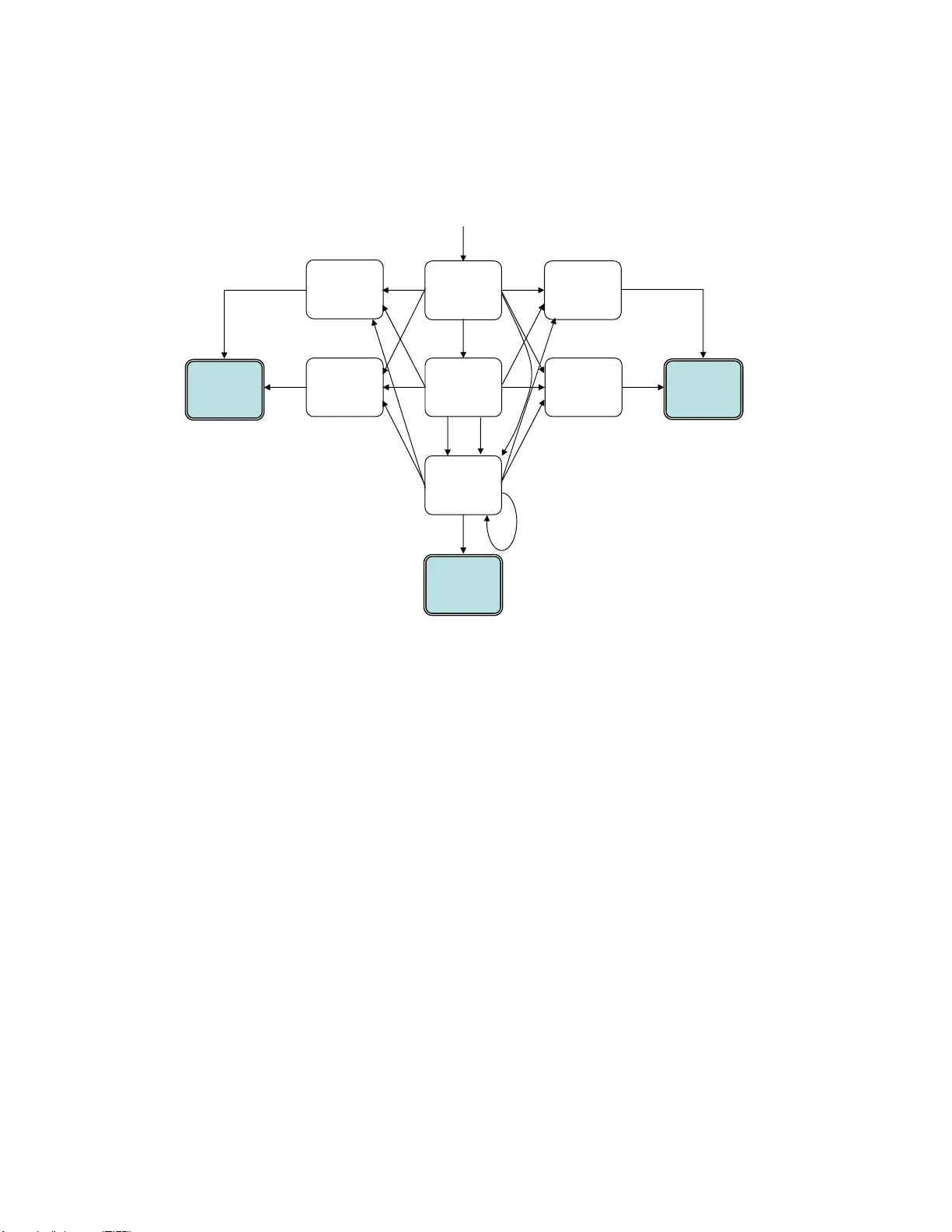
Under conside ratio n for public ation in Theory and Practice of Logic Pro grammi ng 1 Semantics for P ossibilistic Disjunctive Pr ogr ams ∗ JU AN CAR LOS NIEVES Univer sitat P ol itècn ica de Catalu nya Softwar e Departme nt (LSI) c/J or di Gir ona 1-3, E-08034, Barc elona, Spai n ( e-mail: jcnieves@ls i.upc.edu ) MA URICIO OSORIO Univer sidad de las A méricas - Puebla CENTIA Sta. Catarina Mártir , Cholul a, Puebla, 7282 0 México ( e-mail: osoriomauri @gmail.com ) ULISES COR TÉS Univer sitat P ol itècn ica de Catalu nya Softwar e Departme nt (LSI) c/J or di Gir ona 1-3, E-08034, Barc elona, Spai n ( e-mail: ia@lsi.upc.edu ) submitte d Octob er 10, 2008; re vised Mar ch 22 , 2011; accept ed May 23, 2011 Abstract In this paper , a possibilistic disjuncti ve logic programming approach for modeling uncertain, in- complete and inconsistent information is defined. This approach introduces the use of possibilistic disjuncti ve clauses which are able t o capture incomplete information and incomplete states of a kno wledge base at the same time. By considering a possibilistic logic program as a possibilistic logic theory , a construction of a possibilistic logic programming semantic based on answer sets and the proof theory of possibilistic logic is defined. It sho ws that this possibilistic semantics for disjuncti v e logic programs can be char - acterized by a fixed-point operator . It is also shown that the suggested possibilistic semantics can be computed by a resolution algorithm and the consideration of optimal refutations from a possibilistic logic theory . In order to manage i nconsistent possibilistic logic programs, a preference crit erion between in- consistent possibilistic models i s defined; i n addition, the approach of cuts for restoring consistency of an inconsistent possibilistic kno wledg e base is adopted. The approach is illustrated i n a medical scenario. KEYWORDS : Answer Set Programming, Uncertain Information, Possibilistic Reasoning. ∗ This is a revise d and improve d version of the papers Semantic s for P ossibili stic Disjuncti ve Pr ogr ams ap- peared in C . Baral, G. B re wka and J. Sch ipf (Eds), Ninth Int ernati onal Conference on Logic Progra mming and Nonmonotonic Reasoning (LPNMR-07), LNAI 4483. Semantics for P ossibilistic Disjun ctive Logic pro grams which appears in S. Const antini and W . W atson (E ds), Answer Set Programming: Advanta ge in Theory and Implementa tion. 2 J. C. Nie ves, M. Osorio, and U. Cortés 1 Introduction Answer Set Programm ing (ASP) is o ne o f t he m ost successful logic prog ramming ap- proach es in Non-m onoton ic Reasoning and Artificial In telligence applications (Baral 2003; Gelfond 2008). In ( Nicolas et al. 200 6), a possibilistic framework for reasonin g under un- certainty was p ropo sed. This framework is a co mbination between ASP and p ossibilistic logic (Dubois et al. 1994). Possibilistic Lo gic is based on possibilistic the ory in which , at the m athematical lev el, degrees of possibility an d n ecessity are clo sely related to fuz zy sets ( Dubois et al. 1994). Due to the na tural proper ties o f possibilistic logic an d ASP , Nicolas et a l. ’ s ap proach allows us to deal with reason ing that is at the same time non -mono tonic and uncertain . Nicolas et al. ’ s a pproac h is based on the c oncept o f possibilistic stable model which d efines a semantics for possibilistic normal logic pr ograms . An imp ortant pr operty of possibilistic lo gic is that it is axiomatizab le in the necessity- valued case (Dub ois et al. 1994). This means t hat there is a formal system (a set of axioms and infer ences rules) such that from any set of possibilistic fomulæ F and for any po ssi- bilistic formu la Φ , Φ is a logical conseq uence of F if and only if Φ is d eriv able from F in this formal system . A result of this prop erty is th at the in ference in possibilistic logic can be m anaged by both a syntactic approac h (axio ms and inf erence ru les) and a po ssibilistic model theory approach (interpretatio ns and possibilistic distrib utions). Equally impo rtant to con sider is th at the answer set semantics in ference ca n also b e characterized as a logic inference in terms of th e p roof theor y of intuitionistic log ic an d intermediate log ics (Pearce 19 99; Osorio et al. 2004). This prop erty suggests th at o ne can explore extensions o f the answer set semantics by considering the in ference of different logics. Since in (Dubo is et al. 1994) a n axiomatizatio n of po ssibilistic log ic h as been defined, in this paper we explo re the characterization of a possibilistic semantics for capturing pos- sibilistic logic programs in terms o f the proof t heory of possibilistic logic and the stan dard answer set semantics. A nice f eature of this chara cterization is that it is ap plicable to dis- junctive a s well as no rmal possibilistic logic p r o grams , and , with minor modificatio n, to possibilistic logic program s c ontaining a str o ng negation o perator . The use of possibilistic disjuncti ve logic pro grams allo w us to capture incomplete infor - mation and inco mplete states of a kn owledge base at the same time. In o rder to illustrate the u se of possibilistic disjun ctiv e logic progr ams, let u s con sider a scenar io in which un - certain and inc omplete infor mation is always pre sent. This scenario can be observed in the process of huma n or g an tr ansplanting . There ar e se veral factor s t hat make th is process sophisticated and complex. F or instance: • the tran splant acce ptance criteria vary ostensibly amon g tr ansplant teams fro m the same geog raphical area an d substan tially between more distant transplant teams (López- Navidad et al. 199 7). Th is m eans th at the a cceptance c riteria a pplied in one hospital could be in valid or at least q uestionab le in an other hospital. • there are lots of factors th at m ake the diagnosis of an organ dono r’ s disease in the organ recipient un predictab le. For instance , if an organ don or D h as hepati- tis, then a n o rgan recipien t R cou ld b e inf ected by an o rgan of D . Accor ding to (López- Navidad and Caballero 200 3), there are cases in which the infection can oc- Semantics for P ossibilistic Disjunctive Pr o grams 3 cur; h owe ver , the recipient can spon taneou sly clear th e infec tion, for example h ep- atitis. Th is m eans that an organ do nor’ s in fection can b e pr esent o r no n-pres ent in the organ recipient. Of course there a re inf ections which ca n be pre vented by treating the organ recipient post-transplant. • the clinical state of an organ r ecipient can be af fected b y s ev eral factors, for example malfunctio ns of the graft. This means that the clin ical state of an organ recipient can be stable o r unstab le after the graft b ecause the gra ft can have good graft functions , delayed graft functions and terminal insufficient functions 1 . It is importan t to poin t ou t that th e tran splant acceptance criteria rely on the kind of organ (kidney , heart, li ver , etc. ) considered for transpla nt and the clinical situation of the potential organ recipients. Let us consider th e particular case of a kind of kidney tra nsplant with o rgan donors wh o have a kin d of infection, fo r e xample: endo carditis, hep atitis. As already stated, the clin ical situation of the potential organ recipients is rele v ant in the organ tr ansplant process. Hen ce the clinical situation of an organ recipien t is den oted by the pre dicate cs ( t, T ) , such th at t can be stable , unstab le , 0 - ur gency and T d enotes a moment in time. An other imp ortant factor , that is considered , is the state o f the o rgan’ s f unction s. This factor is denoted by the p redicate o ( t, T ) such that t can be terminal- insufficient functions , g ood- graft fun c- tions , d elayed-g raft functions , normal-g raft fu nctions and T d enotes a mo ment in time. Also, the state of an in fection in both the organ r ecipient and the organ d onor are consid- ered, these states are d enoted by the predicates r _ in f ( pres ent, T ) and d _ inf ( pre sent, T ) respectively so that T denotes a mo ment in time. The last p redicate that is pre sented is action ( t, T ) such th at t can b e transplant , wait , po st-transplant tr eatment and T denotes a moment in time. Th is predicate d enotes the possible action s of a docto r . In Figur e 1 2 , a finite state autom ata is presented. In th is autom ata, eac h node repr esents a possible situa- tion w here an o rgan recipient can be foun d and the arrows repr esent the do ctor’ s possible actions. Ob serve that we are assum ing that in the initial state the o rgan r ecipient is clini- cally stable and h e does not h av e an infection ; however , he has a kidney who se function s are terminally insufficient. From the initial state, the docto r’ s actio ns would b e either to perfor m a kidney tr ansplantat or just wait 3 . According to Figure 1 , an organ r ecipient cou ld be found in different situations a fter a graft. The organ recipient may require another gr aft and the state of the in fection could be unpred ictable. This situation m akes the automata of Figure 1 n ondeter ministic. Let us co n- sider a couple of e x tended disjunctiv e clauses which describe some situations presented in Figure 1. 1 Usually , when a doctor says that an or gan has t erminally insuffic ient fun ctions , it mea ns that there a re no clinical treatme nts for improving the organ’ s funct ions. 2 This finite state automa ta was de velope d under the s upervisio n of F rancisco Cab allero M. D. Ph. D. from the Hospital de la Santa Creu I Sant Pau, Barc elona, Spain. 3 In the automata of Figure 1 , we are not consid ering the possibili ty that there is a wait ing list for organs. This wait ing list has dif ferent polici es for assign ing an organ to an orga n recipie nt. 4 J. C. Nie ves, M. Osorio, and U . Cortés CS : stable O :terminal insufficient func. Inf : not present CS : stable O : good graft function Inf : not present CS : unstable O :delayed graft function Inf :not present CS : unstable O :terminal insufficient func. Inf : not present CS : 0_urgency O :terminal insufficient func. Inf : not present CS :dead O :insufficient functional Inf :present wait wait wait transplant CS : stable O : normal graft function Inf : not present wait post transplant treatment transplant transplant transplant transplant CS : stable O : good graft function Inf : present CS : unstable O :delayed graft function Inf : present CS : stable O : normal graft function Inf : present transplant transplant wait post transplant treatment transplant Fig. 1. An automata of states and actions for considering i nfections in kidney o rgan tran s- plant. r _ i nf ( pr esent, T 2) ∨ ¬ r _ inf ( pr esent, T 2) ← action ( transp l ant, T ) , d _ inf ( prese nt, T ) , T 2 = T + 1 . o ( g ood _ g raf t _ f unct, T 2) ∨ o ( delay ed _ g r af t _ f unct, T 2 ) ∨ o ( termi nal _ insuf f ici ent _ f un ct, T 2) ← action ( transp l ant, T ) , T 2 = T + 1 . As syn tactic clarificatio n, we want to point out that ¬ is regard ed as a str o ng n e g ation which is not exactly the negation in c lassical logic. In fact, any atom negated by stro ng negation will b e rep laced by a n ew atom as it is d one in ASP . This means that a ∨ ¬ a cannot be regarded as a logic tautology . Continuing with our medical scenario, we can see that the intende d meaning of the first clause is tha t if the organ don or has an infection , then the infectio n can be pres ent or non - pr esent in th e organ rec ipient after the gra ft, and the intend ed meaning of the second on e is th at the graf t’ s fun ctions can b e: g ood , d elayed an d terminal after the graft. Observe that th ese clauses are n ot captur ing the uncer tainty that is inv olved in each statemen t. For instance, w .r .t. the first clause, one can wish to attach an degree of uncer tainty in o rder to captur e th e uncer tainty that is inv o lved in this statement — keeping in mind that the organ recipient can be inf ected b y th e inf ection of th e do nor’ s organ; h owe ver, the in- fection can be sponta neously cleared b y the organ recip ient as it is the case of hepatitis (López- Navidad and Caballero 200 3). In logic prog ramming literature , on e can find different approac hes for repre senting un - Semantics for P ossibilistic Disjunctive Pr ograms 5 certain information (Kifer and Subrahmanian 1992; Ng and Subrahmanian 1992; L ukasiewicz 1998; Kern-Isberner and Lukasiewicz 20 04; v an Emden 198 6; Rod ríguez-A rtalejo an d Romero-Día z 2008; V an -Nieuwenb orgh et al. 2007; Fitting 1991; Lakshmanan 1994; Baldwin 1987; Du bois et al. 1991; Alsinet and Godo 2002; Alsinet and God o 2000; Alsinet et al. 20 08; Nicolas et al. 2006). Basically , th ese approac hes d iffer in the un derlying notion of u ncertainty and how uncer- tainty values, associated with clau ses and facts, are manage d. U sually the selection o f an approa ch fo r rep resenting u ncertain inf ormation r elies o n the kind of informatio n wh ich has to be repr esented. In psycholo gy literature, on e can find significant obser vations re- lated to the presentation of uncer tain inf ormation . For instan ce, Tversky and Kahn eman have ob served in (Tversky and Kahneman 1982) that peo ple co mmonly use statemen ts such as “ I think that . . . ”, “ chance s ar e . . . ”, “ it is pr obab le that . . . ”, “ it is plausib le that . . . ”, etc. , for supp orting their decisions. In fact, many times, experts in a d omain, such as medicine, appeal to their intuition by using these k inds of statements (Fox and Das 2000; Fox and Modgil 2006). On e can ob serve that these statem ents ha ve adjecti ves which quan - tify the info rmation as a co mmon denom inator . T hese adjectives ar e for examp le: pr o bable , plausible , etc . This suggests that the consideration of lab els for the syntactic repr esentation of uncertain values could help represent uncertain information pervaded b y ambiguity . Since possibilistic log ic defines a proof theo ry in which the streng th o f a co nclusion is the strength o f the weakest argume nt in its proo f, the consider ation of an orde red set of labels fo r captur ing incomp lete states of a knowledge base is f easible. The only form al requirem ent is that this set o f adjectives /labels must be a finite set. For instance, fo r the giv en medical scenario, a transplan t co ordinato r 4 can sugg est a set of labels in order to quantify a me dical knowledge base and, of course, to d efine an order between those labels. By considering those labels, we can hav e po ssibilistic clauses as: probable : r _ i nf ( pre sent, T 2 ) ∨ ¬ r _ inf ( pr esent, T 2) ← action ( transp l ant, T ) , d _ inf ( pr esent, T ) , T 2 = T + 1 . Inform ally speakin g, the rea ding of this clause is: it is p robab le that if the or g an donor h as an infection, then the or gan r ecip ient can be infected or not after a graft. As we can see, po ssibilistic prog rams with ne gation a s failure repr esent a rich class of logic p rogram s which are especially adapted to automated re asoning when th e a vailable informa tion is pervaded b y ambigu ity . In this p aper, we extend the work of two earlier pap ers (Nie ves et al. 2007 a ; Nieves et al. 2007b) in order to obtain a simp le log ic character ization of a po ssibilistic logic progr amming se- mantics for captu ring possibilistic progra ms; this seman tics is applicab le to disjunctive as well as nor mal lo gic pro grams. As we h av e alread y m entioned , th e constructio n of th e possibilistic sem antics is b ased on the proof theory of possibilistic logic. Following this approa ch: • W e defin e the inf erence P L . This inferen ce takes as ref erences the standard defi- nition of th e answer set sema ntics and the inferen ce ⊢ P L which correspo nds to the inference of possibilistic logic. 4 A transplant coordina tor is an expert in all of the processes of transplan ts (López -Navi dad et al . 1997). 6 J. C. Nie ves, M. Osorio, and U . Cortés • The possibilistic seman tics is defined in ter ms of a syntactic reduction, P L and the concept of i-gr ea test set . • Since th e inf erence of p ossibilistic log ic is computab le by a generalizatio n of the classical resolution rule, it is shown that the defined po ssibilistic sema ntics is com- putable by inferring optimal refutation s. • By con sidering the princip le of pa rtial evaluation , it is shown that th e given possi- bilistic semantics can be characterized by a possibilistic partial ev aluation opera tor . • Finally , since the possibilistic logic u ses α -cu ts to man age inco nsistent possibilistic knowledge bases, an a pproac h of cuts f or restoring consistency of an incon sistent possibilistic knowledge base is adopted. The r est o f the paper is divided as fo llows: In §2 we give all the ba ckgrou nd an d nec- essary notation. In §3, the syntax of our possibilistic fram ew o rk is presented . In §4, th e semantics fo r captu ring the possibilistic logic prog rams is d efined. Also it is shown that this semantics is co mputab le b y considering a possibilistic resolution rule and partial ev al- uation. I n §5, some criteria for m anaging inc onsistent possibilistic log ic pr ograms are de- fined. In §6, we present a small discussion w .r .t. related approaches to o ur w o rk. Finally , in the last section, we present our conclusions and future work. 2 Background In this section we introdu ce the necessary termin ology and re lev ant definition s in o rder to have a self-con tained document. W e a ssume that the reader is familiar with basic concepts of classic logic , logic pr ogramming and lattices . 2.1 Lattices and order W e start by defin ing some f undam ental definitio ns of lattice theo ry (see (Da vey and Priestly 2 002) for more details). Definition 1 Let Q be a set. An order (or partial ord er) on Q is a bin ary relation ≤ on Q such that, for all x, y , z ∈ Q , (i) x ≤ x (ii) x ≤ y and y ≤ x im ply x = y (iii) x ≤ y and y ≤ z imply x ≤ z These condition s ar e referred to, respectively , as refle x ivity , antisymmetry and transiti v ity . A set Q equipp ed with an order relation ≤ is said to be an or dered set (or partial ordered set). It will be denoted by ( Q , ≤ ). Definition 2 Let ( Q , ≤ ) be an or dered set a nd let S ⊆ Q . An element x ∈ Q is an upp er bo und o f S if s ≤ x for all s ∈ S . A lower bound is defined du ally . The set o f all u pper b ounds of S is d enoted by S u (read as ‘ S u pper’) and the set of all lower b ounds by S l (read as ‘ S lower’). Semantics for P ossibilistic Disjunctive Pr ograms 7 If S u has a min imum e lement x , then x is called the least upp er bound ( LU B ) of S . Equiv a lently , x is the least upper bound of S if (i) x is an upp er bound of S , and (ii) x ≤ y for all upper bound y of S . The least upper bound of S exists if and only if there e x ists x ∈ Q such that ( ∀ y ∈ Q )[(( ∀ s ∈ S ) s ≤ y ) ⇐ ⇒ x ≤ y ] , and this characterizes the LU B of S . Dually , if S l has a greatest element, x , then x is called the greatest lower bound ( G LB ) of S . Since th e least element and the greatest elemen t are unique, LU B and G LB are uniq ue when the y exist. The least upper boun d of S is called the suprem um of S an d it is deno ted by sup S ; the greatest lower b ound of S is called the infimum of S and it is denoted by inf S. Definition 3 Let ( Q , ≤ ) be a non-em pty o rdered set. (i) If sup { x, y } and inf { x, y } exist for all x, y ∈ Q , then Q is called lattice. (ii) If sup S and inf S exist for all S ⊆ Q , then Q is called a comp lete lattice. Example 1 Let us co nsider th e set of labels Q := { C er tain , C onf ir med, P robabl e , P l ausibl e, S uppor ted, O pen } 5 and let be a partial order such that th e following set of rela- tions ho lds: { Op en S up ported , S uppor ted P l ausib l e , S uppor ted P rob abl e , P robabl e C onf irm ed , P l ausibl e C onf ir med , C onf irme d C er tain } . A graphic representatio n of S according to is showed in Figure 2. It is no t difficult to see that ( Q , ) is a lattice and further it is a complete lattice. 2.2 Logic programs: Syntax The language of a propositional logic has an alphabet consisting of (i) proposition symbols: ⊥ , p 0 , p 1 , ... (ii) connectives : ∨ , ∧ , ← , ¬ , not (iii) auxiliary symbols : ( , ) in which ∨ , ∧ , ← are b inary-p lace conn ectives , ¬ , not a re unary -place con nective an d ⊥ is zero-ary co nnective. The pr oposition sym bols and ⊥ stand for the indecom posable propo sitions, which we call atoms , or atomic p r oposition s . Atoms negated by ¬ will b e called extended atoms . 5 This set of la bels was taken from (Fox and Modgil 2006). In that paper , the authors ar gue that we can constru ct a set of la bels (they call those: moda litie s ) in a way that this set pr ovide s a simple scale for ordering the claims of our belie fs. W e will use this kind of labels for quantifying the degree of uncerta inty of a stat ement. 8 J. C. Nie ves, M. Osorio, and U . Cortés Fig. 2. A grap hic r epresentation of a la ttice where the fo llowing relations ho lds: { O pen S upp orted , S uppor ted P la usibl e S uppor ted P rob abl e , P robab l e C onf ir med , P l ausibl e C onf ir med , C onf irme d C er tai n } . Remark 1 W e will use the con cept o f atom withou t pay ing atten tion to whether it is an extend ed atom or not. The n egation sign ¬ is regarded as the so called str ong negation by the ASP’ s literatu re and the negatio n not as the negation as failu r e . A literal is an atom, a , o r the negation of an ato m n ot a . Given a set of atoms { a 1 , ..., a n } , we write not { a 1 , ..., a n } to d enote th e set of literals { not a 1 , ..., not a n } . An extend ed disjuncti ve clause, C , is denoted: a 1 ∨ . . . ∨ a m ← a m +1 , . . . , a j , not a j +1 , . . . , not a n in which m ≥ 0 , n ≥ 0 , m + n > 0 , each a i is an atom 6 . When n = 0 and m > 0 the clause is an ab breviation of a 1 ∨ . . . ∨ a m ← ; clau ses o f t hese forms are some times written just as a 1 ∨ . . . ∨ a m . When m = 0 the clause is an abbr eviation of: ← a 1 , . . . , a j , not a j +1 , . . . , not a n Clauses o f this fo rm are called con straints (th e rest, non -constraint clauses). An extended disjunctive program P is a finite set of e xten ded disjuncti ve clauses. By L P , we de note the set of atoms in the language of P . Sometimes we den ote an extended d isjunctive clause C by A ← B + , not B − , A con- tains all the head l iterals, B + contains all the positi ve body literals and B − contains all the negativ e b ody literals. When B − = ∅ , the cla use is c alled positi ve disjuncti ve clause. A set of positiv e disjun ctiv e clauses is ca lled a p ositiv e disjunc ti ve logic progra m. When A is a singleton set, the clause can b e regarded as a normal c lause. A no rmal log ic prog ram is a finite set of n ormal clauses. Finally , when A is a singleto n set and B − = ∅ , the clause can 6 Notice that these atoms can be ex tended atoms . Semantics for P ossibilistic Disjunctive Pr ograms 9 also be regarde d as a de finite clause. A finite set of definite clauses is called a d efinite lo gic progr am. W e will ma nage the stron g negation ( ¬ ), in o ur log ic p rogram s, a s it is don e in ASP (Baral 2003). Basically , e ach extended atom ¬ a is rep laced by a new atom symbo l a ′ which does n ot appear in the lan guage o f the pro gram. For i nstance, let P be the no rmal program: a ← q . q . ¬ q ← r . r . Then replacing each extended atom by a ne w atom symbo l, we will ha ve: a ← q . q . q ′ ← r . r . In ord er not to allow models with compleme ntary ato ms, that is q and ¬ q , a constra int of the f orm ← q , q ′ is usually added to the logic progr am. In our appr oach, this con straint can be o mitted in order to a llow mo dels with co mplemen tary atoms. In fact, the u ser could add/omit this constraint without losing generality . Formulæ are constru cted as usual in classic logic by the conn ectives : ∨ , ∧ , ← , ∼ , ⊥ . A theory T is a finite set o f for mulæ. By L T , we d enote the set of atoms that o ccur in T . When we treat a logic program as a theory , • each ne gative literal not a is replaced by ∼ a such that ∼ is regarded as th e negation in classic logic. • each con straint ← a 1 , . . . , a j , not a j +1 , . . . , not a n is rewritten accord ing to the formu la a 1 ∧ · · · ∧ a j ∧ ∼ a j +1 ∧ · · · ∧ ∼ a n → ⊥ . Giv en a s e t of proposition sy mbols S and a th eory Γ in a logic X . If Γ ⊢ X S if and only if ∀ s ∈ S Γ ⊢ X s . 2.3 Interpretations and models In th is section, we define some relev ant concep ts w .r .t. semantics. Th e first basic concept that we introduce is interpr etatio n . Definition 4 Let T be a theory , an interpre tation I is a map ping f rom L T to { 0 , 1 } meeting th e condi- tions: 1. I ( a ∧ b ) = min { I ( a ) , I ( b ) } , 2. I ( a ∨ b ) = max { I ( a ) , I ( b ) } , 3. I ( a ← b ) = 0 if and only if I ( b ) = 1 and I ( a ) = 0 , 4. I ( ∼ a ) = 1 − I ( a ) , 5. I ( ⊥ ) = 0 . It is standard to pr ovide in terpretation s on ly in terms o f a mapp ing from L T to { 0 , 1 } . Moreover , it is easy to pr ove that th is mapp ing is unique by vir tue of the definition by recur- sion (v a n Dalen 1994). Also, it is standard to use sets of atom s to rep resent interpretations. The set correspond s exactly to those atoms that ev alua te to 1. 10 J. C. Nie ves, M. Osorio, and U . Cortés An interpre tation I is called a (2-valued) m odel of the logic pro gram P if a nd only if for ea ch clau se c ∈ P , I ( c ) = 1 . A theory is consistent if it admits a mo del, o therwise it is called inco nsistent. Given a theory T and a formu la ϕ , we say th at ϕ is a logical consequen ce of T , d enoted by T | = ϕ , if every mo del I o f T holds that I ( ϕ ) = 1 . It is a well known result that T | = ϕ if and on ly if T ∪ {∼ ϕ } is inco nsistent (v an Dalen 1994). W e say that a model I of a theory T is a minimal model if a mod el I ′ of T different from I such that I ′ ⊂ I d oes not exist. Maximal models are defined in the analogous form. 2.4 Logic programm ing semantics In this section, the a nswer set semantics is pr esented. Th is semantics r epresents a two- valued semantics approach. 2.4.1 Answer set semantics By u sing ASP , it is possible to describe a compu tational pro blem as a logic prog ram whose answer sets correspond to the solutions of the gi ven problem. It represents one of the most successful appro aches of no n-mo notonic reason ing of the last two decad es ( Baral 2003). The number of applications of this approach h av e increased due to th e effi cient implemen- tations of the answer set solvers that exist. The an swer set semantics was first defined in term s o f the so called Ge lfond-Lifschitz r edu ction ( Gelfond and Lifschitz 1988) an d it is usually studied in the con text of syntax depend ent transformations on pr ograms. The following definition of an answer set for ex- tended disjunctive logic pr ogram s gene ralizes the definitio n p resented in ( Gelfond and Lifschitz 1988) and it was presented in (Gelf ond and Lifschitz 1991): Let P be any extended disjunc tiv e logic p rogram . For any set S ⊆ L P , let P S be the p ositiv e pro gram ob tained fro m P b y deleting (i) each rule that has a formu la not a in its body with a ∈ S , and then (ii) all formulæ of the form not a in the bod ies of the remaining rules. Clearly P S does n ot contain not (th is means th at P S is eith er a p ositiv e disjunctive logic progr am or a definite logic p rogram ), hence S is called an answer set of P if a nd o nly if S is a minimal mo del of P S . In order to illustrate this definition , let us consider the following example: Example 2 Let us consider the set of atoms S := { b } and the following normal logic program P : b ← not a . b . c ← not b . c ← a . W e can see that P S is: b . c ← a . Notice th at this pr ogram has three mode ls: { b } , { b , c } and { a, b, c } . Since the minimal model among these models is { b } , we can say that S is an answer set of P . In the an swer set definition , we will normally om it the r estriction that if S has a pair of compleme ntary literals then S := L P . T his mean s that we allow for the possibility th at Semantics for P ossibilistic Disjunctive Pr ograms 11 an answer set could have a pair of complem entary atoms. For instance, let us co nsider the progr am P : a . ¬ a . b . then, the on ly answer set o f this pro gram is : { a, ¬ a, b } . In Section 5, th e incon sistency in possibilistic program s is discussed. It is w o rth mentioning that in literature th ere are se veral forms for h andling an inconsis- tency pr ogram (Baral 2003). For instance, by applying the original d efinition (Gelfond and Lifschitz 1991) the only answer set of P is: { a, ¬ a, b, ¬ b } . On the other han d, the DL V system (DL V 1996) returns no models if the program is inconsistent. 2.5 P ossibilistic Logic Since in our ap proach is based on the proof theory of po ssibilistic logic, in this section, we present an axiomation of possibilistic logic for the case of necessity-valued f ormulæ. Possibilistic logic is a weighted logic in troduce d and developed in the mid-1980s, in the setting of artificial intelligence, with the goal of dev elo ping a simple yet rigo rous approach to automated reasoning from uncertain or prioritized incomple te in formatio n. Possi bilistic logic is especia lly adapted to automated reasoning when the av ailab le inform ation is p er- vaded by ambiguities. In fact, po ssibilistic logic is a natur al extension of classical log ic in which the notion of total order/p artial order is embedded in the l ogic. Possibilistic Logic is based on p ossibility th eory . Possibilistic theor y , as its name im- plies, de als with th e p ossible rath er th an p robab le values of a variable with p ossibility being a matter of degree. One merit of possibilistic theo ry is at one and the same tim e to represent i mprecision (in the form of fuzzy sets) and quantity uncertainty (through the pair of numbe rs th at measure possibility and necessity ). Our study in possibilistic logic is devoted to a fragmen t o f possibilistic logic, in wh ich knowledge b ases are only necessity-quantified statements. A necessity-v alued formula is a pair ( ϕ α ) in which ϕ is a classical logic formu la and α ∈ (0 , 1 ] is a p ositiv e numbe r . The pair ( ϕ α ) expre sses that the formula ϕ is certain at least to the lev el α , that is N ( ϕ ) ≥ α , in which N is a necessity measure modeling our possibly incomp lete state knowledge (Dubois et al. 1994). α is no t a probab ility (like it is in p robability theo ry), but it indu ces a certainty (or confiden ce) scale. This value is determ ined by the expert providin g th e knowledge base. A necessity-valued knowledge base is th en defined as a finite set (that is to say a conjunctio n) o f necessity-valued formulæ. The following properties hold w .r .t. necessity-valued formulæ: N ( ϕ ∧ ψ ) = min ( { N ( ϕ ) , N ( ψ ) } ) (1) N ( ϕ ∨ ψ ) ≥ max ( { N ( ϕ ) , N ( ψ ) } ) (2) if ϕ ⊢ ψ then N ( ψ ) ≥ N ( ϕ ) (3) Dubois et al. , in (Dub ois et al. 1994) intro duced a formal system for necessity-valued logic which is based on the following axioms schemata (propositional case): 12 J. C. Nie ves, M. Osorio, and U . Cortés (A1) ( ϕ → ( ψ → ϕ ) 1) (A2) (( ϕ → ( ψ → ξ )) → (( ϕ → ψ ) → ( ϕ → ξ )) 1) (A3) (( ¬ ϕ → ¬ ψ ) → (( ¬ ϕ → ψ ) → ϕ ) 1) Inferen ce rules: (GMP) ( ϕ α ) , ( ϕ → ψ β ) ⊢ ( ψ min { α, β } ) (S) ( ϕ α ) ⊢ ( ϕ β ) if β ≤ α According to Du bois et al. , in (Du bois et al. 1994), basically we n eed a co mplete lat- tice to express the levels of un certainty in Possibilistic Log ic. Du bois et a l. extended the axioms schemata and th e infe rence rules for co nsidering p artially ord ered sets. W e sh all denote by ⊢ P L the inference u nder Possibilistic Logic w ithout paying attention to wh ether the ne cessity-valued formulæ are u sing a tota lly ordered set o r a pa rtially o rdered set for expressing the l ev e ls of uncertainty . The pro blem of inferr ing automatically the nec essity-value of a classical f ormula fro m a po ssibilistic b ase was solved b y an extended version of res olution for possibilistic logic (see (Dubois et al. 1994) for details). One of the main principles of possibilistic logic is that: Remark 2 The strength of a conclusion is the strength of the weakest argument used in its proof. According to Dubois and Prade (Dubois and Prade 2004), th e contribution of possibilis- tic logic setting is to relate this prin ciple (measur ing the validity of an inferen ce ch ain by its we akest link) to f uzzy set-based necessity measures in the fram ew o rk o f Zadeh ’ s possibilistic theory , s ince the following pattern then holds: N ( ∼ p ∨ q ) ≥ α and N ( p ) ≥ β imp ly N ( q ) ≥ min ( α, β ) This interpretive setting p rovides a semantic justification to the claim that the weight at- tached to a co nclusion should be th e weakest amon g th e weights attached to the form ulæ in volved i n the deriv ation . 3 Syntax In this section, the gen eral sy ntax for po ssibilistic disjun ctiv e logic pr ograms will be pre- sented. This s y ntax is based on the standard syntax o f e x tended disjuncti ve logic programs (see Section 2.2). W e start by definin g some concep ts f or managing the possibilistic v alu es of a possibilis- tic knowledge base 7 . W e want to point ou t that in the whole do cument only finite lattices are consider ed. Th is assumption was made b ased on the recog nition tha t in real applica- tions we will ra rely h av e an infin ite set of labels f or expr essing the incom plete state of a knowledge base. A possibilistic atom is a pair p = ( a, q ) ∈ A × Q , i n which A is a finite set of atoms and 7 Some concept s presented in this section extend some terms presente d in (Nicolas et al. 2006). Semantics for P ossibilistic Disjunctive Pr ograms 13 ( Q , ≤ ) is a lattice. Th e projection ∗ to a possibilistic atom p is defined as follows: p ∗ = a . Also gi ven a set of possibilistic ato ms S , ∗ over S is defined as f ollows: S ∗ = { p ∗ | p ∈ S } . Let ( Q , ≤ ) be a lattice. A possibilistic disjuncti ve clause R is o f the form: α : A ← B + , not B − in which α ∈ Q a nd A ← B + , not B − is an extend ed d isjunctive clause as defined in Section 2.2. The pro jection ∗ for a possibilistic clau se is R ∗ = A ← B + , not B − . On the other hand, the projectio n n f or a possibilistic clau se is n ( R ) = α . This projection denotes the d egree o f n ecessity captured by the certainty level of the info rmation describ ed by R . A possibilistic constraint C is of the form : ⊤ Q : ← B + , not B − in which ⊤ Q is the top o f the lattice ( Q , ≤ ) and ← B + , not B − is a con straint as defined in Section 2.2. The projection ∗ for a p ossibilistic constraint C is: C ∗ = ← B + , not B − . Observe that the possibilistic constraints h ave the top of th e lattice ( Q , ≤ ) as an unc er- tain value, this assumption is due to the fact that similar a con straint in standa rd ASP , the purpo se of a po ssibilistic constraint is to eliminate possibilistic mo dels. Hen ce, it can be assumed that there is no do ubt ab out the veracity o f the inform ation captu red b y a pos- sibilistic co nstraint. Howe ver, as in standard ASP , one can define p ossibilistic co nstraints of the f orm: α : x ← B + , not B − , not x suc h that x is an atom which is n ot used in any other possibilistic clause an d α ∈ Q . This means that the user can define p ossibilistic constraints with dif ferent le vels of certainty . A possibilistic disjuncti ve logic program P is a tuple of the form h ( Q , ≤ ) , N i , in which N is a finite set of possibilistic d isjunctive clauses a nd possibilistic c onstraints. Th e gen - eralization of ∗ over P is as follows: P ∗ = { r ∗ | r ∈ N } . No tice that P ∗ is an extend ed disjunctive program . When P ∗ is a n ormal program, P is called a po ssibilistic normal pr o- gram. Also, when P ∗ is a positive disjuncti ve pr ogram, P is called a p ossibilistic positive logic progr am and so on. A giv en set of possibilistic disjunctive clau ses { γ , . . . , γ } is also represented as { γ ; . . . ; γ } to avoid ambigu ities with the u se of the comm a in the bod y o f the clauses. Giv en a possibilistic disjunc ti ve logic pr ogram P = h ( Q , ≤ ) , N i , we defin e the α -cut and the strict α -cut o f P , de noted respectively by P α and P α , by P α = h ( Q , ≤ ) , N α i such that N α = { c | c ∈ N and n ( c ) ≥ α } P α = h ( Q , ≤ ) , N α i such that N α = { c | c ∈ N and n ( c ) > α } Example 3 In order to illustrate a p ossibilistic progr am, let us go b ack to our scenar io described in Section 1. Let ( Q , ) be the lattice of Figu re 2 such that the relation A B means that A is less possible th an B . The po ssibilistic program P := h ( Q , ) , N i will be the following set of possibilistic clauses: It is prob able that if the organ do nor has an infection, th en the organ recip ient can b e in- fected or not after a graft: probable : r _ i nf ( pre sent, T 2 ) ∨ ¬ r _ inf ( pr esent, T 2) ← action ( transp l ant, T ) , 14 J. C. Nie ves, M. Osorio, and U . Cortés d _ inf ( pr esent, T ) , T 2 = T + 1 . It is confirmed that the organ’ s f unctions can be: good, delayed and terminal after a graft. confirmed : o ( g ood _ g r af t _ f u nct, T 2) ∨ o ( del ay e d _ gr af t _ f unct, T 2 ) ∨ o ( termi nal _ insuf f ici ent _ f un ct, T 2) ← action ( tr anspl ant, T ) , T 2 = T + 1 . It is confirmed tha t if the organ’ s functions are terminally insufficient then a transplanting is necessary . confirmed : action ( transp l ant, T ) ← o ( term inal _ insuf f i cient _ f u nct, T ) . It is plausible that the clinical situation of the organ recip ient can be stable if the functions of the graft are good. plausible : cs ( stabl e, T ) ← o ( g ood _ g r af t _ f unct, T ) . It is plausible th at the clinical situation of the organ recip ient can be unstable if the func- tions of the graft are delayed. plausible : cs ( unstabl e, T ) ← o ( delay ed _ g r af t _ f unct, T ) . It is plausible th at the clinical situa tion o f the organ r ecipient can be of 0- urgency if the function s o f the graft are terminally insufficient after the graft. plausible : cs ( 0-urgency , T 2) ← o ( ter minal _ insu f f icient _ f unct, T 2) , action ( tr anspl ant, T ) , T 2 = T + 1 . It is certain that the doctor cannot do two actions at the same time. certain : ← action ( tr anspl a nt, T ) , action ( wait, T ) . It is certain that a transplant cannot be done if the organ recipient is dead. certain : ← action ( tr anspl a nt, T ) , cs ( dead, T ) . The initial state of the automata o f Figur e 1 is captured by the following possibilistic clauses: certain : d _ inf ( pres ent, 0 ) . certain : ¬ r _ i nf ( pre sent, 0) . certain : o ( terminal _ insu f f icient _ f unct, 0) . certain : cs ( stabl e, 0 ) . Semantics for P ossibilistic Disjunctive Pr ograms 15 4 Semantics In §3, the syntax fo r any possibilistic d isjunctive pro gram was intro duced, Now , in this section, a semantics for c apturing these programs is stud ied. This semantics will be defined in term s of the standa rd definition of the a nswer set semantics (§ 2.4.1) and the pro of theory of possibilistic logic (§2.5). As sets o f atoms are co nsidered as interp retations, two basic operatio ns between sets of possibilistic atoms are d efined; also a relation of o rder between them is defined: Given a finite set of atoms A and a lattice ( Q , ≤ ) , P S ′ = 2 A×Q and P S = P S ′ \ { A | A ∈ P S such that x ∈ A and C ar dinal ity ( { ( x, α ) | ( x, α ) ∈ A } ) ≥ 2 } 8 Observe that P S ′ is the finite set of all the possibilistic ato m sets indu ced b y A and Q . Inform ally s p eaking , P S is the sub set of P S ′ such that eac h set of P S has no ato ms with different uncertain v alue . Definition 5 Let A be a finite set of atoms and ( Q , ≤ ) be a lattice. ∀ A, B ∈ P S , we define. A ⊓ B = { ( x, G LB ( { α, β } ) | ( x, α ) ∈ A ∧ ( x, β ) ∈ B } A ⊔ B = { ( x, α ) | ( x, α ) ∈ A and x / ∈ B ∗ } ∪ { ( x, α ) | x / ∈ A ∗ and ( x, α ) ∈ B } ∪ { ( x, LU B ( { α, β } ) | ( x, α ) ∈ A a nd ( x, β ) ∈ B } . A ⊑ B ⇐ ⇒ A ∗ ⊆ B ∗ , and ∀ x, α, β , ( x, α ) ∈ A ∧ ( x, β ) ∈ B then α ≤ β . This definition is almost the same a s Definition 7 p resented in (Nicolas et al. 2006). Th e main difference is that in Definition 7 from (Nicolas et al. 2006) the oper ations ⊓ and ⊔ are defined in terms of the operator s min and max instead of the operators G LB and LU B . Hence, the f ollowing pro position is a direct resu lt of Prop osition 6 of (Nicolas et al. 2006). Pr oposition 1 ( P S , ⊑ ) is a complete lattice. Before moving on, let us define the concept of i-gr eatest set w .r .t. P S as follows: Gi ven M ∈ P S , M is an i-gr eatest set in P S iff ∄ M ′ ∈ P S su ch tha t M ⊑ M ′ . F or instance, let P S = { { ( a, 1 ) } , { ( a, 2) } , { ( a, 2) , ( b, 1) } , { ( a, 2) , ( b, 2) }} . One can see tha t P S has two i-greatest sets: { ( a, 2 ) } and { ( a, 2) , ( b, 2 ) } . The conce pt of i-g reatest set will play a key role in the d efinition of possibilistic answer sets in or der to infer po ssibilistic an swer sets with optimal certainty values. 4.1 P ossibilistic answer set semantics Similar to the definition of answer set semantics, th e p ossibilistic answer set semantics is defined in terms of a syntactic r eduction . This r eduction is in spired by the Ge lfond- Lifschitz reduction. 8 C ardinal ity is a function which returns the cardinal ity of a s et. 16 J. C. Nie ves, M. Osorio, and U . Cortés Definition 6 ( Reductio n P M ) Let P = h ( Q , ≤ ) , N i be a possibilistic d isjunctive lo gic progra m, M be a set of atoms. P reduced by M is the p ositiv e possibilistic disjuncti ve logic program: P M := { ( n ( r ) : A ∩ M ← B + ) | r ∈ N , A ∩ M 6 = ∅ , B − ∩ M = ∅ , B + ⊆ M } in which r ∗ is of the form A ← B + , not B − . Notice that ( P ∗ ) M is not e xa ctly equal to the Gelfond -Lifschitz reduction. For instance, let us consider the following programs: P : P { c,b } : ( P ∗ ) { c,b } : α 1 : a ∨ b . α 1 : b . a ∨ b . α 2 : c ← not a . α 2 : c . c . α 3 : c ← not b . The p rogram P { c,b } is obtained from P and { c, b } by a pplying Definition 6 and the pr o- gram ( P ∗ ) { c,b } is ob tained fr om P ∗ and { c, b } by applying the Gelf ond-L ifschitz r educ- tion. Observe that the reduction of Definition 6 removes from the head o f the possibilistic disjunctive clauses any atom which does not b elong to M . As we will see in Sectio n 4.2, this prop erty will b e helpfu l for characterizin g the po ssibilistic answer set in term s of a fixed-point o perator . I t is worth m entioning that the red uction ( P ∗ ) M also has a different effect from the Gelfond -Lifschitz red uction in the class of n ormal progr ams. This differ- ence is illustrated in the following programs: P : P { a } : ( P ∗ ) { a } : α 1 : a ← not b . α 1 : a . a . α 2 : a ← b . a ← b . α 3 : b ← c . b ← c . Example 4 Continuing with our medical scenario d escribed in the introd uction, let P be a groun d in- stance of the possibilistic program presented in Example 3: probable : r _ inf ( pr e sent, 1) ∨ no _ r _ inf ( pr esent, 1) ← action ( transpl ant, 0) , d _ inf ( pr es ent, 0) . confirmed : o ( g ood _ g r af t _ f unct, 1) ∨ o ( de lay ed _ gr af t _ f unct, 1) ∨ o ( ter minal _ insuf f icient _ f unct, 1) ← action ( tr anspl ant, 0) . confirmed : action ( tr anspl ant, 0) ← o ( ter minal _ insuf f icient _ f unct, 0) . plausible : cs ( stabl e, 1) ← o ( g ood _ g r af t _ f unct, 1) . plausible : cs ( unstable , 1) ← o ( delay ed _ g r af t _ f unct, 1) . plausible : cs ( 0-urgenc y , 1) ← o ( t er minal _ insuf f icient _ f unct, 1) , action ( tr anspl ant, 0) . certain : ← action ( tr a nspla nt, 0) , action ( wait, 0) . certain : ← action ( tr a nspla nt, 0) , cs ( dead, 0) . certain : d _ inf ( pr esent, 0) . certain : no _ r _ inf ( pr ese nt, 0) . Semantics for P ossibilistic Disjunctive Pr ograms 17 certain : o ( ter minal _ insuf f icient _ f unct, 0) . certain : cs ( stable , 0) . Observe that the variables of time T and T 2 were in stantiated with the values 0 and 1 re- spectiv ely; mo reover , ob serve that the atoms ¬ r _ inf ( pr ese nt, 0) and ¬ r _ inf ( pr esent, 1) were replaced by no _ r _ i nf ( pre sent, 0) an d no _ r _ inf ( pr esent, 1) re spectiv ely . This change was applied in order to manage the strong negation, ¬ . Now , let S be the fo llowing po ssibilistic set: S = { ( d _ inf ( pr ese nt, 0 ) , cer tain ) , ( no _ r _ inf ( pr esen t, 0) , certai n ) , ( o ( termin al _ insu f f icient _ f unct, 0) , cer tain ) , ( cs ( stabl e, 0) , cer tain ) , ( action ( tra nspl ant, 0) , conf ir med ) , ( o ( g ood _ g r af t _ f unct, 1) , conf ir med ) , ( cs ( stabl e, 1) , pl ausi bl e ) , ( no _ r _ i nf ( pre sent, 1) , pr obabl e ) } . One can see that P S ∗ is: probable : n o _ r _ inf ( pr esent, 1) ← a ction ( tr anspl ant, 0) , d _ inf ( pr e sent, 0) . confirmed : o ( g ood _ g r af t _ f unct, 1) ← action ( tra nspla nt, 0) . confirmed : action ( tr anspl ant, 0) ← o ( ter minal _ insuf f icient _ f unct, 0) . plausible : cs ( stabl e, 1) ← o ( g ood _ g r af t _ f unct, 1) . plausible : cs ( unstable , 1) ← o ( delay ed _ g r af t _ f unct, 1) . plausible : cs ( 0-urgenc y , 1) ← o ( t er minal _ insuf f icient _ f unct, 1) , action ( tr anspl ant, 0) . certain : ← action ( tr a nspla nt, 0) , action ( wait, 0) . certain : ← action ( tr a nspla nt, 0) , cs ( dead, 0) . certain : d _ inf ( pr esent, 0) . certain : no _ r _ inf ( pr ese nt, 0) . certain : o ( ter minal _ insuf f icient _ f unct, 0) . certain : cs ( stable , 0) . Once a possibilistic logic program P has been reduced by a set of possibilistic atoms M , it is p ossible to test whether M is a possibilistic answer set of the progr am P . For this end, we con sider a syn tactic ap proach ; meaning that it is based o n the proof theory of possibilis- tic lo gic. L et us rememb er that the possibilistic logic is axiomatizable (Dubo is et al. 1994); hence, the inf erence in possibilistic logic can b e manag ed by bo th a syntac tic appro ach (axioms an d in ference rules) and a possibilistic model theory ap proach (in terpretation s and possibilistic distributions). Since the c ertainty value of a possibilistic disjunctive clause can belong to a partially ordered set, the inferen ce rules of possibilistic log ic intro duced in Section 2.5 have to be generalized in terms of bounds. The generalization of GMP and S is defined as follows: (GMP*) ( ϕ α ) , ( ϕ → ψ β ) ⊢ ( ψ GLB { α, β } ) (S*) ( ϕ α ) , ( ϕ β ) ⊢ ( ϕ γ ) , where γ ≤ GLB { α, β } Observe that th ese infer ence rules are essentially the same as the infe rence rules in troduce d in Section 2.5; howe ver, they are defin ed in terms of GLB to lead with certainty values which are not comparable (in Example 6 these inference rules are illustrated). 18 J. C. Nie ves, M. Osorio, and U . Cortés Once we hav e defin ed GM P ∗ and S ∗ , the inferen ce P L is defined as follows: Definition 7 Let P = h ( Q , ≤ ) , N i b e a possibilistic disjunctive logic pro gram and M ∈ P S . • W e write P P L M wh en M ∗ is an answer set of P ∗ and P M ∗ ⊢ P L M . One can see that P L is defin ing a joint infe rence between the answer set semantics and the pr o of theory of possibilistic logic . Let us consider the following e xample. Example 5 Let P = h ( Q , ≤ ) , N i be a possibilistic disjuncti ve logic pr ogram such th at Q = { 0 . 1 , . . . , 0 . 9 } , ≤ denotes th e stand ard relatio n in real number s and N is the following set of possi- bilistic clauses: 0 . 6 : a ∨ b . 0 . 4 : a ← not b. 0 . 8 : b ← not a. It is easy to see th at P ∗ has two answer sets: { a } and { b } . On the other han d, one can see that P { a } ⊢ P L { ( a, 0 . 6 ) } , P { a } ⊢ P L { ( a, 0 . 4 ) } , P { b } ⊢ P L { ( b, 0 . 6) } and P { b } ⊢ P L { ( b, 0 . 8) } . This means that P P L { ( a, 0 . 6 ) } , P P L { ( a, 0 . 4 ) } , P P L { ( b, 0 . 6) } and P P L { ( b, 0 . 8) } . The b asic idea of P L is to identify cand idate sets of possibilistic atom s in order to con- sider them as po ssibilistic answer sets. Th e following proposition formalizes an impor tant proper ty of P L . Pr oposition 2 Let P = h ( Q , ≤ ) , N i be a possibilistic disjuncti ve logic program and M 1 , M 2 ∈ P S suc h that M ∗ 1 = M ∗ 2 . If P P L M 1 and P P L M 2 , then P P L M 1 ⊔ M 2 . In this proposition, since M 1 and M 2 are two sets o f possibilistic atoms, LU B is instan- tiated in terms of ⊑ . By consider ing P L and the conc ept of i-greatest set , a possibilistic answer set is defined as follows: Definition 8 ( A possibilistic answer set ) Let P = h ( Q , ≤ ) , N i be a possibilistic disjuncti ve logic program and M be a set of possi- bilistic atoms such that M ∗ is an answer set of P ∗ . M is a possibilistic answer set of P iff M is an i-g reatest set in P S such that P P L M . Essentially , a possibilistic answer set is an i-greatest set which is infer red b y P L . In oth er words, a possibilistic a nswer set is an answer set with optimal c ertainty va lues . For instance, in Exam ple 5, we saw that P P L { ( a, 0 . 6 ) } , P P L { ( a, 0 . 4 ) } , P P L { ( b, 0 . 6) } and P P L { ( b, 0 . 8) } ; howe ver, { ( a, 0 . 4 ) } and { ( b, 0 . 6 ) } are not i-gre atest sets. This means that the possibilistic answer sets of the possibilistic prog ram P of Exam ple 5 are: { ( a, 0 . 6 ) } and { ( b, 0 . 8) } . Example 6 Let P be again the possibilistic pr ogram of Exa mple 3 and S be the po ssibilistic set of atoms introduc ed i n Example 4. One can see that S ∗ is an answer set of the extended disjunctiv e program P ∗ . Hence, in order to prove that P P L S , we ha ve to verify that P S ∗ ⊢ P L S . This means t hat for e ach Semantics for P ossibilistic Disjunctive Pr ograms 19 possibilistic atom p ∈ S , P S ∗ ⊢ P L p . It is clear that P S ∗ ⊢ P L { ( d _ inf ( pr esent, 0) , cer tain ) , ( no _ r _ inf ( pr ese nt, 0) , certai n ) , ( o ( termin al _ insuf f icie nt _ f unct, 0) , cer tain ) , ( cs ( stabl e, 0) , cer tain ) } Now let us prove ( cs ( stabl e, 1) , pl aus ibl e ) from P S ∗ . Premises fr om P S ∗ 1. o ( ter minal _ insuf f icient _ f unct, 0) cer tain 2. o ( ter minal _ insuf f icient _ f unct, 0) → action ( tr ansp lant, 0) conf ir med 3. action ( tra nspla nt, 0) → o ( g ood _ g r a f t _ f unct, 1) conf ir med 4. o ( g ood _ g r a f t _ f unct, 1) → cs ( stabl e, 1) plaus ible From 1 and 2 by GMP* 5. action ( tra nspla nt, 0) conf ir med From 3 and 5 by GMP* 6. o ( g ood _ g r a f t _ f unct, 1) conf ir med From 4 and 6 by GMP* 7. cs ( stable , 1) . plaus ible In this p roof, we can also see the in ference of th e possibilistic atom ( action ( transp l ant, 0 ) , conf ir med ) . The pr oof of the possibilistic a tom ( no _ r _ inf ( pr esent, 1) , pr obabl e ) is similar to th e proo f of the possibilistic atom ( cs ( stabl e, 1) , pl ausi bl e ) . Therefore, P S ∗ ⊢ P L S is tr ue. No tice that a p ossibilistic set S ′ such that S ′ 6 = S , P ( S ′ ) ∗ ⊢ P L S ′ and S ⊑ S ′ does not exists; hence, S is an i-gre atest set. Then, S is a po ssibilistic answer set of P . By con sidering the p ossibilistic answer set S , what can we conclu de about o ur med ical scenario from S ? W e ca n co nclude that if it is con firmed that a tr ansplant is perfo rmed on a dono r with an in fection, it is p r obable that the recip ient will n ot be inf ected after the transplant; moreover it is plausible that he will be stable. It is worth mention ing that this o ptimistic conclusion is just on e of th e possible scen arios th at w e c an inf er fr om the progr am P . In fact, the p rogram P has six po ssibilistic answer sets in wh ich we can find pessimistic scenar ios such as it is pr obab le that the r ecipient will b e inf ected by the organ donor ’ s infection and; mo reover , it is confirmed that the recip ient needs an other transplant. Now , let us id entify some pro perties o f the possibilistic an swer set semantics. First, observe that th ere is an importan t condition w .r .t. the d efinition of a possibilistic answer set wh ich is intro duced by P L : a p ossibilistic set S c annot be a possibilistic answer set of a possibilistic l ogic prog ram P if S ∗ is not an answer s e t of the extended logic program P ∗ . This condition guar antees that any clause of P ∗ is satisfied by S ∗ . For instance, let us consider the possibilistic logic program P : 0 . 4 : a. 0 . 6 : b. and th e possibilistic set S = { ( a, 0 . 4) } . W e can see that P S ∗ ⊢ P L S ; ho wev e r , S ∗ is no t an answer s et of P ∗ . Therefore, P P L S is false . Then S co uld not be a possibilistic answer set of P . T his su ggests, a dir ect r elationship between the possibilistic answer semantics and the answer set semantics. Pr oposition 3 20 J. C. Nie ves, M. Osorio, and U . Cortés Let P be a po ssibilistic disjun ctiv e lo gic pro gram. If M is a possibilistic answer set of P then M ∗ is an answer set of P ∗ . When all the p ossibilistic cla uses of a possibilistic pr ogram P have the same certainly lev el, the an swer sets of P ∗ can be dire ctly g eneralized to the p ossibilistic answer sets of P . Pr oposition 4 Let P = h ( Q , ≤ ) , N i be a possibilistic d isjunctive logic program and α b e a fixed element of Q . If ∀ r ∈ P , n ( r ) = α and M ′ is an answer set of P ∗ , then M := { ( a, α ) | a ∈ M ′ } is a possibilistic answer set of P . For th e class of possibilistic no rmal logic p rogra ms which are defined with a totally ordered set, o ur definition of p ossibilistic a nswer set is closely related to the definitio n of a po ssibilistic stable model p resented in (N icolas et al. 2006). In fact, bo th semantics coincide. Pr oposition 5 Let P := h ( Q, ≤ ) , N i be a possibilistic normal pro gram such that ( Q, ≤ ) is a totally ordered set and L P has no extended atoms. M is a possibilistic answer set of P if and only if M is a possibilistic stable model of P . T o prove th at th e po ssibilistic answer set semantics is co mputab le, we will pr esent an algorithm for comp uting possibilistic answer sets. W ith this in mind , let us rem ember that a classical reso lvent is de fined as follows: Assume that C and D are two clauses in th eir disjunctive form such that C = a ∨ l 1 ∨ · · · ∨ l n and D = ∼ a ∨ l l 1 ∨ · · · ∨ ll m . The clause l 1 ∨ · · · ∨ l n ∨ l l 1 ∨ · · · ∨ l l m is called a resolvent o f C and D w .r .t. a . Thu s clauses C a nd D ha ve a resolvent in case a literal a exists such that a appears in C and ∼ a appear s in D (or con versely ). Now , let u s con sider a straightfor ward generalization of the p ossibilistic resolu tion rule introdu ced in (Dubois et al. 1994): (R) ( c 1 α 1 )( c 2 α 2 ) ⊢ ( R ( c 1 , c 2 ) G LB ( { α 1 , α 2 } )) in which R ( c 1 , c 2 ) is any classical resolvent of c 1 and c 2 such that c 1 and c 2 are disjunctions of litera ls. It is worth mentionin g that it is easy to transform any p ossibilistic d isjunctive logic pro gram P into a set of po ssibilistic disjunctions C . I ndeed, C can b e obtain ed as follows: C := S { ( a 1 ∨ . . . ∨ a m ∨ ∼ a m +1 ∨ · · · ∨ ∼ a j ∨ a j +1 ∨ . . . , a n α ) | ( α : a 1 ∨ . . . ∨ a m ← a m +1 , . . . , a j , not a j +1 , . . . , not a n ) ∈ P } Let us rememb er that wh enever a po ssibilistic pr ogram is considere d as a possibilistic theory , each negati ve literal not a is rep laced by ∼ a such that ∼ is regar ded as the negatio n in classic logic — in Example 7, the transformation of a possibilistic program into a set of possibilistic disjunctions is shown. The following proposition sho ws that the resolutio n rule (R) is sound. Semantics for P ossibilistic Disjunctive Pr ograms 21 Pr oposition 6 Let C be a set of possibilistic disjunctions, and C = ( c α ) be a possibilistic clause obtained by a finite number of successi ve application of (R) to C ; then C ⊢ P L C . Like the possibilistic rule introd uced in (Dubois et al. 1994), (R) is comp lete for refuta- tion. W e will say that a possibilistic disjunctive program P is consistent if P has at least a possibilistic answer set. Oth erwise P is said to be inconsistent . T he degree of inco nsistency of a possibilistic logic program P is I nc ( P ) = G LB ( { α | P α is consistent } ) . Pr oposition 7 Let P be a set of possibilistic clauses and C be the set of po ssibilistic disjunctions obta ined from P ; then the valuation of the optimal refu tation by resolutio n from C is the inconsistent degree of P . The main imp lication of Prop osition 6 and Proposition 7 is that (R) suggests a method for inferring a possibilistic formu la f rom a possibilistic knowledge base. Cor ollary 1 Let P := h ( Q , ≤ ) , N i be a po ssibilistic disjunctive logic progra m, ϕ b e a literal and C be a set of po ssibilistic disjun ctions obtain ed from N ∪ { ( ∼ ϕ ⊤ Q ) } ; then th e valuation of the optimal refutation from C is n ( ϕ ) , that is P ⊢ P L ( ϕ n ( ϕ )) . Based on the fact that the resolu tion rule (R) suggests a method fo r infer ring the neces- sity value of a possibilistic form ula, w e can defin e the fo llowing functio n for com puting the po ssibilistic answer sets of a possibilistic p rogra m P . In this fun ction, denotes an empty clause. Function P oss _ Answer _ S ets ( P ) Let AS P ( P ∗ ) b e a function tha t compu tes the answer set mod els of the standard lo gic progr am P ∗ , for example DL V ( DL V 1996). Poss-ASP := ∅ For all S ∈ AS P ( P ∗ ) Let C b e the set of possibilistic disjunctions obtained from P S . S ′ := ∅ for all a ∈ S C ′ := C ∪ { ( ∼ a ⊤ Q ) } Search for a deduction of ( R ( ) α ) b y applying repeatedly the resolution rule (R) from C ′ , with α max imal. S ′ := S ′ ∪ { ( a α ) } endfor Poss-ASP := Poss-ASP ∪ S ′ endfor return (Poss-ASP). The following p roposition proves that the function P oss _ Answer _ S ets com putes all the possibilistic answer sets of a possibilistic logic program. 22 J. C. Nie ves, M. Osorio, and U . Cortés Pr oposition 8 Let P := h ( Q , ≤ ) , N i b e a p ossibilistic logic pro gram. T he set Po ss-ASP return ed by P oss _ Answer _ S ets ( P ) is the set of all the possibilistic answer sets of P . In order to illustrate this algorithm, let us consider the following examp le: Example 7 Let P := h ( Q , ≤ ) , N i be a possibilistic p rogram such that Q := { 0 , 0 . 1 , . . . , 0 . 9 , 1 } , ≤ is th e standard relation between ratio nal n umber s and N the fo llowing set of po ssibilistic clauses: 0 . 7 : a ∨ b ← not c. 0 . 6 : c ← not a, not b. 0 . 8 : a ← b . 0 . 9 : e ← b . 0 . 6 : b ← a . 0 . 5 : b ← a . First o f all, we ca n see that P ∗ has two answer sets: S 1 := { a, b, e } and S 2 := { c } . This means that P has two possibilistic answer set models. Let us consider S 1 for our example. Then, one can see that P S 1 is: 0 . 7 : a ∨ b . 0 . 8 : a ← b . 0 . 9 : e ← b . 0 . 6 : b ← a . 0 . 5 : b ← a . Then C := { ( a ∨ b 0 . 7) , ( a ∨ ∼ b 0 . 8) , ( e ∨ ∼ b 0 . 9) , ( b ∨ ∼ a 0 . 6) , ( b ∨ ∼ a 0 . 5) } . In ord er to infer the necessity value of the atom a , we add ( ∼ a 1) to C and a sear ch for find ing an o ptimal refutation is applied. As w e can see in Figure 3, there are thr ee r efutations, howe ver the optimal refutation is ( 0 . 7) . T his means that the best ne cessity v a lue for the atom a is 0 . 7 . (a v b 0.7) (a v ~b 0.8) (e v ~b 0.9) (b v ~a 0.6) (b v ~ a 0.5) (~ a 1) (b 0.7) (a 0.7) ( Ƒ 0.7) (b 0.6) (b 0.5) (a 0.6) (a 0.5) ( Ƒ 0.6) ( Ƒ 0.5) OPTIMAL NON- OPTIMAL NON-OPTIMAL Ƒ Ƒ Ƒ Ƒ Fig. 3. Possibilistic resolution: Search for an optimal r efutatio n for the atom a . Semantics for P ossibilistic Disjunctive Pr ograms 23 In Figure 4, we c an see the optim al refutatio n search fo r th e ato m b . As we can see the optimal refutation is ( 0 . 6) ; hence the best necessity value for the atom b is 0 . 6 . Ƒ Ƒ Ƒ (a v b 0.7) (a v ~b 0.8) (e v ~b 0.9) (b v ~a 0.6) (b v ~ a 0.5) (~ b 1) (a 0.7) (b 0.6) ( Ƒ 0.6) (b 0.5) ( Ƒ 0.5) OPTIMAL NON-OPTIMAL Ƒ Ƒ Fig. 4. Possibilistic resolution: Search for an optimal r efutatio n for the atom b . In Figure 5, we can see that the best necessity value for the atom e is 0 . 6 . Ƒ Ƒ Ƒ Ƒ Ƒ (a v b 0.7) (a v ~b 0.8) (e v ~b 0.9) (b v ~a 0.6) (b v ~a 0.5) (~e 1) (a 0.7) ( Ƒ 0.6) (~a 0.6) (~b 0.9) (~a 0.5) ( Ƒ 0.5) OPTIMAL NON-OPTIMAL Fig. 5. Possibilistic resolution: Search for an optimal r efutatio n for the atom e . Thoug ht the search, we can inf er that a po ssibilistic answer set of the prog ram P is : { ( a, 0 . 7 ) , ( b, 0 . 6) , ( e, 0 . 6) } . 4.2 P ossibilistic answer sets based on partial evalua tion W e have defined a possibilistic answer set semantics by considerin g the form al proo f the- ory of po ssibilistic log ic. Ho wever , in standard log ic programmin g there are several frame- works f or analyzing , defin ing an d comp uting log ic p rogr amming seman tics ( Dix 1995a; Dix 1995b). One of these app roaches is based on p rogram tr ansforma tions, in fact there are many studies on this approach , fo r e x ample (Brass and Dix 1999; B r ass and Dix 1997; Brass and Dix 1998; Dix et al. 2001). For the case of d isjunctive logic prog ram, one im- portant transform ation is p artial evaluation (also called unfolding) (Brass and Dix 1999). This section shows that it is also possible to defin e a p ossibilistic disjunc ti ve semantics based on an oper ator which is a combin ation between partial ev alu ation for disjun ctiv e logic pro grams an d the infer ru le GM P ∗ of possibilistic logic. This semantics has the same behavior as the semantics based on the proof theory of possibilistic logic. This section starts by defining a version o f th e genera l principle of partial ev aluatio n (GPPE) for possibilistic positiv e disjuncti ve clauses. 24 J. C. Nie ves, M. Osorio, and U . Cortés Definition 9 ( Grade-GPPE (G-GPPE) ) Let r 1 be a possibilistic clause o f the fo rm α : A ← B + ∪ { B } and r 2 a possibilistic clause of the form α 1 : A 1 such that B ∈ A 1 and B / ∈ B + , then G-GPPE ( r 1 , r 2 ) = ( G LB ( { α, α 1 } ) : A ∪ ( A 1 \ { B } ) ← B + ) Observe tha t one of the p ossibilistic clauses which is con sidered by G-GPPE has an empty body . F o r instance, let us consider the following tw o p ossibilistic clauses: r 1 = 0 . 7 : a ∨ b . r 2 = 0 . 9 : e ← b . Then G-GPPE ( r 1 , r 2 ) = (0 . 7 : e ∨ a ) . Now , by considerin g G-GPPE, we will define the operator T . Definition 10 Let P be a possibilistic positiv e logic prog ram. The operator T is defined as follows: T ( P ) := P ∪ { G-GPPE ( r 1 , r 2 ) | r 1 , r 2 ∈ P } In order to illustrate the operator T , let us con sider the program P S 1 of Example 7. 0 . 7 : a ∨ b . 0 . 8 : a ← b . 0 . 9 : e ← b . 0 . 6 : b ← a . 0 . 5 : b ← a . Hence, T ( P S 1 ) is: 0 . 7 : a ∨ b . 0 . 7 : a . 0 . 8 : a ← b. 0 . 7 : e ∨ a . 0 . 9 : e ← b. 0 . 6 : b . 0 . 6 : b ← a. 0 . 5 : b . 0 . 5 : b ← a. Notice that by considerin g the p ossibilistic clauses that were added to P S 1 by T , one can reapply G-GPPE. For in stance, if we co nsider 0 . 6 : b and 0 . 9 : e ← b f rom T ( P S 1 ) , G-GPPE infers 0 . 6 : e . Indeed, T ( T ( P S 1 )) is: 0 . 7 : a ∨ b . 0 . 7 : a . 0 . 6 : a . 0 . 8 : a ← b. 0 . 7 : e ∨ a . 0 . 5 : a . 0 . 9 : e ← b. 0 . 6 : b . 0 . 6 : e . 0 . 6 : b ← a. 0 . 5 : b . 0 . 5 : e . 0 . 5 : b ← a. 0 . 6 : b ∨ e . 0 . 5 : b ∨ e . An important property of the operator T is that it alw a ys reaches a fixed-point. Semantics for P ossibilistic Disjunctive Pr ograms 25 Pr oposition 9 Let P be a possibilistic disjuncti ve log ic pro gram. If Γ 0 := T ( P ) an d Γ i := T (Γ i − 1 ) such that i ∈ N , then ∃ n ∈ N such that Γ n = Γ n − 1 . W e denote Γ n by Π( P ) . Let us consider again the possibilistic program P S 1 . W e can see that Π( P S 1 ) is: 0 . 7 : a ∨ b . 0 . 7 : a . 0 . 6 : a . 0 . 6 a ∨ e. 0 . 8 : a ← b. 0 . 7 : e ∨ a . 0 . 5 : a . 0 . 5 a ∨ e. 0 . 9 : e ← b . 0 . 6 : b . 0 . 6 : e . 0 . 6 : b ← a. 0 . 5 : b . 0 . 5 : e . 0 . 5 : b ← a. 0 . 6 : b ∨ e . 0 . 5 : b ∨ e . Observe tha t in Π( P S 1 ) th ere are possibilistic facts ( possibilistic clau ses with empty bodies and o ne atom in their h eads) with different necessity value. In ord er to infer th e optimal nece ssity value of ea ch po ssibilistic fact, one can consid er th e least upper bo und of these values. For instance, the optima l necessity value fo r th e po ssibilistic atom a is LU B ( { 0 . 7 , 0 . 6 , 0 . 5 } ) = 0 . 7 . Based on this idea, S e m min is defined as follows. Definition 11 Let P be a p ossibilistic logic p rogra m and F acts ( P, a ) := { ( α : a ) | ( α : a ) ∈ P } . S em min ( P ) := { ( x, α ) | F acts ( P, x ) 6 = ∅ and α := LU B ( { n ( r ) | r ∈ F acts ( P, x ) } ) } in which x ∈ L P . It is easy to see that S em min (Π( P S 1 )) is { ( a, 0 . 7) , ( b, 0 . 6) , ( e, 0 . 6) } . Now by consid- ering the operator T and S em min , we can define a sem antics for possibilistic disjunctive logic programs that will be called possibilistic- T answer set semantics. Definition 12 Let P be a possibilistic disjunctive lo gic pr ogram an d M be a set of possibilistic a toms such that M ∗ is an answer set of P ∗ . M is a p ossibilistic- T an swer set of P if and o nly if M = S em min (Π( P M ∗ )) . In order to illustrate this definition, let us consider again the p rogram P of Example 7 and S = { ( a, 0 . 7) , ( b, 0 . 6) , ( e, 0 . 6) } . As commented in Example 7, S ∗ is an answer set of P ∗ . W e have already seen that S em min (Π( P S 1 )) is { ( a, 0 . 7) , ( b, 0 . 6) , ( e, 0 . 6) } , there fore we can s a y that S is a po ssibilistic- T answer set of P . Observe that the possibilistic- T answer set sem antics an d th e p ossibilistic a nswer set sem antics co incide. In fact, the following propo sition guarantees that both semantics are the same. Pr oposition 10 Let P be a possibilistic disjunctiv e logic program and M a set of possibilistic atoms. M is a possibilistic answer set of P if and only if M is a possibilistic- T answer set of P . 5 Inconsistency in possibilistic logic programs In the first part o f this section, the rele vance of consider ing in consistent possibilistic knowl- edge bases is introd uced, and in the second part, some criteria for man aging inc onsistent possibilistic logic program s a re introduce d. 26 J. C. Nie ves, M. Osorio, and U . Cortés 5.1 Releva nce of inconsistent possibilistic logic programs Inconsistent knowledge bases ar e usu ally regarded as an ep istemic hell that h ave to b e av oided at all costs. Howe ver , many times it is difficult or im possible to stay away from managing inconsistent k nowledge bases. Ther e ar e authors suc h as Octávio Bueno ( Bueno 2006) who argues that t he co nsideration of in consistent systems is a usefu l device for a number of reasons: (1) it is often the o nly way to explore inconsistent information without arbitrarily rejecting precious data. (2 ) inconsistent sy stems are som etimes the only way to obtain n ew informa tion (particularly information that conflicts with deeply entrench ed theories). As a result, (3 ) inconsistent belief systems allow u s to make better informed decisions regard ing which bits of informatio n to accept or reject in the end. In o rder to give a small example, in which e x ploring inco nsistent inf ormation can be im- portant for mak ing a better info rmed decision, we will continue with the me dical scenario described in Section 1 . In Example 4, we h av e already presented the groun ded prog ram P inf ections of our medical scenario: probable : r _ inf ( pr e sent, 1) ∨ no _ r _ inf ( pr esent, 1) ← action ( transpl ant, 0) , d _ inf ( pr es ent, 0) . confirmed : o ( g ood _ g r af t _ f unct, 1) ∨ o ( de lay ed _ gr af t _ f unct, 1) ∨ o ( ter minal _ insuf f icient _ f unct, 1) ← action ( tr anspl ant, 0) . confirmed : action ( tr anspl ant, 0) ← o ( ter minal _ insuf f icient _ f unct, 0) . plausible : cs ( stabl e, 1) ← o ( g ood _ g r af t _ f unct, 1) . plausible : cs ( unstable , 1) ← o ( delay ed _ g r af t _ f unct, 1) . plausible : cs ( 0-urgenc y , 1) ← o ( t er minal _ insuf f icient _ f unct, 1) , action ( tr anspl ant, 0) . certain : ← action ( tr a nspla nt, 0) , action ( wait, 0) . certain : ← action ( tr a nspla nt, 0) , cs ( dead, 0) . certain : d _ inf ( pr esent, 0) . certain : no _ r _ inf ( pr ese nt, 0) . certain : o ( ter minal _ insuf f icient _ f unct, 0) . certain : cs ( stable , 0) . As mentioned in Example 4, in this program the atoms ¬ r _ i nf ( pre sent, 0) and ¬ r _ i nf ( pre sent, 1 ) were replac ed by no _ r _ inf ( pr esent, 0) an d no _ r _ in f ( pre sent, 1 ) respectively . Usually in standard answer set programming , the con straints ← no _ r _ inf ( pr esent, 0) , r _ inf ( presen t, 0) . ← no _ r _ inf ( pr esent, 1) , no _ r _ in f ( pres ent, 1 ) . must be ad ded to the p rogram to av oid incon sistent answer sets. In o rder to illustrate the role of these kinds of constraints, let C 1 be the following possibilistic constraints: certain : ← no _ r _ inf ( pr esent, 0) , r _ inf ( pr esent, 0) . certain : ← no _ r _ inf ( pr esent, 1) , no _ r _ inf ( pr esent, 1) . Semantics for P ossibilistic Disjunctive Pr ograms 27 Also let us consider three new p ossibilistic clauses (denoted by P v ): confirmed : v ( k idney , 0) ← cs ( stabl e, 1) , acti on ( transp l ant, 0 ) . probable : no _ v ( k idney , 0) ← r _ inf ( pr esent, 1) , action ( tr anspl a nt, 0) . certain : ← not cs ( stabl e, 1 ) . The intend ed meaning of the pr edicate v ( t, T ) is th at the o rgan t is v iable for a trans- plant and T de notes a moment in time. Observe that we replaced the atom ¬ v ( k idney , 0 ) with no _ v ( k idney , 0) . Th e r eading of th e first clause is th at if the clinical situation of th e organ recipien t is stable after the gra ft, then it is confirmed that the kidney is viable for transplant. T he readin g of th e second one is th at if the organ recipient is infected after the graft, then it is plau sible th at th e kidn ey is not viable for transp lant. Th e aim of the possibilistic constraint is to discard scenar ios in which the clinical situation o f the organ recipient is not stable. Let us consider the respec ti ve possibilistic constraint w .r .t. the atoms no _ v ( k idney , 0 ) a nd v ( k idne y , 0) (denoted by C 2 ): certain : ← no _ v ( k i dney , 0) , v ( k idney , 0) . T wo programs are defined: P := P inf ections ∪ P v and P c := P inf ections ∪ P v ∪ C 1 ∪ C 2 Basically , the dif f erence between P and P c is that P allows i nconsistent possibilistic m od- els and P c does not allow i nconsistent possibilistic models. Now let us consider the p ossibilistic answer sets of the programs P and P c . One can see that the program P c has just one possibilistic answer set: { ( d _ inf ( pre sent, 0 ) , cer tain ) , ( no _ r _ inf ( pr ese nt, 0 ) , certai n ) , ( o ( termin al _ insuf f icie nt _ f unc t, 0) , certai n ) , ( cs ( stabl e, 0) , certa in ) , ( action ( tra nspl ant, 0) , conf ir med ) , ( o ( g ood _ g r af t _ f unct, 1 ) , conf ir med ) , (cs(stable,1), plausible) , (no_r_ inf(present,1), probable) , (v(kidney ,0), plausible) } This po ssibilistic answer set suggests th at since it is plausible that th e recip ient’ s clinical situation will be stable after the graft, it is plausible that the kidn ey is viable for tran splant- ing. Observe th at the p ossibilistic answer sets of P d o no t sho w the p ossibility that th e or ga n r ecipient could be infected after the graft . Let us consider the possibilistic answer set of the program P : S 1 := { ( d _ inf ( pr esent, 0) , cer tain ) , ( no _ r _ inf ( pr esent, 0) , cer tain ) , ( o ( termin al _ insuf f icie nt _ f unc t, 0) , certai n ) , ( cs ( stabl e, 0) , certa in ) , ( action ( tra nspl ant, 0) , conf ir med ) , ( o ( g ood _ g r af t _ f unct, 1 ) , conf ir med ) , (cs(stable,1), plausible) , (no_r_ inf(present,1), probable) , (v(kidney ,0), plausible) } S 2 := { ( d _ inf ( pr esent, 0) , cer tain ) , ( no _ r _ inf ( pr esent, 0) , cer tain ) , 28 J. C. Nie ves, M. Osorio, and U . Cortés ( o ( termin al _ insuf f icie nt _ f unc t, 0) , certai n ) , ( cs ( stabl e, 0) , certa in ) , ( action ( tra nspl ant, 0) , conf ir med ) , ( o ( g ood _ g r af t _ f unct, 1 ) , conf ir med ) , (cs(stable,1), plausible) , (r_inf( present,1), probable) , (v(kidney ,0), plausible) , (no_v( kidney ,0 ), pr oba ble) } P has two possibilistic answer sets: S 1 and S 2 . S 1 correspo nds to the po ssibilistic answer set o f th e p rogram P c and S 2 is an inc onsistent p ossibilistic answer set — beca use the atoms (v(kidney ,0), plausible) and (no_v(kidney ,0) , pr o bable) a ppear in S 2 . Observe that although S 2 is an inco nsistent po ssibilistic answer set, it con tains importan t in formatio n w .r .t. the consider ations o f ou r scenario. S 2 suggests that ev e n thoug h it is plausible th at the clinical situatio n of th e organ recipien t will be stable after th e graft, it is also pro bable that the organ recipient will be infected by the infection of the donor’ s organ. Observe that P c is unable to infer the possibilistic answer set S 2 ; b ecause, it con tains the following possibilistic constraint: certain : ← no _ v ( k i dney , 0) , v ( k idney , 0) . By d efining th ese kind s of constraints, we can guarantee th at any p ossibilistic an swer set inferred fr om P c will b e co nsistent; howev er, one can omit impo rtant con siderations w .r .t. a d ecision-ma king p roblem. I n fact, we agree with Bueno (Buen o 2006) that co nsidering inconsistent systems as inconsistent possibilistic answer sets is some times th e only way to explore inconsistent information without arbitrarily rejecting precious data. 5.2 Inconsistency degrees of possibilistic sets T o ma nage inconsistent possibilistic answer sets, it is ne cessary to define a criterion of preferen ce between possibilistic answer sets. In or der to d efine a criterio n between possi- bilistic an swer sets, the concept o f inconsistency degr e e of a po ssibilistic set is define d. W e say tha t a set of possibilistic atoms S is inconsistent ( resp. consistent) if an d only if S ∗ is inconsistent (resp. consistent), that is to say there is an atom a such that a, ¬ a ∈ S ∗ . Definition 13 Let A ∈ S P . Th e inconsistent degree of S is defined as follows: I nconsD eg re ( S ) := ⊥ Q if S ∗ is consistent G LB ( { α | S α is consistent } ) otherwise in which ⊥ Q is the bottom of the lattice ( Q , ≤ ) and S α := { ( a, α 1 ) ∈ S | α 1 ≥ α } . For instance, the po ssibilistic answer set S 2 of our example a bove has a degree o f incon- sistency of co nfirmed . Based on th e d egree of in consistency o f possibilistic sets, we can define a criterion of preferen ce between possibilistic answer sets. Definition 14 Let P = h ( Q , ≤ ) , N i be a possibilistic program and M 1 , M 2 two possibilistic answer sets of P . W e say that M 1 is more-co nsistent than M 2 if a nd only if I nc onsD eg re ( M 1 ) < I nconsD eg re ( M 2 ) . Semantics for P ossibilistic Disjunctive Pr ograms 29 In our e x ample above, it is obvious tha t S 1 is more-consistent than S 2 . In general terms, a possibilistic answer set M 1 is prefer red to M 2 if and only if M 1 is more- consistent than M 2 . This mean s th at any consistent possibilistic answer set w ill be pref erred to any inconsistent possibilistic answer set. So far we have com mented only on th e case of in consistent possibilistic answer sets. Howe ver, ther e are po ssibilistic programs that are inconsistent b ecause the y hav e no po ssi- bilistic answer sets. For instance, let us conside r th e following po ssibilistic prog ram P inc (we are assuming the lattice of Example 7): 0 . 3 : a ← not b . 0 . 5 : b ← not c. 0 . 6 : c ← n ot a. Observe that P ∗ inc has no answer sets; hence, P inc has no possibilistic answer sets. 5.3 Restoring inco nsistent possibilistic knowledge bases In ord er to re store consistency of an inco nsistent possibilistic k nowledge base, possi- bilistic logic eliminates the set of possibilistic form ulæ wh ich are lower than th e in con- sistent d egree of the inconsistent knowledge base. Considerin g this idea, the autho rs of (Nicolas et al. 2006) d efined the co ncept of α -cut for possibilistic lo gic prog rams. Based on Definition 14 o f (Nic olas et al. 2006), we defin e its respective gen eralization for ou r approa ch. Definition 15 Let P be a possibilistic logic progr am - th e strict α -cut is the subprog ram P >α = { r ∈ P | n ( r ) > α } - th e consistency cut degree o f P : C onsC utD eg ( P ) := ⊥ Q if P ∗ is consistent G LB ( { α | P α is consistent } ) other wise where ⊥ Q is the bottom of the lattice ( Q , ≤ ). Notice that the consistency cut d egree of a possibilistic logic pro gram identifies the minimum level of certainty for which a strict α -cut o f P is consistent. As Nicolas et al. , re- marked in (Nicolas et al. 2006), by the non-mo notonic ity of the frame work , it is not c ertain that a higher cut is necessarily consistent. In o rder to illustrate th ese ideas, let us reco nsider the p rogram P inc . First, o ne can see that C onsC utD eg ( P inc ) = 0 . 3 ; hence, the subprog ram P C onsC utDeg ( P inc ) is: 0 . 5 : b ← not c. 0 . 6 : c ← n ot a. Observe that this pr ogram has a p ossibilistic answer set wh ich is { ( c, 0 . 6) } . Hence d ue to the strict α -cut of P , one is able to infer information from P inc T o resume, one can identify two kinds of inconsistencies in our approach, 30 J. C. Nie ves, M. Osorio, and U . Cortés • one which arises f rom the presen ce of complementar y atoms in a po ssibilistic answer set and • one which arises fro m the non-existence o f a possibilistic answer set of a possibilistic logic progr am. T o manage the inconsistency o f possibilistic answer sets, a criterion of pr eference between possibilistic answer sets was d efined. On the o ther h and, to manag e the non- existence o f a possibilistic an swer set o f a possibilistic log ic prog ram P , the app roach suggested by Nicolas et al. in (Nicolas et al. 200 6), was ad opted. Th is ap proach is b ased on α -c uts in order to get consistent subprog rams of a gi ven program P . 6 Related W ork Research o n logic pr ogramm ing with un certainty h as dealt with various app roache s o f logic progr amming semantics, as well as different applications. Most of the ap proach es in the literature employ one of the follo wing formalisms: • annotated logic program ming, e .g. (Kifer and Subrahman ian 1992). • probab ilistic logic, e.g. (Ng and Subrahma nian 1 992; Lukasiewicz 1998; Kern-Isberner and Lukasie wicz 20 04; Baral et al. 2009). • fuzzy set theory , e.g. (van Emden 1986; Rod ríguez- Artalejo a nd Romero- Díaz 2008; V an -Nieuwenb orgh et al. 200 7). • multi-valued l ogic, e.g. (Fitting 1991; Lakshmanan 1994). • evidence theoretic l ogic prog ramming , e.g. (Baldwin 1987). • possibilistic logic, e.g. (Dub ois et al. 1991; Alsinet an d Godo 2002; Alsinet and Godo 2000; Alsinet et al. 2008; Nicolas et al. 2006). Basically , these appr oaches differ in the und erlying notio n of un certainty and how un - certainty v alue s, associated with clauses and facts, are managed. Am ong these appro aches, the formalisms based on possibilistic logic are closely r elated to the approach presented in this paper . A clear d istinction betweem them and the fo rmalism of this paper is th at none of them cap ture disjunctive clauses. On th e other ha nd, excepting the work of Nico las, et al. , (Nicolas et al. 200 6), none of these appro aches describe a formalism for d ealing with uncertainty in a log ic program with d efault ne gation by means of possibilistic logic . Let us recall that the work o f (Nicolas et al. 2006) is totally captured by th e fo rmalism presented in this pap er (Pro position 5), but no t direc tly vice versa. For instance, let u s c onsider the possibilistic logic progr ams P = h ( { 0 . 1 , . . . , 0 . 9 } , ≤ ) , N i su ch that ≤ is the stand ard re- lation between rational number and N th e following s e t of possibilistic clauses: 0 . 5 : a ∨ b. 0 . 5 : a ← b. 0 . 5 : b ← a. By considering a stan dard transformatio n from disjunctive clauses to normal clauses ( Baral 2003), this program can be transformed to the possibilistic normal logic program s P ′ : 0 . 5 : a ← not b. 0 . 5 : a ← b. 0 . 5 : b ← not a. 0 . 5 : b ← a. Semantics for P ossibilistic Disjunctive Pr ograms 31 One ca n see that P h as a possibilistic answer set: { ( a, 0 . 5) , ( b, 0 . 5) } ; howe ver, P ′ has no possibilistic answer sets. Even thoug h, o ne c an find a wid e ran ge of formalisms for dealing with u ncertainty by using normal logic pr ograms , there are few p roposals for dea ling with un certainty b y us- ing disjunctive logic pr ograms (Luk asiewicz 20 01; Gergatsoulis et al. 2001; Mateis 2000; Baral et al. 2009): • In (Luk asiewicz 2001), Many-V alued Disjunctive Logic Program s with pr obab ilis- tic semantics are intr oduced . In this appr oach, p r obab ilistic values are associated with each clau se. Like our appro ach, L ukasiewicz consid ers p artial ev aluation fo r characterizin g dif f erent semantics by means of probabilistic theory . • In (Gergatsoulis et al. 2001), the lo gic program ming language Disjunctive Chr o nolog is intr oduced . This appr oach com bines tempo ral and disjunctive lo g ic pr ogramming . Disjunctive Chronolog is capab le of expressing dynamic beha v iour as well as u ncer- tainty . In th is approac h, like our semantics, it is sh own that logic semantics of these progr ams can be characterized by a fixed- p oint semantics. • In (Mateis 2000), the Quan titati ve Disjunctiv e Logic Pr ograms ( QDLP) are intro- duced. Th ese pro grams associate an reliability interval with each c lause. Different triangular norms ( T -norms) are employed to defin e calcu li fo r pro pagating uncer- tainty info rmation from the premises to the con clusion of a qu antitative rule; hen ce, the sema ntics of these prog rams is p arameterize d. This me ans th at each cho ice of a T -norm induces dif f erent QDLP languages. • In (Baral et al. 2009), intensive re search is done in order to achiev e a comp lete inte- gration between ASP an d probab ility theo ry . T his appro ach is similar to the approach presented in this paper; but it is in the context o f probab ilistic theory . W e want to poin t out that th e syntactic ap proach of th is p aper is mo tiv ated by the fact that the possibilistic logic is axiomatizab le; therefor e, a p roof th eory ap proach (axio ms and inference rules) leads to con structions of a possibilistic semantics su ch as a logic in ference. This kind of possibilistic fram ew o rk allows us to explore extensions o f the possibilistic an- swer set semantics by co nsidering the inferenc e of different logics. In fact, by considering a syntactic ap proach , o ne can explor e properties such as s tr ong eq uivalence and free-syntax pr ograms . This means that the explo ration o f a syn tactic app roach leads to imp ortant im- plications such as the imp lications of an appro ach based o n inte rpretation s a nd p ossibilistic distributions. The co nsideration of axiomatizations of given logics has shown to b e a generic approa ch for cha racterizing logic pr ogram ming sem antics. For instance, the a nswer set semantics inference can be char acterized as a logic inference in term s of the pr oof th eory of intu- itionistic logic and intermediate logics (Pearce 1999; Osorio et al. 2004). 7 Conclusions and future w o rk At the beginning of this research, two main go als were expected to be achieved: 1 .- a pos- sibilistic extension of the answer set progr amming parad igm f or leading with uncer tain, inconsistent a nd incomp lete info rmation; and, 2.- explor ing th e axiom atization of possi- bilistic logic in order to define a computable possibilistic disjunctive seman tics. 32 J. C. Nie ves, M. Osorio, and U . Cortés In ord er to ac hieve the first goal, the work p resented in (Nicolas et al. 2006) was taken as a referenc e point. Unlike the ap proach of (Nicolas et al. 2006), which is restricted to pos- sibilistic n ormal pr ograms , we define a po ssibilistic lo gic pro grammin g framew o rk based on possibilistic disjunctive logic pr ograms . Our approa ch introduces the use of possibilistic disjunctive clau ses which are able to capture incomplete informatio n and incomplete states of a knowledge base at the same time. For captu ring the semantics of possibilistic d isjunctive logic prog rams, the axiomatiza- tion of po ssibilistic logic and the stan dard definition o f the answer set semantics are taken as a base. Given th at the inferen ce o f possibilistic log ic is char acterized b y a po ssibilistic resolution rule (Proposition 6), it is shown that: 1. The optimal certainty value of an atom which belo ngs to a possibilistic answer set c orrespon ds to the optimal refu tation by po ssibilistic resolution (Pro position 7); hence, 2. There exists an alg orithm for computing th e possibilistic answer sets of a po ssibilis- tic disjunctive lo gic progra m (Proposition 8 ). As an alternativ e appro ach for infer ring the possibilistic answer set semantics, it is shown that th is sem antics can be character ized by a simplified version of the principle of partial evaluation . This mea ns that th e possibilistic answer set seman tics is characterized by a possibilistic fixed-poin t o perator (Propo sition 10). This result gives two p oints of view for constructing the possibilistic an swer set semantics i n terms of two syntactic pr oc esses ( i.e. , the possibilistic proof theory and the principle of partial e valuation) . Based on the flexibility of po ssibilistic logic f or defining degrees o f u ncertainty , it is shown that non-num erical de grees for cap turing uncertain inf ormation can be captured by the defined possibilistic answer set semantics. This is illustrated in a medical scenario. T o manage the inconsistency of p ossibilistic m odels, we have defined a cr iterion of pref- erence betwe en possibilistic an swer sets. Also, to man age the no n-existence of possibilistic answer set of a p ossibilistic logic progr am P , we have adopted the approach suggested by Nicolas et al. in (Nicolas et al. 2006) of cuts for achieving consistent subprograms of P . In f uture w o rk, ther e are sev er al topic s wh ich will be explor ed. One of the main topics to explore is to s how that the p ossibilistic answer set semantics can be char acterized as a logic inference in terms of a po ssibilistic version of the in tuitionistic lo gic. This issue is moti- vated by the fact that the an swer set semantic in ference can be c haracterized as a logic in- ference in terms of intu itionistic logic (Pear ce 1999; Osorio et al. 2004). On the other han d, we have be en exploring to define a p ossibilistic action lang uage. In (Nieves e t al. 2007), we have already define d our first ideas in the co ntext of the action langua ge A . Fi nally , we have started to explo re th e definition o f a p ossibilistic framework in order to define pref erence between rules an d prefe rences b etween atoms. Wit h th is objective in mind , possibilistic ordered disjunction progra ms ha ve been explored (Confalonieri et al. 2010). References A L S I N E T , T., C H E S Ñ E V A R , C . I . , G O D O , L . , A N D S I M A R I , G . R . 2008. A logic programming frame work for possibilistic argumen t ation: Formalization and logical properties. Fuzzy Sets and Systems 159, 10, 1208–12 28. Semantics for P ossibilistic Disjunctive Pr ograms 33 A L S I N E T , T. A N D G O D O , L . 2000. A Complete Calculus for Possibilistic L ogic Programming with Fuzzy Propositional Variables. In Pr oceedings of the Sixteen Confer ence on Uncertainty in Artificial Intelligence . A CM Press, 1-10. A L S I N E T , T. A N D G O D O , L . 2002. T oward s an automated deduction system for first-order possi- bilistic logic programming with fuzzy constants. I nt. J . Intell. Syst. 17, 9, 887–924. B A L D W I N , J . F. 1987. Evidential support logic programming. Fuzzy Sets and Systems 24, 1 (Octo- ber), 1–26. B A R A L , C . 2003. Knowledg e Repr esentation, Reasoning and Declarative P r oblem Solving . Cam- bridge Univ ersity Pr ess, Cambridge. B A R A L , C . , G E L F O N D , M . , A N D R U S H T O N , J . N . 2009. Probabilistic reasoning wi th answer sets. TPLP 9, 1, 57–144. B R A S S , S . A N D D I X , J . 1997. Characterizations of t he disjunctiv e stable semantics by partial ev al- uation. J . Log. Pr ogram. 32, 3, 207– 228. B R A S S , S . A N D D I X , J . 1998. Characterizations of the disjun ct iv e well-founded semantics: Conflu- ent calculi and iterated gcwa. J. Autom. Reaso ning 20, 1, 143–165. B R A S S , S . A N D D I X , J . 1999. Semantics of (Disjuncti ve) Logic Programs Based on P artial Ev alua- tion. Journal of Logic Pr ogr amming 38(3) , 167–213 . B U E N O , O . 2006. Knowledge and Inquiry : Essays on the Pragmatism of Isaac Levi . Cambridge Studies in Probability , Induction and Decision Theory . Cambridge Univ ersity P ress, Chapter Why Inconsistenc y Is Not Hell: Mak ing Room for Inconsistency in Science, 70–86. C O N FA L O N I E R I , R . , N I E V E S , J . C . , O S O R I O , M . , A N D V Á Z Q U E Z - S A L C E DA , J . 2010 . Possibilistic semantics for logic programs with ordered disjunction. In F oIKS . Lecture Notes in Computer Science, vol. 59 56. S pringer , 133–152. D A V E Y , B . A . A N D P R I E S T LY , H . A . 2002. Intr oduction to Lattices and Or der , Second ed. Cam- bridge Univ ersity Pr ess. D I X , J . 1995a. A classifi cation theory of semantics of normal logic programs: I. strong properties. Fundam. Inform. 22, 3, 227–25 5. D I X , J . 1995b . A classifi cation theory of semantics of normal logic programs: II. weak properties. Fundam. Inform. 22, 3, 257–28 8. D I X , J . , O S O R I O , M . , A N D Z E P E D A , C . 2001. A general theory of confluent rewriting systems for logic programming and its applications. Ann. P ur e Appl. Logic 108, 1-3, 153–188 . D LV , S . 1996. Vienna Univ ersity of T echnology . http://www .dbai.tuwien.ac.at/proj/dlv/. D U B O I S , D . , L A N G , J . , A N D P R A D E , H . 199 1. T o wards possibilistic l ogic programming. In ICLP , K. Furukawa , Ed. The MIT Press, 581–595. D U B O I S , D . , L A N G , J . , A N D P R A D E , H . 1994. Possibilistic logic. In Handbook of Logic in Ar- tificial Intelligence and Logic Pro gramming , V olume 3: N onmonoton ic Reasoning and Uncertain Reasoning , D . Gabbay , C. J. Hogger , and J. A. R obinson, Eds. Oxford Unive rsity Press, Oxford, 439–51 3. D U B O I S , D . A N D P R A D E , H . 2004. Possibilistic logic: a retr ospecti ve and prospectiv e view . Fuzzy Sets and Systems 144, 1, 3–23. F I T T I N G , M . 1991. Bi lattices and the semantics of logic program ming. Journ al of L ogic Pr ogram- ming 11, 1&2, 91–116. F OX , J . A N D D A S , S . 2000. Safe and Sound: Artificial Intelligence in Hazard ous Applications . AAAI Press/ The MIT Press. F OX , J . A N D M O D G I L , S . 2006. From arguments to decisions: Extending the Toulmin view . In Ar guing on the Toulmin model: New essays on ar gument analysis and evaluation , D. Hitchcock and B. V erheij, Eds. Springer Netherland s, 273–287. G E L F O N D , M . 2008. Hand book of Knowledge Repr esentation . Elsev ier , Chapter Answer Sets, 285–31 6. 34 J. C. Nie ves, M. Osorio, and U . Cortés G E L F O N D , M . A N D L I F S C H I T Z , V . 1988 . The Stable Model Semantics for Logic Programming. In 5th Confer ence on Logic Pro gramming , R. K owalski and K. Bo wen, Eds. MIT Press, 1070–108 0. G E L F O N D , M . A N D L I F S C H I T Z , V . 1991. Classical Negation in Logic Programs and Disjunctiv e Databases. New Gen eration Computing 9 , 365–385. G E R G AT S O U L I S , M . , R O N D O G I A N N I S , P . , A N D P A N AY I OT O P O U L O S , T. 2001 . T emporal disjunc- tiv e logic programming. New Genera t ion Computing 19, 1, 87–100. K E R N - I S B E R N E R , G . A N D L U K A S I E W I C Z , T. 2004. Combining probabilistic logic programming with the po w er of maximum entropy . Artificial Intelligence 157, 1-2, 139–202 . K I F E R , M . A N D S U B R A H M A N I A N , V . S . 1992. Theory of generalized annotated logic programming and its applications. J. Log. Pr ogr am. 12, 3&4, 335–367. L A K S H M A N A N , L . V . S . 1994. An epistemic foundation for logic programming with unce rtainty . In FSTTCS . 89–100. L Ó P E Z - N A V I DA D , A . A N D C A B A L L E R O , F . 2003 . Extended criteri a for or gan acceptance: S trategies for achieving organ safety and for increasing organ pool. Clinical Tr ansplantation, Blackwell Munksgaa rd 17 , 308–3 24. L Ó P E Z - N A V I DA D , A . , D O M I N G O , P . , A N D V I E D M A , M . A . 1997. Professional characteristics of the transplant coord i nator . In XVI International Congr ess of the T ransp lantation Society . T rans- plantation Proceedings, vol. 29. Else vier S cience Inc, 160 7–1613. L U K A S I E W I C Z , T. 1998. P robabilistic logic programm ing. In ECAI . 388 –392. L U K A S I E W I C Z , T. 2001. Fixpoint characterizations for many-v alued disjunctiv e l ogic programs with probabilistic semantics. In L PNMR . 336–350 . M AT E I S , C . 2000. Quantitati ve disjuncti ve logic programming: Semantics and computation. AI Commun. 13, 4, 225–24 8. N G , R . T. A N D S U B R A H M A N I A N , V . S . 1992. Probabilistic logic programming. Inf. Comput. 101, 2, 150–20 1. N I C O L A S , P . , G A R C I A , L . , S T É P H A N , I . , A N D L E F È V R E , C . 2006 . Possibilistic Uncertainty Han- dling for Answer Set P rogramming. Annals of Mathematics and A rtificial Intelligence 47, 1-2 (June), 139–18 1. N I E V E S , J . C . , O S O R I O , M . , A N D C O R T É S , U . 2007 a. Semantics for possibilisti c disjunctiv e pro- grams. In N inth International Conferen ce on Logic Pro gramming and Nonmon otonic Reasoning (LPNMR-07) , C. Baral, G. Brewka, and J. Schlipf, Eds. Number 4483 in LN AI. S pringer-V erlag, 315–32 0. N I E V E S , J . C . , O S O R I O , M . , A N D C O R T É S , U . 2007b . Semantics for possibilistic disjunctiv e pro- grams. In A nswer Set Pr ogramming : Advances in T heory and Implementation , S . Costantini and R. W atson, Eds. 271–284. N I E V E S , J . C . , O S O R I O , M . , C O RT É S , U . , C A B A L L E R O , F., A N D L Ó P E Z - N A V I DA D , A . 2007. Reasoning about actions under uncertainty: A possibilistic approach. In In pr oceedings of CCIA , C. Angulo and L. Godo, Eds. O S O R I O , M . , N A V A R R O , J . A . , A N D A R R A Z O L A , J . 2004. Applications of Intuitionistic L ogic in Answer Set Programming. Theory and P ractice of Logic Pro gramming (TPLP) 4, 3 ( May), 225–35 4. P E A R C E , D . 1999. Stable Inference as Intuitionistic Validity . Logic Pro gramming 38 , 79–9 1. R O D R Í G U E Z - A RTA L E J O , M . A N D R O M E R O - D Í A Z , C . A . 2008. Quantitati ve L ogic P rogramming rev i sited. In 9th International Sympo sium, FLOPS , J. Garrigue and M. H ermeneg i ldo, Eds. L NCS, vol. 4989 . Springer-V erlag Berlin Heidelb erg, 272– 288. T A R S K I , A . 1955. A lattice-theoretical fixpoint theorem and its applications. P acific Journ al of Mathematics 5, 2, 285–30 9. T V E R S K Y , A . A N D K A H N E M A N , D . 1982. Judg m ent under uncertainty:Heuristics and biases . Cambridge Univ ersity Press, Chapter Judgment under uncertainty:Heuristics and biases, 3–20. Semantics for P ossibilistic Disjunctive Pr ograms 35 V A N D A L E N , D . 1994. Logic and structur e , 3rd., aumented edition ed. Springer-V erlag, Berlin. V A N E M D E N , M . H . 1986. Quantitativ e deduction and its fi xpoint theory . Journa l of Logic Pro- gramming 3, 1, 37– 53. V A N - N I E U W E N B O R G H , D . , C O C K , M . D . , A N D V E R M E I R , D . 2007. An introduction to fuzzy answer set programming. Ann. Math. Artif. Intell. 50 , 3-4, 363–388. Ap pendix: Proofs In this appendix, we giv e the proofs of some results presented i n this pap er . Proposition 2 Let P = h ( Q , ≤ ) , N i be a possibilistic disjunctive logic pr ogram and M 1 , M 2 ∈ P S such tha t M ∗ 1 = M ∗ 2 . If P P L M 1 and P P L M 2 , then P P L M 1 ⊔ M 2 . Pr oof The proof is straightforward. Proposition 3 Let P be a possibilistic d isjunctive logic p r ogram. If M is a possibilistic answer set of P then M ∗ is an answer set of P ∗ . Pr oof The proof is straightforward by the possibilistic answer set’ s definitio n. Proposition 4 Let P = h ( Q , ≤ ) , N i be a possibilistic d isjunctive logic p r ogram and α be a fixed element o f Q . If ∀ r ∈ P , n ( r ) = α a nd M ′ is an an swer set of P ∗ , then M := { ( a, α ) | a ∈ M ′ } is a possibilistic answer set of P . Pr oof Let us introdu ce tw o ob servations: 1. W e k nown that ∀ r ∈ P , n ( r ) = α ; hence, if P ⊢ P L ( a, α ′ ) , then α ′ = α . Th is statement can be proved by contradiction. 2. Giv e n a set of ato ms S , if ∀ r ∈ P , n ( r ) = α then ∀ r ∈ P S , n ( r ) = α . Th is stateme nt follows b y fact that the reduction P S (Definition 6) does not af f ect n ( r ) of clause rule r in P . As premises we know that ∀ r ∈ P , n ( r ) = α and M ′ is an answer set of P ∗ ; hence, let M := { ( a, α ) | a ∈ M ′ } . Hence, we will prove th at M is a possibilistic answer set of P . If M ′ is an an swer set of P ∗ , then ∀ a ∈ M ′ , ∃ α ′ ∈ Q such that P M ′ ⊢ P L ( a, α ′ ) . Therefo re, by o bservations 1 and 2, ∀ a ∈ M ′ , P M ′ ⊢ P L ( a, α ) . Then, P P L M . Observe tha t M is a greatest set in P S , henc e, since P P L M and M is a grea test set, M is a po ssibilistic answer set of P . Proposition 5 Let P := h ( Q, ≤ ) , N i be a possibilistic no rmal pr ogram such that ( Q, ≤ ) is a totally order ed set a nd L P has no extended atoms. M is a possibilistic answer set of P if and only if M is a po ssibilistic stable model of P . 36 J. C. Nie ves, M. Osorio, and U . Cortés Pr oof (Sketch) It is n ot difficult to see tha t when P is a possibilistic no rmal p rogram , then the syntac tic redu ction of Definition 6 and the syntac tic r eduction of Definition 1 0 fr om (Nicolas et al. 2006) coincide. The n the proof is reduc ed to possibilistic definite programs. But, this case is straightfo rward, since essentially GM P is app lied for inferr ing the possi- bilistic models of the program in both approach es. Proposition 6 Let C b e a set of p ossibilistic disjunctions, a nd C = ( c α ) be a possibilistic clause obtained by a finite number of successive application of (R) to C ; then C ⊢ P L C . Pr oof (The proo f is similar to the pro of of Pro position 3.8. 2 of (Dub ois et al. 1994)) Let u s con - sider two po ssibilistic clauses: C 1 = ( c 1 α 1 ) and C 2 = ( c 2 α 2 ) , the a pplication of R yields C ′ = ( R ( c 1 , c 2 ) G LB ( { α 1 , α 2 } )) . By classic logic, we k nown that R ( c 1 , c 2 ) is sound; hence the ke y point of the proof is to show th at n ( R ( c 1 , c 2 )) ≥ G LB ( { α 1 , α 2 } ) . By definitio n o f nece ssity-valued c lause, n ( c 1 ) ≥ α 1 and n ( c 2 ) ≥ α 2 , then n ( c 1 ∧ c 2 ) = G LB ( { n ( c 1 ) , n ( c 2 ) } ) ≥ G LB ( { α 1 , α 2 } ) . Since c 1 ∧ c 2 ⊢ C R ( c 1 , c 2 ) , then n ( R ( c 1 , c 2 )) ≥ n ( c 1 ∧ c 2 ) (because if ϕ ⊢ P L ψ then N ( ψ ) ≥ N ( ϕ ) ). Thus n ( R ( c 1 , c 2 )) ≥ G LB ( { α 1 , α 2 } ) ; therefor e (R) is sound. Th en by indu ction any po ssibilistic formula inferred by a finite num - ber of successi ve application s of (R) t o C is a logic al consequence of C . Proposition 7 Let P be a set of po ssibilistic clau ses and C be the set of possibilistic disjunctions obtained fr om P ; then the valua tion o f th e optimal r efutation by r eso lution fr om C is the inconsistent degr ee of P . Pr oof (The pro of is similar to the proo f of Propo sition 3.8.3 of (Dubois et al. 1994)) By possi- bilistic logic, we know that C ⊢ P L ( ⊥ α ) if and only if ( C α ) ∗ is inconsistent in the sense of classic logic. Since (R) is co mplete in classic lo gic, th en ther e exists a r efutation R ( ) from ( C α ) ∗ . Th us co nsidering the valuation o f the ref utation R ( ) , we obtain a refu ta- tion f rom C α such th at n ( R ( )) ≥ α . The n n ( R ( )) ≥ I nc ( C ) . Since (R) is sound then n ( R ( )) cannot be strictly greate r than I nc ( C ) . Thus n ( R ( )) is equal to I nc ( C ) . Ac- cording to Propo sition 3 .8.1 of (Dub ois et al. 1994), I nc ( C ) = I nc ( P ) , thu s n ( R ( )) is also equal to I nc ( P ) . Proposition 8 Let P := h ( Q , ≤ ) , N i be a po ssibilistic logic pr ogram. The set P oss-AS P r eturned by P oss _ Answer _ S ets ( P ) is the set of all the possibilistic answer sets of P . Pr oof The result follows f rom the following facts : 1. The function AS P computes all the answer set of P ∗ . 2. If M is a possibilistic answer set of P if f M ∗ is an answer set of P ∗ (Proposition 3). 3. By Corollary 1, we know that the possibilistic resolution rule R is sound and comp lete for computin g optimal possibilistic de g rees. Semantics for P ossibilistic Disjunctive Pr ograms 37 Proposition 9 Let P be a possibilistic disjunctive logic pr ogram. If Γ 0 := T ( P ) a nd Γ i := T (Γ i − 1 ) such that i ∈ N , then ∃ n ∈ N such th at Γ n = Γ n − 1 . W e deno te Γ n by Π( P ) . Pr oof It is not dif ficult to see that the operator T is monoton ic, then the proof is direct by T arski’ s Lattice-Theo retical Fixpoint Theorem (T arski 1955). Proposition 1 0 Let P be a possibilistic disjun ctive logic pr ogram and M a set o f po ssi- bilistic a toms. M is a p ossibilistic an swer set of P if an d only if M is a possibilistic- T answer set of P . Pr oof T wo observations: 1. By d efinition, it is straightforward that if M 1 is a p ossibilistic answer set o f P , then there exists a possibilistic- T answer set M 2 of P suc h that M ∗ 1 = M ∗ 2 and viceversa. 2. Since G-GPPE c an be regard ed as a macro o f the possibilistic rule ( R ) , we can con clude by Proposition 6 that G-GPPE is sound. Let M 1 be a possibilistic an swer set of P an d M 2 be a possibilistic- T answer set of P . By Ob servation 1, the cen tral point of th e pro of is to prove that if ( a, α 1 ) ∈ M 1 and ( a, α 2 ) ∈ M 2 such that M ∗ 1 = M ∗ 2 , then α 1 = α 2 . The proof is by contradiction. Let us suppose that ( a, α 1 ) ∈ M 1 and ( a, α 2 ) ∈ M 2 such that M ∗ 1 = M ∗ 2 and α 1 6 = α 2 . Then there are two cases α 1 < α 2 or α 1 > α 2 α 1 < α 2 : Since G-GPPE is sound (Observation 2), then α 1 is not the optima l necessity- value for the atom a , b ut this is false by Corollary 1. α 1 > α 2 : If α 1 > α 2 then there exists a possibilistic claus α 1 : A ← B + ∈ P ( M 1 ) ∗ that belongs to the optimal refutatio n of the ato m a and it was not r educed by G-GPPE. But this is false because G-GPPE is a macro of the resolution rule (R).
Original Paper
Loading high-quality paper...
Comments & Academic Discussion
Loading comments...
Leave a Comment